

 By Trends Oraa
 You want a balcony that looks great and stays safe. This article guides you through ten railing styles that match different homes and needs, from sleek glass panels to sturdy concrete and classic wooden balusters. You will learn which designs fit modern, traditional, and low‑maintenance preferences so you can choose a railing that suits your space and lifestyle.
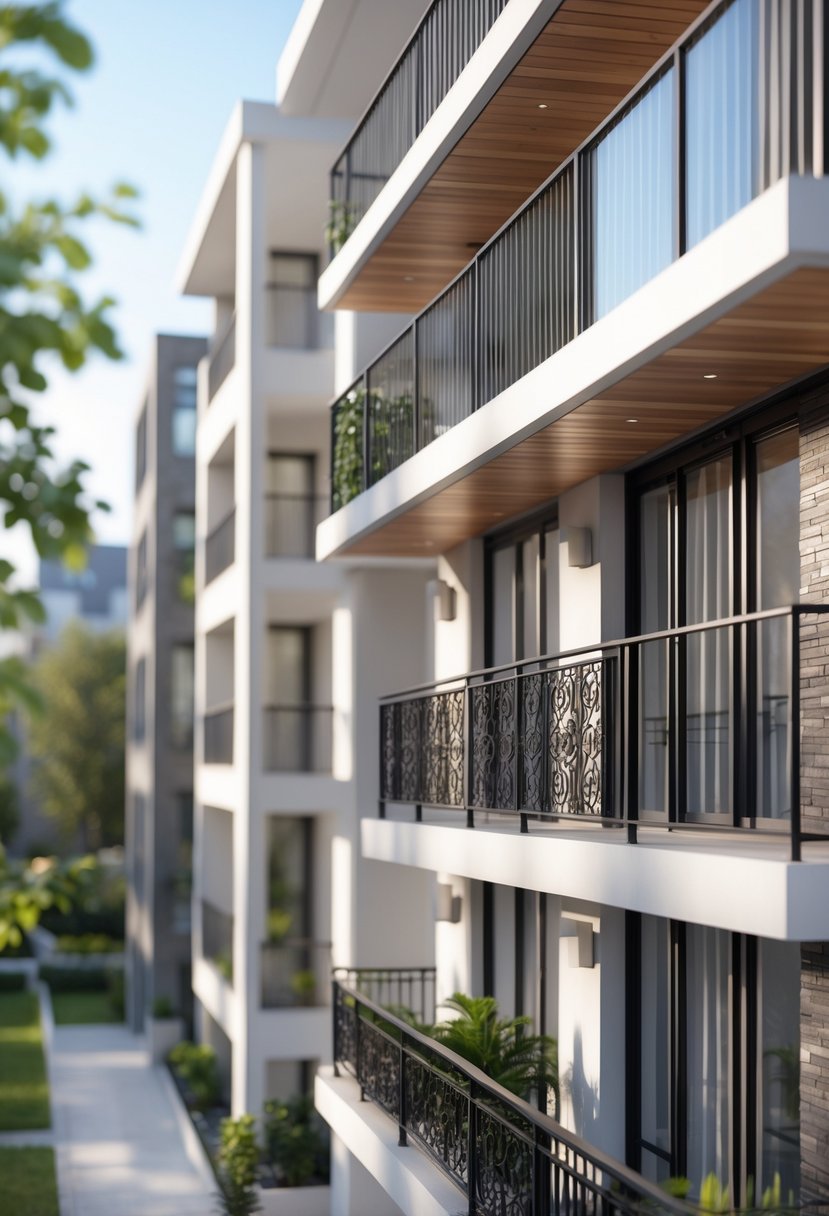
They will also cover practical concerns like safety standards, materials, and design factors to help you make smart choices. Expect clear comparisons and easy ideas that make picking the right railing faster and less stressful.
1) Glass Panel Railings for Modern Elegance
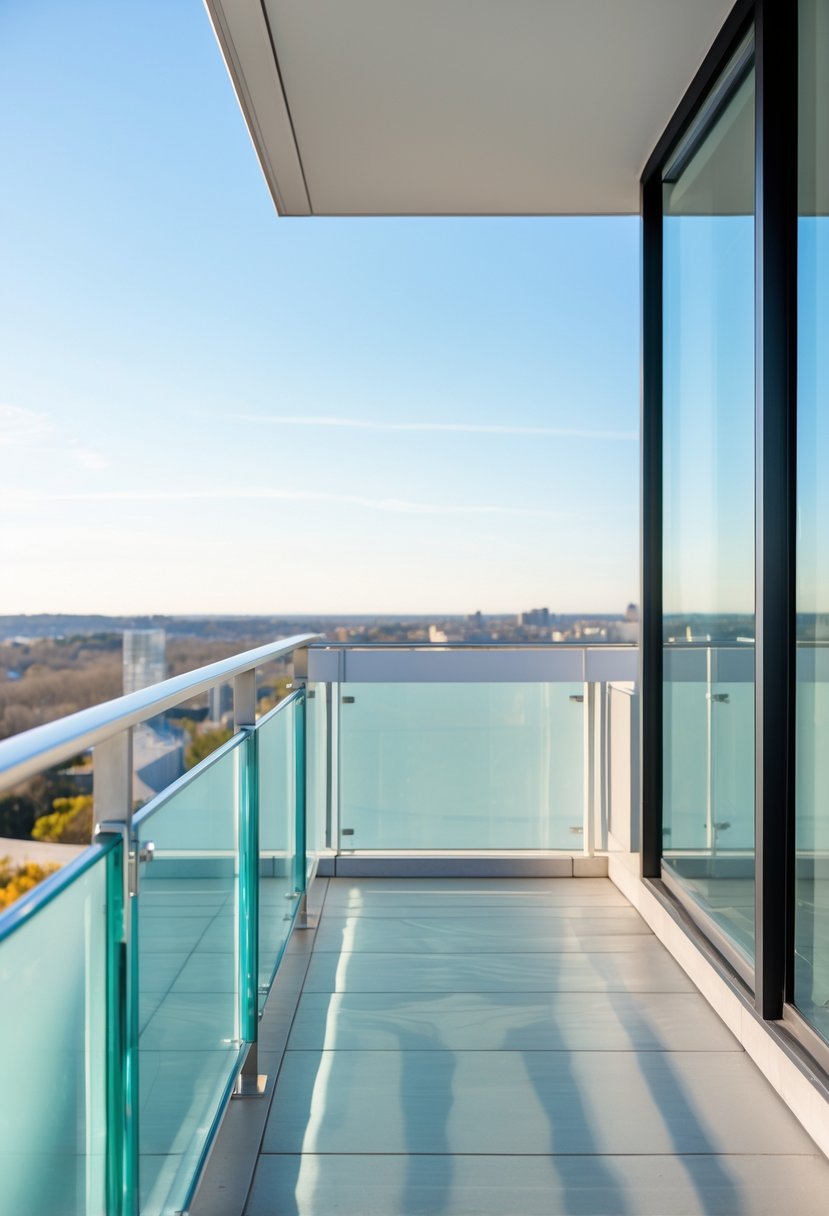
Glass panel railings give a balcony a clean, open look that keeps views clear. They suit modern homes and small spaces where light and sightlines matter.
They come frameless or with slim metal posts, both offering strong safety and low visual weight. Tempered glass and stainless fittings resist weather and need little upkeep.
Designers often add tinted or frosted panels for privacy while keeping a sleek feel. Installers must follow local codes for height and glass thickness to ensure safety.
2) Wrought Iron Railings with Intricate Patterns
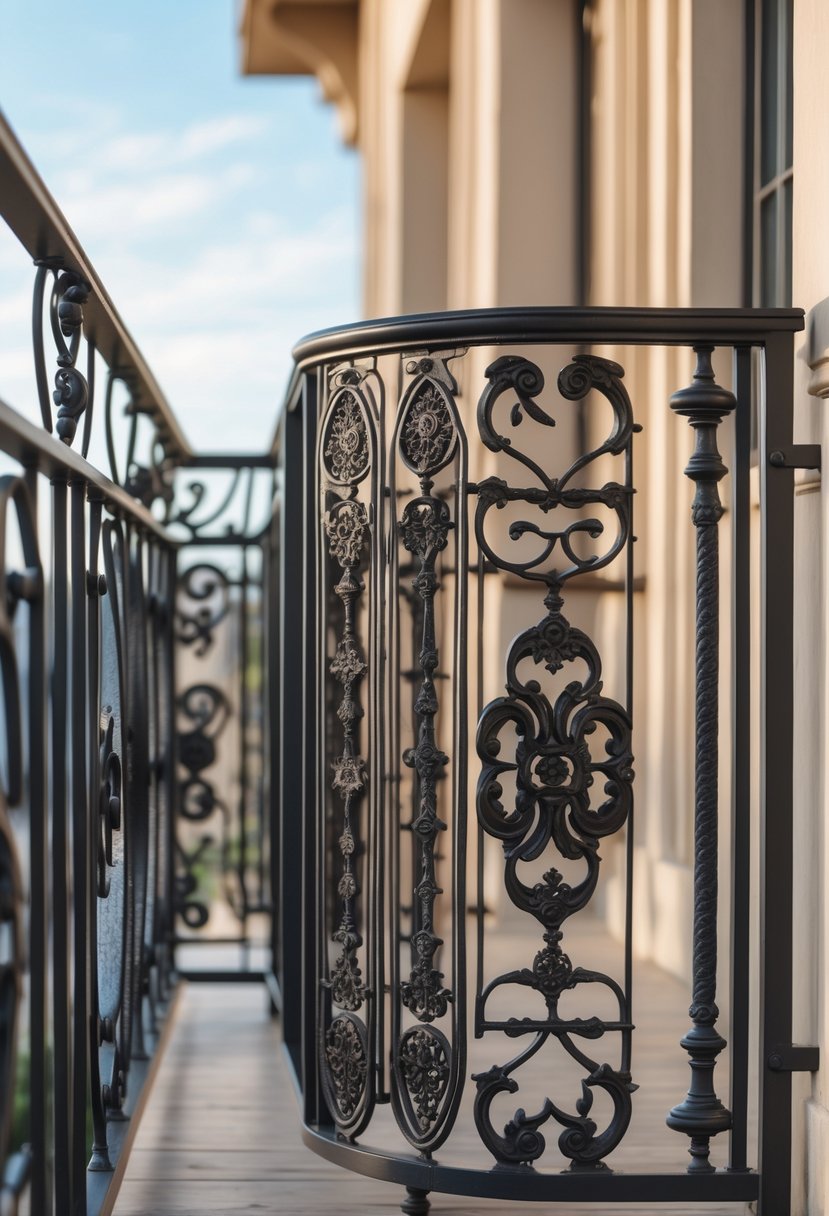
They pair strength with detailed ornamentation, adding a classic look to balconies. Craftspeople can shape scrolls, florals, and geometric motifs for a custom fit.
These railings suit traditional and transitional homes. They require occasional maintenance like repainting to prevent rust and keep the design crisp.
Homeowners get safety plus visual interest without bulky profiles. Complex patterns can be scaled to match balcony size and sightlines.
3) Stainless Steel Cable Railings for Minimalist Look
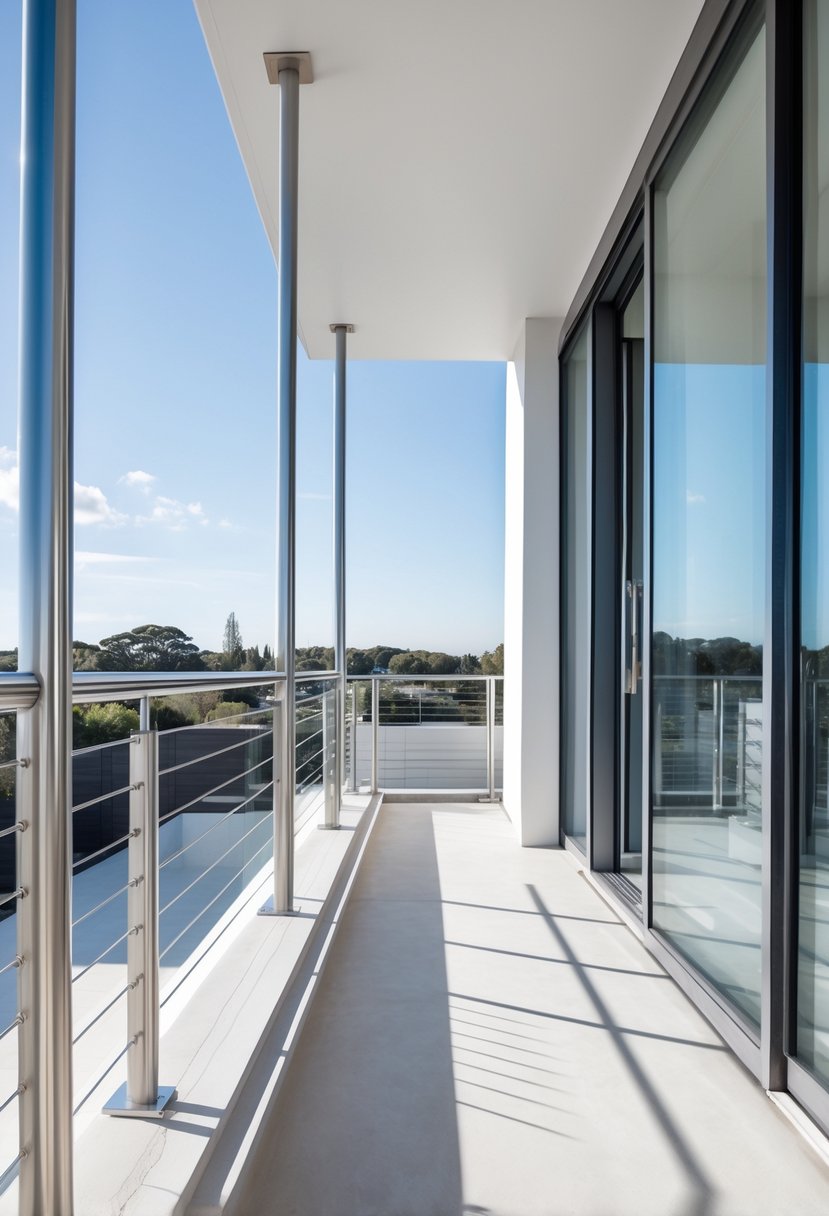
They use thin stainless cables stretched between posts to keep sightlines open. The result is a clean, minimalist look that suits modern balconies.
Stainless steel resists rust and needs little maintenance, so it stays neat with simple care. It pairs well with glass, wood, or metal posts for a balanced aesthetic.
Installers can tension cables for safety and code compliance. Proper fitting prevents sag and keeps the railing both secure and visually light.
4) Wooden Baluster Railings for Classic Charm
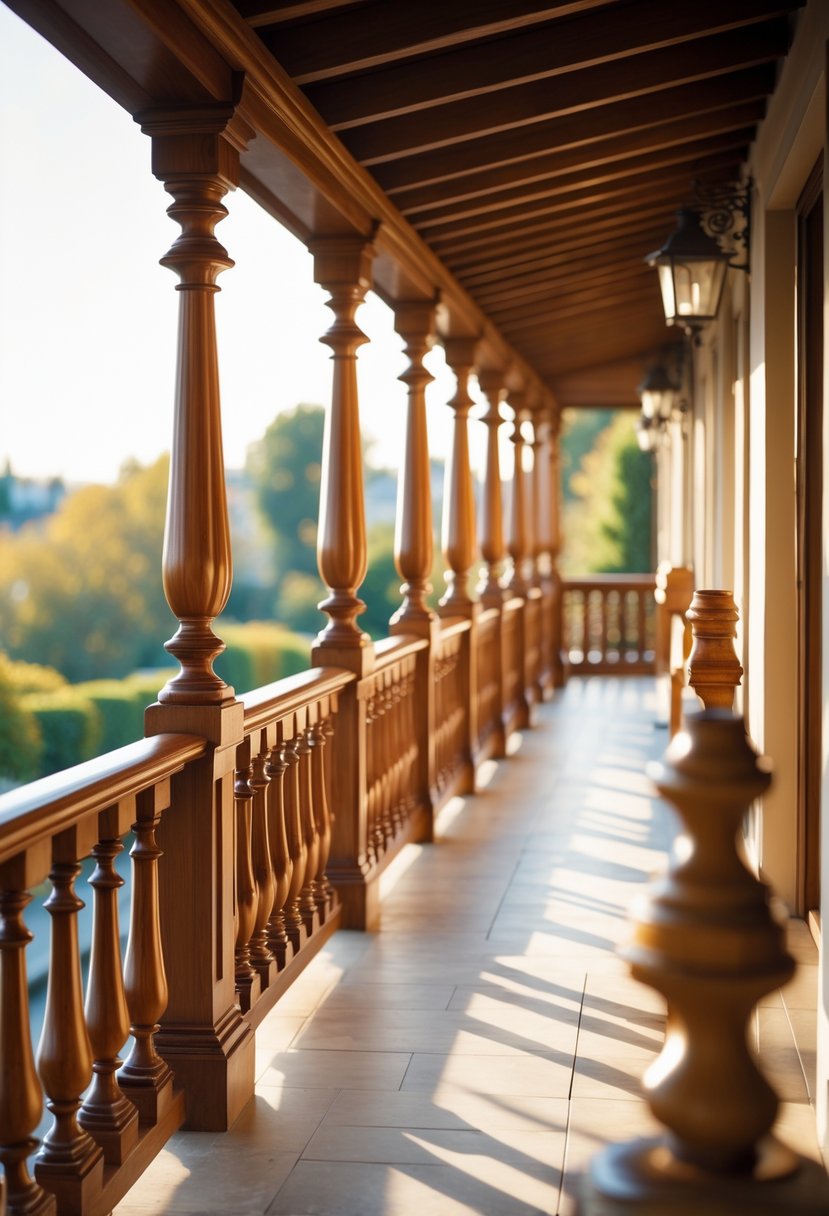
They bring a timeless look that suits traditional and cottage-style homes. Wood balusters come in many shapes and species, from simple square posts to turned spindles.
They add warmth and can be stained or painted to match trim and decking. Proper sealing and periodic maintenance keep them strong against weather.
They work well with newel posts and handrails for a cohesive design. Craftsmen can custom-turn pieces to fit historic or modern builds.
5) Concrete Railings for Sturdy, Industrial Style
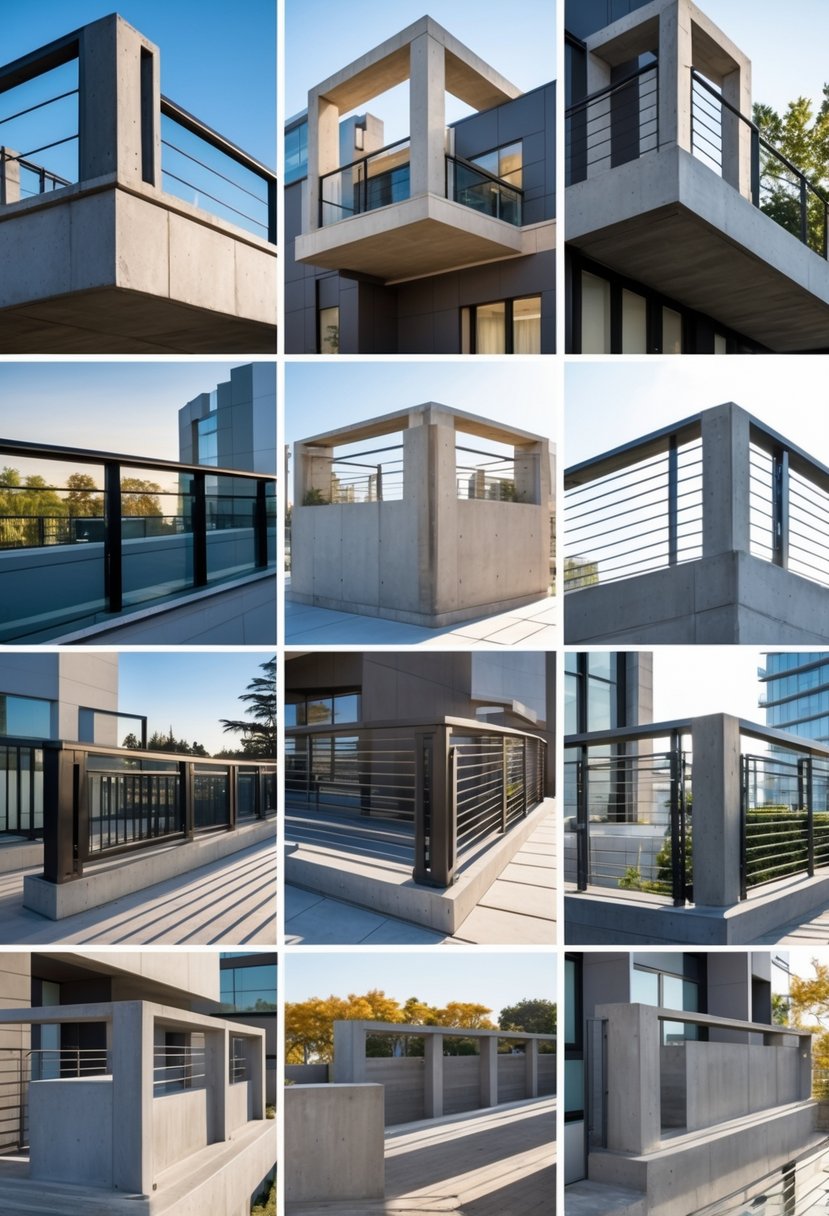
Concrete railings offer strong, low-maintenance protection that suits industrial and modern homes. They resist weather and wear better than wood or some metals.
Designers use smooth or textured finishes to match building materials. Precast sections speed installation and keep results consistent.
Concrete can feel heavy, so designers often add gaps or metal accents to lighten the look. It works well on urban balconies where durability matters.
6) Metal Railings with Powder-Coated Finish
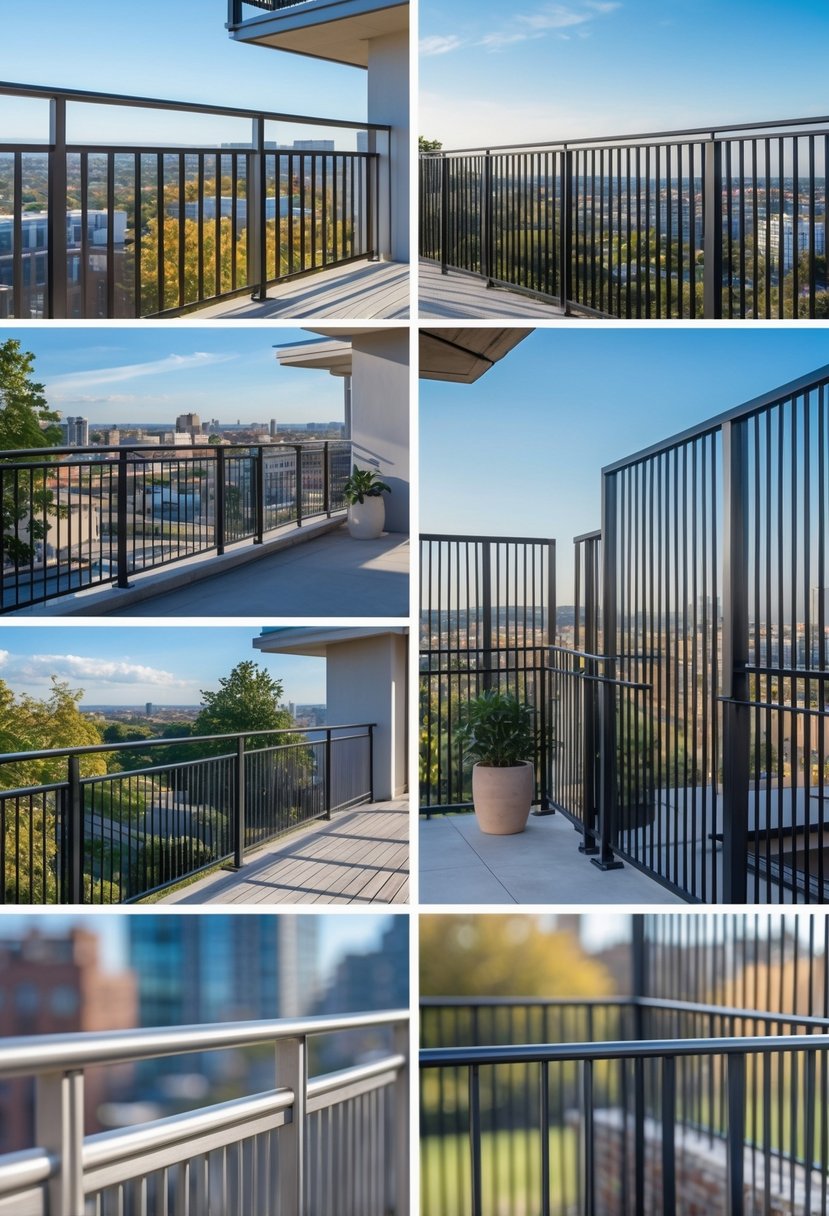
Metal railings with a powder-coated finish resist rust and weathering better than ordinary paint. They keep a consistent color and texture for years when applied properly.
They suit modern and traditional homes and come in many colors like matte black and white. Installers can choose durable coatings tested for UV and salt spray resistance.
7) Vinyl Balcony Railings for Low Maintenance
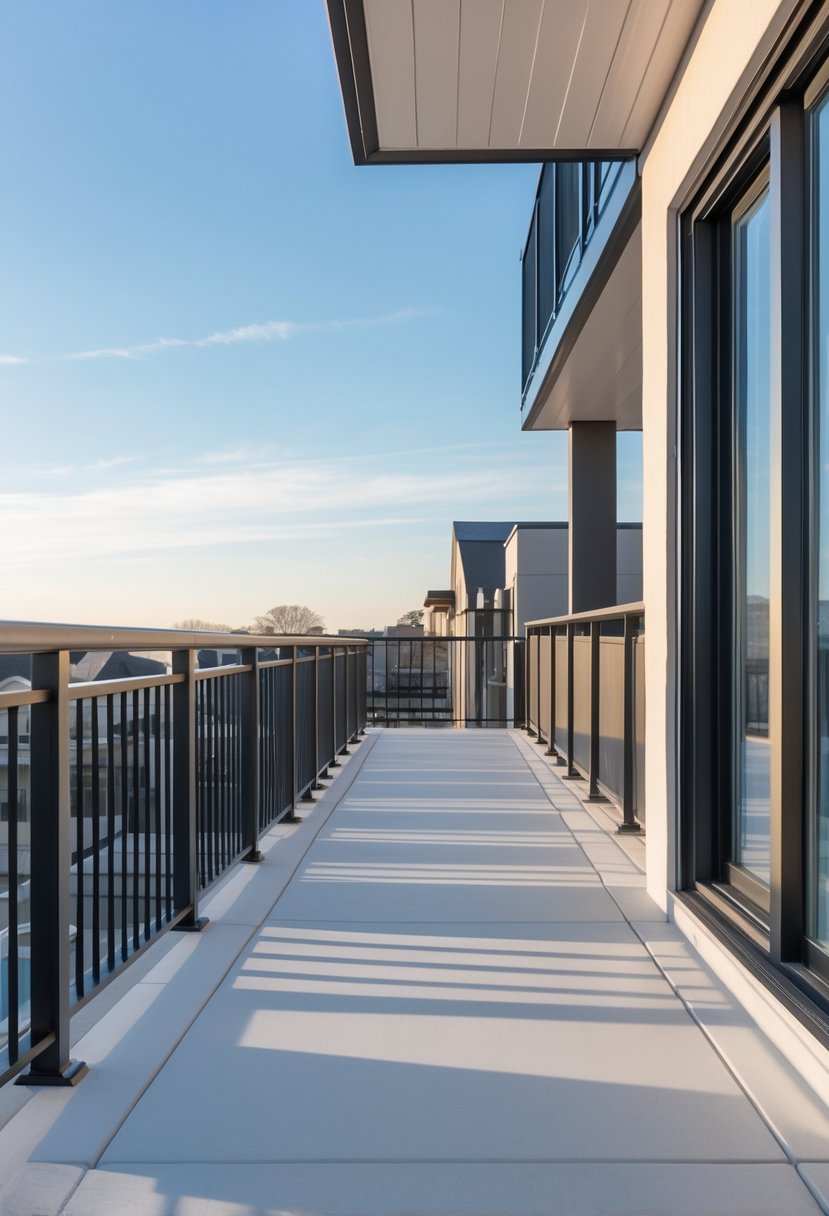
Vinyl railings resist rot, peeling, and rust so they need little upkeep. They suit many styles, from classic picket to modern horizontal lines.
They often come prefinished and clean with soap and water. Homeowners save time, and installers find them easy to fit.
8) Horizontal Slat Railings for Contemporary Appeal
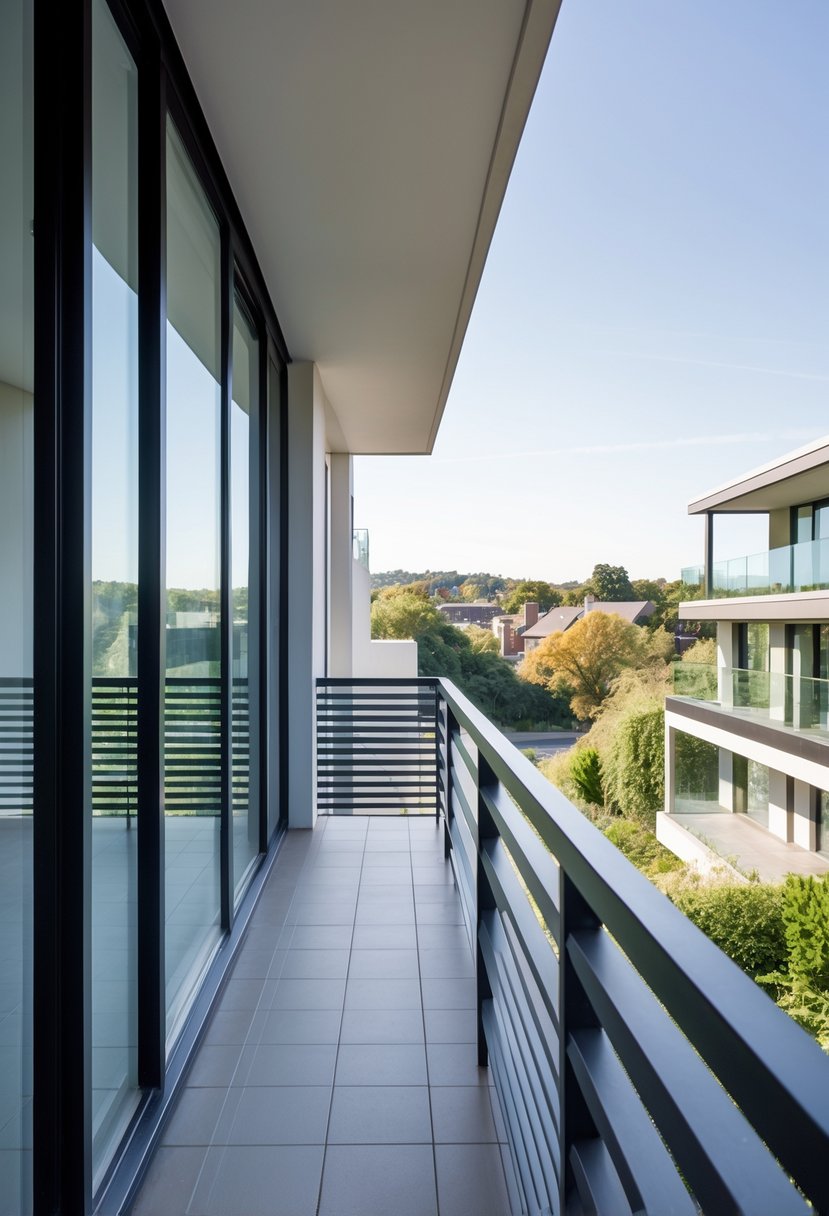
Horizontal slat railings give balconies a clean, modern look that suits many home styles. They use evenly spaced wooden or metal slats that draw the eye along the length of the balcony.
They offer good sightlines while still providing a clear boundary and safety. Materials like treated wood or powder-coated aluminum balance warmth and low maintenance.
They fit both urban apartments and suburban homes and work well with glass or solid panels for varied privacy and wind protection.
9) Frosted Glass Railings for Privacy
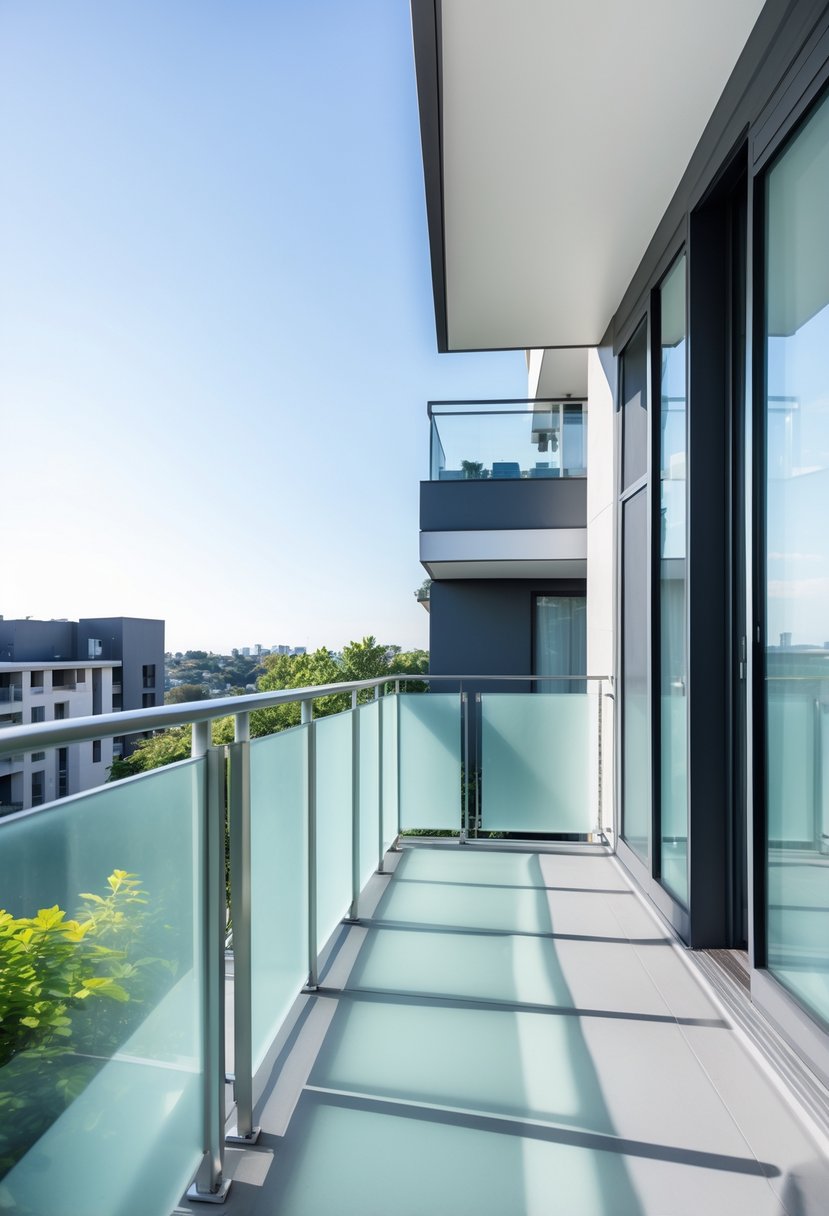
Frosted glass panels soften light while keeping views muted. They work well on urban balconies where privacy matters but natural light still matters.
Designers often frost the lower third to block sightlines when seated and leave the top clear for a view. This approach balances privacy, safety, and a modern look.
Frosted glass pairs with metal or frameless fittings and fits minimalist and contemporary styles. It resists visual clutter and requires simple cleaning.
10) Traditional White Wooden Railings
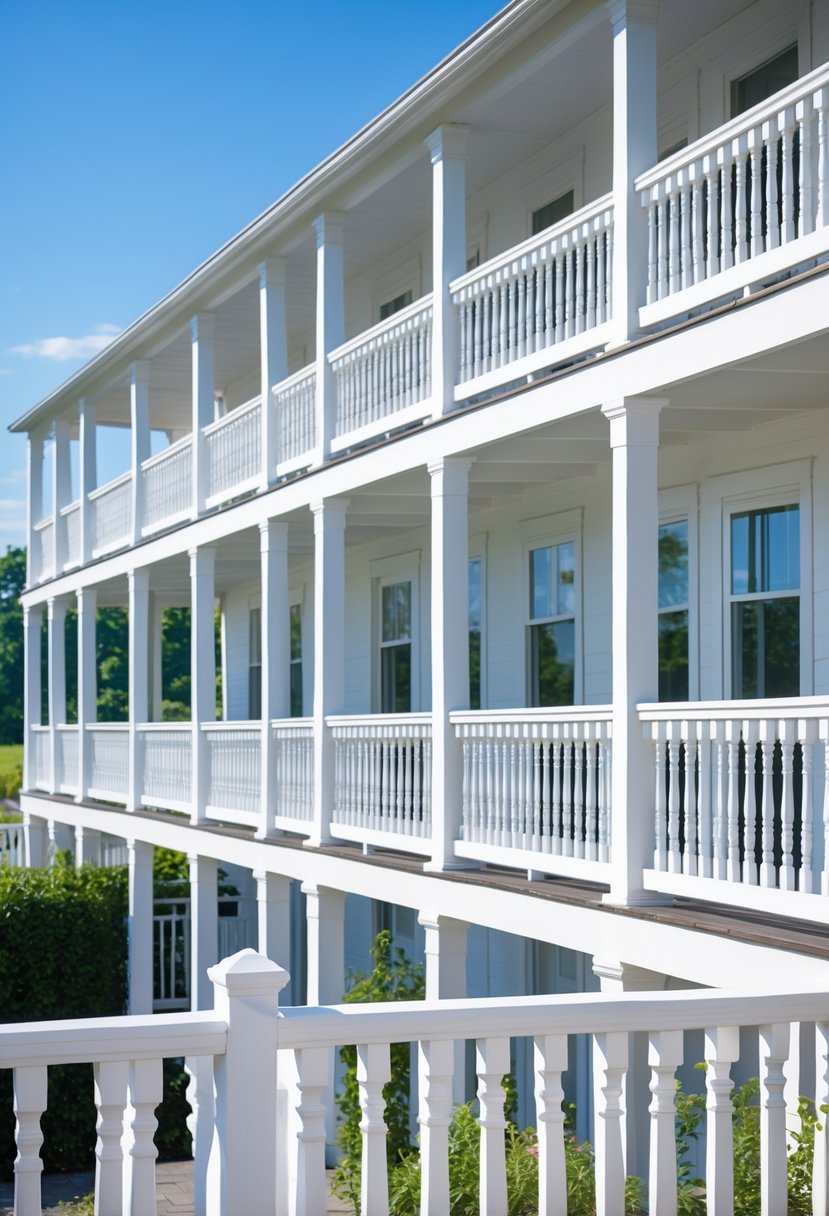
They bring a timeless, clean look that suits many home styles. The white finish contrasts well with stained wood decks and keeps the appearance bright.
These railings use vertical balusters for a structured, safe barrier. Homeowners often choose them for porches, balconies, and classic facades.
They require periodic painting and sealing to resist moisture and wear. With basic upkeep, they stay attractive for years.
Essential Safety Standards for Balcony Railings
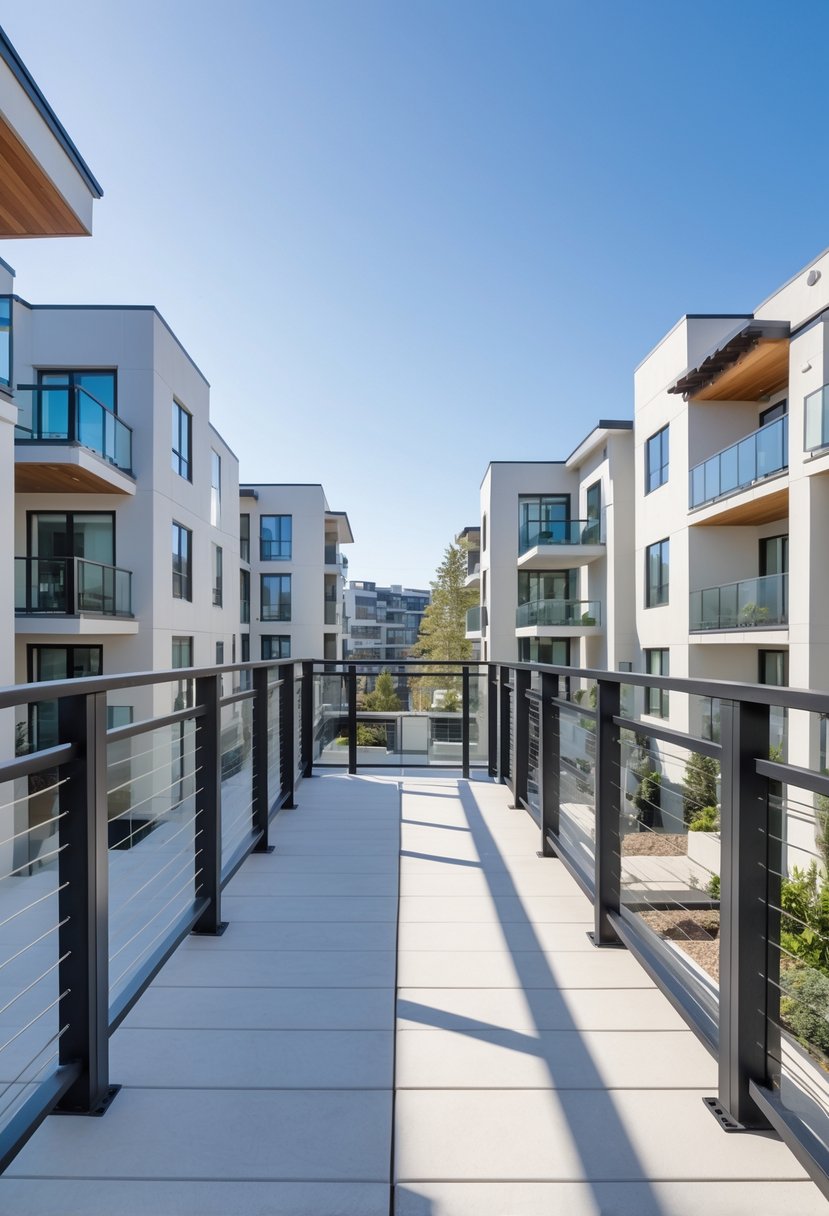
Balcony railings must meet specific height, strength, and spacing rules. They also need durable materials and regular maintenance to remain safe over time.
Building Code Requirements
Codes typically require a minimum railing height measured from the walking surface: 36 inches for most residential balconies and 42 inches for commercial or multifamily buildings. Local codes can vary, so checking the municipal building code or the International Building Code (IBC) requirements for the project location is essential.
Railings must resist loads without failure. Common code tests require a concentrated load (usually 200 pounds) applied at the top rail and a uniform load per linear foot. Openings in the guard should prevent a 4-inch sphere from passing through to stop small children from slipping through.
Anchorage and attachment matter. Fasteners, posts, and connections must be installed to transfer loads to the structure. Inspections after installation and after any structural change help ensure the anchorage remains sound.
Material Durability and Maintenance
Choose materials rated for the climate and exposure. Powder-coated aluminum, stainless steel, and treated hardwood resist corrosion better than plain steel in wet or coastal areas. Galvanized steel with proper coatings also performs well if maintained.
Create a maintenance schedule. Inspect railings at least once a year for loose fasteners, rust, rot, cracked welds, and loose posts. Tighten fasteners, touch up coatings, and replace damaged sections promptly to preserve structural capacity.
Use compatible repair materials. Match coatings and metals to avoid galvanic corrosion. For wood, use appropriate sealants and replace any member that shows structural decay rather than patching it.
Design Factors to Consider
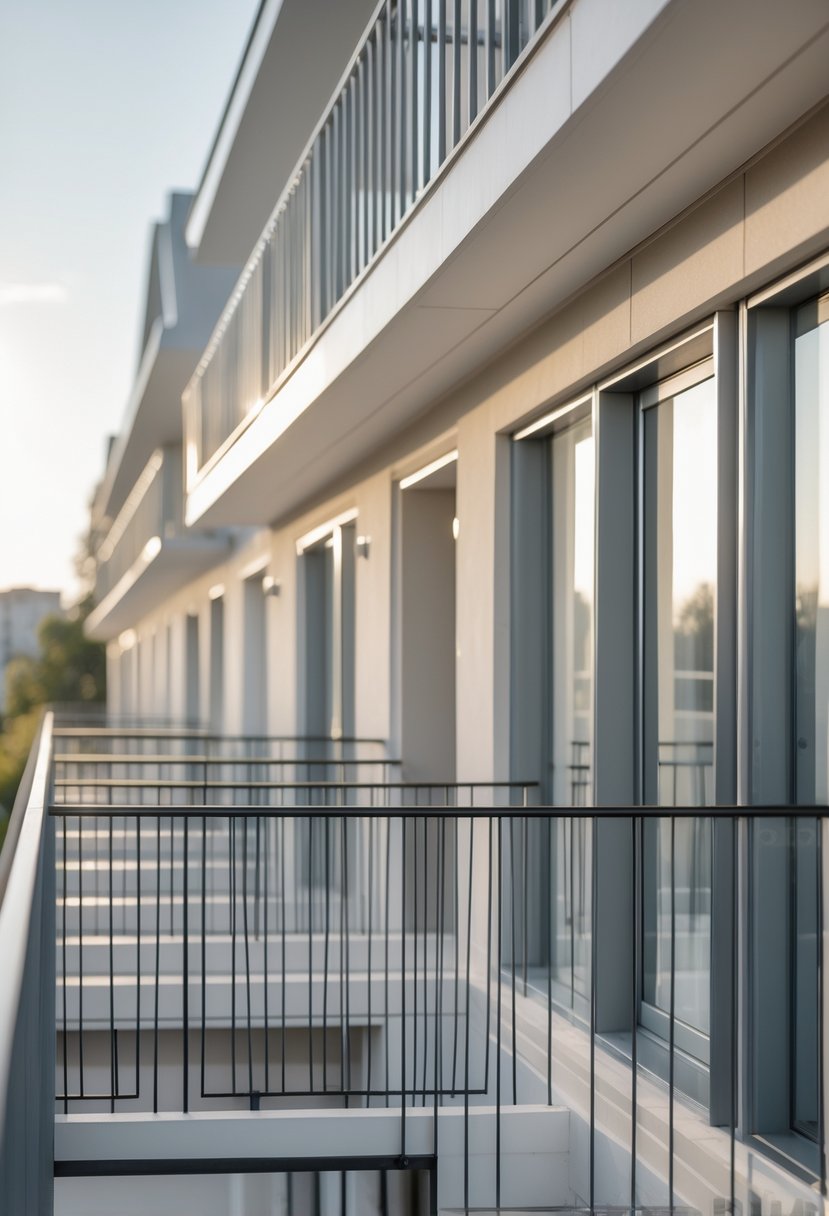
Focus on safety, durability, and how the railing fits the home’s style. Think about weather exposure, maintenance time, and budget when choosing materials and features.
Choosing the Right Material
They should pick materials that match local climate and maintenance ability. Stainless steel resists rust and fits modern homes, but it costs more and may show fingerprints. Aluminum is lightweight, affordable, and won’t rust, though it can dent and may need powder coating for color longevity. Wrought iron gives a classic look and strong support, yet it requires regular paint or rust treatment in wet climates. Glass panels offer clear views and a clean look, but choose tempered glass and plan for frequent cleaning and sturdy framing. Wood feels warm and traditional; select rot-resistant species like cedar or treated lumber and schedule sealing every few years.
Consider load-bearing needs and local codes. Measure wind exposure and select thicker sections or stronger anchors if the balcony faces open areas. Ask a pro about fasteners and how each material connects to the structure.
Balancing Aesthetics With Functionality
They should match the railing style to the home’s architecture while keeping safety front and center. Vertical bars or closely spaced balusters prevent climbing and meet many code requirements, while horizontal cables create a modern look but need proper tensioning to avoid sagging. Glass panels maintain sightlines for views but must have secure framing and handrail height that complies with codes. Choose a top rail that feels sturdy to the touch and sits at the correct height—commonly 36–42 inches depending on local rules.
Plan for maintenance tasks when selecting finishes. Powder-coated metals and sealed glass reduce upkeep. If plants or lights will attach to the railing, ensure the design supports added weight and that attachments won’t corrode or damage the main material.
Frequently Asked Questions
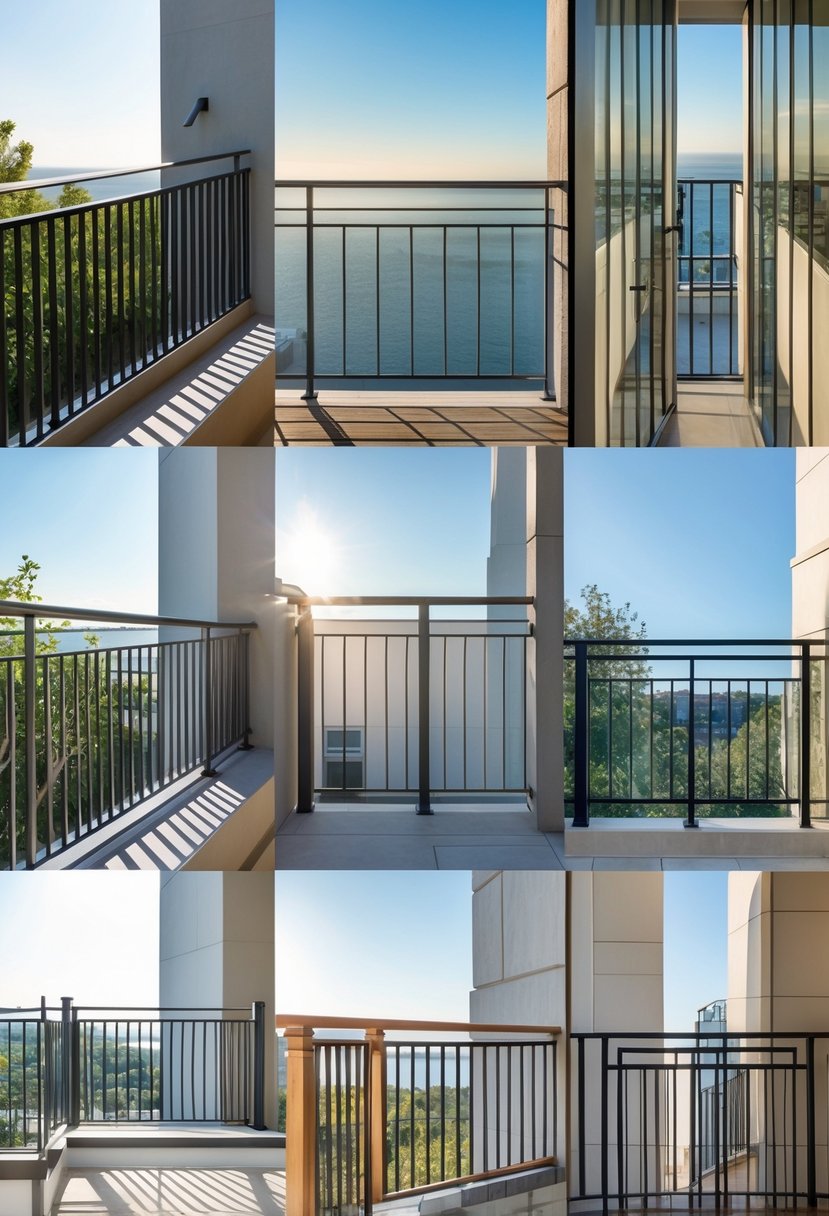
This section covers current style moves, material choices, maintenance needs, code basics, customization options, and how railing choices affect resale. It focuses on five common types: glass panels, wrought iron, stainless steel cable, wooden balusters, and concrete.
What are the latest trends in balcony railing designs?
Glass panel railings remain popular for clean views and modern looks. Frameless or thin-framed systems give a seamless appearance that suits contemporary and minimalist homes.
Stainless steel cable railings are trending where a slim, industrial look is wanted. They pair well with wood or concrete to keep sightlines open.
Wrought iron with selective patterning shows up in renovated historic homes and boutique projects. Designers favor custom motifs that add curb appeal without blocking light.
What materials are best suited for outdoor balcony railings in terms of durability and aesthetics?
Stainless steel rates high for corrosion resistance and low maintenance. It suits coastal and urban sites and matches minimalist or industrial designs.
Glass panels offer excellent aesthetics and long-term durability when using tempered or laminated safety glass. Regular cleaning prevents hard-water staining and maintains transparency.
Treated hardwoods like teak or ipe look warm but need periodic sealing and inspection for rot or insect damage. Wrought iron and powder-coated metals deliver classic looks but need paint or coating touch-ups to prevent rust.
Concrete excels where durability and mass are priorities. It fits industrial or modern styles but adds weight and generally requires professional installation.
How do glass railing systems compare to metal or wood in terms of safety and maintenance?
Tempered or laminated glass meets common safety standards and resists impact failure better than standard glass. It still shows smudges and watermarks, so cleaning is more frequent than for metal.
Metal railings—stainless steel or powder-coated iron—handle wear well and need less daily cleaning. Iron requires rust control; stainless steel needs occasional polishing.
Wood requires the most upkeep to stay safe. Regular sealing, painting, or staining prevents decay and maintains structural integrity. Inspection for loose fasteners is important across all materials.
Can balcony railings be customized to fit unique architectural features?
Yes. Glass panels can be cut to fit curved or angled openings, and glass systems can include metal or wood handrails for a hybrid look. Cable systems allow flexible termination points to match odd geometry.
Wrought iron is highly customizable for bespoke patterns and shapes, ideal for historic or decorative projects. Concrete can be cast in custom profiles, but changes add cost and require structural planning.
What are the safety codes and regulations to consider when installing balcony railings?
Many U.S. residential codes require a minimum railing height of about 36 inches, while some commercial and multi-story applications require 42 inches. Local codes may vary, so verifying municipal or state rules is essential.
Codes also limit the size of openings to prevent child entrapment—typically no more than a 4-inch sphere can pass through guard openings. Handrail height, load capacity, and material-specific requirements are also commonly specified.
How does the choice of a railing design impact the overall value of a property?
High-quality glass or stainless systems can increase perceived modern appeal and marketability, especially on homes with views. Buyers often pay more for unobstructed sightlines and low-maintenance materials.
Well-detailed wrought iron or custom woodwork can boost curb appeal on period homes and attract buyers seeking character. Poorly maintained or low-cost railings can reduce perceived value and raise inspection concerns.