

 By Trends Oraa
 You step into a small bedroom and want it to feel roomy, stylish, and calm without losing function. This article shows simple, modern ways to make a compact space work for sleeping, storage, and everyday life.
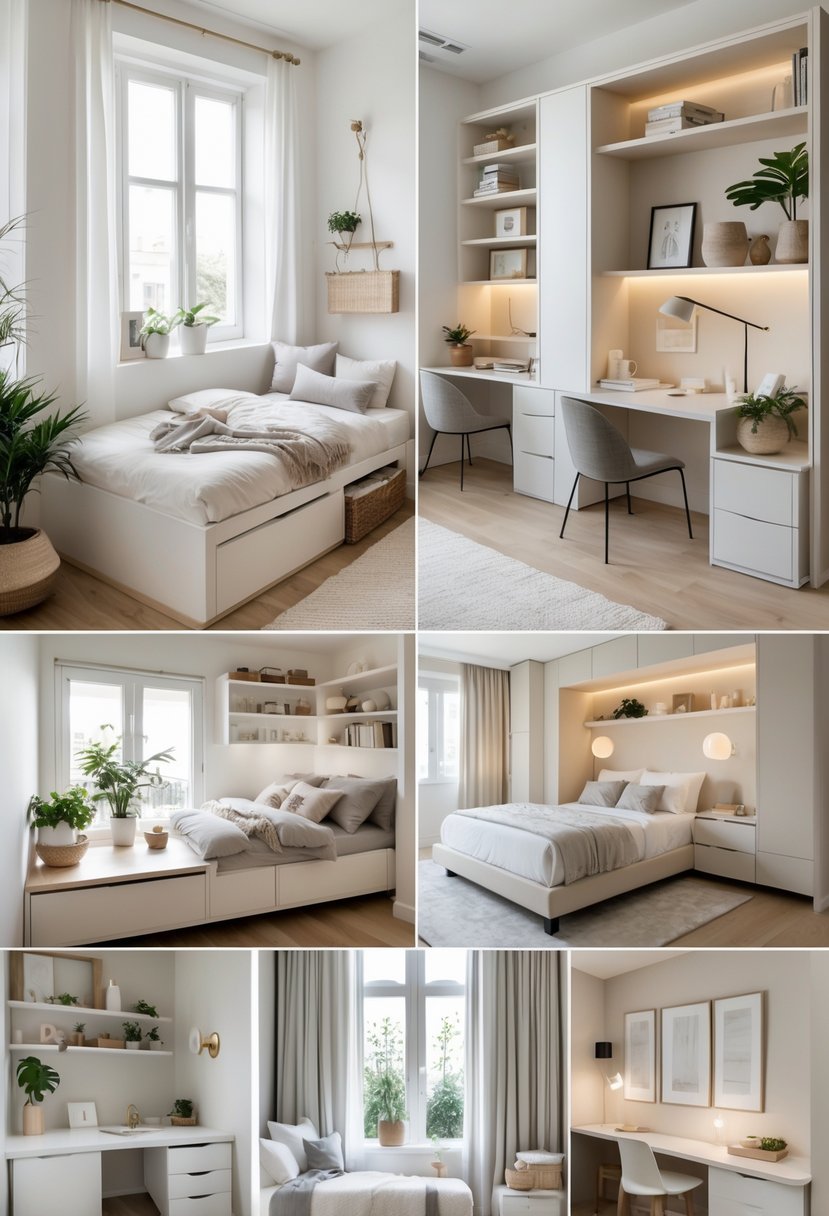
You will find practical ideas that save space, add personality, and keep the room feeling open and inviting. Expect tips on furniture, lighting, color, storage, and layout that fit tight layouts and real budgets.
1) Use multifunctional furniture like a storage ottoman to save space
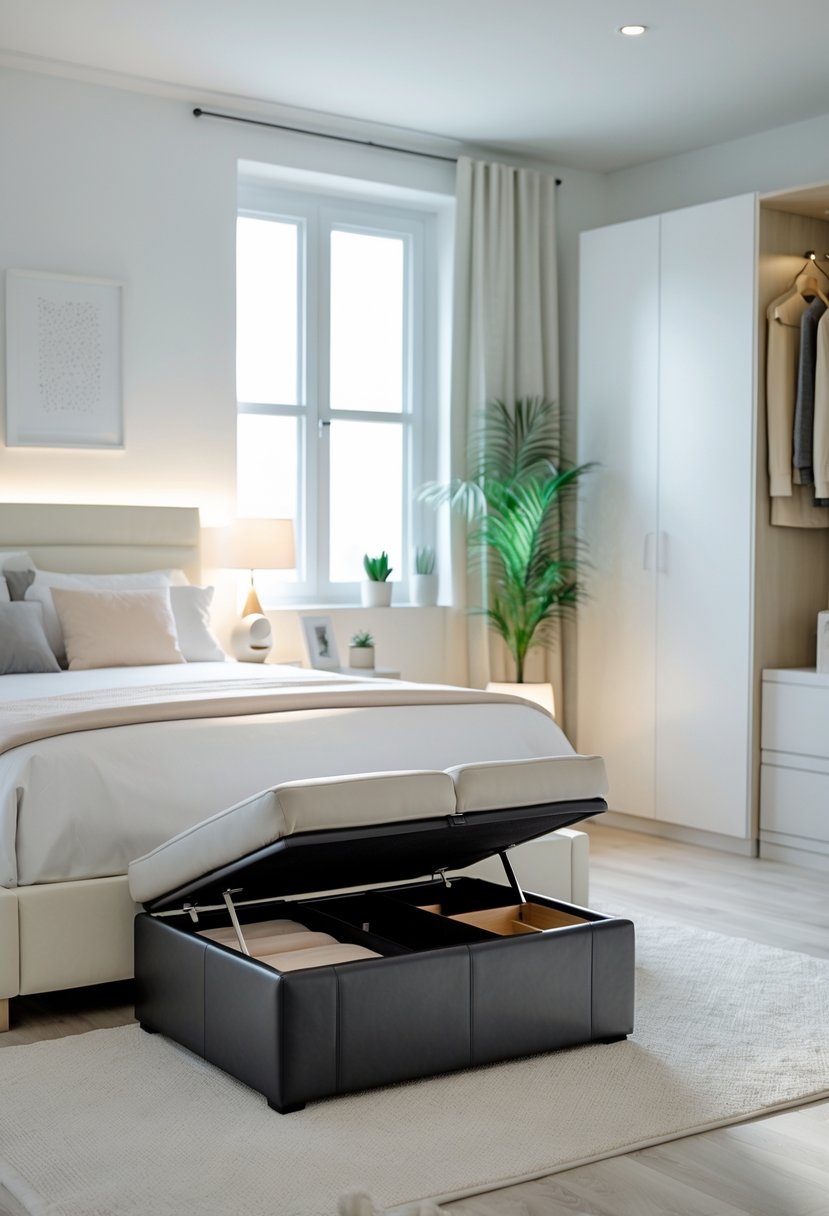
They pick a storage ottoman to add seating and hidden storage without extra furniture.
A single piece can hold bedding, shoes, or seasonal clothes, which frees up floor and closet space.
Choose a style that matches the room so it feels intentional, not cluttered.
Lightweight designs make it easy to move for cleaning or rearranging.
2) Incorporate floating shelves to keep the floor clear and add display areas
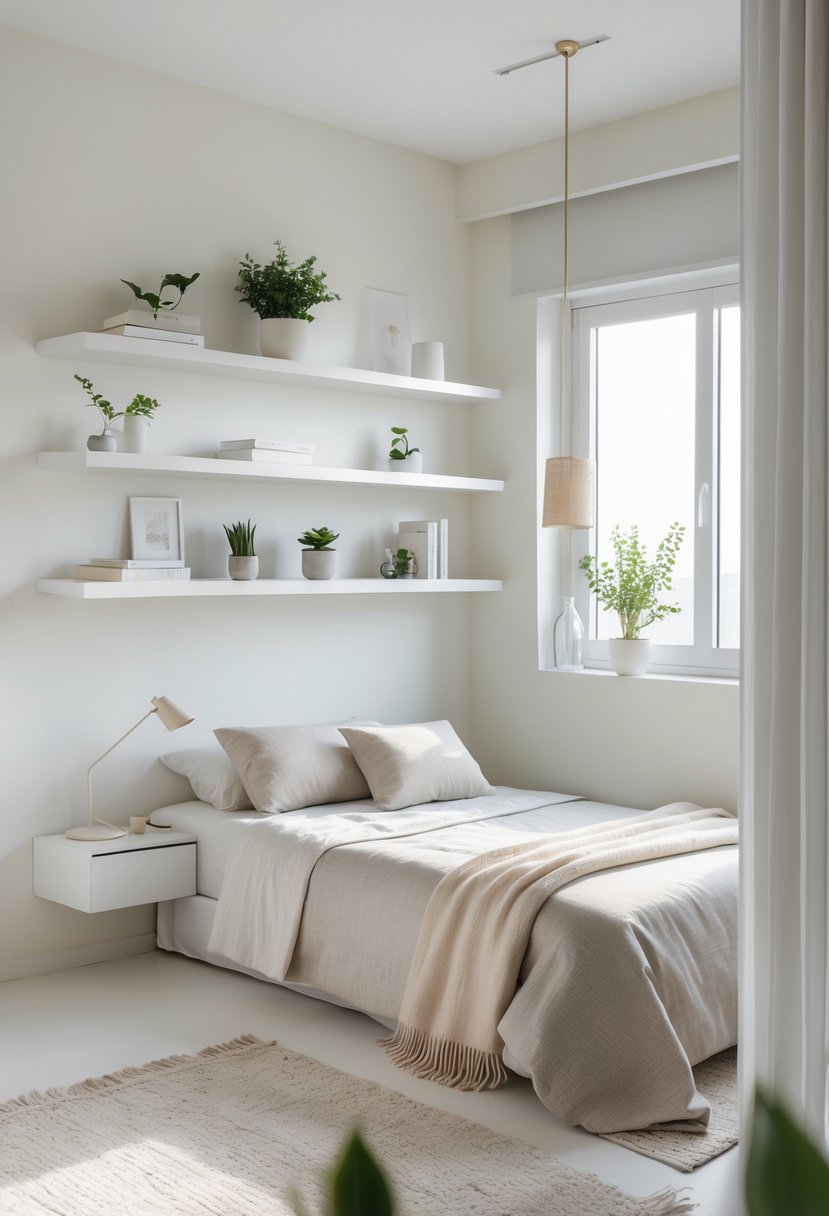
They mount on the wall to free up floor space and make the room feel larger.
Floating shelves give places for books, plants, and small decor without bulky furniture.
Place them above dressers or beside the bed to replace nightstands.
Use matching finishes and balance items to keep the look tidy and intentional.
3) Opt for a light color palette with pastels and neutrals to create an airy feel
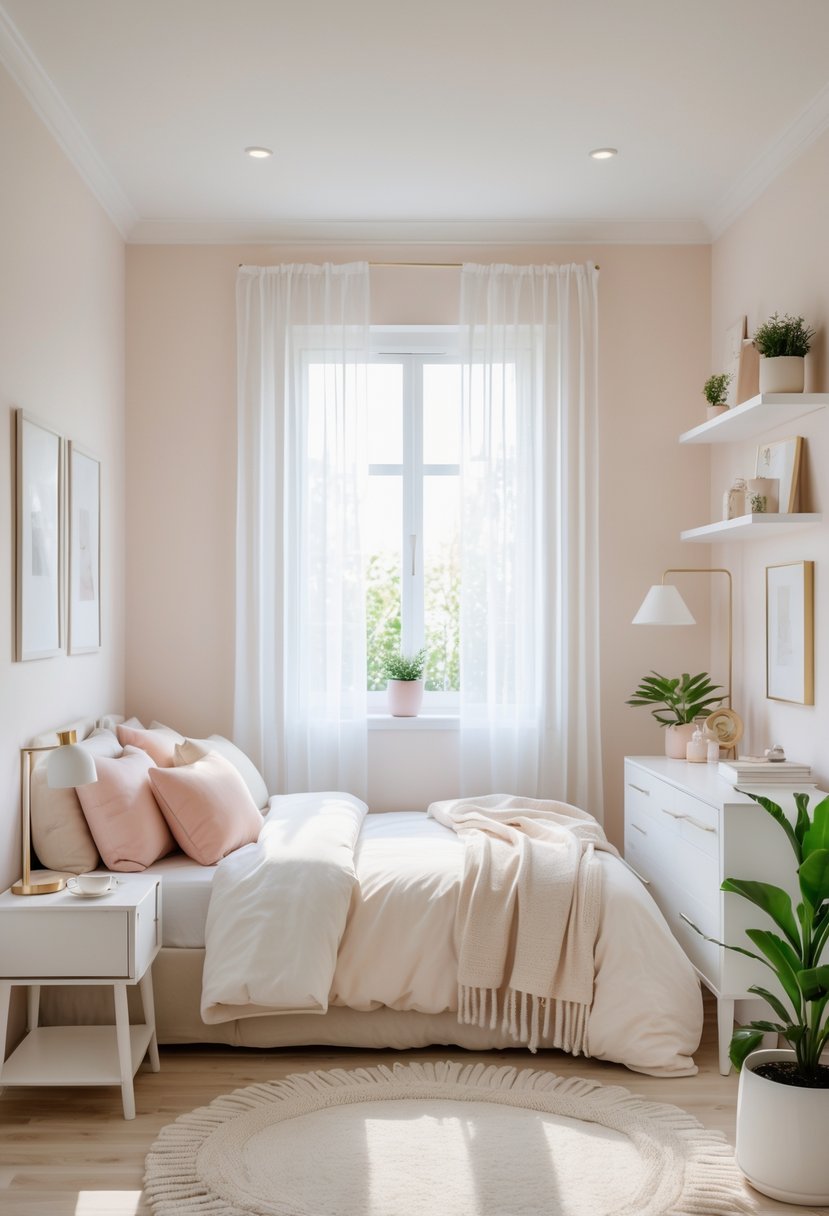
They should choose soft pastels like pale blue, blush, or mint paired with warm neutrals such as beige or light gray. This mix reflects more light and makes the room feel larger.
They can paint walls a single pale shade and add textiles in coordinating tones to keep the look calm. Small accents in slightly deeper hues add depth without crowding the space.
4) Add a statement wood bead chandelier for a chic boho touch
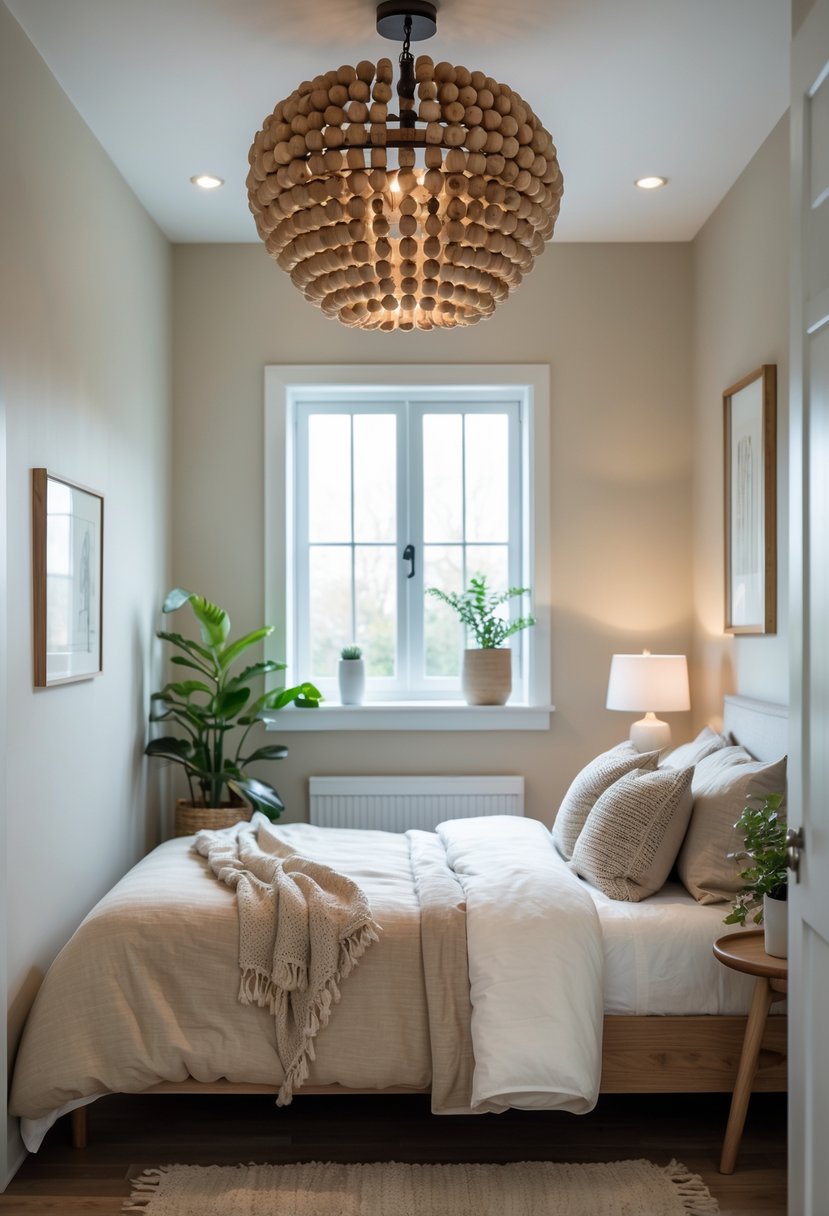
They can lift a small bedroom without taking floor space. A wood bead chandelier adds texture and a soft, natural look that fits boho and modern styles.
Choose lighter beads and a low-profile frame to keep the room airy. For a modern mix, pair wood beads with brass or matte black metal accents.
Install it over the bed or a reading nook to create a focal point. Ensure the size and drop suit the ceiling height for safe, balanced lighting.
5) Use a small bench at the foot of the bed for extra seating and style
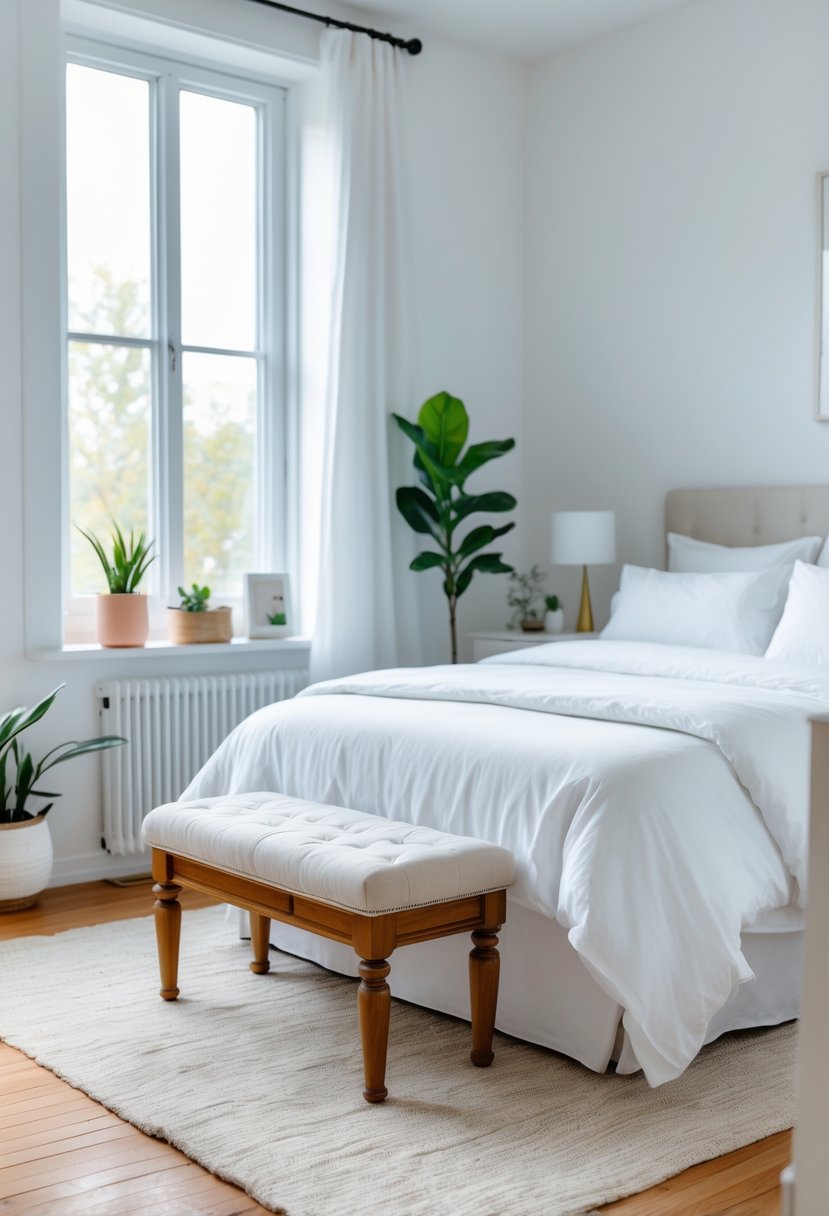
A slim bench adds seating without crowding a small bedroom. It gives a spot to put on shoes, fold clothes, or set a tray.
Choose an upholstered or storage bench to add comfort and hide blankets or shoes. Match its length to the bed so it looks balanced and stays functional.
Simple lines and neutral colors keep the bench chic and versatile. It can finish the room while saving space.
6) Layer textiles such as throws and cushions in soft blues for a coastal vibe
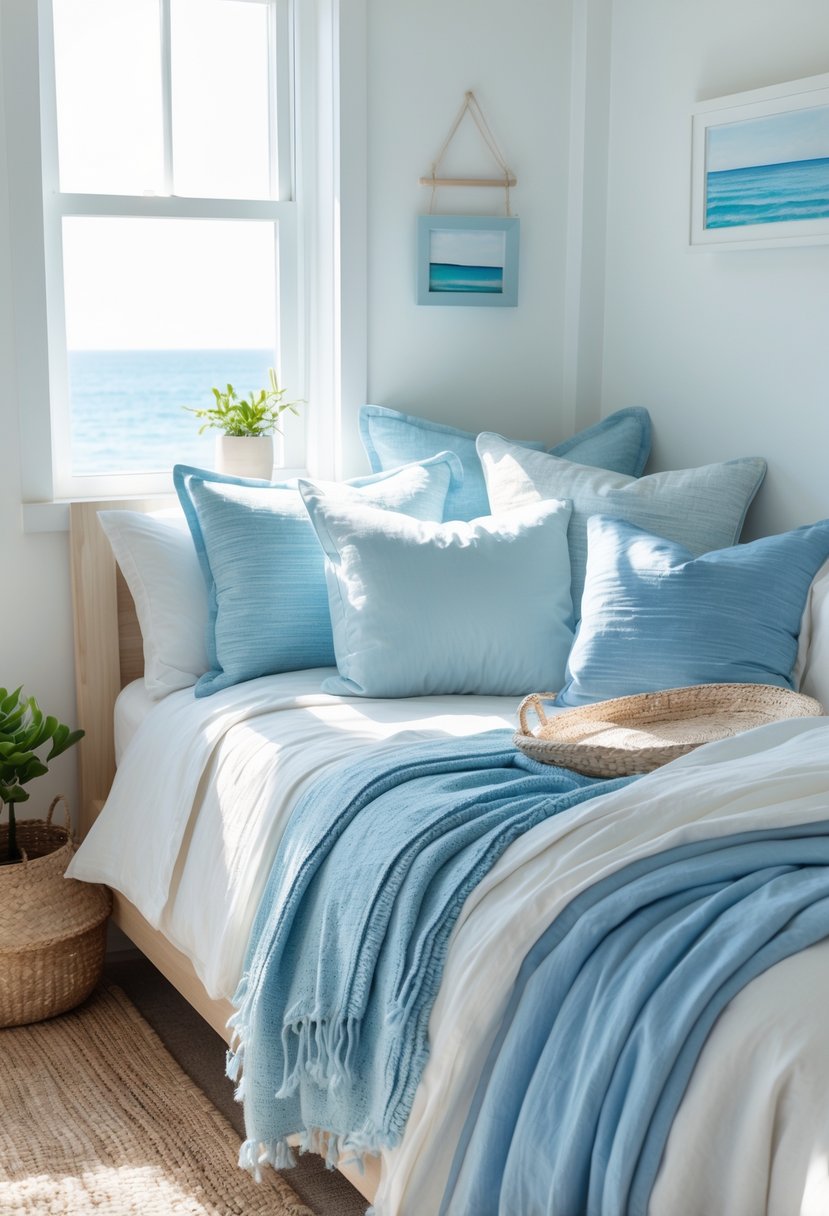
They add depth without crowding a small room. Soft blue throws and cushions create a calm, seaside feel.
Mix textures—linen, cotton, and a chunky knit—for visual interest. Vary pillow sizes to keep the bed cozy and balanced.
Choose a few sandy beige or white accents to ground the palette. Light fabrics help maintain an airy, spacious look while still feeling warm.
7) Install wall-mounted bedside lamps to free up nightstand space
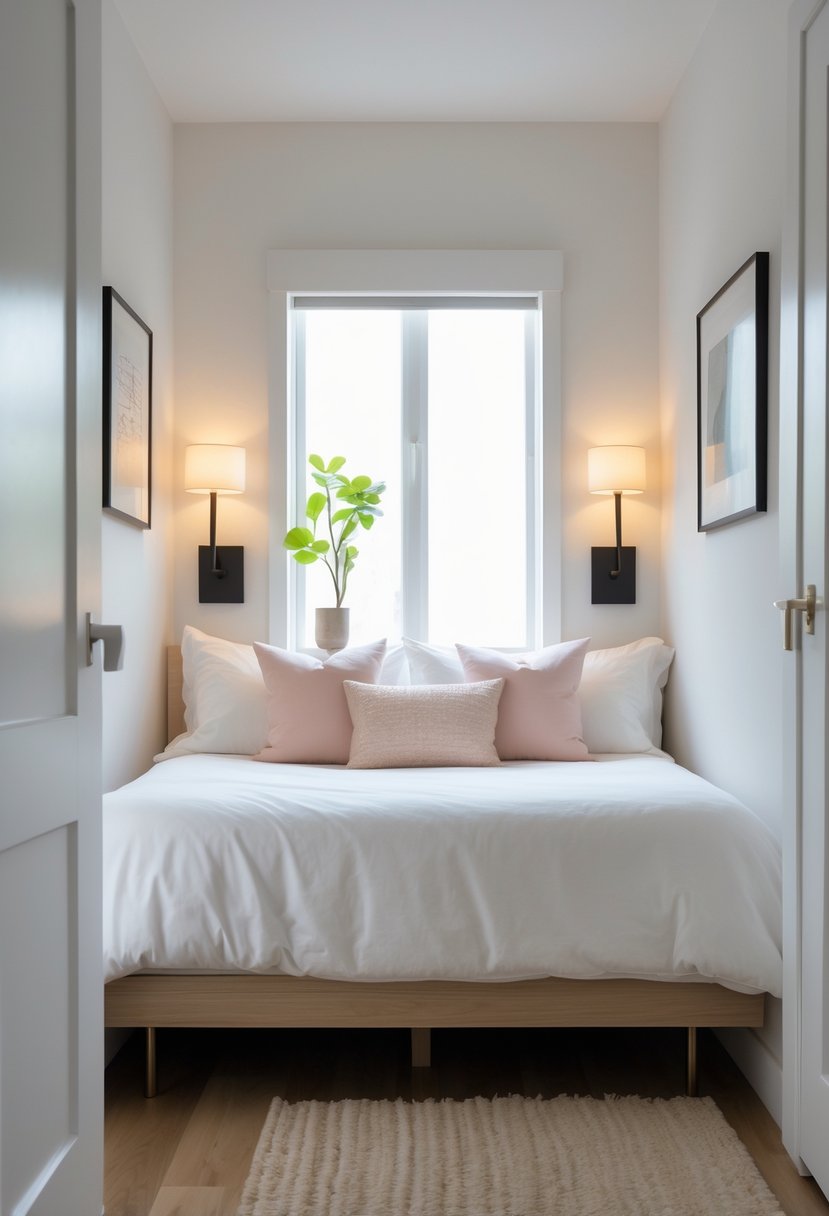
They mount to the wall so nightstands stay clear for books, chargers, or a glass of water. Adjustable heads and swing arms give focused light for reading without harsh glare.
Choose warm 2700K–3000K bulbs and add dimmers to protect sleep. Plug-in or hardwired options fit different budgets and room layouts.
8) Choose narrow, stained nightstands for storage without bulk
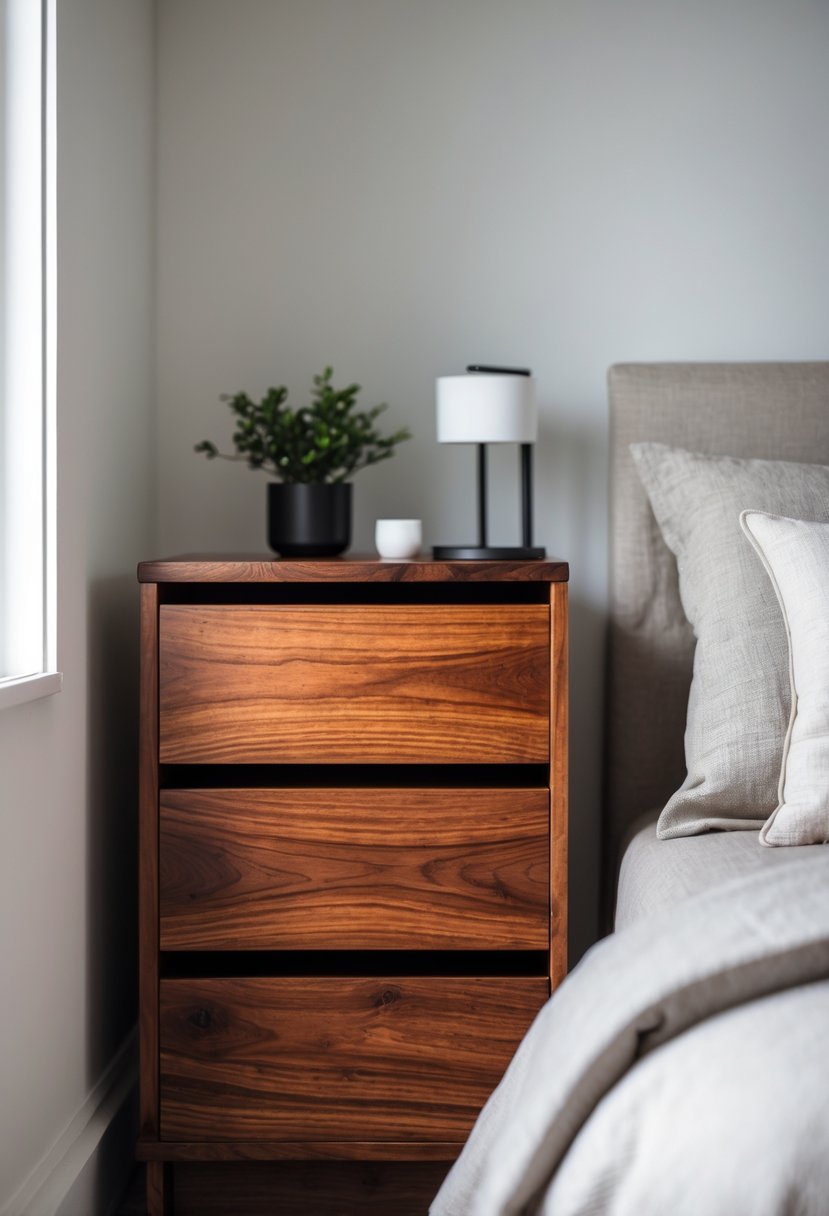
They pick slim nightstands to save floor space while keeping essentials close. Narrow pieces, about 20 inches or less, fit tight layouts and still hold a lamp, book, and phone.
Stained wood adds warmth without looking heavy. Vertical drawers or open shelves give extra storage without widening the footprint.
Choose finishes that match the bed or trim to make the room feel coordinated. A simple, tall design keeps the look clean and modern.
9) Integrate a small workspace corner with a compact desk and chair
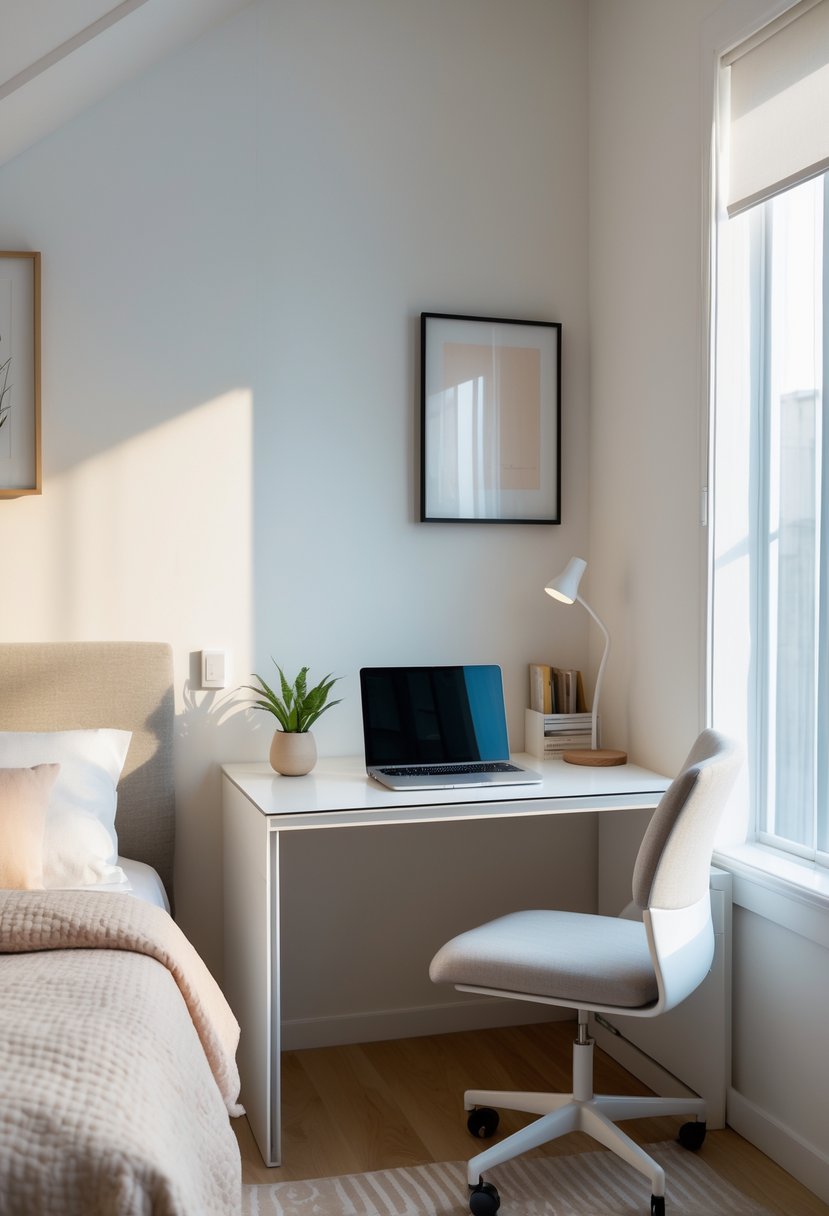
They can fit a narrow desk or wall-mounted shelf into an unused corner to create a clear work spot.
Choose a slim chair that tucks under the desk to save floor space and keep the room tidy.
Add a small lamp and vertical storage like floating shelves or pegboards for supplies.
Keep the surface clear and use baskets or drawers to hide clutter and maintain a calm bedroom vibe.
10) Use mirrors strategically to reflect light and enlarge the space visually
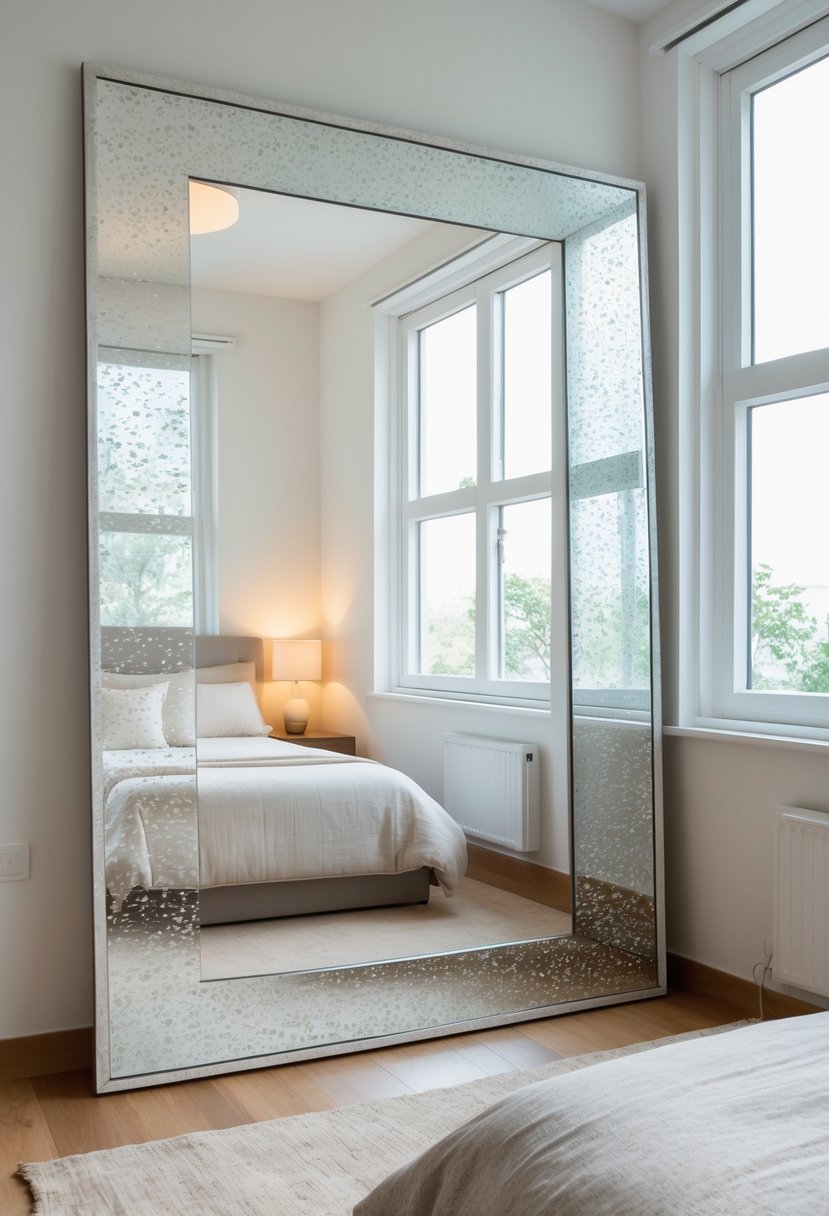
They place a large, simple mirror opposite a window to bounce daylight across the room. This brightens corners and makes the space feel more open.
They try tall or wide mirrors to show more of the room, creating a sense of depth without extra furniture. Minimal frames keep the look calm and modern.
They angle mirrors toward a focal point or light source to spread light and add interest. Grouping small mirrors can also create texture while increasing visual space.
Fundamentals of Small Bedroom Design
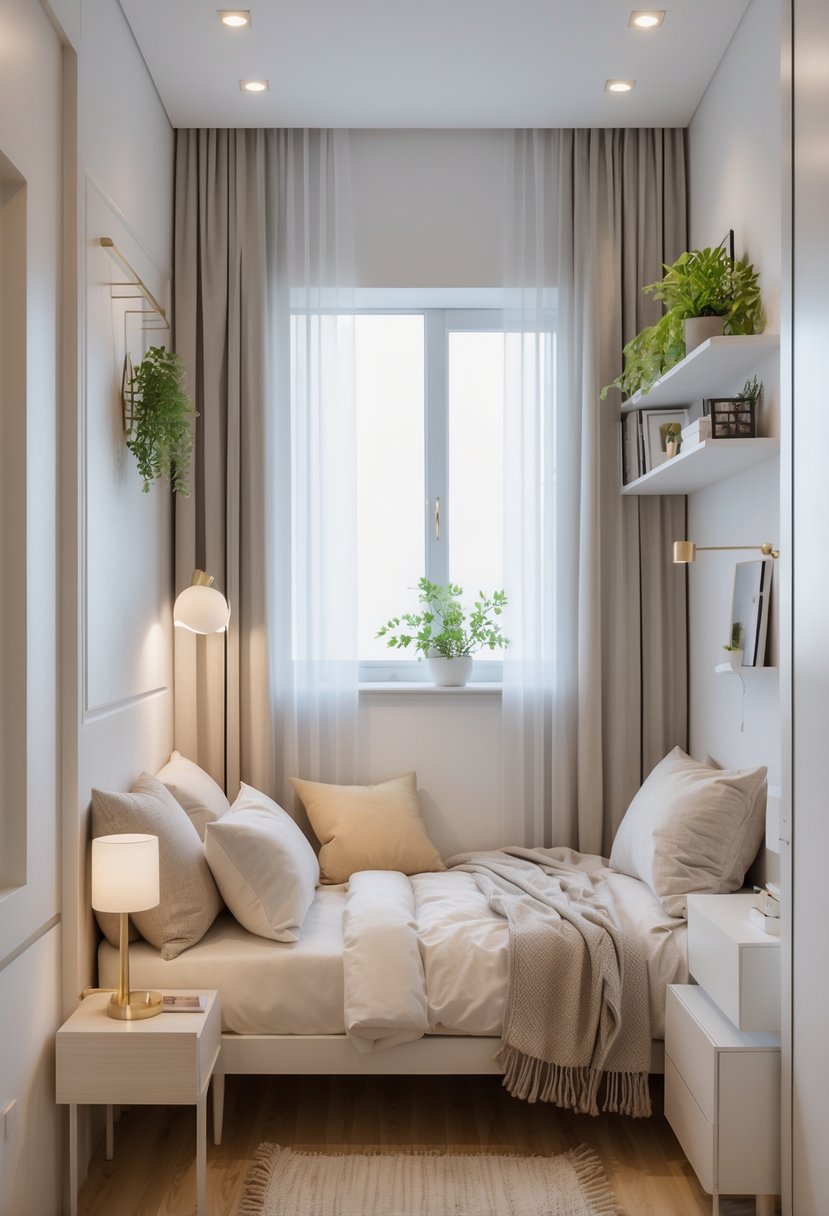
Focus on light, smart furniture placement, and a limited color palette to make the room feel larger and more restful. Prioritize items that serve a clear purpose and create visual openness.
Maximizing Natural Light
They should clear the window area of bulky furniture to allow full daylight entry. Use sheer curtains or a single translucent roller shade so light spreads evenly without glare.
Place mirrors opposite or adjacent to windows to reflect light deeper into the room. A single large mirror or a group of small mirrors works better than many small, scattered reflective surfaces.
Choose window treatments and light fixtures in light, neutral tones to avoid visual weight. Keep windowsills simple — one low-profile plant or a narrow tray for keys and small items keeps the area tidy and functional.
Strategic Furniture Placement
They must measure the room and the furniture before moving anything. Start with the bed as the anchor and position it to allow clear walkways of at least 24–30 inches on one side.
Use multipurpose furniture: a bed with built-in drawers, a bench that doubles as storage, or a wall-mounted fold-down desk. These choices reduce clutter and free floor space.
Place taller pieces against the longest wall to create balance. Keep small bedside tables or floating shelves to maintain floor clearance and cleaner sightlines.
Choosing a Cohesive Color Palette
They should limit the palette to two or three related colors to avoid visual clutter. Pick a main neutral for walls and large pieces, a mid-tone for textiles, and one accent color for small decor.
Use lighter colors on walls and ceilings to make the room feel higher and wider. Add depth with textured fabrics—woven throws, subtle patterned pillows, or a low-contrast area rug.
Apply color consistently in vertical zones: ceiling, walls, large furniture, then accents. This order helps the eye move smoothly and keeps the space feeling unified.
Integrating Style and Storage
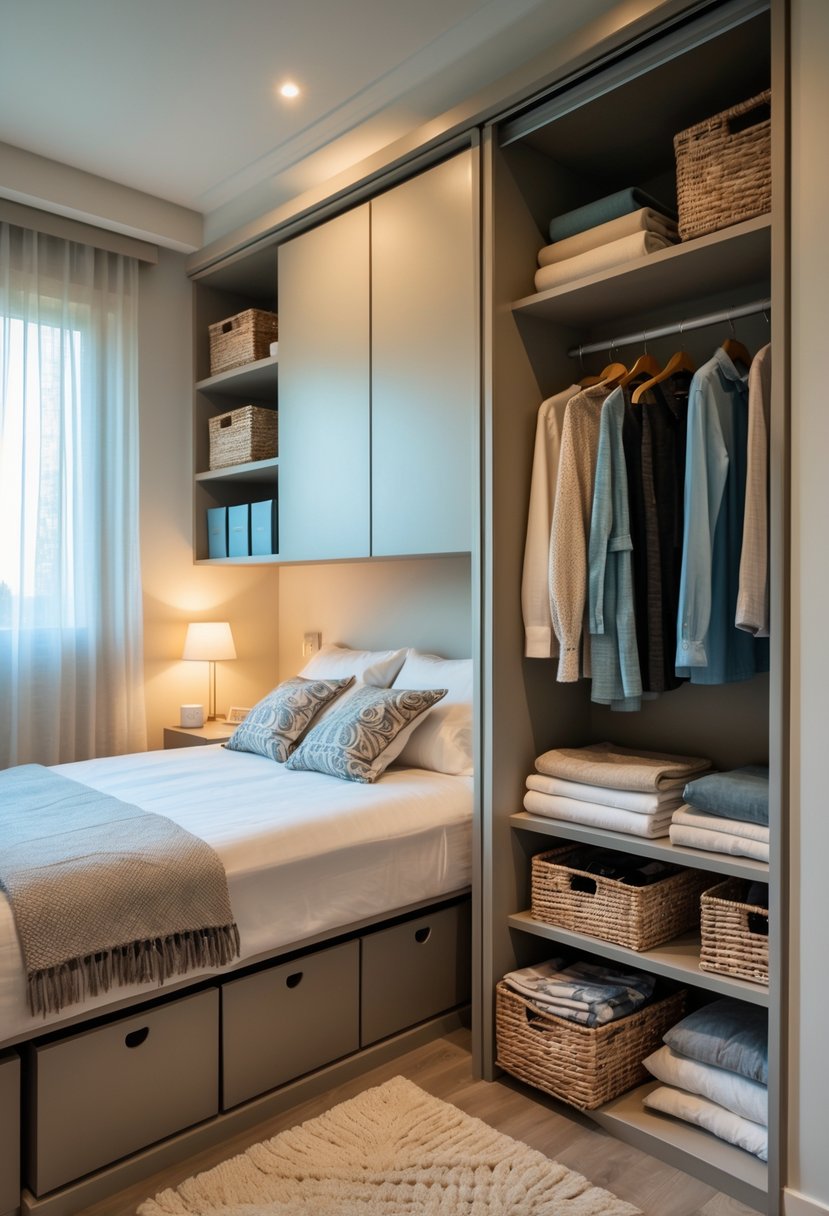
Smart choices let the room look stylish while hiding clutter. Focus on pieces that do double duty and use wall space to free the floor.
Multifunctional Furniture Solutions
They should pick furniture that hides storage without adding bulk. A bed with deep drawers stores out-of-season clothes and linens. Choose drawers with smooth glides so items are easy to access.
A storage bench at the foot of the bed works for extra bedding and a seating spot. Nightstands with shelves plus a drawer keep small items like chargers and books organized. For desks, look for fold-down tops or wall-mounted desks that collapse when not used.
Opt for furniture with clean lines and neutral finishes to keep the room feeling open. Consider ottomans with removable lids, mirrored dressers to reflect light, or headboards with built-in shelves for bedside essentials.
Incorporating Vertical Space
They should use walls from floor to ceiling to gain storage without shrinking walkways. Install tall wardrobes or slim, high shelving units to hold folded clothes and baskets.
Floating shelves over the bed or above doors keep books and decor off the floor. Pegboards and wall hooks organize bags, hats, and jewelry where they’re visible and easy to grab. Use narrow wall-mounted cabinets for shoes and toiletries.
Place built-in shelves into alcoves or frame the window with shelving to add storage while keeping natural light. Paint shelves the same color as the wall to reduce visual clutter and make the room feel taller.
Frequently Asked Questions
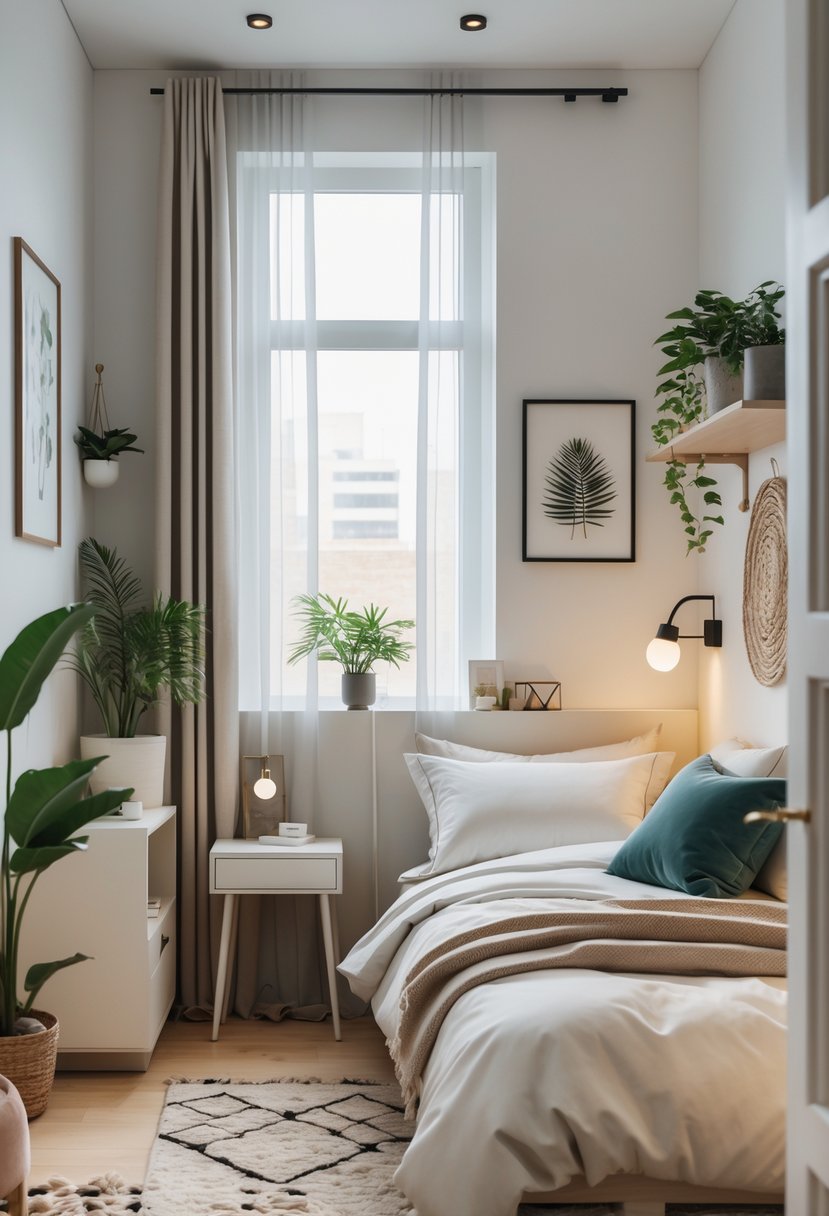
This section gives clear, practical steps for saving floor space, choosing colors, picking compact furniture, using smart storage, arranging layout, and selecting lighting to make a small bedroom feel larger and more stylish.
How can I maximize space in a small bedroom?
Choose furniture that serves more than one use, such as a storage ottoman that holds bedding and doubles as seating.
Use wall-mounted pieces like floating shelves and a wall desk to free up floor space and keep pathways clear.
Keep clutter low by storing seasonal clothes under the bed and using vertical storage.
A small bench at the foot of the bed can add seating without blocking movement.
What color schemes are best for making a small bedroom look larger?
Light neutrals and soft pastels reflect more light and make walls recede, creating an airy feel.
Stick to two or three related tones to avoid visual clutter and maintain a calm look.
Use a slightly darker color on one small accent wall or at the headboard to add depth without shrinking the room.
Match trim and ceiling in a brighter white to lift the space visually.
What types of furniture work best in a compact sleeping area?
Pick slim-profile furniture with exposed legs to keep sightlines open.
Multifunctional pieces—like a platform bed with built-in drawers or a storage ottoman—save space and reduce extra furniture.
Choose a small bench at the foot of the bed for storage and seating, and prefer floating nightstands to clear floor area.
Avoid oversized armoires; instead use tall, narrow dressers to maximize vertical storage.
Are there any innovative storage solutions for small bedrooms?
Install floating shelves above the bed or desk to hold books, decor, or baskets.
Use under-bed bins or drawers for shoes, linens, and off-season clothes.
Try wall-mounted hooks and pegboards for bags, jewelry, and frequently used items.
Use divided organizers inside drawers and closets to increase usable space.
How can I arrange my bedroom to make it feel more spacious?
Place the bed on the longest wall to open up floor space and improve flow.
Leave clear walking paths and avoid blocking windows or doors.
Position mirrors across from windows to reflect light and extend views.
Keep larger items near walls and let the center of the room remain open.
What lighting options will help create the illusion of more space in a small bedroom?
Layer lighting: combine ambient ceiling light, task lamps, and accent lighting for depth.
Choose wall sconces or hanging pendants to free up nightstand space and reduce clutter.
Use warm white bulbs that mimic daylight to keep the room inviting.
A statement wood bead chandelier can add style while keeping light diffuse and soft.