

10 Rain Gutter Drainage Ideas to Keep Your Home Dry
This article was created in line with Trends Oraa’s research and content standards.
Ever step outside after a storm and notice puddles hugging your foundation, mulch washed halfway across the yard, or that one mystery soggy patch that never seems to dry out? Yeah, that is usually your home waving a big red flag. When rainwater is not directed properly, it can mess with your landscaping, damage your foundation, and turn your yard into a muddy headache way faster than most people expect.
I’m a bit of a home-maintenance nerd, so I genuinely love simple fixes that save people from expensive repairs later. And gutter drainage is one of those things that looks boring until it starts costing real money. The good news? You do not need some mega renovation to improve drainage around house areas. A few smart upgrades can make a huge difference.
In this guide, we’ll walk through 10 rain gutter drainage ideas to keep your home dry, protect your foundation, and make rainy days way less stressful. Ready to stop rainwater from freeloading around your house?
Why Gutter Drainage Matters More Than People Think
Before we jump into the ideas, let’s set the stage. Gutters are not just there to catch rain and look useful. Their real job is to move water away from your house as fast and safely as possible.
When that does not happen, you can end up with:
- Foundation cracks
- Basement moisture
- Erosion around landscaping
- Mold and mildew issues
- Standing water near walkways
- Damage to siding and fascia
Pretty wild for something as simple as rain runoff, right? IMO, gutter drainage is one of the most overlooked parts of home care.
1. Extend Your Downspouts Away From the Foundation
If your downspouts dump water right next to your house, that is problem number one. One of the easiest fixes is adding a downspout extension so water flows several feet away from the foundation.
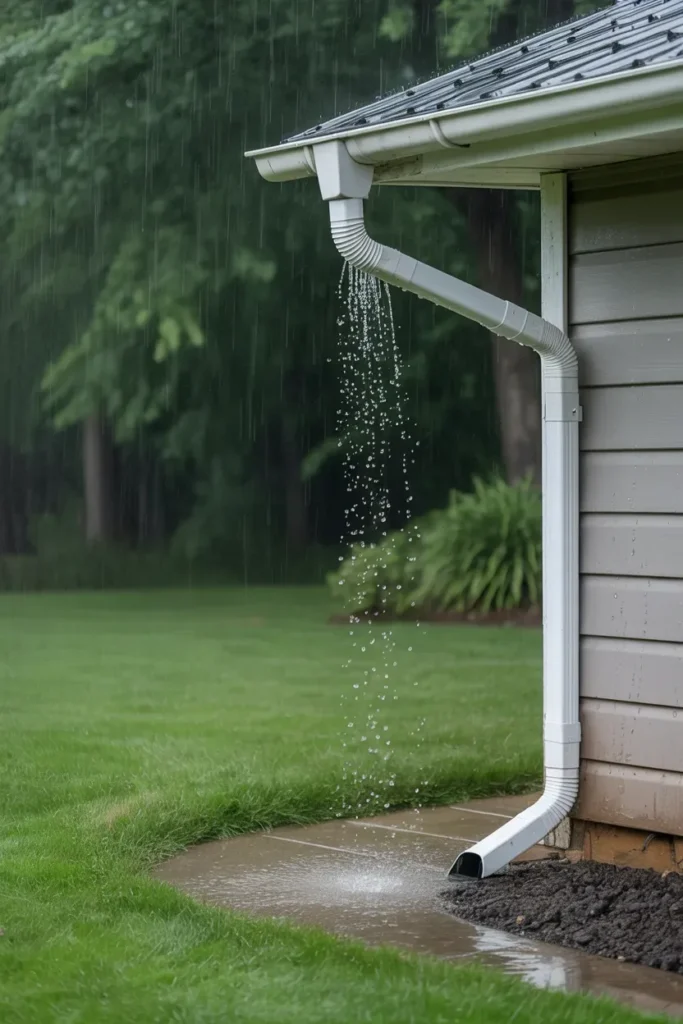
A lot of homeowners assume the splash block at the bottom is enough. Sometimes it helps, sure, but often it is not nearly long enough. Water still pools close to the base of the home and creates trouble over time.
How Far Should the Extension Go?
A good rule of thumb is to move water at least 4 to 6 feet away from the house. In some yards, you may need even more distance depending on slope and soil type.
Best for:
- Homes with water pooling near the base
- Soft or clay-heavy soil
- Areas with frequent heavy rain
This is one of the cheapest and most effective ways to improve drainage around house zones without tearing up your yard.
2. Add Splash Blocks for Quick Surface Control
Splash blocks are simple, but do not underestimate them. These shallow angled blocks sit under the downspout and help guide water away instead of letting it blast a hole into the dirt.
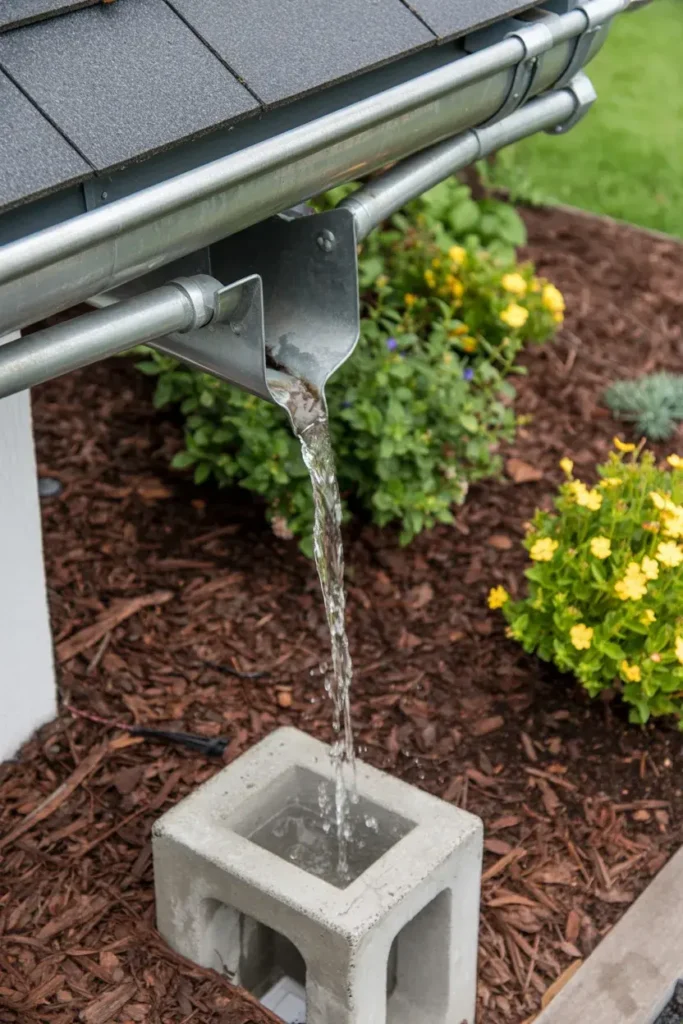
They are especially useful if you have mulch beds, flower borders, or loose soil near your downspout exits. Without one, rainwater can carve out little trenches fast.
Why They Work
A splash block helps by:
- Reducing soil erosion
- Redirecting runoff outward
- Protecting mulch and plants
- Preventing muddy patches
This is not the fanciest option on the list, but sometimes the basic fix is the one that works. Why overcomplicate it?
3. Install Underground Drain Pipes for a Cleaner Look
Want something more polished? An underground drain pipe system can carry water from your downspouts to a safer discharge point without leaving extensions snaking across your yard.
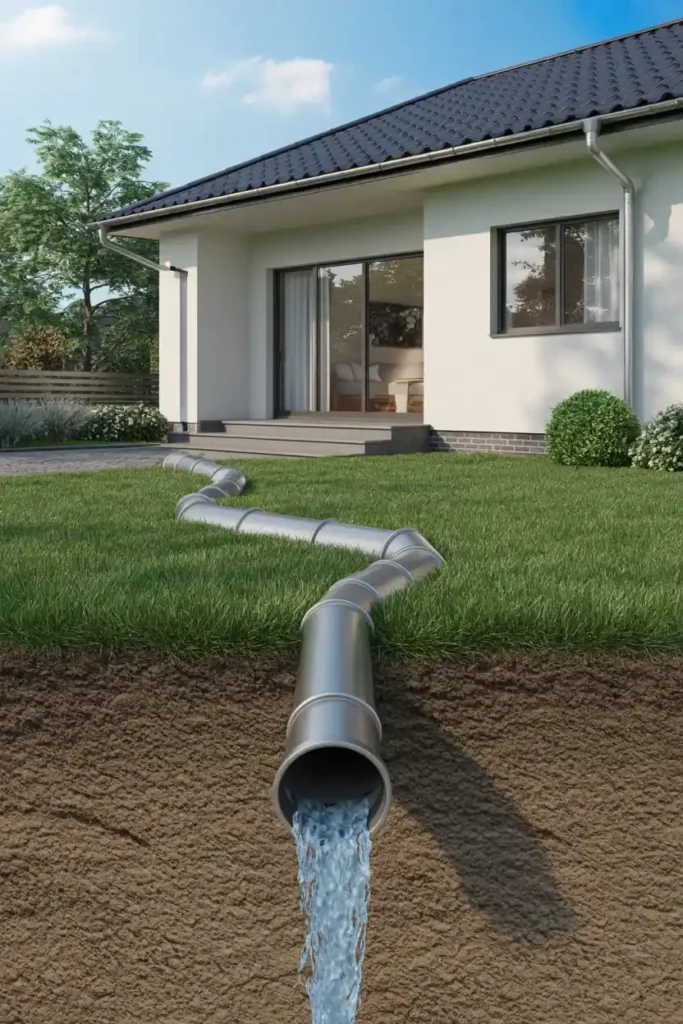
This setup usually connects the bottom of the downspout to a buried pipe that moves water toward a curb, pop-up emitter, drainage ditch, or dry well. It keeps the yard looking neat and cuts down on trip hazards too.
Things to Consider Before Installing
Before you go this route, think about:
- Where the water will discharge
- Whether the yard has enough slope
- Local drainage rules in your area
- How easy the system will be to clean out
This option takes more planning, but it is excellent for homeowners who want serious rain gutter drainage performance without sacrificing curb appeal.
4. Use a Rain Barrel to Capture and Reuse Water
Now here is a drainage idea that is practical and eco-friendly. A rain barrel collects water from your downspout so it does not all dump into one soggy area at once.
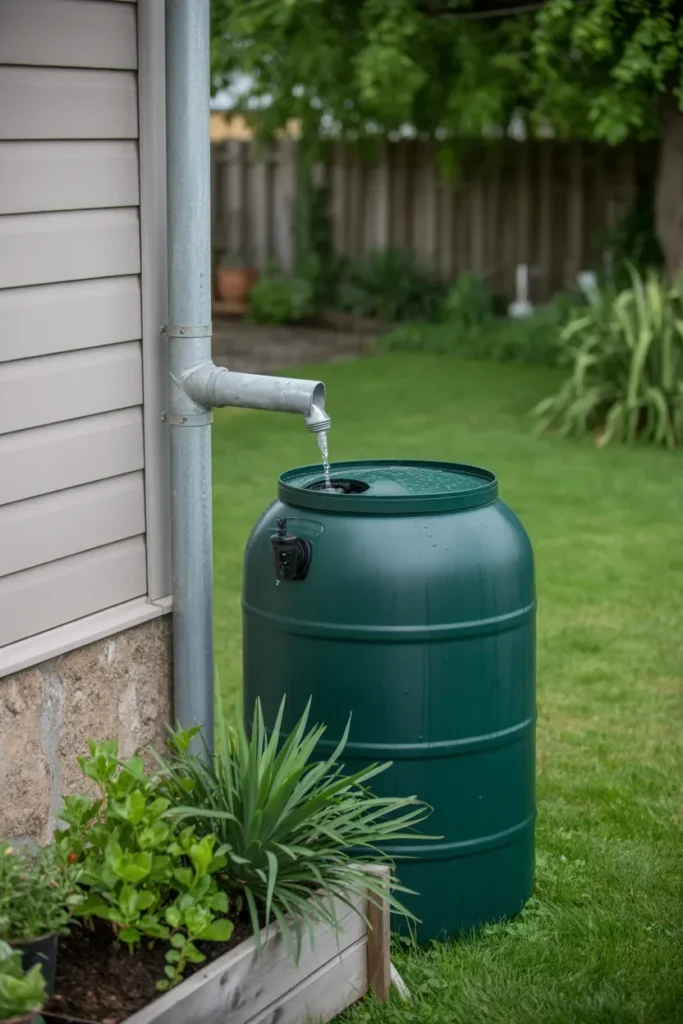
That stored water can then be used for gardens, flower beds, or outdoor cleaning. It is a smart way to reduce runoff and lower water waste at the same time. Pretty cool, right?
Rain Barrel Benefits
A rain barrel can help you:
- Slow down gutter discharge
- Reduce pooling near the house
- Save water for landscaping
- Cut down on erosion
Just make sure the barrel has an overflow outlet. That part matters a lot. If the barrel fills during a heavy storm and has nowhere to send extra water, you are right back where you started. FYI, this is where many people mess up.
5. Build a Dry Creek Bed for Natural Drainage
If you want a solution that looks intentional and attractive, a dry creek bed is a fantastic choice. It is basically a shallow trench lined with landscape fabric and decorative stone that directs water through your yard like a natural stream.
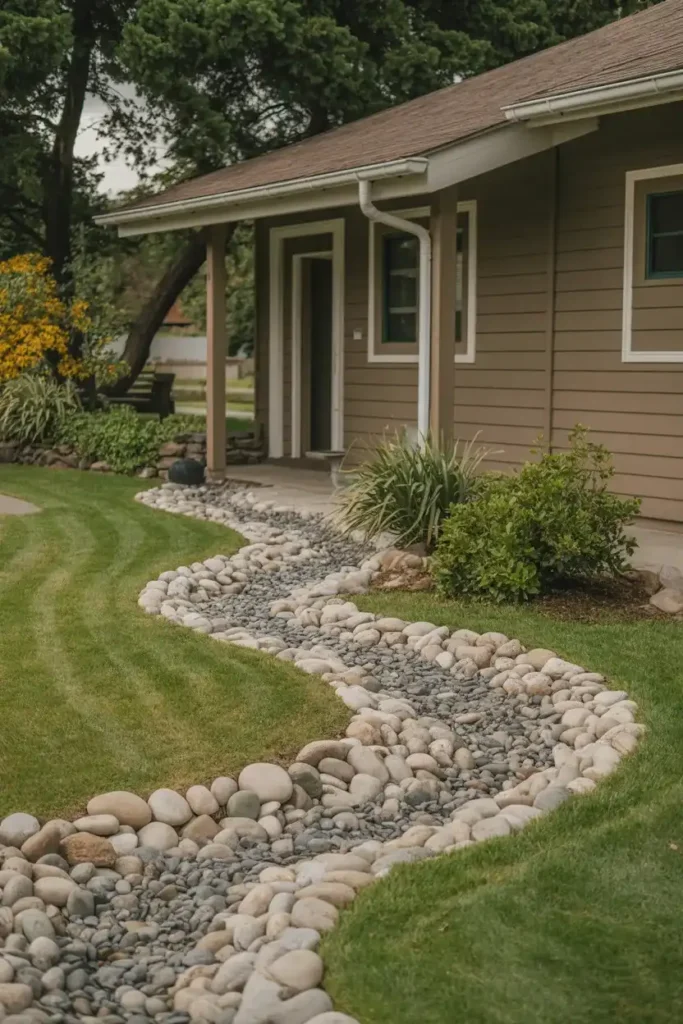
During dry weather, it looks like a landscaping feature. During storms, it works as a drainage channel. That is a pretty great combo.
Why Homeowners Love Dry Creek Beds
They offer:
- Functional drainage
- Visual appeal
- Low maintenance
- Erosion control
A dry creek bed works especially well if your property already has a natural slope. It can connect beautifully with downspout extensions or underground pipes, making it a strong option for better drainage around house design.
6. Create a French Drain for Persistent Water Problems
If you have constant soggy soil, a French drain might be your best friend. This system uses a gravel-filled trench and perforated pipe to collect and redirect groundwater and runoff away from trouble spots.
It is not just for gutter water, either. A French drain helps when rainwater tends to linger near the foundation or in low areas of the yard.
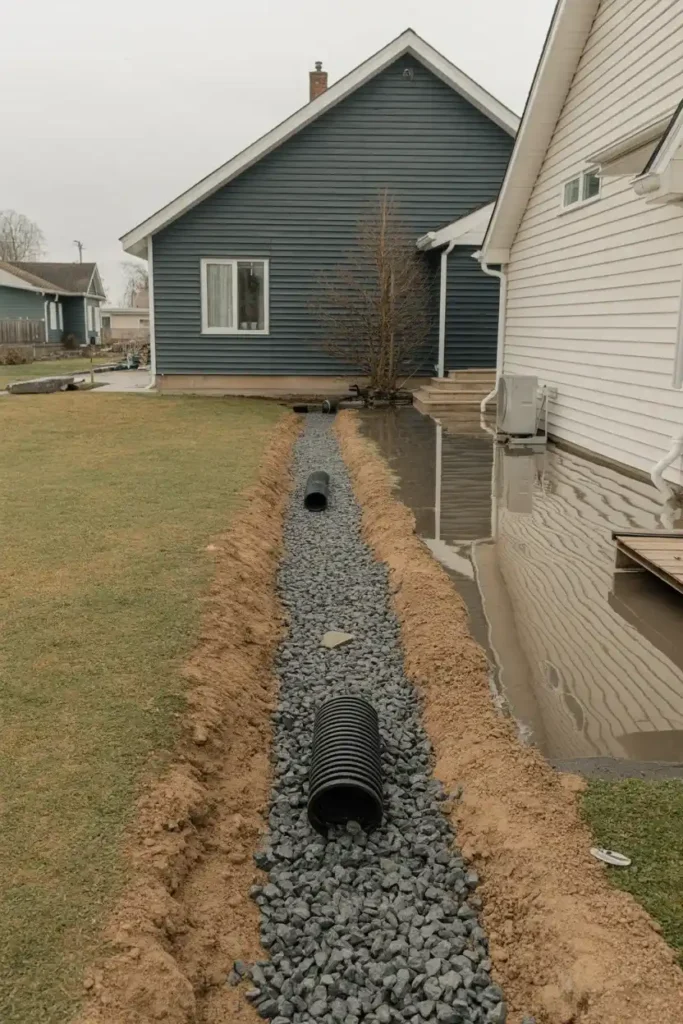
When a French Drain Makes Sense
Consider it if you notice:
- Standing water after every storm
- Wet basement walls
- Mushy lawn sections
- Repeated pooling near downspouts
A French drain takes more effort than a splash block or extension, but it can solve bigger drainage issues at the source. If your yard keeps acting like a sponge, this is worth a serious look.
7. Install Gutter Guards to Prevent Overflow
Let’s be honest. A lot of drainage problems start because the gutters are clogged. Leaves, twigs, shingle grit, and random debris can block the flow, causing water to spill over the sides instead of reaching the downspouts.
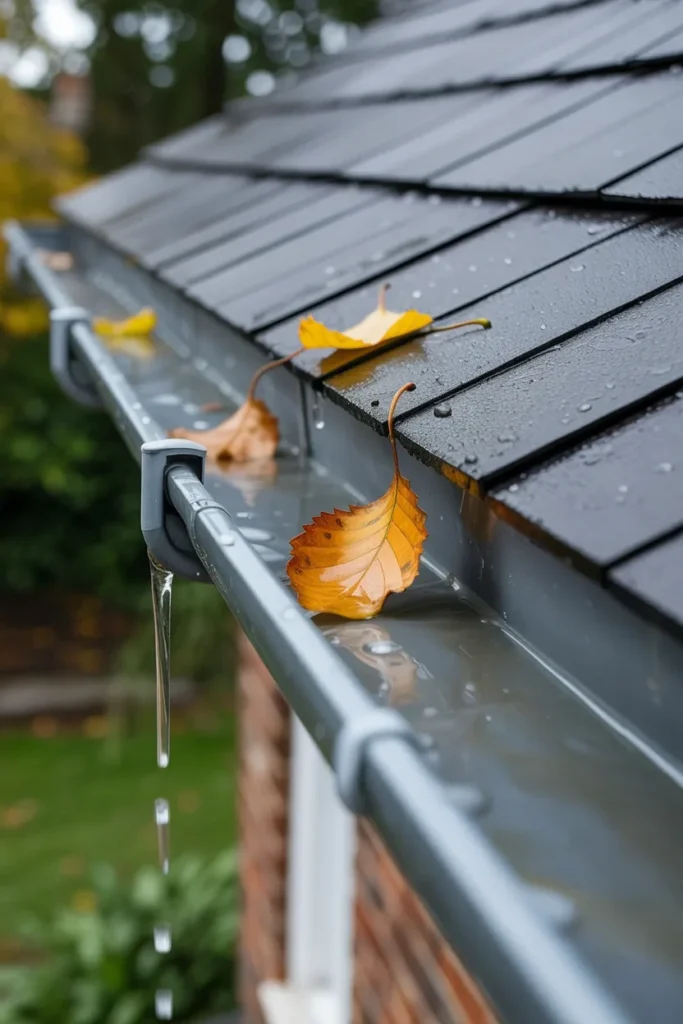
That is where gutter guards come in. They help keep debris out while allowing water to flow through the system.
The Real Benefit of Gutter Guards
Yes, they reduce cleaning. But more importantly, they help prevent:
- Overflow near the roofline
- Water spilling beside the foundation
- Clogged downspouts
- Ice dam issues in colder regions
No guard system is 100 percent maintenance-free, but they can seriously improve performance. And if you hate dragging out the ladder every season, this upgrade feels extra worth it.
8. Regrade the Soil Around Your Home
Here is the thing: even the best gutter system will struggle if the ground around your house slopes the wrong way. If the soil pitches toward the foundation, water will naturally move back to the house no matter what your gutters are doing.
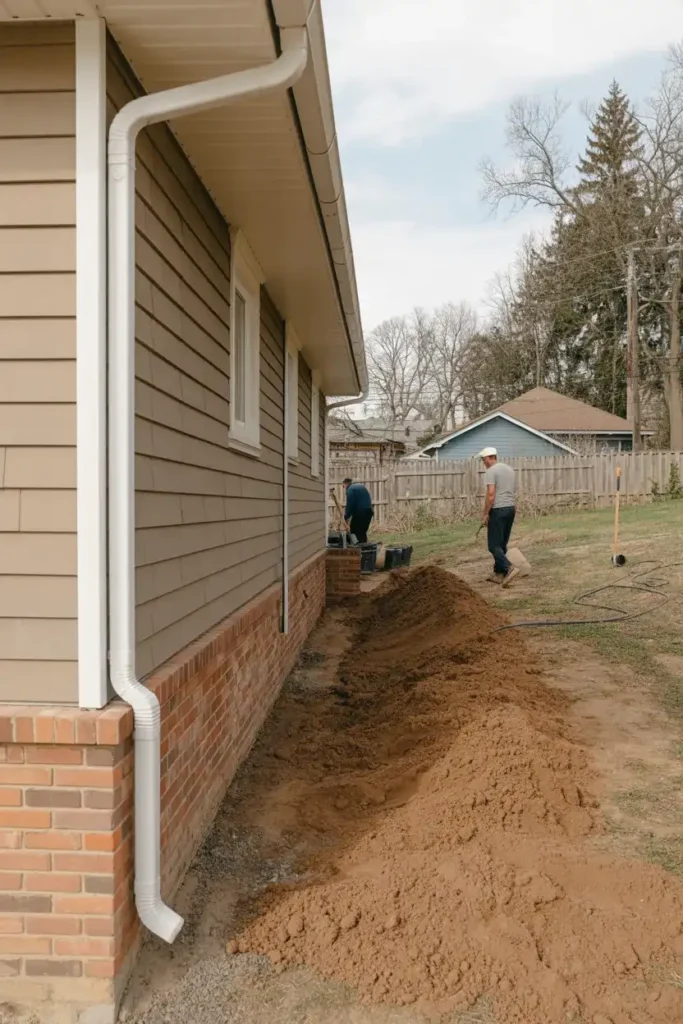
That is why grading matters so much. The soil should gently slope away from the home so runoff keeps moving in the right direction.
Signs Your Yard Needs Regrading
Watch for these clues:
- Water collecting near the foundation
- Mulch washing toward the house
- Basement dampness after storms
- Exposed roots or eroded beds near walls
This is one of those behind-the-scenes fixes that makes every other drainage upgrade work better. Think of it as giving your gutter system a proper landing zone.
9. Direct Water Into a Drainage Swale
A drainage swale is a shallow, sloped channel designed to guide water across your yard and away from structures. It is kind of like a softer, grassy version of a ditch, but way more attractive when done right.
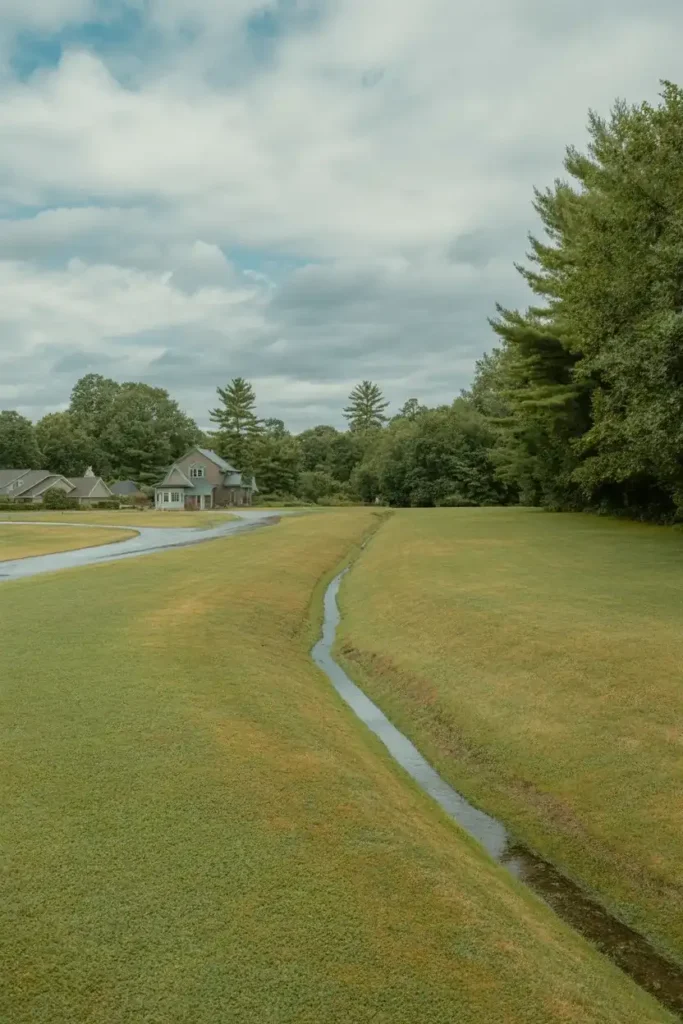
This is a smart solution if your property has room for a surface drainage path and you need to move a lot of water during storms.
Why Swales Work So Well
Swales are great because they:
- Move water gradually
- Reduce erosion
- Blend into landscaping
- Help with large runoff volumes
You can line them with grass, stone, or native plants depending on the look you want. If your goal is better drainage around house areas without a heavy constructed look, a swale can feel surprisingly natural.
10. Connect to a Dry Well for Underground Dispersal
A dry well is an underground structure that collects water and allows it to slowly soak into the surrounding soil. It is often used at the end of a downspout drain line when you need somewhere discreet for all that water to go.
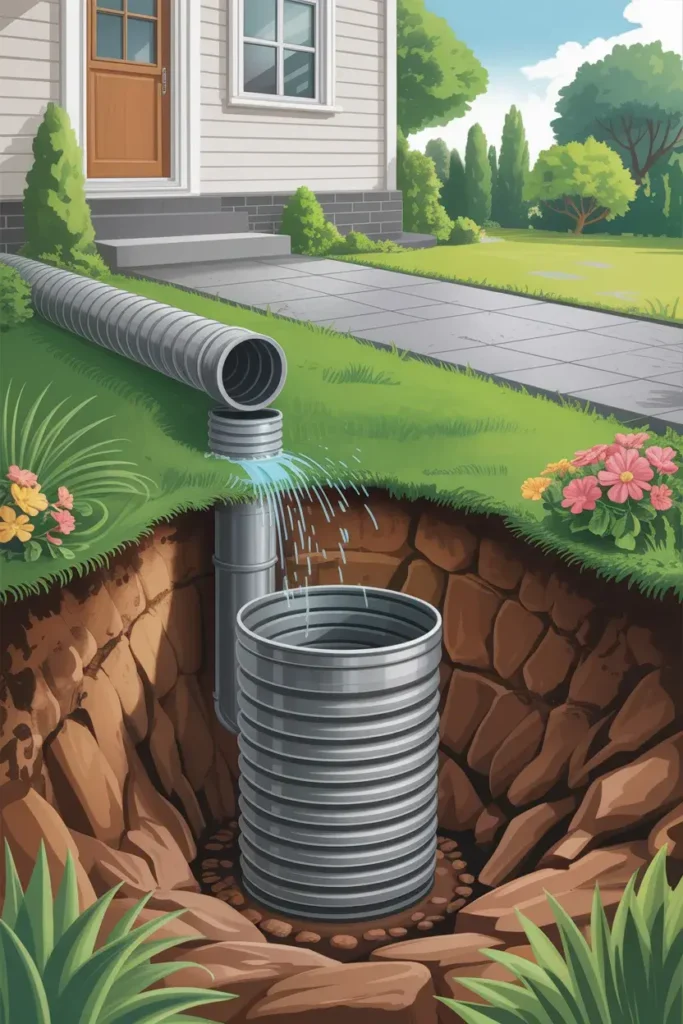
This is especially useful when your yard does not have an easy outlet point like a street drain or drainage ditch. Instead of releasing water at the surface, the dry well handles it below ground.
Is a Dry Well Right for Your Yard?
It can be a good fit if:
- Your yard holds water near the house
- You want a hidden drainage solution
- You have decent soil infiltration
- Surface runoff options are limited
That said, dry wells are not ideal everywhere. Heavy clay soil can make them less effective. Still, in the right setup, they are a slick solution and a solid long-term fix 🙂
How to Choose the Right Gutter Drainage Idea
So which option should you pick? Honestly, it depends on what kind of water problem you are dealing with. Some homes only need a simple extension. Others need a combo of fixes to stay dry.
Start With These Questions
Ask yourself:
- Where does the water pool after rain?
- Are the gutters overflowing or just draining poorly?
- Does the yard slope away from the house?
- Do you want a budget fix or a long-term upgrade?
- Are you solving a minor nuisance or a foundation risk?
For many homeowners, the best setup is layered. You might combine gutter guards, downspout extensions, and regrading for example. Or maybe an underground pipe feeds into a dry well or swale. The goal is not just moving water. The goal is moving it far enough away that your home stays dry and protected.
A Few Quick Maintenance Tips You Should Not Skip
Even the best drainage setup needs a little upkeep. Otherwise, small issues sneak back in.
Keep Your System Working
Make it a habit to:
- Clean gutters at least twice a year
- Check downspouts for clogs
- Inspect extensions and splash blocks after storms
- Watch for erosion near discharge points
- Look for signs of pooling around the foundation
A five-minute check after a heavy rain can tell you a lot. Is water flowing where it should? Or is your yard quietly plotting against you again?
Final Thoughts on Keeping Your Home Dry
When rainwater is managed well, your whole property works better. Your foundation stays safer, your yard stays cleaner, and your stress level drops every time dark clouds roll in. That is a pretty solid win.
The best part is that you do not need to tackle everything at once. Start with the most obvious trouble spot, choose one or two smart upgrades, and build from there. Whether it is a simple splash block or a full dry well setup, the right rain gutter drainage ideas can completely change how your home handles wet weather.
So next time it rains, take a walk outside and see where the water actually goes. That little inspection could save you a massive repair bill later. And honestly, that is the kind of home upgrade we all love.