

 By Trends Oraa
 You walk into a quiet corner of your home and imagine a small station that makes every morning easier and more enjoyable. This article shows sixteen easy ways to build a coffee bar that fits your space, style, and daily routine.
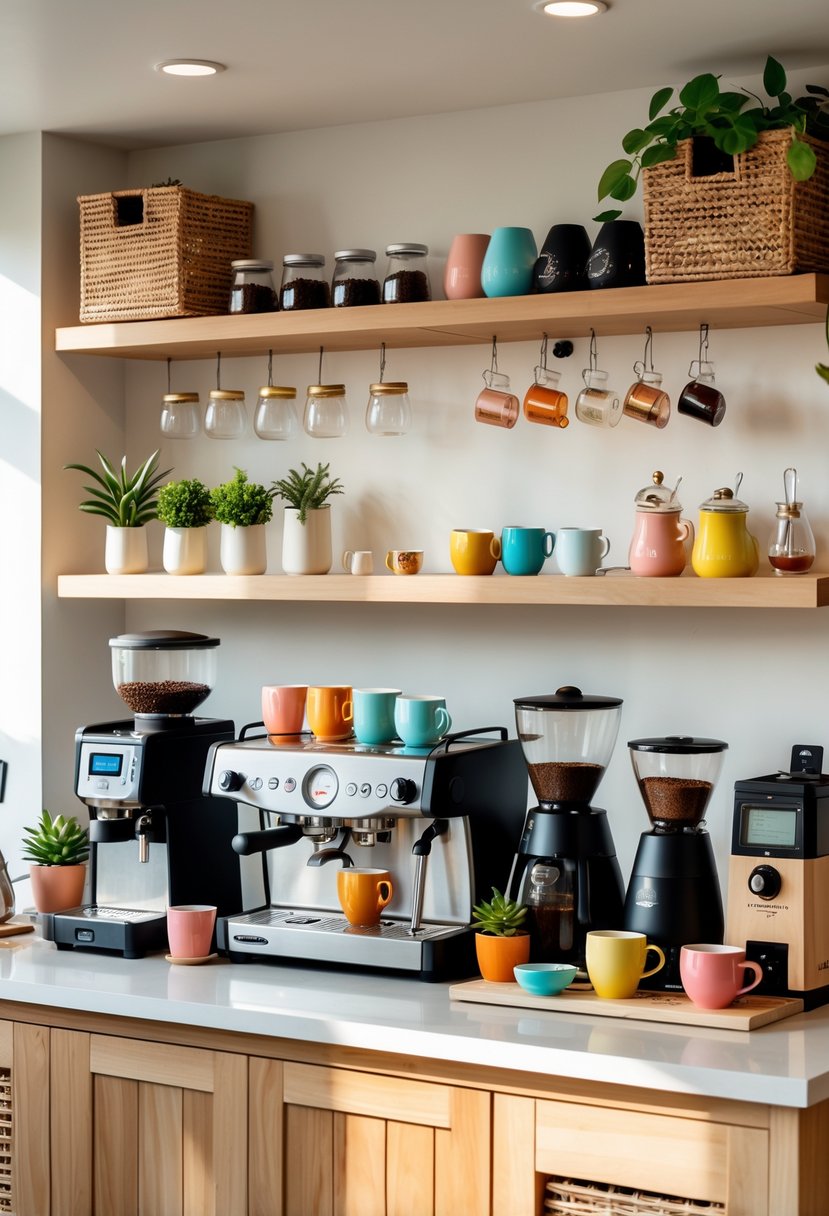
You will find ideas that work for tiny kitchens, dedicated nooks, and stylish upgrades that keep tools handy and attractive. Expect options that mix storage, lighting, and design so the setup feels both useful and personal.
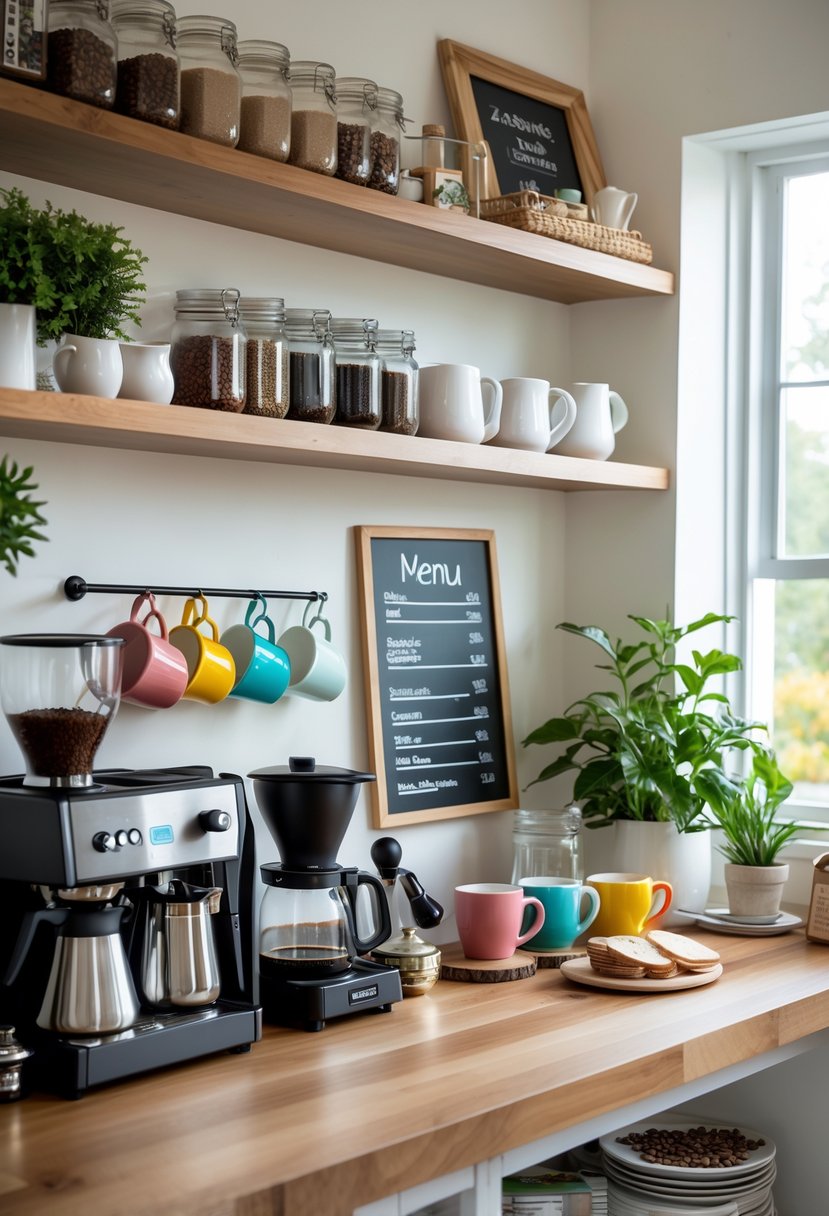
1) Built-in coffee nook with open shelving for mugs and syrups
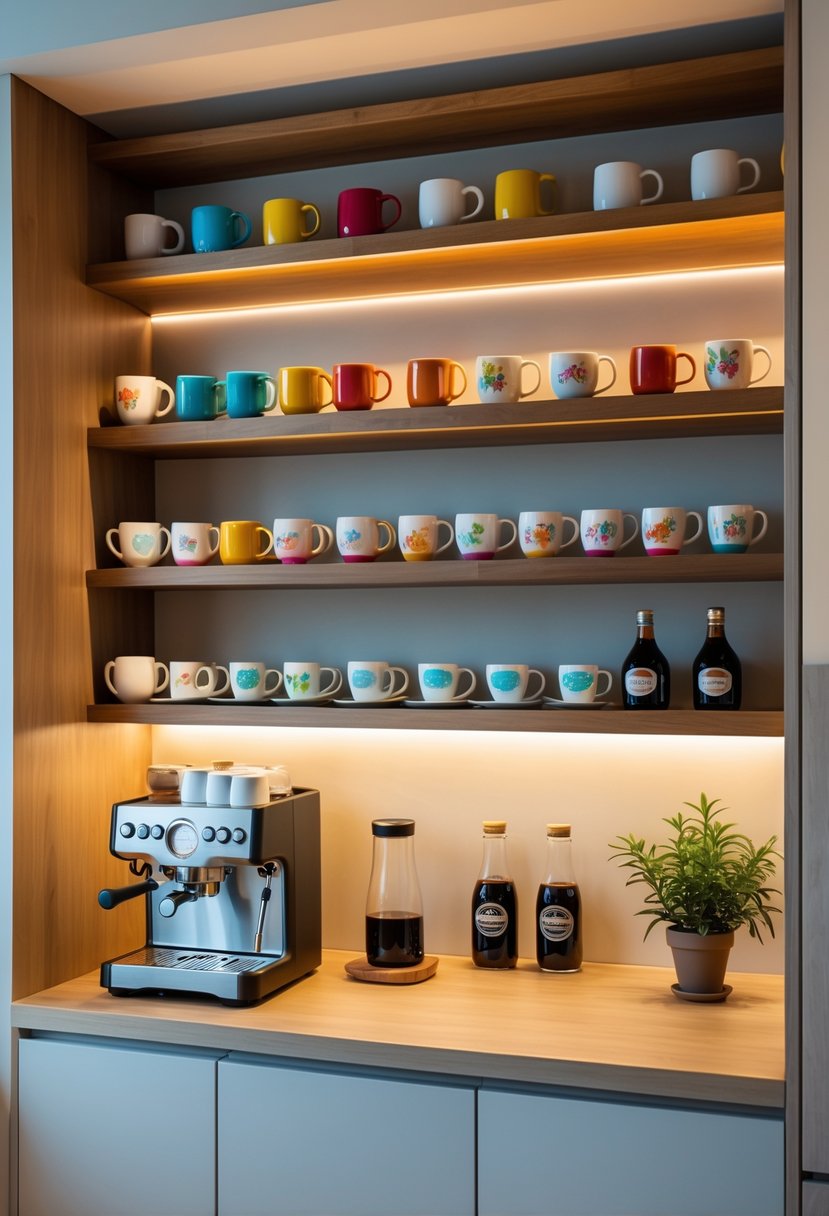
A built-in coffee nook uses vertical space to keep counters clear and tools within reach. Open shelves show mugs, syrups, and canisters so items stay organized and easy to grab.
Designers often place the nook in a kitchen corner or recessed wall to feel intentional. Labels and matching containers make the display tidy and simple to maintain.
2) Vintage cabinet converted into a barista station
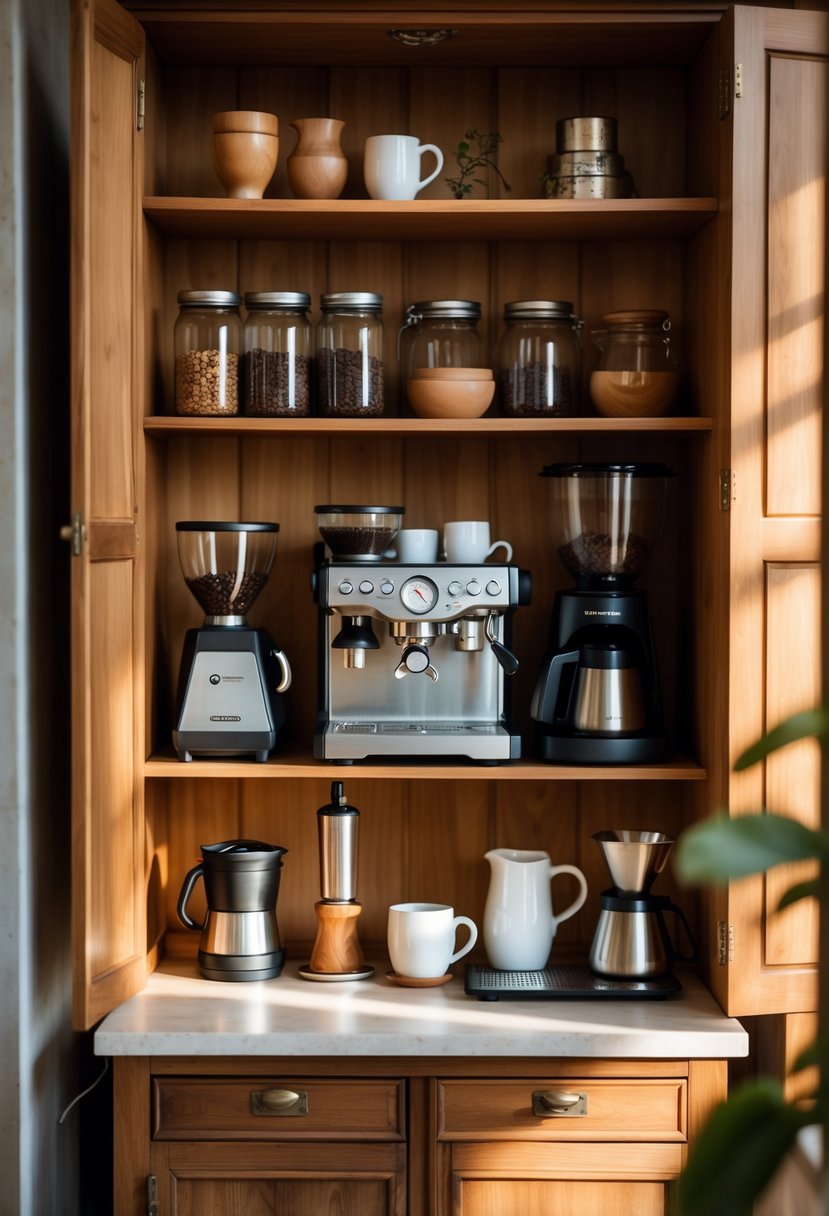
A vintage cabinet gives a coffee area instant character and hidden storage. It fits small spaces yet holds an espresso machine, mugs, and supplies without clutter.
They can restore or refinish the wood to match the room or keep aged patina for charm. Add a small drip tray, under-shelf lighting, and hooks for cups to make it truly functional.
3) Minimalist countertop station with stoneware and glass canisters
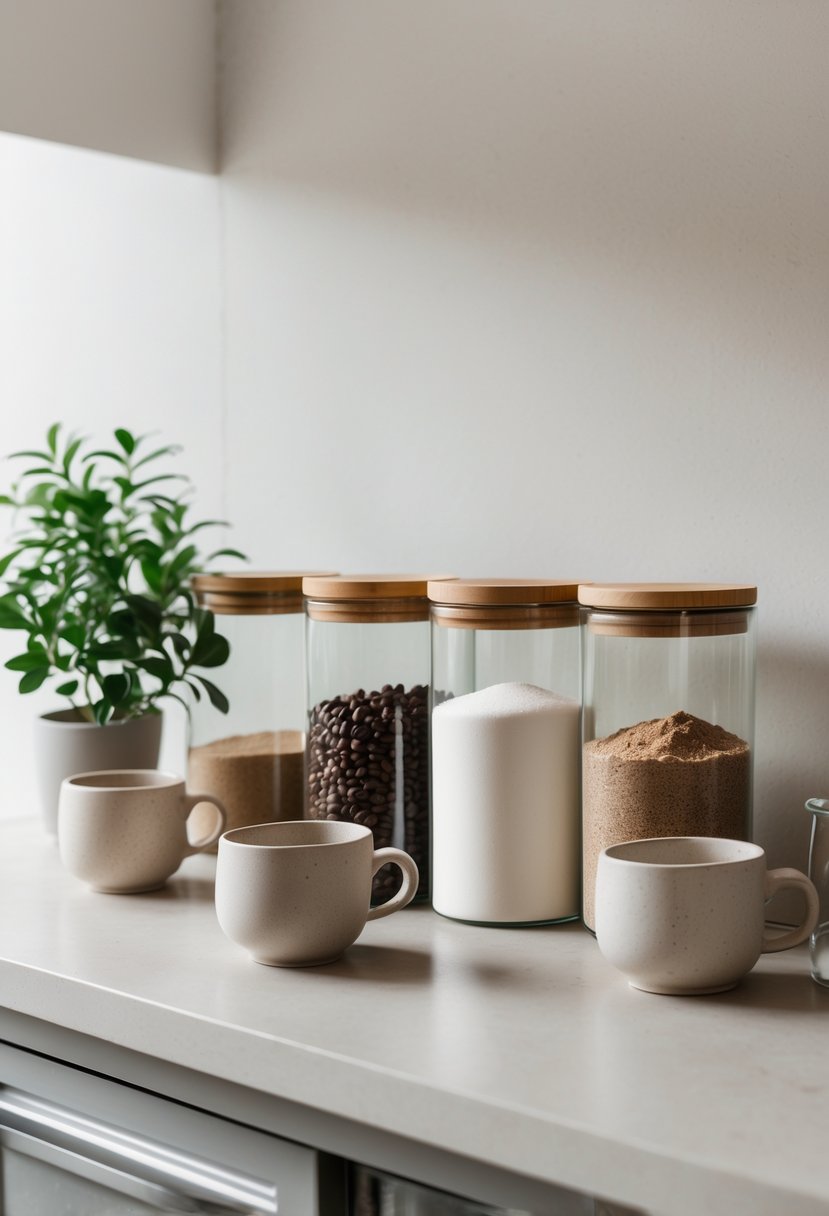
They choose a small section of counter and keep it clutter-free. A simple espresso machine sits beside matching stoneware mugs for a calm, cohesive look.
Clear glass canisters store beans, sugar, and tea so contents stay visible and fresh. Labels remain minimal—plain fonts or small tags—to keep the aesthetic clean.
A wooden tray or slate mat anchors the items and protects the countertop. Lighting is soft and functional, like an under-cabinet strip or a focused task lamp.
4) Corner coffee station integrated into the kitchen design
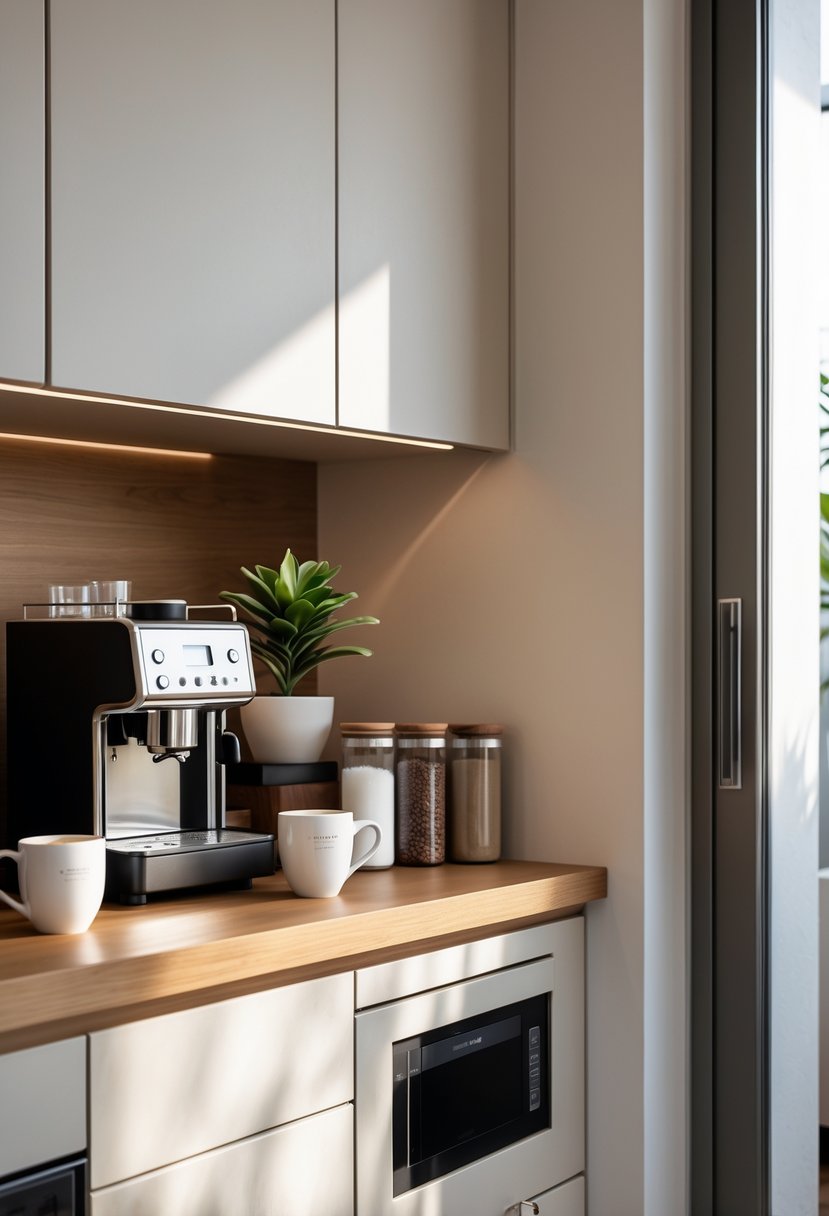
They tuck the coffee station into an unused corner to save counter space and keep the flow of the kitchen. A small L-shaped counter or custom shelving fits a machine, mugs, and a few jars without crowding the main work area.
Lighting and backsplash tile tie the station to the rest of the kitchen for a seamless look. Thoughtful placement of outlets and a pull-out drawer for beans and filters makes it easy to use and maintain.
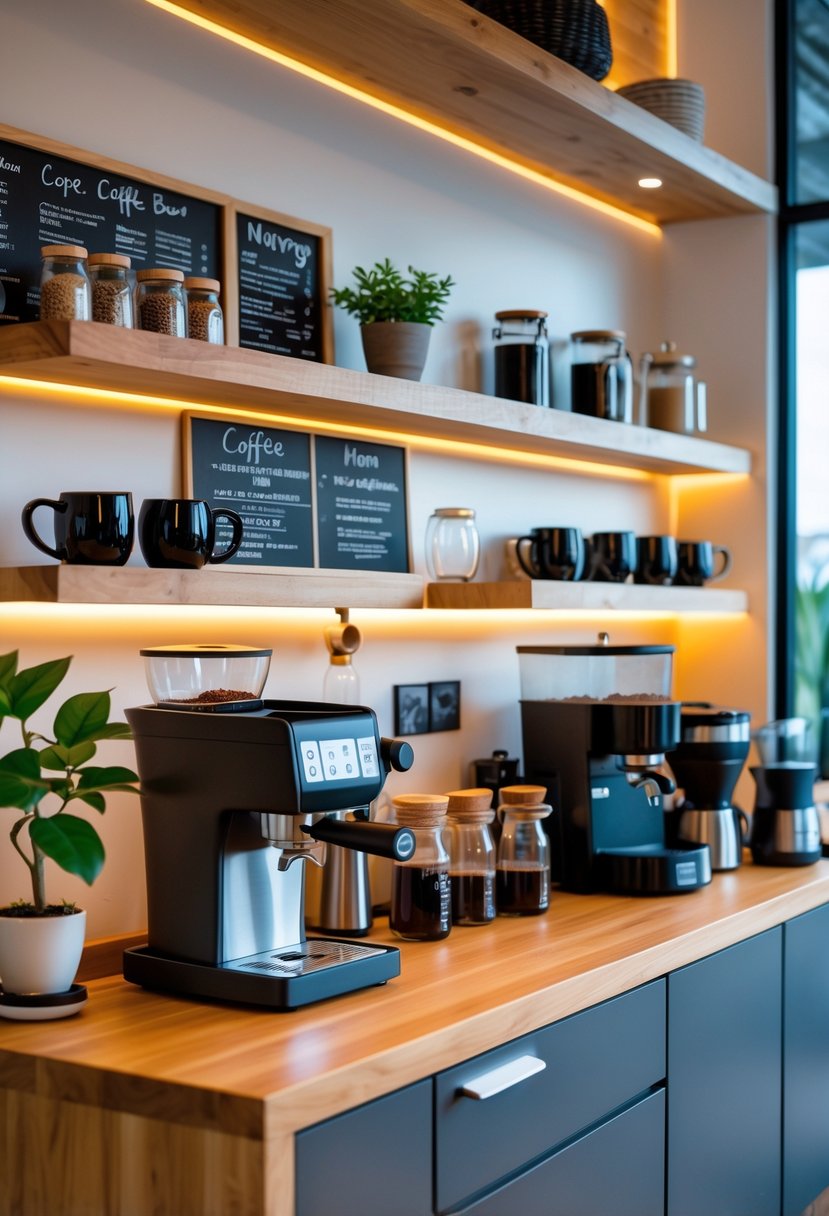
5) Floating shelves with integrated lighting for coffee gear
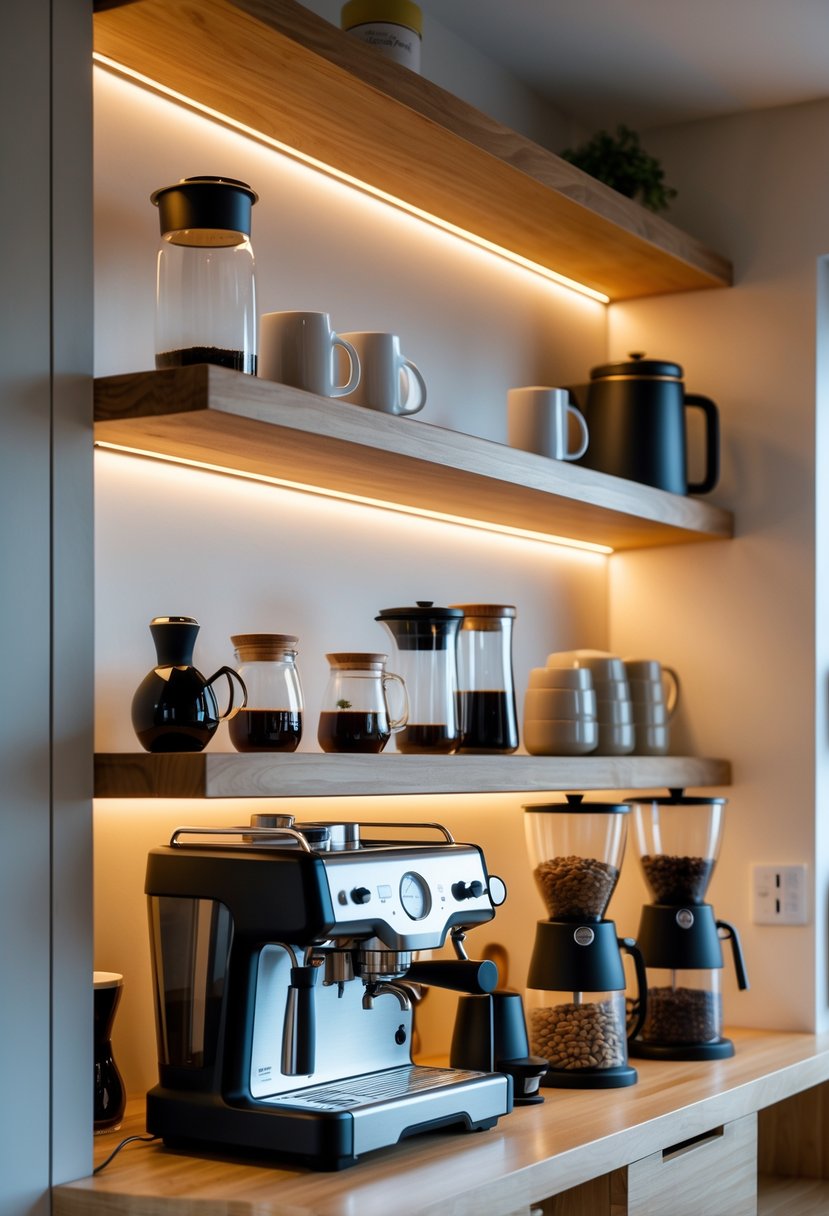
Floating shelves with built-in LED strips keep mugs, grinders, and beans within easy reach and visible. They add task light for brewing and soft ambient light for early mornings.
Choose warm white LEDs to show true colors of coffee and wood. Thin LEDs hide under the shelf so the look stays clean and modern.
They can include hooks underneath for hanging cups and a small outlet for the grinder. Installation is simple and works well in small kitchens.
6) Pull-out coffee drawer with built-in electrical outlets
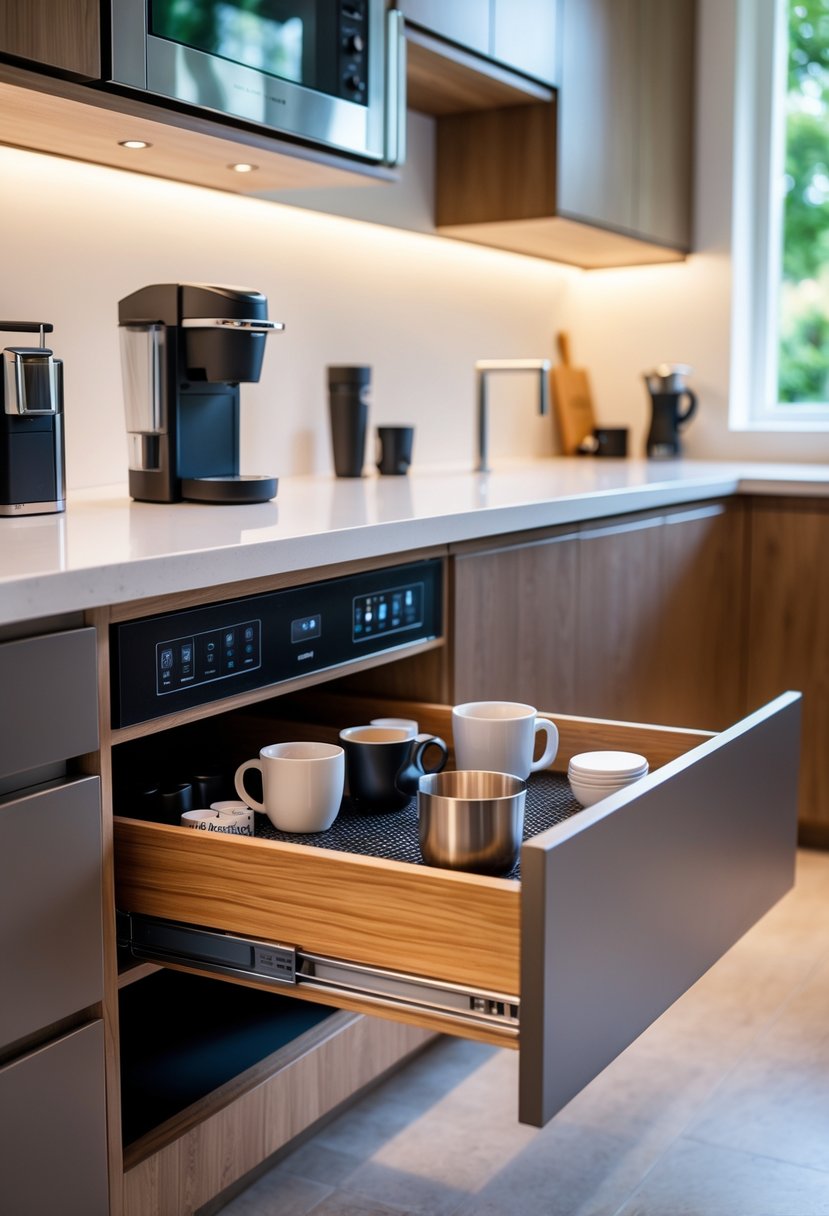
A pull-out coffee drawer hides appliances and keeps counters clear. It often includes AC outlets and USB ports so a maker, grinder, or kettle can stay plugged in safely.
They slide out for use and tuck away when finished. This setup works well in small kitchens or as a dedicated coffee station inside a cabinet.
7) Industrial-style coffee cart with metal and wood accents
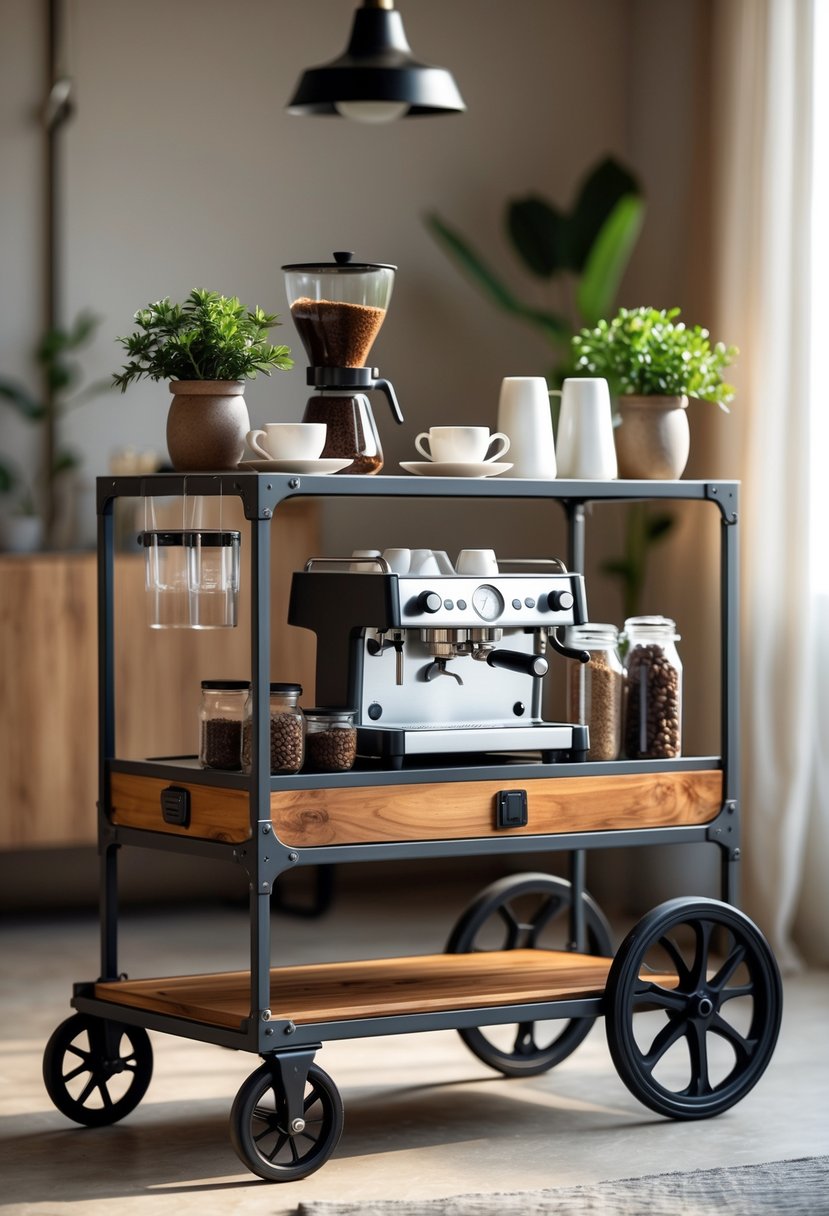
They pick a sturdy cart with a black metal frame and warm wood shelves for a clean, industrial look. The mix of metal and wood adds toughness and warmth without feeling heavy.
Wheels make the cart easy to move from kitchen to living room. Multiple tiers and hooks hold a brewer, mugs, and storage bins in one compact spot.
8) Wall-mounted espresso machine setup for space saving
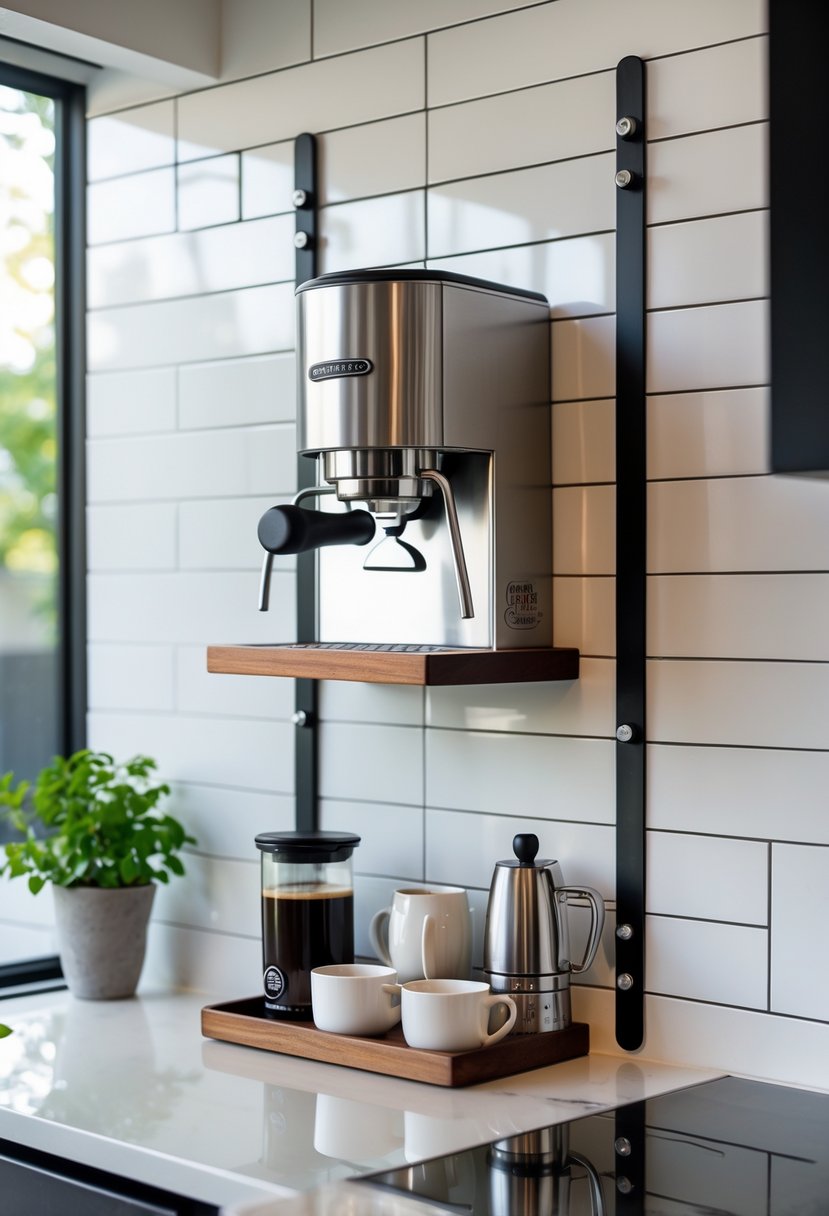
A wall-mounted espresso machine frees counter space and keeps the brew area tidy. It works well in small kitchens or narrow nooks.
They should mount to a solid wall or stud for safety, and installers must follow the manufacturer’s weight and clearance guidelines. Pair the machine with a slim shelf beneath for cups and a small drawer for tampers and filters.
9) Customizable pegboard wall for hanging coffee tools
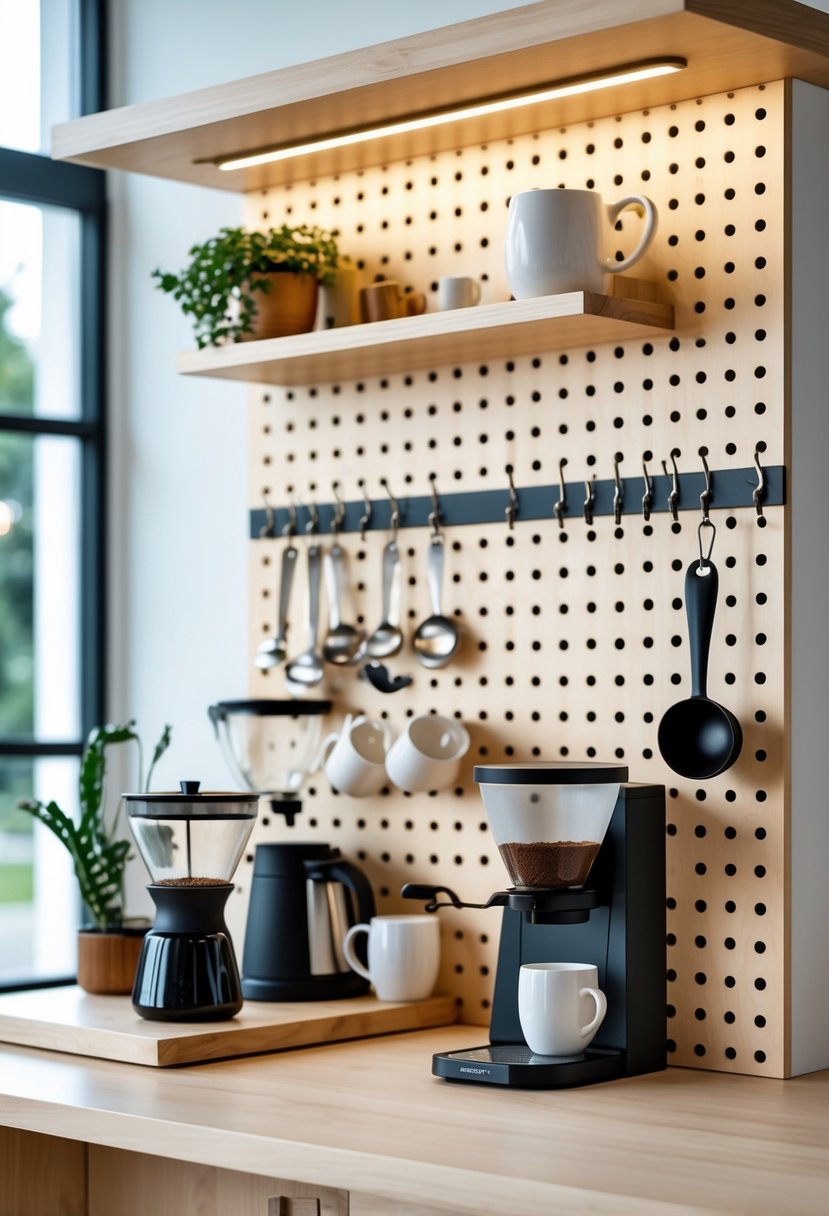
A pegboard wall gives them a flexible way to store mugs, scoops, and tamper on one visible surface.
They can move hooks and small shelves to fit new gear or change the layout as needs shift.
Mount it near the brewer for easy reach and add baskets for pods or filters.
The simple setup keeps counters clear and makes cleanup faster.
10) Glass canisters paired with gold spoons for an elegant touch
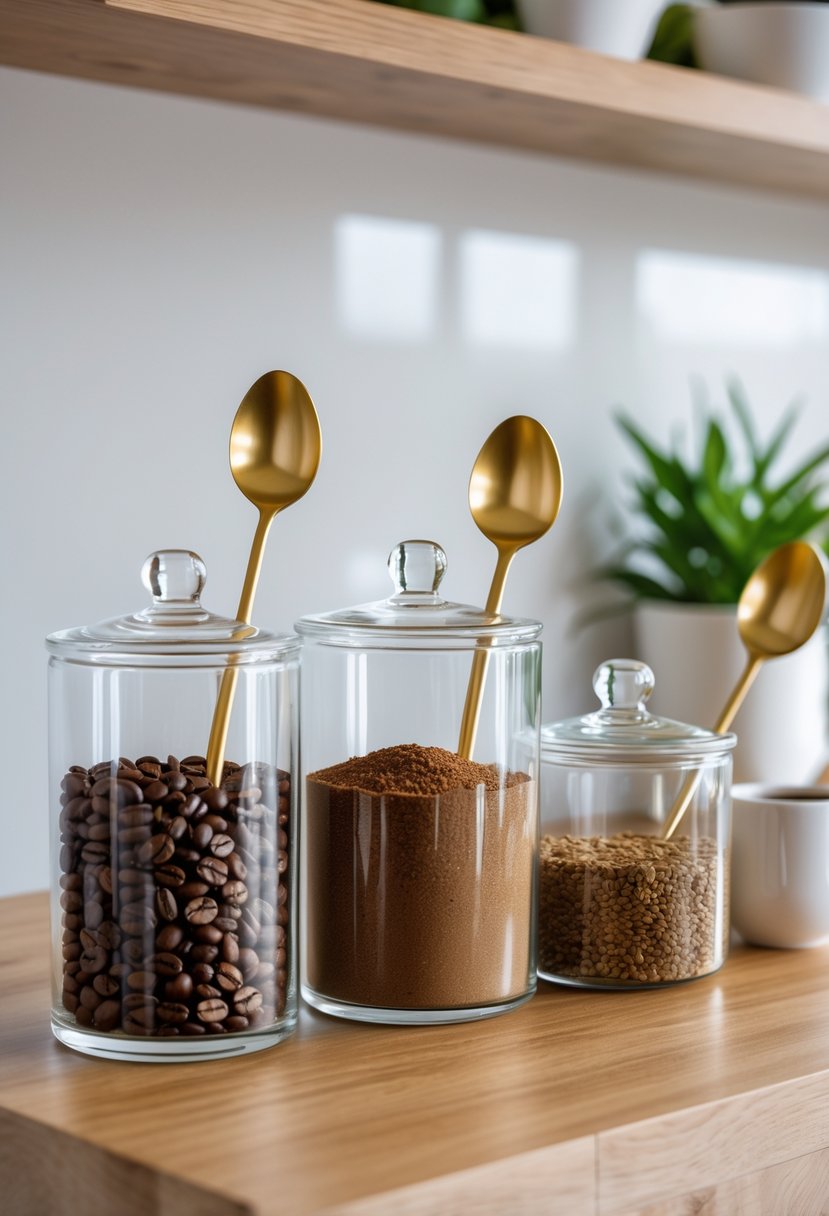
They store coffee, sugar, and tea while keeping the countertop neat. Clear glass shows contents at a glance and helps with quick refills.
Gold spoons add a refined accent and make scooping simple. The metal contrasts with glass for a modern, upscale look.
Choose airtight lids to protect freshness. Small sets work well near the machine without crowding the space.
Essential Design Elements for a Home Coffee Bar
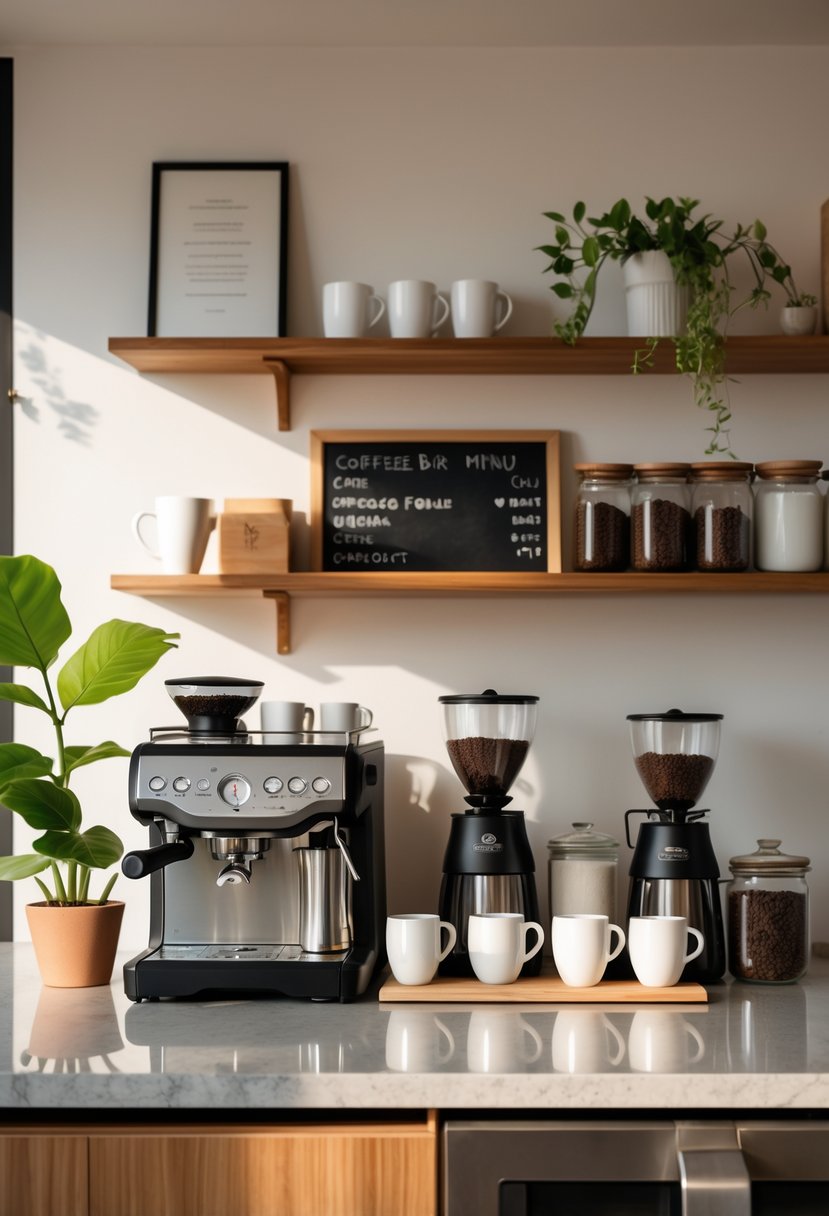
A smart coffee bar balances function and style. It needs a good spot, solid storage, and the right light to make brewing easy and pleasant.
Choosing the Right Location
They should pick a spot with a flat, stable surface near a power outlet for machines like espresso makers and grinders. Kitchens, pantry corners, or a cleared section of a sideboard work well. If space is tight, a narrow cart or wall-mounted shelf can fit in hallways or breakfast nooks.
Placing the bar near a sink or water source simplifies filling kettles and cleaning tools. Avoid direct heat sources that can affect bean freshness, and keep the area away from strong-smelling appliances, like trash cans or ovens.
Consider workflow: beans, grinder, brewer, and cups should sit in that order to cut steps during prep. Measure counter depth and appliance footprints before buying equipment to prevent cramped setups.
Storage Solutions for Coffee Essentials
They should use airtight containers for beans and ground coffee to keep freshness. Clear canisters let them see quantities at a glance, while labeled jars prevent mix-ups between beans, sugar, and tea.
Open shelving shows off mugs and syrups and keeps frequently used items within reach. Closed cabinets hide clutter like extra filters, cleaning tools, and bulk supplies. Drawer organizers or small baskets work for spoons, tampers, and portafilters.
A pegboard or wall-mounted rail can store mugs and small tools vertically to save counter space. For bulk items, a nearby cabinet or a bottom shelf on a cart keeps the top surfaces clear for brewing.
Lighting and Ambiance Tips
They should use layered lighting: bright task light for brewing and softer ambient light for mood. Under-cabinet LED strips or a focused pendant lamp above the counter give clear, shadow-free light for tamping and measuring.
Warm-toned bulbs (2700–3000K) create a cozy feel that matches coffee tones. Add a small dimmable fixture or plug-in wall sconce to switch between bright morning prep and relaxed evening use.
Accent lighting like a backlit shelf or small lamp highlights decorative items and makes the bar feel intentional. Ensure switches or dimmers are easy to reach from the main working spot so adjusting light stays quick and simple.
Maintaining and Personalizing Your Coffee Bar
Regular cleaning, scheduling simple upkeep, and adding a few personal items keep a coffee bar inviting and functional. Focus on machine care, tidy storage, and one‑of‑a‑kind decor that reflects taste without clutter.
Cleaning and Upkeep Best Practices
They should descale espresso machines every 1–3 months using manufacturer‑recommended solution to prevent mineral build-up. Wipe steam wands after each use and purge with steam for 5–10 seconds to avoid milk residue.
Daily tasks: empty grounds, rinse portafilters, wash milk pitchers, and wipe counters and drip trays. Weekly tasks: deep clean removable parts, wash glassware, and check seals for wear. Keep a labeled supply caddy with descaler, brush, microfiber cloths, and replacement water filters.
Store beans in an opaque, airtight container at room temperature and buy small batches to keep beans fresh. For grinders, clean burrs monthly with a brush or grinder cleaner pucks to maintain consistent grind and flavor.
Incorporating Personal Touches
They can add personality with a small selection of favorite mugs on an open shelf—limit to 6–8 to avoid clutter. Display one plant, a framed photo, or a vintage scale to introduce warmth without crowding the prep area.
Use labeled canisters for sugar, tea, and alternate beans so everything looks organized and is easy to use. Swap seasonal items like flavored syrups or special stirrers to keep the setup fresh and relevant.
Choose a consistent color palette for towels, trays, and containers to make the bar feel intentional. Add a compact tray for spoons and napkins to keep loose items contained and easy to move when cleaning.
Frequently Asked Questions
This section lists specific items, layout tips, budget ideas, themes, DIY projects, and accessories that make a home coffee bar useful and stylish. It focuses on practical choices like shelving, a small espresso machine, storage jars, lighting, and easy DIY builds.
What are some essential items to include in a home coffee bar setup?
They should include a coffee maker that fits the chosen style — espresso machine for barista drinks or drip brewer for batch coffee. Add a grinder, kettle (gooseneck if they brew pour-over), and a tamper if using espresso.
Storage matters: airtight canisters for beans, labeled syrup bottles, and a small tray for pods or filters. Include daily-use mugs on open shelving and a few spare cups in a nearby drawer.
Add cleaning tools: a brush for the grinder, a cloth for the machine, and descaler or cleaning tablets. A small scale and thermometer help with consistent brewing.
How do I design a coffee bar for a small space?
They should use vertical storage like floating shelves with integrated lighting to free up counter space. A compact machine and a slim grinder keep the footprint small.
Corner coffee stations work well; tuck the setup into a kitchen alcove or the end of a counter. Use wall hooks for mugs and magnetic strips for small metal tools.
Use multi-use pieces, such as a vintage cabinet converted into a barista station that stores supplies inside while the top serves as the prep surface.
Can you recommend some budget-friendly ideas for creating a coffee bar at home?
They can start with a small countertop or a single floating shelf rather than a full cabinet. Buy simple glass canisters for beans and reuse jars for syrups and stirrers.
Shop secondhand for a vintage cabinet or small side table and repaint it for a custom look. Inexpensive lighting like LED strip lights under shelves adds polish without high cost.
Limit equipment to essentials: a basic burr grinder and a manual pour-over or French press give great coffee without an expensive espresso machine.
What are some unique themes for home coffee bar areas?
They can choose a minimalist theme with stoneware, glass canisters, and neutral tones for a clean look. A rustic theme works with a vintage cabinet, reclaimed wood shelves, and metal accents.
An industrial theme pairs open shelving, exposed bulbs, and metal storage containers. A seasonal or holiday theme swaps syrups, cups, and small decor items to keep the area fresh.
What DIY coffee bar projects can I undertake with minimal carpentry skills?
They can install floating shelves with simple brackets to create open shelving for mugs and syrups. Convert a thrifted cabinet by cleaning, sanding, and painting it, then adding a countertop surface.
Build a small rolling cart by attaching casters to a ready-made shelf unit for a mobile coffee station. Add peel-and-stick backsplash tile behind the bar for an easy, high-impact update.
Which accessories can enhance the functionality and style of my home coffee bar?
They should add clear, labeled canisters for beans and sugar, and a small tray to corral syrups and spoons. A milk frother and gooseneck kettle improve drink options and control.
Task lighting under shelves, coaster sets, and a compact waste bin for grounds keep the area tidy. Decorative but useful items like a small plant or framed menu board add personality without clutter.