

 By Trends Oraa
 You step into a tiny box room and see more potential than clutter. This article shows practical, stylish ways to stretch that small space so it feels useful and inviting. It gives 18 creative ideas that help maximize storage, free up floor space, and make the room look larger without major renovations.
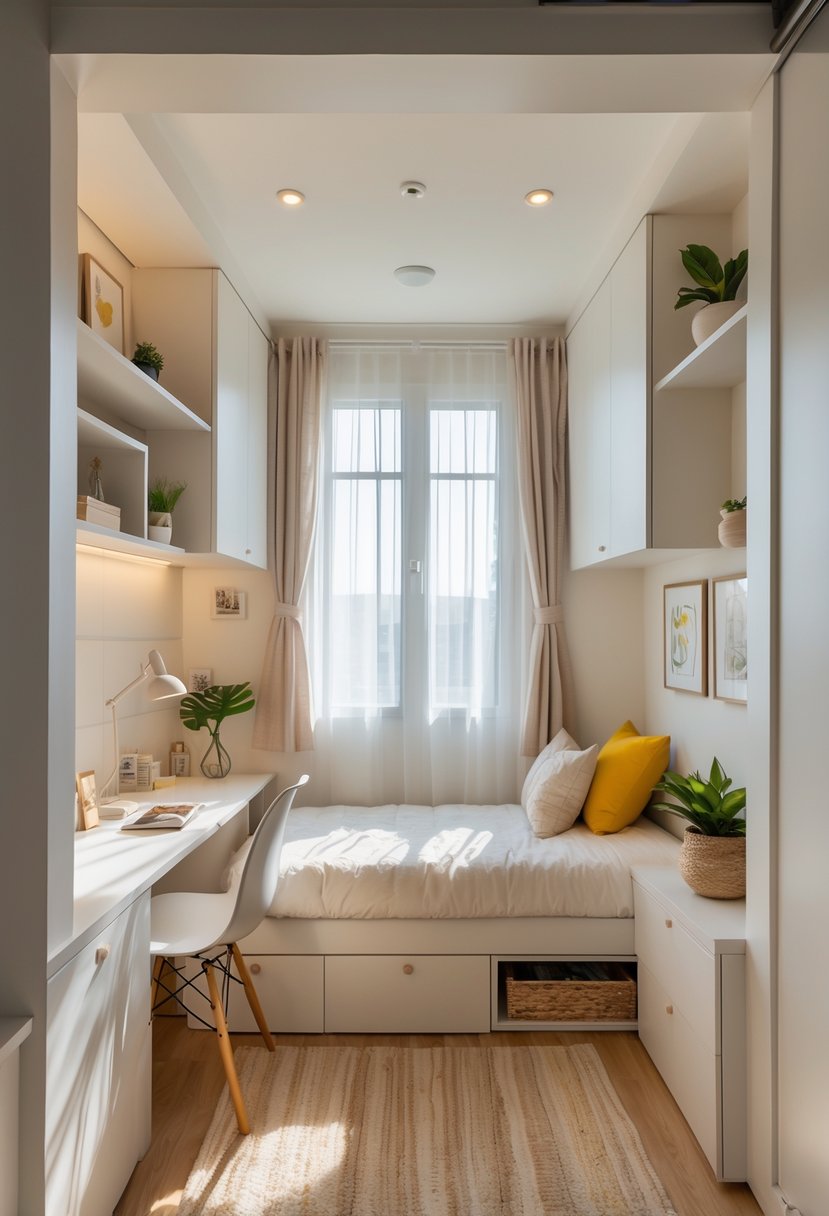
They will guide choices on shelving, beds, fold-away furniture, color, and lighting so you can build a cozy, functional bedroom that fits your needs. The tips balance smart layouts and simple design moves to make the most of every inch.
1) Use vertical shelving to maximize storage without sacrificing floor space
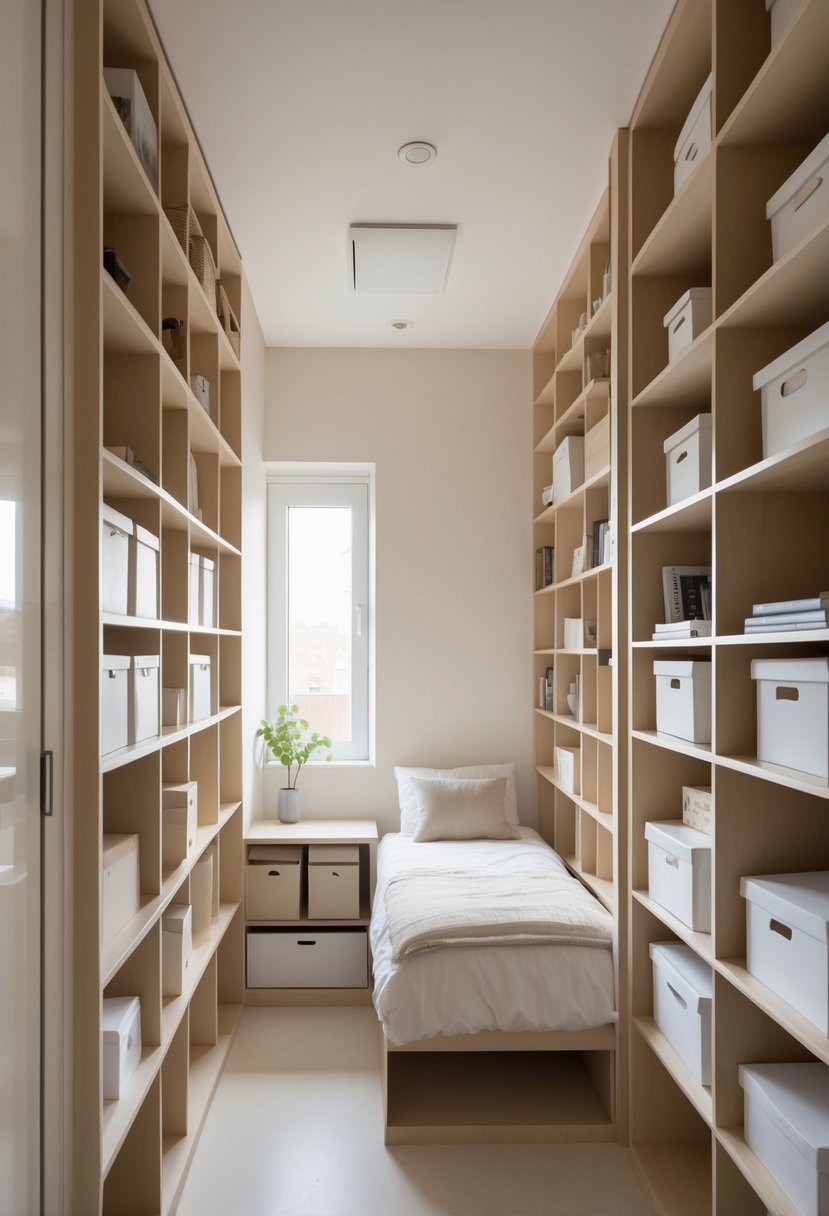
They install tall shelving that reaches toward the ceiling to free up floor area. Open shelves, floating units, or slim bookcases hold books, baskets, and decor without crowding the room.
They place frequently used items at eye level and store lesser-used things higher up. This keeps the room tidy and makes daily routines quicker.
They pick narrow, wall-mounted options for tight corners and consider adjustable shelves to fit changing needs.
2) Install a loft bed to create room underneath for a desk or seating
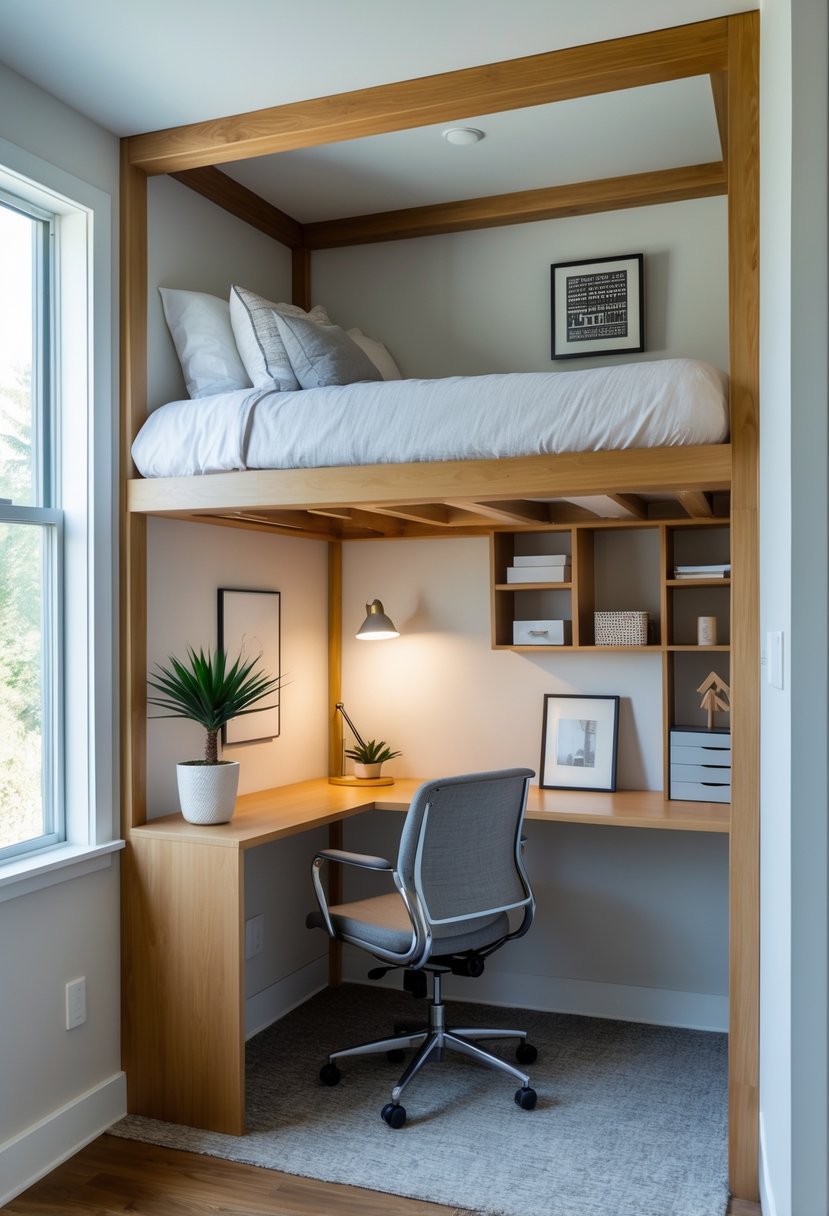
They lift the mattress to free floor space, making room for a desk, chair, or small sofa below. This works well in box rooms where every square foot counts.
A built-in desk under a loft bed gives a private study or work spot without shrinking living space. Sturdy construction and safe guardrails keep the sleeping area secure.
Adding shelves or drawers under the loft adds storage and keeps the area tidy. Proper measurements ensure the desk fits and the sitting space feels comfortable.
3) Opt for a fold-down wall bed to free up space when not in use
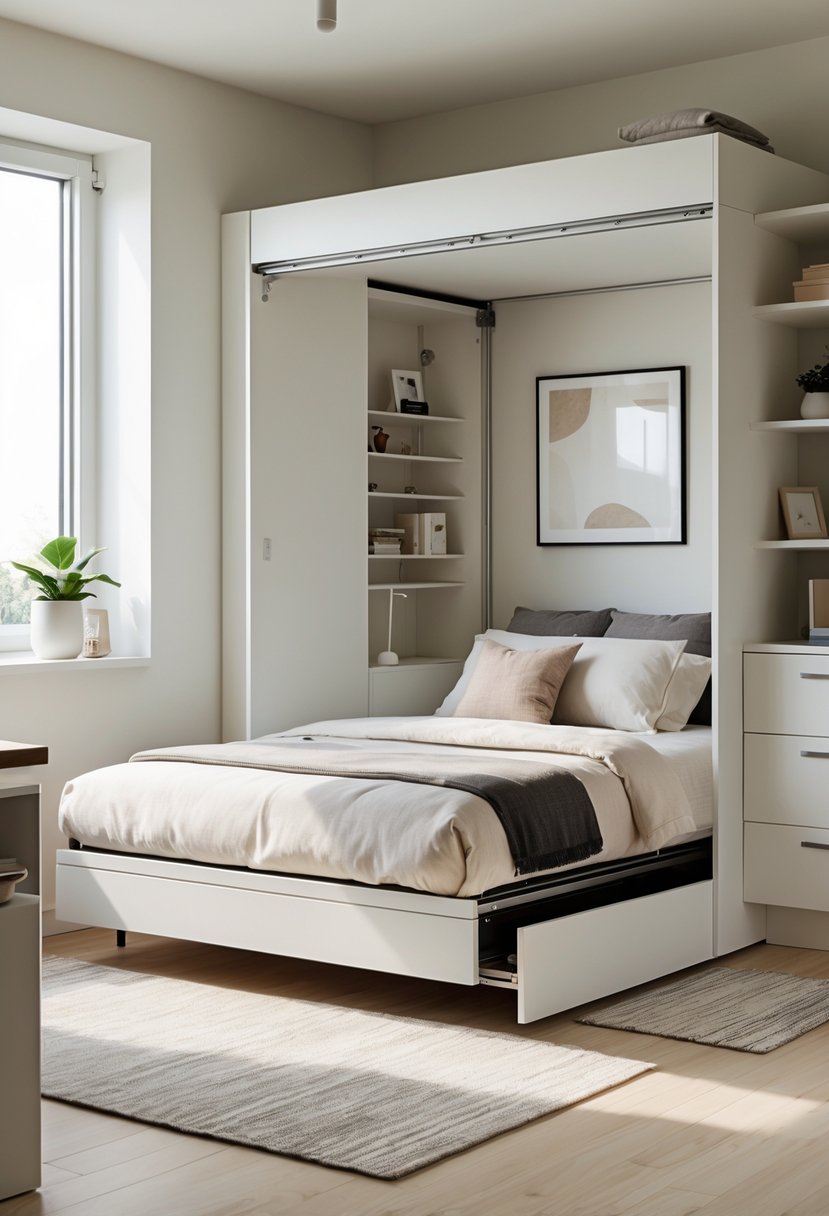
They install vertically on a wall or inside a cabinet, folding away to clear the floor. This gives room for a desk, sofa, or play area during the day.
Many models include built-in shelves or wardrobes for extra storage. Retractable legs and simple hinges make them stable and easy to use.
A wall bed suits a small box room that needs to work as both bedroom and living space. It keeps the room tidy and functional without permanent bulky furniture.
4) Incorporate built-in storage units to reduce clutter
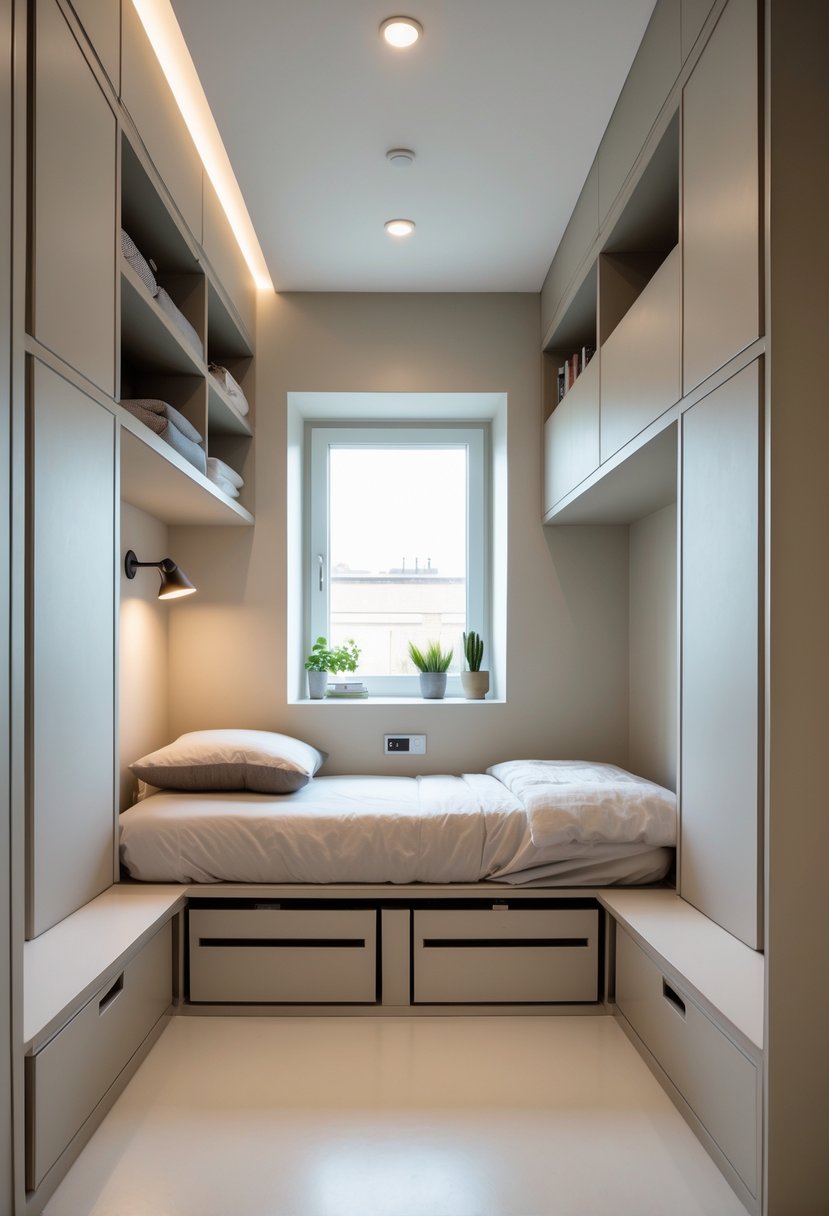
They install built-in cabinets and shelves to use every inch of space. Floor-to-ceiling units free up room while keeping items out of sight.
Under-window drawers and recessed niches add storage without crowding the floor. Hidden compartments behind a bed or bench keep small items organized.
Built-ins can match the room’s style so storage looks intentional. This creates a cleaner, calmer box room that feels larger and works harder.
5) Choose multifunctional furniture like ottomans with hidden storage
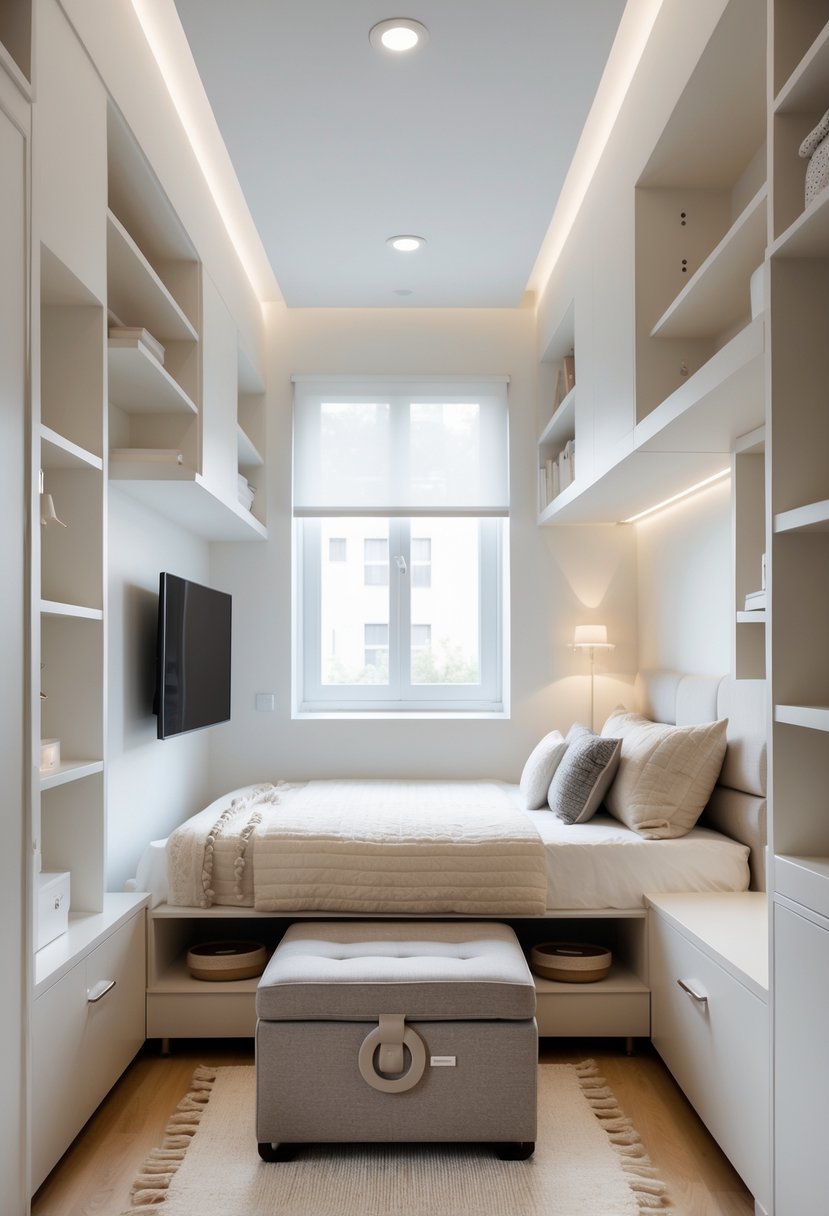
They pick ottomans that hide blankets, shoes, or seasonal clothes to free up floor and closet space.
An ottoman can serve as seating, a bedside table with a tray, or a footrest, so the room stays functional without extra pieces.
Choose sturdy lids and easy-to-clean fabrics for safety and durability.
Neutral colors blend with small rooms, while patterned pieces add personality without clutter.
6) Paint walls in light, neutral colors to make the room feel larger
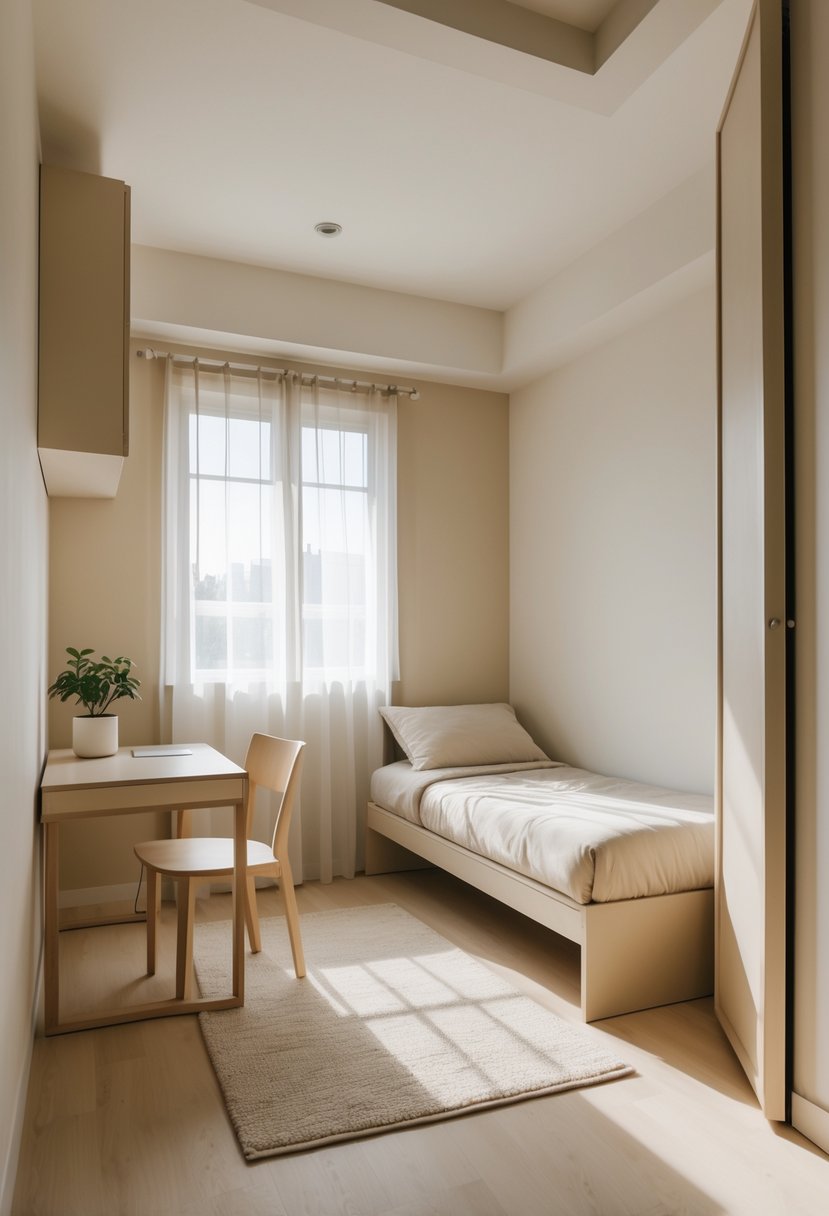
They should choose pale tones like soft whites, warm beiges, or light grays to reflect more light and reduce visual clutter. Lighter paint helps corners recede, making the space feel airier without changing its size.
Keep trim and ceiling close in tone to avoid harsh lines that break the room into smaller parts. A consistent palette lets furniture and decor stand out while the room reads as more open and calm.
7) Add mirrors strategically to reflect light and create depth
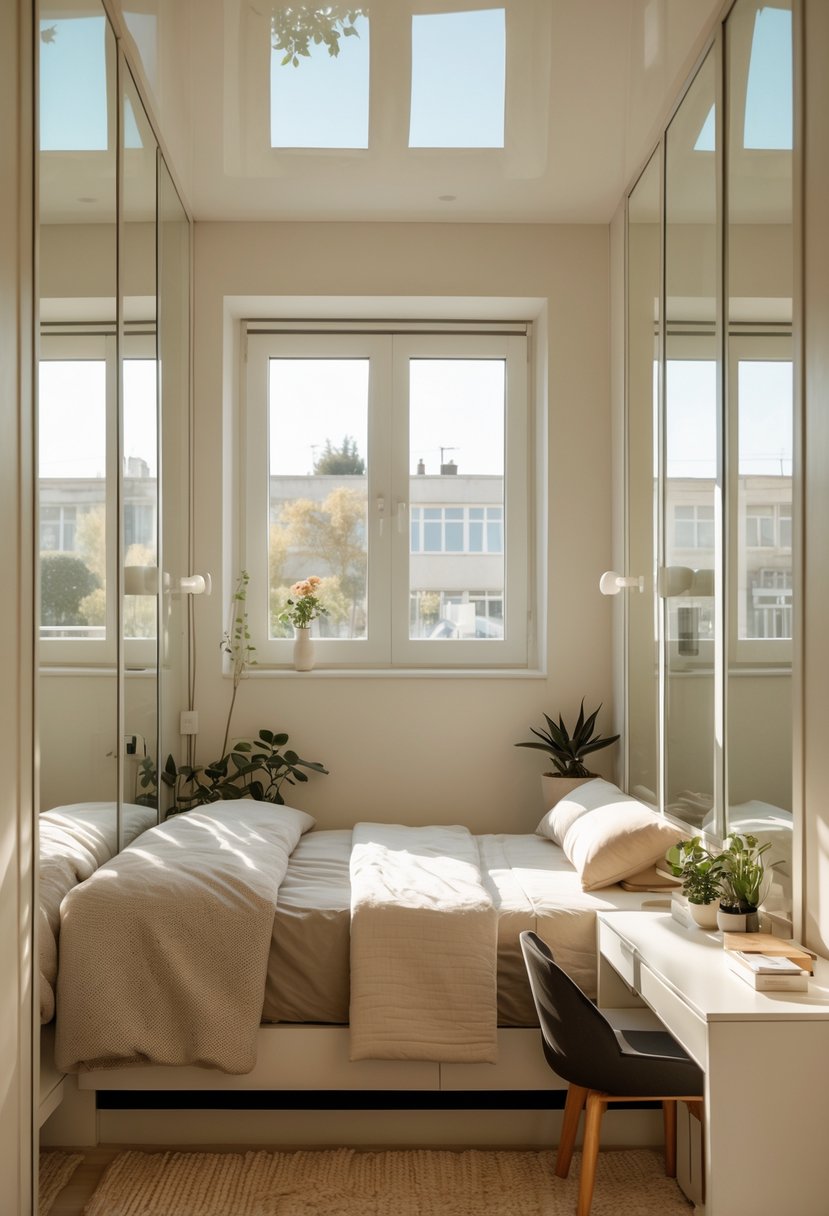
They place mirrors opposite windows to bounce natural light into dark corners. A large mirror on one wall can make a box room feel wider without taking floor space.
They use grouped smaller mirrors as a focal point above a dresser or bed. Angled or floor mirrors add layers and help the room feel deeper while staying simple and stylish.
8) Use sliding doors to save space compared to traditional hinged doors
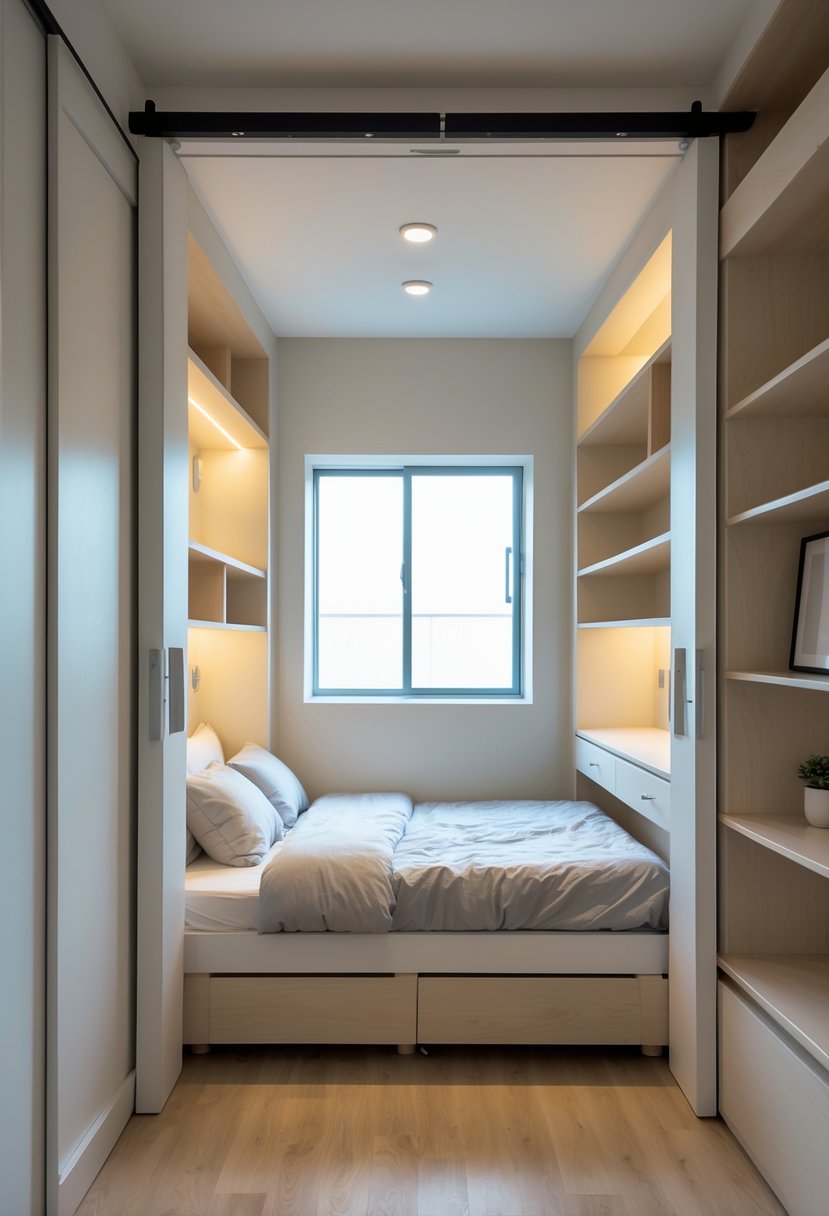
They slide along tracks, so they need no swing clearance and free up usable floor area. This lets furniture sit closer to the doorway and improves circulation in a small box room.
Sliding doors can also bring in light when fitted with glass panels, making the room feel larger. They suit wardrobes, bathrooms, or closet entries where every inch counts.
9) Install wall-mounted lighting instead of floor lamps
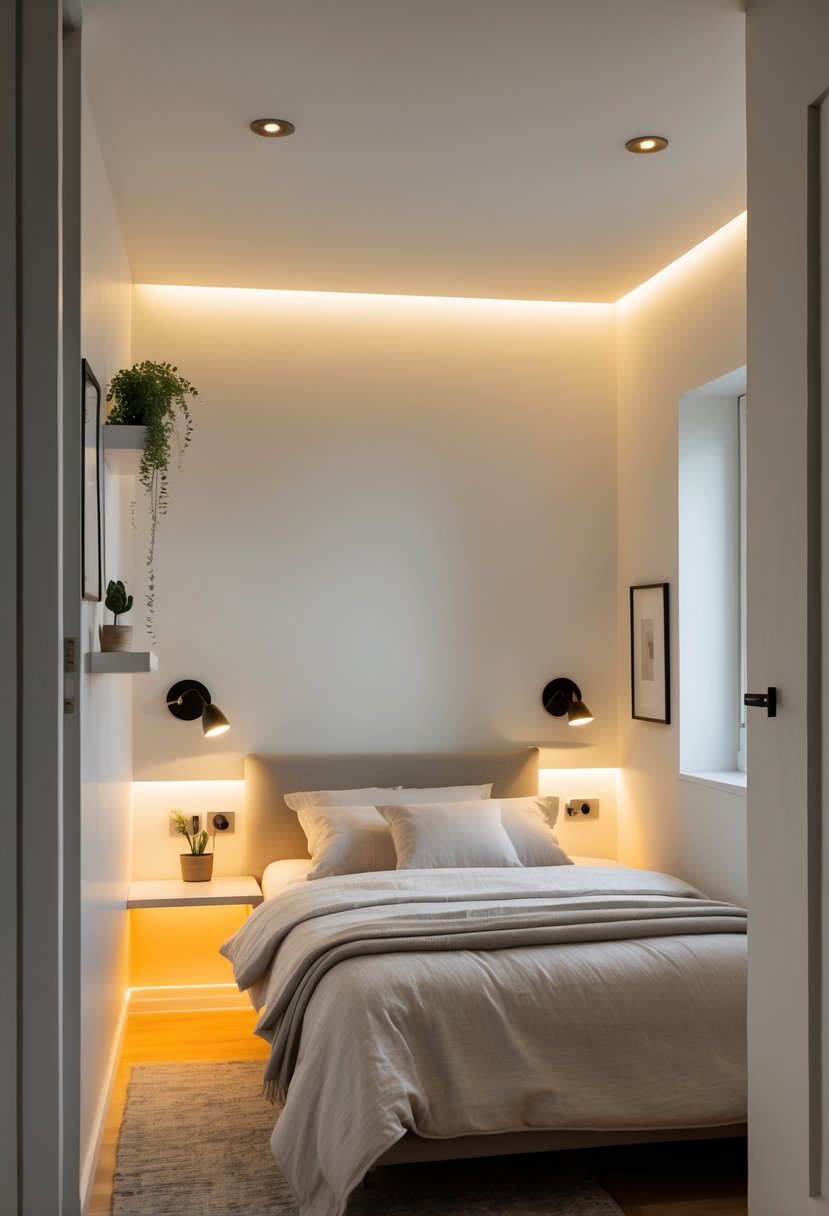
They free up floor space, which is vital in a box room. Wall lights keep pathways clear and make the room feel less cluttered.
Wall-mounted fixtures can provide layered light for reading and ambience. Adjustable sconces or swing-arm lamps offer targeted task light without bulky bases.
They work well above bedside shelves or desks and can be hardwired or plugged in for rentals. Choosing slim profiles and warm bulbs keeps the room cozy and functional.
10) Create a cozy reading nook with a built-in bench and cushions
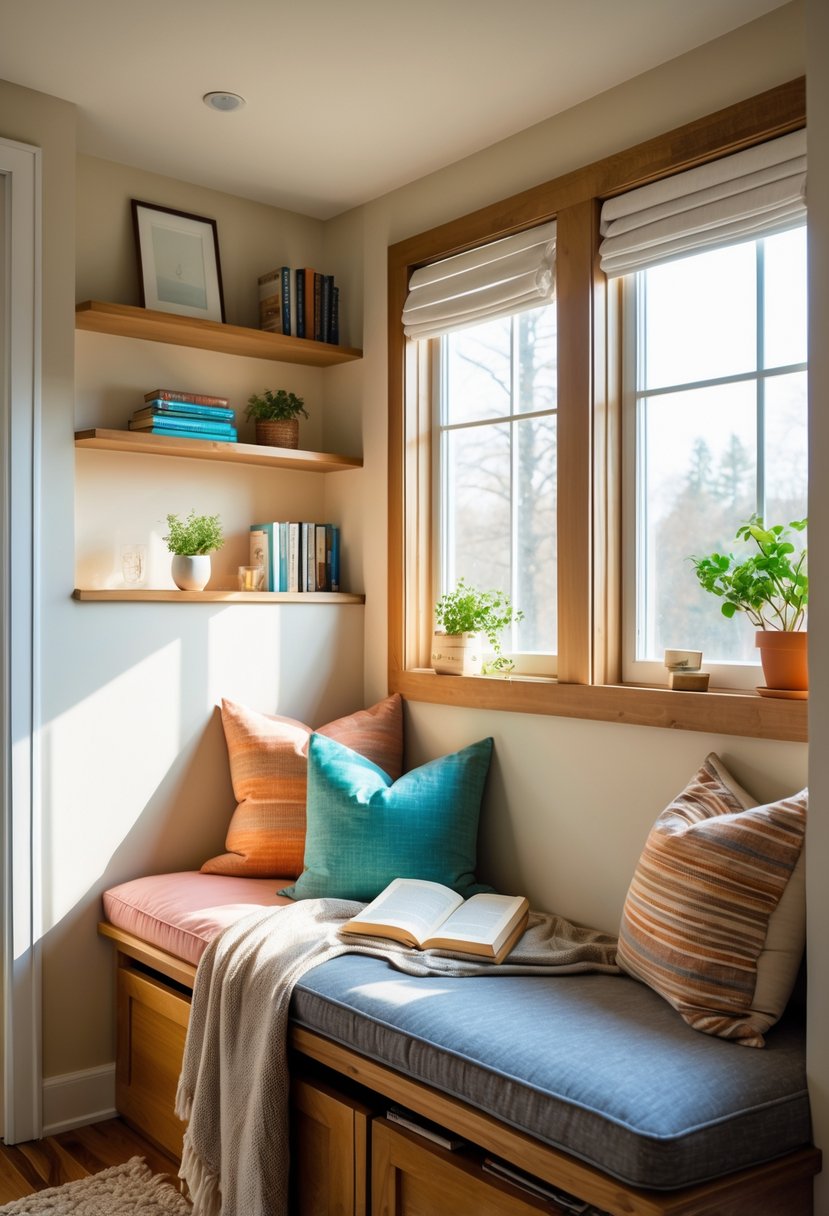
They can fit a slim built-in bench under a window or along a short wall to save floor space. Cushions and a throw make the seat comfortable and invite longer reading sessions.
Add a small shelf or cubby below the bench for books and a slim side table for a lamp. Soft, adjustable lighting helps avoid eye strain and keeps the nook usable day and night.
11) Use under-bed storage boxes for seasonal clothes and linens
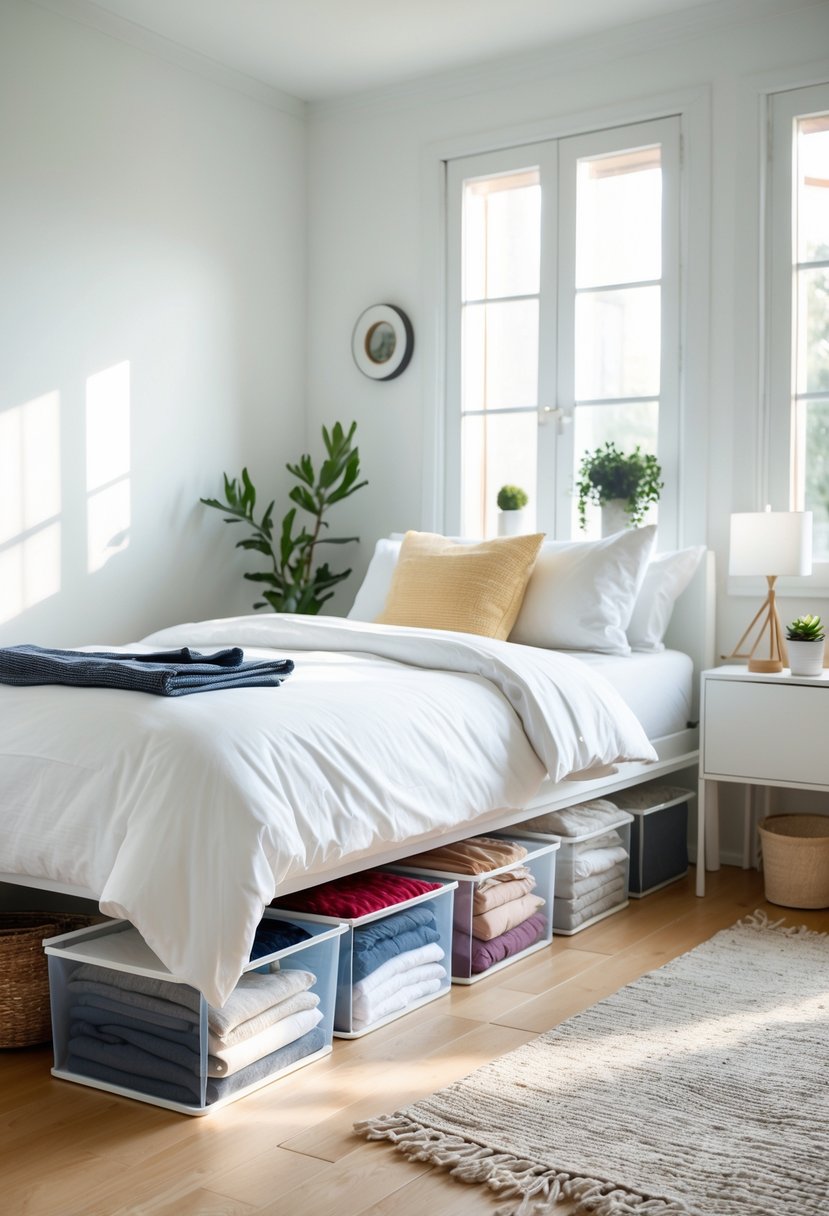
They slide under the bed to keep items out of sight and easy to reach. Clear or labeled boxes let them spot contents without rifling.
Choose low, wheeled boxes for heavy linens and vacuum-seal bags for bulky winter coats. This frees closet space and keeps off-season items clean and dust-free.
12) Hang curtains high and wide to give the illusion of larger windows
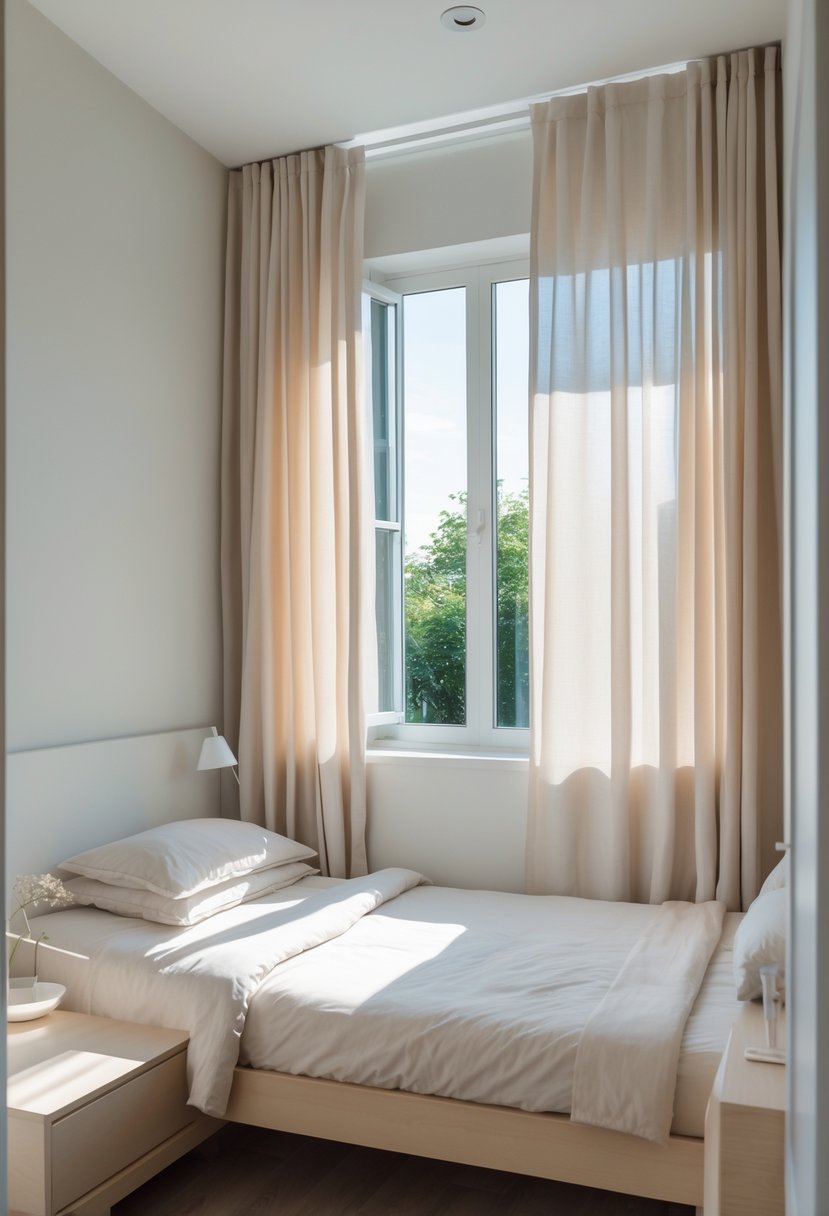
They hang the rod a few inches above the trim or near the ceiling to make walls feel taller. Extending the rod well past the window edges hides the frames and makes the opening seem wider.
Choose lightweight, flowing fabric to keep the look airy and let light enter when panels are open. When curtains stack neatly to the side, more daylight enters and the room appears bigger.
13) Select slim-profile furniture to avoid overwhelming the space
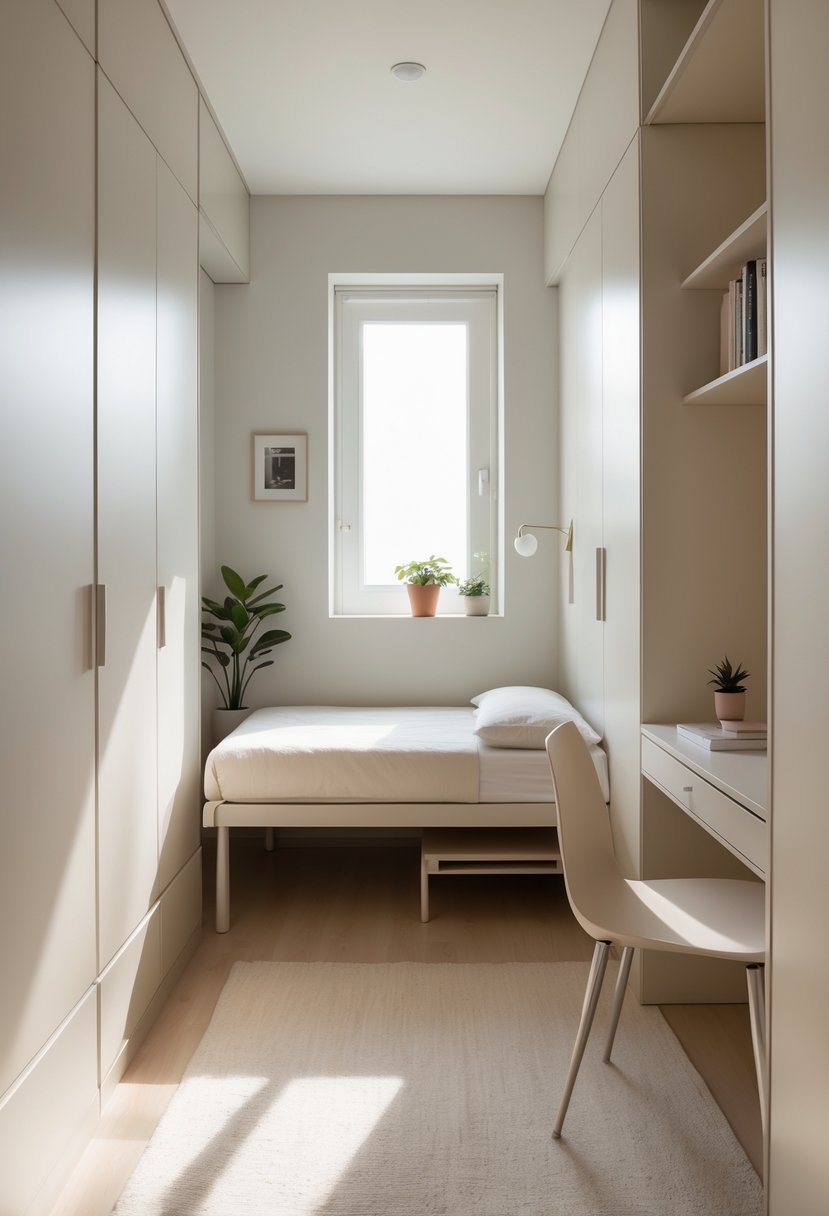
They pick furniture with narrow frames and clean lines to keep the room feeling open. Low-profile beds, slim dressers, and leggy chairs reduce visual weight.
They favor pieces with exposed legs or clear materials like acrylic to let light pass through. Multifunctional items, such as a wall-mounted desk or a storage bed with drawers, save floor space without crowding the layout.
14) Opt for a monochromatic color scheme for a unified look
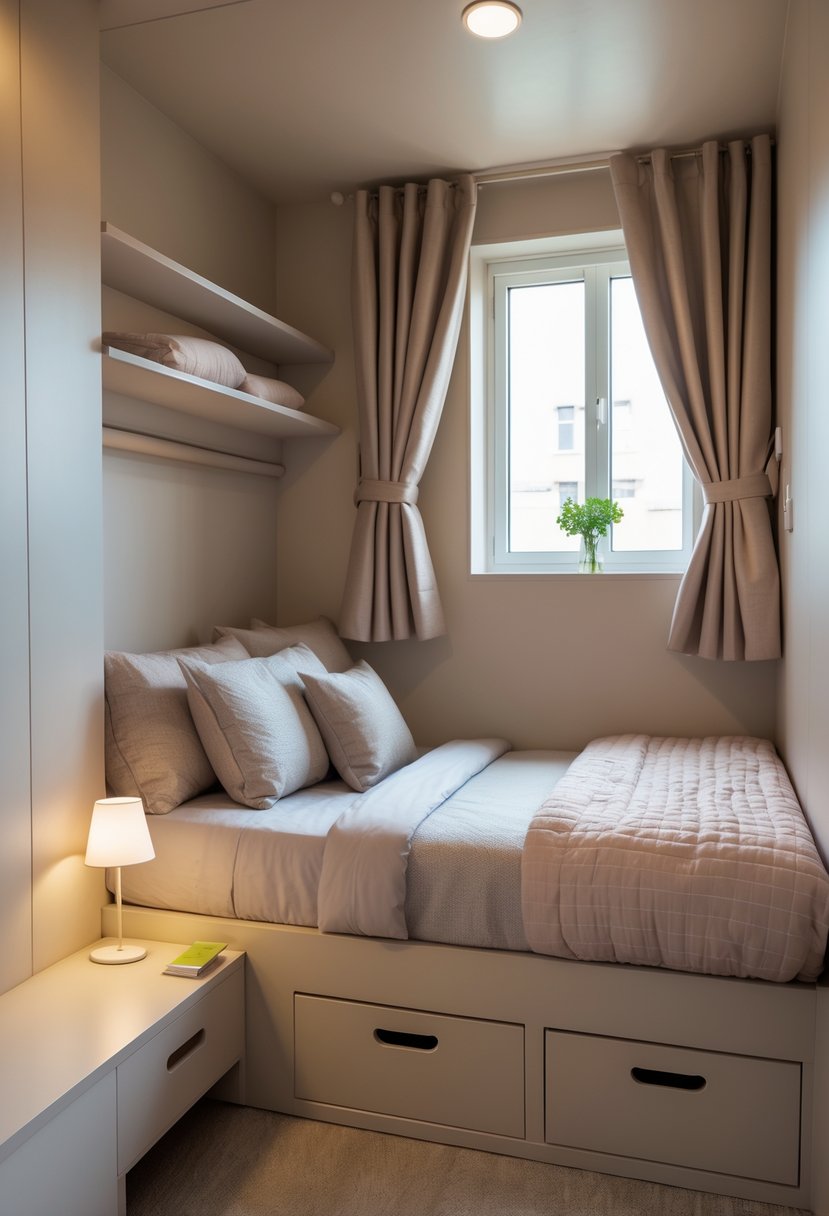
They pick one color and use its lighter and darker versions to make the room feel calm and complete. This reduces visual clutter and helps a small box room feel larger.
Textures and finishes add interest so the space does not look flat. Matte paint, glossy accents, and patterned textiles break up the color while keeping the scheme unified.
They can add one small accent in a contrasting hue if they want a focal point. Keep most elements within the same color family for a cohesive, polished result.
15) Incorporate floating desks or shelves to keep the floor clear
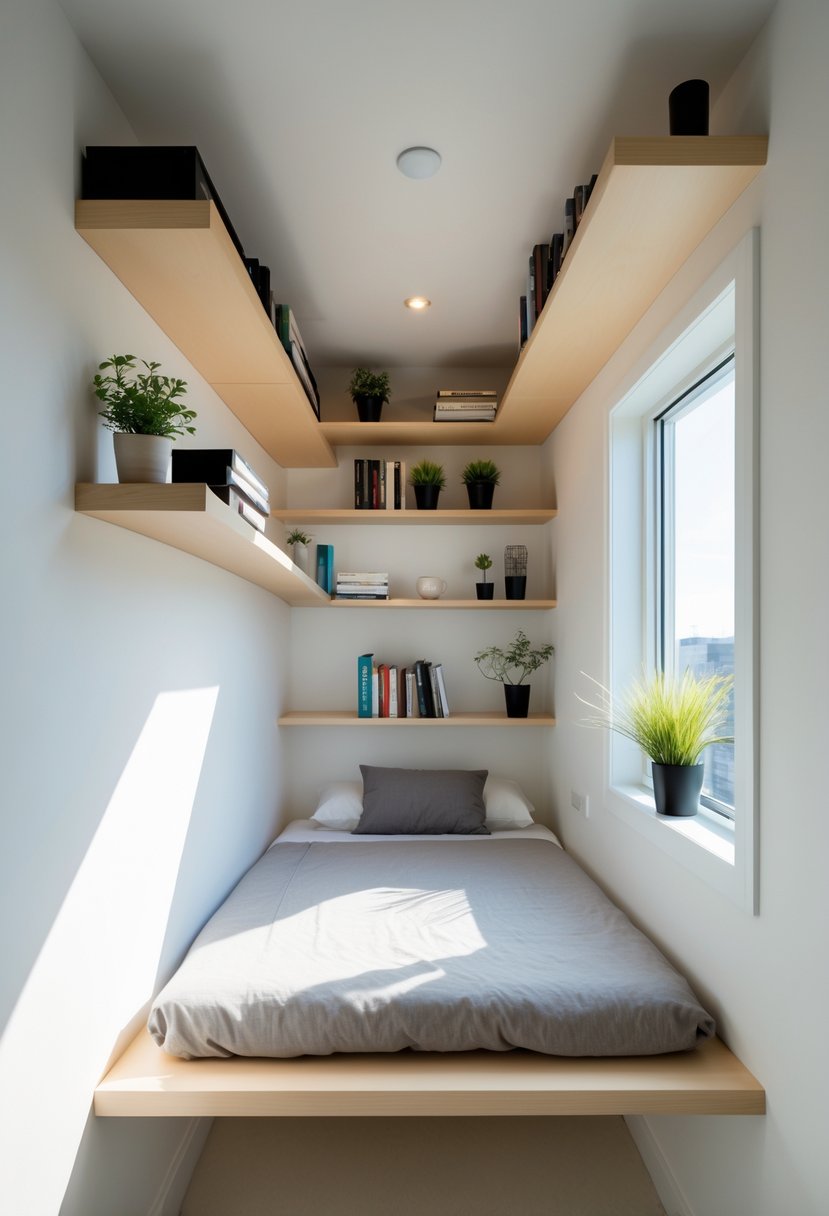
They mount work surfaces and storage to the wall, freeing floor space for movement and visual calm. A floating desk fits a laptop and a lamp without bulky legs.
Floating shelves display books, plants, and accessories while keeping surfaces tidy. LED strip lights under shelves add task light without clutter.
They suit tiny bedrooms and shared rooms alike. Installation requires studs or proper anchors for safety.
16) Use pegboards for customizable wall storage and display
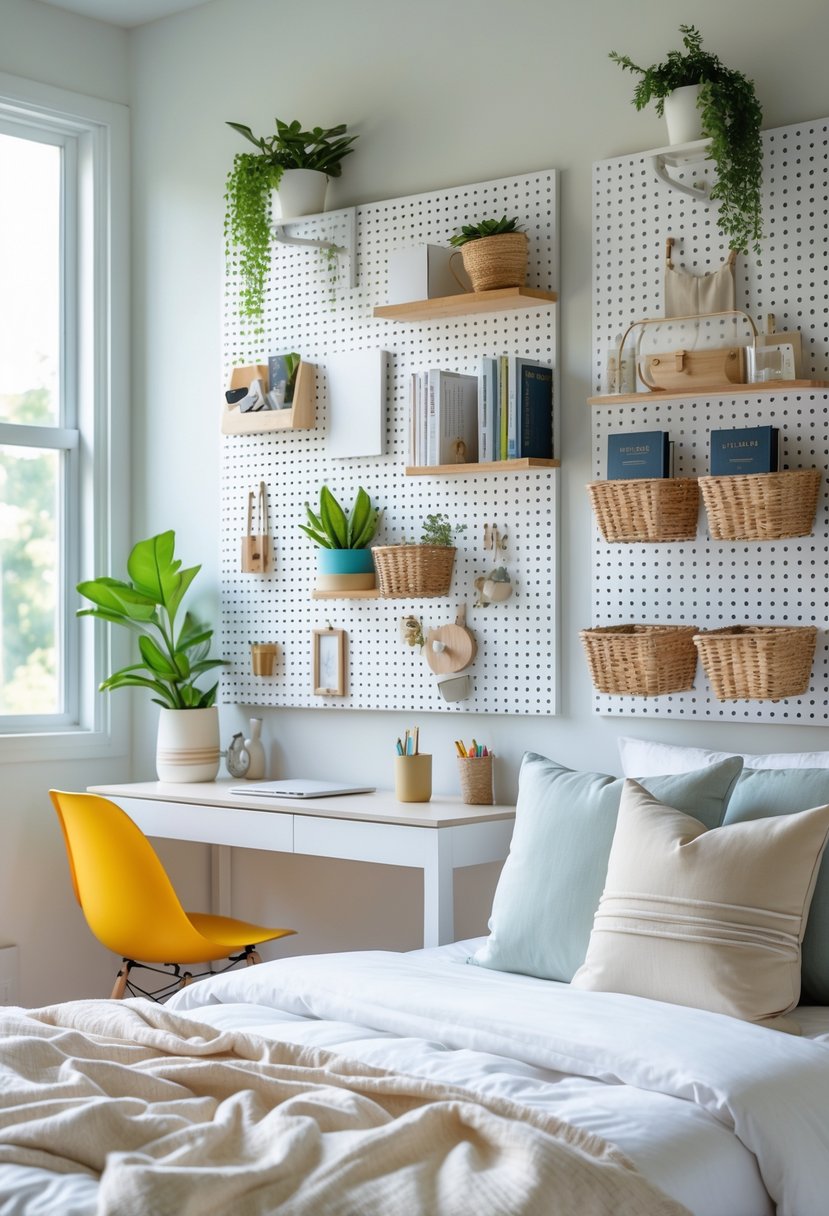
They mount pegboards to free up floor space and keep items visible. Pegboards hold hooks, shelves, baskets, and planters that can move as needs change.
They work for tools, clothes, books, or small decor. He or she can paint the board to match the room and swap layouts without tools.
They fit tight rooms where flexible storage matters. Pegboards make small walls more useful and keep the room organized.
17) Add pops of color with cushions, throws, or artwork to enliven the space
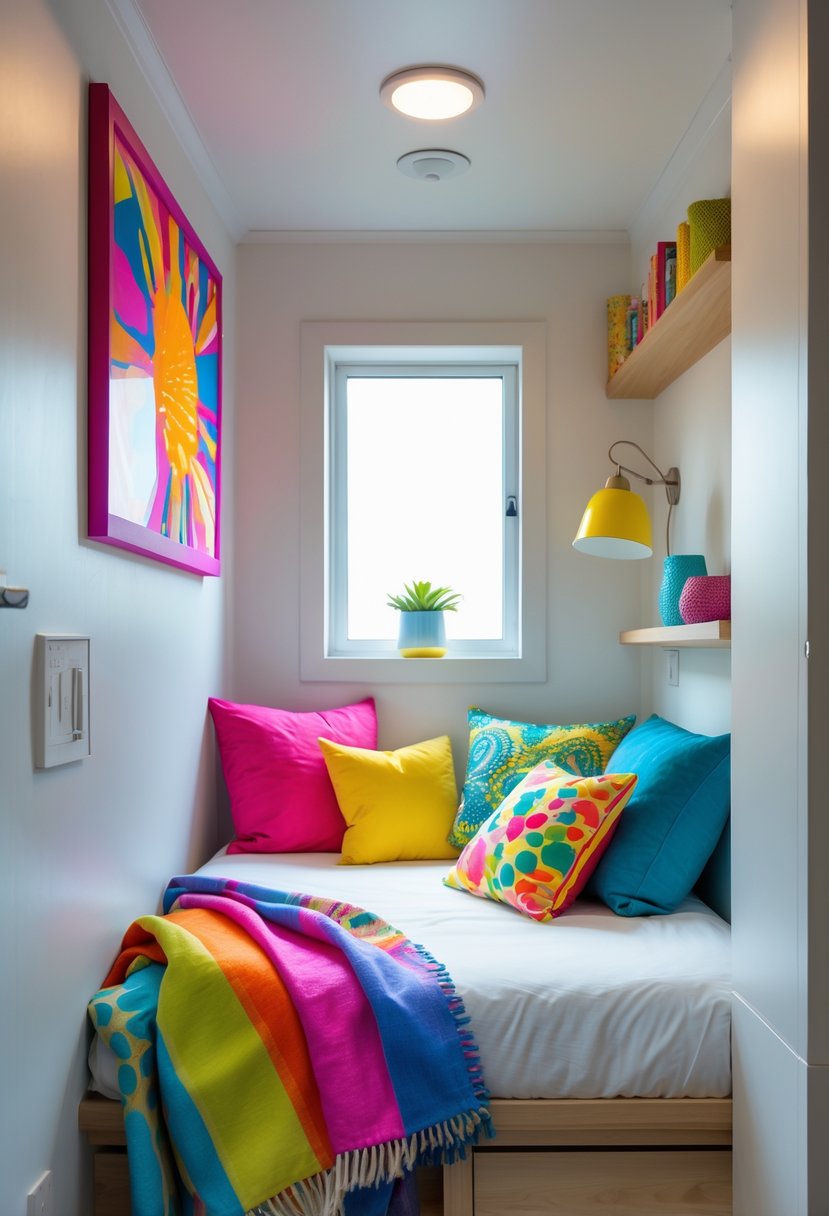
They can change the mood of a box room without major work. Bright cushions or a textured throw add warmth and focus to a small bed or chair.
A single piece of artwork can set a color scheme and make walls feel intentional. Mix a few accent tones, but keep most items neutral to avoid clutter.
Swap textiles seasonally for fresh looks that stay affordable and low-effort.
18) Place a narrow full-length mirror to enhance functionality and room perception
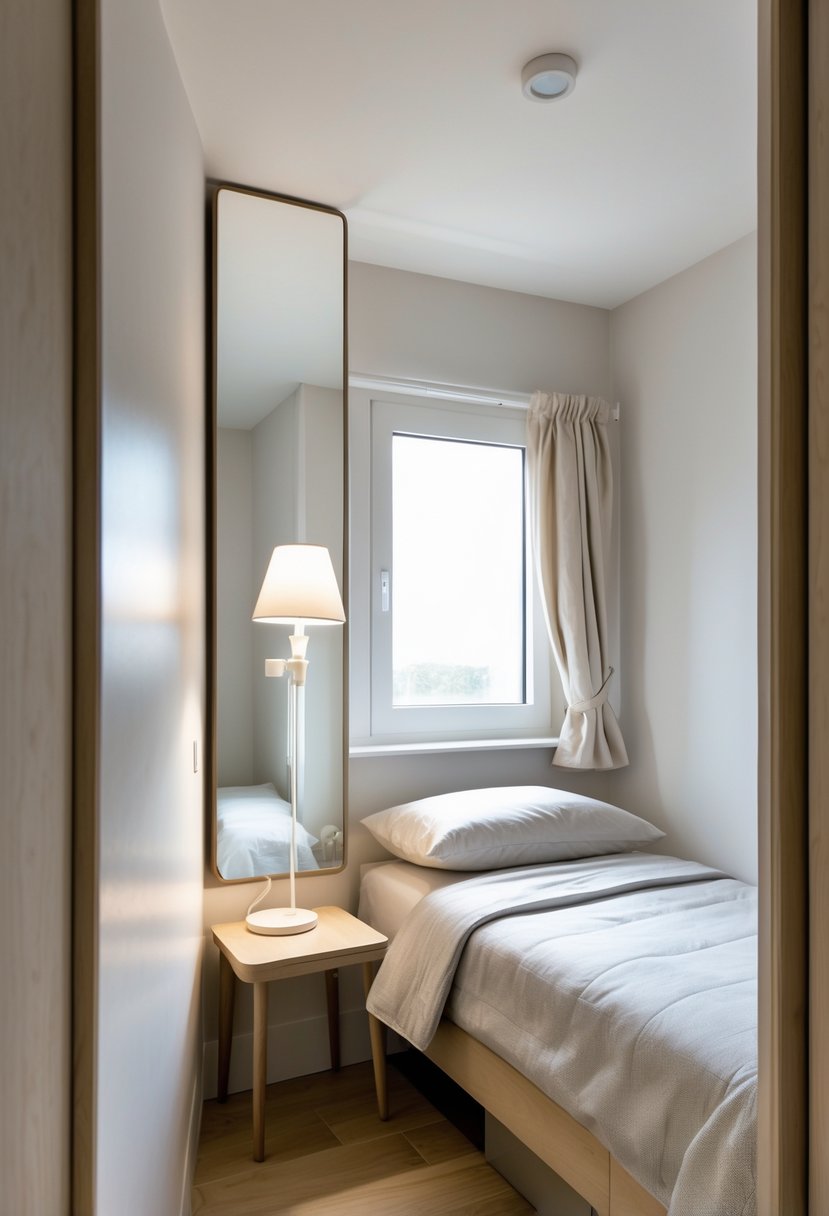
A narrow full-length mirror fits tight spots while still showing a head-to-toe view. It gives a quick outfit check without taking floor space.
Placed opposite a window or light source, it boosts brightness and makes the room feel deeper. Mounted on a door or slim wall, it adds function without clutter.
Choose a simple frame to keep the small room calm. Secure mounting prevents accidents and keeps the mirror usable for years.
Maximizing Space Efficiency
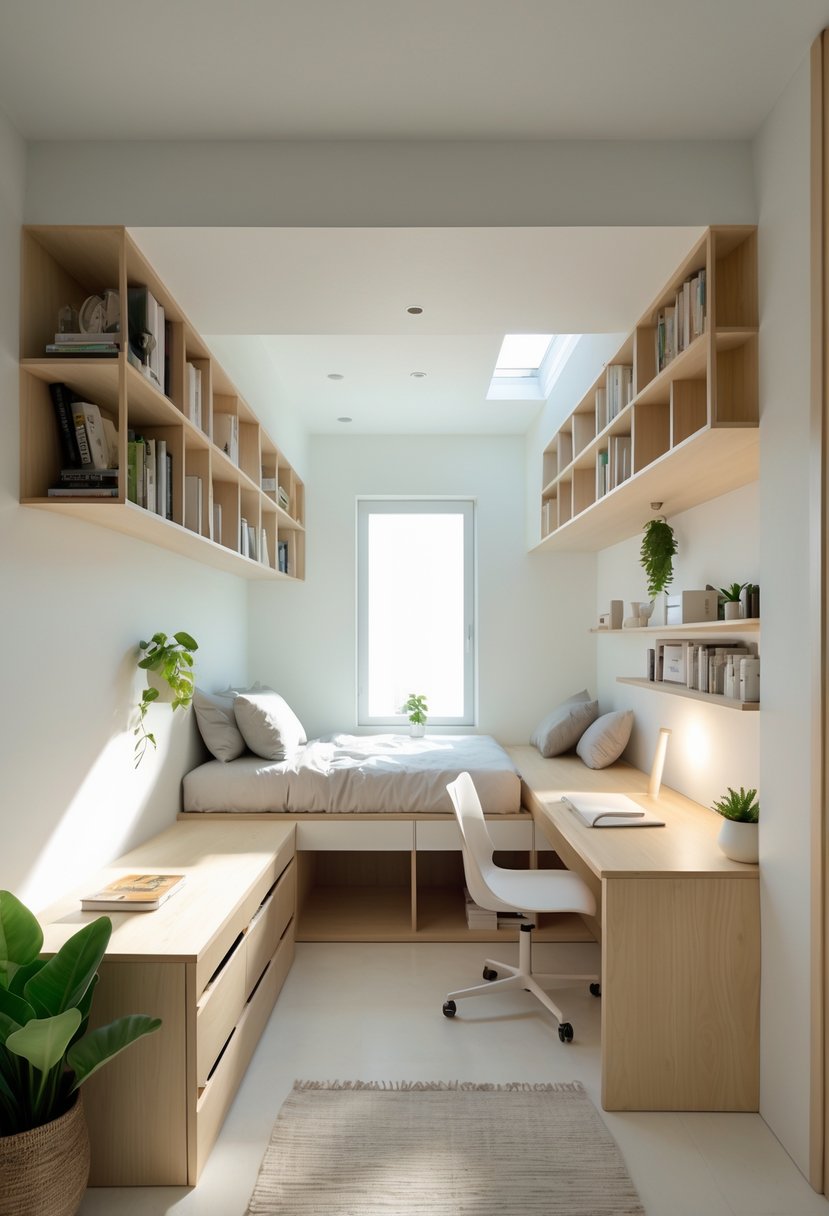
This section explains practical moves that free floor area and boost usable storage. It focuses on placing furniture to open walking paths and on lighting that makes the room feel larger and more usable.
Furniture Placement Strategies
Place the bed against the longest wall to create a clear pathway and reduce visual clutter. If the room allows, orient the headboard under a window or a recessed niche to free up wall space for storage or a desk. Use a narrow bed frame or a daybed to gain 12–18 inches of floor width compared with standard frames.
Choose multi-functional pieces: a bed with drawers, a bench with hidden storage, or a fold-down desk. Float furniture slightly away from walls when possible to make the room feel deeper. Keep larger pieces low-profile to maintain sightlines—low dressers, short bookshelves, and slim wardrobes work best.
Use vertical storage: tall wardrobes, wall-mounted shelves, and pegboards take advantage of unused height. Anchor shelving to studs and keep frequently used items within easy reach. Arrange furniture to create zones—sleeping, dressing, and working—so each area feels organized and purposeful.
Lighting Tips for Small Bedrooms
Maximize natural light by keeping window treatments sheer and mounting curtain rods near the ceiling. This raises the visual height of the room and lets more daylight spread across the space. Place a mirror opposite the window to reflect light and create a sense of depth.
Layer lighting: a bright overhead fixture, task lighting by the bed or desk, and soft ambient light for evening. Use wall sconces or pendant lights to free bedside table space and keep surfaces clear. Choose LED bulbs at 2700–3000K for warm, relaxing light without harsh glare.
Use directional fixtures to highlight storage or artwork and avoid single harsh light sources that make corners look smaller. Dimmer switches help adapt light levels for different activities and make a small room feel more flexible.
Color Palettes and Design Themes
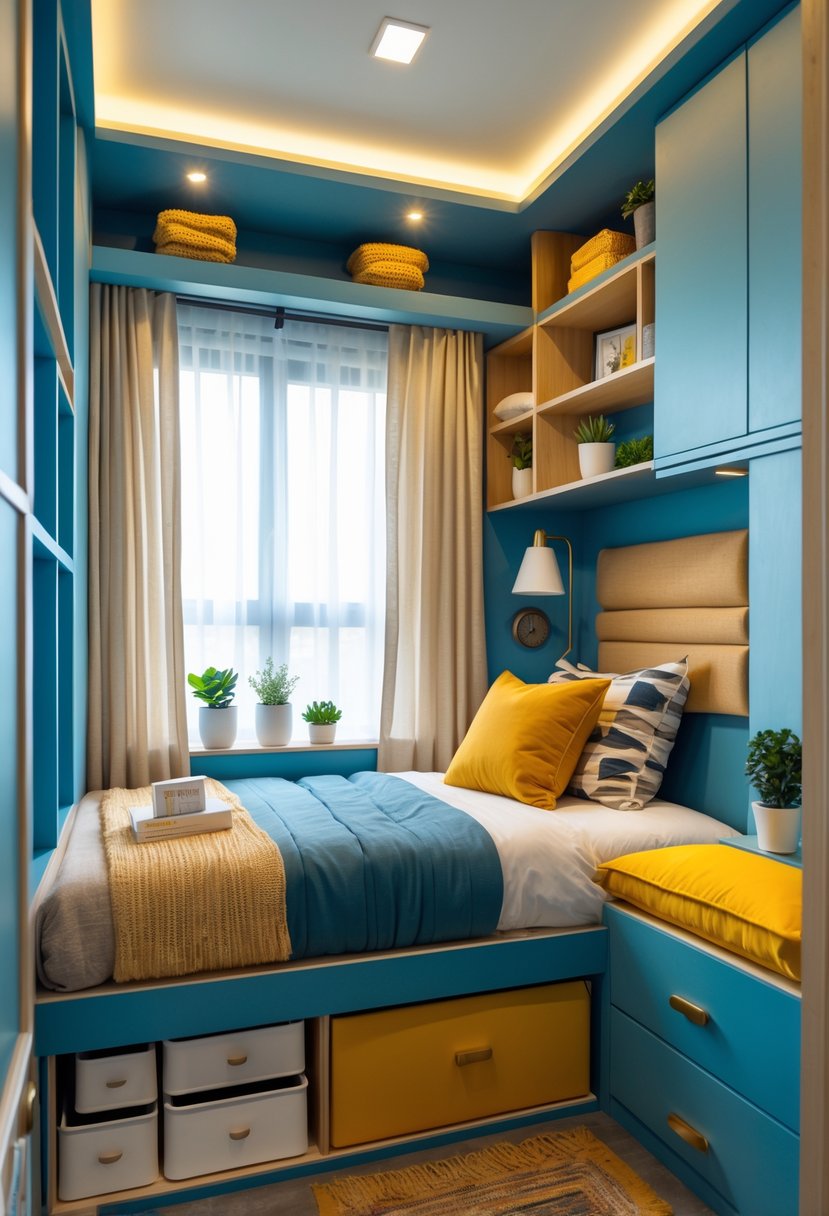
Pick colors that boost light and make the room feel larger. Use a main neutral, one soft accent, and one darker tone for small focal points like trim or cushions.
Choosing the Right Colors for Small Spaces
They should choose light, warm neutrals to reflect light and open the room. Soft whites, pale grays, and warm taupes work well on walls and ceilings. Paint the ceiling a shade lighter than the walls to add perceived height.
Add one soft accent color—dusty blue, sage green, or blush—to textiles and one darker color for small anchors, such as a bedside table or a picture frame. Keep high-contrast patterns minimal; use them on a single throw or rug.
Use matte finishes on walls to hide imperfections and satin on trim for a subtle sheen. Test paint samples on multiple walls and view them at different times of day before committing.
Incorporating Minimalist Decor
They should keep furniture simple and scaled to the room. Choose a low-profile bed, slim wardrobes, and a floating shelf to free floor space. Multiuse pieces, like a bed with drawers or a fold-down desk, reduce clutter.
Limit decorative items to 3–5 meaningful pieces. Use matching storage bins and a single small art piece above the bed to create a calm focal point. Stick to a restrained palette so textures, not many colors, add interest.
Maintain clear sightlines by keeping tall storage against one wall. Conceal cables and use wall-mounted lighting to avoid crowded bedside surfaces.
Frequently Asked Questions
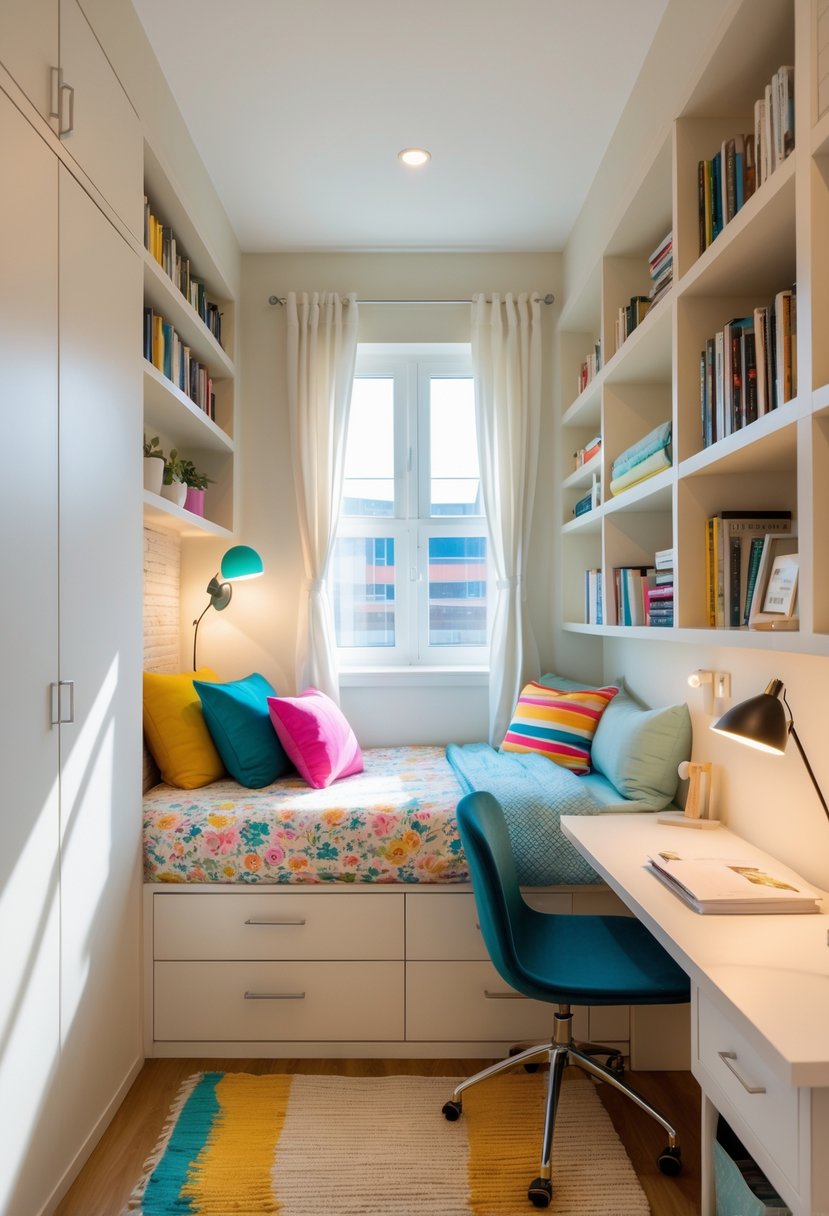
This section explains specific tactics to free floor space, add storage, and keep the room functional. It covers shelving, lofts and fold-down beds, built-ins, multifunctional pieces, color, lighting, and work-area layout.
How can I maximize space in a small box room bedroom?
They should use vertical shelving to keep the floor clear and stack items up the wall. Tall, narrow bookcases and wall-mounted shelves hold clothes, books, and decor without eating floor space.
They can install a loft bed to create usable space underneath for a desk or seating. A fold-down wall bed also frees the entire floor when not in use, giving full room flexibility.
Built-in storage units along one wall reduce gaps and awkward dead zones. Custom shelving that fits to the room’s shape captures every inch and avoids wasted space.
What are some innovative storage solutions for box room bedrooms?
They should pick furniture with hidden storage like ottomans, storage benches, and beds with deep drawers. These items provide seating or sleep surface while hiding linens, clothes, or toys.
Under-bed storage boxes or pull-out drawers make use of otherwise wasted space. Clear or labeled bins help keep items organized and quick to find.
They can add pegboards or hanging organizers on the back of doors and inside closets. These store accessories, small tools, and daily items without taking up shelf or floor area.
What color schemes work best to enhance the perceived space of a box room bedroom?
They should use light, neutral paint like soft white, pale gray, or warm beige to reflect light and make walls recede. A single light color on walls and ceiling creates a seamless look that feels larger.
Accents in one or two muted colors add personality without crowding the eye. Keep contrast low between floor, walls, and trim; bold stripes or many dark shades can make the room feel smaller.
How can I incorporate a work area into a box room bedroom design effectively?
They should place a slim desk under a loft bed or against a free wall to use vertical space. A floating desk or fold-down wall desk clears the floor when not in use and keeps the workspace compact.
Use wall shelves and pegboards above the desk to store supplies and keep the desktop clear. A small task lamp and a comfortable, low-profile chair complete the setup without adding bulk.
What are clever ways to incorporate lighting in a box room bedroom?
They should layer lighting: use a bright central fixture, task lights at the desk, and accent or reading lights by the bed. Wall-mounted sconces or clip-on lamps free bedside table space.
Use LED strip lights under shelves or along the back of furniture to add soft, even light. Choose warm white bulbs to keep the room cozy while improving visibility.
What kind of furniture works best in a box room to maintain functionality without clutter?
They should choose slim, multipurpose furniture such as a fold-down table, a narrow dresser, or an ottoman with storage. Pieces with legs create visual floor space underneath, making the room feel airier.
Select a loft bed or a wall bed if the layout allows, and fit built-in shelving around it. Keep the palette simple and the number of pieces low to avoid a crowded look.