20 TV Wall Ideas to Transform Your Living Room With Style and Function
This article was created in line with Trends Oraa’s research and content standards.
You’ll find simple, stylish ways to turn a blank wall into a TV focal point that fits any home and budget. This article shows twenty practical TV wall ideas so you can pick the look that matches your space and needs.
It covers a range of options from low-profile mounts and hidden cables to bold feature walls and built-ins, with ideas for modern, rustic, and industrial tastes. You can use these examples to imagine changes, plan a project, or talk with a contractor about the right solution.
1) Floating TV wall mount with hidden cables
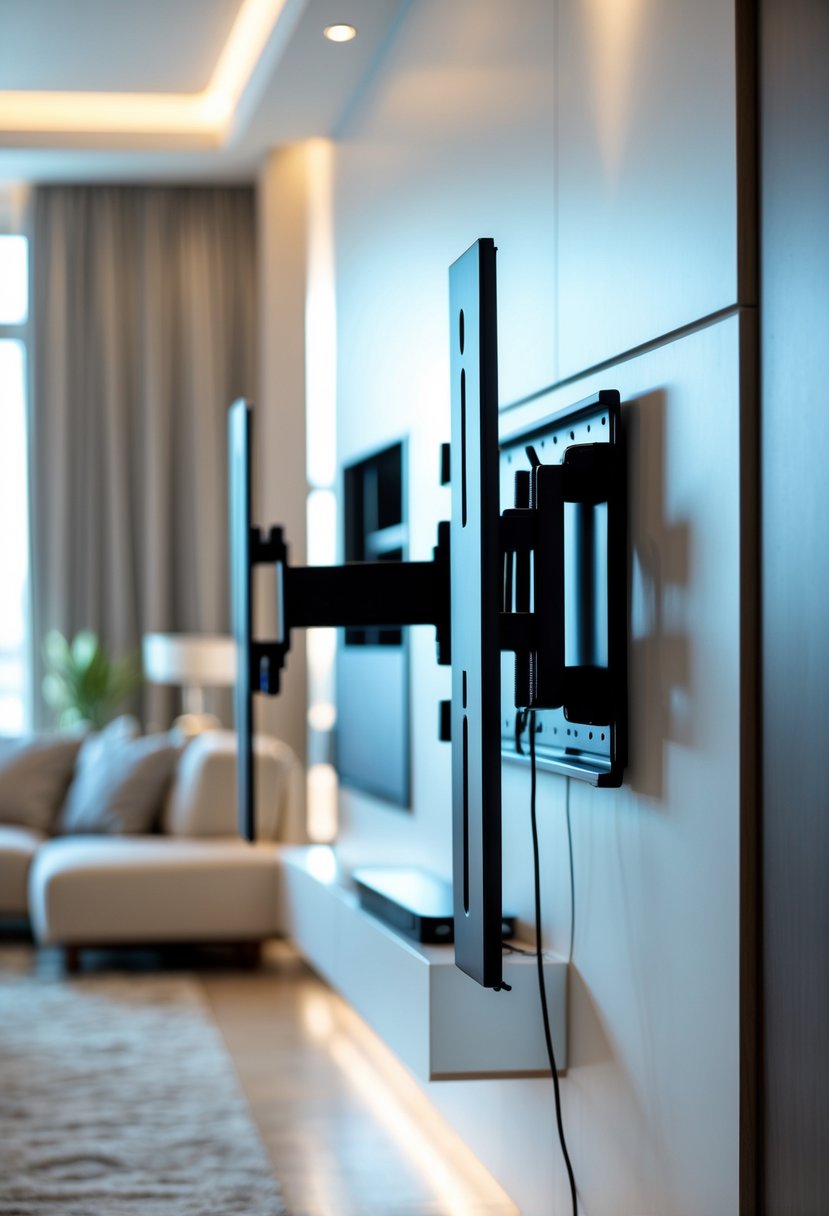
A floating TV wall mount lifts the screen off the floor and gives the room a cleaner look. It makes the TV appear to hover on the wall, which frees up floor space and creates a streamlined focal point.
Hidden cable management keeps wires out of sight and reduces visual clutter. Cables run inside the wall or through a slim raceway that matches the wall color. This keeps the installation neat and safer for homes with children or pets.
Installation requires a stud-mounted bracket and careful measuring to keep the TV level. Some walls may need professional work to hide cables inside the drywall. They should check local codes before running power or data cables in-wall.
2) Wooden slat accent wall behind TV
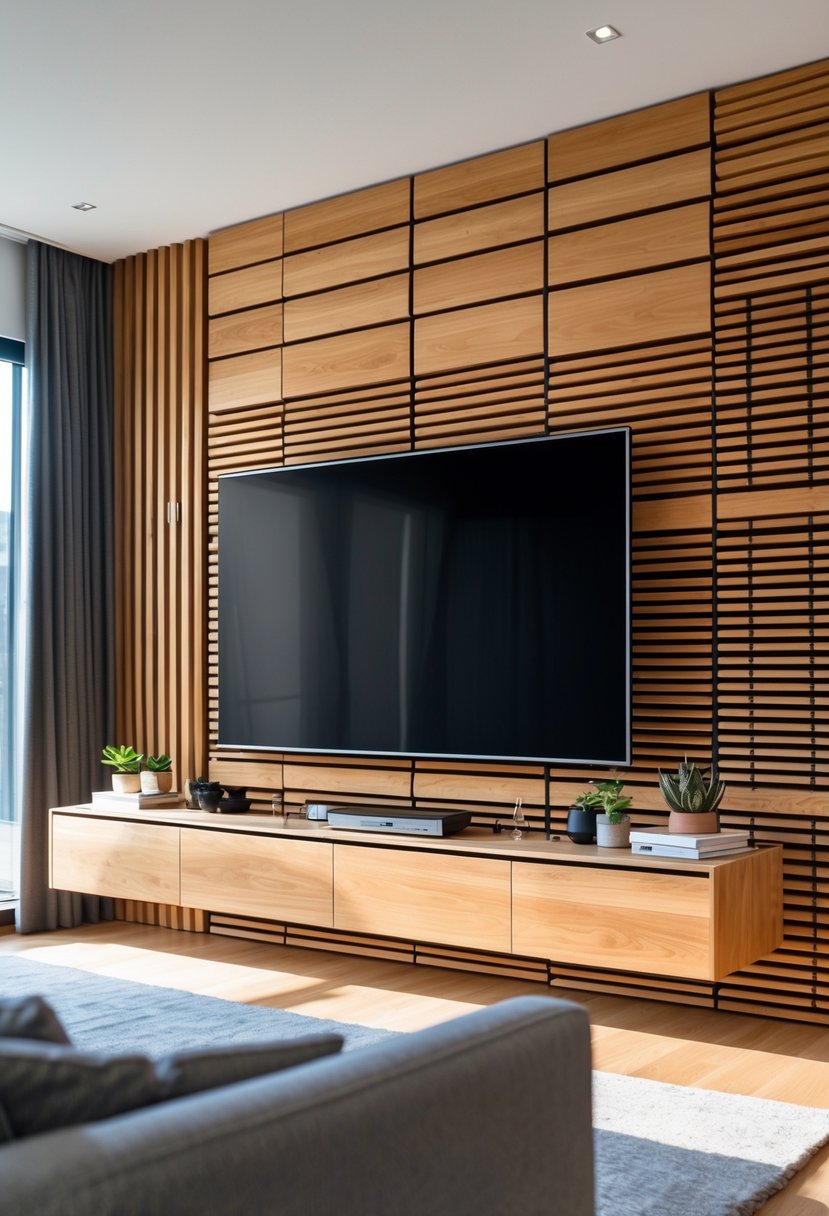
A wooden slat wall adds warmth and texture behind a TV without overwhelming the room. It creates a clean, modern backdrop that draws the eye to the screen while keeping the space cozy.
They can be made from oak, pine, or reclaimed wood, and installed vertically or horizontally. Narrow slats give a subtle, refined look; wider slats feel more rustic and bold.
Installers often mount the TV to the slats with a hidden bracket or attach slats around an existing mount. This keeps cables tidy and preserves a flush, built-in appearance.
Staining or painting the slats lets homeowners match the wall to furniture or trim. A matte finish reduces glare from the screen and keeps the focus on the picture.
3) Gallery wall with framed art around TV
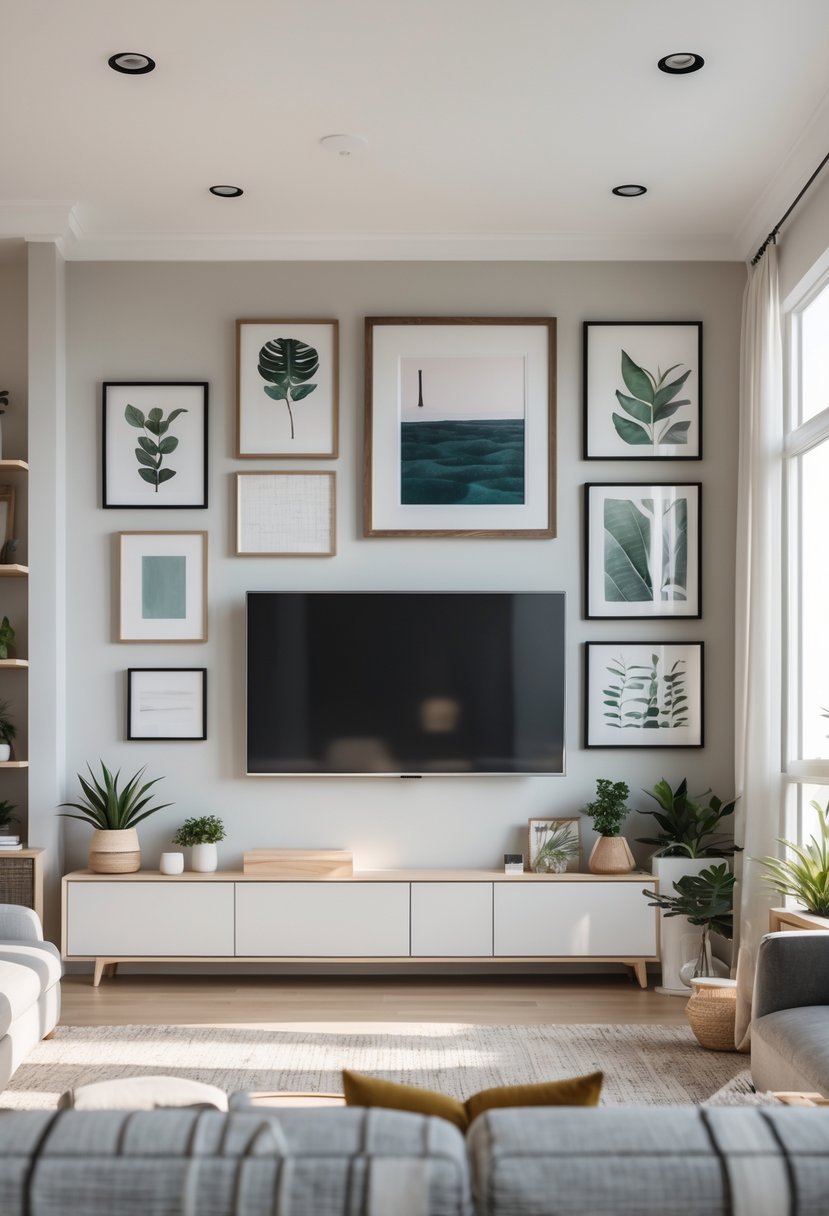
They arrange a mix of framed prints, photos, and simple art pieces around the TV to make it part of a larger display. Frames in one or two coordinating colors keep the look pulled together and prevent visual clutter.
They balance sizes and shapes to lead the eye toward the screen without hiding it. Spacing stays consistent; small gaps make the layout feel intentional and tidy.
They include a few blank frames or matting to give breathing room and avoid crowding. A level line or central axis through the TV helps align the other frames for a cleaner appearance.
They choose images that match the room’s mood—calm landscapes, abstract shapes, or family photos work well. Lighting, like a simple picture light or even consistent room lighting, keeps the gallery readable and cozy.
4) Stone veneer fireplace wall with mounted TV
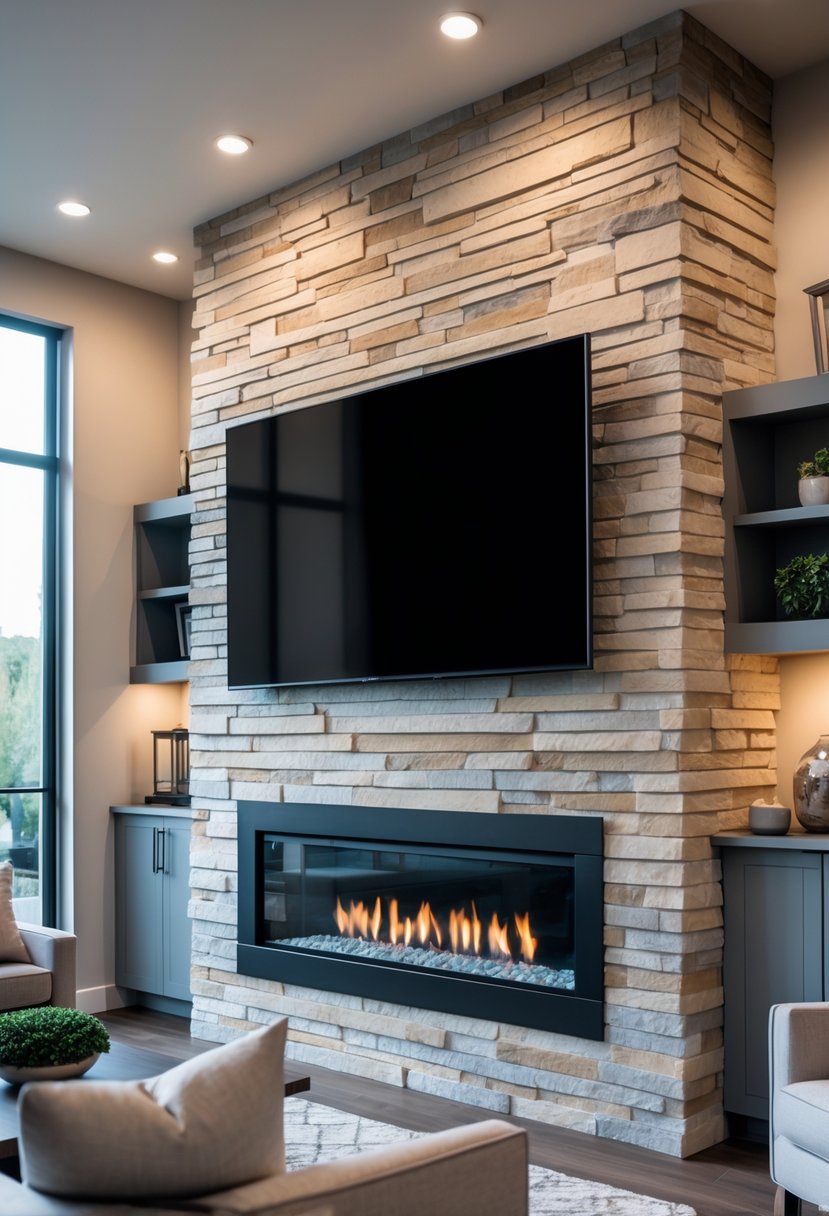
They use stone veneer to add texture and a natural look around the fireplace. The TV mounts above the mantel for a clean focal point that ties the room together.
Heights and sightlines matter. Placing the TV slightly above eye level keeps the fireplace visible and prevents neck strain during normal viewing.
They often run cables and AV components inside the wall or in hidden cabinets. This keeps the area neat and preserves the stone’s visual impact.
Light-colored mortar and varied stone sizes create depth without overwhelming the space. A slim mantel or floating shelf adds a place for decor without blocking the screen.
He or she should consider heat clearance from the fireplace. Proper insulation and a non-combustible barrier protect the TV and extend its lifespan.
5) Recessed niche wall for TV and soundbar
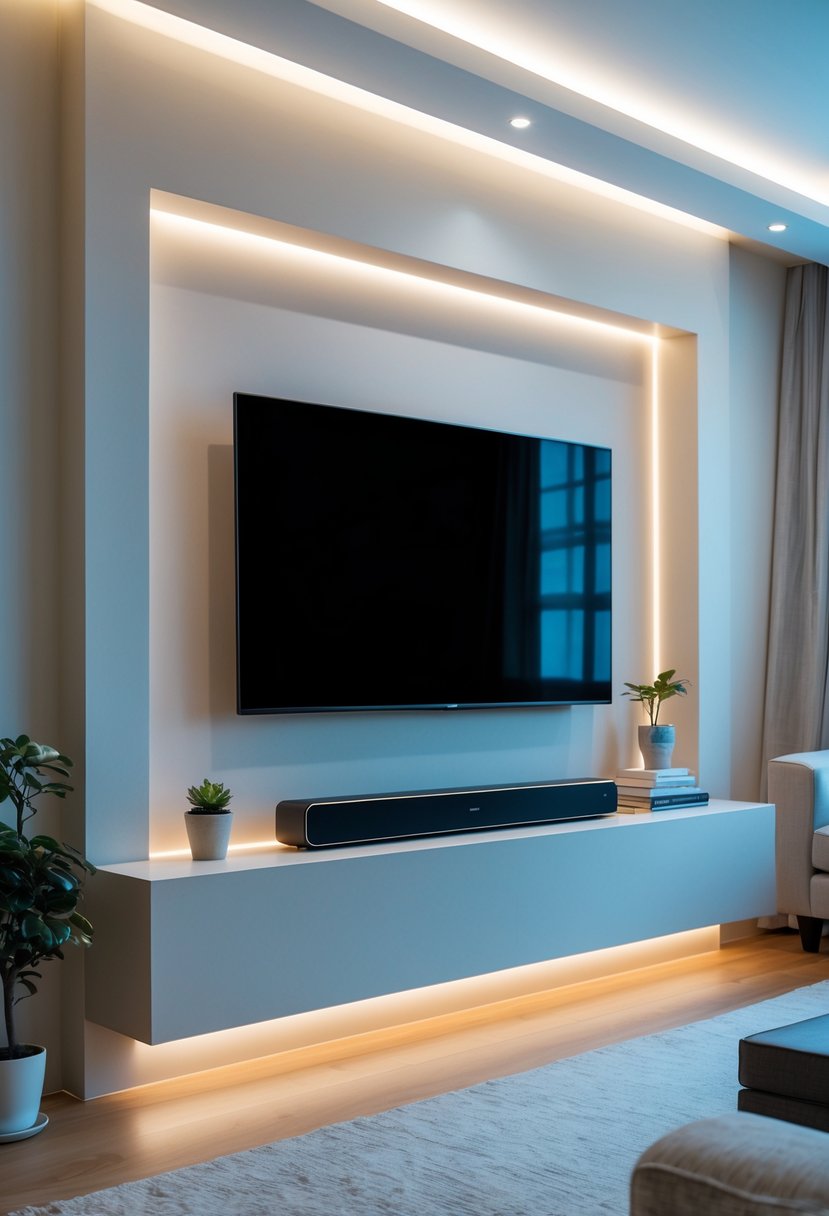
A recessed niche gives the TV a built-in look and keeps the screen flush with the wall. It creates a clean silhouette and reduces glare from side angles.
The niche can hold a soundbar directly beneath the TV, keeping speakers at ear level for clearer dialogue. It also hides cables and power outlets, so the wall looks tidy.
He or she can choose drywall, wood, or plaster for the niche finish to match the room style. Lighting, like LED strips, adds a soft backlight and highlights the screen without causing reflections.
They should measure carefully for ventilation and access to connections. A recessed niche works well in living rooms and media rooms where a streamlined, subtle setup is desired.
6) Full-wall mural with mounted TV centerpiece
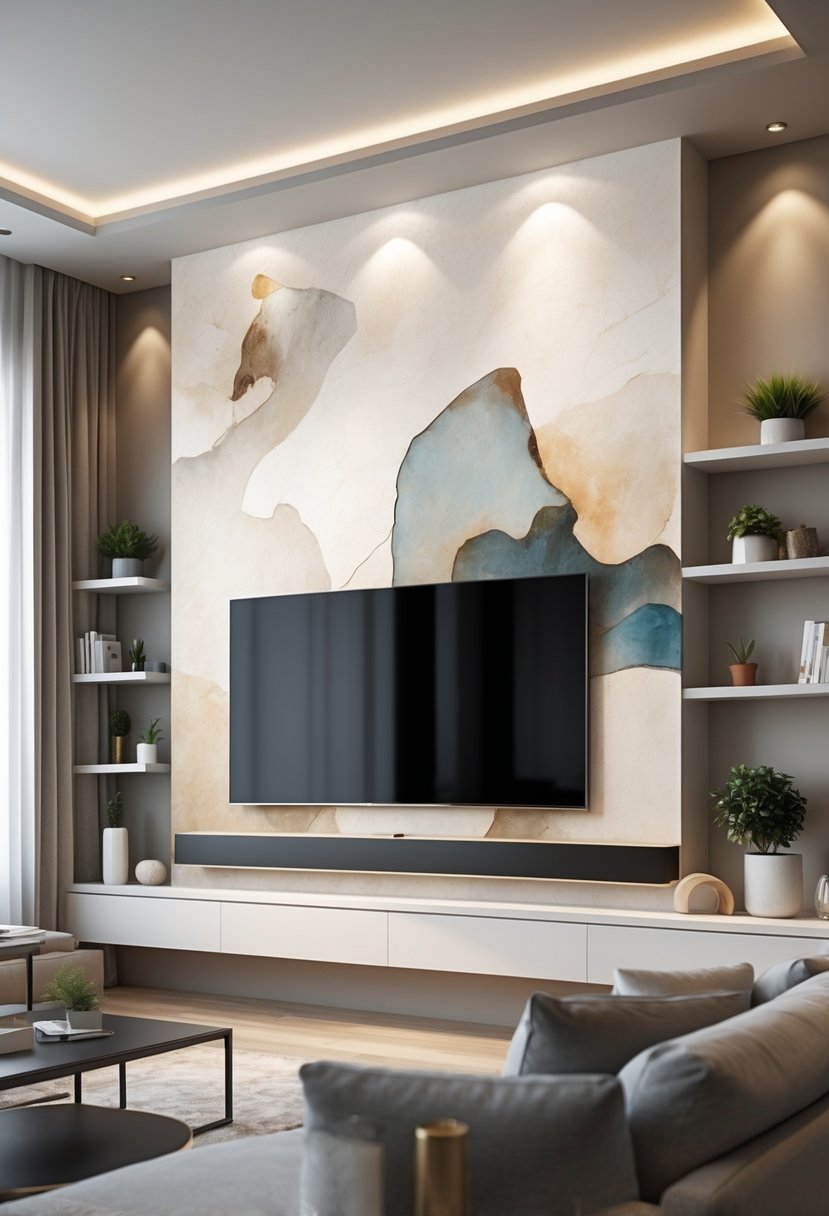
They paint a full-wall mural and mount the TV in the middle to create a strong focal point. The mural can be a subtle texture, a landscape, or a custom graphic that complements the room’s colors.
They mount the TV flush with the mural and hide cables to keep the look clean. A slim floating shelf or recessed niche beneath the TV can hold small media devices without breaking the mural’s flow.
They balance scale by keeping the mural design simple near the screen so it does not compete with the picture. Lighting—like picture lights or dimmable sconces—helps the mural read well and reduces glare on the TV.
They choose durable, low-sheen paints or wallpaper for easy cleaning and long life. For renters, removable mural wallpaper offers the same bold effect without permanent changes.
7) Industrial metal grid wall with TV
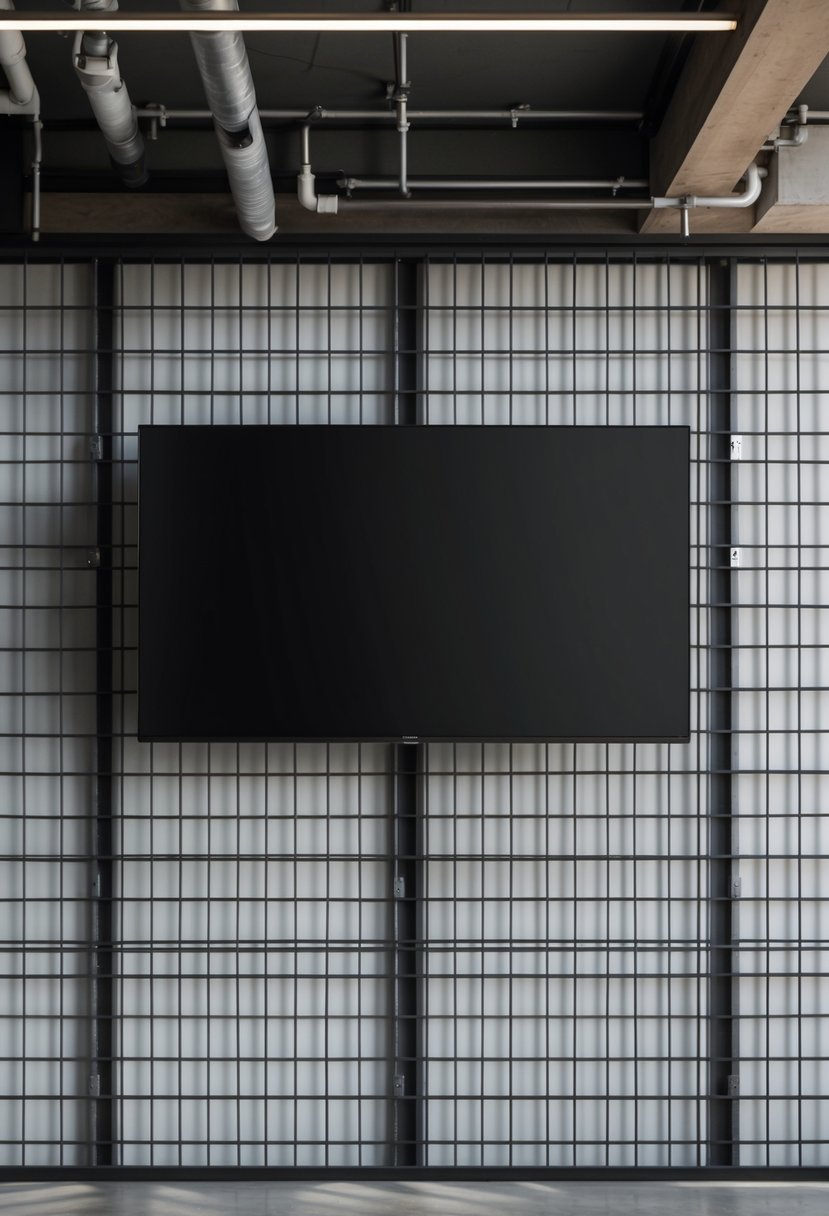
They mount a metal grid panel behind the TV for a bold, functional backdrop. The grid sets a strong industrial tone and adds texture without heavy materials.
They use black or dark gray powder-coated steel for durability and low shine. Clips or hooks on the grid hold shelves, plants, or lighting to keep devices and decor organized.
Cables run along the grid with simple clips, making the setup tidy and easy to change. The TV can sit slightly forward so ventilation stays clear and the metal does not trap heat.
This style fits lofts, modern apartments, and rooms that mix wood and concrete finishes. It works well for people who like a flexible display and want to switch items often.
8) Brick feature wall with wall-mounted TV
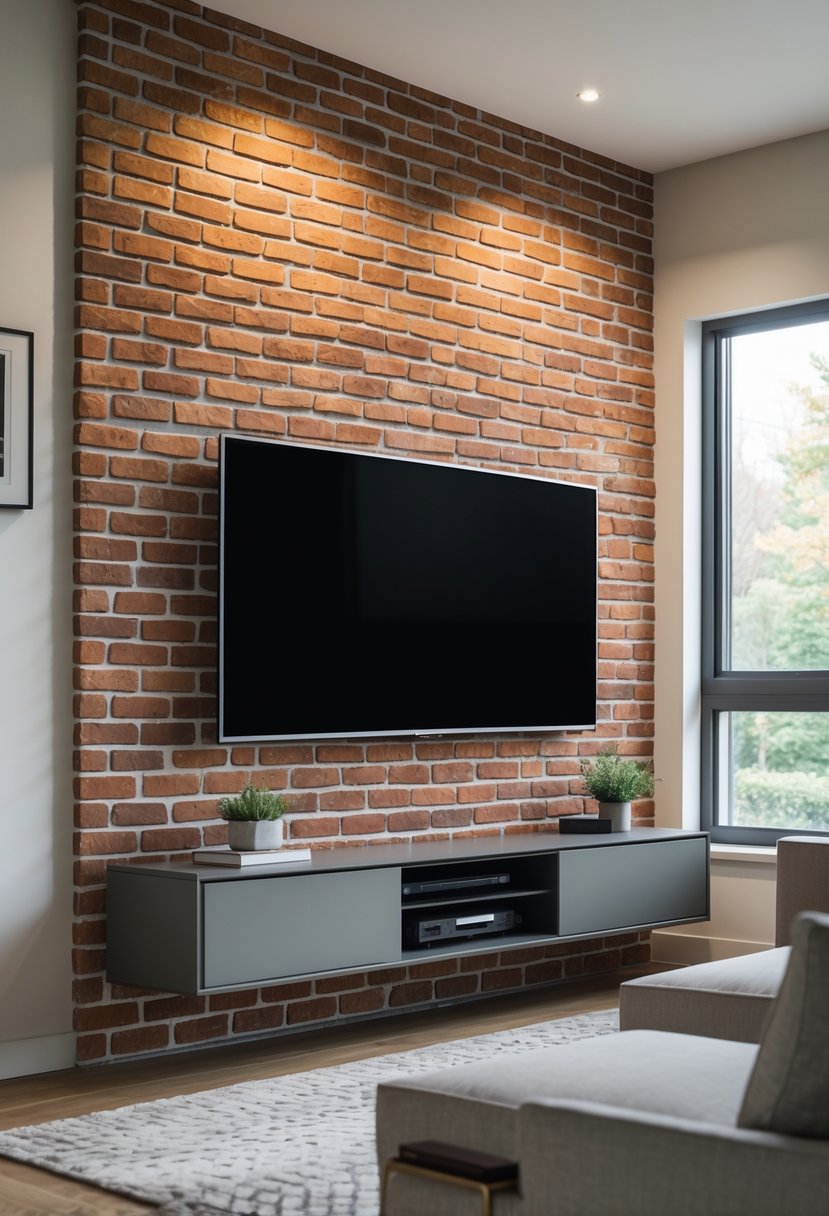
A brick feature wall adds texture and warmth to a room while creating a strong focal point for a wall-mounted TV. It works well in both modern and rustic spaces, pairing natural material with sleek electronics for a balanced look.
They can mount the TV directly on the brick using proper anchors, or attach a flush-mounted panel first for easier installation and cable management. Recessed shelves or a slim media console below the TV keep devices tidy without hiding the brick.
Choosing a painted or exposed brick finish changes the mood: painted white brightens and modernizes, while exposed red or brown keeps a cozy, industrial feel. Lighting helps the brick stand out; adjustable spotlights or wall washers highlight texture and reduce screen glare.
9) LED backlit drywall TV wall
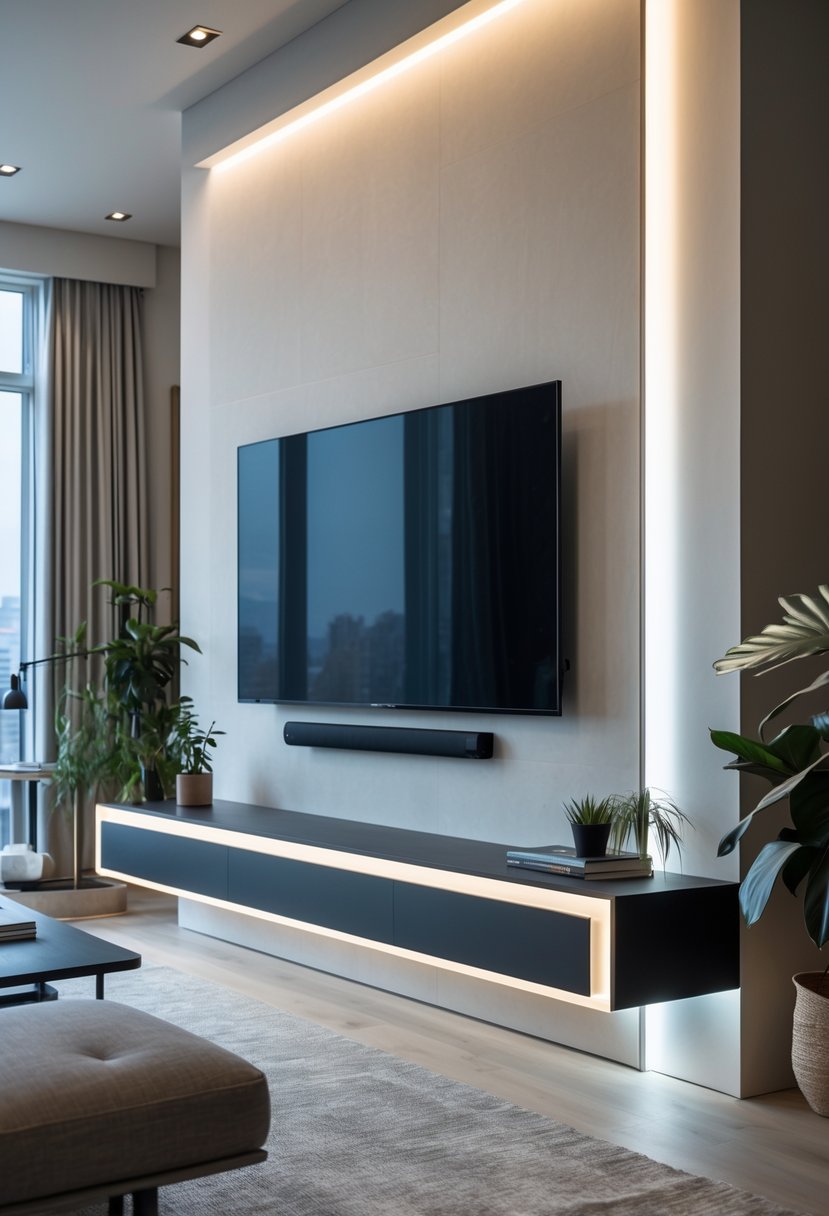
An LED backlit drywall TV wall adds depth and modern style without large changes to a room. It hides wiring behind the drywall and places LED strips around the TV recess for soft, even glow.
They can use color-changing LEDs for mood lighting or warm white for subtle contrast. The drywall frame can be simple and flat, or stepped to create a shelf and shadow lines.
Installation needs a solid plan for ventilation and access to ports. A licensed electrician should handle hardwiring and dimmer controls to meet safety standards.
This design works well in living rooms, bedrooms, or media rooms. It pairs nicely with minimal furniture and art to keep focus on the screen and the light effect.
10) Built-in shelves surrounding TV
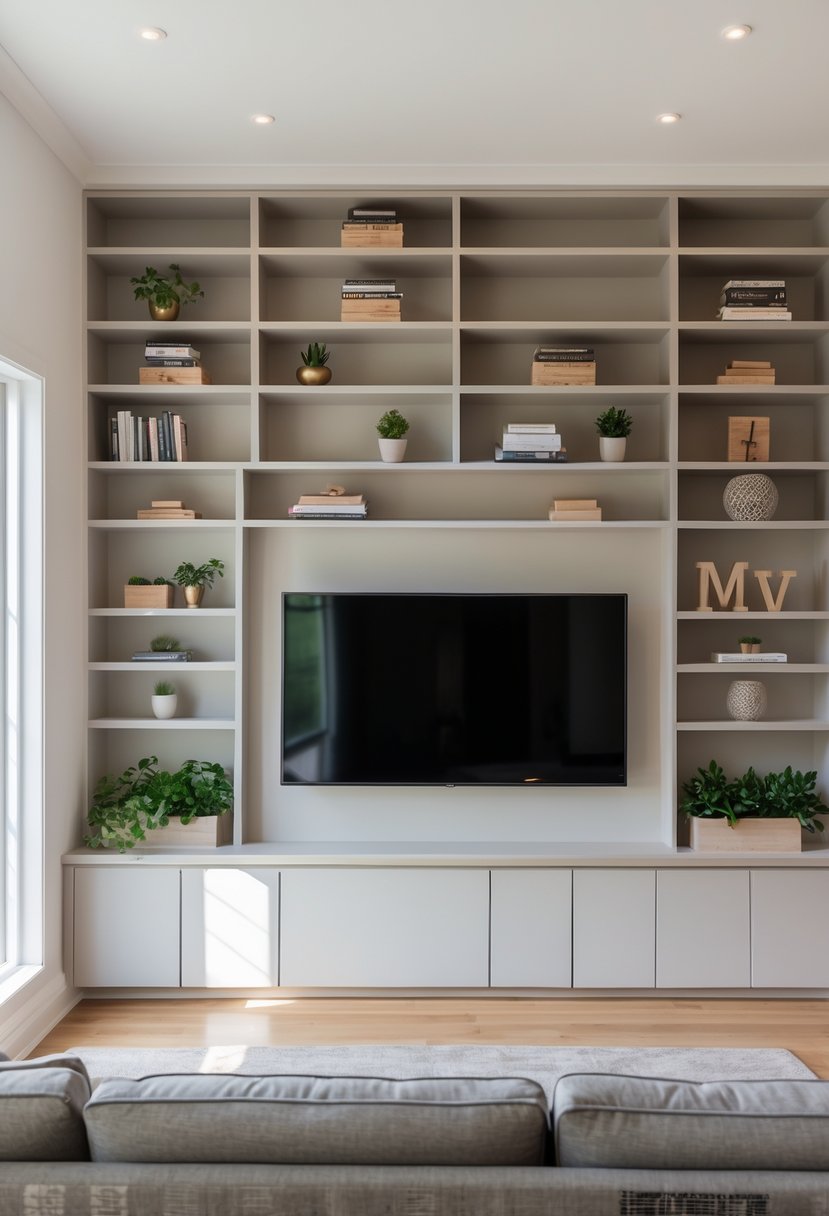
Built-in shelves frame the TV and make the screen feel like part of the room. They provide space for books, decor, and media devices without adding extra furniture.
They can be shallow to keep a slim profile or deeper to hold baskets and larger items. Lighting can be added to highlight objects and reduce glare on the screen.
Cabinets below the TV hide cables and equipment, keeping the area tidy. Shelves above and beside the TV create symmetry and balance in the design.
Custom built-ins match the wall paint or trim, giving a cohesive look. They also raise the home’s functionality by creating organized storage close to the viewing area.