Door Painting Ideas
This article was created in line with Trends Oraa’s research and content standards.
You want a fresh look without a big remodel, and a painted door gives you big impact for little cost. This article shows seven simple painting ideas that help you pick a style that fits your space and mood.
It guides you through bold, playful, and subtle options so you can choose a look that matches the room and your taste. You will see practical styles that work for modern, vintage, and creative spaces.
1) Bold matte black finish
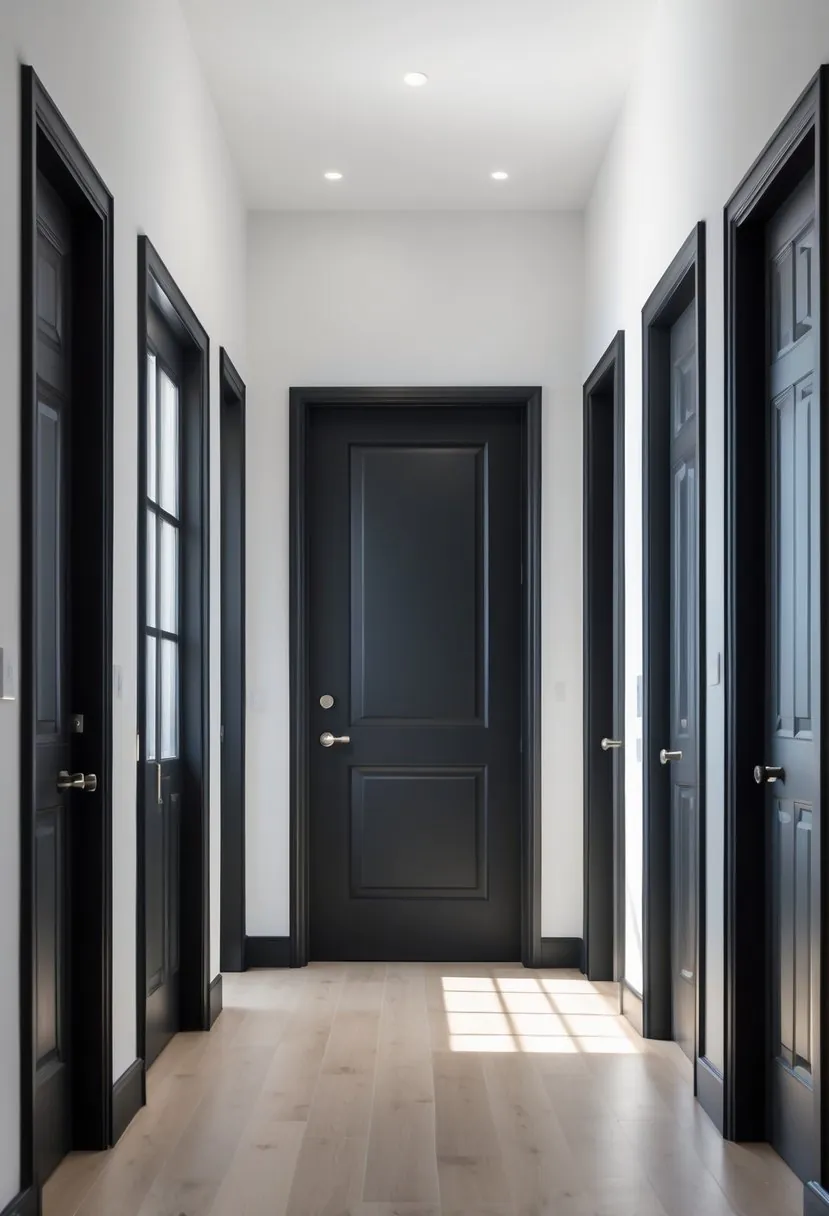
A matte black door makes a strong, modern statement without being flashy. It gives a clean, crafted look that works well with many styles, from minimalist homes to traditional houses wanting a contemporary touch.
They should prep the surface well by sanding and cleaning to help the paint stick. Using a good primer designed for dark colors reduces brush marks and ensures a smooth, even coat.
Matte finishes hide small imperfections but show dust and fingerprints more than satin. Regular gentle cleaning keeps the door looking sharp without damaging the finish.
Pair matte black with light trim or metallic hardware for contrast. Brass or brushed nickel handles stand out and add a touch of warmth to the dark, steady look.
2) Two-tone color blocking
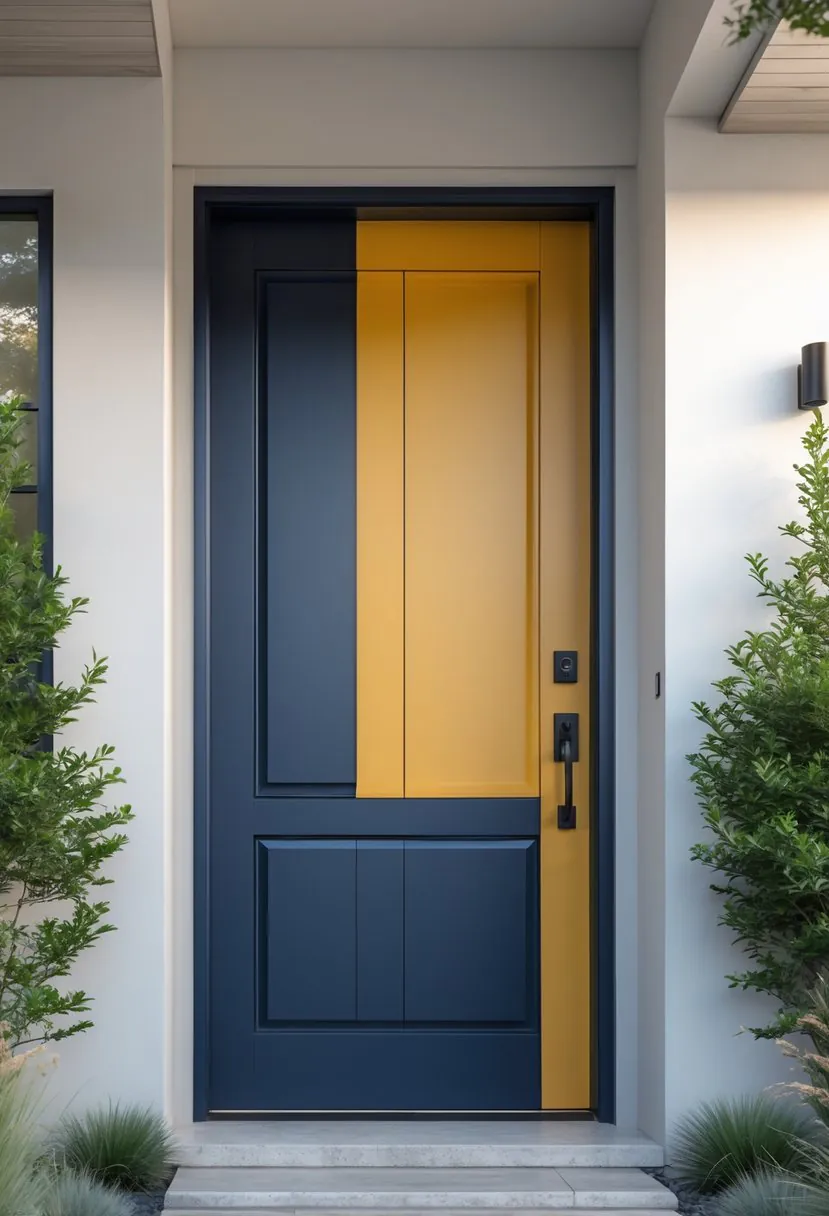
Two-tone color blocking gives a plain door instant style. It uses two contrasting or complementary colors split across panels, halves, or geometric shapes.
They can paint the top and bottom different colors for a classic look. Or they can paint vertical halves for a bold, modern feel.
Choose a darker color on the bottom to hide scuffs. Lighter colors on the top keep the space bright and open.
Keep lines crisp with painter’s tape and sand between coats for a smooth finish. Use the same sheen for both colors so light reflects evenly across the door.
3) Chalkboard paint for notes
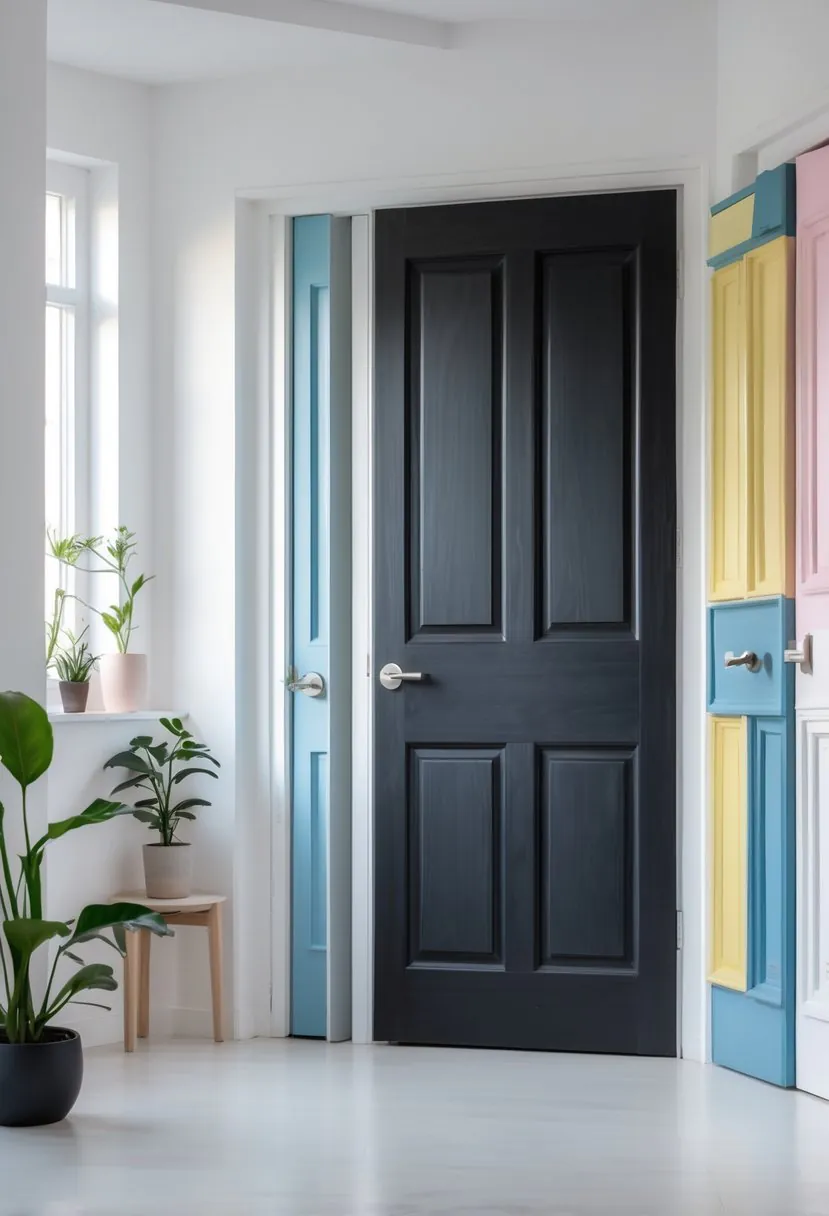
They can turn a door into a useful message center with chalkboard paint. A thin coat on a solid door creates a writable surface for reminders, lists, and doodles.
This paint works well on bedroom, kitchen, or office doors. It needs only light sanding and a primer for best adhesion.
They should use liquid chalk or quality chalk for easy erasing. Wiping with a damp cloth removes marks without damaging the paint.
If they want color, magnetic chalkboard paint adds function but may need stronger anchors for magnets. Multiple light coats produce a smooth finish and reduce streaks.
4) Glossy red for statement doors
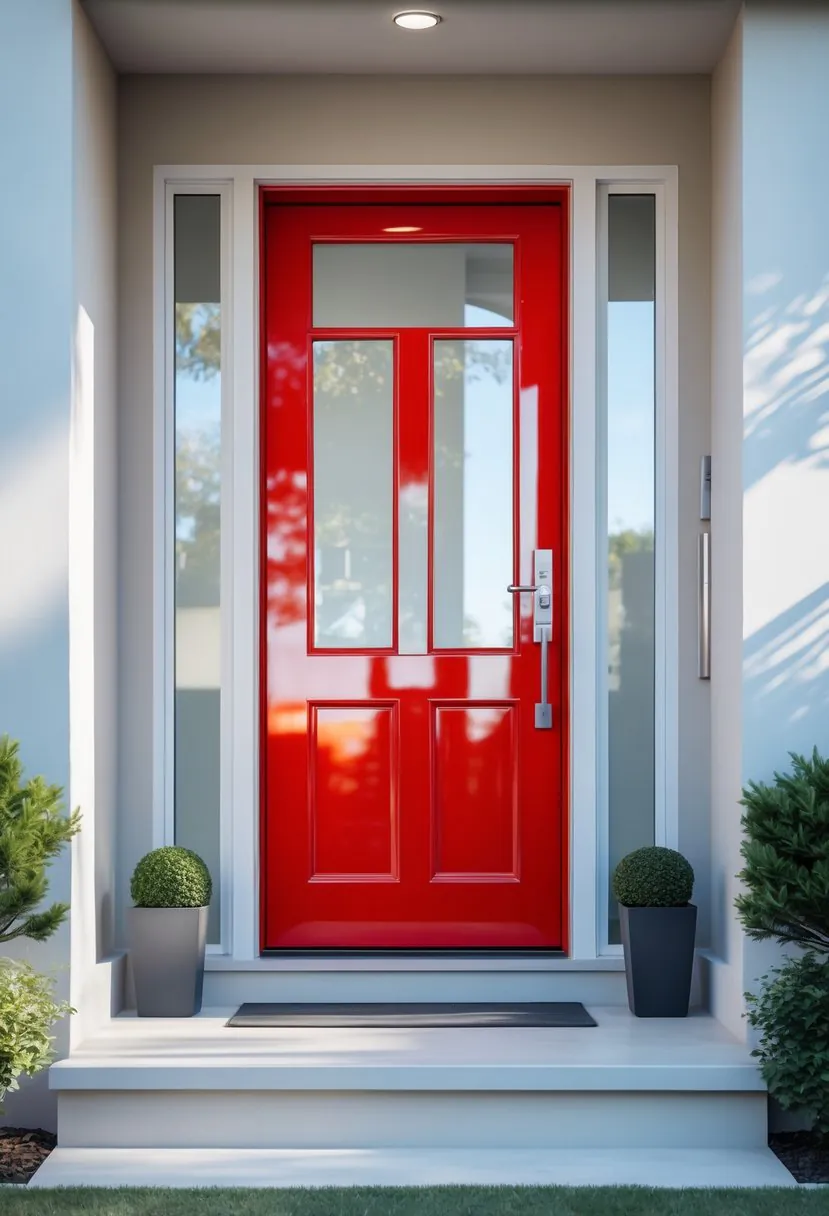
A glossy red door grabs attention and adds energy to a home or room. It works well on entry doors, kitchen cabinets, or a single accent door to create a focal point.
They should choose a high-gloss enamel for the best shine and easy cleaning. High-gloss resists scuffs and highlights architectural details like panels and trim.
Prep matters: sand, prime, and fill gaps before painting to get a smooth, reflective finish. Apply thin, even coats and allow full drying time between layers to avoid drips and orange-peel texture.
Glossy red pairs well with neutral walls and black or brass hardware. It can make a small space feel bolder without changing other decor.
5) Distressed vintage white
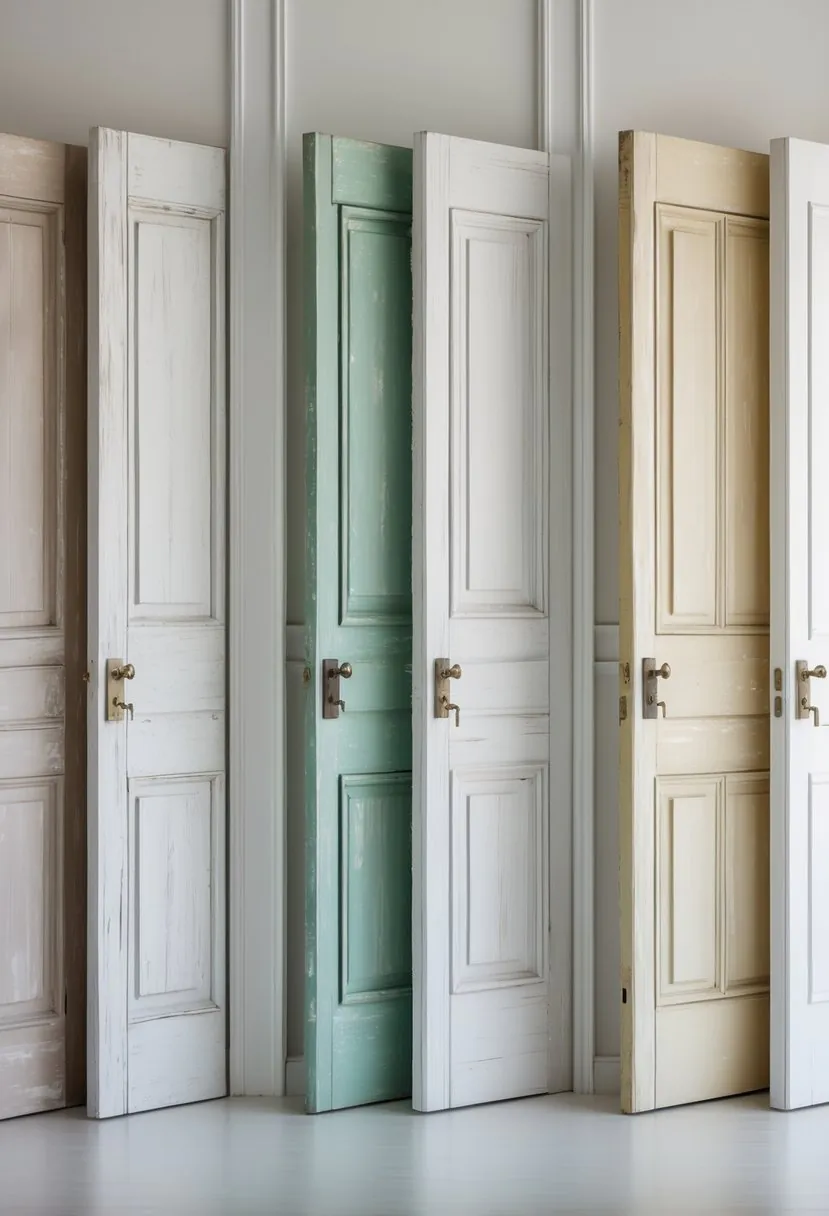
A distressed vintage white finish gives a door a soft, lived-in look. It fits well in cottages, farmhouse styles, and rooms that need a calm, aged touch.
They start with a solid white base coat and add a second, slightly darker white or cream. Sanding edges and raised details reveals the undercoat and creates natural wear patterns.
Using a dry brush or light sanding keeps the effect subtle and real. They often seal the surface with a matte wax to protect the finish without adding shine.
This style hides small dents and scratches and pairs well with brass or black hardware. It works on interior and exterior doors, as long as exterior doors get a durable topcoat for weather protection.
6) Geometric patterns with tape
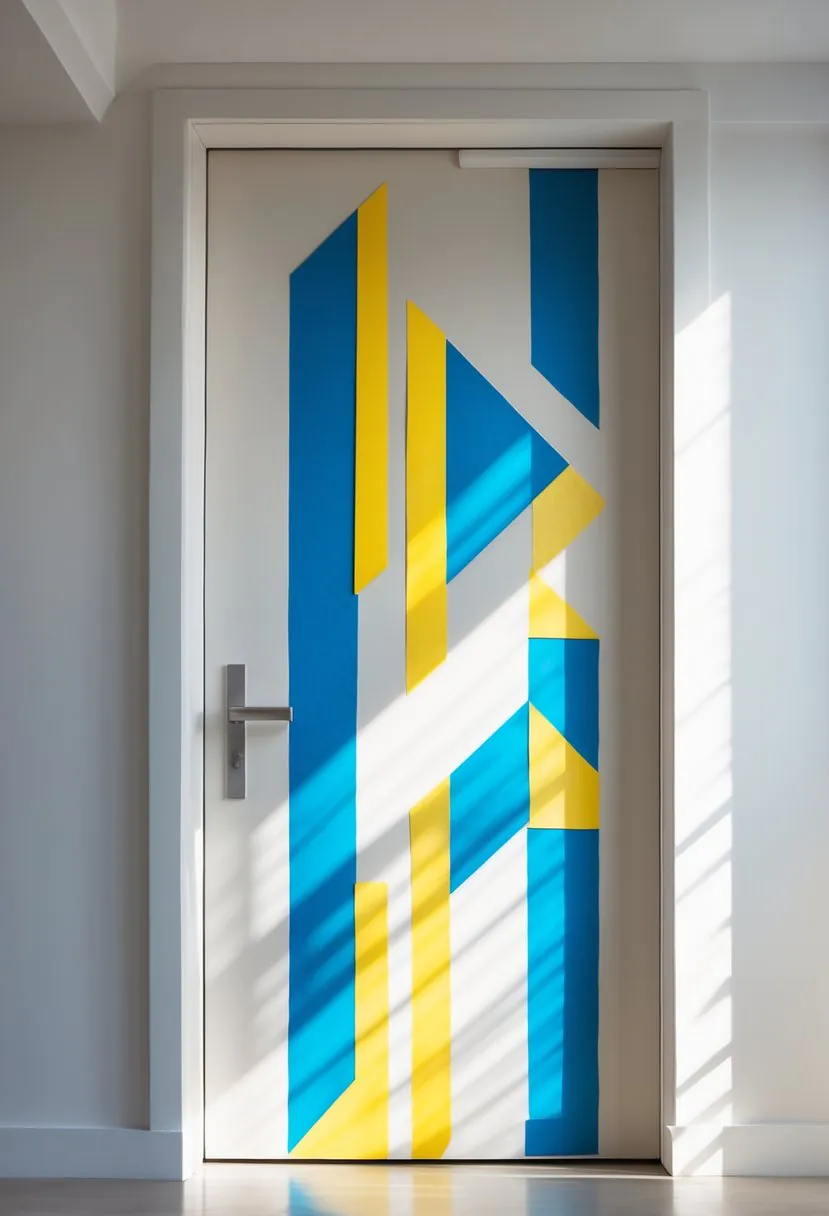
They use painter’s tape to map out clean shapes on the door. Triangles, stripes, and chevrons work well and give a modern look.
They recommend measuring and marking lightly with a pencil first. Taping straight lines carefully keeps paint edges sharp and neat.
They suggest using two or three contrasting colors for impact. Lighter colors make rooms feel bigger; darker tones add drama without clutter.
They advise removing the tape while the paint is still slightly tacky. That step prevents peeling and leaves crisp lines.
They note small mistakes can be fixed with a fine brush. Geometric patterns suit plain doors and can match room accents easily.
7) Metallic gold highlights
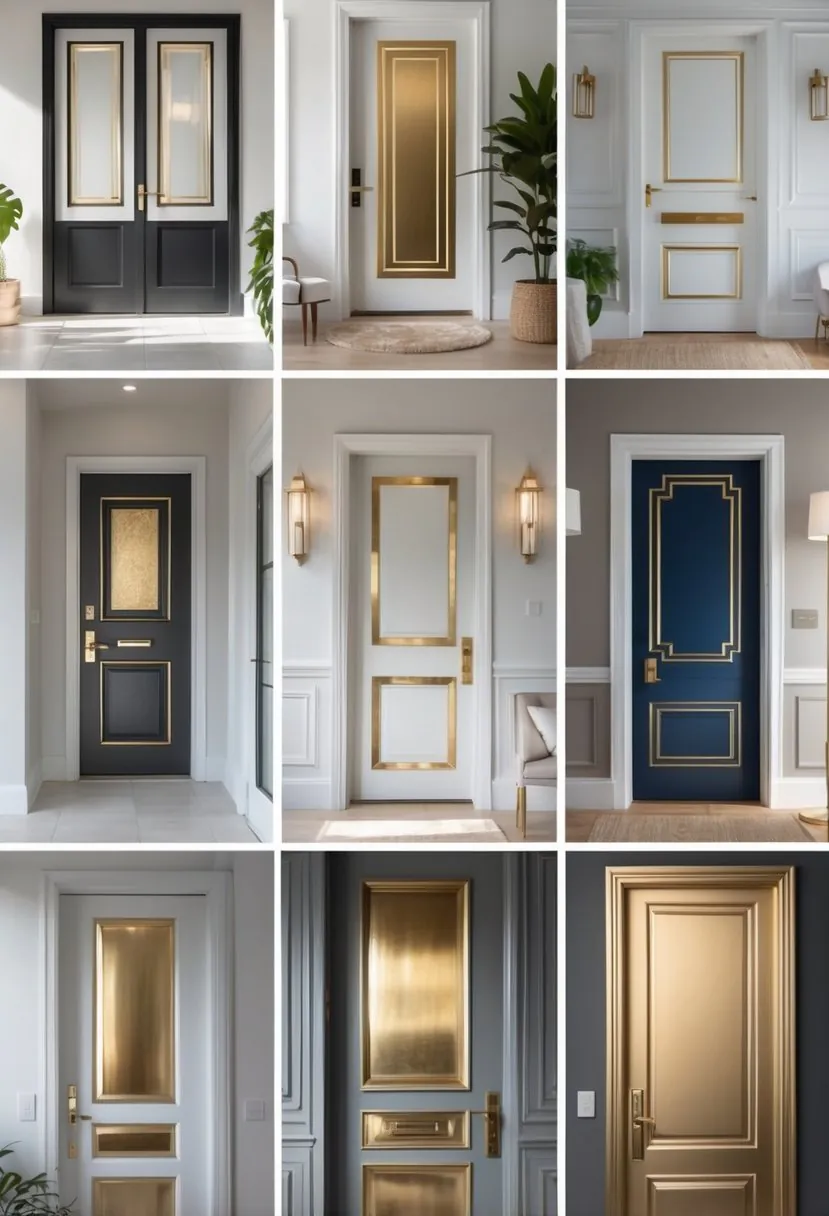
They add a touch of luxury without covering the whole door. A thin stripe around panels or along edges creates contrast with a base color like navy, charcoal, or deep green.
Painters often use metallic paint or a gold leaf pen for precise lines. Taping crisp edges helps keep the look neat and professional.
Gold works well on interior and exterior doors, but it shows wear more easily outdoors. A clear protective topcoat will help the finish last longer in high-traffic areas.
Pair gold highlights with simple hardware in brass or matte black to keep the design balanced. They can make a plain door look deliberate and styled with little effort.
8) Ombre blue gradient
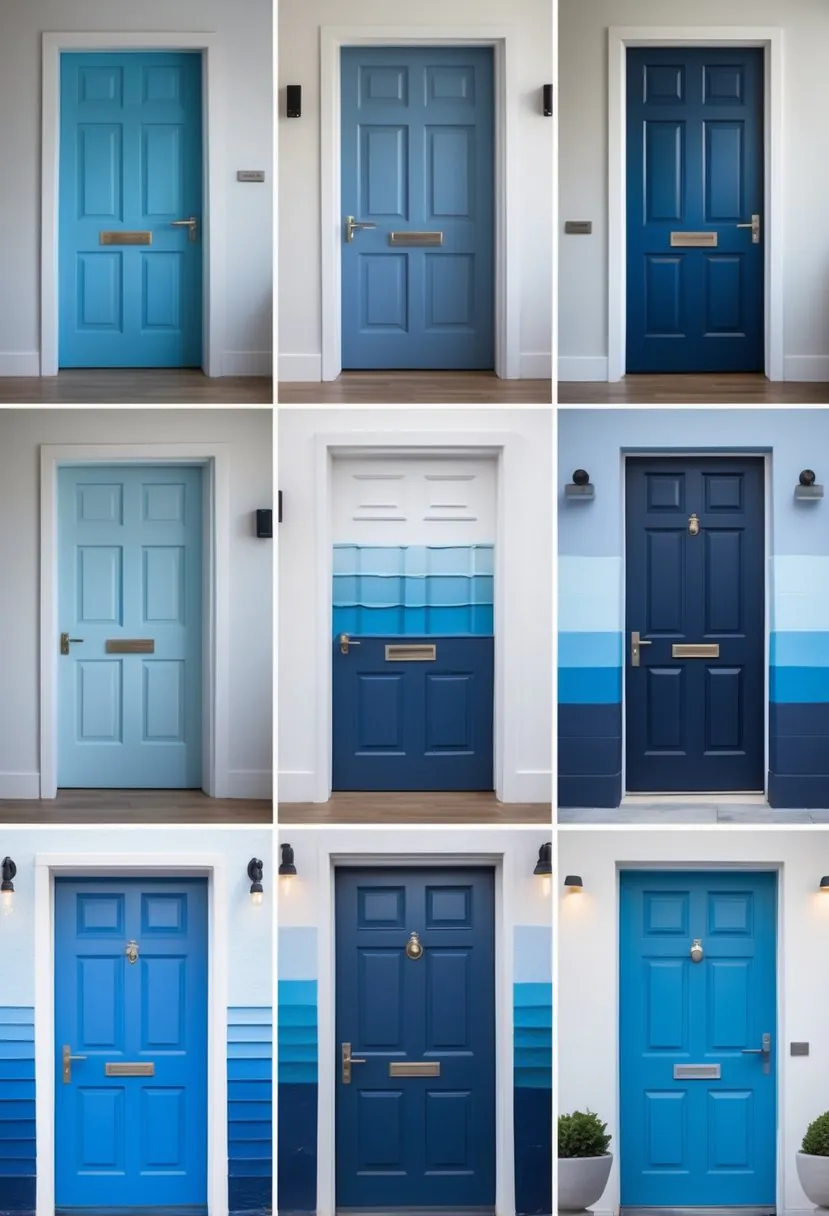
They blend three or more shades of blue from dark at the bottom to light at the top to create an ombre effect. The look adds depth and feels calm without being dull.
They start by sanding and priming the door, then paint the darkest color at the bottom. A mid-tone goes in the center and the lightest shade at the top, with soft lines between each band.
They use a wide brush or sponge to feather the joins so the colors flow into one another. A light horizontal stroke helps remove hard edges and keeps the gradient smooth.
They protect hardware and hinge areas with tape before painting. A clear satin sealer helps the finish resist fingerprints and weather if the door is outside.
9) Stenciled floral designs
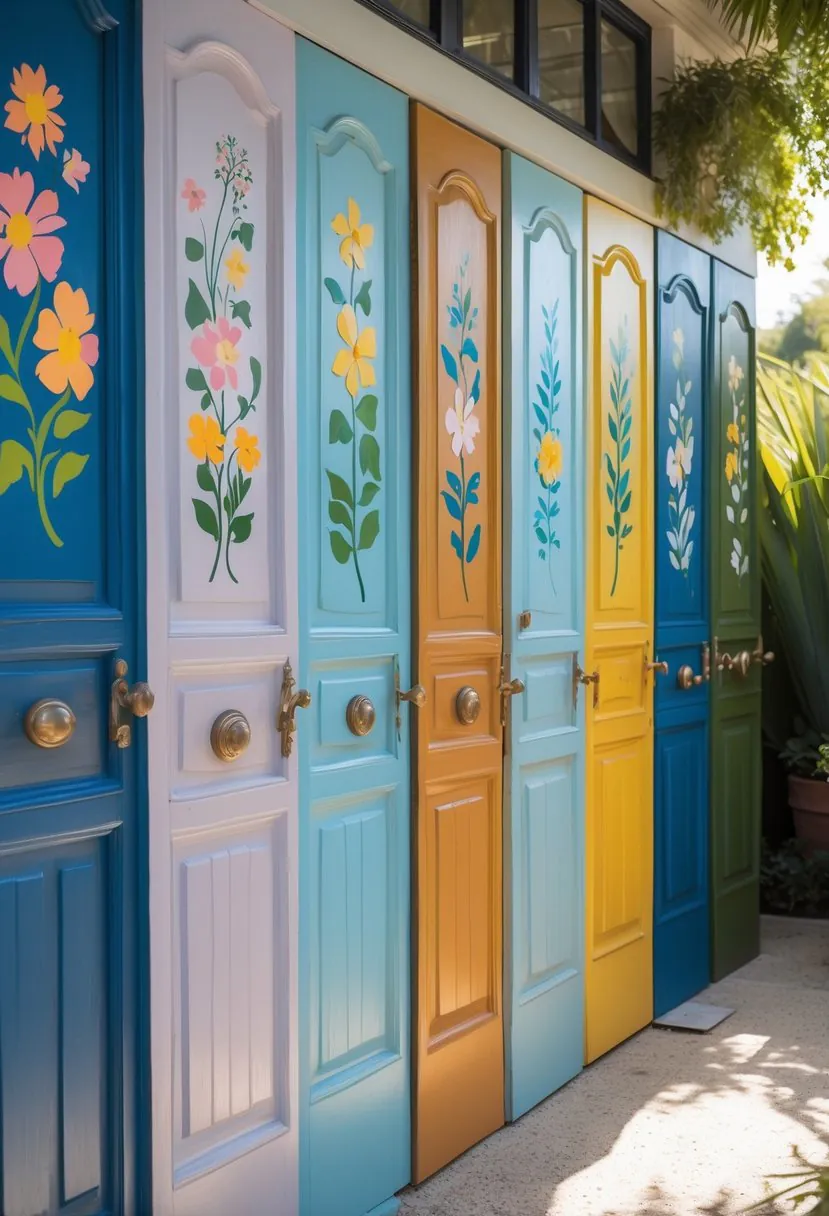
They create a quick way to add pattern and charm to a plain door. Stencils come in many sizes and styles, from small sprigs to large bloom panels.
She can pick a single color for a subtle look or use several shades for more depth. Light colors on dark doors, or dark colors on light doors, give the most contrast and make the pattern stand out.
They should clean and sand the door surface before stenciling to help the paint stick. Use painter’s tape to hold the stencil steady and a stencil brush or sponge with light dabs to avoid bleed.
He can repeat a small motif across the door or place a cluster of flowers in one corner for an asymmetrical design. Sealing the finished work with a clear topcoat will protect the stencil paint from wear.
10) Textured sponge painting
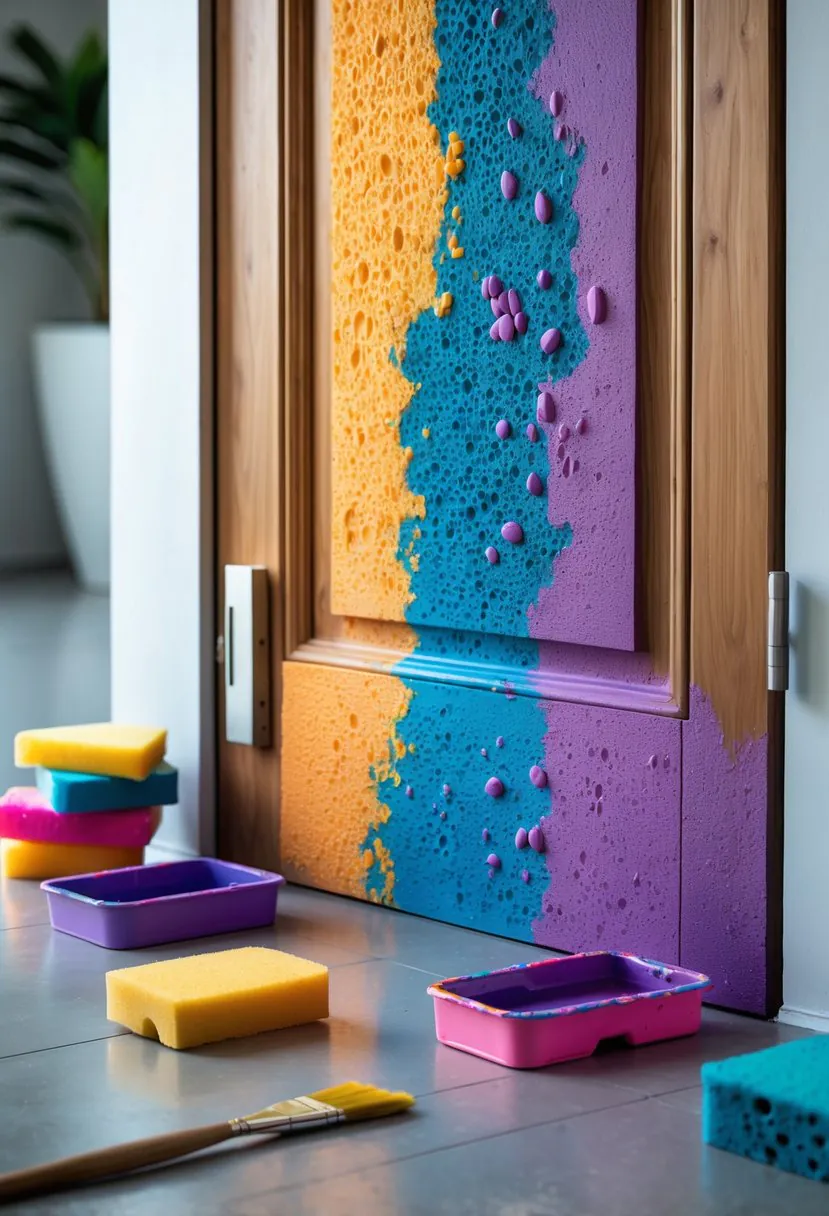
Textured sponge painting gives a door a soft, patterned look without much effort. It uses a sponge to dab paint in layers, which creates subtle depth and a handcrafted feel.
They can mix two close colors for a tone-on-tone effect or choose contrasting colors for more pop. The technique hides small imperfections and works well on both wooden and metal doors.
Start by painting a base coat and letting it dry fully. Then dip a natural or sea sponge lightly into glaze or thinned paint and pat gently, building texture gradually.
Keep a paper towel nearby to blot excess paint and practice on cardboard first. They should work from top to bottom and step back often to check balance and coverage.