25 Kitchen Pantry Ideas to Maximize Space, Organization, and Style
This article was created in line with Trends Oraa’s research and content standards.
You want a pantry that works with your life, not against it. This article shows practical ways to make your pantry easier to use and keep tidy so you waste less time and find what you need fast.
You will learn simple, doable ideas that fit many pantry sizes and budgets. The tips will help you access items, save space, and keep things organized without major renovations.
1) Install pull-out shelves for easy access
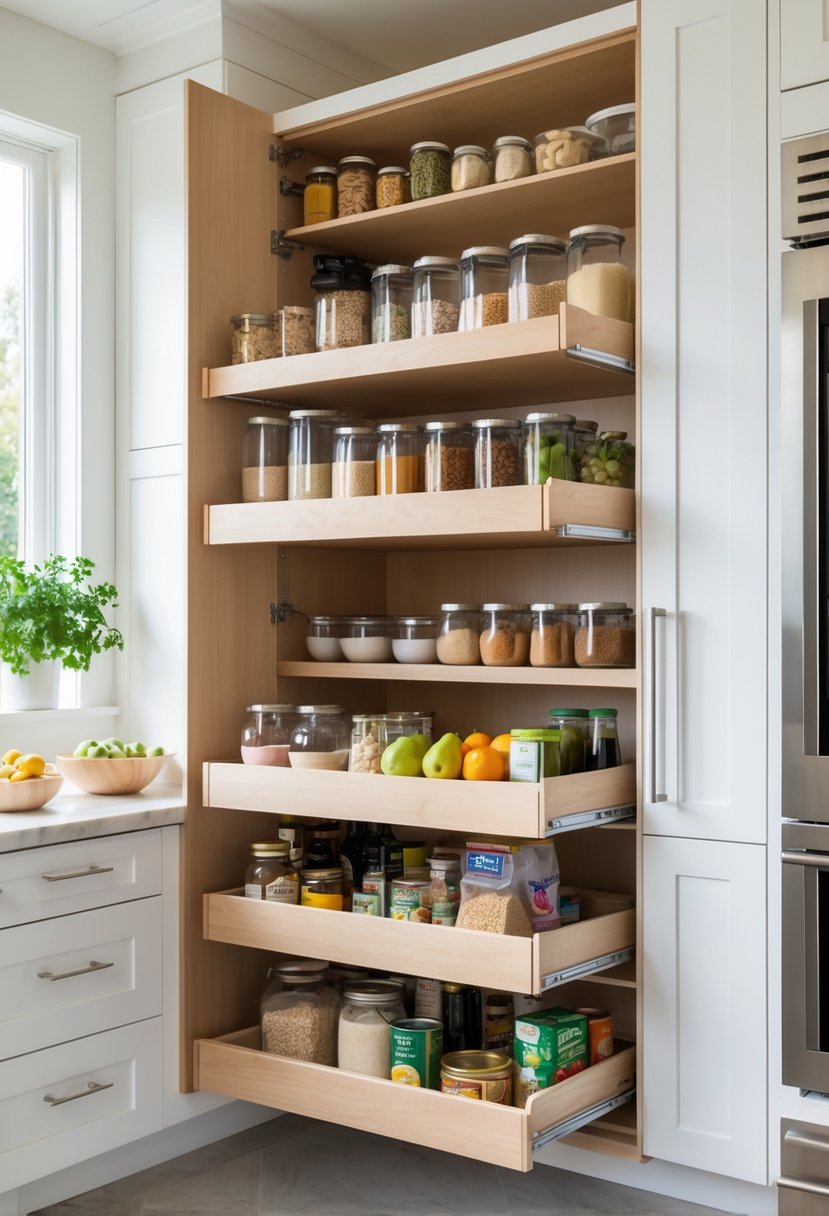
They slide out so items at the back are easy to reach. This reduces bending and digging in deep cabinets.
Pull-out shelves fit in lower and tall pantry spaces. They work well for cans, baking pans, and small appliances.
Choose full-extension slides for smooth motion and weight support. Installation can be DIY or done by a carpenter.
2) Use clear airtight containers for dry goods
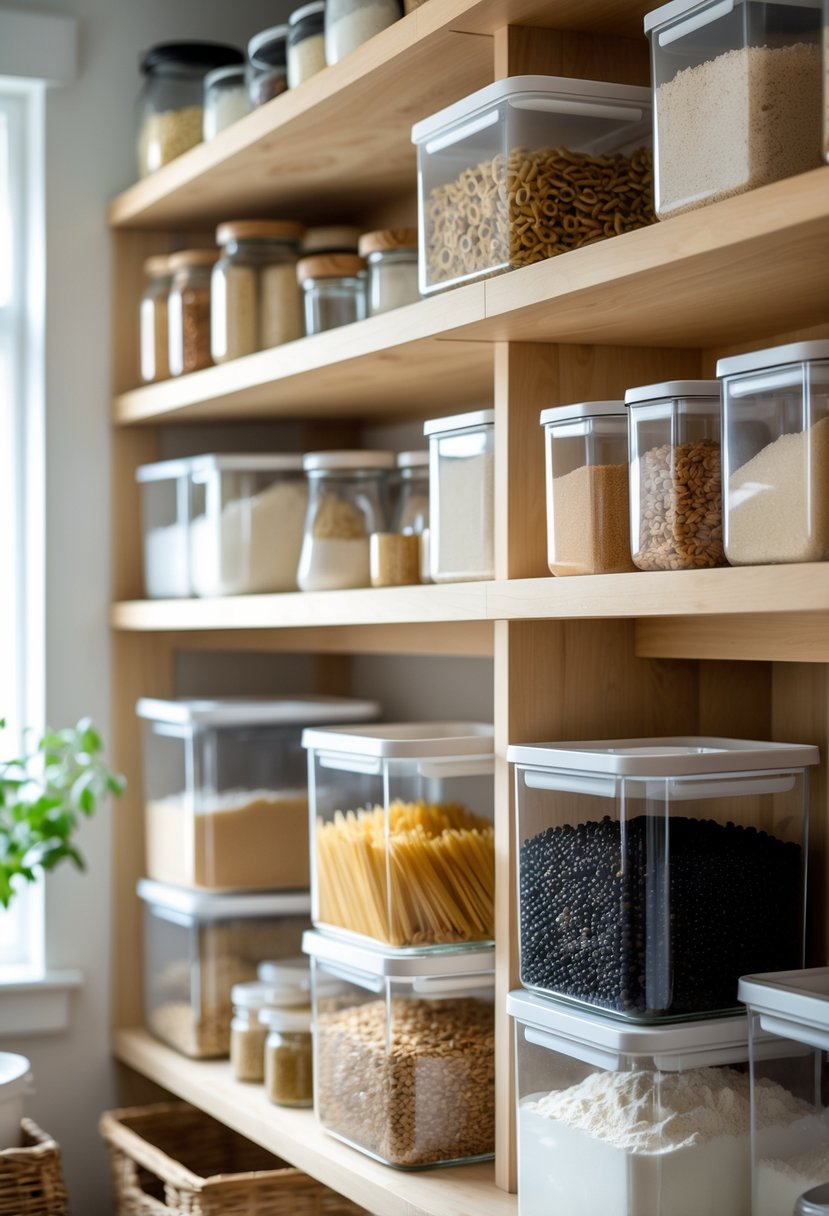
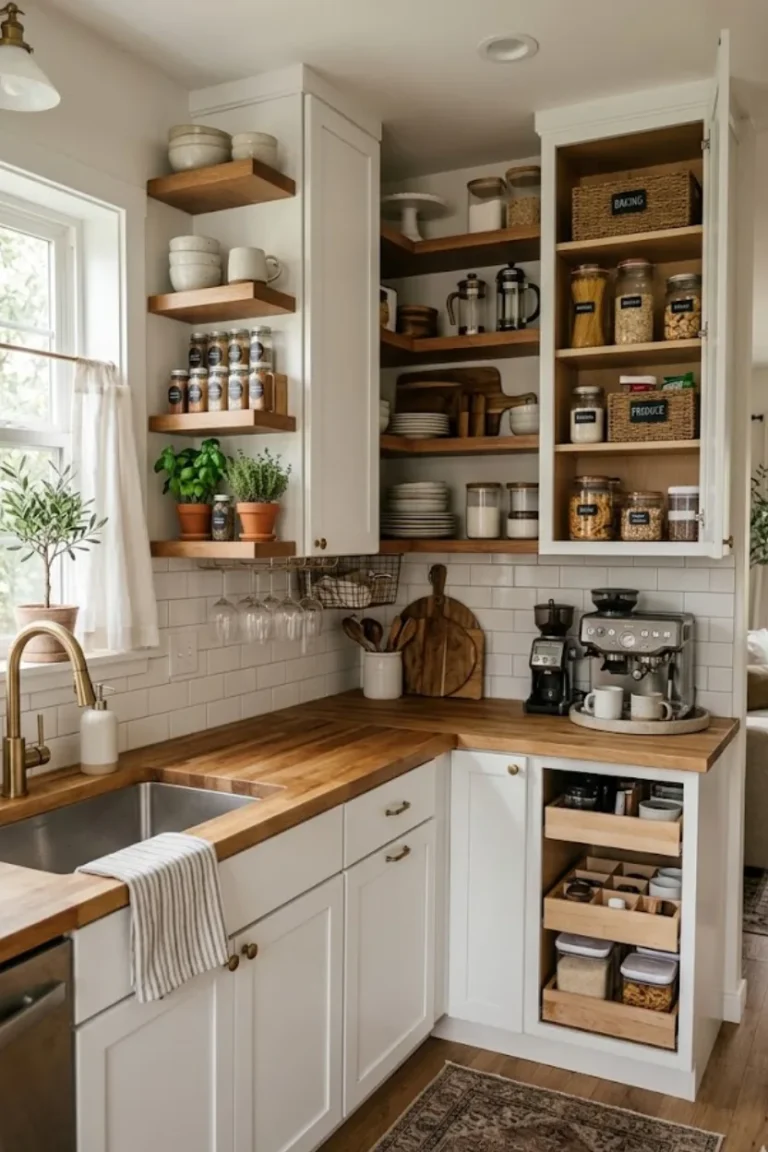
They store flour, rice, pasta, and beans in clear airtight containers to keep food fresh longer. Transparent sides make it easy to see when supplies are low.
Airtight lids prevent moisture and bugs, which reduces spoilage and waste. Labels or measuring marks speed up cooking and help keep the pantry tidy.
3) Label bins and jars with chalkboard stickers
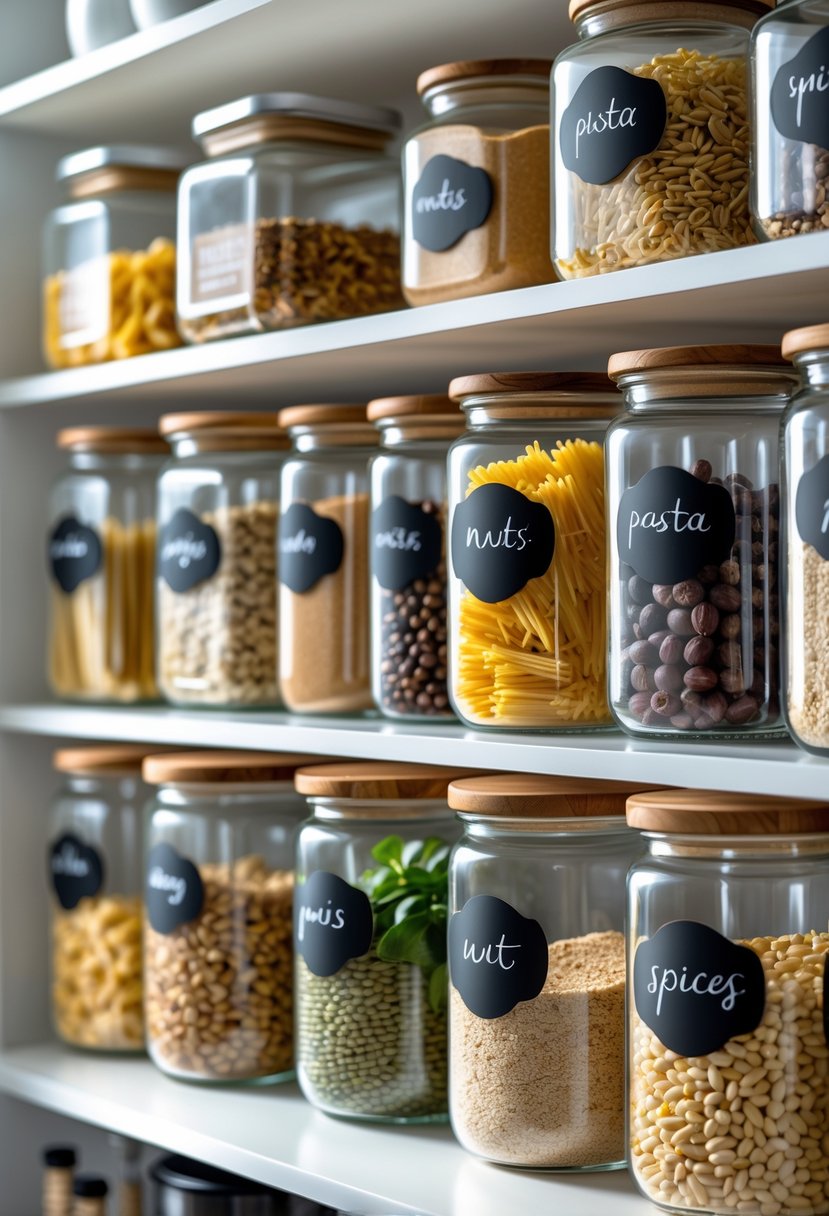
They stick chalkboard labels to jars and bins so contents are easy to find. Labels can be changed when items are swapped or refilled.
Chalk markers make neat, clear writing that wipes off when needed. This keeps the pantry tidy and reduces food waste from forgotten items.
4) Add tiered spice racks inside doors
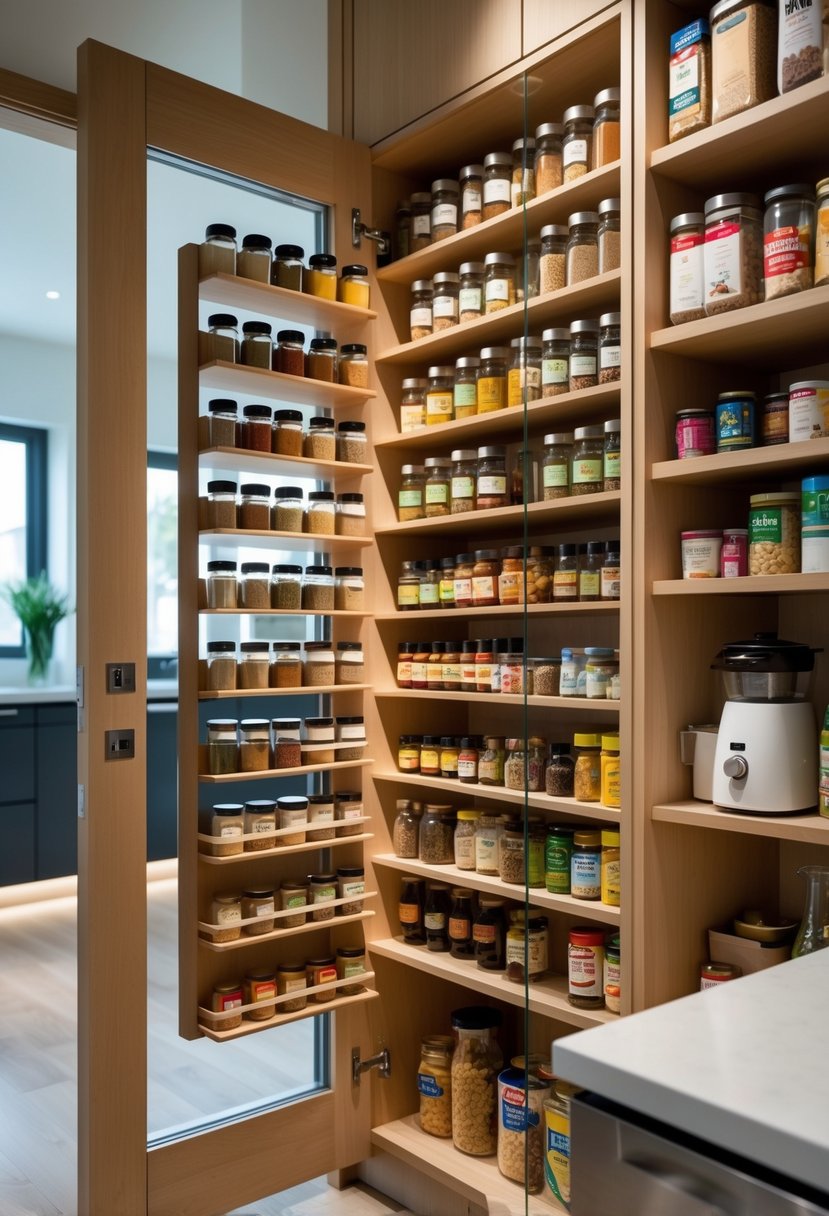
They free up shelf space by storing small jars on the inside of pantry or cabinet doors. Tiered racks keep labels visible so users can quickly spot spices without digging.
Installation is usually simple with screws or adhesive strips. Adjustable tiers fit different jar heights and prevent bottles from tipping.
5) Incorporate lazy Susans for corner spaces
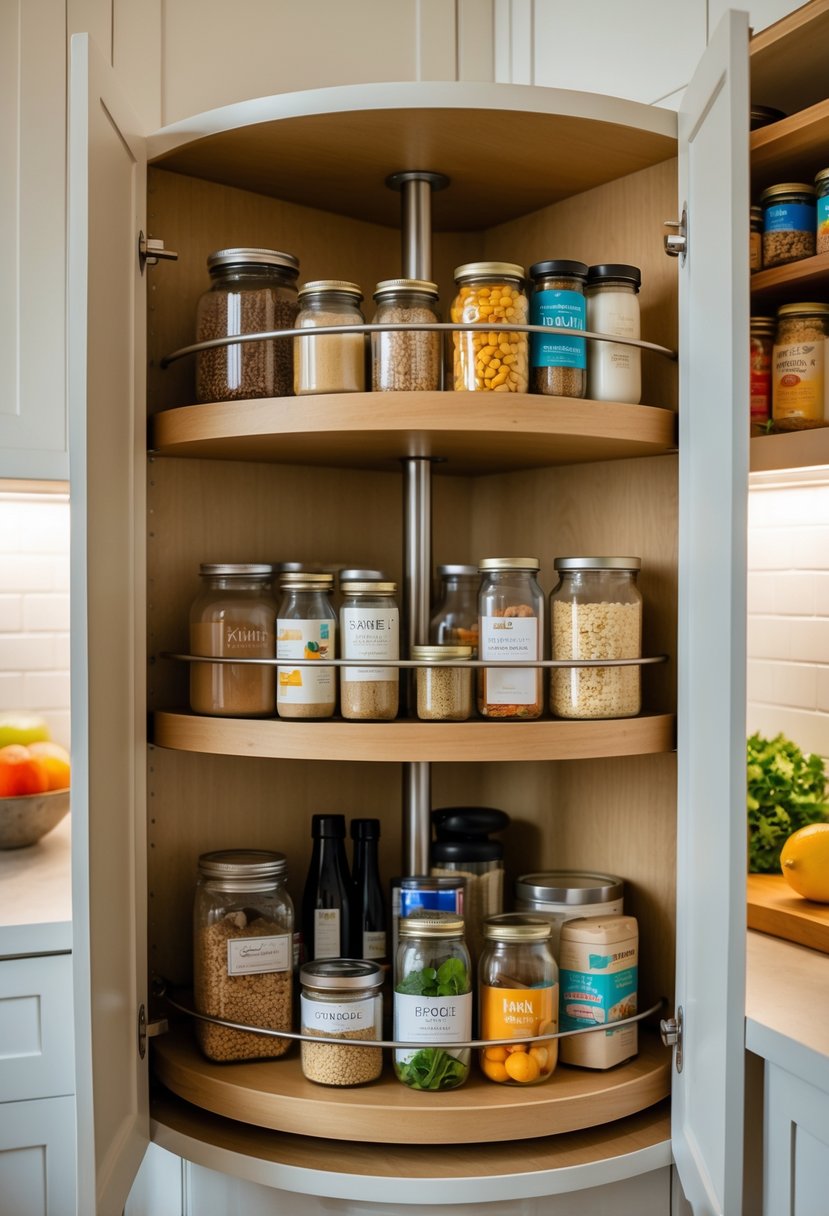
They make corner cabinets usable by turning wasted depth into reachable storage. A rotating tray brings spices, jars, and small appliances to the front with one hand.
People can choose full-circle or kidney-shaped models to fit cabinet openings. Adjustable tiers help store tall bottles and small tins together.
Install smooth bearings so rotation stays easy over time. This keeps items accessible and reduces time spent digging through corners.
6) Mount a magnetic knife strip on the wall
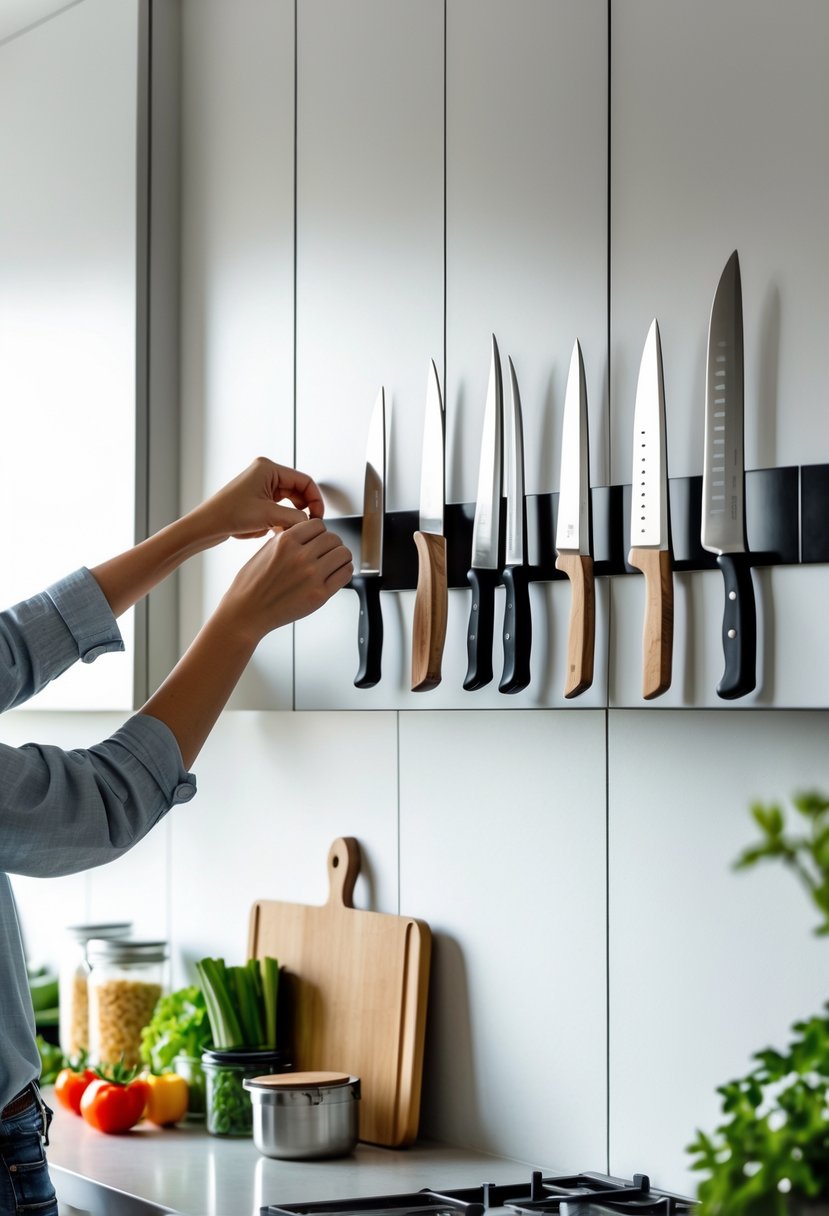
They free up drawer space by holding knives on the wall where they are easy to reach. Installation takes minutes with basic tools and leaves the counter clear for prep work.
A magnetic strip keeps blades visible so the right knife is chosen quickly. It also helps dry knives after washing, reducing moisture buildup in drawers.
They should mount the strip at a safe height and check that the magnet is strong enough for each knife. Use anchors for drywall and follow the manufacturer’s weight limits.
7) Use wire baskets for produce storage
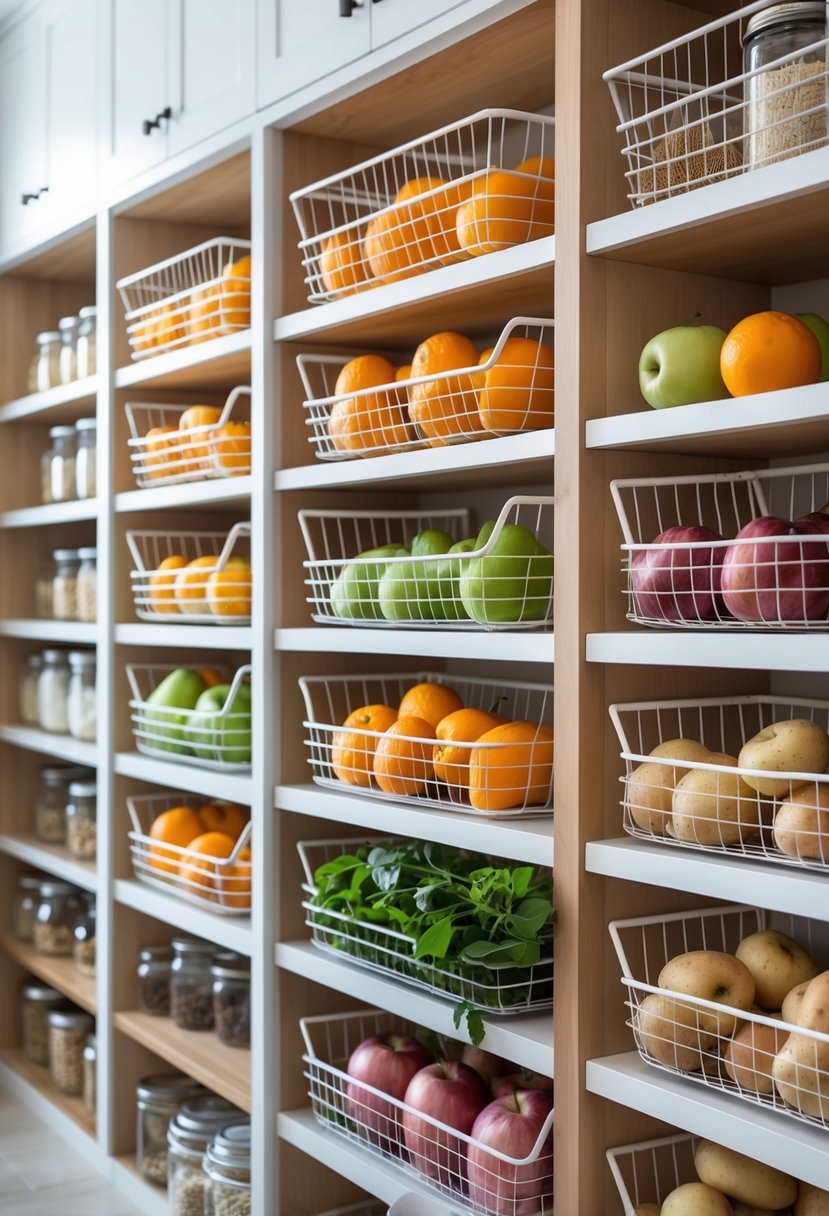
They give good airflow, which helps fruits and vegetables stay fresh longer. Wire baskets make it easy to see what’s inside and grab items quickly.
Place baskets on open shelves or slide them into cabinets for flexible storage. Use different sizes for onions, potatoes, citrus, and herbs to keep things organized.
8) Install under-shelf baskets for extra space
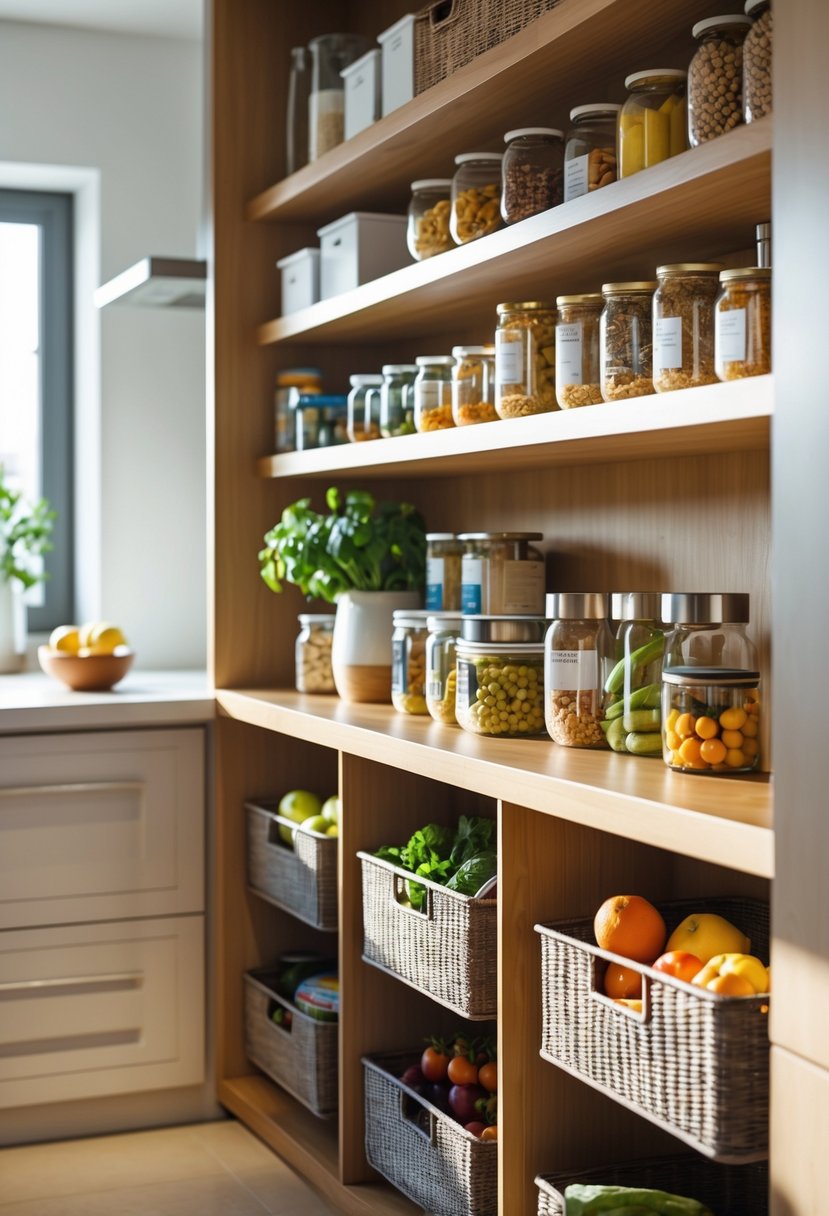
They slide onto existing shelves to add a hidden layer of storage. Small items like packets, snack bars, and spice jars fit neatly without cluttering the main shelf.
They are easy to install and remove for cleaning. Look for wire or mesh models that match shelf depth and weight needs.
9) Add adjustable shelving for flexibility
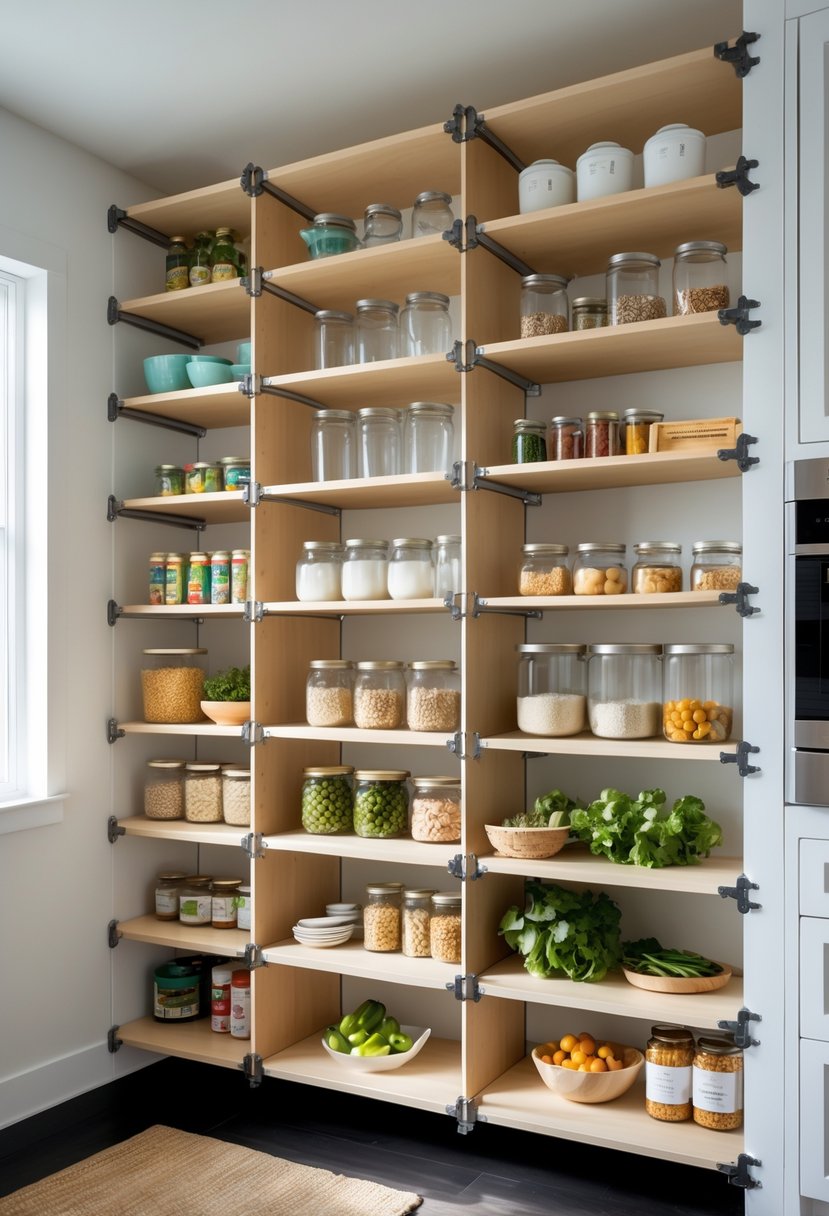
They can move shelves up or down to fit tall cereal boxes, jars, or small appliances. Adjustable shelving lets them change the layout as needs shift.
This flexibility makes seasonal items easy to store. It also helps keep frequently used items at eye level for quick access.
10) Place a small stool for hard-to-reach areas
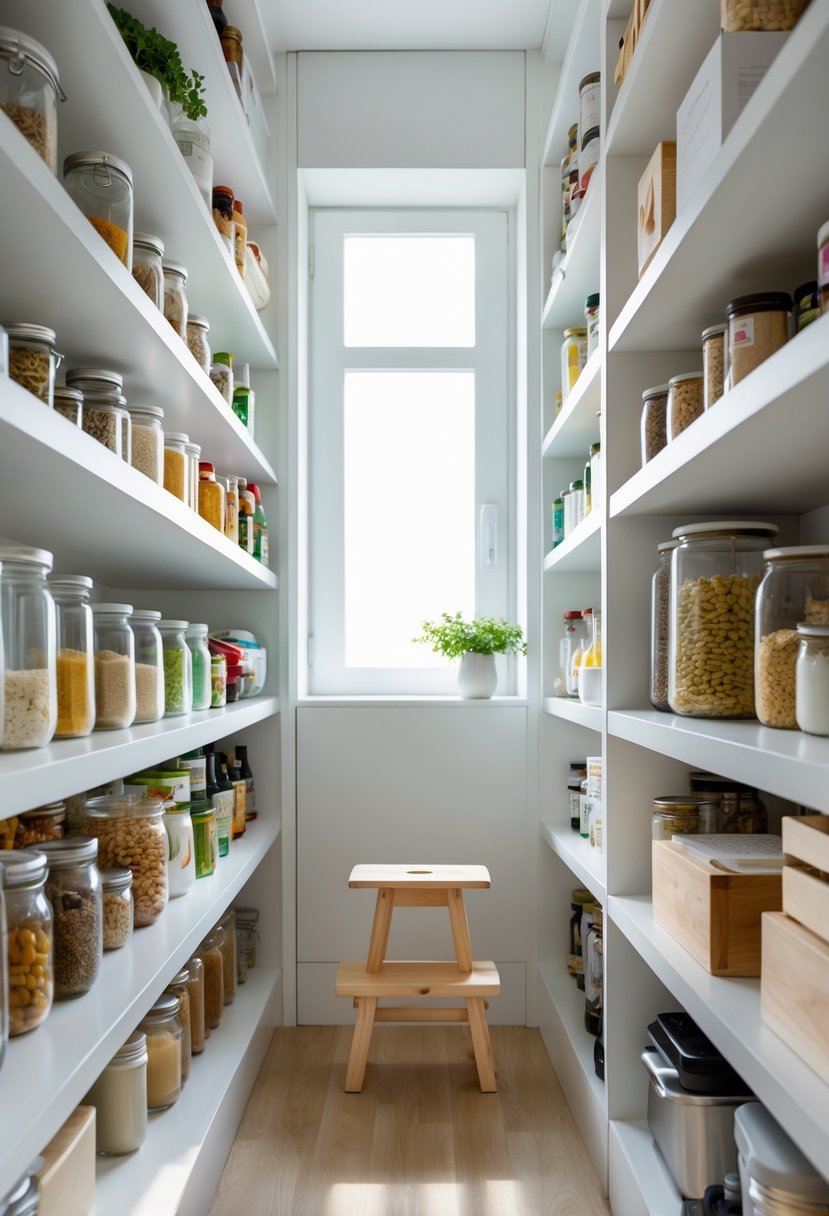
They add safe, steady access to high shelves and top cupboards. A foldable or lightweight stool fits neatly in a pantry corner.
Choose one with non-slip feet and a wide top for balance. It helps reach items without stretching or moving heavy boxes.
A small stool also doubles as a step for kids or a short extra seat when needed. Store it upright to save floor space.