10 Home Theater Ideas That’ll Make You Cancel Your Movie Theater Subscription
This article was created in line with Trends Oraa’s research and content standards.
Picture this. Lights dim. Popcorn’s ready. Nobody’s talking through the climax.
Sounds dreamy, right?
That’s exactly what a great home theater ideas setup does for you. No overpriced tickets. No sticky floors. No stranger’s phone lighting up two rows ahead.
I’ve spent way too much time obsessing over home theater setups (my partner thinks it’s a problem, I think it’s a calling). And honestly? Some of the best ideas aren’t expensive at all.
You might also love our viral guide on 20 Brilliant DIY IKEA Dresser Hacks — because if you’re redoing one room, why not knock out storage too?
Stick around, because idea #7 is the one most people completely overlook… and it might be the easiest win on this whole list.
Why Your Home Theater Setup Matters More Than You Think
Here’s the thing nobody tells you: a home theater isn’t just about the TV.
It’s about the vibe.
The lighting. The seating. The little details that make a room feel like an escape.
Get those right, and suddenly your living room feels like a five-star cinema. Get them wrong, and even a giant TV feels… off.
Let’s dive into the 10 ideas that actually make a difference.
1. The Cozy Sectional Command Center
What you’re seeing
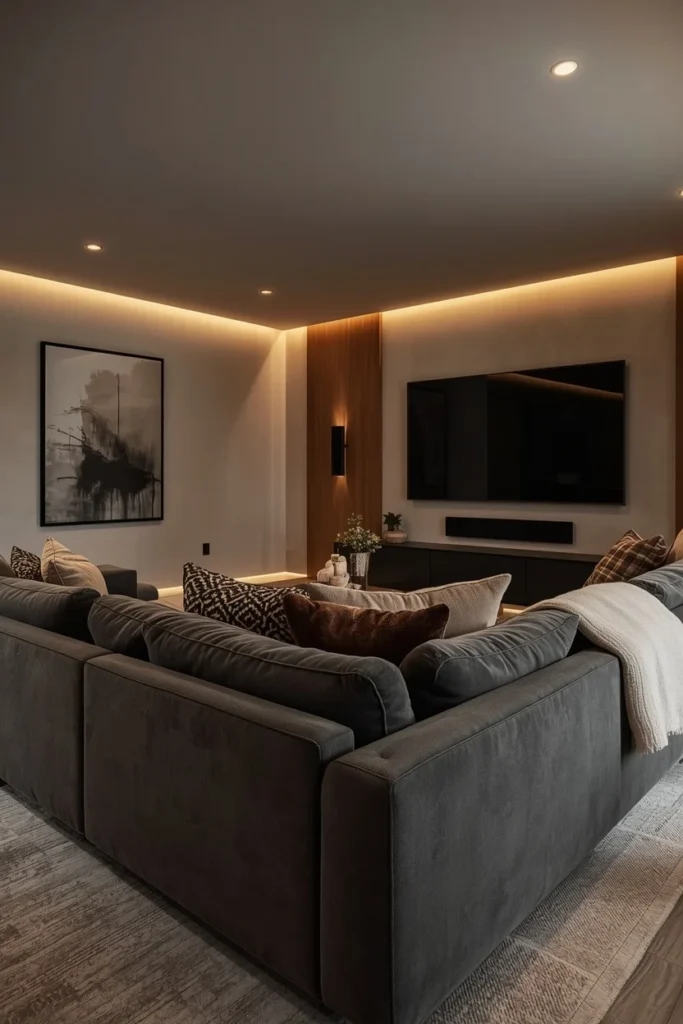
A deep, oversized sectional sofa wrapping around the room, angled perfectly toward a wall-mounted TV or projector screen. Soft throw blankets are draped over the arms, and there’s a coffee table positioned just within reach for snacks and remotes.
Expert Tip
I always tell people: buy the sectional that’s slightly too big for the room. You want that “sink in and never leave” feeling. Bonus points if it has a chaise section for stretching out during three-hour movie marathons.
Why it works
Seating is the foundation of any home theater. A sectional creates flexible seating for movie nights with friends, while also feeling intimate for solo binge sessions. The deep cushions encourage people to actually relax instead of perching on the edge, which keeps everyone settled in longer — and isn’t that the whole point?
Quick question: are you Team Sectional or Team Recliners? I’m curious which camp you fall into!
2. Blackout Curtains for That True Cinema Feel
What you’re seeing
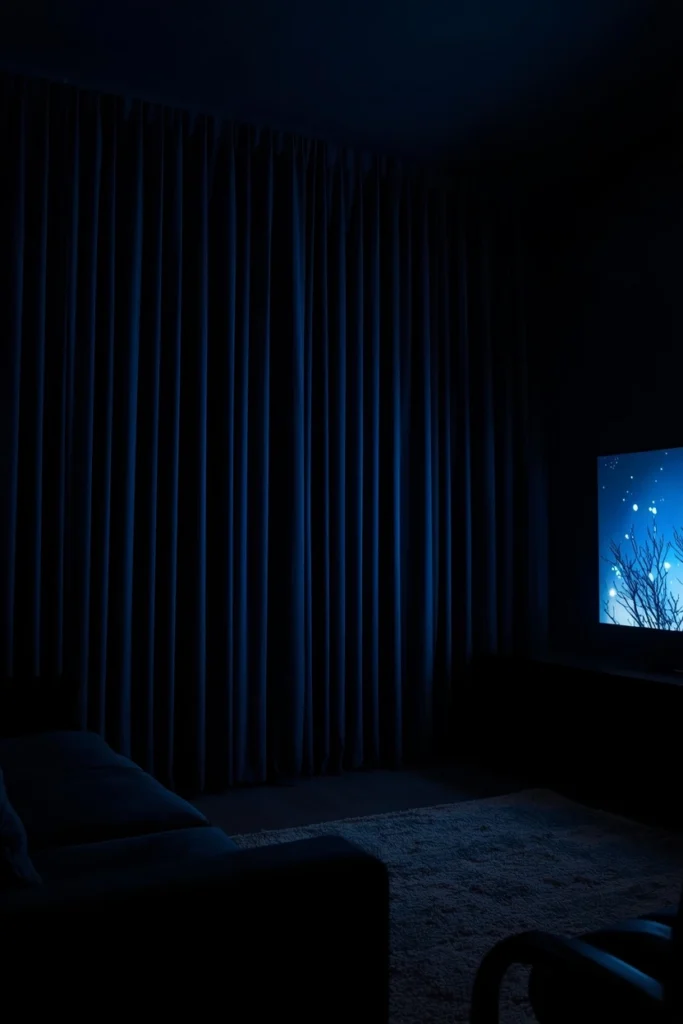
Floor-to-ceiling blackout curtains in a deep charcoal or navy hue, framing a window completely. When drawn, the room transforms into a pitch-black screening room, even in the middle of the afternoon.
Expert Tip
Go for curtains that extend a few inches beyond the window frame on each side. This eliminates those annoying light leaks around the edges that ruin the immersive effect.
Why it works
Lighting control is everything in a home theater. Natural light washes out screen contrast and ruins the mood, no matter how good your TV is. Blackout curtains solve this instantly and add a layer of coziness and drama to the room. Plus, they double as excellent sound dampeners, which brings us to our next point…
But here’s the important part: sound matters just as much as picture quality, and most people get this completely wrong.
3. Statement Media Wall with Built-In Shelving
What you’re seeing
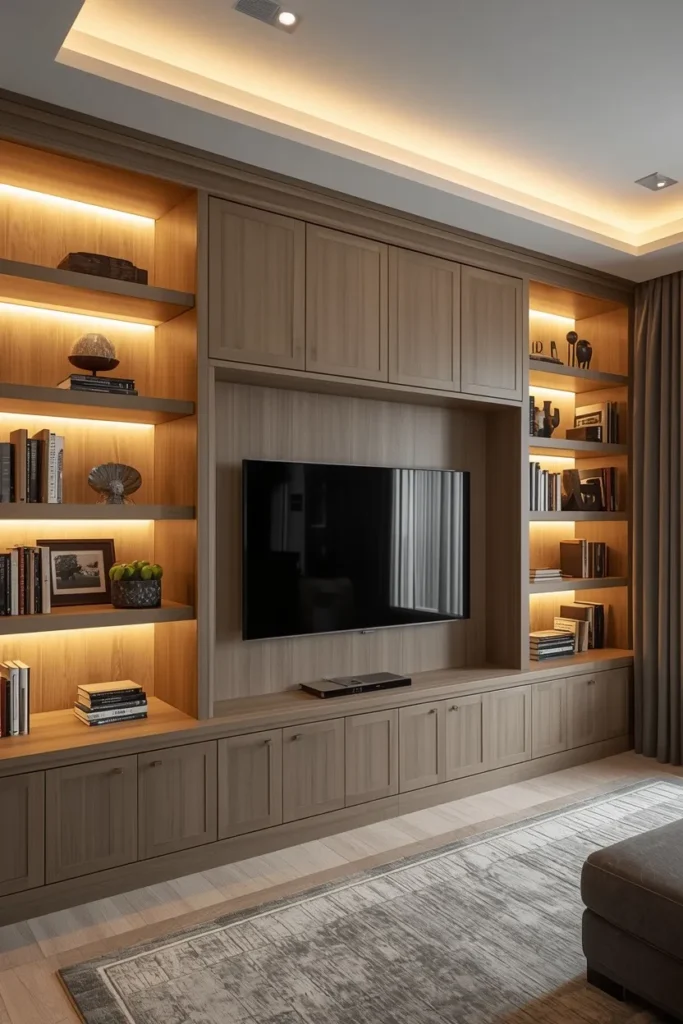
A floor-to-ceiling media wall featuring the TV centered within a custom shelving unit. The shelves are styled with books, decorative objects, and ambient lighting strips tucked behind panels for a soft glow.
Expert Tip
Don’t overcrowd the shelves. Leave breathing room — about 30% empty space — so the eye has somewhere to rest. Symmetry on either side of the TV also makes the whole wall feel intentional rather than thrown together.
Why it works
A media wall transforms your TV from “that big black rectangle” into a designed focal point. It also gives you storage for gaming consoles, sound bars, and cable boxes, keeping clutter hidden. The backlighting adds depth and a theatrical glow that makes movie night feel like an event.
If you’re loving this idea, our media wall ideas guide goes even deeper on layout options.
4. Tiered Seating for the Ultimate Movie Night
What you’re seeing
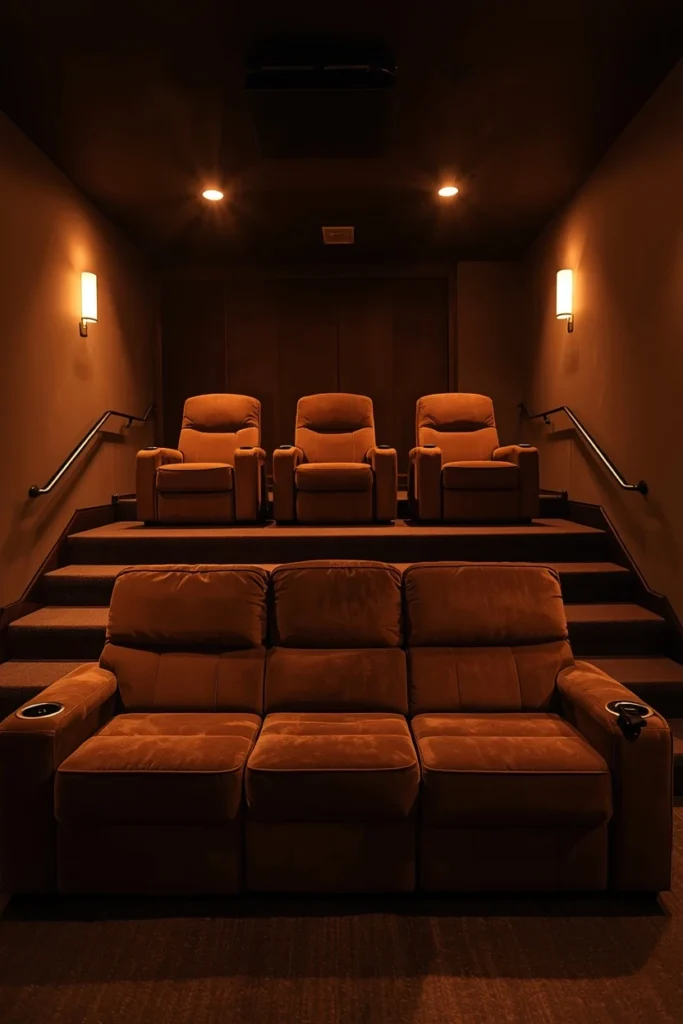
Two rows of seating at slightly different heights — think a plush sofa in front and a row of armchairs or a daybed slightly elevated behind it. Everyone has a clear sightline to the screen.
Expert Tip
Even a small platform (4-6 inches) for the back row makes a massive difference. You don’t need to build anything permanent — a low storage platform with a rug on top works great.
Why it works
Tiered seating mimics the layout of an actual movie theater, which means nobody’s craning their neck around someone’s head. It also visually signals “this room has a purpose,” making the space feel more luxurious and considered. For larger families or frequent hosts, this upgrade alone elevates the whole experience.
Most people don’t know this: the angle of your seating relative to the screen affects eye strain more than screen size does.
5. Ambient LED Lighting Behind the Screen
What you’re seeing
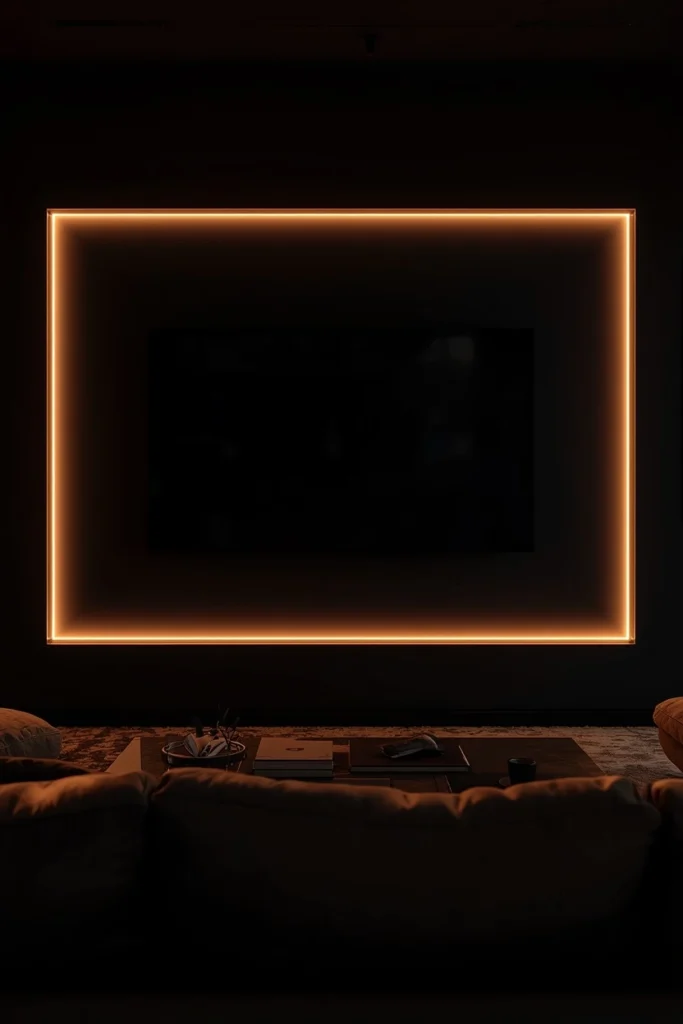
Soft, color-changing LED strip lighting installed behind the TV or projector screen, casting a gentle glow against the wall. The colors often shift subtly or match the on-screen content.
Expert Tip
Stick to warm white or soft blue tones for most movie nights. Save the rainbow color-cycling for parties — it’s fun, but it can get distracting during an actual film.
Why it works
This lighting trick, sometimes called “bias lighting,” reduces eye strain by softening the contrast between a bright screen and a dark room. It also adds serious ambiance for almost no cost. A $15-20 LED strip can completely transform how “high-end” your setup feels.
Which lighting style do you think you’d go for — cool blues or warm ambers? I’d love to know!
6. The Floating Shelf Sound Bar Setup
What you’re seeing
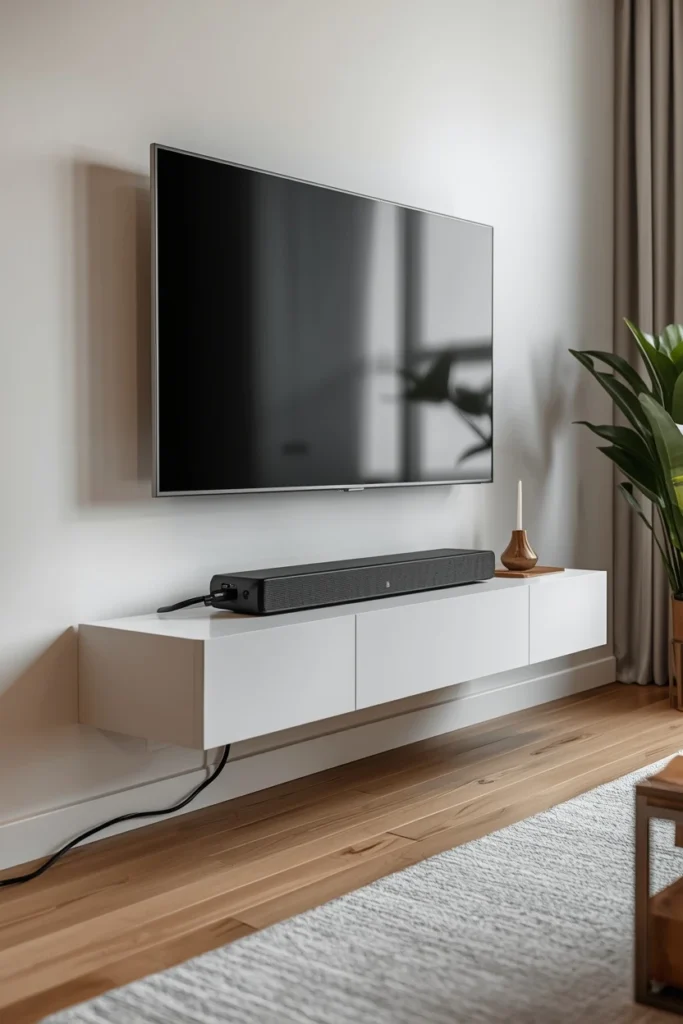
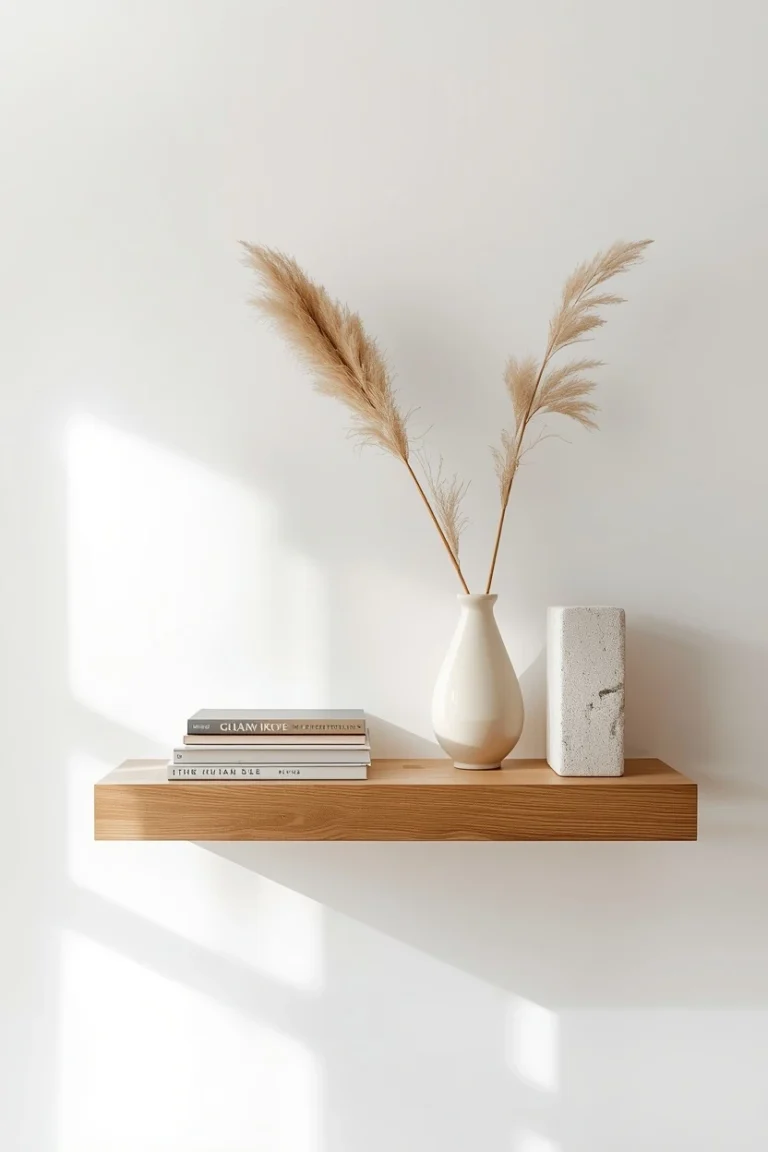
A slim sound bar mounted on a floating shelf just below the TV, with speaker wires neatly tucked away or hidden inside the wall. The whole setup looks streamlined and intentional.
Expert Tip
Cable management makes or breaks this look. Use adhesive cable clips along the back of the shelf, or invest in a cord cover that matches your wall color.
Why it works
Sound quality is often the most underrated upgrade in a home theater. A decent sound bar dramatically improves dialogue clarity and bass depth compared to built-in TV speakers. And because it’s mounted neatly, it doesn’t disrupt the clean aesthetic of your media wall.
Now, avoid this mistake: placing your sound bar inside a cabinet with doors closed. It muffles the sound and defeats the entire purpose.
7. The Hidden Gem: A Dimmer Switch on Everything
What you’re seeing
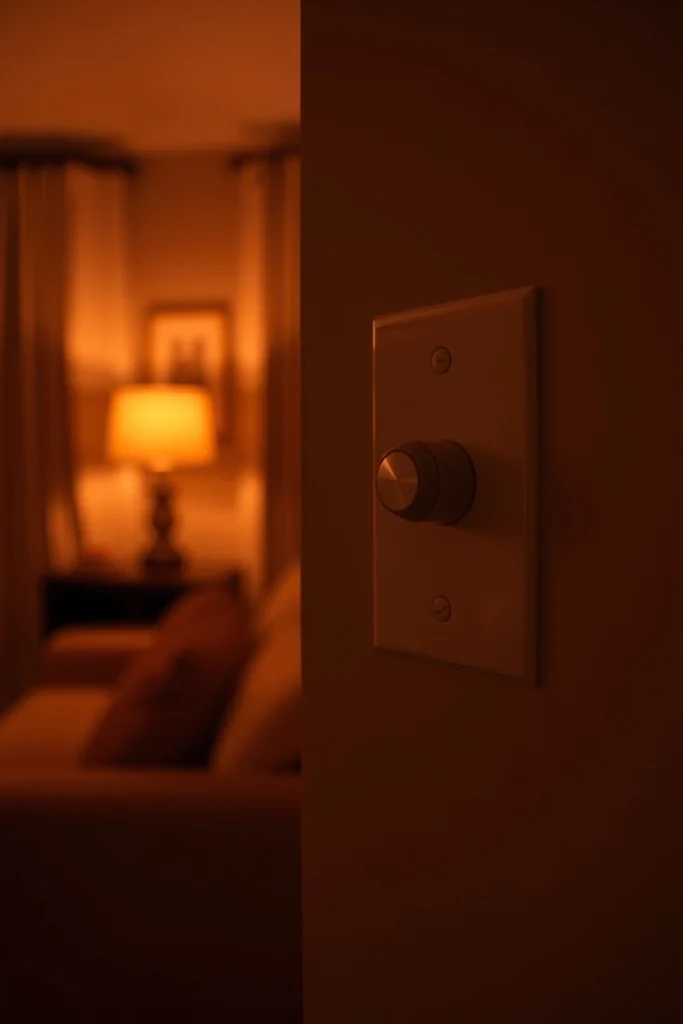
Subtle wall-mounted dimmer switches controlling the overhead lights, floor lamps, and even the LED accent lighting around the media wall. The room can transition from bright and functional to moody and cinematic in seconds.
Expert Tip
Smart plugs with dimming capability are a renter-friendly alternative if you can’t rewire switches. They’re inexpensive and can be controlled from your phone or voice assistant.
Why it works
This is the idea I mentioned earlier — the one most people skip entirely. Dimmers give you total control over the room’s mood without needing separate lamps for every scenario. Want a bright room for board games and a dark one for movies? One switch, instant transformation. It’s a small investment with a massive payoff in everyday usability.
Deep Dive: Home Theater Budget Breakdown
Let’s talk money, because not everyone wants to drop thousands on a home theater.
Here’s roughly how I’d break down a budget for a solid setup:
Budget tier ($200-500):
- LED bias lighting strips
- Blackout curtains (budget polyester blends work fine)
- Floating shelf for sound bar
- Smart plugs for lighting control
- Throw pillows and blankets to upgrade existing seating
Mid-range tier ($500-2,000):
- Entry-level sound bar with subwoofer
- New area rug to define the space
- Accent chairs or a small loveseat addition
- Wall-mounted TV bracket with cable management
- Smart bulbs throughout the room
Splurge tier ($2,000+):
- Full sectional or reclining theater seating
- Surround sound speaker system
- Custom media wall with built-in shelving
- Motorized blackout shades
- Projector and drop-down screen setup
Pros of going budget-friendly: you can test what you like before committing, and most upgrades are reversible if you move or change your mind.
Cons: you may end up replacing items twice if you “upgrade as you go” instead of planning the full vision upfront.
My honest advice? Start with lighting and seating — those two changes have the biggest visual and emotional impact for the lowest cost. Everything else can wait.
8. A Statement Rug to Anchor the Space
What you’re seeing
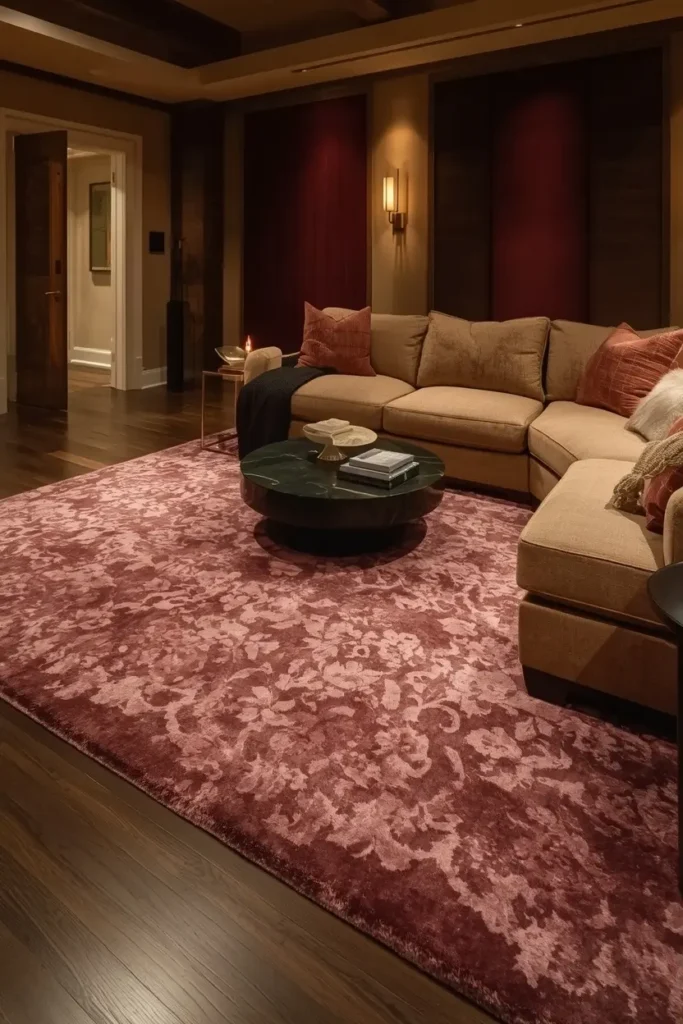
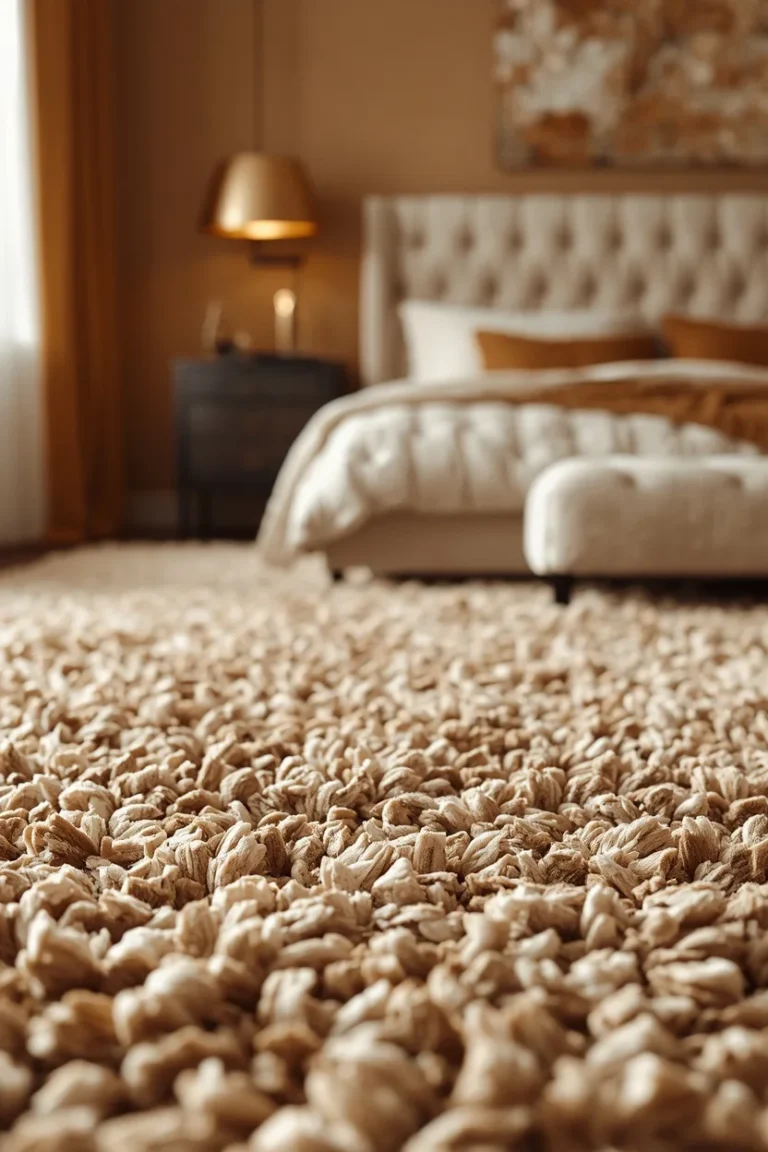
A large, plush area rug positioned beneath the seating area, in a deep jewel tone or warm neutral. It visually “frames” the theater zone, separating it from the rest of an open-concept living room.
Expert Tip
Size up. A rug that’s too small makes furniture look like it’s floating awkwardly. Aim for the rug to extend at least a few inches beyond the front legs of your seating.
Why it works
Rugs do double duty: they absorb sound (reducing echo for better audio) and visually define the “theater zone” within a larger room. A darker rug also helps create that enclosed, cocoon-like feeling that makes movie nights feel special rather than like you’re just sitting in your living room.
9. A Mini Concession Stand or Snack Cart
What you’re seeing
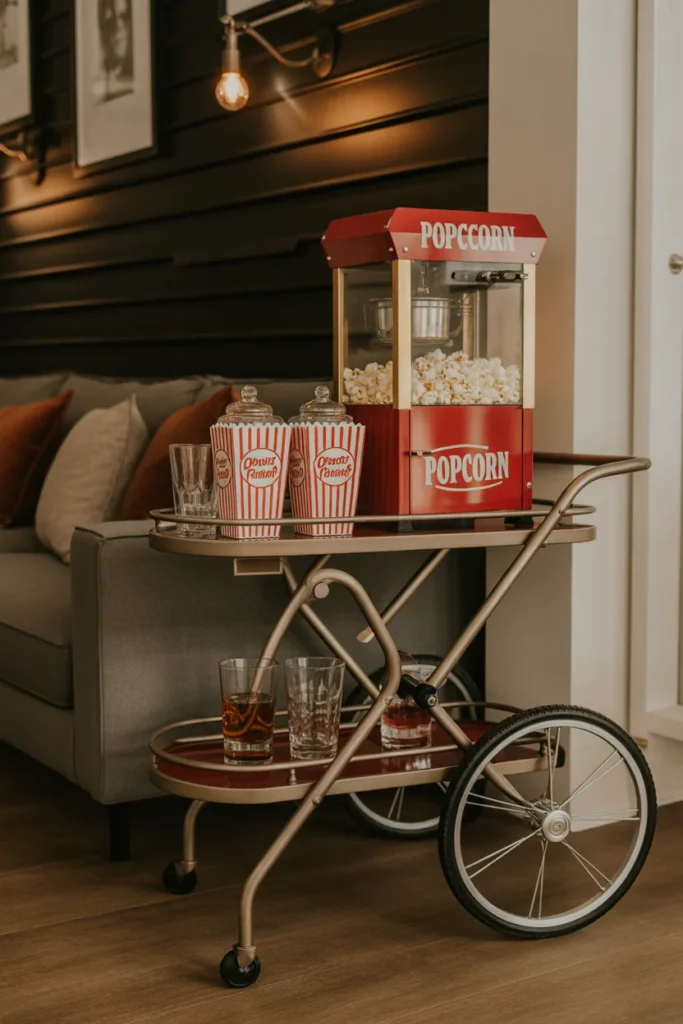
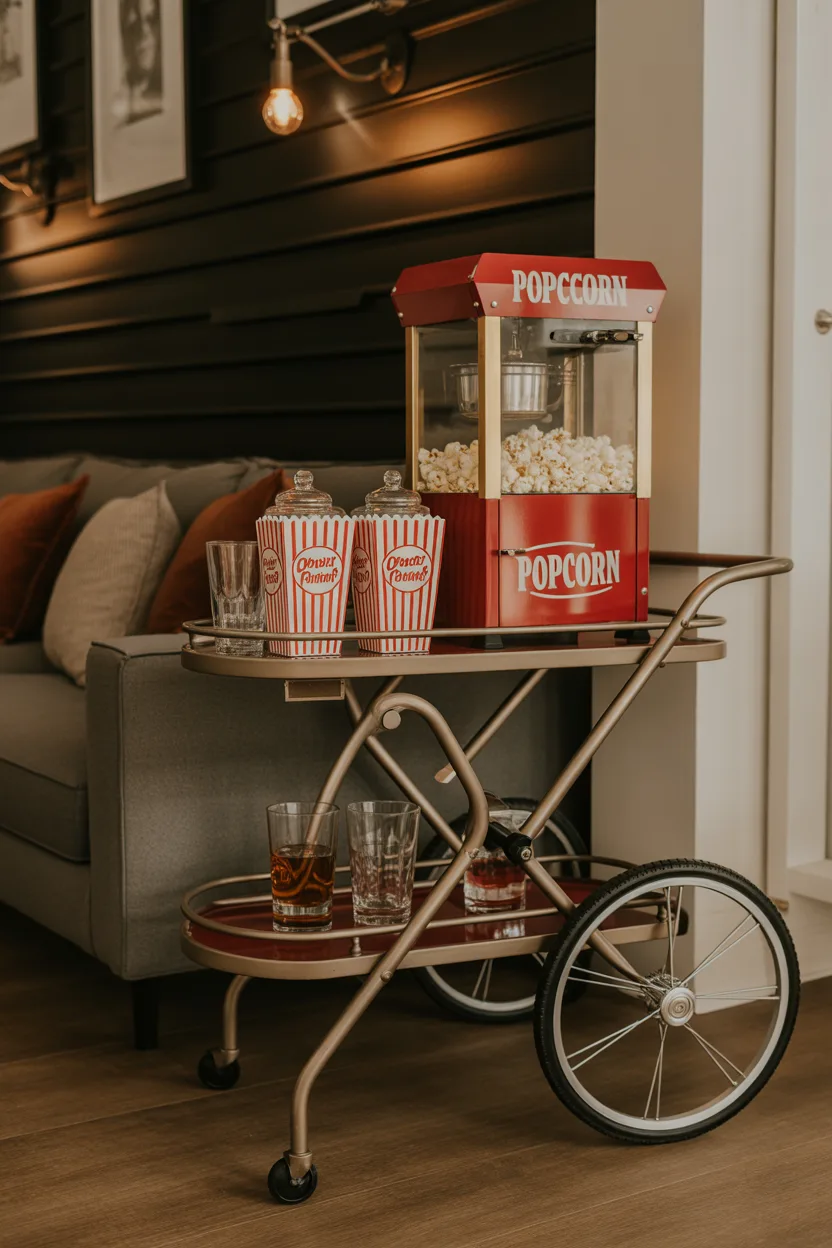
A small bar cart or repurposed side table styled with a popcorn machine, candy jars, and drink glasses, positioned within easy reach of the seating area.
Expert Tip
Mason jars with chalkboard labels make snacks look intentional rather than cluttered. Rotate the snacks based on the movie genre for an extra fun touch — think themed treats for horror night vs. rom-com night.
Why it works
This is the detail that makes guests say “wow.” It transforms a regular movie night into an event, and it keeps everyone in the room instead of wandering to the kitchen during the best scenes. It’s also one of the most budget-friendly upgrades on this entire list — most of it can be sourced from thrift stores and dollar stores.
10. Personalized Wall Art and Movie Posters
What you’re seeing
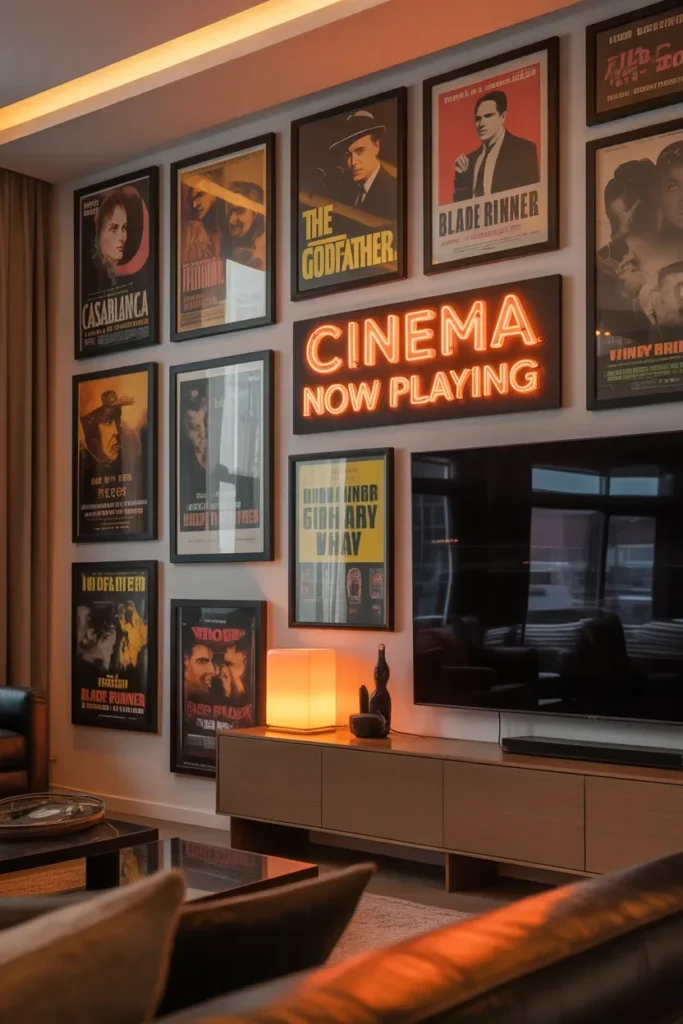
A curated gallery wall featuring framed movie posters, neon signs, or personalized art pieces that reflect the household’s favorite films and shows, arranged around or near the media wall.
Expert Tip
Stick to a cohesive frame style (all black, all wood, etc.) even if the posters themselves are wildly different. This keeps the wall looking curated instead of chaotic.
Why it works
Here’s where it gets interesting: personal touches are what separate a “nice room” from a room that feels like yours. Movie posters and personalized art spark conversation, add personality, and make the space feel lived-in and loved rather than like a showroom. It’s the finishing touch that ties everything together.
Wrapping It All Up
So there you have it — 10 home theater ideas that range from “free weekend project” to “dream renovation.”
The best part? You don’t need to do all 10 at once.
Pick one or two that excite you most, start there, and build from there. Even small changes — like adding a dimmer switch or a cozy throw blanket — can completely shift how a room feels.
Which idea are you most excited to try first? I’d genuinely love to hear it.
And if you’re on a roll with home upgrades, don’t stop here. Our bedroom decor and design ideas guide is packed with the same kind of cozy, budget-friendly inspiration — perfect for your next room makeover.
Happy decorating, friends. Your dream theater room is closer than you think.