10 Mudroom Entryway Ideas That Will Make You Actually Love Coming Home
This article was created in line with Trends Oraa’s research and content standards.
Your entryway is a mess. Shoes everywhere. Coats on the floor. That pile of bags you’ve been meaning to deal with for three weeks. Sound familiar?
Here’s the thing — your entryway sets the tone for your entire home. Walk into chaos every day, and it quietly drains your energy before you’ve even taken your shoes off. But walk into a beautifully organized, stylish mudroom? It changes everything.
In this post, I’m sharing 10 mudroom entryway ideas that are equal parts gorgeous and functional — whether you’re working with a tiny hallway or a full-size dedicated room. And if you love smart home organization, you might also love our viral guide on 20 Brilliant DIY IKEA Dresser Hacks — it’s full of budget-friendly storage wins!
Let’s dive in — because by the end of this post, you’re going to want to redesign your entryway today.
What Makes a Mudroom Entryway Actually Work?
Before we get into the ideas, here’s something most people overlook: a mudroom isn’t just about looking pretty. It’s about systems. The best mudroom entryways combine storage, style, and flow in a way that makes your daily routine smoother — not just more aesthetic.
Think hooks at the right height. Bins that actually get used. A bench that invites you to sit and put shoes on properly instead of hopping on one foot.
Keep that in mind as you scroll through these ideas. Each one solves a real problem while looking absolutely stunning.
10 Mudroom Entryway Ideas You’ll Want to Steal
1. The Classic Built-In Cubby System
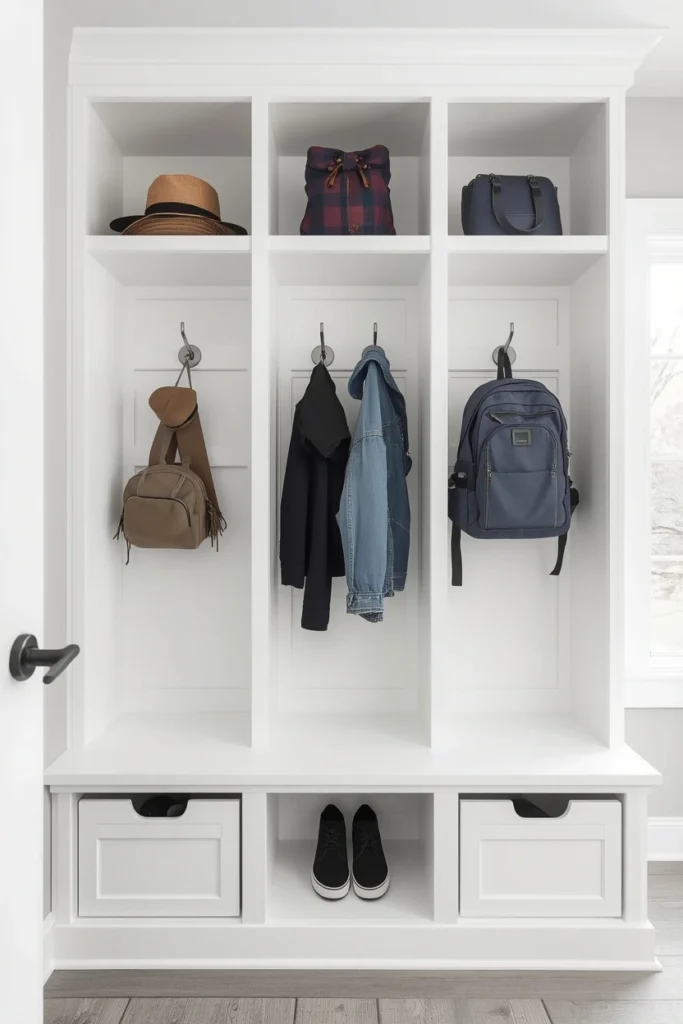
What you’re seeing: A wall of floor-to-ceiling built-in cubbies, each section assigned to one family member. Individual cubbies have open shelving at the top for hats and bags, a middle hook row for coats and backpacks, and a lower bin for shoes — all in crisp white with chrome hardware.
This is the gold standard of mudroom organization, and for good reason. Every single item has a home, which means no more piling things on a random chair and calling it a day. The assigned cubby system works especially well for families with kids because ownership creates accountability — if it’s “their” cubby, they’re more likely to actually use it.
The white finish keeps it feeling fresh and airy rather than cluttered, even when it’s loaded up. Hardware matters more than people think here — go chrome or matte black and you instantly elevate the whole look from “storage closet” to “designer entryway.”
Expert Tip: Label each cubby with a small name plate or chalkboard tag. It sounds small, but it eliminates the “where does this go?” question permanently.
Why it works: Assigned spaces reduce decision fatigue. When everyone knows exactly where their stuff goes, things actually get put away. Visual uniformity (same bins, same hooks) makes even a full, busy mudroom look organized.
2. Shiplap Accent Wall With Floating Hooks
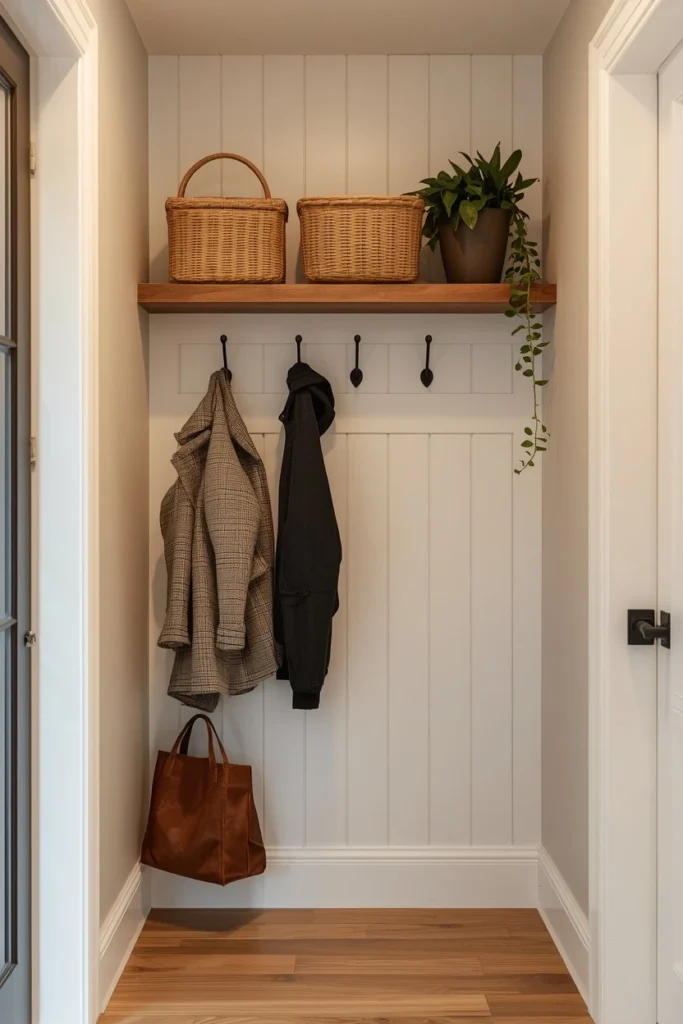
What you’re seeing: A narrow entryway transformed with a floor-to-ceiling shiplap accent wall painted in warm white. Minimalist black iron hooks are staggered across the wall at different heights — some high for adults’ coats, others lower for kids’ bags. A slim wooden shelf runs along the top holding a few baskets and small plants.
But here’s the important part — this look works in the TINIEST spaces. You don’t need a full mudroom room. Even a 3-foot-wide hallway can be transformed with shiplap and the right hooks.
The layering of heights is the secret trick here. It prevents that “all hooks at the same level” look that feels institutional, and instead gives the wall a collected, intentional feel. The floating shelf at the top is key too — it doubles your storage capacity without taking up any floor space.
Expert Tip: Install your hooks into studs, not just drywall. Coats, bags, and backpacks are heavy, and over time, drywall anchors alone will pull out. A quick stud finder saves a lot of frustration later.
Why it works: Shiplap adds warmth and texture without overwhelming a small space. The staggered hooks create visual interest while being genuinely functional for a mix of ages and item sizes.
Which of these first two styles feels more like your vibe — the clean cubby system or the rustic shiplap hook wall? Drop your answer in the comments below!
3. Bench + Storage Ottoman Combo
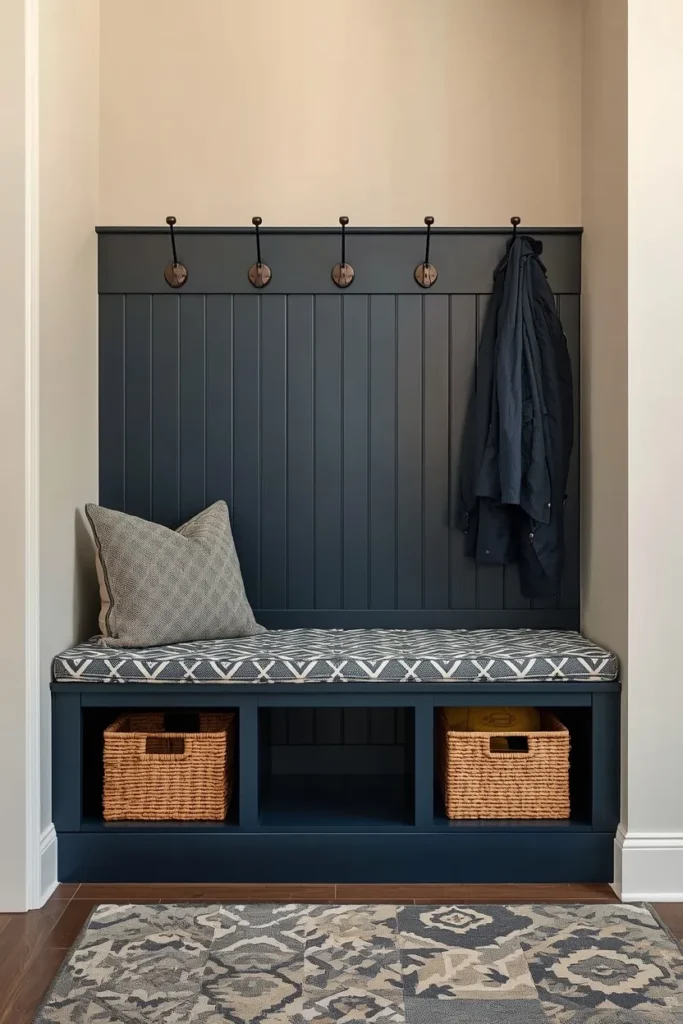
What you’re seeing: A streamlined mudroom bench in a deep navy blue with lift-up storage hidden underneath. The top cushion is upholstered in a durable, washable fabric in a subtle geometric pattern. Woven baskets are tucked neatly to either side, and a simple row of hooks above keeps coats accessible.
Most people don’t know this — the bench in a mudroom should always have storage underneath. Always. Even if the compartment is small, it gives you somewhere to stash seasonal items, extra shoes, or sports gear that doesn’t need to live out in the open year-round.
The ottoman-style lift-top design is particularly clever because it hides mess completely. From the outside, it’s elegant and intentional. Open it up and it’s secretly holding an entire football season worth of cleats.
The navy blue color choice here is bold but incredibly practical — it hides scuffs and daily wear far better than white or cream would. This is the kind of detail that sounds small until you’re scrubbing your pale bench for the fifteenth time.
Expert Tip: Choose a bench cushion fabric rated for high-traffic use — look for “performance fabric” or “outdoor fabric” labels. These wipe clean with a damp cloth and hold up to years of daily use without looking tired.
Why it works: The bench solves the “sitting to put shoes on” problem (which is genuinely ergonomic — it’s far easier on your back than hopping). Hidden storage beneath keeps the room looking tidy even on chaotic days.
4. Farmhouse-Style Mudroom With Vintage Touches
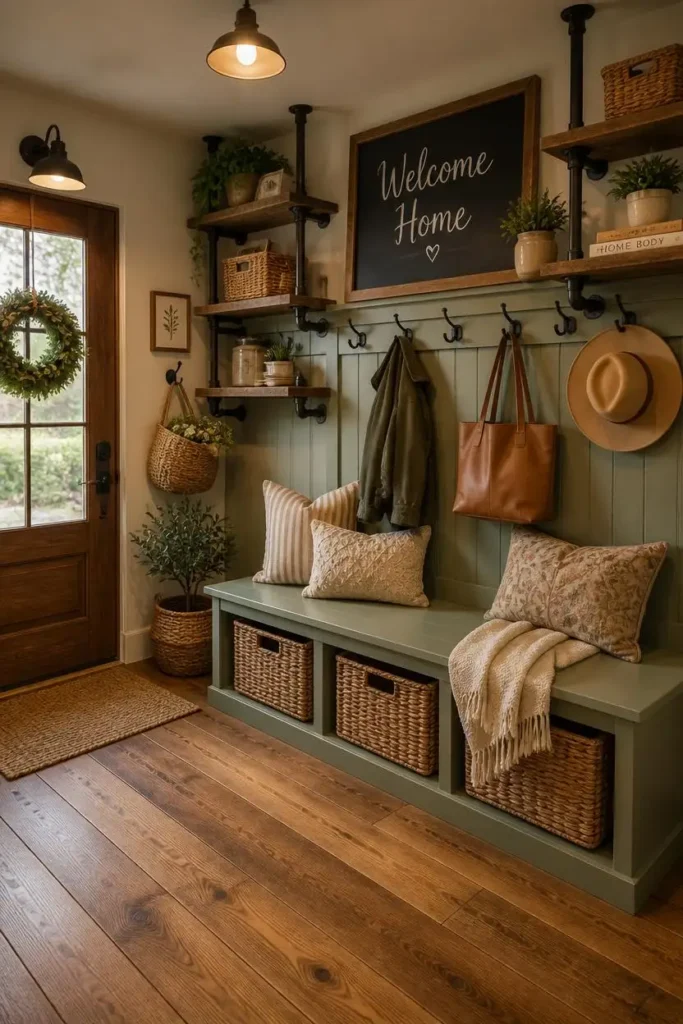
What you’re seeing: A mudroom with warm wood plank flooring, a painted-wood bench in sage green, and open shelving made from reclaimed wood boards and black iron pipe. Woven baskets in natural tones hold everything from dog leashes to charging cables. A chalkboard panel above the bench reads “Welcome Home” in script.
Now, avoid this mistake — farmhouse style is easy to overdo. The key is restraint. Pick two or three vintage or rustic elements and let them breathe against cleaner, more neutral pieces. Too many distressed surfaces and vintage finds together start to look more “cluttered attic” than “curated farmhouse.”
The chalkboard is an inspired touch here because it’s both decorative and functional — you can write family reminders, grocery lists, or just seasonal greetings that make the space feel lived-in and warm.
Expert Tip: If you’re using reclaimed wood for shelving, seal it properly before loading it up. Reclaimed wood can have moisture or pest issues that you don’t want spreading indoors. A good polyurethane seal protects it without hiding the character.
Why it works: The mix of textures — wood, iron, woven baskets — creates visual depth that keeps the eye moving. The sage green bench grounds the warm wood tones and adds a bit of personality without screaming for attention.
5. Minimalist Japanese-Inspired Entryway
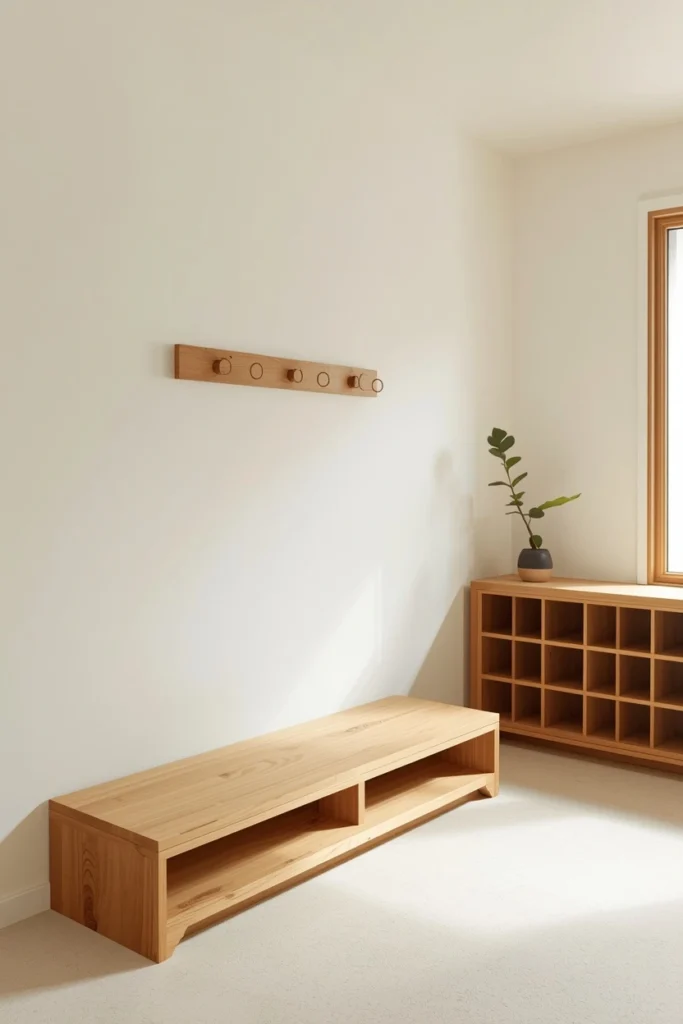
What you’re seeing: An ultra-clean mudroom entryway with a low wooden bench at shoe height, a single row of simple wooden pegs on the wall, and a wooden grid-style shoe cabinet that sits flush against the wall. Everything is in natural tones — honey wood, cream, soft beige. One small potted plant sits in the corner.
Here’s where it gets interesting — the Japanese concept of genkan (the entryway transition space) is actually built around a practical ritual: shoes come off at the door, every single time. This setup makes that ritual feel natural, intentional, and even elegant rather than like a household rule.
The low bench is intentional — at shoe-level height, you sit down, take your shoes off, and place them in the cabinet. It’s fluid and effortless. This is the entryway equivalent of habit stacking.
Expert Tip: A closed shoe cabinet is a game-changer. Open shoe racks display the mess. A grid-style shoe cabinet hides everything while allowing ventilation — shoes stay aired out, and your entryway looks spotless.
Why it works: Minimalism in a high-traffic zone reduces visual noise the moment you walk in. Less to look at means less mental clutter — and walking into calm affects your whole evening.
6. Small Entryway Mudroom With Mirror Magic
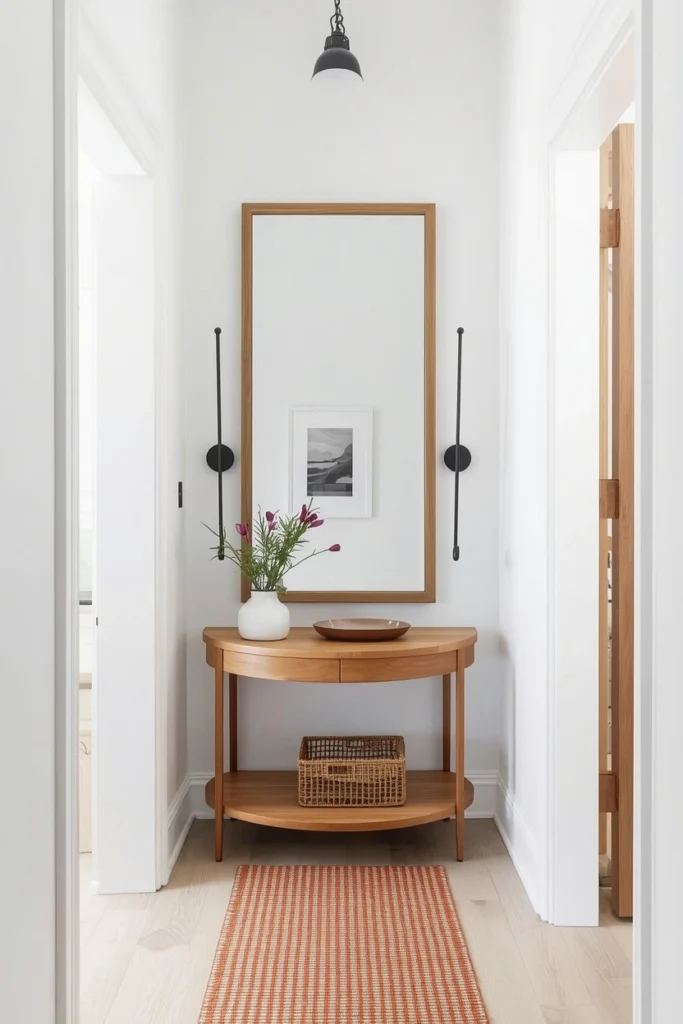
What you’re seeing: A narrow entryway — barely 4 feet wide — that feels surprisingly spacious. The secret? A large leaning mirror in a natural wood frame takes up the back wall, flanked by two slim hook panels. A half-moon console table with one drawer sits below, holding a small tray for keys and mail. A woven runner in warm terracotta runs the length of the floor.
Most people don’t know this about mirrors in entryways — they don’t just make spaces look bigger. They also serve a completely practical purpose: the last-second “how do I look?” check before you head out. It’s one of those features that gets used multiple times a day and makes your morning routine genuinely smoother.
The console table is the other star here. Even in a tiny entryway, a slim table with a single drawer gives you somewhere intentional to put keys, wallets, and mail — the three things most likely to get lost if you don’t designate a spot.
Expert Tip: Place a small catchall tray on the console table and commit to only putting daily essentials in it — keys, wallet, sunglasses, lip balm. The tray acts as a visual boundary that keeps the “dump zone” from spreading.
Why it works: The mirror doubles the light and sense of space in a small hallway. The tray system creates one of the most important organizational habits you can build: a landing zone that prevents the daily “where are my keys?” panic.
7. Colorful Family Mudroom With Personalized Lockers
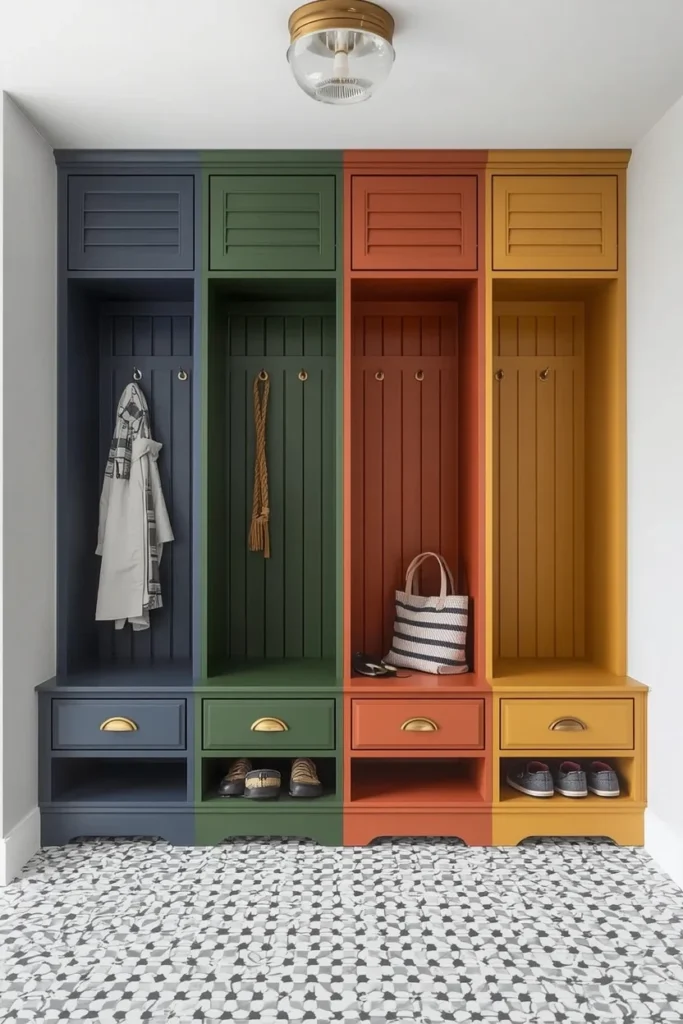
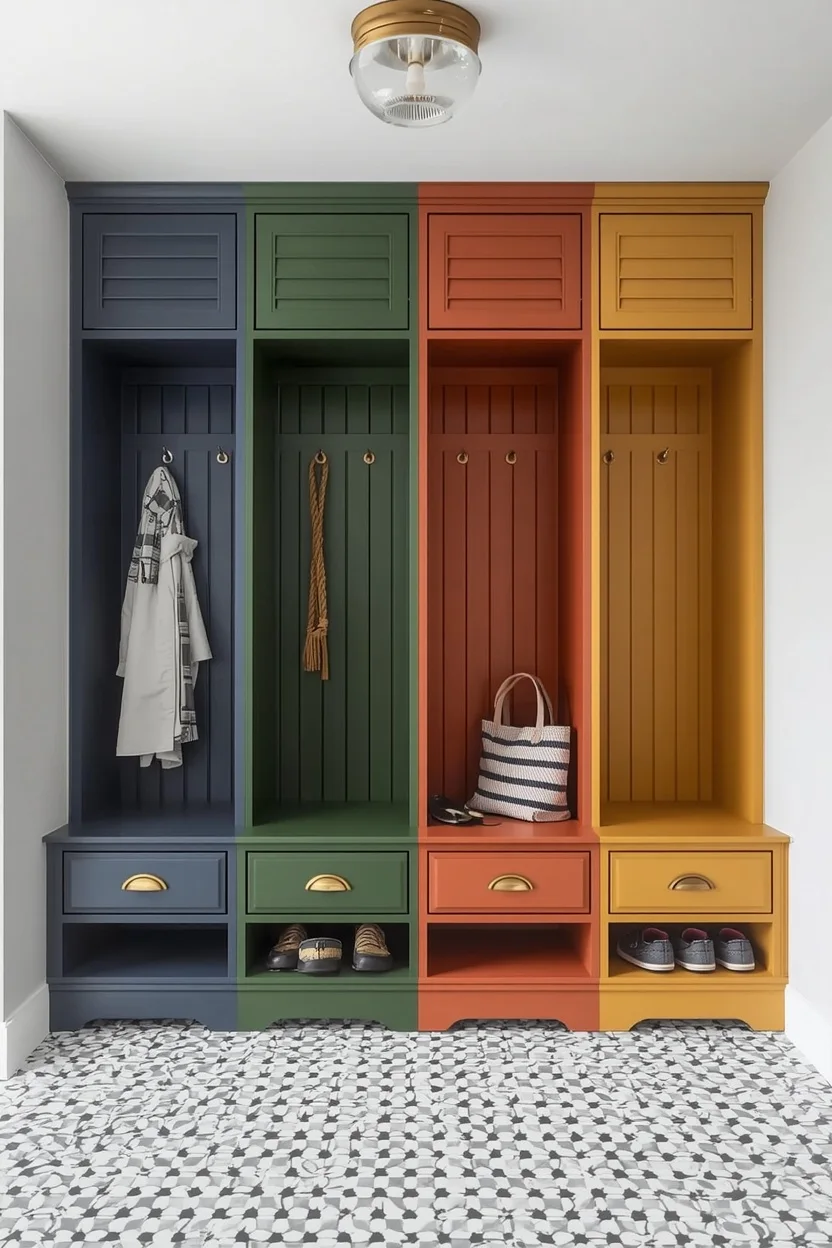
What you’re seeing: A cheerful, bold mudroom with four individual “locker” sections, each painted a different accent color — navy, forest green, terracotta, and mustard. Each locker has a hook bar, a pull-out drawer, and a lower shoe shelf. Rope handles on the drawers add a nautical touch. The floor is laid in classic black-and-white hex tile.
This is the idea that always stops me mid-scroll, because it solves the most common mudroom problem in the most delightful way: nobody wants to put their stuff away if the space feels boring or impersonal. Color-coded lockers make the system theirs. Kids especially respond to having something that’s specifically designed for them.
The hex tile floor is practical genius too — pattern hides dirt and scuffs far better than plain tile, so your mudroom floor still looks great even on muddy soccer practice days.
Expert Tip: If you’re not up for a full built-in locker installation, IKEA KALLAX units with added hooks above and baskets below achieve a very similar look for a fraction of the cost. Check out these 15 Genius IKEA Kids Playroom Ideas for more clever IKEA hacks you can adapt to any room.
Why it works: Color-coding creates a self-organizing system that even young children can follow. Pattern on the floor extends the visual interest downward, making the whole room feel more designed and intentional.
8. Laundry-Adjacent Mudroom Combo
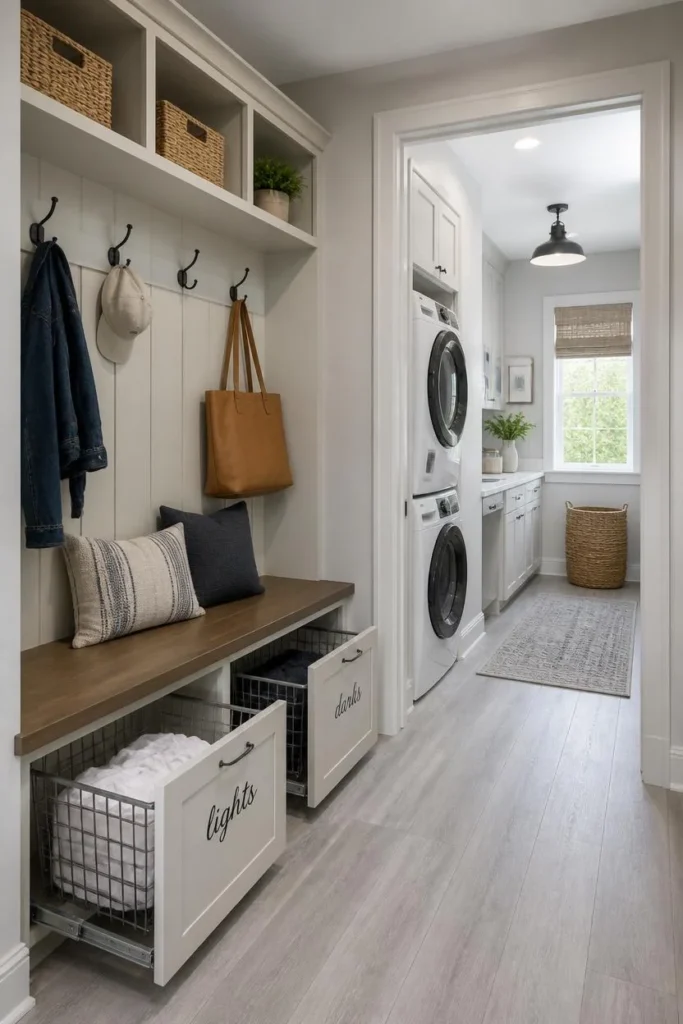
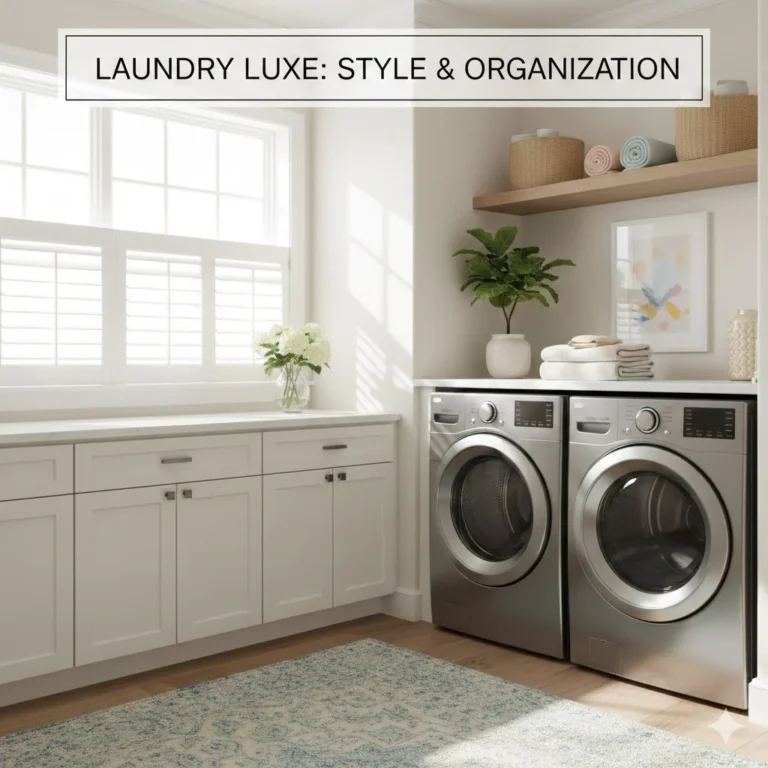
What you’re seeing: A mudroom that flows directly into a compact laundry area, separated by an open shelving unit. The mudroom side has a bench with pull-out laundry hampers built underneath — one for lights, one for darks. A row of hooks above handles coats and bags. The laundry side has a stacking washer/dryer, a counter for folding, and additional shelving above.
But here’s the important part — combining your mudroom and laundry room is one of the highest-return home design moves you can make if you have the space. Sports gear, dirty clothes, and muddy shoes all land in the same zone and can go straight into the wash without traveling through the rest of the house.
The built-in laundry hampers under the bench are the piece that ties it all together. Dirty clothes have a landing spot the moment you walk in, which means they never pile up on the bathroom floor.
Expert Tip: If you’re planning a mudroom-laundry combo, make sure your ventilation is up to par. Laundry rooms generate moisture, and you want adequate airflow to prevent mildew — especially important if muddy gear and wet shoes are also living in the same space.
Why it works: Combining two high-traffic utility spaces reduces friction in your daily routine. The less distance dirty things travel before getting cleaned, the more likely your family is to actually do it.
Which style speaks to you most so far — the colorful locker look, the minimalist Japanese approach, or something else entirely? Tell me in the comments — I genuinely love seeing which styles resonate!
9. Mudroom Entryway With Wallpaper Accent
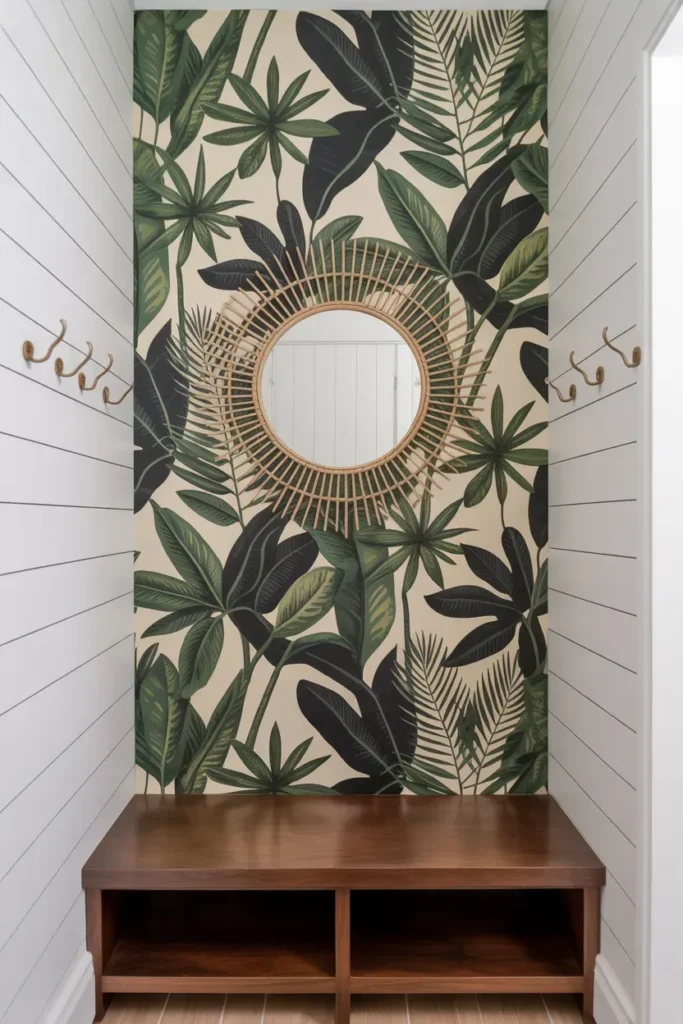
What you’re seeing: A mudroom entryway that uses bold botanical wallpaper on a single accent wall — large-scale tropical leaves in deep greens and blacks against a cream background. The rest of the space is kept neutral: white painted shiplap, a dark wood bench, simple brass hooks. A round rattan mirror hangs above the bench.
Here’s where it gets interesting — wallpaper in a mudroom sounds counterintuitive. High traffic, potential moisture, sticky fingers. But the right wallpaper (vinyl-coated or peel-and-stick) is actually extremely durable, and it transforms an entryway from purely functional to genuinely beautiful in a way that paint alone often can’t.
The key is wallpapering one wall — the focal wall, typically the one directly opposite the door. This gives you all the drama and personality without overwhelming the space. Keep everything else simple and let the wallpaper do the talking.
Expert Tip: Go for vinyl-coated wallpaper in high-traffic areas — it’s scrubbable, moisture-resistant, and holds up to daily contact far better than traditional paper. In a mudroom specifically, this isn’t optional; it’s essential.
Why it works: Pattern and botanical prints bring in a sense of life and energy that makes an entryway feel less like a utility room and more like a designed space you actually enjoy spending a moment in.
10. Garage-Entry Mudroom Drop Zone
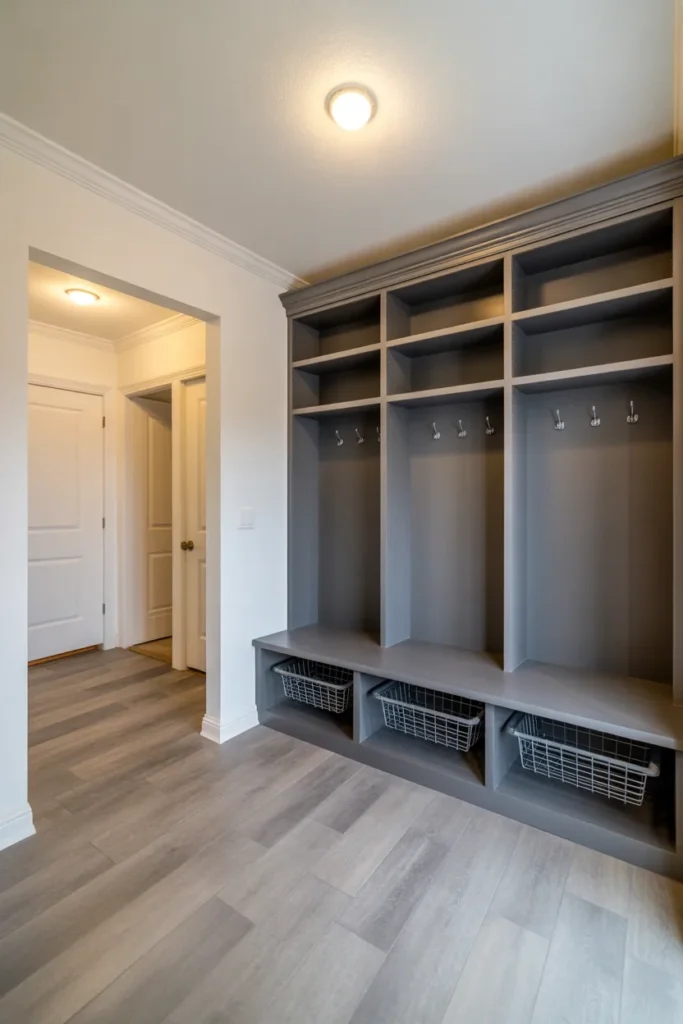
What you’re seeing: A mudroom built into the transition space between the garage and the main house — a setup that’s increasingly popular in new construction and easy to retrofit. A custom built-in with cubbies, hooks, and a bench lines the wall. Below the bench, pull-out wire bins hold sports equipment. A charging station is integrated into the upper shelf. The floor is covered in durable luxury vinyl plank in a light gray.
Now, avoid this mistake — if you have a garage entry and you’re not using it as a mudroom, you’re missing the most natural opportunity in your home. This is the most-used entry point for most families, and it’s usually the most neglected.
The charging station integration is a detail worth highlighting. This is the entry point where bags get dropped and pockets get emptied — which means it’s also the most logical place to charge devices. Building it into the mudroom means devices charge while you go about your evening and are ready to grab on the way out.
Expert Tip: Luxury vinyl plank is the ideal garage-entry mudroom floor. It handles moisture, temperature fluctuations, and heavy traffic better than almost anything else, and the current range of styles means it can look genuinely beautiful — not just functional.
Why it works: The garage entry mudroom intercepts chaos before it enters the living areas of your home. Everything gets dropped, sorted, and stored in one contained zone, which keeps the rest of your house dramatically tidier.
The Mudroom Entryway Buying Guide: What to Prioritize at Every Budget
Before you start shopping or planning, it helps to know which elements give you the most bang for your budget. Not everything needs to be custom or expensive — but some things are absolutely worth investing in.
Under $200 — The Quick Wins
At this budget, focus on hooks and a bench. A sturdy wall-mounted hook rail ($30–$80) and a simple storage bench with compartments ($80–$150) will transform an entry immediately. Add a tray or basket for keys and small items and you’ve covered the core functional needs.
Look for: IKEA TJUSIG hook bars, Wayfair entryway benches, and Amazon basics storage bins. These aren’t glamorous, but they work — and they’re a great starting point.
$200–$800 — The Upgrade Zone
This is where things get noticeably better. You can afford a properly sized storage bench with hidden compartments, a set of matching woven baskets, a quality mirror, and a wallpaper accent or shiplap installation if you’re DIYing it.
Consider spending more on: the bench (it takes the most abuse) and the hooks (cheap hooks warp and pull from walls). These two elements are touched multiple times daily and quality makes a real difference.
$800–$3,000 — The Transformation Budget
At this level, you can look at semi-custom built-ins, IKEA KALLAX hacks with custom fronts (check out sites like Semihandmade for door options), professional shiplap installation, and quality tile or luxury vinyl plank flooring.
This budget gets you a mudroom that looks like it was designed — because essentially it was.
$3,000+ — Full Custom
Full custom built-ins, custom tile, professional wallpaper installation, integrated charging stations, and custom cabinetry. This is the mudroom of your dreams, and if you’re building or renovating, it’s absolutely worth prioritizing. A well-designed mudroom adds real resale value and improves daily life in a way few home features can match.
What to Always Splurge On (Regardless of Budget)
- Hooks rated for heavy loads (minimum 20 lbs per hook)
- A bench with covered or hidden storage underneath
- A rug or runner with a non-slip backing
- Closed storage for shoes (open racks show mess)
What You Can Always Save On
- Decorative baskets (thrift stores have amazing options)
- Plants (one real plant or a convincing faux)
- Artwork or chalkboard panels
- Seasonal decor
The goal is a mudroom that functions beautifully, not one that looks like a catalog photo for thirty seconds before real life takes over.
The Biggest Mudroom Entryway Mistakes (And How to Skip Them)
Since we’re here, let’s talk about what not to do — because I see these mistakes constantly and they’re all easily avoidable.
Too many hooks, not enough storage. Hooks are great, but if every item is visible all the time, the space will always look messy. Balance hooks with closed storage — bins, drawers, cabinets — so not everything is on display.
No floor protection. An entryway without a rug or runner is an entryway with a constantly dirty floor. Get a durable, washable rug. The ones labeled “machine washable” are worth their weight in gold.
Ignoring lighting. Mudrooms are often windowless or low on natural light. A well-placed overhead fixture or even a plug-in sconce can completely change how the space feels — and makes it easier to actually see what you’re looking for.
No designated spot for keys. This one causes more daily frustration than almost anything else. A hook, a tray, a small drawer — it doesn’t matter what you use, as long as keys always go in the same place. Every. Single. Time.
Choosing form over function. A beautiful mudroom that doesn’t actually work for your family’s daily habits will be abandoned within weeks. Design for your real life — not the life you wish you had.
Putting It All Together
Here’s the truth about mudroom entryways: the best one isn’t the most expensive or the most elaborate. It’s the one that actually works for your family, day in and day out.
Start with what frustrates you most about your current entryway. Is it the shoe situation? The coat pile? The lost keys? Fix that first, and build from there. Even small changes — a hook rail here, a basket there — make a measurable difference in how your home feels every single day.
And remember: your entryway is the first thing you see when you come home. It deserves to make you smile, not stress you out.
Ready to keep the inspiration going? You’ll love our guide to Apartment Organization Ideas — it’s packed with clever storage solutions that work in any size space, from studio apartments to full family homes. And if you’re thinking about refreshing other areas of your home, our Space-Saving Furniture Ideas guide is a must-read next.
Which of these 10 mudroom entryway ideas is going straight to your Pinterest board? Let me know in the comments — and if you’ve already tackled your entryway, I’d love to see what you did!