10 Home Bedroom Refresh Ideas That Will Make You Fall in Love With Your Space Again
This article was created in line with Trends Oraa’s research and content standards.
Your bedroom should feel like an escape. But somewhere between the busy weeks and ignored corners, it stopped feeling that way. Sound familiar? The good news is you don’t need a full renovation or a designer budget to fix it. These home bedroom refresh ideas will completely change the way your space looks and feels — and most of them you can start this weekend.
You might also love our guide on easy bedroom decor ideas that work for every style and budget.
Whether your room feels cluttered, bland, or just stuck in a style rut from five years ago, there’s something in this list for you. I’ve pulled together 10 genuinely transformative ideas — from subtle switches that cost almost nothing to upgrades that feel seriously luxurious. Keep scrolling, because a few of these might surprise you.
10 Home Bedroom Refresh Ideas to Transform Your Space
Idea #1: Layer Your Bedding Like a Hotel
What You’re Seeing
Picture a bed dressed in crisp white cotton sheets, topped with a chunky linen duvet folded neatly at the foot. Two euro shams sit behind four standard pillows. A lightweight throw in warm caramel drapes casually across one corner. The whole setup looks effortlessly put-together — like something straight out of a boutique hotel in Manhattan.

Design Breakdown
The secret to a bed that looks stunning in photos and in real life is layering. It’s not about having more stuff — it’s about building depth. Start with a fitted sheet, add a flat sheet, then layer a duvet or comforter on top. The final layer is where personality comes in: a folded throw, an accent blanket, or even a quilt at the foot of the bed adds dimension without overcrowding.
Color choice matters a lot here. Neutral bases (white, ivory, oatmeal) give you the most flexibility to swap accent pieces seasonally. Want drama? Go for a deep navy or forest green duvet with white sheets underneath. The contrast reads as intentional, not chaotic.
Expert Tip
Invest in quality pillowcases before anything else. They’re the first thing your eye goes to, and a high thread count in a neutral tone elevates even a bargain duvet instantly.
Why It Works
Layered bedding makes a room feel curated rather than just “furnished.” It signals that thought went into the space, which triggers a psychological sense of comfort and calm the moment you walk in.
Best For
- Budget makeovers (throws and shams are inexpensive)
- Renters (no permanent changes)
- Small spaces (visual layering adds richness without bulk)
Common Mistake To Avoid
Using too many patterns at once. Stick to one patterned piece — either the duvet or the throw — and keep everything else solid.
Quick Wins
- Add two euro shams to your existing setup immediately
- Fold a throw in thirds and drape it over the foot of the bed
- Switch to all-white bedding for an instant clean, airy look
- Use a linen duvet cover for texture without extra weight
Which bedding style speaks most to you — crisp and clean, or soft and layered?
Idea #2: Swap Your Lighting for an Instant Mood Shift
What You’re Seeing
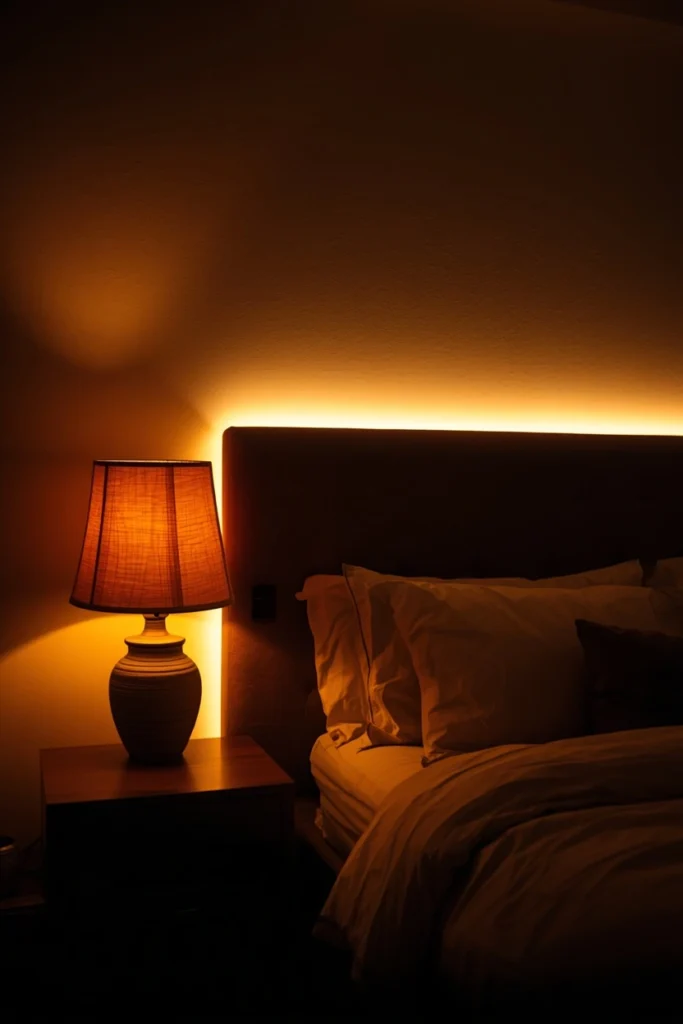
Imagine a bedroom where the overhead light is off entirely. Instead, two linen-shaded table lamps glow softly on either side of the bed, casting warm amber pools across the pillows. A LED strip hidden behind the headboard adds a gentle backlight. The whole room feels like a candlelit spa — without a single flame in sight.
Design Breakdown
Lighting is one of the most underestimated home bedroom refresh ideas, and it’s also one of the most powerful. Most bedrooms rely on a single overhead fixture — usually a ceiling fan with a built-in light. That harsh, direct light flattens the room and kills the cozy vibe before you even get into bed.
The fix? Layer your lighting sources. Aim for at least three: ambient (overhead or general), task (reading lights), and accent (lamps, strip lights, or sconces). This layering approach is what interior designers call the “lighting triangle,” and it’s used in virtually every professionally designed bedroom.
Warm bulbs (2700K–3000K) are non-negotiable in a bedroom. Cool daylight bulbs belong in offices and kitchens, not in a space meant for relaxation.
Expert Tip
Add a dimmer switch to your existing overhead light for under $20. It’s one of the highest-ROI changes you can make in any bedroom refresh.
Why It Works
Warm, layered lighting physically signals to your brain that it’s time to wind down. It reduces cortisol levels and supports your body’s natural melatonin production — meaning better sleep on top of a better-looking room.
Best For
- Budget makeovers
- Renters (plug-in sconces and lamps require no wiring)
- Small spaces (proper lighting makes small rooms feel larger)
- Luxury homes (designer fixtures become a focal point)
Common Mistake To Avoid
Buying lamps that are too small for the space. A lamp should sit at eye level when you’re in bed — around 24–27 inches from tabletop to the bottom of the shade.
Quick Wins
- Replace one overhead bulb with a warm-toned option tonight
- Add a plug-in wall sconce on each side of the bed
- Place a small lamp on your dresser to break up dark corners
- Try LED strip lights behind your headboard for a designer look
Expert Insight — One thing I’ve learned from refreshing dozens of spaces: The bedroom lighting budget is almost always the most neglected part of a makeover. People spend hours choosing paint colors and then plug in a $12 LED bulb and wonder why the room doesn’t feel right. Good lighting isn’t about spending more — it’s about understanding warmth, placement, and layering. A $30 lamp with the right bulb will do more for your bedroom’s atmosphere than a $200 overhead fixture with a cool-white bulb. Start with the bulbs. Always start with the bulbs.
Idea #3: Create a Statement Wall Without Painting
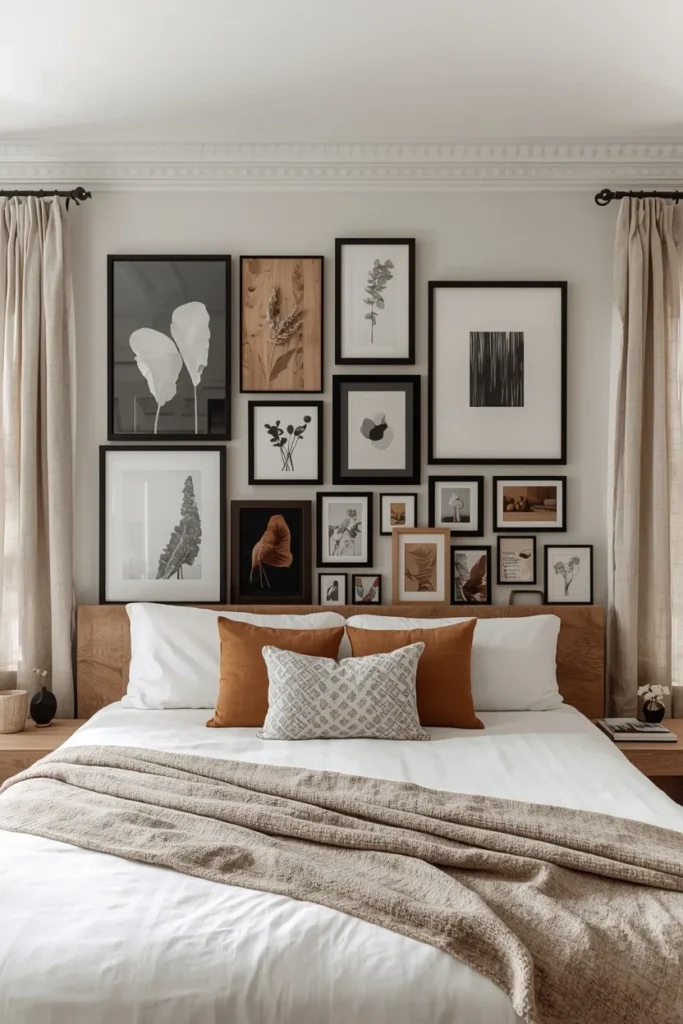
Most people waste more space than they realize — especially on their walls. A blank wall behind the bed is a huge missed opportunity, and you don’t need paint or wallpaper to fix it.
What You’re Seeing
A bedroom where the wall behind the bed is covered in overlapping gallery frames — some oversized, some small — in a mix of black and warm wood tones. The arrangement feels curated but casual, like a collection built over time. Soft linen curtains frame the sides, pulling the whole wall into a cohesive focal point.
Design Breakdown
An accent wall refresh is one of the most impactful home bedroom refresh ideas because it defines the room’s personality in one move. And there are so many ways to do it without touching a paintbrush or calling a contractor.
Options include:
- Gallery walls using frames, prints, and mirrors in a cohesive color palette
- Peel-and-stick wallpaper that renters can remove without damage
- Woven wall hangings or tapestries for a boho or earthy vibe
- Wood slat panels that add architectural depth and warmth
- Floating shelves arranged asymmetrically with books, plants, and decor
The key is picking one approach and committing to it. A half-executed gallery wall with random frames and mismatched finishes looks worse than a bare wall. Decide on your color palette, stick to it, and treat the arrangement as intentional art.
Expert Tip
Before hanging anything, lay all your frames on the floor and arrange them until you’re happy. Take a photo, then use that as your guide on the wall. It saves dozens of nail holes.
Why It Works
A defined focal wall gives the eye a place to land, making the room feel designed rather than assembled. It also anchors the bed as the centerpiece, which is the first principle of good bedroom layout.
Best For
- Renters (peel-and-stick and removable options)
- Budget makeovers (DIY gallery walls can cost under $50)
- Small spaces (a vertical gallery wall draws the eye up, making ceilings feel higher)
- Families (a statement wall can evolve with changing tastes)
Common Mistake To Avoid
Hanging everything too high. Wall art should generally be centered at eye level — around 57–60 inches from the floor — not pushed up toward the ceiling.
Quick Wins
- Start with three mismatched frames in the same finish
- Add one large-scale print as an anchor piece
- Mix textures: frames, a mirror, and a small shelf together
- Use washi tape to mock up your arrangement before committing
You May Also Like:
- Bedroom Wallpaper Ideas
- Wall Shelves Bedroom Ideas
- Half Wallpaper Half Paint Ideas
- Bedroom Mirror Design Ideas
- 10 Best Wall Molding Ideas
The Bedroom Refresh Budget Breakdown: What to Spend, Where to Save, and What’s Worth Splurging On
Before we get to the next five ideas, let’s talk money. One of the most common questions I get is: how much does a bedroom refresh actually cost?
The honest answer: anywhere from $50 to $5,000+. But most people hit a genuinely transformed space in the $300–$800 range — without touching a single load-bearing wall or calling a contractor.
Here’s how to think about it:
Where to Spend Less (Under $50 per Category)
- Throw pillows: Target, HomeGoods, and Amazon have great options under $20 each. You don’t need to spend $60 on a pillow.
- Candles and diffusers: Scent is a room refresh in itself. A $12 diffuser and a few good oils will completely change the vibe.
- Plants: A $6 pothos from a local nursery adds life and color to any corner. You don’t need a $40 fiddle leaf fig to make an impact.
- Lightbulbs: Swapping to warm-toned bulbs costs under $15 and is genuinely life-changing.
The Middle Ground ($50–$200 per Category)
- Curtains: Linen or velvet curtains in floor-length styles immediately elevate a room. Expect to spend $60–$120 for a good pair. The length matters — always go floor-to-ceiling, even if your windows are small. It makes ceilings look taller.
- Bedside lamps: A matched set of two lamps in the $40–$80 range per lamp is a worthwhile investment. Asymmetrical lighting on each side reads as unfinished.
- Throw blankets: $30–$70 gets you a quality option in a luxurious knit or linen.
- Rugs: A 5×8 rug under $100 is completely achievable. Rugtzy, Rugs USA, and Wayfair sales are your friends here.
Where It’s Worth Splurging ($200+)
- The bed frame: This is the one piece that anchors everything. A quality upholstered or wooden frame will outlast trends and last a decade. Budget $300–$800 and treat it as a long-term investment.
- Quality bedding: A 400+ thread count duvet cover and a set of pillowcases you actually love to sleep on are worth every penny. Brooklinen, Parachute, and CARO Home are worth checking when they have sales.
- Window treatments with blackout lining: Not just for aesthetics — blackout curtains genuinely improve your sleep quality. Worth the upgrade.
Common Budget Mistakes
- Spending $200 on a duvet but keeping a cheap headboard that undermines the whole look
- Buying three mediocre rugs over three years instead of one good one upfront
- Ignoring the ceiling and upper walls — a bedroom with great furniture but a forgotten overhead light feels incomplete
- Over-accessorizing instead of editing — a few high-quality pieces always beat a shelf crowded with cheap decor
The $500 Bedroom Refresh — A Real Plan
Here’s what I’d do with $500 to refresh a bedroom from scratch:
- New curtains (floor-length linen): $80
- Pair of bedside lamps: $100
- Duvet cover and pillowcases: $120
- Area rug (5×8): $100
- Throw blanket and two accent pillows: $60
- Candles, plants, and small decor: $40
That’s $500 and the room would look completely transformed. No painting, no contractor, no new furniture.
What’s your current bedroom refresh budget? Would you rather tackle it all at once or one piece at a time?
Idea #4: Add a Rug to Ground the Space
What You’re Seeing
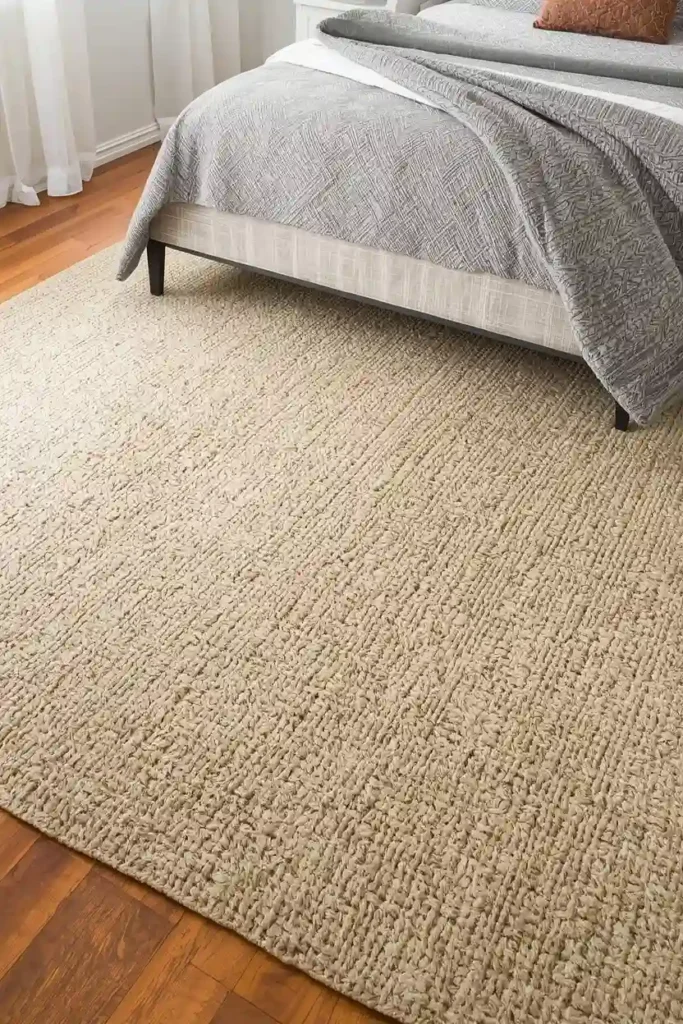
A queen-sized bed sits centered on a large, cream-toned jute rug with a subtle diamond weave. The rug extends at least two feet on either side of the bed and a foot past the footboard. The texture contrasts beautifully with the hardwood floor beneath, adding warmth and visual weight to the entire sleeping area.
Design Breakdown
If your bedroom floor is bare, a rug is the single fastest way to make the room feel finished. It anchors the bed, adds warmth underfoot, reduces noise, and gives the space a sense of intentionality that bare floors simply can’t achieve.
The most important rule: size up. The biggest bedroom rug mistake is buying a rug that’s too small. A rug should extend at least 18–24 inches beyond each side of the bed. For a queen bed, that means a minimum 8×10 rug. For a king, go 9×12.
Popular rug styles for bedrooms:
- Jute and sisal: Natural, earthy, pairs with everything
- Wool: Plush, durable, great for cold climates
- Low-pile velvet: Luxurious and easy to clean
- Persian or vintage-style: Adds character and pattern without overwhelming
Expert Tip
Layer a smaller sheepskin or shag rug on top of a flat-weave jute for a designer look that’s also incredibly soft on bare feet when you get out of bed in the morning.
Why It Works
Rugs define zones within a room. In a bedroom, they physically and visually “frame” the sleeping area, which makes the space feel purposeful and complete — even in a rental with no other customization.
Best For
- Renters
- Small spaces
- Budget makeovers
- Large spaces (where a rug prevents furniture from floating)
Common Mistake To Avoid
Only putting the rug under the foot of the bed. The rug should anchor the entire bed, not just the end of it.
Quick Wins
- Measure before you shop — most people underestimate the size they need
- Add a rug pad for comfort and to prevent slipping
- Choose a low-pile rug in high-traffic zones for easier vacuuming
- A round rug works well in a square room to break visual monotony
Idea #5: Rethink Your Window Treatments
What You’re Seeing
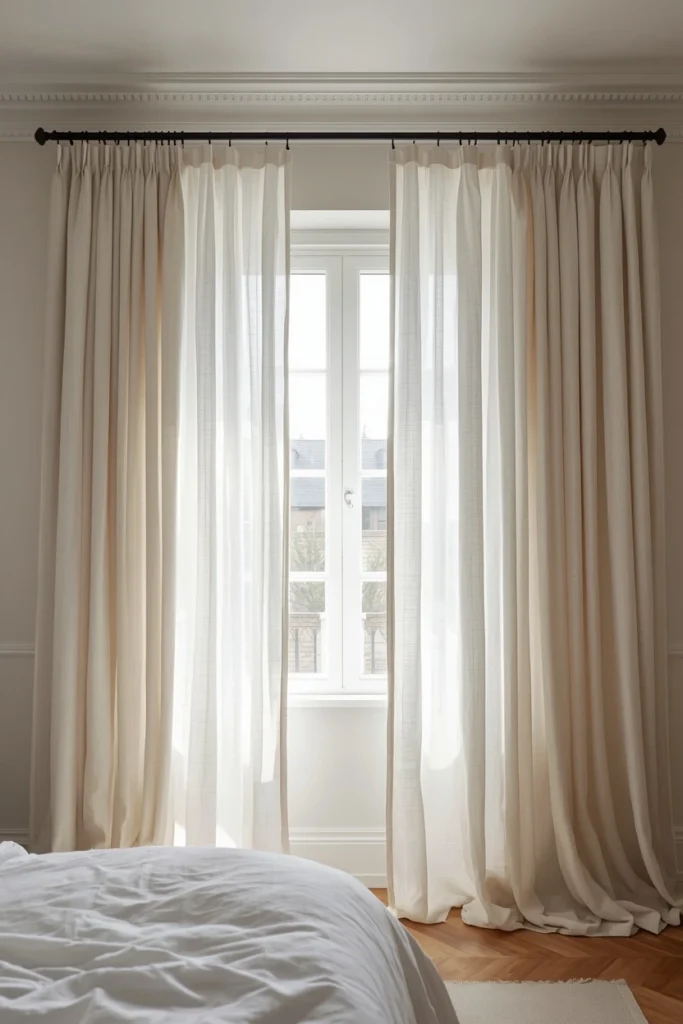
Floor-to-ceiling linen curtains in a warm off-white hang on a black matte rod mounted several inches above the window frame. The panels pool slightly at the floor — just a gentle inch or two — giving the room an effortlessly romantic, editorial feel. Natural light filters softly through the fabric during the day, and blackout lining keeps the room dark at night.
Design Breakdown
Windows are one of the most overlooked elements in any home bedroom refresh. The wrong curtains can make a room feel short, cheap, or unfinished — even when everything else is perfect.
The golden rule: always hang curtains high and wide. Mount the rod 4–6 inches above the window frame (or close to the ceiling), and extend the rod 8–12 inches beyond each side of the window. This makes the window look larger, the ceiling look higher, and the room feel more spacious.
Fabric choice matters enormously:
- Linen reads as relaxed and elegant — perfect for a soft, airy look
- Velvet adds drama and absorbs sound — great for a cozy, moody bedroom
- Blackout fabric (or lined panels) improves sleep quality — worth the investment
Expert Tip
If your curtains are just slightly too short, switch to curtain rings to gain a few extra inches of length. It’s a $10 fix that can save you from having to buy new panels entirely.
Why It Works
Proper window treatments make the architecture of the room feel more generous. They add softness, control light and sound, and frame the view — all of which contribute to that “pulled-together” feeling that’s hard to pinpoint but immediately felt.
Best For
- Small spaces (tall curtains make rooms feel bigger)
- Renters (tension rods and clip rings leave no damage)
- Luxury homes (custom lengths and premium fabrics)
- Budget makeovers (IKEA and H&M Home have excellent affordable options)
Common Mistake To Avoid
Hanging curtains at window height instead of ceiling height. This is the single most common curtain mistake, and it makes every room feel smaller and more generic.
Quick Wins
- Rehang your existing curtains higher immediately
- Add a blackout liner to your current panels for better sleep
- Switch to a matte black or brushed gold rod for an instant style upgrade
- Let panels pool slightly at the floor for a designer touch
Expert Insight — Here’s where it gets interesting: Most people focus on what’s inside the window and completely forget about the wall surrounding it. The height and width of your curtain rod installation changes the perceived size of an entire wall. I’ve refreshed rooms where moving the rod up 6 inches was the only change — and the room looked like it had been fully renovated. Start there before you spend a single dollar on new panels.
Idea #6: Introduce Plants for Life and Texture
The next idea is one designers secretly love — and it costs almost nothing to execute.
What You’re Seeing
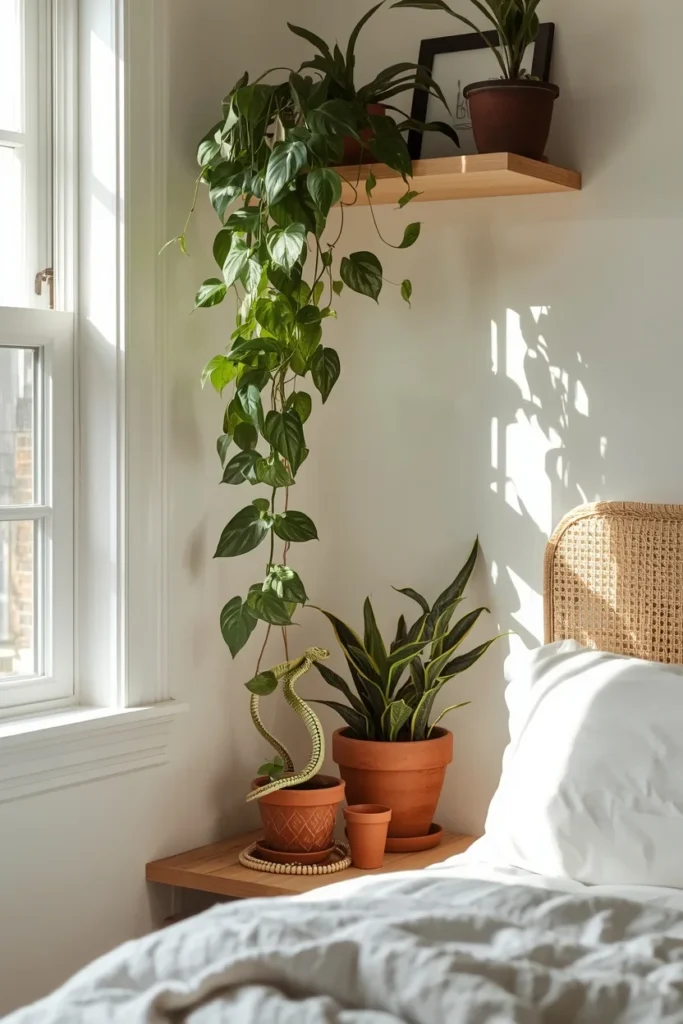
A bright bedroom corner where a tall, trailing pothos cascades from a high shelf, its heart-shaped leaves spilling down toward a cluster of smaller plants below — a snake plant, a small peace lily, and a trailing string of pearls in a terracotta pot. The greenery creates a natural, textured focal point that makes the whole room feel alive.
Design Breakdown
Plants are one of those home bedroom refresh ideas that people either love immediately or underestimate completely. Here’s the thing: they don’t just look good. They genuinely improve a space by adding color, texture, organic shape, and even air quality.
You don’t need a green thumb to pull this off. The best bedroom plants are low-maintenance and thrive in indirect light:
- Pothos: Nearly impossible to kill, trails beautifully
- Snake plant: Sculptural, modern, great for low-light rooms
- Peace lily: Soft and elegant, tolerates shade
- ZZ plant: Glossy, architectural, drought-tolerant
- String of pearls: Whimsical and perfect in a hanging pot or on a high shelf
The key is grouping. A single small plant on a nightstand looks like an afterthought. Three plants of varying heights in one corner read as a deliberate design moment.
Expert Tip
Use terracotta, ceramic, or woven basket pots instead of plastic nursery pots. The container is as much a part of the design as the plant itself.
Why It Works
Biophilic design — the concept of bringing nature indoors — is backed by research showing it reduces stress, lowers blood pressure, and improves mood. In a bedroom context, that translates directly to better sleep and a more restorative space.
Best For
- Renters
- Budget makeovers
- Small spaces (a tall plant draws the eye up)
- Luxury homes (statement fiddle leaf figs or large bird of paradise)
Common Mistake To Avoid
Buying a plant without checking its light requirements. Many beautiful plants — like monsteras — need bright indirect light that not every bedroom can provide. Choose based on your actual window situation, not just aesthetics.
Quick Wins
- Start with a pothos — it’s forgiving and grows fast
- Use a simple ceramic or terracotta pot to elevate the look
- Group three plants together rather than scattering them around the room
- Place a trailing plant on a high shelf for maximum visual impact
Think about how much easier it would be to wake up in a room that feels bright, alive, and full of natural texture. Which plant would you add to your bedroom first?
Idea #7: Upgrade Your Nightstand Styling
What You’re Seeing
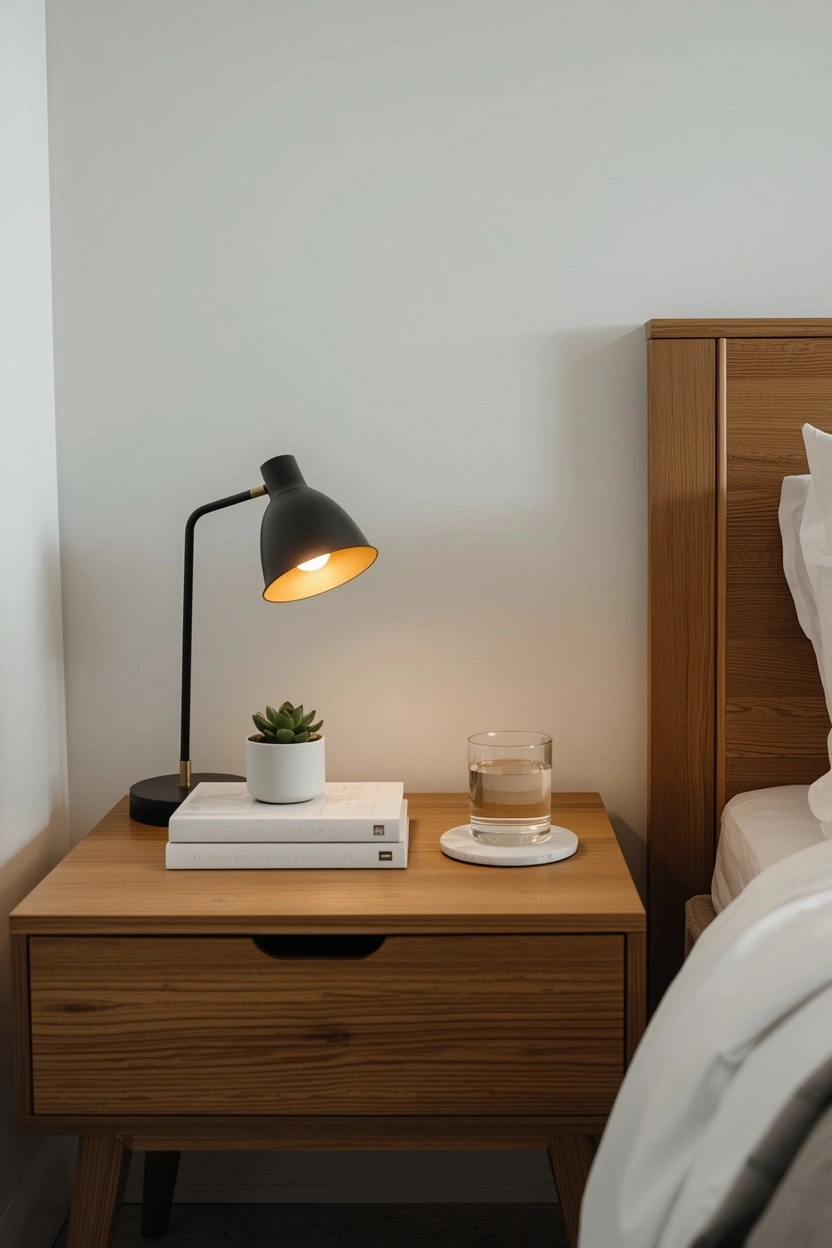
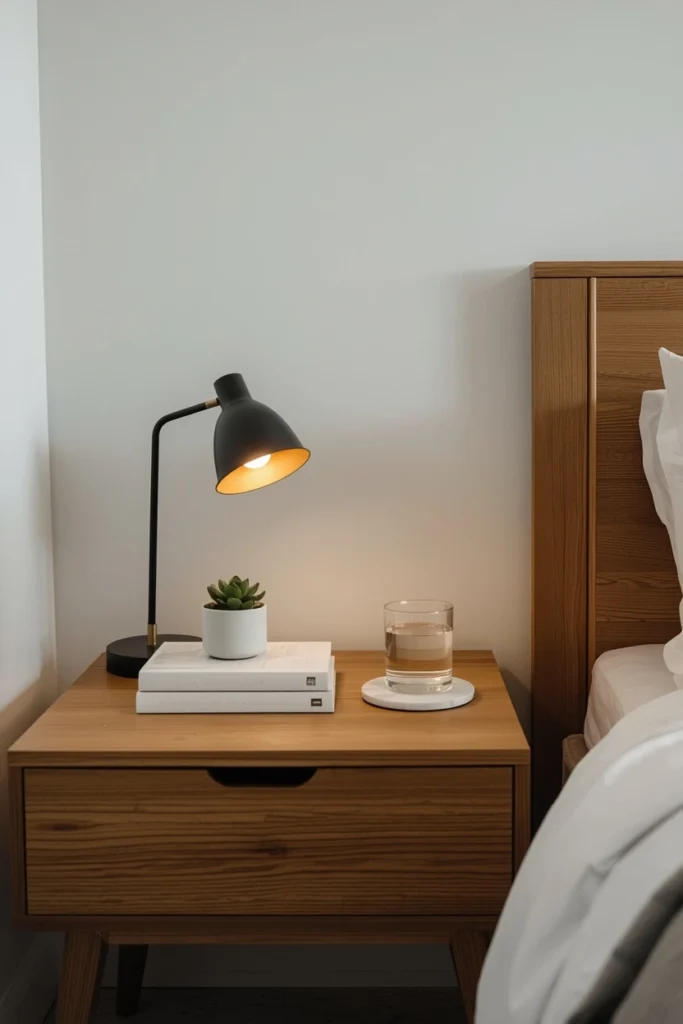
A wooden nightstand sits beside a bed, styled with just three things: a small ceramic lamp with a warm amber glow, a stack of two books with a small succulent on top, and a single glass of water on a marble coaster. Nothing else. It’s minimal, intentional, and absolutely beautiful in its simplicity.
Design Breakdown
Your nightstand is the last thing you see before you fall asleep and the first thing you see when you wake up. It deserves to be styled well — and the good news is that this is one of the easiest, fastest home bedroom refresh ideas on this list.
The rule of three works perfectly here: keep three items on each nightstand. A light source, something living (a plant or flowers), and one personal item (a book, a candle, or a small piece of art). That’s it. Everything else goes in the drawer.
Nightstand alternatives if you don’t have traditional ones:
- A small wooden stool
- A stack of oversized hardcover books
- A floating wall shelf
- A drum side table in rattan or ceramic
Expert Tip
Match your nightstand height to your mattress height. The surface should sit level with or just below the top of your mattress — this is a tiny detail that makes a huge ergonomic and visual difference.
Why It Works
A clutter-free, styled nightstand reduces visual noise before bed, which helps your brain relax. Studies on sleep hygiene consistently show that a calm visual environment supports faster sleep onset. So yes — styling your nightstand is actually good for your health.
Best For
- Small spaces
- Budget makeovers
- Renters
- Families (simpler styling = less to knock over)
Common Mistake To Avoid
Overcrowding the surface with chargers, water bottles, books, hand cream, and everything else from the day. Edit ruthlessly. If it doesn’t need to be there at bedtime, it shouldn’t live there permanently.
Quick Wins
- Clear everything off and only put back three items
- Add a small tray to corral items and make the surface feel intentional
- Swap a plastic water bottle for a glass carafe
- Add one small plant or a single stem in a bud vase
You May Also Like:
- Small Bedroom Nightstand Ideas
- Bedroom Lighting Ideas
- Bedroom Chair Style Ideas
- Cosy Bedroom Ideas
- Neutral Bedroom Decor
Idea #8: Add a Reading Nook or Cozy Corner
What You’re Seeing
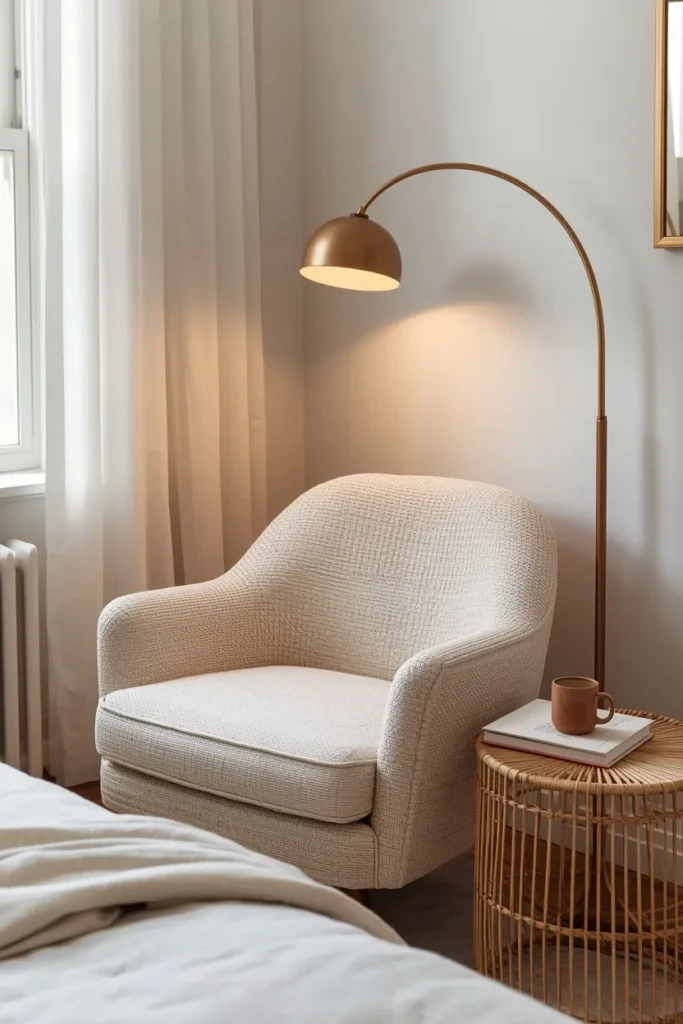
Picture a bedroom corner that most people would leave empty — but here, it’s been transformed into a small, deeply inviting reading spot. A curved accent chair in cream boucle sits angled slightly toward the window. A thin floor lamp arcs over it with warm light. A small round side table holds a mug and a well-loved paperback. A folded throw drapes over the armrest. It feels like the most deliberately cozy spot in the house.
Design Breakdown
One of the most underused home bedroom refresh ideas is simply activating dead corners. Most bedrooms have at least one corner that sits empty or becomes a dumping ground for laundry. Turning it into a functional, beautiful reading nook gives the room a second purpose — and makes it feel genuinely layered and designed.
You don’t need a lot of space. Even a 4×4 foot corner is enough for a chair, a lamp, and a small table. The key elements:
- A comfortable chair: Accent chairs, armchairs, or even a small chaise work beautifully
- A task light: A floor lamp or a plug-in sconce keeps the reading area separate from the rest of the room’s lighting
- A surface: Even a small stool or a narrow table gives you somewhere to set a drink or a book
- Softness: A throw and a cushion make the corner feel inviting rather than just furnished
Expert Tip
Angle the chair slightly — not flat against the wall, not straight out into the room. A 30–45 degree angle creates a sense of enclosure and makes the corner feel intentional and private.
Why It Works
A bedroom that has multiple functional zones feels larger and more purposeful. The reading corner also gives you a destination — somewhere to go other than directly to bed — which actually improves your sleep hygiene by separating the bed’s association with scrolling and screen time.
Best For
- Large spaces
- Luxury homes
- Small spaces (a small chair takes up very little room but adds enormous personality)
- Families (a reading nook invites actual reading before bed)
Common Mistake To Avoid
Choosing a chair that looks beautiful but isn’t actually comfortable. You’ll never use a reading nook if the chair hurts your back after five minutes. Sit in it (or read reviews carefully) before buying.
Quick Wins
- Start with a secondhand accent chair and a good floor lamp
- Add a small tray or stool as a side table
- Keep one basket nearby for throw blankets and books
- Place the chair near a window for natural light during the day
Expert Insight — Most people don’t know this: The reading corner isn’t just about having somewhere to sit. It’s about giving your bedroom a sense of ceremony. When a room has multiple purposeful zones, it signals that the space is thoughtfully designed for the person who lives in it — not just set up to hold a bed and some clothes. That shift in intention changes how you feel in the room every single day. A chair in the corner costs less than most rugs, but it adds more character than almost anything else you could buy.
Idea #9: Rethink Your Bedroom Scent and Atmosphere
This simple change can completely transform the room.
What You’re Seeing
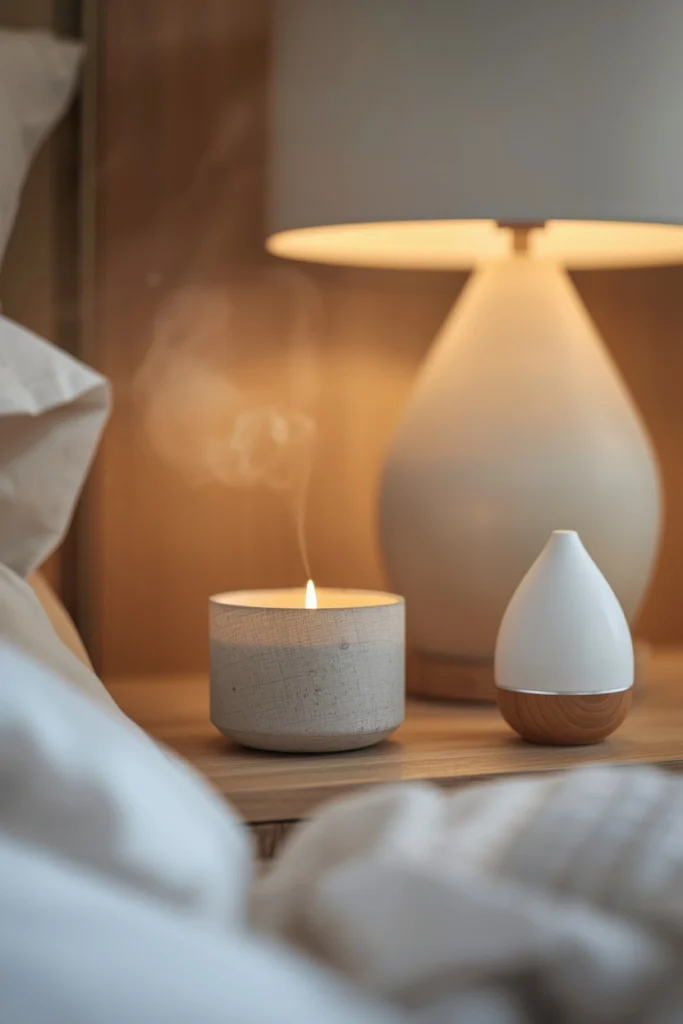
A nightstand holds a single linen candle in a matte concrete vessel. Beside it, a small ceramic diffuser releases a faint wisp of steam. The room smells like clean cotton, a hint of cedarwood, and something faintly floral — like walking into a spa. You haven’t changed a single piece of furniture, but the space feels completely different.
Design Breakdown
Scent is the most overlooked element in any bedroom refresh — and arguably the most powerful. Our sense of smell is directly connected to the limbic system, the part of the brain that controls emotion and memory. The right bedroom scent can make you feel calm, romantic, energized, or sleepy — before you’ve even gotten into bed.
For a bedroom refresh, the goal is a signature scent that signals “this is my sanctuary.” Popular options:
- Lavender: The gold standard for relaxation and sleep support
- Cedarwood and sandalwood: Warm, grounding, and masculine or gender-neutral
- Clean linen or white musk: Fresh, soft, and universally appealing
- Eucalyptus or mint: Refreshing for a morning wake-up routine
- Vanilla and amber: Cozy, warm, and deeply comforting
Delivery methods:
- Candles for ambiance and warmth (use in the evening, never while sleeping)
- Reed diffusers for constant, low-level fragrance
- Essential oil diffusers for adjustable intensity
- Linen spray applied directly to pillowcases and duvets
Expert Tip
Don’t mix more than two complementary scents in one room. Competing fragrances create olfactory noise — the scent equivalent of visual clutter.
Why It Works
Creating a scent association with your bedroom trains your brain to begin winding down the moment you enter the room. It’s one of the core principles of sleep hygiene and cognitive behavioral therapy for insomnia.
Best For
- Budget makeovers (candles and diffusers are very affordable)
- Renters (no physical changes required)
- Small spaces
- Luxury homes (high-end candles become beautiful decor objects too)
Common Mistake To Avoid
Using a scent that’s too strong. A powerful fragrance in an enclosed bedroom becomes overwhelming rather than soothing. Start subtle — you can always add more.
Quick Wins
- Start with a $15 reed diffuser in lavender or clean linen
- Spray your pillowcase with a linen spray before bed every night
- Burn a candle for 30 minutes before you get into bed (then extinguish it)
- Rotate scents seasonally to keep the room feeling fresh
Idea #10: Edit and Declutter With Intention
What You’re Seeing
A bedroom where every surface is clear. The dresser holds a tray with a perfume bottle, a small dish for jewelry, and a single plant. The floor is visible. The closet door is closed. There’s nothing on the nightstand that doesn’t belong there. The room feels like a deep breath — open, clean, and completely calm.

Design Breakdown
This is the home bedroom refresh idea that costs nothing and has the most immediate impact. Decluttering a bedroom is not about minimalism as an aesthetic — it’s about removing visual noise that quietly stresses your brain every time you walk in.
The editing process works best room by room, surface by surface. Here’s a simple approach:
- Clear every surface completely. All of it. Start fresh.
- Group like items together. See what you actually have before deciding what stays.
- Apply the one-tray rule. Each surface gets one tray or dish. Everything that stays must fit on or inside it.
- Handle the floor first. Nothing should permanently live on the bedroom floor except furniture and rugs.
- Deal with the “chair pile.” We all have one. Give it a home — a hook, a valet stand, a proper hamper.
Visualize the difference: walking into a room where every surface is intentional versus a room where every surface holds last week’s reading material, three charging cables, and a candle you’ve never lit. The first feels like a retreat. The second just feels like more to do.
Expert Tip
Take a photo of your bedroom before you edit it. Then take one after. The contrast is almost always shocking — and it reminds you how much visual weight clutter actually carries.
Why It Works
Research on environmental psychology consistently shows that cluttered environments increase cortisol (stress hormone) levels and reduce perceived sense of control. A tidy bedroom isn’t just prettier — it genuinely makes you feel less anxious.
Best For
- All spaces, all budgets
- Families (teaching editing as a habit)
- Small spaces (where clutter is amplified by limited square footage)
- Renters (a decluttered room looks larger and more intentional regardless of furniture)
Common Mistake To Avoid
Decluttering and then refilling the surfaces within a week. The secret to maintaining a calm bedroom is creating permanent homes for everything — so items have a destination other than “every flat surface.”
Quick Wins
- Start with just the nightstands — clear them completely right now
- Add a hook on the back of your door to end the chair pile
- Use a tray on your dresser to corral loose items
- Do a 10-minute surface edit every Sunday to maintain the calm
What’s your biggest clutter challenge in your bedroom right now? I’d love to know what you’re working with.
Related Bedroom Ideas to Explore Next
If you loved these home bedroom refresh ideas, here are some more deeply inspiring guides to keep the momentum going. There’s something here for every style and every budget — keep exploring!
- Cozy Bedroom Ideas to Create a Warm and Relaxing Retreat
- 15 Inspiring Bedroom Ideas for Your Next Makeover
- Neutral Bedroom Ideas
- Minimalist Bedroom Ideas
- Bedroom Decor Design Ideas
- Bedroom Lighting Ideas
- Small Bedroom Storage Ideas
- Romantic Bedroom Ideas
Your Bedroom Transformation Starts Today
After walking through all 10 of these home bedroom refresh ideas, a few stand out as truly high-impact starting points. Layering your bedding, swapping your lighting, and decluttering your surfaces are probably the three moves that cost the least and deliver the most dramatic results. They’re also things you can start doing today — right now, in fact.
Here’s my challenge to you: pick just one idea from this list and commit to doing it this week. Not all ten. Just one. Maybe it’s finally ordering the curtain rod you’ve been putting off. Maybe it’s spending 20 minutes clearing your nightstand. Maybe it’s lighting a candle tonight and noticing how differently the room feels. Start there.
The biggest thing I’ve learned about bedroom refreshes is that the first small change is always the catalyst. Once you see one surface styled intentionally or feel the difference that warm lighting makes, you naturally want to keep going. That momentum is everything.
So tell me — which of these 10 home bedroom refresh ideas are you going to try first? Drop it in the comments. I read every single one.
And if you’re ready to go even deeper, check out our full guide to bedroom decor ideas for every style — it covers everything from modern minimalist to cozy maximalist, with plenty of inspiration to keep you going. You might also want to explore our living room refresh ideas next — because once your bedroom feels amazing, that living room is going to start looking very different to you too.