

 By Trends Oraa
 This article was created in line with Trends Oraa’s research and content standards.
You walk into an attic and see its hidden potential for a cozy, bright bedroom that feels both clever and calm. This article shows ways to make the space work for sleeping, storage, and relaxing while keeping the room open and light.
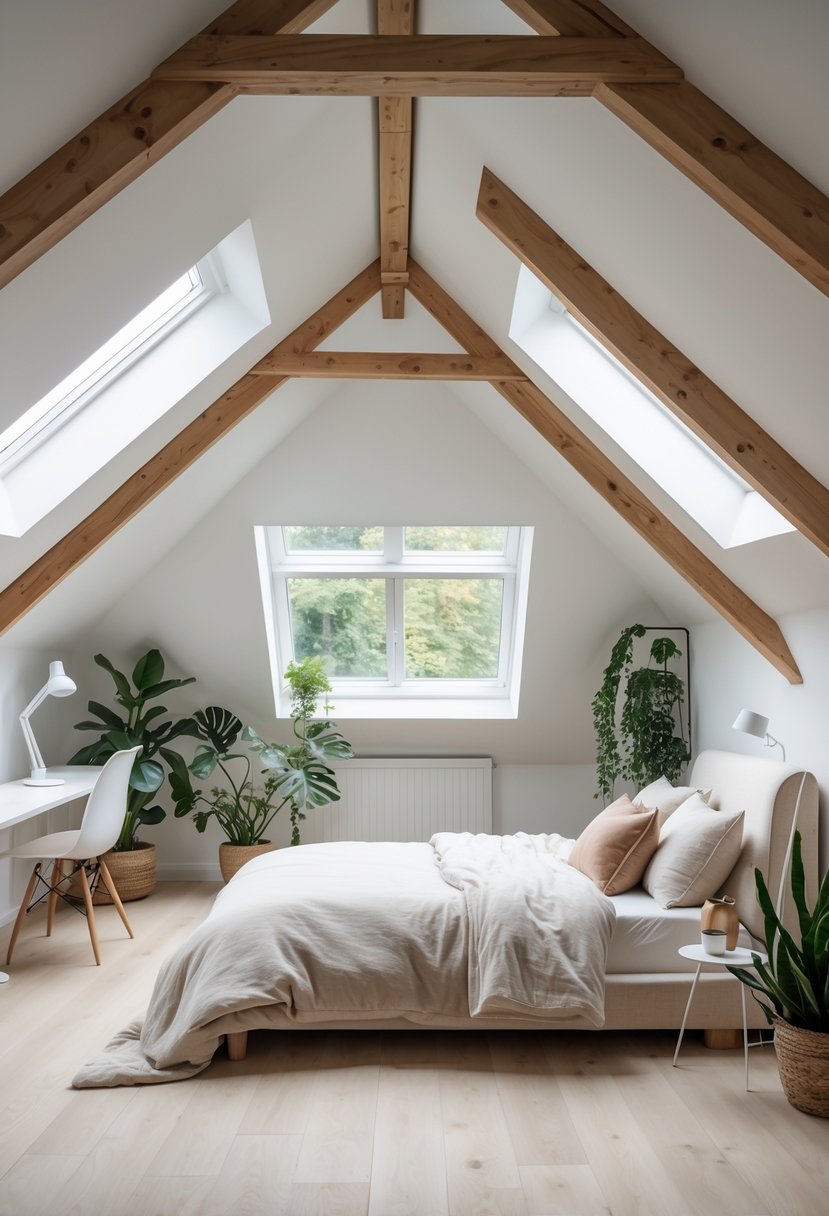
They will learn simple ideas like adding skylights, built-in shelving, and multi-use furniture to make the most of low ceilings and odd angles. The suggestions focus on practical changes—light colors, mirrors, window seats, and under-eave cabinets—that improve comfort and function without major remodeling.
1) Maximize natural light with skylights
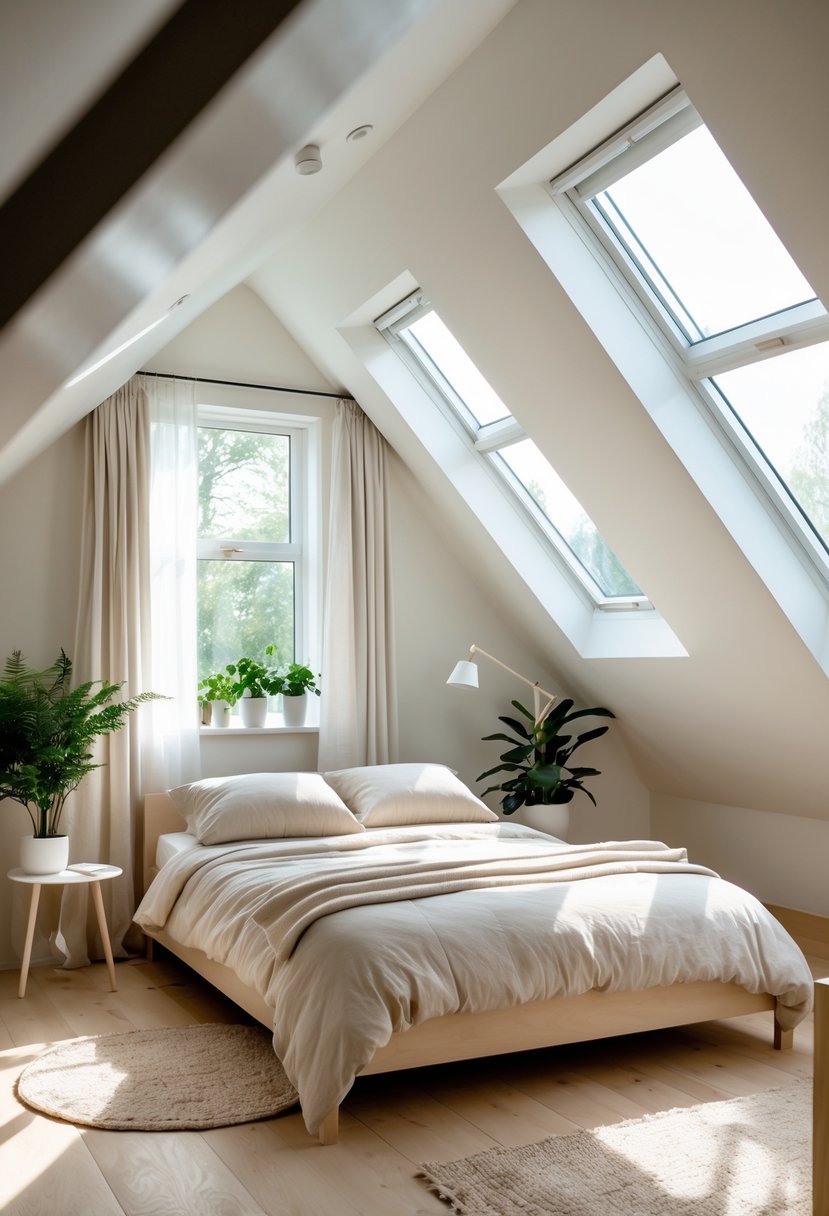
Skylights bring daylight directly into an attic bedroom, making the space feel larger and brighter. They work well with sloped roofs and can be placed to light specific areas like the bed or a reading nook.
Choose skylights with proper glazing to reduce heat gain and loss. Energy-efficient models cut drafts and lower the need for artificial lighting during the day.
Place skylights where they capture morning or afternoon sun depending on the room’s use. Install blinds or shades to control glare and privacy when needed.
Consider venting skylights to improve airflow and reduce stuffiness. A professional can ensure correct flashing and waterproofing to prevent leaks.
2) Use built-in shelving to save space
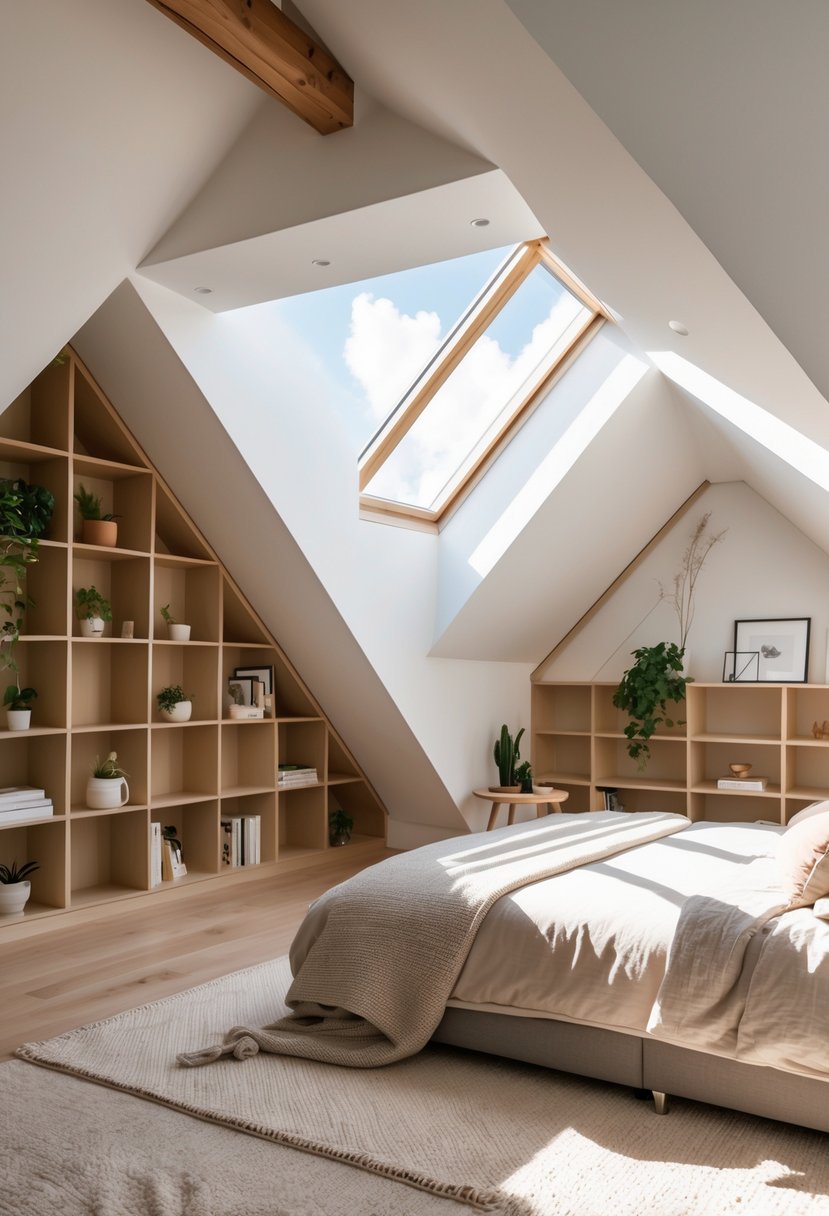
Built-in shelving fits the attic’s angles and makes use of every inch. It removes the need for bulky furniture and keeps the floor clear.
Shelves can tuck under eaves, follow sloped ceilings, or frame a bed. This creates storage without crowding the room or blocking light.
Choose adjustable shelves for flexibility. They allow for books, boxes, or decor and can change as needs do.
Paint built-ins the same color as the walls to make the room feel larger. A contrasting color can highlight the feature and act as a focal point.
Add drawers or cabinets at the lowest level for hidden storage. This keeps small items out of sight and maintains a tidy look.
3) Incorporate a cozy window seat
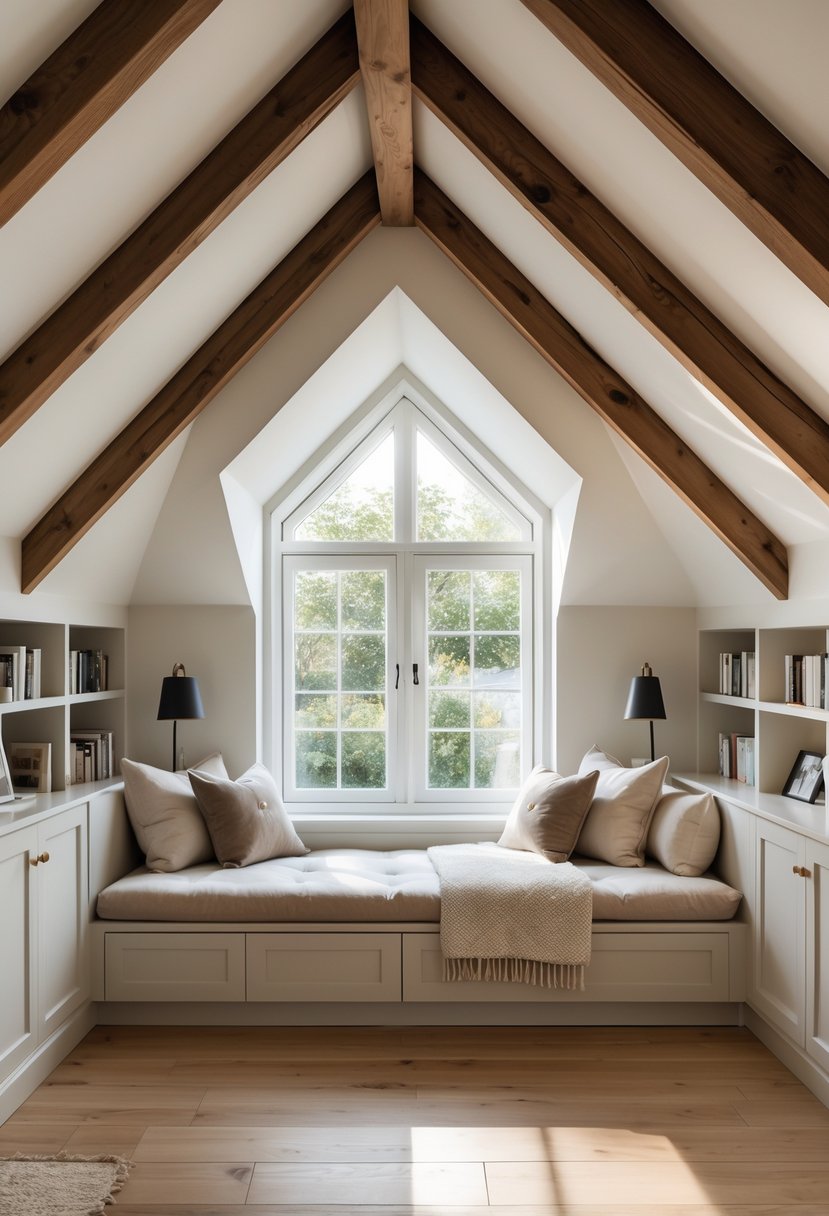
A window seat makes an attic bedroom feel warm and lived-in. It uses odd rooflines to create a comfy nook for reading or resting.
They can be built-in benches with storage underneath. Drawers or lift-up lids hide linens, books, or seasonal items and keep the room tidy.
Add thick cushions and a mix of pillows for comfort. Choose fabrics that resist fading from sun and are easy to clean.
Place a small side table or a wall sconce nearby for light and a spot to set a drink. This keeps the area functional without crowding the limited floor space.
Keep the seat low and proportional to the sloped ceiling. That keeps sightlines open and avoids a cramped feel in the attic.
4) Choose light, neutral colors
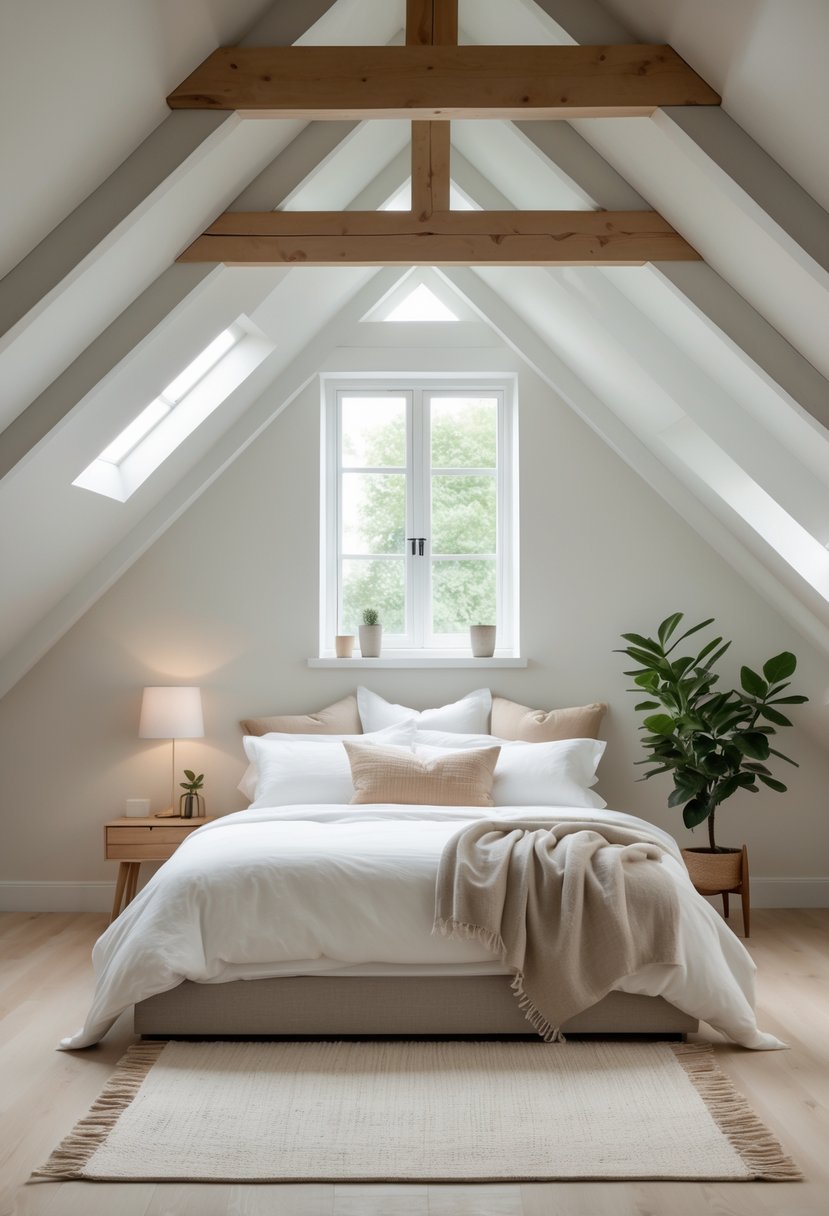
They should pick light, neutral paint to make a small or sloped attic feel larger. Soft whites, warm beiges, and pale grays reflect light and ease the visual weight of low ceilings.
A neutral palette creates a calm backdrop that fits many styles. It lets furniture and textiles stand out without competing with bold wall colors.
Using the same light tone on walls and trim can blur room edges and increase perceived space. Adding texture—like a linen throw or woven rug—gives warmth without adding visual clutter.
If they want a bit of contrast, they can add one muted accent pillow or a soft-colored lamp. That keeps the room interesting while preserving the airy, open feeling light neutrals provide.
5) Add exposed wooden beams for character
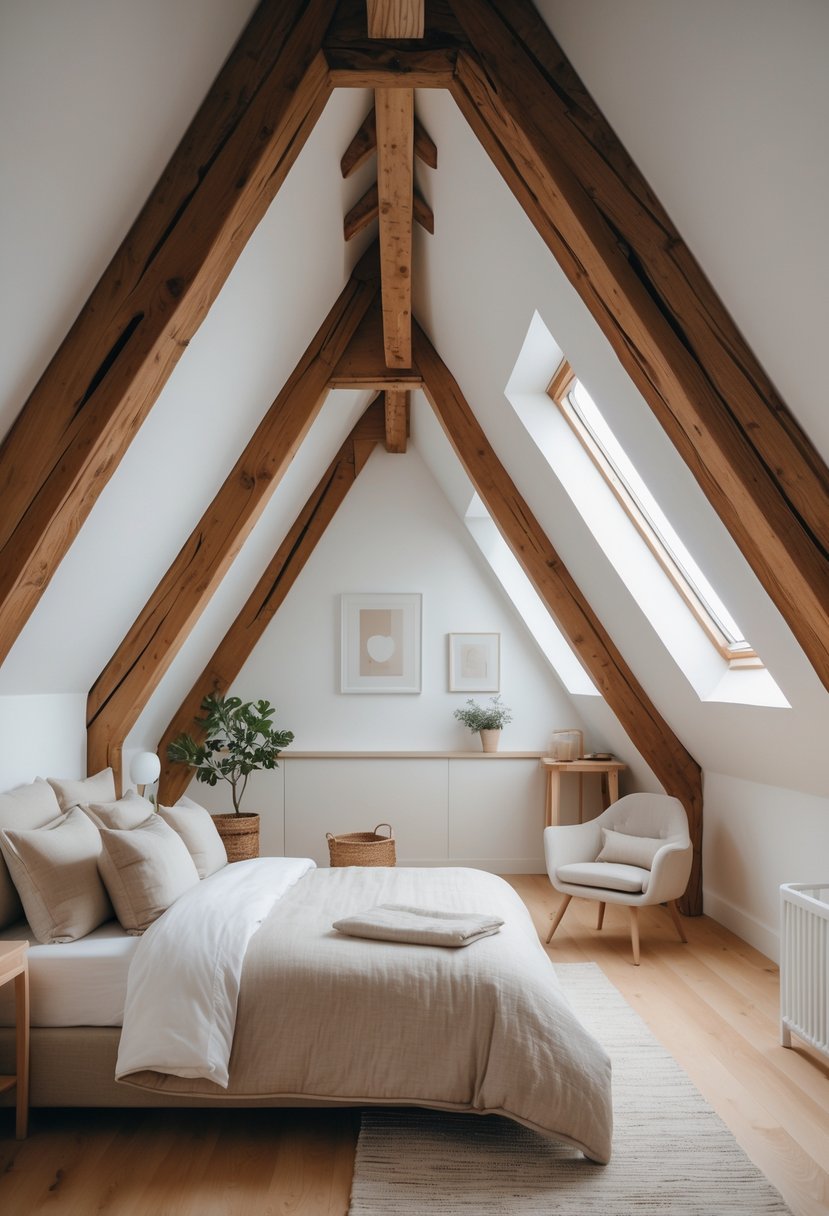
Exposed wooden beams bring warmth and texture to an attic bedroom. They draw the eye upward and make the space feel intentional instead of cramped.
Beams can be structural or decorative. Solid reclaimed wood adds a rustic look, while milled timber creates a cleaner, modern feel.
Staining or whitewashing changes the mood. Dark stains give contrast and drama; light finishes keep the room bright.
They also offer practical benefits. Beams can hide wiring, support lighting fixtures, or anchor curtains and shelving.
Installations should be checked by a professional when beams will bear weight. Proper treatment prevents pests and rot and extends the wood’s life.
In a small attic, spacing beams closer together enhances coziness without overpowering the room. In a larger loft, wider beams create a bold statement.
6) Opt for multi-functional furniture
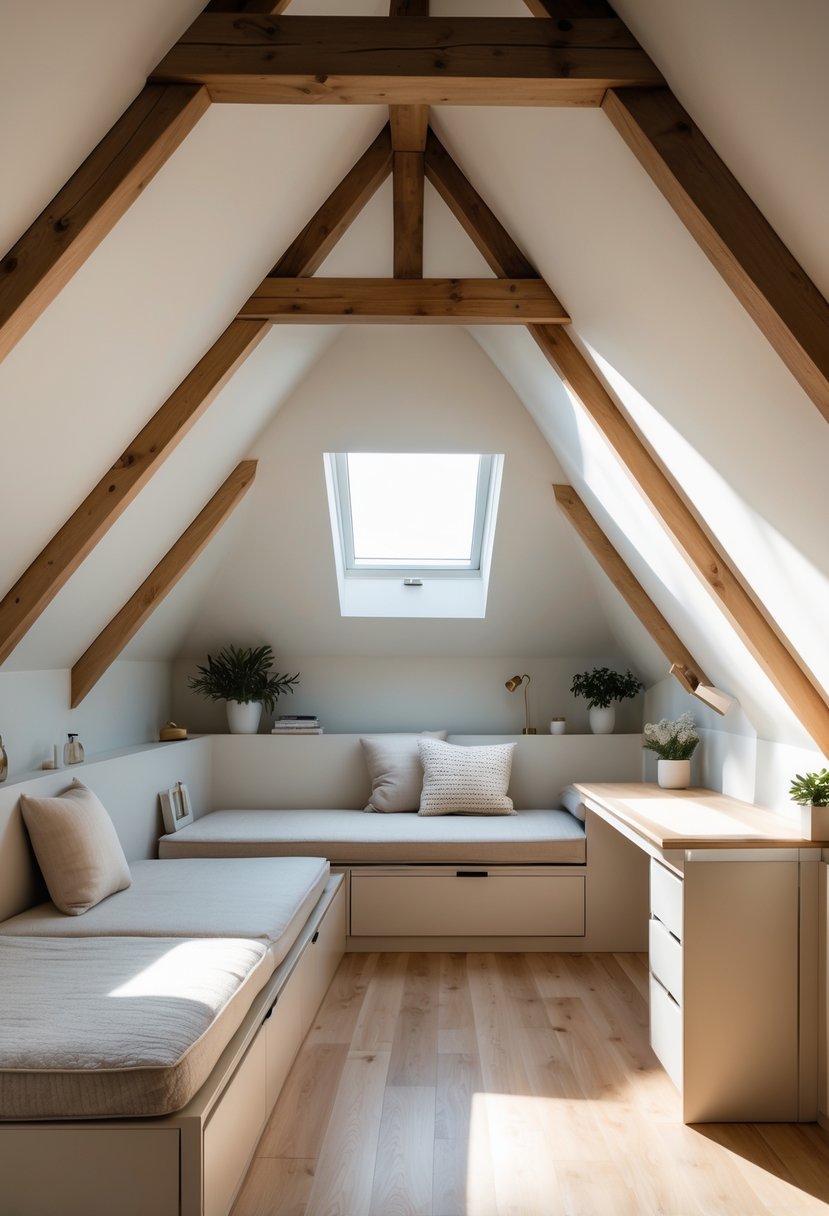
They can save space and add function in a small attic bedroom. A bed with built-in drawers or a lift-up storage base keeps linens and clothes out of sight.
A fold-down desk or wall-mounted table offers a work surface without taking floor area. When not in use, it folds away and frees up room for movement.
A sofa bed or daybed lets the room serve as both a guest space and a living spot. Choose models with easy mechanisms and sturdy frames for daily use.
Small dressers with a changing top or ottomans that double as storage seats add surface area and hidden storage. Lightweight pieces on casters make rearranging simple.
They should pick neutral colors and slim profiles to avoid crowding the visual space. Well-chosen multi-functional furniture keeps an attic bedroom tidy and practical.
7) Install a dormer for extra headroom
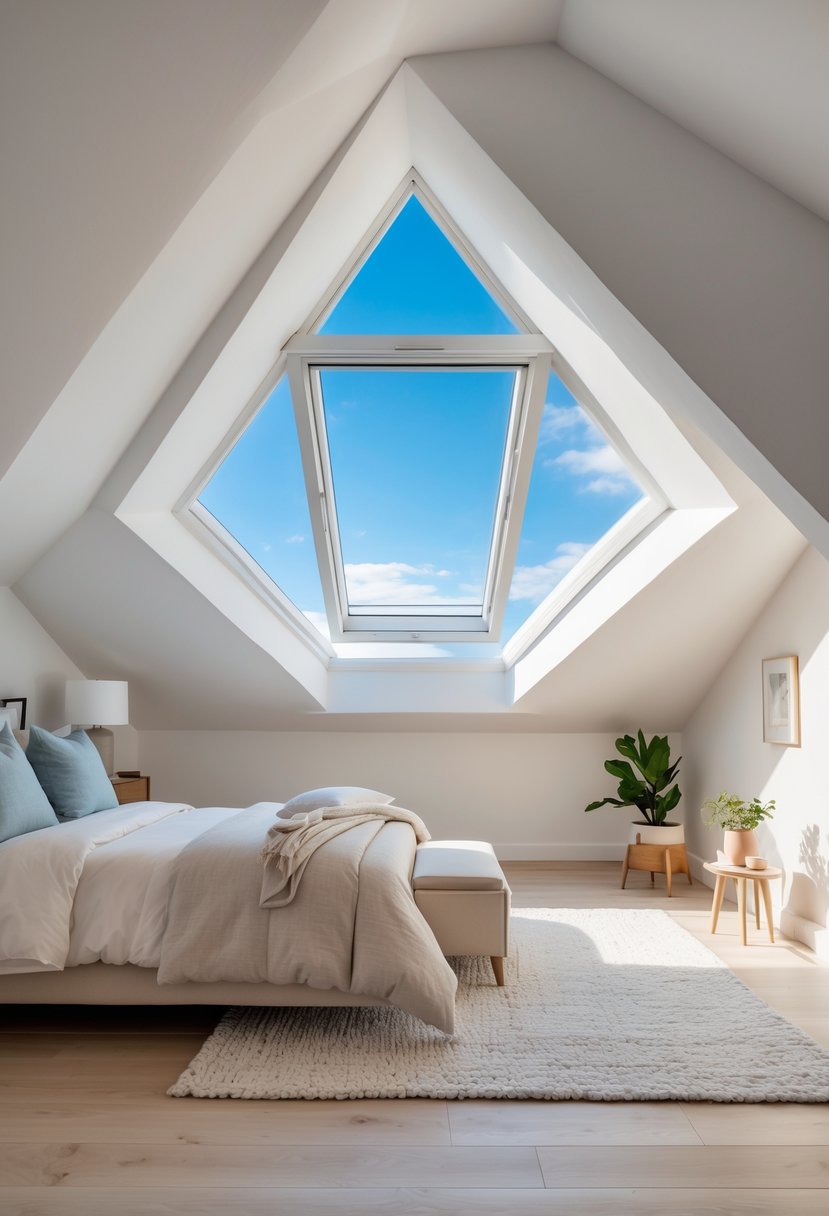
A dormer adds vertical space by extending the roof, so it creates more usable headroom in the attic. It can make walking, dressing, and placing furniture much easier.
They often bring in extra light through new windows, which helps make the room feel larger and more comfortable. Natural light also reduces the need for artificial lighting during the day.
Building a dormer requires checking roof structure and local building codes. A contractor or architect can confirm load-bearing walls and get permits if needed.
Dormers come in different styles, like shed, gable, and eyebrow, so homeowners can match the house’s look. Each style changes roofline, interior shape, and cost, so they should weigh appearance against budget.
8) Use mirrors to enhance brightness
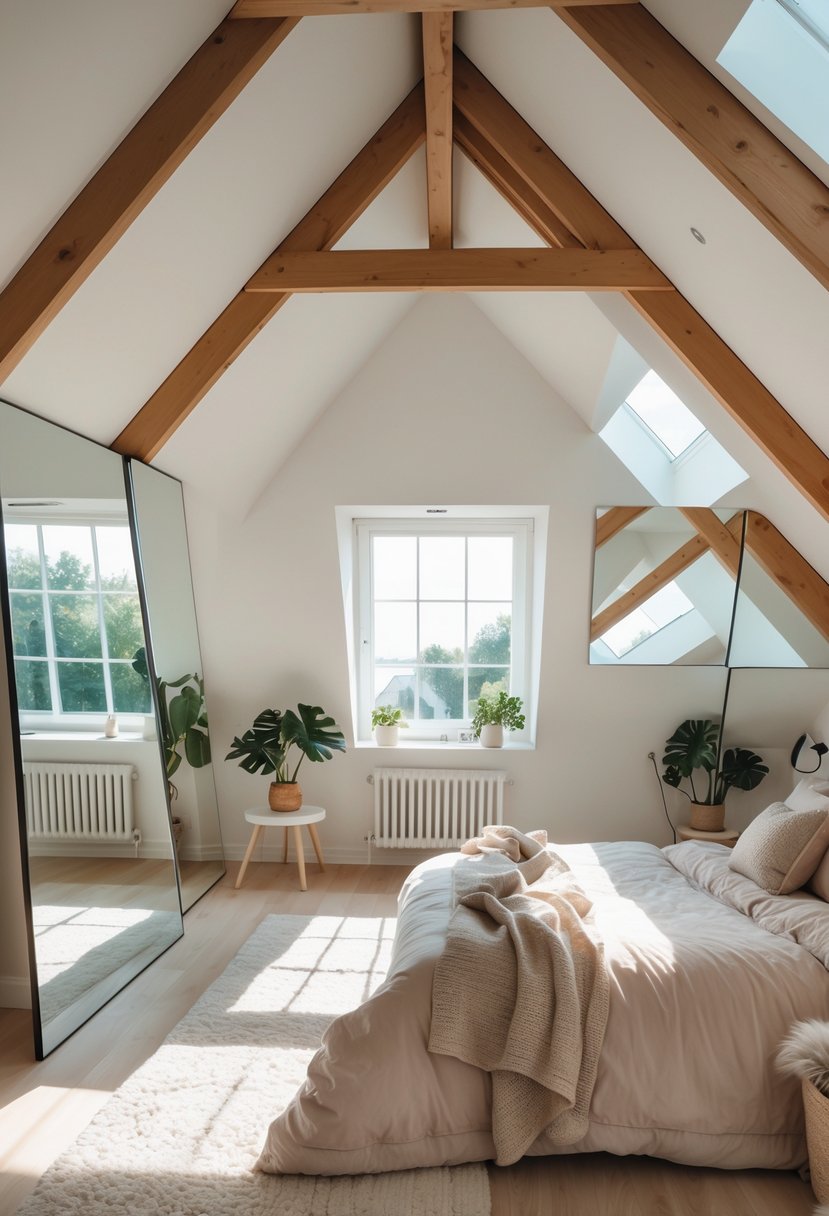
They can make a small attic feel much larger and brighter by reflecting light from windows and lamps. Place a large mirror opposite or near a window to bounce daylight across the room.
Mirrors also help spread artificial light in the evening. A cluster of smaller mirrors can add style while increasing glow without extra fixtures.
Choose frames that match the attic’s style to keep the look cohesive. Leaning a tall mirror against a wall adds height, while a round mirror softens sharp attic angles.
Avoid placing mirrors where they will reflect clutter or a bed directly if that feels unsettling to the occupant. Position them to reflect open space or attractive decor for the best effect.
9) Create a reading nook with soft lighting
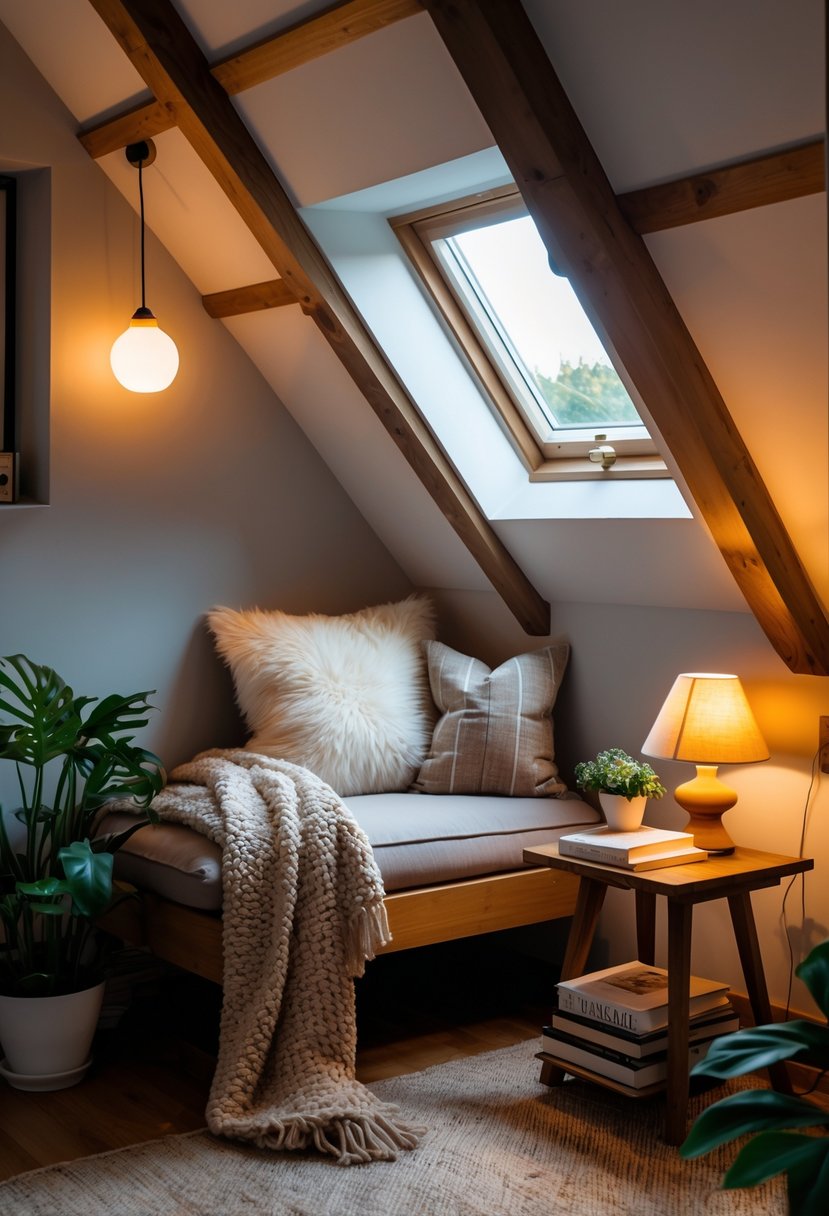
They should pick a cozy corner under the eaves and add a low armchair or chaise that fits the sloped ceiling. A small bookshelf or basket keeps books within reach without crowding the space.
Soft lighting matters most. Use a warm table lamp or an adjustable wall sconce for focused light, and add a dimmable floor lamp or string lights for gentle ambient glow.
Textiles make the nook inviting. A soft throw, a few cushions, and a small area rug add comfort and reduce echoes in the attic.
They must consider task and mood lighting separately. Task lights help with reading; mood lights set a calm tone for evening relaxation.
Ventilation and a nearby outlet are practical needs. Placing the nook near a window adds daylight and a view, which enhances the reading experience.
10) Incorporate under-eave storage cabinets
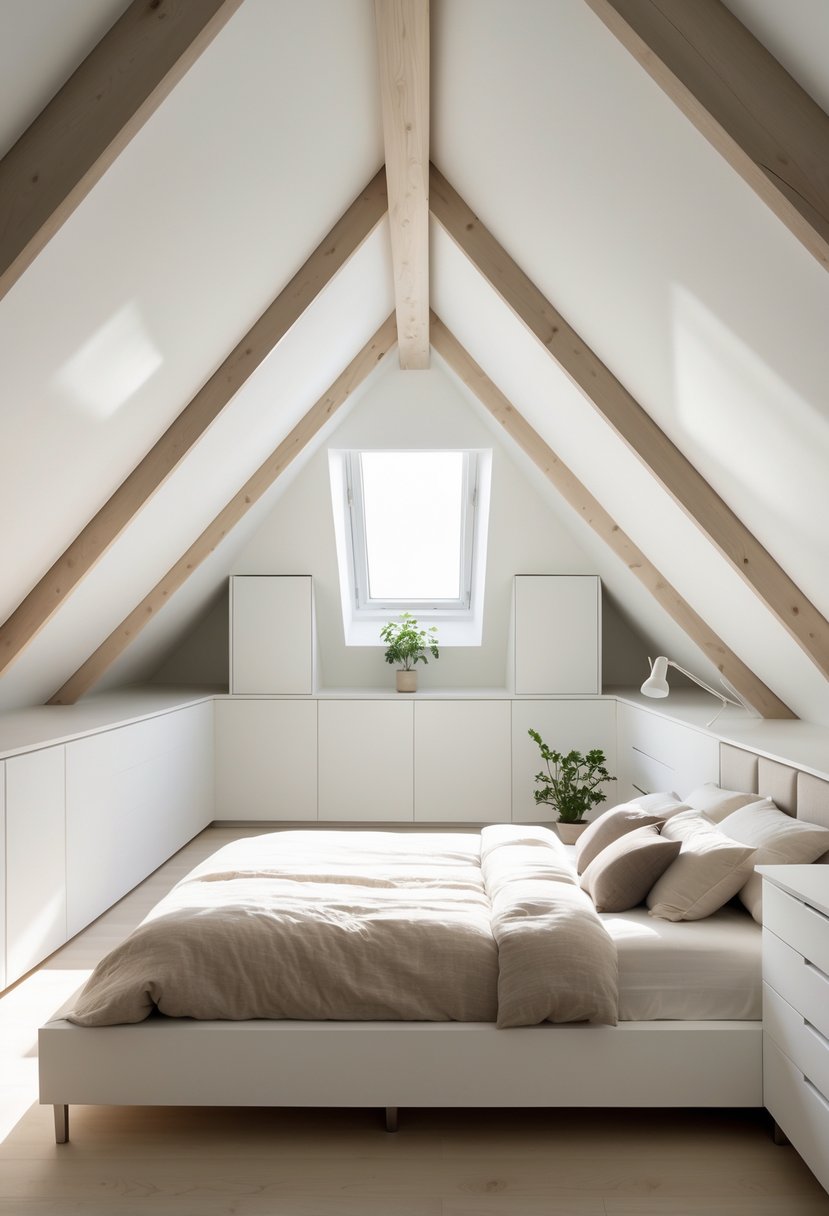
They make use of the low, sloped space along the eaves without blocking headroom. Cabinets can be built-in to match the room’s style or fitted as modular units for flexibility.
Shallow drawers and push-to-open doors work well where space is tight. They keep clothes, linens, and small items out of sight and reduce clutter.
Adding adjustable shelves lets the homeowner change storage as needs evolve. Soft-close hardware protects fragile items and keeps noise low.
Finish choices, like paint or wood veneer, help the cabinets blend with walls or stand out as a design feature. Simple handles or recessed pulls keep the look clean and prevent bumps in narrow walkways.