

 By Trends Oraa
 You will find fresh ideas to shape a calm, pretty nursery that fits your style and space. The article shows simple ways to mix colors, textures, and storage so you can plan a room that feels cozy and practical.
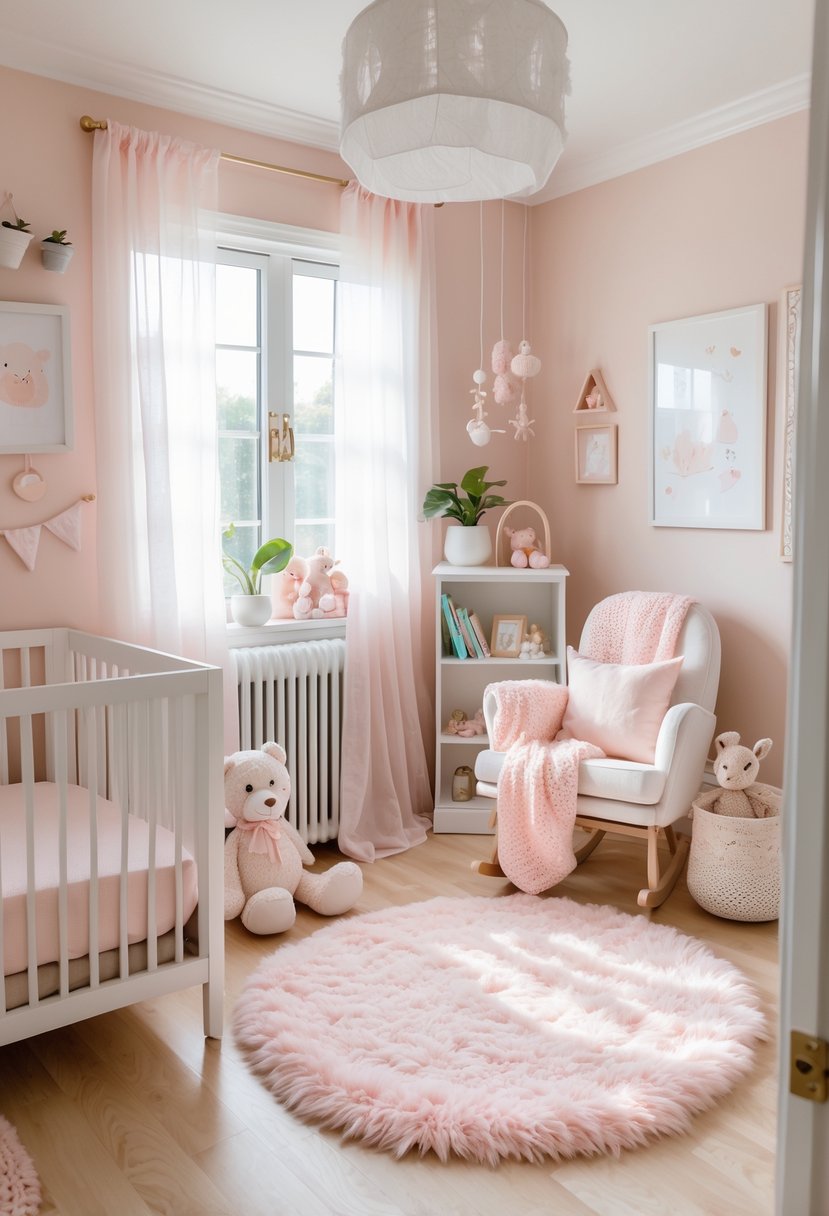
This guide helps you choose looks and layouts—like soft color schemes, focal walls, practical furniture, and sweet lighting—so you can create a lovely nursery that works for everyday life.
1) Pastel Pink and Gray Color Scheme
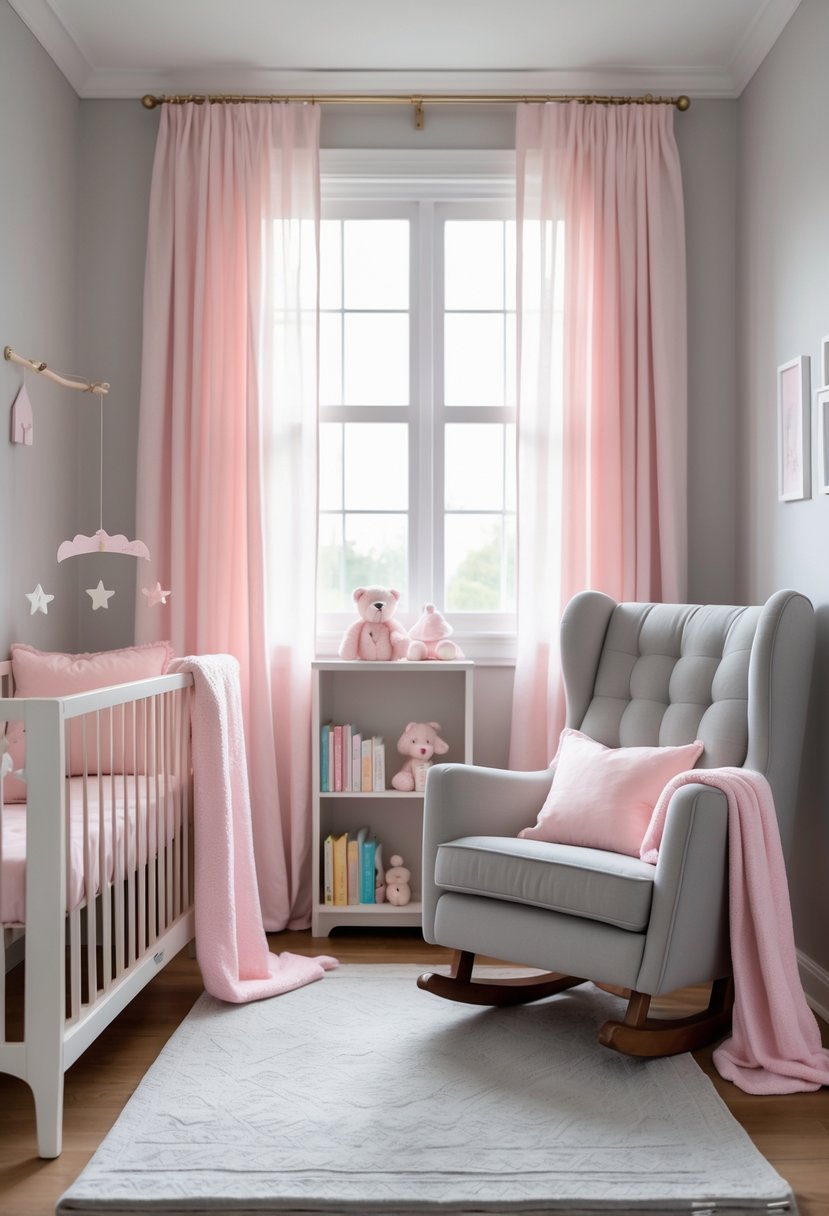
A pastel pink and gray nursery feels calm and modern. The soft pink adds warmth while gray keeps the room balanced.
They can paint one wall pink and use gray for furniture like the crib and dresser. Textiles such as curtains, rugs, and cushions can mix both colors to tie the look together.
Add simple patterns like stripes or polka dots in the same palette for subtle interest. Metallic accents in silver or muted gold work well without clashing.
Choose safe, washable paints and durable fabrics for easy cleaning. Lighting should be soft; a dimmable lamp helps with night feeds and creates a cozy mood.
2) Floral Wall Decals for Accent Wall
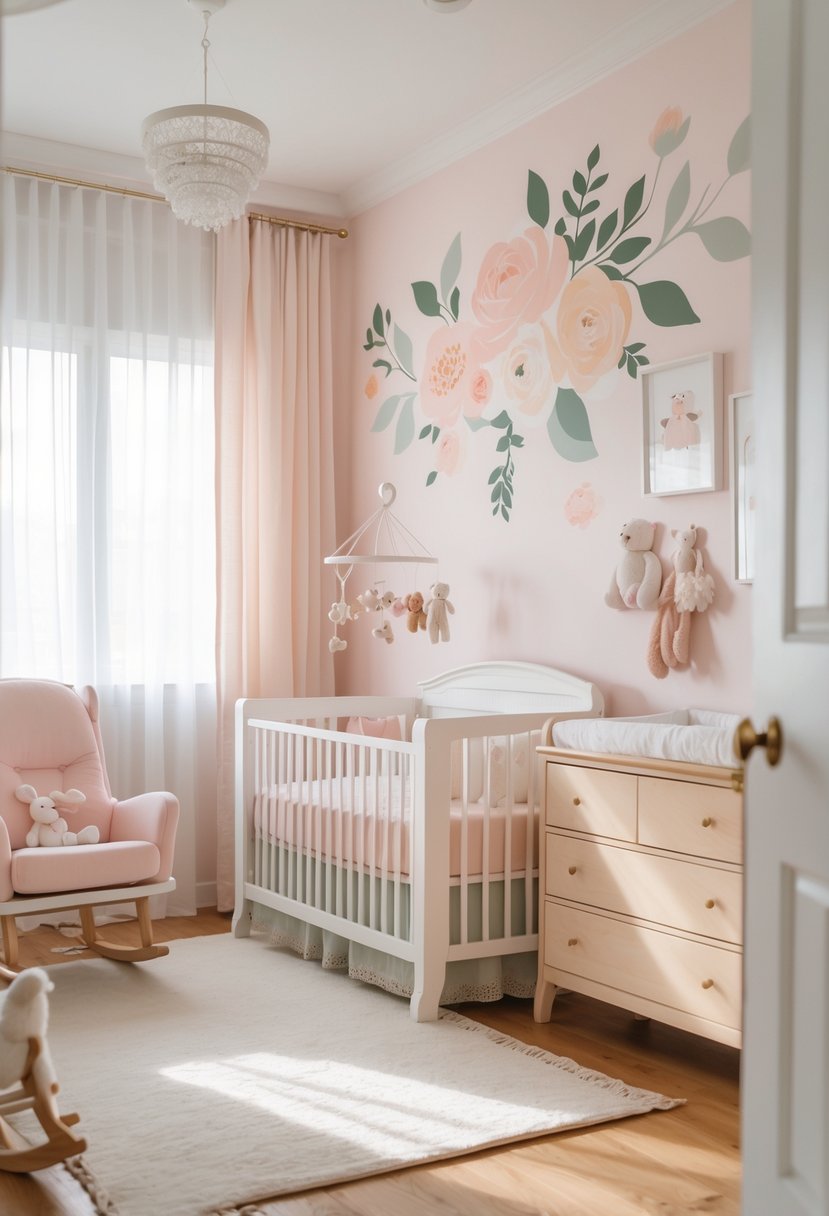
Floral wall decals add color and pattern without the mess of paint. They come in many sizes and styles, so parents can match a theme quickly.
Decals are easy to apply and remove, which helps when tastes change. They stick to smooth walls and peel off without damage in most cases.
Mix large blooms with small buds to create depth and visual interest. Placing decals around a crib or reading nook frames those areas and draws the eye.
Choose soft, muted tones for a calm vibe, or brighter blooms for a playful feel. They work well with neutral furniture and let other decor stand out.
3) Wooden Crib with White Finish
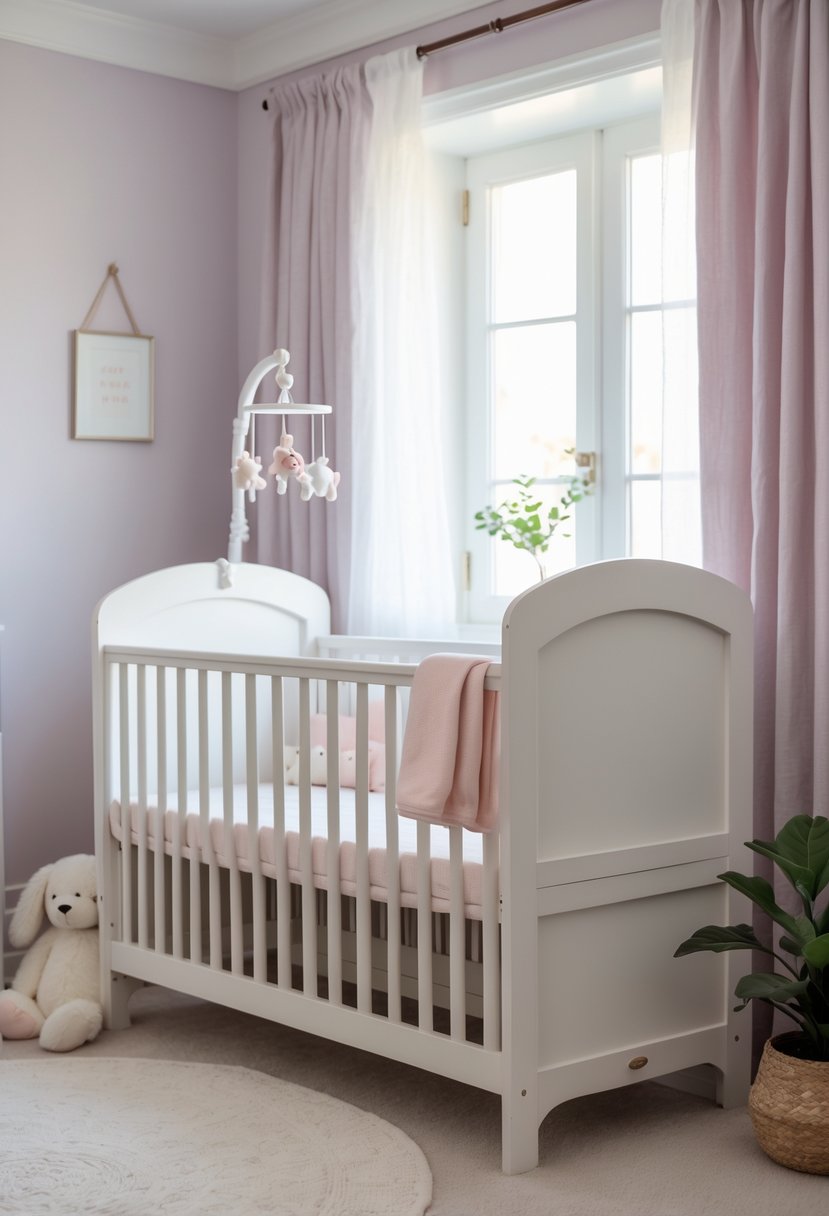
A wooden crib with a white finish gives the nursery a calm, timeless look. It pairs well with many colors and can grow with the child, fitting both classic and modern themes.
They should choose a crib that meets current safety standards. Slat spacing, mattress fit, and non-toxic paint matter most.
White hides minor scuffs and keeps the room bright. It also makes it easier to change decor without replacing major furniture.
Parents can add a simple mobile or neutral bedding for a soft touch. Avoid heavy bumpers or loose blankets to keep the sleep area safe.
4) Canopy Drapes Over Crib
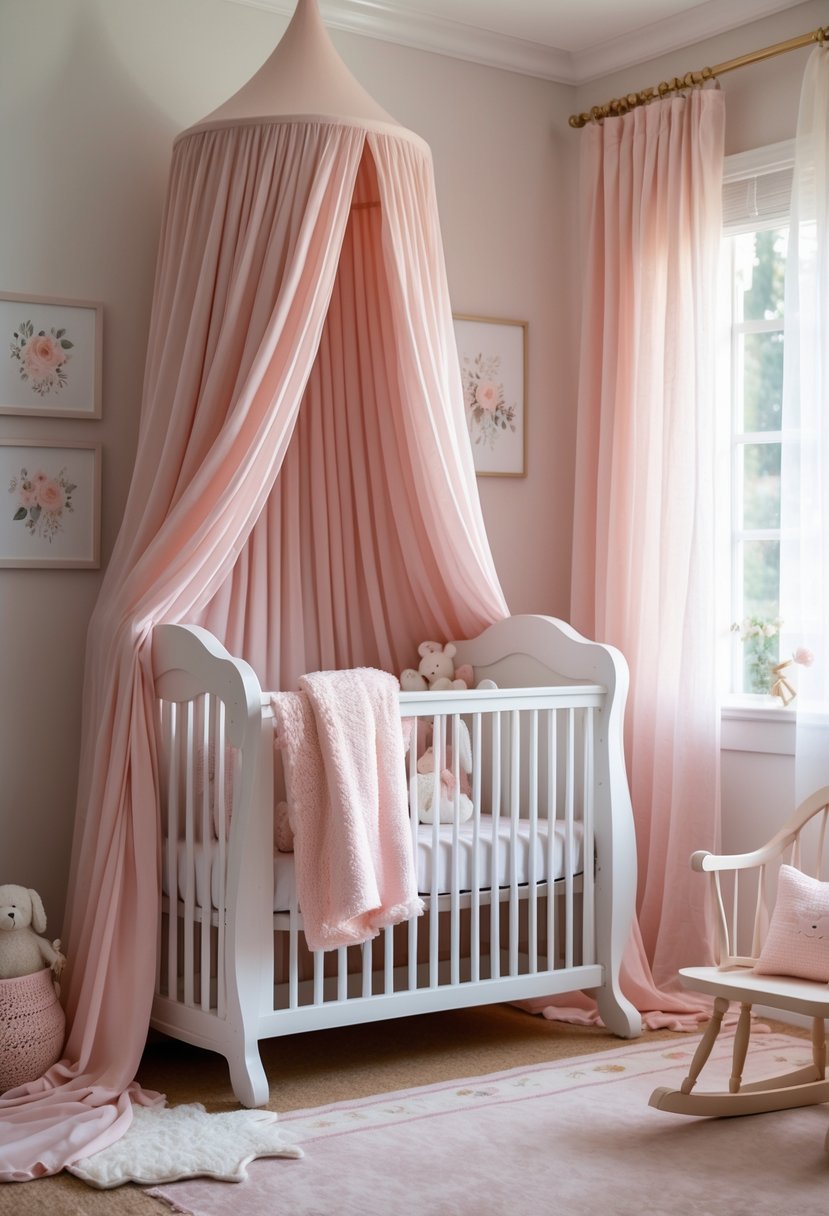
A canopy over the crib adds a soft, cozy feel and frames the sleeping area. It can make the nursery look finished without much effort.
Choose lightweight, breathable fabric like cotton or muslin to keep airflow safe. Secure the canopy to the ceiling or wall with a sturdy hook and make sure it stays out of the baby’s reach.
Keep colors and patterns simple to avoid overstimulation. Neutral shades or soft pastels work well and pair easily with other decor.
Use a removable ring or rod so the canopy can be washed or removed for cleaning. Regular checks for loose ties or hardware help keep the crib area safe.
Consider a sheer drape for light diffusion or a thicker fabric for a more enclosed look. Either option creates a focal point and sets a calm tone for the nursery.
5) Plush Area Rug with Soft Patterns
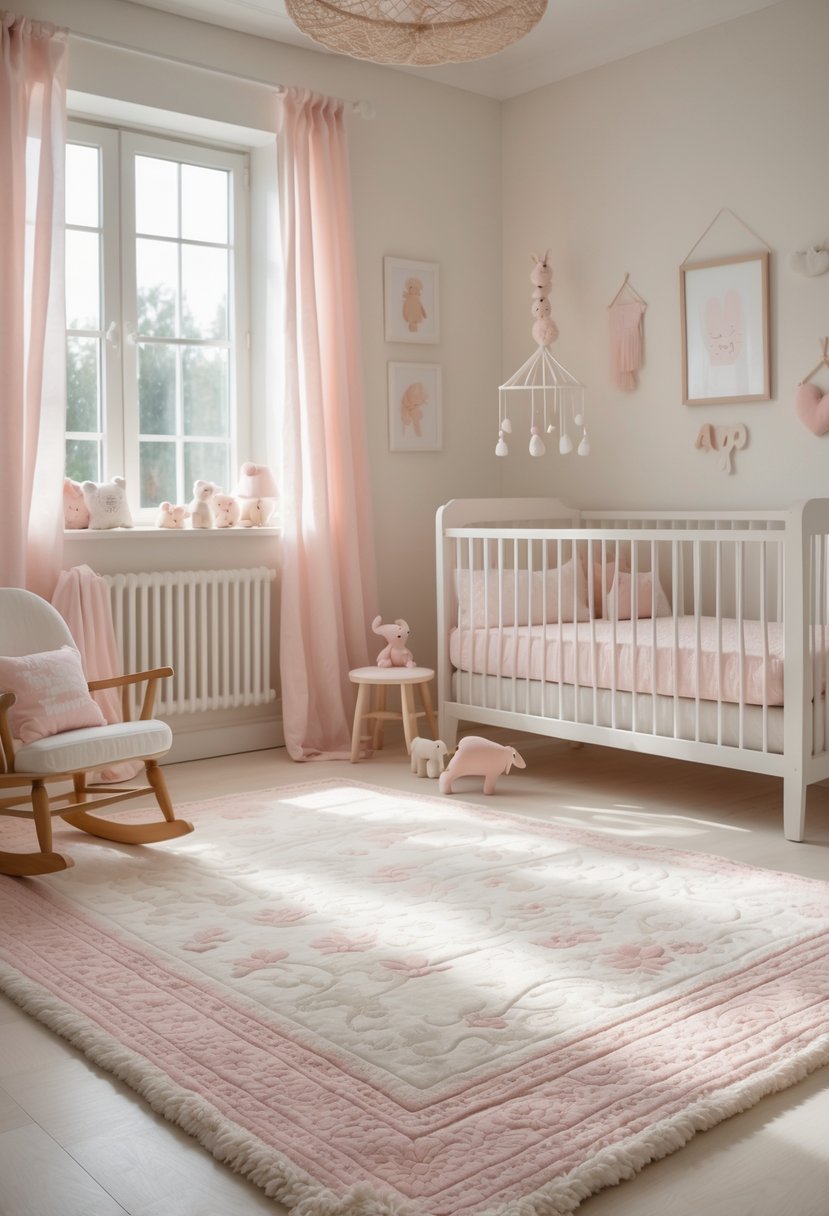
A plush area rug adds warmth and comfort under tiny feet and crawling hands. It cushions falls and creates a cozy play spot that ties the room together.
Choose soft patterns like gentle stripes, clouds, or simple florals to keep the look calm and age-appropriate. Neutral tones with one accent color work well and allow accessories to change over time.
Look for rugs made from hypoallergenic, low-pile materials that are easy to vacuum and spot-clean. Non-slip backing or a rug pad helps prevent sliding and keeps the rug in place.
Place the rug near the crib or changing table to soften hard floors and create a defined play area. Rotate and air the rug regularly to keep it fresh and safe for the baby.
6) Vintage Style Dresser with Changing Table
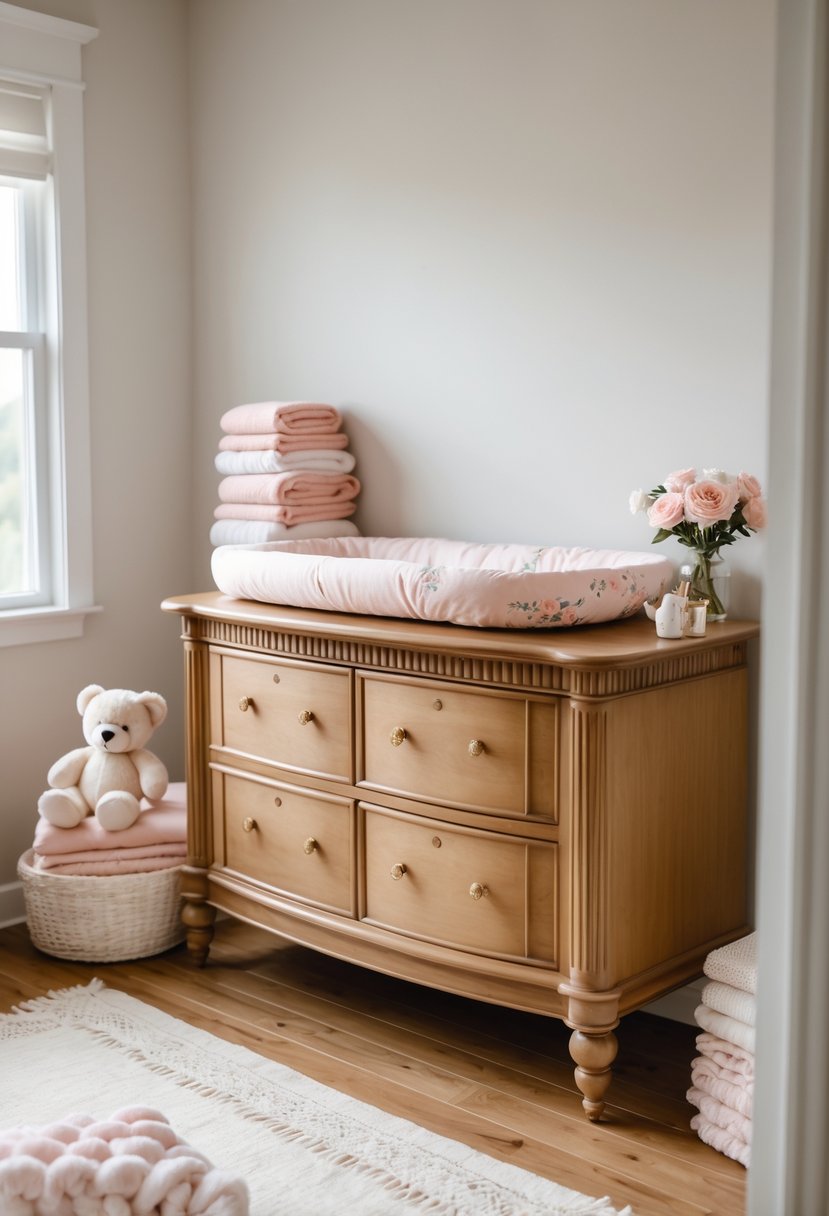
A vintage style dresser adds charm and warmth to a nursery while staying useful. It often features wood tones, curved lines, and antique hardware that give the room a timeless look.
They can serve as both storage and a changing station. A secure changing pad placed on top keeps diapers and clothes close by without taking extra space.
Refinishing or painting a vintage piece lets parents match the dresser to the nursery palette. They should check drawer slides and stability, and attach the dresser to the wall for safety.
Mixing vintage with modern items keeps the room practical. Soft textiles and simple decor help keep the focus on functionality and a calm atmosphere.
7) Hanging Macramé Planters
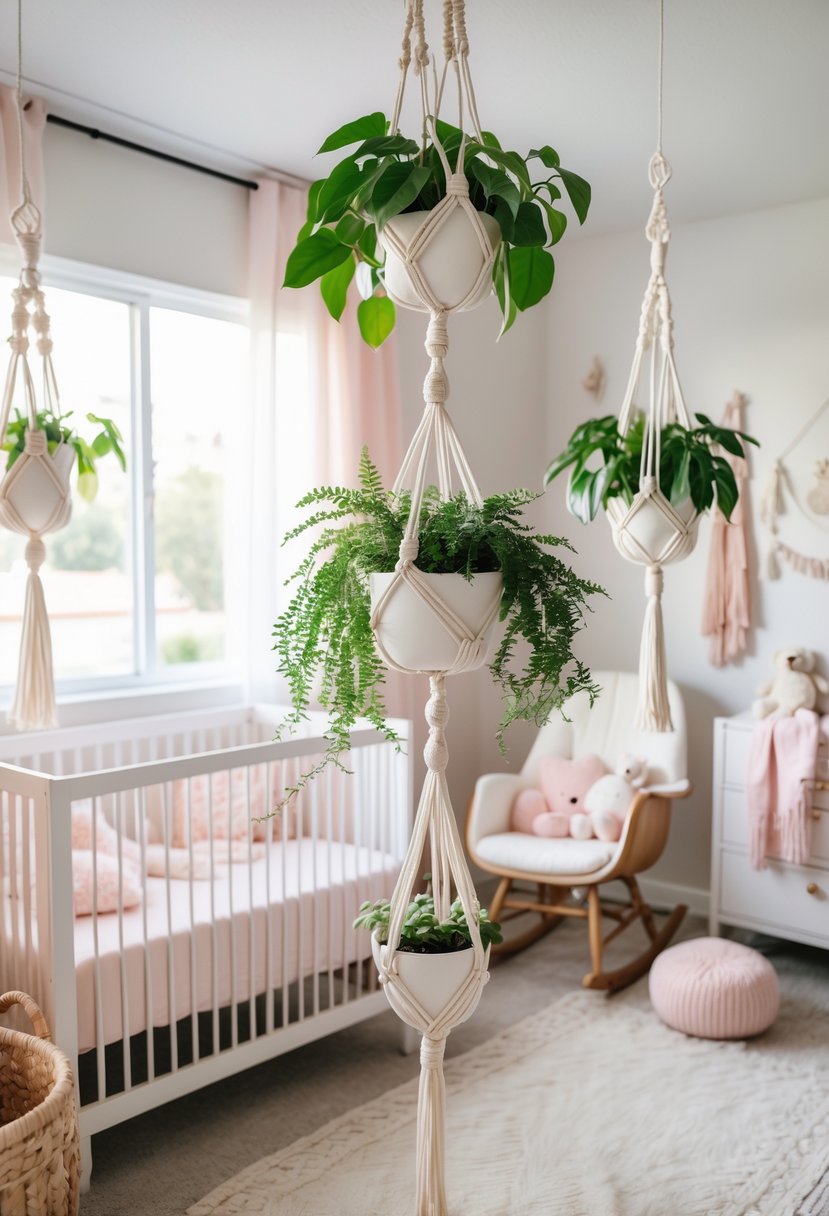
Hanging macramé planters add texture and soft shapes to a nursery without taking floor space. They bring a handmade feel that fits many themes, from boho to modern.
Place small, non-toxic plants like pothos or an artificial fern so leaves are safe and low-maintenance. Secure hooks into ceiling studs or use weight-rated anchors to keep plants steady and out of baby’s reach.
Choose neutral cords or match nursery colors for a subtle look. Macramé comes in many patterns; simple knots suit calm rooms, while more intricate designs add visual interest.
They also work as holders for lightweight toys or soft storage baskets if parents prefer no real plants. Hanging planters create vertical layers that make the room feel cozy and well-arranged.
8) Custom Name Wall Art
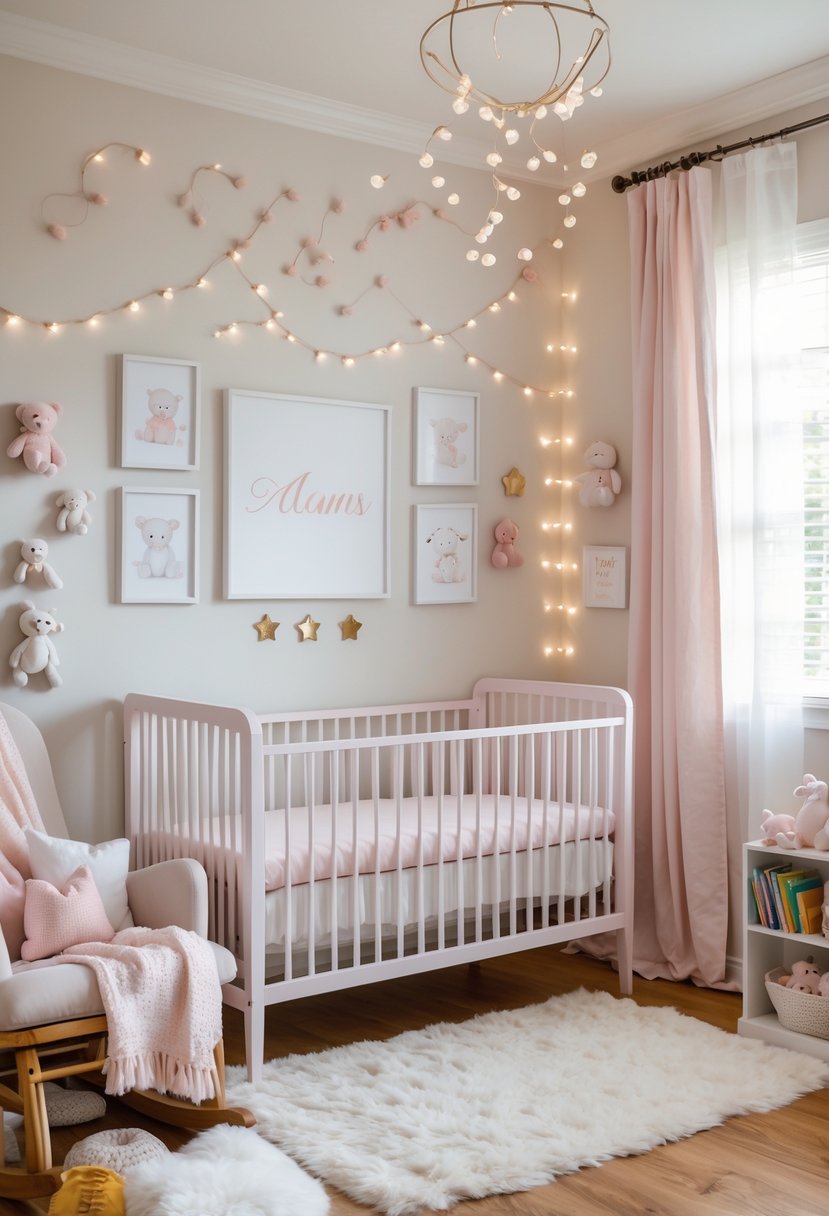
Custom name wall art adds a personal touch to the nursery. It helps make the space feel unique and welcoming for the baby.
Families can choose many styles, like painted wood letters, framed prints, or vinyl decals. Each option matches different budgets and room themes.
Colors and fonts set the mood. Soft pastels keep things calm, while bold colors make the name stand out.
Adding small graphics, such as stars, animals, or flowers, gives extra charm without clutter. Layered pieces create depth and a handcrafted look.
Placement matters: above the crib, changing table, or a reading nook works well. Measure the wall and consider sightlines so the art remains the room’s focal point.
9) Cloud-Shaped Night Light
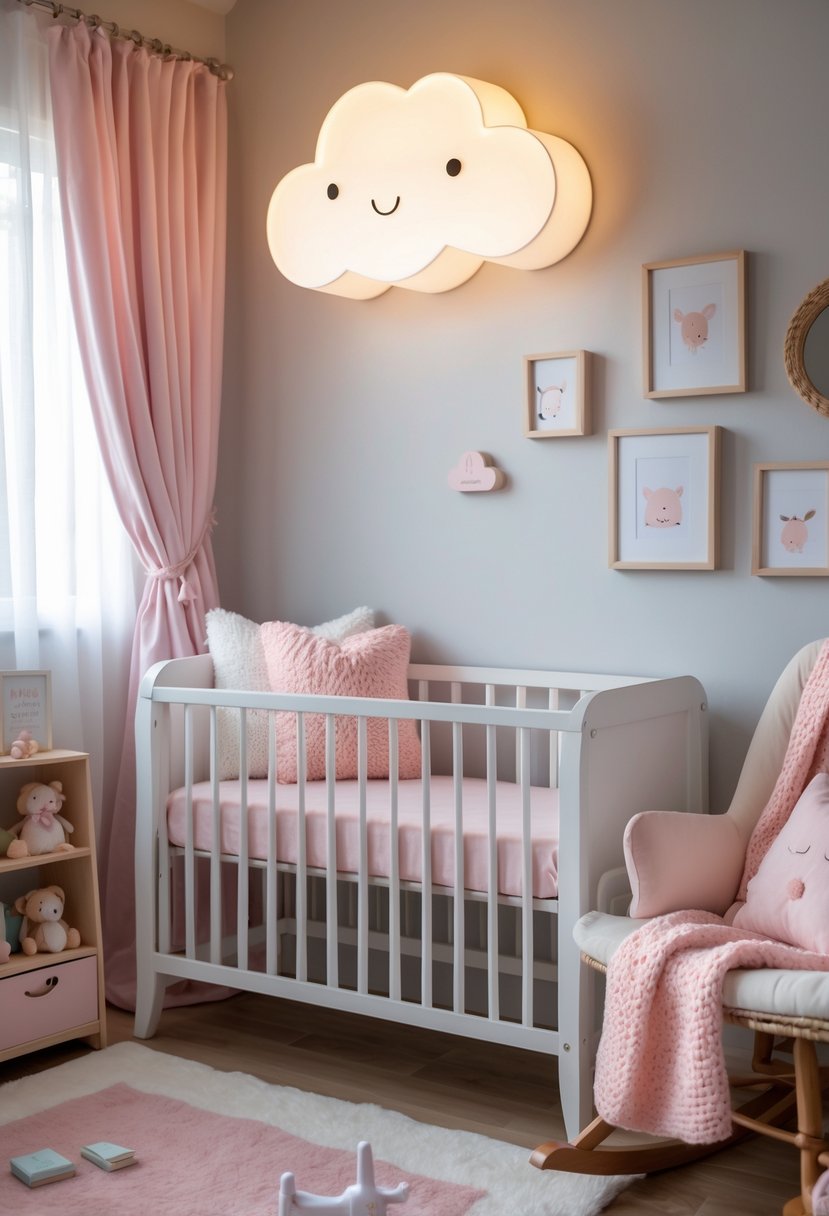
A cloud-shaped night light gives the nursery a soft, calm glow that helps babies and caregivers. It fits well with sky, rainbow, or minimalist themes and adds a gentle focal point above a dresser or near the crib.
Choose a light with warm, dimmable LEDs and a soft white or amber color to avoid overstimulation. Battery or USB power works well; cordless options reduce cord hazards and make placement easier.
Look for durable, baby-safe materials like silicone or BPA-free plastic. Easy-to-clean surfaces and simple controls matter for busy parents.
A night light can double as a sleep cue when used consistently at bedtime. It also offers low-level light for late-night feedings and diaper changes without fully waking the baby.
10) Open Shelving for Toy Display
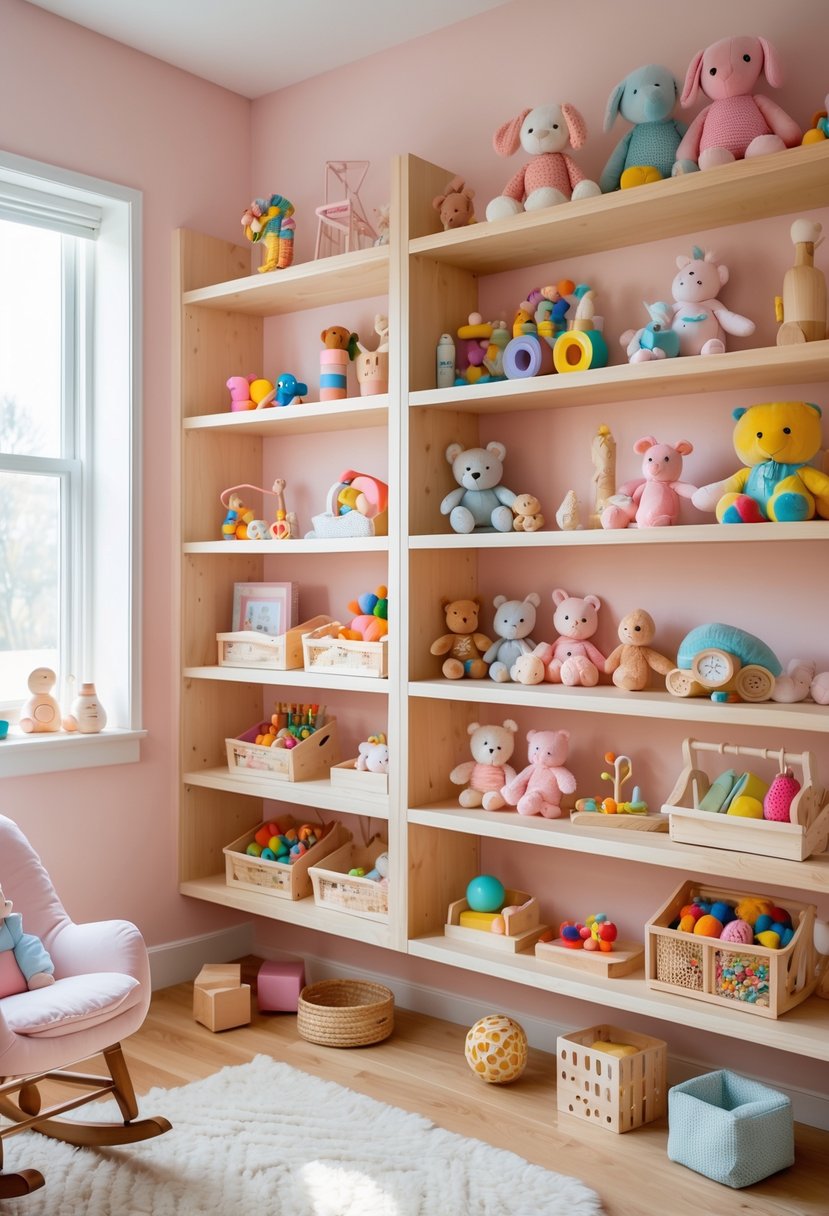
Open shelving lets parents show toys and books in plain view. It makes the room feel lived-in and gives easy access during playtime.
They should pick sturdy shelves with rounded edges to keep small hands safe. Low shelves work well for toddlers; higher ones can hold keepsakes and decor.
Organize items by color or type to keep the display tidy and calm. Use bins or baskets on some shelves to hide clutter without losing the open look.
Mount shelves securely into studs or use wall anchors for safety. Keep heavy items on lower shelves and avoid placing anything that could fall over the crib or changing table.