

 By Trends Oraa
 This article was created in line with Trends Oraa’s research and content standards.
You walk into a narrow kitchen and want it to feel open, practical, and stylish. This article shows how to make the most of tight galley layouts without major remodeling.
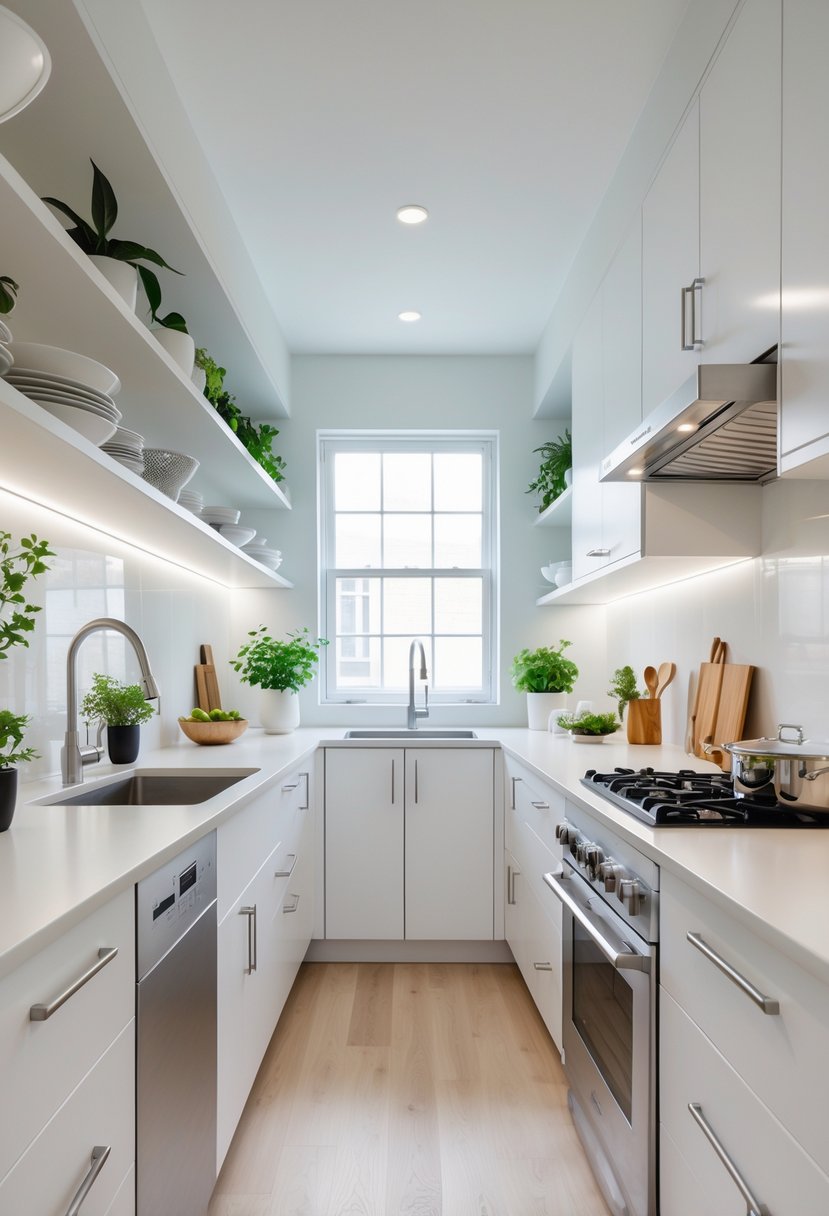
Bold choices in storage, lighting, and furniture can free up counter space and boost function. You will find easy, smart ideas that fit small kitchens and make them work better every day.
1) Install open shelving with mixed materials
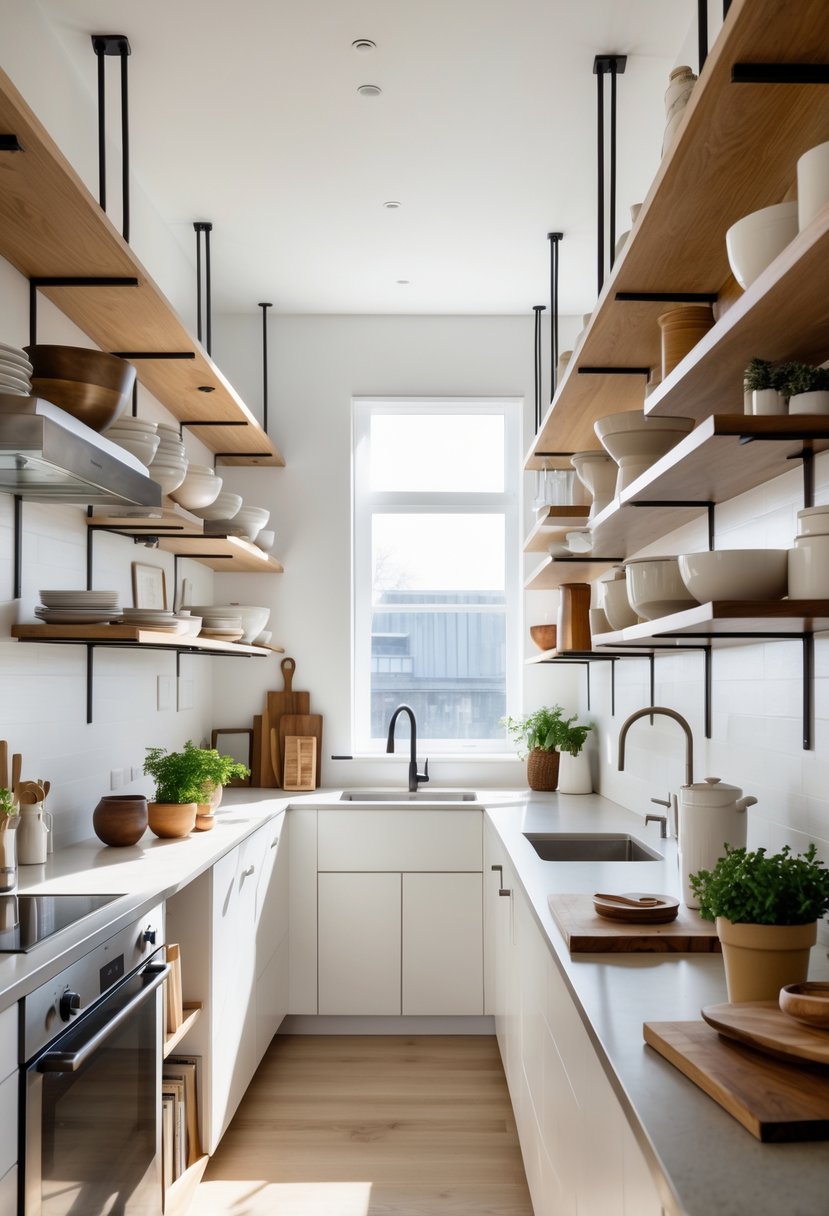
They can swap closed cabinets for open shelves to make a galley kitchen feel larger. Open shelving removes visual bulk and keeps everyday items within easy reach.
Mixing materials adds interest without crowding the space. Wood shelves warm the room, while metal brackets bring structure and a modern edge.
They should place heavier items on lower shelves and lighter pieces higher up. This keeps the shelves safe and the look balanced.
Combining wood, glass, and wire baskets helps hide clutter while showing style. Glass jars and matching dishware create a tidy, cohesive display.
Lighting under the shelves makes the work surface brighter and highlights textures. Small spotlights or LED strips work well without taking up space.
2) Add a rolling kitchen island with storage
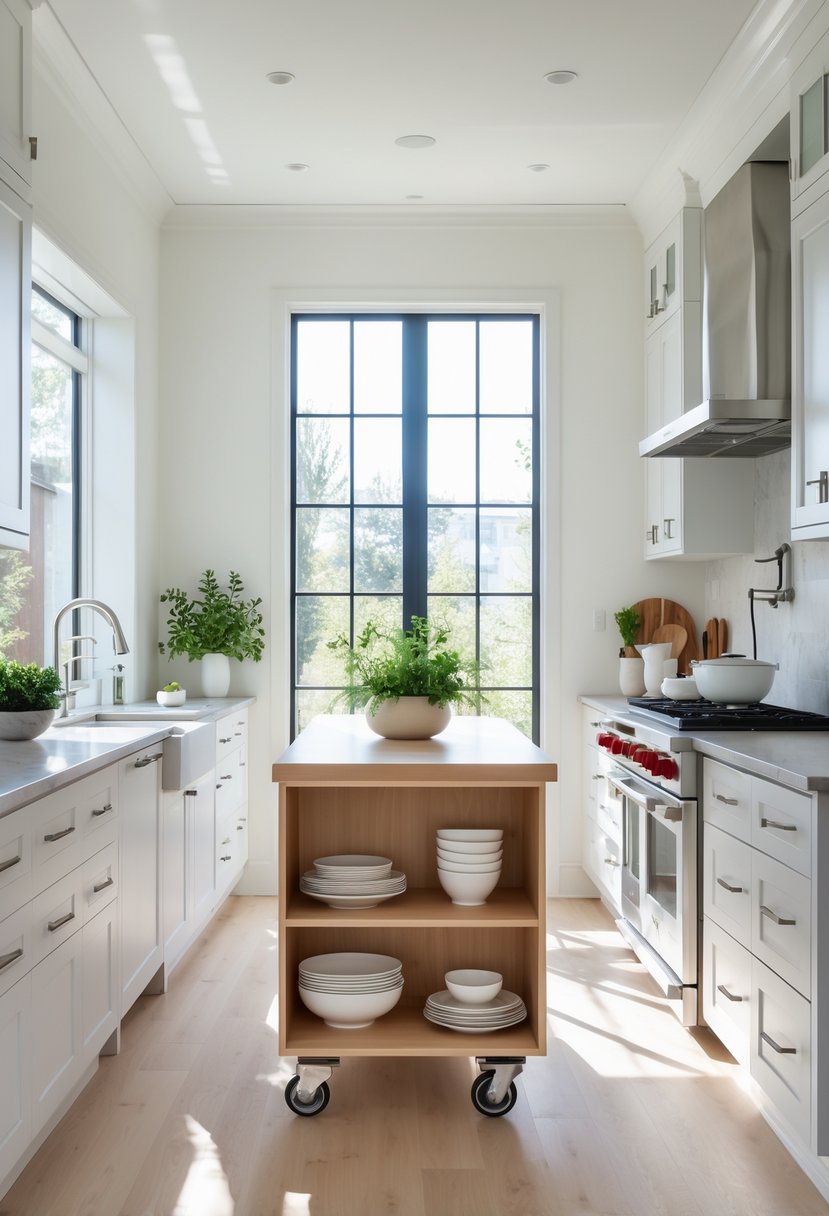
A rolling kitchen island gives a galley kitchen extra work surface and moves out of the way when not needed. It lets the cook create a prep station near the sink or stove and then roll it aside to open the walkway.
Choose an island with built-in storage like drawers, shelves, or a wine rack to keep tools and pantry items handy. Closed cabinets hide clutter, while open shelving offers quick access to bowls and pans.
Locking casters keep the island steady during chopping and cooking. Lighter materials and a slim profile make it easier to maneuver in tight aisles.
They come in many styles, from stainless steel for a modern look to painted wood for warmth. Picking a size that leaves at least 36 inches of clearance on each side maintains safe movement and comfortable cooking.
3) Use magnetic knife strips on backsplash
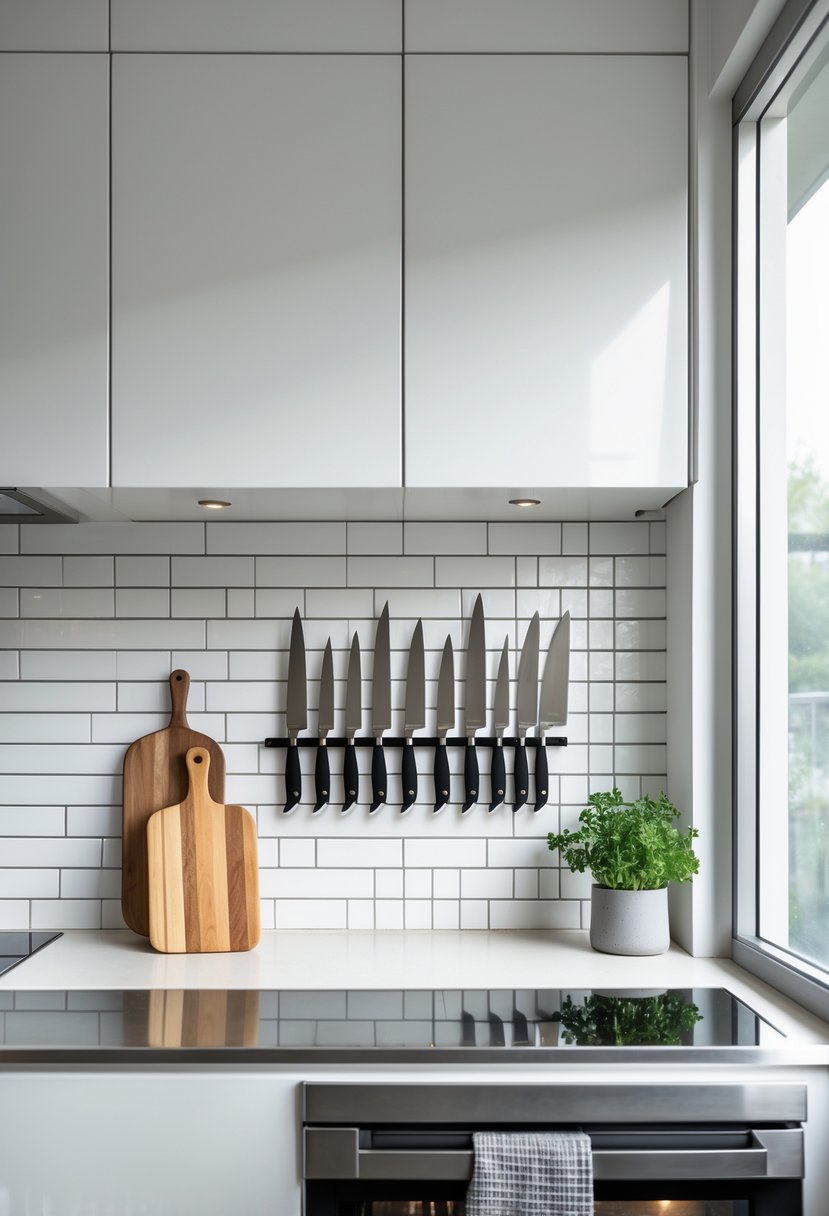
They mount easily to the backsplash and free up counter and drawer space. A magnetic strip keeps knives visible and within reach, which helps in tight galley kitchens.
They cut clutter and make cleaning easier since knives dry on the strip instead of sitting in a wet block. It also reduces the risk of slipping when reaching into crowded drawers.
They should install the strip at a safe height, out of reach of small children. Choose a strong, rust-resistant magnet and test the hold with each knife before relying on it.
They can also display other metal tools like scissors, ladles, or small pans. A single strip can serve both storage and style by matching finishes to the kitchen hardware.
4) Incorporate pull-out pantry shelves
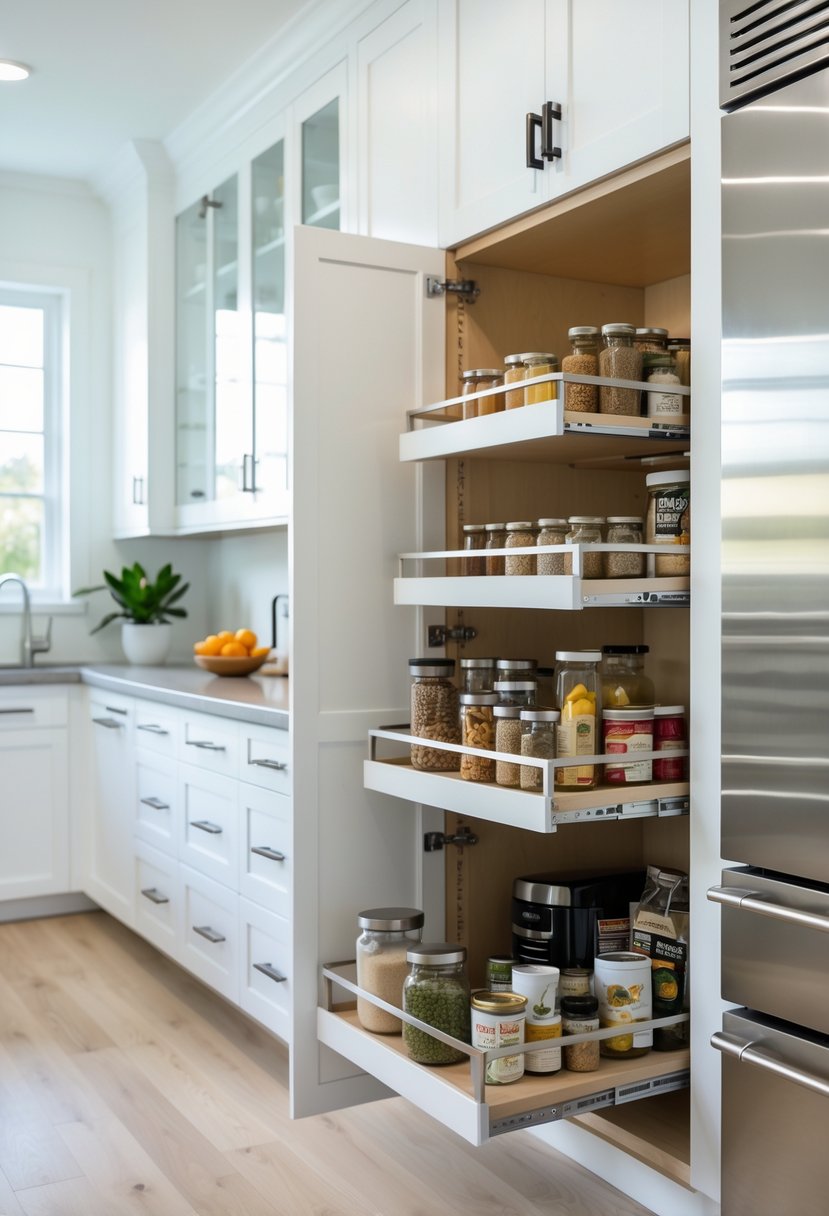
They slide out smoothly to give full access to items at the back. Pull-out pantry shelves make small spaces feel larger by using every inch of depth.
Install narrow units beside the fridge or in gaps between appliances. These shelves can hold spices, canned goods, and baking supplies in a compact, organized way.
Choose adjustable shelves or wire baskets to fit different item sizes. Soft-close mechanisms reduce noise and protect fragile jars.
People can retrofit pull-outs into existing cabinets or plan them into a remodel. They save time during cooking because everything stays visible and easy to reach.
5) Mount pot racks from the ceiling
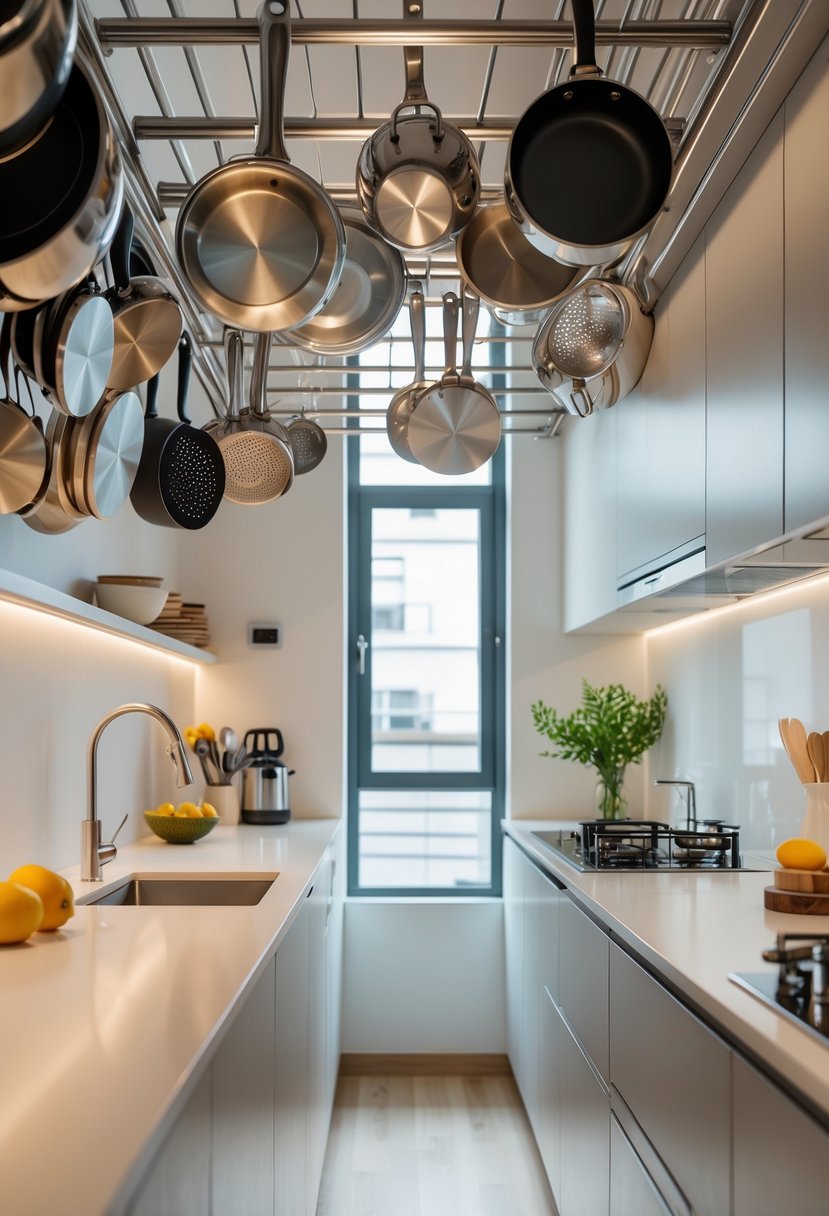
They free up cabinet and counter space by moving pots and pans into the air. A ceiling-mounted rack keeps cookware visible and easy to grab while cooking.
Choose a rack that fits the kitchen width and hang it over a clear work area or between cabinets. Make sure it mounts into ceiling joists or uses strong anchors to hold heavy cast iron safely.
Use S-hooks for quick access and change the layout as needs shift. Adding a small rail or shelf on the rack can hold lids or small utensils without crowding the pots.
Metal racks suit modern kitchens, while wood or painted racks soften the look in traditional spaces. Proper lighting above the rack reduces shadows and helps when reaching for items.
6) Use under-cabinet lighting to enhance space
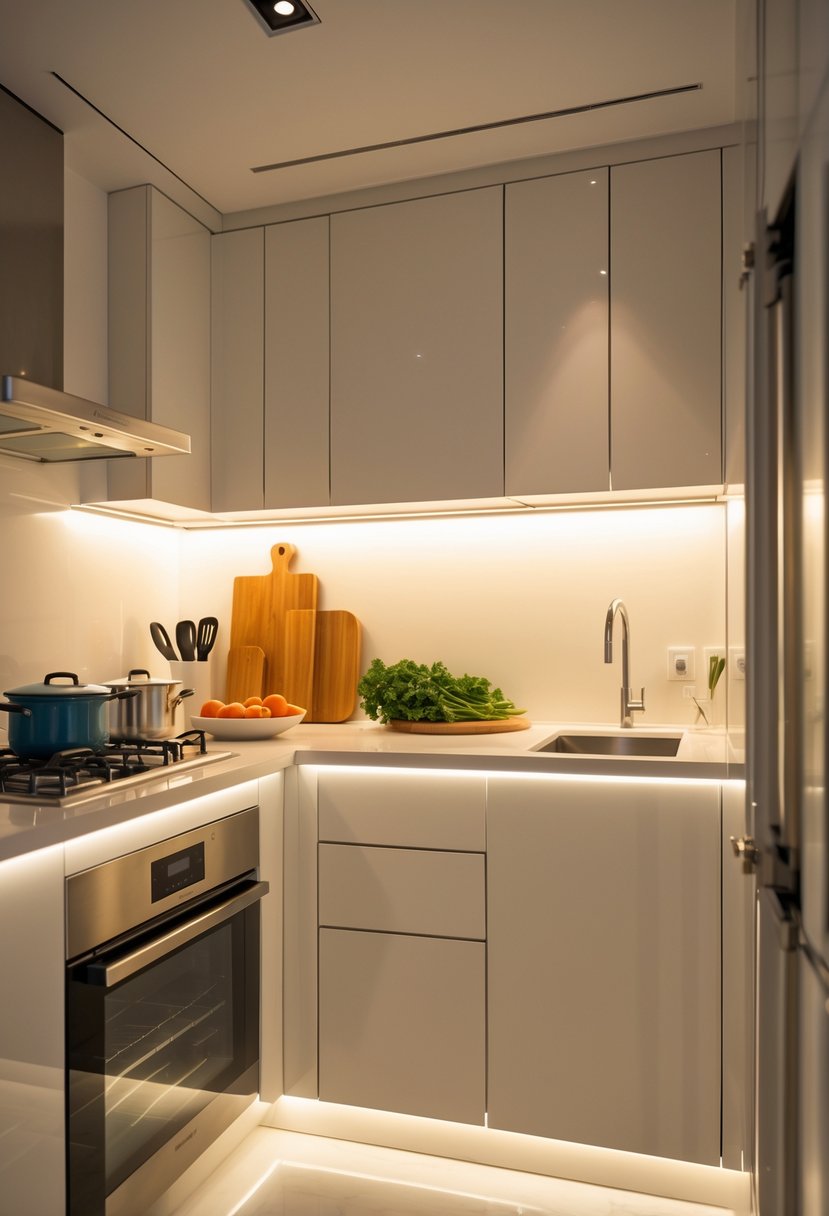
They add light where it matters most, brightening countertops for prep and cooking. This type of lighting makes narrow galley kitchens feel wider by reducing shadows along the work surface.
LED strip or puck lights work well and use little energy. They install under upper cabinets and point down, creating a clean, continuous light line that draws the eye along the counter.
Warm white tones keep the space cozy, while cool white boosts visibility. Dimmers let users adjust brightness for tasks or mood without changing fixtures.
They also highlight backsplashes and cabinet details, turning functional areas into visual features. Easy installation and low heat make under-cabinet lighting a practical upgrade for small kitchens.
7) Integrate corner carousel cabinets
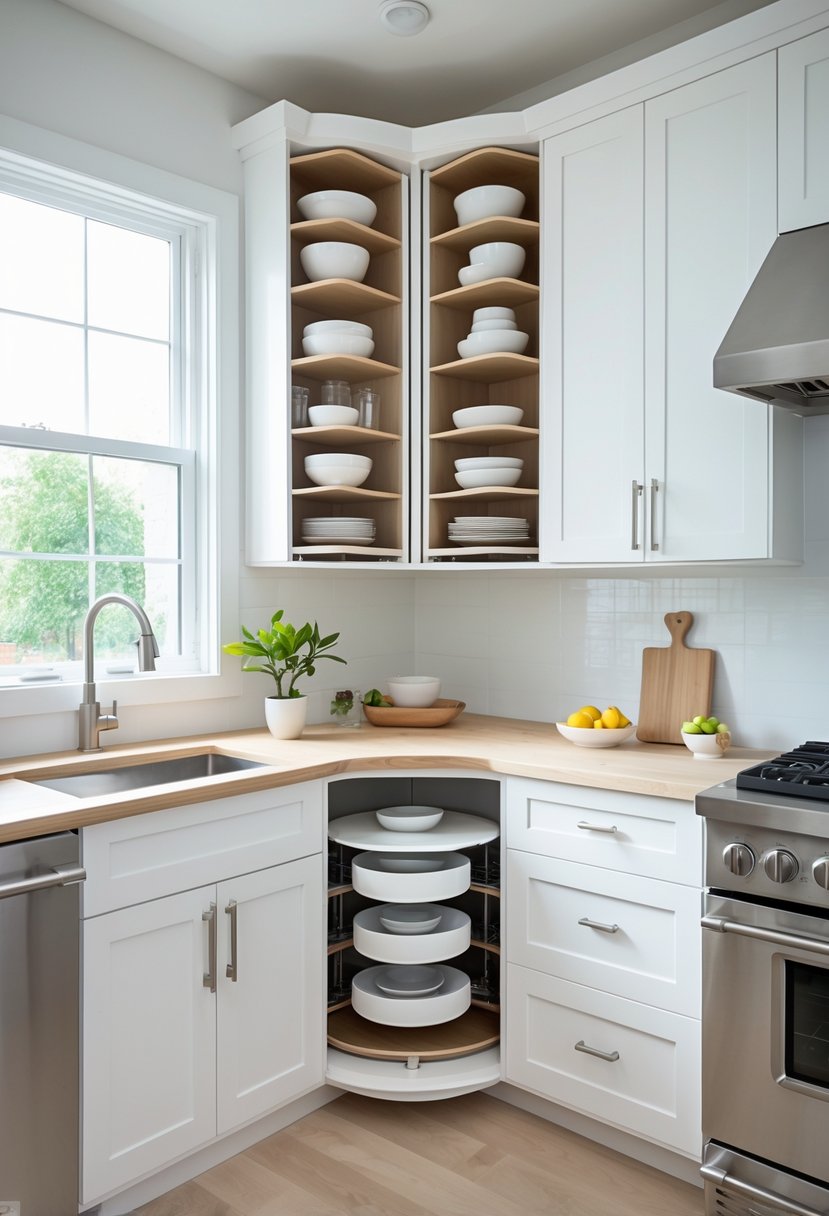
They turn awkward corner space into useful storage. A carousel cabinet rotates trays or shelves, so items stay reachable without bending or stretching.
Install a carousel in lower cabinets to hold pots, pans, and small appliances. It reduces clutter on countertops and makes cooking flow smoother.
Choose a full-circle or kidney-shaped carousel based on cabinet size. Durable hardware and smooth rotation are key for long-lasting use.
They work well in tight galley kitchens because they use deep corners efficiently. Proper measurement before buying ensures the carousel fits and operates without hitting adjacent drawers or doors.
8) Choose slim, tall storage cabinets
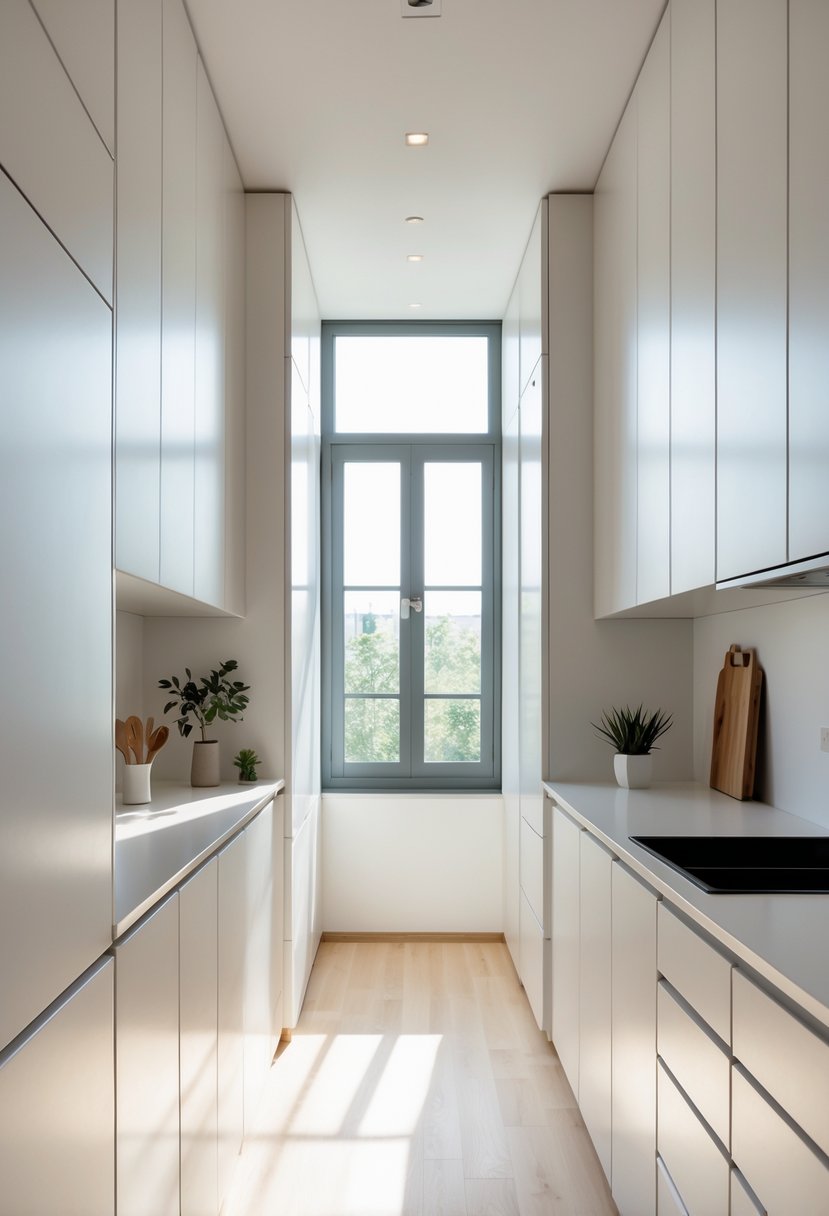
Slim, tall cabinets fit narrow galley kitchens without blocking walk space. They use vertical space for items like baking sheets, cutting boards, and pantry goods.
Place them at the end of a run or in a recess to keep traffic clear. They can be freestanding or built-in, and both choices save floor space while adding storage.
Choose narrow widths, deep shelves, and adjustable shelving to handle different items. Pull-out trays and vertical dividers make access easier and keep things organized.
Select finishes that match other cabinetry to keep the look cohesive. Glass fronts or open shelving on a few upper cabinets can lighten the visual weight and prevent the space from feeling cramped.
9) Apply chalkboard paint on a wall section
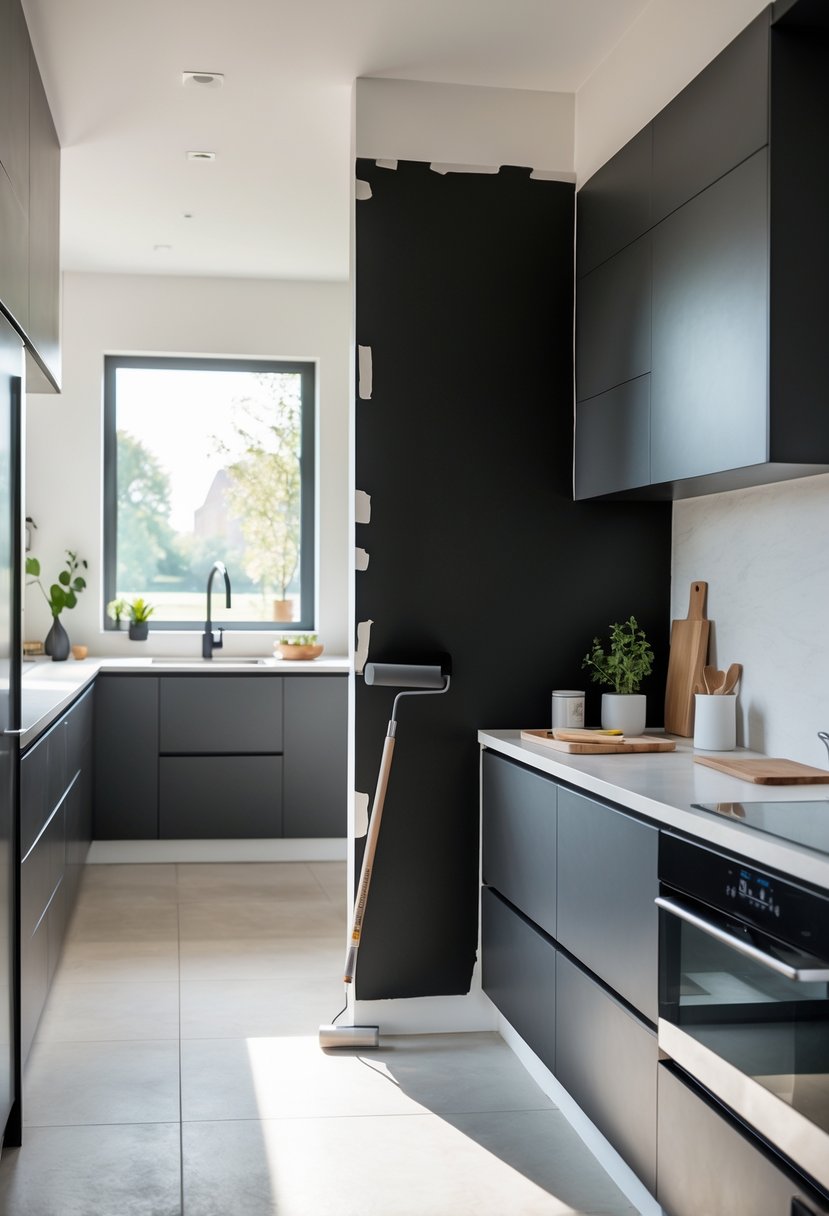
They can turn a small wall strip into a useful, changeable surface with chalkboard paint. It gives a place for grocery lists, meal plans, and quick notes without taking up counter or cabinet space.
The paint works well on a backsplash area, the end of a cabinet run, or a narrow wall beside the fridge. It creates a bold contrast and adds a playful, functional element to the galley kitchen.
Installation is simple: clean the surface, prime if needed, and apply two thin coats for even coverage. They should use chalk markers or traditional chalk and seal the finish if they want to avoid ghosting.
Chalkboard paint keeps things organized and personalizes a compact kitchen. It adds style and utility without reducing workspace or storage.
10) Create a built-in breakfast nook with storage
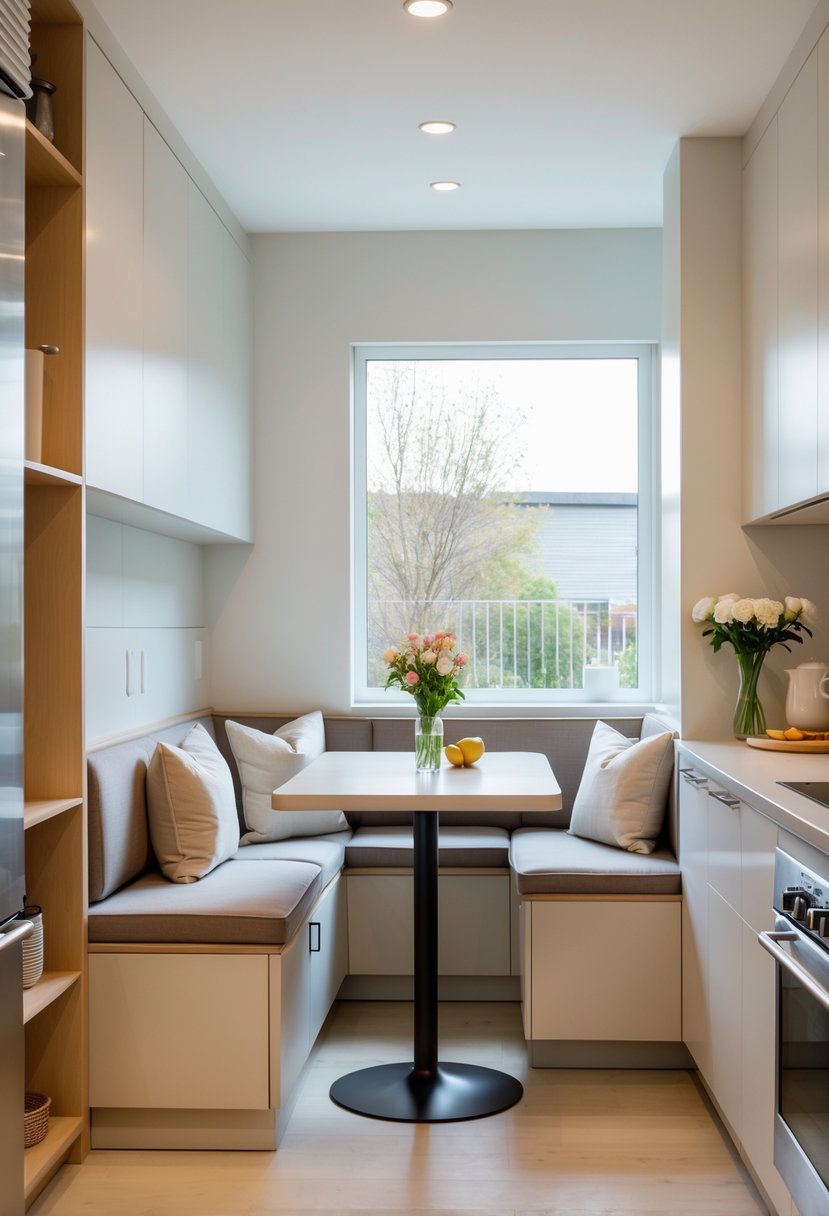
A built-in breakfast nook fits well at the end of a galley kitchen or beneath a window. It uses space that might otherwise sit empty and gives a clear spot for quick meals.
They can include bench seating with lift-up lids or drawers below. This adds hidden storage for pans, linens, or pantry items without taking aisle space.
Choose slim cushions and a compact table to keep pathways open. A fixed table attached to the wall saves floor area and keeps the nook stable.
Use the same cabinet finish as the kitchen for a unified look. Adding open shelves above the nook gives display space for dishes and keeps frequently used items within reach.
Good lighting makes the nook inviting and practical. A pendant or wall sconce focused on the table helps with reading, eating, and working at the space.