

 By Trends Oraa
 This article was created in line with Trends Oraa’s research and content standards.
You want a kitchen that saves resources and feels healthier without a big overhaul. This article shows practical green kitchen ideas you can use to make cooking areas more energy- and water-efficient, reduce waste, and bring natural materials into daily life. You’ll find simple, realistic changes that cut energy and water use, lower indoor toxins, and give the space a fresher, more natural feel.
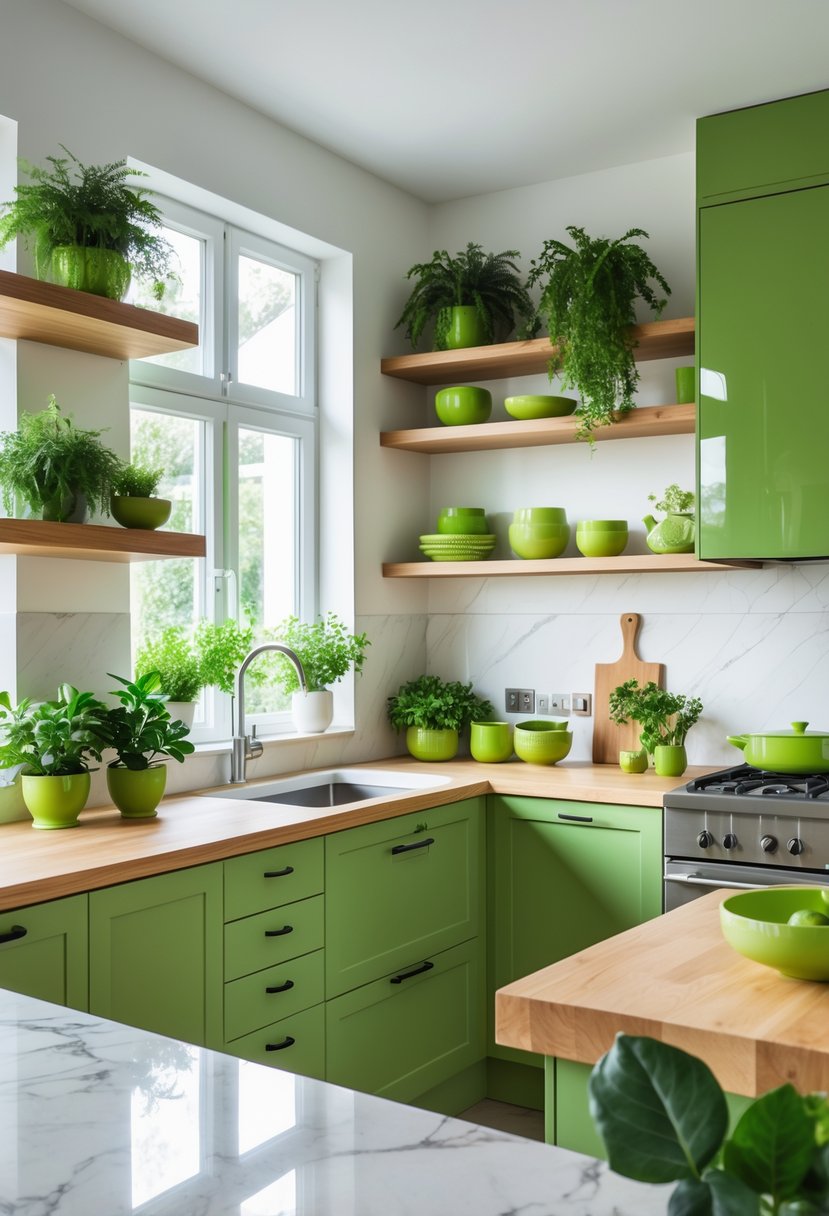
They cover design choices like sustainable materials, smarter lighting, and ways to grow or compost at home. The ideas span small swaps and bigger updates so you can pick what fits your budget and lifestyle.
1) Use reclaimed wood for cabinetry
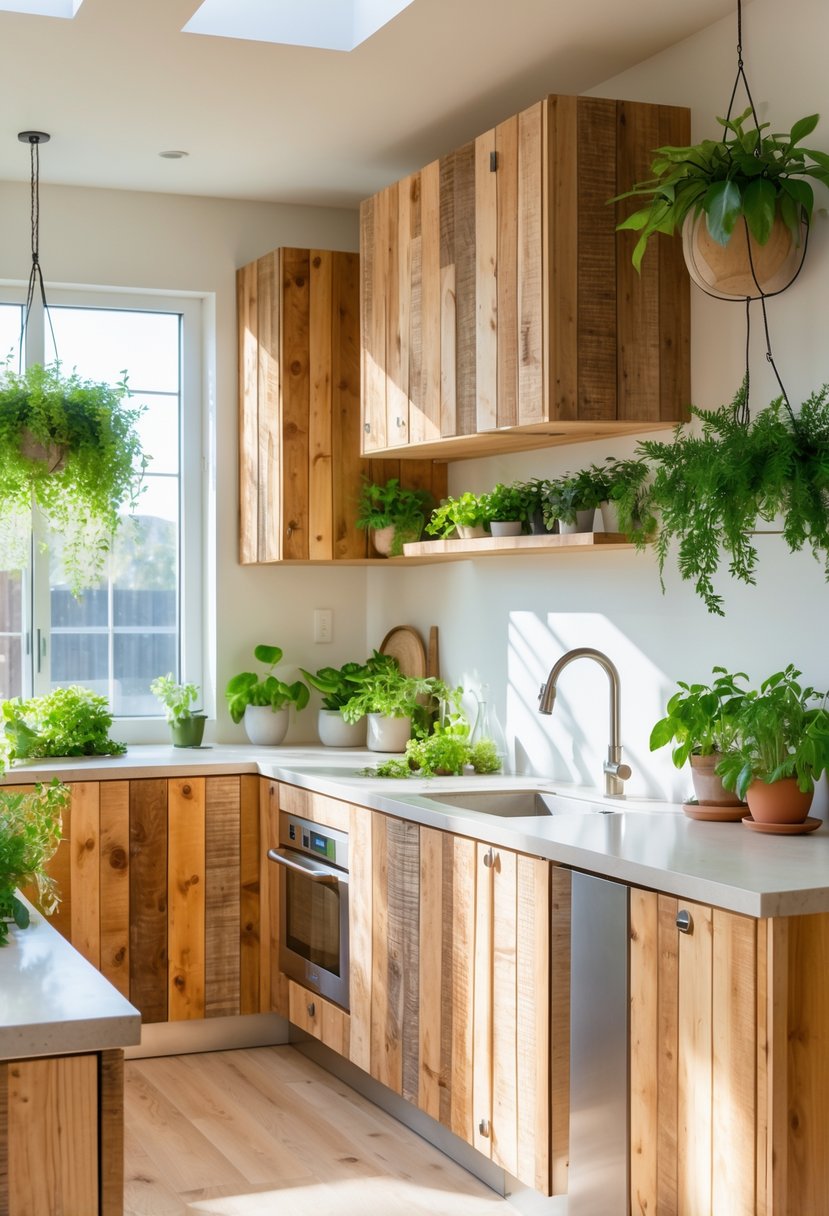
They choose reclaimed wood to cut waste and give cabinets a unique look. It often comes from old barns, factories, or shipping pallets and has character that new wood lacks.
Reclaimed wood is durable when properly treated and sealed. It can lower demand for new lumber and add warmth to the kitchen without loud or flashy design.
2) Install energy-efficient LED lighting
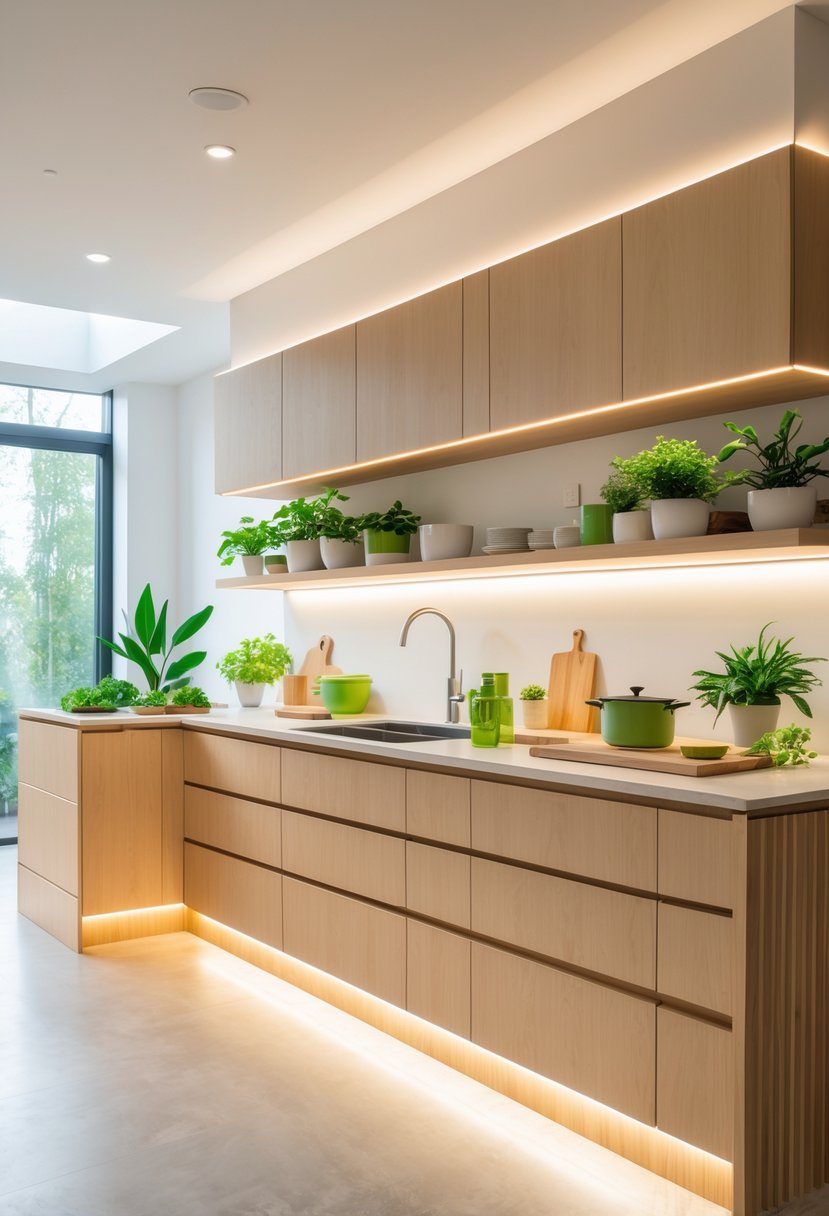
They replace old bulbs with LEDs to cut energy use and last longer. LEDs use far less electricity than incandescents and save money on bills.
They choose warm or daylight color temperatures to match kitchen tasks. Proper placement—under-cabinet, ceiling, and task lights—improves visibility and reduces the need for extra fixtures.
They look for ENERGY STAR or similar labels and check lumens, not watts, for brightness. Dimmable and long-life options add comfort and reduce replacements.
3) Incorporate a living herb wall
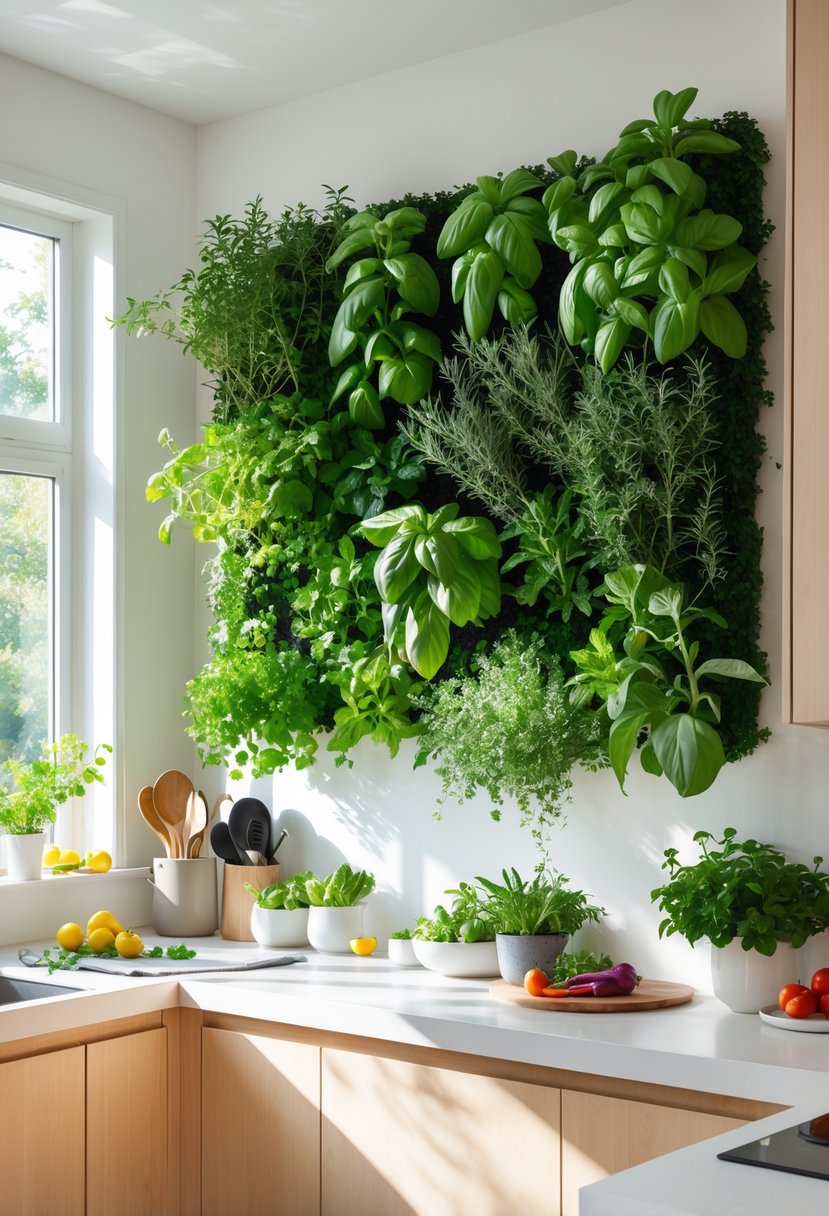
A living herb wall adds fresh flavor and cuts food miles by growing herbs where they are used. It saves counter space and creates a natural air filter that can slightly improve indoor air quality.
They require good light, regular watering, and occasional pruning. Choose hardy herbs like rosemary, mint, and chives for easier care.
4) Choose low-VOC paint colors
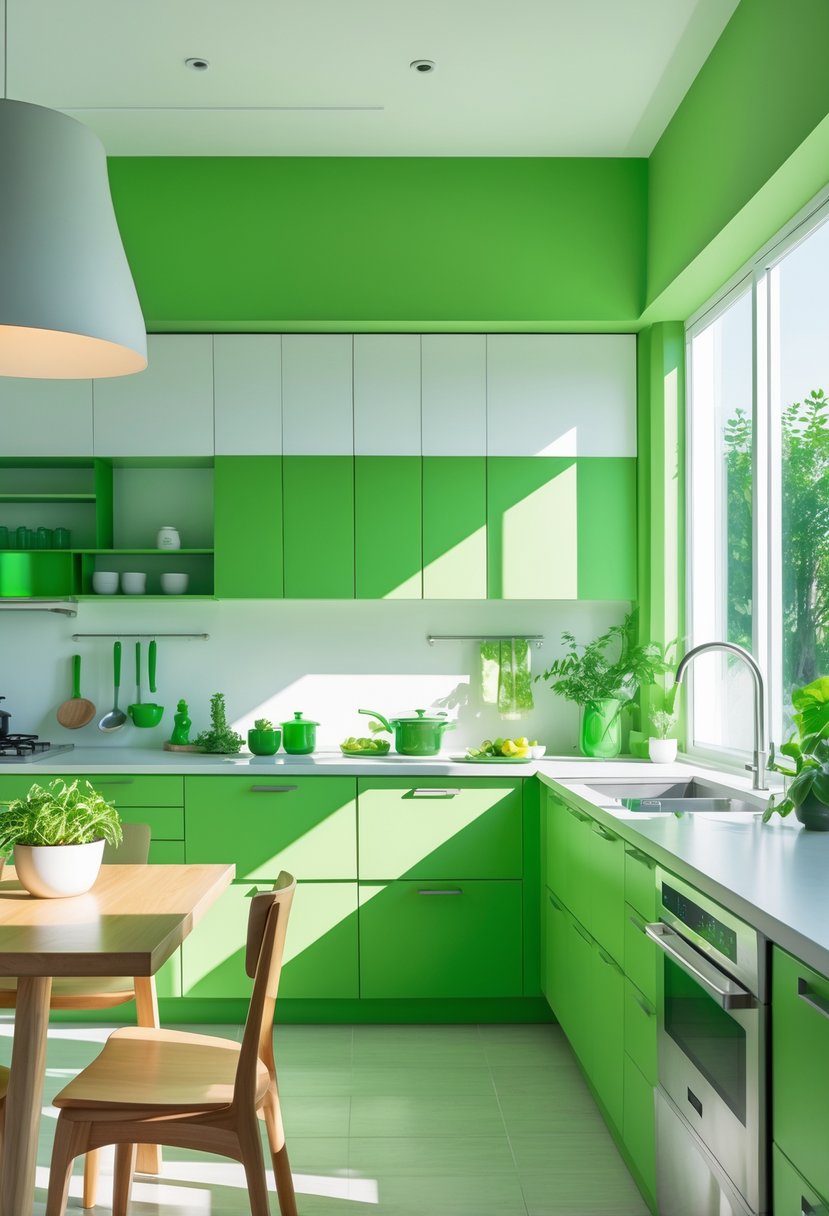
They should pick low-VOC or zero-VOC paints to cut indoor air pollution. These paints release fewer harmful fumes during and after painting.
Soft, neutral colors work well in kitchens and hide stains. Bold accents can use low-VOC options too, keeping style without extra chemicals.
Look for certified labels and ask the paint store for safety data sheets. Proper ventilation while painting reduces exposure further.
5) Add a composting station
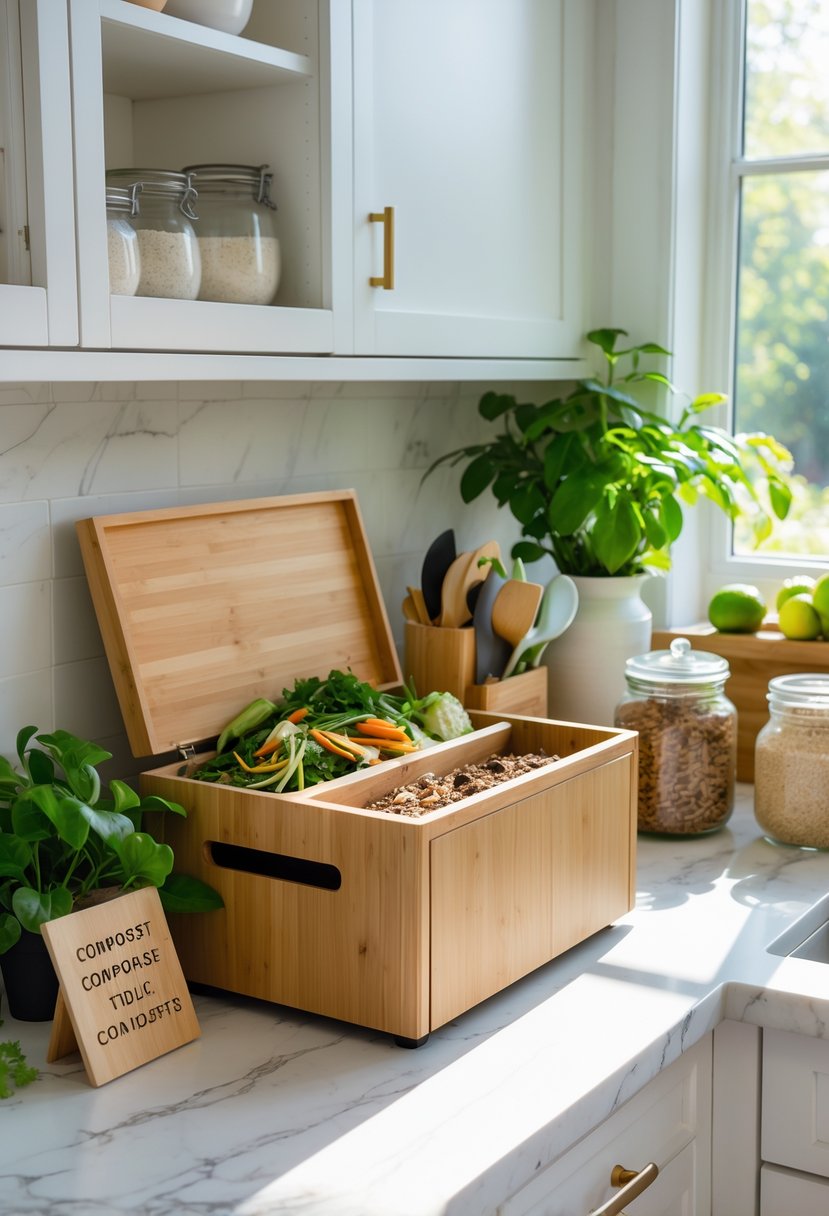
They set up a small compost bin on the counter for food scraps and coffee grounds. It keeps waste out of the trash and cuts kitchen smells when emptied often.
A sealed outdoor composter handles larger loads and yard waste. It turns scraps into soil for potted plants or the garden.
They line the bin with compostable bags or use washable containers to keep cleanup easy. Simple tools like a small scoop and brush speed the task.
6) Use bamboo countertops
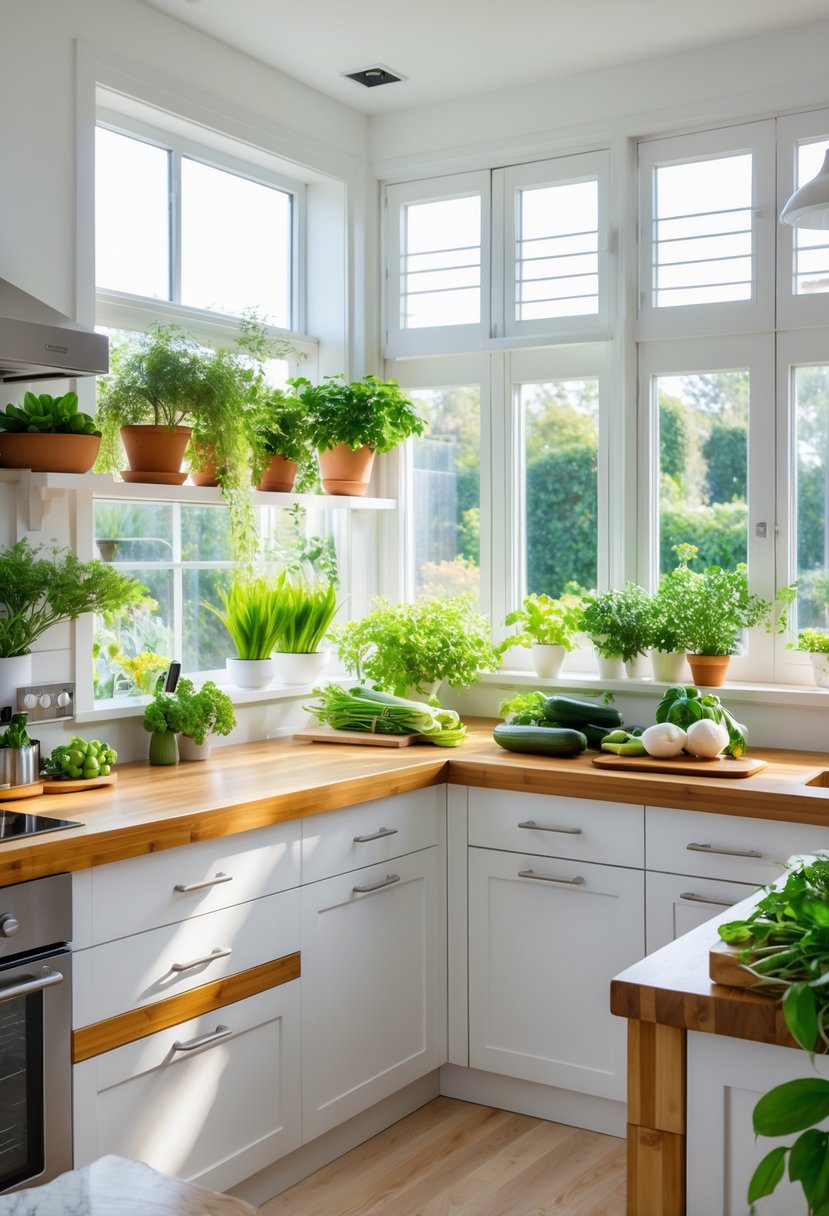
Bamboo countertops offer a renewable alternative to hardwood. They grow quickly and use less water than many trees.
They resist scratches and handle daily kitchen use well when sealed. Proper sealing prevents stains and moisture damage.
They come in many colors and styles to match cabinets. Installation and care are similar to other wood countertops.
7) Implement water-saving faucets
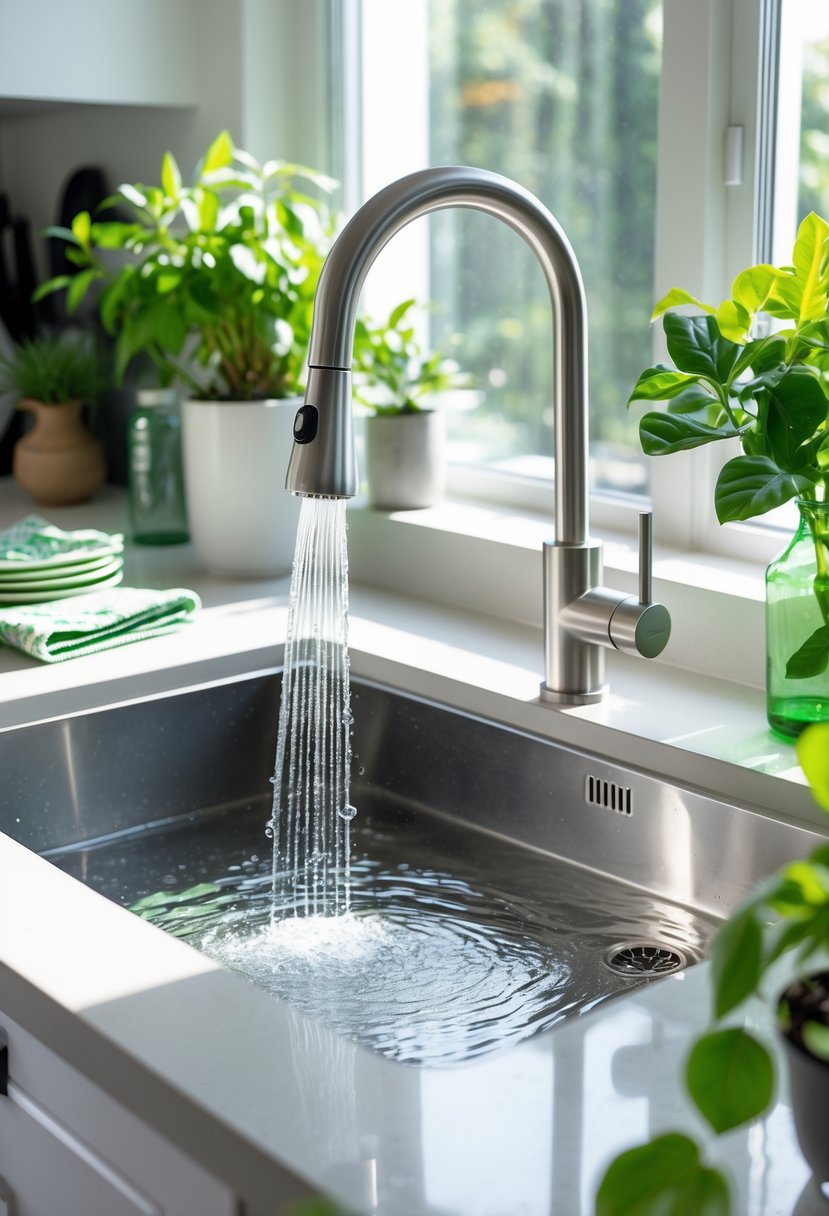
They choose faucets with aerators or low-flow cartridges to cut water use without losing pressure. These fittings mix air with water to keep the stream strong while using less water.
Installation often takes under an hour and works with many sink types. This change lowers water bills and reduces household water waste.
8) Opt for recycled glass backsplash
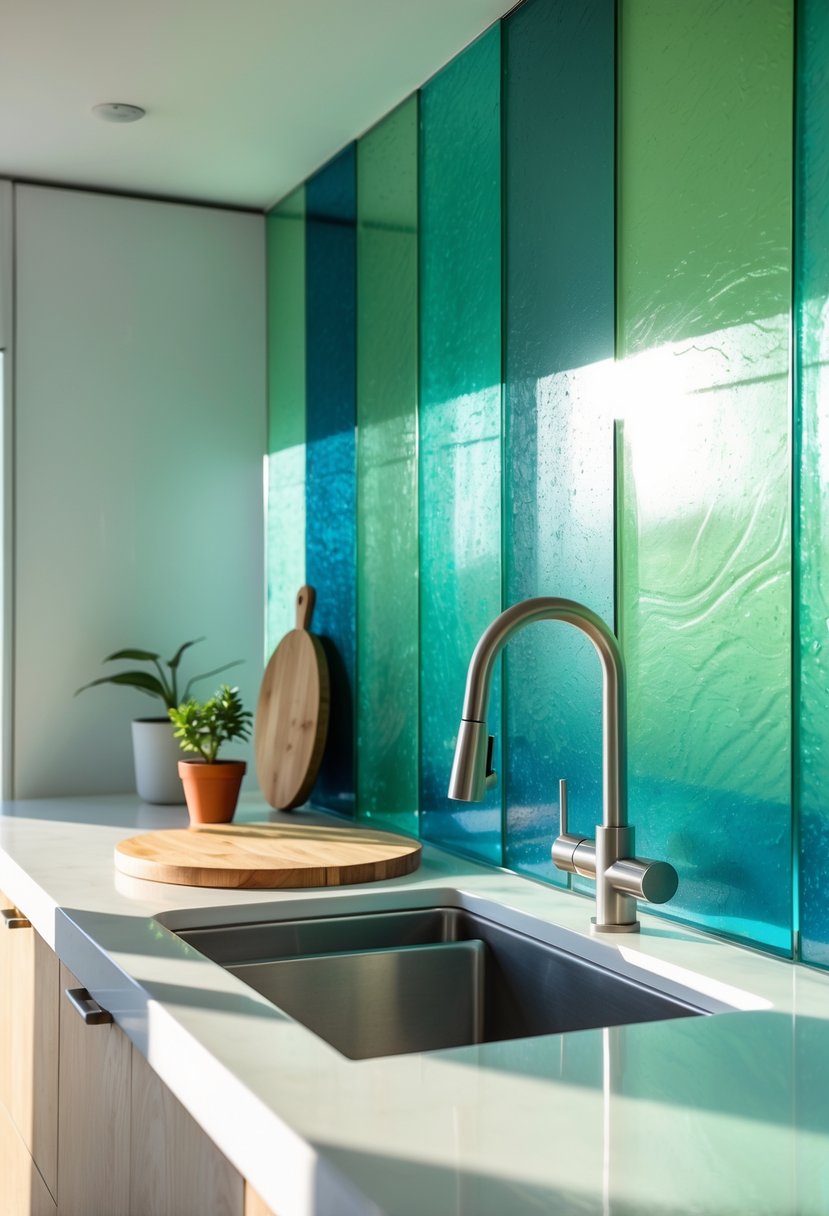
They choose recycled glass tiles to cut waste and use fewer new materials. The tiles come from bottles and jars, so each piece has a unique look.
Recycled glass resists stains and holds color well, making it durable for kitchens. It reflects light to brighten the space without harsh finishes.
Installation costs can match regular tile, and many brands offer eco certifications. Homeowners should check for local recyclers and low-VOC adhesives.
9) Select eco-friendly appliances
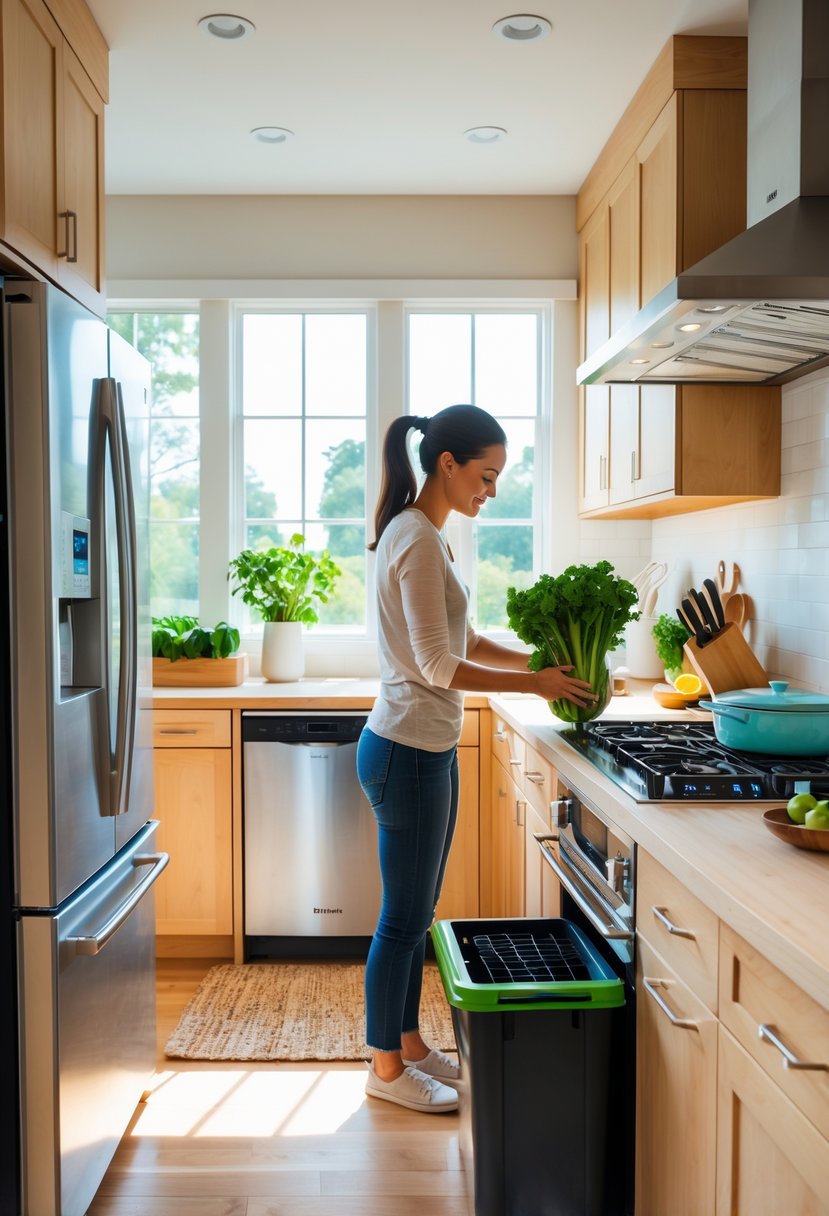
They choose appliances with ENERGY STAR or similar ratings to cut energy use and lower bills. Efficient refrigerators, dishwashers, and ovens use less power without losing performance.
They prefer models with smart features that reduce waste, like eco cycles and accurate sensors. Look for water-saving dishwasher ratings and induction cooktops that heat faster and waste less energy.
10) Integrate natural stone flooring
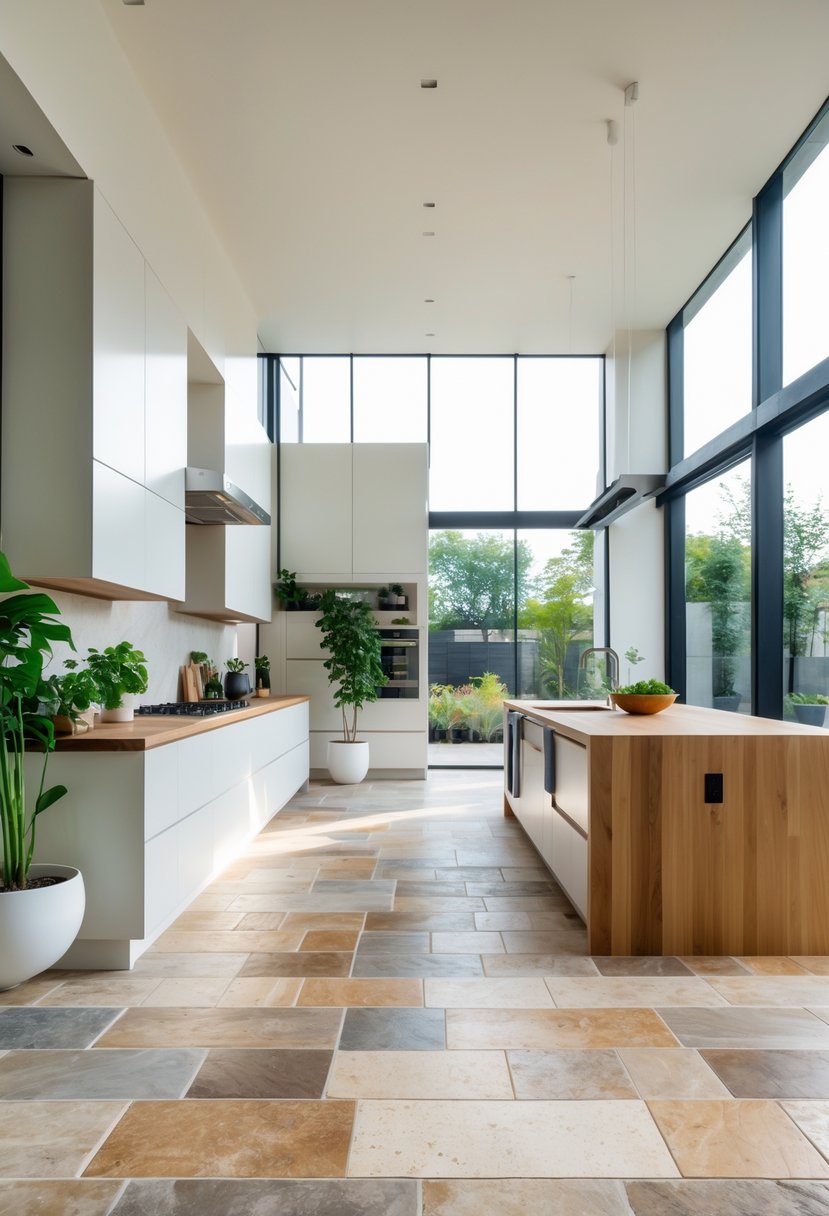
They choose natural stone for its durability and low maintenance. It resists wear and can last decades with simple care.
Stone like slate, limestone, or granite keeps kitchens cool and adds a timeless look. It fits well with recycled or reclaimed cabinets and earthy color schemes.
Proper sealing reduces staining and moisture issues. Professional installation ensures even surfaces and long-term performance.