10 High Ceiling Living Room Ideas That Make Every Inch Feel Intentional
This article was created in line with Trends Oraa’s research and content standards.
You walk into a room with soaring ceilings and your jaw drops — but then you realize yours just feels cold and empty. That’s the problem nobody talks about.
High ceilings are a dream feature. But without the right design approach, they can make even a beautiful living room feel like an unfinished warehouse. The good news? You’re about to see exactly how to fix that.
In this post, I’m sharing 10 stunning high ceiling living room ideas that will help you fill vertical space with purpose, warmth, and serious style — no matter your budget or aesthetic.
You might also love our viral guide on Living Room Chandelier Ideas — it pairs perfectly with every look below!
And trust me, idea #7 is the one most people overlook — but it’s often the most transformative.
Let’s get into it.
Why High Ceilings Are Both a Blessing AND a Challenge
Here’s the thing about high ceilings: they instantly add value, drama, and that “wow factor” everyone wants. But they also come with a unique design puzzle.
Without careful planning, tall rooms tend to feel:
- Echoey and cold
- Visually top-heavy or awkwardly proportioned
- Hard to light properly
- Empty in that uncomfortable, where-do-I-even-start way
But here’s the important part — every one of these problems has a beautiful, intentional solution. And once you see these ideas, you’ll never look at your tall walls the same way again.
Keep scrolling, because the ideas get better as you go.
10 High Ceiling Living Room Ideas You’ll Want to Steal
The Statement Chandelier Drop
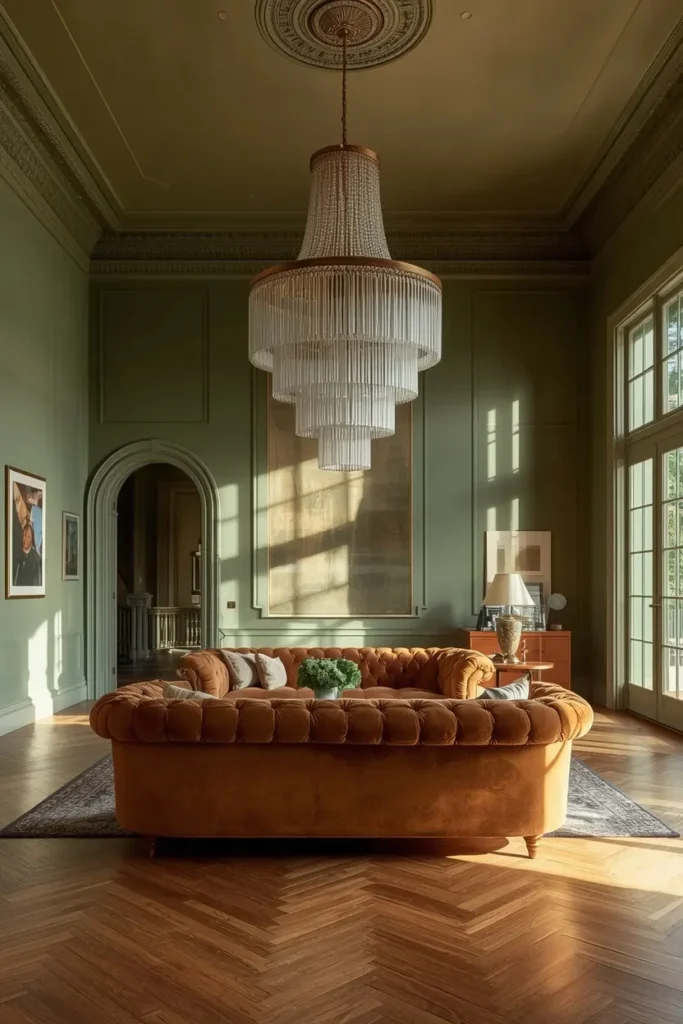
Picture this: a grand living room with 14-foot ceilings, anchored by an oversized cascading chandelier in aged brass. The fixture hangs low — lower than you’d expect — creating an intimate gathering point beneath all that height. The surrounding walls are painted in a deep, moody sage green, and the chandelier’s warm glow bounces off every surface.
This isn’t just a light fixture. It’s the visual anchor the entire room needs.
Expert Tip: When choosing a chandelier for high ceilings, go bigger than your instinct tells you. A light that looks massive in the store will look perfectly proportioned once it’s competing with 12–16 feet of vertical space. Drop it to about 7–8 feet from the floor for maximum drama and coziness.
Why it works: A statement chandelier solves two problems at once — it fills dead vertical space AND draws the eye downward, making the room feel balanced rather than overwhelming. The warm light pools at human level, creating a natural social zone within a grand space. If you love this look, check out our full roundup of modern chandelier ideas for more inspiration.
Which lighting style speaks to you — warm and dramatic, or clean and minimal? Drop your answer in the comments!
Floor-to-Ceiling Curtains in a Rich Fabric
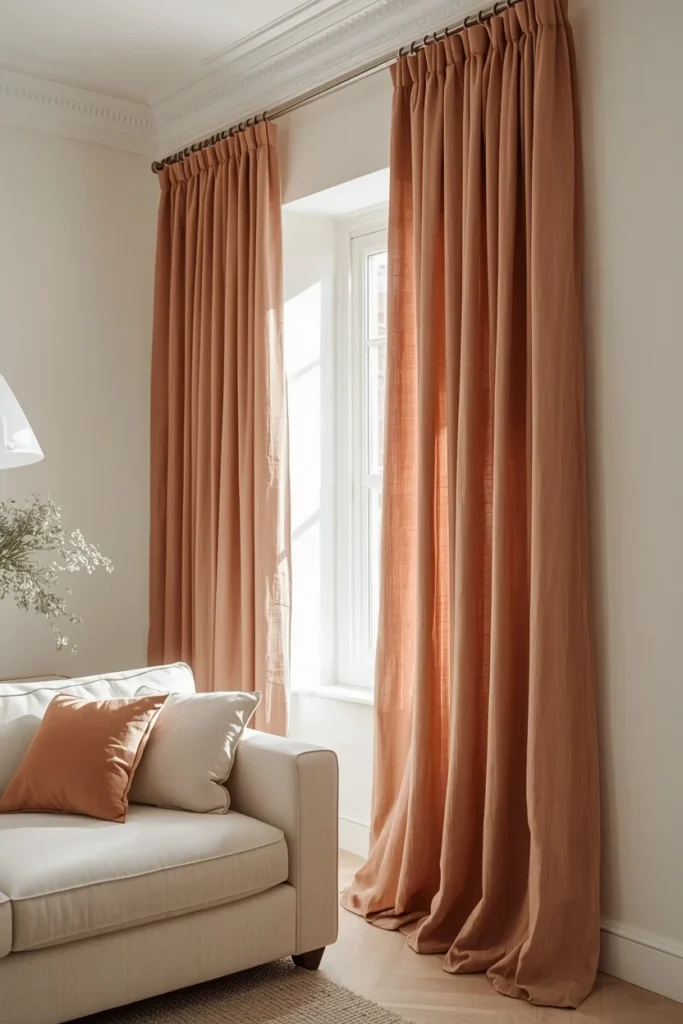
Imagine a cream linen sofa sitting in a sunlit living room, framed by floor-to-ceiling curtain panels in a dusty terracotta. The curtains are mounted at the very top of the wall — right at the ceiling line — and pool slightly onto the floor below. The effect is palatial without being stiff.
This is one of those tricks interior designers use constantly, and it costs far less than you’d think.
Expert Tip: Mount your curtain rod as close to the ceiling as possible, even if the window itself is much lower. This elongates the wall and creates a luxurious, tailored look. Choose fabrics with some weight to them — velvet, linen, or heavyweight cotton — so they hang with beautiful, natural drape rather than floating awkwardly.
Why it works: Tall curtain panels guide the eye in a deliberate vertical sweep, making high ceilings feel intentional rather than accidental. They also soften the acoustics of large rooms, which is a common complaint in open-plan homes. For even more ways to dress your windows, explore these curtains living room ideas.
A Double-Height Bookcase Wall
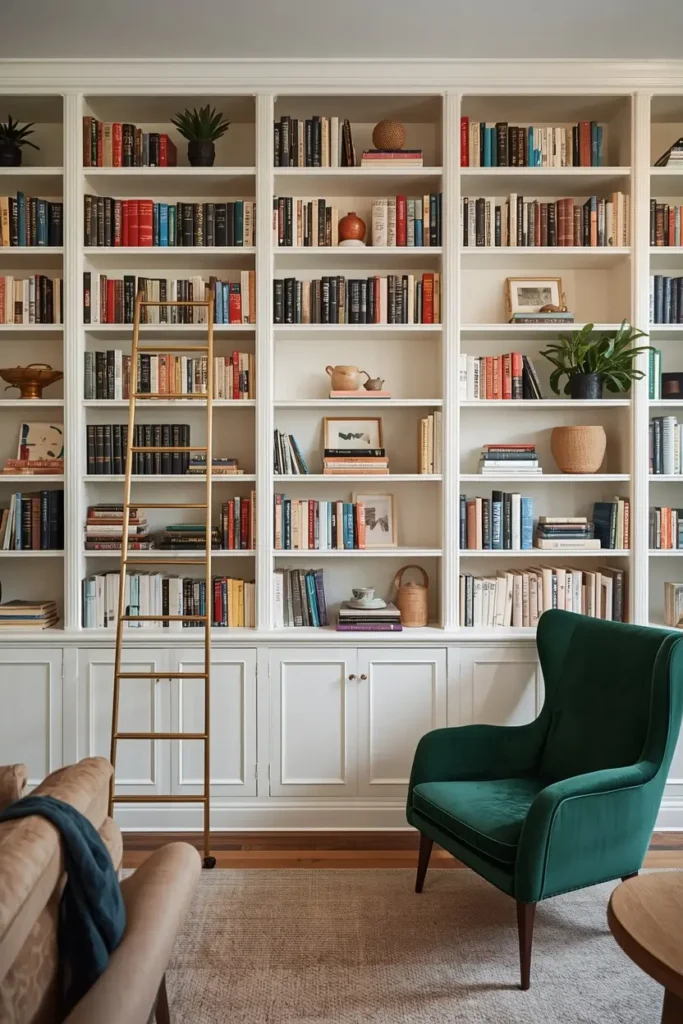
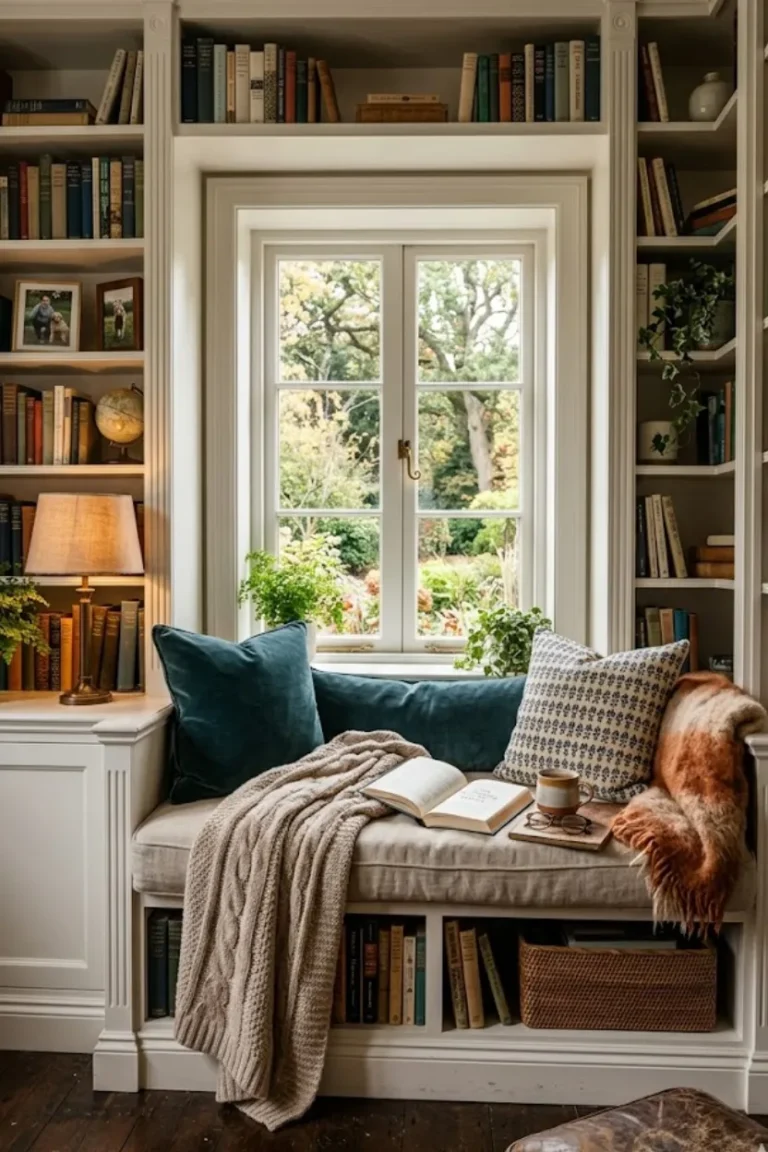
Now here’s something truly special. Visualize an entire wall transformed into a built-in bookcase — from floor to ceiling, every inch filled with curated books, small plants, framed art, and sculptural objects. A rolling library ladder slides along a brass rail, and a plush reading chair sits beside it. The whole vignette feels like something out of a Parisian apartment.
This is the high ceiling living room idea that makes people stop scrolling.
Expert Tip: You don’t need built-ins to achieve this look. Stack IKEA Billy bookcases floor to ceiling and add custom trim to make them look built-in. The key is to treat the entire wall as a single unit rather than individual pieces of furniture. Use consistent shelving heights and a cohesive color palette for the objects displayed.
Why it works: A full-height bookcase wall solves the “what do I do with all that wall space” problem definitively. It adds texture, personality, and warmth. It also anchors the room visually, giving your eye a clear destination. Love clever shelving solutions? Our post on brilliant bookshelf styling with lots of books will blow your mind.
Architectural Wall Paneling (Shiplap, Wainscoting, or Board & Batten)
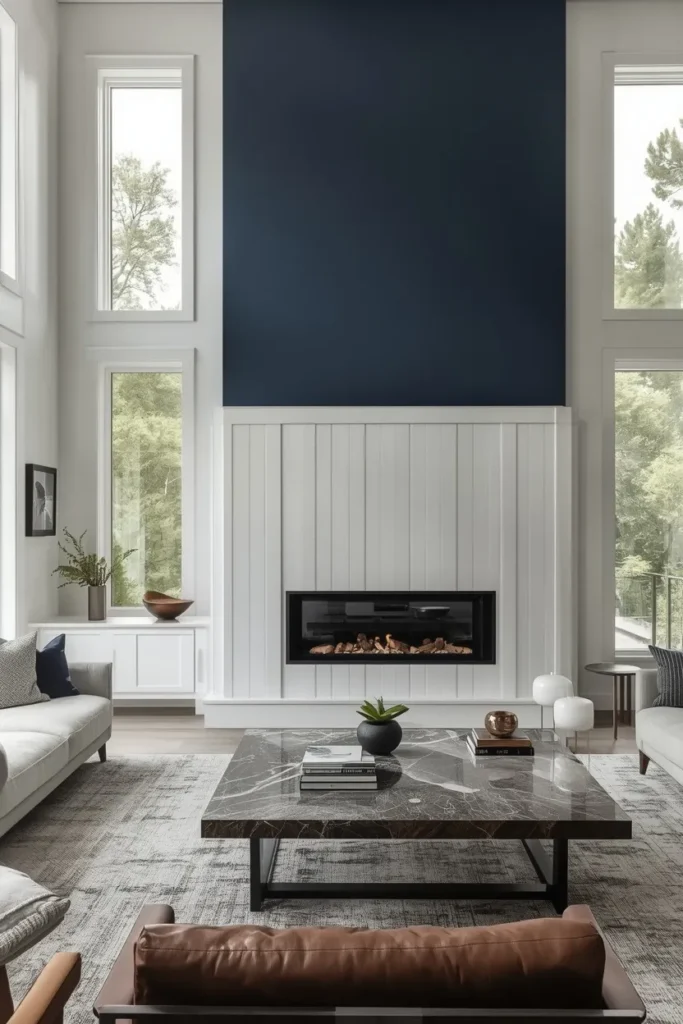
Here’s where it gets interesting. Think of a living room where the lower half of the walls is covered in crisp white board-and-batten paneling, and the upper half is painted in a rich navy blue. The paneling creates a clear visual “break” in the wall, making the room feel grounded even with 12-foot ceilings above. A sleek fireplace anchors the center wall, and low-profile furniture keeps the horizontal line intentional.
Expert Tip: For high ceilings, extend your wainscoting or paneling higher than the traditional chair-rail height. Bringing it up to 5–6 feet creates a more dramatic effect and better proportions for tall walls. The contrast between your lower paneling color and the upper wall color is where the magic happens.
Why it works: Wall paneling is a genius trick for breaking up a tall wall into manageable visual sections. It adds architectural interest, depth, and warmth without requiring a single piece of furniture. Our guide on wall paneling ideas has loads of styles worth exploring.
Now, avoid this mistake — don’t use paneling that stops at standard 3-foot chair-rail height in a room with high ceilings. It will look completely out of proportion, like you forgot to finish the wall.
A Dramatic Fireplace with Floor-to-Ceiling Surround
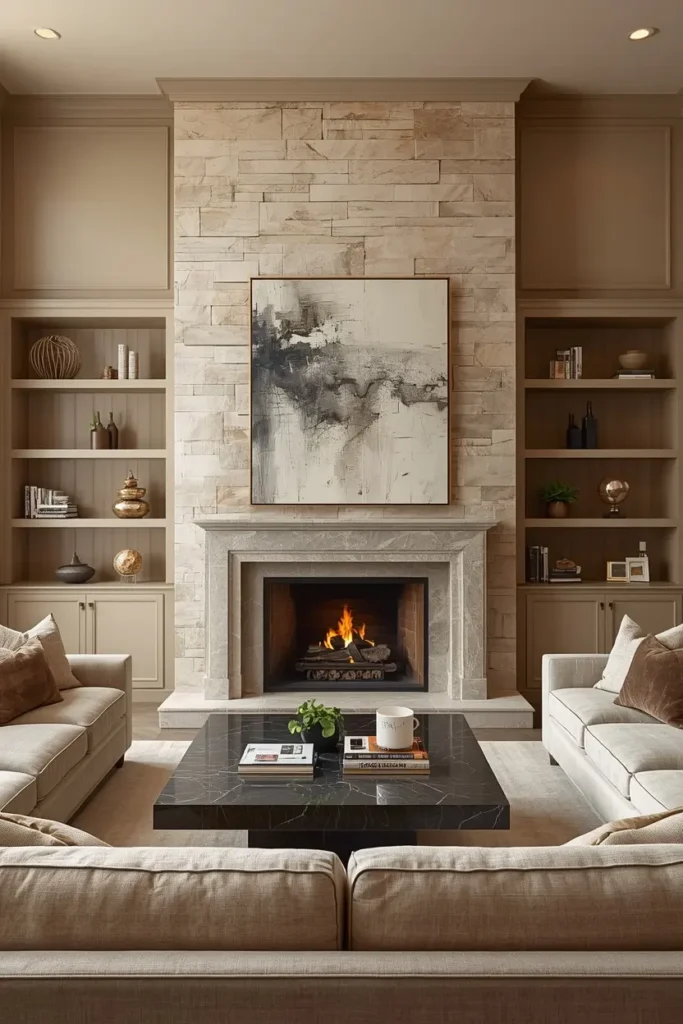
Picture a living room centered around a fireplace with a surround that stretches all the way to the ceiling. The mantel is a thick slab of natural stone in warm ivory, flanked by recessed shelving built directly into the chimney breast. The fire glows below, and above it, an oversized abstract painting — at least 4 feet tall — commands attention.
This is the kind of focal point that makes a room feel curated, not collected.
Expert Tip: Scale your mantel decor to match the wall. In a high-ceiling room, oversized art (think 40 inches and up), tall sculptural vases, and layered arrangements work far better than small decorative pieces. Use the rule of thirds — divide your mantel display into three visual sections for a balanced yet dynamic look.
Why it works: A floor-to-ceiling fireplace surround solves the “empty upper wall” problem with architectural elegance. It creates a built-in focal point that naturally pulls attention to the center of the room, anchoring the entire space. Explore more styling options in our elegant mantel decorating ideas guide.
Which of these first five ideas do you love most? Let us know in the comments — we’d love to see what direction you’re leaning!
Exposed Beams for Warmth and Structure

Close your eyes and picture this: a bright, open-plan living room with whitewashed plaster walls and natural wood beams crossing the ceiling at regular intervals. The beams add deep warmth and a sense of craftsmanship to what would otherwise be a stark white box. Below, a linen sectional and jute rug anchor the seating area, and tall potted fiddle-leaf figs echo the organic shapes overhead.
This look works in farmhouse, coastal, Mediterranean, and even modern boho interiors.
Expert Tip: If your home doesn’t have original beams, you can install faux beams for a fraction of the cost. Choose hollow polyurethane beams in a finish that matches your flooring or trim — the effect is nearly indistinguishable from real wood at a distance. Space them evenly and paint them slightly darker than your ceiling for maximum contrast.
Why it works: Beams break up the ceiling plane visually, giving height a sense of structure rather than emptiness. They also add incredible warmth and texture — two things that high-ceiling rooms desperately need to feel livable. For a complete vision, pair beams with ideas from our cozy living room ideas post.
Strategic Vertical Art Arrangements (Gallery Wall Done Right)
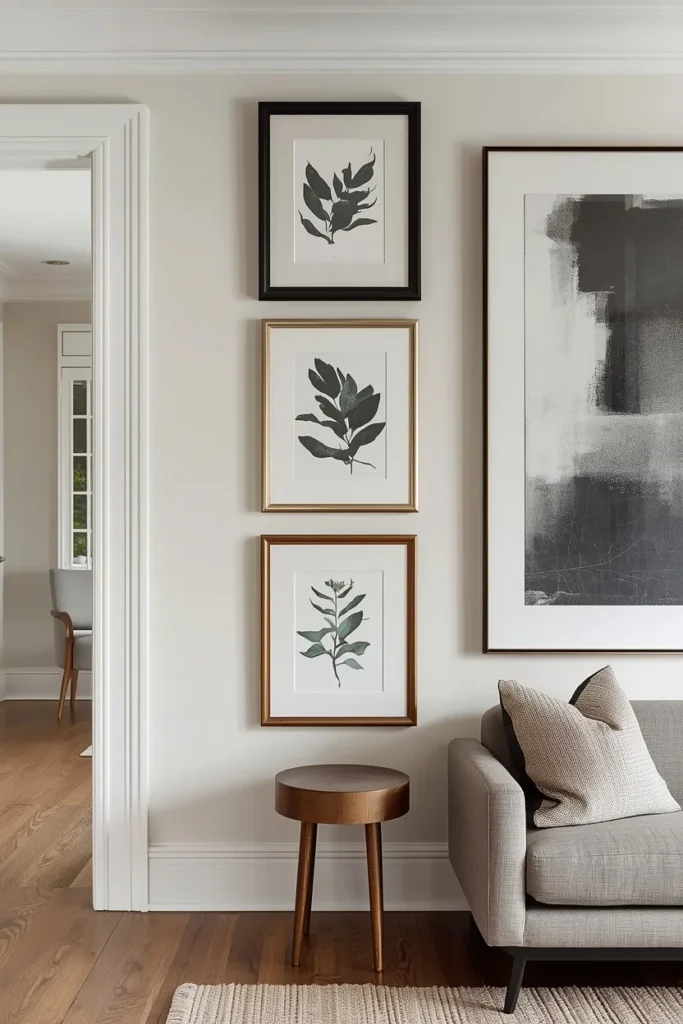
Most people don’t know this — the way you hang art in a high-ceiling room matters more than the art itself.
Imagine a tall, narrow living room with a gallery wall that stretches vertically rather than horizontally. Oversized frames in mixed metals — brushed gold, matte black, antique silver — are arranged in a staggered column that reaches from near-floor to near-ceiling. The collection includes abstract prints, botanical illustrations, and one large black-and-white photograph. The vertical stack makes the wall feel like a purposeful statement rather than an afterthought.
Expert Tip: In a high-ceiling room, fight the temptation to hang everything at eye level. Create vertical gallery arrangements that celebrate the height rather than ignoring it. Use at least one piece that’s 36 inches tall or larger to anchor the arrangement. Mix frame finishes deliberately — “matchy-matchy” looks flat; variety looks collected.
Why it works: Vertical art arrangements draw the eye upward in a controlled, beautiful way, making ceiling height feel like an asset. They fill wall space with personality and warmth, transforming blank drywall into a visual story. For more tall-wall solutions, see our roundup of tall wall decor ideas.
The High Ceiling Living Room Buying Guide
Let’s talk practical. Styling a high-ceiling living room comes with specific purchasing decisions — and getting them wrong is expensive. Here’s what to know before you spend a single dollar.
Furniture Scale
The number one mistake in high-ceiling rooms is using furniture that’s too small. Your sofa needs visual weight. A dainty loveseat will look like dollhouse furniture beneath 12-foot ceilings. Look for:
- Sofas with high backs (32–36 inches is ideal)
- Deep sectionals that anchor large floor areas
- Oversized coffee tables with visual substance
- Tall armchairs rather than low-profile lounge chairs
Budget Breakdown by Priority
Here’s how I’d allocate a $5,000 living room refresh budget for a high-ceiling space:
- Lighting (chandelier + floor lamps): $800–$1,200. This is where you make the biggest visual impact. Don’t cut corners here.
- Window treatments (floor-to-ceiling curtains): $400–$700. Fabric and installation both matter.
- Art and wall decor: $500–$900. Invest in at least one oversized anchor piece.
- Rugs: $600–$1,000. Go larger than you think — a 9×12 rug is often the minimum for a high-ceiling room.
- Furniture pieces (accent chair, side tables): $800–$1,200. Scale is more important than brand.
- Plants and organic decor: $200–$400. Tall fiddle-leaf figs and snake plants are worth every penny.
What to Avoid Buying
- Pendant lights designed for 8-foot ceilings — they’ll look lost
- Small-scale area rugs (anything under 8×10 in a standard room)
- Short curtain panels that don’t reach the floor
- Gallery wall art under 16 inches — it will disappear on tall walls
Pros of High Ceilings
- Create an immediate sense of luxury and space
- Improve air circulation and natural light
- Allow for architectural features like exposed beams and statement lighting
- Add significant resale value to your home
Cons (and how to solve them)
- Can feel cold and echo-y → Add rugs, curtains, and upholstered furniture
- Harder to heat → Use ceiling fans on reverse setting in winter
- Tricky to light → Layer multiple light sources at different heights
- Hard to decorate → Use the vertical ideas in this guide!
A Lush Indoor Plant Wall or Vertical Garden
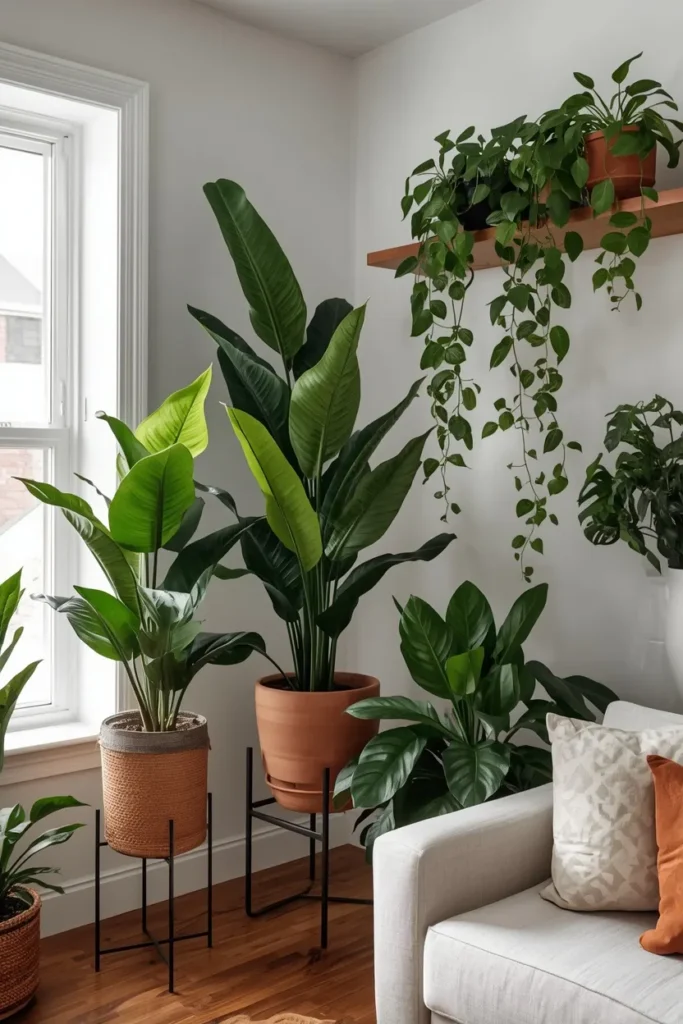
Here’s something you won’t see in every home — a living green wall or tall, layered plant arrangement that fills a vertical corner from floor to near-ceiling. Picture a cluster of towering fiddle-leaf figs and monstera plants, staggered at different heights on plant stands, with trailing pothos and ivy cascading from a high shelf. The effect is jungle-luxe and deeply calming.
Plants bring life into a high-ceiling room in a way no piece of furniture can replicate.
Expert Tip: You don’t need an actual plant wall (though they’re stunning if you have the budget). Instead, layer tall floor plants at varying heights with some on stands and some directly on the floor. Use a minimum of three different species for visual variety. Place them in a corner near natural light to help them thrive. Terracotta and ceramic pots in earthy tones add warmth.
Why it works: Vertical layering with plants fills height naturally and organically, creating visual interest without feeling forced or overly “decorated.” The organic shapes and varying textures break up the rigid geometry of tall walls and ceilings. For plant display inspiration, peek at our houseplant pot ideas.
A Sunken Seating Area or Cozy Conversation Pit
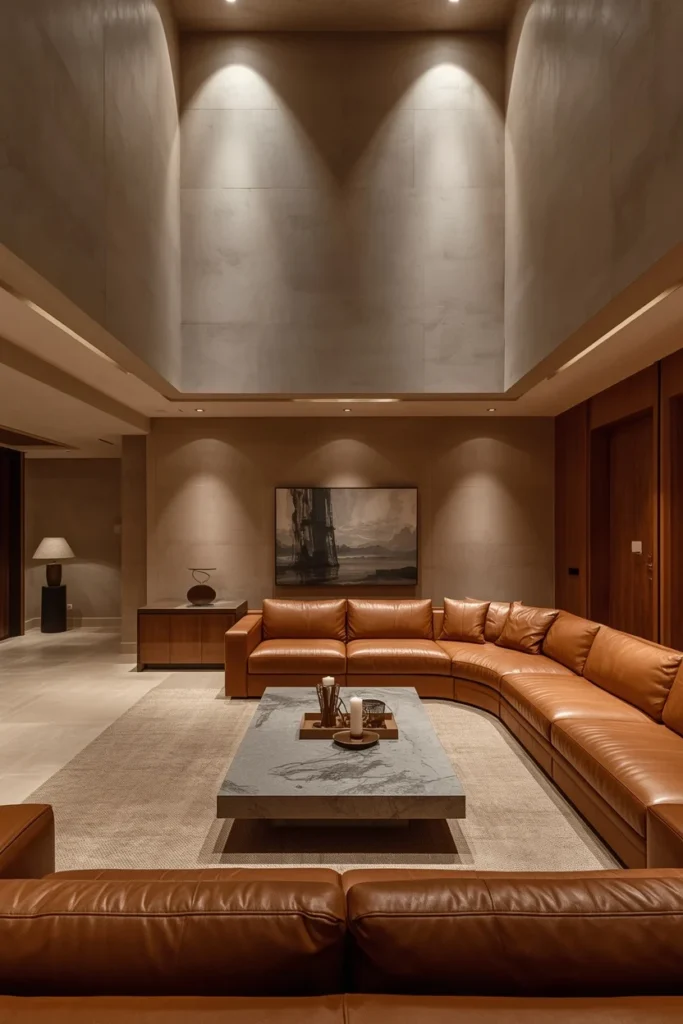
Imagine stepping down into a recessed seating area — a sunken living room with a wraparound built-in sofa, deep cushions in a warm cognac leather, and a low central coffee table with a candle arrangement at its center. Above, the ceiling soars to 14 feet, but the sunken floor creates an intimate, sheltered feeling within the larger space. It’s like a room within a room.
This design concept is making a serious comeback, and it’s absolutely perfect for high-ceiling spaces.
Expert Tip: If a full sunken room isn’t feasible in your home, you can create the same psychological effect using a large, low-profile sectional, an oversized area rug, and layered overhead lighting that’s dropped down rather than flush with the ceiling. The goal is to create a “nest” within the larger volume of space.
Why it works: Sunken seating areas work against the vertical pull of high ceilings by creating a strong horizontal anchor. They make large rooms feel cozy and purposeful, giving guests a sense of intimacy and enclosure that standard furniture arrangements struggle to achieve.
Two-Tone Walls with a Dramatic Color Contrast
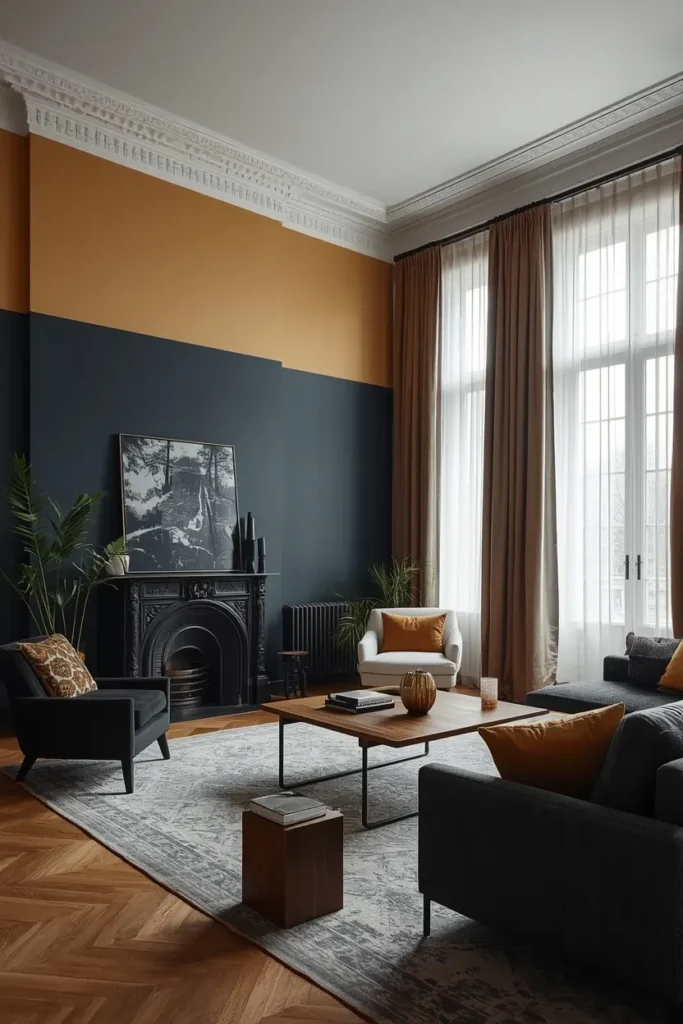
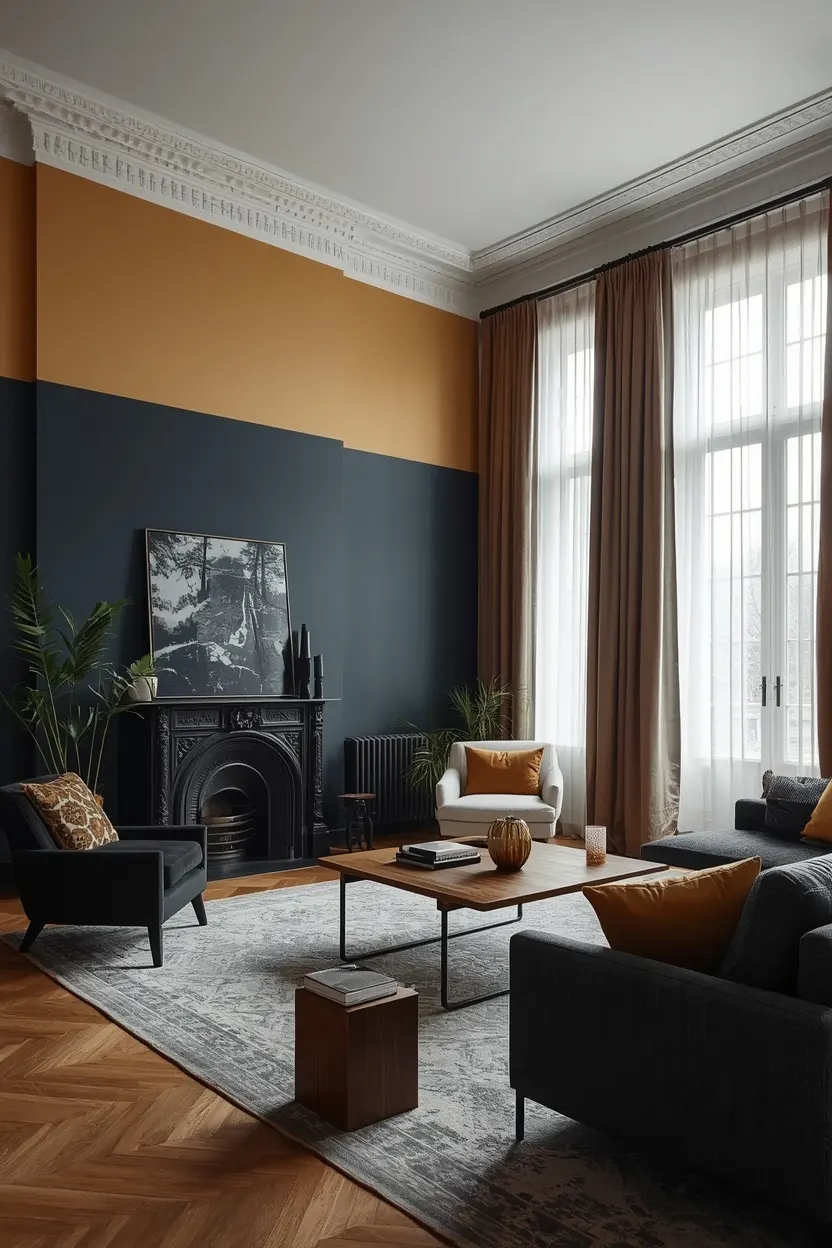
For our final idea, picture a living room where the lower portion of the walls — from floor to about 7 feet — is painted in a deep, inky slate blue, while everything above transitions to a soft, warm white that continues across the ceiling. The visual break happens at a beautifully molded picture rail. The furniture sits in the dark zone, anchored and intentional, while the room opens up above into that soft white expanse.
It’s bold. It’s architectural. And it’s incredibly effective.
Expert Tip: Use the transition point between your two paint colors intentionally. A picture rail, a band of wallpaper, or even a simple painted stripe can mark the shift cleanly. The darker color should always be on the lower portion — this grounds the room. Reversing it (dark on top) creates an oppressive, cave-like feeling.
Why it works: Two-tone walls visually lower the perceived ceiling height, making tall rooms feel proportionate and cozy rather than cavernous. The darker lower zone grounds your furniture, while the lighter upper zone keeps the room feeling airy. Pair this with ideas from our modern dark living room ideas for a cohesive look.
Final Thoughts: Your High Ceiling Living Room Deserves to Shine
There’s something really powerful about finally understanding your space — about looking at those tall walls and seeing possibility instead of a problem.
The 10 high ceiling living room ideas we’ve covered today all share one thing: they work with the height, not against it. Whether you start with a statement chandelier, floor-to-ceiling curtains, or a dramatic two-tone paint treatment, every step you take will transform how the room feels.
You don’t have to do everything at once. Pick one idea that excites you most and start there. Then watch how it shifts the entire energy of the room.
And when you’re ready for the next step, I’d love for you to explore our complete guide on how to decorate a living room step by step — it’s the perfect companion piece to everything you’ve just read.
Which of these 10 high ceiling living room ideas are you most excited to try? Leave a comment and let us know — we read every single one!