

 By Trends Oraa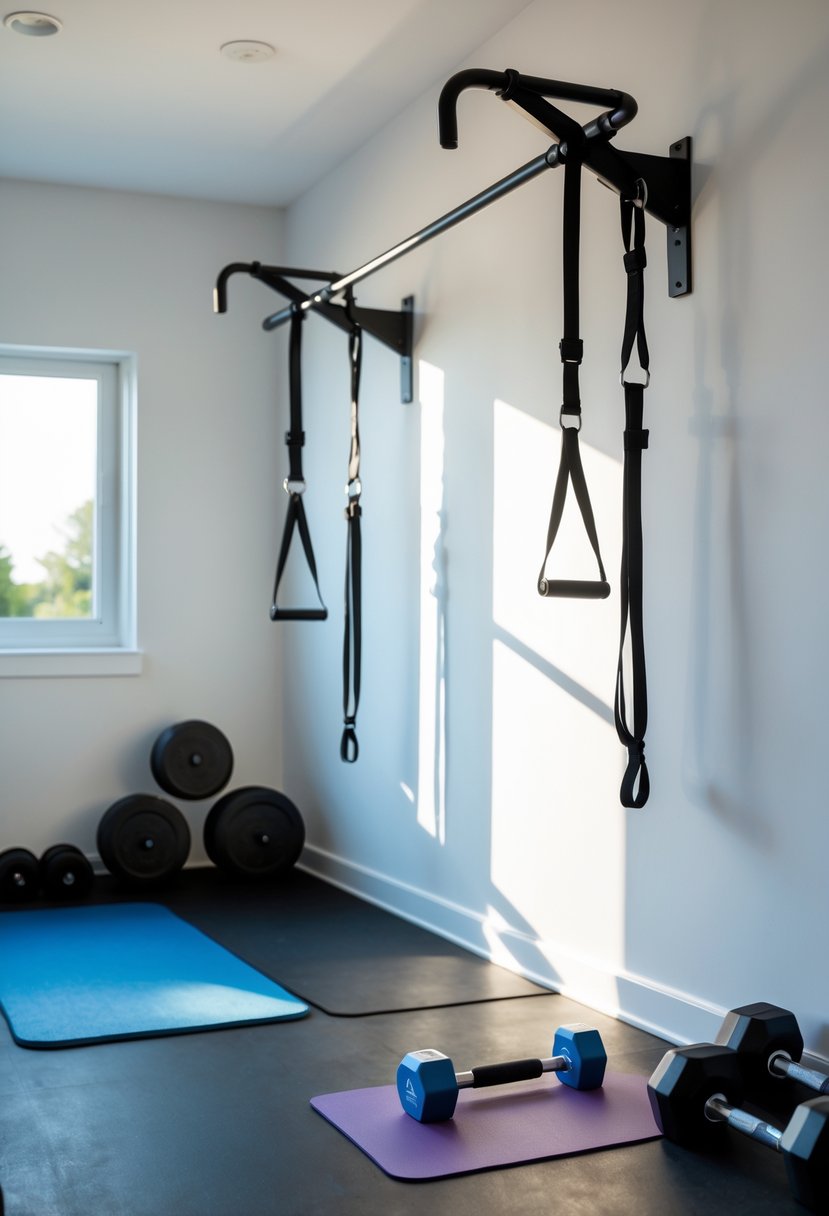
This article was created in line with Trends Oraa’s research and content standards.
You want a home gym ideas that fits your space and goals without wasting time or money. This article guides you through practical ideas and layout options so you can build a space that makes exercise simple and consistent.
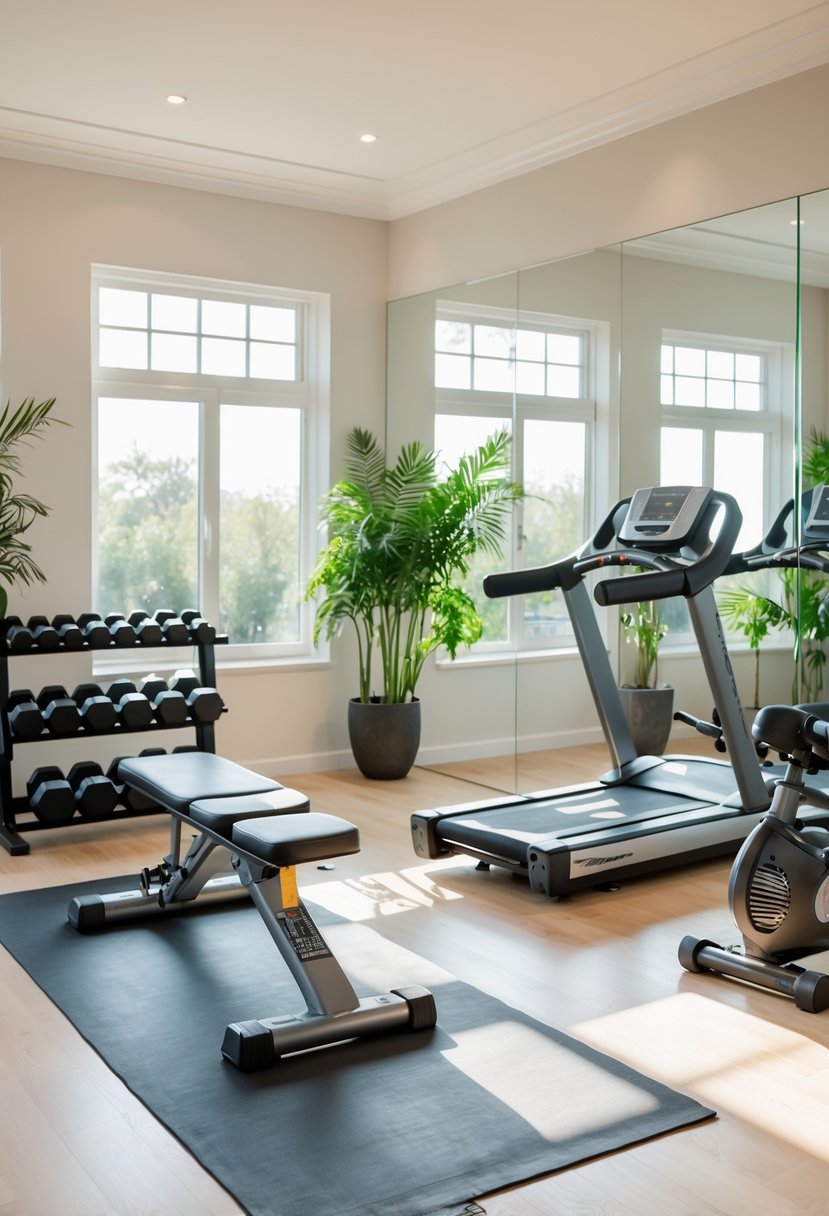
You will learn how to use small spaces, smart equipment, and simple storage to create a safe, flexible workout area that keeps you moving.
1) Create a dedicated corner with adjustable dumbbells and a foldable bench
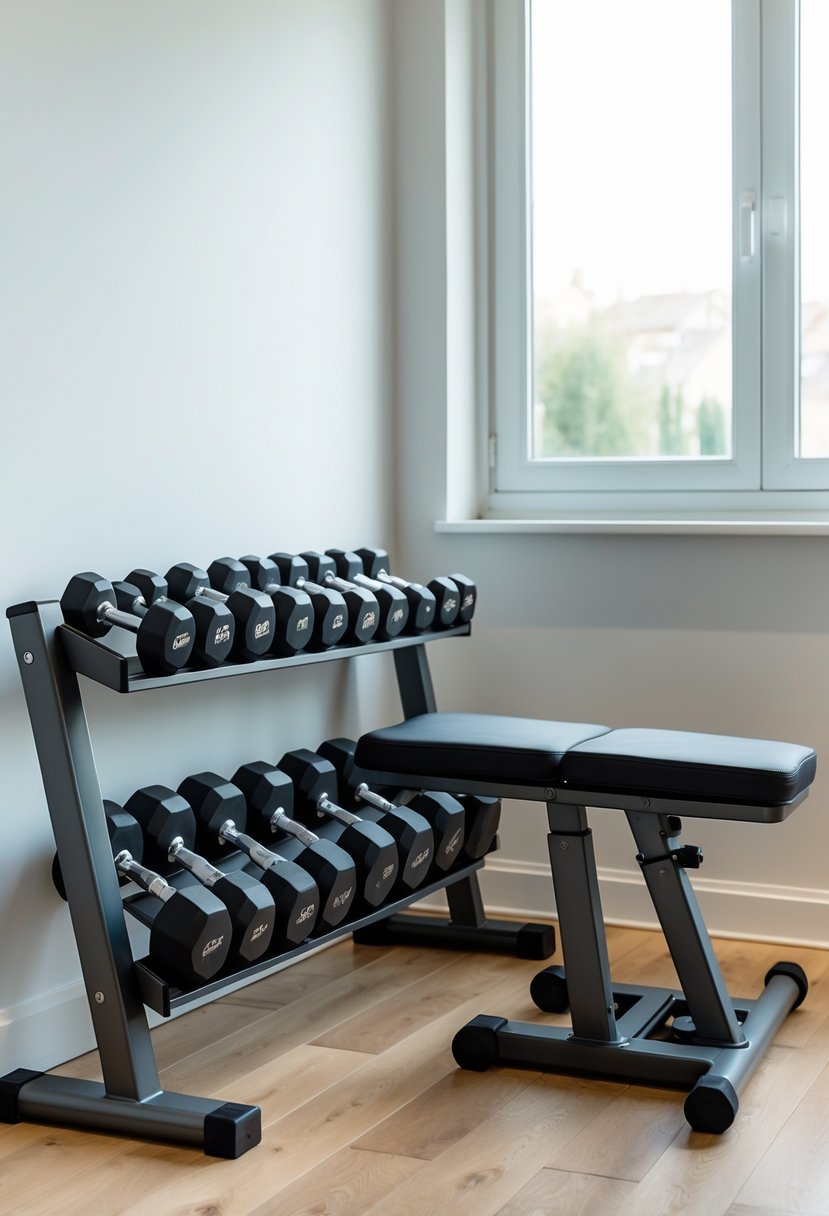
They pick a quiet corner and clear floor space to set up. Adjustable dumbbells save space and let them change weights fast.
A foldable bench tucks away when not in use. It adds support for presses, rows, and core moves without taking room.
Add a small rack or mat to protect floors and keep gear tidy. Good lighting and a mirror help with form and motivation.
2) Install wall-mounted resistance bands for space-saving workouts
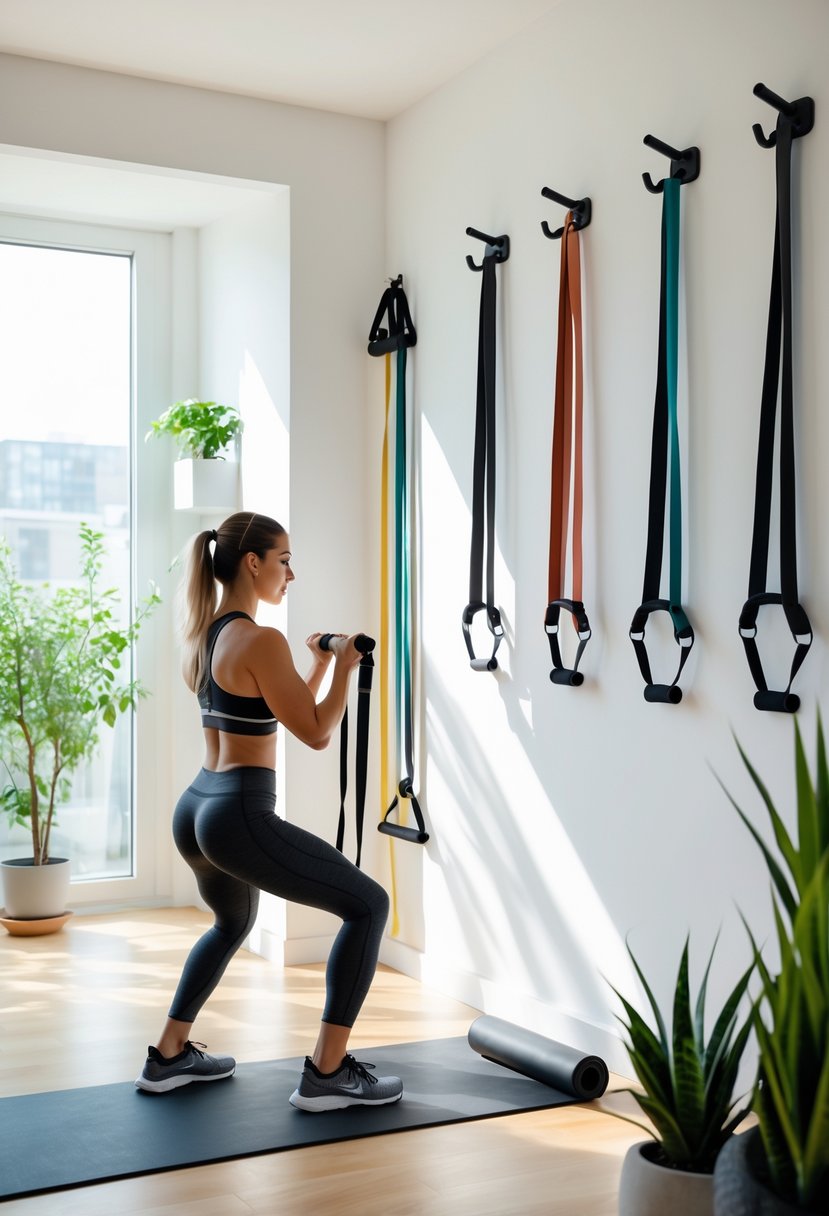
They mount on a stud or with heavy-duty anchors to keep bands secure. This saves floor space and keeps equipment tidy.
Users can attach bands at different heights for rows, presses, and leg work. Bands offer adjustable resistance by changing band thickness or hand position.
Installation takes minutes and costs little. It suits small rooms and makes quick workouts easier.
3) Use a compact rowing machine like the Concept2 Model D
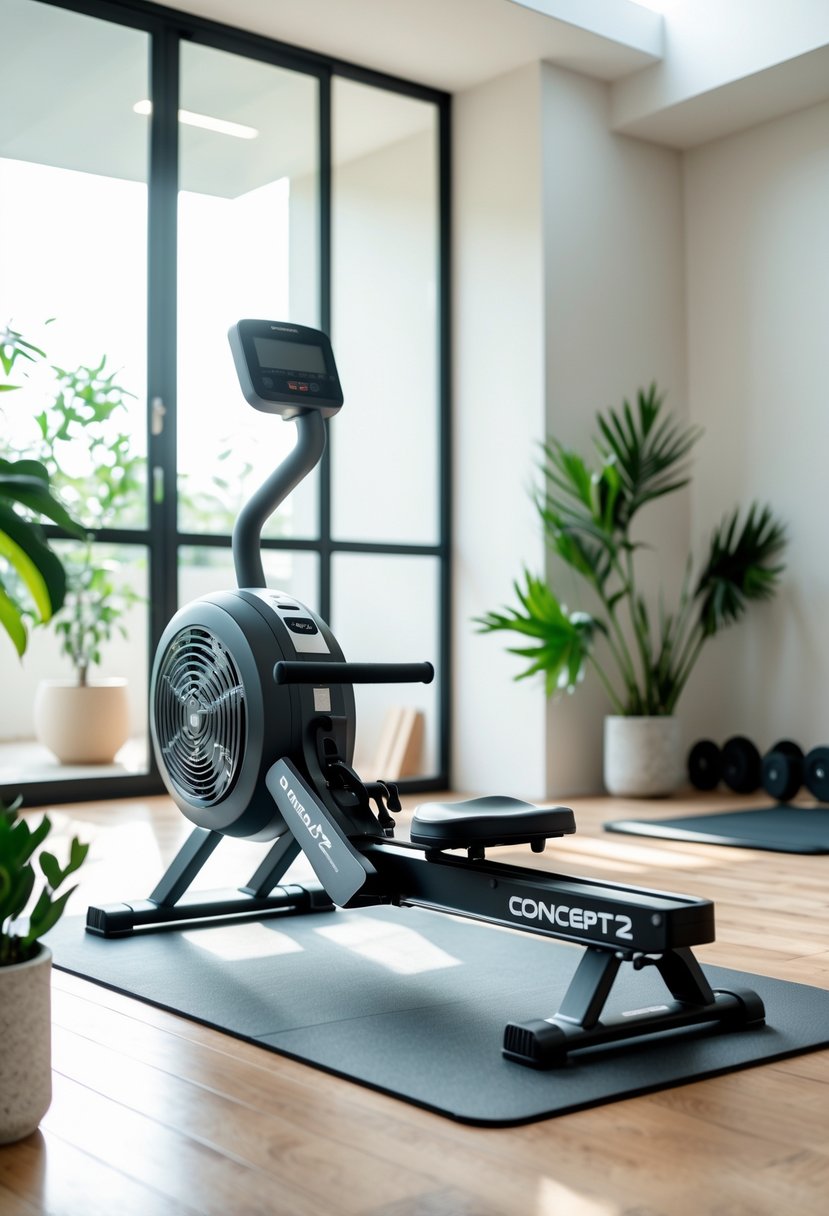
They fit small spaces and fold or stand on end for storage. This saves room while keeping a full-body workout option.
A rowing machine gives cardio and strength training in one, targeting legs, core, and back. The Concept2 Model D is reliable, easy to maintain, and has clear performance tracking.
It suits beginners to advanced users because resistance adjusts with effort. It also pairs well with short HIIT sessions or steady-state workouts.
4) Designate a mirrored wall for form checks and motivation
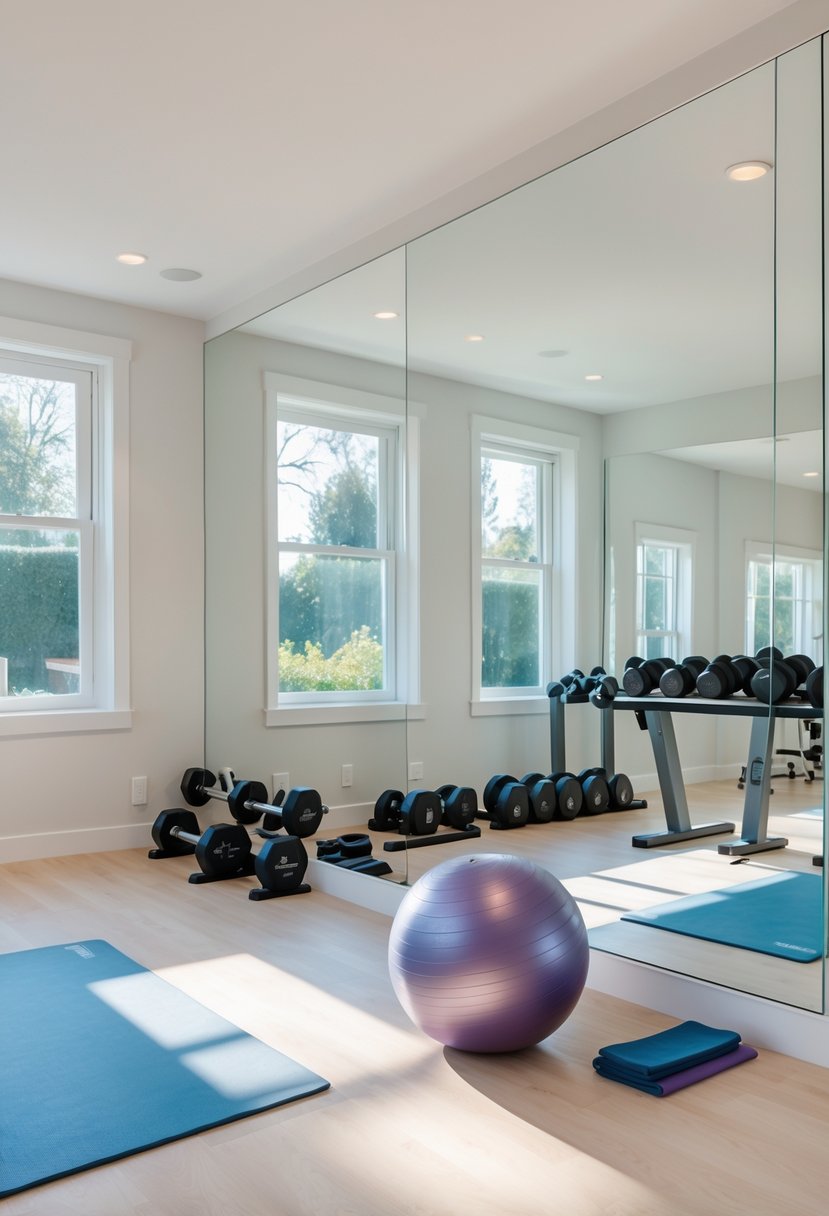
They place a mirror where it catches full-body views during common exercises. Seeing movement helps spot posture errors and reduce injury risk.
A mirrored wall also boosts motivation by showing progress over time. It can make the space feel larger and brighter with minimal cost.
Keep the mirror at eye level and secure it to studs or use safety backing. Add a thin frame or anti-shatter film for durability and easier cleaning.
5) Incorporate a pull-up bar above a doorway
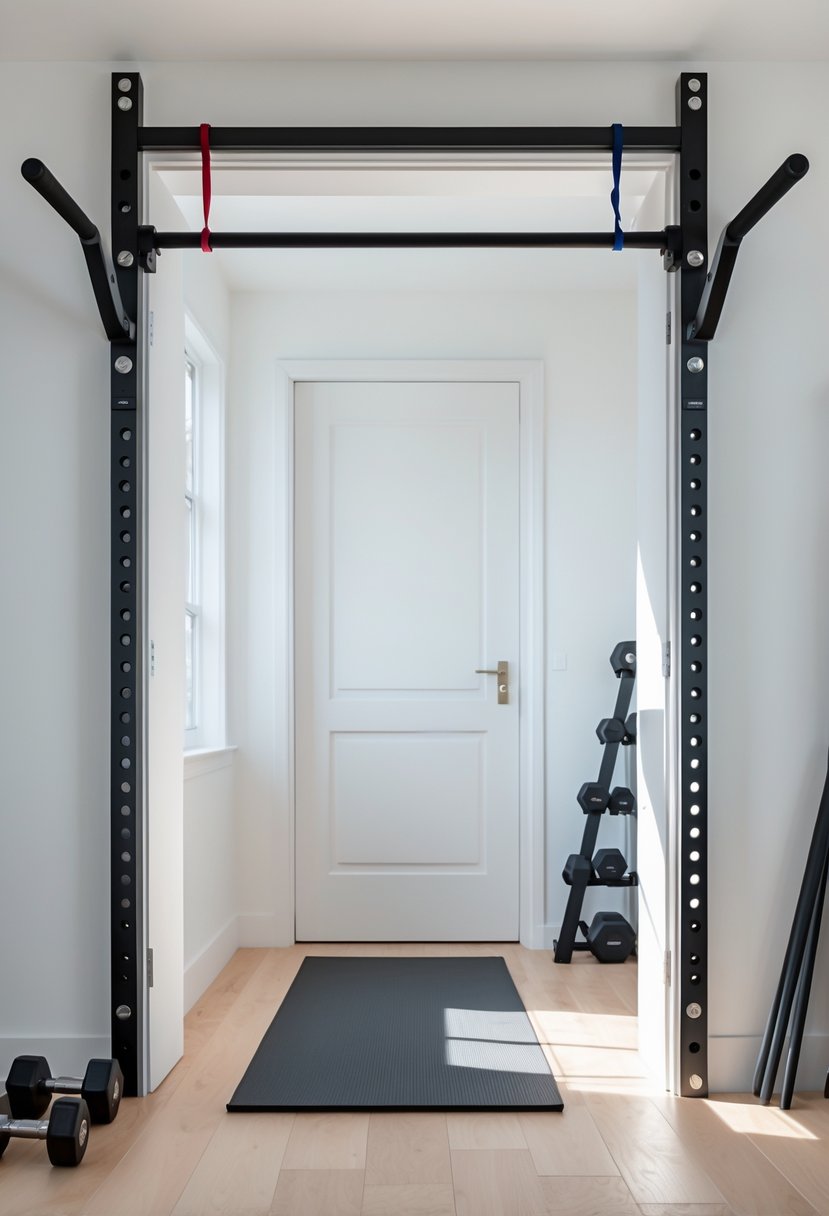
They can install a doorway pull-up bar to save space and add a strong upper-body option. Many models fit standard frames and remove easily when not in use.
He or she should check the door frame for solid wood or studs before mounting. If unsure, they can use a tension model but must follow weight limits.
They will use proper form to avoid injury and mix pull-ups with other moves for balanced strength. Regular checks of bolts and straps keep the setup safe.
6) Add rubber flooring tiles for shock absorption and safety
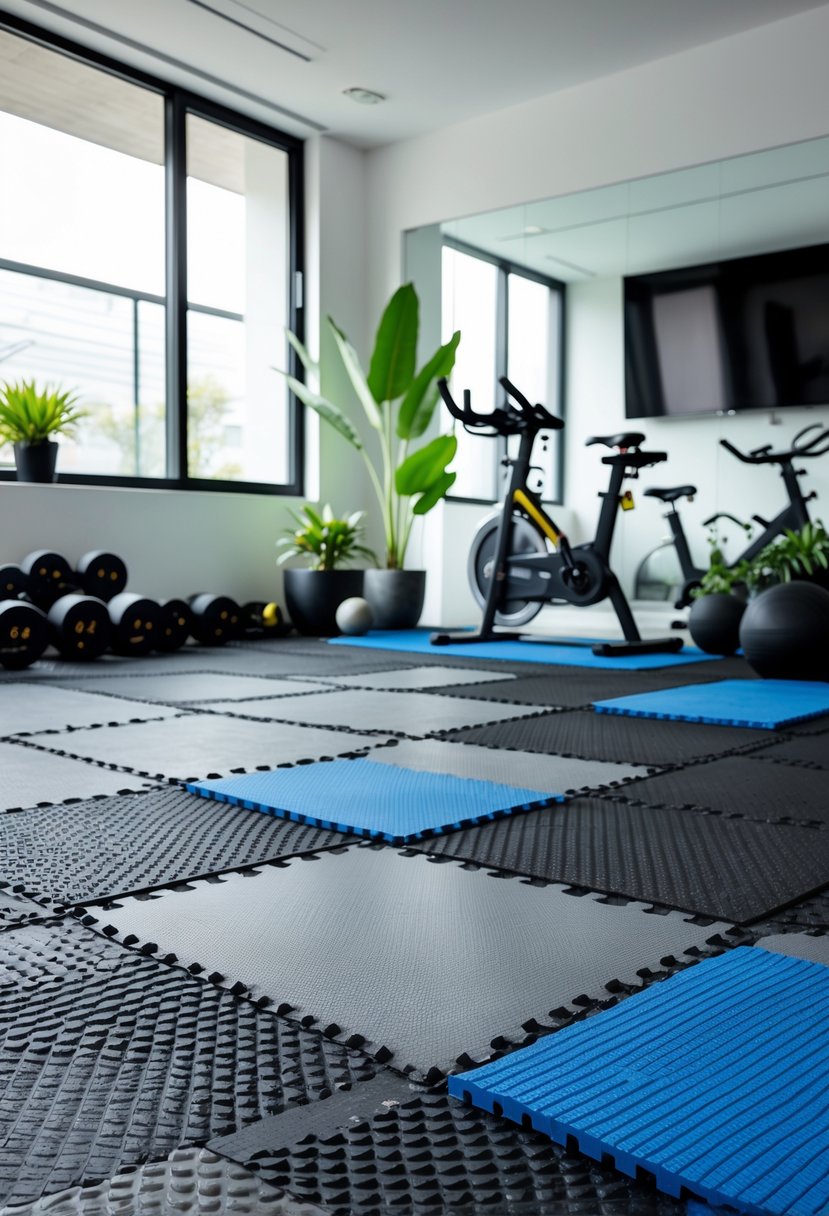
They cushion drops and cut noise, protecting both equipment and floors. This reduces impact on joints during jumping or heavy lifts.
Tiles lock together and are easy to replace if one gets damaged. They also offer slip resistance when slightly textured.
Choose 8–15mm thickness for general strength; go thicker for heavy lifting. Rubber tiles are simple to clean and last a long time with basic care.
7) Set up a suspension trainer such as TRX Original Suspension Trainer
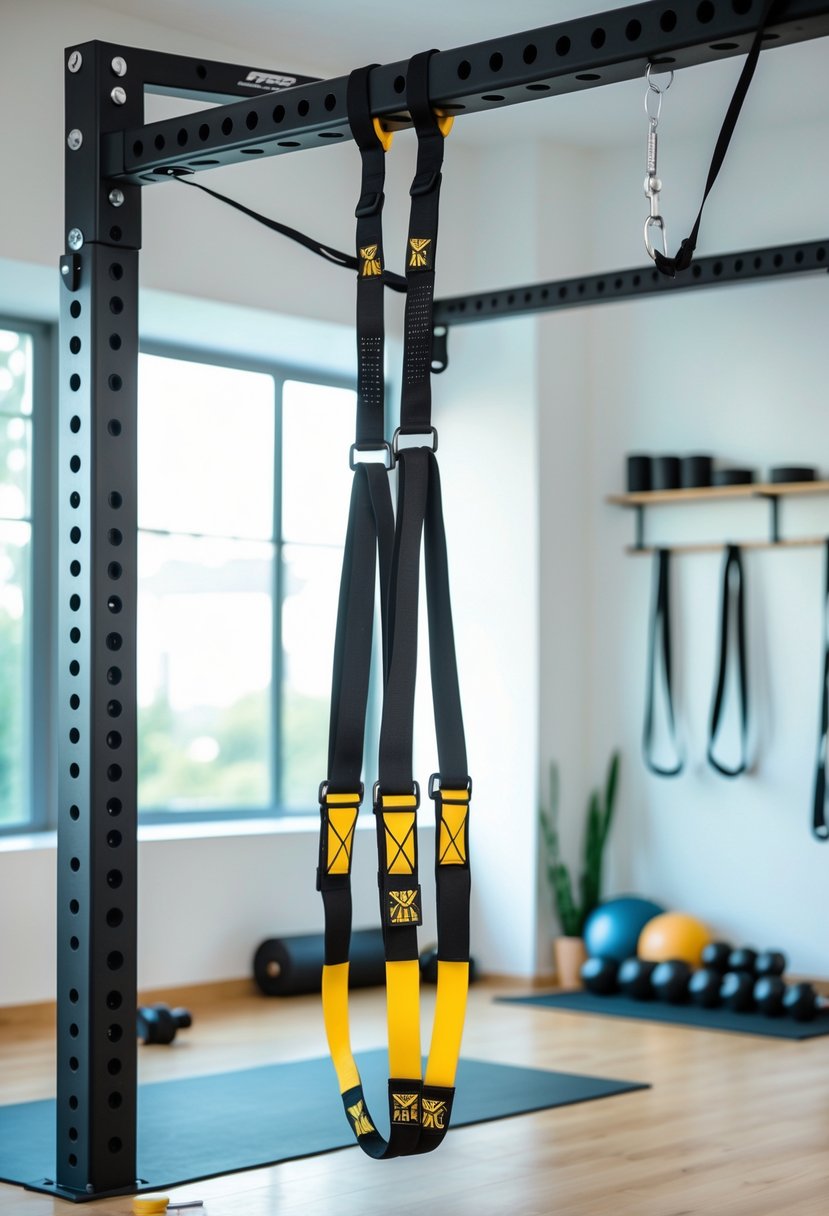
They attach to a door, beam, or wall anchor and use body weight for resistance. This saves space and adds many exercise options.
He or she can adjust straps for rows, push-ups, lunges, and planks. The trainer suits all fitness levels by changing angle and foot placement.
Install anchors at proper height and check straps before each use. Follow manufacturer instructions for safety and load limits.
8) Use a foldable treadmill like NordicTrack T 6.5 S
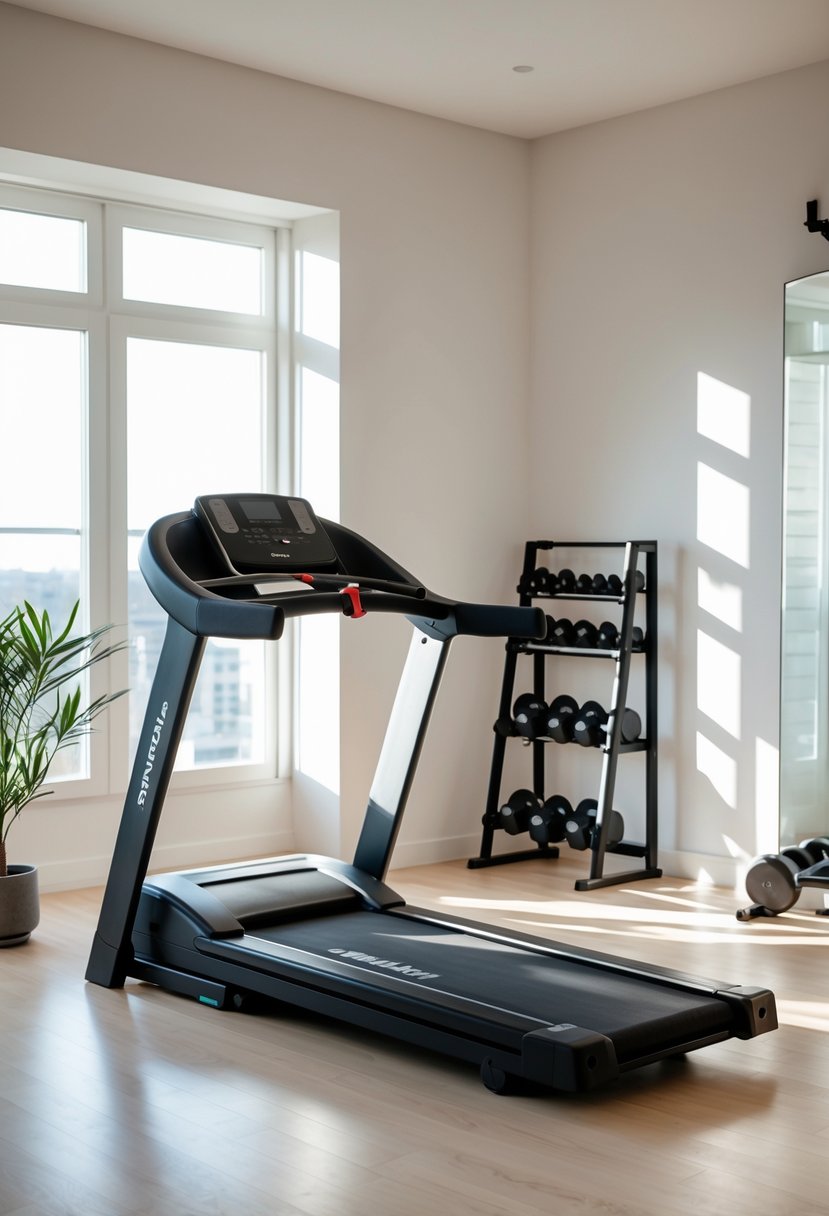
They pick a foldable treadmill to save space without losing cardio options. The NordicTrack T 6.5 S folds up and has a small footprint when not in use.
The treadmill supports walking and light running, and it has basic incline and speed controls. It suits small rooms and apartment gyms where storage matters.
9) Hang heavy bags for boxing and cardio workouts
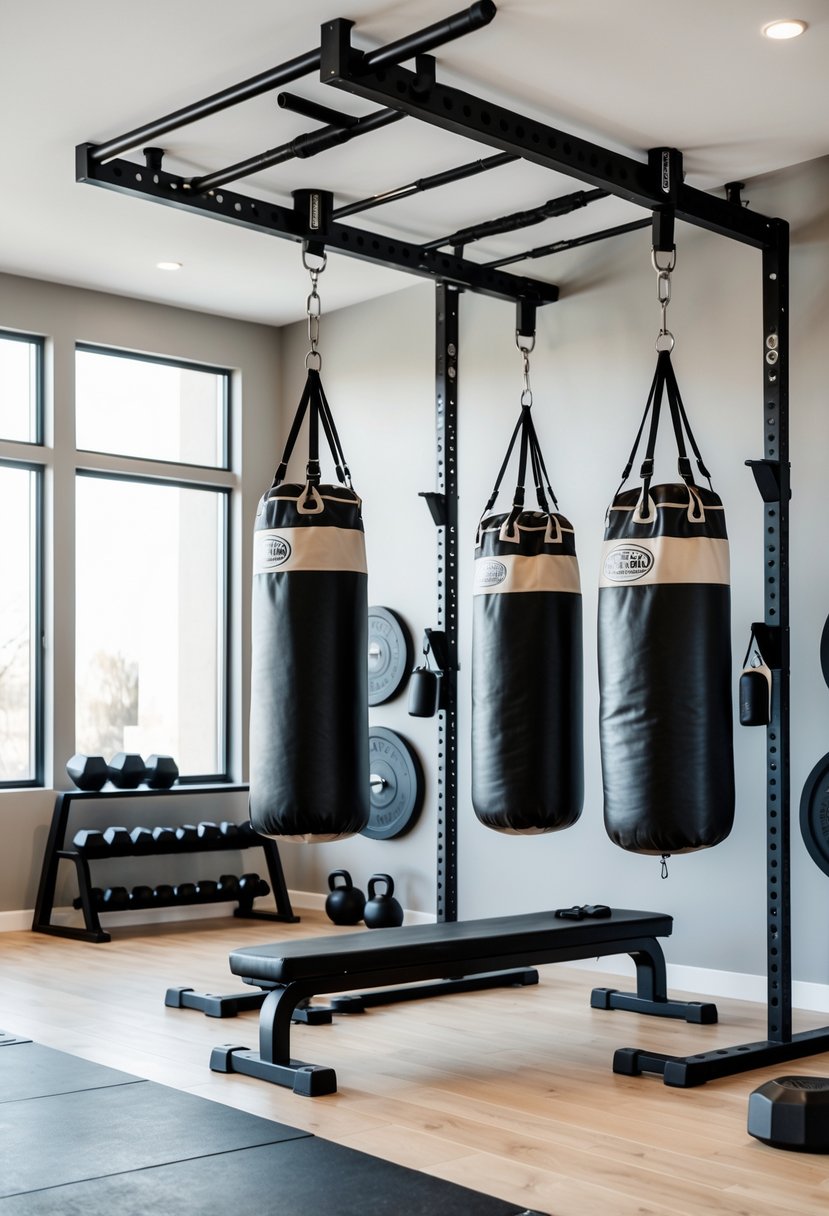
They mount a heavy bag to a strong beam or wall bracket to add punch and kick training at home. A bag delivers fast cardio, builds power, and improves coordination without needing much space.
Choose bags rated for the person’s weight and skill, and use proper mounting hardware to avoid damage. Add gloves and hand wraps for safety and rotate sessions with shadow boxing or jump rope for balanced workouts.
10) Install a pegboard wall to organize kettlebells and jump ropes
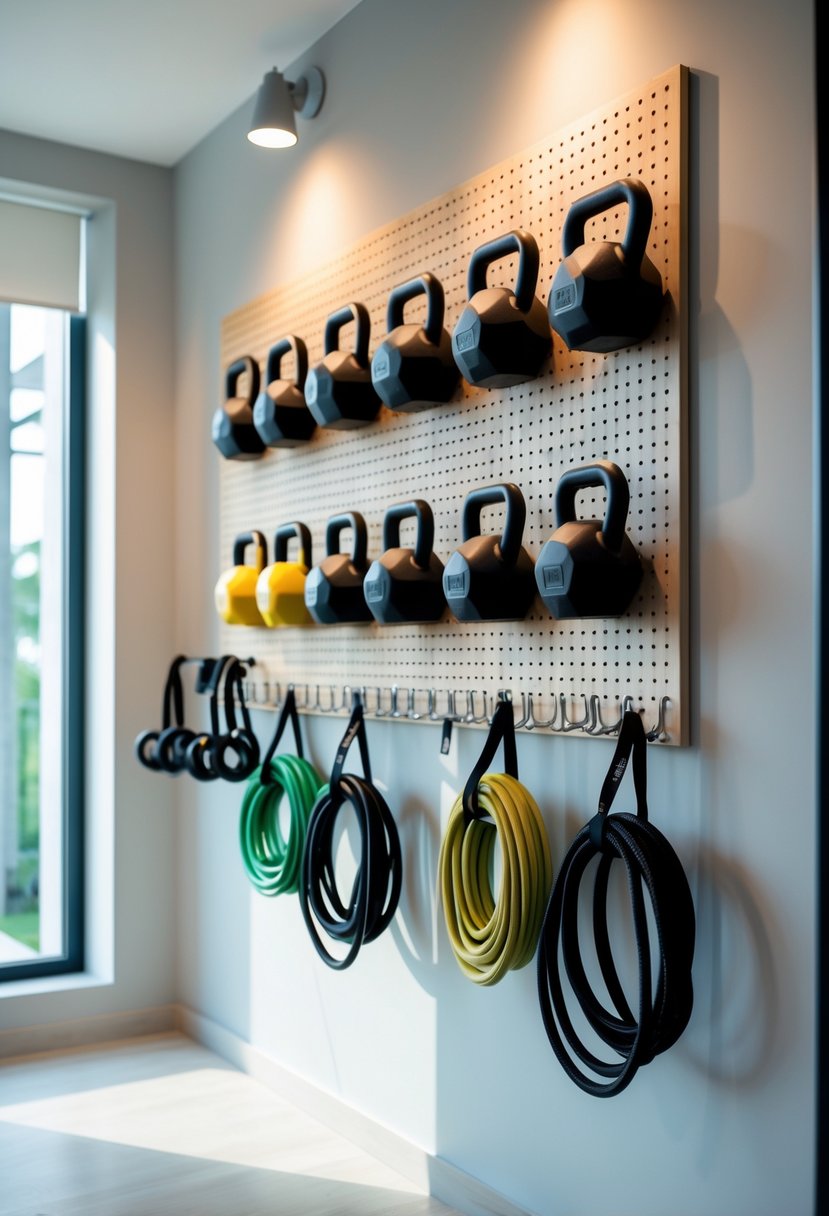
A pegboard wall keeps gear visible and off the floor. It saves space and makes the room safer by reducing tripping hazards.
They can hold kettlebells on strong hooks and hang jump ropes, bands, and handles. Labels help quickly find what they need before a workout.
Install the board on studs or use heavy-duty anchors for weight. Choose metal or high-density plastic pegboards for durability.
11) Place a cable pulley system like the BodyBoss 2.0 in a corner
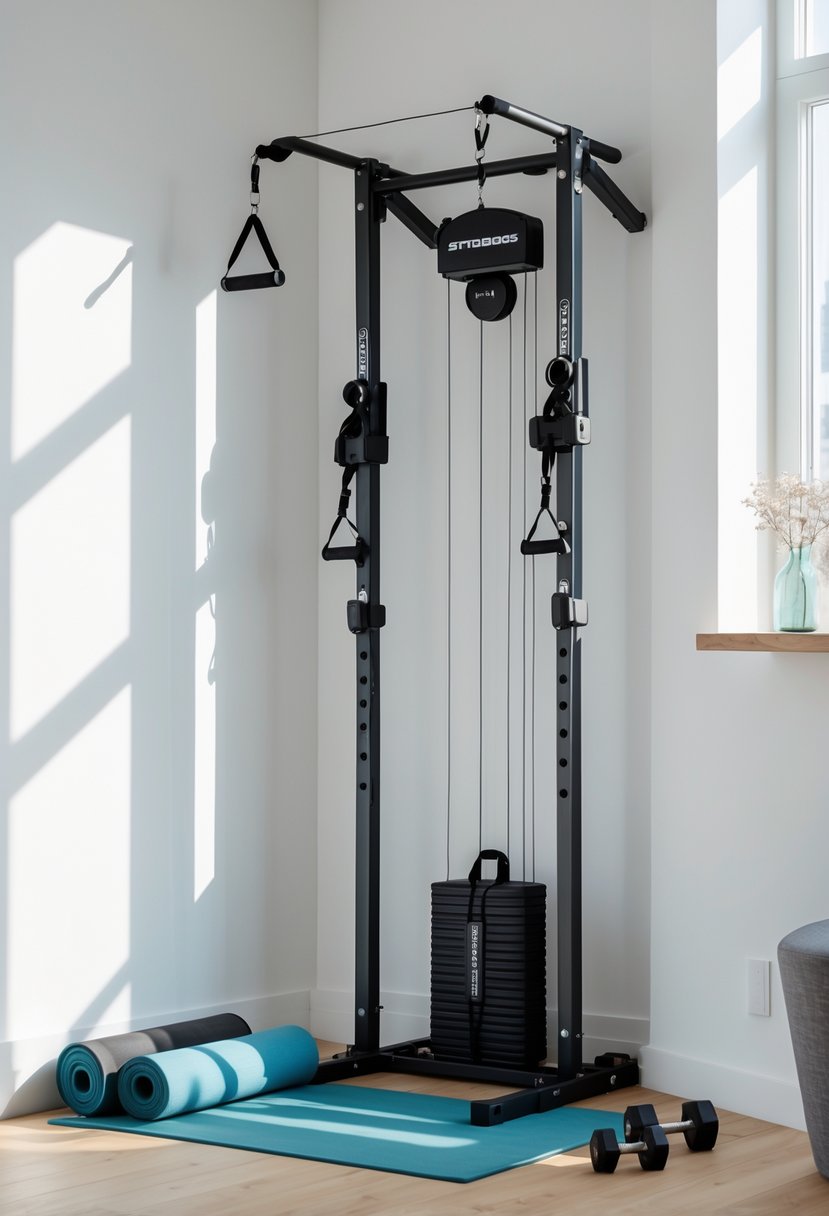
They mount a compact cable pulley system in a corner to save floor space and create a stable anchor. It fits small rooms and still offers rows, presses, curls, and leg work.
The system stacks vertically, so it uses wall height more than floor area. Users can switch attachments quickly to vary workouts without clutter.
12) Use adjustable kettlebells like Bowflex SelectTech 840
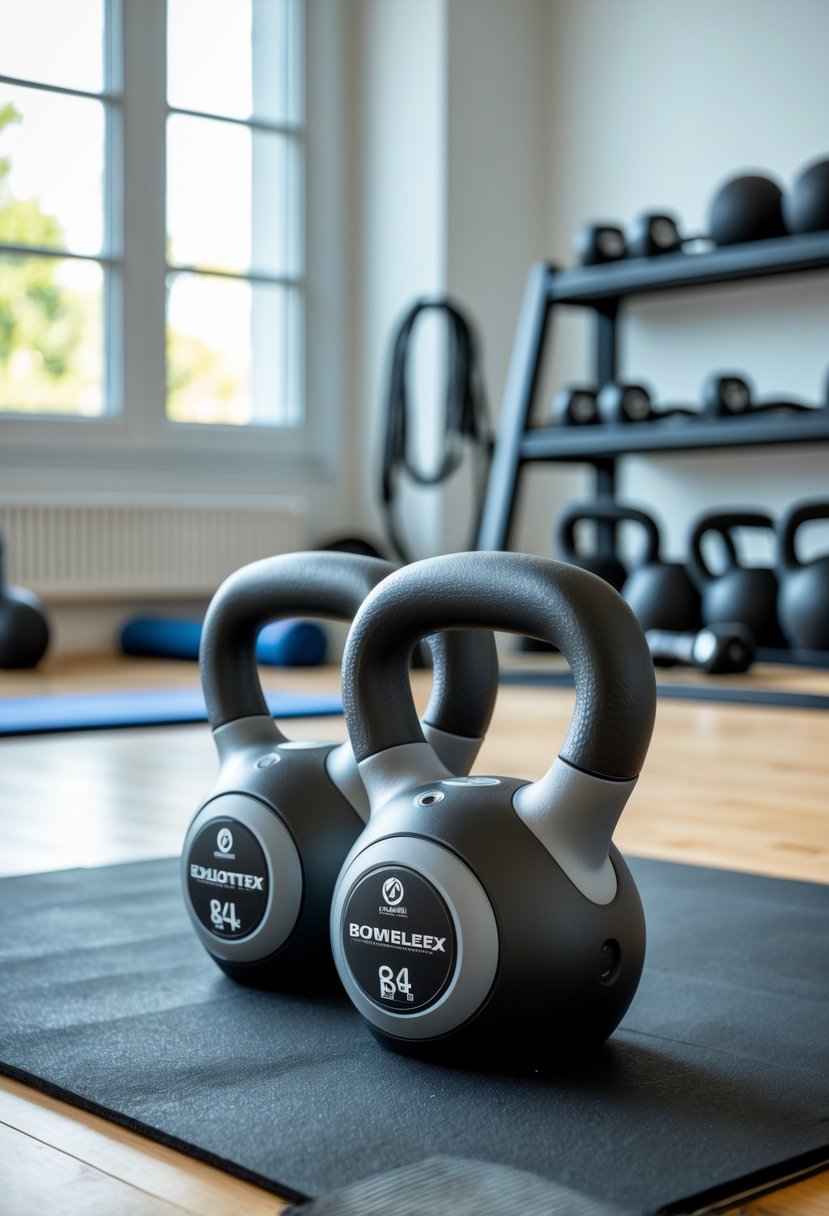
They save space by replacing several fixed kettlebells with one adjustable unit. Users change the weight quickly to move between swings, presses, and rows.
The Bowflex SelectTech 840 adjusts in small increments for gradual progression. It fits well in small home gyms and works for beginners and experienced lifters.
13) Incorporate a versatile power tower station for multiple bodyweight exercises
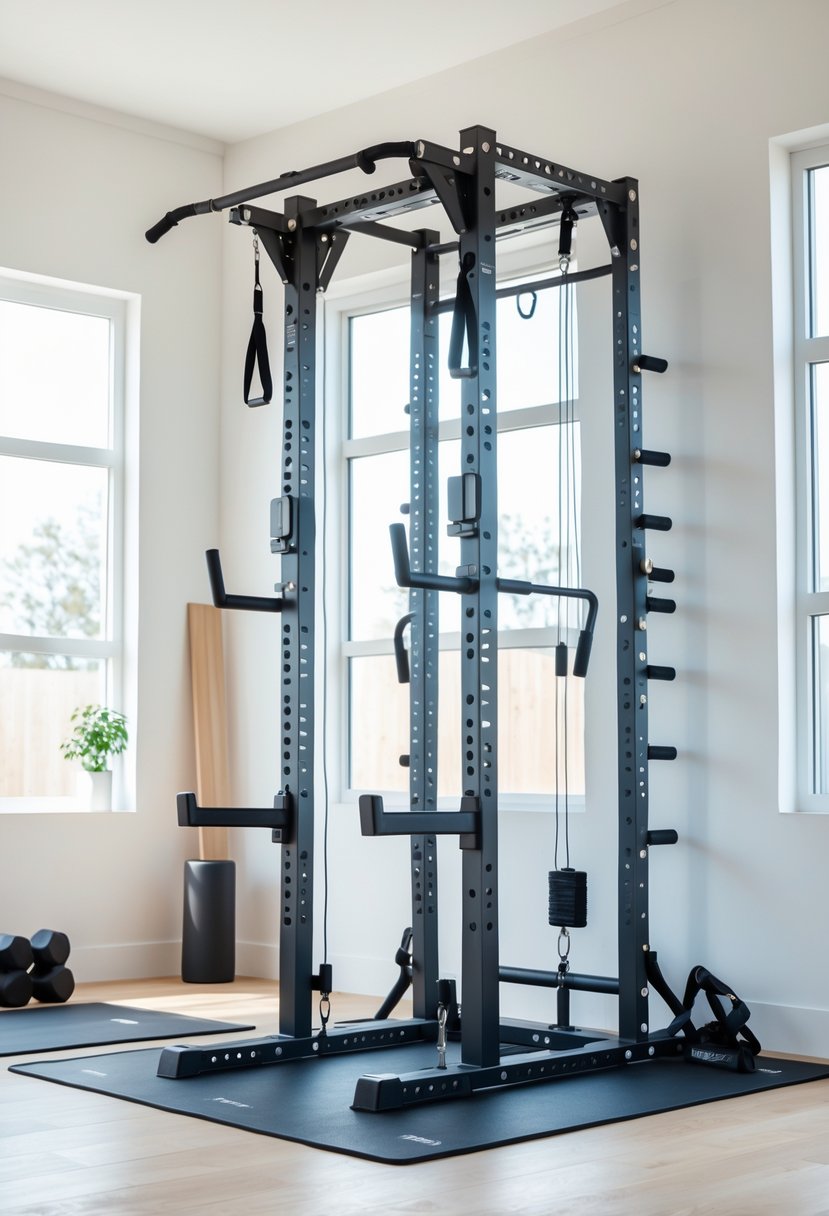
They can add a power tower to get dips, pull-ups, push-ups, and knee raises in one spot. It saves space and cuts the need for many machines.
A sturdy tower helps users progress from bodyweight moves to harder variations. Adjustable handles and a pull-up bar let them change grip and range.
Place it near a wall and leave room for full movement. Regular checks for bolts and padding keep it safe.
14) Use under-desk pedal exercisers for low-impact cardio
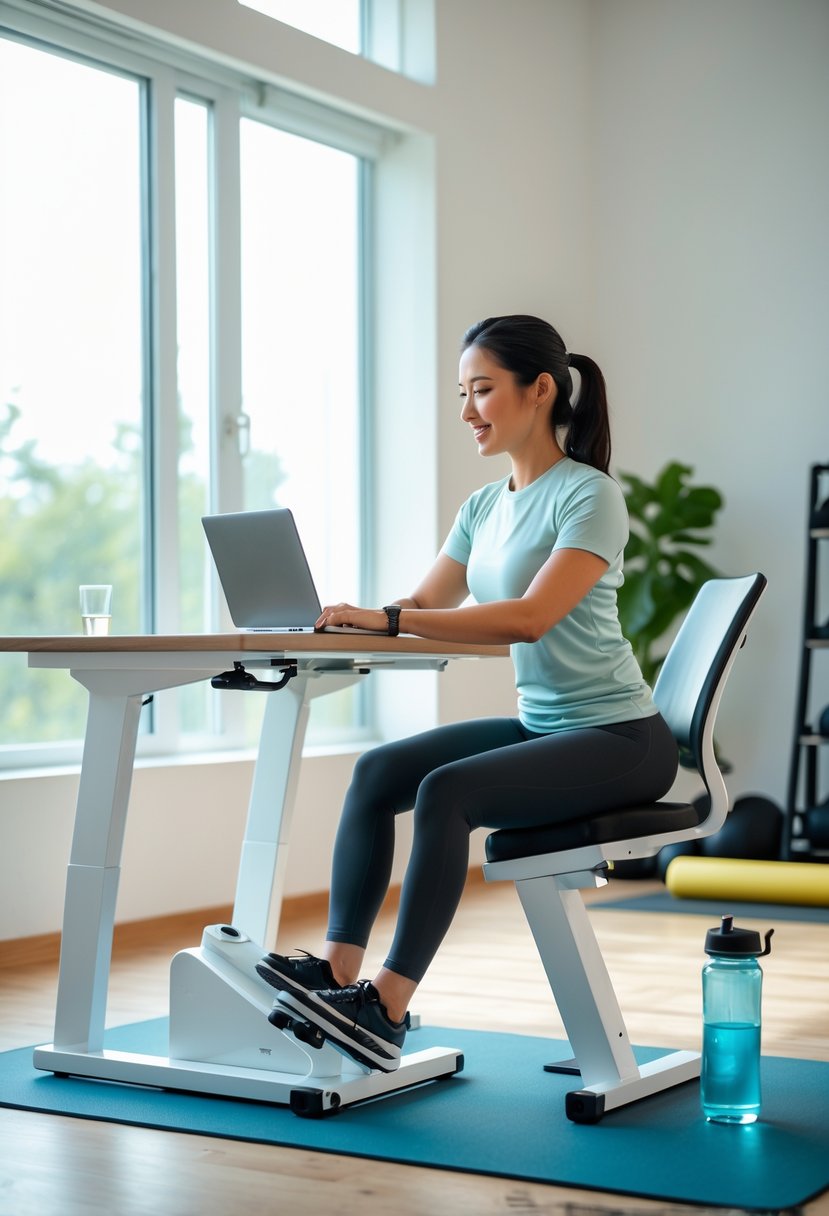
They fit under a desk or sofa and let someone pedal while working or watching TV. The motion boosts heart rate without stressing joints.
Models often have adjustable resistance and a small display for time and calories. They take little space and are easy to move or store.
People with knee or back issues can use them gently. Always start slow and check posture to avoid strain.
15) Mount a fold-away squat rack for heavy lifting sessions
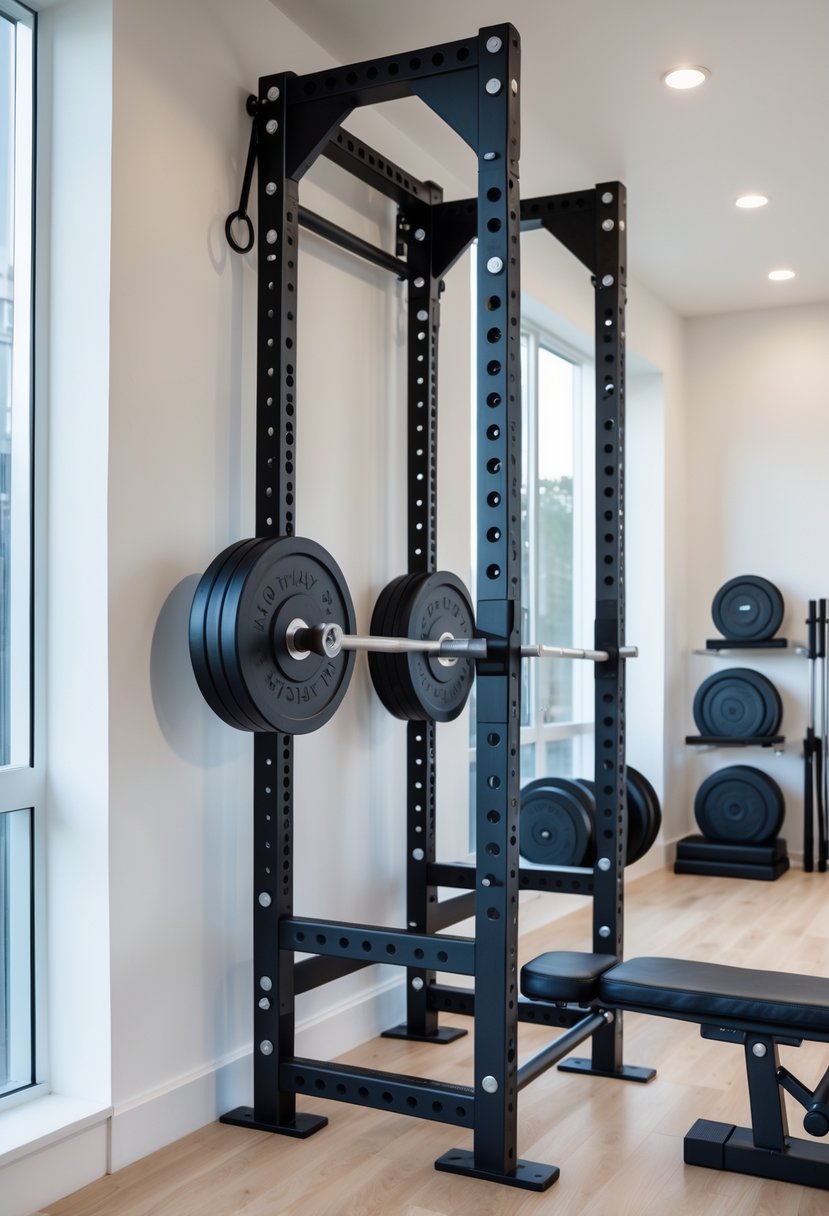
They install a fold-away squat rack on a sturdy wall to save floor space. When folded up, it stays out of the way; when unfolded, it locks solid for heavy lifts.
They check wall studs and use long lag bolts or professional anchors for safety. The rack should include safety catches or spotter arms to protect during failed reps.
They allow enough clearance for bar height and plates. Regularly inspect bolts and welds to keep the rack safe and reliable.
16) Add smart home gym mirrors like the Mirror
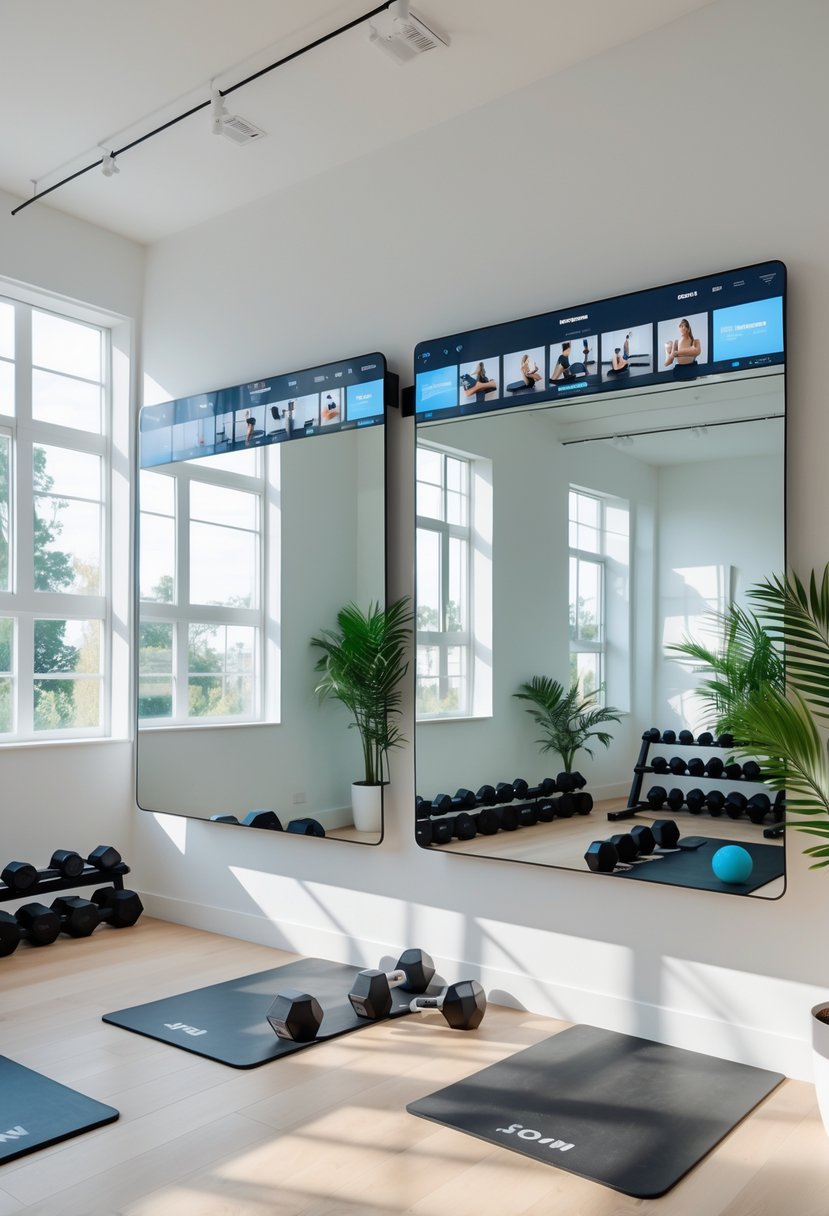
They show live classes, workouts, and form feedback on a slim reflective screen.
Users can follow trainers, track metrics, and mirror their movement for safer form.
They save space compared with bulky equipment and add a high-tech feel.
They need Wi‑Fi, a power outlet, and a clear wall area for best use.
17) Set up a multi-functional compact Smith machine
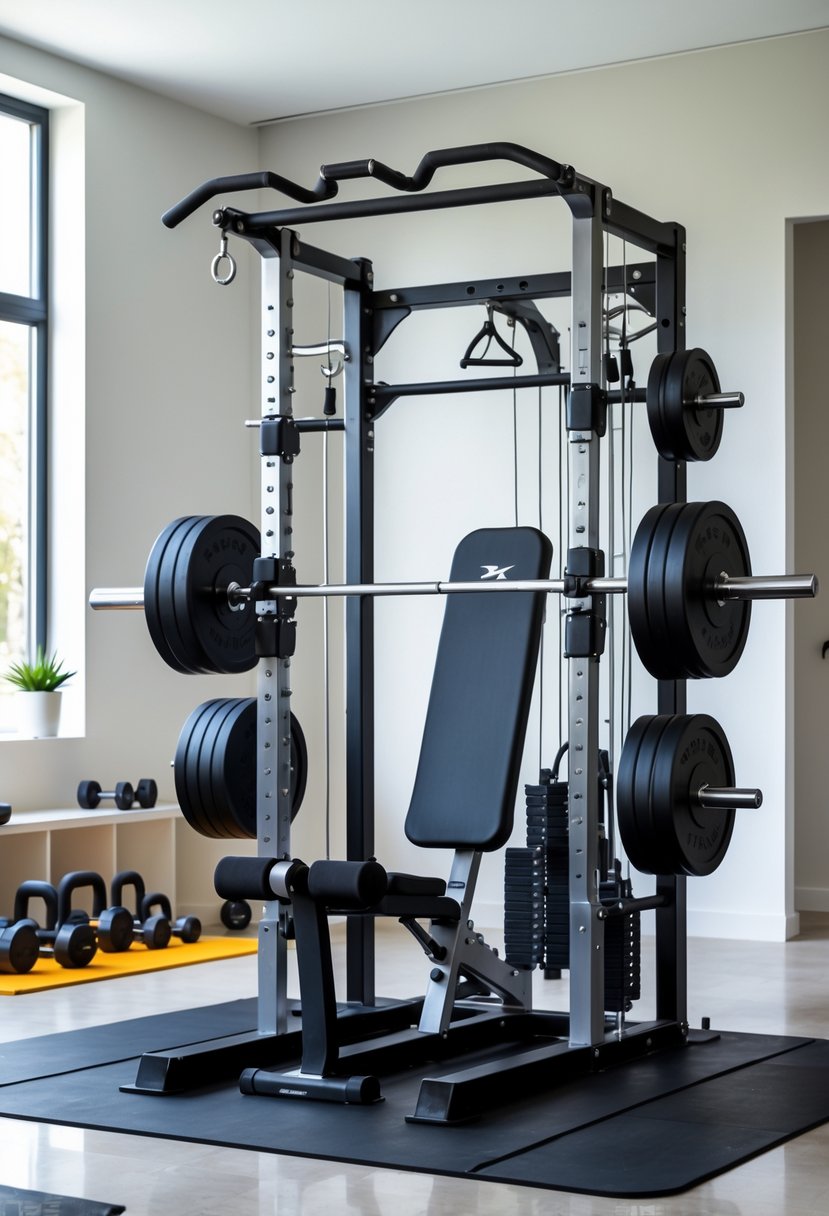
They pick a compact Smith machine to save space while keeping exercise variety. It fits squats, presses, rows, and pull-ups in one small footprint.
They place it against a wall with enough clearance for safe bar travel. Add a bench, resistance bands, and plate storage to turn it into a full home gym.
18) Use stacked aerobic steps for elevated bodyweight exercises
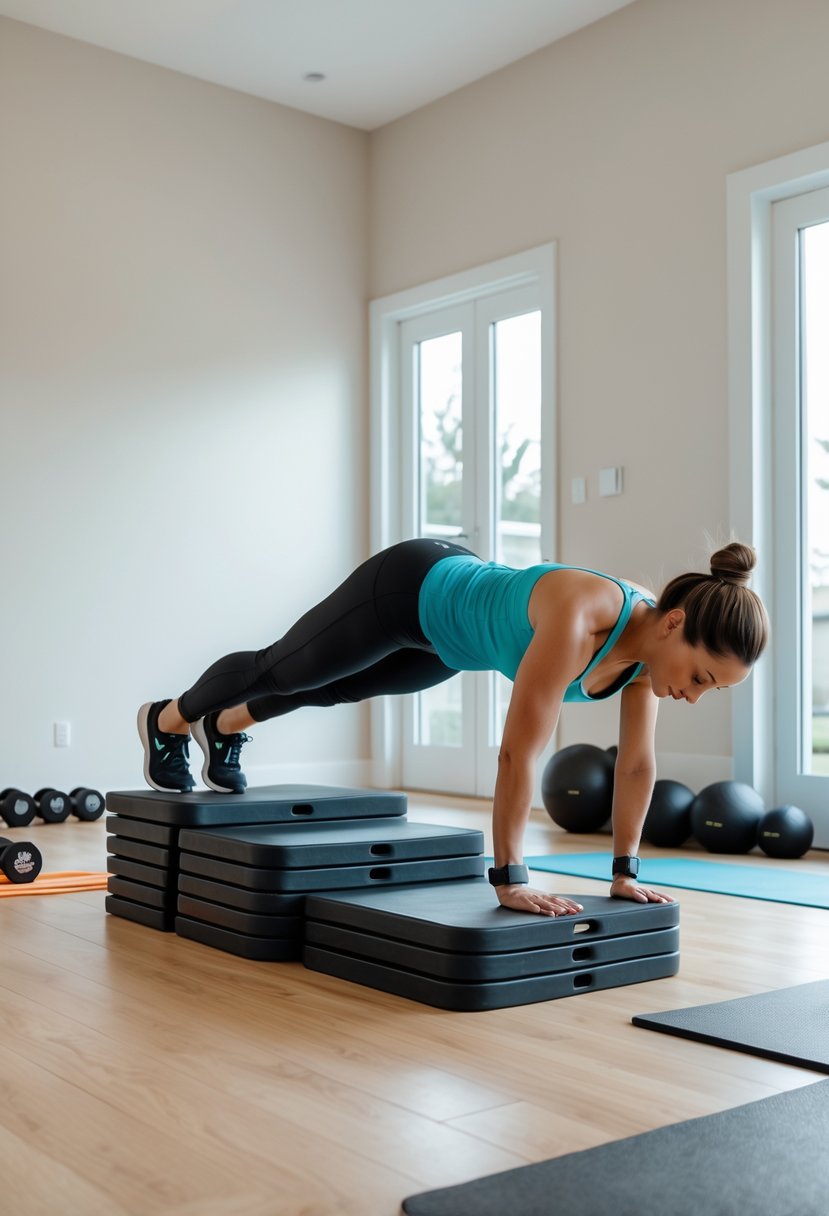
They stack aerobic steps to add height for push-ups, planks, and step-ups. This raises the range of motion and changes muscle demand without extra weights.
Stacked steps let them vary intensity by height. They can progress slowly, moving from one step to multiple steps.
The steps also work for single-leg moves and calf raises. They store easily and fit small spaces.
19) Incorporate a plyometric box for jump training
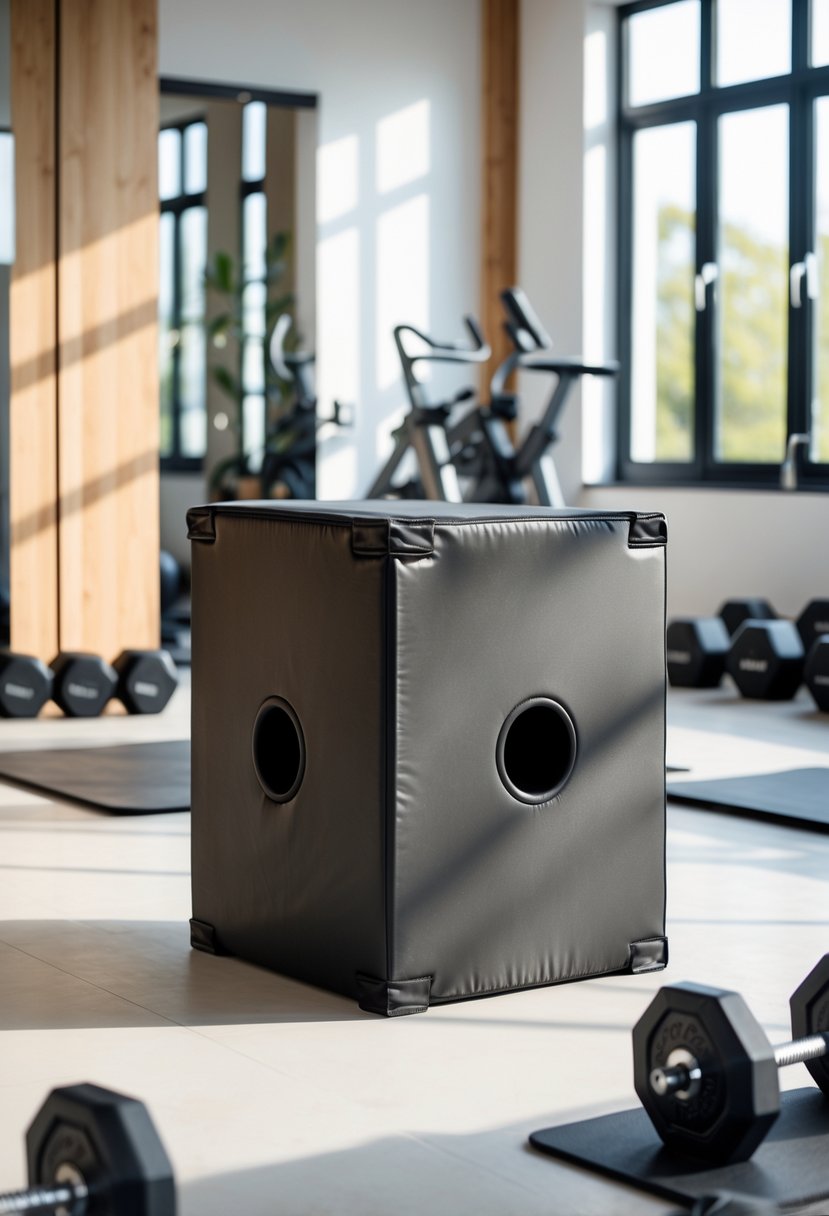
They add a compact way to train power, speed, and coordination. A sturdy box fits in small spaces and handles box jumps, step-ups, and lateral hops.
He or she should choose a size that matches their fitness and skill. Beginners use lower heights and focus on safe landings.
Place the box on a non-slip surface and leave clear space around it. Always warm up and progress gradually to reduce injury risk.
20) Use a vibration plate machine for recovery and warm-ups
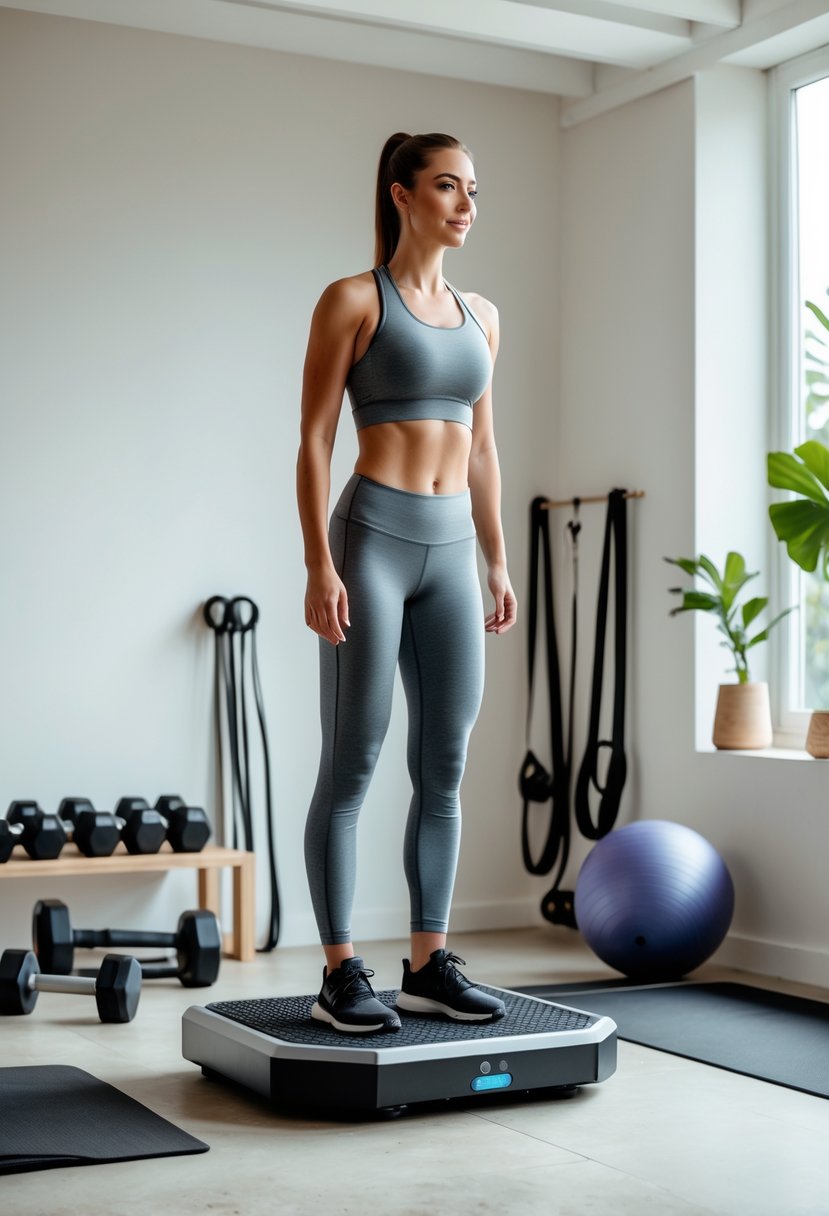
They stand on a vibration plate for a few minutes to help muscles wake up before exercise. Short sessions can loosen tight areas and boost blood flow.
After workouts, brief use may help reduce stiffness and speed cool-downs. It should complement, not replace, stretching or foam rolling.
Users should follow machine guidelines and start with low intensity. People with health issues should check with a doctor first.
21) Set up a mini trampoline for low-impact cardio
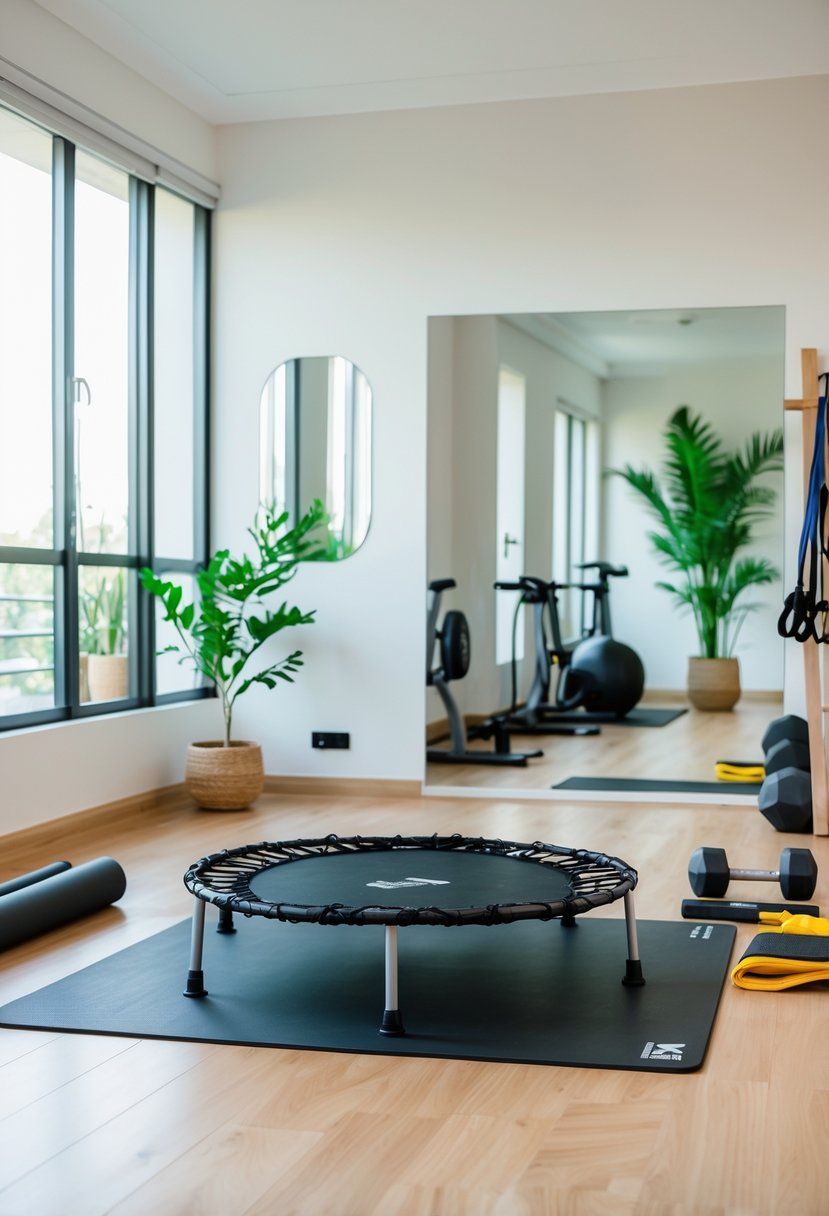
They place a mini trampoline in a clear corner to save space. It offers gentle, low-impact cardio that protects joints compared with running.
Short sessions of 10–20 minutes boost heart rate and improve balance. Users can do marches, light jumps, or side steps to vary intensity.
Choose a sturdy model with a protective pad and non-slip feet. Keep a chair nearby for balance and clear the area of sharp edges.
22) Install ceiling hooks for aerial yoga hammocks
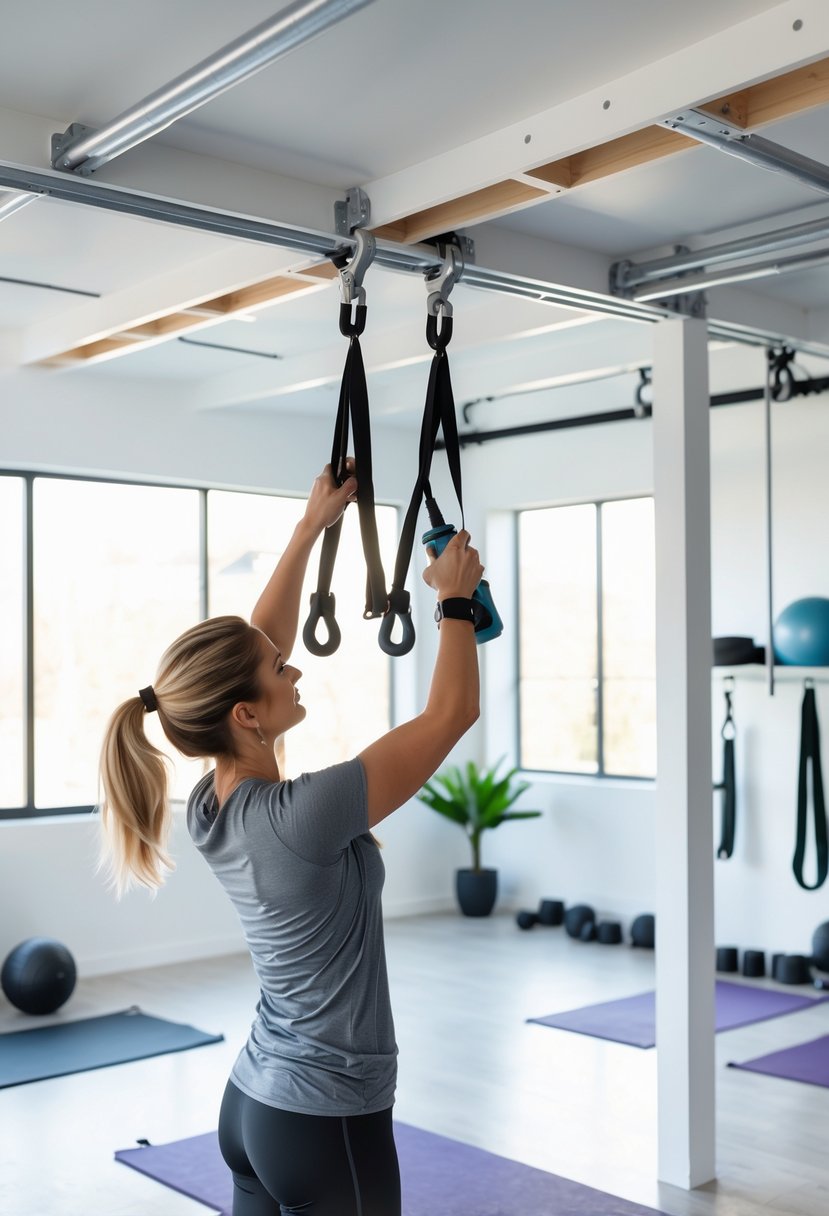
They mount secure points in the ceiling so aerial hammocks hold weight safely. A trained pro should inspect joists and install heavy-duty anchors rated for dynamic loads.
Users should choose hardware with clear weight ratings and follow manufacturer instructions exactly. Periodic checks for wear and loose fittings keep the setup safe.
Place the hooks where the hammock has enough clearance from walls and the floor for full movement. Proper spacing and height make aerial yoga comfortable and reduce strain.
23) Use a large stability ball for core workouts and stretching
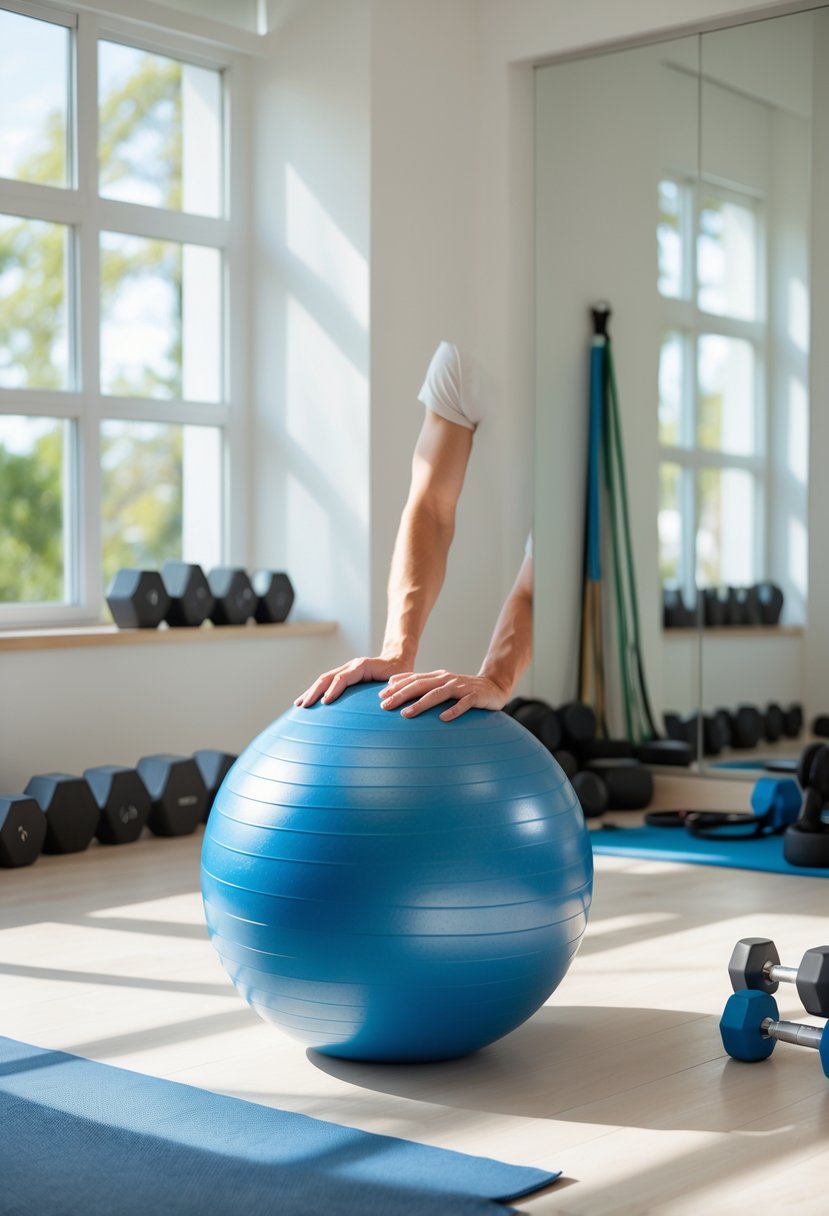
A large stability ball adds variety to a home gym and helps target core muscles. It supports planks, rollouts, and seated twists with low equipment cost.
They can also improve balance and posture when used for gentle back extensions or bridge lifts. For stretching, the ball opens the chest and eases spinal mobility.
Choose the right ball size for height and inflate it firm but slightly forgiving. Keep the area clear and use a non-slip mat for safety.
24) Build a shoe rack with workout mat storage underneath
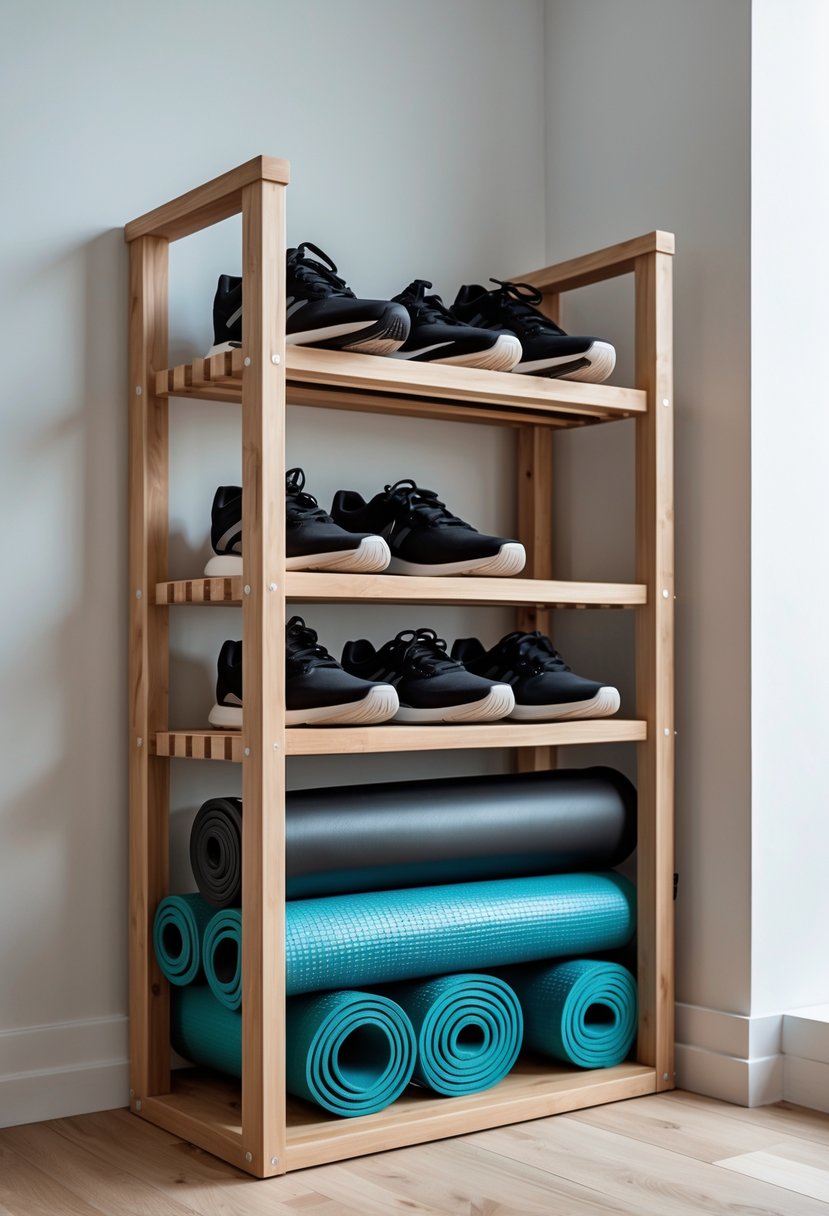
They build a low shoe rack with a shelf or slots under the bench to hold mats. This keeps shoes tidy and mats flat so they last longer.
A simple wooden or metal frame works and takes little time to make. It saves floor space and keeps the workout area clear.
They can add hooks on the sides for jump ropes or bands. The design stays flexible for different shoe sizes and mat thicknesses.
25) Attach a timer and clock for interval training
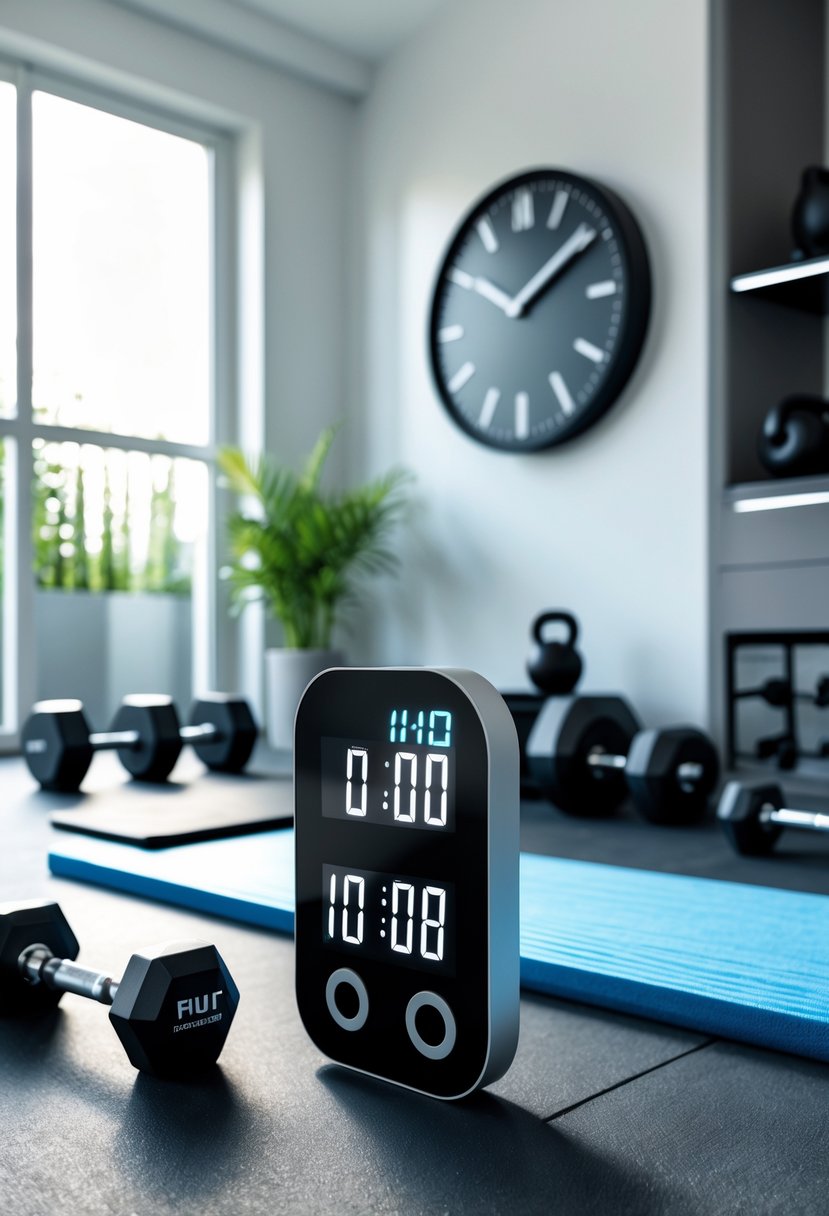
They mount a visible clock and a small interval timer near the workout space. This helps track rounds, work, and rest without stopping exercise.
A timer keeps sessions consistent and prevents guessing. It boosts intensity for short bursts and ensures proper recovery.
Choose a timer with loud beeps or a vibrating mode for noisy workouts. Battery or plug-in options work depending on placement and convenience.