

 By Trends Oraa
 This article was created in line with Trends Oraa’s research and content standards.
You often feel trapped in a small bedroom and want ideas that make the space work better for you. This article shows practical layout options and smart touches that help you use every inch without clutter or wasted space.
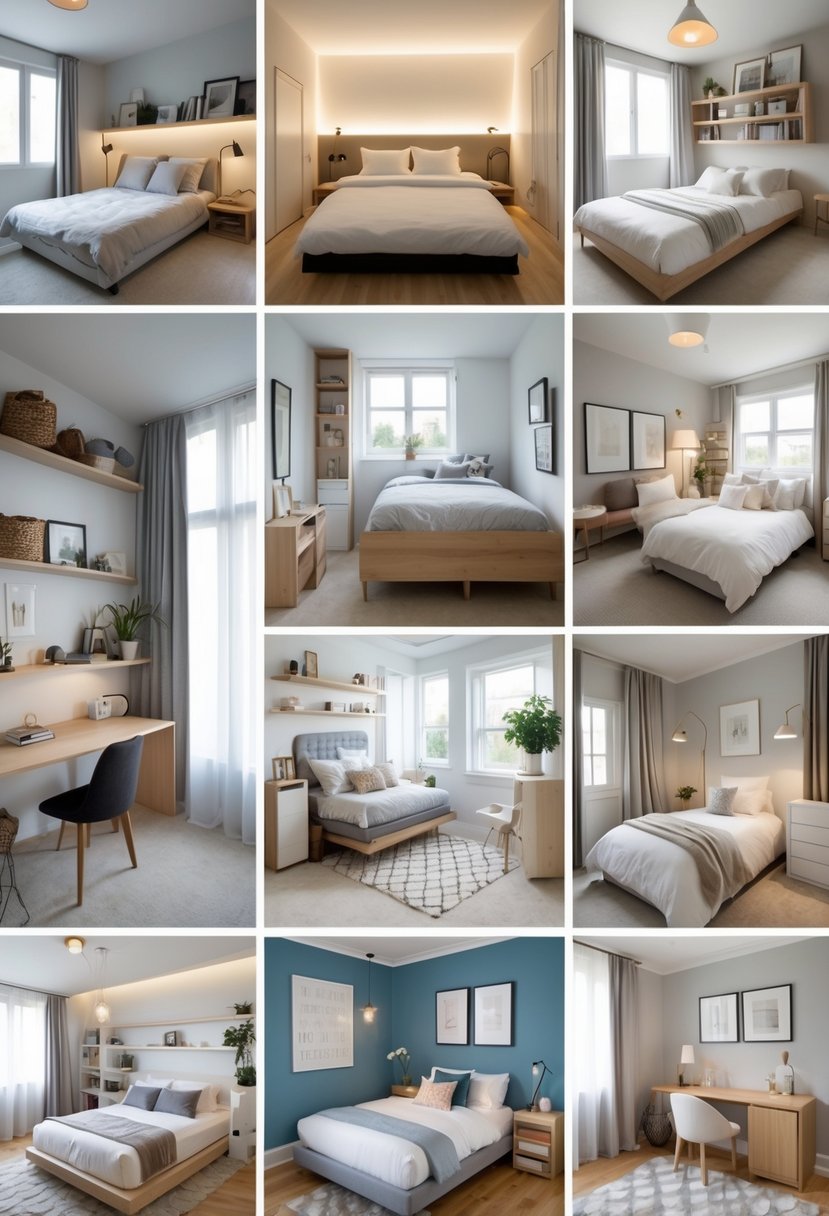
You will learn clear, easy-to-apply ways to boost storage, light, and usable floor area so the room feels larger and more useful.
1) Loft Bed with Under-Desk Setup
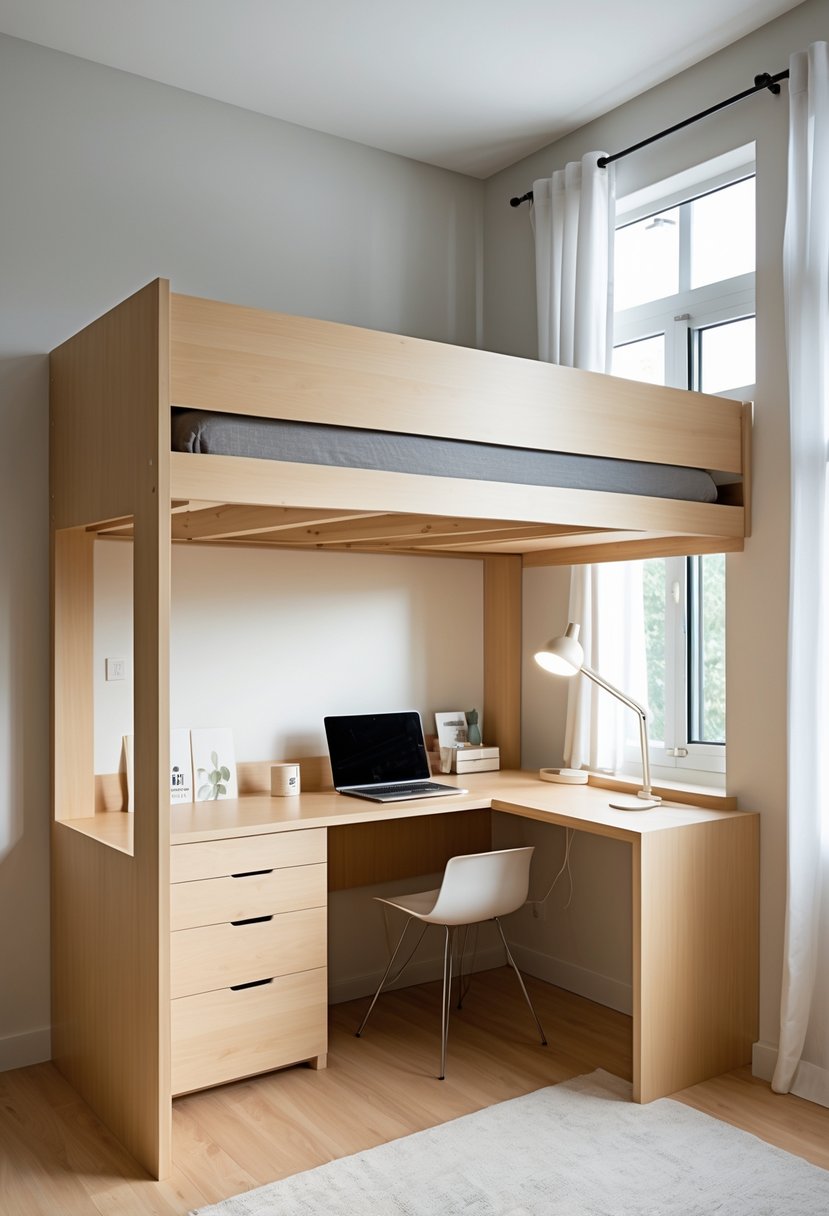
A loft bed lifts the mattress off the floor to free up floor space. It creates room for a desk, shelves, or a small seating area underneath.
They can fit in rooms with higher ceilings and work well in apartments or shared bedrooms. The desk below can hold a laptop, study lamp, and storage bins without crowding the sleeping area.
This layout keeps the sleeping zone separate from the work zone, which helps with focus. It also makes the room feel taller and less cluttered when arranged neatly.
Choose a sturdy frame and secure assembly to ensure safety. Add task lighting and a comfortable chair to make the under-desk area functional for study or work.
2) Wall-Mounted Fold-Down Desk
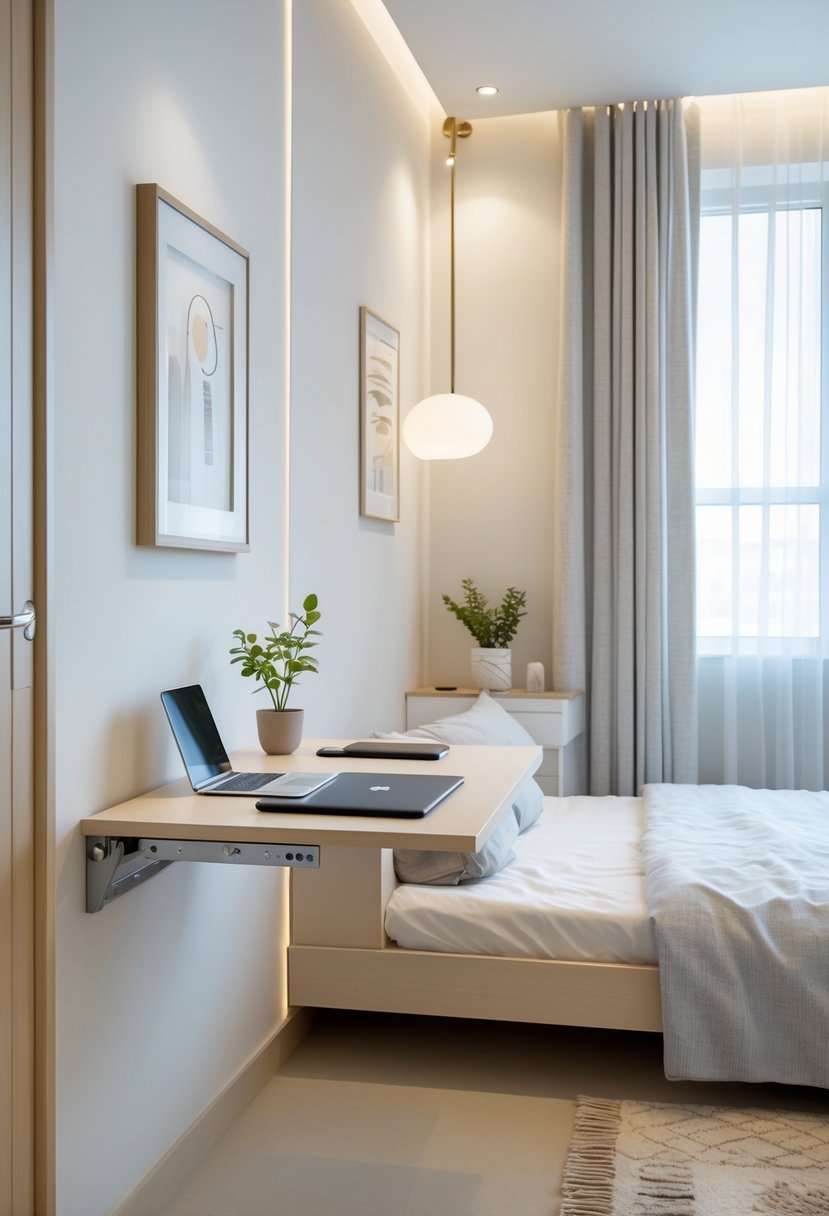
A wall-mounted fold-down desk saves floor space by folding flat when not in use. It gives a clear work surface for a laptop, journals, or a small lamp without needing a full desk footprint.
They often include built-in shelves or cubbies for pens and papers, so items stay organized and off the bed. Installation requires solid wall anchors or studs, and proper mounting keeps the desk stable during use.
This desk works well above a dresser or beside a bed, making use of vertical space. It suits students, remote workers, or anyone who needs a compact, tidy workspace in a small bedroom.
3) Built-In Shelving Around Bed
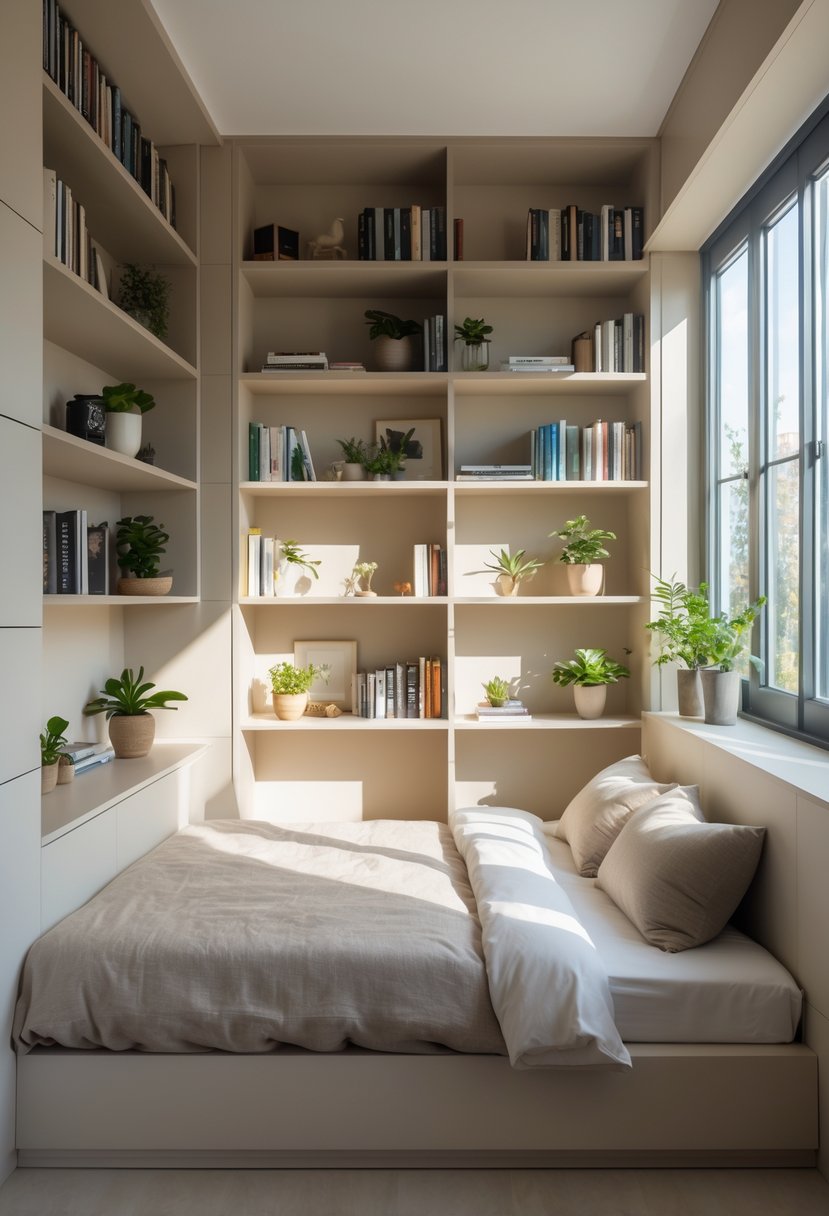
Built-in shelving around the bed makes use of wall space without crowding the floor. It gives a small room more storage for books, decor, and nighttime essentials.
They can frame the headboard, creating a cozy, finished look. Open shelves keep things visible and light, while closed cabinets hide clutter and keep the room calm.
Custom shelves fit the exact wall height and bed size, so every inch counts. Adding integrated lighting or a recessed niche creates a reading spot without extra lamps.
Neutral colors and simple lines keep the design from feeling heavy. Using the shelves for a few personal items and plants keeps the space functional and pleasant.
4) Sliding Door Wardrobe
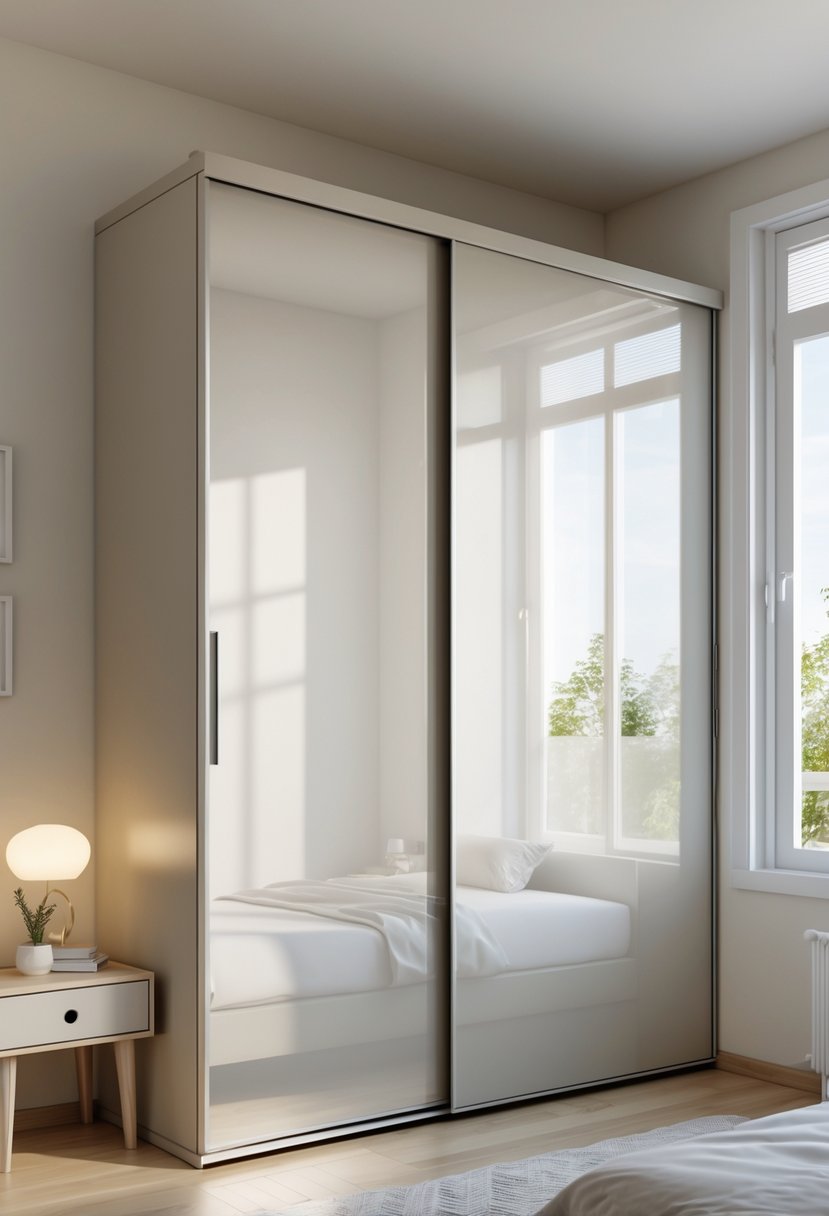
A sliding door wardrobe saves floor space because the doors glide sideways instead of swinging out. This works well in tight rooms where a hinged door would block a path or collide with furniture.
They often have a sleek, modern look that keeps the room feeling tidy. Mirrors on sliding doors add light and make the room feel larger without taking extra space.
Sliding wardrobes can be custom-fit to odd walls or built into alcoves. This lets storage use every inch, which helps keep small bedrooms clutter-free.
Choose smooth tracks and quality rollers so doors move quietly and last longer. Simple handles or recessed pulls keep the front flat, which maintains a clean, streamlined appearance.
5) Corner Shelving Units
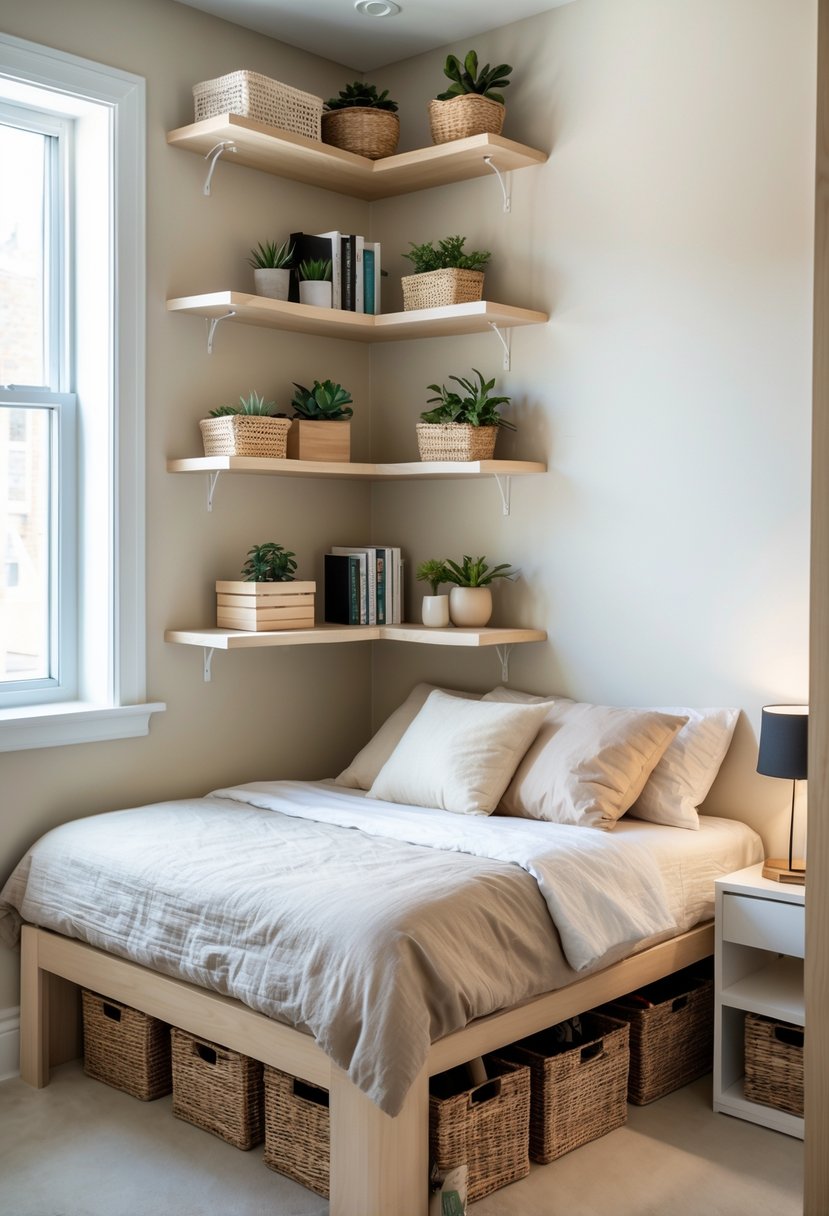
Corner shelving makes use of space that often stays empty. It fits snugly, freeing up the main walls for furniture or walking space.
They come in tall or short styles. A tall unit adds vertical storage for books and boxes, while a low one can double as a display surface.
Open shelves keep the room feeling airy. Closed cabinets hide clutter and give a cleaner look.
Floating corner shelves work well in very small rooms. They are lightweight and easy to install without taking floor space.
Choose a finish that matches the room to keep the look cohesive. Sturdy brackets and proper anchors are important so the unit holds up over time.
6) Neutral Color Palette Use
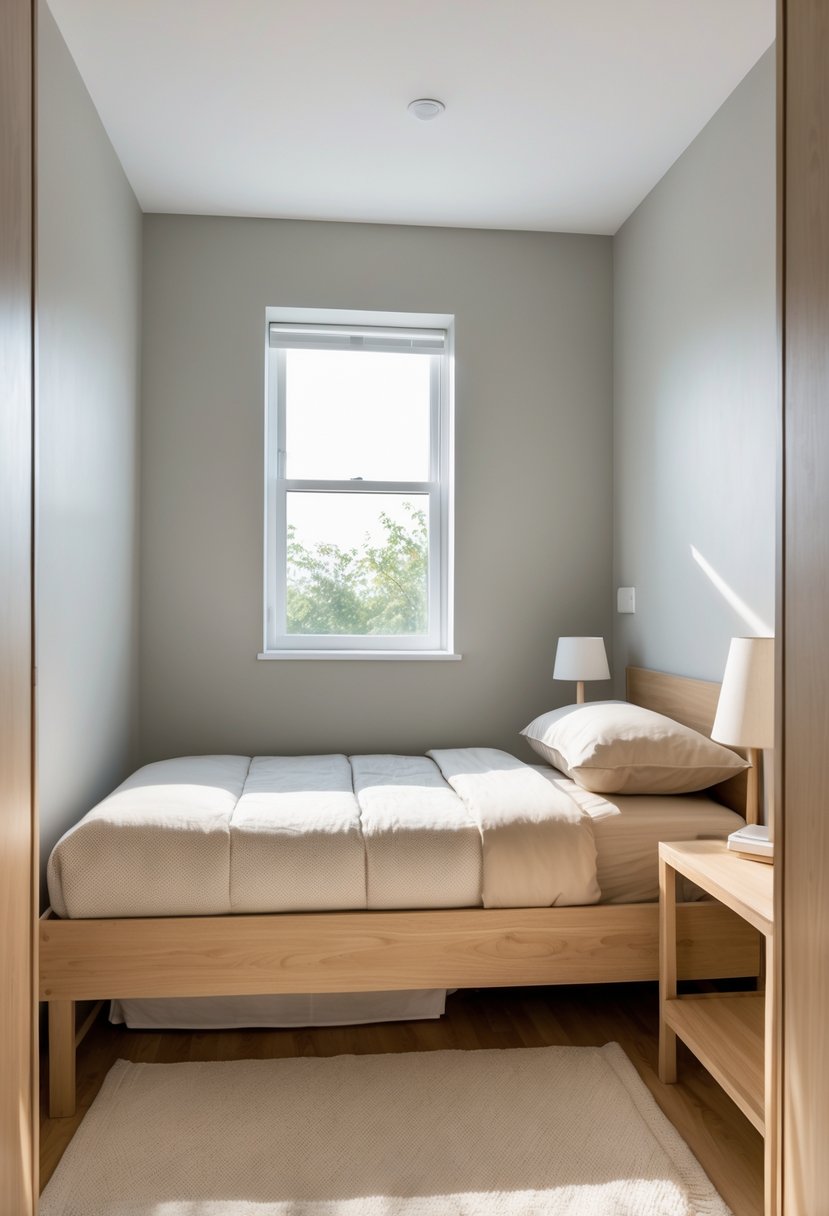
They choose neutral colors to make a small bedroom feel larger and calmer. Soft whites, beiges, grays, and muted pastels reflect light and reduce visual clutter.
A neutral palette gives flexibility for furniture and decor changes. It lets a few accent pieces stand out without crowding the space.
They should use tone variation to add depth—mix warm and cool neutrals rather than a single flat shade. Textures like woven rugs, linen bedding, and matte paint prevent the room from feeling bland.
They can add contrast with small, dark elements like a headboard or lamp. This keeps the room from looking washed out while still preserving an open, airy feel.
7) Multi-Functional Ottoman Storage
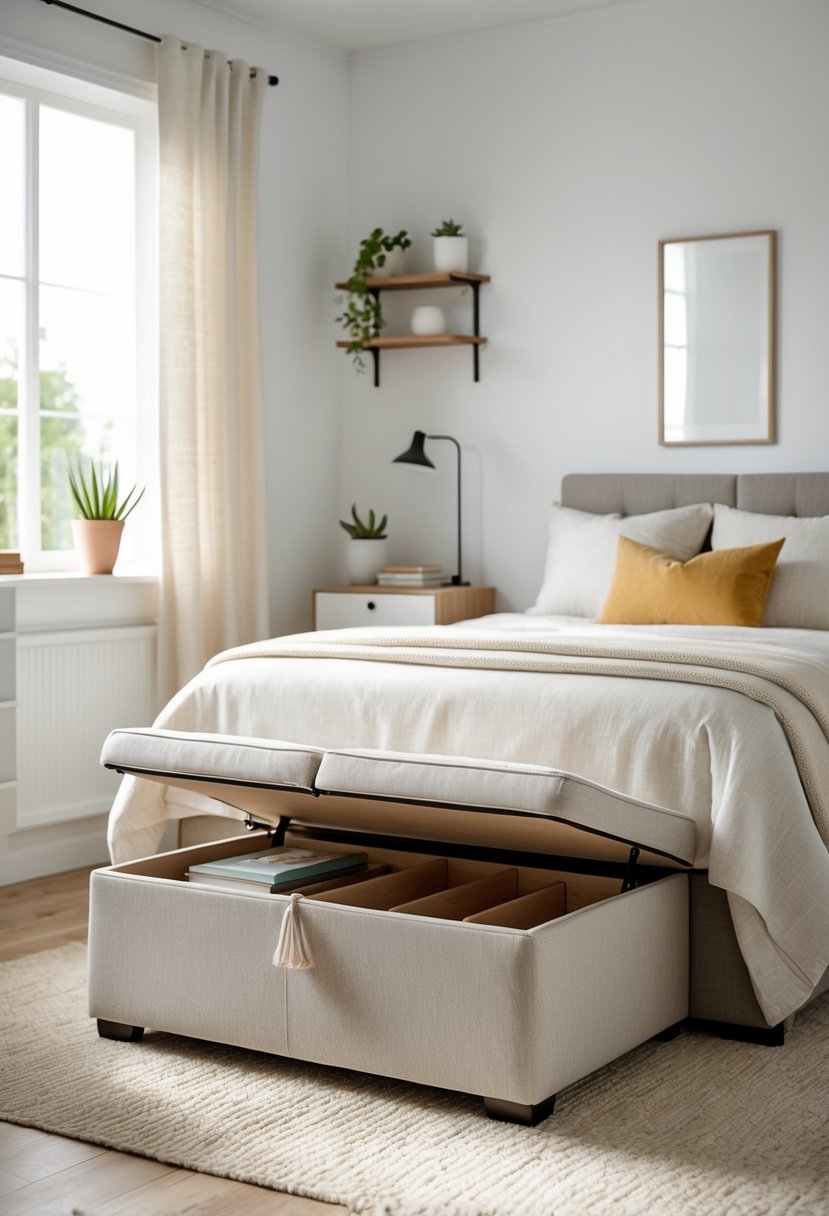
They can serve as seating, a footrest, and hidden storage all at once. A storage ottoman frees floor space by holding extra bedding, clothes, or boxes inside.
Place one at the foot of the bed or against a wall to create a small seating area. It can double as a nightstand when topped with a tray for a lamp or book.
Choose a size that fits the room’s scale; too large will crowd the space. Pick a neutral color or a pattern that complements the room to keep the look calm and cohesive.
Lightweight models are easy to move for cleaning or rearranging. Look for ottomans with divided compartments to keep items organized and easy to find.
8) Vertical Lighting Fixtures
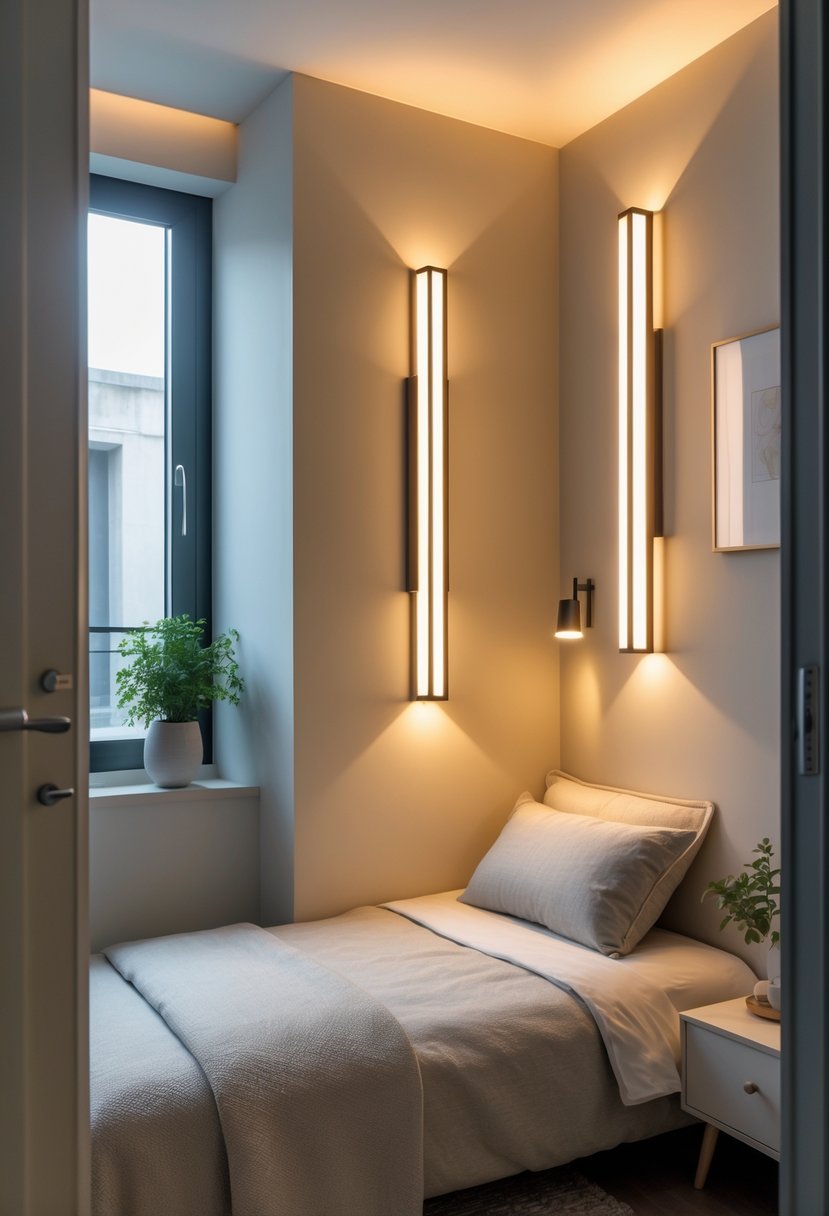
Vertical lighting fixtures draw the eye upward and make a small bedroom feel taller. They include wall sconces, floor lamps with tall stems, and slim pendant lights.
They free up bedside tables and create clean sightlines. This helps a room feel less cluttered while still providing task and ambient light.
Place sconces beside the bed or mirror to save surface space. Use dimmers to adjust mood and keep light levels comfortable for reading or relaxing.
Choose fixtures with slim profiles and warm, diffused light to avoid harsh glare. Metal or glass finishes reflect light and add a modern touch without crowding the room.
9) Under-Bed Storage Drawers
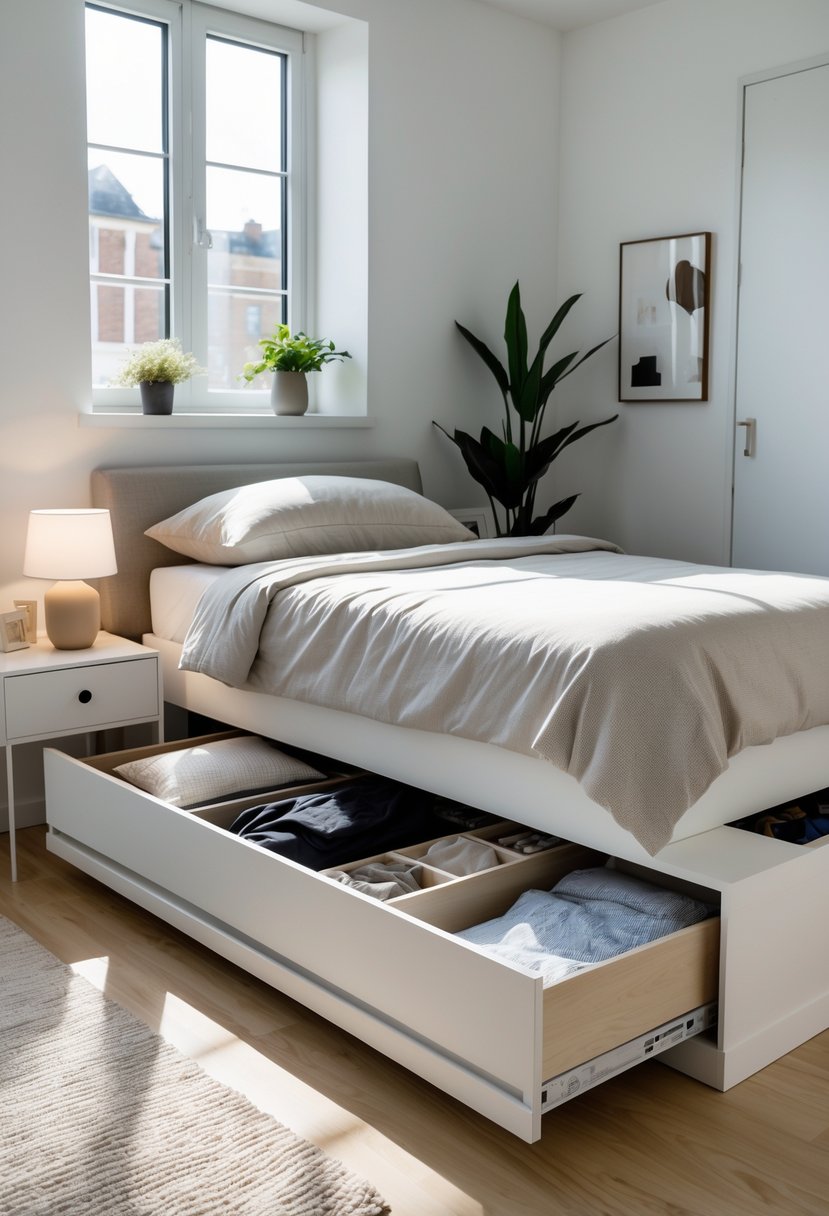
They slide in under the bed and free up closet and floor space. Drawers use the often-wasted area beneath the mattress for clothes, shoes, linens, or seasonal items.
Choose shallow drawers for socks and accessories and deeper ones for bulkier items. Some designs have wheels or built-in handles so they pull out easily without lifting the bed.
Wooden or plastic drawers fit most frames, and some platforms include integrated drawers for a cleaner look. Measuring the clearance under the bed first prevents buying units that won’t fit.
Labeling drawers helps find things quickly and keeps the system tidy. Using uniform bins makes the space look orderly and reduces visual clutter in a small room.
10) Mirror Wall to Enhance Space
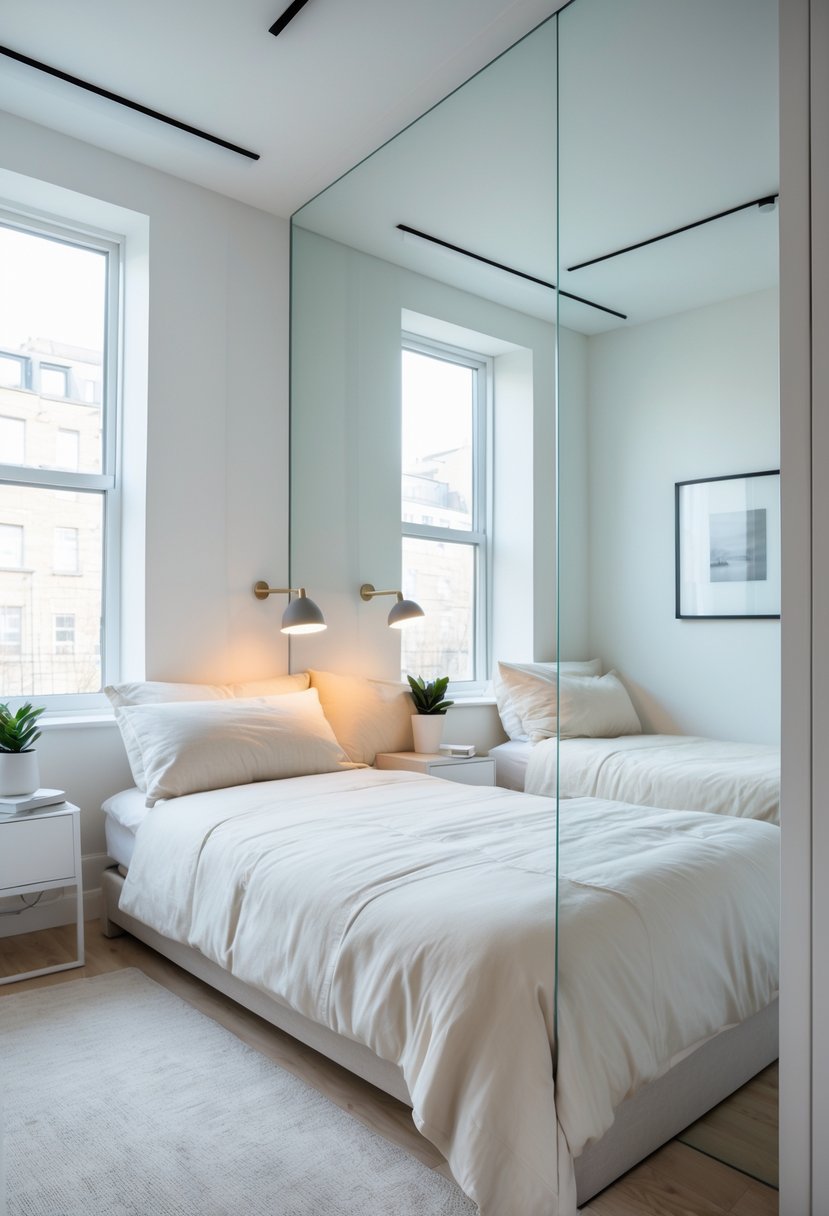
A mirror wall makes a small bedroom feel larger by reflecting light and the room itself. It doubles visual space without structural changes, which helps bright rooms more than dark ones.
They should place mirrors opposite windows when possible to boost daylight. Full-length or multiple panels work; seams can add a decorative grid or be hidden for a seamless look.
Mirrors also create a focal point and make simple decor look more intentional. Keep frames thin and colors neutral to avoid crowding the view.
Install mirrors securely and away from high-traffic spots to prevent damage. If they worry about weight, choose mirror tiles or acrylic panels that are lighter and easier to hang.