

 By Trends Oraa
 This article was created in line with Trends Oraa’s research and content standards.
You can make an awkward small bedroom layouts feel usable and calm without moving walls or spending a fortune. Designers fix tight layouts by prioritizing the path you need to move, packing smart storage into dead spots, and choosing furniture that fits the room’s shape.
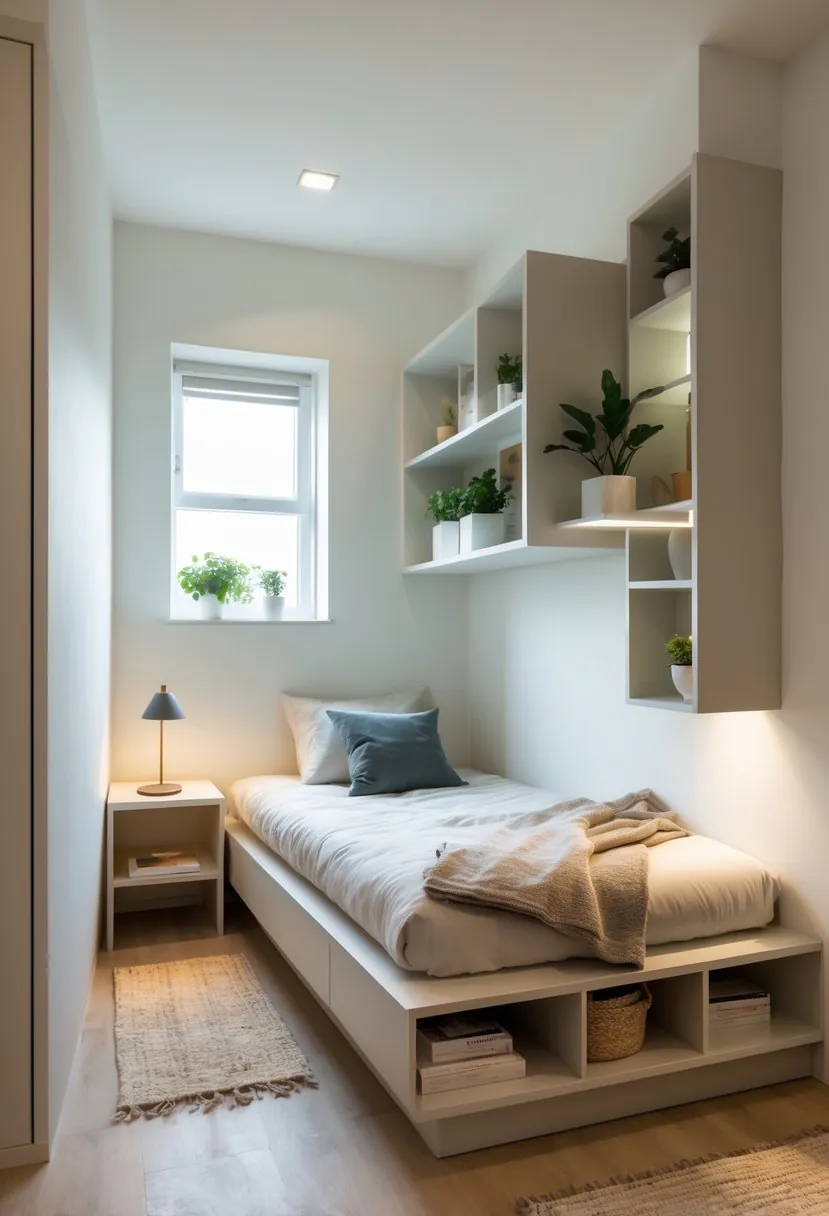
You’ll learn simple layout moves, storage tricks, and lighting ideas that make your small, oddly shaped room work like a normal one. The article breaks down common problems, clear rules for arranging furniture, and low-cost design hacks so you can plan a bedroom that looks bigger and functions better.
Common Awkward Small Bedroom Challenges
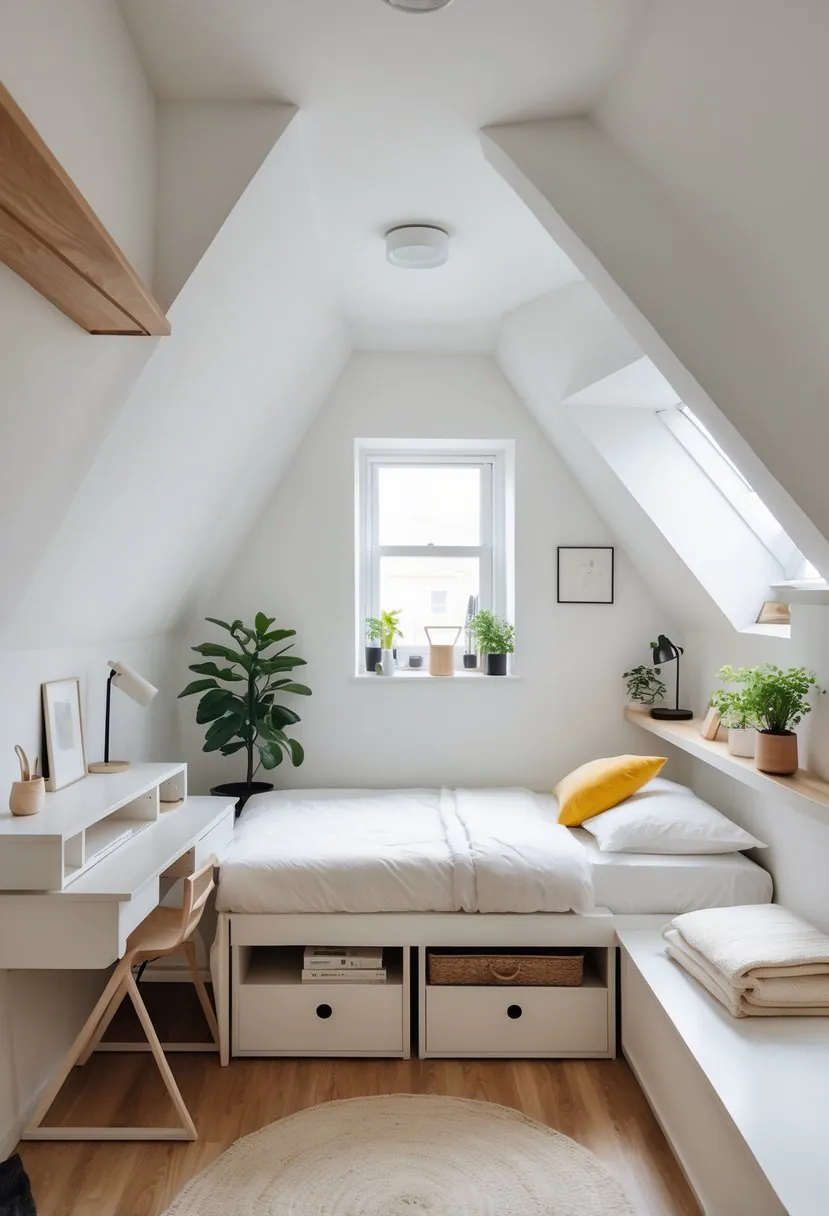
You will face tight layouts, low ceilings, and doors or windows that block usable wall space. Each problem needs practical fixes you can apply to fit a bed, storage, and walking space.
Unusual Room Shapes
Irregular shapes steal usable floor area and make furniture fit hard. Angled walls, alcoves, and odd corners limit where you can place a bed, dresser, or desk. Measure each wall and note floor-to-ceiling clearances before buying anything.
Use a scale drawing or tape to map furniture footprints on the floor. Place the bed where it blocks the least traffic—often along the longest continuous wall. Fit storage into alcoves with narrow built-ins or tall, slim wardrobes. Consider a platform bed with drawers to turn odd nooks into storage.
Keep sightlines open by arranging furniture to create a clear path from door to window. Use mirrors on flat walls to make the space feel wider. Pick small-scale furniture—twin or full bed and low-profile dressers—so you can keep walking space of at least 24–30 inches.
Sloped Ceilings and Eaves
Sloped ceilings cut headroom and hide usable wall space under eaves. You risk bumping your head, and standard tall furniture won’t fit where the ceiling drops. Measure lowest and highest points, and note where you can stand upright.
Put the bed or seating under the lowest slope if you don’t need to stand there. Install low dressers, built-in drawers, or shelves that follow the slope to use that space efficiently. For closets, use hanging rails in the highest area and shelves or drawers under the slope.
Light the slope with wall or floor lamps rather than overhead fixtures that need center clearance. Paint the slope and adjacent walls the same light color to reduce visual heaviness. Use shallow storage boxes and labeled bins to keep items accessible in low spaces.
Obstructive Doors and Windows
Doors and windows often force awkward furniture layouts and can block wall space needed for a bed or desk. A swinging door can eat into potential floor area, while a low window sill limits headboard height. Identify door swing and window sill height before placing big items.
Swap inward-swing doors for sliding or pocket doors to reclaim floor space. Mount the bed under a window if the sill height allows, or choose a low-profile headboard. If a window blocks a full wall, place narrow dressers or vertical shelving beside it instead of in front.
Use window treatments that don’t require much clearance, like blinds or roller shades. For privacy without losing light, install top-down shades. Anchor furniture to the nearest solid wall and leave at least 24 inches of clearance for door swing and traffic paths.
Essential Layout Principles for Small Bedrooms
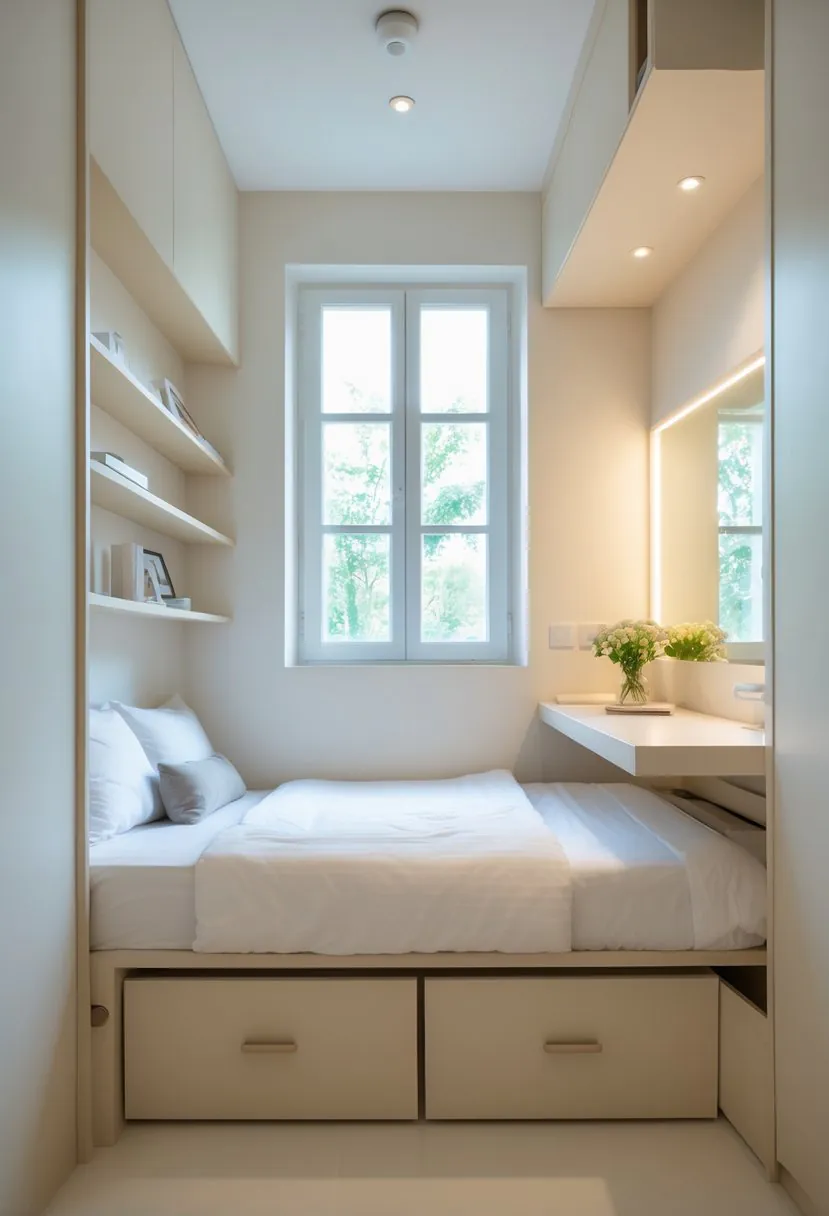
You will learn how to place the bed, keep clear paths, and free up floor space so the room feels larger and works better. Each step explains what to do, where to measure, and which pieces to choose.
Prioritizing Bed Placement
Place your bed first. Measure the room and the bed frame before moving anything else. Aim to position the bed against the longest solid wall if that wall doesn’t block a window or door swing.
Leave at least 24 inches of clear space on one side of the bed for easy access. If you only have space on one side, use a narrow floating nightstand or wall-mounted shelf to keep essentials within reach. For a bed under a window, use a low-profile headboard or no headboard to avoid blocking light.
If the room is very narrow, orient the bed with its head against the short wall to open the length of the room. Consider a platform or storage bed to combine sleeping and storage without extra furniture.
Maintaining Functional Traffic Flow
Sketch a simple floor plan with measurements. Mark door swings and window openings so you know which routes must stay clear. Keep a 24–30 inch walking path in front of closets and from the doorway to the bed.
Avoid placing dressers or chairs directly in the main path. If you need storage near the door, choose vertical units or slim shoe racks. Use sliding doors for closets or the room if swing doors would block flow.
Test the layout by walking the path with a tape measure. If you brush furniture or feel cramped, shift pieces or remove items until movement is smooth and unobstructed.
Maximizing Available Floor Space
Choose multi-use furniture: beds with drawers, desks that fold up, and ottomans with storage. Replace bulky bedside tables with wall shelves to free floor area. Keep larger pieces pushed against walls to open the center of the room.
Use vertical space for storage. Install two rows of shelves, hang hooks behind the door, and add a tall dresser instead of a wide one. Mount lights on the wall or ceiling to eliminate table lamps.
Limit furniture to essentials. A clear floor helps the room feel larger and reduces tripping hazards. Regularly declutter surfaces and rotate seasonal items to keep the room functional and tidy.
Smart Storage Solutions for Tight Spaces
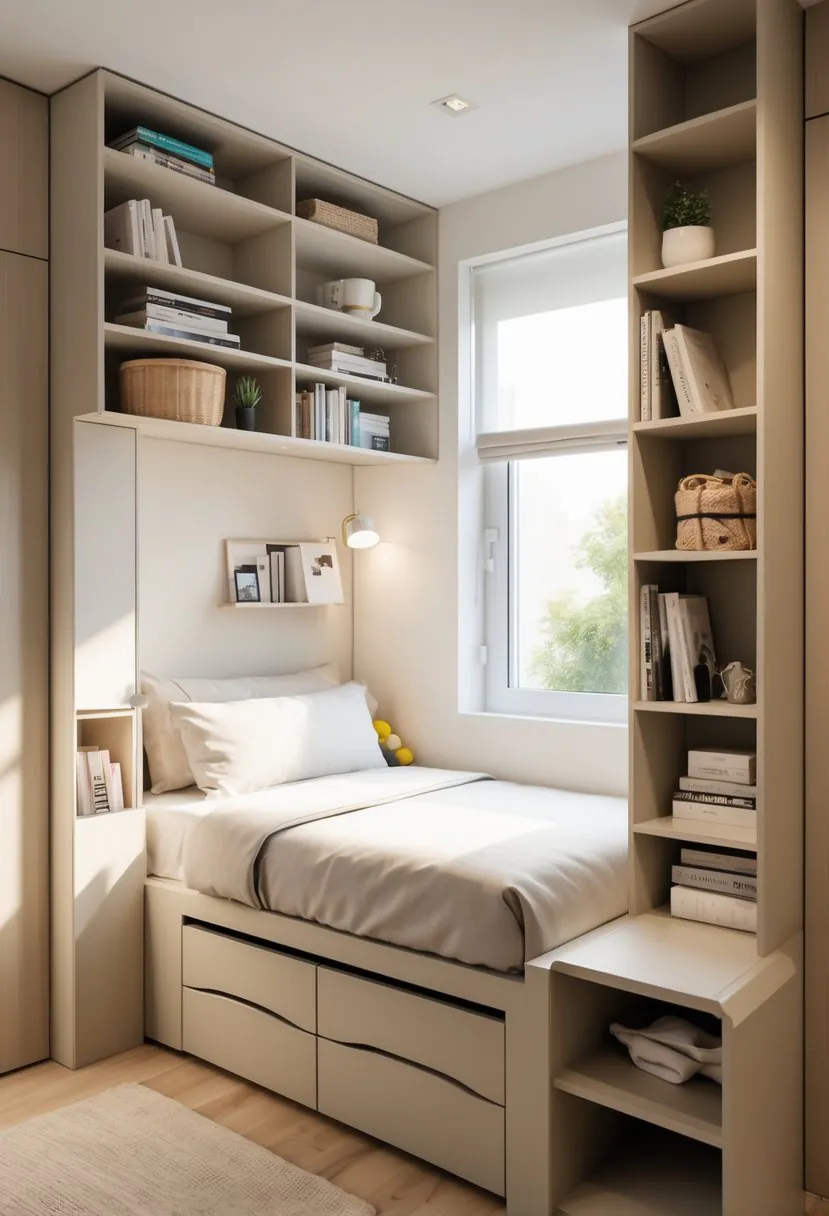
You can add lots of storage without shrinking your room. Focus on tall shelving, built-ins that use awkward nooks, and under-bed systems that hide bulk items.
Utilizing Vertical Space
Use wall height to store items and keep the floor clear. Install floor-to-ceiling shelves on one wall for books, baskets, and decor. Put heavier items lower and frequently used things at eye level.
Hang two or three floating shelves above the bed for small items and a reading light. Add a tall ladder shelf in a corner for shoes and plants. Use vertical pegboards or slat walls to hang bags, jewelry, and accessories.
Choose narrow, deep shelves rather than wide ones to avoid crowding. Paint them the same color as the wall to make them blend. Use labeled baskets so you can find things fast.
Built-In Wardrobes and Cabinets
Built-ins fit tight or oddly shaped walls and cut dead space. Have cabinets run from floor to ceiling around a door jamb or under a lofted bed. Include a mix of hanging rods, drawers, and adjustable shelves.
Place a shallow cabinet above window trim for seasonal items. Use a built-in wardrobe with sliding doors if swing space is limited. Add pull-out trays for shoes and small fabric bins for socks and scarves.
Fit a narrow vertical cabinet beside the bed for chargers and nighttime essentials. Choose recessed handles or push-to-open doors to save a few inches in tight aisles.
Under-Bed Storage Options
Under-bed storage hides bulky items you don’t need daily. Use low-profile rolling drawers to slide out easily. Measure clearance before you buy; some beds only allow slim boxes.
Try vacuum-seal bags for comforters and off-season clothes; stack them in a deep drawer or under-bed bin. For wood slat beds, install a raised platform with built-in drawers to gain full-width storage.
Keep organizers labeled and grouped—bed linens in one bin, shoes in another. If you store valuables, use a lockable under-bed box that fits flush to avoid tripping.
Furniture Arrangement Strategies
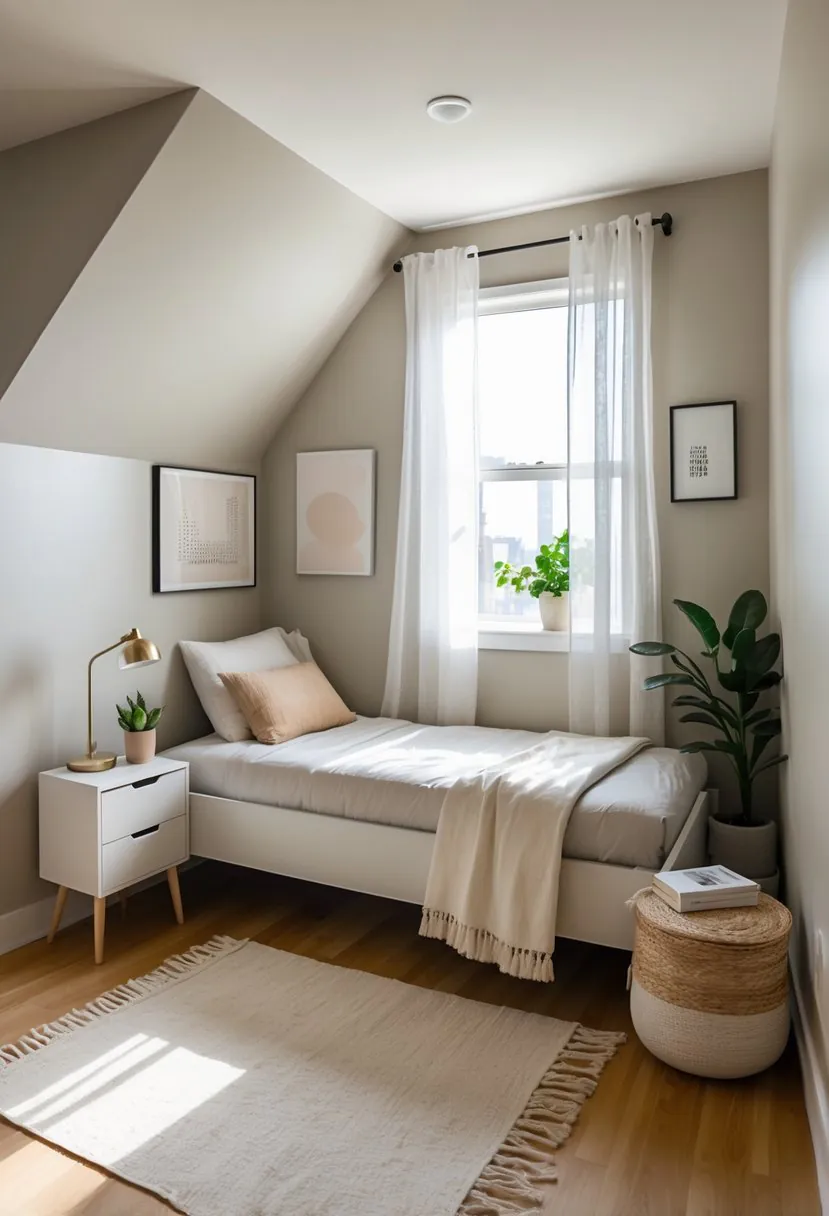
Place furniture to make movement easy and keep the bed as the anchor. Use pieces that do more than one job and choose minimal shapes to prevent tight corners and blocked light.
Flexible Multifunctional Furniture
Pick a bed with built-in drawers or a platform that hides boxes. This frees up closet and floor space and keeps the room tidy without extra shelving.
Use a desk that folds into the wall or a nightstand that doubles as a small work surface. You get a workspace without a separate table taking floor space.
Choose a storage ottoman or bench at the foot of the bed. It works as seating, a place to put clothes, and hidden storage for blankets.
Look for wall-mounted lighting instead of table lamps. That clears bedside surfaces and makes the room feel less crowded.
Avoiding Clutter with Minimal Pieces
Limit the room to essential items: bed, one small dresser, and a task light. Each item should have a clear purpose and a slim profile.
Opt for narrow dressers or vertical shelving to use height instead of width. This keeps floor space open for walking and visual flow.
Keep surfaces flat and mostly empty. Use hooks behind the door for bags and robes.
Measure before you buy. Fit a new piece on a floor plan or with painter’s tape on the floor to avoid surprise tight fits.
Design Tricks for Visually Enlarging Small Rooms
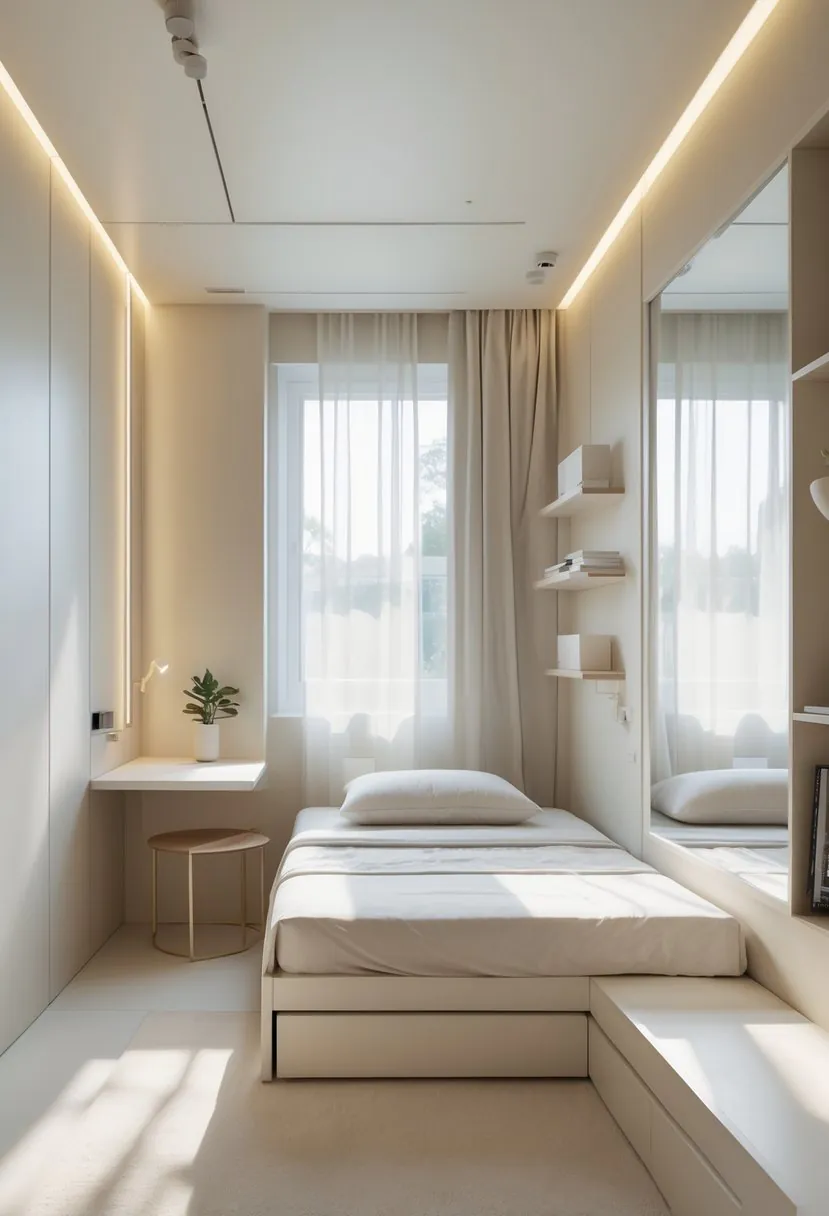
You can make a small, awkward bedroom feel larger without major construction. Use mirrors to bounce light and pick paint and trim colors that pull walls away from the bed.
Strategic Use of Mirrors
Place a large mirror across from a window to reflect natural light. A floor-to-ceiling mirror or a wide framed mirror above a low dresser works best to double the light and view. Angle mirrors slightly toward the room’s focal point, like the bed or a piece of art, to create depth.
Use multiple smaller mirrors in a grid when a single piece won’t fit the wall. Choose thin frames or frameless styles so the frame doesn’t add visual weight. Mount mirrors at eye level for seating areas and lower near beds to reflect more floor and make the room feel taller.
Color Schemes to Create Space
Paint the ceiling a shade lighter than the walls to make it recede. Use the same light color for trim and baseboards so edges blur and the room reads as one continuous space. Soft neutrals like pale gray, warm white, or muted beige work well.
Create a focal wall with a slightly deeper tone behind the bed, but keep the rest of the walls light. For furniture, pick pieces in tones close to the wall color to reduce contrast. Add one or two accent colors through pillows or a rug to keep the room interesting without breaking the visual flow.
Lighting Solutions for Awkward Bedrooms
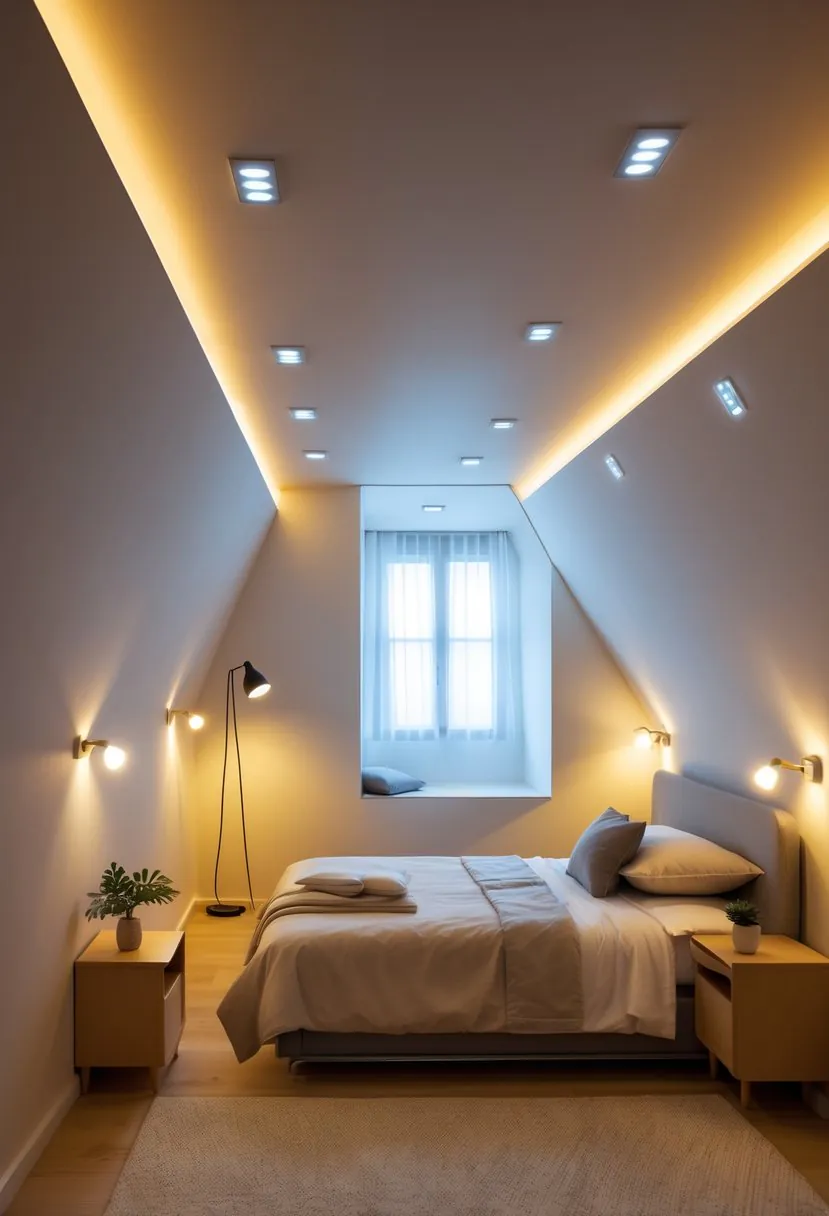
Good lighting makes cramped or oddly shaped bedrooms feel larger and more usable. Focus on layered light, task spots, and ways to boost daylight where you can.
Layered Lighting Techniques
Use three light layers: ambient, task, and accent. Ambient lighting gives overall brightness — choose a flush mount or a semi-flush fixture for low ceilings. Install a dimmer so you control mood and brightness.
Add task lights where you need them. Use wall-mounted swing-arm sconces or adjustable reading lights by the bed. Clip-on lamps or a narrow floor lamp work well when side tables won’t fit.
Place accent lights to highlight a feature or to add depth. Try LED strip lights under a loft bed edge, inside a wardrobe, or along a low shelf. Use warm color temperature (2700–3000K) for cozy tones and cooler light (3500K–4000K) for work zones.
Enhancing Natural Light
Maximize daylight to reduce dependence on fixtures. Keep window treatments light and short; sheer curtains or a top-down blind let in light while keeping privacy. Mount curtains close to the ceiling to make the room feel taller.
Use reflective surfaces to bounce light: a mirror opposite the window, glossy nightstand paint, or metallic décor. Place the bed and desk so they don’t block the window. If furniture must sit near the window, choose lower-profile pieces.
Consider a skylight or solar tube if the room has no exterior wall. These add real daylight without taking floor space.
Personalizing Awkward Small Bedrooms
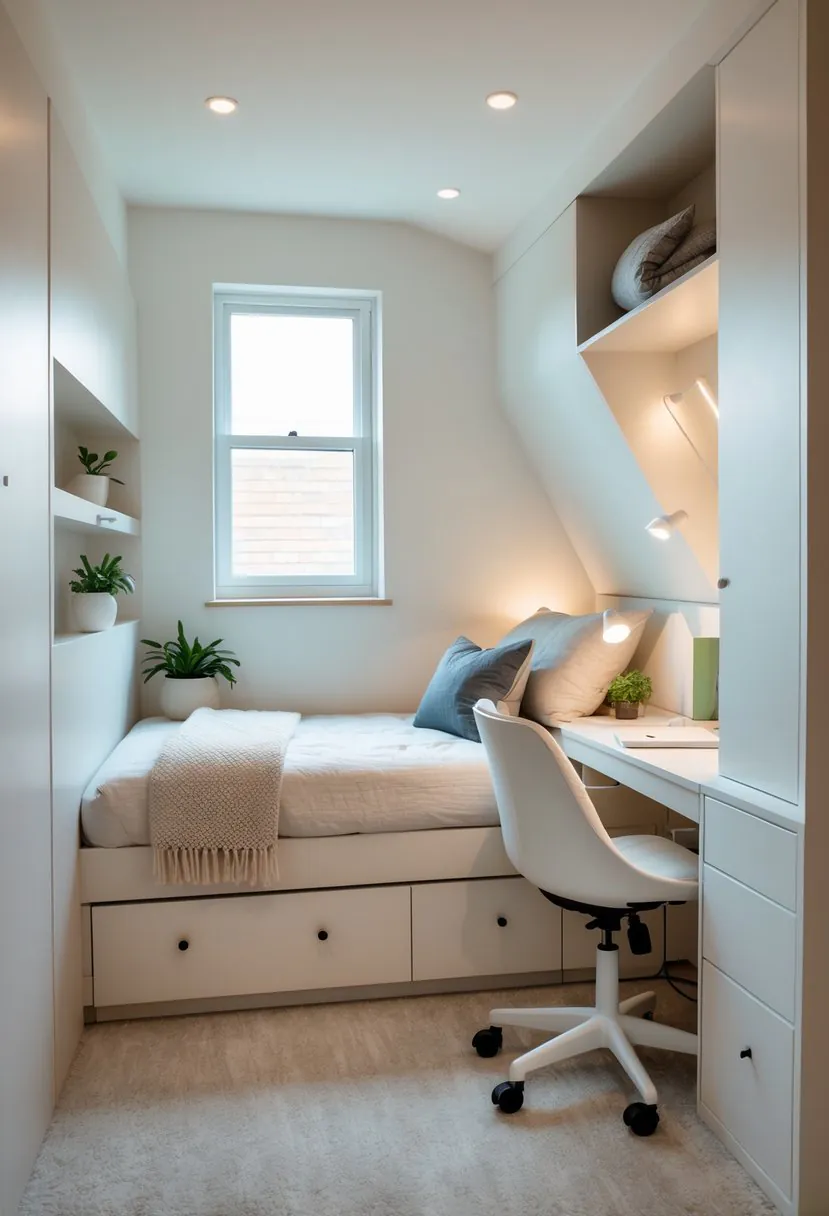
Focus on items that add personality but also serve a purpose. Pick pieces that fit the room’s shape and size so you don’t block pathways or lose usable space.
Incorporating Decor Without Overwhelming
Choose a small number of bold items instead of many tiny things. Pick 2–3 focal pieces like a patterned rug, a lamp with character, or a framed mirror. Place them where they balance the room: rug under the bed, lamp on a narrow nightstand, mirror on the wall opposite a window to boost light.
Use color in one strong accent and a couple of softer tones. For example, pick navy throw pillows, a pale gray duvet, and white walls. That keeps the room calm and makes the accent color feel intentional.
Prioritize multiuse decor. A woven basket can hold blankets and act as a side table. Floating shelves display a plant and free up floor space. Keep surfaces tidy; clutter makes awkward corners feel worse.
Creative Uses of Wall Art
Hang art to guide the eye and make walls feel useful. In narrow rooms, a horizontal gallery above the bed widens the visual field. In tall, narrow spaces, stack two vertical prints to emphasize height without crowding the floor.
Use art to hide flaws and anchor furniture. Place a large canvas above a headboard to mask uneven walls. Lean framed pieces on a shallow shelf if you want to change the layout often.
Mix textures and frames for depth: one woven wall hanging, a black frame, and a small metal sculpture shelf. Keep frames consistent in color or material for a cleaner look. Aim for balance—leave negative space so each piece breathes.
 Alexa James