

 By Trends Oraa
 This article was created in line with Trends Oraa’s research and content standards.
You’ll find fresh ideas to make a small black living room look intentional, cozy, and stylish without overwhelming the space. This article shows practical ways to use black—through paint, furniture, textures, and lighting—so a small room feels balanced and inviting.
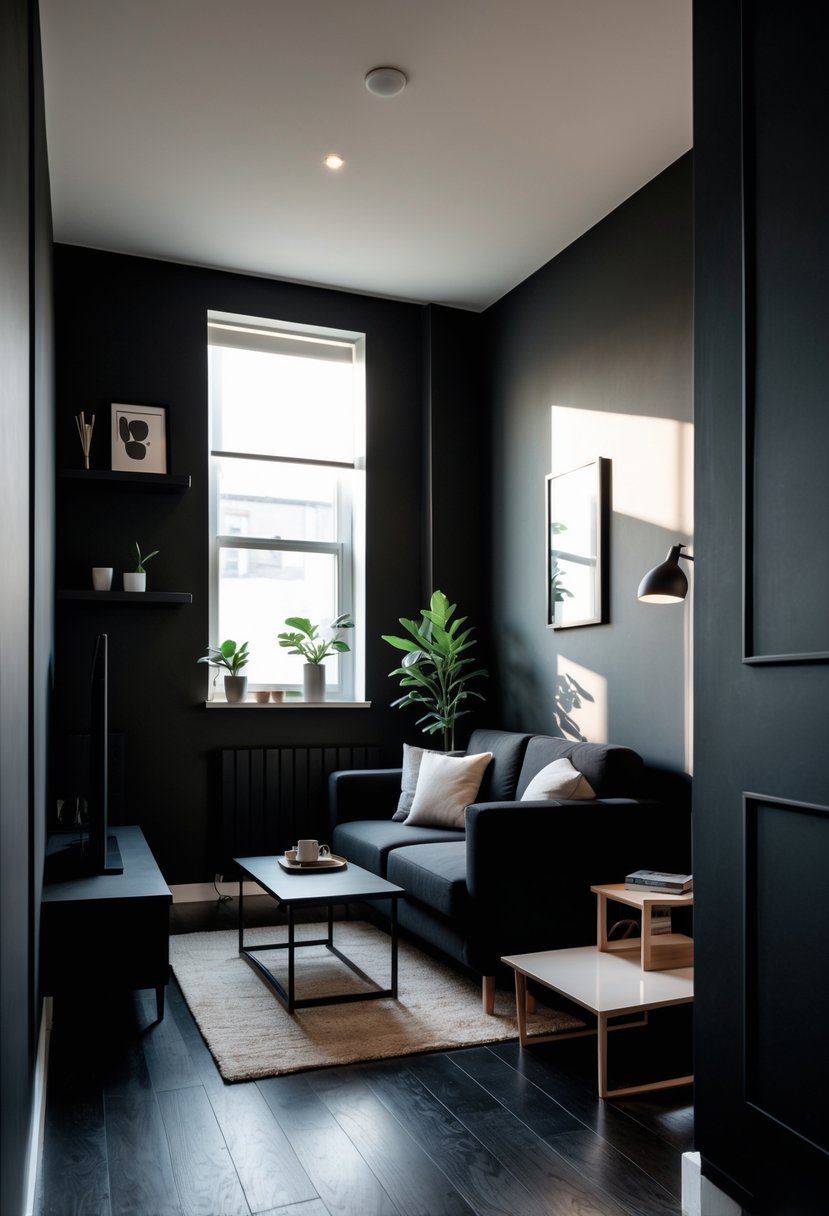
They can learn how to add contrast, reflect light, and layer materials to keep the space bright and interesting. Expect clear tips on using metallic accents, greenery, mirrors, rugs, and neutral tones to create depth and cohesion.
1) Use matte black paint to create depth
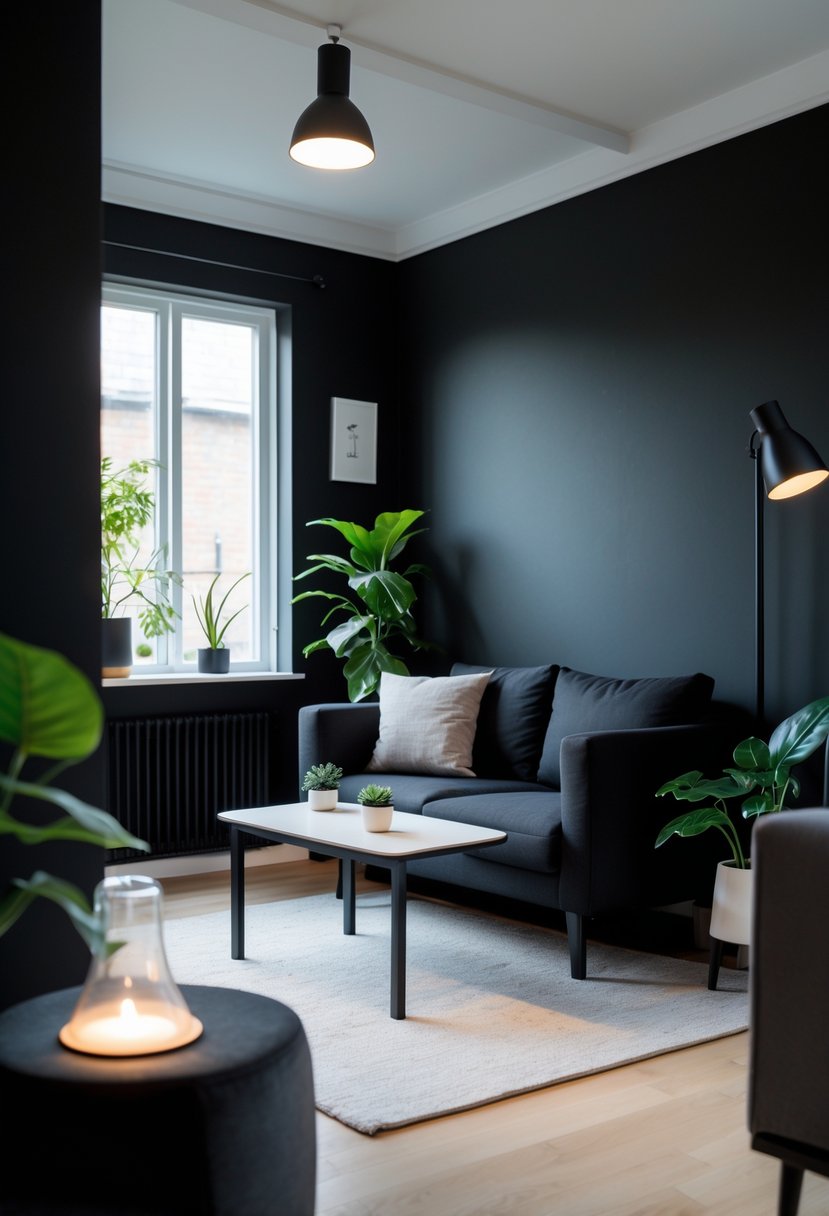
Matte black paint soaks up light and helps a small living room feel deeper without glare.
They can paint a single wall or the entire room to make furniture and art stand out.
Matte finishes hide imperfections better than gloss, giving a smooth, calm look.
Pair it with lighter textiles and mirrors to keep the space from feeling closed in.
2) Incorporate gold accents for contrast
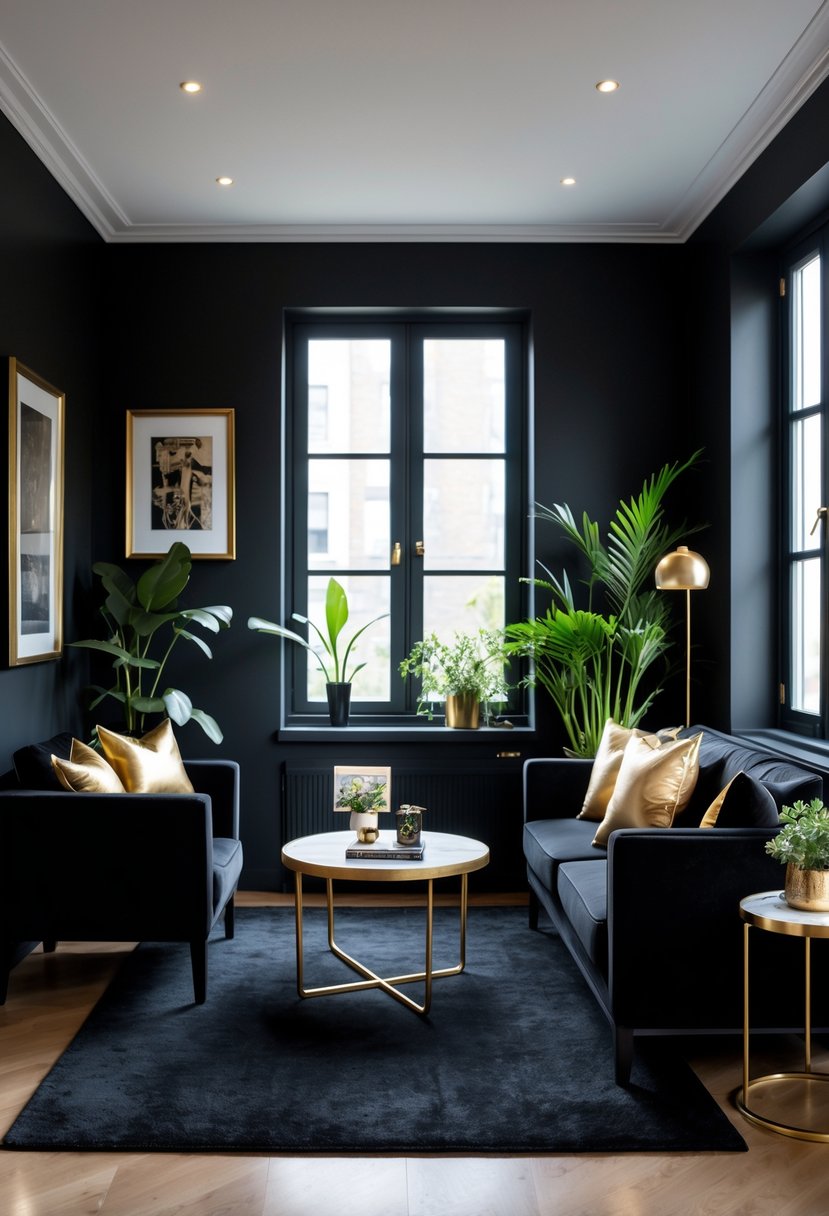
They add warmth and shine against black walls or furniture. Small gold touches like a lamp base, mirror frame, or throw pillow trim lift the room without overwhelming it.
Use a few pieces spread across the space to keep balance. Too much gold can feel gaudy, but well-placed accents create a refined, modern look.
3) Choose a black leather sofa as a focal point
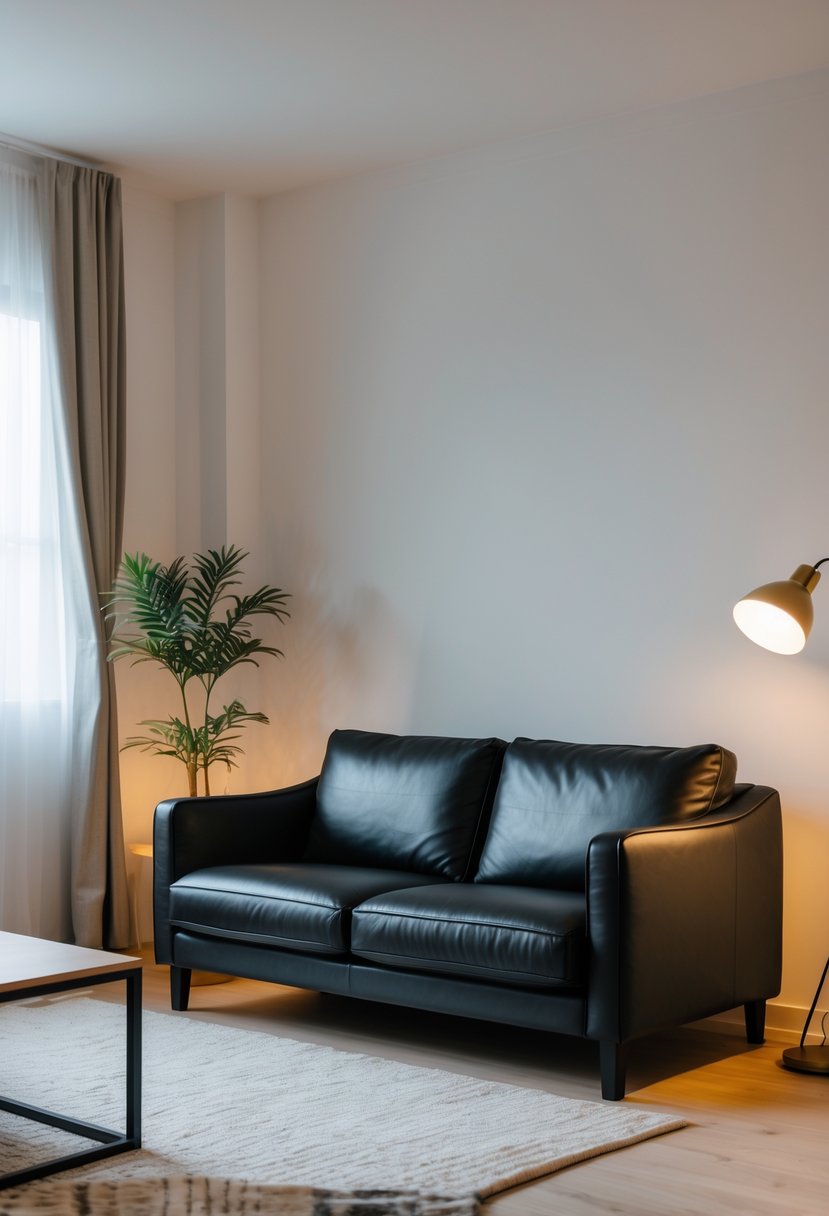
A black leather sofa anchors the room with clean lines and a strong presence. It gives a clear focal point without competing patterns or colors.
They pair well with light walls and textured rugs to balance contrast. Leather is easy to clean and ages well, which suits busy households.
Place the sofa against a wall or floating it to define seating. Add a few soft pillows in muted tones to soften the look.
4) Add textured black wallpaper for interest
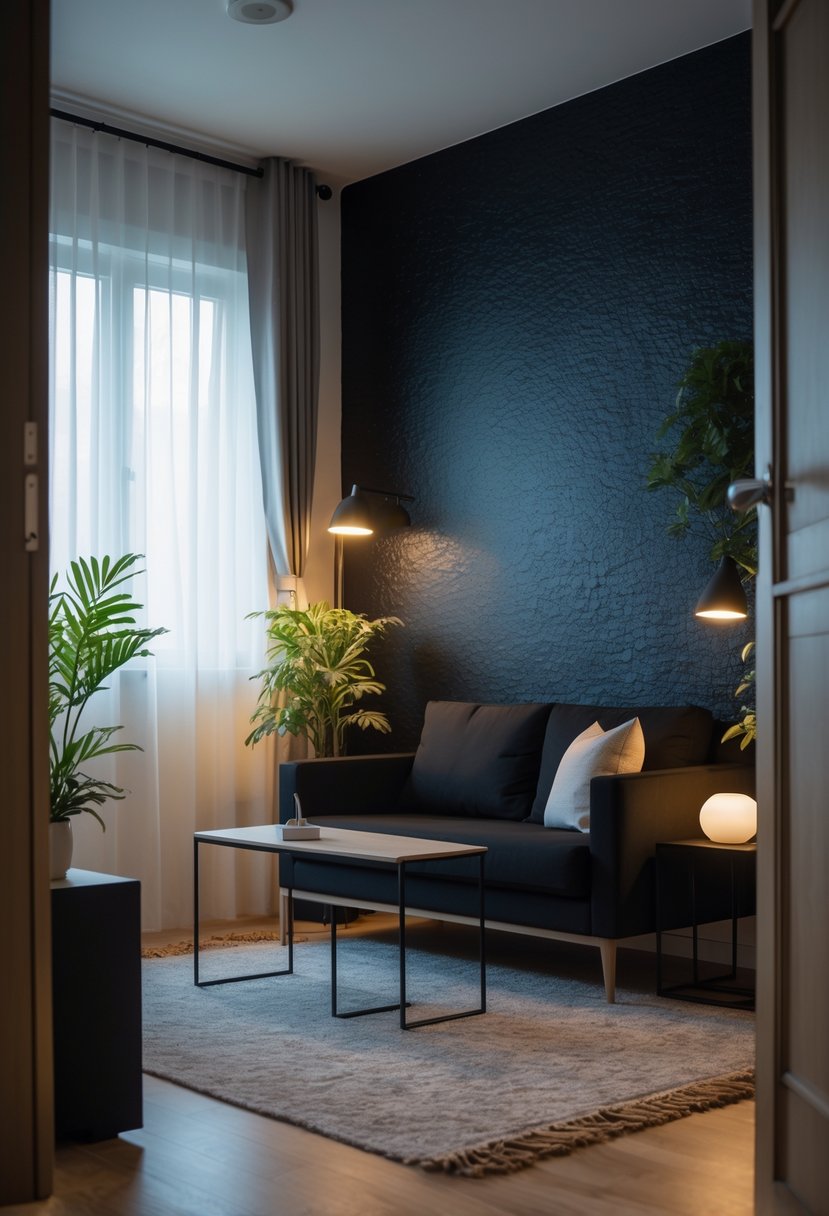
They can use textured black wallpaper to add depth without changing color.
A subtle pattern like grasscloth, linen, or embossed geometric prints creates shadow and variation.
Textured paper hides minor wall flaws and reduces echo in a small room.
Keep furniture and décor lighter or varied in material to prevent the space from feeling heavy.
5) Use mirrors to enhance light
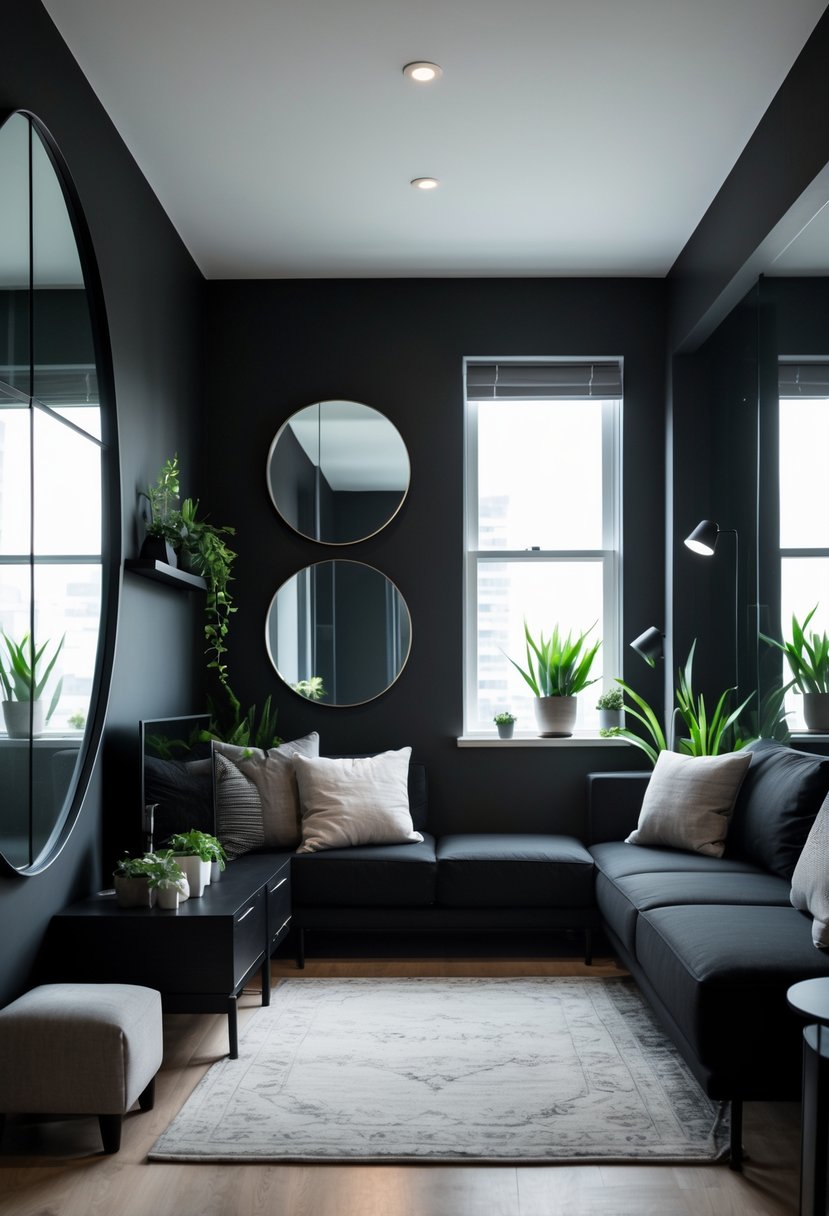
They place mirrors opposite windows to bounce daylight deeper into the room. A large mirror can make a small black living room feel brighter without changing paint or furniture.
Mirrors with thin frames keep the look clean and modern. Grouping small mirrors adds interest and reflects light from multiple angles.
6) Incorporate greenery with dark planters
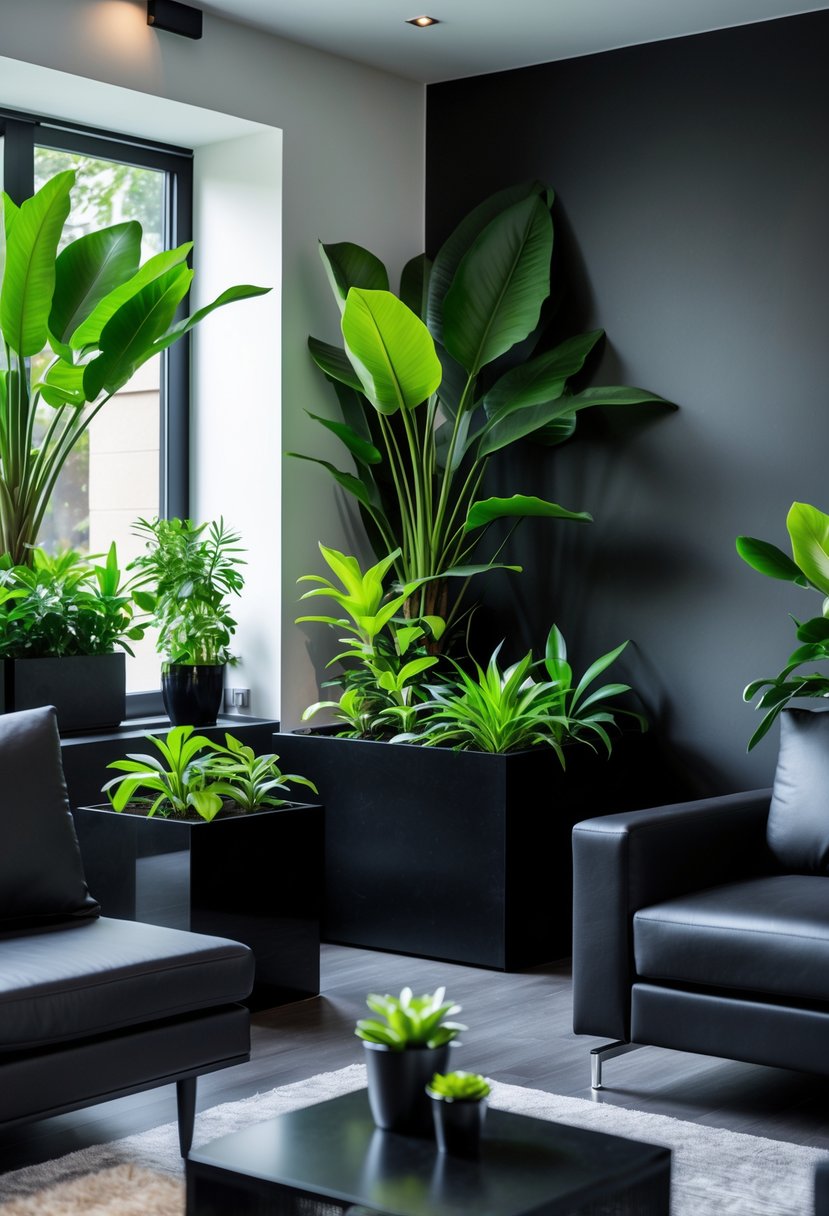
They add life and soften the room without breaking the black palette. Dark planters—matte black, charcoal, or deep bronze—keep the look cohesive.
Choose plants with bright or varied leaves to create contrast. Tall plants give height; small succulents add texture and fit on shelves.
Place planters near windows for light and on side tables to draw the eye. Grouping different sizes creates a curated, calm feel.
7) Select black wood furniture for cohesion
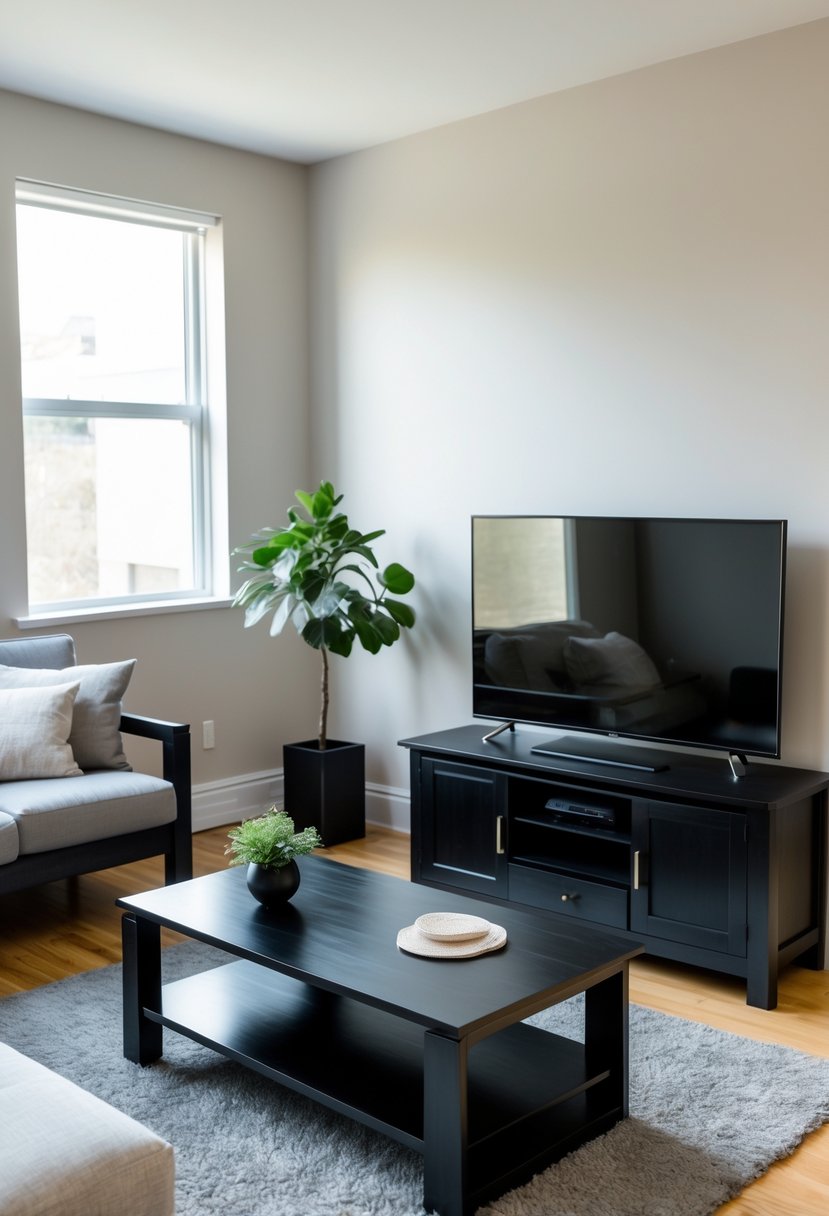
They should choose black wood pieces to tie the room together. Black furniture creates a steady, unified look without adding visual clutter.
Mix matte and satin finishes to add depth. A black coffee table, media console, and shelving work well together.
Keep proportions small to fit the space. Lighter fabrics and reflective accents can prevent the room from feeling heavy.
8) Use layered lighting to avoid darkness
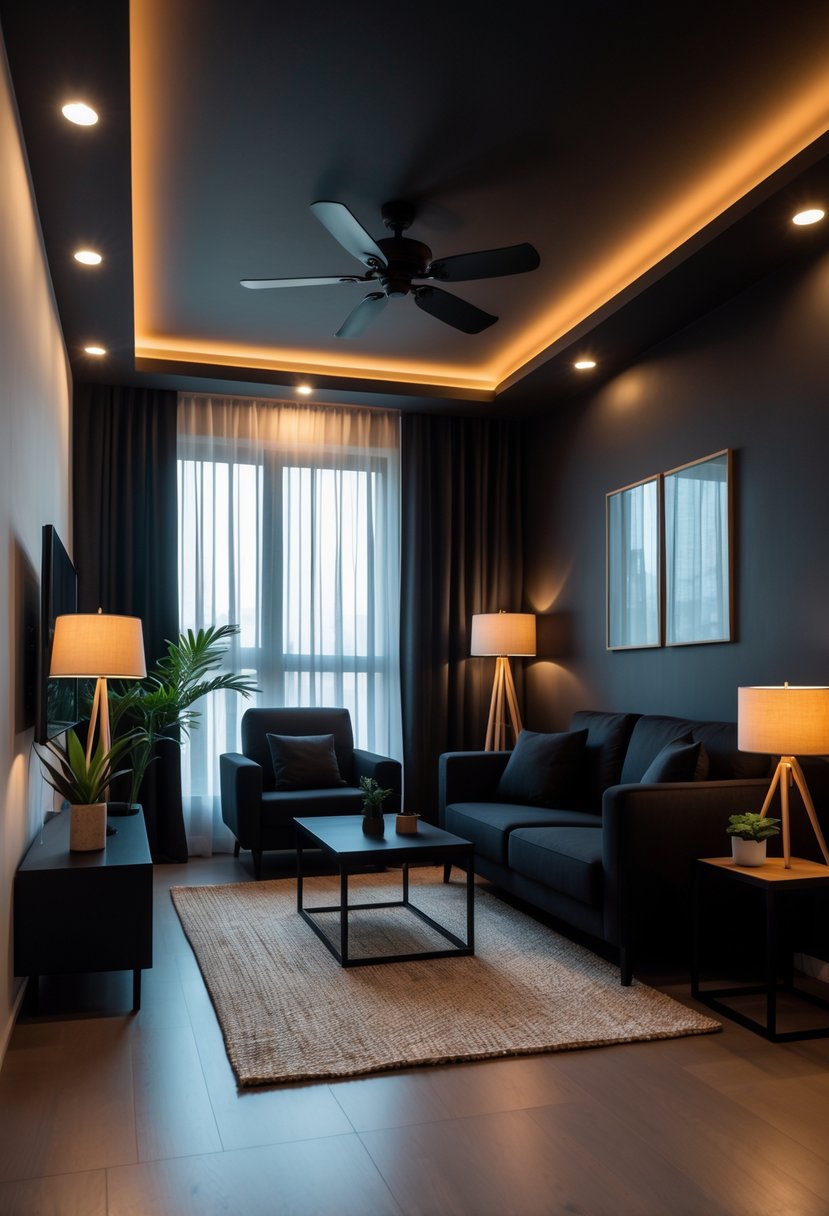
They add three light types: ambient, task, and accent. This balances brightness and keeps the black room from feeling gloomy.
Ambient light fills the space with soft, even glow. Table or floor lamps provide task light for reading or hobbies.
Accent lights highlight art or architectural features and add depth. Dimmers let them control mood and keep scenes comfortable.
9) Add geometric black area rugs
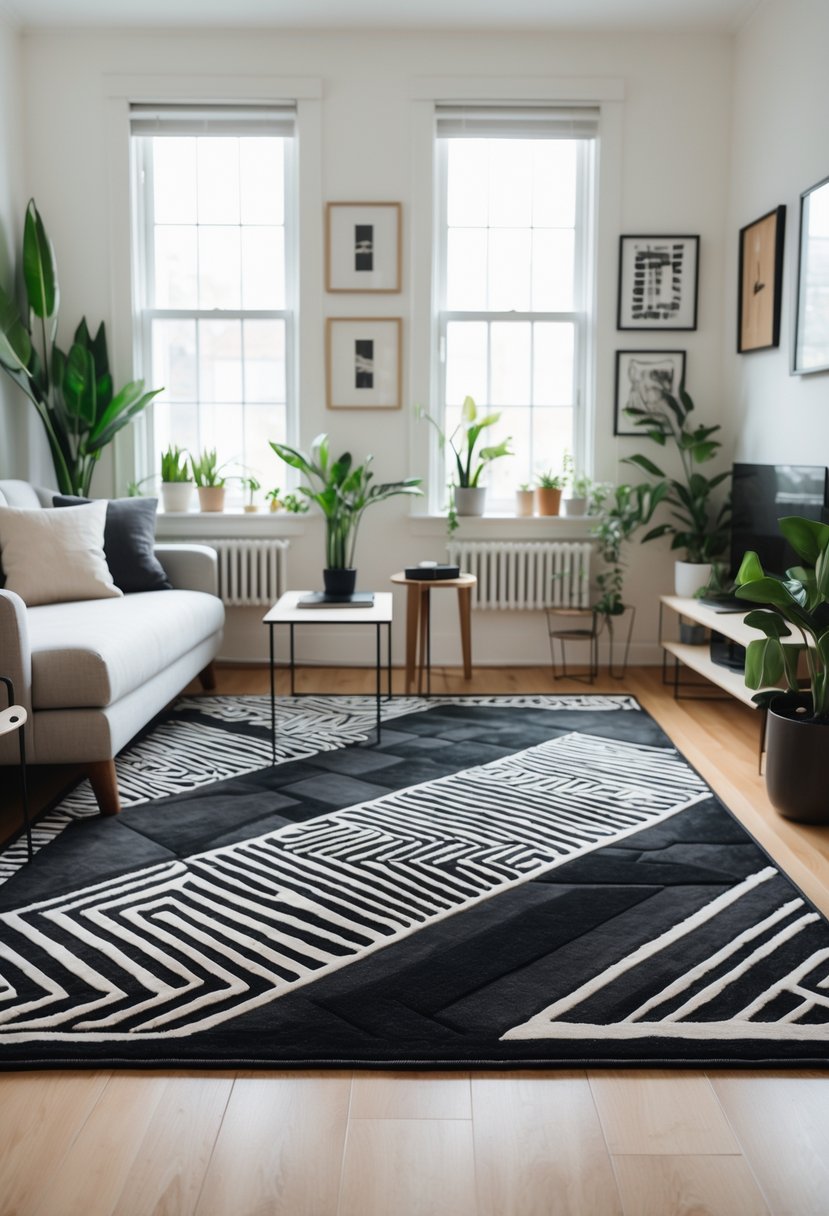
They anchor the room and add pattern without bright colors. A black rug with white or gray geometric shapes brings modern lines and hides wear well.
They work with light walls or dark furniture, creating contrast or blending in. Choose low-pile rugs for small rooms to keep sightlines open and avoid bulky textures.
10) Combine black with neutral tones
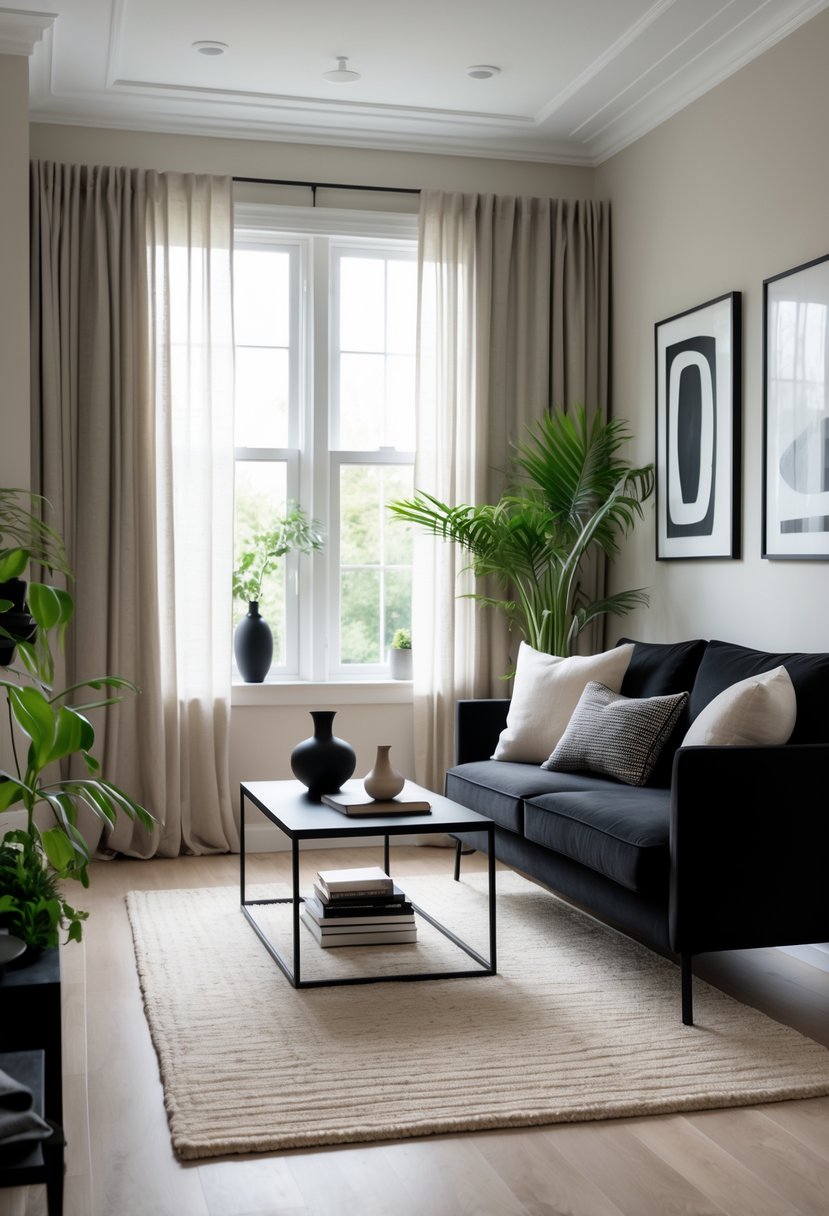
They pair black with soft neutrals like beige, gray, or warm white to balance the mood. This keeps the room feeling open while keeping the black elements bold.
A neutral sofa or light rug softens dark walls and furniture. Small black accents—pillows, picture frames, or a lamp—tie the look together without overwhelming the space.
They use varied textures, such as linen, wool, or wood, to add depth. This prevents the palette from feeling flat and makes the room feel inviting.