

 By Trends Oraa
 This article was created in line with Trends Oraa’s research and content standards.
You can make any coffee table look balanced, useful, and stylish by using a few simple rules. Start with a clear focal point, add varied heights and textures, and keep some open space so the table feels intentional, not crowded. This guide shows how to pick the right table, layer objects, and avoid common styling mistakes so your living room looks polished and lived-in.
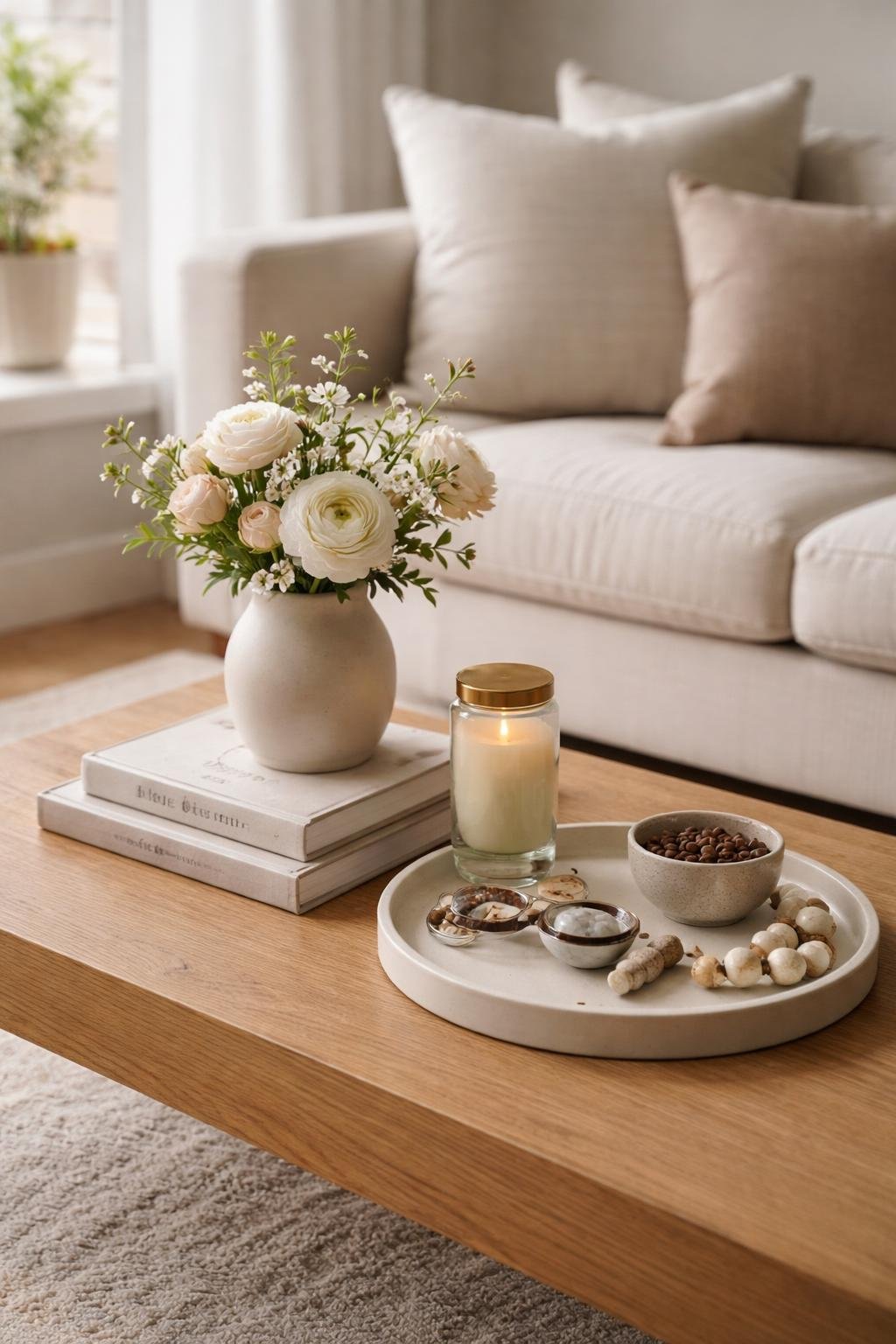
You will learn design principles, how to match a table to your space, which items to include, and how to refresh the look by season. Follow these steps and you’ll style your coffee table with confidence and purpose.
Understanding Coffee Table Design Principles
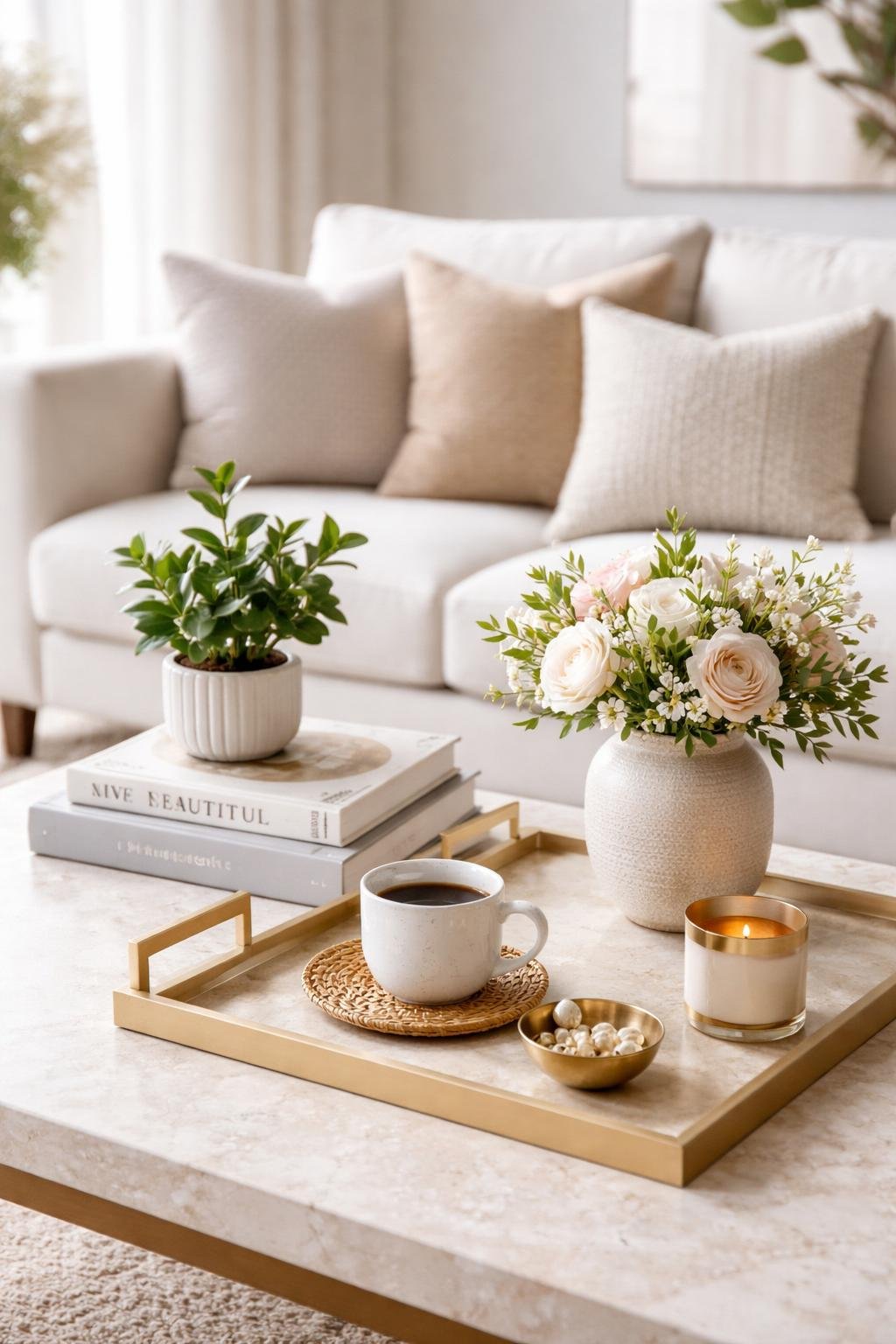
You will learn how balance, scale, and empty space affect the look and function of your coffee table. These ideas help you pick objects, place them well, and keep the table useful.
The Role of Balance and Symmetry
Balance makes your table feel steady and planned. Use a mix of items with different heights and weights: a low tray, a tall vase, and a medium stack of books. Place heavier or taller pieces on one side and counter them with several smaller items on the other to create visual balance.
Symmetry gives a formal, calm look. Try matching items on each side, like two candles or two small plants. If you prefer a relaxed look, aim for asymmetrical balance by grouping three items of varying sizes in a triangle shape.
Use odd numbers for groupings—three or five objects often read as balanced and natural. Check the table from different angles and adjust until the arrangement feels stable to you.
Scale and Proportion in Coffee Table Styling
Scale means the size of objects relative to the table and the room. A large tray or a tall lamp can overwhelm a small table. Measure your table: centerpiece items should take up about one-third to two-thirds of the surface so you still have space to place drinks.
Proportion is about the visual relationship between items. Pair a tall item with shorter, wider items to avoid a lopsided look. Stack books to add height without blocking sightlines across the table.
Consider the room scale too. Large sofas or a big rug call for larger tabletop items. In small rooms, stick to low-profile items and fewer pieces so the table looks open and functional.
Importance of Negative Space
Negative space is the empty area around your objects. Leaving space prevents clutter and lets each piece stand out. Aim for clear areas around groupings so people can set down items without moving decor.
Use trays or mats to define zones and keep negative space organized. A single large item with space around it can feel more intentional than many small objects cramped together. Negative space also helps the eye rest and makes cleaning easier.
Adjust negative space by removing one item at a time until the layout breathes. You want a mix of filled and empty spots that matches how you use the table daily.
Choosing the Right Coffee Table for Your Space
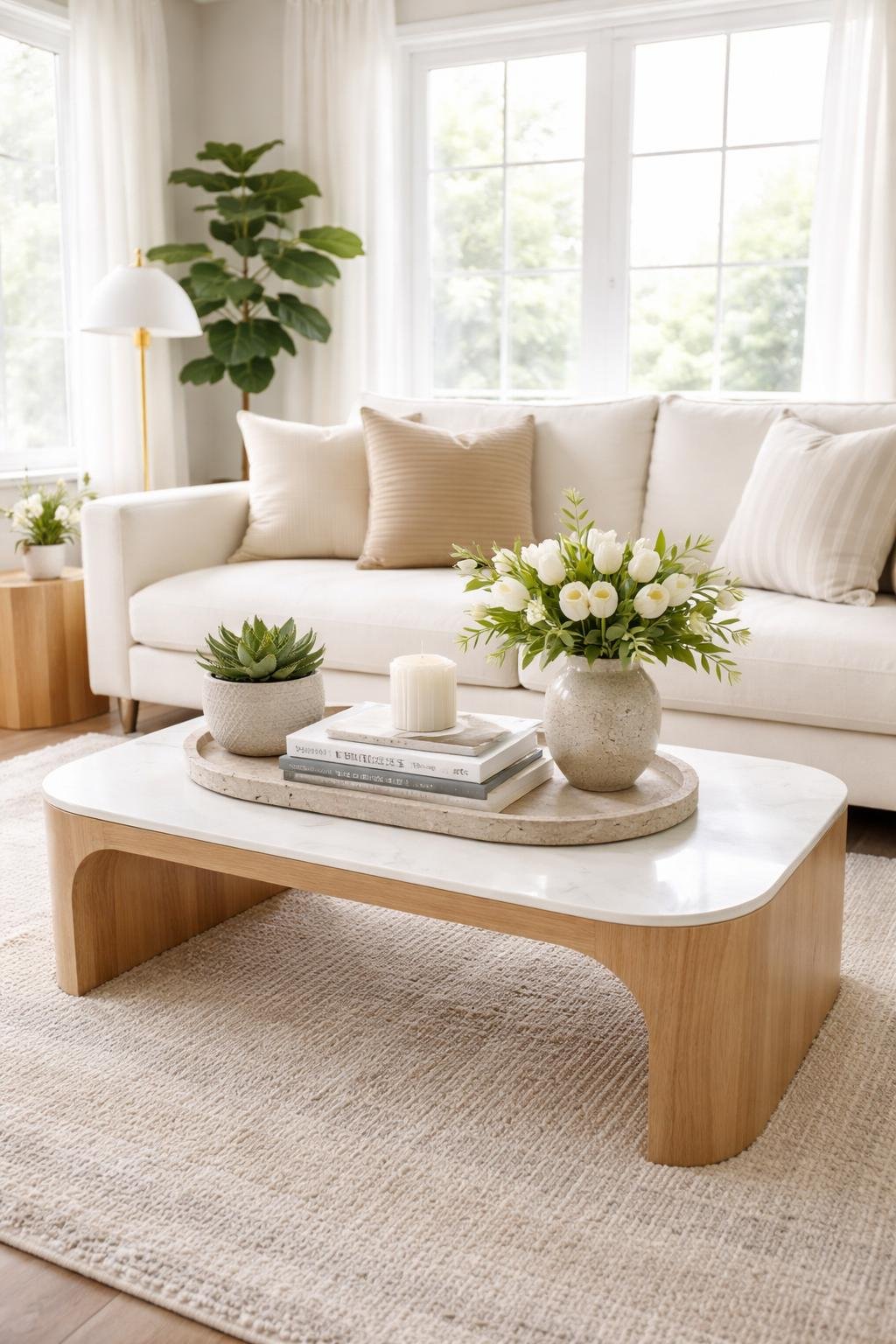
Pick a table that fits how you use the room and matches your furniture’s style and scale. Think about material durability, traffic patterns, and the exact measurements you need.
Material Selection and Its Impact
Materials affect weight, maintenance, and the room’s look. Solid wood gives warmth and lasts for years but scratches more easily. Go for oak or walnut if you want durability; choose a hard wax oil finish to hide minor marks.
Glass tops make small rooms feel bigger and show off rugs. They need regular cleaning and can chip, so pick tempered glass for safety. Pair glass with metal legs to keep the look light.
Metal and mixed materials work well in modern spaces. Powder-coated steel resists rust and holds up to heavy use. If you have kids or pets, avoid soft finishes like raw plaster or untreated veneer.
Stone and marble look luxurious and handle hot drinks well, but they are heavy and can stain. Seal porous stones and expect to move the table less often. Consider a smaller stone top on a lighter base to balance weight and cost.
Size and Dimension Considerations
Measure the space before you shop. Leave 14–18 inches between the sofa and the table for comfortable legroom and circulation. For tight rooms, aim for 12 inches minimum.
Match table height to your seating. Ideally, the table top should sit within 1–2 inches of your sofa seat height. If your sofa seat is 18 inches high, choose a table around 17–20 inches.
Scale the length to your sofa. A table should be about two-thirds the length of the sofa or roughly the same length if you prefer a more anchored look. For round tables, keep a diameter between 24 and 36 inches in small living rooms.
Think about traffic flow and openings. If the room has multiple walkways, choose a narrower or oval table to avoid sharp corners and make moving through the room easier.
Essential Elements for Coffee Table Styling
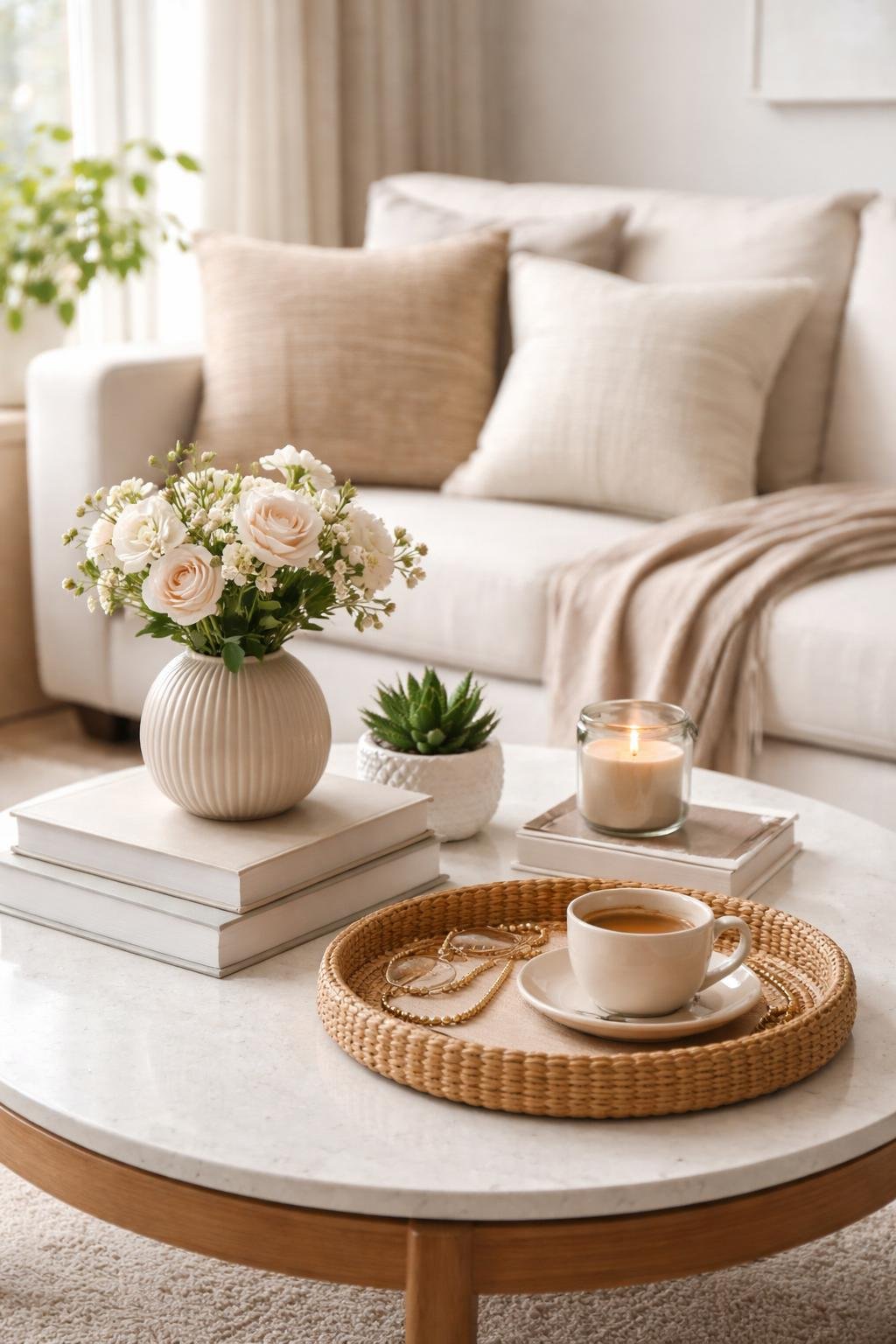
Use a few well-chosen pieces that balance function and beauty. Focus on trays, books, plants, and a couple of personal items to make the table feel intentional and lived-in.
Trays and Decorative Bowls
Place a tray to anchor grouped items and protect the table surface. Choose a tray that fits about one-third to two-thirds of the table top so it looks deliberate, not crowded. Materials like lacquer, rattan, or metal influence the style: metal reads modern, wood reads warm, and rattan reads casual.
Use a decorative bowl for small items like keys or remotes. Match the bowl’s scale to the tray — a large bowl can sit alone, a small bowl works inside a tray. Keep finishes varied but limited to two or three to avoid visual clutter.
Books and Magazines
Stack coffee table books to create height and interest. Use 1–3 books per stack; place the largest at the bottom. Pick books with covers or spines that echo your room’s color palette for a cohesive look.
Fan a single magazine for a casual feel or tuck slimmer volumes under a tray. Use books to support a small object, like a candle or sculptural piece. Rotate titles seasonally to keep the table fresh without overbuying.
Greenery and Floral Arrangements
Add a plant or flowers to bring life and color. Choose low-profile plants like a small snake plant, peperomia, or a short succulent arrangement that won’t block sightlines across the table.
Use a short vase or shallow planter for cut flowers or loose stems. Keep water changes weekly for cut flowers and check soil moisture for potted plants. Aim for one greener/potted item and one small floral accent if you want both texture and color.
Personal Touches and Collectibles
Select one or two small personal items to tell your story. Think a vintage camera, a small ceramic sculpture, or a framed mini-photo. Limit personal pieces to items under 8 inches so they don’t overwhelm other elements.
Group personal items with a tray or book stack to make them feel curated. Change these pieces occasionally to highlight travel finds or seasonal hobbies without cluttering the table.
Layering and Arrangement Techniques
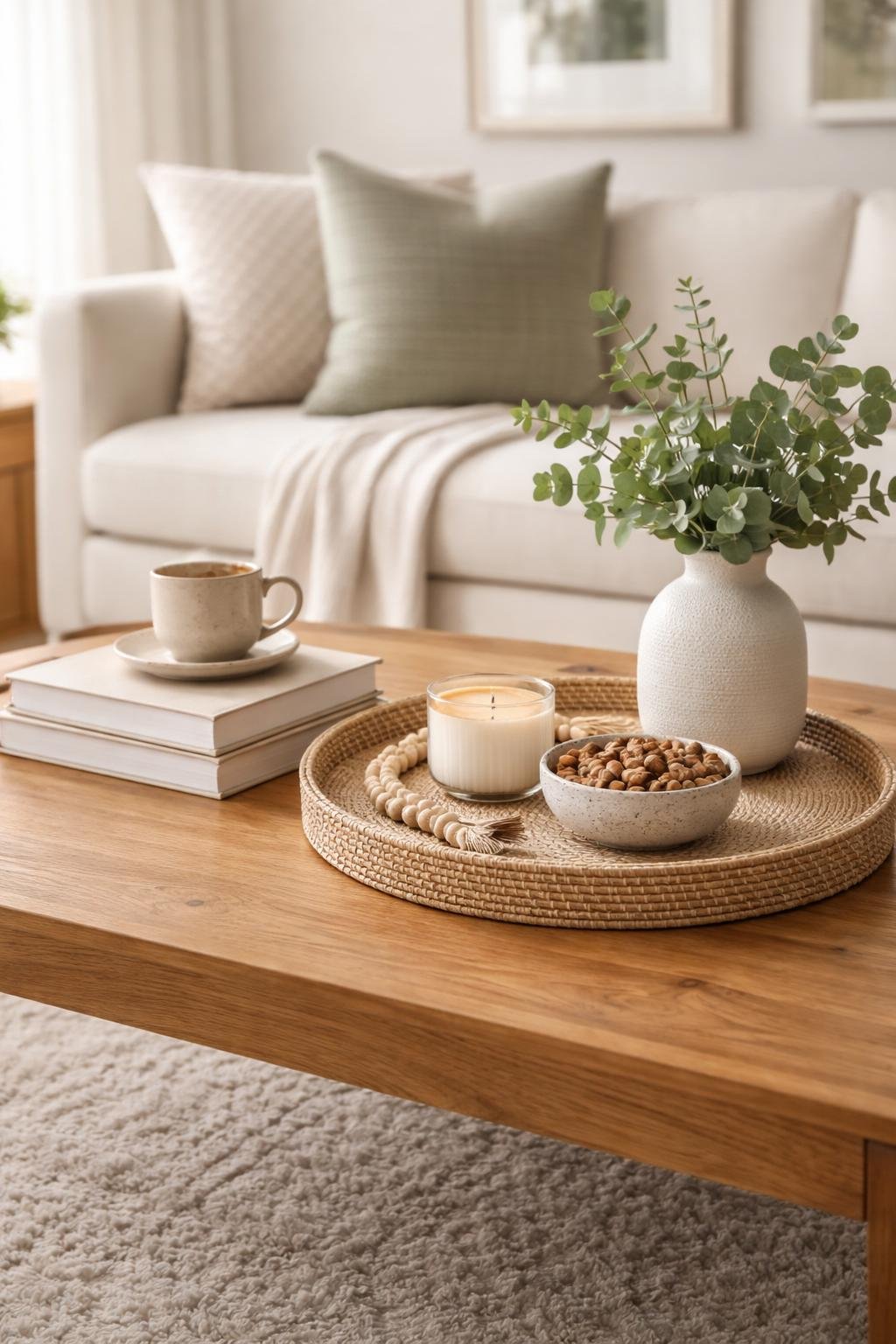
Use height, texture, and group sizes to build balance. Place taller items toward the back or center, add mid-height objects for rhythm, and finish with small pieces that invite touch.
Varying Heights and Textures
Start with a tall anchor piece, like a vase with branches or a stacked book lamp, placed off-center. This gives your eye a clear starting point and prevents the table from looking flat. Add a mid-height item such as a sculptural bowl or a medium stack of books to create a middle layer.
Mix textures: smooth ceramic, rough wood, and soft textile. Put a woven tray under fragile items to add warmth and protect the surface. Keep at least one low element, like a shallow dish or candle, to balance the vertical pieces and keep the view open across the room.
Creating Visual Interest with Groupings
Group items in odd numbers—three or five works best—to create a natural, pleasing look. Arrange objects of varying sizes together so the largest sits at the back or center and smaller items step down toward the edge.
Use a tray or placemat to anchor a collection, then vary finishes within that group: glossy glass next to matte stone, metal beside wood. Leave some negative space so each object reads clearly. Rotate or swap one item seasonally to keep the arrangement fresh and intentional.
Styling for Different Coffee Table Shapes
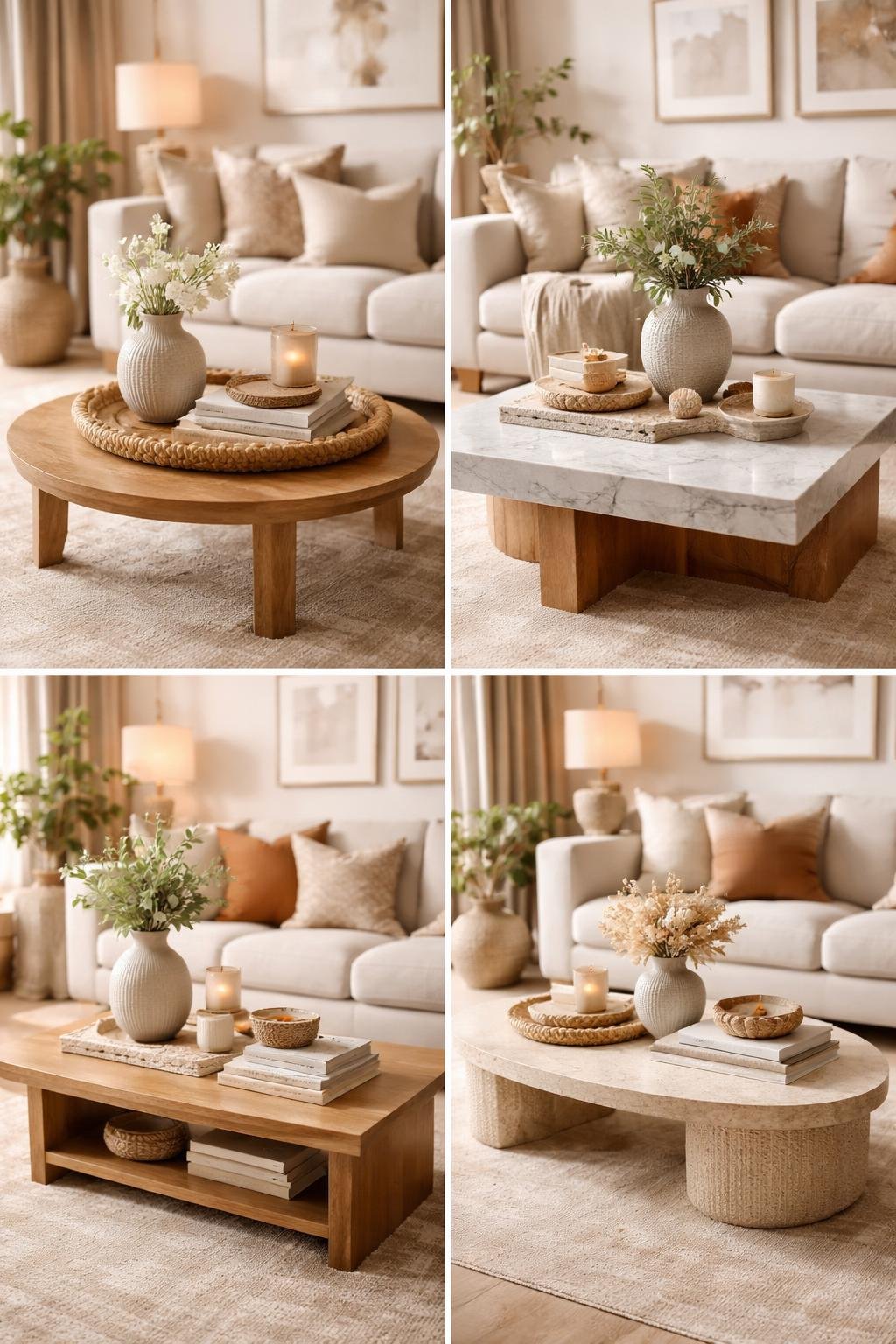
Match scale, symmetry, and traffic flow to your table shape. Think about walkways, seating arrangement, and how much surface area you need for decor and daily use.
Rectangular and Oval Tables
Rectangular and oval tables suit longer rooms and sectional seating. Place a long tray along the center to anchor items and create a line that follows the table’s length. Use a balance of low and tall pieces: a low stack of books or a shallow bowl, a medium-height plant or candle, and one taller object like a vase. Keep one third of each end clear so people can rest drinks without knocking things over.
Use odd numbers for groupings (3 or 5) to look natural. For oval tables, soften the layout by rounding edges of trays and choosing curved or organic decor. Leave at least 6–8 inches of edge space for hands and to avoid crowding.
Round and Square Tables
Round and square tables work well with central, radial groupings. Start with a central anchor like a bowl, plant, or sculptural object. Surround it with smaller items placed asymmetrically to keep visual interest. A circular tray can help contain pieces and protect the surface.
For round tables, keep taller items toward the middle so sightlines stay open. For small square tables, scale items down and use one taller vertical piece plus two shorter accents. Maintain at least 4–6 inches of clear edge space so people can place cups and reach across the table easily.
Incorporating Seasonal and Thematic Decor
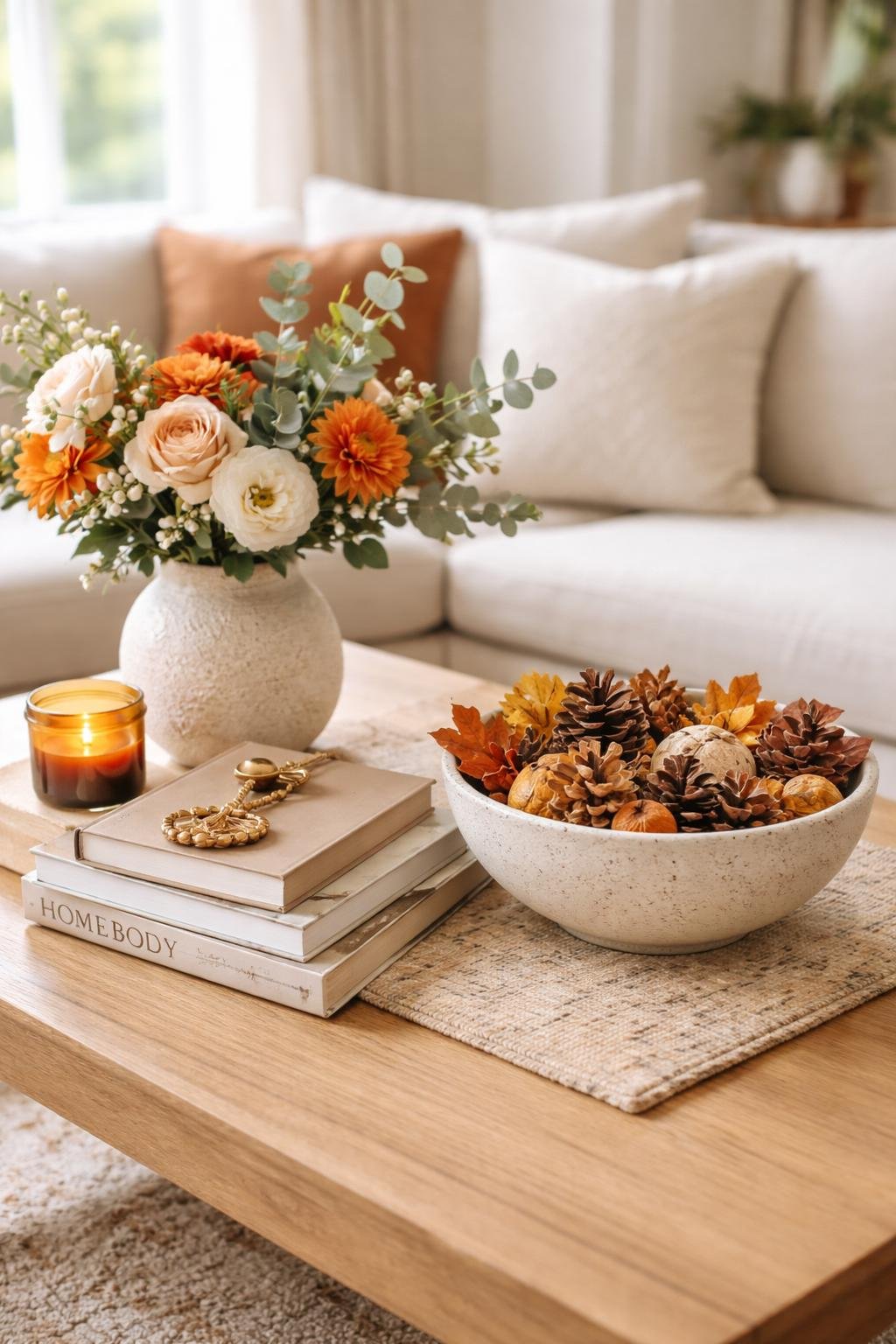
Swap items that show weather, colors, or events. Use small edits so your coffee table feels fresh without a full redesign.
Seasonal Updates for Year-Round Appeal
Rotate a single anchor piece, like a tray or stack of books, to set the base each season. For spring, add a small vase with tulips or daffodils and a light-colored linen napkin folded under a ceramic bowl. In summer, swap to a woven tray, a citrus-scented candle, and a low glass jar with seashells or fresh greenery.
In fall, choose warm textures: a wooden tray, an amber glass candle, and a small pumpkin or bowl of acorns. For winter, use a metallic tray, a pillar candle, and a pine-scented diffuser or faux evergreen sprig. Keep other pieces low and simple so the seasonal items stand out.
Limit to three to five items total. That keeps the table tidy and focused. Store seasonal items in labeled bins so swaps are quick.
Adapting to Holidays and Special Occasions
Treat holidays as short-term themes you can layer onto your regular setup. For Valentine’s Day, add a small bouquet of red or pink flowers and two matching coasters. For a birthday, include a decorative cake stand or a small stack of wrapped mini-gifts.
For major holidays like Thanksgiving or Christmas, replace one or two anchor pieces with themed alternatives rather than redecorating everything. Use neutral bases—wood, white, or brass—then add accents like string lights, miniature ornaments, or a bowl of cranberries. Keep breakable items away from high-traffic areas.
For parties, create a dedicated corner on the table for snacks or drinks using a sturdy tray. This protects decor and makes hosting easier.
Common Coffee Table Styling Mistakes to Avoid
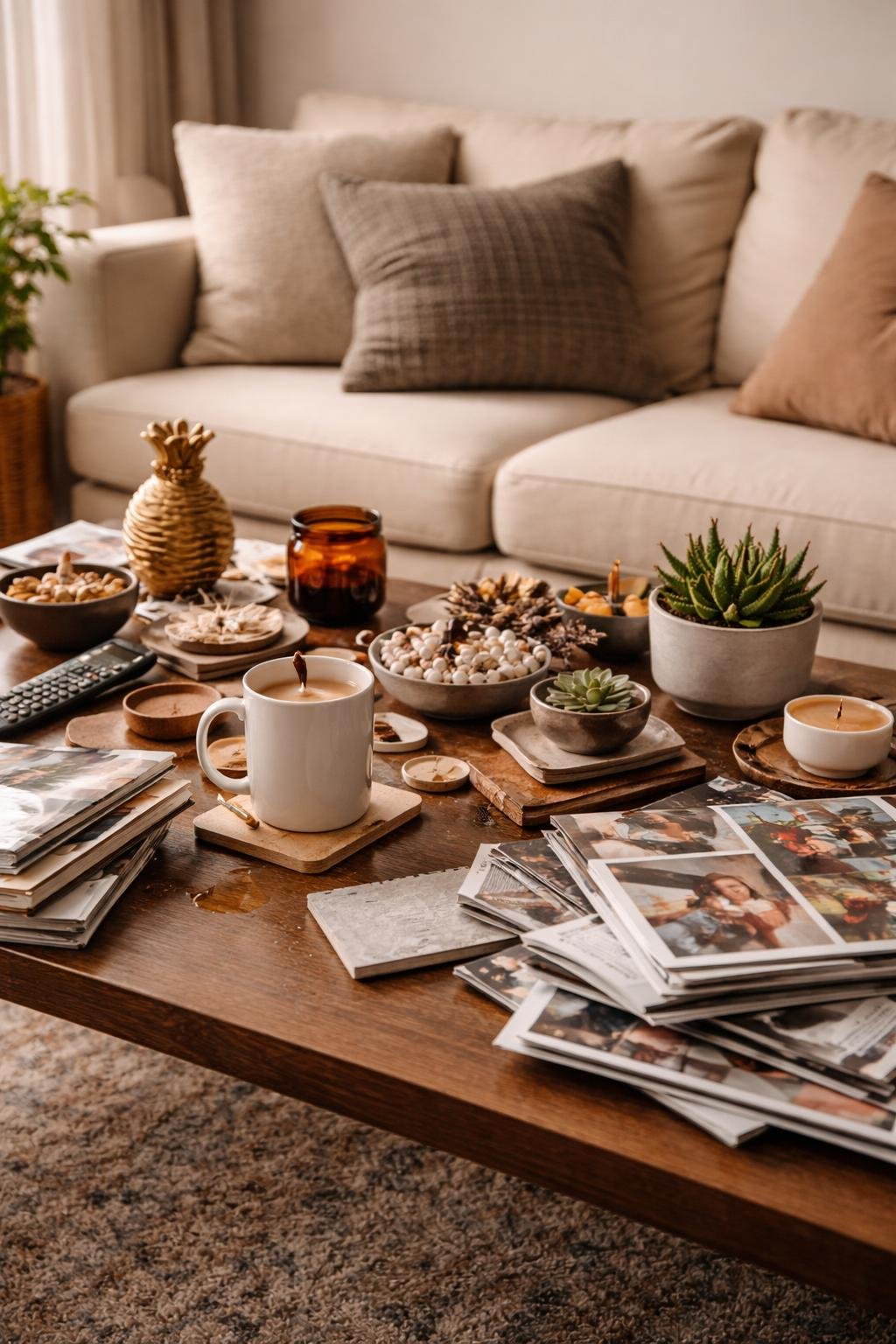
Keep the top practical and balanced. Focus on space for daily use and a few styled items that add personality without clutter.
Overcrowding the Surface
You can tell a table is overcrowded when every inch holds something—books, candles, coasters, trays, bowls, and random decor. Too many items hide the table’s shape and make it hard to place drinks or snacks. Pick 3–5 items max and vary their heights and textures. For example, stack two coffee table books, add a medium vase, and place a small decorative bowl. Use a tray to group small objects so they read as one piece, not a messy spread.
Leave negative space around the group so the table looks intentional. If you change one item each season, keep the rest steady to avoid piling on new pieces. Remember that scale matters: large sofas need larger, fewer items; small tables need compact, low-profile pieces.
Ignoring Functionality
A pretty table that won’t hold a mug fails its job. Think about how you and your guests use the table daily. If you eat on it, leave flat space for plates. If kids play there, choose durable decor and secure breakables in a tray.
Design for use: keep a coaster stash, a small basket for remotes, or a low dish for keys. Place items so they don’t block reach or visibility across the room. Balance looks with purpose by combining one decorative focal piece and one practical item. That way the table stays both attractive and useful.
Maintenance and Refreshing Your Coffee Table Look
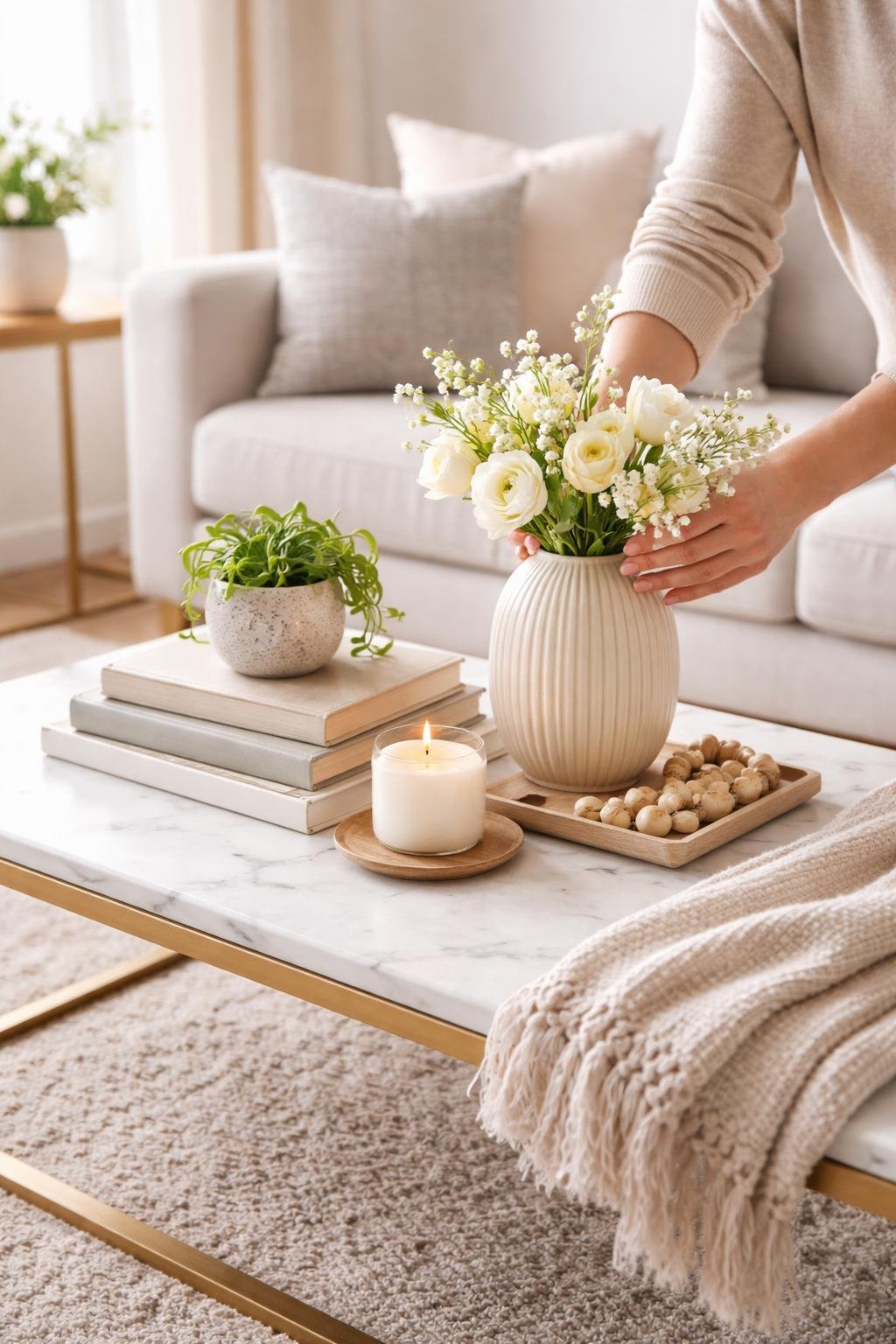
Keep your coffee table clean, damage-free, and styled with fresh items. Small, regular steps prevent bigger cleaning tasks and keep your display feeling intentional.
Routine Cleaning Tips
Wipe surfaces daily with a microfiber cloth to remove dust and fingerprints. For wood, use a damp cloth followed by a dry one; avoid soaking the grain. For glass or metal, use a glass cleaner or a 1:1 mix of water and white vinegar for streak-free shine.
Protect finishes with coasters under drinks and felt pads under decor. Clean spills immediately—blot liquids, don’t rub. For sticky spots, warm soapy water works; dry right away to avoid water rings.
Do a deeper clean weekly: remove items, clean underneath, and dust shelves and legs. Check for loose hardware and tighten screws. Rotate display pieces so no spot gets worn from constant use.
How and When to Refresh Your Styling
Refresh your styling every 4–8 weeks or when pieces feel stale. Start by removing everything and sorting into keep, relocate, or replace piles. This fast edit makes the table look intentional, not cluttered.
Change one major element each time: swap the tray, switch books, or change the plant. Use a fresh color or texture to update the look—add a brass object, a woven coaster, or a bright cloth napkin. Keep an anchor piece like a tray or large book, then rearrange smaller items around it.
Seasonal touches work well: lighter linens in spring, richer tones in fall. Take photos of setups you like so you can repeat them easily.
Conclusion
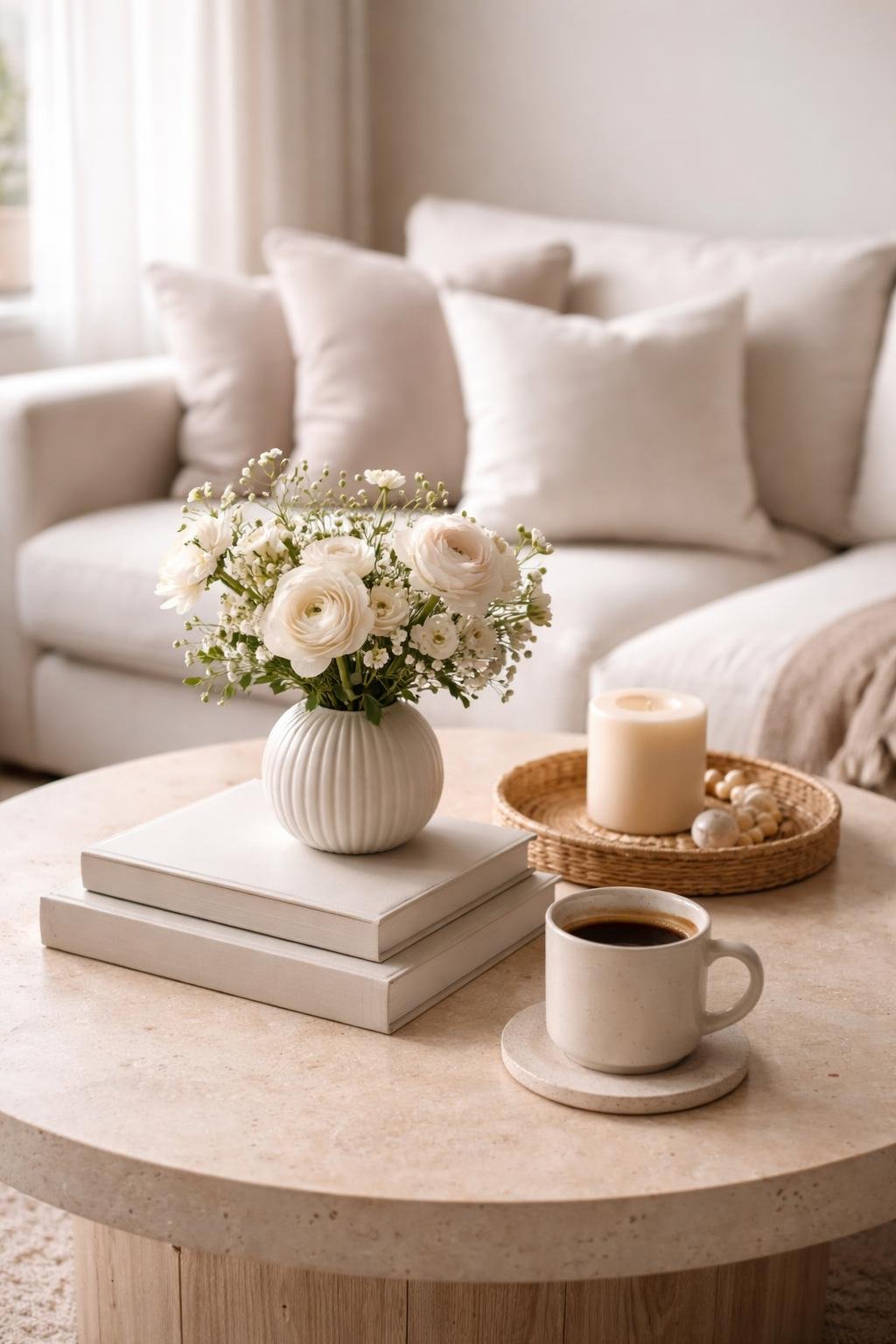
You can style a coffee table that feels balanced and personal. Start with a tray or stack of books, then add a plant or flowers for life and a decorative object for interest.
Keep scale and repetition in mind. Use odd numbers for groupings — three items often look natural. Change textures and heights to keep the eye moving.
Edit often and swap pieces seasonally. A quick refresh keeps your space feeling new without buying a lot. Use objects you love to make the table yours.
Simple rules help you make choices fast: anchor, add height, introduce texture, and edit. These steps let you create a look that works with your room and your routine.
Try one layout, live with it for a week, then tweak one thing. Small changes teach you what you prefer and build your styling skills over time.