10 Wood Desk Ideas That’ll Make You Actually Want to Work From Home
This article was created in line with Trends Oraa’s research and content standards.
Tired desk. Boring workspace. Sound familiar?
Yeah, I’ve been there too.
I used to dread sitting down at my desk every morning. It felt cold, cluttered, and honestly… lifeless. Then I discovered the magic of wood desks, and everything changed.
If you’re hunting for that perfect blend of warmth, function, and “wow, did you do this yourself?” energy, you’re in the right place.
You might also love our viral guide on 20 Brilliant DIY IKEA Dresser Hacks because once you start upgrading your space, you won’t want to stop.
By the end of this post, you’ll have 10 gorgeous wood desk ideas that fit literally any style, budget, and room size.
Let’s get into it.
Why Wood Desks Are Having a Major Moment
Wood just works, doesn’t it?
It’s warm. It’s timeless. It goes with everything.
But here’s the important part… not all wood desks are created equal. The right one can transform your whole room.
The wrong one? It just sits there looking sad.
So let’s make sure yours falls into the first category.
1. The Floating Wood Shelf Desk
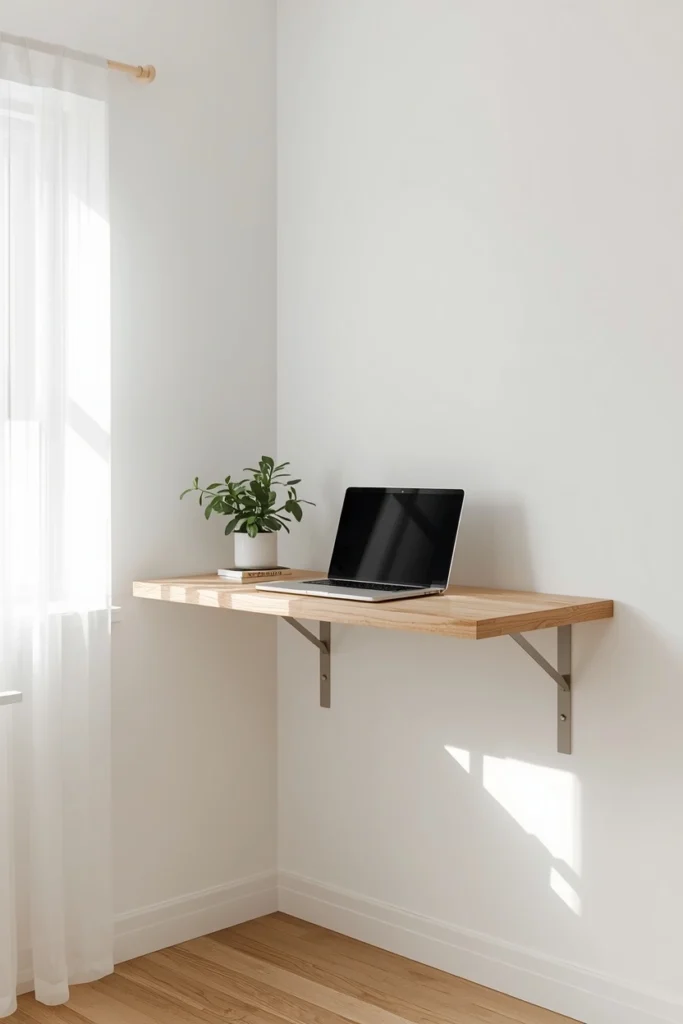
This minimalist setup uses a single thick wood plank mounted directly to the wall with hidden brackets, creating a sleek “floating” effect with zero bulky legs underneath.
Expert Tip: Go for a slab at least 1.5 inches thick. Thinner wood can look flimsy and may sag over time, especially if you’re stacking books or a monitor on top.
Why it works: Floating desks are perfect for small apartments, dorm rooms, or awkward nooks because they free up visual and physical floor space. The wood adds warmth to an otherwise stark wall, and the simplicity means it pairs beautifully with almost any decor style — from boho to Scandinavian minimalism. Plus, cleaning underneath is a breeze since there’s nothing in the way.
Most people don’t know this… floating desks can actually hold more weight than they appear to, as long as they’re anchored into studs.
2. The Reclaimed Wood Farmhouse Desk
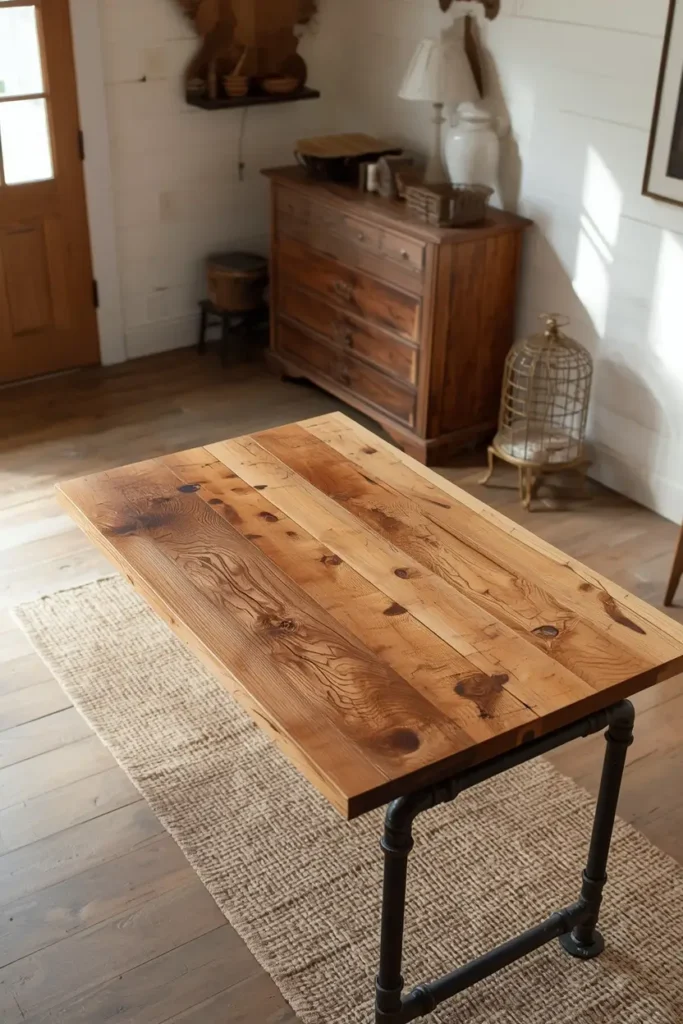
Picture rustic, weathered wood with visible grain, knots, and even a few character marks — paired with black iron pipe legs for that perfect industrial-farmhouse contrast.
Expert Tip: If you’re buying reclaimed wood, always ask about the source. Old barn wood sometimes has nails or metal fragments hidden inside, so a quick once-over with a metal detector saves your saw blade (and your sanity).
Why it works: This style brings instant coziness and a “lived-in” charm that brand-new furniture just can’t replicate. Every knot and scratch tells a story, making your workspace feel personal and curated rather than store-bought. It’s especially stunning in home offices with exposed brick, shiplap walls, or vintage decor accents.
Which of these styles fits your personality so far — minimalist or rustic? Let me know in the comments!
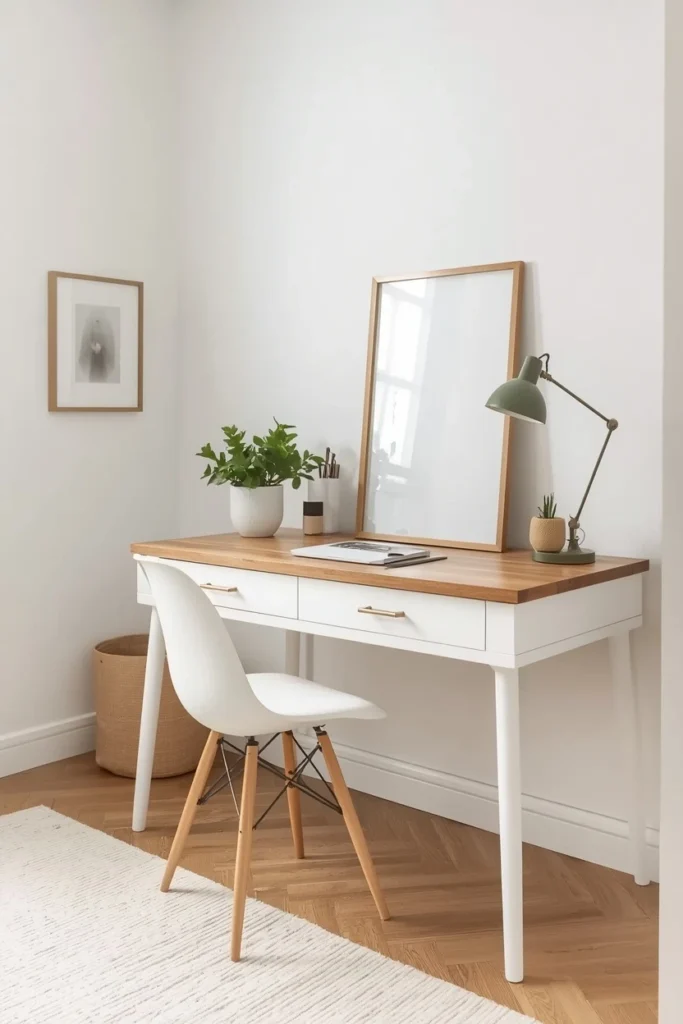
3. The Two-Tone Wood and White Desk
Here’s where it gets interesting…
This design pairs a warm wood desktop with crisp white or painted drawers and legs, creating a clean contrast that feels both modern and approachable.
Expert Tip: Stick to two finishes max. Adding a third material (like metal hardware) is fine as an accent, but more than that starts to feel busy and disjointed.
Why it works: The two-tone look bridges the gap between cozy and contemporary, making it ideal for shared spaces where one person loves modern decor and the other leans traditional. It also reflects more light than an all-wood piece, which is a game-changer for darker rooms. This style photographs beautifully too — hello, Pinterest-worthy home office tour.
4. The Corner Wood Desk for Small Spaces
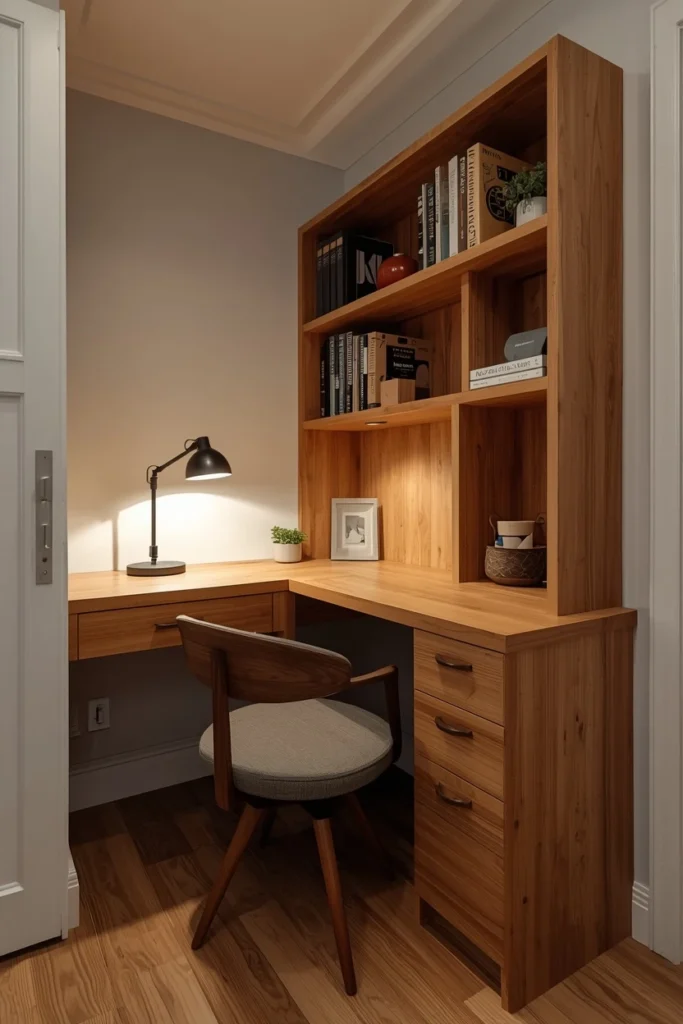
This L-shaped or corner-fitted wood desk tucks neatly into an unused corner, maximizing every inch of available space without making the room feel cramped.
Expert Tip: Measure your corner and your chair’s swing radius before buying. Nothing’s worse than a desk that fits the wall but not your actual movement.
Why it works: Corners are often wasted space in bedrooms and living rooms, and this design idea turns that dead zone into a fully functional workstation. The wood finish softens what could otherwise feel like an awkward, boxy addition to the room. It’s a favorite for small apartments, shared bedrooms, and anyone working with limited square footage.
But here’s the important part… corner desks work best with task lighting, since corners tend to be the darkest spot in any room.
5. The Mid-Century Modern Wood Desk
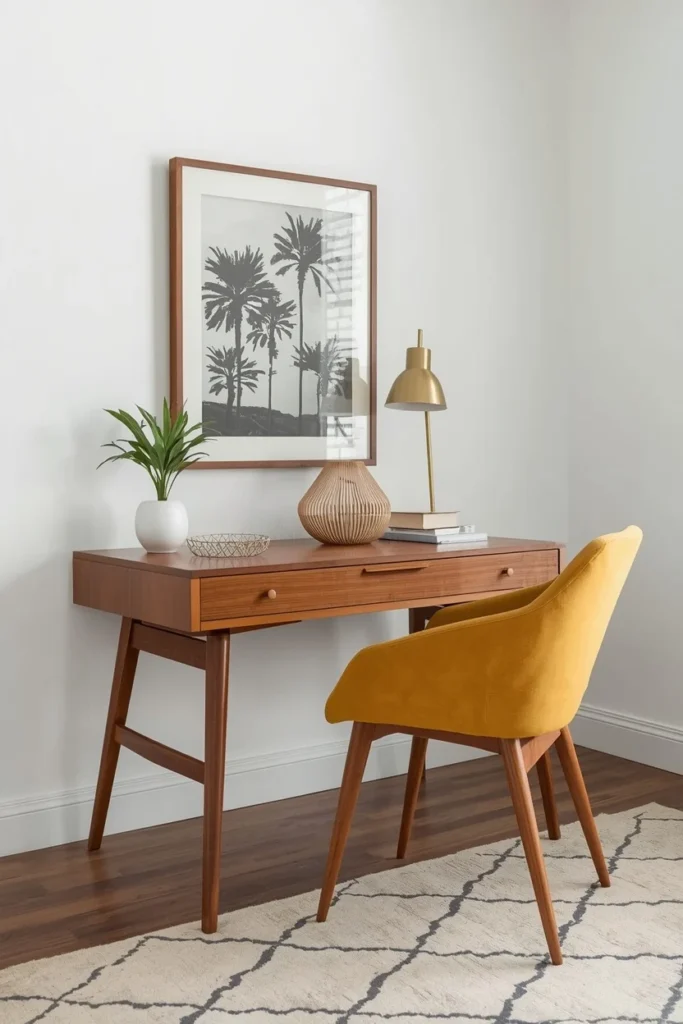
Think tapered wooden legs, a low profile, warm walnut or teak tones, and clean geometric lines — total retro vibes with a modern twist.
Expert Tip: Pair it with a vintage-inspired chair in a contrasting color (mustard, burnt orange, or olive green) to really lean into the era-appropriate aesthetic.
Why it works: Mid-century modern never really goes out of style, and a wood desk in this category instantly elevates a room’s sophistication. The simple silhouette means it won’t overwhelm smaller spaces, while the rich wood tones add depth and warmth. It’s a timeless investment piece that works in living rooms, bedrooms, or dedicated office spaces alike.
6. The DIY Pallet Wood Desk
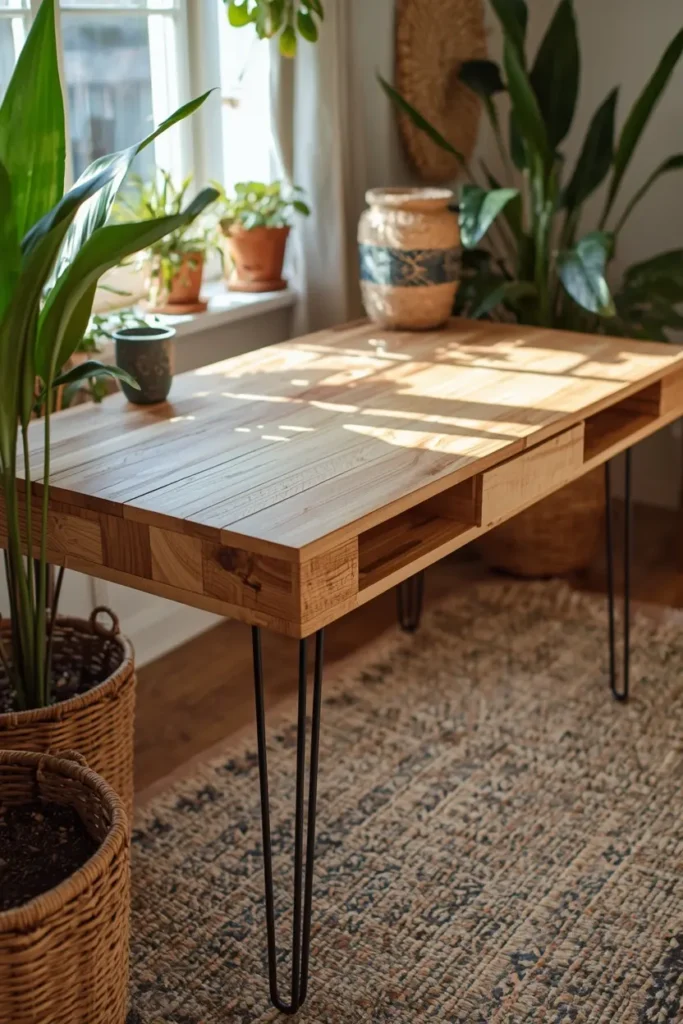
This budget-friendly option uses repurposed pallet wood, sanded smooth and stained or sealed, often paired with simple hairpin or cinder block legs.
Expert Tip: Sand in stages — start with coarse grit (60-80) to remove rough spots, then move to fine grit (180-220) for that silky-smooth finish before staining.
Why it works: Beyond being incredibly affordable, pallet desks let you customize size, height, and finish exactly to your needs. The slightly imperfect, handmade look adds tons of character and works wonderfully in eclectic, boho, or industrial spaces. It’s also a deeply satisfying weekend project that gives you major bragging rights every time someone asks where you got it.
Now, avoid this mistake… never use pallets with unknown chemical treatments for indoor furniture. Look for the “HT” (heat-treated) stamp only.
7. The Built-In Wood Desk Nook
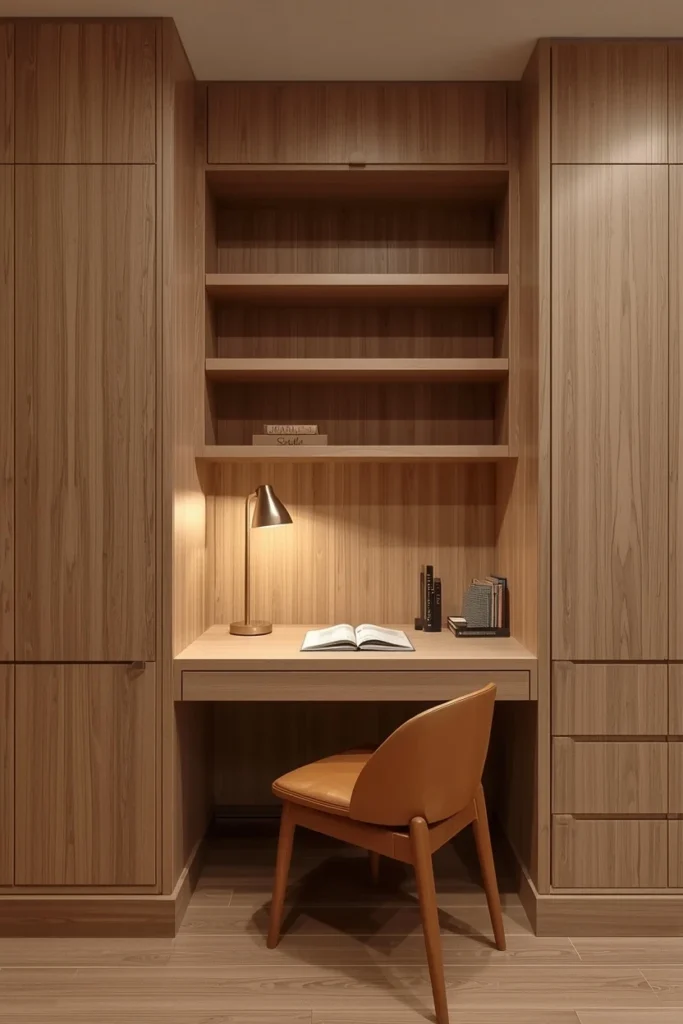
This design integrates the desk directly into existing cabinetry or a wall niche, creating a seamless, custom-furniture look using matching wood tones and finishes.
Expert Tip: If you’re working with a contractor, request soft-close drawers. It’s a small upgrade that makes the whole setup feel high-end.
Why it works: Built-ins make a space feel intentional and architecturally cohesive, rather than like furniture was just placed in a room. They also tend to maximize storage since you can design drawers and shelves around your exact needs. This is a fantastic option if you’re renovating or have an awkward alcove that regular furniture just doesn’t fit.
While we’re talking about smart space-saving solutions, check out our guide on 17 Best Chicken Coop and Garden Layout Ideas for more clever DIY inspiration.
Your Wood Desk Buying Guide (Budget Breakdown + Pros & Cons)
Okay, let’s talk money and materials for a second — because choosing the right wood desk isn’t just about looks.
Budget Tiers:
- Under $150: Pallet wood DIYs, basic floating shelves, or particleboard-with-veneer desks from big box stores.
- $150–$400: Solid pine or rubberwood desks, mid-range floating desks with quality brackets, and entry-level mid-century reproductions.
- $400–$800: Solid oak, walnut, or teak desks, built-in custom pieces (lower end), and higher-quality vintage finds.
- $800+: Custom built-ins, antique solid wood desks, and designer mid-century originals.
Pros of Wood Desks:
- Incredibly durable when properly cared for (some last decades)
- Timeless aesthetic that doesn’t feel “trendy” or dated quickly
- Easy to refinish, paint, or stain if you want a style refresh later
- Adds warmth and texture to any room
Cons of Wood Desks:
- Solid wood can be heavier and harder to move
- Higher upfront cost compared to particleboard or laminate
- Can be sensitive to humidity and temperature changes (watch for warping)
- Requires occasional maintenance like oiling or resealing
So here’s my honest take: if you’re renting or moving frequently, a lighter pallet or veneer option makes sense. But if you’re settling into a space long-term, investing in solid wood pays off — both in durability and resale value if you ever sell the piece.
8. The Standing Wood Desk Conversion
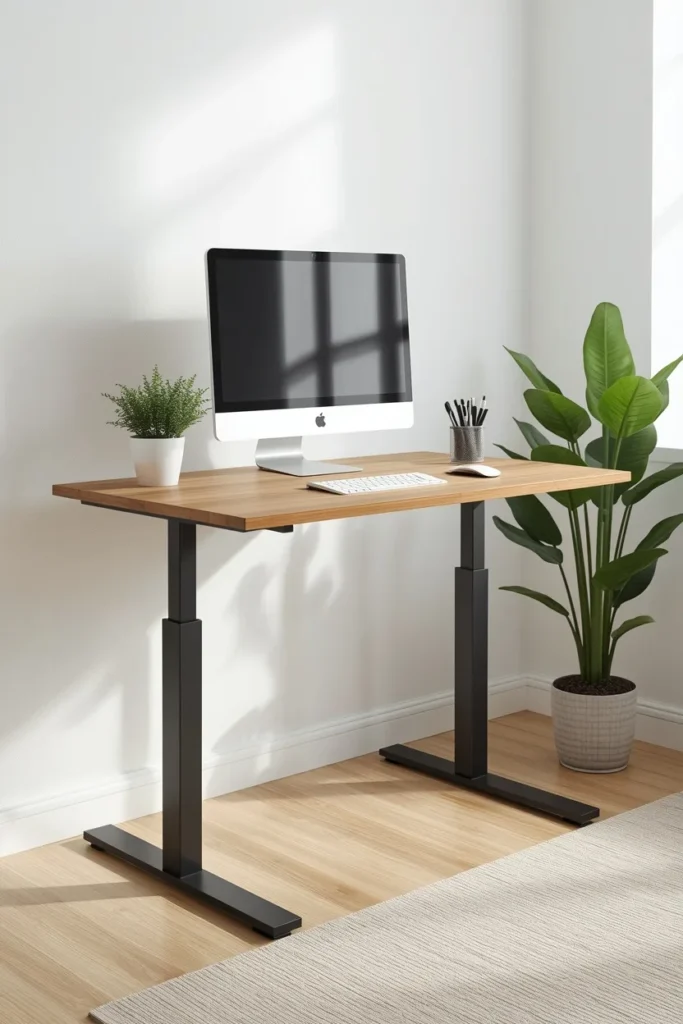
This setup features a wood desktop paired with an adjustable-height base (often metal), giving you the warmth of wood with the ergonomic benefits of a sit-stand desk.
Expert Tip: If you’re converting an existing wood desk, look for under-desk standing converters with a wood-finish top to keep the aesthetic consistent.
Why it works: Standing desks have become essential for anyone working long hours, and pairing one with a wood top keeps it from feeling clinical or “officey.” The natural material softens the tech-forward look of adjustable bases, making it feel more like furniture and less like equipment. It’s a smart blend of health-conscious design and cozy aesthetics.
Most people don’t know this… the sweet spot for standing desk height is when your elbows form a 90-degree angle while typing.
9. The Vintage Wood Writing Desk
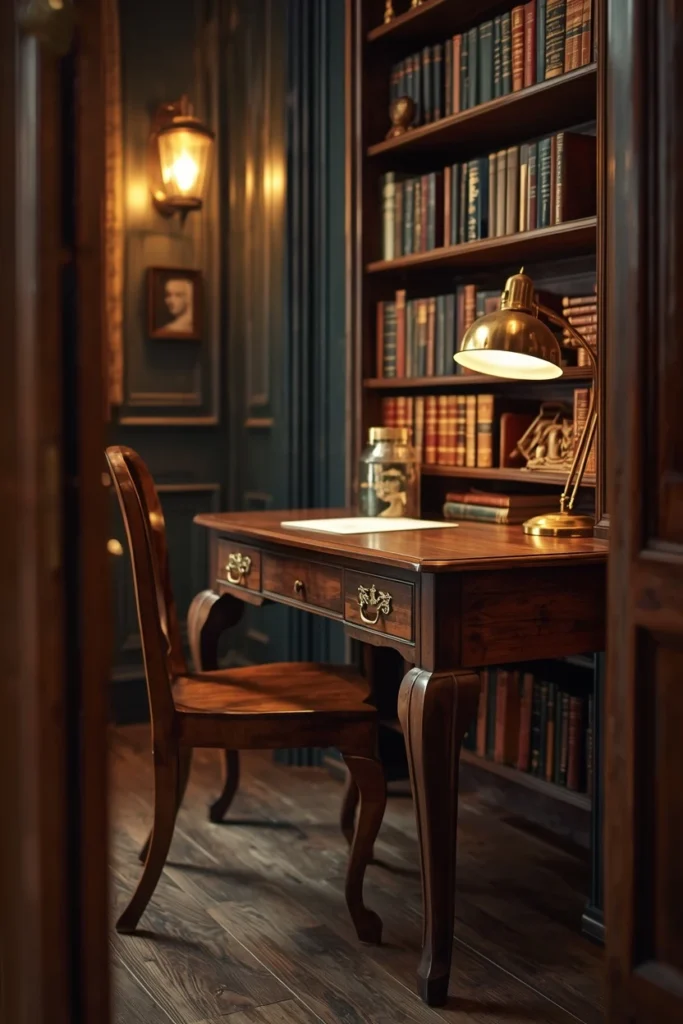
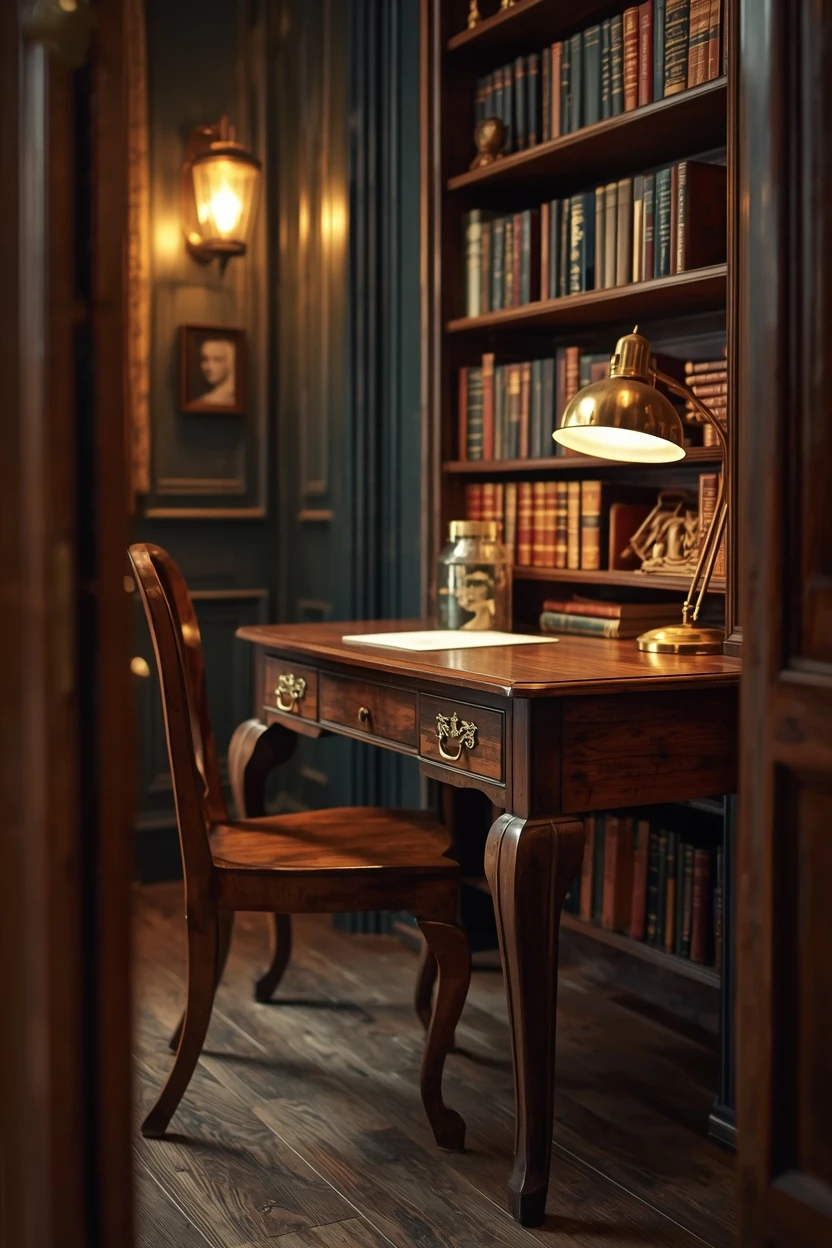
This design features an antique or vintage-style wood desk, often with curved legs, brass hardware, and a single or double-drawer setup — think “writer’s study” energy.
Expert Tip: Check thrift stores and estate sales before buying new. Vintage writing desks are often solid wood (unlike modern budget options) and can be found for a fraction of retail price.
Why it works: Vintage desks bring instant character and a sense of history that new furniture simply can’t replicate. They’re typically smaller and more compact than modern desks, making them perfect for bedrooms or reading nooks rather than full home offices. The brass details and curved silhouettes add an elegant, almost romantic touch to any room.
Which era speaks to you most — mid-century, vintage, or modern farmhouse? I’d love to know!
10. The Modular Wood Desk System
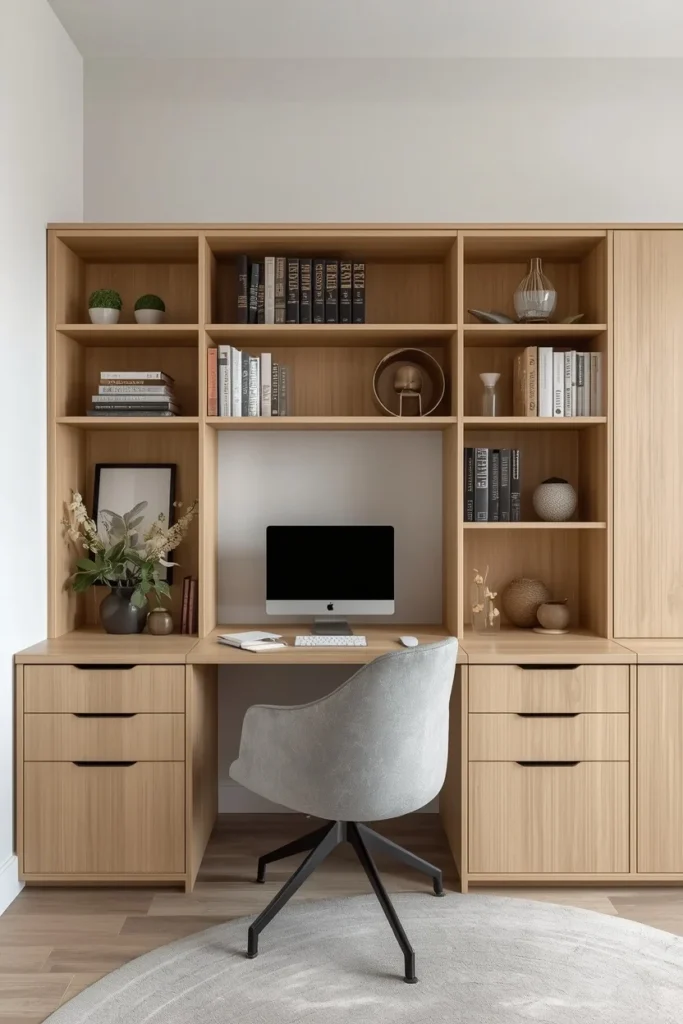
This design uses multiple wood components — desktop, shelving units, drawers — that can be rearranged or expanded as your needs change, almost like furniture building blocks.
Expert Tip: Buy pieces from the same collection or finish family to ensure everything matches, even if you don’t purchase them all at once.
Why it works: Modular systems are perfect for people whose needs evolve — maybe you start with just a desktop and add storage later, or reconfigure for a partner’s home office setup. The wood finish ties everything together visually, so even mismatched purchase dates look intentional. This flexibility makes modular wood desks a smart long-term investment for growing families or career changes.
Wrapping It All Up
So there you have it — 10 wood desk ideas that prove function and beauty can absolutely coexist.
Whether you’re drawn to the rustic charm of reclaimed wood or the sleek simplicity of a floating shelf desk, there’s something here for every style and budget.
The best part? Most of these ideas can be customized, DIY’d, or sourced secondhand — so creating your dream workspace doesn’t have to break the bank.
Now I’d love to hear from you: which desk idea are you most excited to try?
And if you’re already dreaming up your next home upgrade, don’t stop here — head over to our Home Office Ideas guide for even more inspiration to create a space you’ll actually love working in.
Happy decorating!