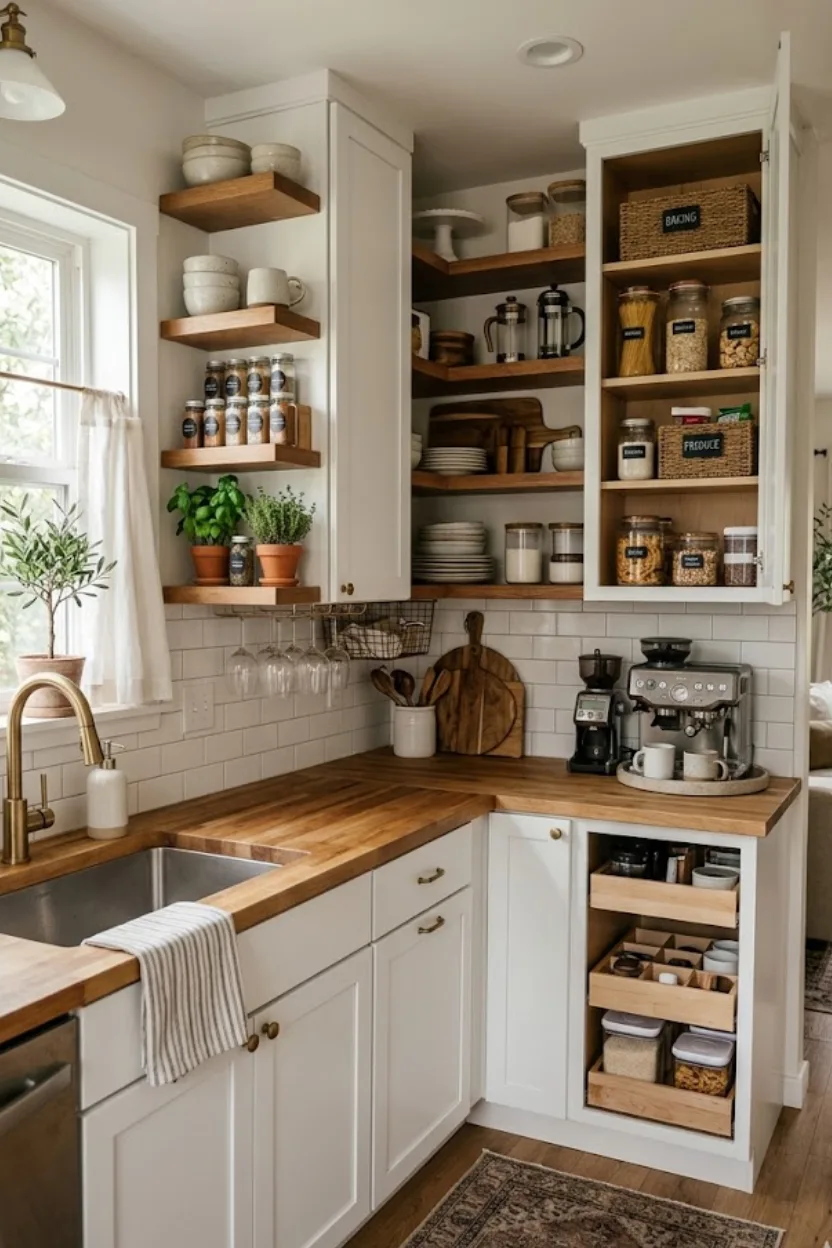
10 Organized Kitchen Shelving Ideas
This article was created in line with Trends Oraa’s research and content standards.
Ever open a kitchen cabinet and feel like one mug could trigger a full-on avalanche? Yeah, same energy. Small kitchens can look cute in photos, but in real life, they can turn meal prep into a game of “where did I put that?” faster than you can say weeknight pasta.
That is exactly why Organized Kitchen Shelving Ideas matter so much. The right shelving does not just make your kitchen look tidy. It makes the space feel calmer, faster, and way more functional. And honestly, when every inch counts, a smart shelf can do more for your kitchen than a full weekend decluttering spree.
In this guide, we are going to talk like real people about real kitchen problems. No stiff design jargon. No unrealistic Pinterest perfection. Just practical, friendly ideas that help small kitchens feel more efficient, less chaotic, and a lot easier to enjoy.
1. Use Vertical Wall Shelves to Free Up Counter Space
If your counters are constantly crowded, look up. One of the easiest Organized Kitchen Shelving Ideas is adding vertical wall shelves that take advantage of unused upper wall space. Why let that area sit empty when it can hold your go-to dishes, jars, or cookbooks?
Wall shelves work especially well in narrow kitchens because they add storage without eating up floor space. They also make the kitchen feel more open than bulky cabinets sometimes do. That balance of storage and visual breathing room is a huge win.
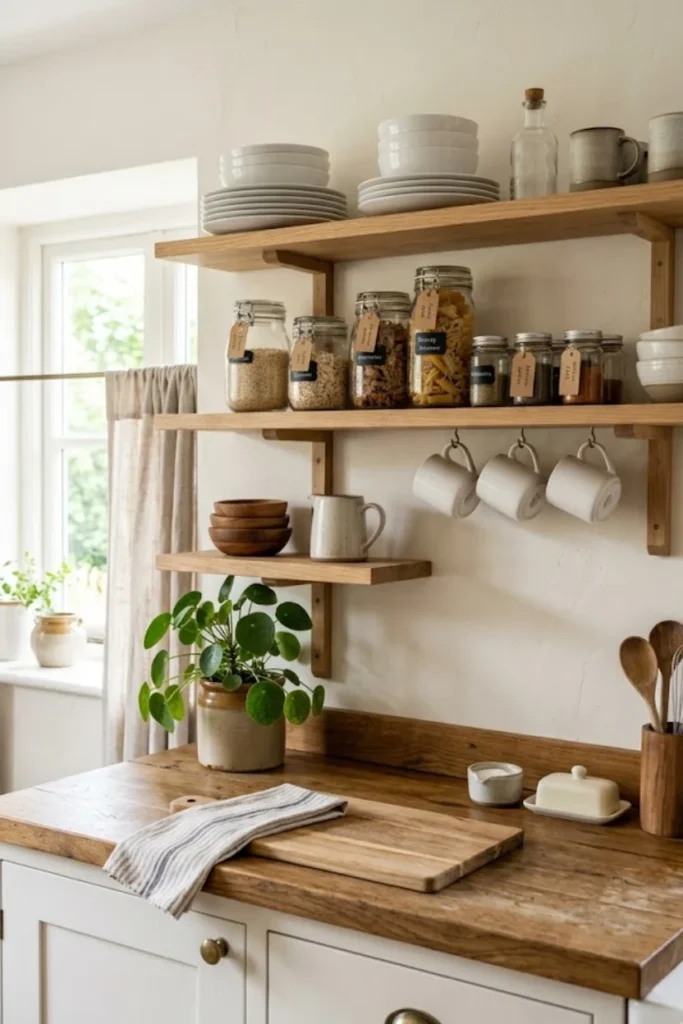
Why vertical shelving works so well
When storage moves upward, your counters instantly feel less busy. You also keep frequently used items at eye level, which saves time while cooking. And let’s be real, grabbing a bowl from an open shelf is way easier than digging through a packed cabinet.
Best things to store on vertical shelves
- Everyday plates and bowls
- Drinking glasses
- Coffee mugs
- Clear pantry jars
- Small plants or one decorative piece
Pro tip: Keep the most-used items on the middle shelf and lighter, less-used items on the top shelf. That small tweak makes your kitchen flow better every day.
2. Add Corner Shelves to Rescue Awkward Dead Space
Kitchen corners are sneaky. They look like they should be useful, but they often end up wasted or hard to access. That is where corner shelving steps in and saves the day.
A good corner shelf can turn weird, ignored space into a storage zone for spices, oils, small bowls, or even snacks. In a tiny kitchen, that matters a lot. Why waste a whole corner when it could be quietly doing the heavy lifting?
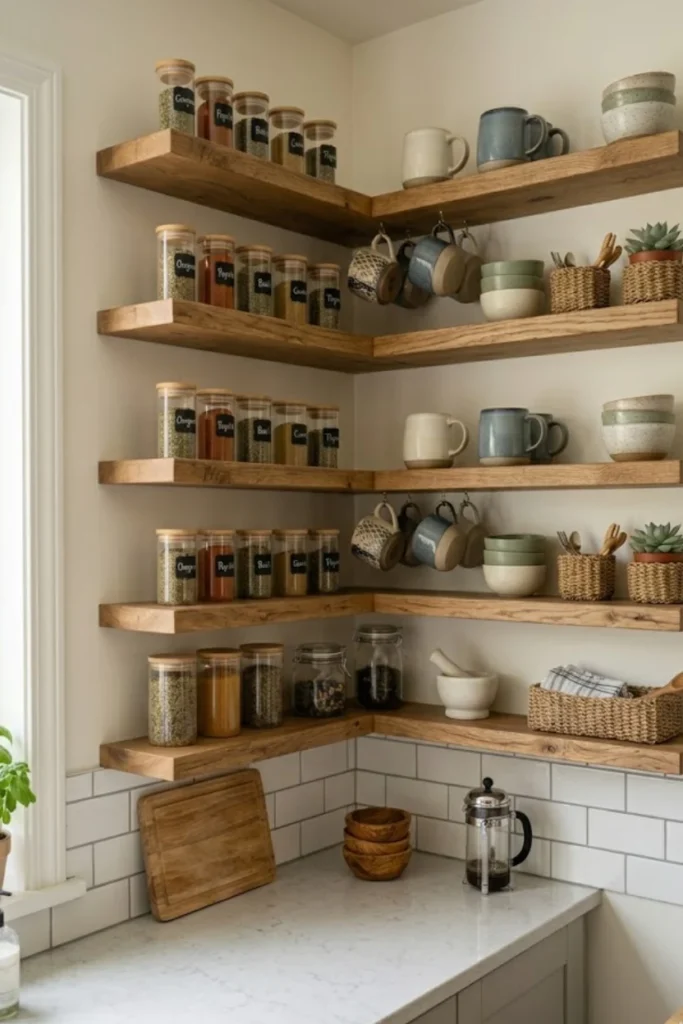
Smart ways to use corner shelves
Corner shelves are best when they hold smaller, lighter items. You want them to feel helpful, not cluttered. A tidy grouping works better than stuffing every inch.
Try using them for:
- Spice jars you reach for often
- Tea and coffee supplies
- Small prep bowls
- Mini baskets for garlic, onions, or packets
This is one of those Organized Kitchen Shelving Ideas that feels minor at first, but the effect adds up quickly. Little storage boosts can totally change how a small kitchen functions.
3. Install Floating Shelves for Everyday Essentials
Floating shelves are popular for a reason. They look clean, modern, and airy, but they are also seriously practical. If you want your kitchen to feel more efficient without feeling boxed in, floating shelves are a smart move.
The trick is to use them with intention. Open shelving should not become random shelving. Keep the items you use regularly front and center, and avoid turning the shelf into a catch-all for stuff you do not need.
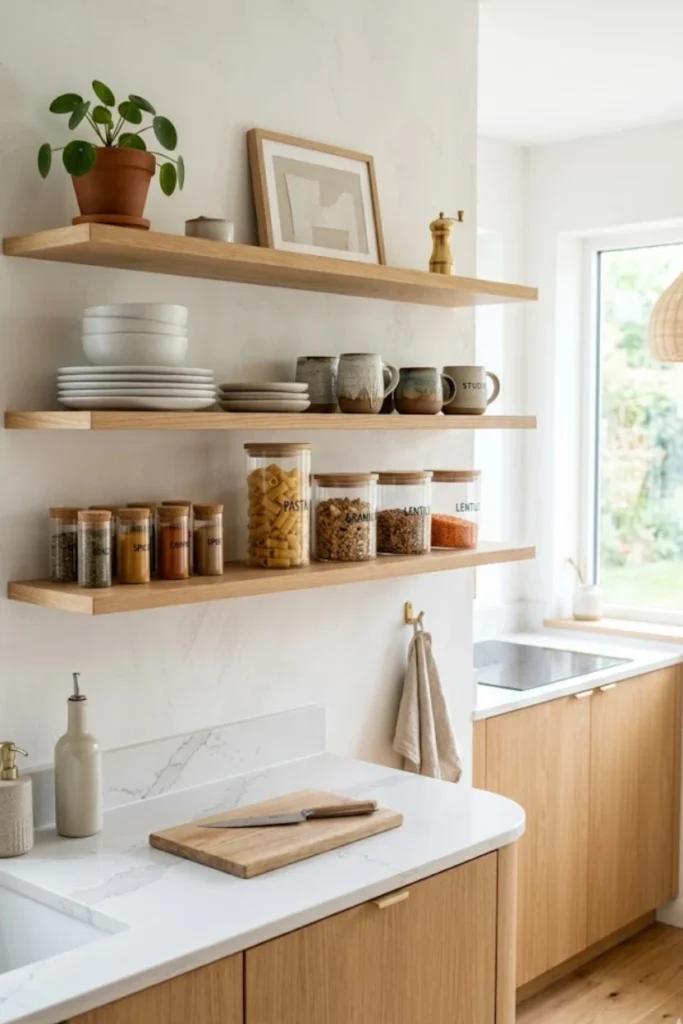
What makes floating shelves efficient?
They reduce the number of doors you have to open and close while cooking. They also encourage you to edit down to what you actually use. IMO, that alone makes them one of the best storage upgrades for a small kitchen.
Keep them looking organized
Use a simple structure so the shelves stay useful and not messy:
- Group similar items together
- Use matching containers where possible
- Leave a little empty space between groups
- Limit decorative objects to one or two pieces
Key takeaway: Floating shelves work best when function comes first and styling comes second.
4. Try Shelf Risers Inside Cabinets for Double the Storage
Now let’s talk about what is happening inside your cabinets. If you are stacking plates on top of bowls on top of mystery containers, shelf risers can help immediately. These mini shelves create a second level inside the same cabinet, which means less wasted vertical space.
This is one of the most underrated Organized Kitchen Shelving Ideas because it does not require renovation or major installation. You just place them inside the cabinet and start separating items by type or height. Easy, affordable, effective.
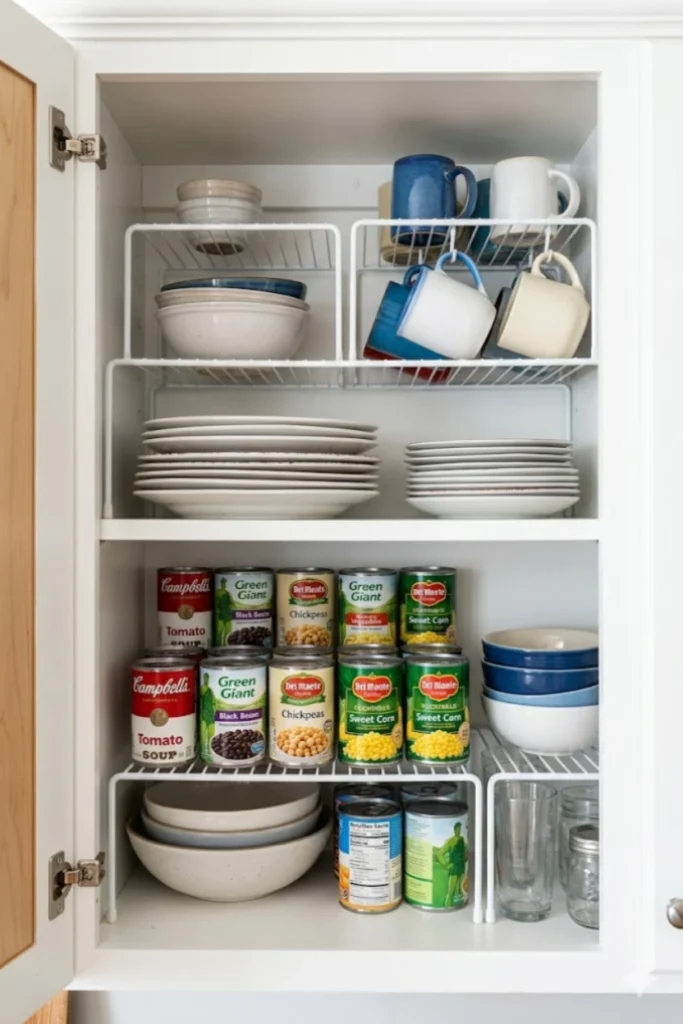
Great uses for shelf risers
Shelf risers are especially helpful for:
- Plates and salad bowls
- Mugs and glasses
- Canned goods
- Small pantry staples
- Baking supplies
Instead of one messy stack, you get two neat levels. That means less shifting, less clinking, and a much lower chance of knocking everything over when you need one thing.
5. Use Narrow Rolling Shelves Beside the Fridge or Cabinets
Have a tiny gap beside your fridge or base cabinet? Do not ignore it. Those slim spaces are perfect for narrow rolling shelves, and they can store more than you think.
These pull-out shelf units are ideal for oils, spices, foil, snacks, and cleaning items. They slide out when needed and disappear when not in use. In a small kitchen, hidden storage like this feels almost magical, right?
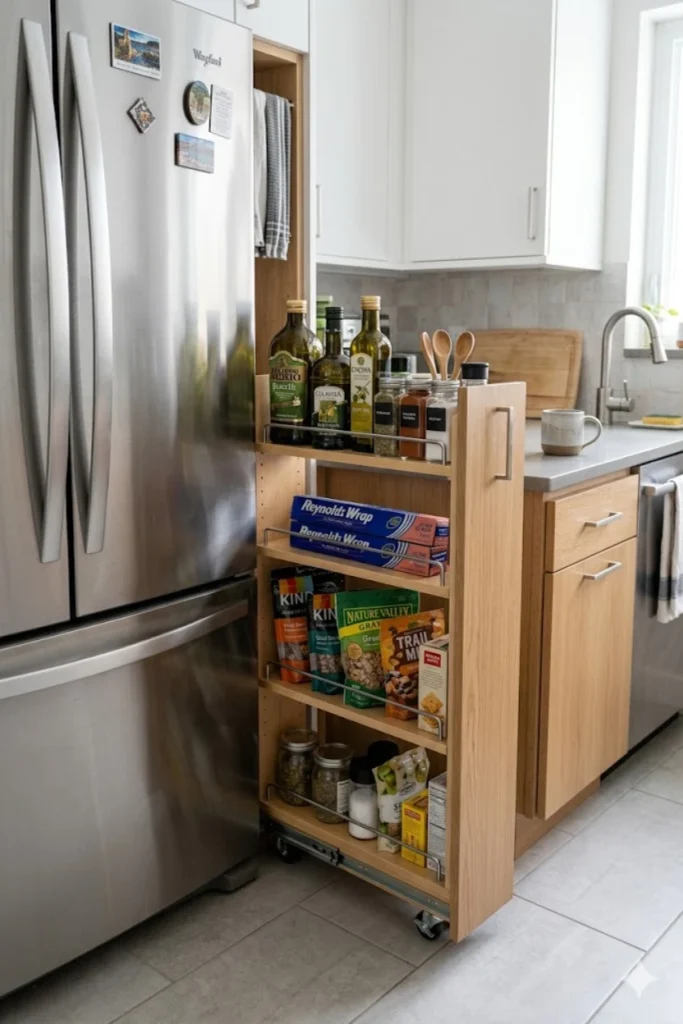
Why narrow shelving is a game changer
A three- to six-inch gap may not look important, but it can hold a surprisingly useful amount of stuff. It also keeps smaller items from taking over your main shelves and drawers. FYI, this is one of the easiest ways to make an awkward kitchen layout feel smarter.
Best items for slim rolling shelves
- Cooking oils and vinegars
- Spice bottles
- Parchment paper and foil
- Dish soap backups
- Snack bars or seasoning packets
Small-space rule: If a gap exists, it should probably be working for you.
6. Build an Over-the-Sink Shelf for Daily-Use Items
The area above the sink is often underused, which is wild when you think about it. An over-the-sink shelf can hold dish soap, scrub brushes, small herbs, cups, or even drying essentials while keeping the counter clearer.
This kind of shelving works especially well in compact kitchens where every visible surface gets crowded fast. It also keeps cleaning supplies contained in one zone instead of drifting around the room. That alone makes cleanup feel easier.
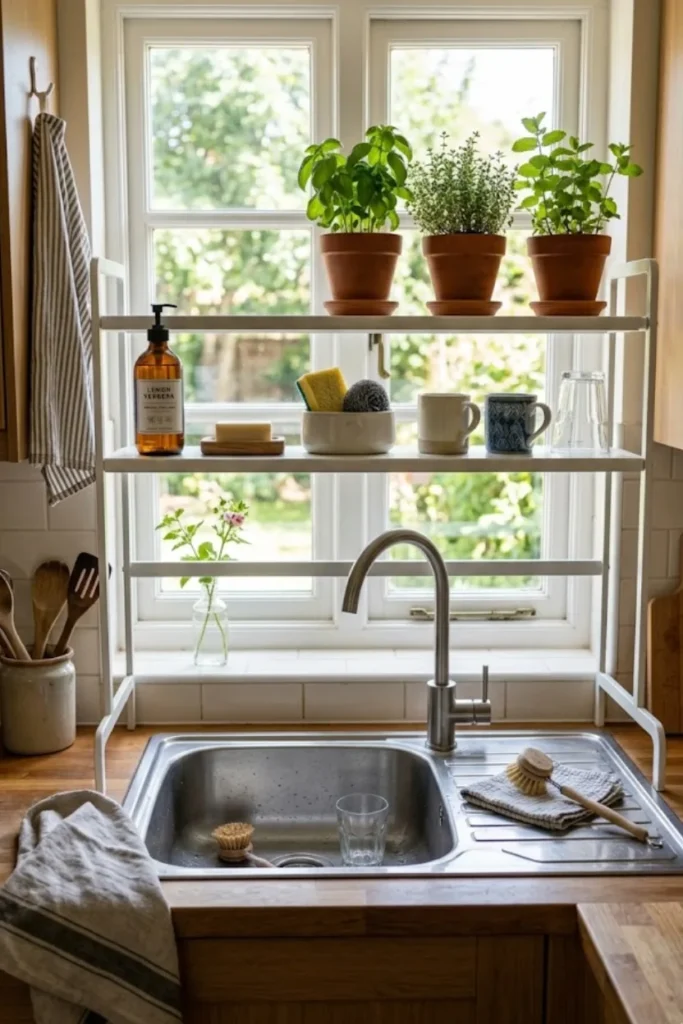
Keep this area neat, not busy
Because the sink is already a functional hotspot, the shelf should stay simple. Stick to practical items you use every day and avoid overloading it. A crowded sink area can make the whole kitchen feel tighter than it is.
Try storing:
- Dish soap
- Sponge holder
- Hand soap
- Small potted herbs
- Frequently used cups or bowls
This is one of those Organized Kitchen Shelving Ideas that improves both storage and workflow at the same time.
7. Use Open Pantry Shelving with Clear Zones
If you have even a small pantry nook or one cabinet you use like a pantry, open shelving with clear zones can make it feel dramatically more organized. The goal is not to cram more in. The goal is to make everything easier to see and easier to grab.
Think of your pantry shelves like mini departments. Snacks go in one area. Baking goes in another. Breakfast items stay together. Why make yourself search across four shelves for one bag of oats?
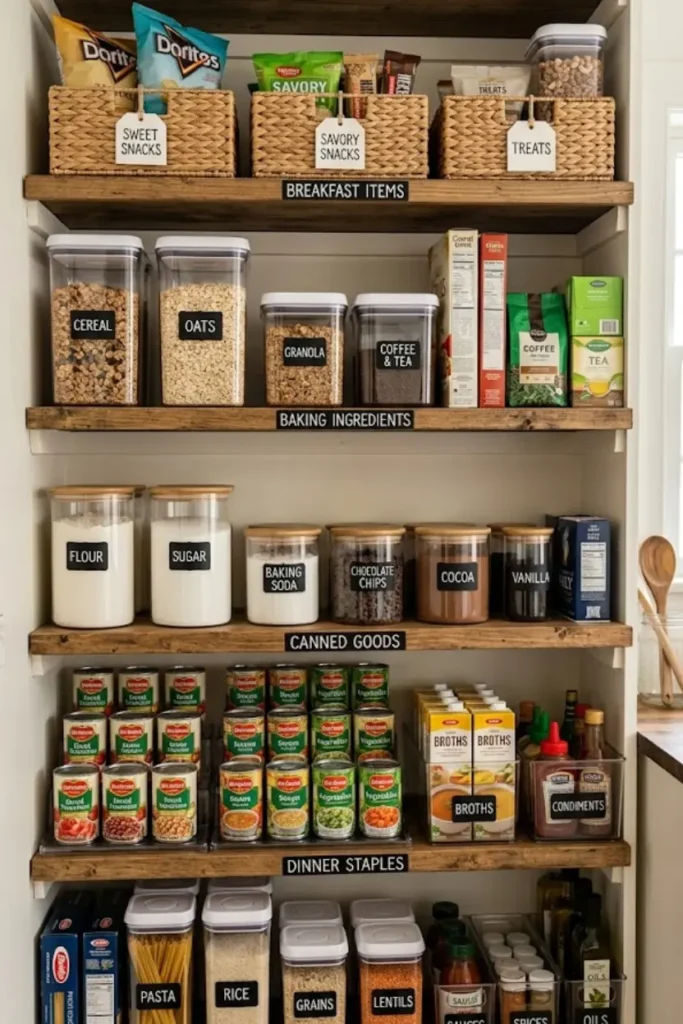
Create simple pantry zones
Use shelves to divide your pantry into categories like:
- Breakfast
- Snacks
- Baking
- Dinner staples
- Canned goods
Use containers that help, not complicate
You do not need twenty matching bins to get organized. But a few clear containers or labeled baskets can make a huge difference. When shelves show exactly what belongs where, it becomes much easier to keep them tidy long term.
Best practice: Put the most-used pantry items between waist and eye level. Store extras, backups, or party supplies higher up.
8. Add Under-Cabinet Shelving and Hanging Racks
Under-cabinet space is basically bonus real estate. If your upper cabinets stop above your counter, that space underneath can support hanging racks, mini shelves, mug hooks, or paper towel holders. Why leave it unused?
This is one of the smartest Organized Kitchen Shelving Ideas for kitchens that have very little drawer space. It keeps essentials accessible without adding visual bulk. And when chosen well, it can actually make the kitchen look more intentional.
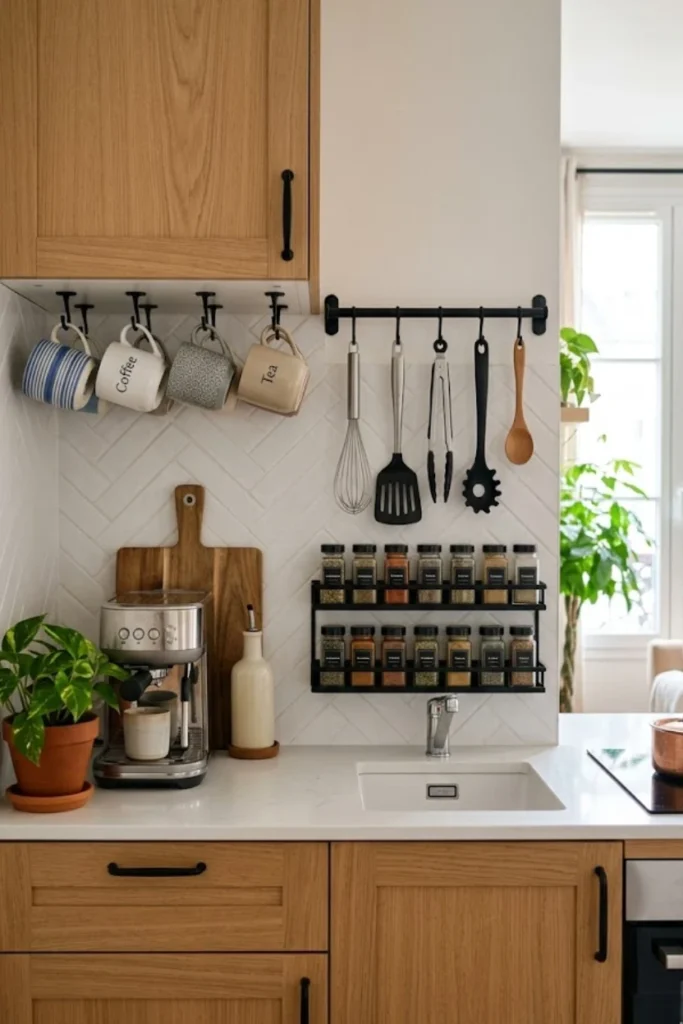
Great under-cabinet storage options
- Mug hooks
- Stemware racks
- Small spice shelves
- Paper towel holder
- Hanging rail for utensils
Just be selective. If every under-cabinet inch is full, the kitchen may start to feel crowded again. A little restraint goes a long way 🙂
9. Use Inside-Door Shelves for Tiny Items That Get Lost
Cabinet doors can do more than open and close. Adding inside-door shelves or slim racks is a smart way to store lightweight items that usually get buried. Think wraps, measuring spoons, spice packets, or cleaning cloths.
These micro-storage solutions are perfect for small kitchens because they create space where there was none before. They also help keep the main shelf area available for bigger items. More room, less chaos. Love that.
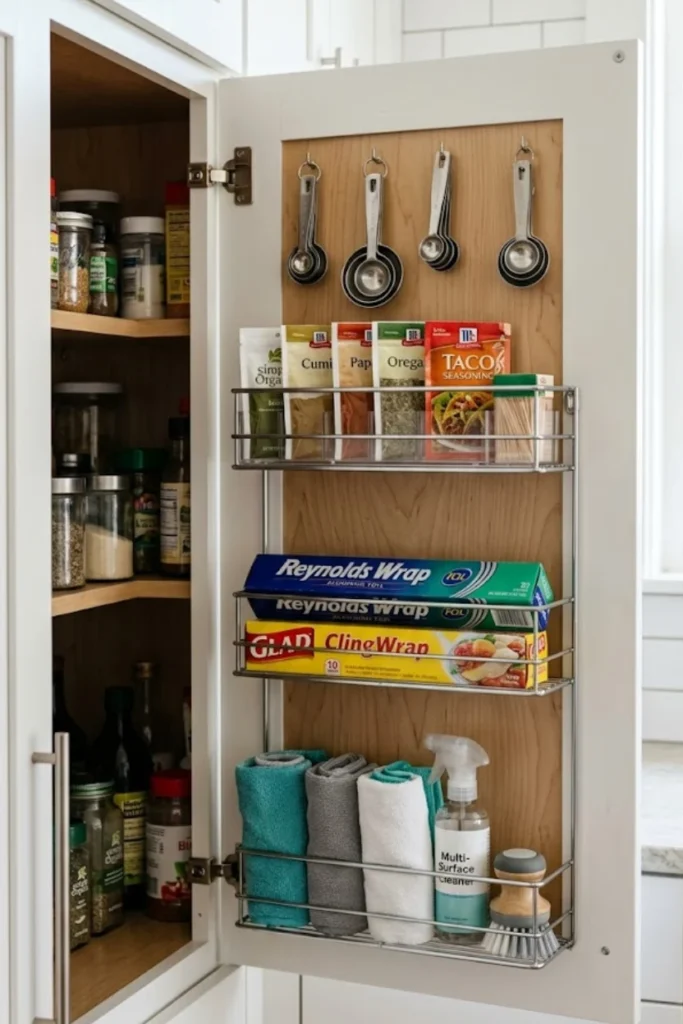
Best places to add inside-door storage
Look at the inside of:
- Under-sink cabinets
- Pantry cabinet doors
- Spice cabinet doors
- Cleaning supply cabinets
What to store there
Keep it to light, flat, or compact items such as:
- Measuring cups and spoons
- Plastic wrap and foil
- Small spice jars
- Notes, labels, or shopping lists
- Cleaning gloves and cloths
Important: Always check door clearance before installing anything. Functional is great, but not if the door will not close.
10. Mix Open and Closed Shelving for the Best of Both Worlds
Let’s end with a big-picture idea that ties everything together. Small kitchens work best when they use a mix of open shelving and closed storage. Open shelves keep daily items easy to reach. Closed cabinets hide the less attractive or less frequently used stuff.
This balance helps the kitchen feel efficient without looking cluttered. You get convenience where you need it and visual calm where you want it. Honestly, that combo is the sweet spot.
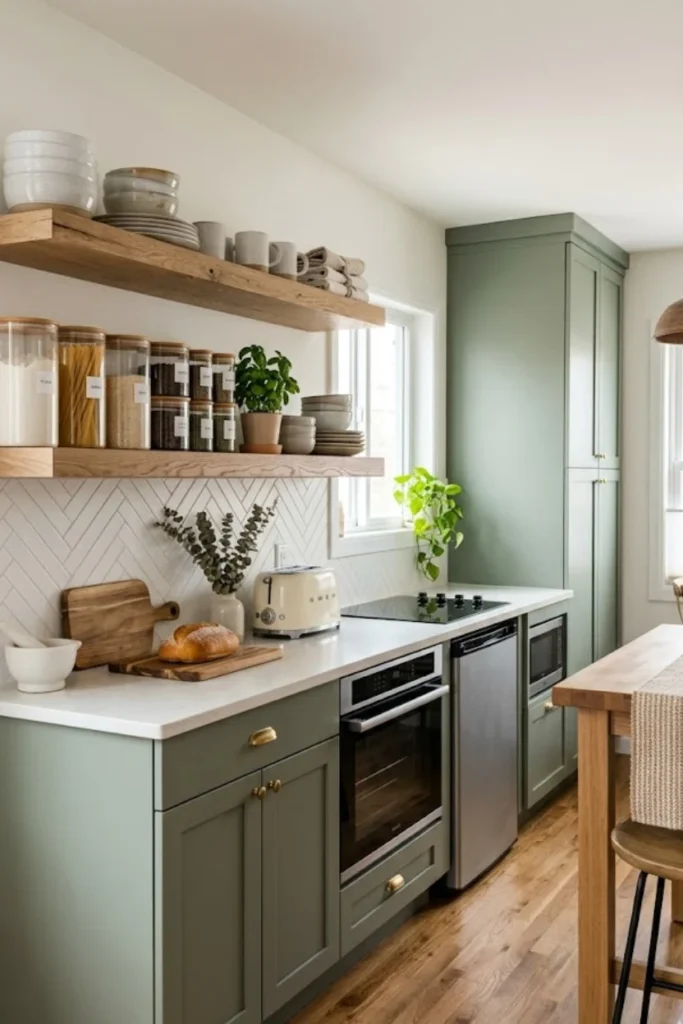
What should stay open vs. closed?
Here is a simple way to decide:
Keep open shelving for:
- Daily dishes
- Mugs
- Pantry jars that look tidy
- Cookbooks
- A few decorative items
Keep closed shelving for:
- Plastic containers
- Bulky appliances
- Cleaning supplies
- Random mismatched items
- Backup groceries
When you divide storage this way, your kitchen starts working with you instead of against you. And that is the whole goal, right?
Final Thoughts on Organized Kitchen Shelving Ideas
At the end of the day, the best Organized Kitchen Shelving Ideas are not about making your kitchen look like a showroom. They are about making your space easier to use, easier to clean, and way less stressful when life gets busy.
Vertical shelves, corner shelves, floating shelves, risers, rolling units, pantry zones, and under-cabinet storage all help small kitchens feel more efficient. You do not need to try every idea at once. Start with the one problem that annoys you most, fix that first, and build from there.
Because really, a small kitchen does not have to feel limiting. With the right shelving, it can feel smart, organized, and surprisingly roomy. And hey, if one tiny shelf can save you from another falling-lid disaster, that is already a pretty solid upgrade.