10 Camping Chair Design Ideas That Will Make You Actually Want to Sit Outside
This article was created in line with Trends Oraa’s research and content standards.
You dragged yourself into the wilderness for fresh air and peace — and then you spent three hours with a numb backside and a broken armrest digging into your ribs. Sound familiar?
Your camping chair should feel like a reward, not a punishment. The right design can turn an ordinary campsite into your favorite outdoor living room. And trust me, once you see these ideas, you’ll never settle for that faded, wobbly folding chair again.
You might also love our viral guide on Outdoor Patio Ideas — tons of inspo for making your outdoor spaces gorgeous year-round!
We rounded up 10 of the most stunning, functional, and surprisingly stylish camping chair design ideas out there. Some are classic. Some are jaw-dropping. And a few? You’ve probably never seen anything like them. Keep scrolling — idea #7 might be the game-changer you didn’t know you needed.
Why Your Camping Chair Design Actually Matters More Than You Think
Here’s something most people overlook: your camping chair is essentially your outdoor sofa, your dining chair, AND your reading nook — all in one.
A poorly designed chair ruins the whole vibe. A great one? It becomes the centerpiece of your campsite, the thing everyone wants to sit in, and the reason you actually unwind instead of just tolerating the outdoors.
So whether you’re a weekend warrior, a family camper, or a serious backcountry adventurer, there’s a camping chair design here that fits your life. Let’s dive in.
1. The Classic Low-Slung Hammock Chair
What You’re Seeing

Picture a deeply curved, low-to-the-ground seat made from weather-resistant woven fabric — almost like a hammock that decided to grow legs. This design sits close to the earth, cradles your lower back, and wraps around your body like it was made just for you. The frame is typically powder-coated steel, and the seat often has a footrest integrated right in.
Expert Tip: Look for a hammock-style chair with a weight capacity of at least 300 lbs — the woven fabric can stretch over time with repeated use, so extra support matters more than you’d think. Also, make sure the seat isn’t so low that it becomes a workout to get back up after your third s’more.
Why It Works: The hammock chair’s low center of gravity keeps you incredibly stable on uneven ground, which is basically every campsite ever. The reclined angle naturally takes pressure off your lumbar spine, so you can sit for hours without aching. It’s also visually stunning — there’s something almost artistic about a well-made woven camp chair against a backdrop of pine trees or a sunset sky.
Pair this with a low camp table and some lanterns, and your campsite will look like something straight off a design blog.
2. The High-Back Director’s Chair
What You’re Seeing
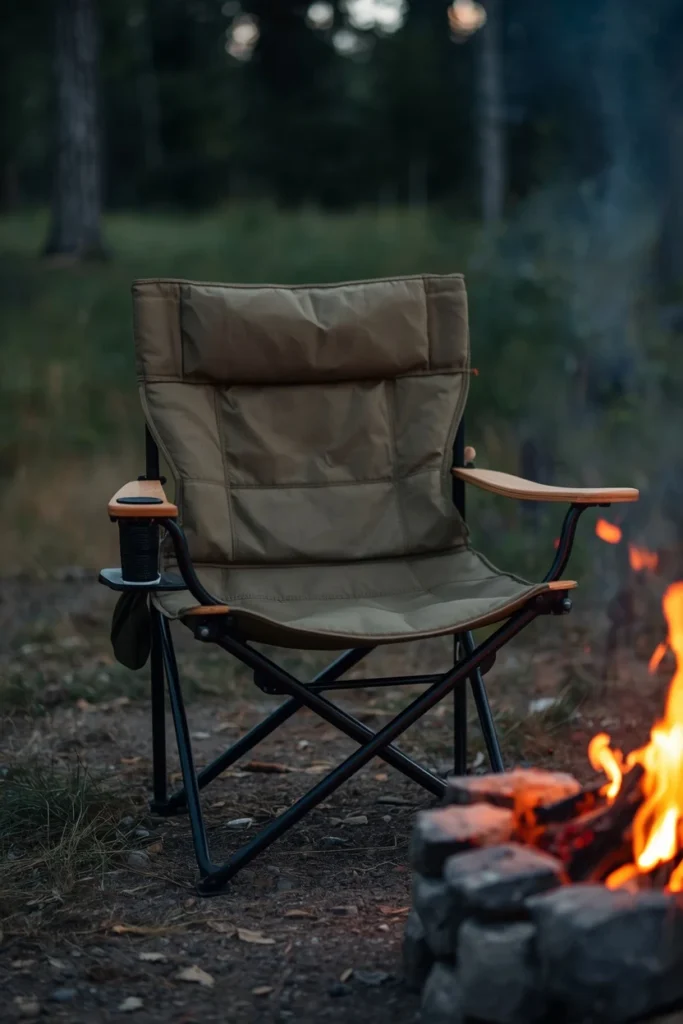
This is the royalty of camping chairs — tall, commanding, and built for people who refuse to sacrifice comfort just because they’re in the woods. The high-back director’s chair typically features a full spine-length backrest, padded armrests, a side table cup holder built into one arm, and often a footrest attachment. Frames come in aluminum or heavy-duty steel, and fabrics range from basic canvas to thick polyester with foam padding.
Expert Tip: Go for an aluminum frame over steel if you’re carrying it any distance — aluminum directors chairs can weigh as little as 6 lbs while still holding 300+ lbs. Canvas seats are classic but dry slower; look for a coated polyester or nylon blend if you camp in wetter climates.
Why It Works: The high back provides full head and neck support, which makes an enormous difference on long evenings around the fire. You’re also sitting at a comfortable height — great for eating, talking, and actually looking your fellow campers in the eye instead of staring up at them from the ground. The built-in cup holder side table is a genuinely brilliant touch that keeps your drink within reach without you ever having to lean.
Which style speaks to you — the laid-back hammock vibe or the commanding director’s chair throne? Drop your pick in the comments!
3. The Ultralight Backpacking Chair
What You’re Seeing
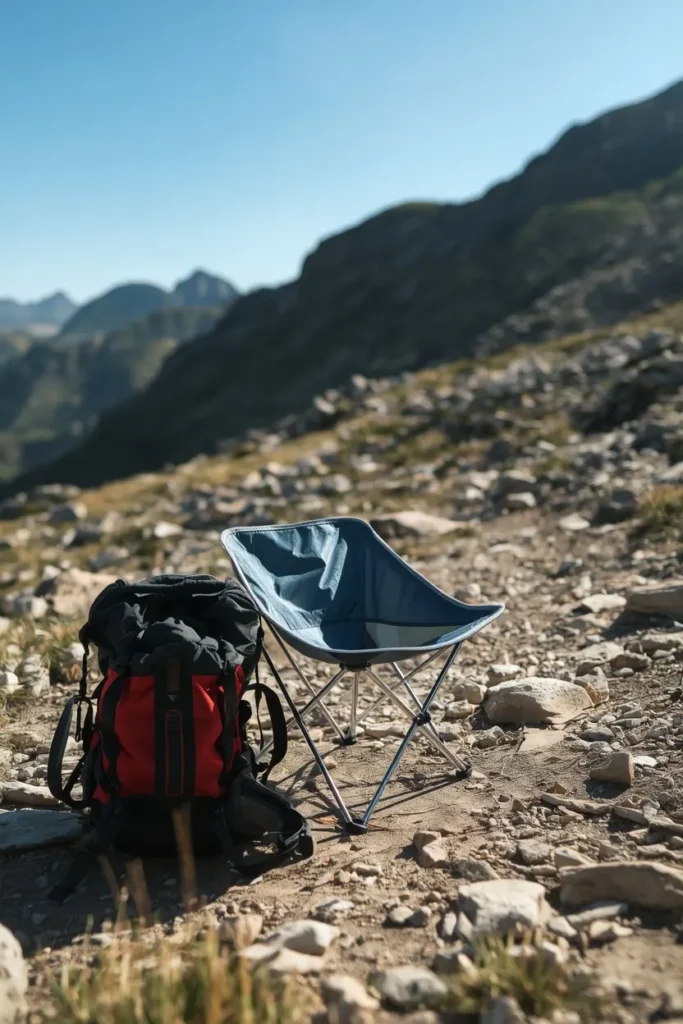
This one looks almost impossibly minimal at first glance. We’re talking less than 2 lbs of aircraft-grade aluminum poles and ripstop nylon fabric — chairs that fold down to roughly the size of a water bottle. Think clean geometric lines, a slightly forward-tilted seat that puts you in an ergonomically neutral position, and zero unnecessary material anywhere. Some ultralight models don’t even have legs — they’re a seat pad on a frame that converts your sleeping pad into a backrest.
Expert Tip: The real trick with ultralight chairs is fit. Many are sized for people under 6 feet; if you’re tall, look for models with extended legs or adjustable height. Also — and I cannot stress this enough — don’t just buy the cheapest ultralight chair. The low-end ones have welded joints that crack under repeated use. Spend a little more for cold-forged or machined connections.
Why It Works: When you’re carrying everything on your back for miles, every ounce matters. But humans aren’t built to sit on hard ground for hours — it’s genuinely uncomfortable and bad for your hips. The ultralight chair design solves this elegantly: you get real seated support without meaningful weight. The ripstop nylon also dries almost instantly after rain, which is a huge quality-of-life win in the backcountry.
But here’s the important part — ultralight chairs have gotten dramatically better in the last few years. Designs that used to feel flimsy now feel shockingly robust. Don’t write them off if you tried one in the past.
4. The Loveseat Camping Chair (Double-Wide Design)
What You’re Seeing
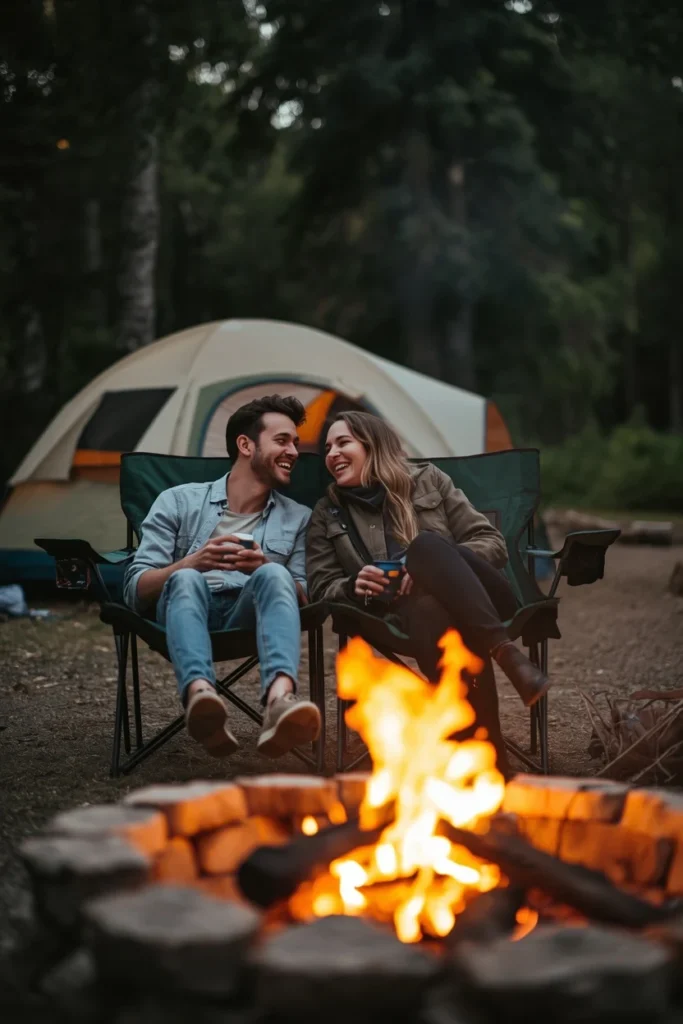
Imagine your favorite couch cushion — now imagine it with legs and a cup holder. The double-wide or loveseat camping chair is exactly what it sounds like: a wide, two-person bench-style seat with a shared armrest in the middle, two outer armrests, two cup holders, and usually a shared tray table at the center. Frames are typically wide-based powder-coated steel, and the seat material ranges from breathable mesh to padded polyester.
Expert Tip: The key spec to look at is the center divider. Some loveseat chairs have a fixed center armrest that makes the chair feel stiff and awkward — look for one with a removable or fold-down center so you can actually sit comfortably with a partner (or spread out solo). Also check the weight capacity, which should cover the combined weight of two average adults, ideally 450+ lbs.
Why It Works: This is the ultimate social camping chair design. Instead of arranging chairs in a circle where everyone is slightly too far apart, the loveseat pulls two people together. It’s perfect for couples, parents with a young child, or anyone who just wants a little more personal space on one side and a person they love on the other. Around a fire, it creates an instant gathering anchor — everyone naturally wants to cluster near the loveseat.
Speaking of outdoor social spaces — check out our gorgeous Outdoor Fire Pit Design Ideas for the ultimate campsite setup!
5. The Rocking Camp Chair
What You’re Seeing
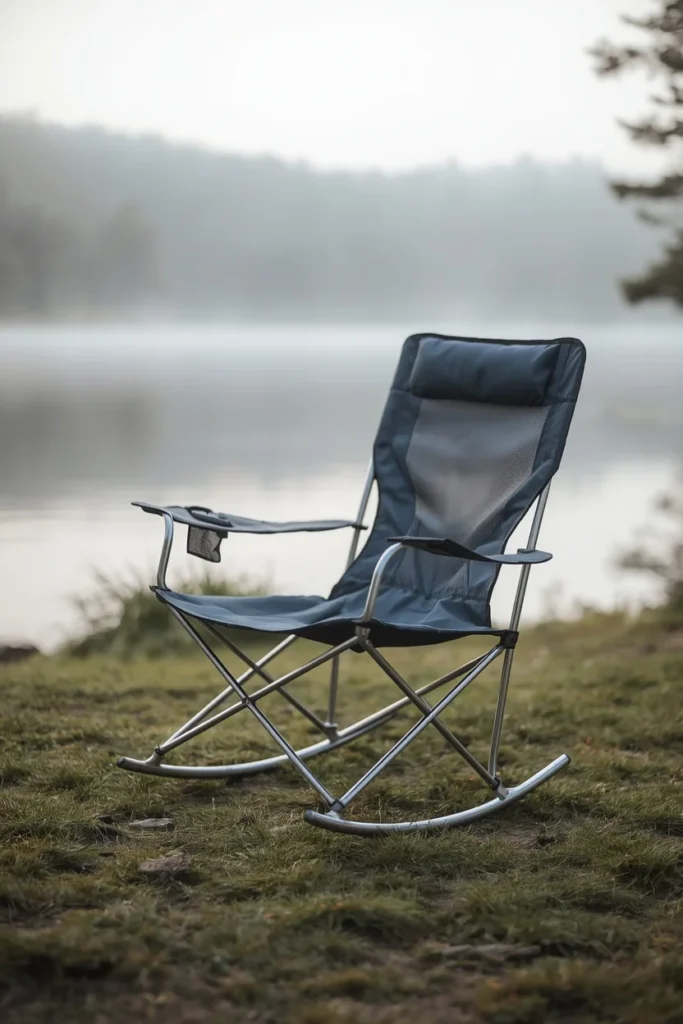
Yes, a rocking chair. For camping. And it’s absolutely as wonderful as it sounds. Modern rocking camp chairs use curved metal runners (usually powder-coated aluminum) instead of traditional wooden rockers, keeping the weight manageable. The seat and back are typically breathable mesh or coated fabric, and many models fold flat for easy transport. Some even have a locking mechanism so you can stop the rocking when needed.
Expert Tip: The ground matters a lot with rocking camp chairs. Soft soil or sand works beautifully — the runners press in slightly and give you a perfect rocking surface. Hard-packed dirt or rock? You’ll get an annoying clatter. Bring a small ground mat to place under the runners if you’re unsure about your campsite surface, and you’ll be blissfully rocking all evening.
Why It Works: There’s actual science behind why rocking is so relaxing — the rhythmic motion activates the vestibular system and promotes calm, almost like being gently rocked to sleep as a baby. Around a campfire, a rocking camp chair turns a regular evening into something almost meditative. The gentle sway, the crackling fire, the stars overhead — it’s the definition of outdoor living done right. People who own rocking camp chairs tend to become almost evangelical about them. Consider yourself warned.
Most people don’t know this — rocking camp chairs have been around since the 1990s but stayed niche because early models were heavy and awkward. Today’s aluminum versions weigh as little as 8 lbs and fold in seconds.
6. The Swivel Base Camp Chair
What You’re Seeing
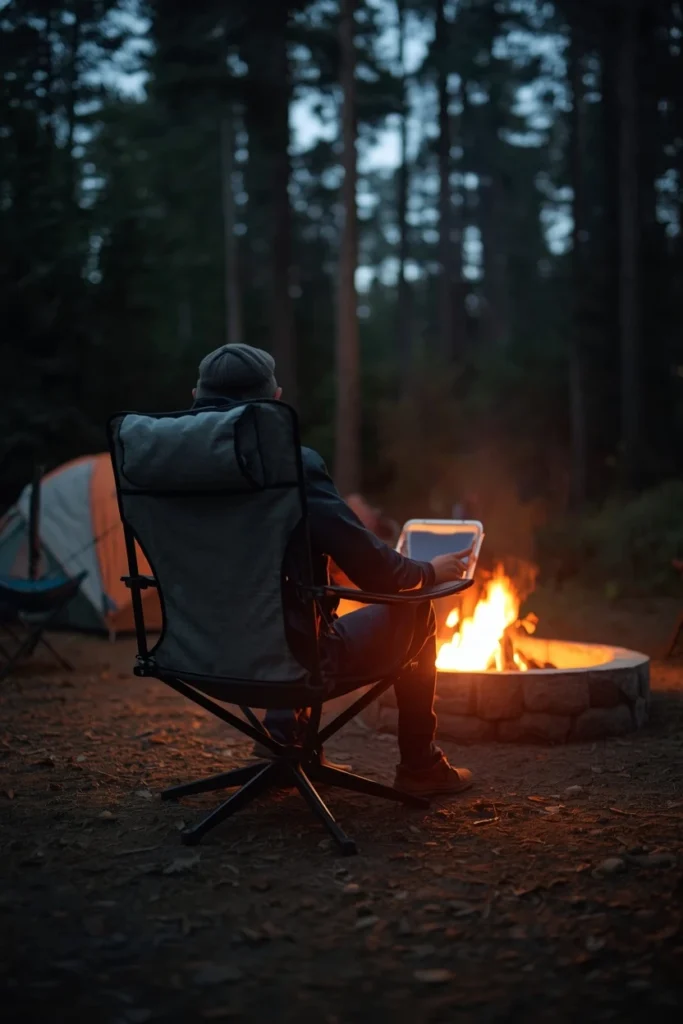
This is a camping chair with a 360-degree rotating base — so you can turn to face the fire, then spin to grab something from behind you, then rotate again to talk to someone on your left, all without getting up. The swivel mechanism sits on a wide, stable platform with splayed legs, and the seat itself is often padded and high-backed. Think of it as a camp version of an office chair — without wheels, but with way better vibes.
Expert Tip: Weight is your primary consideration here. The swivel mechanism adds meaningful heft, so most swivel camp chairs run between 14–20 lbs. If you’re car camping and weight isn’t a constraint, this is a total game-changer. But if you’re packing in any distance, it’s not the move. Also look for swivel chairs with a locking mechanism — you want to be able to lock the rotation when you’re settled in one direction.
Why It Works: The swivel base completely changes the social dynamic of a campsite. You’re no longer anchored in one direction, awkwardly craning your neck to talk to someone. You just spin. It’s also remarkably practical: reach for the cooler, grab your bag, tend to the fire — all without standing. For people who camp with kids, the swivel chair becomes a surprisingly essential tool for keeping eyes on multiple small humans at once.
Here’s where it gets interesting — some newer swivel camp chairs are adding built-in Bluetooth speakers and USB charging ports in the armrests. It’s a genuinely bold design direction, and for car campers who want that premium outdoor lounge experience, it’s hard to argue with.
⬛ BUYING GUIDE: How to Choose the Right Camping Chair Design for You
Before we go further into more wild and wonderful designs, let’s talk about what actually separates a great camping chair from a forgettable one. Because there are a LOT of options out there, and most people end up buying the wrong one for their needs.
The Four Things That Actually Matter
Weight capacity isn’t just for heavy people — it affects how long the chair lasts. A chair rated at 250 lbs that gets used by a 200-lb person will start showing stress within a season. Always buy at least 50 lbs above your actual weight.
Packed size matters more than you think, even for car campers. A chair that fits in a trunk is easier to transport than one that sticks out of your open trunk. Measure your storage space before you buy.
Seat height is wildly personal. Low-slung chairs feel relaxing but are hard to get out of; high chairs are easier on joints but can feel less “campy.” If you have any knee or hip issues, prioritize seat height above almost everything else.
Frame material is a long-term investment. Steel is heavy but nearly indestructible. Aluminum is light and rust-resistant. Carbon fiber exists but is expensive. For most campers, aluminum with a powder-coat finish hits the sweet spot.
Budget Breakdown
Under $30: You’re in basic folding territory. Fine for one or two uses per summer, but don’t expect longevity.
$30–$70: This is where the real value lives. You’ll find solid aluminum frames, decent fabric, and good weight ratings. Most people should shop here.
$70–$150: Premium comfort tier. Padded seats, high backs, specialty designs like swivel bases or loveseat styles. Worth it if you camp frequently.
$150+: Ultralight or ultra-premium. Either you’re serious about backpacking, or you want the best possible car-camping experience. These chairs are often lifetime purchases.
Pros and Cons Snapshot
Classic folding chair — Pro: cheap, universal. Con: zero back support, flimsy armrests.
High-back director’s chair — Pro: incredible comfort. Con: heavier and bulkier.
Ultralight backpacking chair — Pro: weighs almost nothing. Con: can feel less stable for larger frames.
Rocking camp chair — Pro: genuinely delightful experience. Con: surface-dependent, heavier.
Swivel chair — Pro: outstanding social flexibility. Con: heaviest option, not for backpacking.
Now, avoid this mistake — buying a camping chair based solely on price. The $15 chair that fails after two trips costs more over time than the $60 chair that lasts ten years. Factor in cost-per-use, and quality almost always wins.
7. The Zero-Gravity Reclining Camp Chair
What You’re Seeing

This is the one that changes people. A zero-gravity reclining camp chair uses a bungee or tension system (similar to the chair design popularized for patio lounging) to find a position where your knees are slightly above your heart — the so-called “zero gravity” position that NASA identified as the most neutral posture for the human body. The chair reclines through multiple locked positions, from upright to nearly flat, and is usually made from breathable textilene fabric on a powder-coated steel or aluminum frame.
Expert Tip: Look for a zero-gravity chair with textilene or mesh fabric rather than solid polyester — the breathable weave makes a night-and-day difference in summer heat. Also check the recline lock mechanism before buying; cheap versions use a thin pin that breaks within a season. Quality zero-gravity chairs have a robust dual-lock system on both armrests that you engage simultaneously.
Why It Works: The zero-gravity position isn’t marketing fluff — it genuinely reduces spinal compression and takes pressure off the lower back and legs. For anyone who spends most of their day sitting at a desk, arriving at a campsite and getting into a zero-gravity chair is an almost physical relief. It’s also magnificent for stargazing — recline back, look straight up, and the sky becomes your ceiling. Many people report that they sleep better on camping trips when they spend an hour or two in zero-gravity position before bed.
This is the camping chair design I personally recommend most to people who camp primarily at established sites with car access.
8. The Canopy Camp Chair
What You’re Seeing
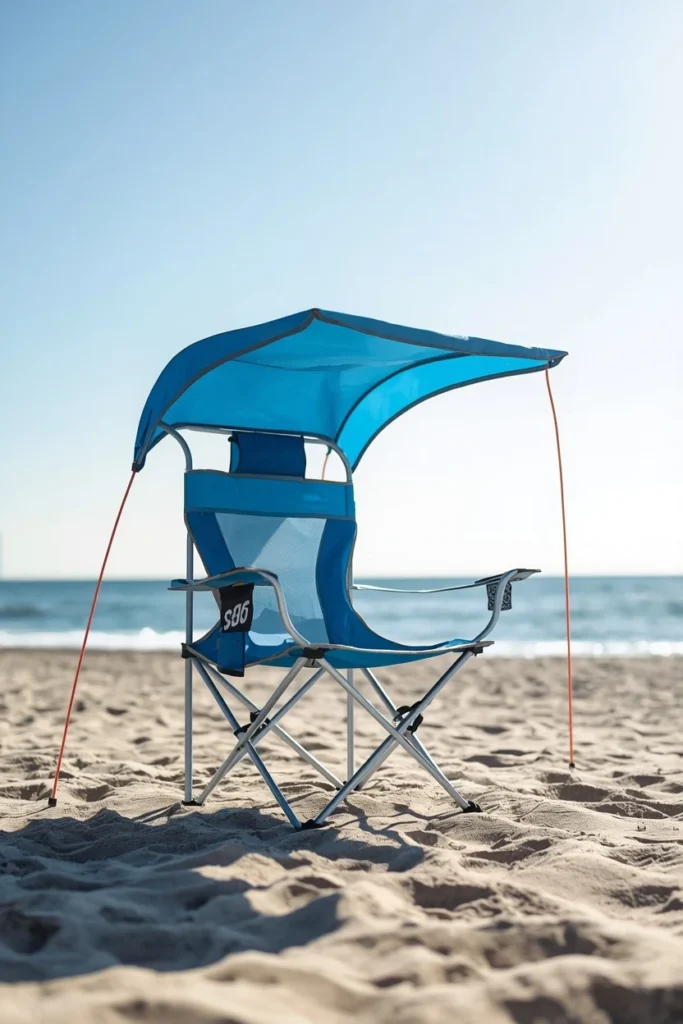
Exactly what it sounds like — a folding camp chair with an attached, removable canopy (sometimes called a shade umbrella) that arcs over your head and provides coverage from a roughly 60-degree angle. The canopy is usually UPF 50+ fabric on an aluminum or fiberglass frame, and many versions allow you to pivot the canopy to follow the sun. The chair itself is typically a standard high-back design, padded, with cup holders.
Expert Tip: Check that the canopy can be completely removed and stored separately — you won’t always need it, and a fixed canopy adds awkward bulk to transport. Also look for canopies with ventilation panels; a solid umbrella canopy traps heat underneath on hot days, turning your shade into a mini oven. A vented design lets warm air escape while still blocking UV.
Why It Works: Sun protection is seriously underrated in camping culture. Most people slather on sunscreen and then sit in full sun for six hours — and you can absolutely get a meaningful burn even on cloudy days. The canopy chair gives you personal, constant shade without requiring you to stay in a tent or awkwardly position your whole chair relative to a larger umbrella. It’s especially brilliant for beach camping, desert camping, or any summer trip where midday heat is real. Parents of fair-skinned kids in particular tend to become devoted fans.
Would you use a canopy chair on the beach, at a campsite, or at a backyard BBQ? Tell me in the comments — I’m genuinely curious!
9. The Hammock Chair (Hanging Style)
What You’re Seeing
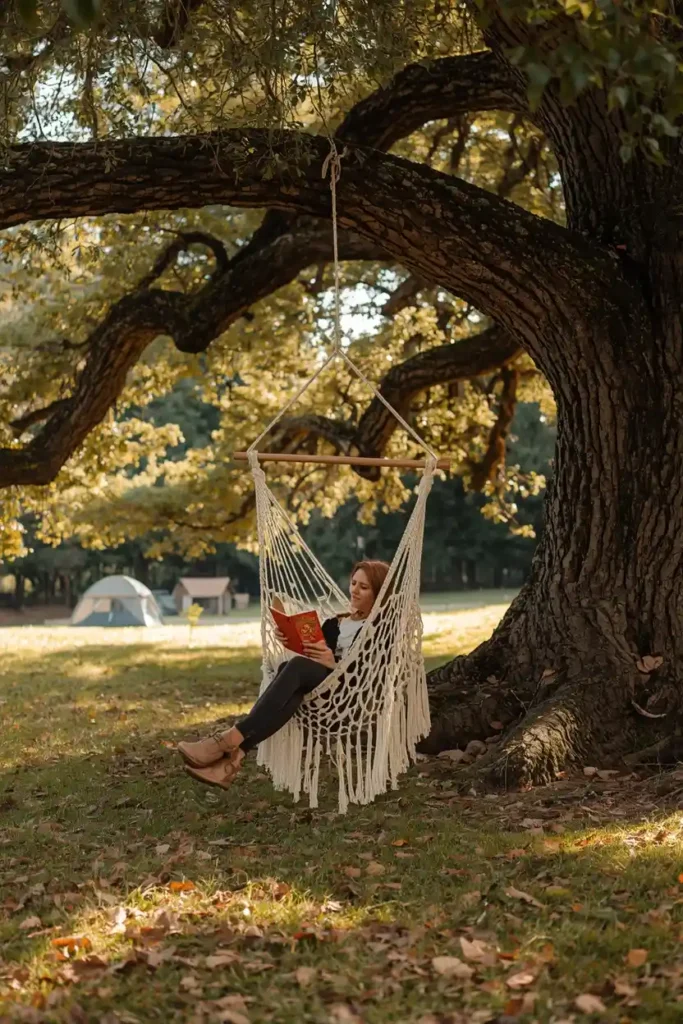
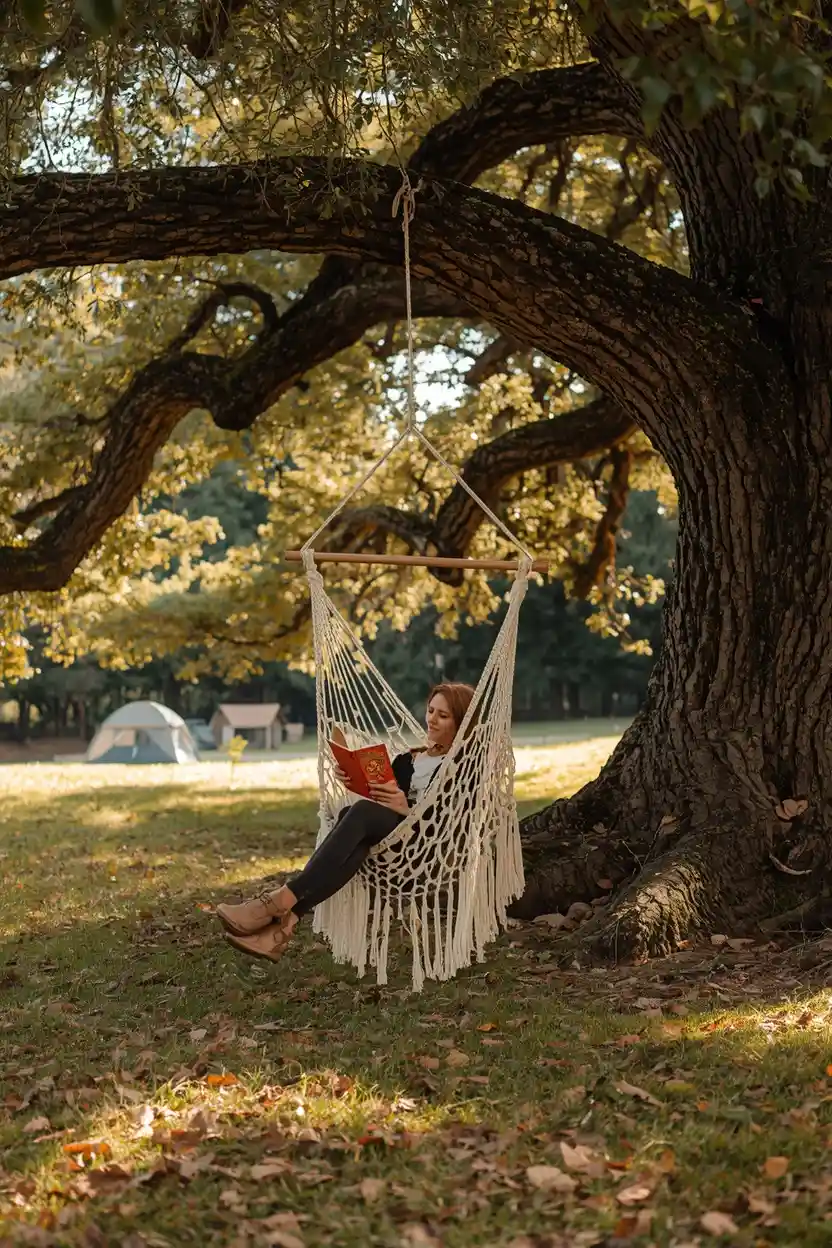
Different from the low-slung hammock-style chair on legs — this is an actual suspended hammock chair, hung from a tree branch, a hammock stand, or a tripod rig. The seat is a gathered fabric pocket (often made from breathable cotton canvas or polyester), hung from a single point above, with a spreader bar or ring at the top keeping it open. You climb in, tuck your legs up, and essentially cocoon yourself mid-air. Many versions come with their own hanging hardware and a carrying pouch.
Expert Tip: Tree selection matters enormously. Never hang a hammock chair from a dead branch or a tree with significant trunk damage — the weight concentration from a single-point hang is greater than a traditional hammock. Look for a healthy, living branch at least 4 inches in diameter. Alternatively, invest in a free-standing hammock chair stand, which removes the tree question entirely and gives you placement freedom.
Why It Works: There’s a reason hammock chairs appear in every aspirational camping Pinterest board — they’re visually stunning and experientially wonderful. The gentle swaying motion, the slightly cocooned feeling, the slight elevation off the ground — it hits differently than any chair. They’re also incredibly versatile: works equally well on a campsite, in a backyard, on a screened porch, or at a music festival. The hammock chair bridges indoor and outdoor living beautifully, which is exactly why it performs so well on social media.
If you love the hanging, swinging life, you’ll adore our guide to Patio Ideas for Florida Homes — hammock chairs work brilliantly in humid climates!
10. The Convertible Chair-to-Chaise Design
What You’re Seeing
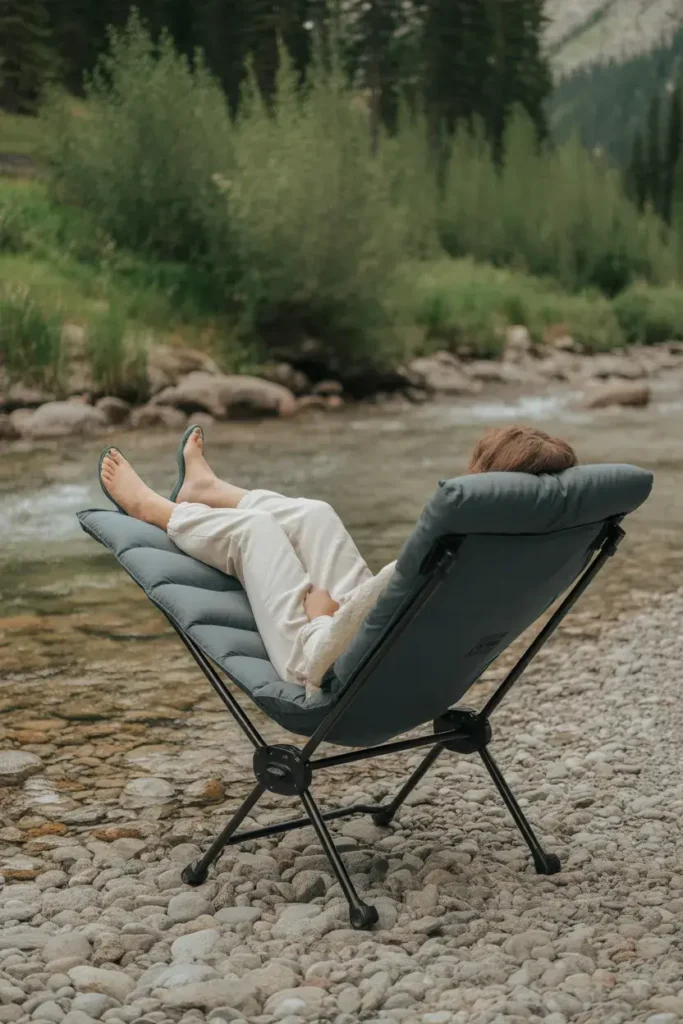
This is the Swiss Army knife of camping chairs — a chair that converts into a full-length chaise lounge in seconds. The front legs fold down, the seat extends forward via an attached footrest section, and suddenly you go from sitting upright to fully reclined with legs elevated. Most convertible designs use a dual-frame system (inner and outer frame that telescope relative to each other) and textilene or padded polyester fabric that stays taut in both configurations.
Expert Tip: Test the conversion mechanism before you buy if at all possible — some designs require awkward two-handed contortions to switch between chair and chaise mode. The best convertibles click between modes with a simple foot lever or a single arm motion. Also pay close attention to the weight capacity in chaise mode versus chair mode; cheaper versions have significantly lower capacity in chaise position because the frame geometry changes.
Why It Works: Versatility is the name of the game here. A single convertible chair handles morning coffee (upright, alert, sociable), afternoon reading (slightly reclined), and post-hike recovery (fully reclined, legs up). You’re essentially packing two pieces of furniture in one. For solo campers and minimalist packers who still want comfort options, the convertible chair-to-chaise is genuinely the smartest buy on this list. It’s also a showstopper at any campsite — people will ask you about it.
Now, avoid this mistake — don’t assume all convertible chairs are the same. The quality range is enormous. A $35 convertible chair will have loose hinges and fabric that sags in chaise mode within a season. The $80–$120 range is where these designs really shine.
Which of these 10 camping chair design ideas would you add to your next camping trip? Drop your number in the comments — I read every single one!
Pulling It All Together: Your Perfect Camping Chair Setup
Here’s the honest truth: there’s no single “best” camping chair design. There’s only the best one for how you camp.
If you backpack deep into the wilderness, the ultralight chair wins every time. If you car camp with family, the loveseat or the zero-gravity recliner will transform your evenings. If you camp solo and value versatility, the convertible chair-to-chaise is your best friend. And if you want to create a genuinely gorgeous campsite that looks intentional and inviting? Mix a hammock chair hung from a tree with a couple of directors chairs below — the visual layering is stunning.
The camping chair design ideas in this list aren’t just about comfort (though they definitely deliver that). They’re about creating an outdoor space that you actually want to spend time in. A chair that makes you linger longer around the fire. A seat that makes a stranger walk over and ask “where did you get that?”
Camping should feel like a vacation, not a test of endurance. And it starts with where you sit.
Now that you’re thinking about your outdoor setup — don’t stop here. Check out our Small Front Porch Ideas guide for even more ways to bring that campsite-cozy energy right to your own front door. You’ll find ideas that translate perfectly between outdoor adventure and everyday home living.
Happy camping — and happy sitting. You’ve absolutely earned it.