10 Family Room Ideas That Will Make Everyone Actually Want to Hang Out Together
This article was created in line with Trends Oraa’s research and content standards.
Your family room looks fine. But does anyone actually use it?
That’s the quiet frustration so many homeowners feel — you’ve got the space, but it just doesn’t pull people in. The kids disappear to their rooms. The couch sits empty. Movie nights feel like a chore instead of a memory in the making.
I’ve spent a lot of time obsessing over what makes a family room magnetic — the kind of space where teenagers voluntarily put down their phones, toddlers squeal with delight, and adults actually exhale. And in this post, I’m sharing 10 family room ideas that genuinely work for real families in real homes.
You might also love our viral guide on Modern Dark Living Room Ideas — perfect if you want that moody, cinematic vibe in your gathering space!
Keep scrolling — idea #6 is the one most people overlook, and it might completely change how your family uses the room.
Why Most Family Rooms Fall Flat (And What to Do Instead)
Before we dive into the ideas, let’s talk about the real problem. Most family rooms are designed for the catalog, not for life. They look beautiful in photos but feel stiff and uncomfortable when actual humans try to use them.
The fix? Design for behavior, not aesthetics. Think about what your family actually does — plays board games, watches movies, does homework, naps on Sunday afternoons — and let that drive every decision.
Now, let’s get into the good stuff.
1. The Cozy Conversation Pit: Sunken Seating That Pulls Everyone In
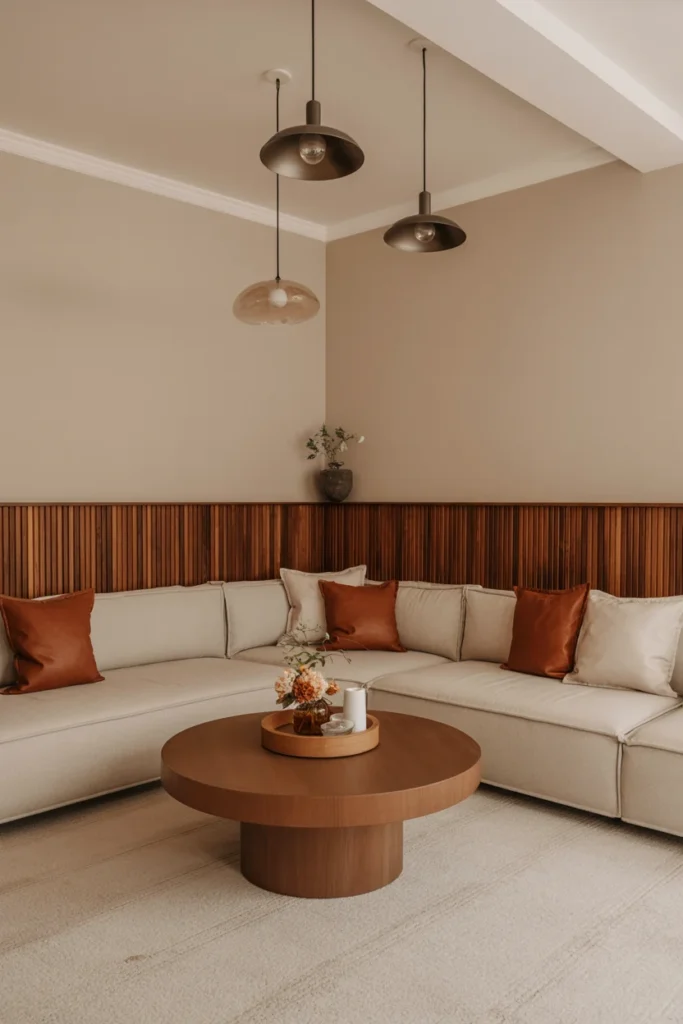
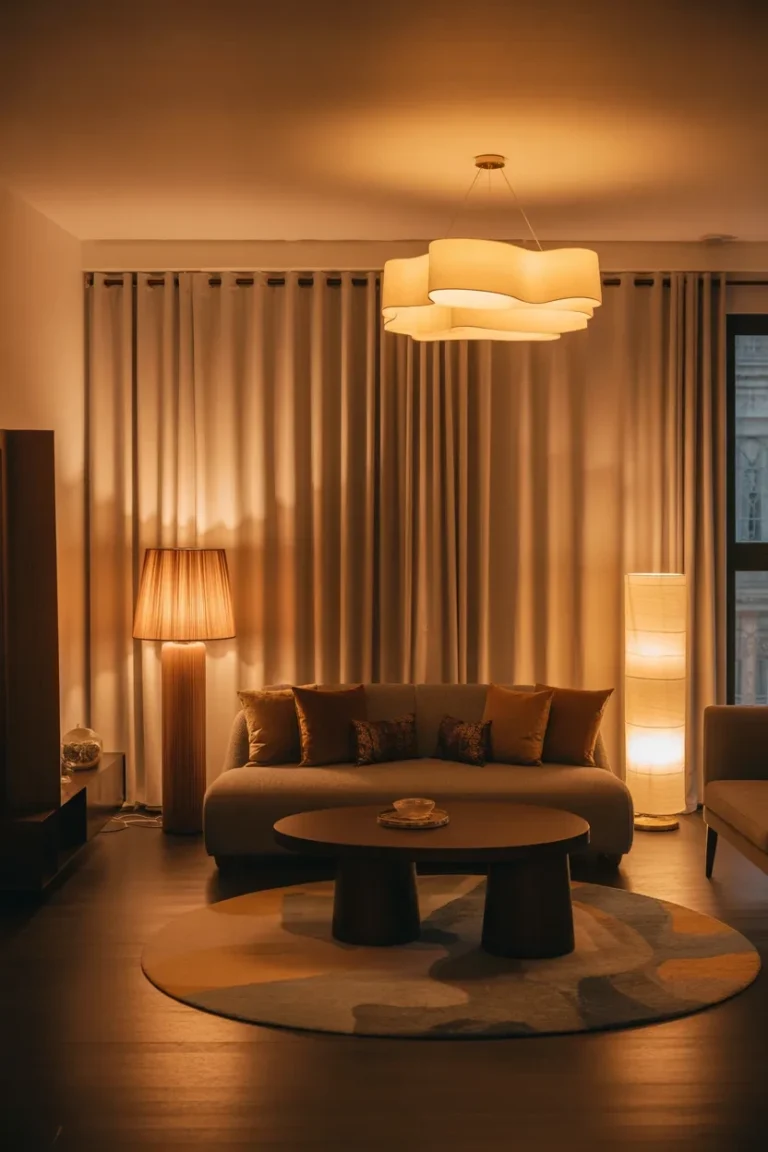
What you’re seeing: Imagine a slightly sunken seating area anchored by an oversized sectional in a warm, oatmeal-toned fabric. The walls are clad in wood paneling just above the seat line, and a trio of pendant lights hangs low overhead. There’s a round coffee table dead center — approachable from every angle — and throw pillows in terracotta, rust, and cream create that instant “sink in and stay” feeling.
Expert Tip: You don’t need a full architectural sunken pit to pull this off. Use a large area rug to visually define a “conversation zone” and arrange seating so everyone faces inward. The psychological effect is surprisingly similar — the space feels intentional and intimate, like the room is giving you a hug.
Why it works: Circular and inward-facing seating arrangements naturally encourage conversation. When furniture faces a central point instead of all pointing at a TV, people look at each other instead of screens. It’s one of those small design tweaks that has a massive impact on how your family actually interacts. Add warm Edison-bulb lighting overhead and you’ve basically built a cozy campfire vibe indoors — minus the s’mores mess (though that’s your call).
2. The Built-In Entertainment Wall: Clutter-Free and Completely Custom
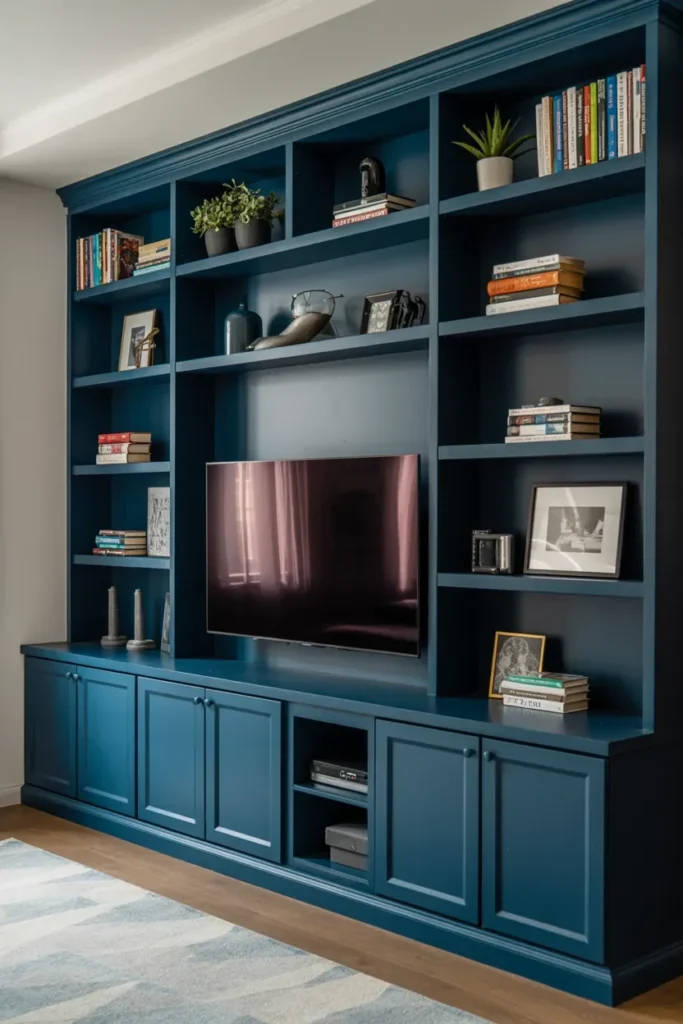
What you’re seeing: A floor-to-ceiling built-in unit in a deep navy or charcoal paint, with open shelving flanking a centered TV niche. Closed cabinets on the bottom hide gaming consoles, remotes, and all the tangled cord chaos that normally makes family rooms feel messy. Decorative objects, plants, and a few framed photos add personality without overwhelm.
Expert Tip: The secret to a built-in that looks expensive but isn’t? Paint your IKEA shelving unit the same color as your walls. It reads as custom millwork at a fraction of the price. Check out our 15 Genius IKEA Kids Playroom Ideas for more budget-smart IKEA hacks that work beautifully in family spaces.
Why it works: Clutter is the #1 enemy of a relaxing family room. When everything has a designated, hidden home, the room instantly feels calmer and more spacious — even if nothing else changes. Built-ins also give you full vertical height, which draws the eye upward and makes ceilings feel taller. It’s form and function doing a perfect team handshake.
Which storage struggle hits home for you? Toy overload, tech cable chaos, or too many remotes? Drop it in the comments — I’d love to help!
3. The Warm Farmhouse Family Room: Rustic Without the Cheese
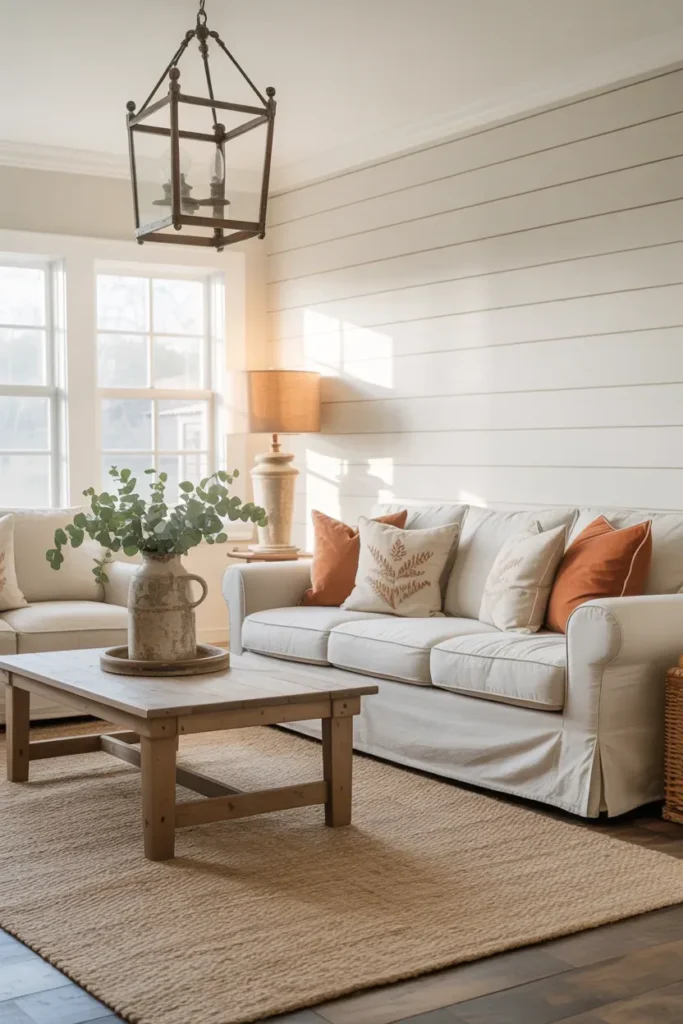
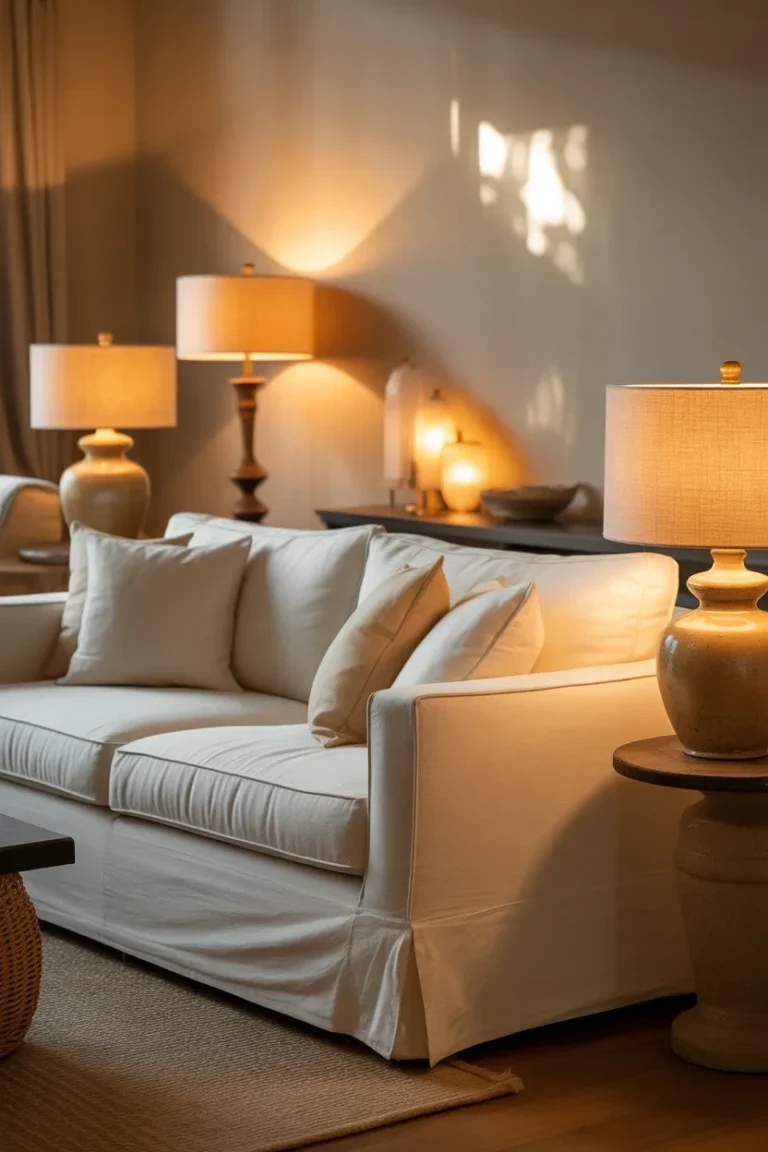
What you’re seeing: Shiplap on a single accent wall painted in soft white or warm greige. A linen slipcovered sofa sits across from a reclaimed wood coffee table. A woven jute rug grounds everything, and an antique-style lantern pendant adds character overhead. The overall vibe? Relaxed, welcoming, and just a little bit nostalgic.
But here’s the important part… Farmhouse style only works when you edit mercilessly. One galvanized metal piece: charming. Five galvanized metal pieces: trying too hard. The restraint is what makes it feel like a real home rather than a Pinterest board exploded in your living room.
Expert Tip: Layer textures rather than patterns. A chunky knit throw, a linen pillow, a wood tray, a woven basket — these create visual richness without making the space feel busy. And always, always add fresh greenery. A simple eucalyptus stem in a thrifted jug costs $3 and adds life that no decor item can replicate.
Why it works: The farmhouse aesthetic taps into something deeply comforting — it signals “this is a home where things happen, where people are welcome, where imperfection is okay.” For family rooms specifically, that psychological permission to relax is everything. Families feel more at ease in rooms that don’t feel precious or untouchable.
4. The Modern Playroom Hybrid: Style That Survives Your Kids
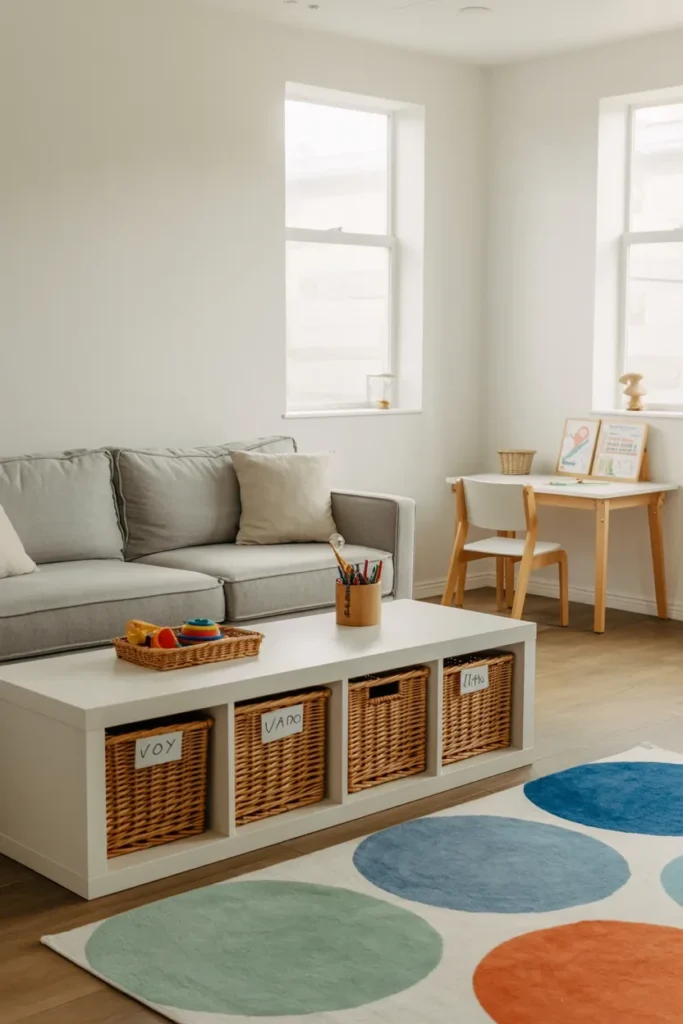
What you’re seeing: A thoughtfully designed dual-purpose space where adult aesthetics and kid-friendly function coexist peacefully. A sleek gray sofa with washable cushion covers anchors one end. A low, open storage unit in white holds labeled baskets for toys. A colorful, oversized area rug defines the play zone, and a small art station tucks neatly into one corner.
Most people don’t know this… Washable furniture covers have gotten incredibly good. Brands now make slipcovers in premium fabrics that look just as elevated as their non-washable counterparts. You can have a beautiful room and let your toddler eat goldfish crackers on the couch. Both things can be true.
Expert Tip: Use the bottom shelves for kids, the middle shelves for shared items, and the top shelves for adult decor. This natural zoning gives kids ownership of their space without letting it take over the entire room. Our 15 Genius IKEA Kids Playroom Ideas has brilliant organizational hacks that work just as well in a family room setting.
Why it works: When kids have a clearly defined zone within the family room, they’re more likely to clean up after themselves (slightly, let’s be realistic) and less likely to sprawl toys across every square inch. And when parents don’t feel like they’ve surrendered their living space to a toy store, everyone is happier. Win-win-win.
5. The Cozy Dark Moody Room: Sophisticated Enough for Grown-Ups
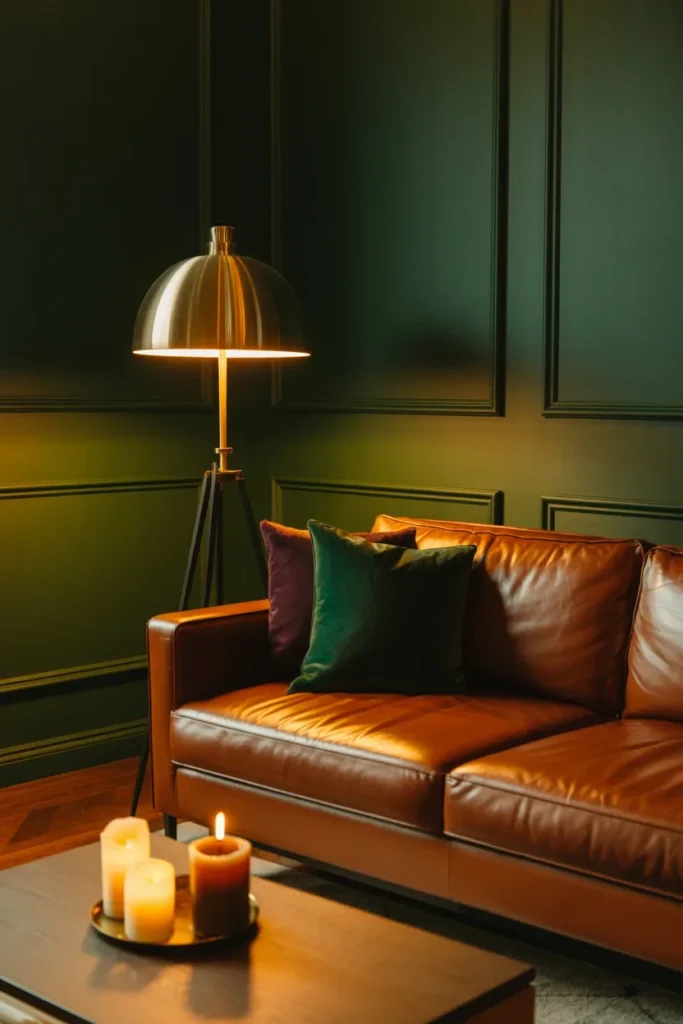
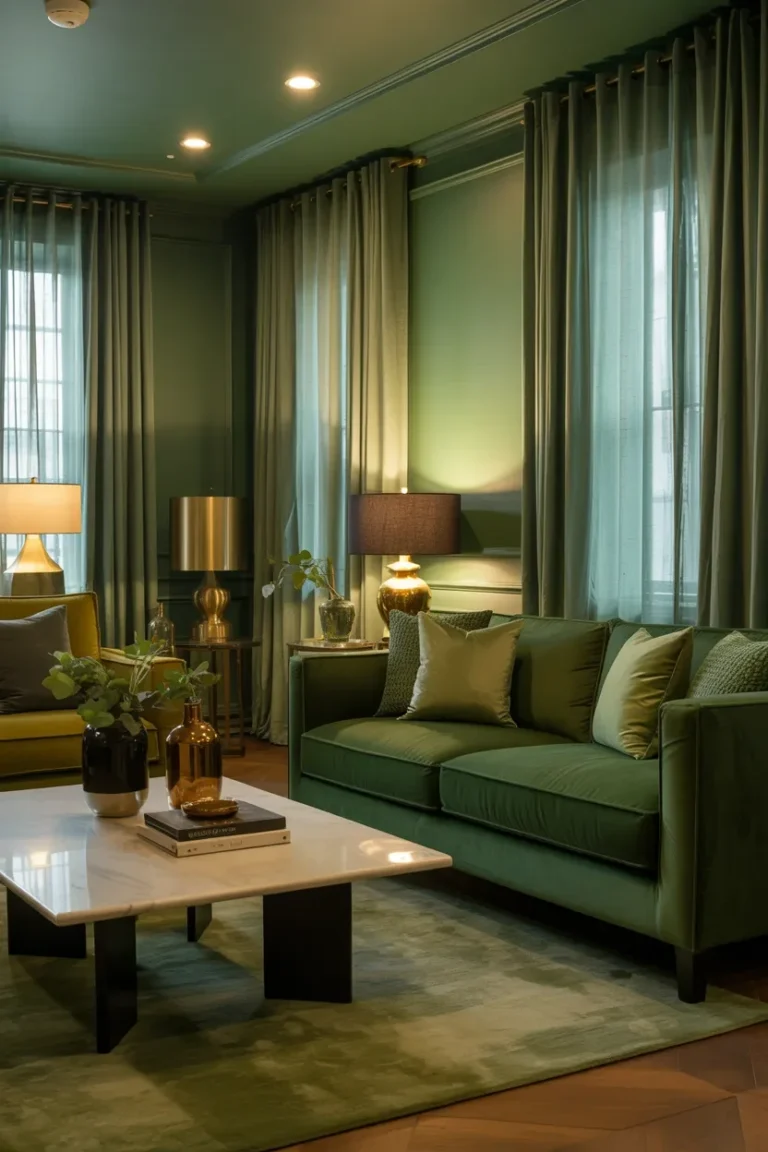
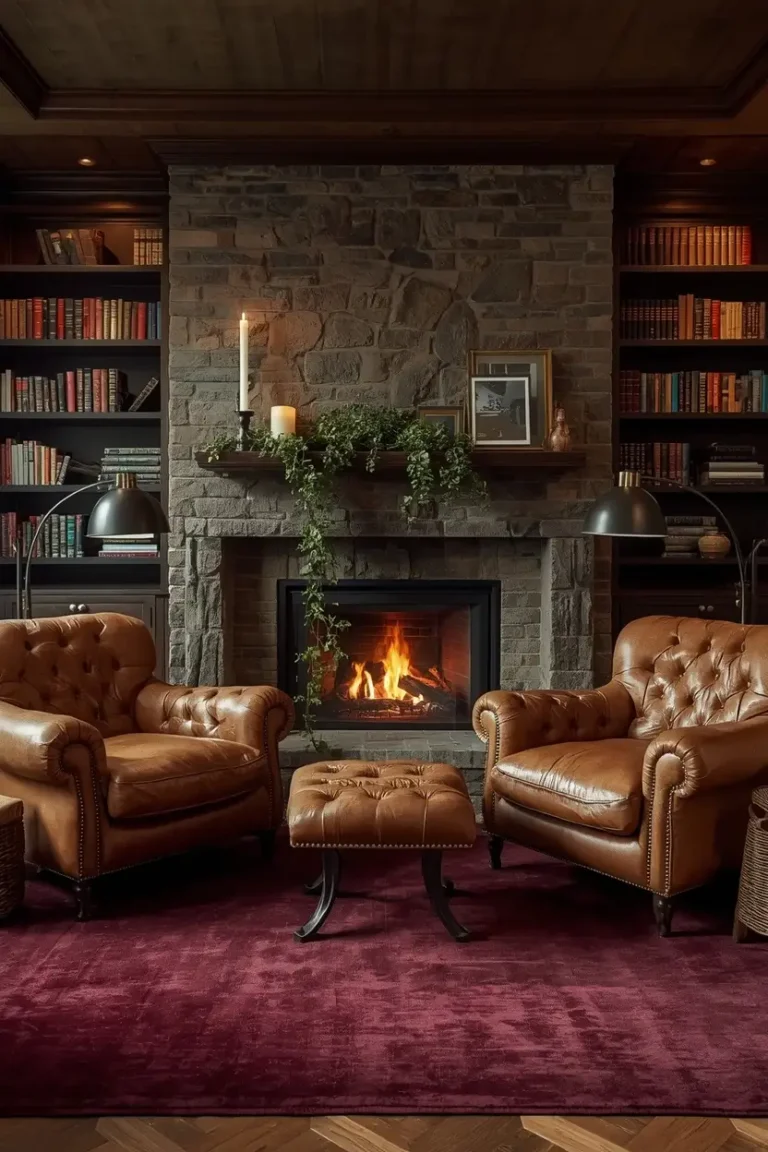
What you’re seeing: Walls in a deep forest green or charcoal slate, paired with rich cognac leather seating and a brass floor lamp casting a warm amber glow. Velvet throw pillows in jewel tones — emerald, sapphire, plum — add lushness. Dark hardwood floors anchor the space, and strategically placed candles create that intimate, cinema-at-home atmosphere.
Expert Tip: Going dark on walls only works if you commit to warm lighting. Cool, overhead fluorescents will make a dark room feel like a cave. Layer three light sources minimum: an overhead fixture, a floor lamp, and table lamps or candles. The layering is what makes dark rooms feel cozy instead of gloomy. For more moody inspiration, browse our Modern Dark Living Room Ideas.
Why it works: Dark, cozy rooms are psychologically conducive to winding down. There’s a reason theaters and cinemas are dark — it signals your brain to relax and focus. For families who love movie nights, game nights, or just need to decompress after school and work, a darker, warmer palette can genuinely transform how the room feels to be in.
Family Room Buying Guide — What to Spend On vs. Where to Save
Before we hit ideas 6 through 10, let’s talk money. Because nothing derails a beautiful family room faster than budget regret.
Splurge Here:
The sofa is non-negotiable. This is where your family will spend thousands of hours. A cheap sofa that deteriorates in 18 months is one of the most expensive mistakes you can make. Look for kiln-dried hardwood frames, 8-way hand-tied springs, and high-density foam cushions (minimum 1.8 lb density). Spend at least $800–$1,200 for something that will genuinely last.
Flooring matters just as much. If you’re redoing floors in a family room, opt for luxury vinyl plank (LVP) — it handles kids, pets, spills, and heavy foot traffic like a dream, and the texture and look quality have improved dramatically in recent years.
Save Here:
Throw pillows are purely decorative and easy to swap seasonally. Buy the covers on sale and stuff them with affordable inserts.
Wall art can be DIY, printed from Canva, or sourced from thrift stores. No one can tell the difference when it’s framed beautifully.
Side tables don’t need to be a matching set. Mix a thrifted find with a new piece for a collected, layered look that actually feels more intentional than perfectly matched furniture.
Budget Breakdown (Ballpark for a Full Room Refresh):
- Sofa/sectional: $900–$2,500
- Area rug (8×10): $150–$600
- Coffee table: $100–$400
- Side tables (pair): $80–$300
- Throw pillows and blankets: $50–$150
- Lighting (floor lamp + table lamp): $80–$300
- Wall decor: $30–$200 (or free if you DIY)
- Storage/baskets: $50–$150
- Total Realistic Budget: $1,440–$4,600
Here’s where it gets interesting — you can absolutely achieve a magazine-worthy family room at the lower end of that range if you prioritize correctly and aren’t afraid to shop secondhand. Facebook Marketplace and thrift stores consistently yield incredible sofas, rugs, and accent tables at 20–30% of retail price.
6. The Reading Nook Integration: The Feature Everyone Forgets
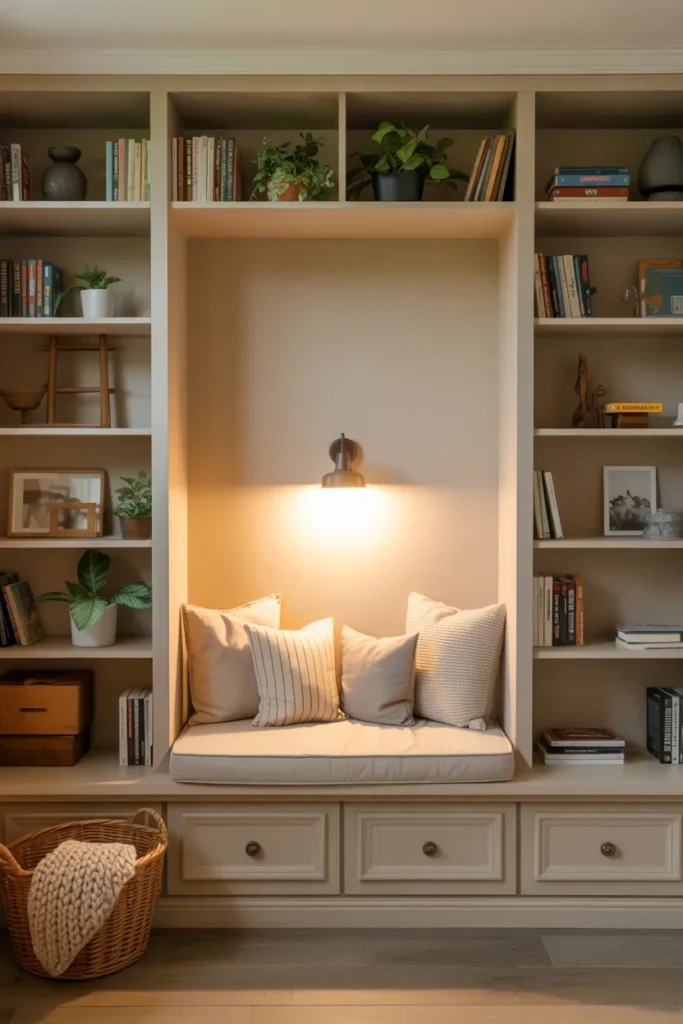
What you’re seeing: A bay window or unused corner transformed into a built-in window bench with thick cushion padding and hidden storage underneath. Bookshelves flank both sides, filled with a mix of novels, kids’ books, board games, and plants. A small pendant or plug-in sconce provides dedicated reading light. A basket of blankets sits at the foot.
Now, avoid this mistake… Most people treat this as a “someday” project and never do it. But a reading nook doesn’t require a bay window or a contractor. A simple corner bench using IKEA KALLAX units as the base, topped with a custom cushion, gives you the same effect. Budget: under $300.
Expert Tip: Make the reading nook irresistible by styling it with items that beg to be touched — a super-soft throw, a stack of compelling books, a cozy candle. If the nook looks inviting, your kids (and you) will use it. Check out our 15 Brilliant Bookshelf Styling with Lots of Books for shelf styling ideas that complement this beautifully.
Why it works: Reading nooks create dedicated spaces for quiet, focused activity within a shared family space. This reduces the “I need to go to my room” impulse because kids now have a cozy retreat that’s still part of the family room. And for parents, it’s a gift — you can read while keeping an eye on younger children playing nearby.
7. The Open-Concept Flow: Family Room + Dining Done Right
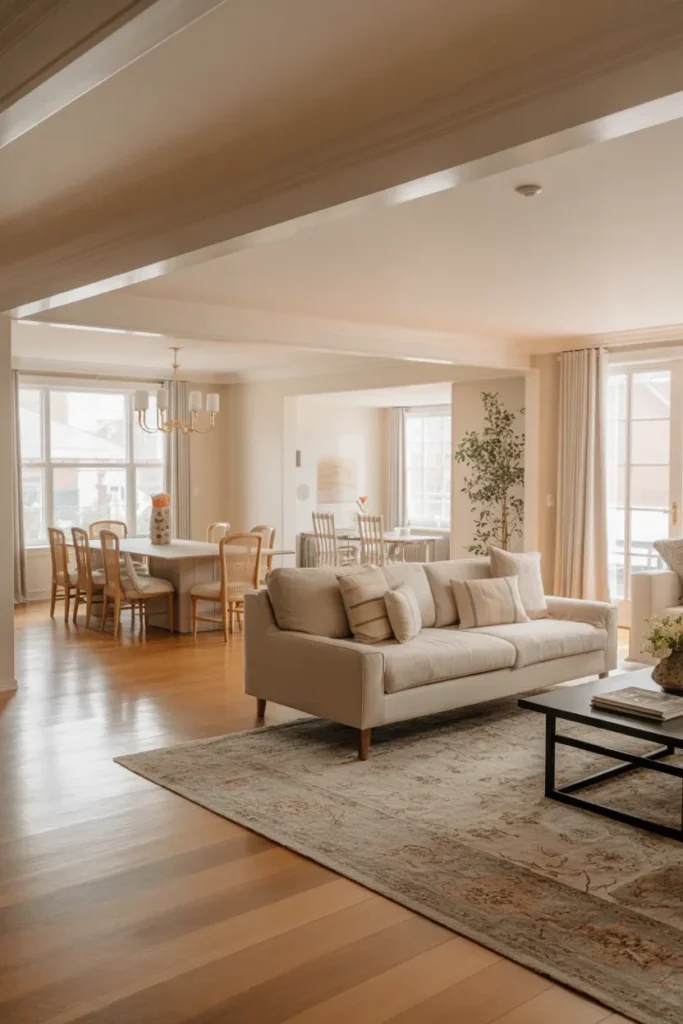
What you’re seeing: A seamlessly connected family room and dining area where the two zones feel distinct but deliberately unified. A matching color palette ties them together while different furniture scales differentiate each space. A large island or console table acts as a visual divider. The flooring flows continuously, and lighting clearly marks each zone — a chandelier over the dining table, a flush mount or pendants over the family seating area.
Expert Tip: The number one mistake in open-concept spaces is using rugs that are too small. The area rug in your family room zone should be large enough that all furniture legs sit on it (or at least the front legs). An undersized rug makes the space feel unanchored and visually choppy. Go bigger than feels comfortable — you won’t regret it. Browse our Living Room and Dining Room Combo Ideas for layout inspiration specific to this challenge.
Why it works: Open-concept family rooms are the heartbeat of modern family life. Whoever’s cooking can still talk to whoever’s doing homework or watching TV. No one feels isolated. The trick is making sure each zone feels purposeful and complete rather than like furniture was just randomly scattered across a large floor plan.
What’s your biggest challenge with open-concept layouts? Too loud? Furniture placement? I want to hear it in the comments!
8. The Fireplace Focal Point: Warmth That Actually Anchors a Room
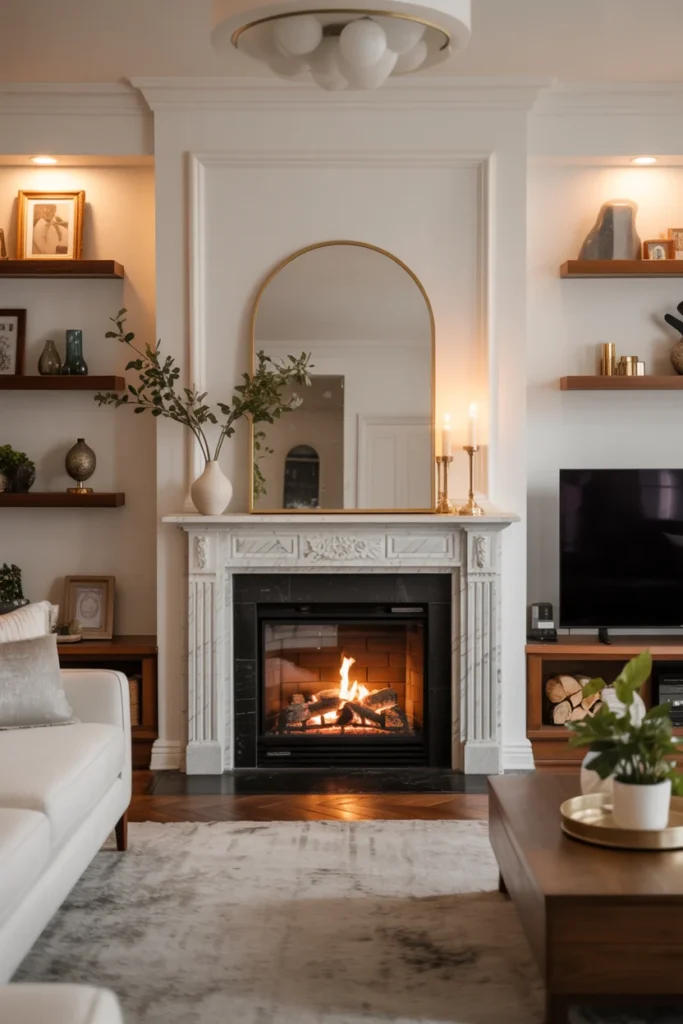
What you’re seeing: A statement fireplace surround — perhaps in white marble, cement, or painted shiplap — with flanking built-in shelves or floating shelves on either side. The mantel is styled with a layered mix of heights: a large mirror, a pair of candlesticks, a small plant, and one meaningful decorative object. Seating faces the fireplace, not the TV.
Expert Tip: If your TV is fighting your fireplace for attention, your room will always feel visually unsettled. Either mount the TV above the fireplace (controversial but workable with a tilting mount) or place it on an adjacent wall and accept that the fireplace is the true focal point. Some families even go TV-free in the family room and use a bedroom or bonus room for screens. Radical? Maybe. Peaceful? Absolutely. For more fireplace styling, explore our 15 Elegant Mantel Decorating Ideas.
Why it works: Fireplaces are psychological anchors. They give a room a natural “why” — a reason to face a certain direction, a gathering point, a source of warmth and light. Even a non-working fireplace, styled beautifully, elevates the entire atmosphere of a room. If you’re renting or on a budget, an electric fireplace insert achieves a surprisingly similar effect.
9. The Multipurpose Game Room Vibe: Fun Without the Chaos
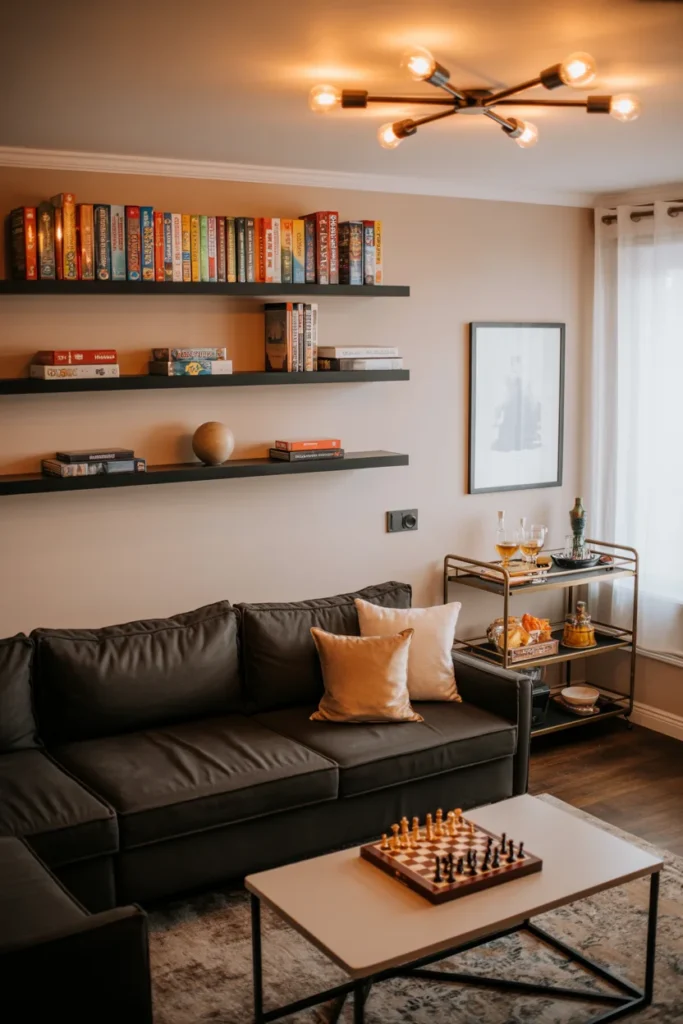
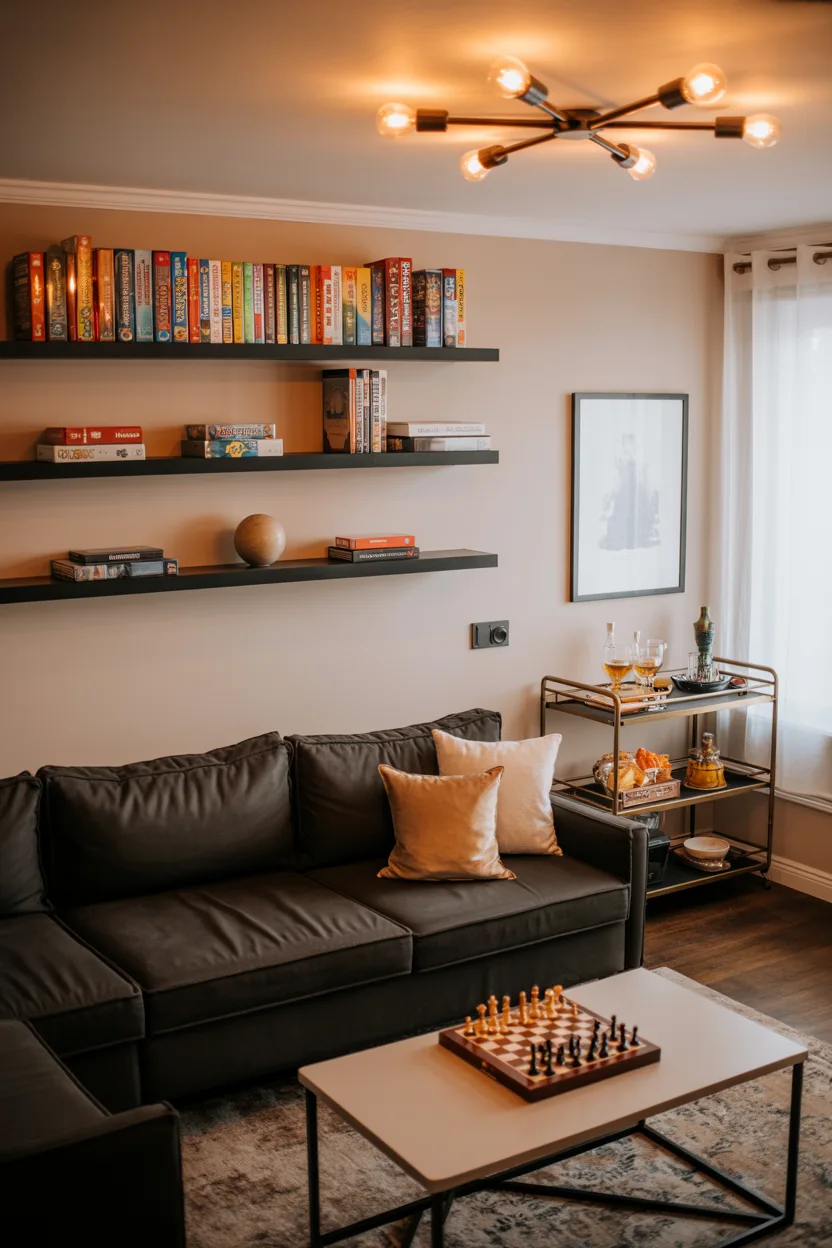
What you’re seeing: A family room that doubles as a game room — but in the most stylish way possible. A dedicated games corner houses a compact air hockey table or a chess set on a console table. A sectional in a performance fabric (pet-friendly, kid-friendly, everything-friendly) provides ample seating for game nights. Open shelving displays board games as decor — the colorful boxes are actually beautiful when arranged with intention. A mini bar cart holds snacks and drinks for movie or game nights.
Expert Tip: The key to a game room that doesn’t look like a rec room from 2005 is curation. Display only the games your family actually plays. Store the rest. Choose games with attractive packaging to display openly (Scrabble, Jenga, Azul, Ticket to Ride all have beautiful boxes). And keep a rolling tray or basket on the coffee table for quick game setup and cleanup.
Why it works: When game night requires zero effort to start — no hunting for cards, no searching for missing pieces — it actually happens. Design removes friction. And when games are on display, they serve as a visual cue that says “hey, let’s actually do something together tonight instead of scrolling our phones.” That subtle psychological nudge is more powerful than you’d think.
10. The Biophilic Family Room: Nature Inside, Stress Outside
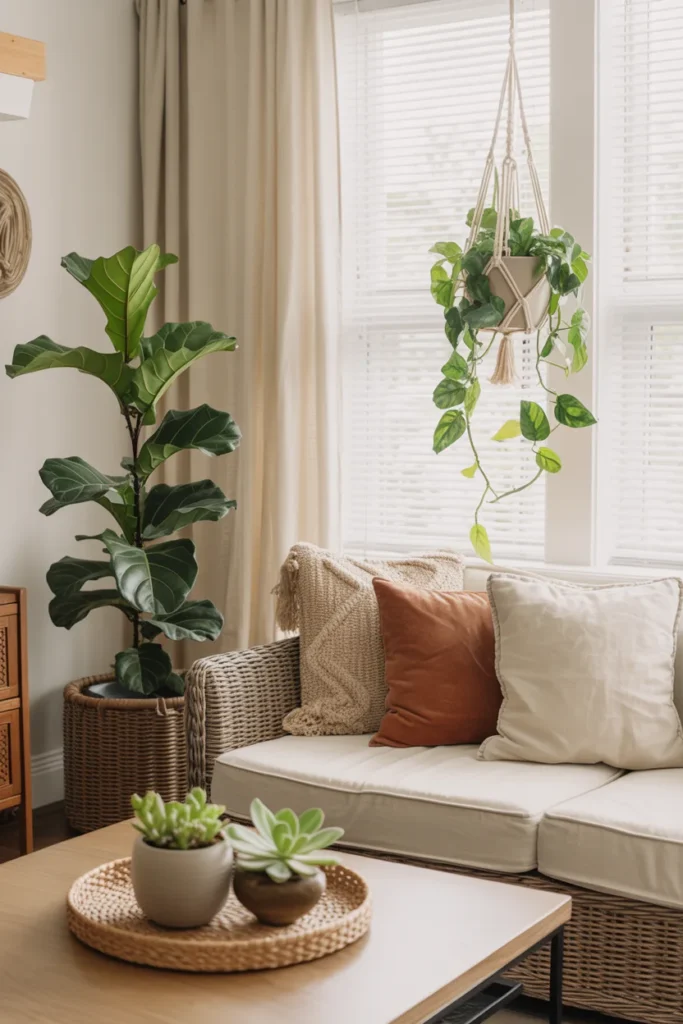
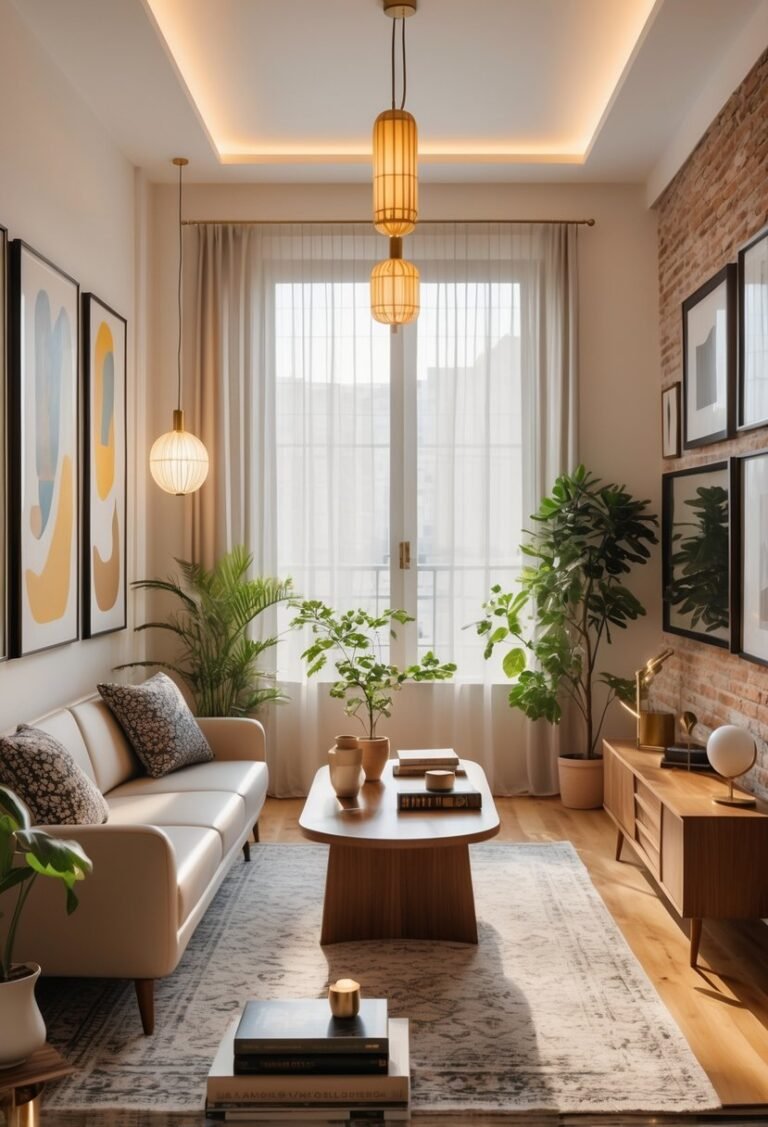
What you’re seeing: A light-filled family room where plants are treated as essential decor rather than afterthoughts. A large fiddle-leaf fig anchors one corner. A trailing pothos hangs from a macramé hanger near the window. A cluster of smaller succulents and herbs sits on the coffee table. Natural materials dominate — rattan, jute, linen, raw wood — and the color palette pulls directly from nature: sage, terracotta, warm cream, deep brown.
Expert Tip: If you kill every plant you’ve ever owned, start with a ZZ plant, snake plant, or pothos. They genuinely thrive on neglect. Once you build confidence, graduate to the drama plants — fiddle-leaf fig, monstera, olive tree. Also: a single large plant makes more impact than five small ones. Go big or go home (literally).
Why it works: Biophilic design — incorporating natural elements into living spaces — is backed by a growing body of research showing it reduces stress, improves focus, and boosts mood. For a family room where stress from school and work gets dropped at the door, this is huge. Plants also improve air quality and add life and movement to a space in a way that no piece of furniture ever can. And as an added bonus: caring for a plant together is a surprisingly lovely family activity for kids of all ages.
Which of these 10 ideas sparked something for you? I’m genuinely curious — tell me in the comments which style feels most like YOUR family!
Your Family Room Transformation Starts Today
Here’s the truth: you don’t need to do all 10 of these ideas. You don’t need a renovation budget or a weekend free of kids and chaos.
Pick one idea from this list that resonates with you most. Maybe it’s finally committing to a built-in entertainment wall. Maybe it’s adding a reading nook to that awkward corner you’ve been ignoring for three years. Maybe it’s just getting a bigger rug and arranging your furniture to face inward.
Small, intentional changes compound. A room that feels like your family’s room — warm, functional, full of personality — doesn’t happen all at once. It happens decision by decision, piece by piece, until one day you walk in and realize: this is exactly where I want to be.
And isn’t that the whole point?
If you loved these family room ideas, you’ll absolutely want to explore our Cozy Living Room Ideas next — it’s packed with texture, warmth, and layering techniques that take any family room from “fine” to feels like a hug. And if lighting is your next focus (it should be — it’s the most underrated design element in any room), our Living Room Chandelier Ideas will give you all the inspo you need.
Now go make your family room the room everyone actually wants to be in. You’ve got this.