10 Fabric Wall Decor Ideas That Will Transform Any Room Instantly
This article was created in line with Trends Oraa’s research and content standards.
Your walls are staring back at you. Blank. Boring. Screaming for something.
You’ve scrolled Pinterest for hours. Nothing feels quite right — too expensive, too complicated, or just not you.
Here’s the thing: fabric wall decor is the secret weapon most people completely overlook. It’s affordable, endlessly customizable, and adds warmth that no paint color or canvas print can replicate. And the best part? Most of these ideas take under an hour to pull off.
You might also love our viral guide on → modern-dark-living-room-ideas — real readers called it “a game changer” for dark, moody spaces!
Whether you’re renting and can’t nail a single hole in the wall, working with a tight budget, or just tired of the same generic wall art everyone else has — these 10 fabric wall decor ideas will give your space a personality it’s been begging for. Let’s dive in.
1. Tapestry Statement Wall
What You’re Looking At
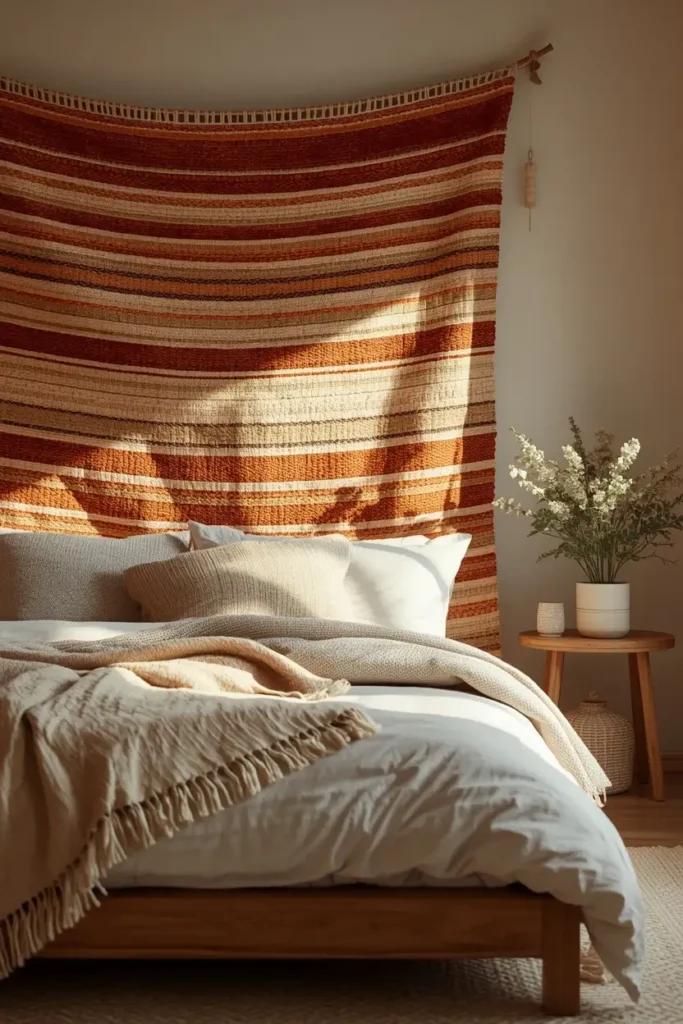
Imagine a large woven tapestry — rich in texture, deep in color — hung dramatically behind a bed or sofa. This isn’t your college dorm tapestry. We’re talking about intentional, layered styling: a full-width piece in terracotta, sage, or deep indigo that anchors the entire room and makes everything else feel curated around it.
Expert Tip: Hang your tapestry using a wooden dowel rod rather than nails. Thread the rod through the top hem or use clip rings for a cleaner, more boutique-hotel look. This method also protects the fabric from tearing over time.
Why It Works: A tapestry creates an instant focal point and adds acoustic softness to a room — something flat art simply can’t do. The woven texture catches light differently throughout the day, making your space feel dynamic and alive rather than static. It’s especially effective in living rooms and bedrooms where you want a cozy, layered aesthetic without repainting.
2. Embroidery Hoop Gallery Wall
What You’re Looking At
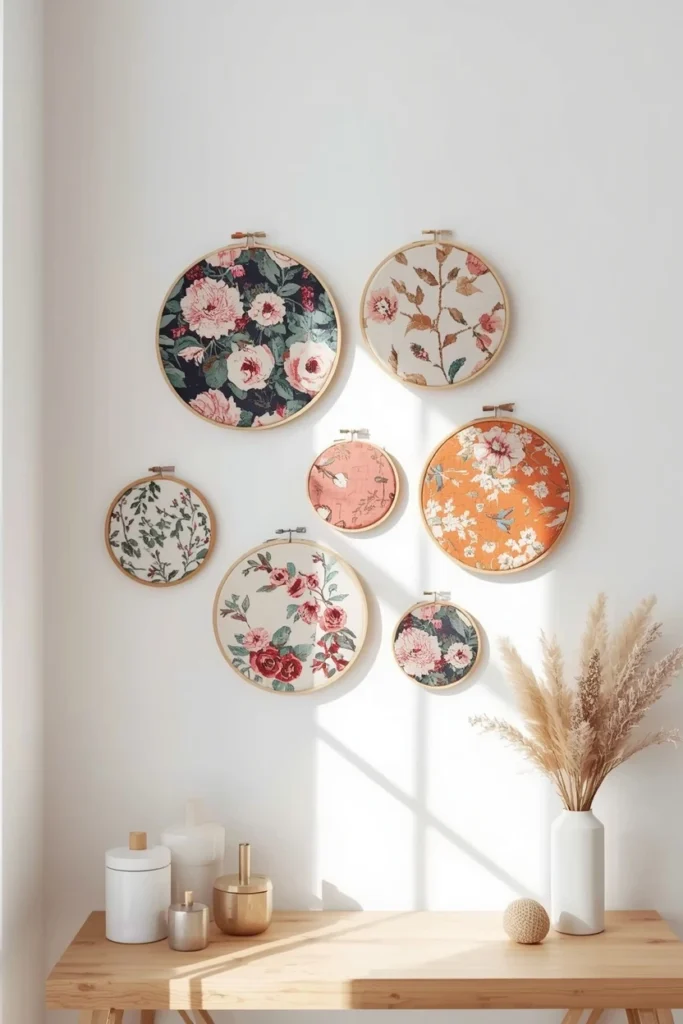
A collection of embroidery hoops in various sizes — ranging from 4 inches to 14 inches — arranged in a flowing asymmetric cluster on the wall. Each hoop features a different fabric: a floral linen, a geometric cotton, a soft velvet, a piece of vintage scarf. Together they read as a cohesive gallery.
Expert Tip: Don’t limit yourself to actual embroidery. Stretch any fabric you love — remnants from an old blouse, a piece of batik, even a swatch of wallpaper fabric — across the hoop and tighten the outer ring. Instant art, zero sewing required.
Why It Works: This approach gives you a gallery wall that feels handmade and personal rather than mass-produced. The mix of textures, scales, and patterns creates visual interest without feeling chaotic. It’s also incredibly budget-friendly — basic embroidery hoops run $1–$3 each at craft stores, and you can swap out the fabric panels anytime you want a refresh.
Which style resonates with you most so far — the bold tapestry statement, or the eclectic hoop gallery? Drop your vote in the comments!
3. Fabric Panels in Simple Frames
What You’re Looking At
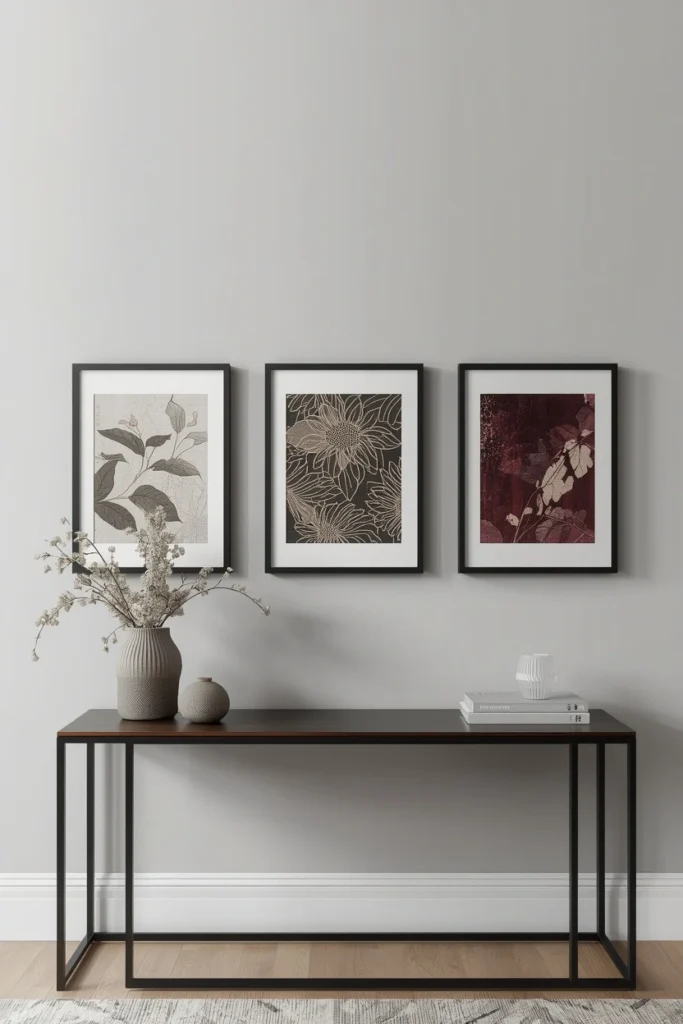
Standard picture frames — thin black or natural wood — with fabric stretched inside instead of artwork or photos. Think bold geometric prints, abstract watercolor fabric, or a rich botanical print. Hung in a symmetrical trio or an off-center pair, they look expensive and considered.
Expert Tip: Use iron-on fusible webbing to keep the fabric taut inside the frame without wrinkles. Pull the fabric around the back, iron the edges down with the webbing, and it holds like a drum — no staples, no mess.
Why It Works: Framed fabric panels have the visual weight of art prints but offer texture and depth that flat paper prints can’t match. They’re also incredibly versatile: you can change out the fabric seasonally to shift the room’s feel. Go for linen botanicals in spring, rich jewel-toned velvets in fall, and crisp white linens in summer. It’s a living wall, not a permanent installation.
4. Macramé Woven Wall Hanging
What You’re Looking At
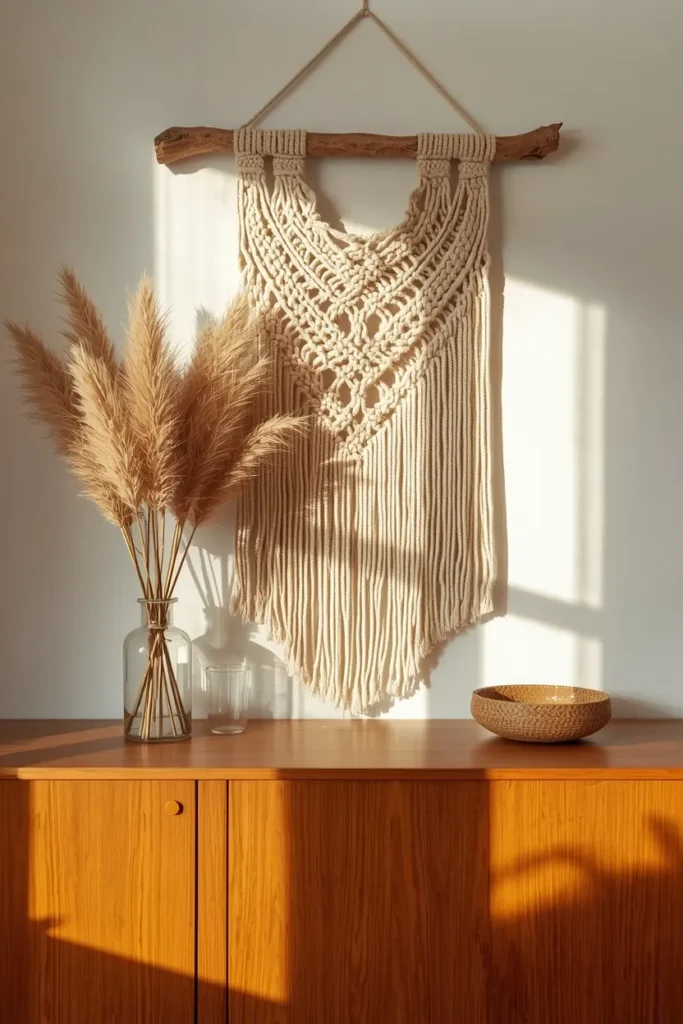
A hand-knotted macramé piece — all natural cotton rope in creamy off-white — hung from a driftwood or brass rod. The knotted pattern creates beautiful geometric negative space, and the fringe at the bottom adds softness and movement. It could fill a narrow wall niche, anchor a reading corner, or add bohemian texture above a console table.
Expert Tip: To make a macramé piece look intentional rather than just “Pinterest-y,” pair it with clean-lined, minimal furniture. The contrast between the organic, textural hanging and sleek surfaces is what gives the look sophistication instead of clutter.
Why It Works: Macramé has made a huge design comeback — but it’s not going anywhere, because it answers a real need. In rooms full of hard materials (tile, glass, metal), a macramé piece introduces warmth, organic texture, and a handcrafted quality that feels genuinely human. It works in boho, coastal, Scandinavian, and even modern minimalist interiors when chosen carefully.
🛒 Fabric Wall Decor Buying Guide & Budget Breakdown
Before you start shopping, it helps to know what you’re working with — and what to realistically spend. Here’s a practical breakdown so you can plan your wall makeover without any surprises.
Budget Tier: Under $30
For this price point, embroidery hoop galleries and simple framed fabric panels are your best bets. You’ll spend around $5–$10 on a set of hoops and grab fabric remnants from the clearance bin at any fabric store or even a thrift shop. Look for cotton quilting fabric for crisp, bold patterns, or velvet pieces for a luxe touch on a low budget.
Mid-Range: $30–$100
This opens up the door to small-to-medium macramé hangings, quality tapestries from Etsy sellers, or a set of fabric panels in decent frames. At this tier, you can start investing in more intentional pieces — a handwoven hanging from an independent maker, for example, or frames with deep enough profiles to show off thicker textiles beautifully.
Investment Pieces: $100–$300+
Here’s where you’re buying heirloom-quality pieces. Think large-format hand-loomed tapestries, custom quilted wall art, or professional-grade fabric canvas installations. These are statement pieces meant to anchor a room for years, not just a season.
What to Look For When Buying
Fabric weight matters. Lightweight fabrics (like sheer linen) can look wispy and unintentional on the wall unless backlit. Medium-weight cottons, canvas, velvet, and woven textiles all hang and display beautifully.
Color fastness: If your decor is in a sun-facing room, check that the fabric is colorfast — ask the seller or check the label. Cheap dyes fade fast in direct sunlight.
Mounting method: Always check whether the piece comes with a hanging rod or requires you to source your own. Wooden dowels, brass rods, and copper pipes all make beautiful hanging hardware, so consider the rod part of the aesthetic, not just the logistics.
Pros of Fabric Wall Decor: Softens acoustics, adds warmth, easy to change out, renter-friendly options available, wide price range, works in every style from boho to modern.
Cons to Keep in Mind: Fabric can attract dust, some heavier pieces need secure wall anchors, and certain fabrics may fade in direct sunlight over time.
5. Quilted Wall Art
What You’re Looking At
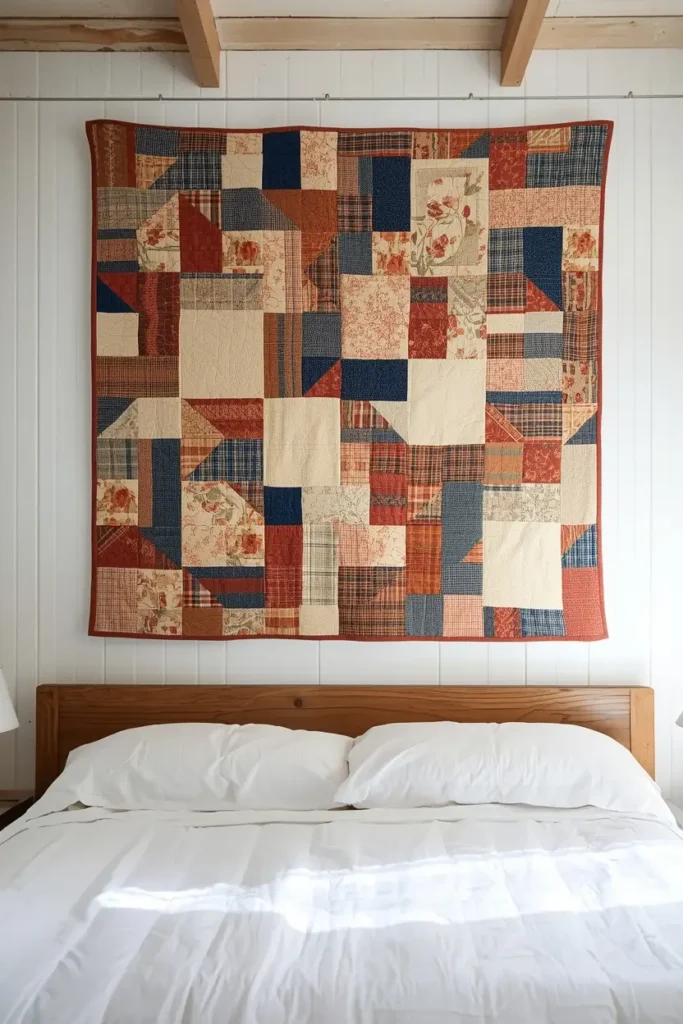
A finished quilt — either vintage-found or newly made — mounted flush against the wall like a piece of fine art. It could be a traditional patchwork pattern in warm neutrals, a bold modern geometric design in black and white, or a faded antique log cabin quilt full of history. It’s hung on a slim wooden mount, centered on the wall.
Expert Tip: To mount a quilt without damaging it, sew a fabric sleeve to the back (a simple tube of muslin) and slide a thin wooden dowel or curtain rod through it. The weight is distributed evenly across the entire width, preventing any stress points or sagging.
Why It Works: Quilts carry an emotional resonance that most art simply doesn’t. Whether it’s a family heirloom or a thrift store find, a quilt on the wall tells a story. The layered, padded texture also adds dimension that’s unmatched by any flat medium — a quilt practically glows under good lighting. In farmhouse, cottagecore, and maximalist spaces, this is one of the most impactful moves you can make.
6. Batik or Block Print Fabric Panel
What You’re Looking At
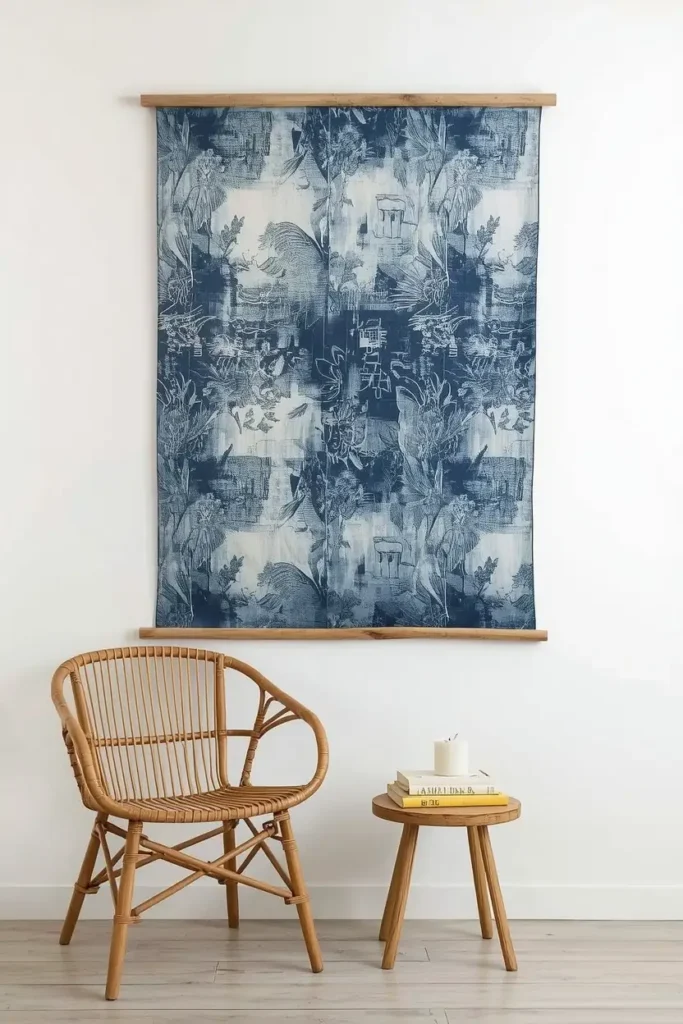
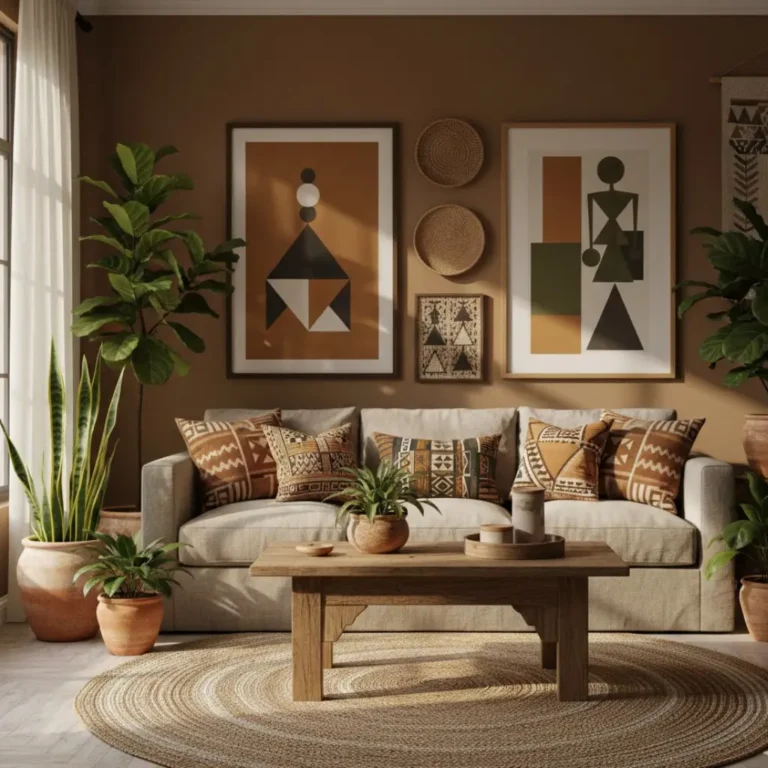
A single large-scale piece of batik or hand block-printed fabric — Indonesian, Indian, or African in origin — stretched over a canvas stretcher bar and hung like a painting. The pattern is intricate, hand-stamped, and utterly unique. No two batik pieces are identical, which means your wall art is completely one-of-a-kind.
Expert Tip: Stretch the fabric over artist canvas stretcher bars (available at any art supply store) just like you’d stretch an actual canvas. Staple gun the back edges and wrap corners neatly for a gallery-ready finish. No framing needed.
Why It Works: Batik and block print fabrics bring cultural richness and artisanal beauty to a wall. The hand-printed patterns have an organic variation that printed art reproductions can’t replicate. They work especially well in eclectic, global, or maximalist interiors and create a natural focal point with their scale and pattern complexity.
Are you drawn more to bold patterns and textures, or do you prefer a softer, more subtle fabric wall decor approach? Tell me in the comments — I’d love to know what style you’re going for!
7. Draped Fabric Canopy Wall
What You’re Looking At
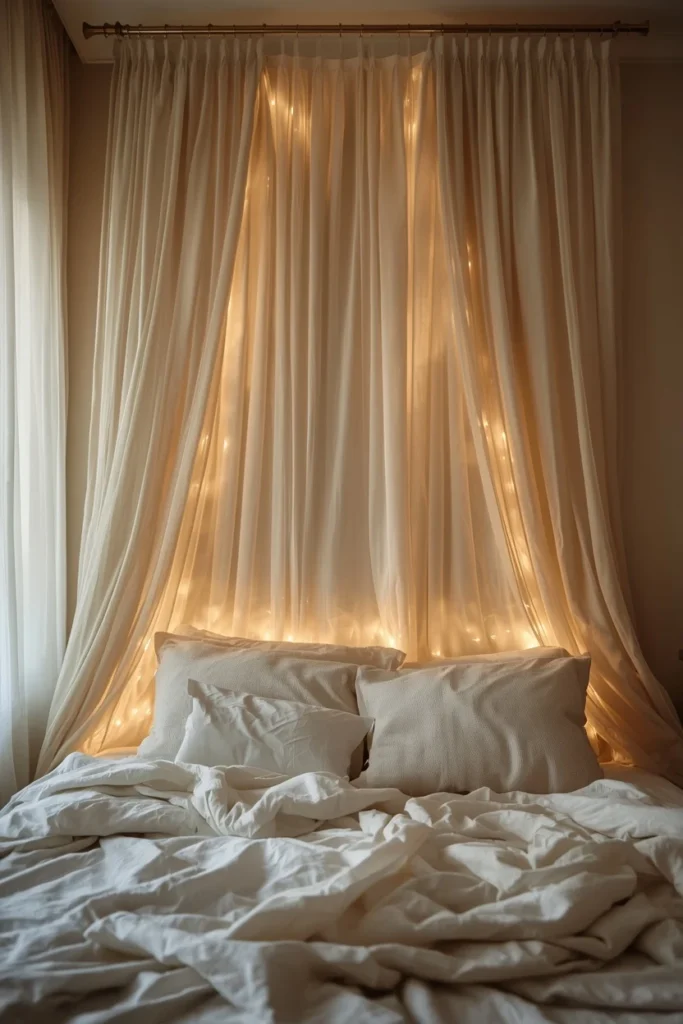
Soft, flowing fabric — gauzy linen, sheer cotton, or even lightweight velvet — draped from a wall-mounted curtain rod or ceiling hook down and across the wall behind a bed. The fabric creates a canopy effect: romantic, layered, and deeply atmospheric. Multiple panels of a slightly different tone can be overlapped for depth.
Expert Tip: This works especially well if you use 2–3 panels of slightly different shades in the same color family (say, ivory, cream, and white, or dusty rose and blush). The tonal layering creates depth and a bespoke, custom feel without needing a canopy bed frame.
Why It Works: Draped fabric transforms a flat wall into a soft architectural moment. It’s one of the most effective bedroom decor tricks for creating a boutique hotel atmosphere at home. The fabric softens hard lines, adds movement, and makes the entire room feel more intimate and finished. It’s also one of the most renter-friendly options — a tension rod in a doorway or a minimal ceiling hook leaves virtually no trace.
8. Vintage Sari or Scarf Wall Display
What You’re Looking At
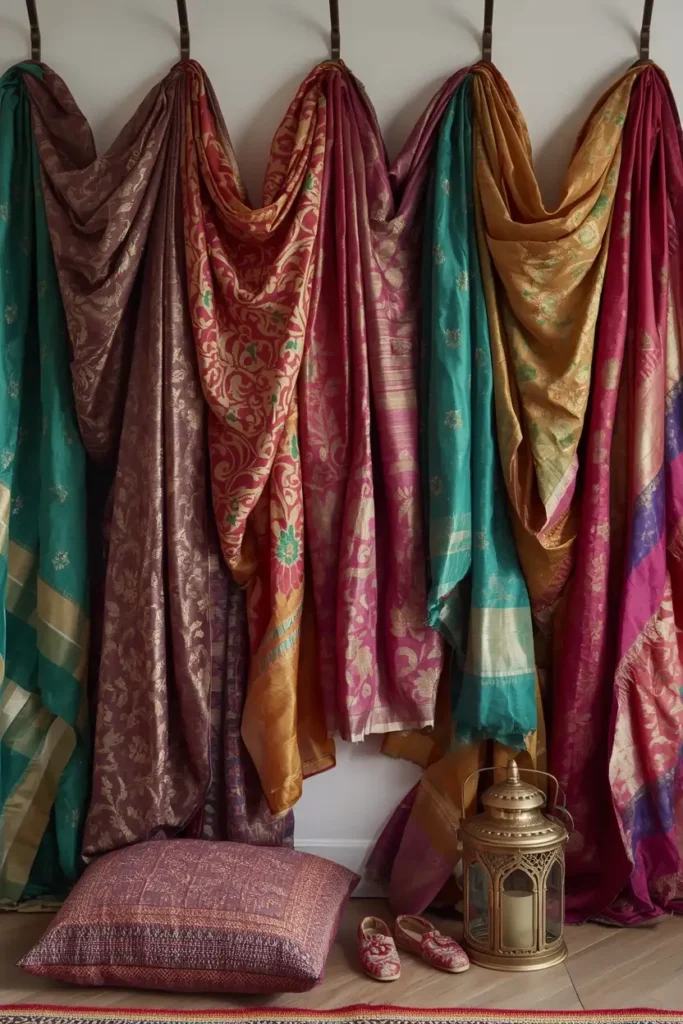
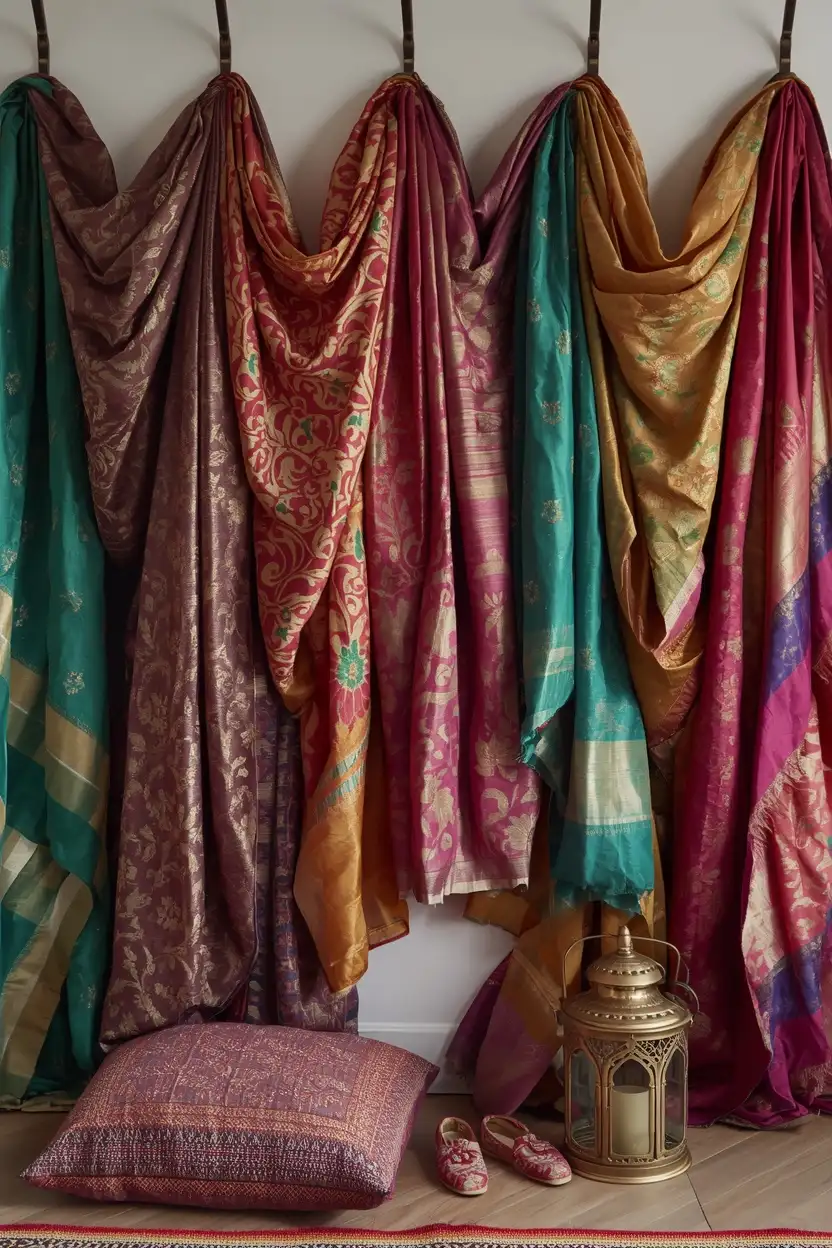
A collection of vintage silk saris, kantha scarves, or antique printed shawls pinned or draped along a wall in an overlapping, layered arrangement. The metallic embroidery catches the light. The rich jewel tones — ruby, sapphire, emerald, gold — make the wall feel like an art installation. It’s eclectic, global, and deeply personal.
Expert Tip: Instead of pinning the fabric flat against the wall (which can look staged), use small picture-hanging clips to let each piece hang loosely, with natural drape and folds intact. The movement and dimensionality of the fabric is part of what makes this display so striking.
Why It Works: This approach turns fashion into fine art and brings a deeply personal, curated quality to the room. Each vintage piece has history — you can mix a grandmother’s sari, a market find from Morocco, and a kantha quilt from India and create a wall that tells the story of where you’ve been and who you are. It’s irreplaceable, uncopiable decor that no one else will have.
9. Fabric-Covered Acoustic Panels
What You’re Looking At
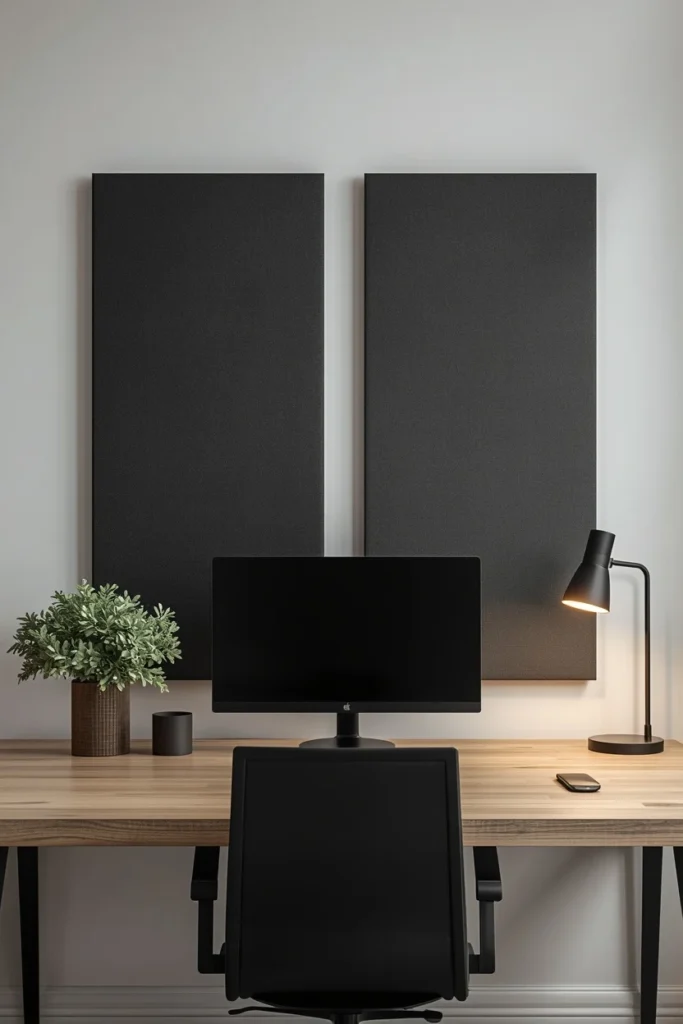
Large rectangular panels — typically 2’x4′ — covered in upholstery-weight fabric and mounted on the wall in a symmetrical arrangement. They look like abstract art or architectural wall elements, but their actual function is to absorb sound. The fabric can be bold or subtle: deep charcoal linen for a sleek modern look, or a graphic woven textile for a statement.
Expert Tip: Build DIY acoustic panels by wrapping wooden frames (made from 1×4 lumber) in 2-inch thick rockwool or rigid fiberglass insulation, then covering with breathable fabric. The total material cost per panel runs about $20–$40, and the acoustic improvement in a home office, bedroom, or media room is genuinely noticeable.
Why It Works: Fabric-covered acoustic panels solve two problems at once — they make a room quieter AND more beautiful. This is especially relevant in hard-surfaced modern homes where sound bounces relentlessly off tile, glass, and concrete. Fabric panels break up that echo, making the room feel both better-looking and physically more comfortable to be in. Function plus aesthetics is always a winning combination.
10. Woven Fiber Art Statement Piece
What You’re Looking At
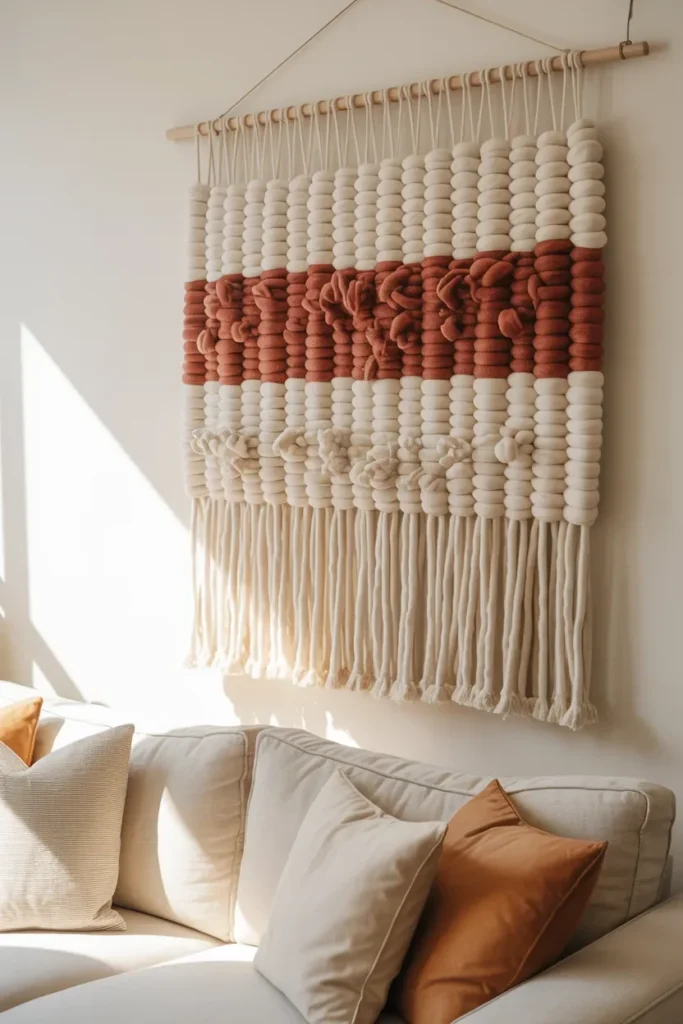
A large-scale, handcrafted fiber art piece — think chunky loops of natural wool, woven textures in cream and rust, with trailing fringe of varying lengths. It’s not just fabric; it’s sculpture. The three-dimensional quality means it casts shadows and changes appearance depending on the light and the angle you view it from. Hung alone on a white wall, it’s absolutely captivating.
Expert Tip: When shopping for fiber art, look for works made from natural fibers (wool, cotton, linen, jute) rather than acrylic. Natural fibers have a luster and warmth that synthetic materials simply can’t match — they age beautifully over time rather than looking plasticky.
Why It Works: Woven fiber art sits at the intersection of textile design and fine art, and it’s increasingly showing up in high-end interiors for good reason. These pieces have an organic, handmade quality that speaks directly against the mass-produced, digital aesthetic that dominates modern life. One large-scale fiber art piece can do more for a room than an entire gallery wall of prints, because it commands attention not just visually but physically — through texture, shadow, and dimension.
Which of these 10 fabric wall decor ideas is going straight to your to-do list? Tell me in the comments — I read every single one!
Ready to Take Your Walls Even Further?
The right fabric wall decor doesn’t just cover a blank wall — it redefines the entire energy of a room. It adds warmth where there was coldness, personality where there was genericness, and a sense of intention that makes a space feel truly lived in and loved.
Start small if you need to. Pick up a few embroidery hoops and some fabric remnants this weekend and see how it feels to have your first handmade fabric art on the wall. Then build from there.
And once your walls are sorted — don’t forget the rest of the room deserves just as much love. Check out our complete guide to living room decor ideas at → 10-living-room-decor-ideas for more inspiration that actually works in real homes.
Got a fabric wall decor project you’ve already tried? Share it in the comments — I’d genuinely love to see what you’ve created. This community is always my favorite place to find real-world inspiration.
Pin this post to your Home Decor board so you never lose these ideas!