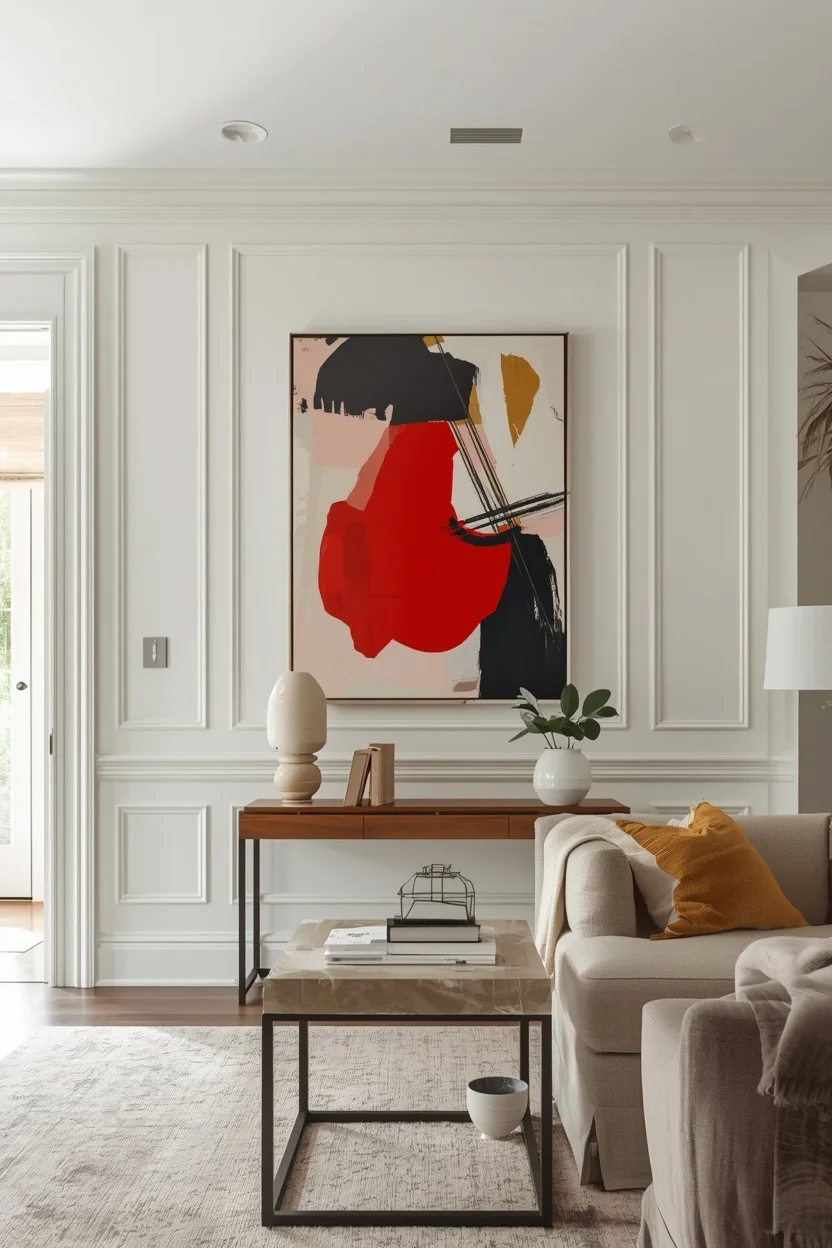
10 Transitional Living Room Ideas
This article was created in line with Trends Oraa’s research and content standards.
Most people don’t realize this.
Their living room feels stuck between two identities, too traditional to feel current, too plain to feel intentional.
That’s why it never quite photographs the way it looks in their head.
The good news? Transitional living room ideas solve exactly this problem by blending classic comfort with modern clarity, so the room finally feels like one cohesive space instead of two competing ones.
You might also love our guide on 10 Luxury Living Room Ideas if you’re leaning toward a more elevated finish, because a lot of the layering tricks in that guide pair beautifully with a transitional foundation.
I’ve styled and restyled more living rooms than I can count, and transitional design is consistently the style that gets the most “wait, how did you do that” reactions. It’s not flashy. It’s just balanced in a way that feels effortless.
Here’s what makes this list different: every idea below is genuinely achievable, whether you’re furnishing from scratch or reworking what you already own.
Keep scrolling — the third idea on this list is the one that instantly makes a room look more expensive, and it costs almost nothing to try.
Why Transitional Living Room Ideas Work So Well
Before we get into the list, let’s talk about why this particular style has such staying power.
Purely traditional rooms can feel heavy and dated. Purely modern rooms can feel cold and impersonal.
Transitional living room ideas exist in the sweet spot between the two, borrowing warmth from traditional design and clean lines from modern design.
But here’s the important part: transitional design isn’t about randomly mixing styles. It’s about intentional contrast, one classic element balanced against one contemporary one, repeated throughout the room.
Picture yourself walking into a living room that feels collected over time, not decorated in a single weekend from one catalog. That’s the entire goal here.
1. Start With a Neutral Palette Foundation
What You’re Seeing
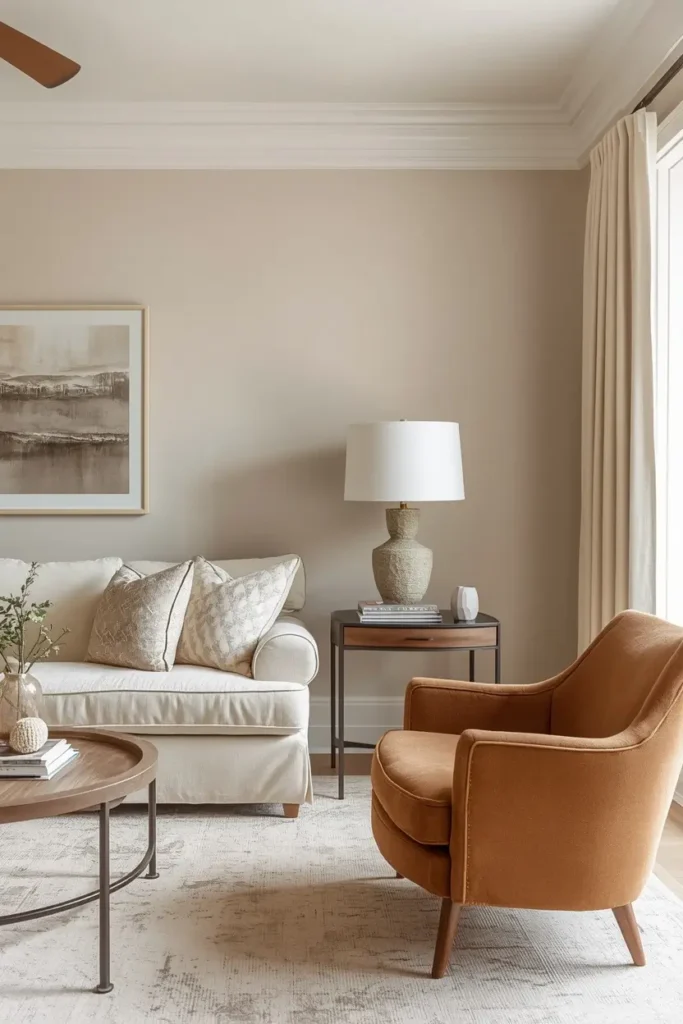
Imagine a living room wrapped in soft, warm neutrals, greige walls, a cream sofa, and camel-toned accents, creating a calm backdrop that lets furniture shapes and textures do the visual work instead of bold color.
Design Breakdown
A neutral palette is the backbone of almost every successful transitional living room. It’s not boring, it’s strategic. Neutrals let you mix traditional silhouettes with modern furniture without the room ever feeling visually chaotic or overdone.
Expert Tip
Layer at least three different neutral tones, warm white, greige, and a deeper taupe or camel, rather than sticking to one flat shade. This subtle variation is what keeps a neutral room from feeling flat or sterile.
Why It Works
Neutral backgrounds reduce visual competition, which allows the eye to appreciate furniture silhouettes and textures individually rather than getting overwhelmed by color and pattern at once.
Best For
- Small spaces
- Large spaces
- Families
- Renters
Common Mistake To Avoid
Choosing a single flat neutral for walls, furniture, and textiles all at once. Without tonal variation, the room reads as unfinished rather than intentionally minimal.
Quick Wins
- Pairs with virtually any accent color later
- Makes small rooms feel larger and brighter
- Easy to update seasonally with pillows and throws
- Timeless, won’t feel dated in a few years
2. Mix Curved and Straight-Lined Furniture
What You’re Seeing
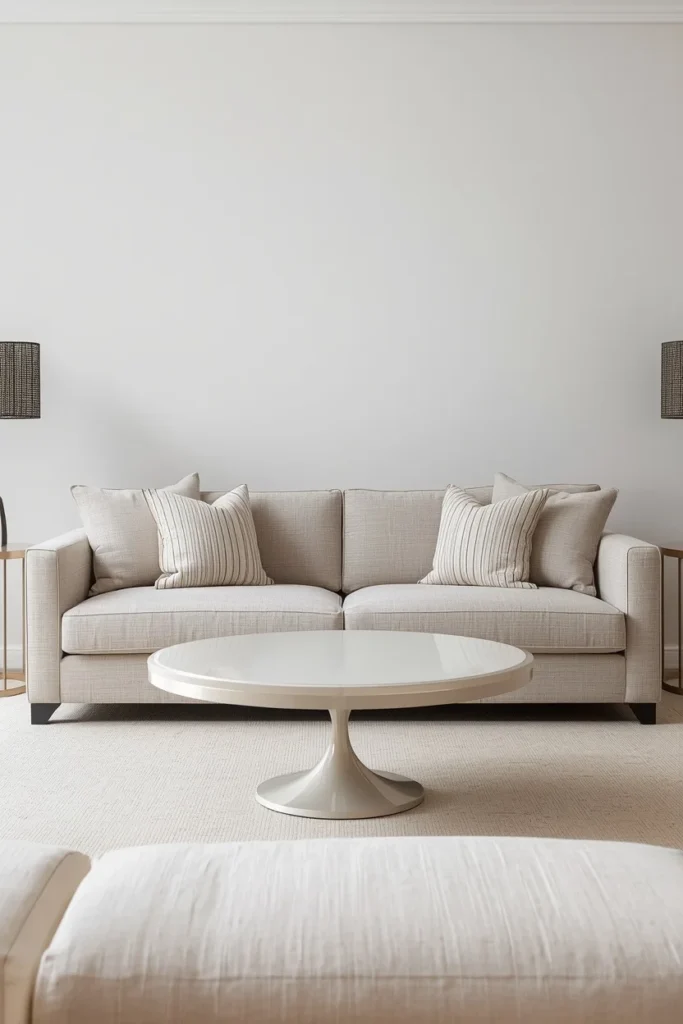
Picture a rectangular, tailored sofa with clean straight arms paired directly across from a round, pedestal-based coffee table with soft curved edges, the contrast immediately catching your eye without clashing.
Design Breakdown
This is one of the defining tricks of transitional design. Straight lines read as modern and structured. Curves read as classic and soft. Putting both in the same room, deliberately, creates the layered, collected feeling transitional style is known for.
Expert Tip
Aim for roughly a 60-40 split, one dominant line style with the other used as a supporting contrast, rather than an even 50-50 mix that can feel indecisive.
Why It Works
Contrast between geometric shapes creates visual rhythm, which is the same design principle used in professional staging to make a room feel curated rather than randomly furnished.
Best For
- Small spaces
- Large spaces
- Budget makeovers
- Luxury homes
Common Mistake To Avoid
Filling a room entirely with one line style, either all straight and boxy or all curved and rounded. Either extreme tips the room fully into modern or fully into traditional, losing the transitional balance entirely.
Quick Wins
- Works with furniture you likely already own
- No major renovation required
- Creates instant visual interest
- Scales up or down for any room size
Most people don’t know this: the easiest way to test whether your current living room leans transitional is to look at just your seating and your coffee table together. If both are the same shape family, both straight-edged or both curved, that’s usually the missing piece. One thing I’ve learned after styling dozens of rooms is that swapping just the coffee table shape, without touching anything else, can shift an entire room’s feel more than any other single change.
Most people waste more space than they realize when they treat furniture placement as an afterthought. Here’s where it gets interesting.
3. Pair a Classic Sofa With a Modern Coffee Table
What You’re Seeing
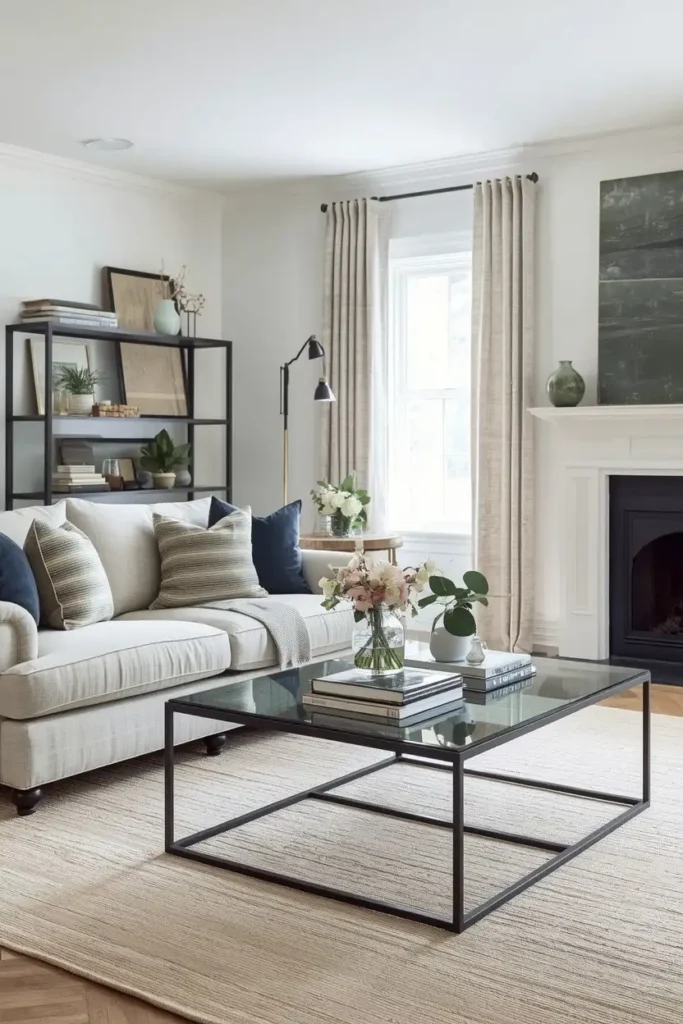
Visualize a traditional roll-arm or camelback sofa in a soft linen fabric, sitting across from a sleek, low-profile coffee table in matte black metal or smoked glass, the old-meets-new pairing feeling surprisingly natural together.
Design Breakdown
This specific pairing, classic seating with a contemporary anchor piece, is one of the fastest ways to signal transitional style without a full furniture overhaul. The sofa brings comfort and familiarity. The coffee table brings a current, updated edge.
Expert Tip
Keep the coffee table’s material simple, black metal, smoked glass, or matte wood, rather than ornate or heavily detailed, so it reads as the clean modern counterpoint to a more traditional sofa shape.
Why It Works
This pairing lets you keep sentimental or investment furniture pieces, like an inherited sofa, while still modernizing the room around it, which makes transitional style one of the most budget-friendly design approaches available.
Best For
- Budget makeovers
- Families
- Renters
- Small spaces
Common Mistake To Avoid
Matching every piece in the room to the sofa’s traditional style. One classic anchor piece is enough, everything else should lean more contemporary to maintain balance.
Quick Wins
- Keeps sentimental furniture relevant and current
- Budget friendly since you’re not replacing everything
- Instantly updates a dated traditional room
- Works in rentals since the table is easy to swap later
You might also love our guide on Brown Couch Living Room Ideas if you already have a classic sofa and want more direction on styling around it.
You May Also Like:
- Black Sofa Living Room Ideas
- White Sofa Living Room Ideas
- Sofa Ideas Living Room
- Living Room Remodel Ideas
- Gray Flooring Ideas
4. Use Statement Lighting as the Bridge Piece
What You’re Seeing
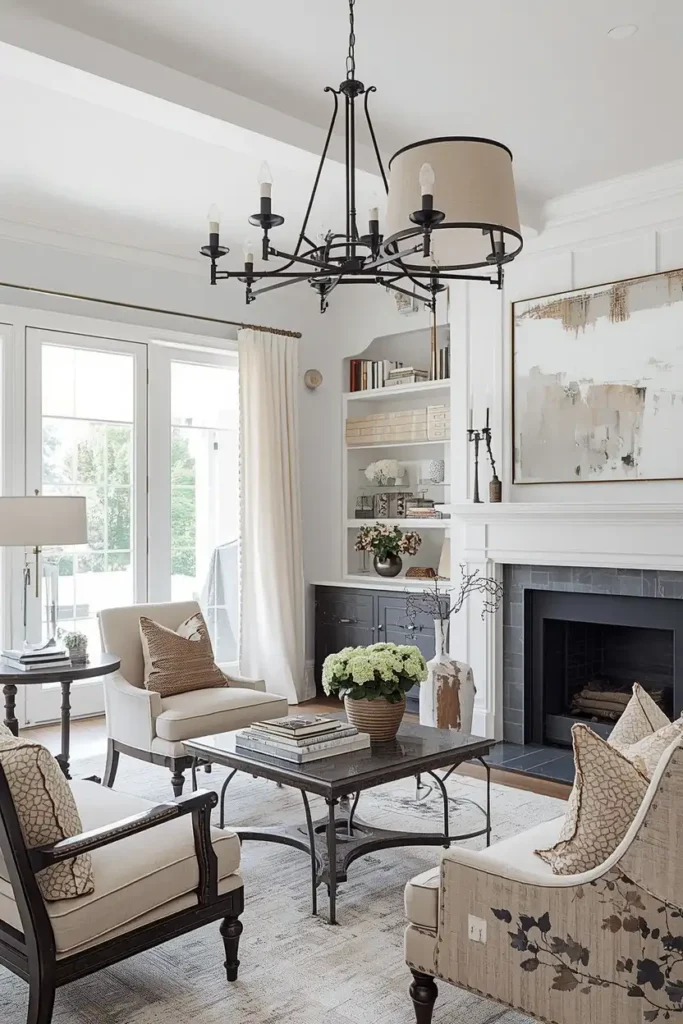
Think about how much easier a room feels finished with a sculptural, black metal chandelier or an oversized linen drum pendant hanging above a traditional seating arrangement, instantly modernizing the whole space from above.
Design Breakdown
Lighting is one of the most underused transitional tools. A single striking fixture can modernize an otherwise traditional room without touching the furniture at all, because ceiling-level statements draw the eye up and reset the room’s overall tone.
Expert Tip
Choose a fixture with a mixed material, metal with linen shade, wood with black hardware, rather than a single-material piece, since mixed materials echo the transitional blend happening in the furniture below.
Why It Works
Lighting sits above eye level, meaning it doesn’t have to match every other piece in the room exactly, it just needs to feel intentional, which gives you more creative freedom than furniture choices typically allow.
Best For
- Small spaces
- Large spaces
- Luxury homes
- Budget makeovers
Common Mistake To Avoid
Choosing a fixture that’s too small for the room. Undersized lighting is one of the most common reasons a transitional living room still feels unfinished even after everything else is styled correctly.
Quick Wins
- Modernizes a room without new furniture
- Draws the eye upward, making ceilings feel taller
- Relatively affordable compared to furniture changes
- Easy to swap out in a rental with a plug-in pendant kit
5. Balance Natural Wood Tones With Black Metal Accents
What You’re Seeing
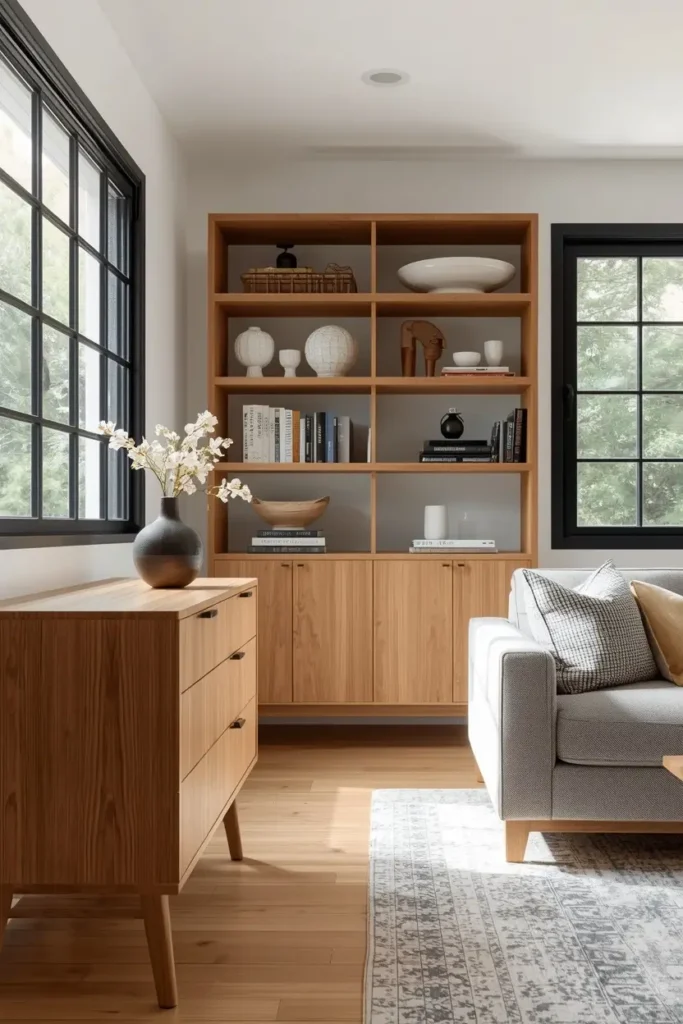
Picture warm oak or walnut furniture legs and shelving paired with matte black hardware, window frames, or lighting fixtures throughout the same room, the warm and cool tones grounding each other perfectly.
Design Breakdown
Wood brings the traditional warmth transitional style needs. Black metal brings the modern edge. Together, they create one of the most reliably balanced color-and-material combinations in interior design, which is exactly why it shows up constantly in transitional spaces.
Expert Tip
Repeat the black metal accent at least three times around the room, lighting, hardware, and a frame or accessory, so it reads as an intentional thread rather than a single random detail.
Why It Works
Repetition of a single accent material creates visual cohesion, tying together furniture pieces that might otherwise feel unrelated to each other.
Best For
- Small spaces
- Large spaces
- Families
- Budget makeovers
Common Mistake To Avoid
Mixing too many metal finishes at once, black, brass, chrome, and nickel all in the same room. Stick to one dominant metal accent to keep the transitional balance clean.
Quick Wins
- Timeless combination that rarely feels dated
- Easy to introduce through small accessories first
- Works with almost any existing wood furniture
- Budget friendly starting point for a full refresh
Here’s where it gets interesting: most homeowners assume warm wood and black metal need to be introduced through big furniture purchases. They don’t. Swapping cabinet or shelf hardware, adding a black-framed mirror, or replacing a single lamp are all low-cost ways to introduce this pairing before committing to anything larger. Start small, live with it for a few weeks, then decide if you want to go further.
The next idea is one designers secretly love.
6. Layer Rugs for Depth
What You’re Seeing
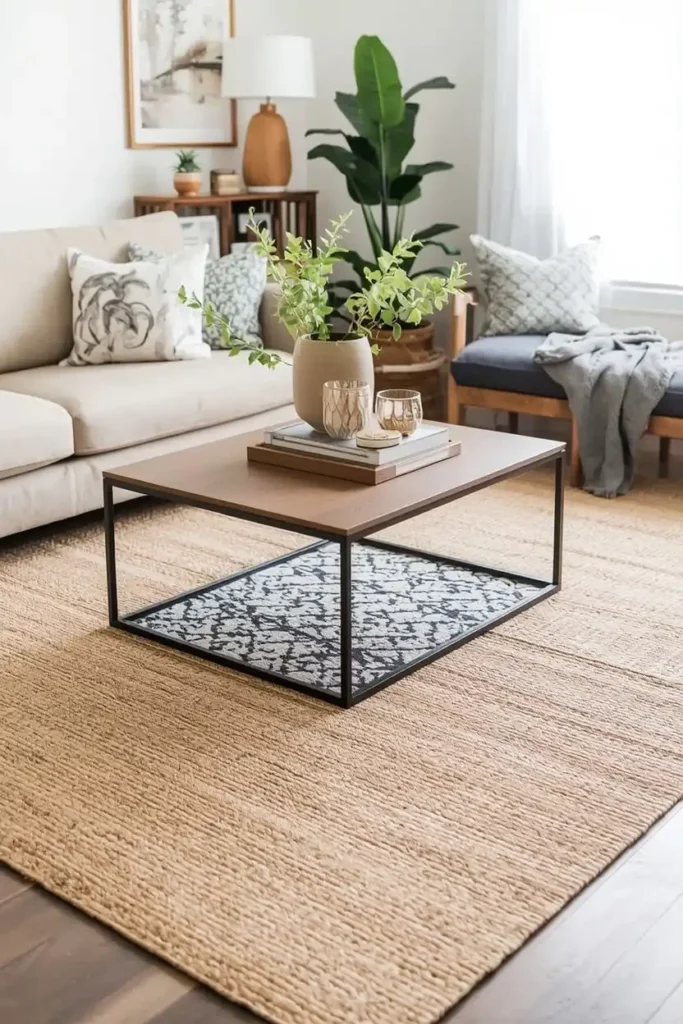
Imagine a neutral jute or wool base rug covering most of the floor, with a smaller patterned or textured accent rug layered on top beneath the coffee table, adding depth that a single flat rug simply can’t achieve.
Design Breakdown
Rug layering is a designer trick that instantly adds sophistication to a transitional space. The base rug grounds the room in warmth and texture, while the accent rug on top introduces subtle pattern or color without overwhelming the neutral palette established earlier.
Expert Tip
Keep the pattern on the top rug simple, geometric or a soft vintage-inspired print, rather than bold and busy, so it complements rather than competes with the room’s furniture.
Why It Works
Layered textures at floor level mirror the layered furniture styles above them, reinforcing the collected, intentional feeling that defines transitional design from top to bottom.
Best For
- Small spaces
- Large spaces
- Renters
- Budget makeovers
Common Mistake To Avoid
Choosing two rugs in wildly different color families. Keep both rugs within the same neutral or tonal family so the layering feels cohesive rather than mismatched.
Quick Wins
- Adds instant texture and warmth underfoot
- Renter friendly, no permanent changes needed
- Helps define a seating area in an open floor plan
- Affordable way to introduce pattern subtly
7. Combine Traditional Millwork With Contemporary Art
What You’re Seeing
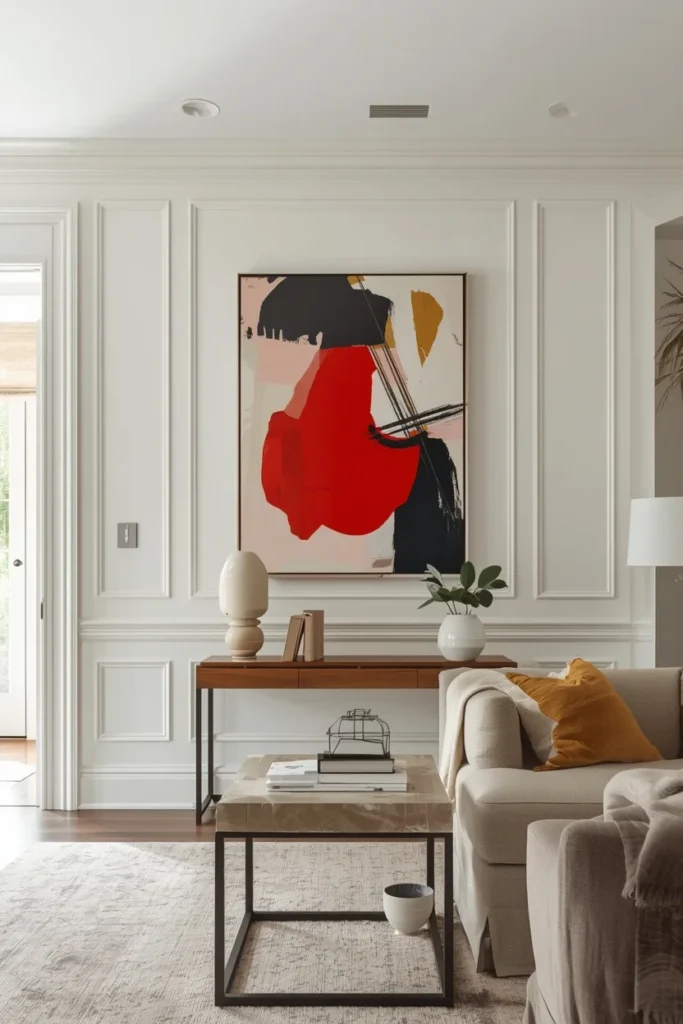
Visualize classic paneled walls or crown molding serving as a backdrop for a bold, abstract contemporary art piece, the historic architecture and modern artwork creating an unexpected but striking combination.
Design Breakdown
If your home already has traditional architectural details, millwork, wainscoting, coffered ceilings, this is one of the easiest ways to modernize without touching the structure itself. Contemporary art against classic architecture is a favorite trick among professional interior designers for exactly this reason.
Expert Tip
Choose art with a limited, cohesive color palette rather than busy or highly detailed pieces, so it reads as a bold modern statement rather than visual clutter against detailed millwork.
Why It Works
The contrast between historic architectural detail and contemporary art creates an immediate sense that the space has evolved over time, which is the visual story transitional design is always trying to tell.
Best For
- Luxury homes
- Large spaces
- Families
Common Mistake To Avoid
Choosing overly traditional art, like classic landscape paintings or ornate gilded frames, which reinforces the traditional side of the room instead of balancing it with something current.
Quick Wins
- Works especially well in older homes with existing detail
- No renovation required, just the right art choice
- Creates an instant conversation piece
- Scales from one statement piece to a full gallery wall
You May Also Like:
- High Ceiling Living Room Ideas
- Quiet Luxury Living Room Ideas
- Chic Living Room Ideas
- Living Room Chandelier Ideas
- Modern Dark Living Room Ideas
A Designer Secrets Guide to Getting the Transitional Balance Right
This is where many homeowners make a mistake — they assume transitional design means picking furniture “somewhere in the middle” of traditional and modern. That’s not quite it, and understanding the actual formula makes every decision after this point much easier.
The real formula designers use
- Pick one dominant style, slightly more traditional or slightly more modern, rather than aiming for an exact 50-50 split
- Introduce the opposite style through smaller, easier-to-change elements, lighting, textiles, and accessories rather than major furniture
- Repeat at least one unifying material or color throughout the whole room so the mix feels intentional, not accidental
Where to spend your budget first
- Sofa and seating, since this is the largest visual anchor and hardest to change later, typically the biggest single investment in the room
- Rugs, a mid-range investment that immediately grounds the layered look and is far easier to replace than furniture
- Lighting, a moderate investment that delivers a disproportionately large visual impact for the cost
Where you can save money
- Accent pillows and throws, inexpensive and easy to swap seasonally as your palette evolves
- Small accessories like vases, trays, and books, which introduce texture and color without a large commitment
- Art, since prints and affordable reproductions can achieve the same contrast effect as expensive original pieces
Common budget mistakes to avoid
- Buying an entirely new furniture set at once instead of blending in new pieces gradually alongside what you already own
- Overspending on trendy accent pieces that may not age well within the timeless transitional aesthetic
- Underestimating how much a single lighting upgrade can transform a room compared to smaller, scattered purchases
A realistic budget breakdown
- Small refresh, new lighting, one rug, and updated pillows, achievable on a modest weekend-project budget
- Mid-level refresh, adding a new coffee table plus the small refresh items above, for a noticeably transformed room
- Full room investment, new seating plus everything above, for a complete transitional overhaul
Would you choose function or style when deciding where to spend first? In transitional design, the good news is these two goals rarely conflict, comfortable, classic seating paired with clean modern accents checks both boxes at once.
8. Choose Soft Textiles in Linen and Boucle
What You’re Seeing
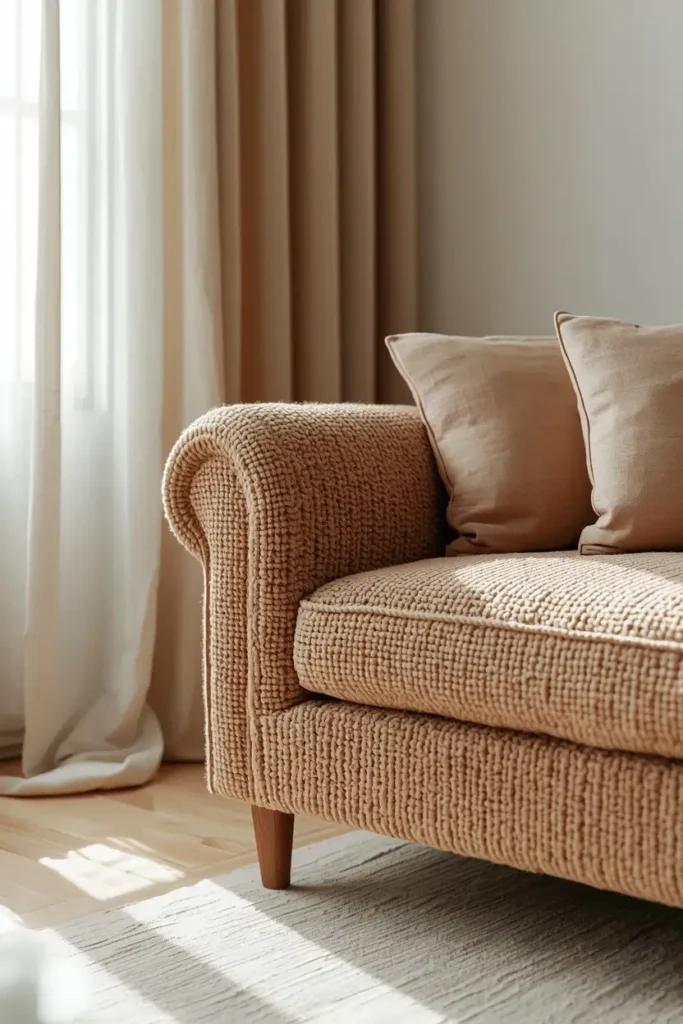
Picture a sofa upholstered in nubby, textured boucle fabric paired with simple linen curtains pooling softly at the floor, the tactile contrast between the two textures adding richness without adding color or pattern.
Design Breakdown
Texture does a lot of quiet work in transitional design. Boucle brings a slightly more contemporary, tactile edge, while linen brings a classic, relaxed softness. Using both in the same room adds depth that a single fabric choice simply can’t achieve.
Expert Tip
Stick to natural fiber textiles, linen, boucle, wool, cotton, wherever possible rather than synthetic blends, since natural fibers tend to have the slightly imperfect, lived-in texture that transitional style relies on.
Why It Works
Textural contrast engages the sense of touch as well as sight, which is part of why transitional rooms often feel more inviting and comfortable than purely modern spaces built around hard, smooth surfaces.
Best For
- Small spaces
- Large spaces
- Families
- Luxury homes
Common Mistake To Avoid
Choosing textiles purely for pattern instead of texture. In transitional design, texture usually does more visual work than a printed pattern would.
Quick Wins
- Adds richness without introducing new colors
- Feels cozy and lived-in rather than staged
- Works in curtains, pillows, and upholstery alike
- Easy to introduce gradually through smaller textiles first
One thing I’ve learned: the fastest way to test whether your living room needs more texture is to close your eyes and imagine running your hand across every surface in the room. If everything feels roughly the same, mostly smooth or mostly nubby, that’s the gap. Adding just one contrasting texture, a chunky throw over a smooth leather chair, or a linen curtain against a glossy side table, closes that gap almost instantly.
This simple change can completely transform the room.
9. Arrange Furniture Symmetrically Around a Focal Point
What You’re Seeing
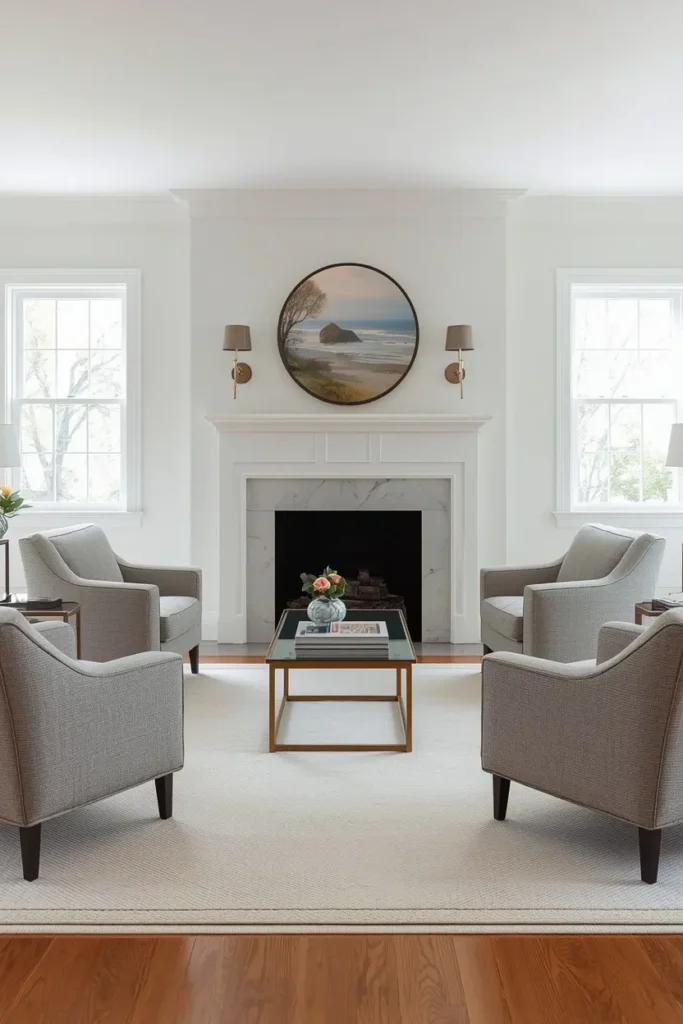
Imagine two matching armchairs positioned in perfect mirror-image symmetry on either side of a fireplace or media console, with a sofa centered directly across, creating a calm, balanced sense of order in the room.
Design Breakdown
Symmetry is a classic design principle borrowed from traditional style, and it’s one of the fastest ways to make a transitional room feel intentional and grounded. Pairing symmetrical furniture placement with more contemporary individual pieces keeps the balance from tipping too far in either direction.
Expert Tip
Choose a single, clear focal point, a fireplace, a media wall, or a large window, and build the symmetrical arrangement around that one anchor rather than trying to balance multiple competing points at once.
Why It Works
Symmetry is processed by the brain as calming and orderly, which is part of why symmetrical rooms consistently photograph well and feel instantly more put-together than asymmetrical layouts.
Best For
- Large spaces
- Luxury homes
- Families
Common Mistake To Avoid
Forcing symmetry in a room shape that doesn’t support it, like a narrow or irregularly shaped living room. In those cases, balanced asymmetry, similar visual weight on both sides rather than exact mirroring, works better.
Quick Wins
- Creates an instant sense of order and calm
- Works especially well around fireplaces and media walls
- Photographs beautifully for social sharing
- Doesn’t require new furniture, often just rearranging what you own
What’s your biggest challenge right now, finding the right furniture, or arranging what you already have? Symmetry tends to solve the second problem almost immediately.
10. Mix Metal Finishes With Intention
What You’re Seeing
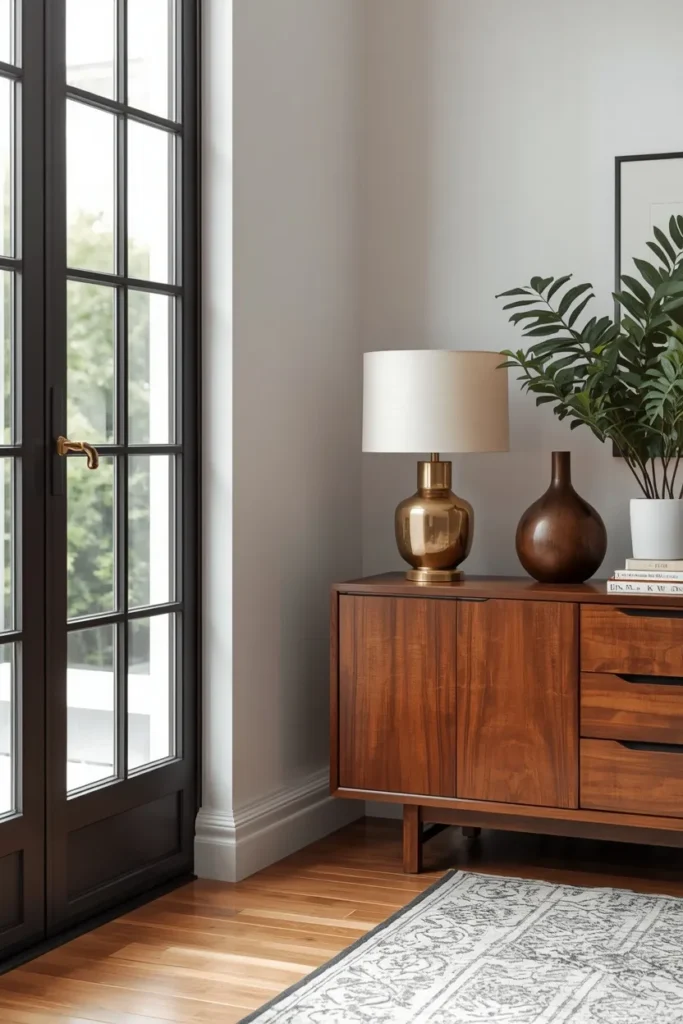
Visualize brushed brass lamp bases sitting beside matte black window frames, with warm wood furniture tying both metals together, the mixed finishes feeling curated rather than accidental.
Design Breakdown
While earlier we talked about limiting yourself to one dominant metal, an advanced transitional trick is intentionally mixing two complementary finishes, typically one warm, like brass or gold, and one cool, like black or nickel, used consistently throughout the room.
Expert Tip
Assign each metal a specific role, brass for lighting and accessories, black for hardware and frames, for example, rather than mixing them randomly across every piece.
Why It Works
Intentional metal mixing signals a collected-over-time aesthetic, which is the exact opposite feeling of a room where everything was purchased from a single matching furniture set.
Best For
- Luxury homes
- Large spaces
- Budget makeovers
Common Mistake To Avoid
Introducing three or more metal finishes without a clear system. Two finishes with defined roles reads as intentional, three or more without structure reads as cluttered.
Quick Wins
- Adds sophistication without major cost
- Signals a collected, personalized style
- Easy to introduce through lighting and hardware first
- Pairs beautifully with the wood and black metal combo from earlier
Which of these ideas would work best in your home? Let me know which one is your favorite, I’d love to hear if you’re leaning toward the lighting swap or the full symmetrical furniture rearrange.
Related Living Room Ideas
If this list has you rethinking your whole space, don’t stop here, the next idea changes everything once you start layering these concepts together.
- 10 Modern Living Room Design Ideas
- 10 Mid Century Modern Living Room Ideas
- Cozy Living Room Ideas
- Scandinavian Living Room Ideas
- Long Living Room Ideas
- Rectangle Living Room Ideas
- Media Wall Ideas
- Fireplace Ideas
Final Thoughts on Bringing Transitional Living Room Ideas Into Your Home
Here’s the truth, you don’t need to overhaul your entire living room this weekend to make transitional style work for you.
Start with the smallest, most impactful idea, a new light fixture, a layered rug, or simply rearranging your existing furniture around one clear focal point.
Pick one idea from this list and commit to it this week. Just one. Live with it for a few weeks before deciding what comes next.
What’s the one piece in your current living room that feels the most “stuck,” too traditional or too plain, and how might one of these ideas fix it?
If you’re loving this balanced, collected style, our guide on Quiet Luxury Living Room Ideas is the natural next stop, since it builds on the same restrained, intentional approach.
And if your living room flows directly into your kitchen or dining space, don’t miss what’s coming next on the blog, because getting that transition right between rooms is where a lot of transitional design either comes together beautifully or falls apart completely.
Frequently Asked Questions About Transitional Living Room Ideas
1. What defines a transitional living room style? Transitional style blends traditional furniture shapes and warmth with modern lines and simplicity, creating a balanced look that feels neither fully classic nor fully contemporary.
2. What colors work best for transitional living rooms? Warm neutrals like greige, cream, camel, and soft taupe form the most common foundation, layered with black, wood, or brass accents for contrast.
3. Is transitional style the same as modern farmhouse? No, modern farmhouse leans rustic with shiplap and reclaimed wood, while transitional style is more polished, focusing on clean lines paired with classic furniture silhouettes.
4. Can transitional design work in a small living room? Yes, a neutral palette combined with a few well-chosen contrast pieces works especially well in small spaces since it avoids visual clutter while still feeling layered.
5. What furniture pieces are essential for a transitional look? A classic upholstered sofa, a contemporary coffee table, mixed metal lighting, and layered textiles are considered the core building blocks of transitional design.
6. Do transitional living rooms need matching furniture sets? No, matching sets typically work against the transitional look, which relies on intentional contrast between traditional and modern pieces rather than uniformity.
7. How much does it cost to update a living room to transitional style? Costs vary widely, but many homeowners start with budget-friendly updates like lighting, rugs, and textiles before investing in larger furniture pieces over time.
8. What is the difference between transitional and traditional design? Traditional design leans fully into ornate, classic details, while transitional design intentionally balances those classic elements with simpler, modern counterparts.
9. Are patterns used in transitional living rooms? Yes, but sparingly and usually subtle, geometric or tonal patterns work better than bold prints, which can tip the room too far into either traditional or eclectic style.
10. What lighting style fits best in a transitional living room? Mixed-material fixtures, like a metal frame with a linen or fabric shade, tend to bridge both traditional warmth and modern simplicity better than purely ornate or purely industrial lighting.