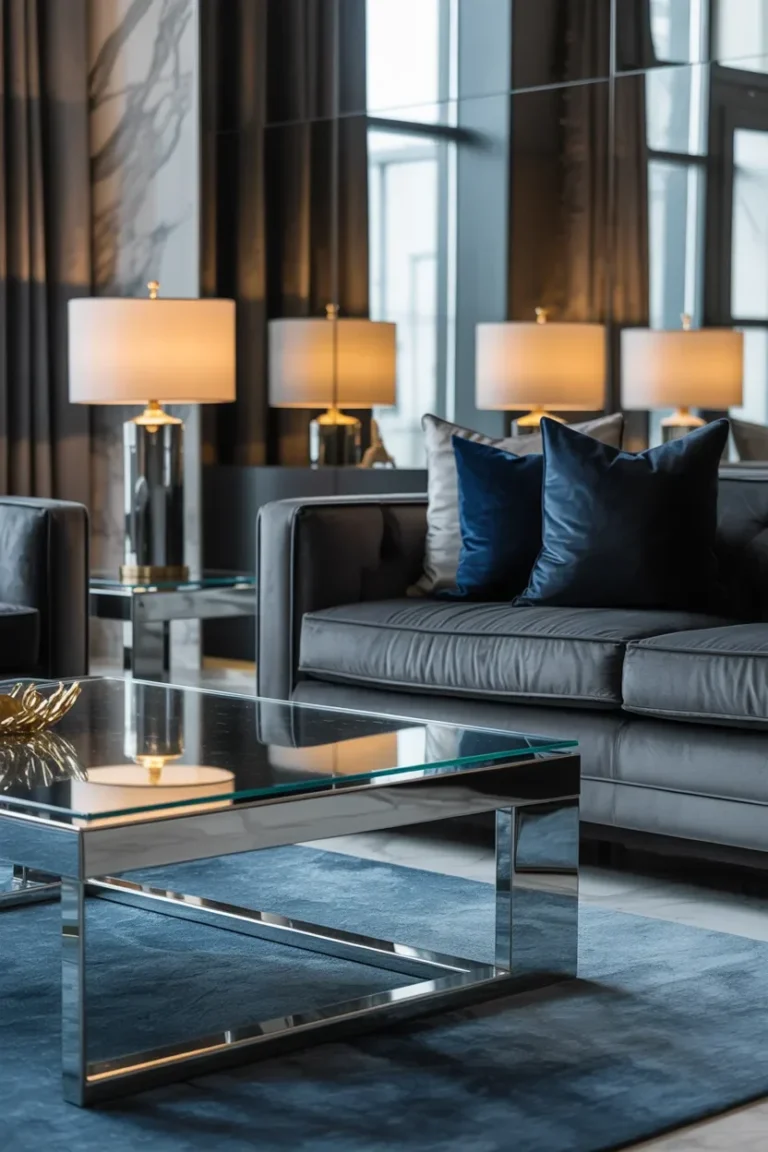
Terraced House Living Room Ideas
This article was created in line with Trends Oraa’s research and content standards.
They will find fresh ways to make a terraced house living room feel larger, brighter, and more useful without big renovations.
You will learn easy ideas that improve light, storage, seating, and style so your space works better and looks smarter.
This article guides them through practical tips like using windows, built-ins, slim furniture, layered lighting, and plants to boost comfort and flow.
Each idea stays simple and doable, so they can pick what fits their home and start improving the room right away.
1) Maximize natural light with large windows
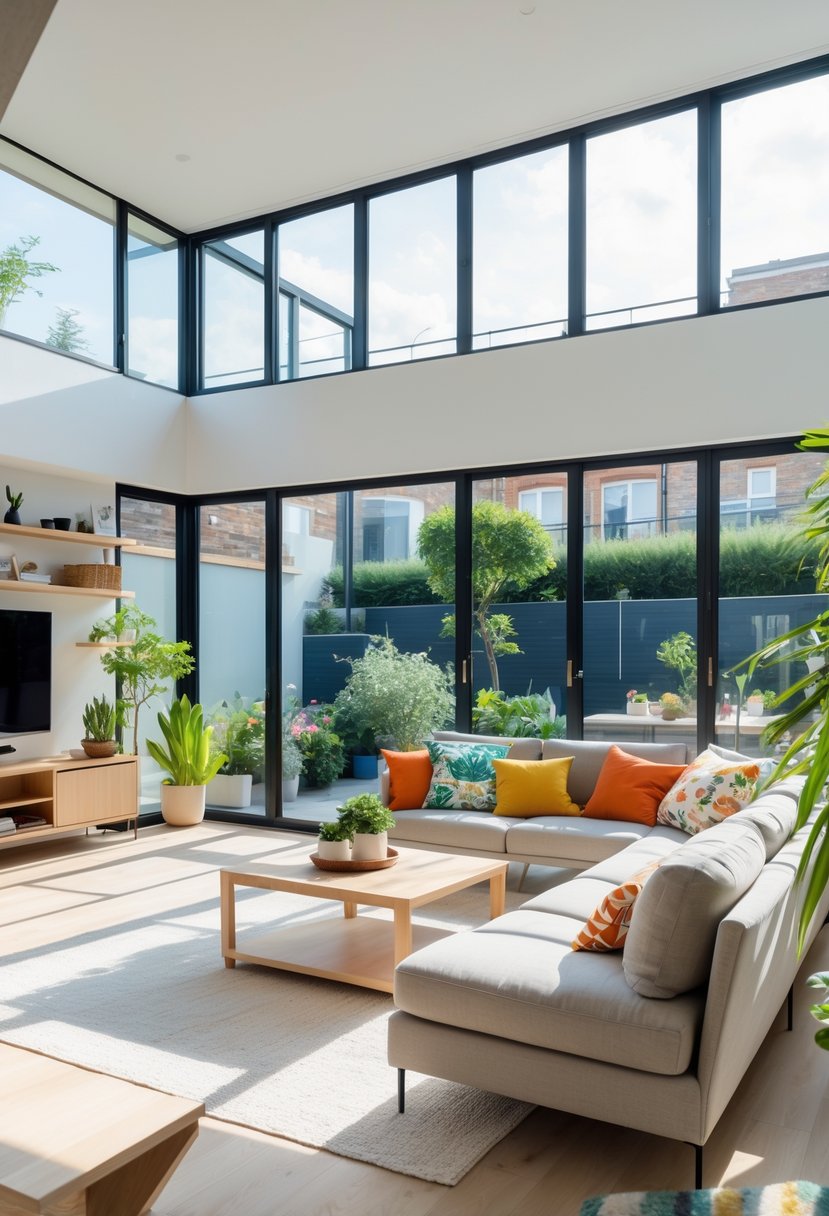
They should choose the largest windows the space allows to bring in more daylight. Bigger panes reduce the need for many small openings and make rooms feel more open.
They can install thin frames and clear glass to avoid blocking light. Sliding or bi-fold windows work well in terraced homes where external space is limited.
She should keep window dressings light and low-profile, such as sheer curtains or minimalist blinds. These let sunlight pass while still offering privacy.
They can use reflective surfaces like pale paint, mirrors, and glossy tiles to bounce light deeper into the room. A well-placed mirror opposite a window doubles the perceived brightness.
If structural changes are possible, consider enlarging existing openings or adding a roof lantern in extensions. Always check building regulations and party wall rules before altering external walls.
2) Use built-in shelving to save space
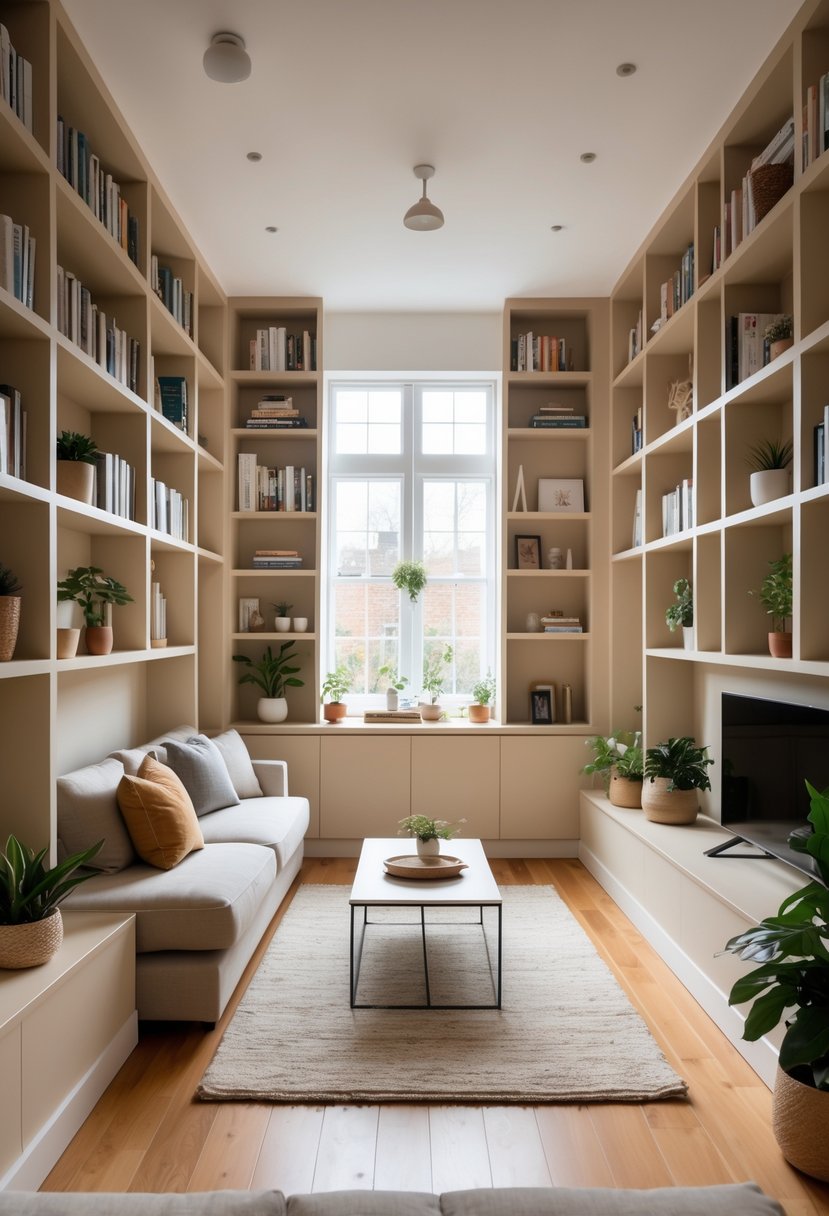
Built-in shelving fits into small terraced living rooms without taking up floor space. It uses wall depth and corners, so furniture can sit closer together and the room feels less crowded.
They can run from floor to ceiling to hold books, decor, and media gear. This reduces the need for extra cabinets and keeps items organized and out of the way.
Custom shelves can match the room’s style and hide wiring for TVs and lamps. Open shelving shows items for display, while closed units keep clutter unseen.
A narrow built-in bench with storage under the seat adds seating and a place for blankets or toys. Lighting can be added to the shelves to highlight objects and make the room feel larger and brighter.
3) Incorporate multi-functional furniture
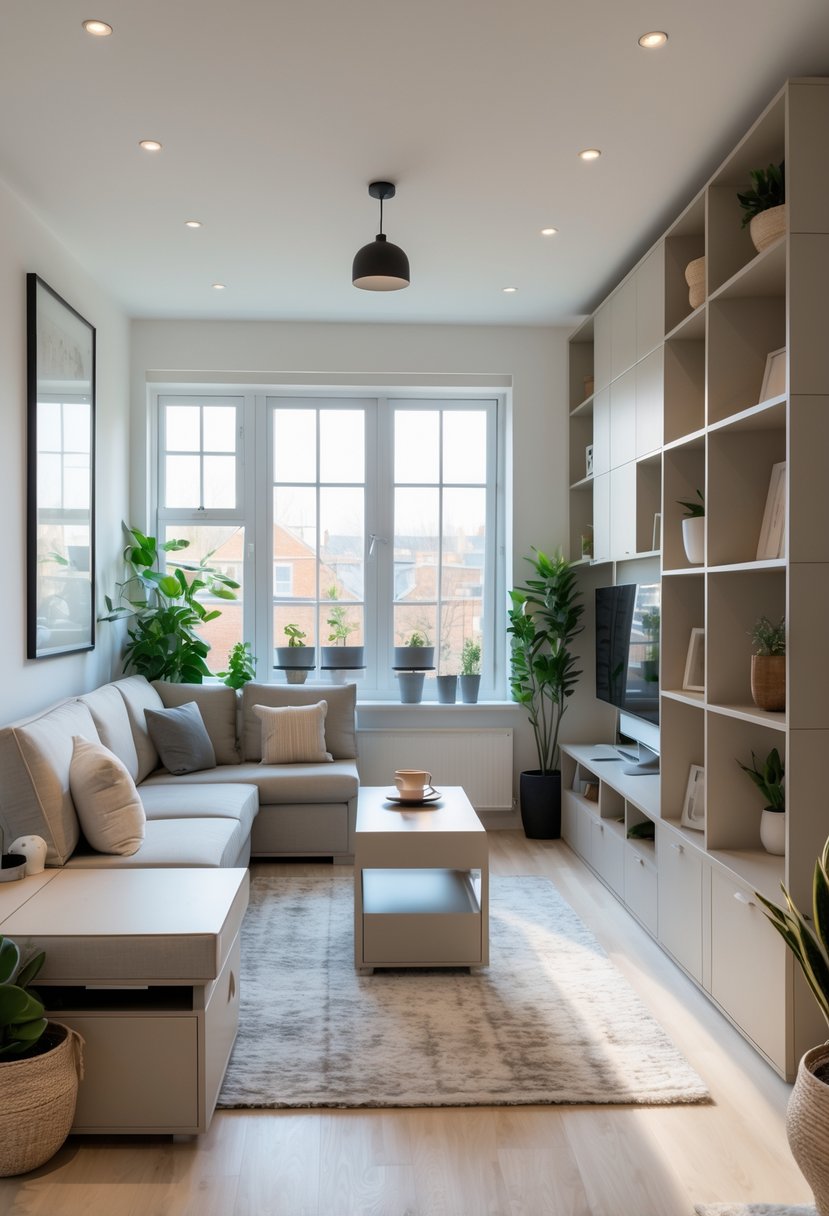
They choose furniture that serves more than one purpose to save space and add value. A sofa bed or a daybed gives seating by day and a guest bed at night.
They use coffee tables with storage compartments or lift tops to hide clutter and create a work surface. Ottomans with removable lids or built-in trays provide extra seating and a place to store throws or magazines.
They pick slimline units that combine shelving, media storage, and room dividers. This keeps the layout open while giving each item a clear place.
They favor pieces on casters or lightweight items that move easily for different needs. Flexible furniture makes the living room adapt to visits, playtime, or quiet evenings without major changes.
4) Choose neutral tones with bold accents
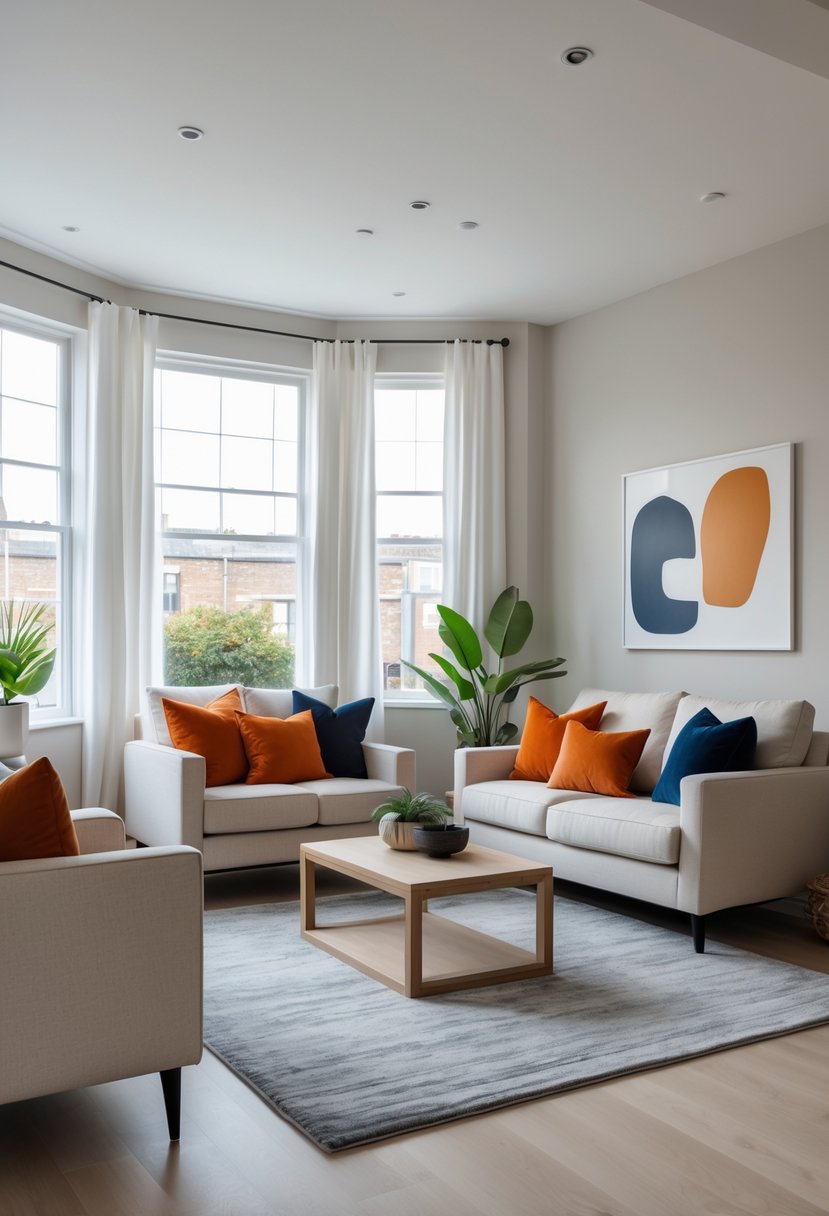
They pick neutral tones for walls and large furniture to keep the room feeling open and calm. Light grays, warm beiges, and soft whites make narrow terraced living rooms look larger and brighter.
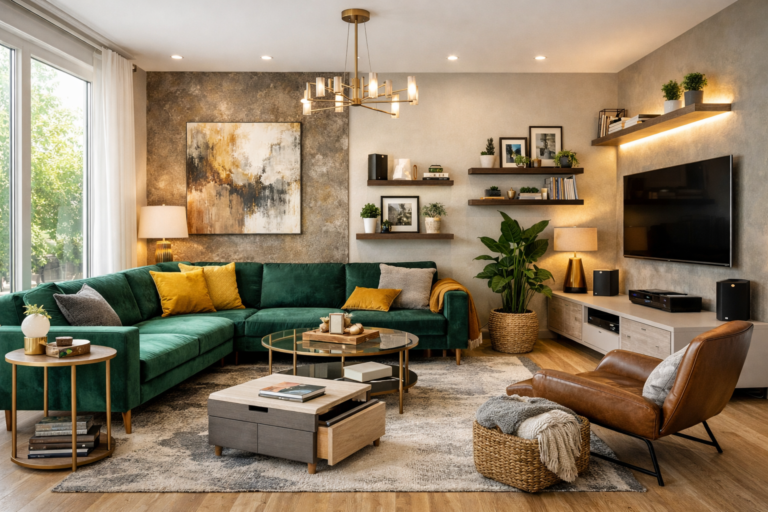
A few bold accents add life without crowding the space. A single deep-blue sofa, mustard cushions, or a dark green rug gives focus and personality.
They use contrast to guide the eye across the room. Dark picture frames, a black lamp, or a patterned throw create interest while the neutral base stays cohesive.
They balance color by repeating accent shades in small items. Plants, books, and artwork echo the bold hues so the room feels planned and not cluttered.
5) Install a feature fireplace
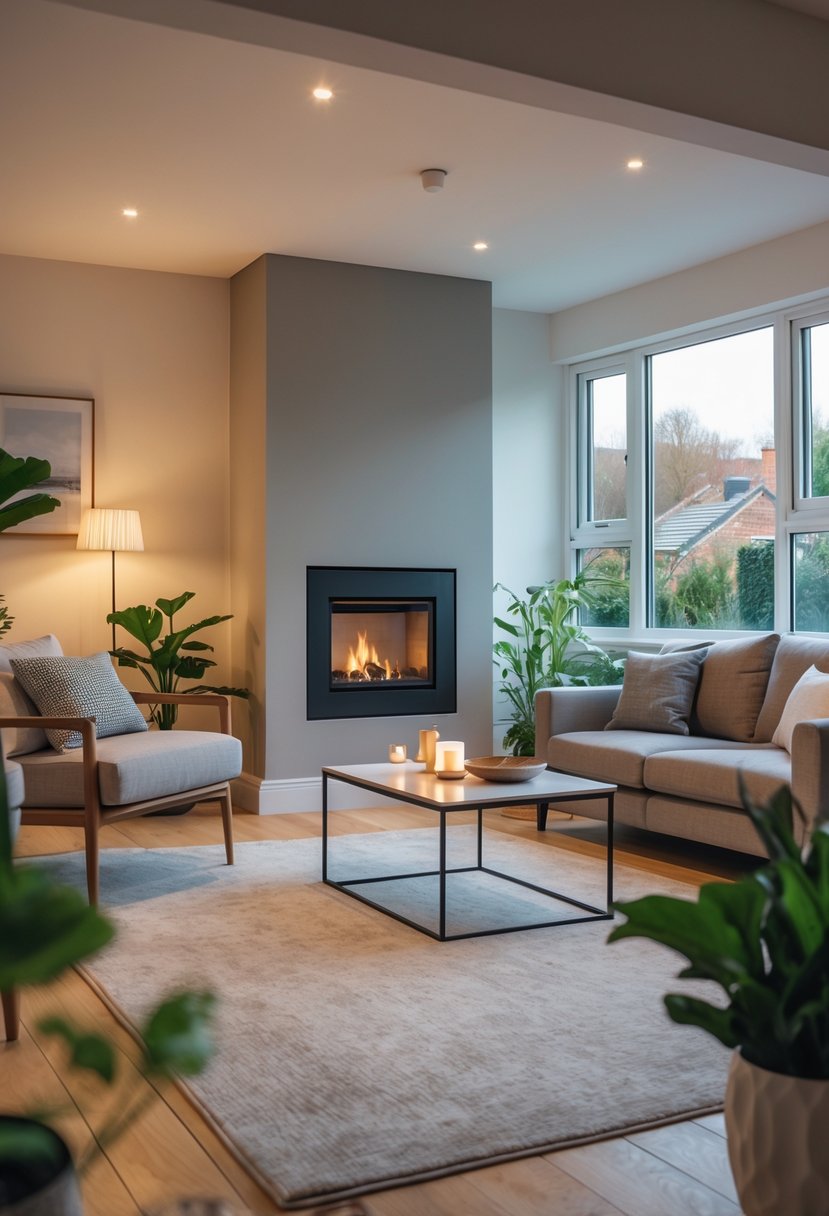
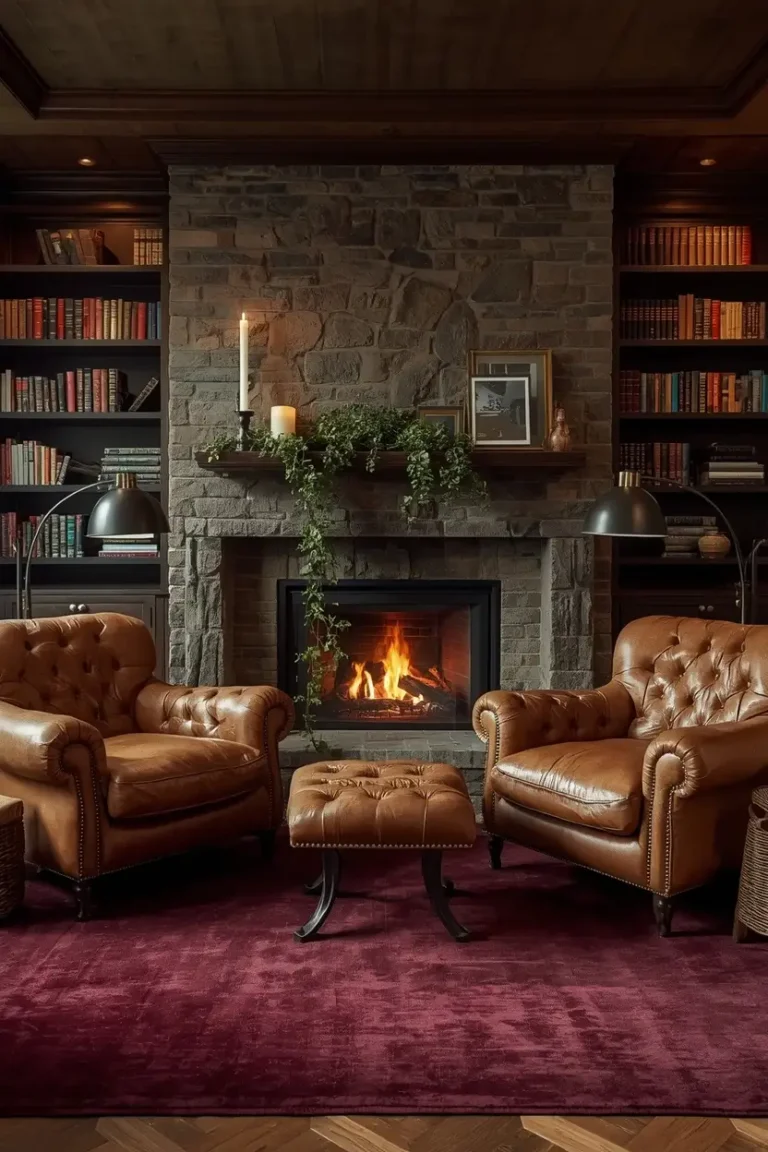
A feature fireplace gives a terraced living room a strong focal point. It anchors the seating area and helps arrange furniture in a clear, usable way.
Choose a fireplace that fits the room’s scale. Slim, modern gas inserts suit narrow rooms, while a traditional mantel suits taller ceilings.
Use materials that add texture but stay simple. Stone, brick, or a dark metal surround creates contrast without crowding the space.
Add a modest hearth or mantle shelf for a lamp, a plant, or a few books. These small touches make the fireplace feel lived-in and practical.
Consider a flueless gas or electric fireplace if ventilation is limited. They provide visual warmth without major renovation.
Keep safety and local rules in mind. A qualified installer should check chimneys, gas lines, and clearances before use.
6) Add mirrors to create depth
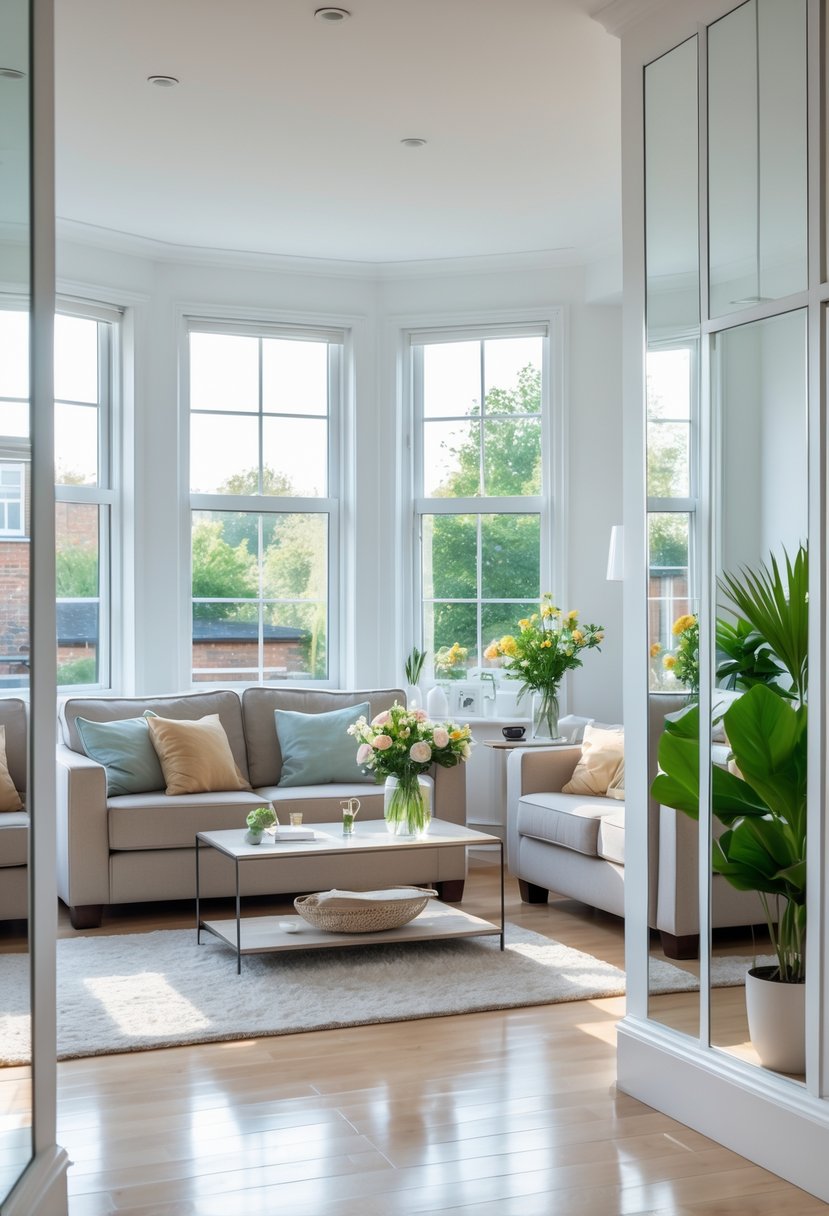
They can make a narrow living room feel larger by reflecting light and views. Place a mirror opposite a window to double natural light and brighten the space.
A tall, slim mirror draws the eye upward and adds height. A cluster of small mirrors gives texture without overwhelming the wall.
Choose frames that match the room’s style so mirrors blend in. Keep mirrors at eye level for seating areas and slightly higher for hallways.
Use mirrored furniture or panels sparingly to avoid a cold look. Combine mirrors with soft textiles and warm lighting to keep the room inviting.
7) Use layered lighting for ambiance
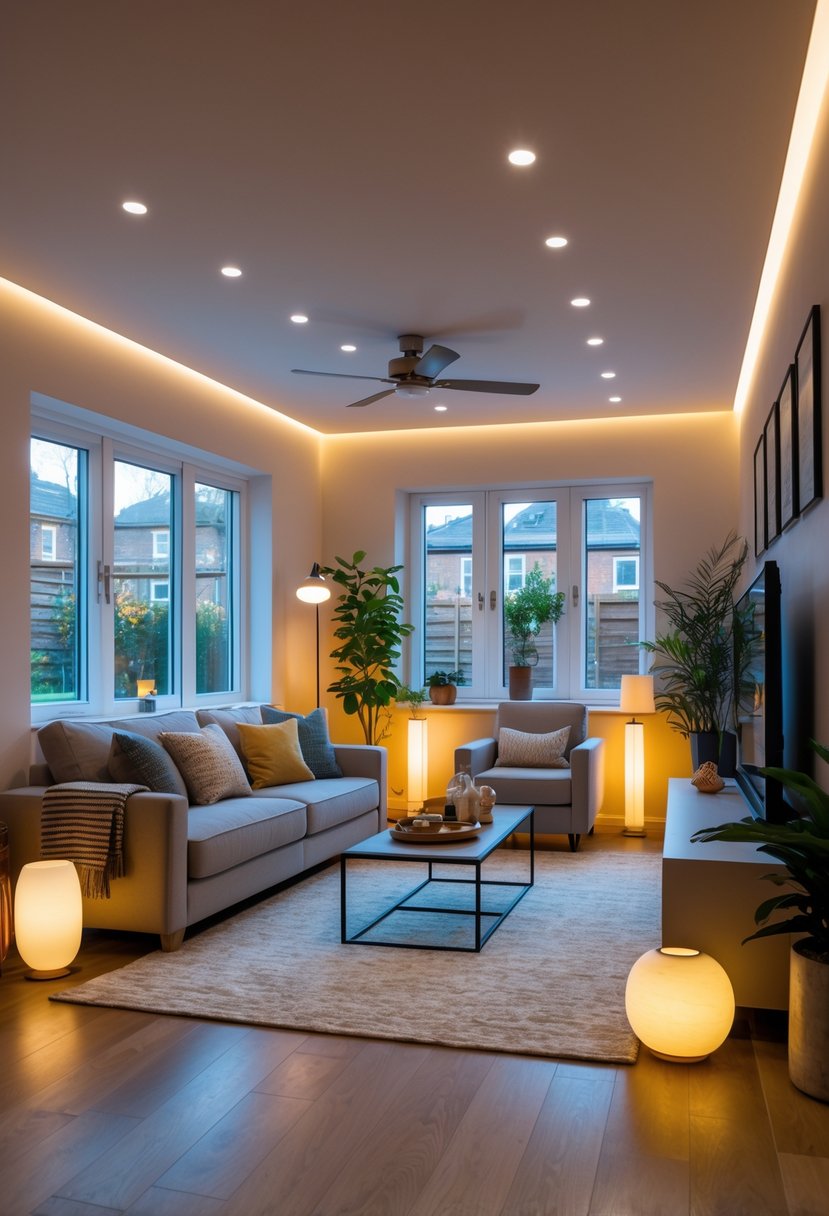
They should combine three types of lighting: ambient, task, and accent. Ambient light fills the room, task light supports reading or work, and accent light highlights art or features.
A ceiling fixture or recessed lights give even ambient light. A dimmer helps change mood from bright to cozy.
Task lamps go near sofas, chairs, and work zones. Choose adjustable lamps so light hits exactly where needed.
Accent lighting adds depth and focus. Small spotlights, wall washers, or picture lights make a room feel finished.
They should vary color temperature and brightness for balance. Warm bulbs suit relaxed evenings, while cooler light helps daytime activities.
They must place lights to avoid glare and dark corners. Layering lights this way makes a terraced living room feel larger and more inviting.
8) Introduce houseplants for freshness
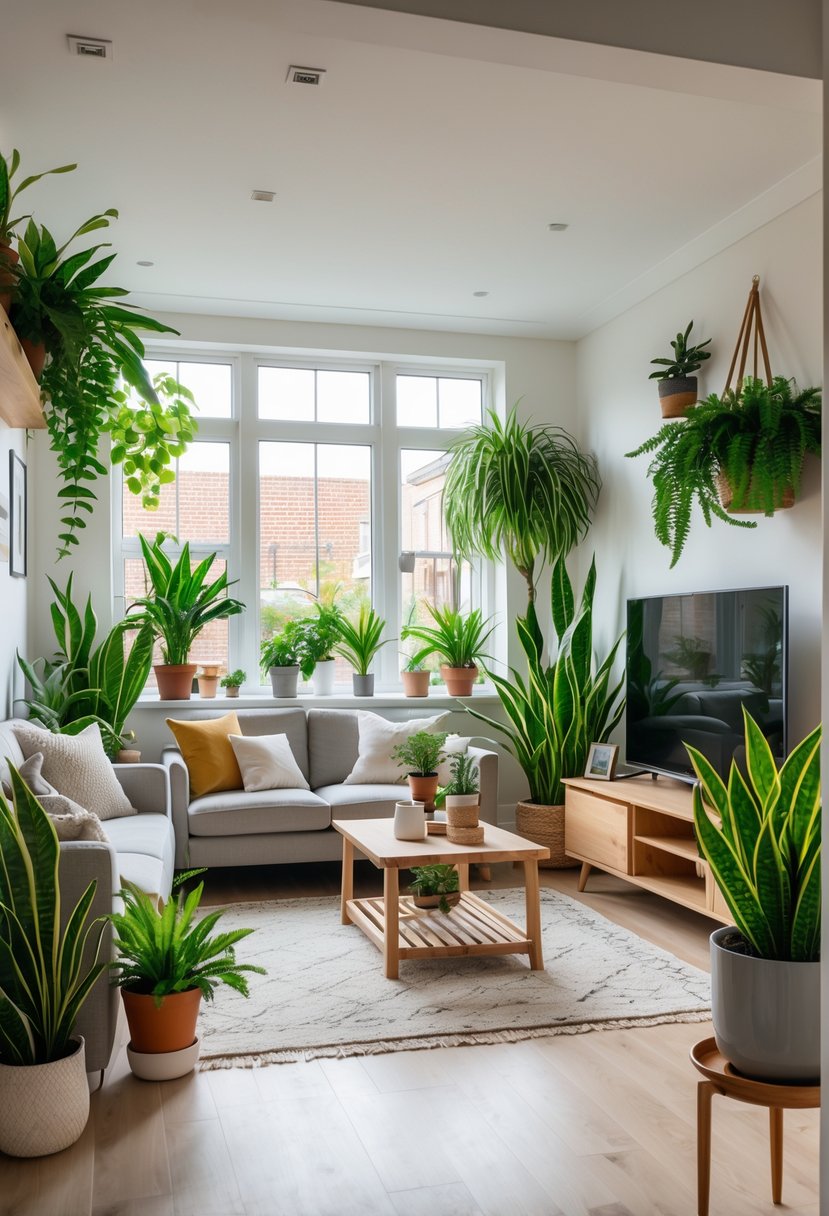
They bring life and cleaner air to a terraced living room. A few well-placed plants soften hard lines and add color without crowding the space.
Choose low-maintenance varieties like snake plants, pothos, or ZZ plants. These tolerate low light and irregular watering, which suits many terraced homes.
Use different pot heights and textures to create interest. Place taller plants near windows and smaller ones on shelves or side tables.
Avoid clutter by limiting the number of pots and grouping them thoughtfully. Rotate plants occasionally so all get light and stay healthy.
9) Opt for slimline furniture
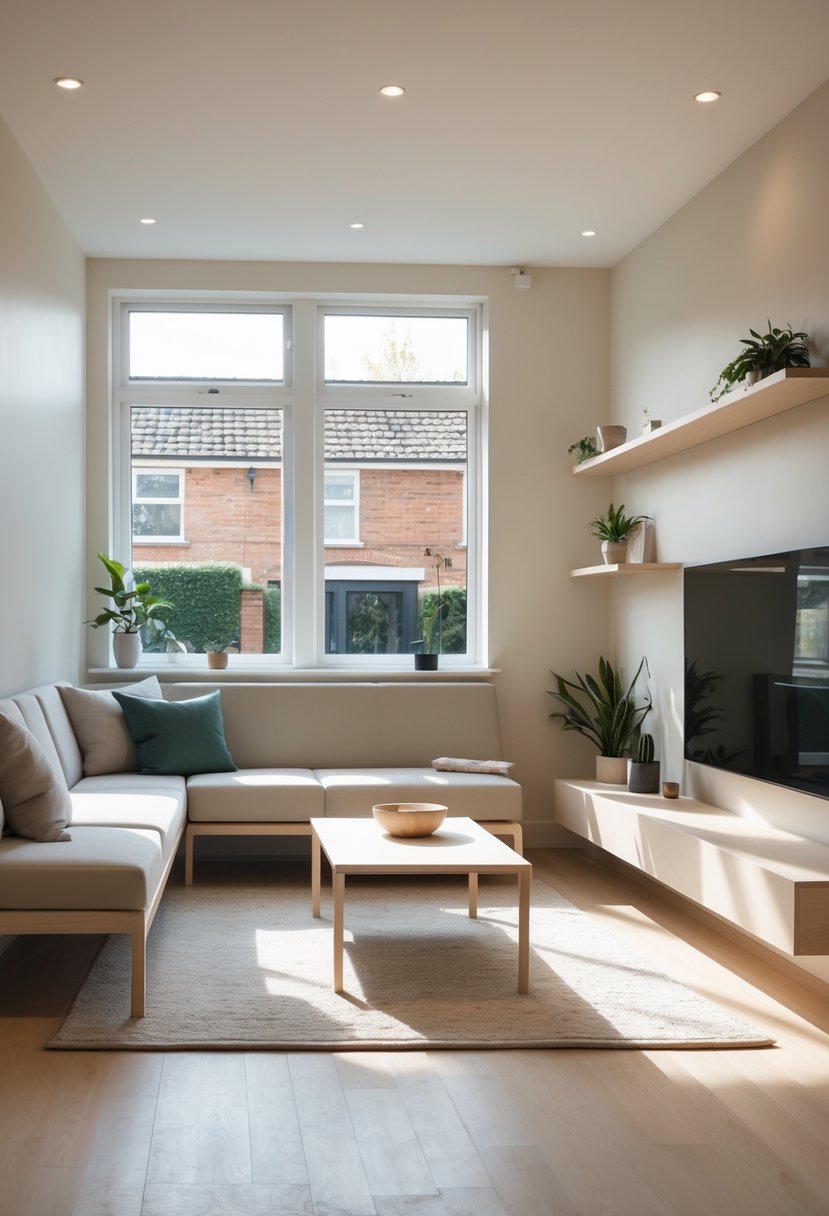
They choose slimline furniture to make narrow living rooms feel more open. Thin arms, raised legs, and low profiles reduce visual bulk without sacrificing seating or storage.
A small sofa with tapered legs creates floor space that appears larger. Slimline shelving and narrow media units keep walls usable and avoid blocking light.
They pick pieces with built-in storage to cut clutter. A slim console or narrow coffee table can hold remote controls and magazines without crowding walkways.
They balance scale by pairing slim larger pieces with a few compact accents. A slender armchair or streamlined side table adds function while keeping sightlines clear.
10) Create a gallery wall with personal art
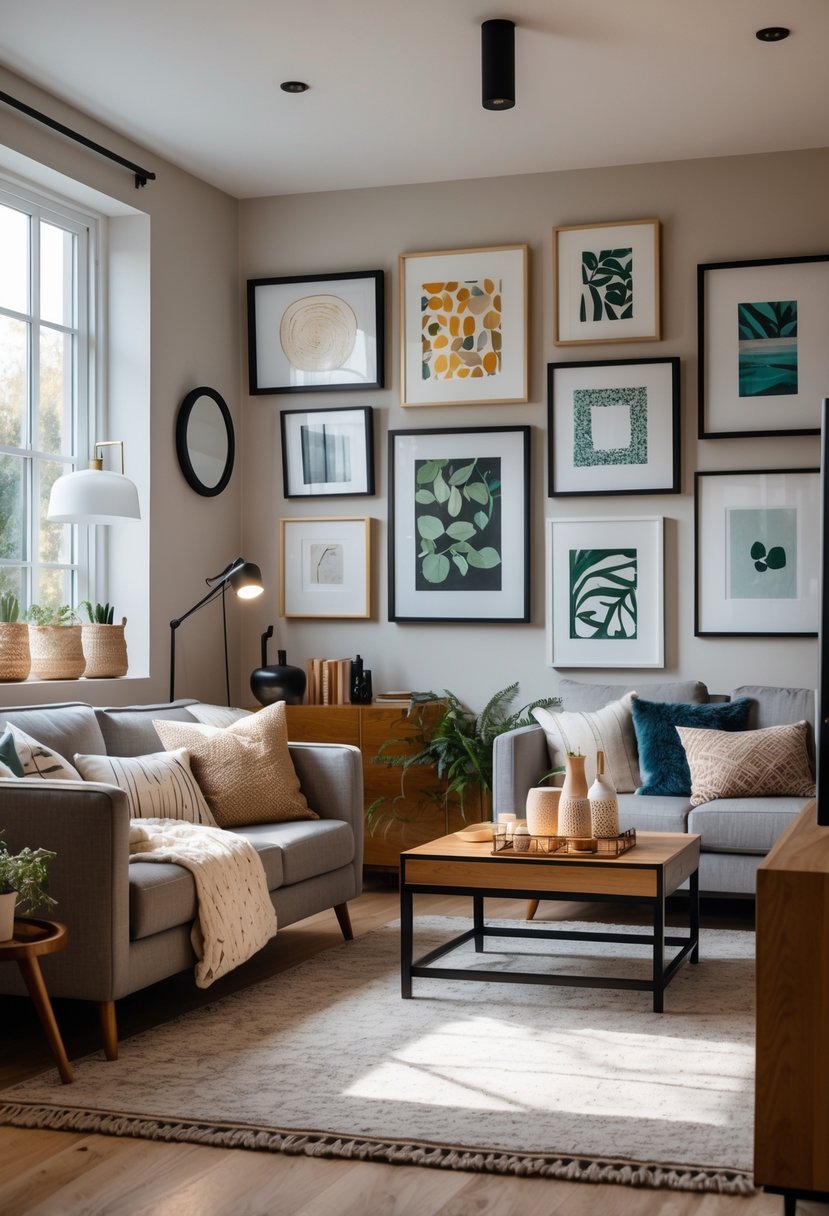
A gallery wall adds character without taking up floor space. They work well in terraced living rooms where wall room is more available than floor area.
They should mix frames, sizes, and art types to look balanced. He or she can include photos, prints, sketches, and kids’ drawings for a personal touch.
Use a simple layout before hanging to avoid mistakes. Lay pieces on the floor or use paper templates on the wall to test spacing and alignment.
Keep a consistent element like a frame color or mat size to tie the collection together. That small rule helps the display feel planned, not cluttered.
Add lighting to highlight favorite pieces. A thin picture light or directional spotlight helps art stand out and gives the room a warm focal point.