10 Moroccan Bedroom Decor Ideas You Can Try Without Repainting or Buying Heavy Furniture
This article was created in line with Trends Oraa’s research and content standards.
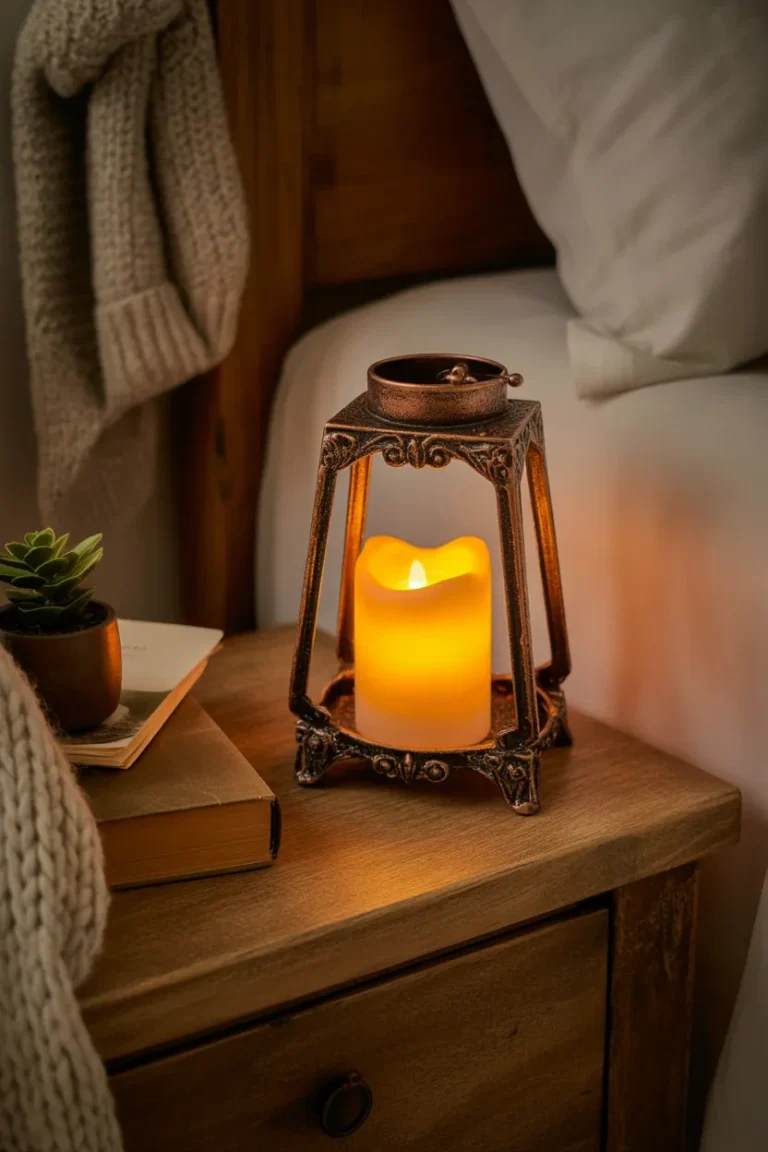
You scroll Pinterest for ten minutes and suddenly your bedroom feels deeply, personally offensive. You know the look you want — rich, layered, impossibly romantic — but you’re a renter. Or you’re just not ready to commit to a full overhaul.
Here’s the truth: you don’t need to repaint a single wall or drag in one piece of heavy furniture to transform your bedroom into a Moroccan-inspired sanctuary. These 10 Moroccan bedroom decor ideas prove that accessories, textiles, and lighting do all the heavy lifting.
And trust me — idea #7 is the one nobody talks about, but it changes everything.
You might also love our guide on → Easy Bedroom Decor Ideas That Work in Any Space
Why Moroccan Style Is Having a Major Moment Right Now
Moroccan decor has always been the style for people who want warmth without fussiness. It layers texture, color, and pattern in a way that feels collected over time — not decorated overnight.
It’s also incredibly accessible. The signature elements — lanterns, woven rugs, embroidered cushions, geometric patterns — are easy to find and easy to swap out when you’re ready for a change.
No renovation needed. No landlord approval required.
Let’s get into it.
1. Layer a Beni Ourain Rug Under Your Existing Bed
What you’re looking at:
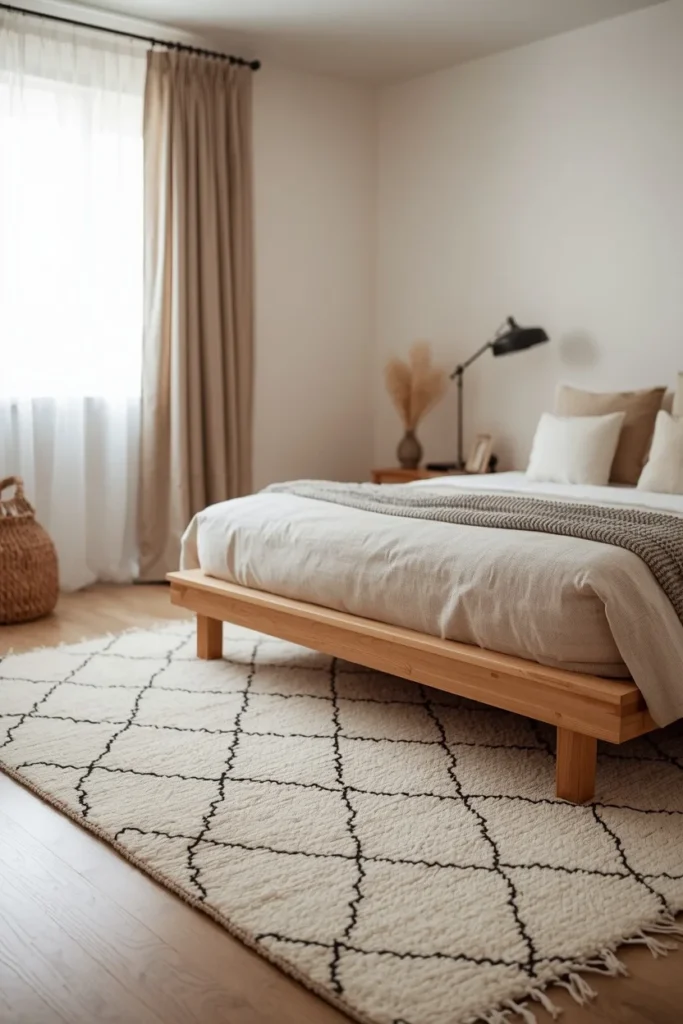
A creamy, plush Beni Ourain rug peeking out from under the bed frame on both sides, its black geometric diamond pattern contrasting beautifully against wooden or tiled floors. The rug grounds the entire room, making the bed feel intentional and anchored — like it belongs exactly where it is.
Why it works:
Moroccan design is obsessed with underfoot texture. The Beni Ourain tribe of the Atlas Mountains originally created these rugs as functional pieces — thick enough to insulate cold floors. That same density makes them visually weighty and luxurious today. The monochrome palette means they pair with literally everything: neutrals, jewel tones, earthy taupes.
You don’t need to lift your bed. Slide the rug underneath, let it extend at least 18–24 inches on each side, and watch your entire floor situation transform instantly.
Expert Tip: If an authentic Beni Ourain is out of budget, look for Moroccan-style flatweave lookalikes on Rugs USA, Wayfair, or even Amazon. Focus on the diamond or trellis pattern — that’s what reads as Moroccan at first glance.
Why it works for time-on-site: A great rug photo stops the scroll. Every time.
💬 Which texture do you prefer — chunky wool pile or a sleek flatweave? Drop it in the comments below!
2. Hang a Brass Moroccan Lantern as a Statement Pendant
What you’re looking at:
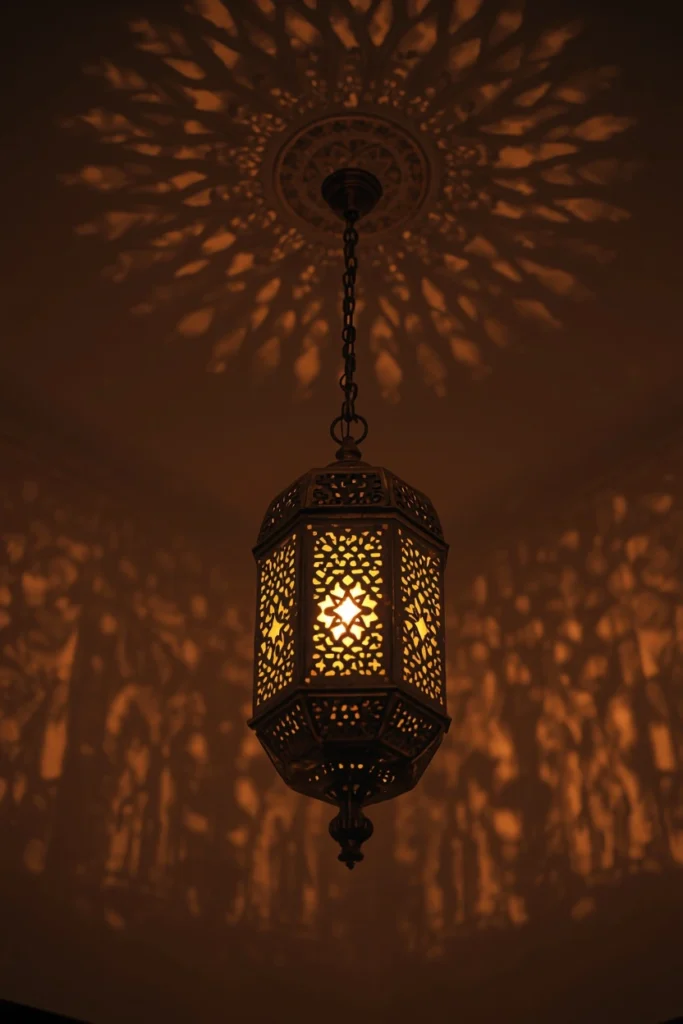
A single oversized brass lantern suspended from the ceiling, its perforated geometric panels casting dancing star-shaped shadows across the walls when lit. The warm amber glow it creates makes the room feel like a tucked-away riad in Marrakech — private, golden, and utterly escapable.
Why it works:
Lighting is the single fastest way to change the mood of a room without touching anything else. Moroccan lanterns work because they do two things at once: they provide ambient light AND they become living wall art the moment you flip the switch.
Here’s where it gets interesting — you don’t even need to hardwire these. Plug-in pendant kits are available for under $15, and they turn any hanging lantern into a functional ceiling light in about ten minutes.
- Look for brass or antbronze finishes for the most authentic look
- Choose lanterns with star-cut or arabesque patterns for maximum shadow drama
- Go large — a 12–18 inch lantern reads better than a small one in most bedrooms
Expert Tip: Place a warm Edison-style LED bulb inside (2700K color temperature). Cool white bulbs completely kill the Moroccan vibe. The warmth is the whole point.
3. Pile on the Poufs — Seriously, Go Overboard
What you’re looking at:
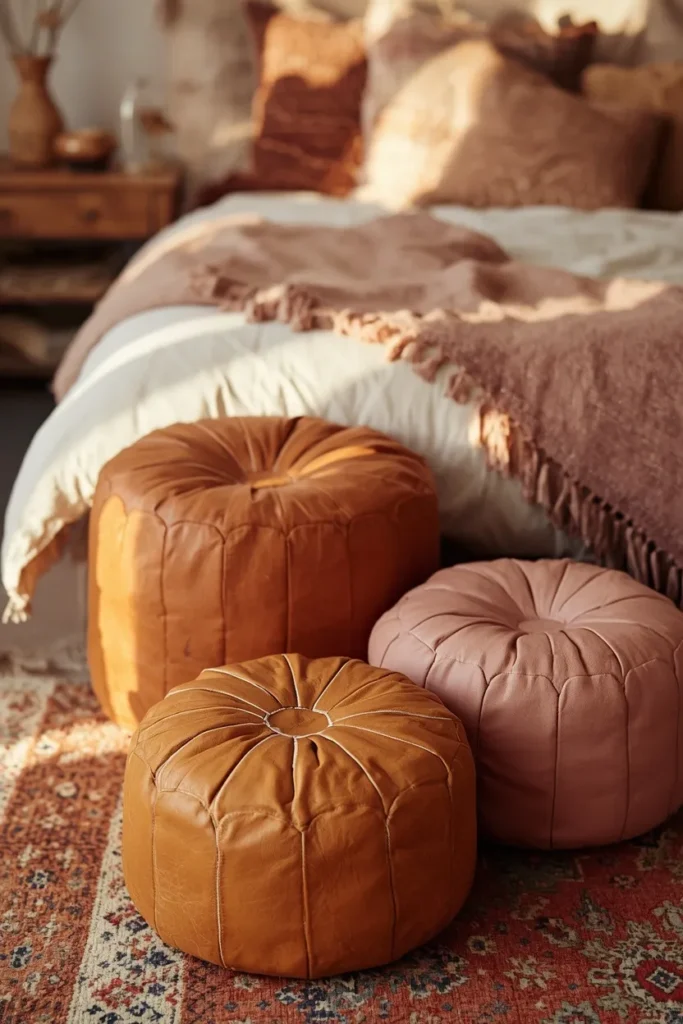
Two or three leather poufs clustered near the foot of the bed or in a bedroom corner. Some are natural tan, others are dyed in deep saffron or dusty rose. They’re slightly different heights, slightly different sizes. The effect is effortlessly curated — like they migrated there on their own.
Why it works:
Poufs are perhaps the most iconic Moroccan home accessory in existence, and for very good reason. They’re functional (extra seating, footrest, impromptu side table), they’re lightweight (move them anywhere in seconds), and they bring that essential low-to-the-ground, lounging energy that Moroccan interiors are famous for.
Most people get one pouf and position it very carefully. Most people are wrong.
The move: Get two or three in complementary colors. Cluster them. Let them be slightly imperfect in arrangement. That casual grouping is exactly what makes a bedroom feel curated instead of furnished.
Expert Tip: Unstuffed poufs ship flat and cheap. Fill them with old blankets, pillow stuffing, or shredded foam you’d otherwise discard. It takes 20 minutes and costs nothing extra.
But here’s the important part…
The items above are starter pieces. They work on their own, but they sing when you combine them. The secret to Moroccan style isn’t any single element — it’s the layering. Keep that in mind as we go deeper.
4. Swap Your Plain Throw Pillows for Kilim or Embroidered Covers
What you’re looking at:
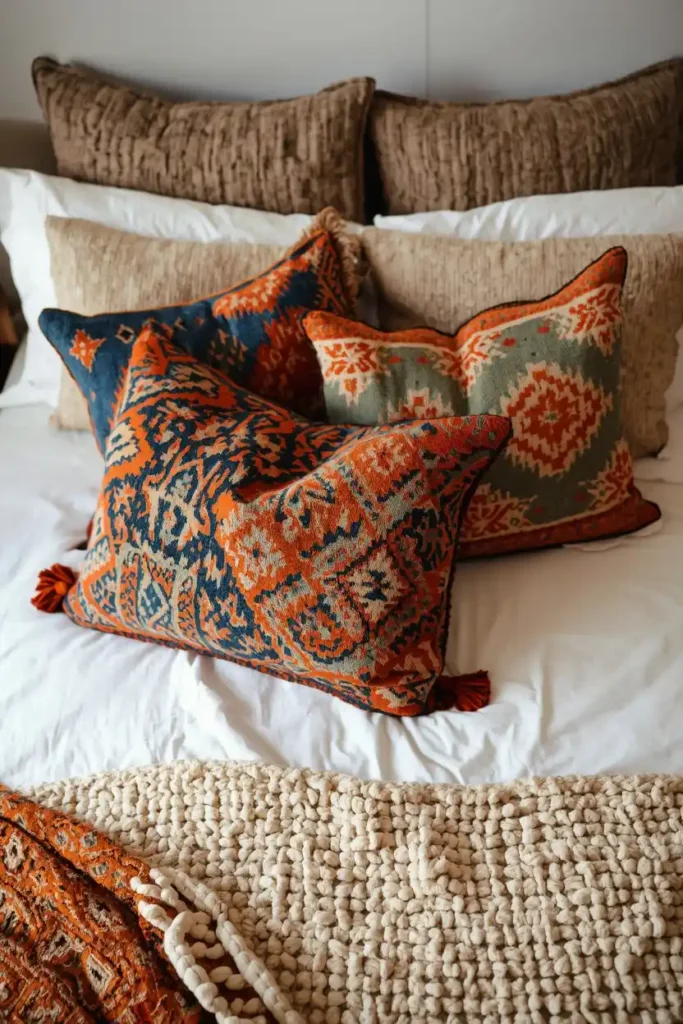
A bed stacked with a mix of throw pillows — some in rich jewel tones like cobalt blue and burnt orange, others in neutral cream and terracotta. The textures vary: one is flatwoven kilim, one has silky embroidery, one has tassel trim. Together they look like a maximalist mood board brought to life.
Why it works:
Throw pillows are the lowest-commitment, highest-impact swap in bedroom decor. You’re not buying new pillows — you’re just changing the covers. Kilim-style covers have that unmistakable geometric, slightly tribal pattern that anchors any room in Moroccan territory immediately.
Here’s the palette to shop:
- Jewel tones: Cobalt blue, deep emerald, burnt sienna, saffron yellow
- Earthen neutrals: Cream, warm sand, dusty rose, terracotta
- Metallic accents: Gold embroidery, bronze threading, mirror embellishments
Mix patterns confidently. In Moroccan design, pattern-on-pattern isn’t a mistake — it’s the whole point.
Expert Tip: Shop Etsy for genuine Moroccan handmade kilim covers. Many sellers ship directly from Morocco and the prices are surprisingly reasonable for the quality you receive.
5. Add a Hand-Knotted Wall Tapestry or Vintage Berber Textile
What you’re looking at:
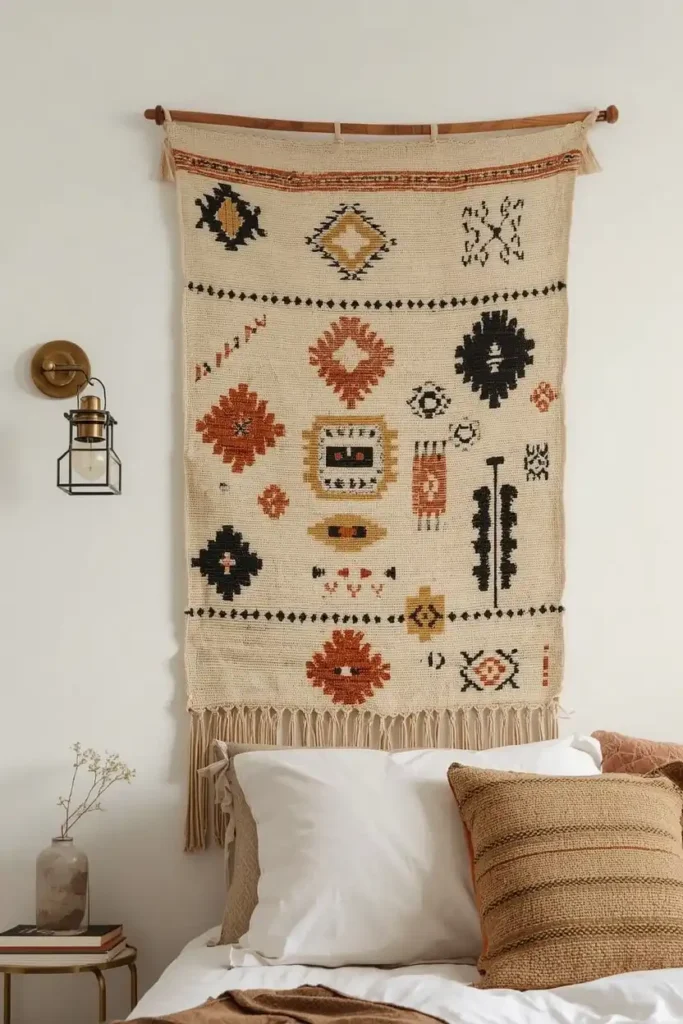
A large handwoven textile mounted above the bed in place of (or alongside) traditional art. The piece is earthy — cream, black, and rust — with irregular geometric shapes that give it an ancient, almost archaeological quality. It’s the focal point of the entire room without being loud.
Why it works:
Moroccan wall textiles, especially Berber-style pieces, bring in the warmth and history that no printed canvas can replicate. The irregularity of handmade weaving gives each piece a visual richness that holds your gaze — which is exactly what you want above a bed.
Most people don’t know this: you don’t need to frame it or hang it like traditional art. Simply drape it over a wooden dowel or copper rod, and the unfussy, slightly draped look is actually MORE authentic to the Moroccan style than a perfectly framed piece would be.
- Use a simple wooden curtain rod or copper tension rod as a hanging mechanism
- Let it hang loose rather than stretched taut
- Pair with a single brass wall sconce nearby to highlight the texture at night
Expert Tip: Amazon, World Market, and Etsy all carry Berber-inspired wall textiles at a range of price points. Look for the word “handwoven” in the listing and check reviews for color accuracy photos.
Also check out → Wall Shelves Bedroom Ideas to style the space around your new textile beautifully
📊 Budget Breakdown: Building a Moroccan Bedroom on Any Budget
One of the most common questions I hear is: “How much does this actually cost?” Here’s the reality — Moroccan decor can be luxurious or completely budget-friendly depending on how you shop. Let me break it down honestly.
Budget Tier: Under $150 Total
| Item | Estimated Cost |
|---|---|
| Kilim throw pillow covers (set of 4) | $25–$40 |
| Brass lantern (medium, plug-in) | $30–$50 |
| Leather pouf (unstuffed) | $25–$45 |
| Woven throw blanket | $20–$35 |
| Total | ~$100–$170 |
Where to shop: Amazon, Target, HomeGoods, TJ Maxx, World Market
Mid-Range Tier: $150–$400
| Item | Estimated Cost |
|---|---|
| Beni Ourain-style area rug (5×8) | $80–$150 |
| Set of 2 leather poufs (stuffed) | $60–$100 |
| Berber wall tapestry | $40–$80 |
| Moroccan mosaic tray | $25–$50 |
| Decorative lanterns (set of 3) | $35–$60 |
| Total | ~$240–$440 |
Where to shop: Rugs USA, Wayfair, Etsy, West Elm (sale section)
Investment Tier: $400+
At this level you’re shopping for authentic, handmade pieces directly from Moroccan artisans on Etsy or specialty importers. Genuine hand-knotted rugs, real leather poufs from Marrakech, and hand-hammered brass trays can run $80–$300+ per item — but they last decades and only get more beautiful with time.
The verdict: You can get 80% of the Moroccan look for under $200 if you prioritize the right pieces. A rug, a lantern, and a few pillow covers get you there faster than anything else.
💬 What’s your total budget for this bedroom refresh? I’d love to help you prioritize — tell me in the comments!
6. Drape a Moroccan Wedding Blanket (Handira) at the Foot of Your Bed
What you’re looking at:
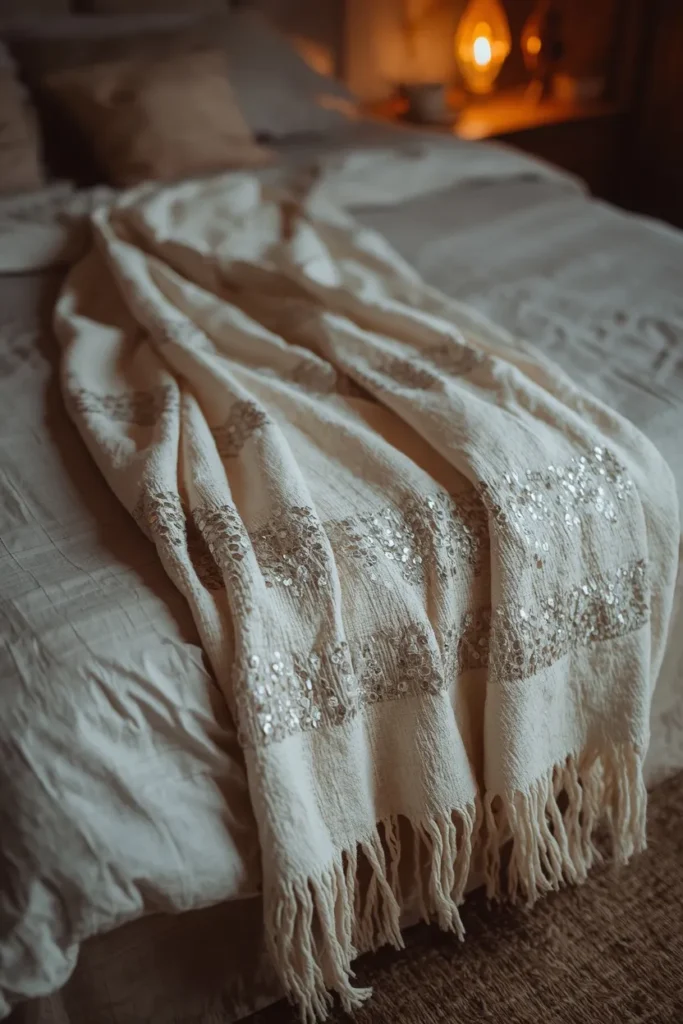
A heavy, sequin-studded cream blanket folded loosely over the foot of the bed. It catches light in dozens of tiny flashes — each one a hand-sewn sequin that Berber brides traditionally wore as part of a ceremonial garment. The texture is coarse and beautiful; the shimmer is subtle and not at all costume-y.
Why it works:
Handira blankets (also called Berber wedding blankets) are the sleeping world’s best-kept styling secret. They look expensive, they photograph exceptionally well (hello, Pinterest traffic), and they add a layer of cultural story to your room that no mass-produced throw can replicate.
The sequins catch lamplight rather than direct light, which means in the evening, the foot of your bed glows softly — one of those details that makes a bedroom feel truly special.
Expert Tip: Authentic handira blankets can be found on Etsy from Moroccan sellers. They range from $50 for small vintage pieces to $200+ for full-size antique versions. The vintage ones with irregular sequin placement are actually the most prized.
7. Use a Decorative Moroccan Tray as a Nightstand Vignette
What you’re looking at:
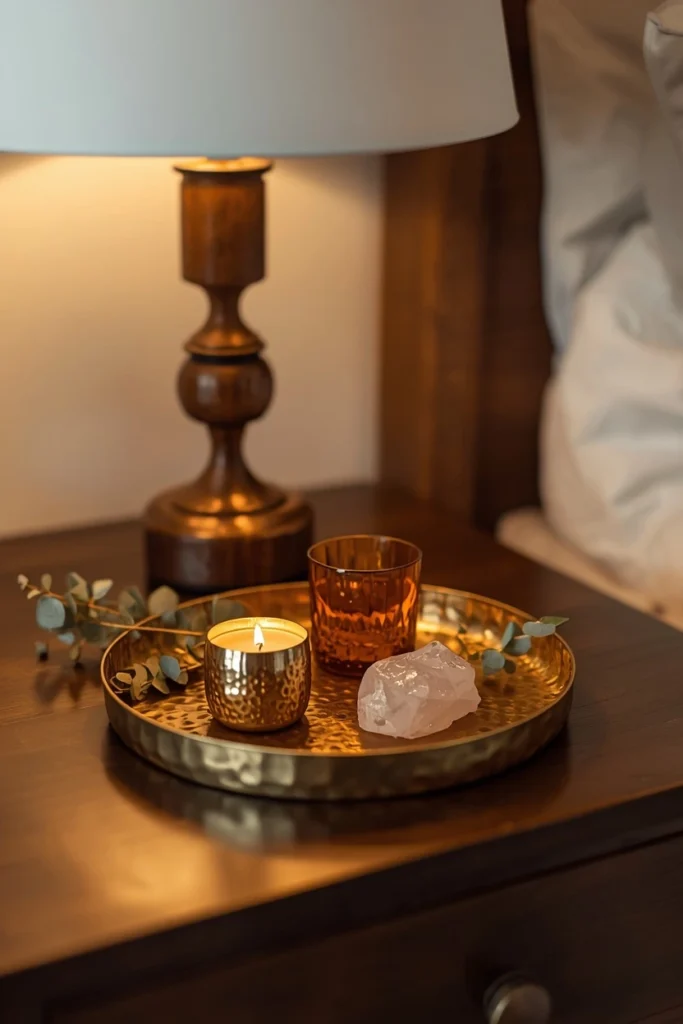
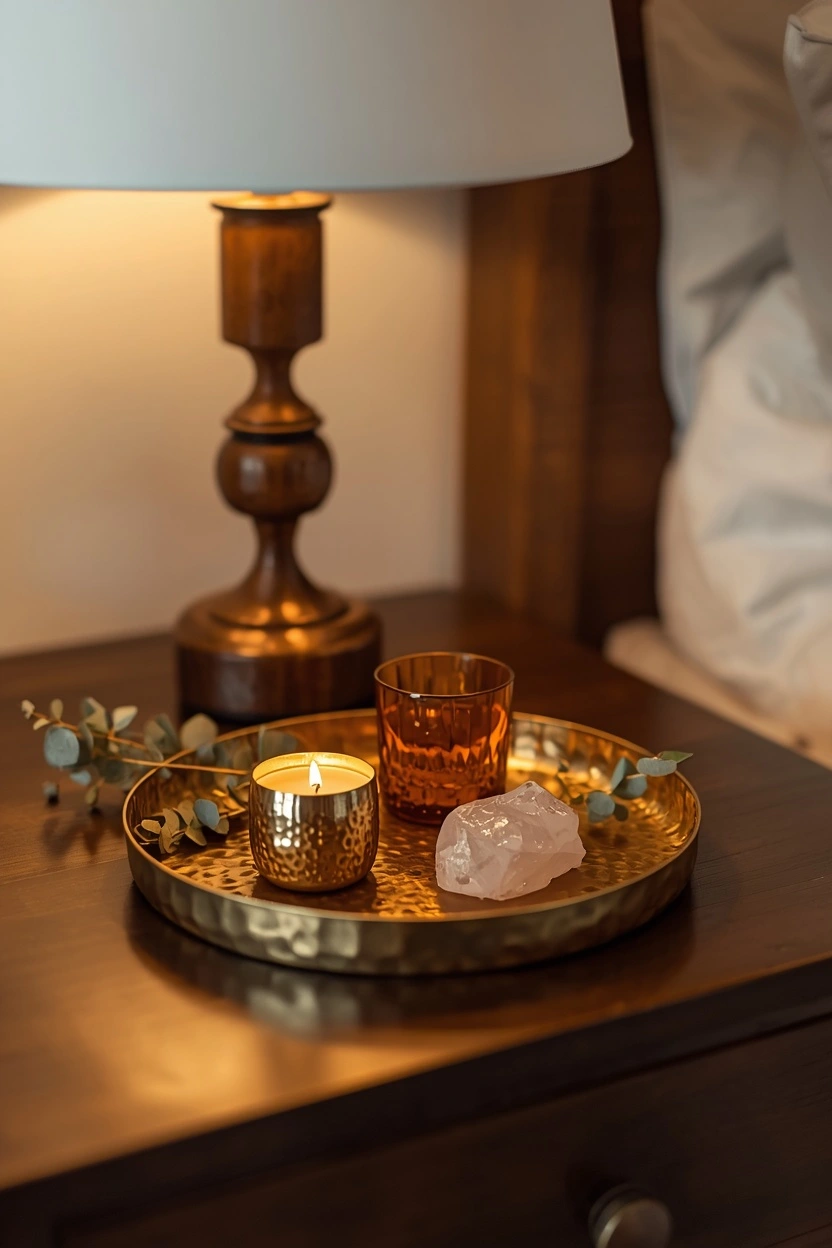
A hammered brass tray on a nightstand (or even directly on the floor beside the bed), styled with a small brass tea glass, a single candle, a rose quartz crystal, and a sprig of dried eucalyptus. It looks effortless. It took five minutes.
Why it works:
This is the idea nobody talks about enough, and it genuinely changes everything. Moroccan design is built around the concept of the tray — the tea service, the ritual, the gathering of beautiful small objects into one intentional space.
A styled tray creates a vignette, which is a designer term for a small, contained, visually complete scene. It tells your eye “look here — this is curated.”
Here’s what to include on your Moroccan nightstand tray:
- A brass or copper tea glass (even decorative, unfunctional ones work)
- One small candle in amber, amber, or cedar scent
- A single crystal, stone, or dried flower
- One small book with an interesting spine
- Optional: a tiny brass figurine or geometric ornament
Expert Tip: The tray itself matters. Look for hand-hammered brass with engraved arabesque patterns. These are easy to find on Amazon or Etsy for $20–$45 and immediately communicate “Moroccan” to anyone who sees them.
Now, avoid this mistake…
The most common Moroccan bedroom mistake is going too dark and too heavy all at once. Deep burgundy walls + dark wood furniture + heavy curtains = a cave, not a sanctuary.
Moroccan design uses rich color and texture against light — against plaster walls, airy fabric, and natural light. Keep your walls and larger furniture neutral if possible, and let your accessories carry all the richness.
Light neutrals + rich accessories = the sweet spot every time.
8. Layer Curtains in Sheer + Patterned Moroccan Fabric
What you’re looking at:
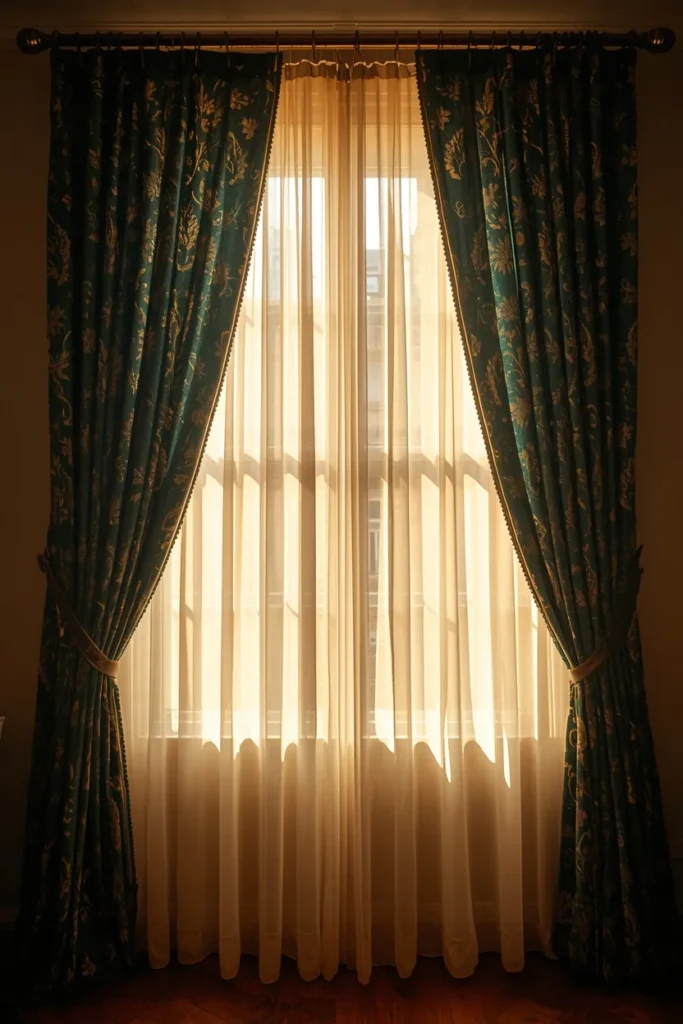
Two curtain layers hang at one window — a sheer ivory linen underneath that diffuses daylight into warm golden tones, and over it, panels in a deep teal or saffron with a subtle arabesque print. When they move, they reveal glimpses of the sheer beneath. The effect is romantic, layered, and entirely Moroccan.
Why it works:
Moroccan interiors are famously sensory — they play with light, texture, and movement. Layering curtains does all three simultaneously. The sheer catches and softens daylight. The patterned outer panel adds color and visual interest. When a breeze moves through the room, the effect is genuinely dreamy.
You don’t need to replace your existing curtain hardware for this. Most double curtain rods cost $15–$30 and install in minutes with standard brackets.
Colors to try:
- Teal + ivory
- Burnt orange + natural linen
- Deep cobalt + warm cream
- Saffron + soft white
Expert Tip: Look for “Indian block print” or “cotton voile” curtains — they hit the same bohemian, worldly note as traditional Moroccan fabric and tend to be significantly less expensive.
Also explore → Bedroom Curtain Ideas for even more styling inspiration
9. Style a Moroccan-Inspired Corner With Floor Cushions and a Low Tray Table
What you’re looking at:
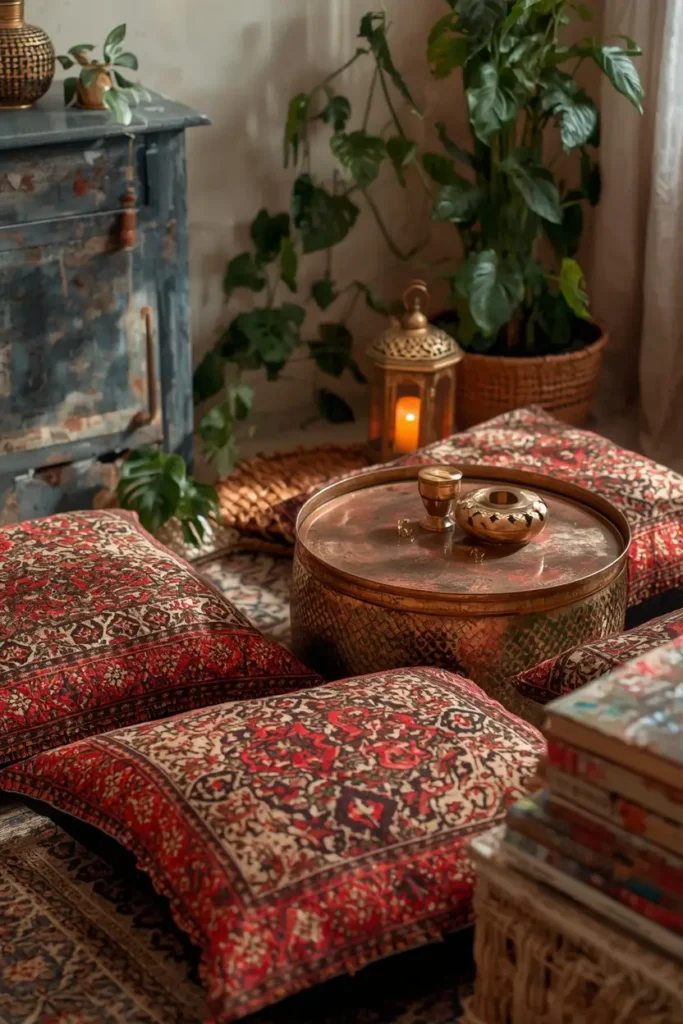
A bedroom corner transformed into a small sitting area: two or three large floor cushions in richly patterned fabric, arranged around a low circular tray table in hammered copper. A lantern sits beside them. A small plant — maybe a trailing pothos — hangs nearby. It looks like the beginning of a very good evening.
Why it works:
Moroccan culture centers around floor-level gathering — the tea ceremony, the communal meal, the conversation that stretches past midnight. Bringing that energy into a bedroom corner turns dead space into one of the most inviting spots in your home.
Floor cushions are incredibly easy to style because they have no fixed placement. Move them. Stack them. Lean them against the wall when you’re not using them. They’re the most flexible seating option in existence.
What you need:
- 2–3 large floor cushions (22×22 inches or larger) in Moroccan-print fabric
- 1 low circular tray table in brass, copper, or carved wood
- 1 lantern on the floor beside the setup
- Optional: a small indoor plant or trailing vine for organic softness
Expert Tip: IKEA’s ALSEDA stool ($30) makes a perfect Moroccan-adjacent low table alternative. Pair it with a hammered tray on top and the look comes together beautifully.
Here’s where it gets interesting…
All nine ideas so far have been individual elements. But there’s one final idea that ties everything together — and it’s the one most interior design blogs completely skip.
10. Use Scent and Sound to Complete the Sensory Experience
What you’re looking at:
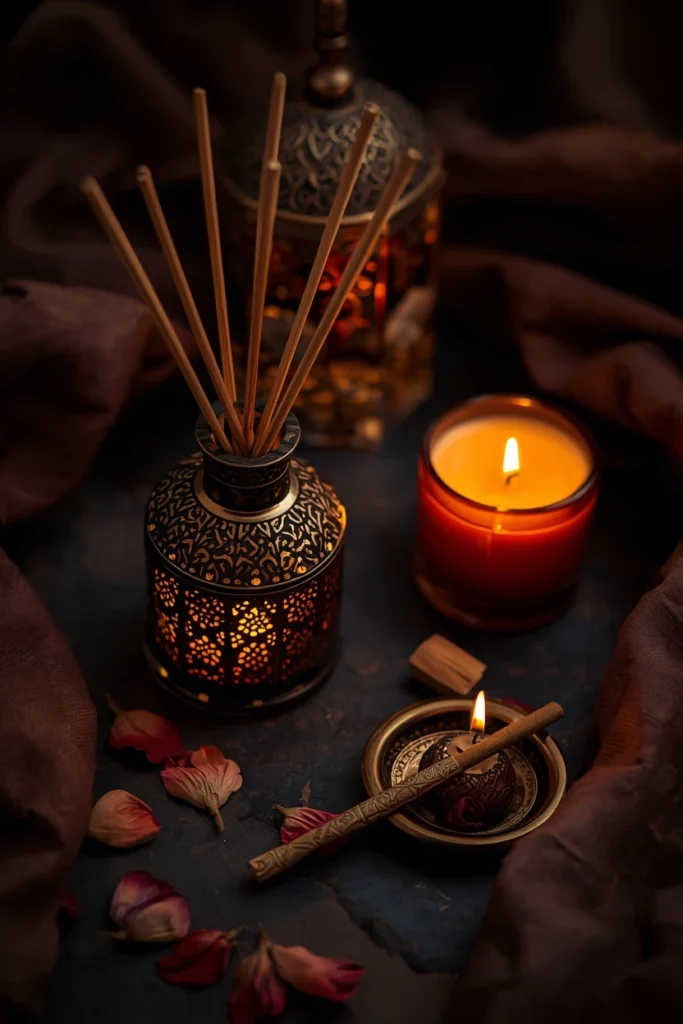
Nothing visual — and that’s exactly the point.
A Moroccan bedroom isn’t just seen. It’s experienced. The scent of oud, rose water, or amber incense. The soft sound of a Gnawa-influenced playlist drifting from a small speaker. These invisible layers are what transform a decorated room into an atmosphere.
Why it works:
The human brain associates memory and emotion with scent more strongly than with any other sense. A bedroom that smells like cedar and rose connects you to somewhere exotic, somewhere warm, somewhere unhurried — even if you’re 1,400 miles from the nearest medina.
Scents that feel Moroccan:
- Oud (deep, woody, resinous)
- Rose water (clean, floral, slightly powdery)
- Amber and sandalwood
- Argan and cedar
- Saffron (unusual but extraordinary in a room diffuser)
For scent delivery:
- A reed diffuser in an arabesque bottle for continuous subtle scent
- Beeswax or soy candles in amber-scented formulas
- An incense holder with coil incense for occasional ritual use
Expert Tip: Anthropologie, Nest, and Diptyque all make oud or rose-based home fragrances that are extraordinary but pricey. For a more accessible option, check Amazon for “Moroccan oud reed diffuser” — there are excellent options under $20.
💬 Does scent play a big role in how you feel in a room? I think it’s the most underrated design element — tell me what you think below!
Most people don’t know this…
You can have all ten of these elements in place and still miss the Moroccan feeling if you don’t address one thing: clutter. Moroccan design is layered, but it’s not chaotic. Every surface should feel intentional, not stuffed. If it doesn’t serve the vignette, store it somewhere else. Curated richness is different from visual noise — and the line between them is editing.
Your Moroccan Bedroom: A Quick-Start Checklist
Ready to start? Here’s where to begin, in order of impact:
- Start with the rug — it grounds the whole room immediately
- Add a lantern — lighting transforms mood faster than anything else
- Swap your pillow covers — instant pattern and color with zero commitment
- Layer a throw — a handira or Berber-style blanket at the foot of the bed is pure magic
- Build one styled tray — the nightstand vignette ties it all together
- Add a pouf — or two or three
- Hang a textile — above the bed or on a blank wall
- Layer your curtains — double up for that romantic Moroccan diffused light
- Create a corner moment — floor cushions and a low table turn dead space into destination
- Add scent — and let the atmosphere do the rest
Final Thoughts
You don’t need a renovation. You don’t need a landlord’s permission. You don’t need a massive budget.
Moroccan bedroom decor ideas are, at their heart, about accessibility — about creating warmth, richness, and story through objects you love, layered with intention. Every single idea in this list costs less than a dinner out and takes under an hour to implement.
Start with one. Then add another. Then step back and watch your bedroom become somewhere you actually want to be.
Loved this post? You’ll probably also love browsing our full guide on Cozy Bedroom Ideas — filled with even more ways to make your bedroom feel like the warmest room in the house.
And if you’re working with a small space, don’t miss our round-up of Small Bedroom Storage Ideas — because a Moroccan bedroom should feel curated, not cramped.
Happy decorating. ✨
Pin this post for later and share it with someone whose bedroom could use a little magic.