15 Minimalist Room Design Ideas That Actually Feel Cozy Not Cold
This article was created in line with Trends Oraa’s research and content standards.
Your space should calm you — not exhaust you.
Too much stuff. Nowhere to breathe. That feeling when you walk into your own room and feel more stressed than when you left? Yeah, we’ve all been there.
The good news? You don’t need a bigger apartment or a bigger budget to fix it. You just need the right minimalist room design ideas — ones that actually feel warm and livable, not like a sterile hotel lobby.
Keep reading, because idea #7 alone completely changed how I think about small living rooms.
👉 You might also love our viral guide on living room decor ideas packed with easy, budget-friendly transformations.
Before we dive in, let’s get one thing straight: minimalist room design doesn’t mean boring. It doesn’t mean cold, white, and empty. Done right, a minimalist room is cozy, intentional, and deeply personal.
It’s about keeping what you love — and letting go of what drains you.
Ready? Let’s get into the 15 best minimalist room design ideas that are trending right now.
What Is Minimalist Room Design, Really?
At its core, minimalist room design is about purposeful simplicity. Every piece of furniture earns its place. Every object has a function — or brings you genuine joy.
It’s not a rigid rulebook. It’s a feeling.
Here’s what a truly great minimalist room has:
- A neutral, calming color palette
- Furniture with clean, simple lines
- Smart storage that hides the clutter
- Carefully chosen textures for warmth
- Breathing room — negative space that lets the eye rest
Now, onto the ideas. Scroll slowly — there’s a lot of good stuff here.
1. The Warm Neutral Foundation
Start With a Palette That Hugs You Back
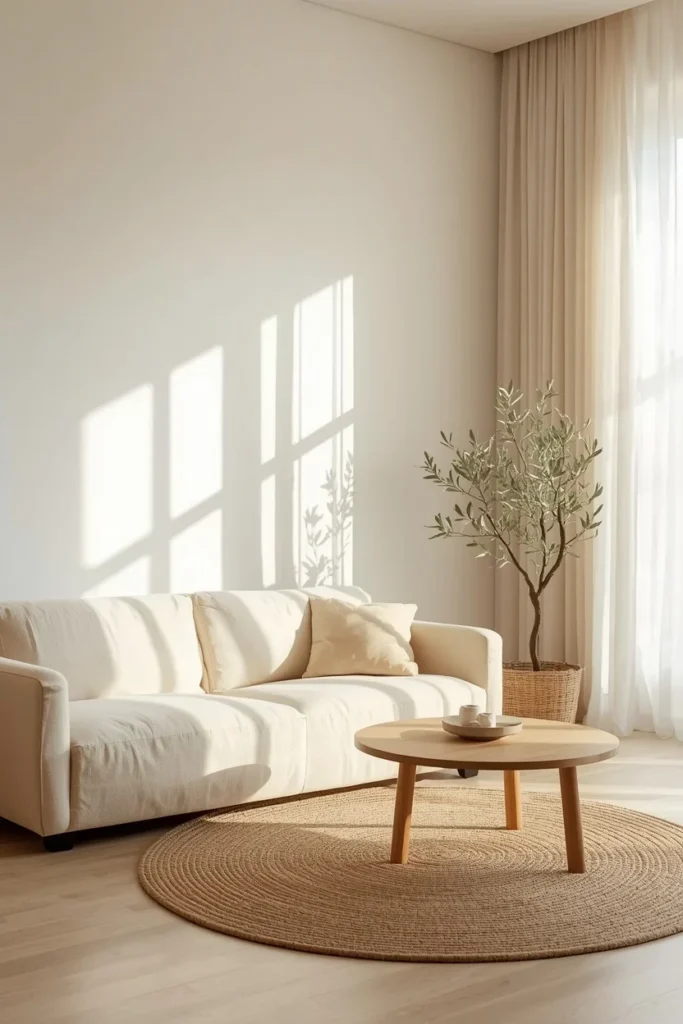
Forget stark white. The best minimalist rooms start with warm neutrals — think creamy beige, soft linen, warm taupe, and gentle greige. These shades make a room feel like a deep exhale.
Picture a living room with warm white walls, a low cream sofa, and a natural jute rug anchoring the space. A single wooden coffee table. A potted olive tree in the corner. That’s it. And it feels incredible.
Expert Tip: Layer your neutrals. Use three tones from the same warm family — one for walls, one for large furniture, one for textiles. The subtle variation is what makes the room feel rich, not flat.
Why it works: Warm neutrals eliminate visual noise. Your brain stops processing competing colors and simply relaxes. Studies in environmental psychology consistently show that neutral, low-stimulation environments reduce cortisol levels. Your room can literally calm your nervous system.
2. The Low-Profile Furniture Trick
Go Low to Make Your Room Feel Bigger
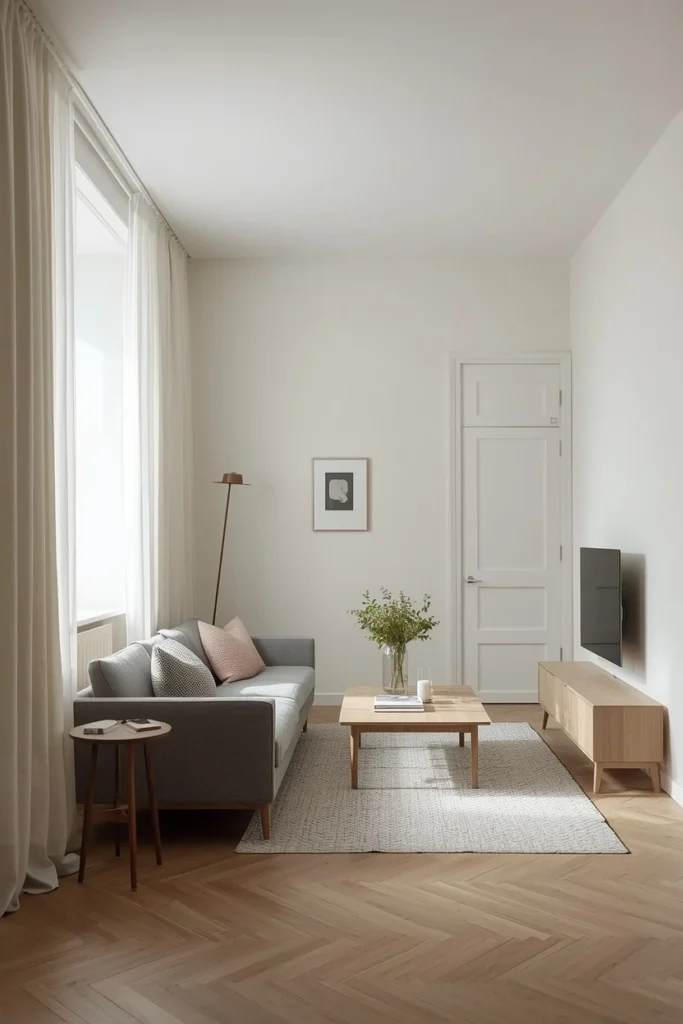
One of the most underused tricks in minimalist living room small spaces design? Low-profile furniture. When your sofa, bed, and shelving sit closer to the floor, the ceiling feels higher, the room breathes more freely, and the whole space opens up.
Think: a low platform bed with a simple slatted frame. A streamlined sofa no taller than 28 inches. A coffee table that sits at knee height. The visual effect is dramatic — even in a tiny apartment.
Expert Tip: Pair low furniture with tall, simple window treatments that go floor to ceiling. This draws the eye upward and amplifies the airy feeling.
Why it works: The human eye reads negative space above furniture as “breathing room.” The more space between your furniture tops and the ceiling, the larger your room feels. In compact apartments, this trick can make a 400 sq ft studio feel like a proper living space.
🔗 Also check out: Small Bedroom Layout Ideas Smart Space-Saving Plans for Style and Function
3. The Texture-Over-Color Rule
Make It Cozy Without Adding Visual Clutter
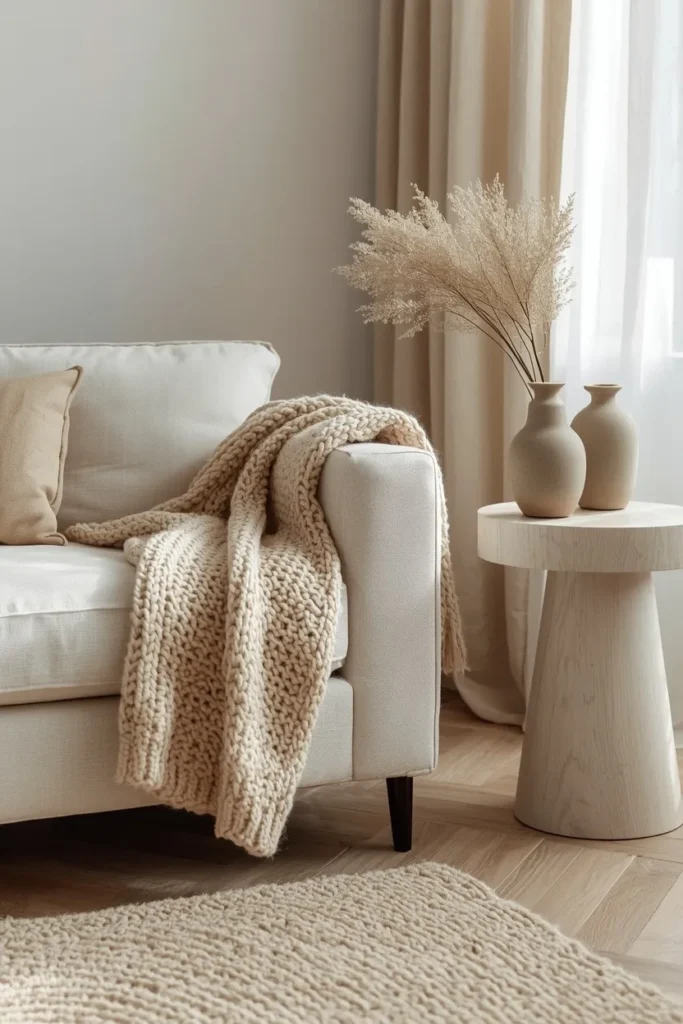
Here’s where it gets interesting. When you strip out pattern and bold color from a room, you can’t just leave it bare — or it will feel cold. The secret is texture.
Imagine: a cream linen sofa layered with a chunky knit throw. A flat-weave wool rug under smooth white oak floors. Matte ceramic vases next to a glossy coffee table. Linen curtains with a subtle ripple. All in the same tonal family, but rich with tactile contrast.
Expert Tip: Aim for at least 4 different textures in any minimalist living room — rough, smooth, soft, and woven. This sensory variety signals comfort to your brain even when the color palette is quiet.
Why it works: Texture creates visual interest without the chaos of pattern or color. It’s the key to achieving that elusive cozy minimalist look — warm and inviting, but clean and calm.
But here’s the important part…
Most people stop at texture and forget about scale. A beautifully textured room with furniture that’s all the same size feels flat. Mix large anchor pieces (your sofa, your bed) with medium and small accents. That variety in scale is what makes a room feel curated, not decorated by committee.
4. The Statement Single Art Piece
One Bold Piece Beats a Gallery Wall Every Time
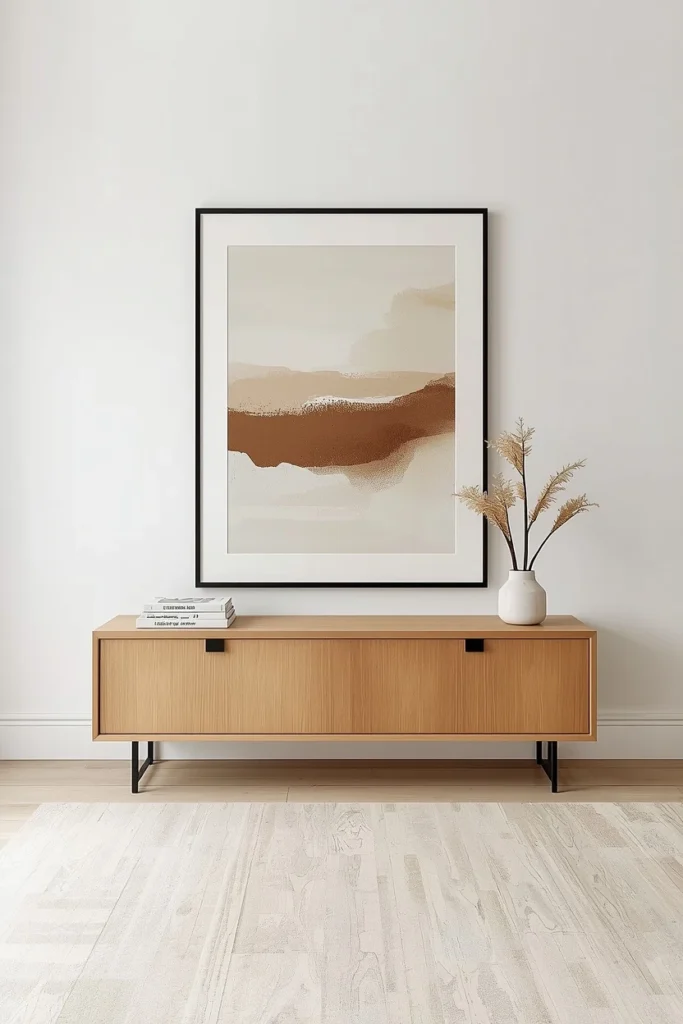
In minimalist room decor, less really is more when it comes to wall art. Instead of filling a wall with a gallery of mismatched frames, choose one large, simple piece that speaks to you.
Picture a living room with a single oversized abstract print — muted earth tones, generous white mat, a thin black frame. Nothing else on the walls. Just that one piece, perfectly centered above a low console table.
Expert Tip: The art should be at least 2/3 the width of the furniture below it. Undersized art floating on a big wall is one of the most common (and easy to fix) design mistakes.
Why it works: A single statement piece commands attention and creates a focal point without overwhelming the space. It also has a practical bonus — it’s cheaper to buy one great print than a dozen mediocre ones.
Which design style speaks to you most — warm and earthy, or cool and crisp? Drop your answer in the comments — I’d love to see what everyone’s going for!
5. Hidden Storage, Everywhere
Because Clutter Is the Enemy of Calm
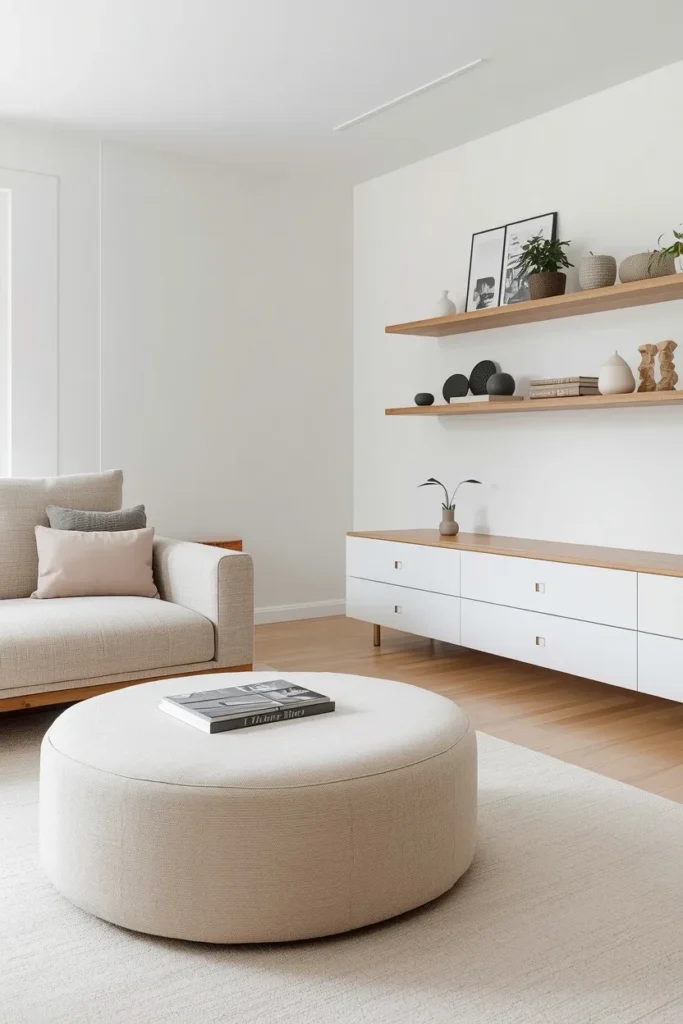
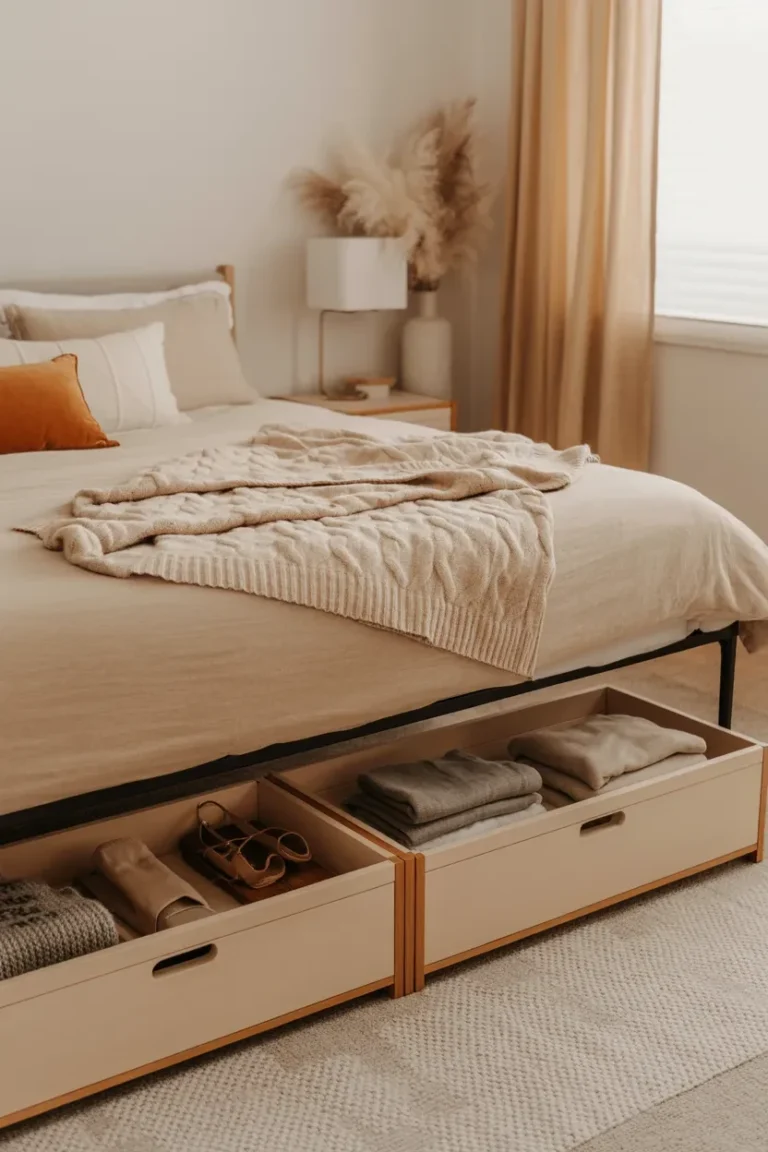
A truly minimalist home isn’t magically neat — it’s strategically organized. The difference is thoughtful, hidden storage. Ottoman coffee tables with lift-up lids. Floating shelves that hold only a curated few items. Beds with built-in drawers. Benches at the foot of the bed that open to reveal blanket storage.
This is the minimalist room idea that makes the biggest practical difference, especially in apartment living.
Expert Tip: Do a “visibility audit” of your room. Any item visible from the doorway that doesn’t serve a decorative purpose? It needs a home inside something. Closed storage is your best friend.
Why it works: Visual clutter is mentally exhausting — your brain registers every object in your field of view as an unfinished task. Hiding everyday items behind closed doors or inside furniture gives your mind actual rest. This is why minimalist spaces feel so peaceful even when they’re not perfectly tidy.
🔗 Need ideas for smart storage? Check out: Space-Saving Furniture Ideas
6. The Warm Wood Accent
One Material That Changes Everything
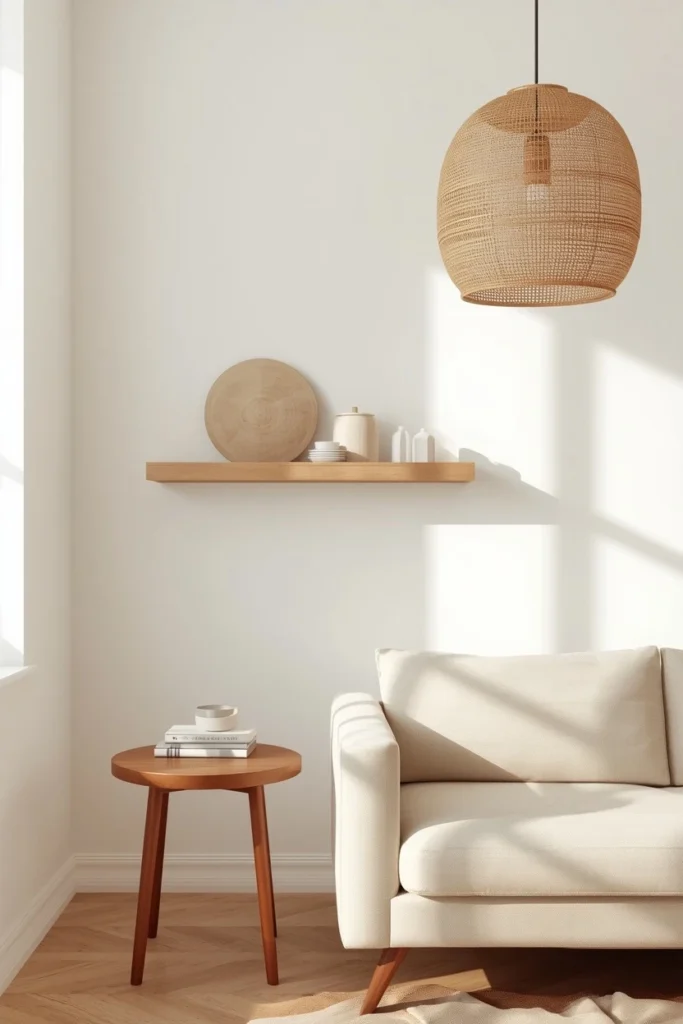
Raw, natural wood is the fastest way to make a minimalist room feel human and lived-in. A single oak shelf. A walnut side table. A rattan pendant light. A driftwood sculpture on the mantle. Just one or two wood elements bring organic warmth to an otherwise neutral space.
The key is to choose one wood tone and stick with it throughout the room — don’t mix light pine with dark walnut. Consistency is everything in minimalist design.
Expert Tip: Blonde woods (oak, maple, ash) read lighter and more Scandinavian. Darker woods (walnut, teak) feel warmer and more grounded. Choose based on your room’s light levels — lighter wood in darker rooms, and vice versa.
Why it works: Wood is inherently biophilic — our brains are wired to respond positively to natural materials. Even a small wood element triggers a sense of calm and connection to the natural world.
7. The Cozy Minimalist Living Room Formula
The Layout That Always Works
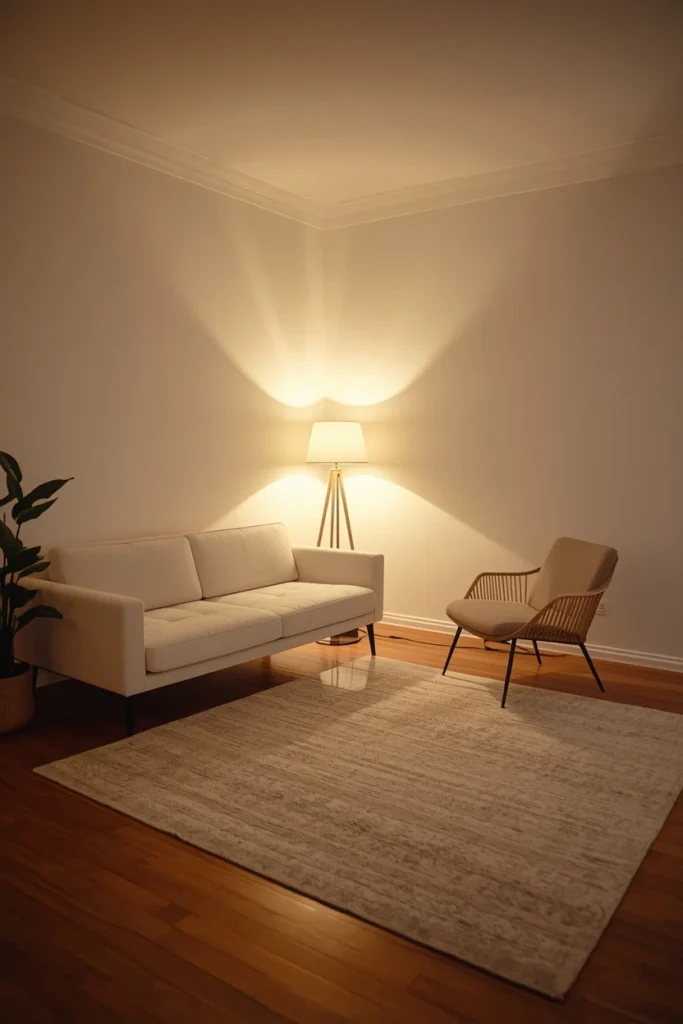
This is the one I promised you earlier — and it delivers.
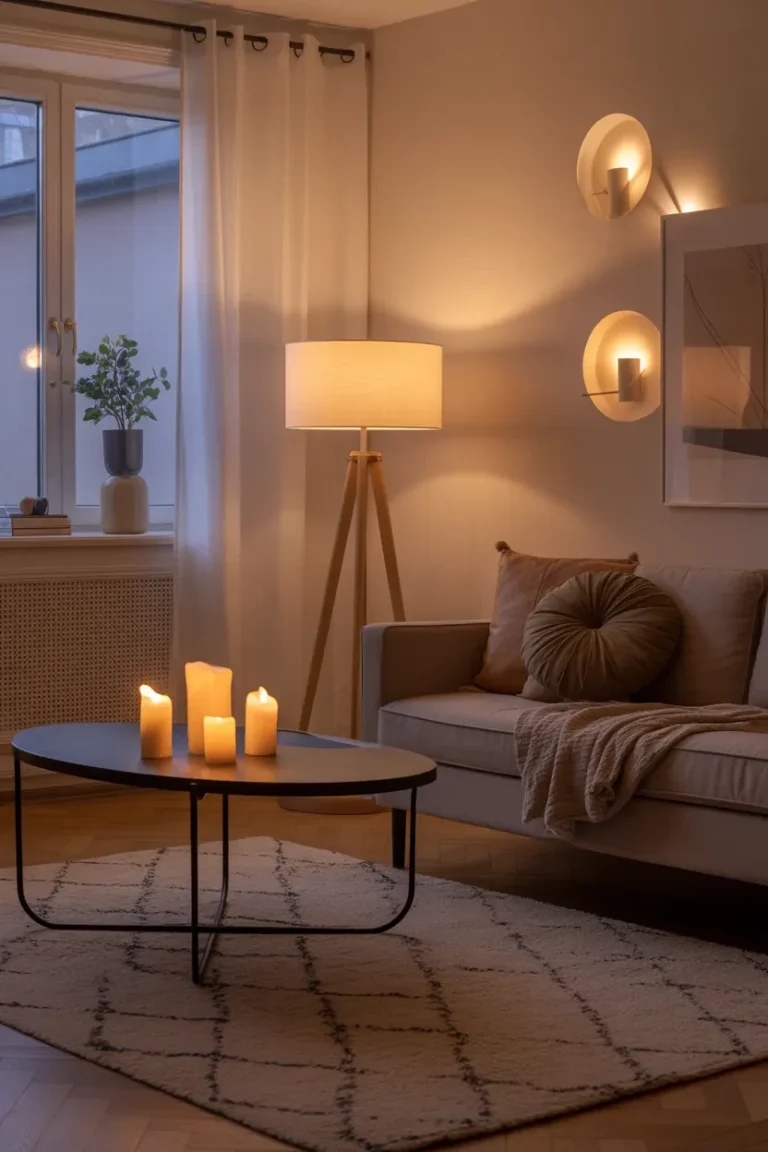
The cozy minimalist living room formula works like this: one low sofa + one accent chair at an angle + one rug that defines the seating area + one light source at each level (ceiling, floor, and table).
That’s the whole recipe.
The sofa goes against the main wall. The accent chair angles toward it, creating conversation. The rug (large enough that all furniture legs sit on it) anchors the zone. One pendant or flush-mount light overhead. One floor lamp in the corner. One table lamp or candle on the coffee table.
Expert Tip: The rug is non-negotiable. In an open-plan apartment, a rug is what makes the living room feel like a room rather than a section of floor. Go bigger than you think you need.
Why it works: This formula creates layered, multi-level light (which is inherently cozy), a clear seating zone (which reads as intentional), and a balanced composition. It works in a 10×10 room and a 20×20 room alike.
Most people don’t know this…
The number one reason a minimalist room feels cold is single-source lighting. One overhead light flattens everything. Layer your light sources at three heights and any room instantly gets warmer, moodier, and more inviting.
🛒 Buyer’s Guide: Building a Minimalist Room on Any Budget
Here’s a real-talk breakdown of what to spend on (and what to skip) when designing a minimalist room decor scheme.
Budget Tier: $200–$500
At this level, focus on what you remove rather than what you buy. Clear the clutter first — it costs nothing and creates an immediate transformation. Then:
- Buy: One quality throw blanket ($40–$80), a simple jute or cotton rug ($60–$150), a few linen pillow covers ($20–$50), and one piece of affordable art from Society6 or Desenio ($30–$100)
- DIY: Declutter shelves, paint an accent wall in a warm neutral
Mid-Range Tier: $500–$1,500
Now you can upgrade furniture pieces:
- Invest in: A minimalist coffee table (IKEA LACK or similar, $50–$200), a simple floor lamp ($80–$200), quality linen curtains ($100–$300), and floating wall shelves ($50–$150)
- Worth it: A large area rug — this single item does more for a room than almost anything else
Investment Tier: $1,500+
This is where you upgrade the anchor pieces:
- Invest in: A quality low-profile sofa ($800–$2,000), a real wood side table ($200–$500), pendant lighting ($150–$400)
- Always worth it: Quality over quantity. One beautiful piece beats five mediocre ones, every single time
What to NEVER Spend Money On in a Minimalist Room:
- Decorative objects you don’t love (clutter is clutter, even if it’s “aesthetic”)
- Trendy accent colors that you’ll be tired of in a year
- Cheap curtains that let in too much light (they ruin the whole mood)
8. Greenery as the Only Decoration
One Plant Can Do the Work of Ten Accessories
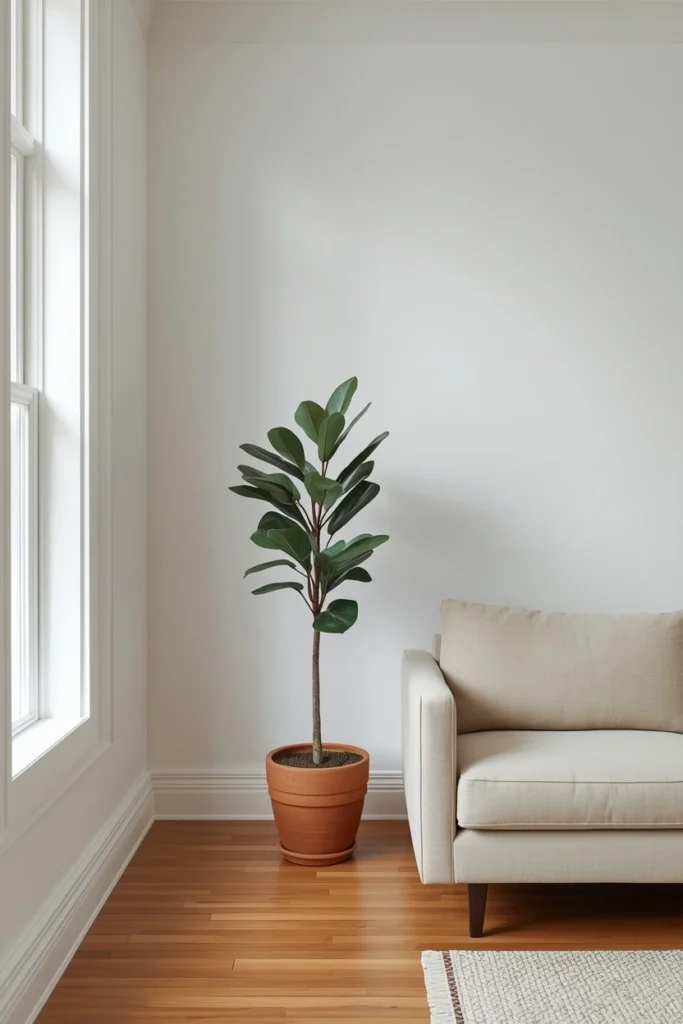
In a truly minimal room, a single healthy plant can be the entire decorating scheme. A tall fiddle-leaf fig in a simple terracotta pot. A monstera on a low wooden stool. A row of small succulents on a windowsill.
Plants bring life, color, and texture without visual noise.
Expert Tip: Choose one large plant rather than many small ones. A 5-foot fiddle-leaf fig makes a statement. Twelve tiny cacti just create clutter.
Why it works: Biophilic design is well-documented — humans are calmer, happier, and more productive around living plants. In a minimalist scheme, plants also provide the one pop of organic color that stops the room from feeling sterile.
🔗 Love plants in your decor? Don’t miss: Houseplant Pot Ideas
9. The Floating Shelf Moment
Walls That Work Without Being Overwhelming
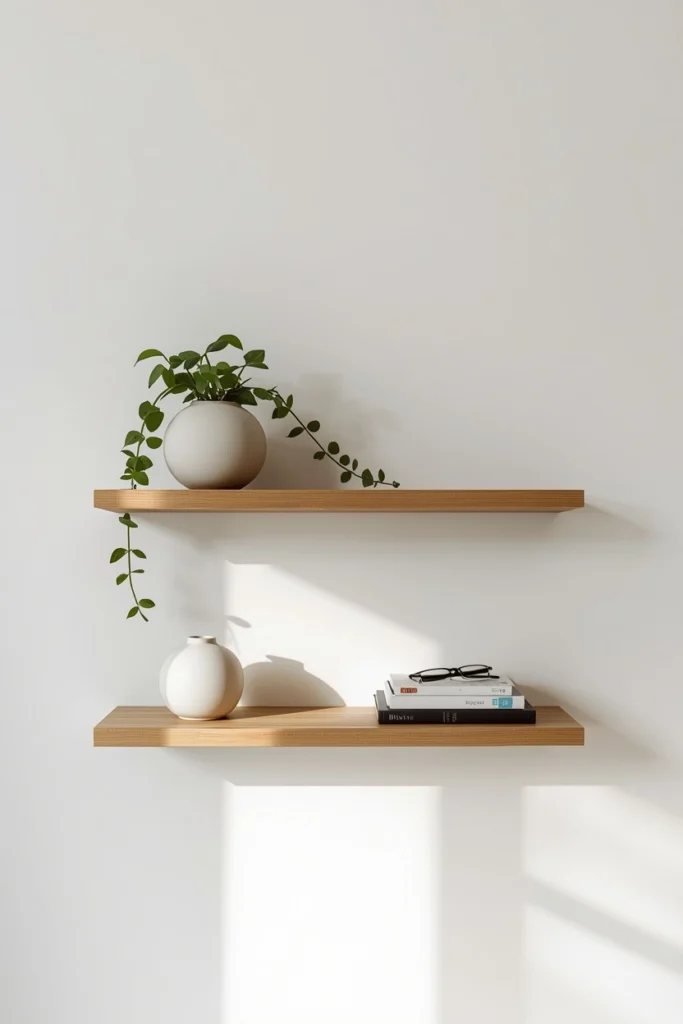
In minimalist rooms, walls should breathe. That means no gallery walls, no overcrowded shelves, no decorative plates. Instead, try this: two or three floating shelves, each holding only 3–5 objects max.
Think: one small plant, one sculptural vase, one stack of books, and empty space. That’s it.
Expert Tip: Style shelves with the “rule of three” — group odd numbers of objects, vary heights, and always include at least one plant, one personal object, and one book. Leave 40% of the shelf empty.
Why it works: Overcrowded shelves are one of the biggest reasons rooms feel chaotic. Sparse, intentional shelf styling is one of the easiest ways to instantly make a space feel more elevated and designer.
10. The Linen Curtain Upgrade
The Single Swap That Makes a Room Look Expensive
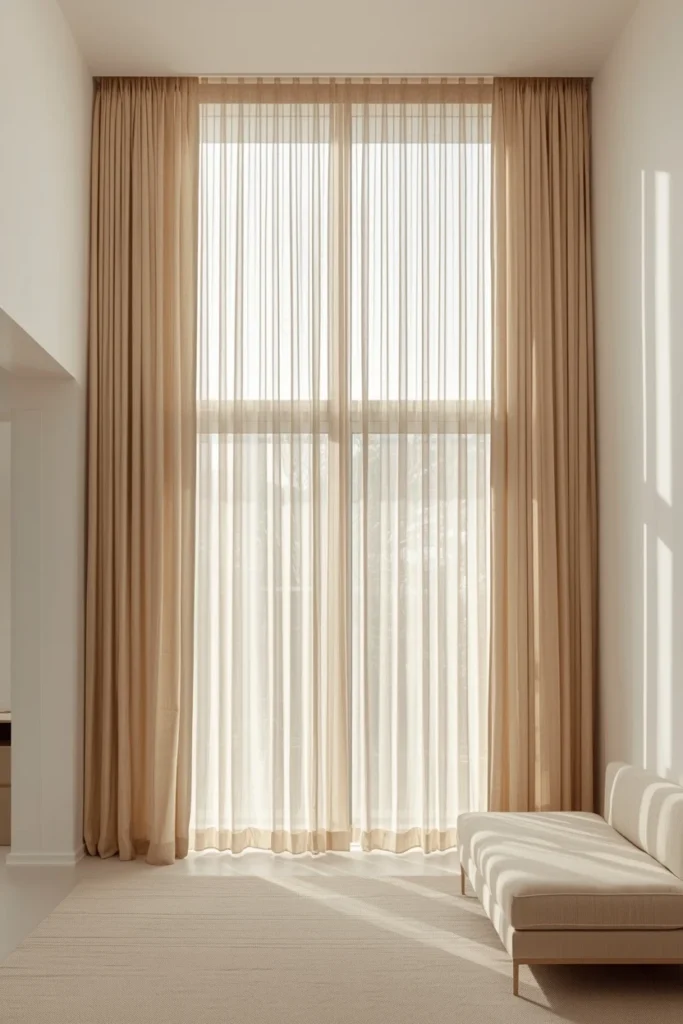
Replace whatever curtains you have right now with floor-to-ceiling linen drapes in a warm white or natural oat tone.
This is the single highest-impact, lowest-cost upgrade in all of minimalist home design. Linen curtains filter light beautifully, add texture, make ceilings look taller, and instantly make a room look like it belongs in an interior magazine.
Expert Tip: Mount the curtain rod as close to the ceiling as possible — at least 4 inches above the window frame, ideally at ceiling height. Let the curtains just brush the floor. This illusion of height is remarkable.
Why it works: Curtains that hang from ceiling to floor visually elongate the room and soften every hard line. The gentle filtering of light through linen is also one of the most flattering, cozy lighting effects you can achieve without spending a penny on actual light fixtures.
Now, avoid this mistake…
Hanging curtains just above the window frame is one of the most common design mistakes — it makes windows look small and rooms look low. Always hang high, always hang wide (extend the rod 6–12 inches beyond the window on each side), and always let them pool slightly or just touch the floor.
11. The Minimalist Bedroom: Nightstand Discipline
Two Items Maximum on Your Nightstand
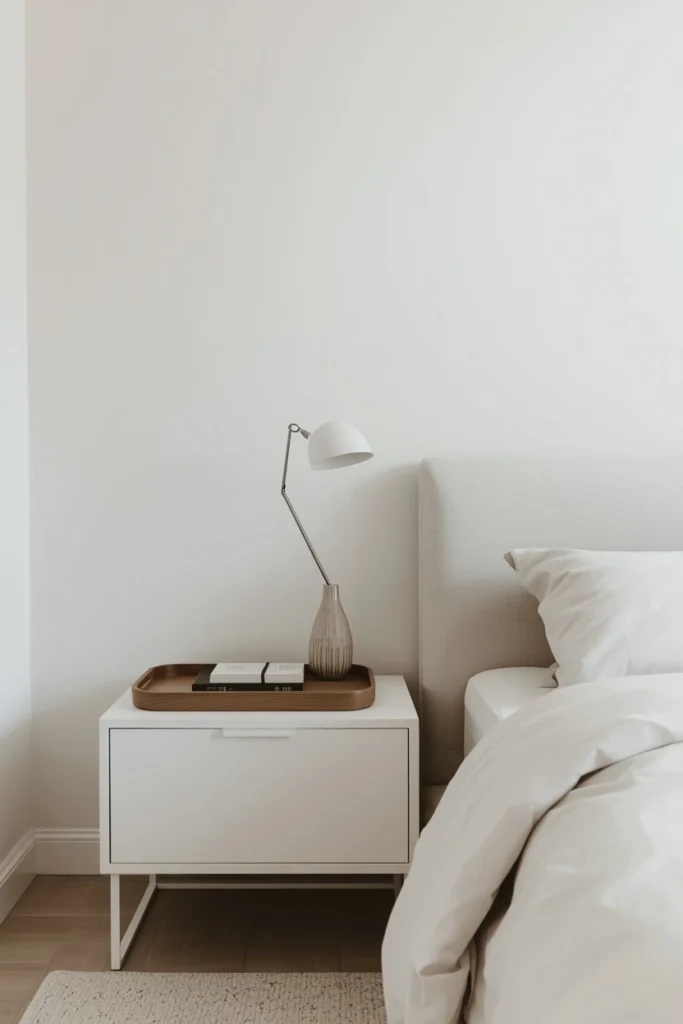
A truly restful minimalist room starts with the nightstand. Limit yourself to two items: one lamp and one personal item (a book, a candle, a glass of water). That’s it.
No charging cables snaking everywhere. No stack of unread magazines. No random objects that don’t belong.
Expert Tip: Use a small tray on your nightstand to corral items. Even if you have three small things, a tray groups them into one visual “item” and stops the surface from looking cluttered.
Why it works: Your bedroom is where your brain is supposed to downshift. A visually busy nightstand is one of the last things you see before sleep and the first thing you see when you wake. Keep it calm.
12. Embrace Empty Corners
Nothing Is a Design Choice
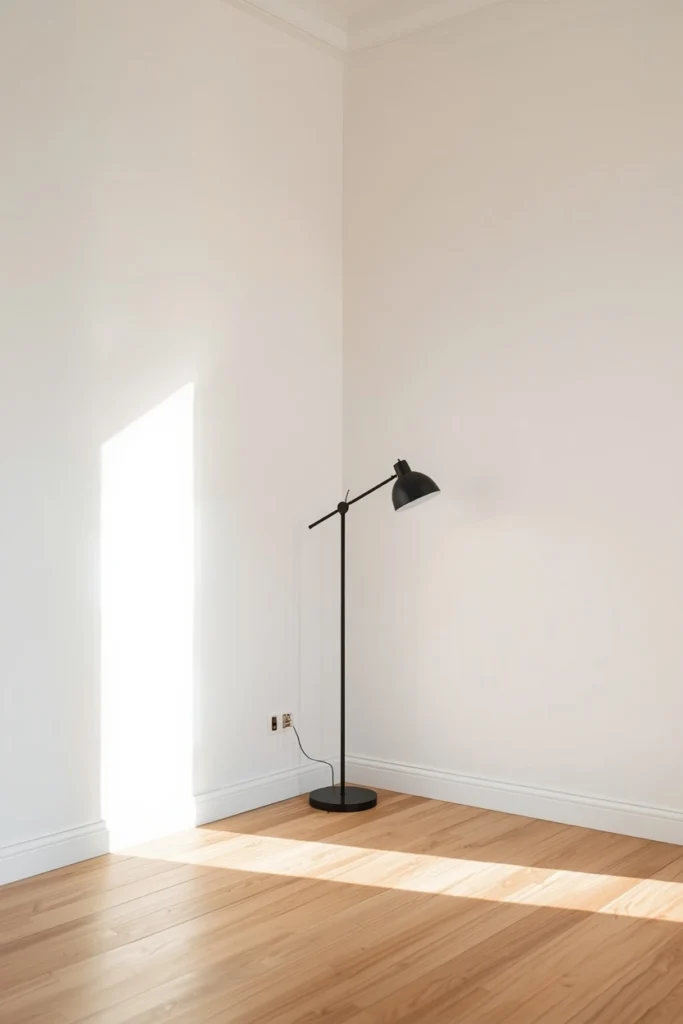
Most people feel compelled to fill every corner of a room. A plant stand here, a floor lamp there, a random accent chair in that weird spot. In minimalist design, an empty corner is a feature, not a problem.
That said, if a corner does need something, one tall plant or one slim floor lamp is perfect. Nothing more.
Expert Tip: Before adding anything to a corner, stand in the doorway and look at the room. If the corner feels restful and balanced, leave it alone. Your instinct to fill it is clutter impulse, not design instinct.
Why it works: Empty corners create a visual rest stop for the eye. In a busy world, a room with breathing room feels like a sanctuary. Don’t fill the silence.
What’s your biggest challenge when designing your room — too much stuff, not enough budget, or just not knowing where to start? Let me know in the comments!
13. The Monochromatic Accent
Pick One Color. Use It Exactly Once.
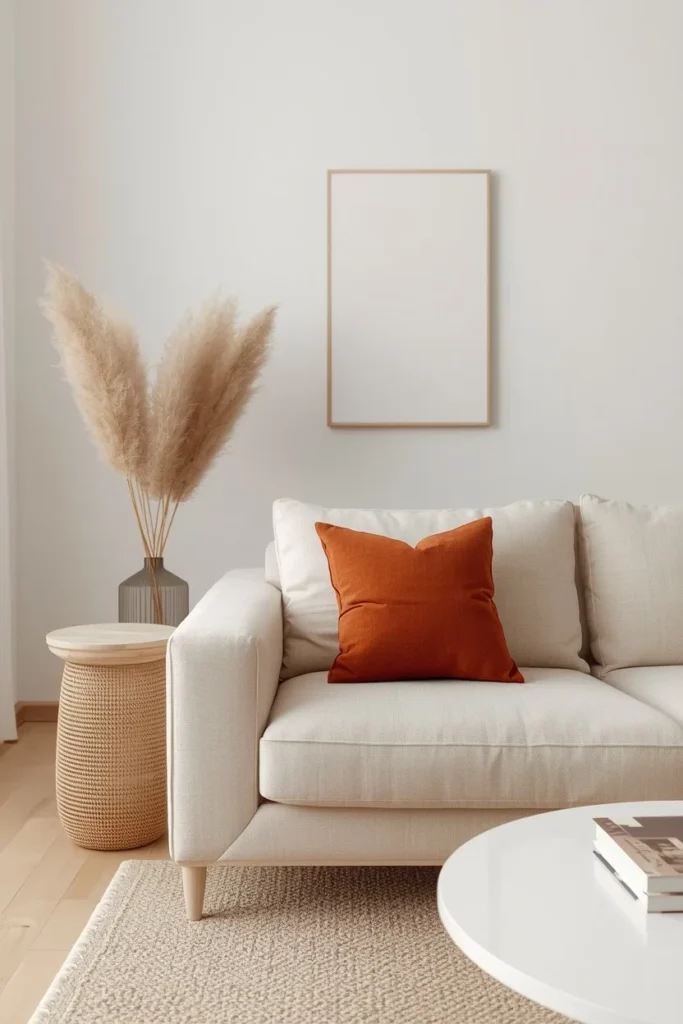
In a neutral minimalist room decor scheme, one single accent color can do extraordinary work. A single rust-orange throw pillow. One sage green ceramic vase. One dusty blue lampshade. Just one hit of color — and nothing else.
This approach is called a monochromatic accent, and it’s one of the most sophisticated tools in minimal design.
Expert Tip: Choose your accent color from nature — terracotta, sage, dusty rose, warm olive, slate blue. These earth-adjacent tones always work in a neutral room because they feel organic rather than artificial.
Why it works: One accent color creates focal interest without competition. The eye is immediately drawn to it, tours the room, and comes back to rest. It’s a visual anchor — intentional and calming.
14. The Scent Layer
The Element Nobody Talks About
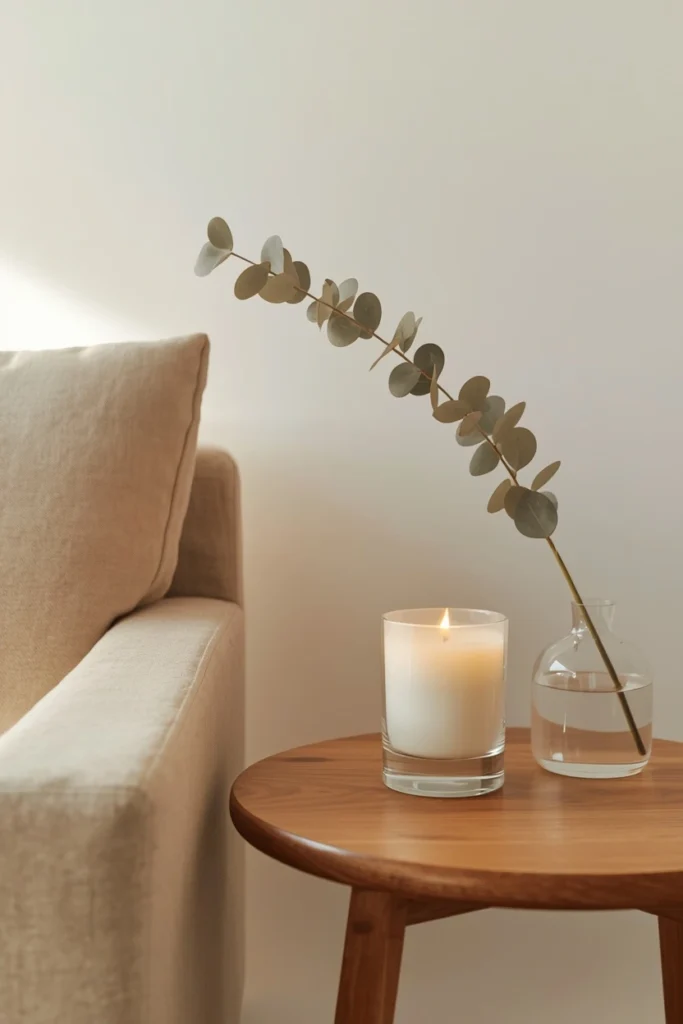
A minimalist room isn’t just visual. It’s a full sensory experience — and scent is one of the most powerful mood regulators we have.
One simple reed diffuser, a candle in a clean glass vessel, or a small bouquet of eucalyptus in a vase. That’s all it takes to make a room feel complete.
Expert Tip: Choose a single, simple scent for each room: cedar or sandalwood for a bedroom, linen or clean cotton for a living room, eucalyptus or citrus for a bathroom. Consistency is key — competing scents are as chaotic as competing colors.
Why it works: Scent bypasses the rational brain and goes straight to the limbic system — the emotional, memory-making part of your mind. A signature room scent makes your space feel genuinely personal, calm, and yours in a way that decor alone can’t replicate.
15. The Negative Space Principle
When In Doubt, Take Something Out
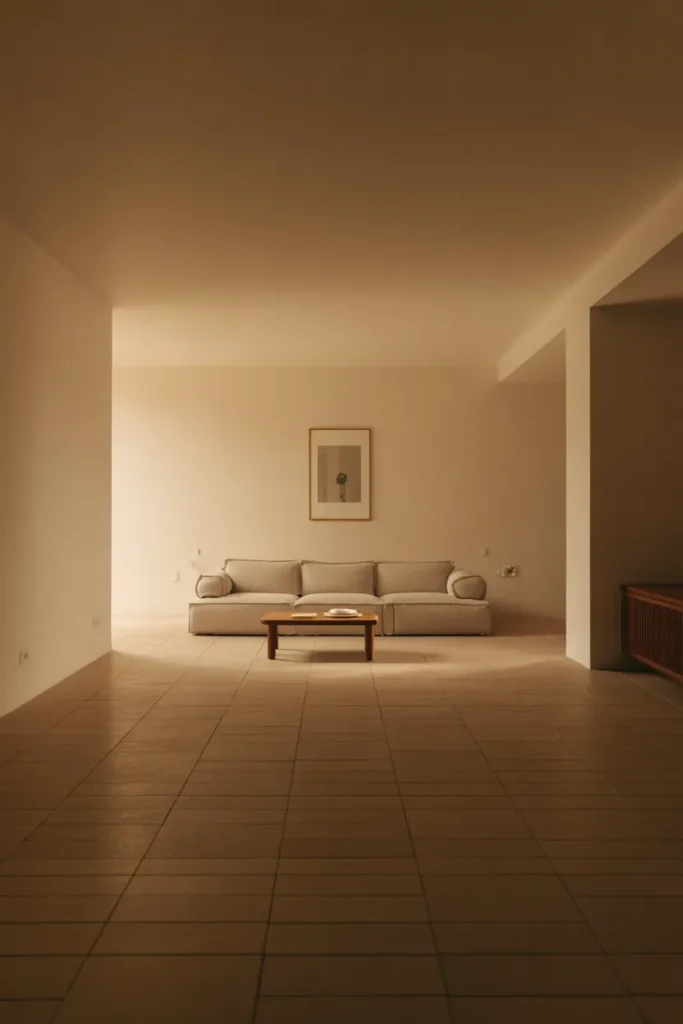
This is the most important idea in the entire list, and the simplest:
When you’re decorating a room, the last step should always be subtraction.
Step back. Look at the room. Then remove one more thing. And another. Keep going until removal would leave the room feeling unfinished rather than calmer.
That threshold — right before it tips into “too bare” — is the sweet spot of minimalist room design.
Expert Tip: Take a photo of your room on your phone and look at it in black and white. Without color to distract, you’ll instantly see what’s creating visual clutter and what can go.
Why it works: We are psychologically biased toward addition — we almost always decorate by adding, never by removing. But in minimalism, the edit is the artistry. The empty space is the design. Learning to stop adding is the real skill, and it’s worth practicing.
Here’s where it gets interesting…
The rooms that feel most luxurious in the world — the ones that stop you cold in an interior design magazine — almost always have less in them than you’d expect. The luxury isn’t in the stuff. It’s in the space around it.
Quick Recap: 15 Minimalist Room Design Ideas
- Warm neutral foundation — cream, linen, taupe
- Low-profile furniture for an airy, spacious feel
- Texture over color — layer tactile variety
- One statement art piece instead of a gallery wall
- Hidden storage at every opportunity
- Warm wood accents — one tone, used consistently
- The cozy minimalist living room formula
- Greenery — one large plant over many small ones
- Disciplined floating shelf styling
- Floor-to-ceiling linen curtains
- Nightstand discipline — max two items
- Embrace empty corners
- One monochromatic accent color
- A scent layer for the full sensory experience
- Always subtract one more thing
Final Thoughts: Your Minimalist Room Starts Today
You don’t need a renovation. You don’t need a big budget. You need a clear eye, a willingness to let things go, and a handful of intentional choices.
Start with one room. Pick one idea from this list. Maybe it’s the linen curtains. Maybe it’s clearing your nightstand. Maybe it’s pulling one piece of furniture out of a corner and seeing how it feels.
The best minimalist room design is the one that makes you exhale when you walk in.
🔗 Ready to keep going? Check out these next:
- Cozy Living Room Ideas — for when you want warmth and comfort front and center
- Small Living Room Ideas (7 that actually work) — brilliant layouts for compact spaces
- Apartment Organization Ideas — because a calm room starts with a clear-out
- Calm Bedroom Ideas — take the minimalist magic into your sleep space
What’s your favorite idea from this list? Tell me in the comments — I read every single one!