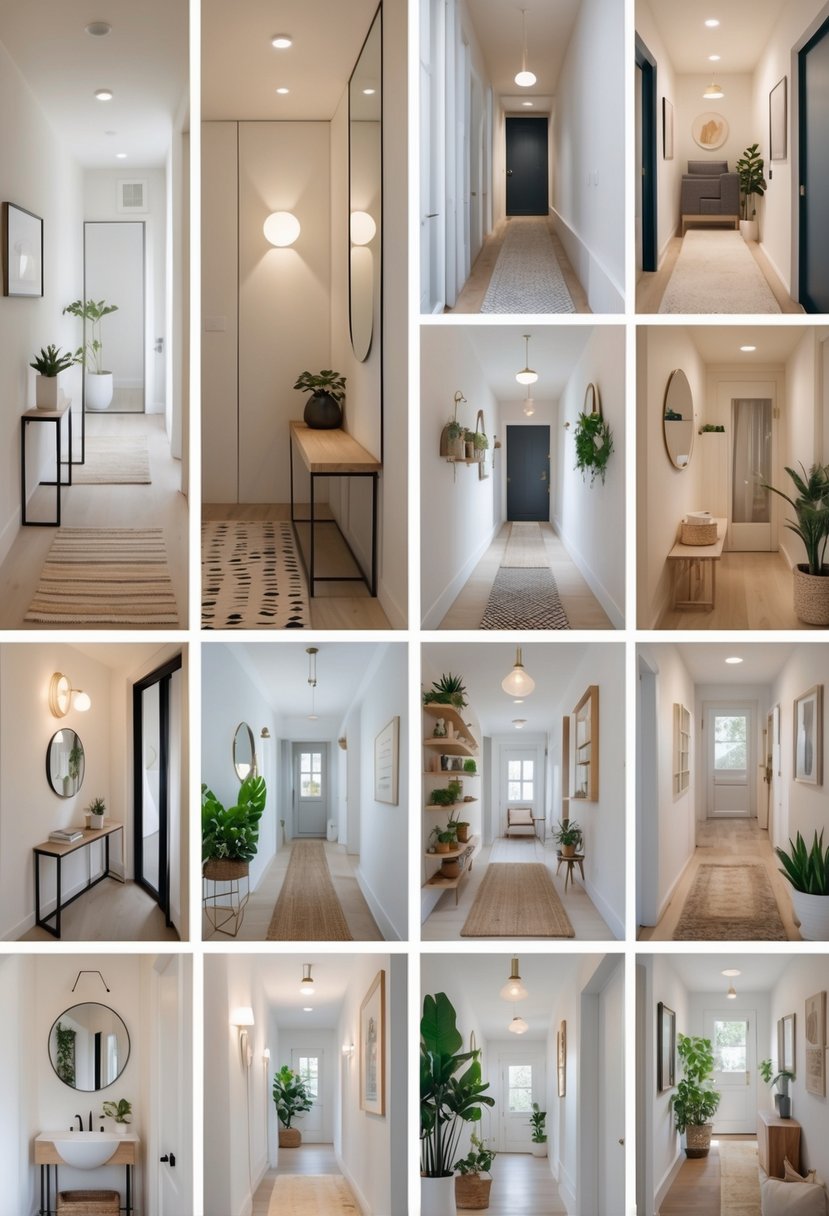
12 Tiny Hallway Ideas
This article was created in line with Trends Oraa’s research and content standards.
You can make a tiny hallway feel useful and welcoming without major renovations. This article shows simple, practical ideas that help open the space, add storage, and boost style so a narrow corridor works better for daily life.
They will cover ways to brighten, organize, and decorate a small passage—from mirrors and light colors to slim storage, hooks, narrow art, runner rugs, and small plants—so you can pick changes that fit your home and budget.
1) Use large mirrors to create the illusion of space
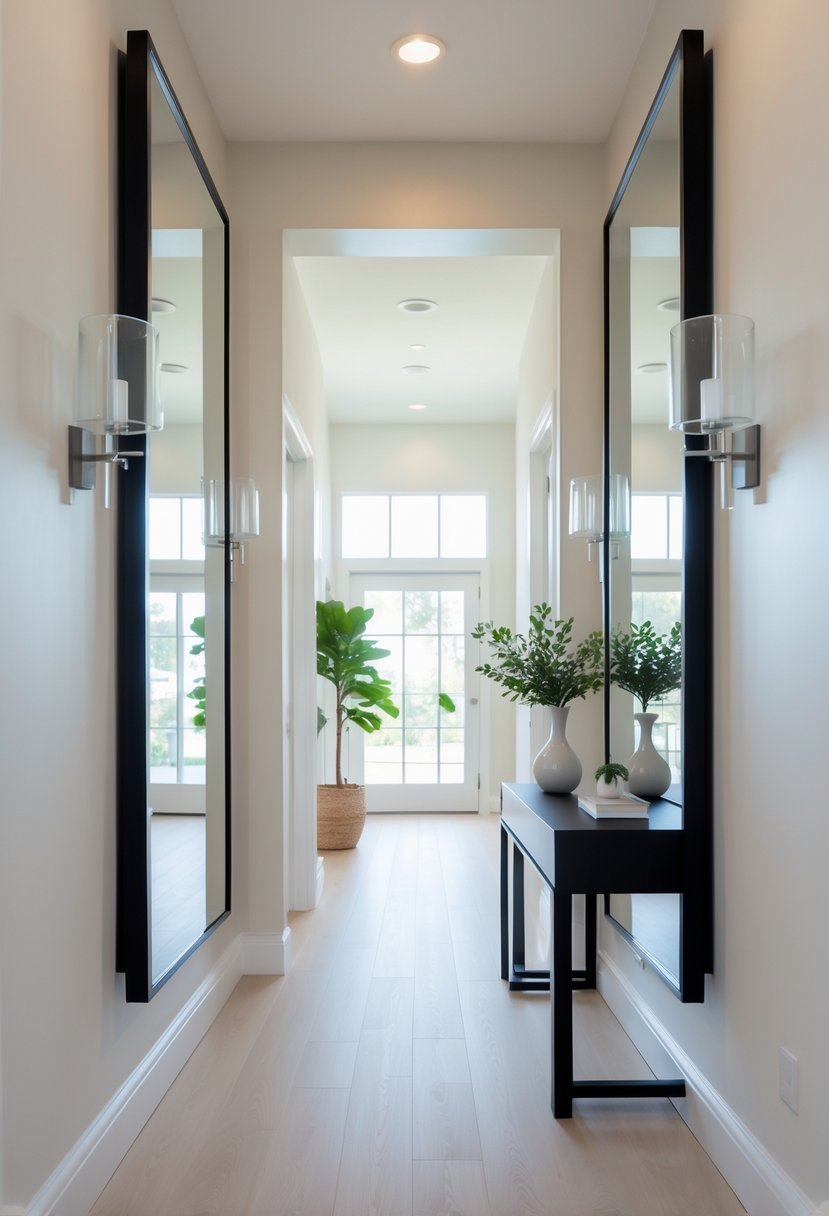
A large mirror can make a narrow hallway feel wider and brighter. It reflects light and sightlines, which helps a small corridor seem more open without structural changes.
Position a mirror opposite a window or light source to boost natural light. If no window exists, place it near a lamp or overhead fixture to catch and spread light through the hall.
Lean an oversized mirror against the wall for a relaxed look, or hang a slim, tall mirror to emphasize height. Framed or frameless options both work; choose a style that matches the home’s decor.
Keep the area around the mirror simple to avoid visual clutter. A clear floor and minimal accessories let the reflection do the work of expanding the space.
2) Paint walls in light, neutral colors
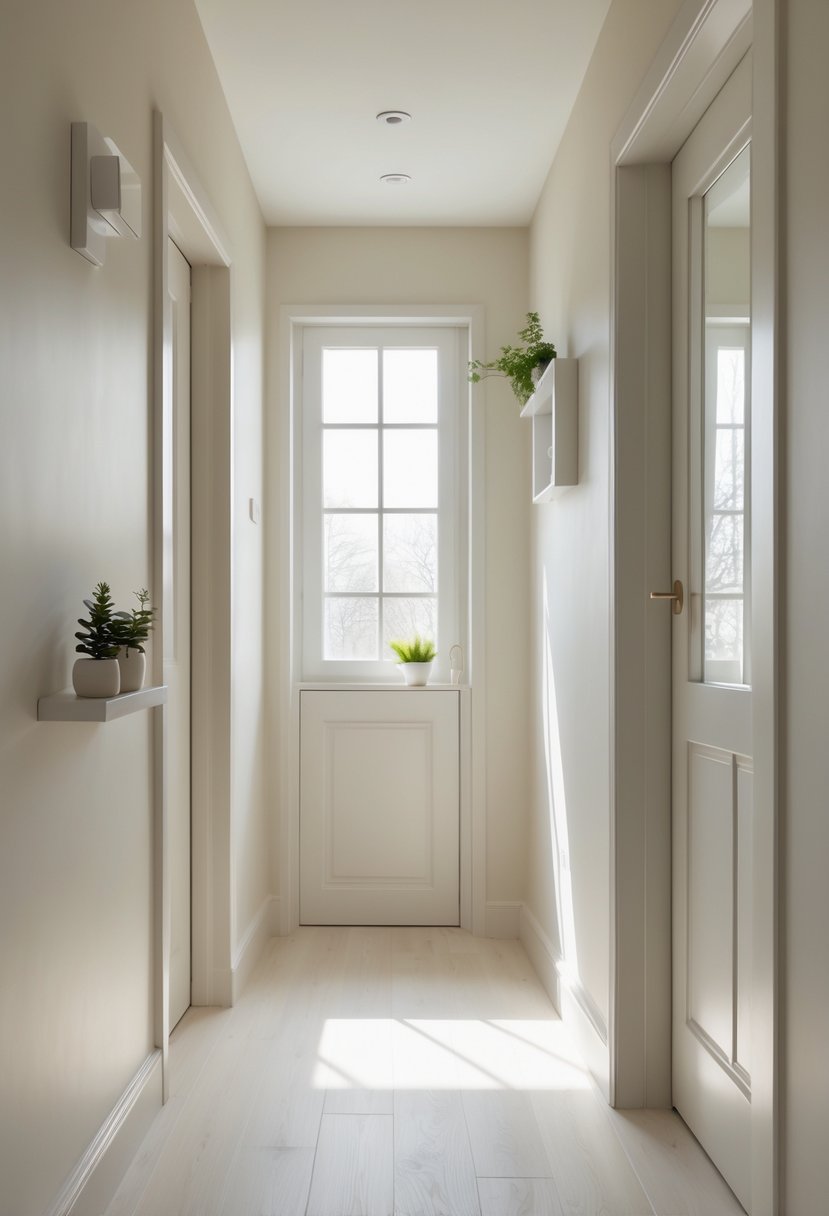
Light, neutral paint makes a tiny hallway feel larger by reflecting more light. It brightens shadowed corners and helps the space feel open without changing structure.
Neutrals like soft whites, warm beiges, and pale grays blend with many decor styles. They create a calm backdrop that lets artwork, trim, or a runner stand out.
Painting the ceiling the same light color adds extra height visually. Keeping doors and trim in matching or slightly brighter tones gives a clean, continuous look.
For narrow halls with little natural light, choose paints with a slight sheen to boost reflectivity. Test samples on the wall at different times of day to see how they read in your actual light.
3) Install recessed or track lighting to brighten the area
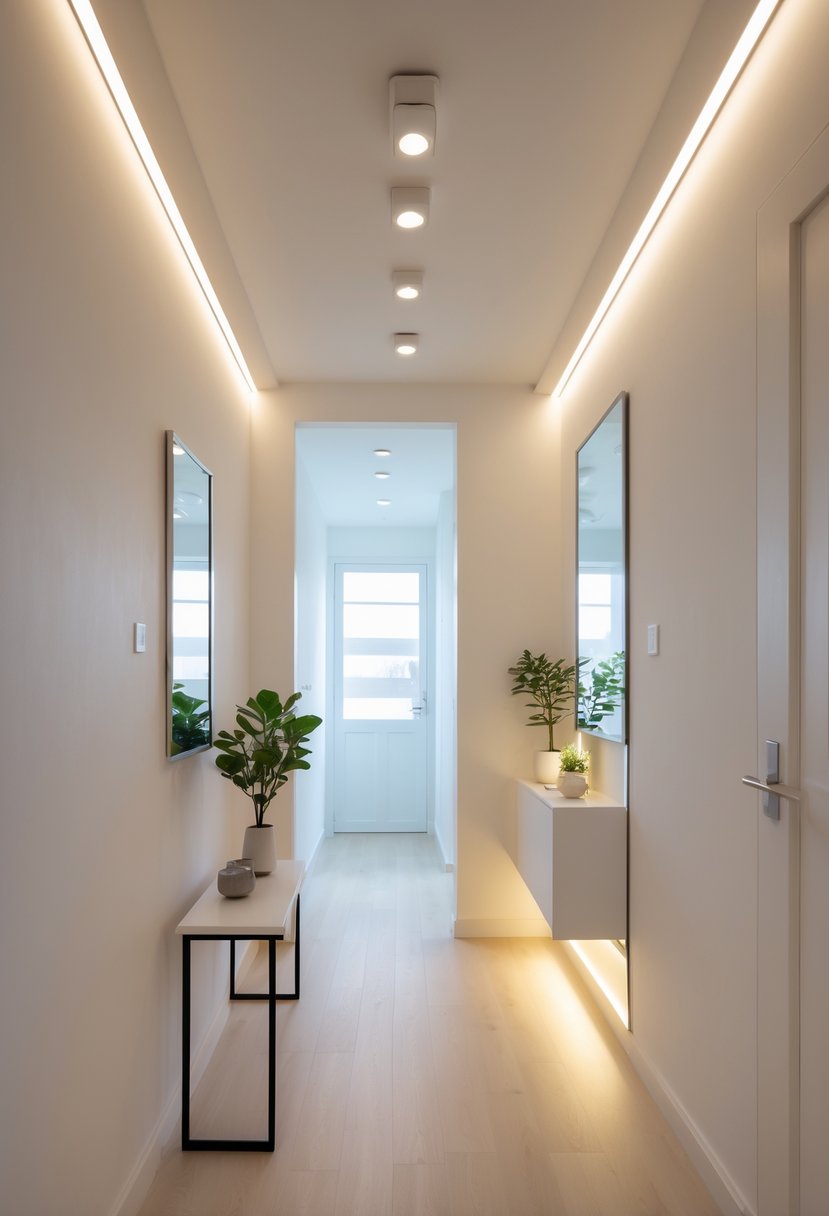
Recessed lighting gives a clean, low-profile look that works well in tight hallways. It sits flush with the ceiling and spreads light evenly, helping the space feel more open.
Track lighting offers flexibility because fixtures can be aimed where light is needed most. It lets someone highlight artwork, doors, or dark corners without rewiring the whole ceiling.
LED bulbs are a smart choice for both systems. They use less energy and last longer than incandescent bulbs, and they come in warm or cool tones to match the hallway’s mood.
Spacing matters: place recesseds or track heads roughly every 4–6 feet in narrow halls. Proper layout avoids dark patches and reduces the need for extra fixtures.
A dimmer switch adds control and makes the hallway adaptable to different times of day. It helps maintain good visibility without making the light too harsh.
4) Incorporate slim, built-in storage units
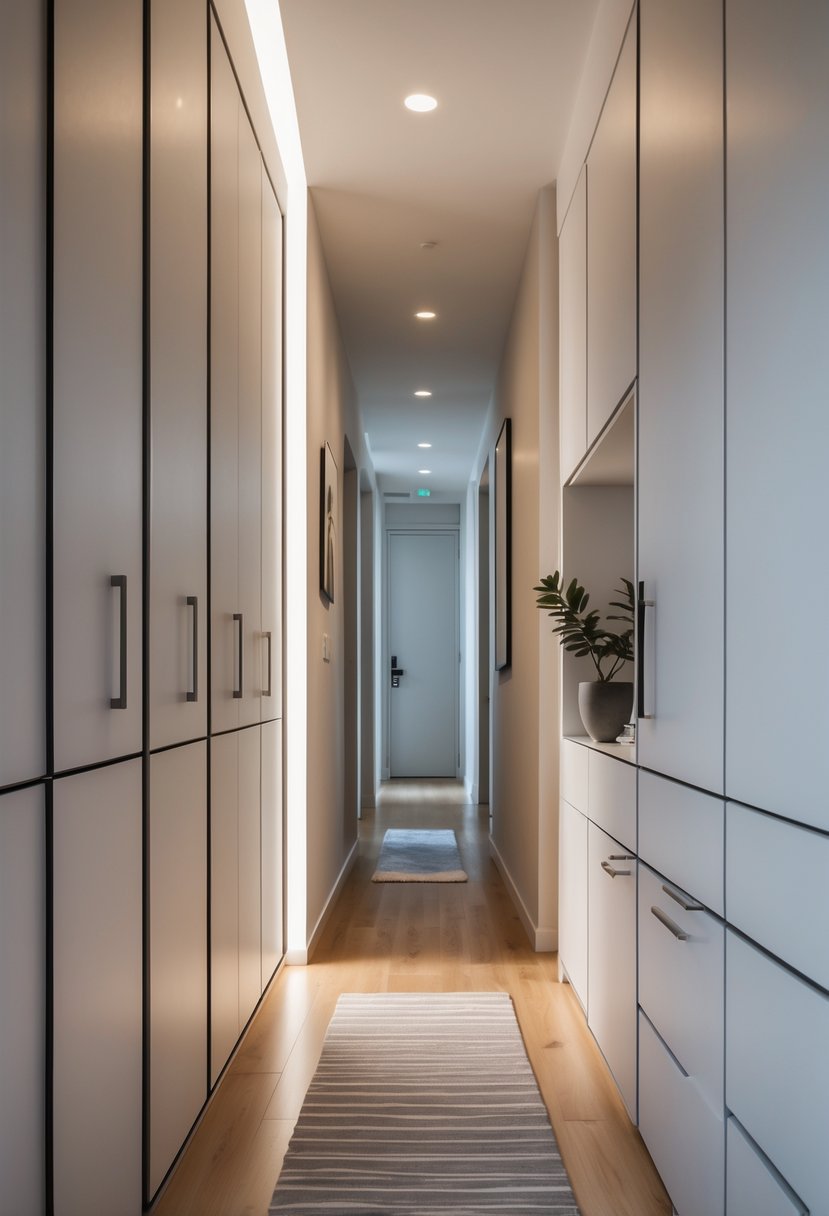
They can fit into narrow hallways without blocking traffic. Slim built-ins, like shallow cabinets or recessed shelves, use wall depth rather than floor space.
Built-ins create a neat look because items tuck away behind doors or drawers. A continuous row of low cabinets can double as a seat or display surface while keeping clutter hidden.
Choose shallow units 8–12 inches deep for coats, shoes, or mail. Vertical cupboards with narrow doors work well for brooms, umbrellas, and slim baskets.
Finish built-ins to match trim or wall color so they blend in and make the corridor feel wider. Simple hardware and clean lines keep the look streamlined and easy to maintain.
5) Add wall-mounted hooks for coats and bags
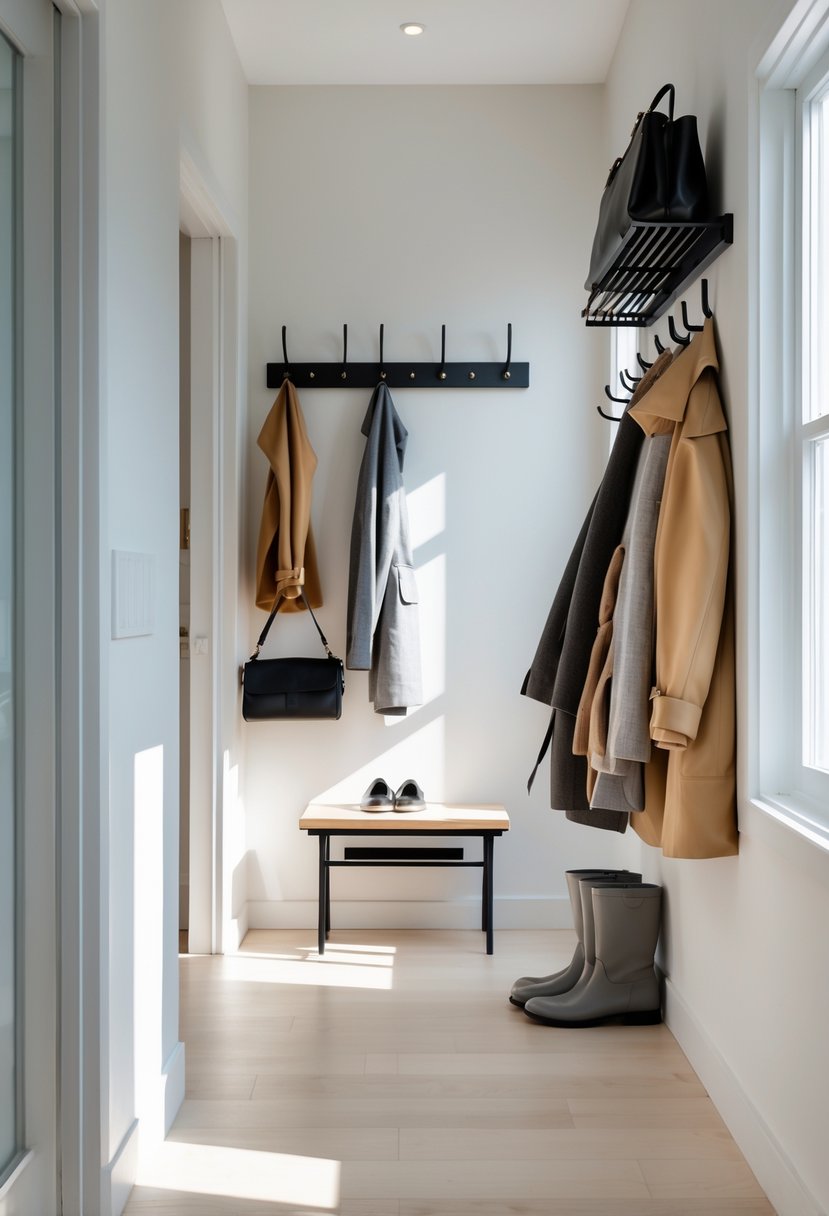
They can free up floor space and keep the hallway tidy. A row of hooks near the door makes it easy to hang coats, bags, and keys as someone comes in.
Choose slim, sturdy hooks that match the hall’s style. Metal or wood racks with multiple hooks fit narrow walls and handle daily use without looking bulky.
Place them at two heights if children or shorter people live there. This keeps items reachable for everyone and prevents piles on the floor.
Add a small shelf above the hooks for mail or a decorative item. That gives a neat landing spot without taking extra room.
Install hooks into studs or use strong anchors for heavier coats and bags. Proper mounting keeps the rack secure and prevents damage to the wall.
6) Use patterned runner rugs to add character
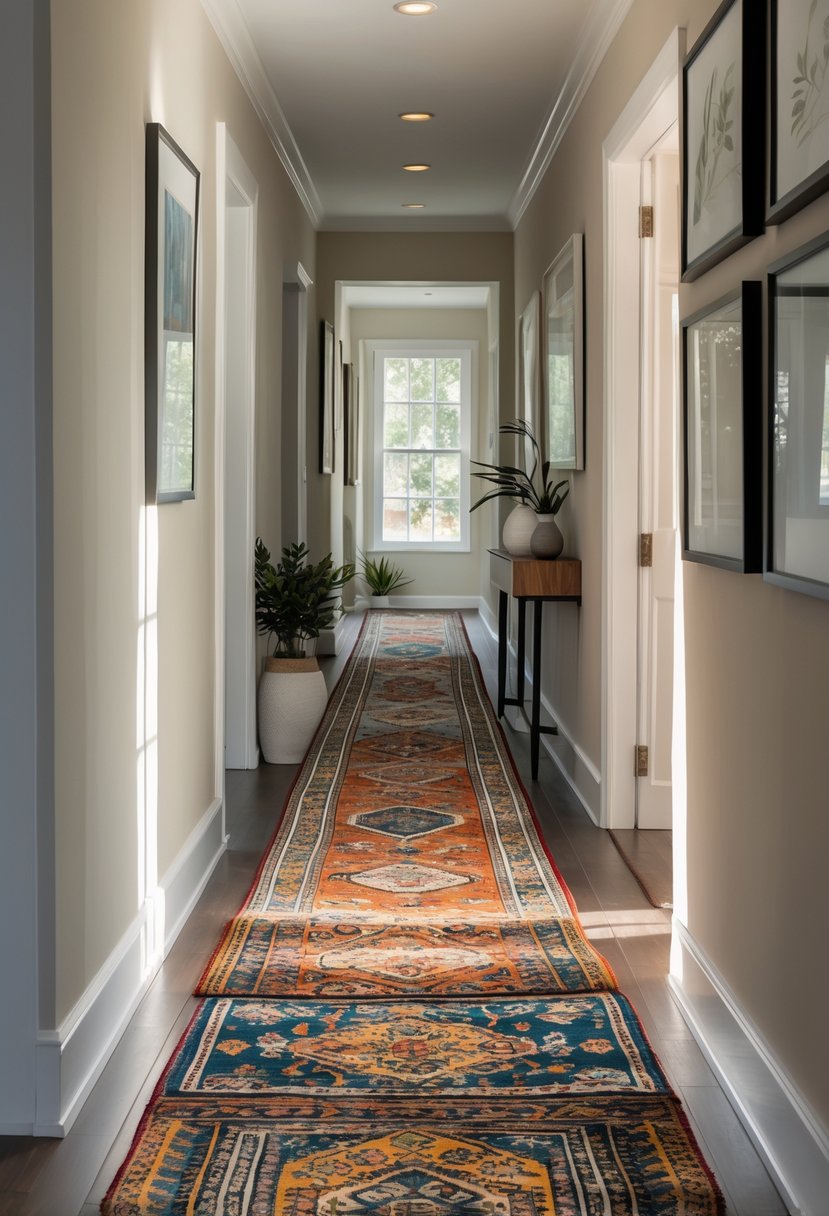
A patterned runner brings color and texture to a narrow hallway without taking up space. It defines the path and makes the corridor feel intentional rather than leftover space.
Choose a pattern that fits the home’s style. Geometric or striped runners create a modern, tidy look, while vintage or Persian patterns add warmth and a lived-in feel.
Keep scale and color in mind so the rug doesn’t overwhelm the area. Narrower runners with a repeating motif work best in tight halls, and a neutral base with one bold accent color ties the rug to other decor.
Runners also protect floors and reduce noise, practical benefits in busy homes. They offer an easy way to change the hallway’s mood and can be swapped seasonally or with little cost.
7) Apply vertical stripes with wallpaper or paint
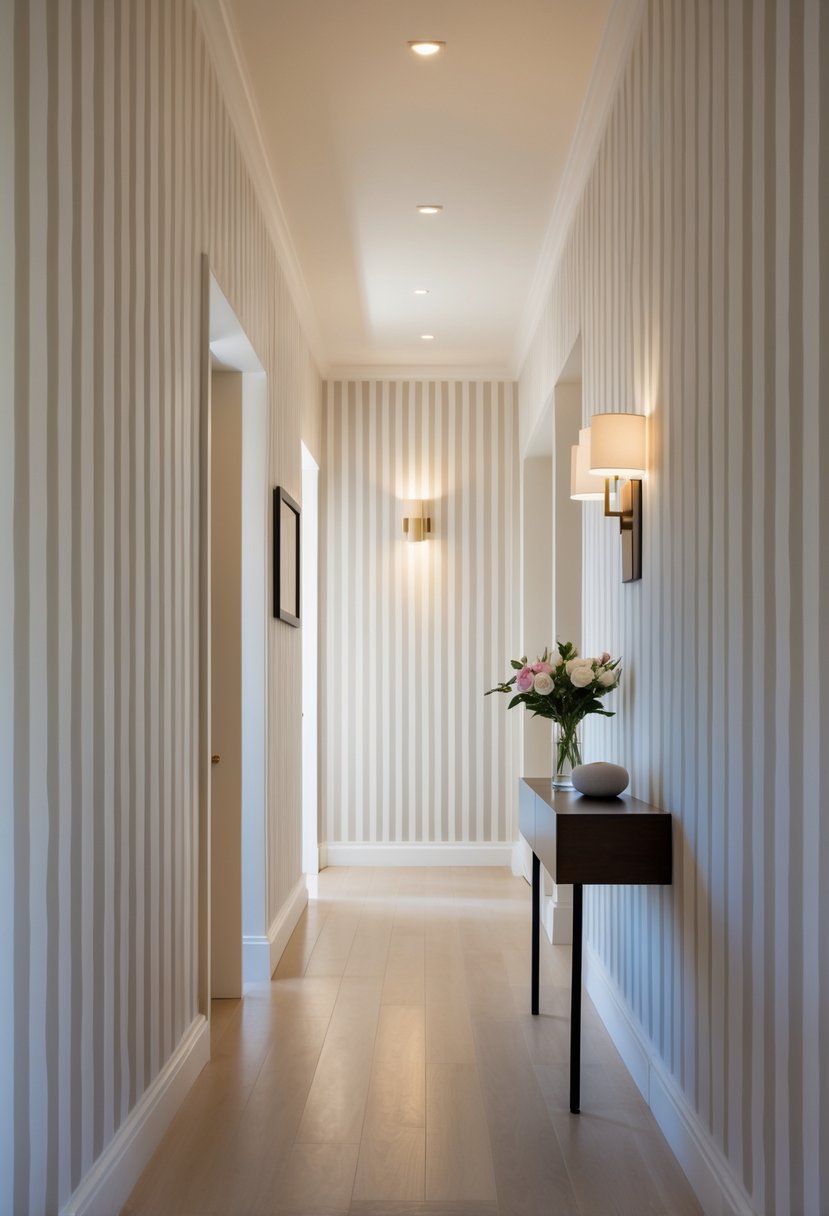
They should choose vertical stripes to make a tiny hallway feel taller and less cramped. Narrow stripes in soft, neutral tones work best for a subtle lift without overwhelming the space.
They can use wallpaper for a quick, patterned change or paint for a cleaner, custom look. When painting, tape narrow lines under 2 inches wide for a refined effect that draws the eye upward.
They should keep trim and ceilings a light, matching color to strengthen the height illusion. A striped runner rug or slim wall mirror can echo the vertical lines and add cohesion.
They must test samples on the actual wall to check light and scale before committing. Good lighting helps stripes read correctly, so add or adjust fixtures if needed.
8) Hang minimalist, narrow art pieces
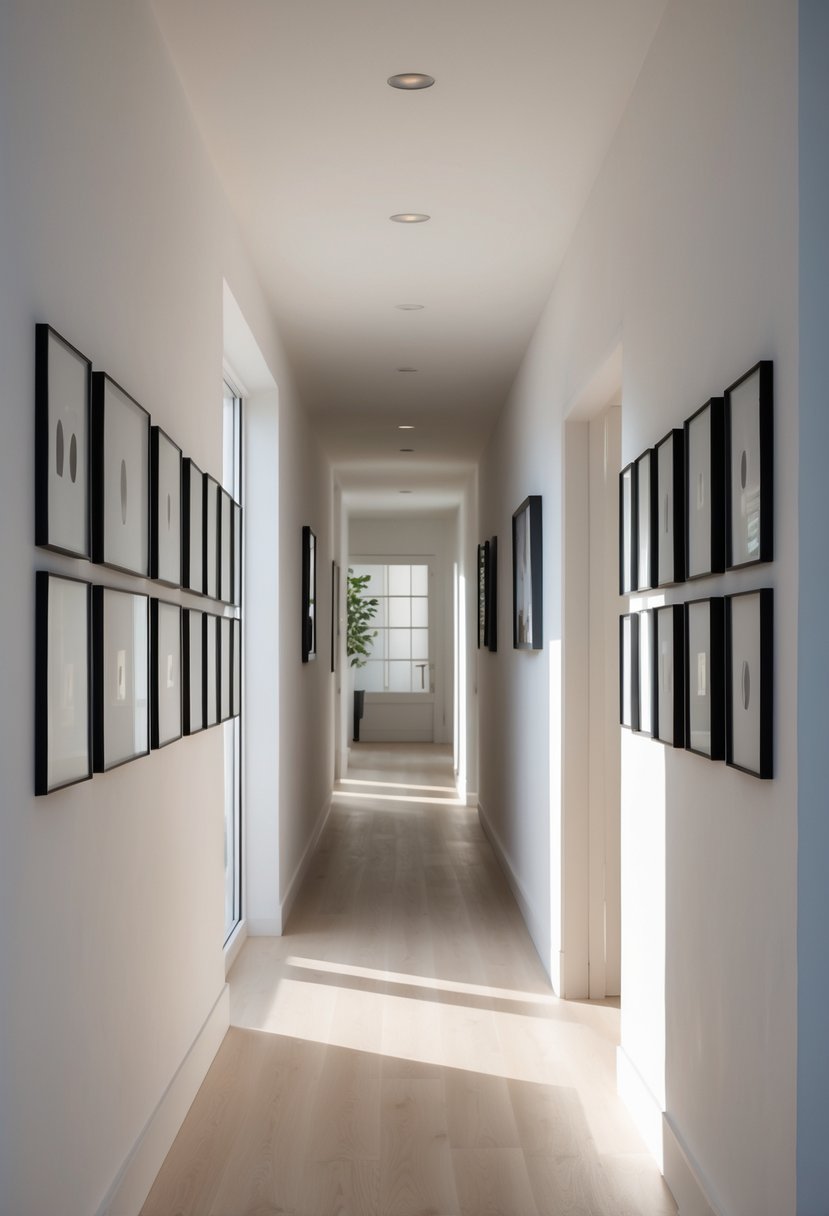
They choose slim, vertical artwork to fit tight wall space without crowding movement. Tall prints or narrow frames lift the eye and make the ceiling feel higher.
A single, simple piece keeps the look calm and uncluttered. If they use multiple works, stacking them vertically creates a neat rhythm along the corridor.
Light, neutral colors and clear shapes work best in small hallways. These choices avoid visual noise and help natural or artificial light reflect through the space.
They place the center of the artwork at about eye level, roughly 57–60 inches from the floor. Proper spacing and secure hanging hardware keep the display safe and balanced.
9) Use glass or acrylic console tables for openness
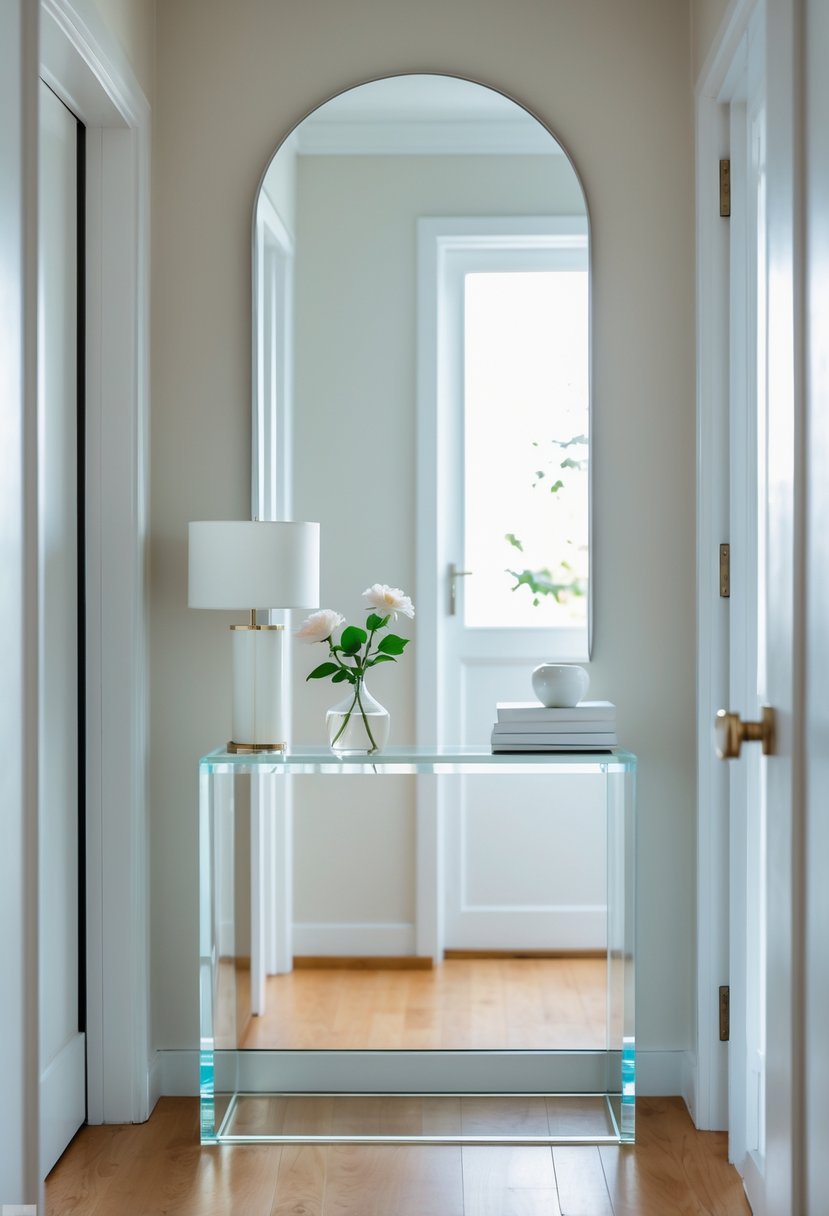
They let light pass through, so the hallway feels larger and less crowded. A clear table reduces visual weight while still giving a surface for keys, mail, or a small lamp.
Glass or acrylic works well in narrow spaces under 12–15 inches deep. Choose slim legs or open frames to keep sight lines clear and avoid bulky storage that blocks the flow.
Acrylic is lightweight and hard to see from a distance, which helps tiny hallways seem airier. Tempered glass gives a more polished look and holds heavier items safely.
Keep styling minimal: a shallow tray, a mirror above, and one decorative object. Too many items erase the benefit of transparency and can make the space feel cluttered.
10) Add small plants in wall-mounted planters
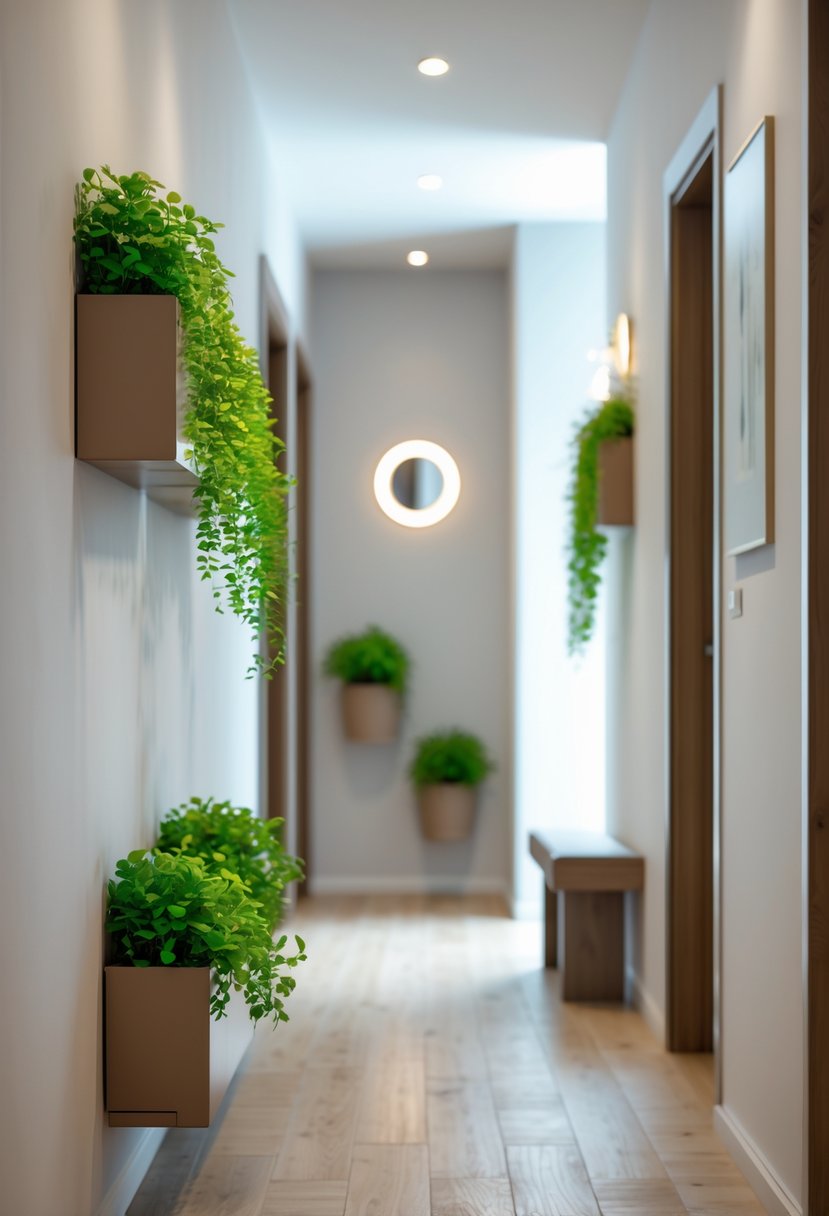
They add green without taking up floor space, making narrow hallways feel fresher and more welcoming. Wall-mounted planters fit low on the wall or higher up, so they work around doors and light switches.
Choose low-maintenance plants like succulents, pothos, or air plants to reduce care needs. Small ceramic or metal pots keep the look tidy and modern, while repurposed frames or wooden shelves add a handmade touch.
Place planters where they get indirect light and away from drafts. Rotate or swap plants seasonally to keep the display lively and to match the hallway’s décor.
Secure mounts properly to avoid falls and protect painted walls with saucers or liners. Grouping planters in a simple pattern creates visual rhythm without clutter.