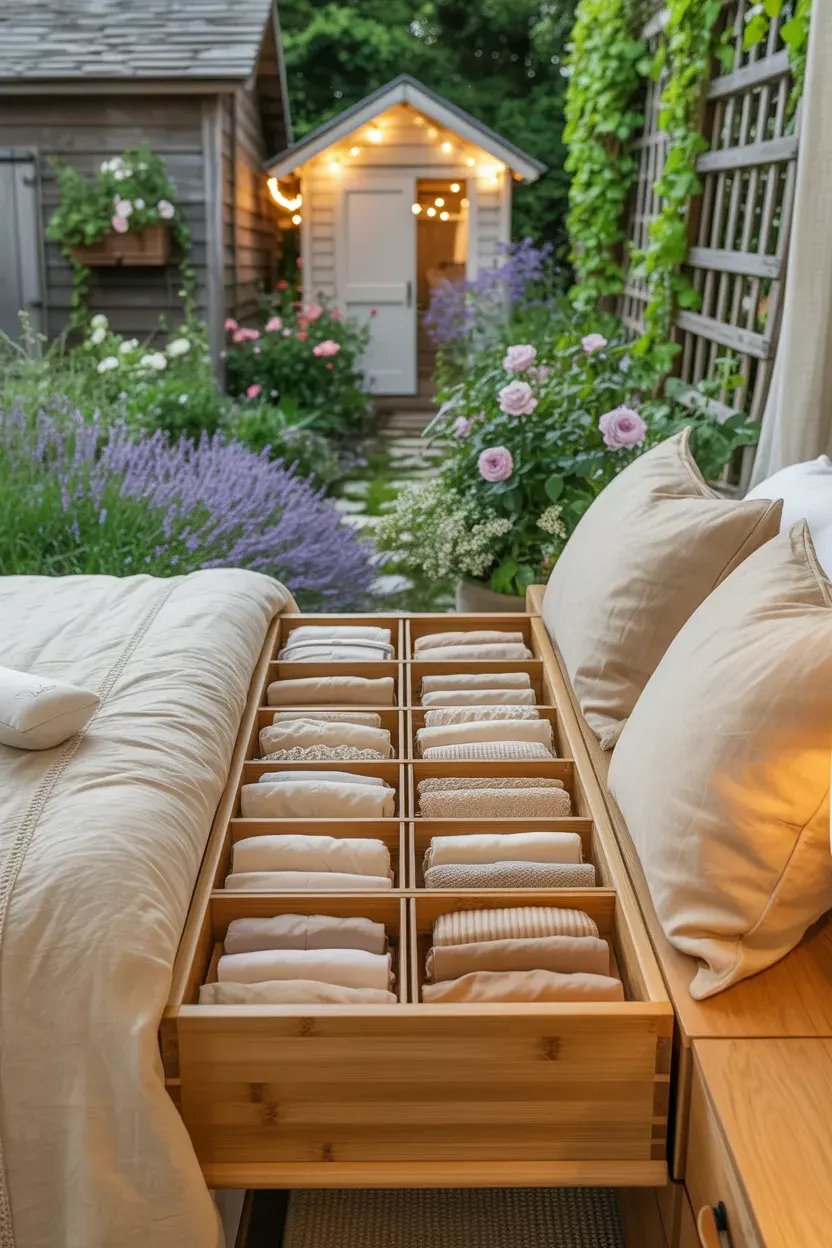
17 Innovative Small Bedroom Storage Ideas That Will Change Everything
This article was created in line with Trends Oraa’s research and content standards.
Your bedroom is overflowing. Again. You’ve tried everything — the bins, the baskets, the “I’ll deal with it later” pile — and yet somehow the clutter always wins. Sound familiar? You are not alone. Millions of people are living in small bedrooms that feel like they’re shrinking by the day, and the frustration is real. But here’s the thing: a small bedroom doesn’t have to mean a chaotic, cramped bedroom. In fact, some of the most beautifully organized, Pinterest-worthy spaces in the world are tiny — and they’re that way because the owners got smart about storage. This post is your complete guide to reclaiming your space without moving to a bigger home or spending a fortune.
You might also love our viral guide on 20 Brilliant DIY IKEA Dresser Hacks — perfect for small bedrooms on a budget!
Before we dive in, let’s be honest about what’s really going on in most small bedrooms: it’s not that you have too much stuff, it’s that you don’t have the right storage. The solutions below aren’t just clever — they’re genuinely transformative. We’ve rounded up 17 of the most innovative small bedroom storage ideas that real people are actually using to turn their cramped rooms into calm, functional retreats. Let’s get into it.
1. The Under-Bed Empire: Maximize Your Biggest Hidden Asset
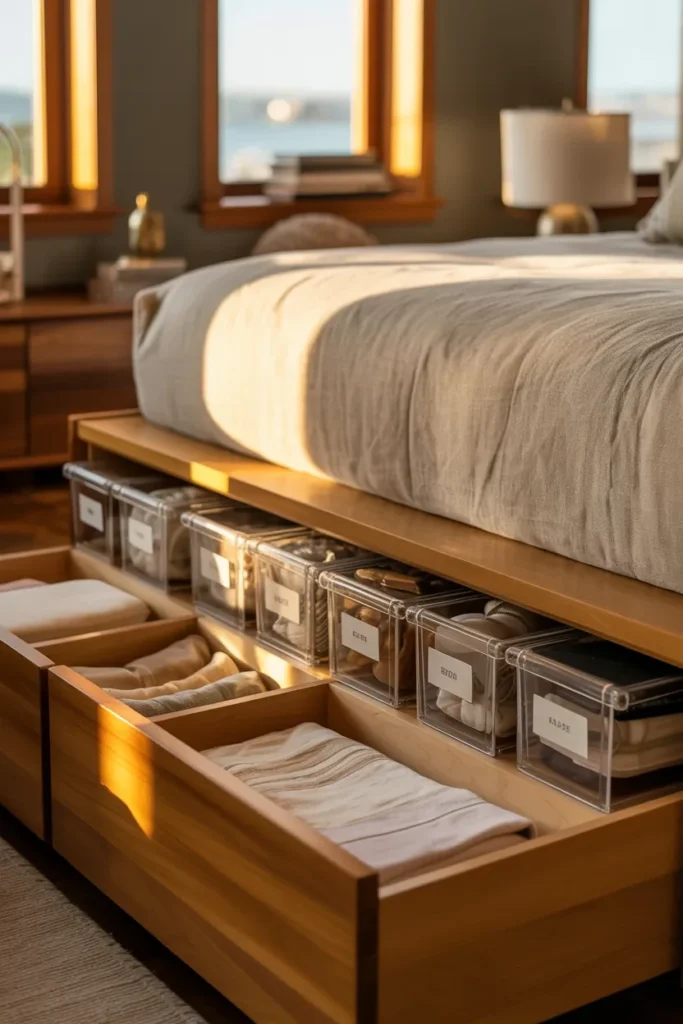
You’re sleeping on top of some of the most valuable real estate in your entire home and probably wasting every inch of it. Under-bed storage is the number one most underused opportunity in small bedrooms, and once you unlock it, you won’t believe you ever lived without it. Think beyond the occasional bin shoved under there — we’re talking about rolling drawers, vacuum-sealed bags for seasonal clothing, shallow trays for shoes organized by pair, and even purpose-built platform beds with built-in drawers on all four sides. If your current bed frame sits low, a simple set of bed risers can instantly add six to eight inches of vertical clearance, transforming dead space into a genuine storage zone.
Expert Tip: Use clear, lidded bins under the bed and label them by category — “summer tops,” “extra linens,” “workout gear.” You’ll stop pulling everything out to find one item and actually maintain the system long-term.
Why it works: The area under a standard queen bed can hold up to 30 cubic feet of storage. That’s essentially a full closet hiding right beneath you. When you use vertical-stack drawers or organized bins, you’re accessing space that requires zero floor footprint — a game-changer in a small room.
2. Floor-to-Ceiling Shelving: Go Vertical or Go Home
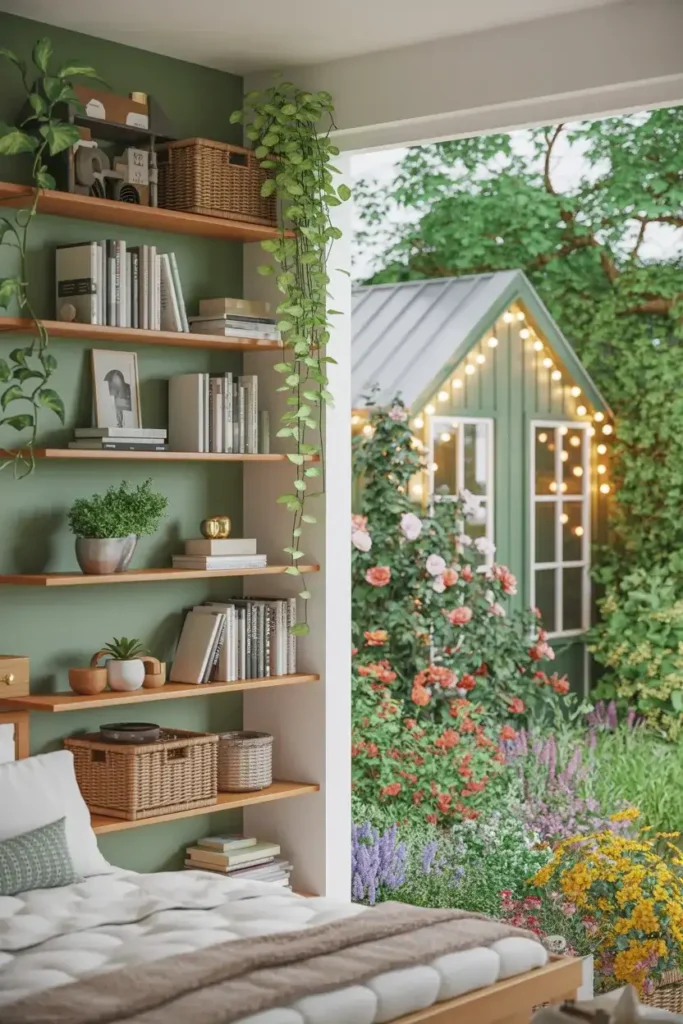
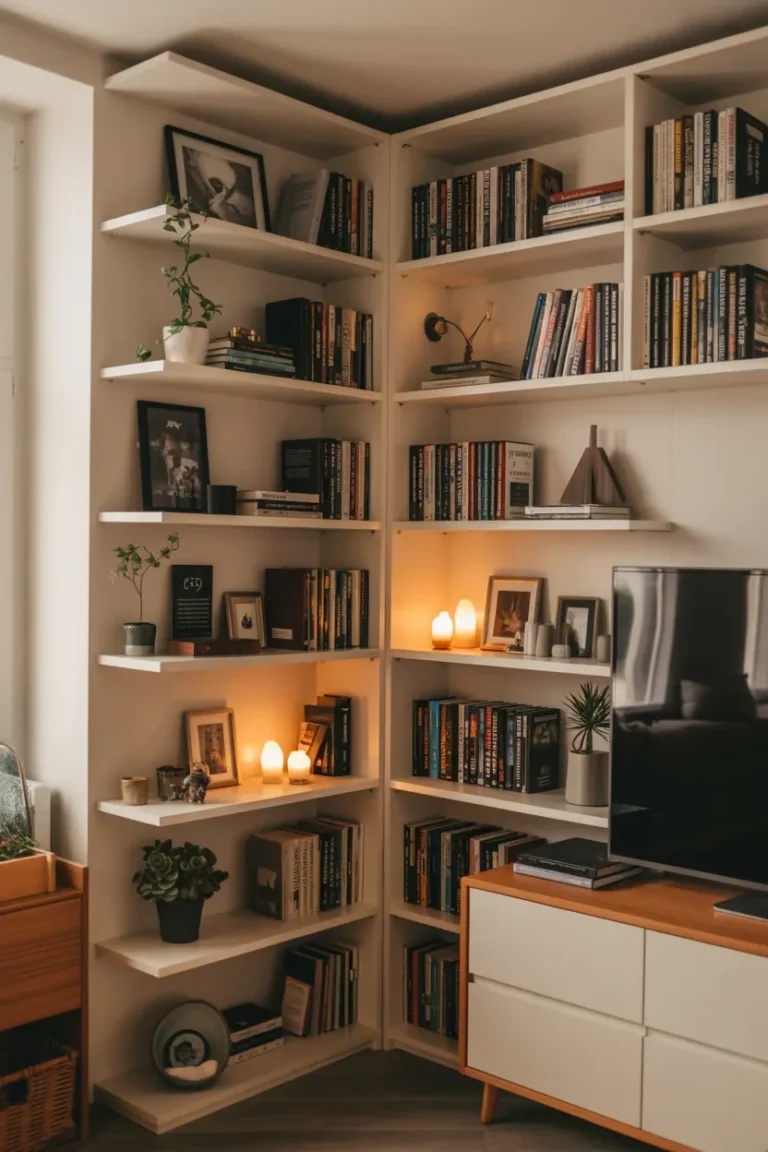
Most people stop building upward at eye level, which means the top three to four feet of their walls are doing absolutely nothing. In a small bedroom, that’s wasted square footage you simply cannot afford to ignore. Floor-to-ceiling shelving — whether built-in or a tall IKEA unit — multiplies your storage capacity dramatically while keeping the footprint to just a few inches of depth. Style the upper shelves with things you access less often (extra blankets, seasonal décor, books) and keep the lower shelves for daily essentials. Add woven baskets or matching fabric bins to keep it looking curated rather than chaotic.
Expert Tip: Paint the wall behind your shelving unit an accent color. It creates the illusion of depth, makes the shelving look intentional and designed, and draws the eye upward — making the ceiling feel higher than it is.
Why it works: Vertical storage doesn’t eat into your walking space at all. A shelf that’s 84 inches tall holds the same volume as three four-foot-wide dressers but occupies only a fraction of the floor space. For small bedrooms, this trade-off is enormous.
Which of these storage ideas are you most excited to try? Drop your answer in the comments — I’d love to know!
3. Floating Nightstands: The Tiny Bedroom’s Best Friend
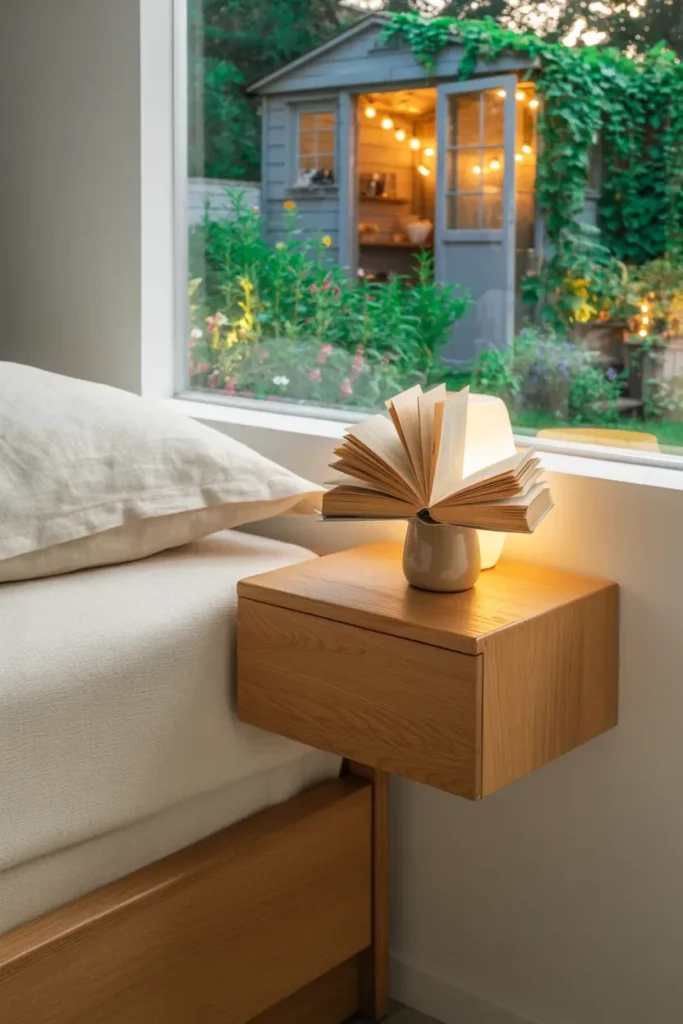
A traditional nightstand takes up floor space that, in a small bedroom, might be the difference between a room that flows and one that feels like an obstacle course. Wall-mounted floating nightstands are one of the smartest small bedroom storage ideas because they free up that precious square footage completely while still giving you a surface for your lamp, phone, glass of water, and a couple of books. They can be installed at exactly the right height for your bed and mattress combo, they work in rooms where there’s zero space between the bed and the wall, and they come in sizes ranging from a tiny 8-inch shelf to a full bedside organizer with built-in charging ports.
Expert Tip: Choose a floating nightstand with a small drawer or lower shelf rather than a flat surface only. The extra layer of concealed storage is worth it — you can tuck away your book, remote, reading glasses, and anything else you’d normally pile on top.
Why it works: Floating furniture creates visual breathing room by exposing the floor beneath it. This is a well-known interior design trick — the more floor you can see, the larger the room feels. Combine this with the storage function and you have a double win.
4. Behind-the-Door Organizers: The Wall You’re Ignoring
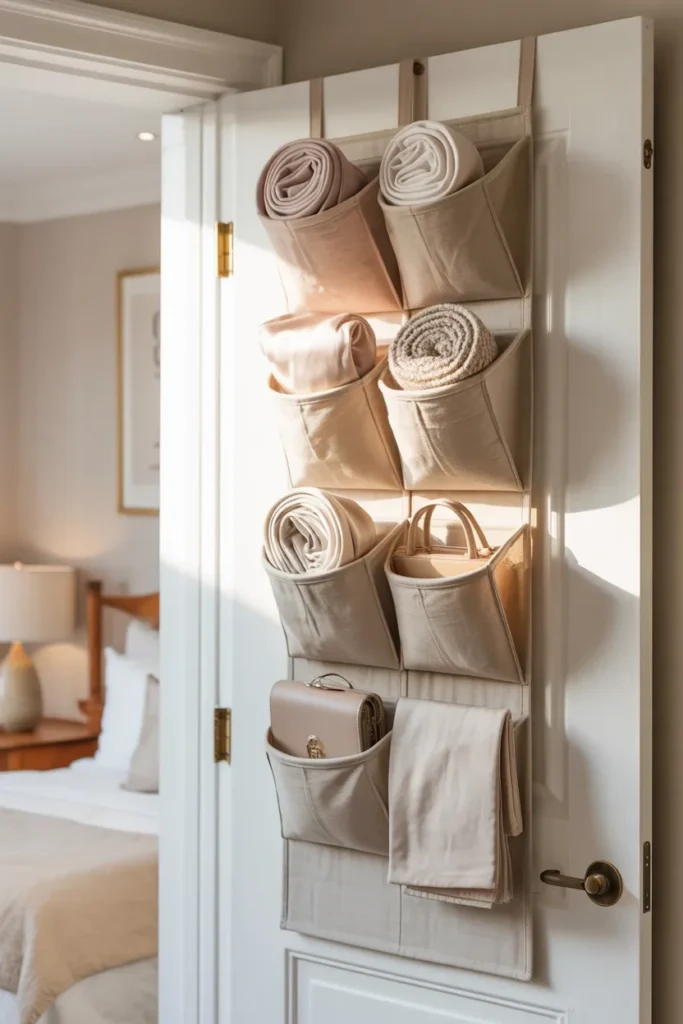
The back of your bedroom door is a blank canvas for storage that most people walk past every single day without ever using it. An over-the-door organizer can hold shoes, accessories, jewelry, scarves, small bags, hair tools, or anything else that tends to create clutter on your dresser or floor. The best options have a mix of pockets, hooks, and shallow bins, so you can accommodate items of different sizes. They install in seconds — no drilling required — and they’re completely hidden when the door is open, which means your room looks tidy even when you haven’t really organized it.
Expert Tip: Don’t just default to a standard clear-pocket shoe organizer. There are beautifully designed over-the-door units in linen, rattan, and even wood that look intentional and elevated rather than purely functional.
Why it works: A standard interior door is roughly 80 by 32 inches — that’s nearly 18 square feet of hanging space you’re getting for free. Even a basic organizer with 20 pockets can take the place of a full dresser drawer or a dedicated accessory rack.
5. Pegboard Walls: The Most Customizable Storage System
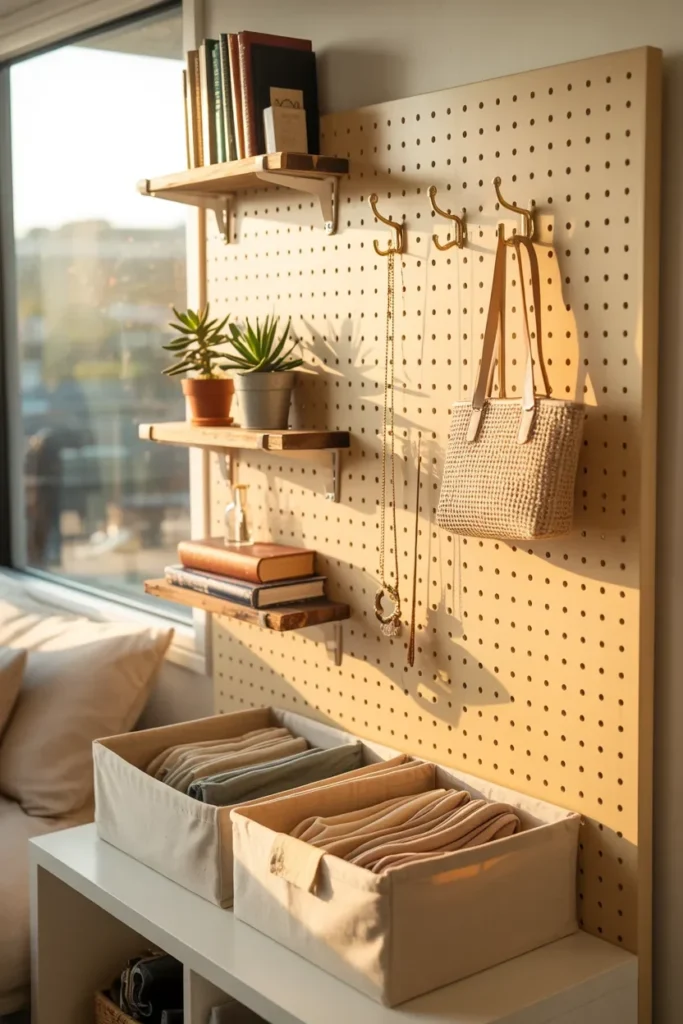
Pegboards aren’t just for garages anymore — they’ve had a massive style upgrade and are showing up in beautifully designed small bedrooms across Pinterest and Instagram for good reason. A painted pegboard panel mounted on your bedroom wall gives you infinitely customizable storage that you can rearrange as your needs change. Add hooks for bags, small shelves for books or plants, bins for accessories, or even a small rod for hanging jewelry. The entire system sits flat against the wall, adds no floor footprint, and can be styled to look like a deliberate design feature rather than an afterthought.
Expert Tip: Paint your pegboard the same color as your wall for a seamless, built-in look. This works especially well in neutral bedrooms — the storage blends in while still being fully functional.
Why it works: The pegboard system works because it’s modular. Unlike a dresser or shelving unit that locks you into one configuration forever, a pegboard evolves with you. This is especially valuable in a small bedroom where you may need to store completely different things across different seasons.
6. Ottoman Beds: Storage That Doubles as a Statement
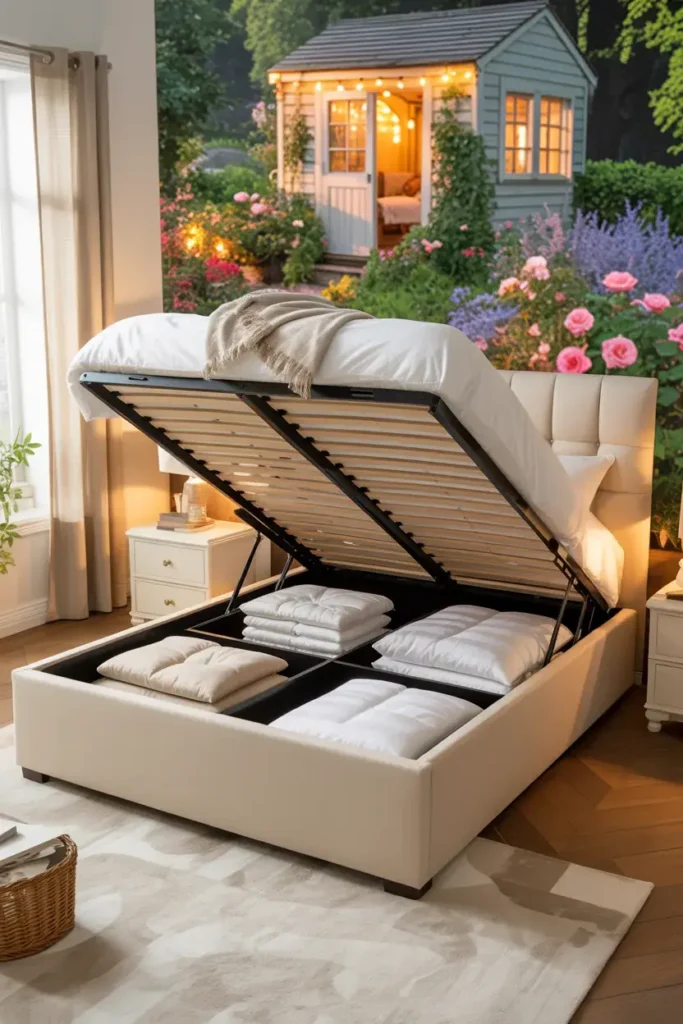
If you’re going to invest in one piece of furniture that solves your storage problem in a small bedroom, make it your bed frame. An ottoman bed — the kind with a hydraulic lift mechanism that raises the entire mattress base to reveal a deep storage compartment underneath — is genuinely life-changing. Unlike under-bed bins that require you to get on the floor and dig around, an ottoman bed opens cleanly and gives you easy access to everything stored inside. You can fit duvets, extra pillows, out-of-season clothing, and even large items like luggage in the base. It’s the ultimate two-for-one in a small space.
Expert Tip: Use the ottoman bed storage specifically for bulky, infrequently accessed items like seasonal bedding, extra towels, or holiday clothing. Reserve your dresser and closet for daily-use items so you’re not lifting the mattress every morning.
Why it works: Ottoman beds typically offer between 100 and 150 liters of under-mattress storage, which is equivalent to a large chest of drawers — without using a single inch of additional floor space. For a small bedroom, this is transformative.
7. Built-In Wardrobe Alcoves: Use Every Architectural Quirk
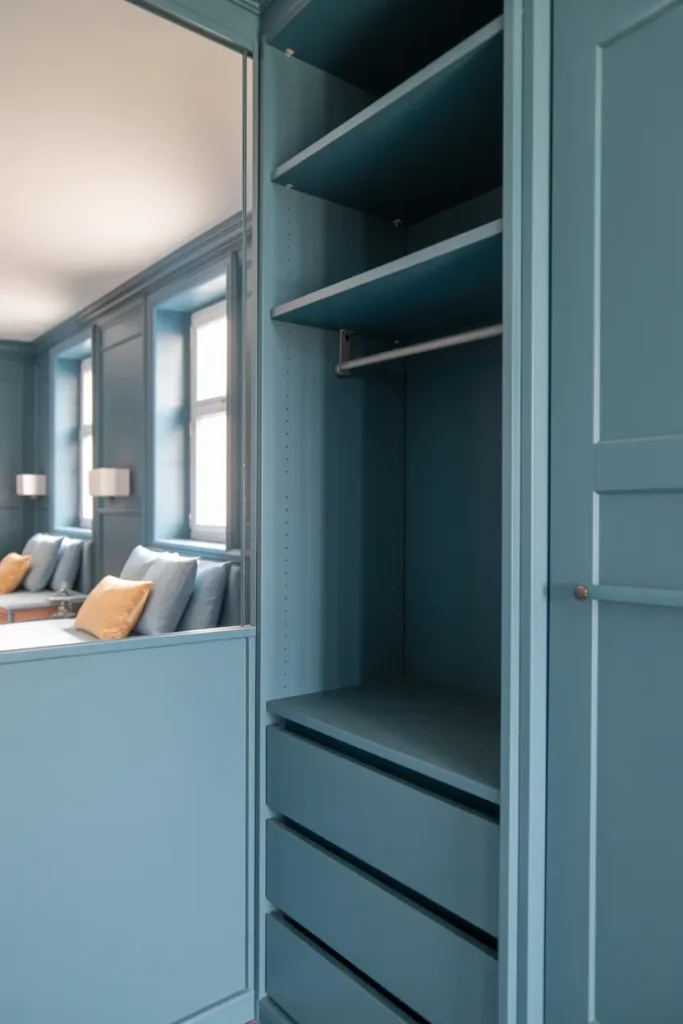
If your small bedroom has an alcove, a chimney breast recess, or any kind of architectural niche, stop treating it as a weird quirk and start treating it as a gift. These recessed spaces are perfect for fitted wardrobes, shelving, or a combination of hanging rails and drawers that sit flush with the surrounding wall. Because they go into the wall rather than projecting into the room, they don’t eat into your floor space at all. A built-in wardrobe in an alcove can hold as much as a full walk-in closet while making the room feel more spacious than a freestanding unit ever could.
Expert Tip: Take the built-in all the way to the ceiling and add doors that match the wall color. When the wardrobe doors are the same color as the walls, the entire unit “disappears” visually, and the room feels bigger.
Why it works: Recessed storage is architecturally integrated, which means it doesn’t compete visually with the other elements of the room. It also eliminates the problem of the “gap” above freestanding furniture that collects dust and looks cluttered.
Deep Dive: Small Bedroom Storage Buying Guide
Before you spend a single dollar on storage solutions, it pays to understand what you’re actually buying and whether it’s worth the investment for your specific situation. Here’s an honest breakdown to help you shop smarter.
Types of Storage and What They’re Best For
Under-bed storage is best for bulky, seasonal, or infrequently used items. Rolling drawers are the most accessible option; vacuum bags are best for compressible soft goods like blankets and pillows.
Wall-mounted shelving is ideal for books, décor, and items you want to display rather than hide. Open shelves are cheaper but require more tidiness to look good; closed cabinet shelving is pricier but lower-maintenance.
Ottoman beds and platform beds with drawers are the best long-term investment because they replace two pieces of furniture — your bed frame and your storage unit — with one. Budget between $400 and $1,200 depending on size and quality.
Over-the-door organizers are the cheapest and fastest solution — most cost between $15 and $50 — and they require no installation. They’re best for accessories, shoes, and small items.
Pegboards cost between $20 and $80 for the panel plus accessories and offer the highest customizability for the price. They do require drilling into the wall, so check your lease if you’re renting.
Budget Breakdown
| Solution | Average Cost | Difficulty | Impact |
|---|---|---|---|
| Under-bed bins/drawers | $20–$80 | Easy | High |
| Over-the-door organizer | $15–$50 | Very Easy | Medium |
| Floating nightstand | $30–$150 | Easy | Medium-High |
| Pegboard wall | $30–$120 | Easy-Medium | High |
| Ottoman bed | $400–$1,200 | N/A (purchase) | Very High |
| Floor-to-ceiling shelving | $100–$500 | Medium | Very High |
| Built-in wardrobe | $500–$3,000+ | Hard (professional) | Highest |
Pros and Cons at a Glance
DIY and budget solutions (bins, door organizers, pegboards): Pro — fast, affordable, renter-friendly. Con — require more discipline to keep tidy; may look less polished.
Furniture investments (ottoman beds, built-ins): Pro — seamless, high-capacity, visually clean. Con — expensive upfront; not portable if you move.
Open shelving: Pro — accessible, airy, great for displaying personality. Con — requires regular tidying; visible clutter is more noticeable.
The best small bedroom storage plan almost always combines a mix of all three tiers — a big investment piece like an ottoman bed, a few mid-range pieces like floating shelves, and some budget-friendly extras like door organizers and baskets.
While you’re planning your bedroom refresh, don’t miss our guide on Apartment Organization Ideas for room-by-room strategies that actually stick!
8. Mirrored Wardrobe Doors: Storage That Tricks the Eye
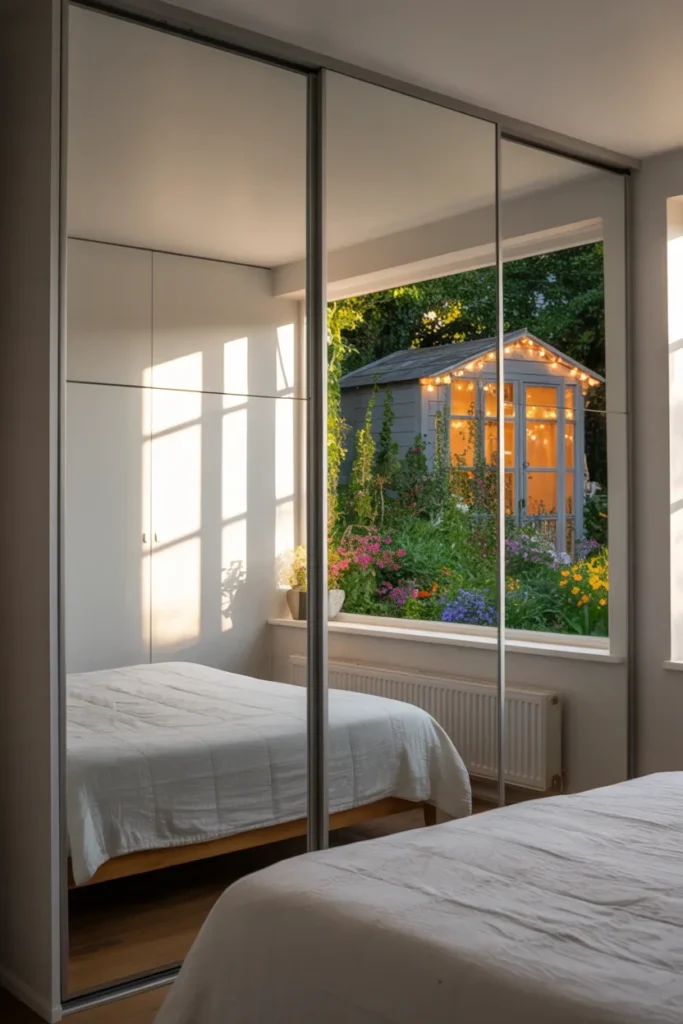
A mirrored wardrobe is doing double duty in a way that very few storage solutions can match. Yes, it gives you a full-length mirror — which you need anyway — but more importantly, it makes a small bedroom feel dramatically larger by reflecting both natural and artificial light across the room. The reflected space creates the illusion that the room continues beyond the wall. Choose sliding mirrored doors rather than hinged ones to save the clearance arc that hinged doors need, and you’ve just optimized both your visual space and your physical space in one move.
Expert Tip: Position your wardrobe on the wall directly opposite your window if at all possible. The mirror will bounce daylight deep into the room, reducing the need for additional lighting and making the space feel bright and open even on grey mornings.
Why it works: Mirrors visually double the perceived depth of a room — a well-established interior design principle. Combined with the functional storage of a full wardrobe, mirrored doors are arguably the highest-impact single upgrade you can make to a small bedroom.
9. Ladder Shelves: Leaning Into Minimalist Storage
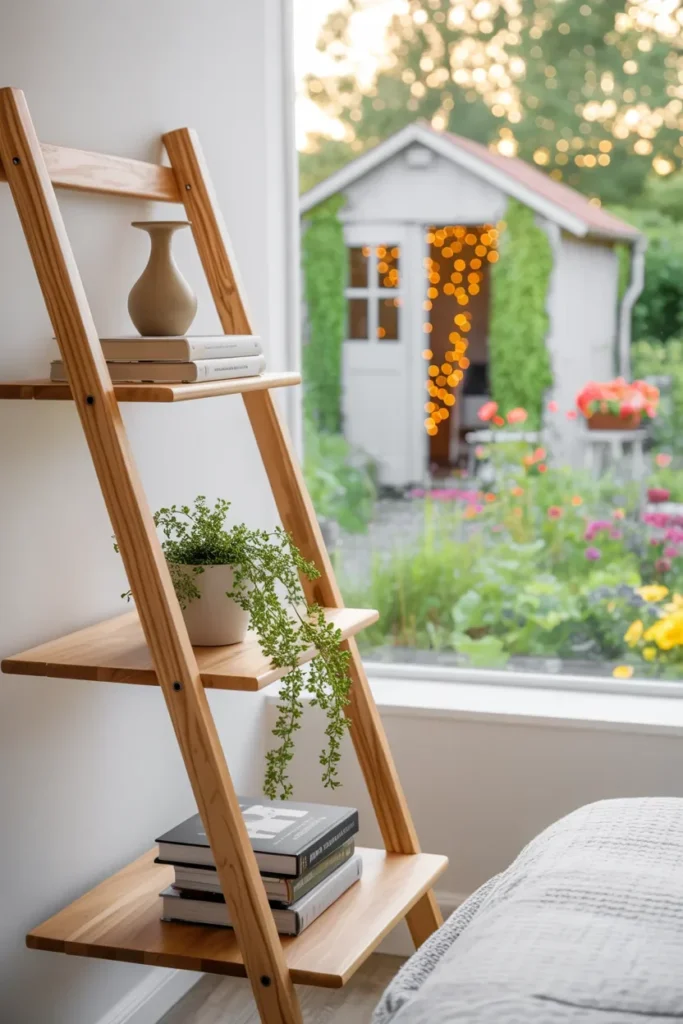
A ladder shelf is one of those storage ideas that works perfectly precisely because it doesn’t try to do too much. It leans against the wall — no drilling, no hardware — and provides a series of progressively narrowing shelves that are ideal for small bedrooms where you want storage but don’t want the space to feel heavy or furniture-dense. Use the bottom rungs for heavier items (baskets, folded jeans) and work upward toward lighter, more decorative items (plants, books, a small lamp). The tapered silhouette draws the eye upward and makes ceilings feel taller.
Expert Tip: A ladder shelf is one of the best renter-friendly storage solutions out there. It requires no installation, moves easily, and can go anywhere in the room. If you’re in a rented space where you can’t drill into walls, this is your best friend.
Why it works: The diagonal line of the ladder shelf is visually dynamic in a way that a straight vertical shelving unit isn’t. It adds architectural interest without adding visual weight, which is exactly what small bedroom décor calls for.
Are you a renter looking for storage ideas that don’t involve putting holes in the walls? Tell me in the comments — I’ll put together a renter-specific round-up!
10. Bedroom Wardrobe With a Dressing Table Built In
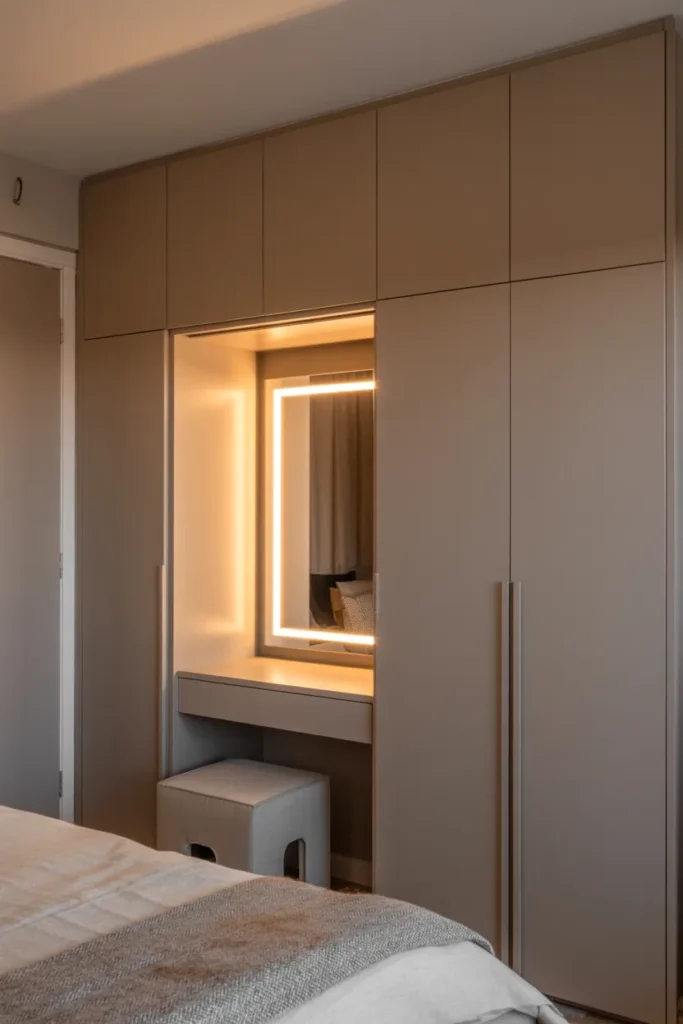
One of the most common things that eats up floor space in a small bedroom is the dressing table. It’s a piece of furniture that serves one purpose, sits permanently in the room, and yet most dressing tables take up more floor space than a small chest of drawers. The solution? Integrate your dressing table into your wardrobe. Many fitted wardrobe systems now include a pull-out desk section or a fold-down vanity mirror that can be tucked away when not in use. You get all the functionality of a dressing area without permanently dedicating floor space to it.
Expert Tip: If a full fitted wardrobe isn’t in the budget right now, a standalone wardrobe with a small secretary desk beside it achieves a similar effect. Look for a secretary desk with a fold-down front — it reads as a closed cabinet when you’re not using it and opens into a full vanity workspace in seconds.
Why it works: Multi-function furniture is the defining principle of well-designed small spaces. Every piece of furniture in a small bedroom should ideally serve two purposes. A wardrobe with an integrated dressing area accomplishes both storage and grooming in one footprint rather than two.
11. Floating Wall Cabinets Above the Bed
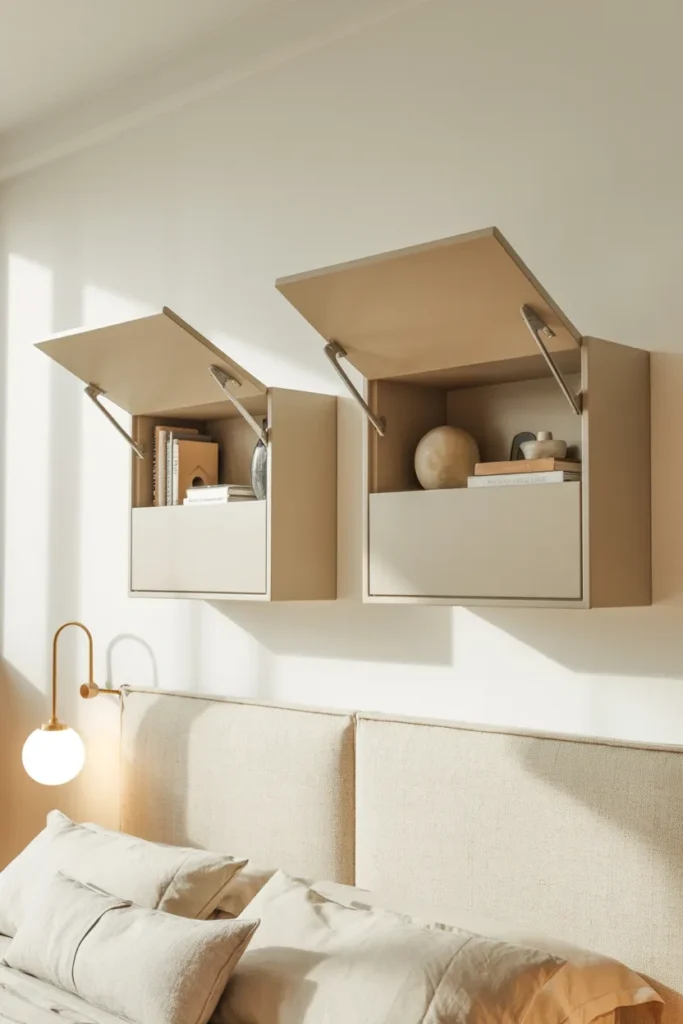
The wall above your headboard is prime real estate, and in most bedrooms, it’s completely empty. Floating cabinets mounted above the bed give you closed storage that’s completely accessible from bed — ideal for books, charging cables, sleep masks, and anything else you reach for before sleep or right after waking. Closed-door cabinets keep everything hidden, which matters enormously in a small bedroom where visible clutter affects how restful the space feels. Choose shallow cabinets that don’t project too far into the space above you — 10 to 12 inches of depth is more than enough for most bedside essentials.
Expert Tip: Install cabinets with doors that open upward (like kitchen overhead cabinets) rather than outward, so they don’t interfere with reading lamps or sconces you might also have on the wall above the bed.
Why it works: Above-the-bed storage utilizes vertical space that’s genuinely unused in almost every bedroom. Because it’s elevated, it doesn’t affect the sense of openness at floor level and doesn’t disrupt traffic flow through the room.
12. Drawer Dividers and Organizers: Make What You Have Work Harder
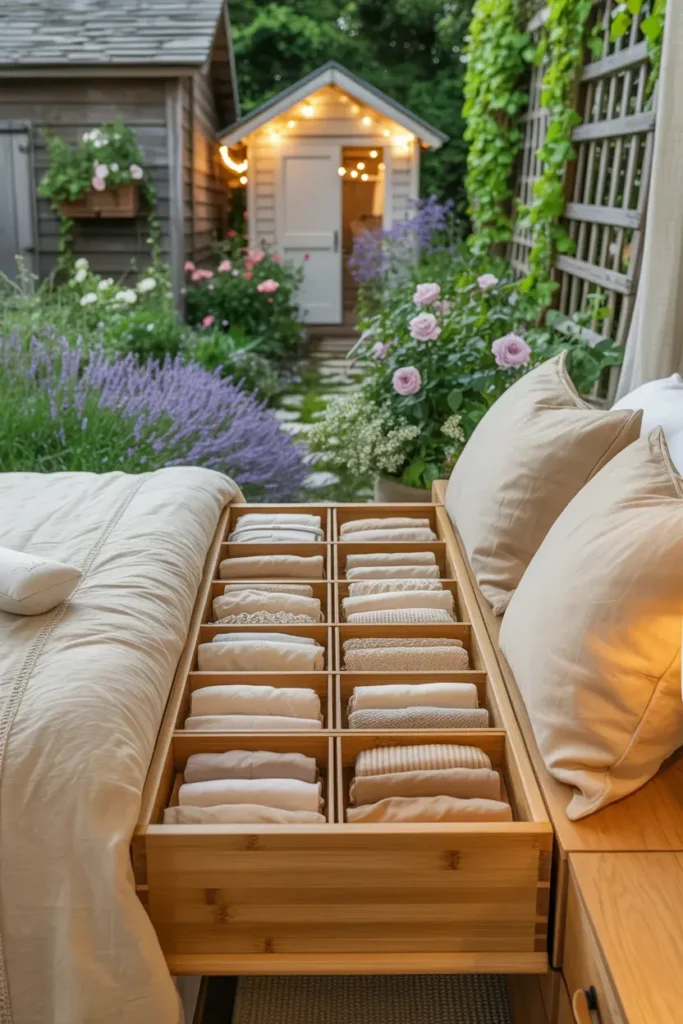
Here’s a small bedroom storage idea that costs almost nothing but makes a massive difference: stop treating your existing drawers like a junk zone and start organizing them properly. Drawer dividers — bamboo, acrylic, velvet-lined — transform a chaotic drawer into a system where everything has a designated place. The result is that you can fit significantly more into each drawer (up to 30% more, according to professional organizers) because you’re using the space intentionally rather than just shoving things in. This is especially true for underwear and sock drawers, which tend to become the black holes of small bedroom organization.
Expert Tip: Use the KonMari vertical folding method alongside drawer dividers. Folding items so they stand upright rather than lying flat means you can see everything in a drawer at a glance without digging. It sounds fussy but takes exactly the same amount of time as folding normally — you just do it differently.
Why it works: Most people think they need more storage when what they actually need is better organization of the storage they already have. Drawer dividers are the single highest-ROI investment in bedroom organization — often under $20 — because they let your existing furniture work at full capacity.
13. Window Seat Storage: Turn a Nook Into a Treasure Chest
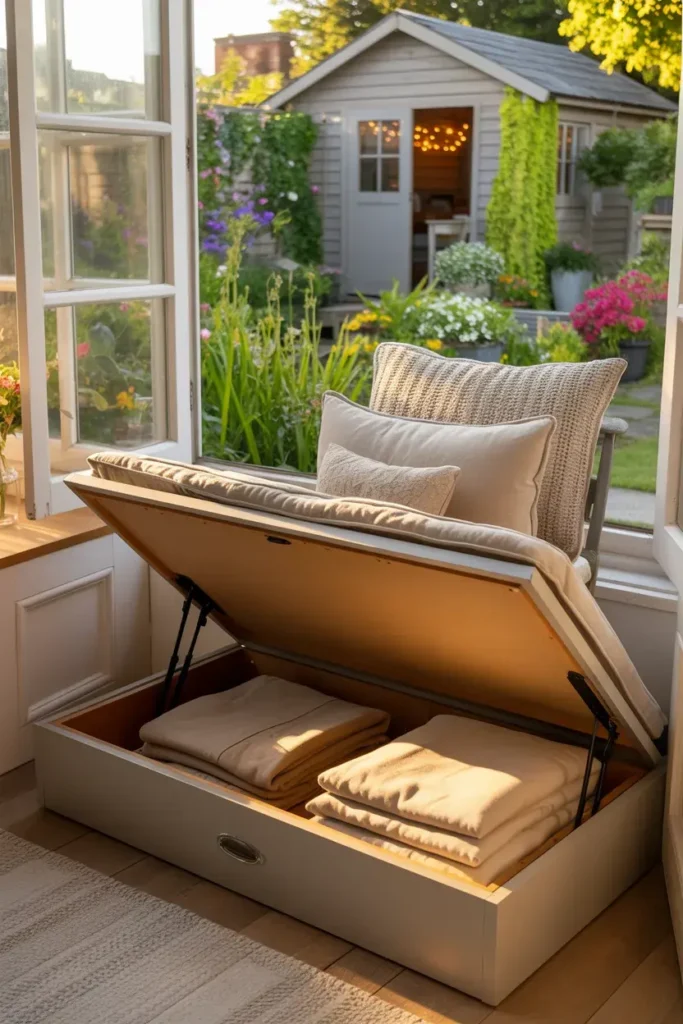
If your bedroom has a bay window or a deep window sill, you have an opportunity to create one of the most beloved storage and seating features in small-space design: the window seat with hidden storage underneath. A custom or semi-custom bench beneath the window offers a comfortable reading perch, extra seating, and a large storage compartment — all in a footprint that was previously just awkward floor space in front of the window. Line the seat with a plush cushion and some throw pillows, and it becomes the most charming corner of your bedroom.
Expert Tip: Use the storage under a window seat for bulky items that you access infrequently — extra bedding, board games, seasonal items. The lift-up mechanism works best when you’re not opening it multiple times a day, so save it for genuine bulk storage rather than everyday essentials.
Why it works: The window seat solves three problems at once: it provides seating, it provides storage, and it fills an architecturally awkward space (the floor area in front of a window or bay) with something purposeful and beautiful. It’s one of the highest-value additions to a small bedroom, both functionally and aesthetically.
Love the idea of cozy nooks and small-space design? Check out our full guide on Window Seat Ideas for inspiration that goes way beyond the bedroom!
14. Clothes Rail With Shelf Above: Open Wardrobe Done Right
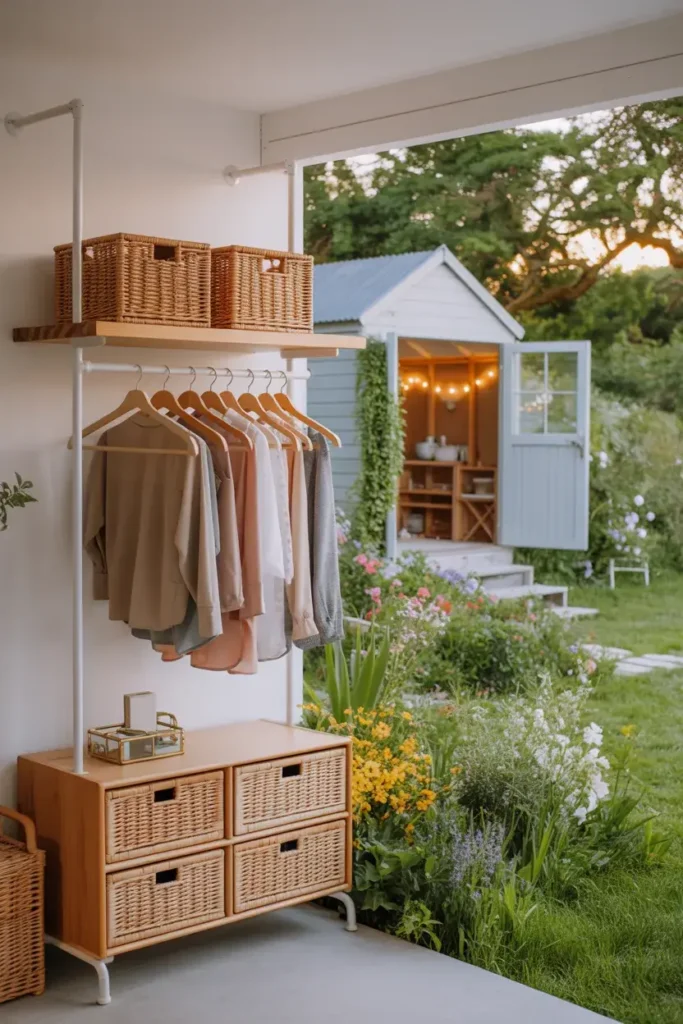
Open wardrobes — a clothes rail with a shelf above and perhaps a small set of drawers or baskets below — are having a major design moment, and for good reason. They’re significantly cheaper than fitted wardrobes, they’re easy to install, and when done right, they look like a deliberate, sophisticated design choice rather than a budget compromise. The key to making an open wardrobe work in a small bedroom is discipline — only keep items on the rail that you actually wear regularly, and make sure everything is hung neatly. Seasonal items go elsewhere (under the bed, in boxes). The reward is a wardrobe that doubles as a decorative display.
Expert Tip: Matching hangers are non-negotiable with an open wardrobe. Invest in a set of slim velvet hangers in one color — they look intentional, they stop clothes from slipping, and they take up significantly less rod space than plastic hangers, giving you more hanging capacity.
Why it works: An open wardrobe removes the door — one of the biggest space-users in a small bedroom. Hinged wardrobe doors need a clearance arc that can make an already-tight room feel cramped. A clothes rail has zero clearance requirements and can sit inches from the bed, the wall, or any other piece of furniture.
15. Magnetic Strips and Wall-Mounted Accessories
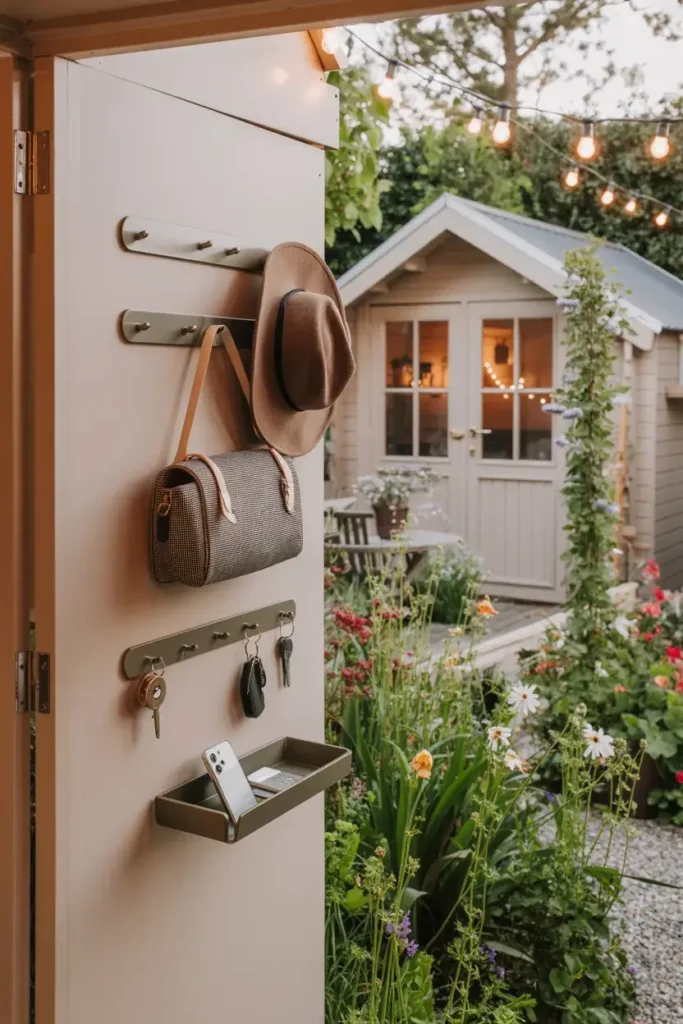
Think small. Not every storage solution has to be a major piece of furniture. Magnetic strips — the kind designed for kitchen knives but equally useful in a bedroom — can be mounted on a wall to hold small metal items like bobby pins, nail files, tweezers, small scissors, and jewelry. Wall-mounted hooks near the door can hold bags, hats, and jackets that would otherwise end up on the floor. Small wall-mounted bins near the desk can hold stationery. The principle here is the same across all these micro-solutions: get things off the flat surfaces and onto the walls, where they create no floor footprint and are far easier to access.
Expert Tip: Create a designated “launch pad” zone near your bedroom door — a hook for tomorrow’s outfit, a small tray for your phone and keys, and a mirror nearby. This one habit eliminates the morning scramble and keeps clutter from accumulating on your dresser.
Why it works: Surface clutter is the enemy of a calm small bedroom. When items have a designated wall-mounted home, they’re far more likely to return there instead of migrating to every flat surface in the room. This is especially true for the small daily-use items that are most likely to create visual noise.
16. Slim-Profile Furniture: Rethink Your Dresser
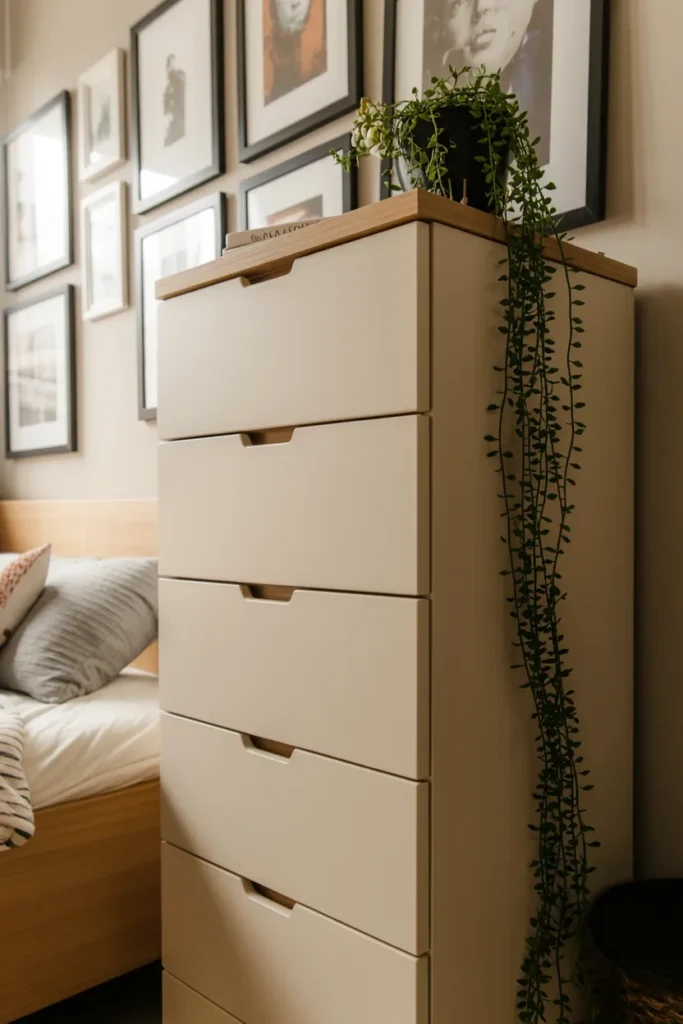
Many people assume they need a wide, low dresser — the classic six-drawer horizontal unit — when in reality, a tall, narrow dresser with the same number of drawers often holds just as much clothing while using a fraction of the floor space. A dresser that’s 18 inches wide and 60 inches tall has a floor footprint of roughly 1.5 square feet. A standard six-drawer horizontal dresser might have a footprint of 4 to 5 square feet. The math matters enormously in a small bedroom. Look for slim, tall dressers specifically designed for tight spaces — many furniture brands now offer exactly this.
Expert Tip: Place your slim dresser in a corner, where it can tuck in without blocking traffic flow or natural light. Corners are often underutilized in small bedrooms — they tend to become the spot where things get stacked and forgotten — and a tall, narrow piece of furniture claims the corner purposefully.
Why it works: Vertical thinking is the core principle of all great small-space storage. A tall, narrow dresser holds the same volume as a wide, low one but has one-third of the floor footprint. When you multiply this approach across all your furniture choices, the cumulative effect on the sense of space in a small bedroom is dramatic.
17. Modular Cube Storage: The Most Flexible System of All
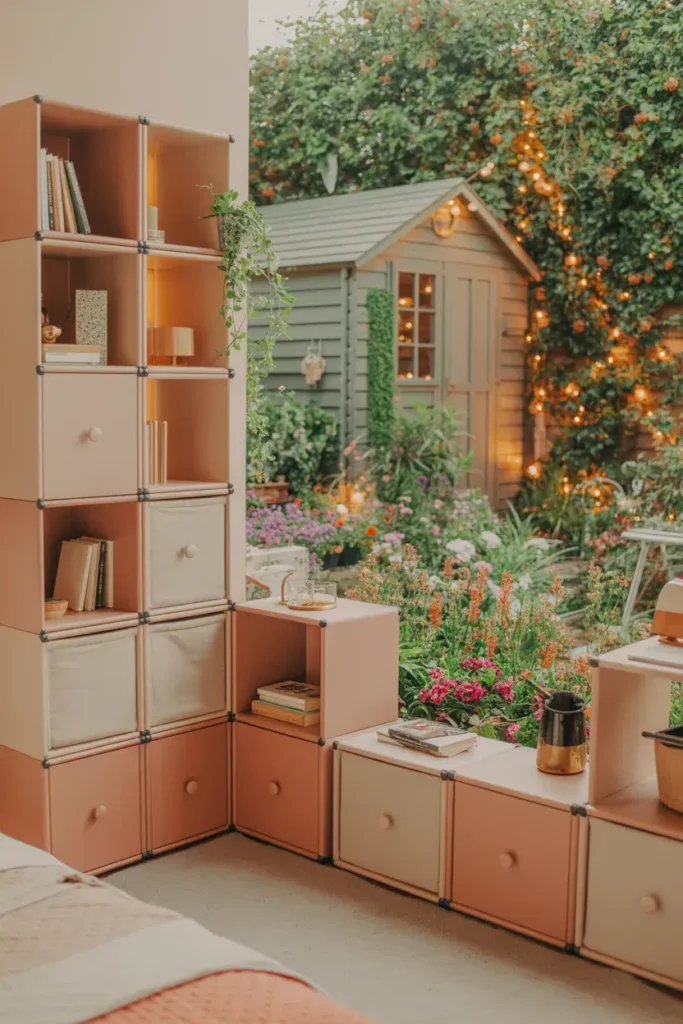
Modular cube storage is the Swiss Army knife of small bedroom storage ideas. Each cube is a unit that can stand alone or be combined with others in almost any configuration imaginable — a four-cube unit along the wall, an eight-cube unit wrapping around a corner, a three-cube unit beside the bed as a nightstand alternative. Add fabric-fronted drawers in some cubes and open shelves in others for a mix of hidden and displayed storage. Because the cubes are modular, you can take them apart and reconfigure them if your needs change, if you move rooms, or if you just want a different layout.
Expert Tip: Use cube storage as a room divider in a studio or open-plan bedroom-living area. A double-sided cube unit — open on both sides — can define your sleeping zone from the rest of the room while providing storage accessible from either direction.
Why it works: Modular storage is the most adaptable storage solution available, which makes it ideal for renters, people in transitional life stages, and anyone who likes to change their layout. It also scales with your budget — you can start with four cubes and add more over time as needed.
Which of these 17 ideas would make the biggest difference in your bedroom right now? I genuinely want to know — comment below with your top pick!
Final Thoughts: Your Small Bedroom, Transformed
Here’s the truth about small bedroom storage: the room size isn’t the problem. The approach is. The 17 ideas in this post prove that with the right systems — whether it’s an ottoman bed, a pegboard wall, a window seat, or simply better drawer dividers — a small bedroom can be just as functional, calm, and beautiful as a large one.
You don’t have to implement all 17 at once. Pick one or two that resonate most with your space and your budget, do them properly, and then build from there. Small wins compound. A well-organized bedroom isn’t just more functional — it genuinely changes how you feel when you wake up in the morning and how easily you fall asleep at night. Calm spaces create calm minds.
If you’re ready to go deeper into small-space design, don’t miss our guide on Small Room Makeover Ideas — it covers everything from furniture placement to lighting strategies that make any bedroom feel twice as large. And if you’re working with a really tricky layout, Small Bedroom Layout Mistakes That Make Your Space Feel Smaller is essential reading before you rearrange a single piece of furniture.
You’ve got this. Now go build your dream bedroom — one smart storage solution at a time.