10 Sideboard Decor Ideas That Turn Empty Space Into a Total Statement Moment
This article was created in line with Trends Oraa’s research and content standards.
Your sideboard is bare. It’s been bare for months. You walk past it every single day and think, someday I’ll fix that — and then you don’t.
Sound familiar? You’re not alone. The sideboard is one of the most overlooked surfaces in the entire home, yet it has the potential to be the most jaw-dropping focal point in your living or dining room. The difference between a forgettable sideboard and one that stops guests mid-sentence? Just a few intentional decor choices.
Before you dive in, you might also love our viral guide on 15 Brilliant Bookshelf Styling Ideas with Lots of Books — the same principles that make a bookshelf sing apply directly here!
In this post, I’m walking you through 10 of the most stunning, Pinterest-worthy sideboard decor ideas that real designers actually use — broken down so clearly that you can recreate any of them this weekend. Whether your style is modern minimalist, cozy farmhouse, or bold maximalist, there is a look here with your name on it. Let’s get into it.
What Makes a Sideboard “Styled” vs. Just “Cluttered”?
Before we get to the ideas, let me give you the golden rule of sideboard styling: the rule of three. Group objects in odd numbers (3, 5, 7), vary heights dramatically, and always balance visually heavy pieces with something light and airy. Keep this in mind as you scroll through the ideas below — you’ll start to see it everywhere.
10 Sideboard Decor Ideas to Steal Right Now
1. The Tall Mirror + Layered Greenery Combo
What you’re seeing: A large, gold-framed or arched mirror leaning casually against the wall above the sideboard, flanked by trailing pothos or eucalyptus in ceramic vases of varying heights. A tray at the base corrals candles and a small sculptural object.
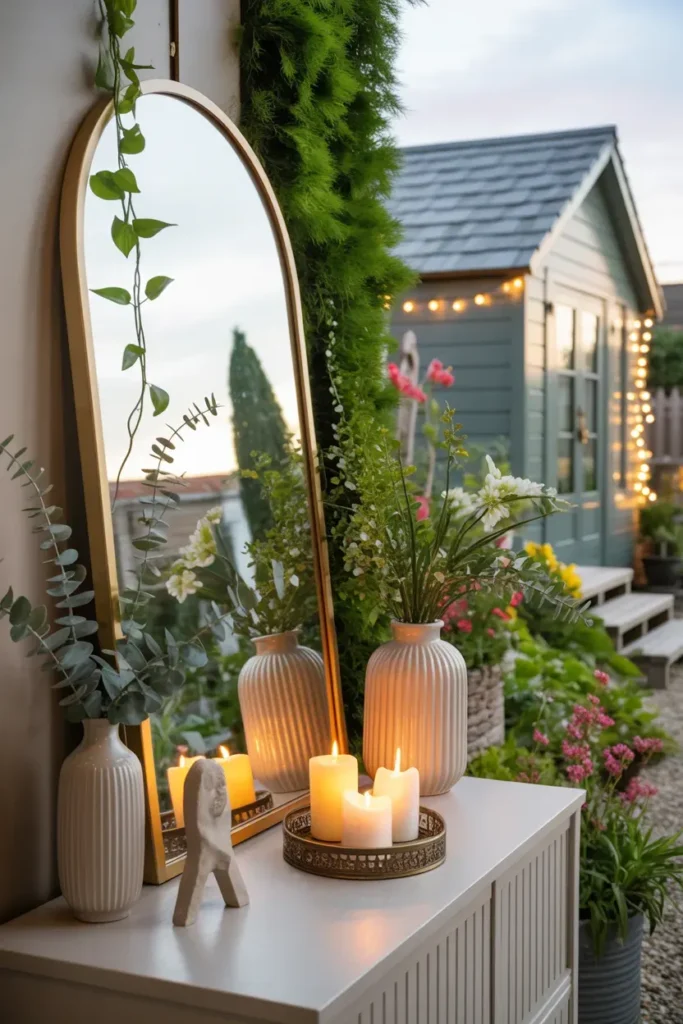
Why it works: Mirrors do something magical on a sideboard — they double the visual depth of the room and bounce light around in a way that makes a space feel twice as large. The greenery softens the hard lines of the furniture, while the tray prevents everything from looking scattered.
Expert Tip: Don’t hang the mirror — lean it. A leaned mirror looks intentionally casual and editorial, the way you’d see it in an interior design photoshoot. It also means zero commitment to wall holes!
Which vibe resonates most with you — lush and botanical, or sleek and minimal? Drop your answer in the comments — I’d love to know what direction to feature more!
2. The Curated Art Gallery Moment
What you’re seeing: Two or three framed art prints (abstract, landscape, or typography) arranged on the wall directly above the sideboard, staggered at slightly different heights. On the surface below: a single sculptural vase, a stack of two or three coffee table books, and one statement candle.
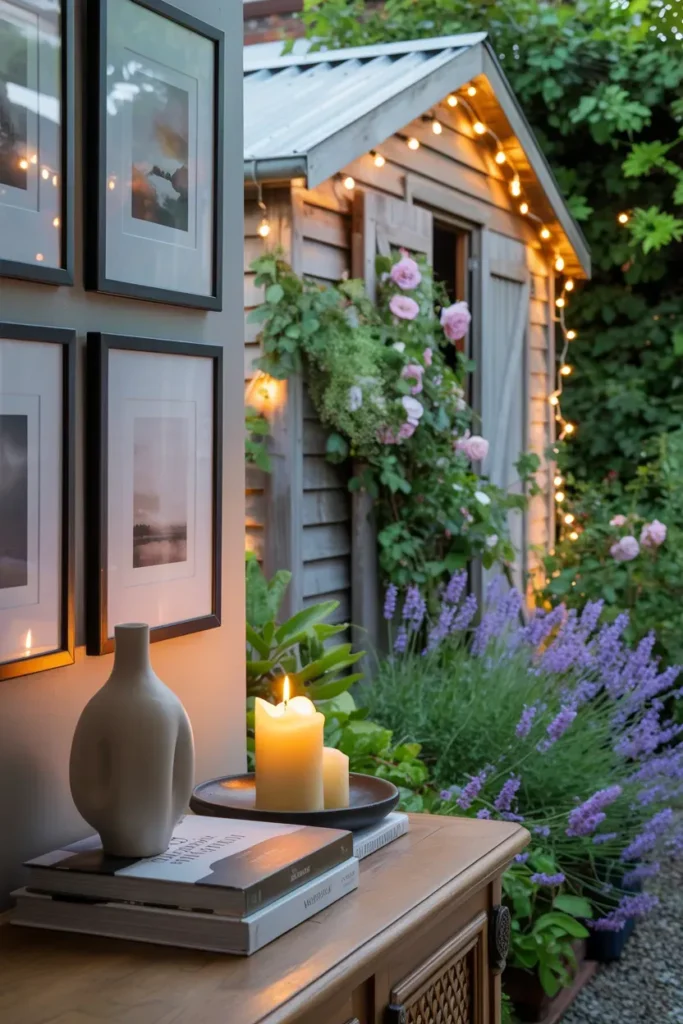
Why it works: The artwork does the heavy lifting visually, so the surface styling can stay minimal and intentional. This approach works beautifully in dining rooms because it creates a polished, restaurant-quality aesthetic without overwhelming the space. The key is keeping all frames in the same metal tone — brass, black, or white — for cohesion.
Expert Tip: Use painters tape to mock up your gallery wall arrangement on the actual wall before committing to nails. It saves so much frustration and ensures you love the layout before a single hole is made.
3. The Earthy Organic Tablescape
What you’re seeing: A sideboard styled entirely in warm, natural tones — terracotta pots, woven baskets, dried pampas grass, raw wood objects, and linen-textured runners. Everything feels handmade, sun-bleached, and collected over time.
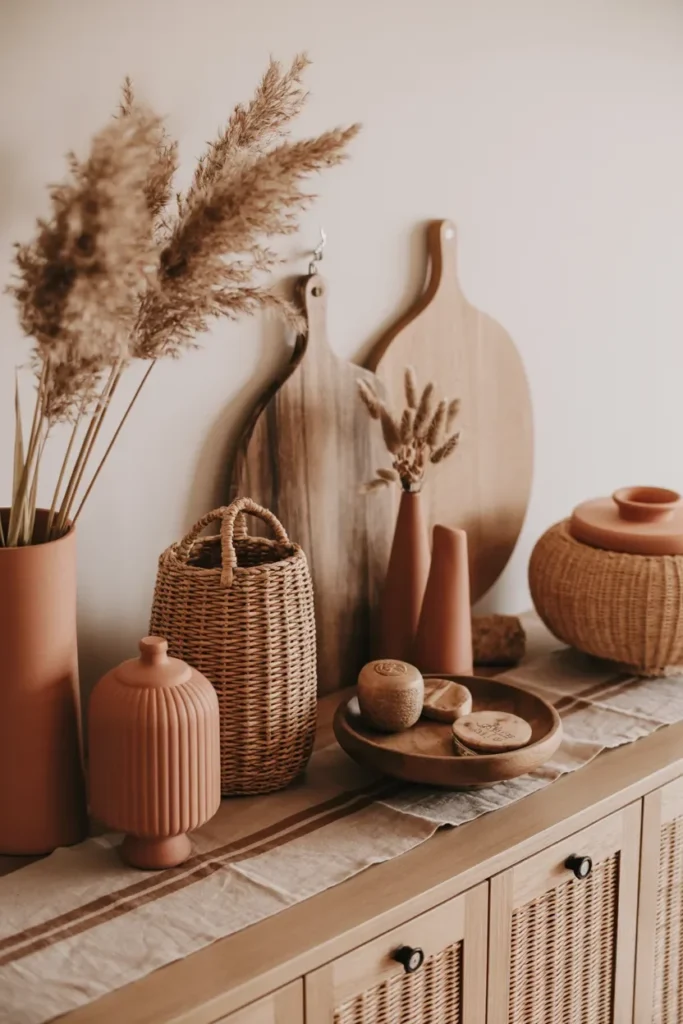
Why it works: The organic trend isn’t going anywhere in 2025 and beyond. This aesthetic has serious staying power because it’s rooted in texture and tone rather than trendy colors. Every element looks like it belongs, because the neutral palette acts as a unifying thread throughout.
Expert Tip: The secret to nailing this look is mixing textures, not just colors. Pair rough with smooth: a matte ceramic next to a polished wood bowl, or a rough woven basket beside a sleek metal tray. That contrast is what gives the vignette visual interest.
Check out our post on Country Farmhouse Decor Ideas for even more organic, earthy inspiration that pairs beautifully with this sideboard style.
4. The Bold Color Statement
What you’re seeing: A sideboard in a neutral tone — white, beige, or natural wood — styled with two or three accessories in a single bold accent color. Think deep cobalt blue vases, rich terracotta sculptures, or forest green candlesticks. The rest of the display stays neutral so the color pops.
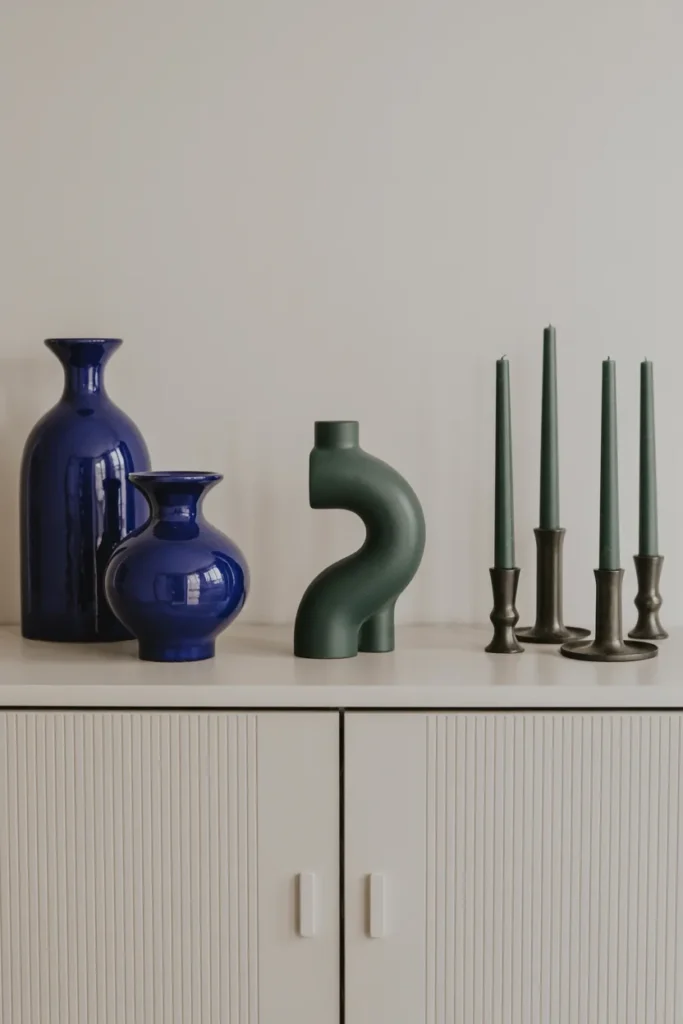
Why it works: Committing to one bold color in your decor is a designer trick called “color zoning.” Instead of mixing many colors and creating chaos, you pick one and repeat it in different forms, heights, and textures. The result looks sophisticated and intentional — not random.
Expert Tip: If you’re nervous about bold color, start with just one piece and build from there. A single oversized cobalt vase is a statement all on its own. You can always add more, but it’s harder to pull back once you’ve gone all in.
5. The Candlelit Maximalist Vignette
What you’re seeing: A rich, layered display featuring a mix of candlesticks at varying heights, a stack of books, a sculptural figurine or bust, dried florals, and possibly a small framed photo or vintage mirror. The overall feel is moody, romantic, and deeply personal.
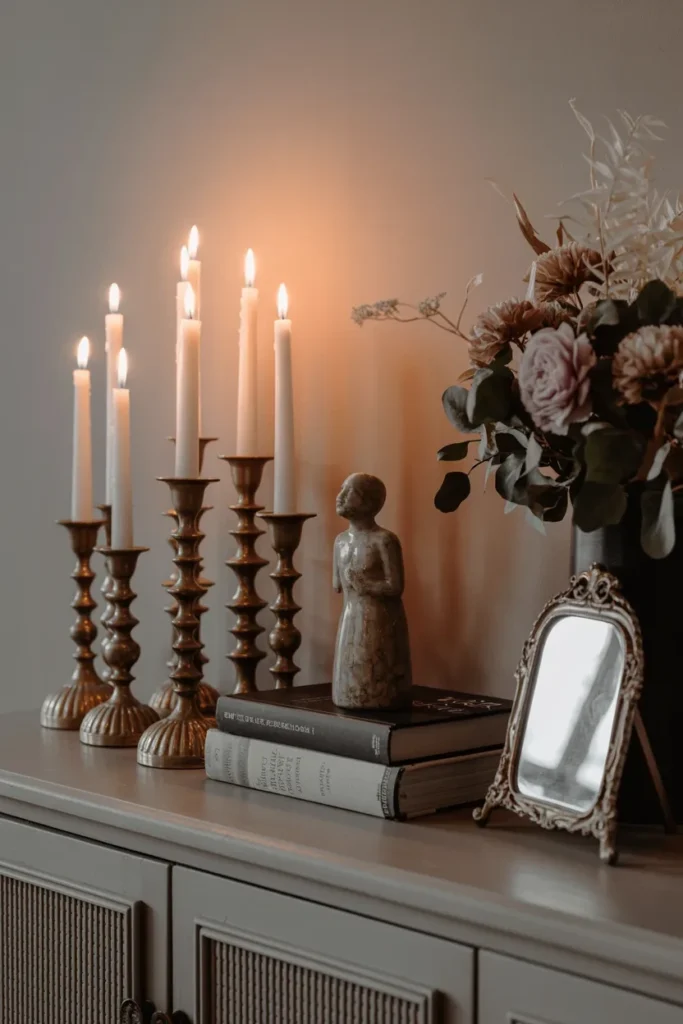
Why it works: This style leans into maximalism done right — where every piece tells a story and nothing feels mass-produced. The candles (even unlit ones) add a warmth and intimacy that is almost impossible to replicate with any other decor element. This look works especially well in dining rooms where ambiance is everything.
Expert Tip: Vary your candlestick heights dramatically — think 4 inches, 10 inches, and 16 inches together in a cluster. The height variation creates movement and draws the eye upward, making the entire display feel dynamic.
Are you more of a maximalist or a minimalist when it comes to home decor? I’m genuinely curious — tell me in the comments below!
Deep Dive: Sideboard Decor Buying Guide — What to Spend, What to Save, and What to Skip
Before you go on an impulsive HomeGoods run (we’ve all been there), let me break down a smart budget strategy for sideboard styling so you get the most impact for your money.
Where to Spend
Mirrors and Art: These are the “heroes” of your display — the first thing the eye travels to. Spending a little more here is worth it because quality matters. A flimsy, poorly framed mirror screams budget even from across the room. Budget: $50–$200 for a good leaning mirror; $20–$80 per art print.
One or Two Anchor Vases: These are the pieces that hold the whole vignette together. Look for ceramics with interesting glaze finishes, unusual silhouettes, or artisan character. A beautiful vase in the $30–$70 range is an investment that stays timeless. Avoid cheap plastic fakes.
Where to Save
Books: You don’t need new coffee table books. Thrift stores, estate sales, and library book sales are goldmines. Look for books with beautiful spines — blues, greens, creams — or simply stack them cover-side down for a cleaner look.
Candles: IKEA’s pillar candles and votives are some of the best budget decor finds on the planet. They photograph beautifully and cost next to nothing. Pair them with more interesting candlestick holders from a thrift store and nobody will know you spent $3.
Dried Florals: Dried pampas grass, bunny tail grass, and dried lavender can be found on Amazon or Etsy for $10–$25 a bundle, and they last for years. Far better value than fresh flowers if you want a permanent display.
What to Skip Entirely
Cheap plastic “faux” sculptures: These read as fake from across the room. If you can’t afford a real ceramic or stone piece, skip the sculpture entirely and let a book stack or candle fill that spot instead.
Too many picture frames: One or two meaningful photos can be beautiful. More than that on a sideboard starts to look like a shrine rather than a styled vignette. If photos are important to you, consider a gallery wall above instead.
Matching “set” decor: Avoid buying pre-bundled “3-piece vase sets” from big box stores. They scream “styled by algorithm” and lack the personal, curated feel that makes sideboard decor special. Mix pieces from different sources instead.
Budget Summary
| Item | Budget Pick | Splurge Pick |
|---|---|---|
| Mirror | IKEA Hemnes ($50) | Anthropologie Arched ($250+) |
| Vases | Thrift store finds ($5–$15) | West Elm Ceramics ($40–$90) |
| Art Prints | Etsy digital prints ($5–$20) | Minted originals ($80–$200) |
| Candles | IKEA pillars ($3–$8) | Voluspa or Diptyque ($30–$80) |
| Books | Library sales ($1–$3) | Assouline coffee table books ($60+) |
| Plants | Propagated cuttings (free!) | Rare houseplant from a nursery ($30+) |
Total for a beautifully styled sideboard: as little as $50–$100 if you shop smart. No interior designer required.
6. The Minimalist “Less Is More” Edit
What you’re seeing: A barely-there display — maybe just two or three objects total. A single architectural vase, one sculptural object, and perhaps a low-profile tray. Lots of negative space. Everything is in a tonal, monochromatic palette of whites, creams, and warm grays.
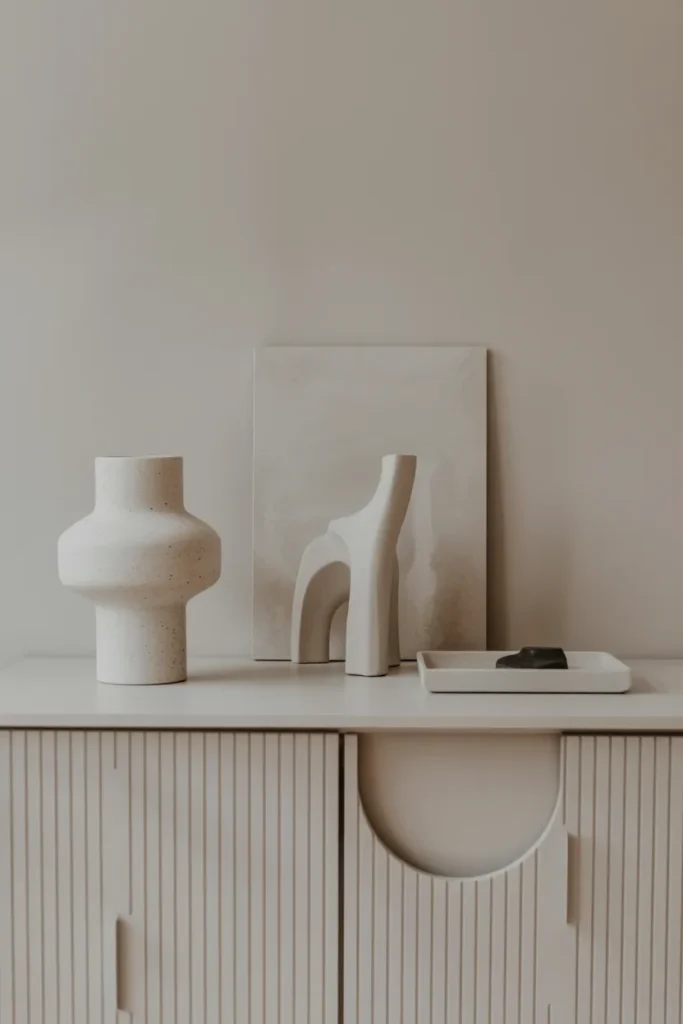
Why it works: Minimalism done right is one of the hardest looks to achieve — and one of the most impactful. The negative space around each object forces the eye to fully appreciate what is there. This style works especially well in modern, Japandi, or Scandinavian-inspired interiors where clean lines and calm are the priority.
Expert Tip: The single most important rule of minimalist sideboard styling is quality over quantity. One truly beautiful, interesting object always outperforms five mediocre ones. Before you add a second piece, ask yourself: “Is this adding to the display, or just filling space?”
7. The Seasonal Refresh Method
What you’re seeing: A sideboard that changes with the seasons — fresh spring greenery and pastel accents in April, warm burnt oranges and pumpkins in October, frosted branches and taper candles in December. The bones of the display (mirror, tray, anchor vase) stay the same; only the accent pieces rotate out.
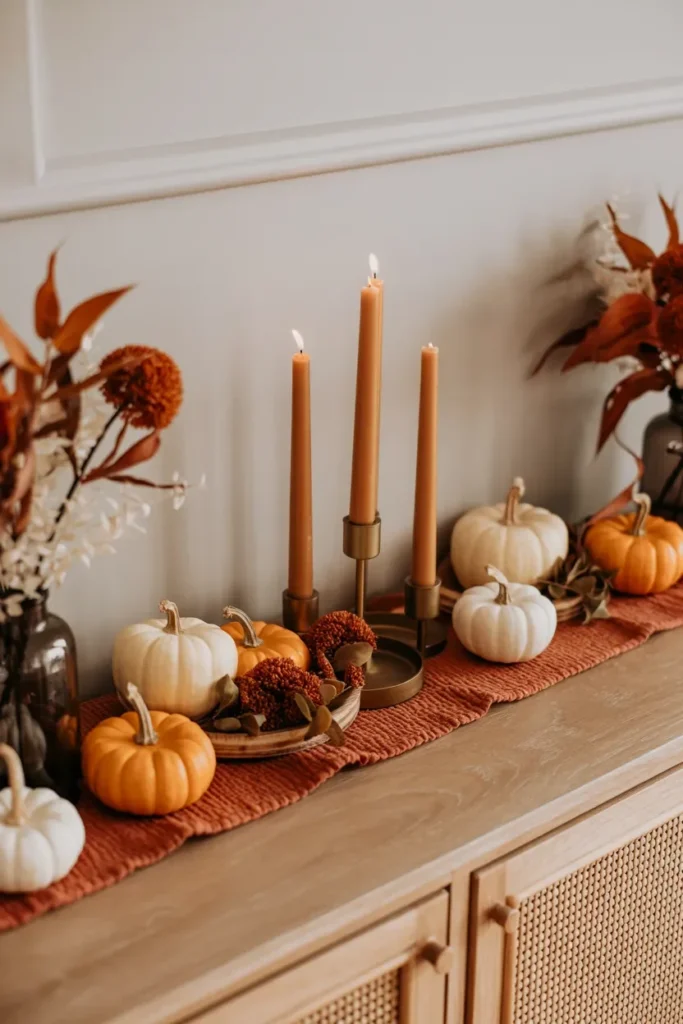
Why it works: This method keeps your decor feeling fresh and alive without requiring a full redesign every few months. It’s also a brilliant budget strategy — you invest once in the foundational pieces, then spend just $10–$20 seasonally swapping in small accents.
Expert Tip: Store seasonal decor in a labeled bin so it’s easy to swap things in and out. Make it a fun ritual — pull out the bin on the first day of a new season, swap the accents, and refresh the space in under 20 minutes. It sounds small, but it genuinely changes how you feel about your home.
For more seasonal inspo, our How to Transition Your Home from Winter to Spring Decor guide is one of our most-loved posts. Your sideboard will thank you.
8. The Plant Parent Paradise
What you’re seeing: A sideboard that has become the centerpiece of a full indoor plant display. A large fiddle-leaf fig or monstera anchors one end, while small potted succulents, trailing pothos, and propagation vases fill the rest of the surface. It’s lush, joyful, and alive.
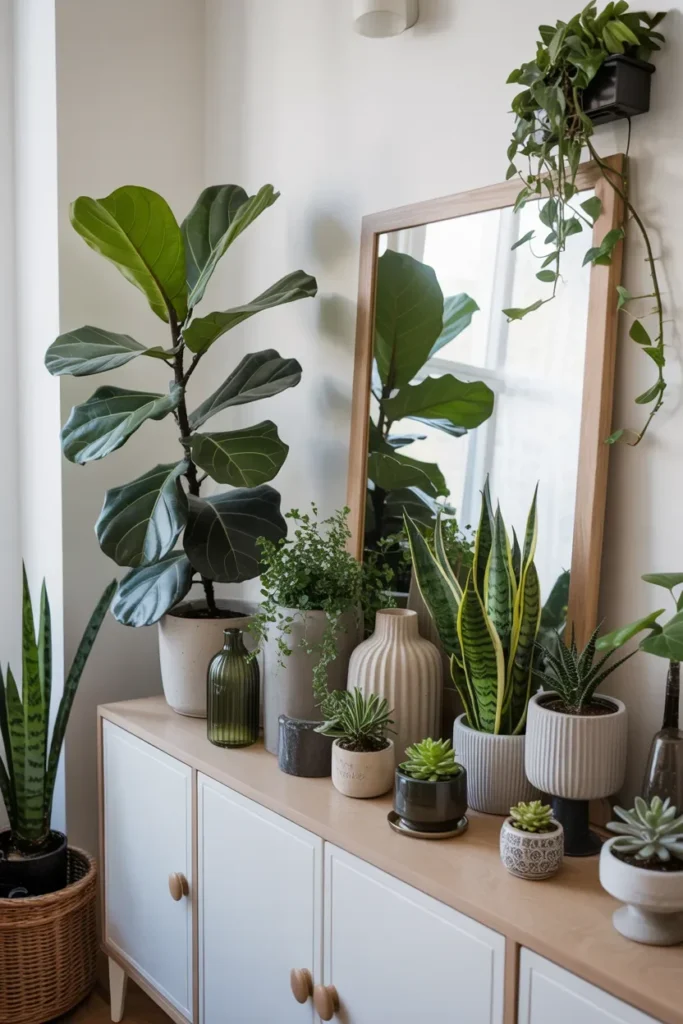
Why it works: Plants bring something into a home that no other decor element can — they literally breathe. A sideboard positioned near natural light is an ideal plant shelf because the furniture’s horizontal surface holds multiple plants at eye level, where you actually appreciate them. Layer in a few ceramic pots and a watering can as decor, and the whole thing feels purposeful.
Expert Tip: Choose plants at different heights and leaf sizes for maximum impact. A large, dramatically shaped leaf (monstera, fiddle fig, bird of paradise) paired with small, trailing varieties (pothos, string of pearls) creates a layered canopy effect that photographs beautifully.
Looking for creative ways to display your houseplants? Our Houseplant Pot Ideas post is packed with inspiration.
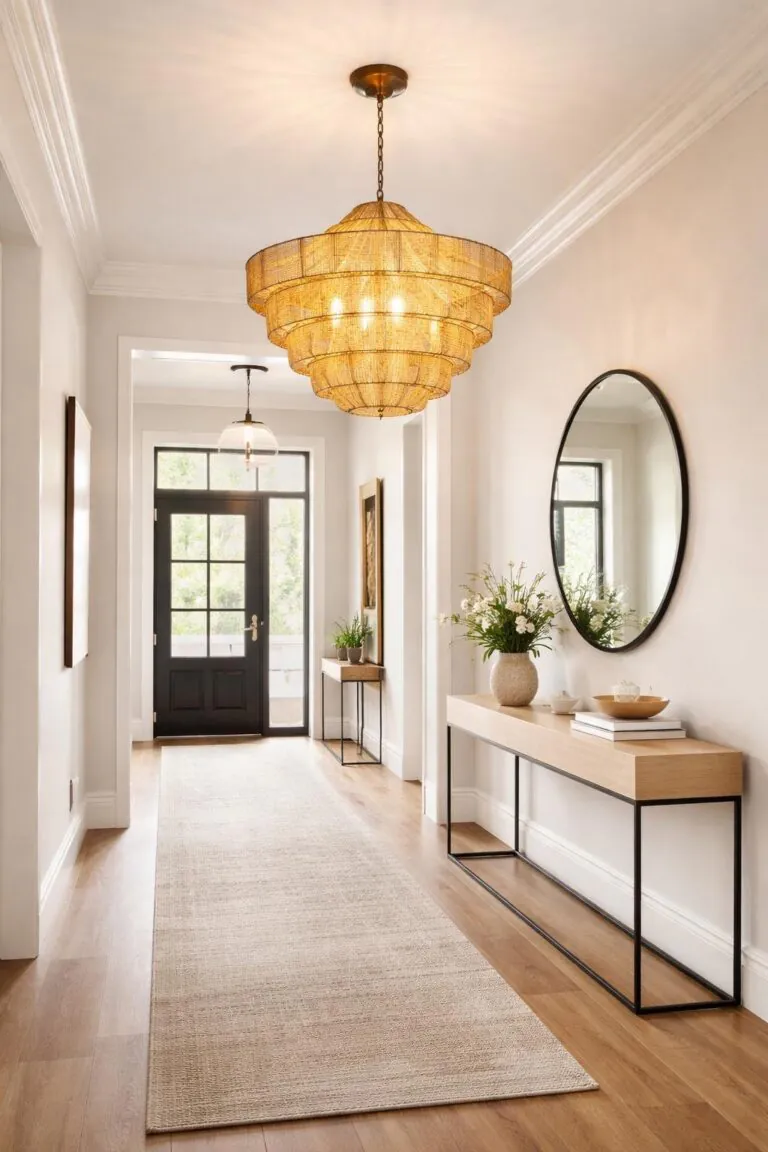
9. The Statement Lamp Anchor
What you’re seeing: A sideboard where a sculptural table lamp is the hero piece. An oversized rattan lamp shade, a ceramic column lamp, or a dramatic arc lamp sits at one end of the sideboard, anchoring the entire display. Everything else — a low vase, a small stack of books, a candle — is styled lower to let the lamp command its moment.
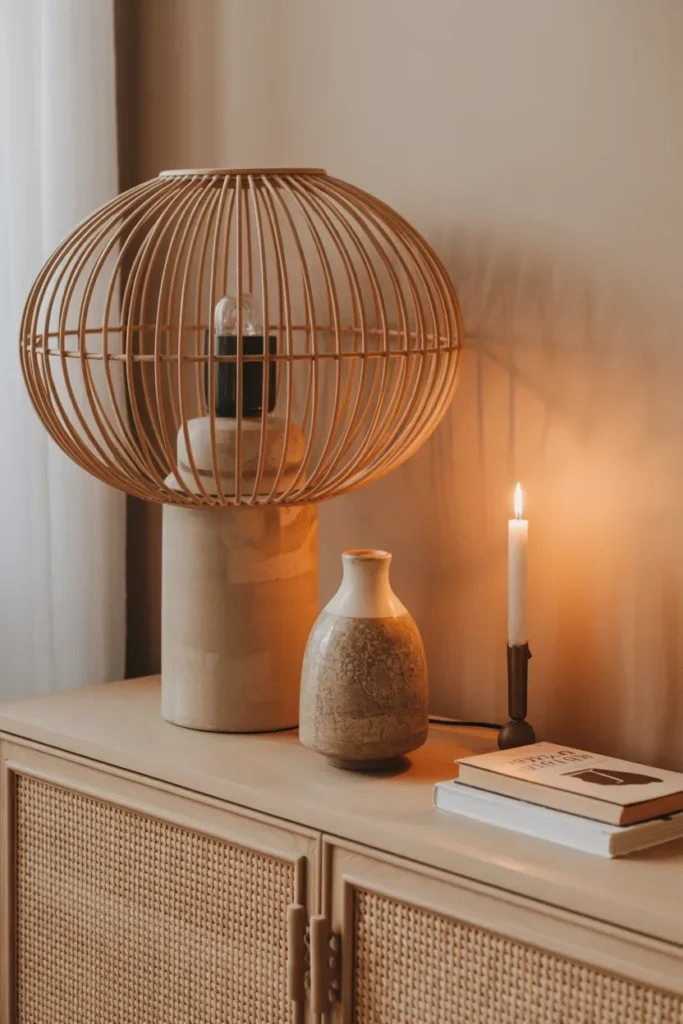
Why it works: Lighting is the single most transformative decor element in any room, and sideboards are too often styled purely as a daytime display. A lamp on your sideboard changes the entire mood of the room at night — casting warm, flattering light that makes your whole living or dining space feel cozy and intentional.
Expert Tip: Always use a warm-toned bulb (2700K–3000K) in your sideboard lamp. Cool white light (4000K+) is harsh and unflattering. The right bulb is the difference between “Instagram-worthy glow” and “interrogation room vibes.”
10. The Bar Cart Sideboard
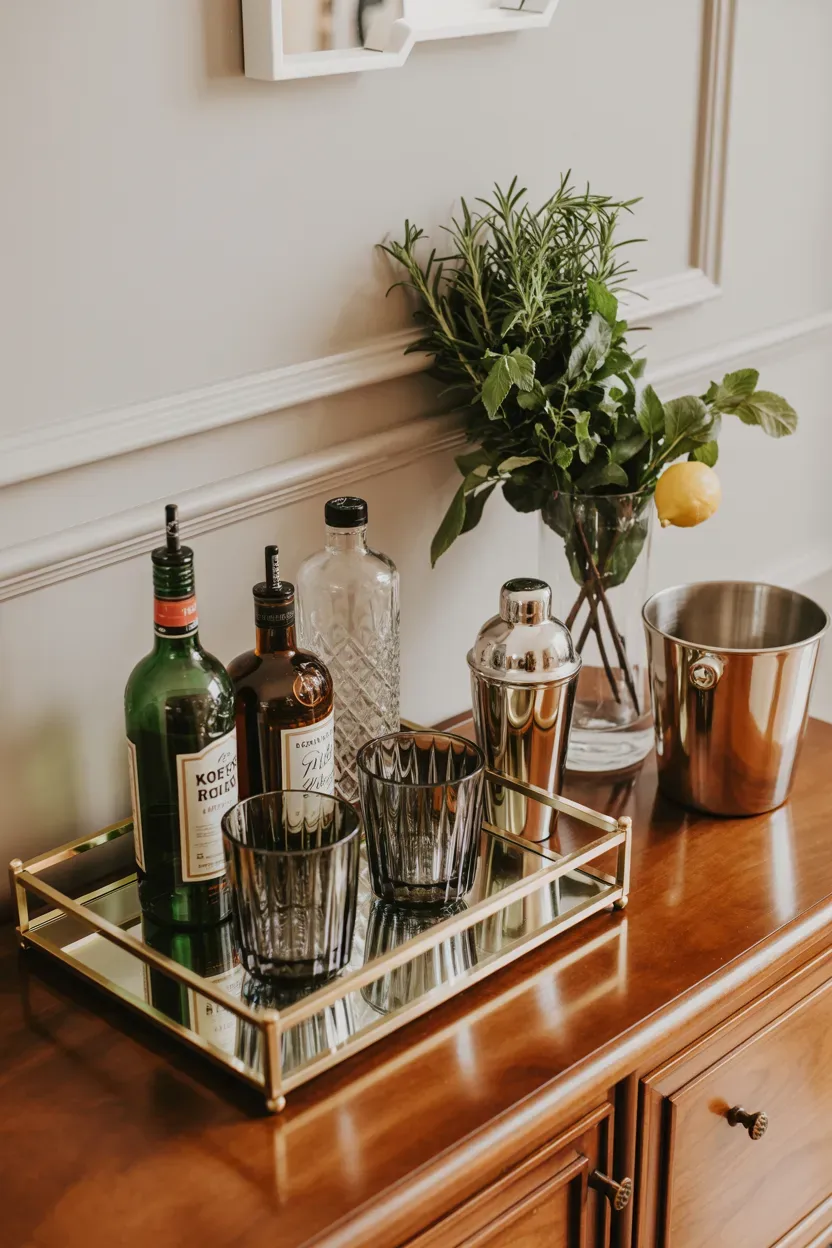
What you’re seeing: A sideboard styled as an elegant home bar — a mirrored tray holding a few bottles of your favorite spirits, crystal or smoked glass tumblers, a gold cocktail shaker, a small ice bucket, and a vase of fresh flowers or herbs. Classy, functional, and endlessly Instagram-worthy.
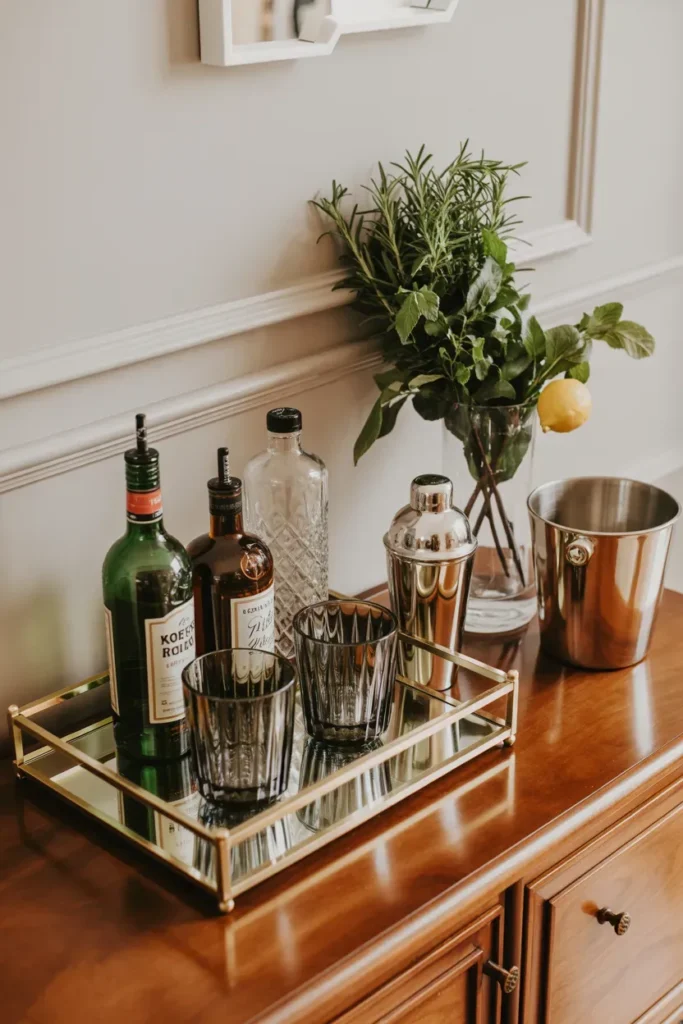
Why it works: The home bar sideboard is having a serious moment right now, and for good reason. It transforms the sideboard from a passive display surface into an active, functional zone that guests actually interact with. Plus, it gives you a very good excuse to display your good glassware instead of hiding it in a cabinet.
Expert Tip: Keep the display curated — two to four bottles max, arranged at varying heights. Use a tray to define the bar zone and contain the items. Add one “living” element (fresh herbs like rosemary or thyme in a small vase, or a lemon in a bowl) to make it feel fresh rather than static.
Which of these 10 sideboard decor ideas is speaking to your soul right now? I’m seriously torn between the plant paradise and the bar cart look myself — tell me yours in the comments!
The 3 Biggest Sideboard Styling Mistakes (and How to Fix Them Fast)
Mistake 1: Everything is the same height. The quickest fix is to add one tall element — a lamp, a tall vase, a leaning mirror — that dramatically breaks the horizontal line.
Mistake 2: The color palette has no theme. Pull two or three colors from your existing room (rug, throw pillows, curtains) and use those as your palette for the sideboard. Suddenly, everything feels connected.
Mistake 3: No negative space. If every inch of the surface is covered, the eye has nowhere to rest. Remove half the objects, then add one or two back if it feels too bare. You almost always need fewer pieces than you think.
Final Thoughts: Your Sideboard Deserves Better
Your sideboard is prime real estate. It’s at eye level, it’s in the most-used rooms of your home, and it has the surface space to create a genuinely beautiful vignette — without requiring a renovation or a design degree.
The secret is this: start with one idea from this list, use pieces you already own, and build from there. You don’t need to nail it on the first try. Styling is an evolving process, and the best-designed homes always look like they’ve been curated slowly over time rather than ordered in one online shopping cart.
Start today. Move one thing. Lean a mirror. Add a plant. Light a candle. That’s your statement moment — and it’s waiting for you.
Ready to keep the styling momentum going? You’ll love our guide on The Ultimate Guide to Styling a Coffee Table Like a Pro — the same principles apply to every surface in your home, and it’s one of our most-saved posts ever. Go check it out!
And if you’re dreaming of a full living room refresh, don’t miss our 10 Modern Living Room Design Ideas for even more inspo. Save this post, share it with a friend who needs a sideboard glow-up, and come back when your space looks like a magazine page.
Pin this post for later and tag us when you style your sideboard — we love seeing your beautiful homes!