17 Beautiful Garden Shed Landscaping Ideas That Will Make Your Neighbors Stop and Stare
This article was created in line with Trends Oraa’s research and content standards.
Your shed looks like an afterthought. It doesn’t have to.
That ugly, lonely structure sitting in the corner of your yard? It’s a hidden canvas. And these garden shed landscaping ideas are about to change everything.
Whether you have a tiny potting shed or a full-size workshop, the space around it deserves just as much love as your front porch or patio. I’ve spent hours combing through the most stunning shed transformations on Pinterest, and what I found blew my mind a little strategic planting, some clever hardscaping, and maybe a window box or two can turn a boring shed into the most charming spot in your entire yard.
You might also love our viral guide on → Vintage Garden Decor Ideas That Feel Timeless and Totally Doable
Before we dive into the ideas, I want you to know: most of these transformations are low-budget and DIY-friendly. You don’t need a landscape designer or a massive renovation budget. You just need inspiration and that’s exactly what this guide delivers.
The 17 Best Garden Shed Landscaping Ideas
1. 🌿 Frame It with a Climbing Rose Arch
What you’re seeing: A rustic wooden shed with a white picket gate and a lush rose arch overhead. Pale pink climbing roses tumble across the entrance, and lavender lines the stone path leading up to the door.
This is the classic “English cottage” look, and it never gets old. Climbing roses like ‘New Dawn’ or ‘Zephirine Drouhin’ are perfect for shed archways because they’re vigorous, fragrant, and return year after year with minimal fuss. Train them up a simple wooden or metal arch frame installed just in front of the shed door.
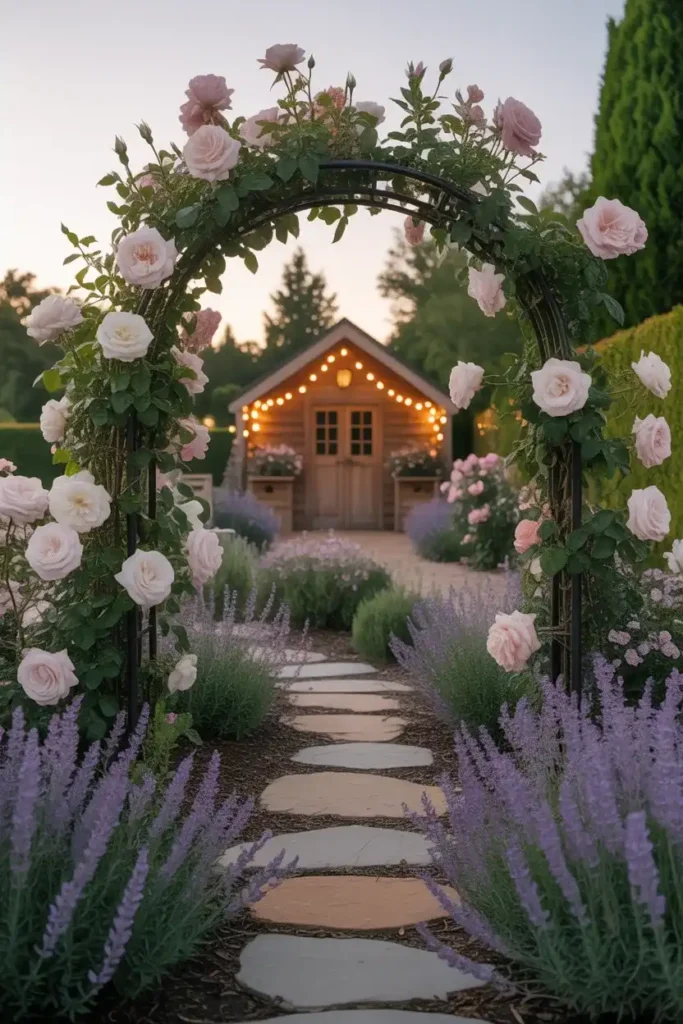
Expert Tip: Plant your roses at least 18 inches from the shed wall to allow for air circulation and prevent moisture buildup on the wood. A layer of mulch around the base keeps weeds down and retains moisture during dry spells.
Why it works: The arch creates a visual “entrance” that transforms your shed from storage unit to destination. It draws the eye forward and makes the whole area feel intentional and curated rather than accidental.
2. 🪨 Lay a Stepping Stone Path Through Cottage Garden Plants
What you’re seeing: Large irregular flagstones winding through a riot of wildflower-style planting foxgloves, echinacea, and cosmos brushing against the stones as you walk toward a weathered wooden shed in the background.
A path does two things: it gives you practical access to your shed without trampling the grass, and it tells the story that this is a place worth walking to. Use natural flagstone, reclaimed brick, or even budget-friendly concrete stepping stones from your local garden center.
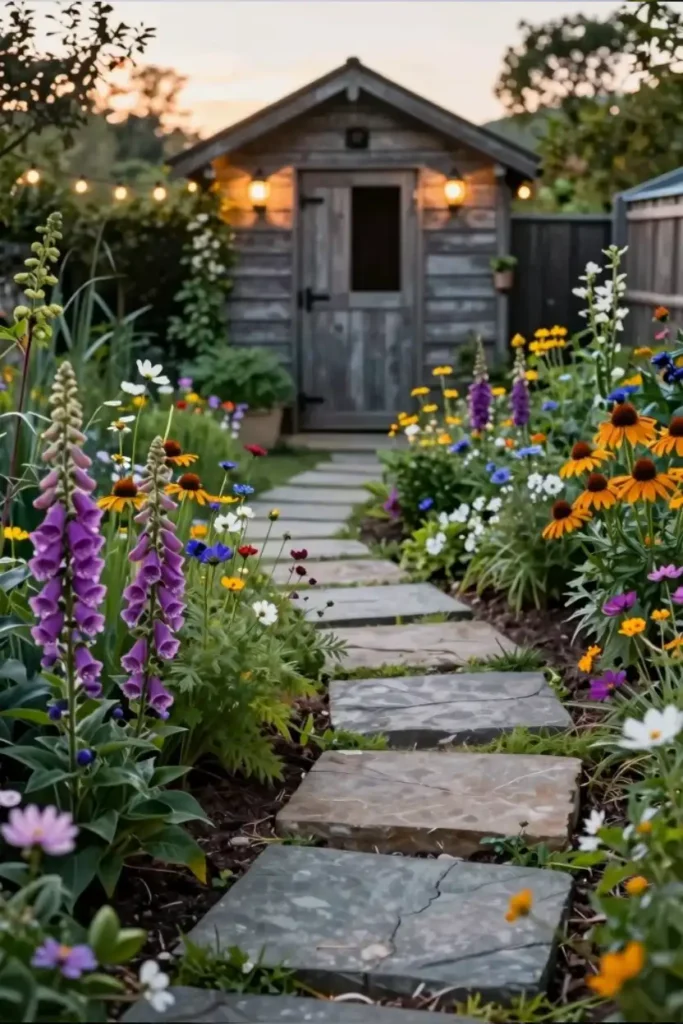
Expert Tip: Leave a little gap between stepping stones and let creeping thyme or chamomile fill in these low-growing plants release a gorgeous fragrance when you step on them and look completely magical.
Why it works: Paths create a journey. Even in a small yard, a winding path slows the eye and makes the space feel larger and more immersive. It also signals careful design intent, which elevates the whole landscape.
3. 🌸 Add a Window Box Overflowing with Blooms
What you’re seeing: A sage-green shed with a single cedar window box bursting with trailing petunias, bacopa, and sweet potato vine. The planting spills generously over the edges, softening the hard lines of the shed wall.
Window boxes are one of the highest-impact, lowest-effort transformations you can make to a garden shed. They add color, texture, and life to what is otherwise just a flat wall. You can buy ready-made brackets and boxes from any hardware store, or build your own from cedar for under $30.
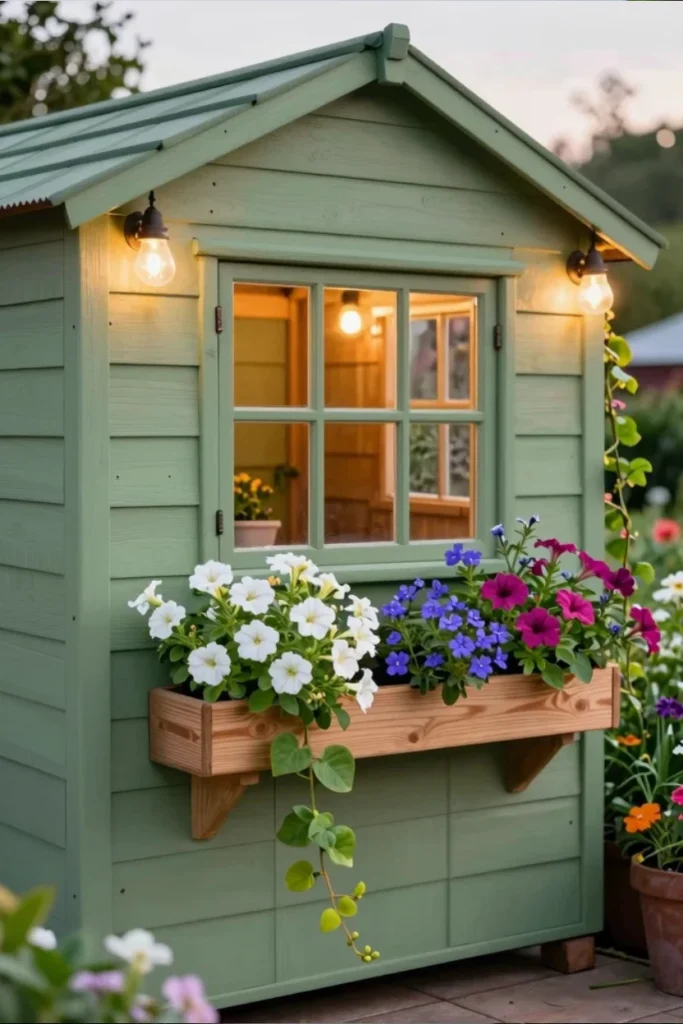
Expert Tip: Use a mix of “thrillers, fillers, and spillers” in your window box a tall focal plant, a mounding filler, and a trailing plant that drapes over the edge. This three-part formula works every single time.
Why it works: Window boxes create the illusion that the shed is a real, lived-in building. They humanize the structure and connect it visually to the garden around it. Plus, they look absolutely incredible on Pinterest.
4. 🪵 Build a Simple Raised Bed Right Against the Shed Wall
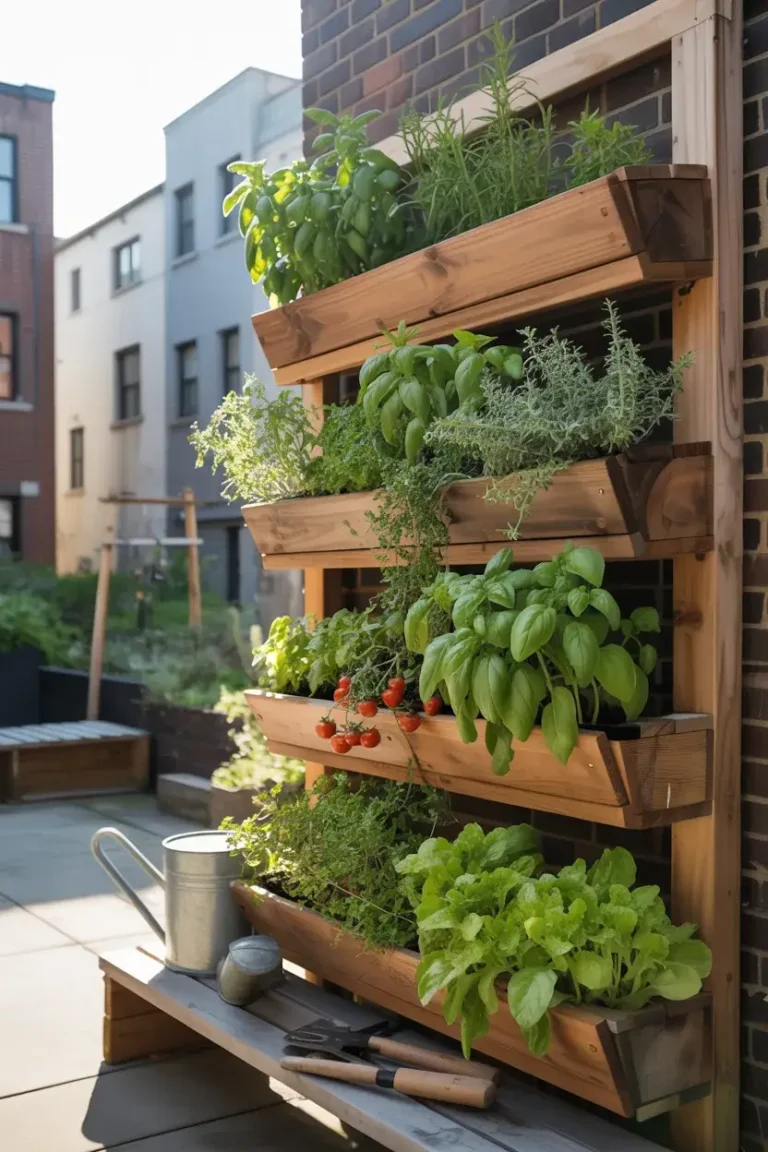
What you’re seeing: Two low cedar raised beds flanking the front of a charcoal-painted shed, planted with herbs, strawberries, and compact vegetable varieties. A watering can sits casually on the corner.
This is one of the most practical shed landscaping ideas on this list. If your shed is in or near your kitchen garden, raised beds directly adjacent to it make total sense you can grab your tools and get to work without crossing the whole yard. Cedar raised beds are beautiful, durable, and relatively affordable to DIY.
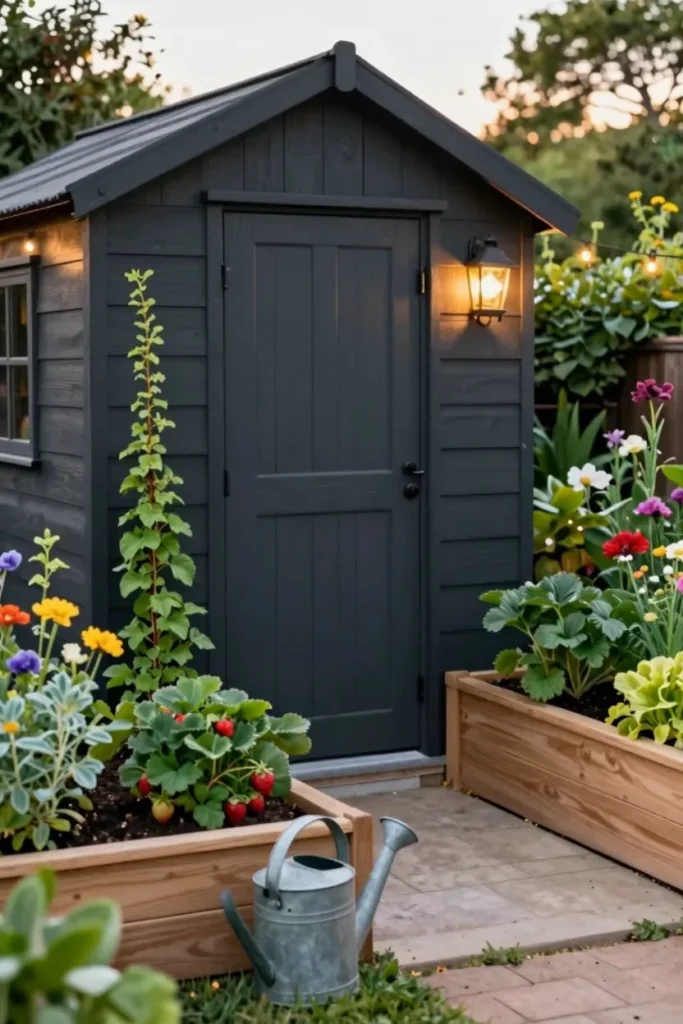
Expert Tip: Leave at least 24 inches between the raised bed and the shed wall. This prevents soil moisture from pressing against the wood and gives you room to walk around for maintenance.
Why it works: The raised beds ground the shed visually they give it “roots” and make it look like part of a considered design rather than something that was just placed wherever it fit. The structure and geometry of the beds also creates a satisfying contrast with loose planting.
5. 🌾 Plant a Wildflower Meadow Around the Base
What you’re seeing: A simple wooden shed surrounded by a loose, naturalistic planting of poppies, cornflowers, and ox-eye daisies swaying in the breeze. The effect is effortlessly romantic and completely wild-looking.
Here’s a secret: wildflower meadows are actually easier to maintain than a traditional lawn or border. You seed once, and then largely leave them alone. They attract pollinators, look sensational in summer, and give your shed a dreamy, storybook atmosphere that is genuinely hard to achieve any other way.
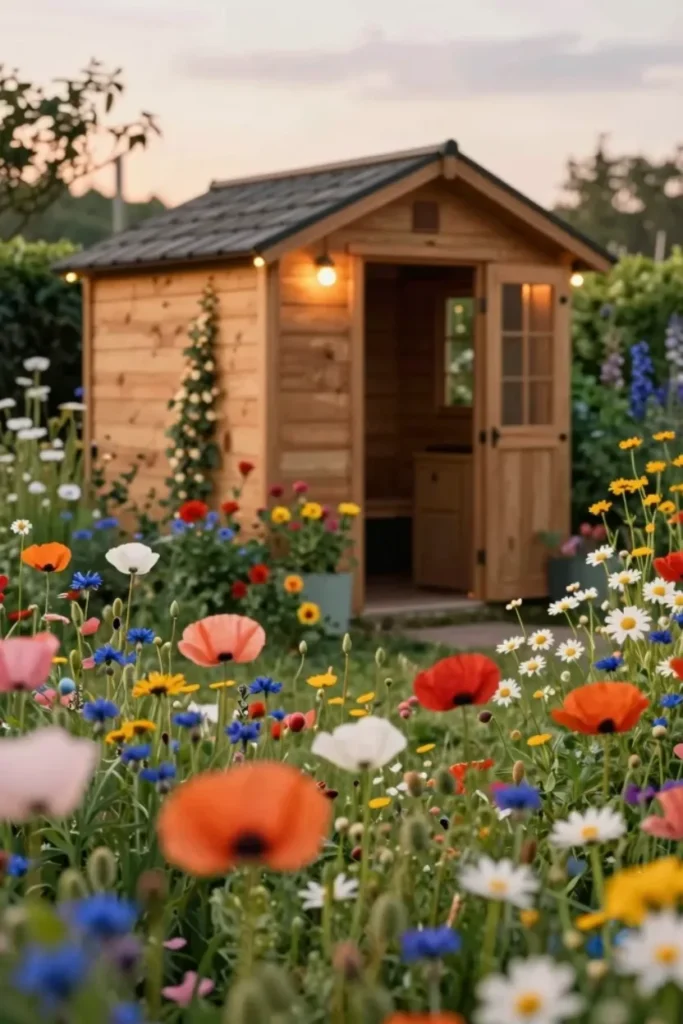
Expert Tip: Prepare your meadow area by removing grass and lightly raking the soil before sowing. Spring or autumn are the best times to sow. Choose a seed mix suited to your climate look for “North American wildflower mix” or regional blends.
Why it works: The contrast between the structured shed and the loose, painterly meadow planting creates visual tension in the best possible way. It feels artful and relaxed at the same time.
💬 Which of these first five ideas speaks most to your style structured and tidy, or wild and romantic? Drop your answer in the comments I’d love to know!
6. 🏡 Create a Gravel Surround with Potted Plants
What you’re seeing: A black-painted shed with a generous gravel apron spreading out from its base. Large terracotta pots cluster around the entrance, planted with olive trees, lavender, and ornamental grasses. A low wooden bench sits to one side.
Gravel is one of the best-value landscaping materials you can use. It’s cheap, low-maintenance, weed-suppressing (especially with landscape fabric underneath), and it photographs beautifully. A gravel surround also solves the common problem of muddy ground around shed entrances.
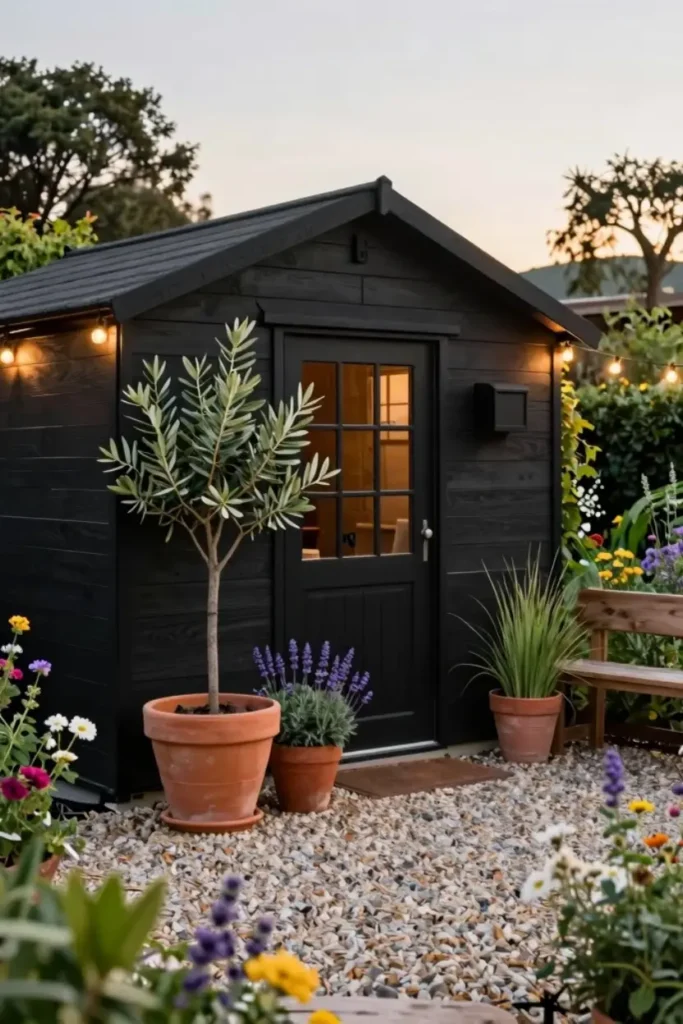
Expert Tip: Use larger gravel 20mm or bigger around sheds and in high-traffic areas. Smaller pea gravel tends to scatter and gets tracked inside. Edge it cleanly with metal or timber edging for a polished look.
Why it works: Gravel creates a clear “zone” around the shed, defining it as its own outdoor room. The potted plants add flexibility you can move them with the seasons, change them out easily, and cluster or spread them depending on what’s blooming.
7. 🌳 Frame the Shed with a Living Hedge Backdrop
What you’re seeing: A pretty painted shed nestled in front of a dense, clipped yew hedge. The deep green of the hedge acts as a backdrop, making the shed’s paint color (a soft dusty blue) pop dramatically against it.
A hedge backdrop is a landscaping trick borrowed straight from professional garden designers. It creates depth, provides privacy, buffers wind and noise, and most importantly it makes anything placed in front of it look dramatically more beautiful. It’s like installing a permanent, living photograph backdrop in your garden.
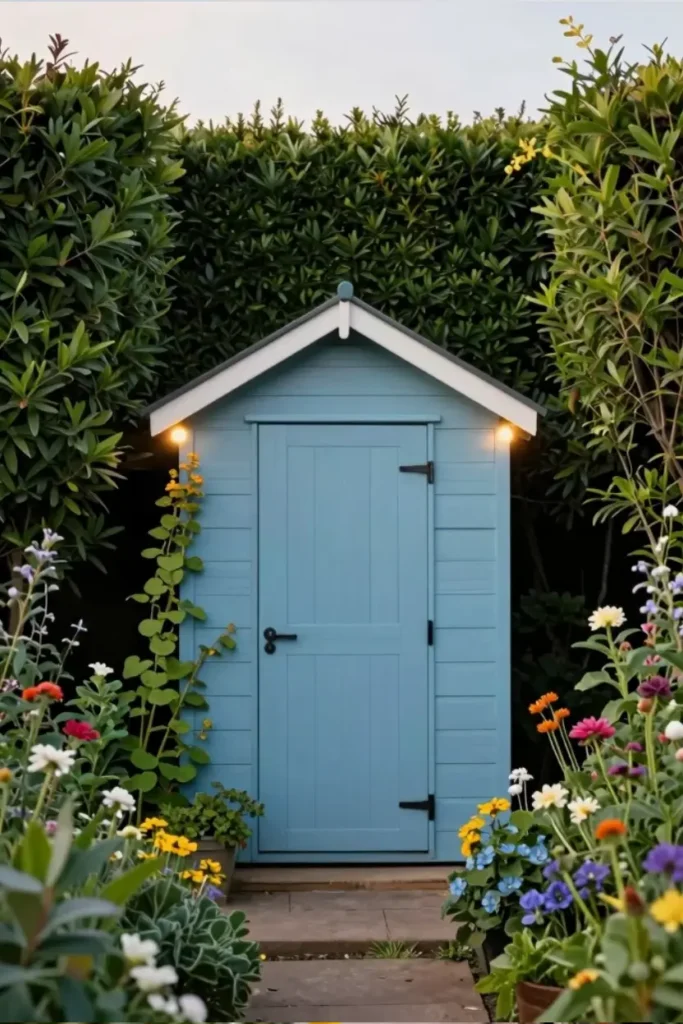
Expert Tip: Hornbeam, beech, yew, and boxwood all make excellent formal hedge backdrops. For a more relaxed, cottage look, try a loose mixed hedge of hawthorn, elder, and dog rose.
Why it works: The contrast in texture soft planting vs. clipped hedging, painted shed vs. living green wall creates a layered, designed look that reads as sophisticated even from a distance.
💰 Budget Breakdown: How Much Does Shed Landscaping Actually Cost?
One of the most common questions I get is: “Can I really make my shed look that good without spending a fortune?” The honest answer is YES but it helps to know where to spend and where to save. Here’s a realistic breakdown:
DIY Budget Tier: $50–$200
- Window box + plants: $30–$60 (cedar box DIY kit + seasonal annuals)
- Stepping stones: $20–$50 (concrete stepping stones from Home Depot or Lowe’s, 6–8 pieces)
- Wildflower seed mix: $15–$25 for a generous packet
- Mulch: $20–$40 for 2–3 bags
- Total: ~$85–$175
This tier gets you a path, some planting, and a window box which is honestly enough to transform most sheds completely.
Mid-Range Makeover: $300–$700
- Gravel surround (10×10 ft area): $80–$150 (gravel + landscape fabric + edging)
- 2 cedar raised beds (4×4 ft each): $100–$180 DIY
- Climbing rose + arch: $60–$120
- 4–6 terracotta pots + plants: $80–$150
- Total: ~$320–$600
At this level, you’re getting serious results a gravel apron, beds, and signature planting.
Full Transformation: $1,000–$3,000+
- Professional-grade flagstone path: $400–$800
- Built-in raised beds with irrigation: $500–$1,200
- Planted hedge backdrop: $300–$600
- Lighting: $150–$400
- Total: $1,350–$3,000+
This is your “magazine-worthy” level the kind of result you’d submit to a garden competition. Worth every penny if you’re planning to sell your home or just genuinely love your outdoor space.
The sweet spot for most homeowners? The $300–$700 mid-range tier. You get huge visual impact without a contractor or a second mortgage.
8. 💡 Add Solar Fairy Lights Along the Roofline
What you’re seeing: A cedar shake-roofed shed with warm white solar fairy lights draped along the roofline and wrapped loosely around the corner posts. At dusk, the whole structure glows like something out of a fairy tale.
This is the easiest upgrade on this entire list, and possibly the most magical. Solar-powered fairy lights require zero wiring, cost $15–$30 for a good set, and instantly make your shed look like a place you actually want to spend time near. They’re especially effective in summer when you’re entertaining outdoors after dark.
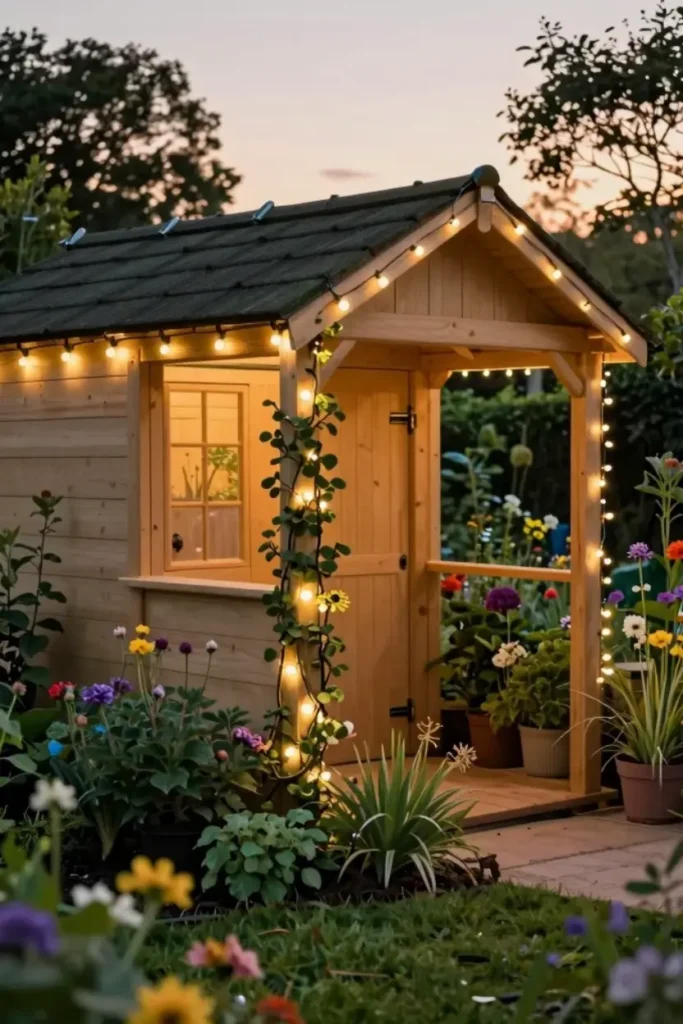
Expert Tip: Go for warm white (2700K) rather than cool white for the most flattering, romantic look. Drape them loosely rather than pulling them tight imperfect, organic draping looks more beautiful and intentional.
Why it works: Lighting changes everything at the emotional level. A shed with fairy lights goes from utilitarian to enchanting in a single hour’s work. It also makes the space usable and beautiful year-round, even in winter when plants have died back.
9. 🌱 Install a Green or Living Roof
What you’re seeing: A low-pitched shed roof completely covered in a lush carpet of sedums, thyme, and grasses. The green roof blends the shed softly into the garden landscape and looks almost like a small hill when viewed from a distance.
A living roof is the ultimate shed landscaping upgrade. Yes, it requires a little more planning and structural consideration your shed roof needs to be able to bear the weight but the payoff is extraordinary. Living roofs are also genuinely eco-friendly: they retain rainwater, insulate the shed, and provide habitat for pollinators.
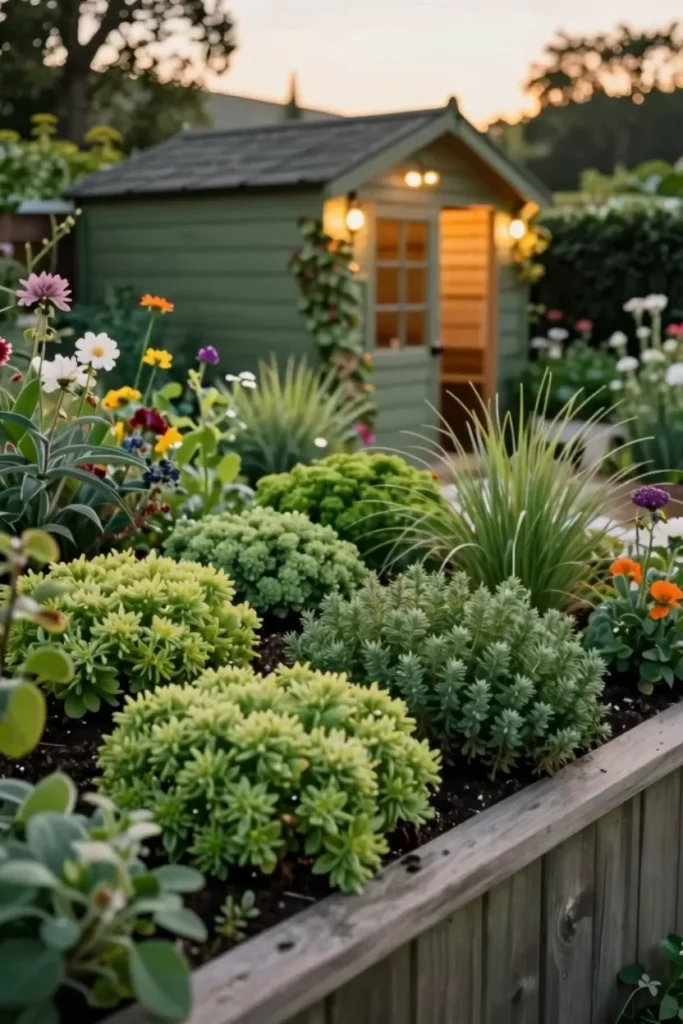
Expert Tip: The easiest DIY living roof uses a sedum mat pre-grown, lightweight, and simply rolled out over a waterproof membrane. Most garden centers and online suppliers sell these ready to use. The whole installation can be done in an afternoon.
Why it works: A living roof dissolves the boundary between the shed and the garden. Instead of a hard edge where structure meets landscape, you get a soft, flowing transition that looks completely organic and intentional.
💬 Have you ever considered a living roof for your shed? It’s more achievable than you’d think! Tell me below yay or nay?
10. 🎨 Paint the Shed a Bold Color and Plant to Complement It
What you’re seeing: A deep forest green shed with bright white trim, surrounded by a garden of white hydrangeas, silver artemisia, and pale yellow achillea. The color combination is bold but balanced.
Paint is the single highest-ROI upgrade you can make to a garden shed. A fresh coat of quality exterior paint costs $40–$80 and takes a weekend, but it completely transforms the structure and it changes what plants look stunning around it.
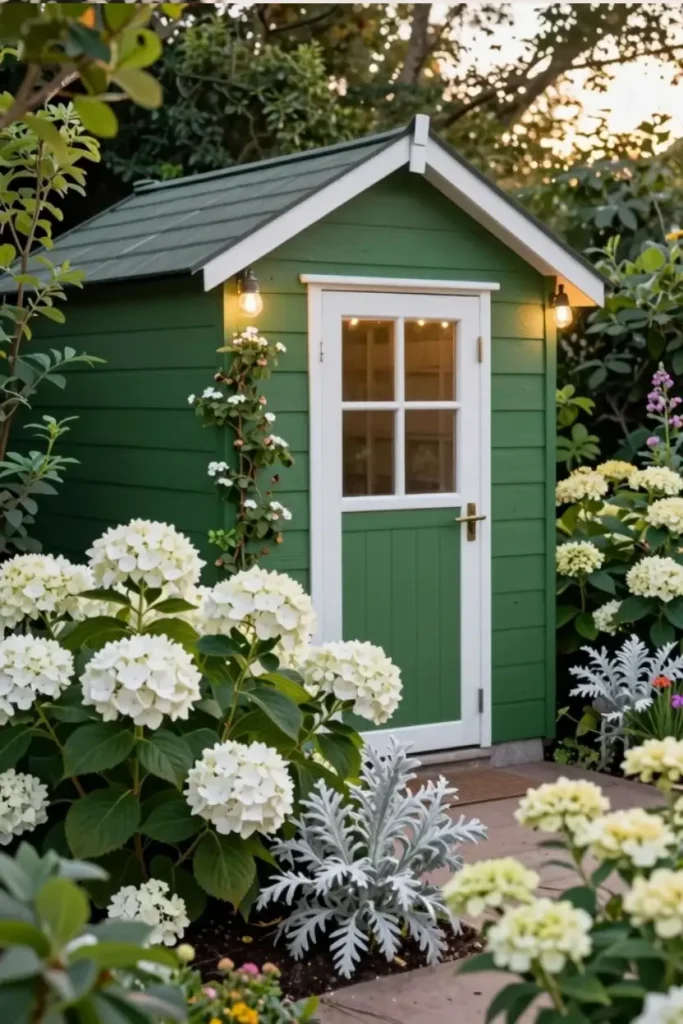
Expert Tip: Match your planting palette to your paint color. For dark green sheds, go bright and light white, cream, and yellow flowers. For blue sheds, warm terracottas and oranges pop beautifully. For red sheds, soft pinks and purples create a gorgeous clash.
Why it works: Color does the heavy lifting of design. When your shed has a strong color identity, the entire garden around it feels more intentional. It becomes an anchor for the rest of the landscape.
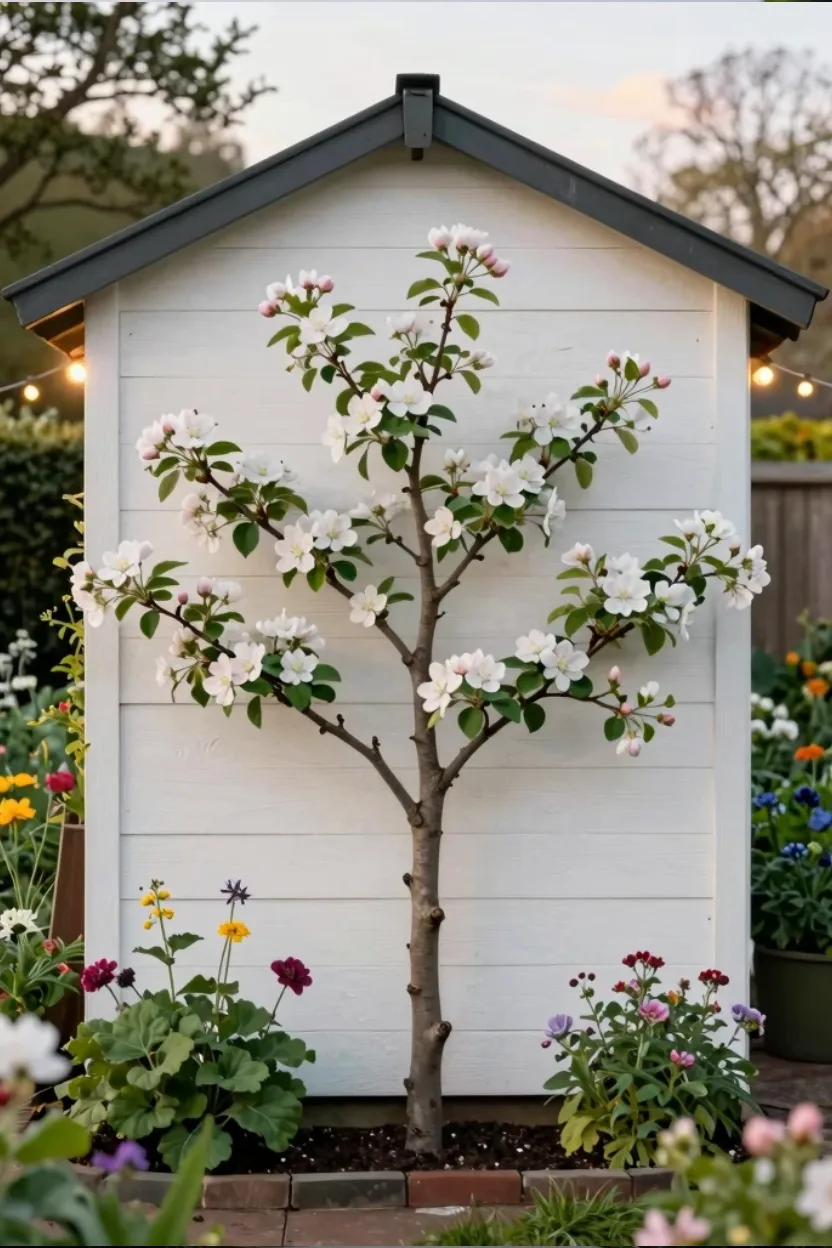
11. 🌺 Espalier a Fruit Tree Against the Shed Wall
What you’re seeing: A flat-trained apple tree fanned symmetrically against a whitewashed shed wall. The horizontal branches are trained along wires, and in spring the whole wall is covered in blossom.
Espalier sounds fancy, but the concept is simple: training a tree to grow flat against a wall or fence. It’s a centuries-old technique that’s perfect for small gardens because it gives you a full-sized fruit tree in the footprint of a flat surface. It also looks absolutely spectacular.
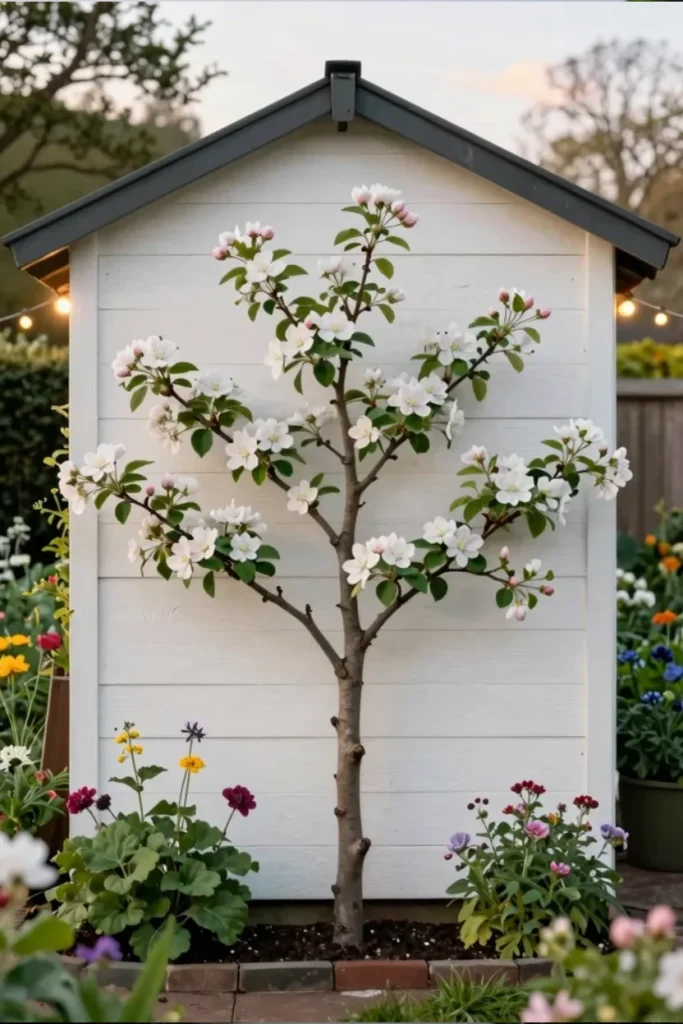
Expert Tip: Apple and pear trees are the easiest to espalier. Buy a young, single-stemmed “maiden” tree from a nursery, install horizontal wires on your shed wall (spaced 18 inches apart), and begin training in the first year. It takes patience, but the results are extraordinary.
Why it works: An espaliered tree on a shed wall creates a living mural. It’s visually dramatic, incredibly productive, and looks like something from an historic walled garden. It’s the kind of thing people take photos of when they visit your garden.
12. 🪴 Create a Potting Shed Vignette with Vintage Props
What you’re seeing: A charming wooden potting shed with its doors flung open, revealing shelves of clay pots inside. Outside, a zinc watering can, galvanized buckets of plants, vintage seed signs, and worn garden tools are artfully arranged around the entrance.
The “potting shed vignette” is all about styling treating the area outside your shed like a curated display rather than just a storage area. This is a huge Pinterest trend right now, and it costs almost nothing if you’re a thrifter or have a good eye at estate sales.
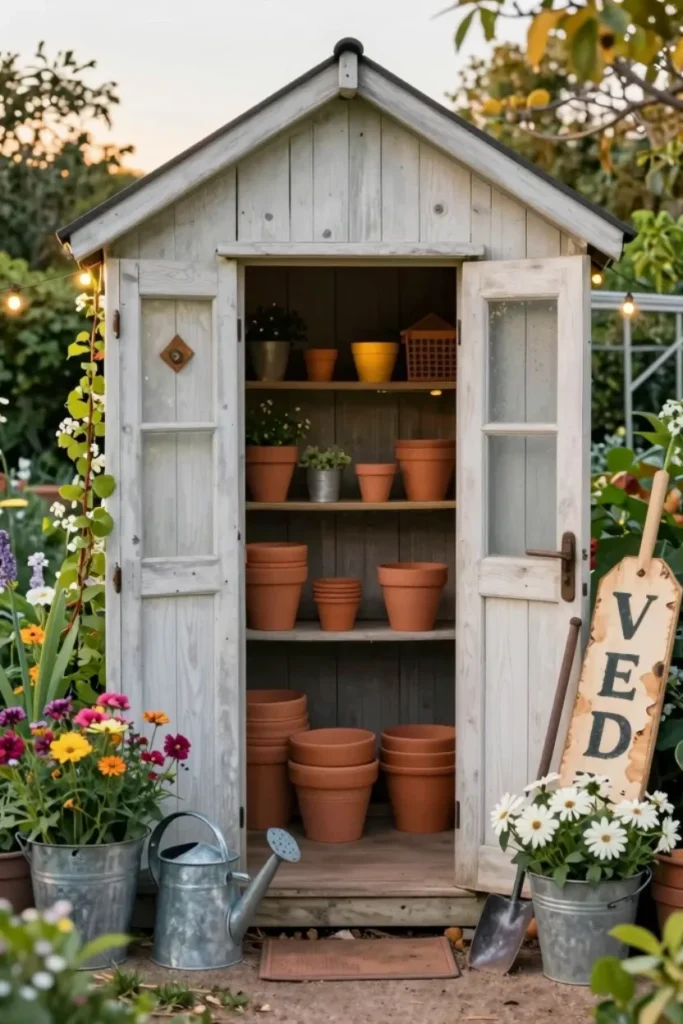
Expert Tip: Scout thrift stores, estate sales, and antique markets for old galvanized metal containers, wooden crates, enamelware, and vintage garden signage. These items look incredible as planters and props, and they add authentic character that brand-new decor simply can’t replicate.
Why it works: The potting shed vignette turns a functional space into a visual story. It says “someone who genuinely loves gardening lives here,” and that feeling is enormously appealing and shareable.
13. 🌿 Line the Shed with a Mixed Border of Grasses and Perennials
What you’re seeing: A generous mixed border running the full length of a long shed wall, planted with ornamental grasses, rudbeckia, salvia, and echinacea in warm gold, orange, and purple tones.
A border along the shed wall is one of the most elegant garden shed landscaping ideas because it solves the awkward gap between structure and open lawn. A well-planted border grounds the shed, gives it scale, and provides interest across multiple seasons.
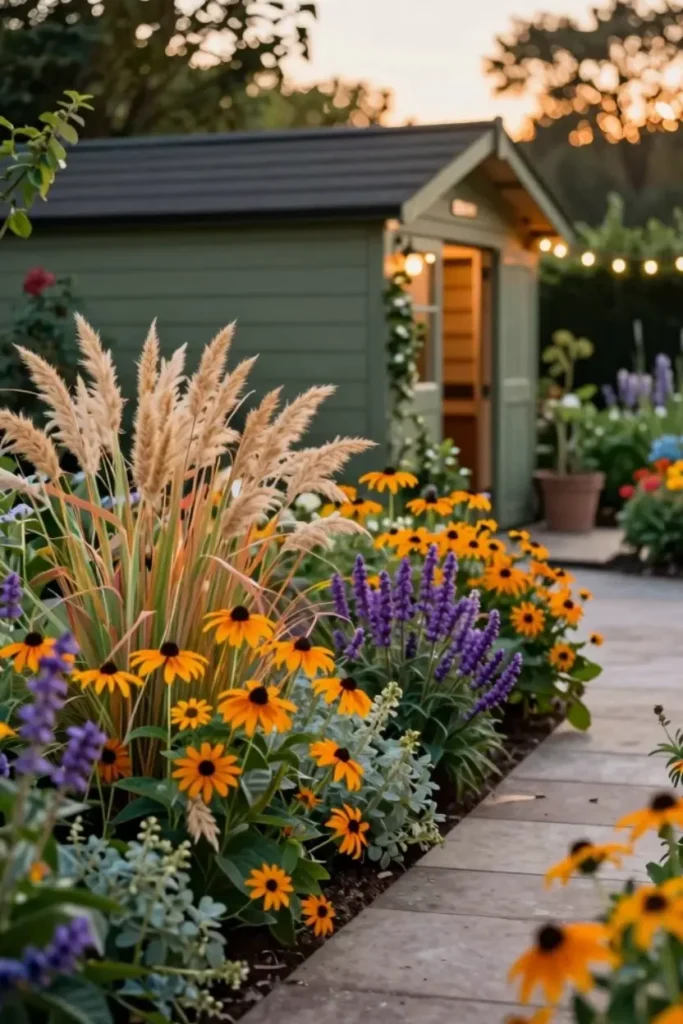
Expert Tip: Choose plants with different heights low edging plants at the front (like catmint or lady’s mantle), mid-height fillers in the middle (rudbeckia, salvia, phlox), and tall statement plants at the back (ornamental grasses, verbena bonariensis, dahlias). This layering creates depth even in a narrow border.
Why it works: The border transforms the shed wall from a flat, dead surface into a dynamic, textured, seasonal feature. It also ensures that no matter what time of year you’re looking at the shed area, something interesting is happening.
14. 🔆 Install an Outdoor Lantern by the Shed Door
What you’re seeing: A classic black wall-mounted lantern next to a green shed door, casting a warm glow over the surrounding planting at dusk. It looks completely at home and makes the whole area feel intentional.
A single well-chosen outdoor light fixture by the shed door is one of those small details that signals design quality. It says: this isn’t just storage, this is a place. Wall lanterns are inexpensive (you can find great options at most hardware stores for $25–$80) and solar-powered options mean no wiring is required.
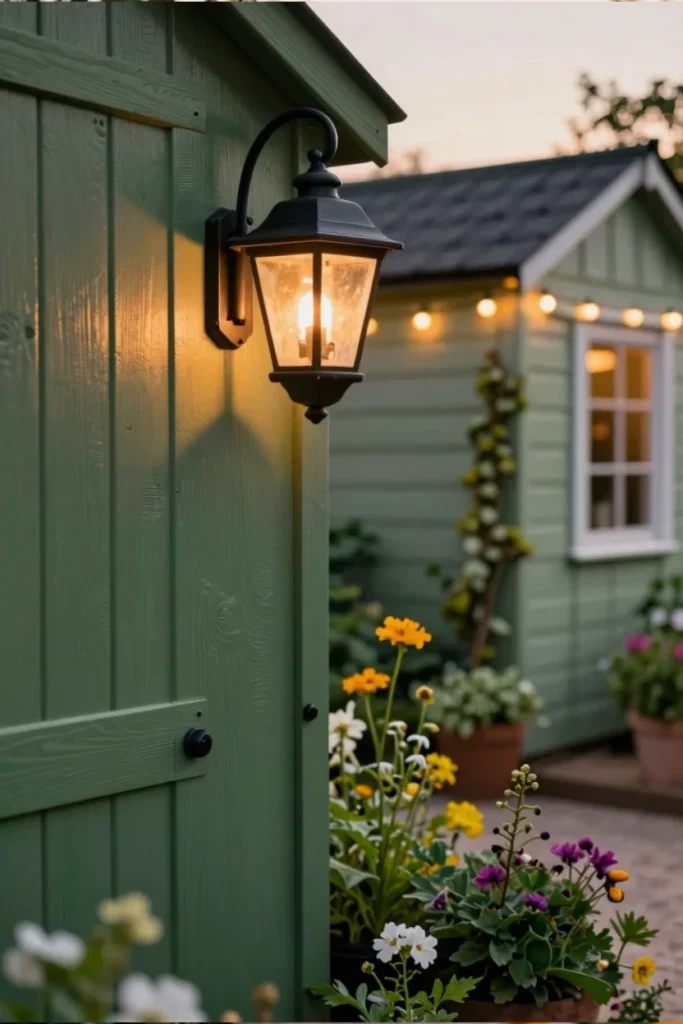
Expert Tip: Choose a light style that complements your shed aesthetic a black cast-iron lantern for traditional/rustic sheds, a slim matte black wall light for modern painted sheds, or a copper or brass fixture for warm, Mediterranean-influenced gardens.
Why it works: Lighting creates ambiance that plants and paint simply can’t achieve. It extends the usability of the space into the evening and makes the shed area feel safe, welcoming, and designed.
15. 🌊 Add a Small Water Feature Nearby
What you’re seeing: A simple ceramic birdbath positioned a few feet from a cottage shed, surrounded by low ornamental planting. The sound of water and the sight of birds splashing makes the whole corner feel alive.
You don’t need a pond or a fountain to bring water into your shed landscaping. A ceramic or stone birdbath, a small self-contained solar fountain in a half barrel, or even a galvanized tub with water plants can introduce the sight and sound of water at minimal cost.
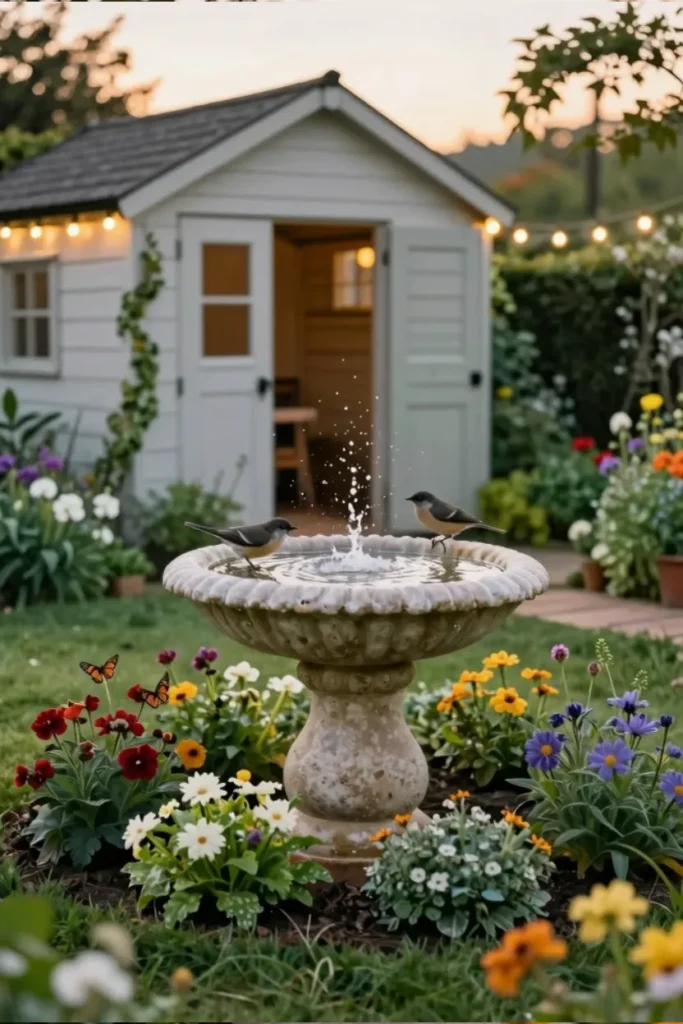
Expert Tip: Position your water feature where it gets morning sun and afternoon shade this reduces algae growth and keeps the water fresher longer. Clean birdbaths weekly in hot weather to prevent mosquito breeding.
Why it works: Water is primal it draws birds, butterflies, and people. A small water feature near your shed creates a genuine garden destination, a place people want to linger and watch. It also adds a sensory dimension sound that purely visual garden design can’t achieve.
16. 🧱 Build a Low Stone Wall Enclosure
What you’re seeing: A dry-stack stone wall about 18 inches high enclosing a small courtyard area in front of a stone-clad shed. Inside the enclosure, a mix of herbs and alpine plants grows between the flagstones.
A low enclosure wall around your shed area is an elevated hardscaping move that creates a genuine outdoor “room.” It doesn’t need to be tall even a knee-height wall defines space, provides a planting surface (plant the gaps in dry stone walls with sempervivums and alpines), and adds permanent structure to the landscape.
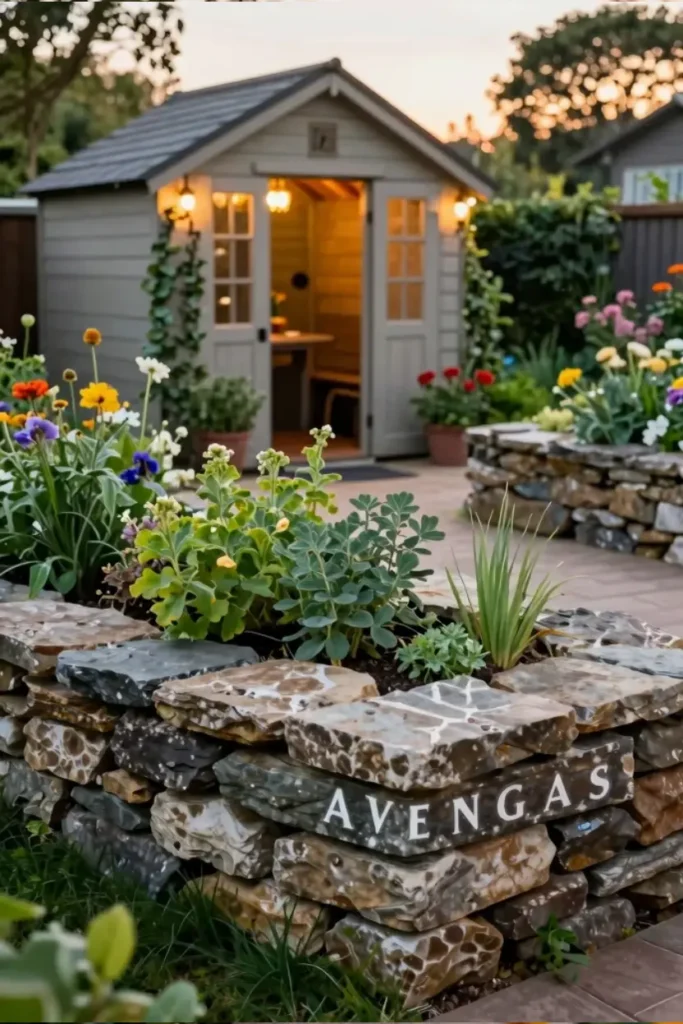
Expert Tip: You don’t need a stonemason for a low dry-stack wall. It’s a very achievable DIY project with the right stone look for flat fieldstone or split-faced limestone at your local stone yard. YouTube has excellent tutorials for first-timers.
Why it works: Enclosure creates intimacy. When your shed is enclosed even partially within a stone or brick wall, it shifts from “building in a garden” to “garden building” a subtle but powerful distinction that transforms how the whole space feels and reads.
17. 🌻 Plant a Sunflower Row for Summer Drama
What you’re seeing: A row of towering sunflowers planted along the south-facing side of a simple wooden shed. In late July, they’re over 8 feet tall, golden heads nodding in the breeze, and the whole effect is joyful and completely over-the-top in the best way.
I saved the most joyful idea for last. There is genuinely nothing that lifts the spirits in a summer garden like sunflowers and planting them against your shed is pure genius. They’re cheap, fast-growing, child-friendly, loved by birds and bees, and they photograph like an absolute dream.
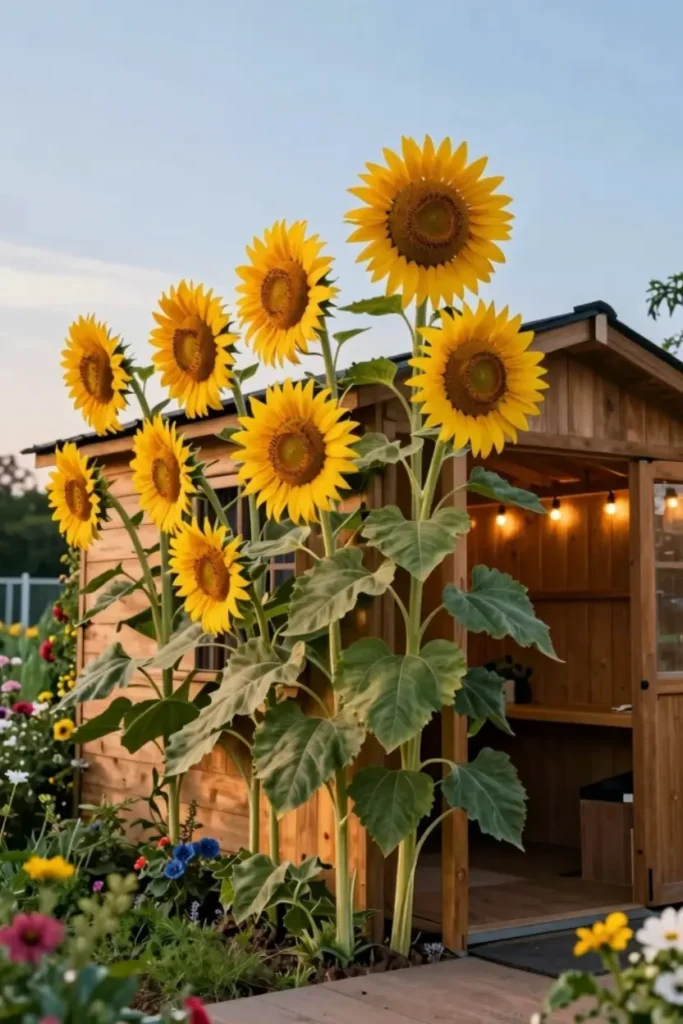
Expert Tip: Direct sow sunflower seeds in late spring after last frost. Water well until established, then they’re surprisingly drought-tolerant. For maximum drama, try giant varieties like ‘Mammoth’ or ‘Russian Giant’ these can reach 10–12 feet and produce enormous flowers.
Why it works: Sunflowers are unabashedly cheerful, and that energy is contagious. A row of sunflowers along your shed wall creates a seasonal spectacle that people genuinely stop to photograph. It’s garden landscaping that doubles as summer theatre.
💬 Tell me which of these 17 ideas are you most excited to try? I personally dream of that climbing rose arch every single time I see it. Comment below!
Final Thoughts: Your Shed Deserves This
Here’s what I want you to take away from this guide: your garden shed isn’t a problem to hide. It’s an opportunity.
With the right plants, a little paint, some strategic lighting, and a pathway that actually leads somewhere worth going, your shed can become the most photographed, most loved corner of your entire property. These garden shed landscaping ideas range from a $15 pack of sunflower seeds to a full stone wall enclosure so no matter your budget or your skill level, there is something here for you to start with this weekend.
My recommendation? Pick ONE idea from this list and commit to it. Just one. The climbing rose arch. The window box. The gravel surround with terracotta pots. Take it all the way, photograph it at golden hour, and I promise you’ll be back here looking for the next idea before the season is over.
You’ve got this. Your garden is going to look incredible.
🌿 Ready for more outdoor inspiration?
Check out our guide → Small Front Yard Landscaping Ideas That Are Big on Charm because once your shed area is sorted, your front yard will be calling your name next.
And if you’re working on your patio space too, don’t miss → Vintage Porch Decor Ideas That Feel Cozy, Timeless, and Totally Pinterest-Worthy.
Save this post to your garden Pinterest board you’ll want to come back to it!