10 Massage Room Ideas You’ll Wish You Tried Before Booking Your Next Spa Visit
This article was created in line with Trends Oraa’s research and content standards.
You don’t need to spend $150 on a spa visit to feel deeply relaxed. Your own home can do it better. And once you see these massage room ideas, you’ll wonder why you waited this long.
Whether you’re setting up a dedicated wellness room, converting a spare bedroom, or just carving out a peaceful corner in your home, this guide has everything you need to create a space that genuinely melts stress away — on your own schedule, in your own space.
👉 You might also love our viral guide on creating a calm bedroom retreat — Calm Bedroom Ideas that will transform how you wind down every single night.
Let’s dive into 10 stunning massage room ideas that combine smart design, sensory psychology, and practical setup tips so you can finally build the sanctuary you’ve always craved.
Why Your Home Massage Room Matters More Than You Think
Before we get to the ideas, let’s be real: most of us book spa appointments not just for the massage itself — but for the feeling of the room. The dim lighting, the scented air, the hushed quiet. That atmosphere is something you can absolutely recreate at home, and honestly? You can do it even better because it’ll be personalized to you.
A well-designed massage room at home increases how often you actually use it. And with the right setup, even a 20-minute self-massage or partner session becomes a full sensory reset.
10 Massage Room Ideas That Actually Work
1. The Japanese Zen Minimalist Retreat
What You’re Seeing: Imagine a room stripped of everything unnecessary — a low platform massage table in natural wood tones, a single bamboo plant in the corner, smooth river stones in a shallow tray, and shoji-style paper panels diffusing soft natural light from the window behind them. The walls are a muted warm ivory, and the only decor on the floor is a thin tatami-style mat runner.
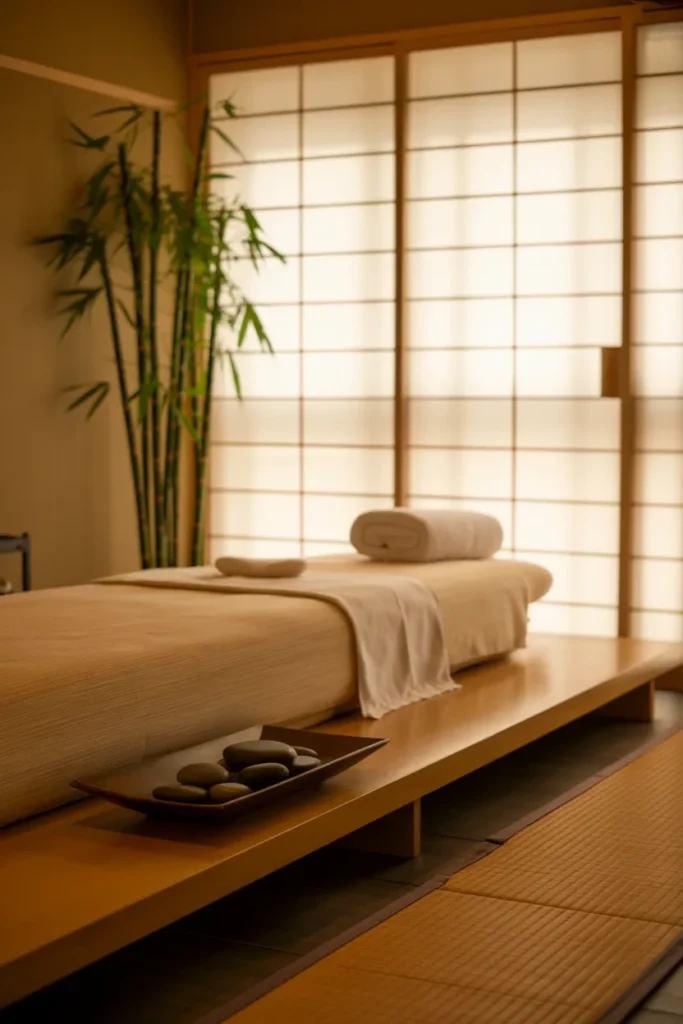
This is Japanese wabi-sabi design applied to wellness — the philosophy that beauty lives in simplicity, imperfection, and calm. Nothing here competes for your attention. Everything serves a single purpose: quiet.
Expert Tip: If you can only invest in one thing for this style, make it the lighting. Replace overhead fixtures with warm-toned (2700K) dimmable bulbs or paper lantern pendants. The difference between harsh light and soft, diffused light is the difference between a utility room and an actual sanctuary.
Why It Works: Minimalist rooms reduce visual noise, which directly lowers cortisol levels. When the eyes have nothing to “process,” the brain shifts into rest mode faster. This is backed by environmental psychology — sparse, natural-toned spaces signal safety and calm to the nervous system. Add a white noise machine or a small tabletop water fountain and you’ve basically recreated a Tokyo wellness spa in your spare room.
2. Earthy Boho Wellness Corner
What You’re Seeing: Warm terracotta walls, a macramé wall hanging, layered jute and wool rugs on the floor, and a padded massage mat rolled out in the center. Rattan shelving holds glass bottles of massage oils, dried herbs, and a small Himalayan salt lamp glowing amber in the corner. Potted trailing plants — golden pothos, philodendron — cascade from a wooden shelf above.
This look is cozy, organic, and deeply grounding. It’s the massage room idea for someone who wants to feel like they’re in a forest retreat without leaving home.
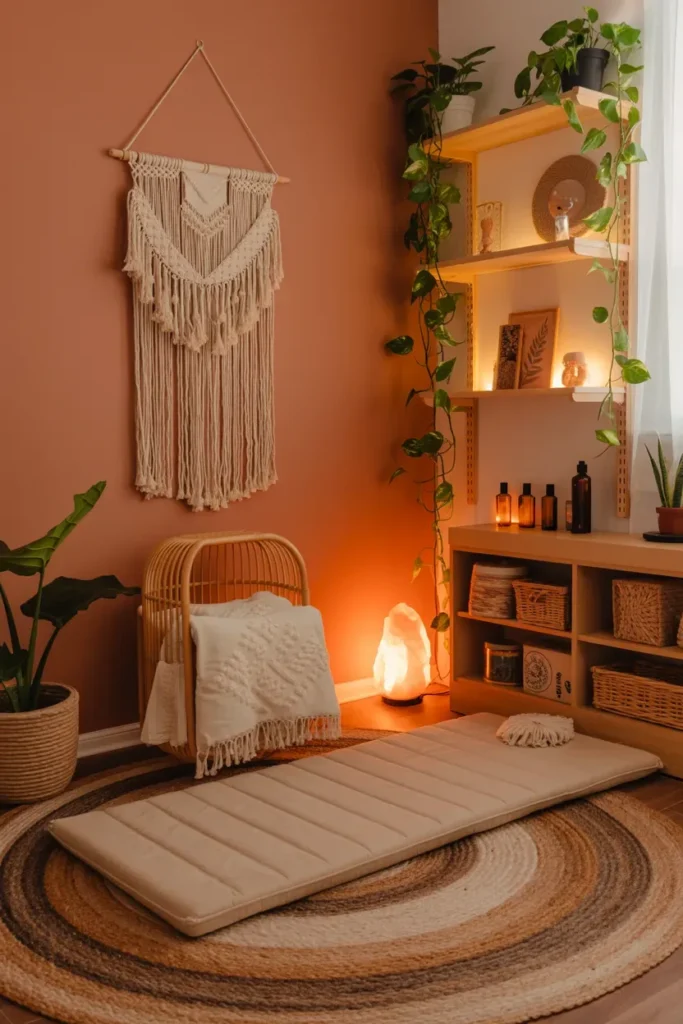
Expert Tip: Layer your textures intentionally. Start with a base rug, add a softer yoga mat or sheepskin on top for the massage surface, then anchor the corners with plants and natural objects. Texture layering creates subconscious warmth and sensory richness that makes a room feel “held.”
Why It Works: Earthy tones — terracotta, sage, sand, warm brown — are psychologically grounding. Studies in color psychology consistently show that warm earth tones reduce anxiety and promote a feeling of physical safety. Pairing those colors with living plants (which have been shown to lower blood pressure in interior spaces) creates a double-layered wellness effect that’s hard to beat.
💬 Which vibe speaks to you more — the clean Zen look or the cozy Boho feel? Drop your answer in the comments — I’d love to know!
3. Luxury Dark Spa Aesthetic
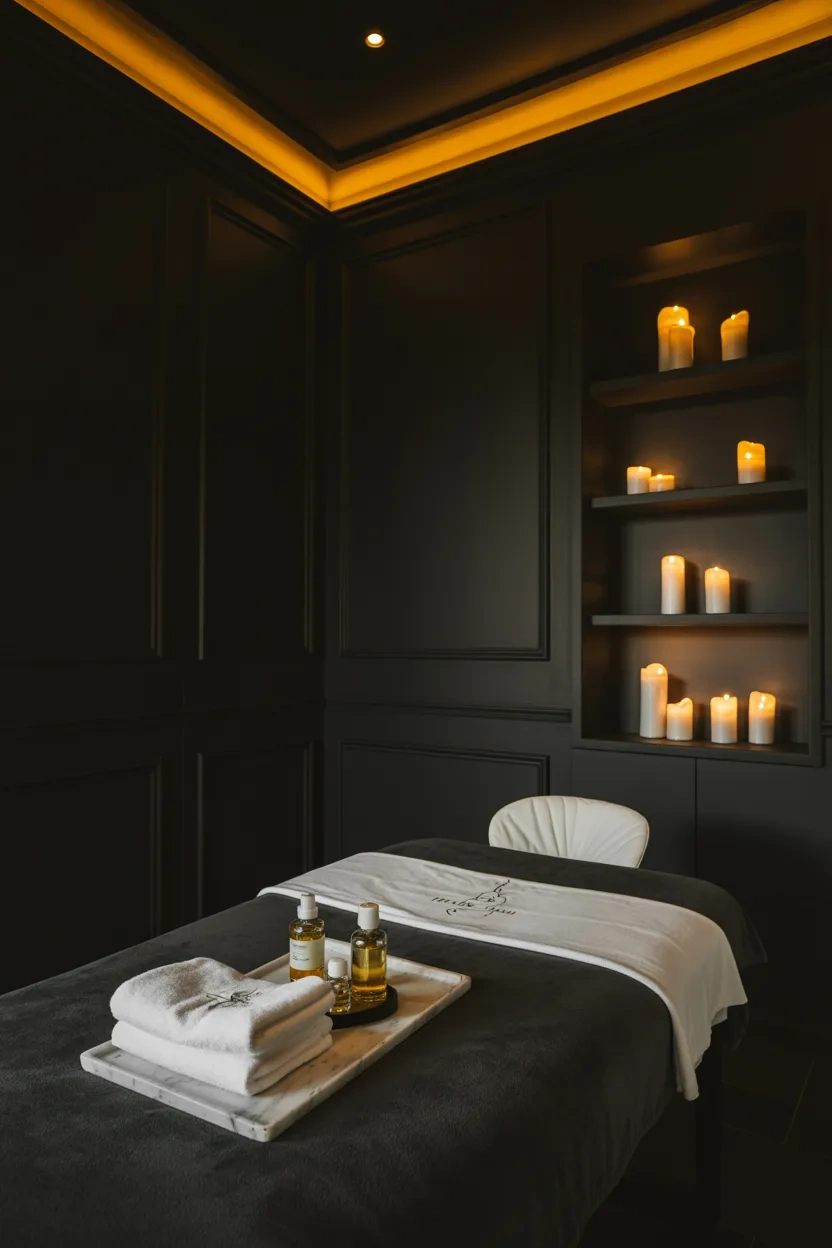
What You’re Seeing: Deep charcoal walls, a sleek black massage table with white linen, recessed LED lighting set to a soft amber glow, and a small built-in niche holding pillar candles at varying heights. A white marble tray on the side table holds glass rollerball oils and a stack of warm towels. The overall effect is moody, dramatic, and unmistakably luxurious.
This is the massage room idea that makes guests gasp. It feels like a high-end day spa in Manhattan — except you’re in your spare bedroom.
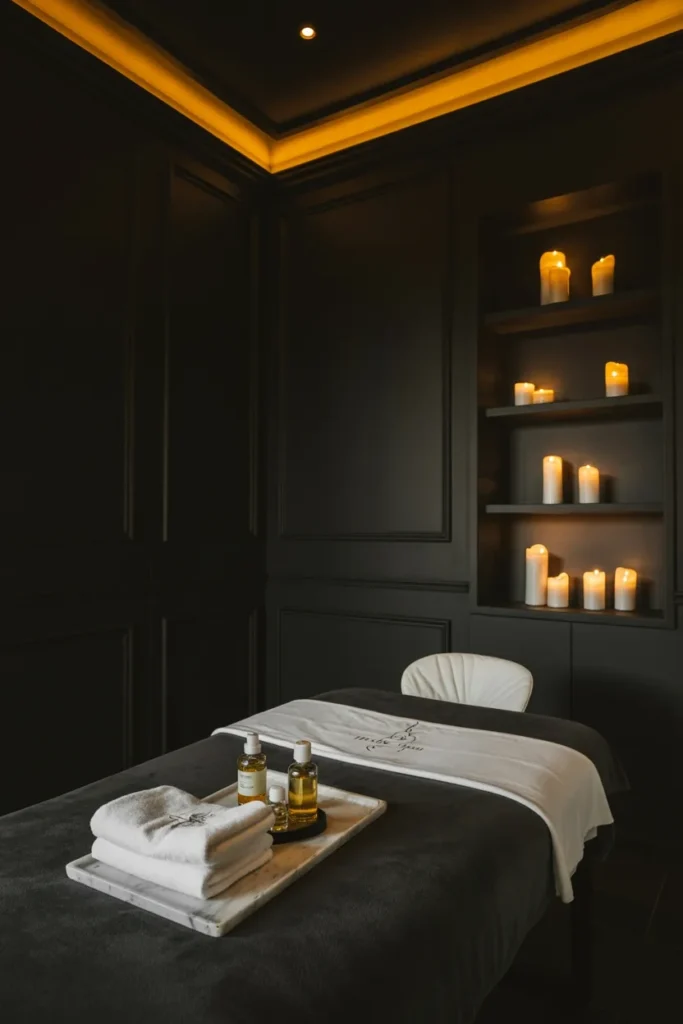
Expert Tip: Dark walls only work when paired with warm light sources at low heights. Place candles, LED strip lights under shelving, and floor-level uplighting. Avoid any overhead lighting when the room is in use — it kills the mood instantly. Think: light from below and beside, never above.
Why It Works: Dark, enclosed spaces trigger a psychological response similar to being in a cave — a primal sense of protection and retreat. When combined with warm (not cool) lighting, the brain interprets this as “safe and secluded,” which is exactly the mental state you want during a massage. This is also why luxury spas tend to be darker — it’s not just aesthetics, it’s neuroscience.
👉 Speaking of dark rooms that feel incredible — check out our Modern Dark Living Room Ideas for more moody, sophisticated inspiration.
4. The Spa Bathroom Conversion
What You’re Seeing: A large bathroom reimagined as a dual-purpose spa and massage room. A freestanding soaking tub sits at one end. A narrow but padded massage bench is positioned near the window with a white linen drape over it. Floating shelves hold stacked white towels, eucalyptus bundles tied with twine, and an essential oil diffuser releasing a quiet cloud of steam. White subway tile and matte black fixtures complete the look.
This is one of the most practical massage room ideas for people who don’t have a spare room — your bathroom is already halfway there.
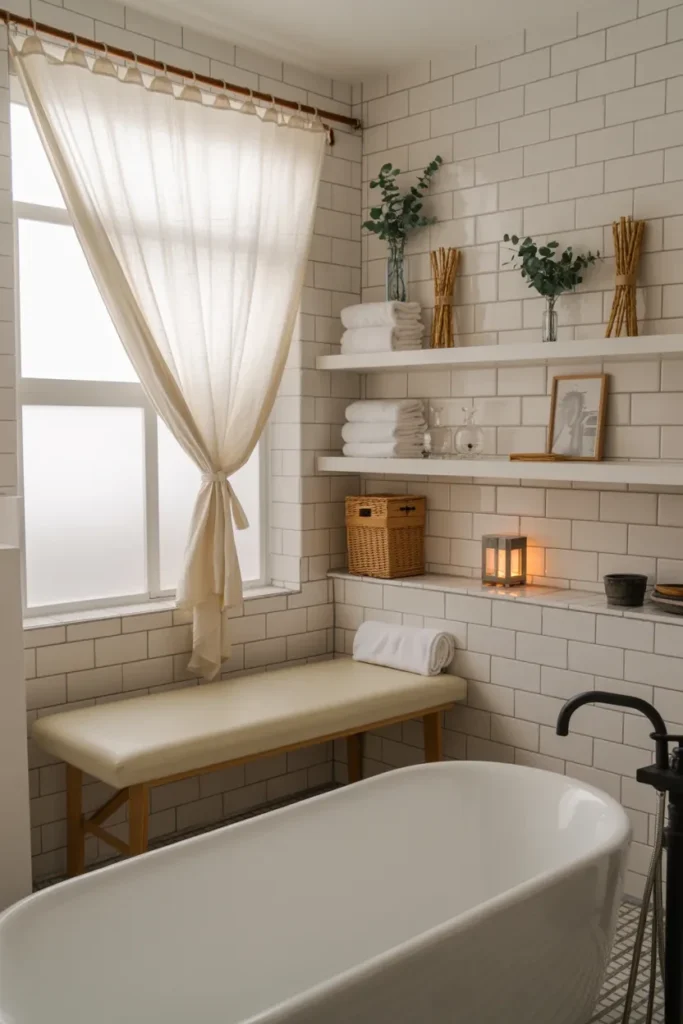
Expert Tip: Hang fresh eucalyptus bundles from your showerhead. When steam hits eucalyptus, it releases natural aromatic oils that open airways and create an instant spa-quality sensory experience. It costs under $5 and lasts 2–3 weeks.
Why It Works: Pre-existing bathrooms already have two of the biggest spa elements: privacy and plumbing for warmth. A warm bath before a massage increases circulation, loosens muscles, and primes the body for deeper tissue work. Converting your bathroom into a massage-prep zone doubles the therapeutic benefit of the session itself.
5. Soft Neutral Scandinavian Wellness Room
What You’re Seeing: White walls, light pine flooring, a minimal wooden massage table draped in oatmeal linen, a single large potted fiddle-leaf fig tree near the window, and a small ceramic tray of white candles. The room has an almost editorial quality — like something from a wellness magazine shot in Stockholm. Simple, refined, and effortlessly calming.
This is the massage room idea for the person who loves clean lines but also craves warmth. Scandi design delivers both.
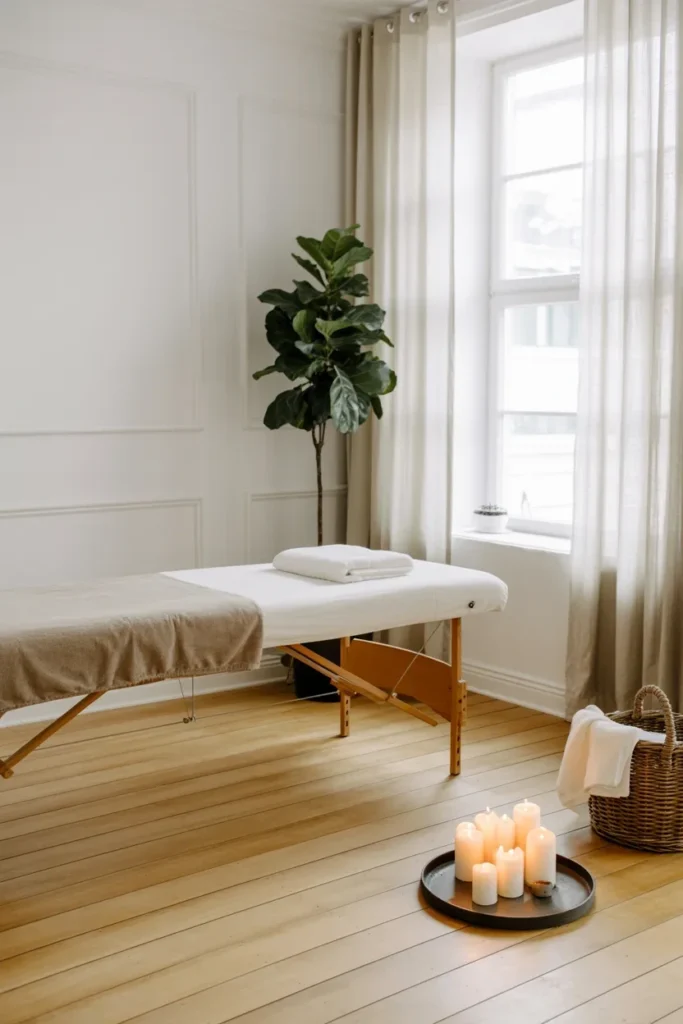
Expert Tip: The secret to making a neutral room feel luxurious (rather than sterile) is in the textiles. Invest in high thread-count linen for your massage surface — it drapes differently than cotton and photographs beautifully. Waffle-weave towels stacked in a basket add texture without clutter.
Why It Works: Scandinavian design philosophy — hygge — is rooted in the idea of creating warmth and coziness through simplicity. The color palette is deliberately drawn from nature (cream, sand, stone, pale wood) to keep the visual environment calming. Research on color and mood consistently shows that neutral warm tones reduce mental fatigue, making them ideal for recovery and relaxation spaces.
🛒 Buying Guide: What You Actually Need to Set Up a Home Massage Room
Before we continue with the design ideas, let’s talk practicalities. Because a beautiful massage room that doesn’t function properly is just a pretty room. Here’s a realistic breakdown of what you need and what you’ll spend.
Essential Equipment
Massage Table or Mat This is your most important investment. A professional-grade portable massage table runs $150–$400 and is worth every cent. Look for 2.5-inch high-density foam padding and an adjustable height range (27–33 inches suits most people). Brands like Earthlite and Master Massage are consistently well-reviewed. If budget is tight, a thick floor mat or Japanese futon (around $80–$120) works beautifully and is more space-efficient.
Lighting Budget around $40–$100 for dimmable warm-toned bulbs or LED strip lights. Smart bulbs (Philips Hue or LIFX) let you set “massage mode” with a voice command or phone tap — genuinely life-changing for ambiance.
Sound A small Bluetooth speaker ($30–$80) or a dedicated white noise machine ($25–$50) transforms the audio environment completely. Spotify and Apple Music both have excellent spa/massage playlists. For the most authentic spa experience, look for tracks specifically mixed at 432Hz — many wellness practitioners prefer this frequency for relaxation.
Aromatherapy An ultrasonic essential oil diffuser ($25–$60) running lavender, eucalyptus, or bergamot oil creates the signature spa scent within minutes. Essential oils themselves run $8–$20 per bottle and last months with regular use.
Linens & Towels Budget $50–$100 for dedicated massage linens — two fitted table sheets, two flat draping sheets, and four to six hand towels. Keep these separate from your regular household linens so the room always feels intentional and spa-fresh.
Optional Upgrades
- Heated blanket or table warmer ($40–$80): Absolute game-changer in winter.
- Himalayan salt lamp ($20–$40): Warm amber light + air ionization benefits.
- Bamboo roller set or massage stones ($15–$50): Extends what you can do in the room.
- Blackout curtains ($30–$80): Essential for daytime sessions.
Total Budget Breakdown
| Setup Level | Estimated Cost |
|---|---|
| Budget (floor mat, basic lighting, diffuser) | $150–$250 |
| Mid-Range (portable table, smart lighting, sound) | $400–$600 |
| Luxury (professional table, full AV, heated warmer) | $800–$1,200+ |
The good news? Even the budget setup — done with intention — produces a genuinely therapeutic environment. Spending more improves convenience and aesthetics, but the core experience is available at every price point.
6. Tropical Rainforest Escape
What You’re Seeing: Lush, dense greenery everywhere — monstera leaves, bird of paradise plants, trailing pothos from ceiling hooks, and a woven rattan massage chair positioned at the center. The walls are painted a deep jungle green, and the floor is a warm teak-toned wood. A rattan pendant lamp casts dappled, organic shadow patterns across the room. It feels like you’ve stepped into a Bali resort.
This is the most maximalist massage room idea on the list — and it’s absolutely spectacular when executed well.
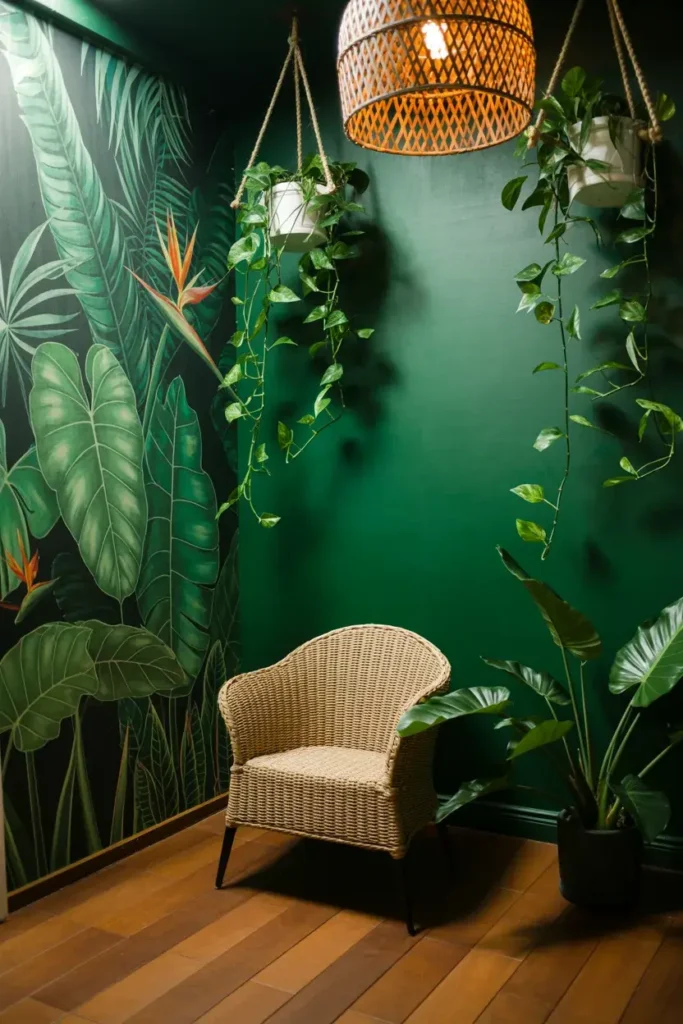
Expert Tip: You don’t need real plants to nail this look, though real ones are ideal for air quality. If maintenance is a concern, mix in high-quality silk plants (especially for background fills) and invest in 3–4 real statement plants — like a large monstera or fiddle-leaf fig — for the focal points.
Why It Works: Biophilic design — the concept of incorporating natural elements into indoor spaces — is one of the most well-researched areas of environmental psychology. Exposure to natural elements (even simulated ones) measurably reduces heart rate, blood pressure, and self-reported stress. A room full of greenery doesn’t just look like a tropical retreat — it physiologically responds like one.
💬 If you were setting up your dream massage room TODAY, what’s the one thing you’d splurge on? Tell me in the comments — I’m genuinely curious!
7. Candlelit Romantic Wellness Studio
What You’re Seeing: Warm amber candlelight reflecting off ivory walls, a plush velvet-draped massage table at the center, flower petals scattered across the table and floor (rose and lavender), a side table with two glasses of sparkling water and a small charcuterie arrangement. Sheer curtains filter the last light of evening through gauze. The entire room smells of jasmine and vanilla.
This massage room idea is built for couples. It’s sensory, intimate, and transforms a health practice into an experience you’ll look forward to all week.
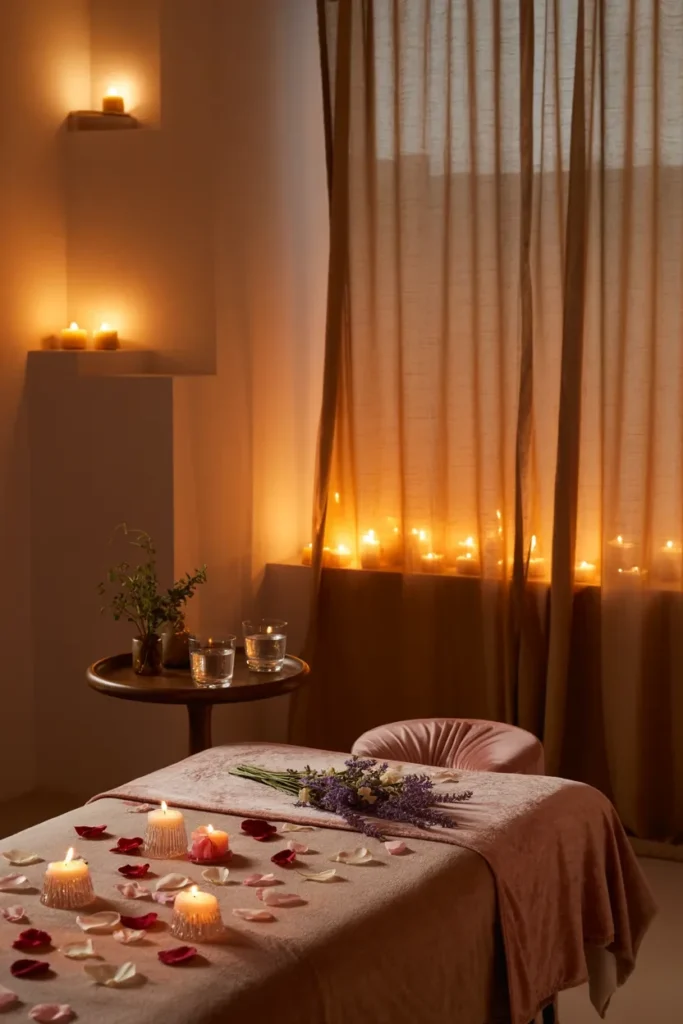
Expert Tip: Build a “couples massage ritual” — 30 minutes of guided partner massage using a simple YouTube tutorial, followed by 15 minutes in quiet side-by-side with herbal tea. Structure transforms a nice idea into a consistent practice, and consistent practices are what actually reduce stress long-term.
Why It Works: Touch is one of the most potent stress-reduction mechanisms known in psychology. A 20-minute partner massage releases oxytocin, lowers cortisol, and increases relationship satisfaction. Creating a beautiful room specifically for this practice removes the “I don’t feel like setting it up” barrier and makes the ritual effortless to maintain.
8. Medical-Grade Home Therapy Room
What You’re Seeing: Clean, uncluttered, and clinical-but-cozy. A professional-grade hydraulic massage table dominates the center of the room, surrounded by organized shelving holding labeled amber-glass oil bottles, clean folded linens, and a few framed anatomy charts. The walls are a soft sage green — calming but grounded. A HEPA air purifier sits quietly in the corner. The overall effect is “trusted practitioner” meets “personal wellness retreat.”
This massage room idea is for the serious wellness enthusiast — someone dealing with chronic pain, recovering from injury, or simply committed to physical maintenance as a lifestyle.
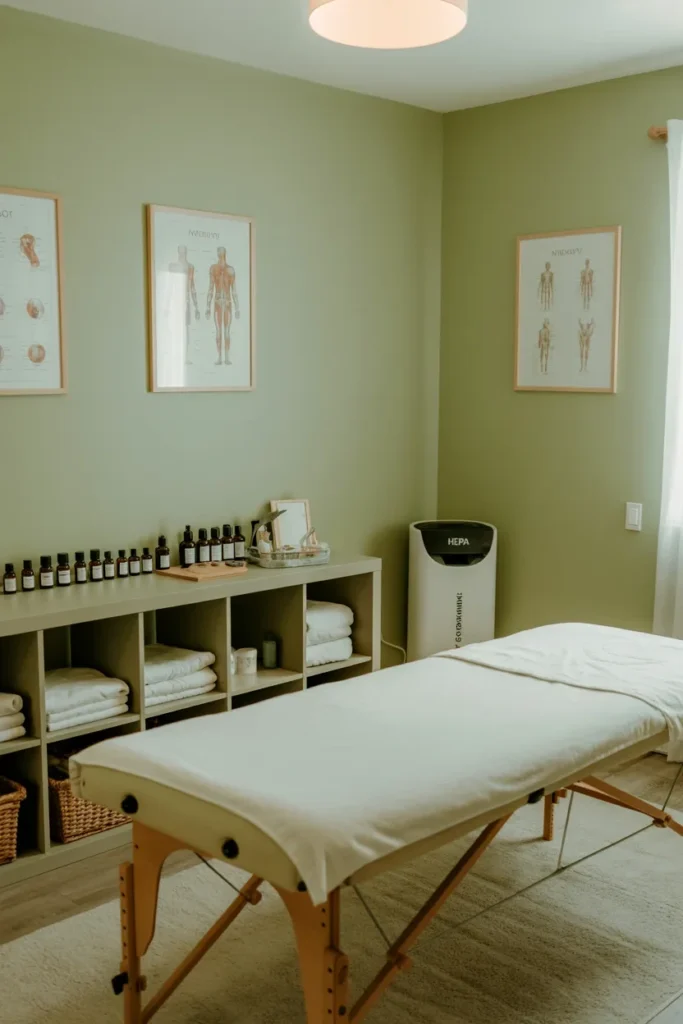
Expert Tip: If you or a household member deals with chronic muscle tension or sports recovery, invest in a hydraulic or electric height-adjustable table. The ability to work from multiple angles (especially standing vs. kneeling positions) dramatically improves the effectiveness of self-massage and partner work. It’s the single biggest functional upgrade you can make.
Why It Works: Environment shapes behavior. When a space looks like a professional therapy room, the people using it treat it like one — with intentionality, consistency, and proper technique. The design cues train you to show up seriously, which means you actually use the room, which means you actually feel better. Commitment starts with the space.
9. Cozy Cottage Wellness Nook
What You’re Seeing: A smaller space — perhaps a reading nook or alcove — transformed into the most charming little massage corner imaginable. A thick floor cushion sits on a layered rug, flanked by two tall dried pampas grass arrangements in rattan vases. A small wooden stool holds a candle and an essential oil roller. Soft string lights frame a window with linen curtains billowing gently. This is a massage nook — intimate, effortless, and utterly lovely.
This is the perfect massage room idea for apartments or homes without a dedicated spare room. You don’t need a whole room — you need the right corner.
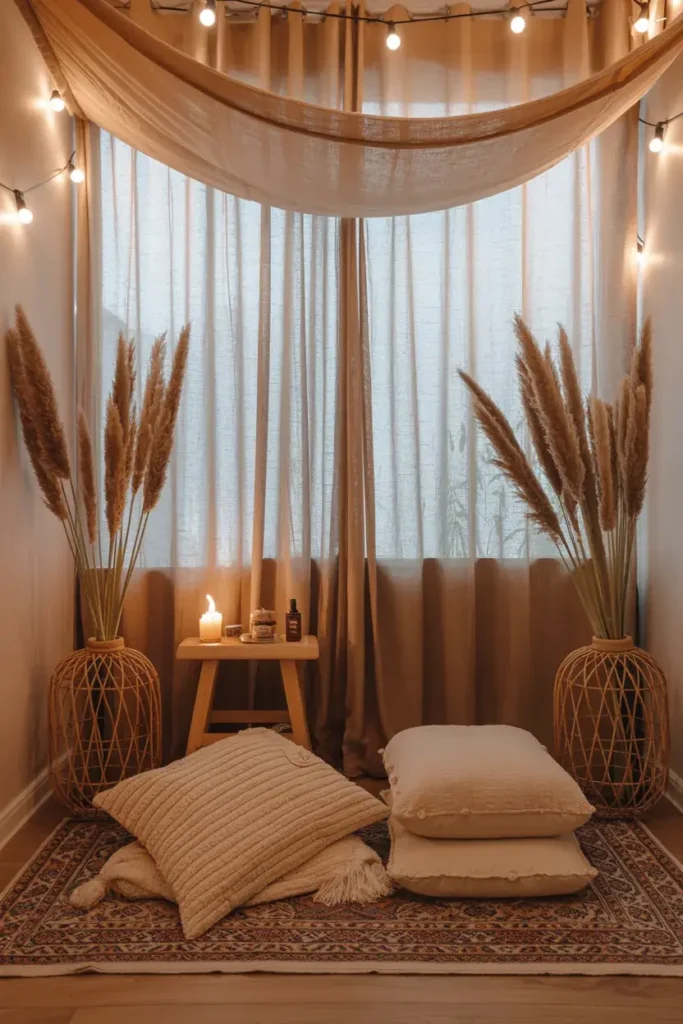
Expert Tip: Define your nook with a canopy or a room divider. A simple sheer curtain rod installed in a ceiling anchor point, with gauze or linen panels hanging from it, creates an enclosed “room within a room” effect. For under $50, you’ll transform any corner into a dedicated retreat that feels separate from the rest of your home.
Why It Works: The brain responds to spatial cues. A dedicated space — even a small, defined one — trains your nervous system to begin relaxing the moment you enter it. This is the same principle behind sleep hygiene (keeping beds only for sleep). By giving massage its own physical territory, even a small one, you deepen the psychological benefit of every session.
👉 Love small-space transformations? Don’t miss our guide to Small Room Makeover Ideas — packed with clever tricks that punch way above their square footage.
10. Modern Minimalist Wellness Studio
What You’re Seeing: A spare, architecturally considered room that looks like it belongs in a luxury wellness brand’s lookbook. White walls, concrete-look flooring, a floating shelf with three perfectly placed objects — a ceramic diffuser, a smooth obsidian stone, and a single white orchid. The massage table is sleek and modern in matte white. Recessed lighting is set to the lowest possible warm tone. There is nothing in this room that doesn’t belong. Every single detail is intentional.
This is the massage room idea for the design-forward minimalist who believes less is always more — and who’s right.
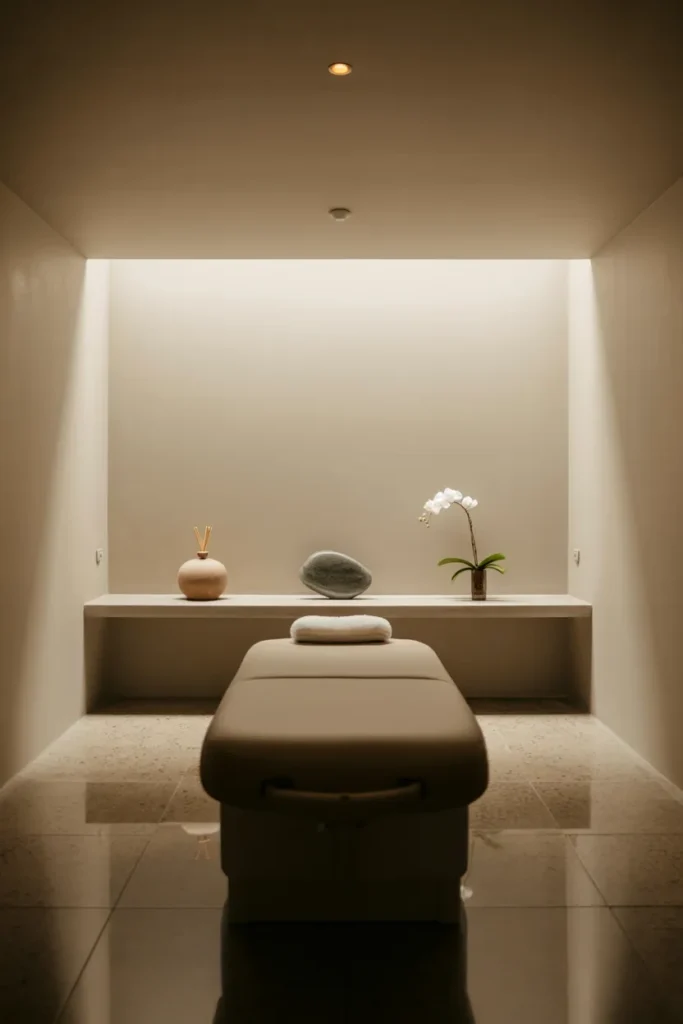
Expert Tip: The hardest part of minimalist design is the editing. For every object you want to add, ask: “Does this serve the room’s purpose or does it serve my attachment to having stuff?” Ruthless curation is what separates a minimalist room from a sparse one. One orchid in the right spot beats a shelf full of candles every time.
Why It Works: Visual minimalism is one of the most effective environmental stress-reduction strategies. When the visual field is deliberately uncrowded, the prefrontal cortex — responsible for decision-making and stress response — gets a genuine rest. Think of it as a “visual detox” that begins before the massage even starts. Intentional emptiness is a design superpower.
💬 Which of these 10 massage room ideas would you create in your home? I’d love to see it — tag us if you build one!
How to Bring Any of These Ideas to Life: Quick-Start Checklist
Ready to get started? Here’s your no-overwhelm action plan:
Step 1 — Choose Your Style: Pick one aesthetic from the 10 above that genuinely resonates with your personality. Don’t combine two completely different styles at the outset.
Step 2 — Assess Your Space: You need minimum 6×8 feet for a floor mat setup; 8×10 feet for a table. A nook setup (idea #9) can work in as little as 5×5 feet.
Step 3 — Start With Lighting: Before anything else, fix the lighting. Swap harsh overhead bulbs for dimmable warm-toned alternatives. This one change costs under $30 and creates 70% of the spa atmosphere immediately.
Step 4 — Add Scent: Get a diffuser and one bottle of lavender or eucalyptus oil. Run it for 15 minutes before every session.
Step 5 — Declutter Ruthlessly: Remove everything from the space that doesn’t contribute to relaxation. Store it, donate it, or relocate it. The room needs to feel like an exhale.
Step 6 — Add Your Signature Element: Whether it’s plants, candles, a specific textile, or a sound setup — add the one thing that makes the space feel yours.
Final Thoughts
Here’s what I want you to take away from this: a great massage room isn’t about budget or square footage. It’s about intention. The most powerful massage room ideas all share one thing — they were created with a clear sense of purpose. Every object, color, and texture was chosen to support one outcome: deep, genuine relaxation.
You already have the most important ingredient — the desire to feel better. Now you have 10 stunning ideas, a complete buying guide, and an action plan to make it real.
Start small. Pick one corner. Fix the lighting. Add a scent.
You’ll be amazed how quickly your home transforms into the spa you’ve always wanted.
Loved these massage room ideas? You’ll definitely want to explore our Spa Bathroom Ideas next — because your relaxation routine shouldn’t stop at the massage table. Pin this post to your Wellness Board so you can come back to it anytime!
Pin this post for later! 📌