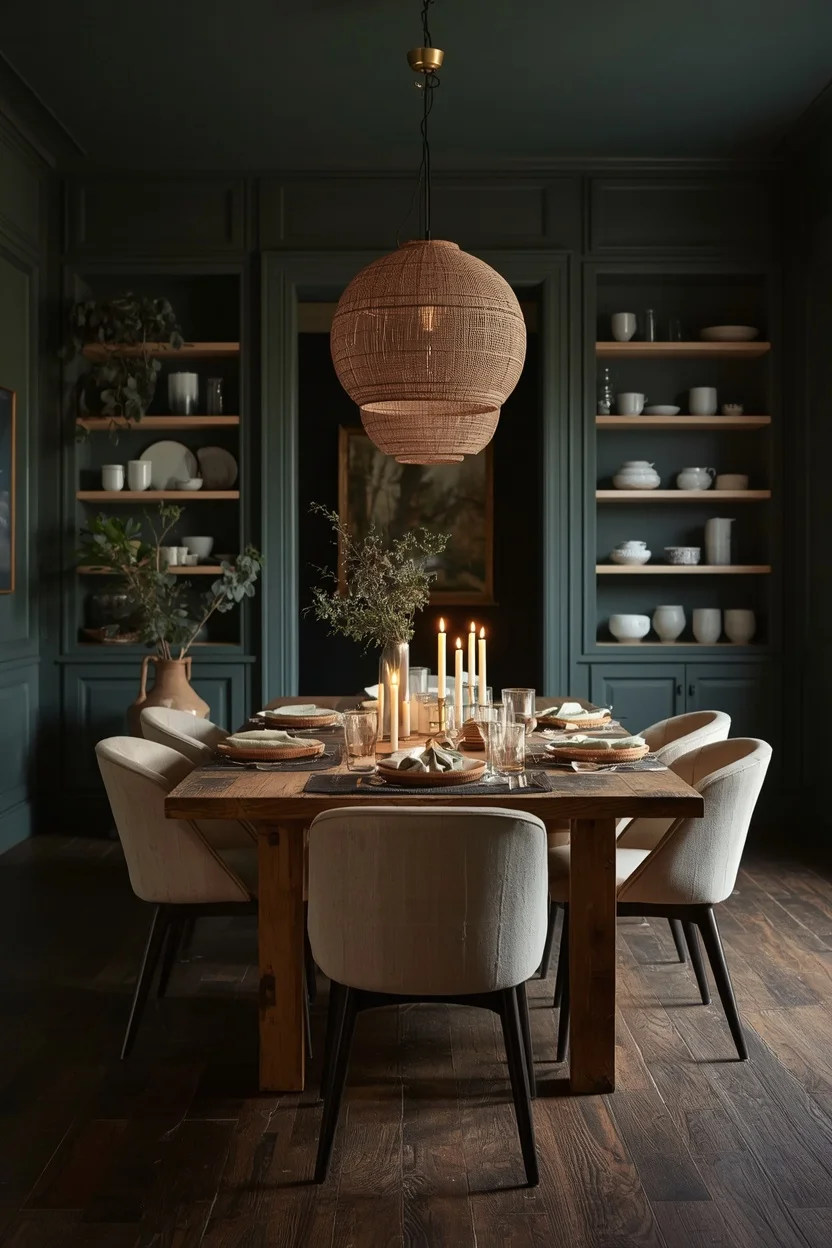
10 Modern Farmhouse Dining Room Ideas for Anyone Struggling to Balance “Modern” and “Farmhouse”
This article was created in line with Trends Oraa’s research and content standards.
You’ve spent hours on Pinterest. You save every photo that gives you that warm, polished feeling — and yet your dining room still looks like it can’t make up its mind.
Rustic wood that feels too cabin-y. Sleek furniture that feels too cold. Nothing ever clicks the way it does in those perfectly curated photos.
Here’s the thing — you’re not doing anything wrong. Modern farmhouse is genuinely one of the trickiest styles to nail because it lives right at the intersection of two completely different design languages. But once you understand the secret formula behind it? Everything clicks.
In this guide, I’m sharing 10 modern farmhouse dining room ideas that actually work — with specific tips for each one so you can steal the look with confidence. Stick around, because idea #7 is the one most designers never talk about.
💡 Before you dive in: You might also love our popular guide on Modern Farmhouse Kitchen Ideas — it pairs perfectly with everything you’re about to read here. And if you’re styling a full home vibe, don’t miss our Country Farmhouse Decor Ideas for the bigger picture.
What Actually Makes a Dining Room Feel “Modern Farmhouse”?
Before we get to the ideas, let me save you a ton of confusion right now.
Modern farmhouse is not just shiplap and Edison bulbs. It’s not a checklist. It’s a tension — between rough and refined, warm and clean, old and new. When you get that tension right, the room breathes. When you get it wrong, it looks themed.
The formula, simply put:
- Natural textures (wood, linen, jute, stone) anchoring the warmth
- Clean-lined furniture keeping it from sliding into full-on rustic territory
- A neutral palette with just enough contrast to create interest
- One or two statement pieces that do the heavy lifting
Now, let’s look at exactly how this plays out in 10 beautiful, real-world dining room setups.
“Here’s where it gets interesting — every single idea below can be adapted to a small space, a rental, or a tight budget.”
The Reclaimed Wood Table + Matte Black Chairs Combo
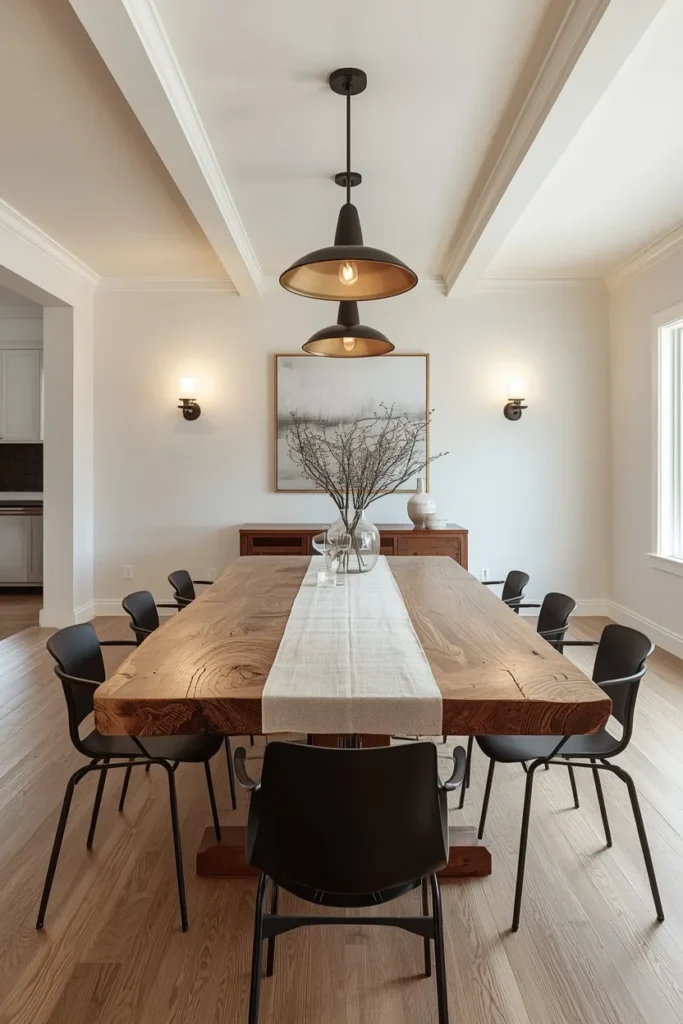
Picture this: a thick, live-edge reclaimed wood dining table — full of knots, grain, and character — paired with sleek matte black metal dining chairs that have clean straight legs and minimal upholstery. The contrast is everything here.
The wood brings the soul of farmhouse design: imperfect, storied, warm. The black metal chairs do the opposite — they’re deliberate, sharp, and unmistakably modern. Together they create that push-pull energy that makes modern farmhouse feel curated rather than accidental.
You don’t need an expensive custom table either. Many furniture retailers now carry faux reclaimed wood tables at a fraction of the price, and the effect reads just as strong. What matters most is that the table has visible texture and warmth, not that it came from a 200-year-old barn.
✦ Expert TipKeep your table runner simple — a natural linen or cream cotton strip down the center is all you need. Avoid anything with a busy pattern, as it competes with the wood grain for attention.
✦ Why It WorksThis pairing succeeds because it creates a deliberate visual dialogue. Your eye bounces between organic and industrial, rough and smooth — and that movement is exactly what keeps a room feeling alive and layered rather than flat.
The Shiplap Accent Wall That Doesn’t Look Like a DIY Project
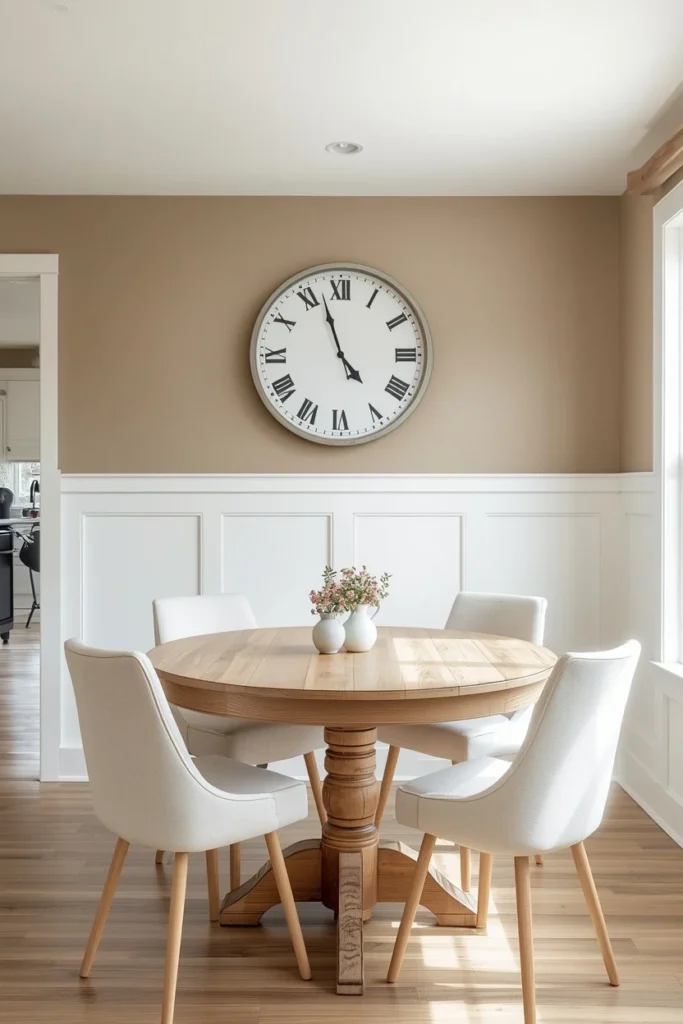
Shiplap has been done to death — and yet when it’s done right, it still stops scrollers mid-feed. The key is restraint and finish. A single shiplap accent wall behind your dining table, painted in a sophisticated neutral like warm greige, aged white, or even a deep moody sage, elevates the entire room instantly.
The mistake most people make? They shiplap all four walls, then wonder why it feels overwhelming. One wall is a statement. Four walls is a theme park. Keep it to one wall, and let everything else breathe.
Pair your shiplap wall with a large-scale piece of art or an oversized vintage-style clock to ground it. The combination of handcrafted wall texture and intentional decor choices is what separates the Pinterest-worthy rooms from the ones that just kind of look “farmhouse-ish.”
✦ Expert TipIf you’re renting or don’t want to commit to real shiplap, peel-and-stick shiplap panels now look remarkably authentic, especially once painted over. A weekend project that genuinely transforms a room.
✦ Why It WorksA single shiplap wall adds architectural interest and farmhouse texture without overwhelming the modern elements of the space. It signals intentionality — you knew when to stop, which is the mark of a confident decorator.
Which of these two vibes speaks to you more?Drop your answer in the comments below — Rustic-leaning Modern Farmhouse, or Modern-leaning Rustic Farmhouse? There’s no wrong answer!
Woven Rattan Pendants Over a Marble or White Quartz Table
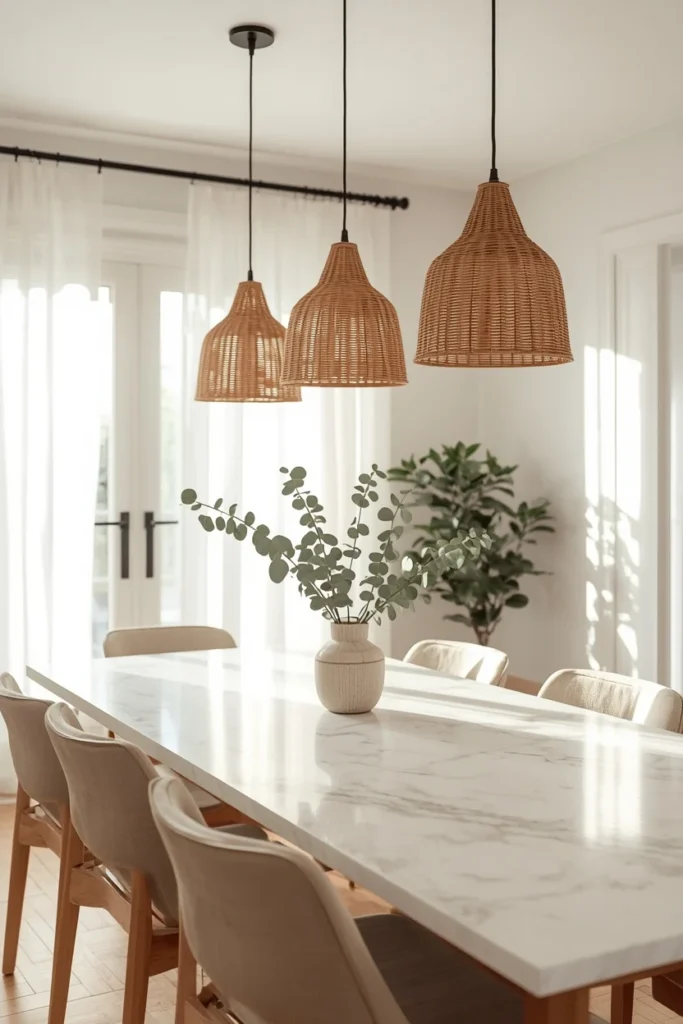
This is one of my absolute favorite combinations in modern farmhouse dining design. A clean white marble or quartz dining table — cool, smooth, and undeniably modern — topped with warm, handwoven rattan pendant lights hanging at different heights. The result is magic.
The marble says sophistication. The rattan says warmth. Together they say “I know exactly what I’m doing in here.”
What makes this combination especially powerful is that it works in almost any size dining room. A small round marble table with a single oversized rattan pendant feels cozy and intimate. A long rectangular marble table with a row of three smaller rattan pendants feels grand and deliberate. The warmth of natural fiber overhead keeps the coolness of marble from feeling clinical.
For a cohesive look, choose rattan pendants that have clean, geometric silhouettes rather than overly fussy or tropical-looking shapes.
✦ Expert TipHang your pendants lower than you think — ideally 28 to 36 inches above the tabletop. Most people hang them too high, and they lose all that cozy, intimate effect. Lower pendants make conversation feel easier and the whole room feel more human-scaled.
✦ Why It WorksContrast in material temperature — warm organic fiber against cool smooth stone — creates instant visual tension in the best possible way. Your brain registers it as sophisticated and layered, even if you can’t explain exactly why.
“Most people don’t know this — the lighting in your dining room does more work than any piece of furniture. Get the pendants right, and everything else practically styles itself.”
Bench Seating on One Side, Upholstered Chairs on the Other
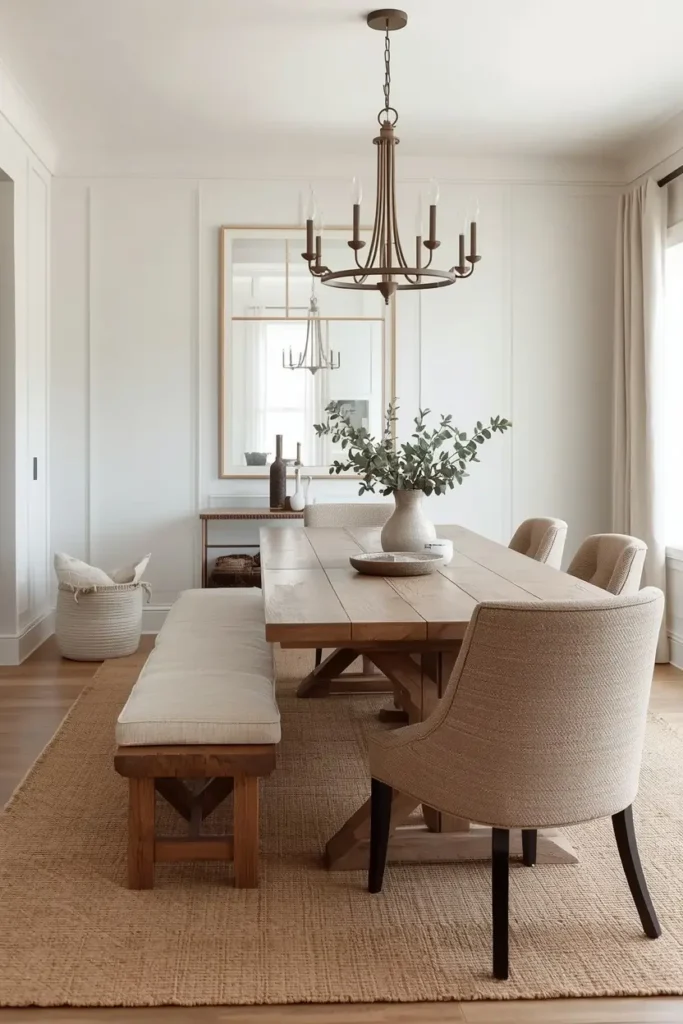
This layout trick is one of the most underused styling moves in modern farmhouse design, and I genuinely don’t understand why more people don’t do it. Replace the chairs on one long side of your dining table with a simple wooden bench — and keep upholstered chairs on the other side and at the heads.
The bench introduces that casual, lived-in farmhouse feel that’s impossible to fake with chairs alone. There’s something inherently communal and warm about bench seating. It says “gather around,” which is the whole spirit of farmhouse design.
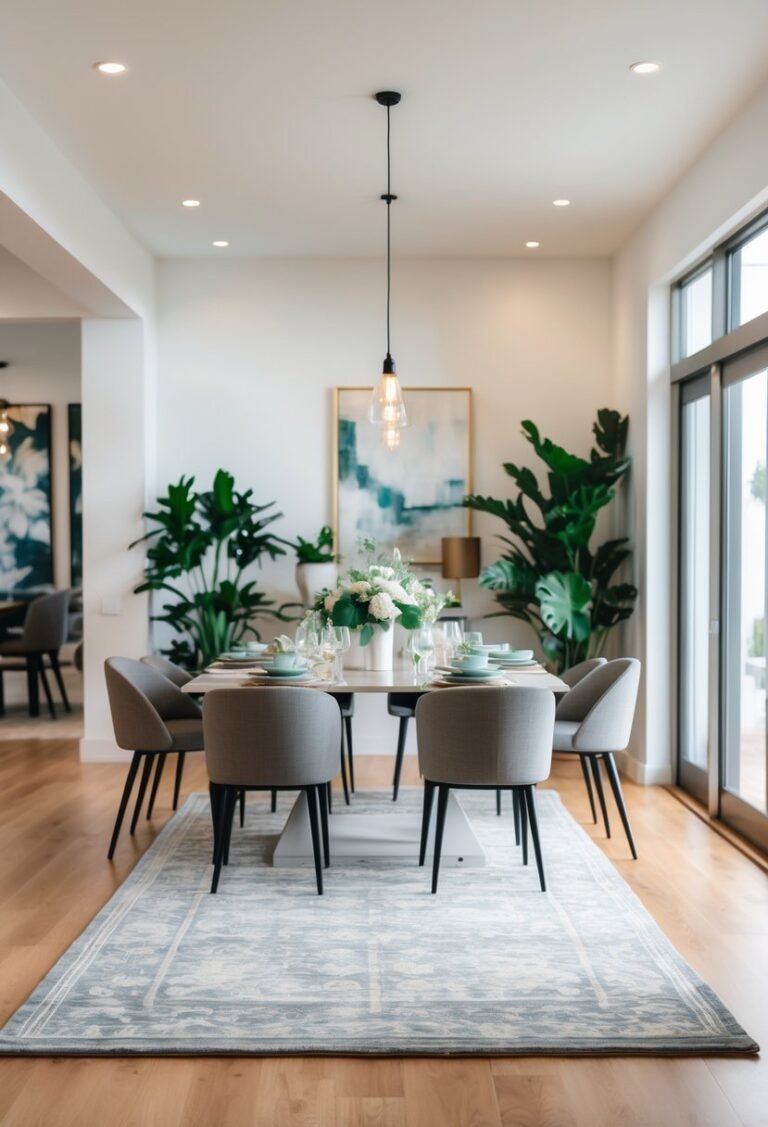
Meanwhile, the upholstered chairs on the opposite side keep things from looking too rustic or sparse. Choose chairs with clean lines, a neutral fabric like oatmeal boucle or light grey linen, and simple tapered legs.
This asymmetry — bench on one side, chairs on the other — is a hallmark of designer-level dining rooms. It looks intentional because it is.
✦ Expert TipAdd a thin cushion or lumbar pillow to the bench to make it more inviting. A striped ticking fabric or simple cream linen cushion does the trick beautifully — it softens the bench visually and makes it much more comfortable for longer dinners.
✦ Why It WorksMixed seating creates casual elegance — a core principle of modern farmhouse. The mix of hard wood bench and soft upholstered chairs mirrors the broader style’s love of contrast between rough and refined textures.
The Modern Farmhouse Dining Room Budget Breakdown
One of the most common questions I get is: “How much does it actually cost to pull this look off?” The honest answer is — it depends on how many shortcuts you’re willing to take. Here’s a realistic breakdown at three budget levels.
But here’s the important part — the most expensive rooms in magazines aren’t always the best-looking ones. Some of the most stunning modern farmhouse dining rooms I’ve seen were assembled with secondhand furniture, a can of paint, and a good eye for proportion. Budget is less important than understanding the principles.
Dining Table (reclaimed/farmhouse style)$300 – $1,200
Dining Chairs (set of 4–6)$200 – $900
Bench Seating$80 – $350
Pendant Lights (1–3 fixtures)$60 – $450
Shiplap or Wallpaper Accent Wall$100 – $600
Rug (5×8 or 8×10)$150 – $700
Decor (candles, greenery, table runner, art)$50 – $300
Total Estimated Range$940 – $4,500
My biggest money-saving tip: splurge on the table and the lighting. These are the two elements that define the whole room. Save on chairs (reupholster secondhand finds), rugs (look at Rugs USA and Wayfair sales), and decor (H&M Home and Target’s Threshold line are criminally good for this aesthetic).
Looking for ideas on how to style a full room on a tight budget? Check out our full Dining Room Ideas collection here →
The All-White Room That Isn’t Boring (The Texture Layer Trick)
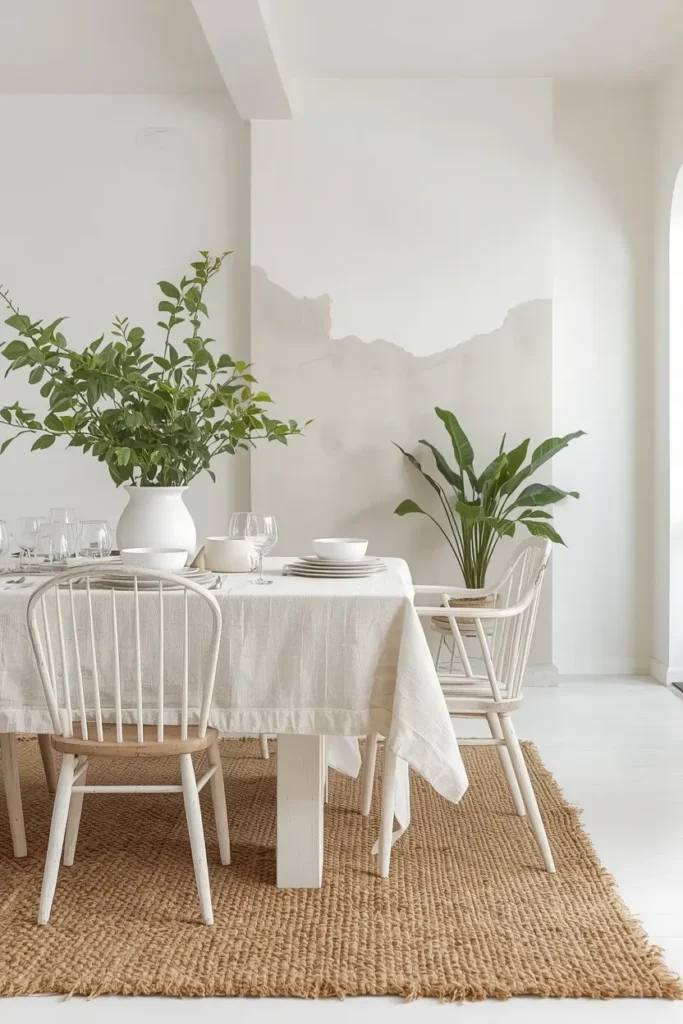
Here’s what most people get wrong about white rooms: they think white is safe. It isn’t. A white room with no texture is clinical and cold. A white room with texture is one of the most beautiful spaces you can create.
The trick is to use at least five different textures within your white-on-white palette. Think a rough linen tablecloth, smooth ceramic dinnerware, a chunky knit or woven jute rug, weathered wood chairs painted white, and a plaster or limewash-effect wall behind the table. Every surface should feel different to the touch — even if they all look the same color.
This approach is peak modern farmhouse: calm and neutral at first glance, but rich with detail on closer inspection. Add a single statement element in a complementary neutral — a greige linen curtain, a soft sage centerpiece plant, a warm wheat-toned candle grouping — and the room comes alive without ever raising its voice.
✦ Expert TipDon’t paint everything the same shade of white. Use warm whites (with yellow or beige undertones) on walls and cool whites (with grey or blue undertones) on trim and furniture. The subtle contrast adds depth that you can feel without being able to name.
✦ Why It WorksTexture creates visual interest in the absence of color, which is why all-white rooms done well feel luxurious rather than empty. It’s a technique borrowed straight from Scandinavian and French country design — both of which share DNA with modern farmhouse.
Dark and Moody: A Deep-Toned Dining Room That Still Feels Farmhouse
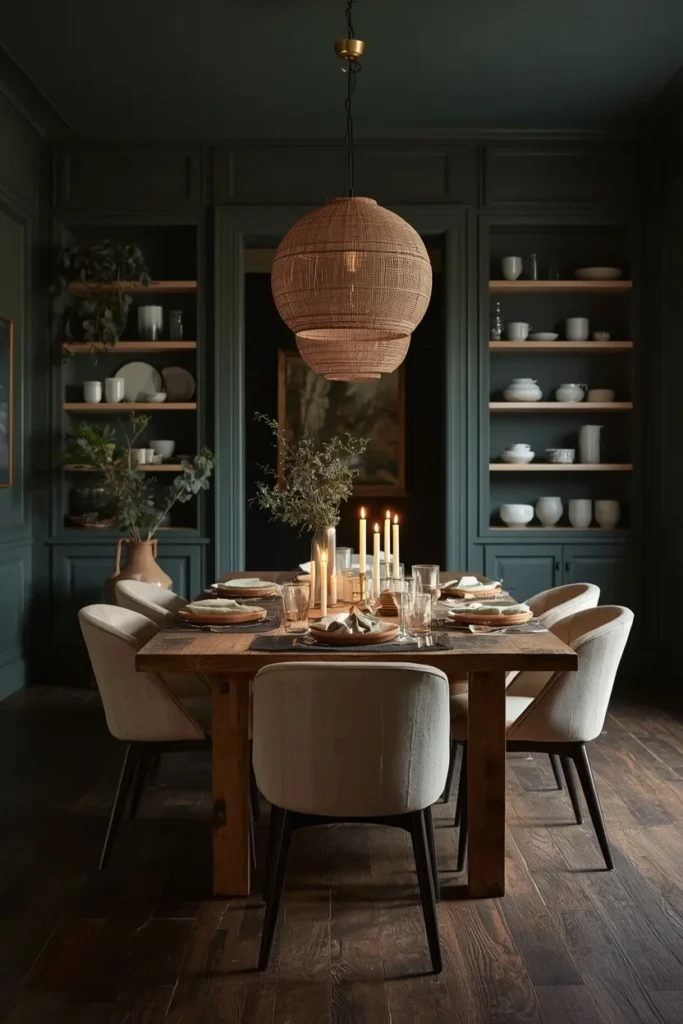
Not every modern farmhouse dining room needs to be light and airy. Some of the most stunning rooms I’ve seen in this style lean dark — deep olive green, forest sage, charcoal slate, or even inky navy — and they feel completely at home within the farmhouse aesthetic.
The key is pairing a dark wall color with warm wood tones, natural textures, and warm-toned lighting. The darkness creates intimacy; the natural elements keep it grounded and earthy rather than gothic or formal.
Try deep sage walls with a raw oak dining table, warm brass pendant lights, and cream linen chairs. Or go bolder with black shiplap — yes, black shiplap — paired with natural wood floors, white ceramic dishware displayed on open shelves, and warm candlelight on the table. It sounds dramatic, but the result is cozy and deeply atmospheric.
✦ Expert TipWhen using dark walls, make sure your overhead lighting is warm-toned (2700K–3000K bulbs). Cool white light in a dark room feels harsh and institutional. Warm light in a dark room feels like a cabin by a fire — which is exactly the vibe you’re going for.
✦ Why It WorksDark colors create a sense of enclosure that makes a dining space feel intimate and special — like the room is wrapping you up while you eat. Combined with farmhouse warmth and texture, it becomes one of the most inviting combinations in residential design.
Light and airy or dark and moody — which direction are you leaning for your dining room?Tell us in the comments! Your answer might inspire the next decorating guide we write ✨
“Now, avoid this mistake — buying all your furniture from one store or one collection. The rooms that look most curated are almost always assembled from multiple sources over time.”
The Open Shelving Wall: Styling Farmhouse Function as Decor
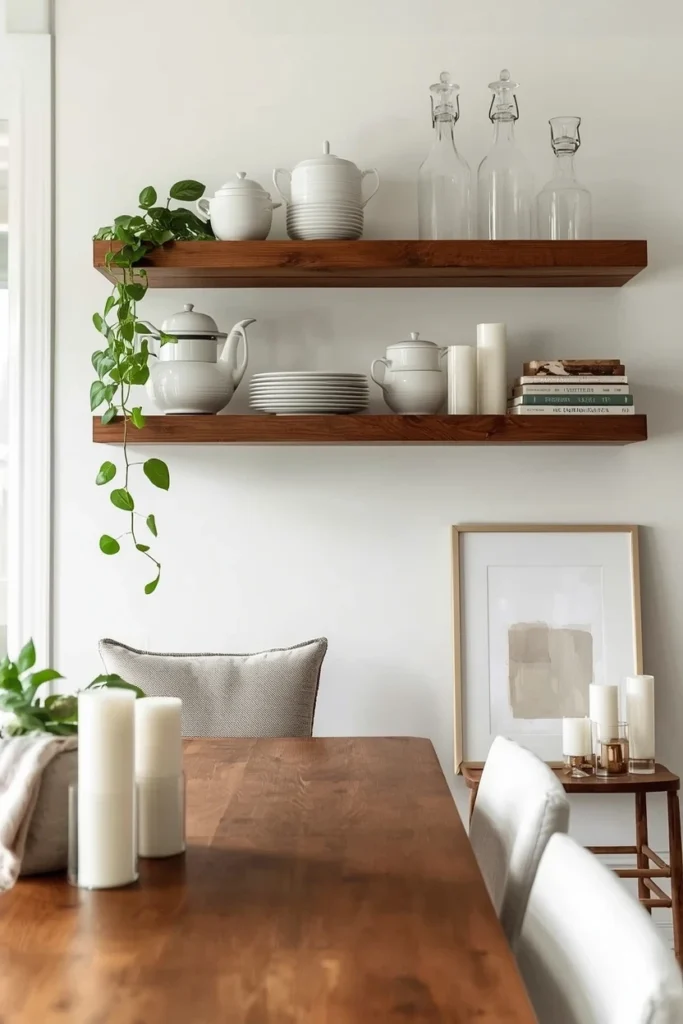
This is the idea most decorating guides skip over, and it might be the most impactful thing you can do for a modern farmhouse dining room — especially if you have a blank wall you don’t know what to do with.
A pair of floating wooden shelves (or three, staggered in height) styled with a curated mix of white ceramic dishes, vintage glass decanters, a trailing pothos or dried eucalyptus, and a few books stacked horizontally creates a living, breathing decorative element that also happens to be practical.
The key word here is curated. Don’t just stack stuff on shelves. Give each shelf a purpose: one with dishes and a small plant, one with glassware and a candle cluster, one with a piece of art leaned against the wall and a linen-covered cookbook. Think of each shelf as a tiny scene, not a storage solution.
This approach brings that collected-over-time feeling that farmhouse design thrives on — the sense that these objects have stories, that they weren’t all purchased in a single afternoon.
✦ Expert TipUse the “rule of three” on every shelf: one tall item, one medium item, one small item. This creates natural visual rhythm and stops shelves from looking flat or overcrowded. And always leave some negative space — empty shelf is not wasted shelf.
✦ Why It WorksOpen shelving bridges the gap between decoration and function — a core value in farmhouse design. It also gives the eye somewhere to travel beyond the dining table, which makes the whole room feel bigger and more considered.
Vintage-Style Area Rug: The Piece That Ties Everything Together
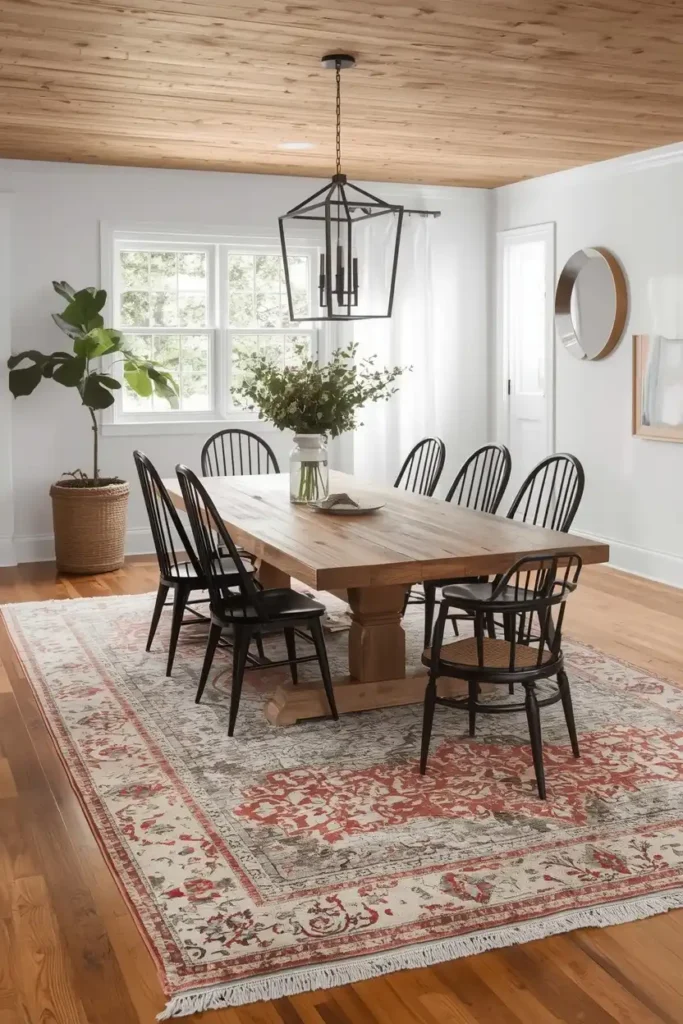
If there’s one piece that can instantly make a modern farmhouse dining room feel pulled-together, it’s the right rug. And for this style, the right rug is almost always a vintage-inspired or distressed flatweave or low-pile rug in warm neutral tones — cream, oatmeal, faded terracotta, dusty sage, or soft charcoal.
The pattern matters too. Traditional Persian or Turkish-inspired patterns that have been faded or muted look stunning in modern farmhouse spaces because they add that sense of age and history without feeling old-fashioned. The imperfection of a faded vintage rug mirrors the imperfection of reclaimed wood and worn linen — it all belongs together.
Go bigger than you think you need. In a dining room, your rug should extend at least 24 inches beyond all sides of the table so that chairs remain on the rug even when pulled out. A rug that’s too small is the single most common dining room decorating mistake — it makes the whole space look underfurnished, even when it isn’t.
✦ Expert TipFor a high-end look on a budget, check Rugs USA, Boutique Rugs, and Wayfair for machine-made vintage-style rugs. Many are under $200 for an 8×10 and look genuinely beautiful in person. The Bungalow Rose and Loloi brands are particularly good for this aesthetic.
✦ Why It WorksA rug anchors the dining zone within an open-plan space and gives the room a sense of intentional composition. The worn, faded quality of vintage-style rugs adds the patina and warmth that modern farmhouse design depends on.
The Statement Centerpiece: Think Beyond a Flower Vase
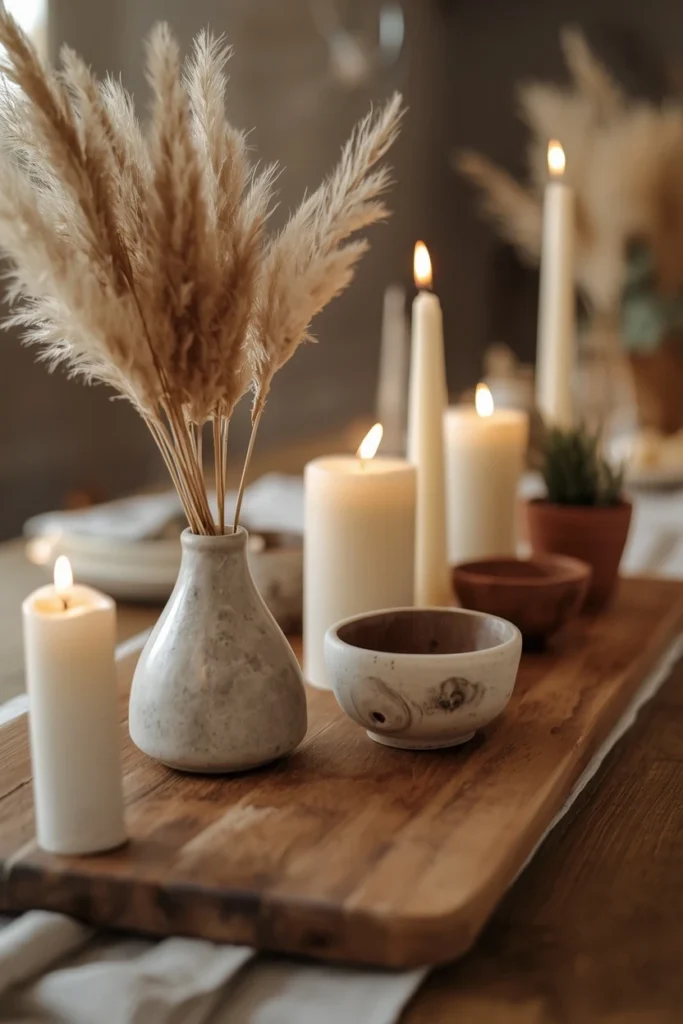
Your dining table centerpiece is the final styling move that either makes the room feel complete or leaves it feeling slightly unfinished. And while a vase of flowers is always beautiful, modern farmhouse design invites something a little more layered and unexpected.
Try building a centerpiece “moment” instead of placing a single object. Start with a long wooden board or a tray as the base. On it, arrange a grouping of varying-height pillar candles (use unscented white or cream), a small ceramic vase with dried pampas grass or eucalyptus stems, a couple of rough-textured clay or stoneware bowls, and a small potted succulent or herb.
The goal is a centerpiece that looks effortlessly collected — as if these beautiful objects simply found their way together. The mix of candlelight, organic texture, and natural greenery hits every note of modern farmhouse warmth simultaneously. Even better? Almost all of this can be sourced from HomeGoods, TJ Maxx, or your local thrift store.
✦ Expert TipKeep your centerpiece low — no taller than 12 inches at its highest point. You want your dinner guests to be able to see each other across the table. A beautiful centerpiece that blocks sightlines is a design mistake that nobody will tell you about but everyone will feel.
✦ Why It WorksA thoughtfully styled centerpiece signals that this is a space that gets used and loved. It transforms a furniture arrangement into a dining room — a place that invites people to sit, linger, and come back.
The Modern Farmhouse Dining Room Built Around One Statement Light Fixture
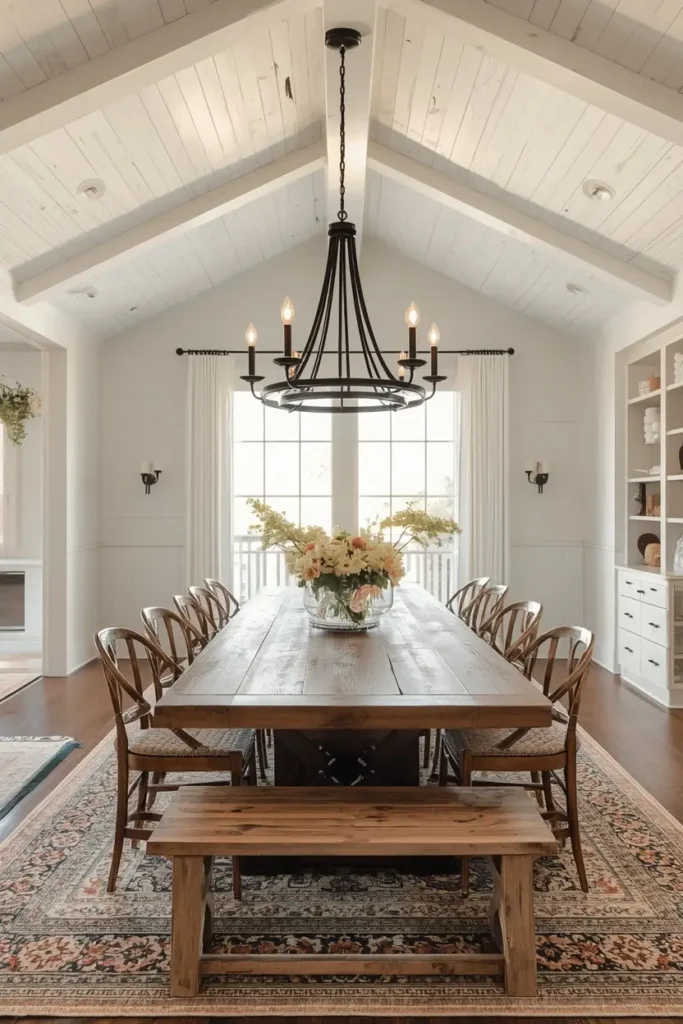
Here’s the design move that professional decorators use almost every time they approach a dining room: they choose the light fixture first and build everything else around it.
In modern farmhouse design, the light fixture is the crown jewel. A large black iron chandelier with multiple candle-style arms is probably the most iconic choice — it reads unmistakably farmhouse while its clean matte black finish keeps it modern. But there are wonderful alternatives: an oversized woven seagrass pendant, a cluster of exposed-bulb pendants at varying heights, or a modern wagon wheel chandelier in brushed bronze or matte white.
Whatever you choose, go bigger than feels comfortable. Dining room fixtures are almost always too small. A fixture that feels slightly oversized in the showroom will feel exactly right once it’s installed and surrounded by walls. The scale is what makes it a statement — a too-small fixture over a dining table just disappears.
Once your fixture is chosen, pull wood tones, metal finishes, and textile colors from it. If your chandelier is black iron, echo that in your chair legs, cabinet hardware, and mirror frames. If it’s warm brass, let that warm tone ripple through your pendant accessories and table decor. The fixture is your North Star for the whole room.
✦ Expert TipA general rule for sizing: add the length and width of your room in feet, then convert to inches. A 12×14 room = a 26-inch-wide fixture as a starting point. For over a dining table specifically, go 12 inches narrower than the table width for the ideal scale.
✦ Why It WorksLighting is the only design element in a room that changes based on the time of day, the season, and who’s in the space. A great fixture delivers atmosphere you can’t get from any piece of furniture — it’s architecture you live under, and it shapes every meal taken in that room.
Which of these 10 ideas are you most excited to try first?Leave a comment below — I read every single one, and your questions often inspire our next full guide! 🌿
“But here’s the important part — you don’t need to do all 10. Pick the two or three that resonate most deeply with your home and your personality. Restraint is the secret ingredient in every room that truly works.”
5 Things to Avoid in a Modern Farmhouse Dining Room
Before you start shopping, let me save you from a few very common (and very fixable) mistakes.
- Over-accessorizing. More is not more in this style. Every surface doesn’t need something on it. White space is design.
- Matching everything too perfectly. Rooms that look like they came fully assembled from a catalog feel hollow. Mix pieces from different eras and sources.
- Ignoring the ceiling. Beadboard, wood-planked, or limewash-painted ceilings are a massive opportunity in farmhouse design — and almost everyone ignores it.
- Choosing curtains that are too short. Curtains should graze the floor or pool slightly. Floating curtains that end mid-wall make ceilings look low and rooms look unfinished.
- Going too trendy. Modern farmhouse has staying power because it leans on timeless natural materials. The moment you add too many trend-driven pieces, the room has an expiration date.
Also worth bookmarking: our Rustic Kitchen Ideas guide and our full breakdown of Kitchen Lighting Ideas — both share a lot of design DNA with everything you’ve read here.
You’re Closer Than You Think
Modern farmhouse dining room design isn’t about buying the right things. It’s about understanding the right tension — warm and cool, rough and refined, old and new — and letting that tension do the decorating for you.
Start with one idea from this list. Just one. Maybe it’s the bench on one side of the table. Maybe it’s finally finding that statement pendant you’ve been delaying. Maybe it’s adding open shelving to that blank wall you’ve been ignoring for two years.
One intentional change in a dining room can transform how the entire space feels. And once you make it, you’ll wonder why you waited so long.
If you loved this guide, I think you’ll be obsessed with our Living Room Chandelier Ideas post — it applies so much of what we covered here, and the visual inspiration is absolutely stunning. And if you’re thinking about the kitchen side of your open-plan space, our Kitchen Countertop Ideas guide is one of our most-saved posts of the year for a reason.
Happy decorating — your dream dining room is genuinely one good decision away. 🌿