
10 Ground Cover Plants That Choke Out Weeds
This article was created in line with Trends Oraa’s research and content standards.
Most people don’t realize this.
Weeds don’t actually invade a healthy garden bed. They just fill the gaps you left open.
That’s why pulling them every weekend never actually fixes the problem — you’re treating the symptom, not the empty soil underneath.
The good news? The right ground cover plants close those gaps permanently, so weeds simply run out of room to grow.
You might also love our guide on 10 Genius Front Yard River Rock Landscaping Instead of Mulch Ideas if you’re already thinking about low-maintenance ground solutions, because these two strategies work beautifully together.
I’ve spent years testing which ground covers actually spread fast enough, densely enough, and stubbornly enough to outcompete weeds instead of just sitting there looking pretty while weeds grow right through them. Some so-called “ground covers” barely cover any ground at all. These ten genuinely do.
Here’s what makes this list different: every plant below spreads aggressively enough to matter, but stays manageable with basic yearly upkeep. No constant battling, no reseeding every spring.
Keep scrolling — the third idea on this list is the one most people underestimate, and it’s honestly one of the fastest spreaders here.
Why Ground Cover Plants Are the Real Weed Solution
Before we dive into the list, let’s talk about why this actually works.
Weeds need three things to establish: sunlight, bare soil, and room to spread their roots.
Ground cover plants remove all three at once by physically occupying the space weeds would otherwise take over.
But here’s the important part: not every ground cover spreads at the same rate, and picking the wrong one for your climate or light conditions is the number one reason people give up on this method.
The plants on this list were chosen specifically because they’re aggressive spreaders in the best possible way — vigorous enough to smother weeds, but not so invasive that they’ll take over your whole yard uninvited.
Picture yourself walking outside next spring to a garden bed that’s already full, green, and weed-free before you’ve touched a trowel. That’s the entire point of this list.
1. Creeping Thyme (Thymus serpyllum)
What You’re Seeing
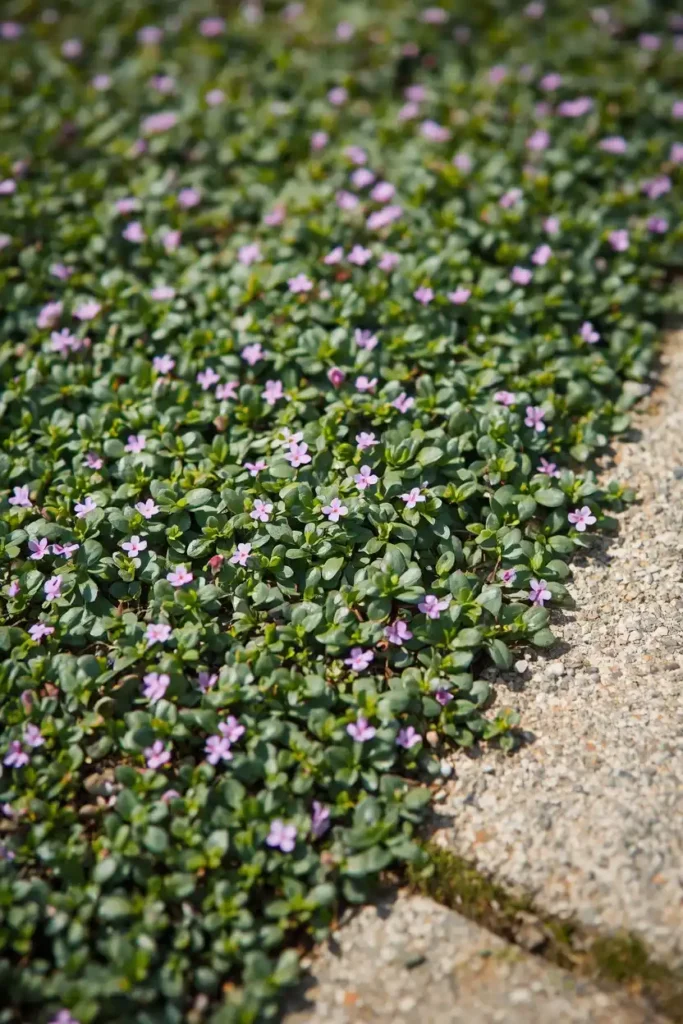
Imagine a low, dense mat of tiny green leaves studded with clusters of pink-purple flowers, hugging the ground so tightly it looks almost like a living carpet spilling over a stone path or rock edge.
Design Breakdown
Creeping Thyme is one of the fastest, densest spreaders in this entire list, and it does double duty as a fragrant, walkable ground cover. It roots into every crack and crevice it can find, which means it’s exceptional between pavers or along the edges of a walkway where weeds usually sneak in.
Expert Tip
Plant it in full sun with well-draining soil. Thyme actually spreads faster and blooms heavier in slightly poor, rocky soil than in rich garden loam.
Why It Works
Its dense mat structure physically blocks sunlight from reaching weed seeds below, while the shallow, fibrous root system outcompetes weed roots for space and nutrients.
Best For
- Small spaces
- Budget makeovers
- Renters
- Families
Common Mistake To Avoid
Planting it in heavy shade or consistently wet soil. Thyme struggles and thins out fast in those conditions, leaving gaps for weeds to sneak back in.
Quick Wins
- Releases a pleasant fragrance when stepped on
- Tolerant of foot traffic
- Attracts bees and pollinators
- Virtually maintenance-free once established
2. Creeping Phlox (Phlox subulata)
What You’re Seeing

Picture a slope or border completely blanketed in a wave of vivid pink, purple, or white blooms each spring, so dense that the needle-like foliage underneath barely shows through.
Design Breakdown
Creeping Phlox is a spring showstopper that spreads into a tight, weed-smothering mat within just a couple of seasons. It’s especially effective on slopes and hillsides where mowing is impractical and weeds tend to run wild unchecked.
Expert Tip
Shear it back lightly right after the spring bloom fades. This encourages denser growth and can occasionally trigger a smaller second flush later in the season.
Why It Works
The tight, cushion-like growth habit leaves almost no bare soil exposed, which is exactly the condition weed seeds need to germinate — take that away, and most weeds simply can’t get started.
Best For
- Large spaces
- Budget makeovers
- Luxury homes
Common Mistake To Avoid
Planting it in full shade. Creeping Phlox needs strong sun to bloom well and stay dense — in shade, it thins out and stops competing with weeds effectively.
Quick Wins
- Spectacular spring color display
- Excellent for erosion control on slopes
- Evergreen foliage in mild climates
- Deer resistant in most regions
Most people don’t know this: the biggest reason ground covers fail to choke out weeds isn’t the plant itself — it’s spacing them too far apart at planting time. One thing I’ve learned is that planting slightly closer than the tag recommends, especially in year one, closes the canopy gap months faster and gives weeds far less window to sneak in before the ground cover matures. If your soil is compacted or slow to drain, our guide on Top Soil Mistakes to Avoid for a Healthier Garden is worth reading before you plant anything.
Most people waste more space than they realize when they leave bare gaps “to fill in later.” Here’s where it gets interesting.
3. Creeping Jenny (Lysimachia nummularia)
What You’re Seeing
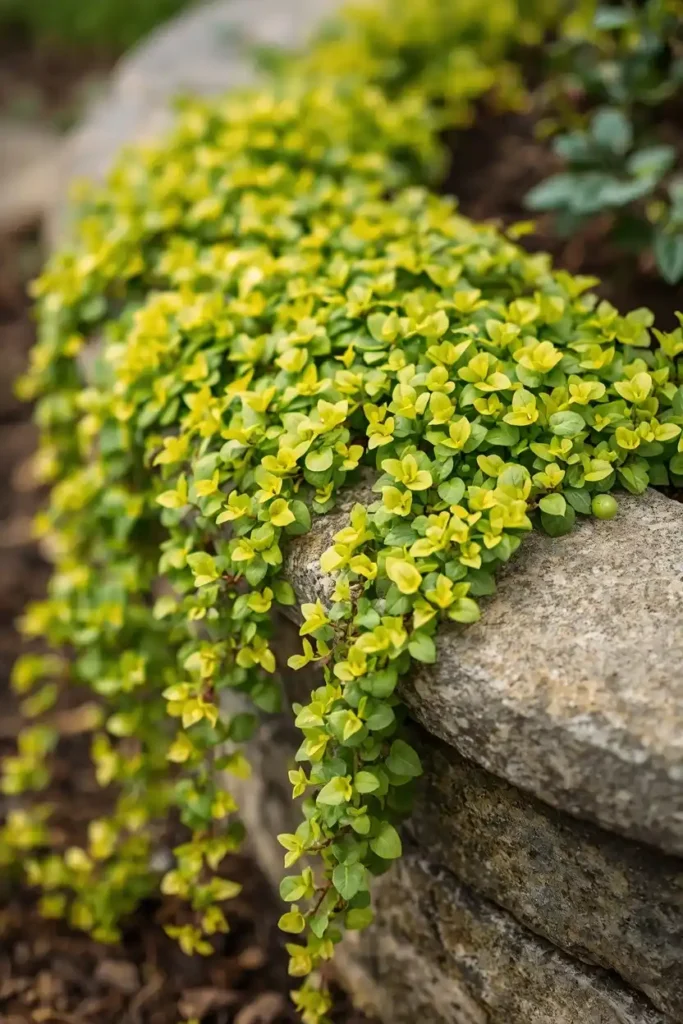
Visualize trailing stems covered in round, chartreuse-gold leaves cascading over the edge of a garden bed or container, creating a bright, almost glowing carpet of color against darker foliage nearby.
Design Breakdown
Creeping Jenny spreads fast, roots wherever its stems touch soil, and tolerates far more moisture than most ground covers on this list. That makes it one of the best options for the damp, low-lying spots in your yard where weeds like crabgrass tend to take over.
Expert Tip
If it starts spreading further than you’d like, simply pull up the trailing stems by hand — they root shallowly and lift out easily without a fight.
Why It Works
Its rapid rooting habit means it fills bare soil dramatically faster than most perennial ground covers, closing the weed-friendly gap window in a single growing season instead of two or three.
Best For
- Small spaces
- Budget makeovers
- Renters
- Families
Common Mistake To Avoid
Planting it near more delicate perennials without a barrier. Creeping Jenny will happily climb right over slower-growing neighbors if left unchecked.
Quick Wins
- Thrives in both sun and partial shade
- Tolerates damp, poorly drained soil
- Bright color adds visual contrast
- Roots easily from cuttings for free plants
You might also love our guide on Small Front Yard Landscaping Ideas if you’re mapping out where these ground covers should go before you start digging.
You May Also Like:
- Small Garden Design Ideas
- 15 Cheap Front Yard Flower Bed Ideas
- What Is Topsoil Uses and Benefits for Garden
- Diy French Drain Ideas
- Garden Ideas
4. Ajuga (Bugleweed)
What You’re Seeing
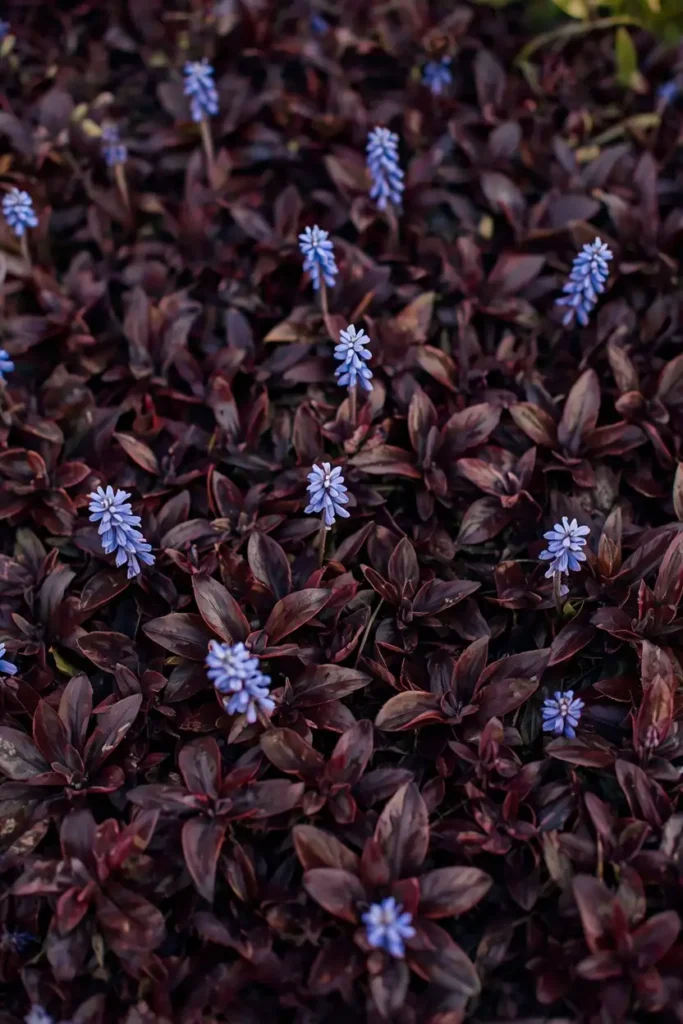
Think about how much easier your border looks with a dense rosette of deep purple-bronze foliage low to the ground, topped in late spring by short spikes of vivid blue flowers pushing up through the mat.
Design Breakdown
Ajuga is one of the most shade-tolerant aggressive spreaders you can plant, making it perfect for the tricky in-between areas of your yard that get partial sun and where grass typically struggles anyway. It spreads by runners and forms a thick, weed-proof mat within a season or two.
Expert Tip
Give it a hard edge — a paver border or trench edge — if you’re planting it near a lawn. It will happily creep into turf grass if left unchecked.
Why It Works
The dark, dramatic foliage color adds contrast most ground covers can’t offer, while its dense rosette structure leaves essentially zero bare soil for weed seeds to land on.
Best For
- Small spaces
- Budget makeovers
- Renters
- Families
Common Mistake To Avoid
Overwatering in already-moist shade. Ajuga can develop crown rot in soggy, poorly drained soil, which opens gaps right back up for weeds.
Quick Wins
- Thrives in partial to full shade
- Evergreen to semi-evergreen in most climates
- Attracts early-season pollinators
- Fast spreading with minimal care
5. Vinca Minor (Periwinkle)
What You’re Seeing
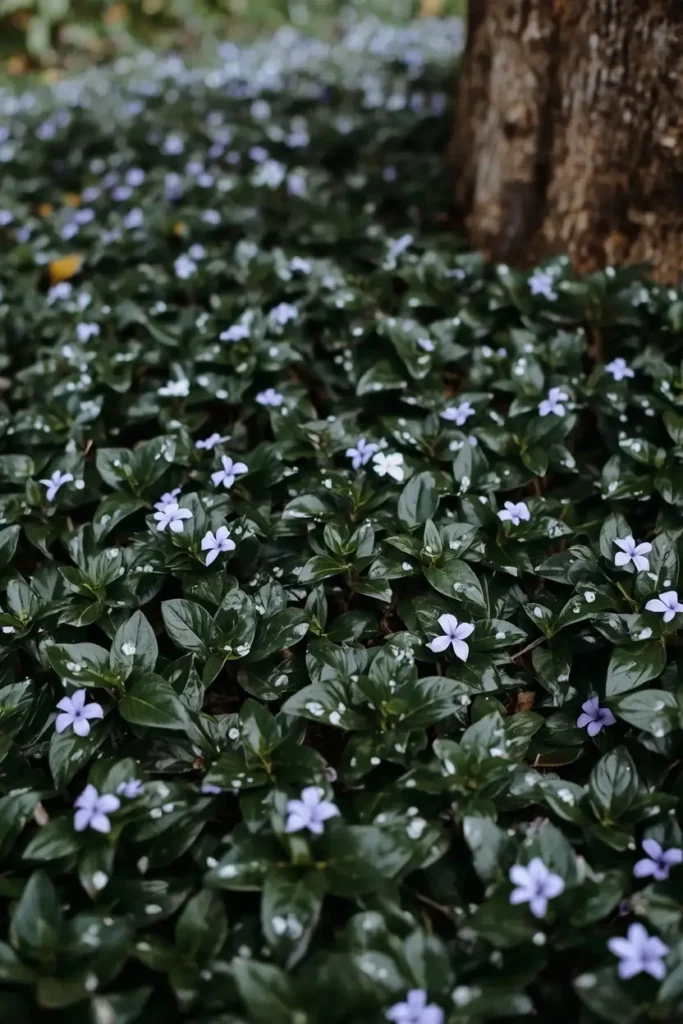
Picture a trailing evergreen mat of glossy dark green leaves dotted with delicate lavender-blue flowers, spreading steadily to blanket a slope, tree base, or awkward shady corner completely.
Design Breakdown
Vinca Minor is a classic for a reason — it’s nearly indestructible, evergreen year-round in most climates, and one of the most reliable weed-suppressing ground covers for shaded areas where grass and most flowering perennials refuse to thrive.
Expert Tip
Trim it back once a year in early spring to keep growth dense at the base rather than leggy and thin, which keeps its weed-blocking coverage tight.
Why It Works
Its evergreen habit means it’s suppressing weeds twelve months a year, not just during the growing season, giving it a real advantage over ground covers that die back in winter.
Best For
- Large spaces
- Budget makeovers
- Renters
Common Mistake To Avoid
Planting it where you’ll want to change the landscaping later. Vinca is notoriously difficult to remove once established, so commit to the space before planting.
Quick Wins
- Thrives in deep shade
- Evergreen in most US climates
- Extremely low maintenance
- Excellent for erosion control on slopes
Here’s where it gets interesting: most homeowners plant ground covers in a single, uniform patch and call it done. Designers rarely stop there. Layering two ground covers with different textures, like glossy Vinca under a taller ornamental grass, creates depth while still closing every gap weeds could exploit. It’s the same principle as layering perennials, just closer to the ground.
6. Snow-in-Summer (Cerastium tomentosum)
What You’re Seeing

Imagine a silvery, felt-textured carpet of foliage completely covered in small white flowers each early summer, creating a striking snow-like blanket across a sunny slope or border edge.
Design Breakdown
Snow-in-Summer earns its name honestly — the bloom display is dense enough to look like a fresh dusting of snow, and the silvery foliage adds texture contrast even when it’s not in flower. It spreads quickly in hot, dry, sunny spots where a lot of other ground covers struggle.
Expert Tip
Cut it back by about half right after blooming to keep the mat tight and prevent the center from thinning out and opening gaps.
Why It Works
Its drought tolerance means it keeps its dense form even during summer dry spells when many weeds would otherwise take advantage of stressed, thinning plants nearby.
Best For
- Small spaces
- Budget makeovers
- Large spaces
Common Mistake To Avoid
Planting it in rich, moist soil or heavy shade. Snow-in-Summer wants lean, well-draining soil and full sun to perform at its weed-blocking best.
Quick Wins
- Extremely drought tolerant
- Silvery foliage adds year-round texture
- Excellent for rock gardens and slopes
- Deer and rabbit resistant
The next idea is one designers secretly love.
7. Lamium (Dead Nettle)
What You’re Seeing
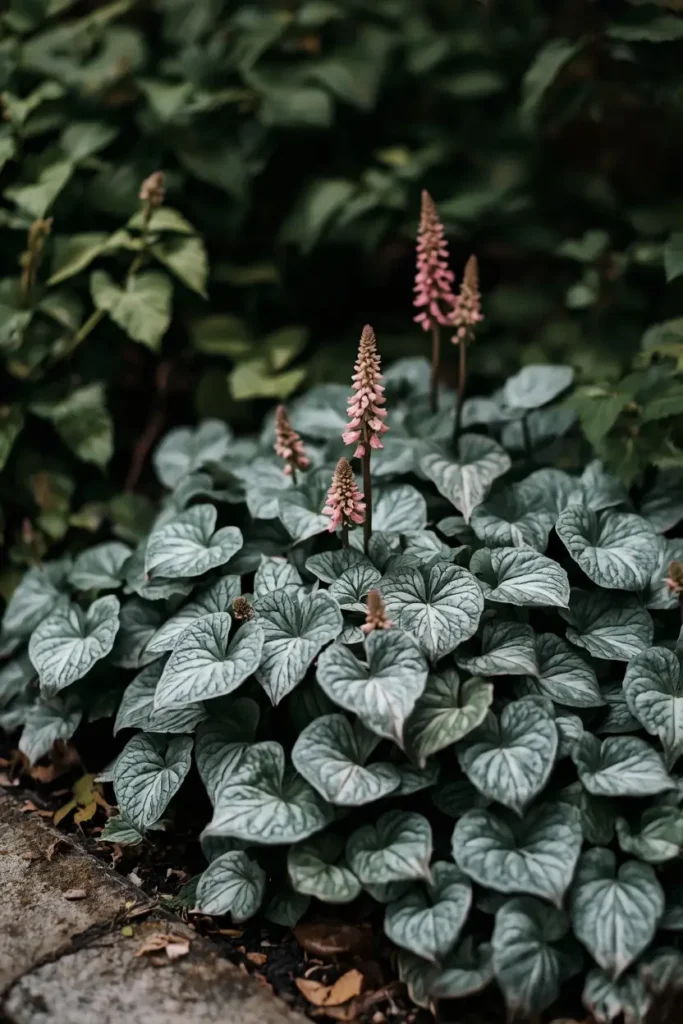
Visualize silver-brushed, heart-shaped leaves forming a low, spreading mat, topped with small pink or white flower spikes that brighten up a shaded bed most other ground covers would leave dull and bare.
Design Breakdown
Lamium is one of the best-kept secrets for shady weed-prone areas. It spreads by both seed and creeping stems, filling bare soil under trees and along fence lines fast, and the silvery foliage brightens dark corners that would otherwise look neglected.
Expert Tip
Cut it back hard mid-summer if it starts looking leggy. It bounces back within a few weeks with fresh, denser growth.
Why It Works
The reflective silver foliage tricks the eye into perceiving more light and space in a dark corner, all while the dense mat structure is doing the practical work of blocking weed germination.
Best For
- Small spaces
- Budget makeovers
- Renters
- Families
Common Mistake To Avoid
Assuming it needs full shade only. Lamium actually tolerates a surprising amount of morning sun, and too much deep shade can thin it out over time.
Quick Wins
- Thrives in dry shade, a notoriously tough spot
- Brightens dark garden corners
- Spreads quickly without becoming invasive in most climates
- Low water needs once established
You May Also Like:
- Tiny Garden Ideas
- West-Facing Garden Design Ideas
- Diy Retaining Wall Ideas
- Vintage Garden Decor Ideas
- Garden Shed Landscaping Ideas
Mid-Article Deep Dive: A Buying Guide for Choosing the Right Ground Cover Plants
This is where many homeowners make a mistake — they buy whichever ground cover looks nicest on the plant tag without checking whether it actually matches their yard’s conditions. Let’s break this down properly.
Step one — assess your light
- Full sun (6+ hours direct) works best for Creeping Thyme, Creeping Phlox, and Snow-in-Summer
- Partial shade suits Ajuga and Creeping Jenny
- Full shade calls for Vinca Minor, Lamium, or Pachysandra
Step two — assess your soil moisture
- Dry, well-draining soil favors Thyme, Phlox, and Snow-in-Summer
- Consistently moist soil favors Creeping Jenny and Lamium
- Average soil works fine for Ajuga, Vinca, Liriope, and Pachysandra
Step three — match spreading speed to your patience level
- Fast spreaders (fills in within one season) — Creeping Jenny, Ajuga, Snow-in-Summer
- Moderate spreaders (one to two seasons) — Creeping Thyme, Creeping Phlox, Lamium
- Slower but steady spreaders (two to three seasons) — Vinca Minor, Pachysandra, Liriope
Realistic cost expectations
- Small nursery starts (plugs or 4-inch pots) are the most budget-friendly way to cover large areas, though it takes longer to close gaps
- 1-gallon containers cost roughly double per plant but fill in noticeably faster, which matters if you’re racing against an active weed problem
- Many of these ground covers, especially Creeping Jenny and Ajuga, are easy to divide after year one, effectively making your first purchase multiply into future plants for free
Common buying mistakes to avoid
- Choosing a fast spreader like Vinca or Creeping Jenny for a small, contained bed — it will outgrow the space and require regular trimming
- Skipping a soil test before buying, which often leads to buying sun-loving plants for a shady spot or vice versa
- Underestimating how many plants you need — most ground covers should be spaced 12-18 inches apart depending on mature spread, and skimping on quantity just leaves weeds more room and more time to move in first
Would you choose a fast spreader for quick weed control, or a slower, more contained option for a tidy bed? Both approaches work — it just depends on how hands-on you want to be in year one.
8. Liriope (Lilyturf)
What You’re Seeing
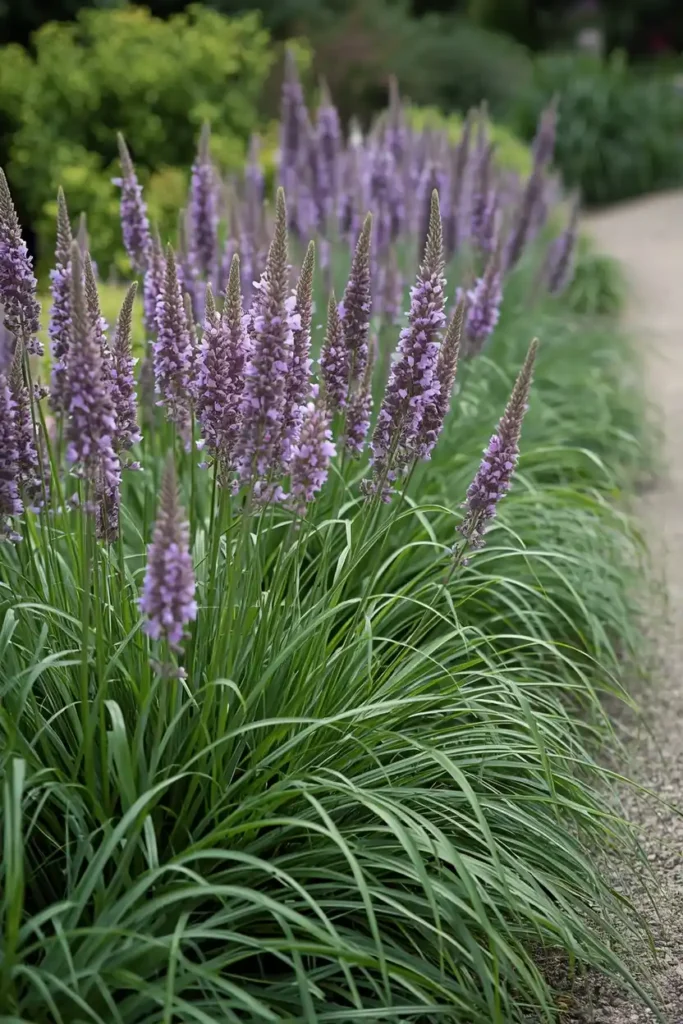
Picture grass-like, arching clumps of deep green foliage topped in late summer by upright spikes of small purple or white flowers, forming a tidy, textured border along a walkway or garden edge.
Design Breakdown
Liriope reads more like an ornamental grass than a typical ground cover, but it spreads steadily by rhizomes to form a dense, weed-resistant edging that holds its shape beautifully along paths and driveways.
Expert Tip
Cut the entire clump back to about 3 inches in late winter before new growth emerges. This keeps the foliage fresh and dense rather than tired-looking through the following season.
Why It Works
Its clumping, grass-like density leaves almost no room for weed seeds to establish, and its upright structure adds a completely different texture than the mat-forming ground covers earlier on this list.
Best For
- Small spaces
- Luxury homes
- Budget makeovers
Common Mistake To Avoid
Planting the aggressive “creeping” variety of Liriope where you actually wanted a tidy, contained clump. Always check whether you’re buying clumping or spreading Liriope before you buy.
Quick Wins
- Excellent for edging walkways and driveways
- Tolerates sun to partial shade
- Deer resistant in most regions
- Low water needs once established
One thing I’ve learned: the biggest long-term mistake with weed-blocking ground covers isn’t the plant choice at all — it’s skipping a clean edge between the ground cover and the lawn. Without a physical barrier like a metal or paver edge, grass and ground cover will constantly fight each other at the border, and weeds exploit that contested strip more than anywhere else in the bed. A simple trenched edge, refreshed once a year, solves this permanently.
This simple change can completely transform the border.
9. Pachysandra (Japanese Spurge)
What You’re Seeing

Imagine a lush, deep green carpet of whorled, glossy leaves spreading evenly beneath trees or along a shaded foundation bed, staying dense and uniform year-round without a single bare patch showing through.
Design Breakdown
Pachysandra is the gold standard for deep shade ground cover. It spreads by underground rhizomes to form an incredibly dense, even mat that’s nearly impossible for weeds to break through once it’s established, which typically takes two to three seasons.
Expert Tip
Water consistently during the first full year while the rhizome network establishes itself. After that, it needs almost no supplemental water even in shaded dry soil.
Why It Works
Its rhizome network spreads underground before much is visible above ground, meaning it’s blocking weed roots below the surface even before the leafy canopy fully closes up top.
Best For
- Large spaces
- Luxury homes
- Budget makeovers
Common Mistake To Avoid
Planting it in full sun. Pachysandra scorches and thins out badly in direct sunlight — it wants shade, and lots of it, to perform properly.
Quick Wins
- Ideal for deep shade under mature trees
- Evergreen year-round coverage
- Extremely dense once established
- Very low maintenance long term
What’s your biggest challenge right now — too much shade, or too much sun? Pachysandra tends to be the answer for the shadiest, most stubborn corners of the yard.
10. Sedum (Stonecrop Varieties)
What You’re Seeing

Visualize thick, low-growing succulent foliage forming a tight, textured mat in shades of green, blue-green, or burgundy, studded with small star-shaped flowers in summer that draw in bees and butterflies.
Design Breakdown
Low-growing sedum varieties like ‘Dragon’s Blood’ or ‘Angelina’ spread into a dense succulent carpet that’s essentially drought-proof and thrives in the poor, rocky soil where weeds otherwise run wild unchecked.
Expert Tip
Press broken-off pieces directly into bare soil nearby — sedum roots from cuttings almost effortlessly, which is the cheapest way to expand your coverage for free.
Why It Works
The succulent leaves store their own water, meaning the plant stays plump and dense even through drought stress that would otherwise thin out competing ground covers and let weeds back in.
Best For
- Small spaces
- Budget makeovers
- Renters
- Families
Common Mistake To Avoid
Planting it in a low spot where water collects. Sedum rots quickly in standing water, which is really the only condition that reliably kills it.
Quick Wins
- Nearly indestructible once established
- Propagates for free from cuttings
- Thrives in poor, rocky soil
- Attracts pollinators in summer
Let me know which one is your favorite — I’d genuinely love to know if you’re drawn to the fast coverage of Creeping Jenny or the tidy structure of Liriope.
Related Garden Ideas
If this list got you thinking about a full weed-proofing overhaul, don’t stop here — the next idea changes everything once you start combining these ground covers with the right hardscaping.
- 10 Genius Front Yard River Rock Landscaping Instead of Mulch Ideas
- Small Balcony Garden Ideas
- Balcony Garden Ideas
- Diy Garden Trellis Ideas
- Top Soil Mistakes to Avoid for a Healthier Garden
- Modern Garden Shed Ideas
- Vegetable Garden Ideas
- Small Front Porch Ideas
Final Thoughts on Choosing Ground Cover Plants
Here’s the truth: you don’t need to cover your whole yard at once to see this method work.
Start with your worst weed zone — maybe a bare slope, a shaded strip under a tree, or the crumbling edge along your walkway — and pick the ground cover suited to that exact spot.
Pick one this week. Just one. Get it in the ground, water it consistently for the first month, and let it start closing the gap.
What’s stopping you from tackling your worst weed patch this weekend?
If you’re still working out where these plants should live in your overall landscape plan, our guide on Small Garden Design Ideas is the natural next stop before you buy a single plant.
And if you’re building out a full sunny border to pair with these ground covers, don’t miss our companion guide on full sun perennials, because a layered planting of tall bloomers and low ground cover is genuinely the fastest way to make weeds disappear for good.
Frequently Asked Questions About Ground Cover Plants
1. What are the fastest spreading ground cover plants for weeds? Creeping Jenny, Ajuga, and Snow-in-Summer are among the fastest spreaders, often closing bare soil gaps within a single growing season.
2. Do ground cover plants really stop weeds from growing? Yes. Dense ground cover blocks sunlight from reaching weed seeds and physically outcompetes them for root space, which prevents most weeds from establishing at all.
3. What is the best ground cover for full shade? Pachysandra and Vinca Minor are two of the most reliable options for deep shade, both forming dense, weed-blocking mats where grass typically struggles.
4. Can ground cover plants replace grass on a slope? Yes, many ground covers like Creeping Phlox and Snow-in-Summer are specifically recommended for slopes because they control erosion while eliminating the need for mowing.
5. How long does it take for ground cover to fully fill in? Most ground covers take one to three growing seasons to fully close gaps, depending on the spreading speed of the specific plant and spacing at planting time.
6. Are ground cover plants low maintenance long term? Yes, once established, most require only an annual trim or edge to stay dense, along with occasional watering during extended dry spells.
7. Do ground cover plants attract pollinators? Many do. Creeping Thyme, Sedum, and Liriope all produce flowers that attract bees and butterflies throughout the growing season.
8. What ground cover works best between pavers or stepping stones? Creeping Thyme is one of the best options for this, since it tolerates light foot traffic and fills gaps between stones densely.
9. Can ground cover plants become invasive? Some can spread beyond their intended area if left unchecked, which is why edging with a physical barrier is recommended for aggressive spreaders like Vinca and Creeping Jenny.
10. How far apart should ground cover plants be spaced? Most ground covers should be spaced 12-18 inches apart depending on their mature spread, with closer spacing recommended for faster weed suppression in year one.