10 Comprehensive Vegetable Companion Planting Charts for Raised Beds
This article was created in line with Trends Oraa’s research and content standards.
Most people don’t realize this.
Half of what goes wrong in a raised bed has nothing to do with soil or sunlight.
It’s about who’s planted next to whom.
If your tomatoes keep struggling, your cucumbers turn bitter, or your beans just sit there sulking, the problem might be your plant neighbors, not your green thumb. The good news? Fixing it is easier than a lot of gardening advice makes it sound, and once you see it laid out visually, it clicks instantly.
That’s exactly why Companion Planting Charts exist — they take years of trial-and-error garden wisdom and turn it into a simple, glance-and-go reference you can pin to your fridge or your Pinterest board. In this guide, I’m walking you through 10 comprehensive companion planting charts built specifically for raised beds, where space is tight and every square foot needs to earn its keep.
You might also love our guide on raised garden bed layouts and vegetable garden ideas if you’re still mapping out your bed before you plant a single seed.
Here’s where it gets interesting: raised beds behave differently than in-ground gardens. Roots are more crowded, drainage moves faster, and mistakes show up sooner. That means companion planting isn’t just a nice-to-have here — it’s practically load-bearing for your harvest. Let’s get into the charts.
Why Companion Planting Charts Matter So Much in Raised Beds
Picture yourself walking out to your raised bed in July, expecting a jungle of tomatoes and instead finding stunted, yellowing plants boxed in by fennel that’s been quietly sabotaging everyone around it.
That’s the kind of thing a good chart prevents before it happens.
Raised beds concentrate root competition, moisture, and pest pressure into a small footprint. A companion planting chart tells you at a glance which pairings:
- Repel shared pests naturally
- Improve flavor and growth rate
- Share nutrients instead of competing for them
- Provide shade, support, or windbreaks for each other
- Should never, ever share a bed
But here’s the important part: not every “companion planting chart” floating around Pinterest is accurate. Some are recycled folklore with zero research behind them. The ones below blend traditional garden wisdom with what actually holds up in real raised-bed conditions.
Which of these charts would help your garden most right now? Keep that question in mind as we go — I’ll circle back to it at the end.
Idea #1: The Tomato-Centered Companion Chart
What You’re Seeing
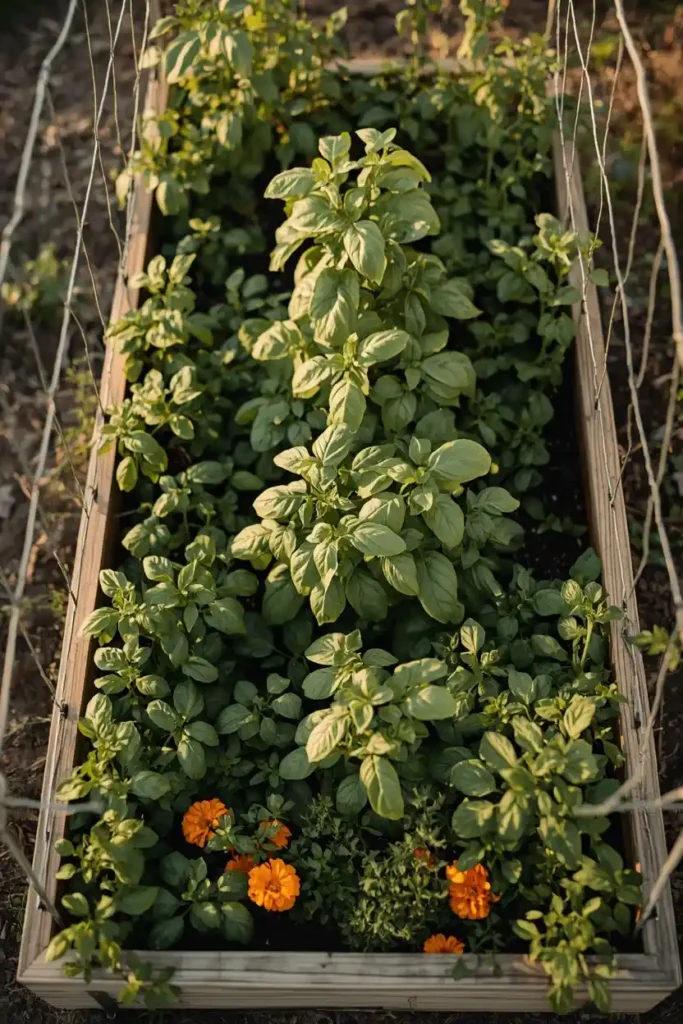
Picture a raised bed anchored by three staked tomato plants in the center, ringed by a soft green skirt of basil, a scattering of marigold’s orange pom-poms along the border, and a few upright stalks of parsley tucked between the tomato cages. It looks less like a vegetable patch and more like a designed garden bed — dense, layered, and intentional.
Design Breakdown
Tomatoes are the anchor crop in most raised beds, so this chart builds everything else around them. Basil is planted at the base of each tomato, marigolds line the perimeter, and carrots or onions fill the gaps between plants. Avoid corn, potatoes, and brassicas nearby — they either compete for the same nutrients or attract shared pests.
Expert Tip
Plant basil close enough that its leaves brush the tomato stems. Some gardeners swear it changes the flavor of the fruit, and at minimum, it confuses pests that hunt by scent.
Why It Works
Marigolds release compounds through their roots that deter nematodes, basil confuses hornworms and aphids, and the layered heights (tall tomato, mid-height basil, low marigold) make full use of vertical space without anyone shading out anyone else.
Best For
- Small spaces
- Budget makeovers
- Renters
Common Mistake To Avoid
Planting tomatoes next to corn. Both are heavy feeders that compete aggressively for nitrogen, and corn can also attract the tomato fruitworm, which is the same pest as the corn earworm.
Quick Wins
- Basil at the base of every tomato plant
- Marigolds along the bed’s outer edge
- Skip corn, potatoes, and fennel entirely
- Leave 18–24 inches between tomato plants for airflow
Idea #2: The Pepper and Nightshade Pairing Chart
What You’re Seeing
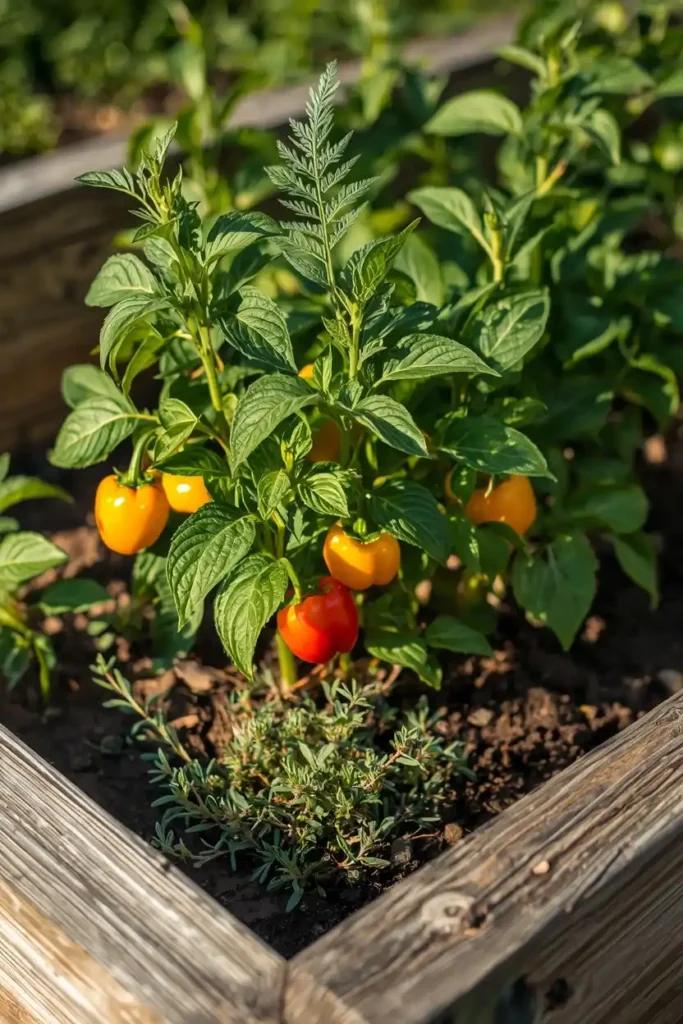
Imagine a warmer, sunnier-looking corner of the raised bed where compact pepper plants stand shoulder to shoulder with feathery dill and low mounds of oregano. The color contrast between glossy pepper leaves and the wispy dill fronds gives this section a soft, textured look.
Design Breakdown
Peppers share a lot of DNA with tomatoes, so many of the same rules apply, but peppers are pickier about root disturbance. This chart pairs peppers with onions, spinach, and basil, while keeping them a healthy distance from beans and brassicas, which can stunt pepper growth.
Expert Tip
Tuck spinach or lettuce underneath your pepper plants once they’re established. The low-growing greens act as a living mulch, keeping roots cool and moist without competing for the same growing zone.
Why It Works
Peppers are slow starters that hate root competition, so pairing them with shallow-rooted companions like spinach means nobody’s fighting for the same soil depth. Basil nearby also helps repel spider mites, a common pepper pest in raised beds where airflow is limited.
Best For
- Small spaces
- Families
- Budget makeovers
Common Mistake To Avoid
Crowding peppers next to beans. Beans are nitrogen fixers, which sounds helpful, but the extra nitrogen actually pushes peppers toward leafy growth instead of fruit production.
Quick Wins
- Underplant with spinach or lettuce for living mulch
- Add dill to attract beneficial predatory insects
- Keep beans and kohlrabi out of this section
- Space peppers 12–16 inches apart for raised bed density
One thing I’ve learned after years of raised bed gardening: peppers are far more sensitive to companion stress than people expect. A tomato can shrug off a bad neighbor and still produce, but peppers will visibly sulk — dropping blossoms, stalling out, staying pale green instead of turning that deep glossy color. If your peppers are underperforming, don’t just look at watering and sun. Look two inches to the left and ask what’s growing there.
Would you choose a chart built around flavor pairings or one built purely around pest control? It’s worth deciding before you start plotting your bed, because the two approaches sometimes pull in different directions.
Most people waste more space than they realize when they plant in straight, single-crop rows inside a raised bed. That’s not how these charts work, and it’s not how nature works either.
Idea #3: The Root Vegetable Layering Chart
What You’re Seeing
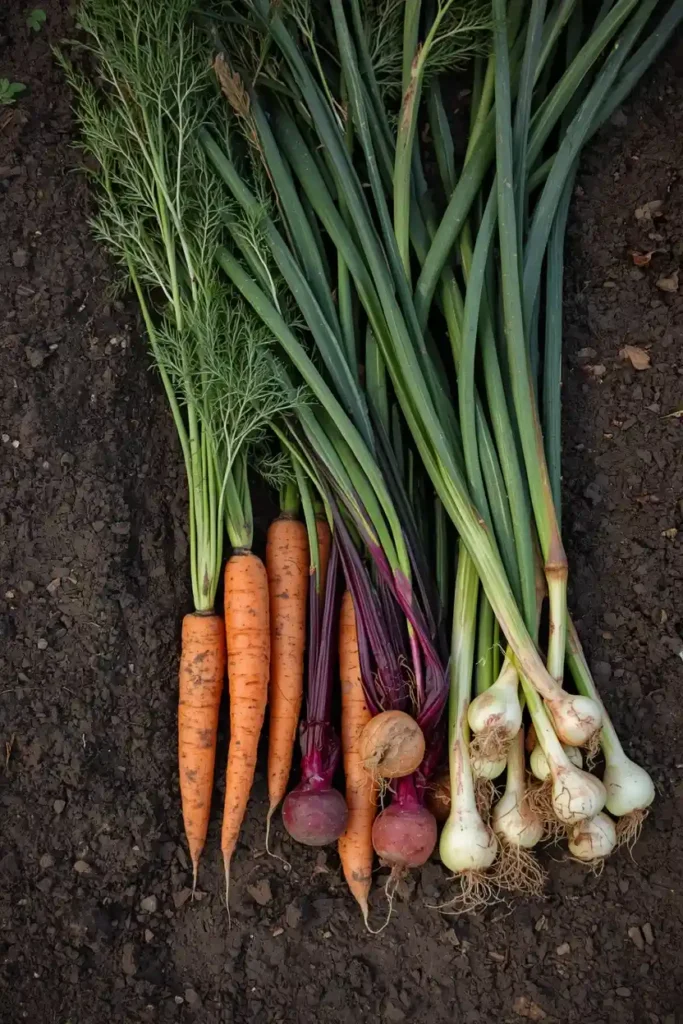
Picture a section of the bed where feathery carrot tops poke up in loose clusters, interspersed with the round, blushing shoulders of beets and the sharp green spikes of onions. It reads as chaotic at first glance, but every plant here is doing a specific job underground.
Design Breakdown
Root vegetables are all about using different soil depths efficiently. Carrots go deep and narrow, onions occupy the middle layer, and radishes act as a fast-growing “marker crop” that breaks up compacted soil for the slower root vegetables around them.
Expert Tip
Sow radishes and carrots together in the same row. Radishes germinate faster and mark the row while loosening soil, and you harvest them out of the way before the carrots need the space.
Why It Works
Because each root vegetable occupies a different soil depth, this chart maximizes underground real estate the same way a good closet system maximizes vertical space. Onions also emit sulfur compounds that repel carrot rust flies, one of the most common raised bed pest problems.
Best For
- Small spaces
- Renters
- Budget makeovers
Common Mistake To Avoid
Planting carrots near dill. Dill is a member of the same plant family and can cross-pollinate issues plus attract the same pests, undoing the protection onions were providing.
Quick Wins
- Radishes as a fast-growing nurse crop for carrots
- Onions planted between root vegetable rows
- Keep dill and fennel out of this zone
- Thin seedlings early to prevent underground crowding
You May Also Like:
- DIY Elevated Garden Bed Plans
- What Is Topsoil? Uses and Benefits for Garden
- Top Soil Mistakes to Avoid for a Healthier Garden
- Vegetable Garden Ideas
- Small Garden Design Ideas
This is where many home gardeners make a mistake: they treat the mid-article planning section as optional. Don’t. It’s the part that saves you the most money and the most wasted seed packets.
Planning Guide: How to Actually Build a Companion Planting Layout for Your Raised Bed
This is the deep-dive section, so grab a coffee — this is the part that actually changes how your bed performs, not just how it looks on paper.
Most companion planting charts show you pairs. What they don’t show you is how to combine multiple pairs into one working bed without everything turning into a tangled mess by August. Here’s how to actually plan it.
Step 1: Map your bed by height, not by crop type.
- Tall crops (tomatoes, pole beans, trellised cucumbers) go on the north side so they don’t shade shorter plants
- Medium crops (peppers, bush beans, broccoli) fill the middle zone
- Low crops (lettuce, radishes, herbs) go along the sunny southern edge
Step 2: Group by “family,” then cross-reference companions.
Most bad companion pairings happen because two plants from the same family end up sharing a bed without anyone noticing. Group your crops first:
- Nightshades: tomatoes, peppers, eggplant, potatoes
- Brassicas: broccoli, cabbage, kale, cauliflower
- Alliums: onions, garlic, leeks
- Cucurbits: cucumbers, squash, melons
- Legumes: beans, peas
Step 3: Budget your space realistically.
A common assumption is that companion planting means cramming more into the same bed. It doesn’t. Here’s a rough cost and space breakdown for a standard 4-by-8-foot raised bed:
- Soil and amendment refresh: $25–$60 depending on whether you’re topping off or fully replacing
- Seedlings vs. seed starting: seedlings run $3–$6 each, seeds run $2–$4 per packet and stretch across multiple seasons
- Trellising for vertical companions (pole beans, cucumbers): $15–$40 for cattle panel or bamboo setups
- Realistic plant count: 12–18 plants total once you account for spacing, not the 25+ that generic spacing charts suggest
Step 4: Avoid these common planning mistakes.
- Ignoring mature size and only planning for seedling size — a six-inch tomato start becomes a four-foot plant
- Forgetting that “companion” doesn’t mean “touching” — most pairings still need 6–12 inches of breathing room
- Planting fast growers and slow growers together without a succession plan, so the fast grower gets shaded out
- Overloading one bed with heavy feeders (tomatoes, corn, squash) without rotating in nitrogen-fixing legumes
Step 5: Think in seasons, not just spring.
A genuinely comprehensive chart accounts for what replaces what. Radishes come out in three weeks — plan what fills that gap. Lettuce bolts in early summer heat — plan its late-season replacement before you even plant it.
What’s your biggest challenge right now — space, timing, or just knowing what goes with what? Keep that in mind as we move into the next batch of charts, because each one solves a different piece of that puzzle.
Idea #4: The Leafy Green Shade-Sharing Chart
What You’re Seeing
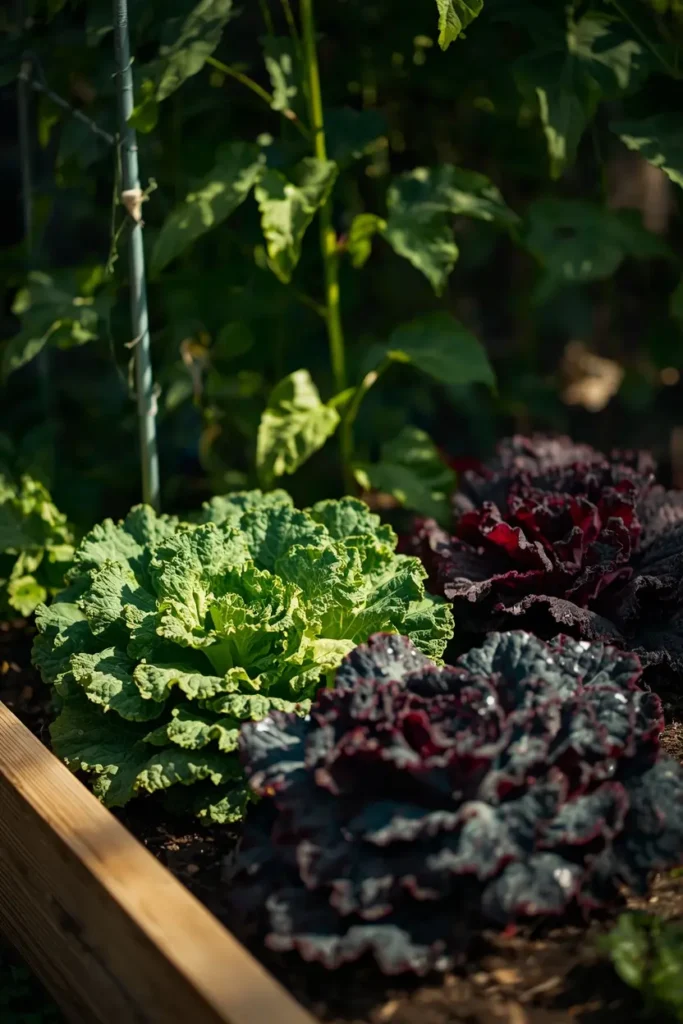
Imagine a cool, almost jewel-toned patch of the bed where ruffled lettuce varieties, deep green spinach, and burgundy-tinged kale grow in loose, overlapping clumps beneath the dappled shade of a taller trellised crop nearby.
Design Breakdown
Leafy greens are the ultimate “gap filler” companions because they’re shallow-rooted, fast-growing, and genuinely benefit from partial shade in raised beds, which tend to run hotter than in-ground soil. This chart pairs lettuce, spinach, and kale with taller crops like pole beans or trellised peas that cast just enough afternoon shade to prevent bolting.
Expert Tip
Plant a new round of lettuce seeds every 10–14 days in the shaded pockets beneath taller companions. This staggered approach, called succession planting, keeps you harvesting continuously instead of getting one big flush that bolts all at once.
Why It Works
Leafy greens have shallow root systems that don’t compete with the deeper roots of beans or peas, and the borrowed afternoon shade genuinely slows bolting, which is the single biggest reason home gardeners lose their lettuce crop in a raised bed.
Best For
- Small spaces
- Families
- Budget makeovers
- Renters
Common Mistake To Avoid
Planting leafy greens in full, unshaded sun during peak summer. Raised beds heat up faster than ground soil, and greens without any afternoon relief will bolt within days once temperatures climb.
Quick Wins
- Use taller trellised crops as natural shade providers
- Succession-sow every 10–14 days for continuous harvest
- Keep greens on the eastern or partially shaded side of the bed
- Harvest outer leaves instead of whole heads to extend the season
The next idea changes everything if you’ve been struggling with beans that produce a handful of pods and then quit.
Idea #5: The Bean and Pea Nitrogen-Sharing Chart
What You’re Seeing
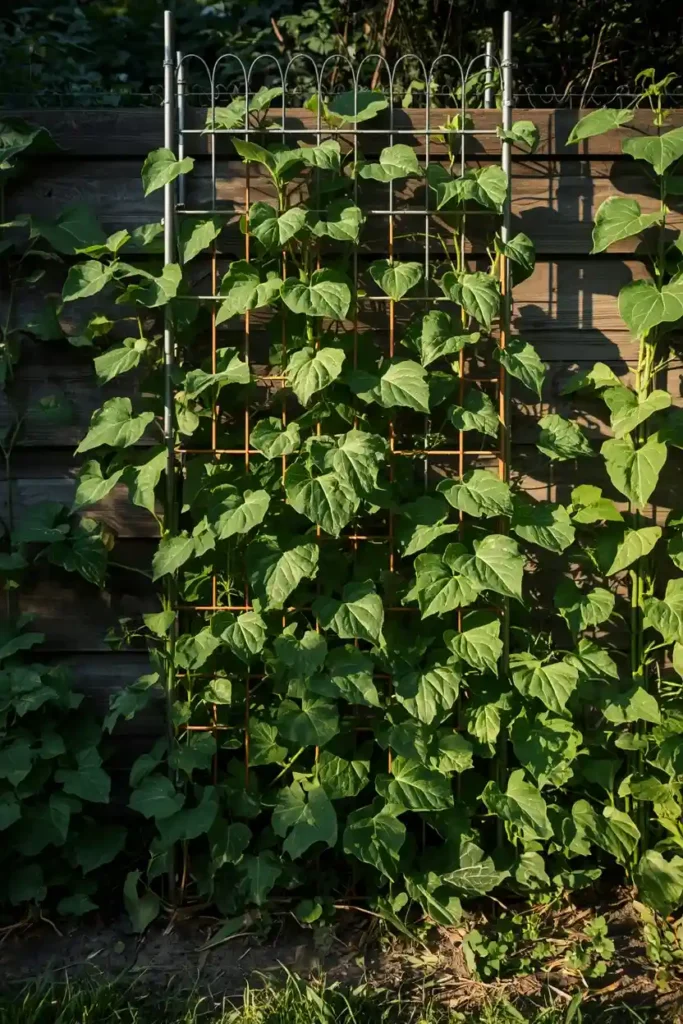
Picture a vertical wall of climbing pole beans trained up a simple trellis, with lower-growing cucumbers and squash spreading out along the base, their broad leaves shading the soil and keeping it moist beneath the beanstalks above.
Design Breakdown
Legumes are unique among companion plants because they actively add nitrogen to the soil through root nodules, rather than just competing for it. This chart pairs pole beans or peas with heavy feeders like corn, squash, and cucumbers, so the legumes are quite literally feeding their neighbors.
Expert Tip
Don’t till or pull bean roots out at the end of the season. Cut the plants at soil level and leave the roots in place — that’s where the nitrogen-fixing nodules live, and they’ll break down and enrich the soil for whatever you plant next.
Why It Works
Beans and peas host bacteria in their root nodules that convert atmospheric nitrogen into a form plants can use, which means nearby heavy feeders get a steady nitrogen boost without added fertilizer. The vertical growth habit also solves the classic raised-bed problem of running out of horizontal space.
Best For
- Small spaces
- Budget makeovers
- Large spaces
Common Mistake To Avoid
Planting beans next to onions or garlic. Alliums actually inhibit the growth of legumes and can stunt bean production significantly, which surprises a lot of first-time raised bed gardeners.
Quick Wins
- Train pole beans vertically to save floor space
- Pair with corn, squash, or cucumbers as nitrogen beneficiaries
- Never plant beans near onions, garlic, or leeks
- Leave root systems in the soil after harvest
Most people don’t know this: the nitrogen-fixing benefit of beans doesn’t happen instantly — it builds up over the growing season and peaks right as you’re cutting the plants down. That’s exactly why leaving the roots in place matters so much. Pulling the whole plant, roots and all, at the end of the season throws away the single biggest soil benefit the crop was providing in the first place.
Let me know which one is your favorite so far. I have a feeling the next chart might change your answer.
Idea #6: The Brassica Family Pest-Barrier Chart
What You’re Seeing

Imagine a dense, blue-green section of broccoli and cabbage heads, ringed by a border of dill and nasturtiums whose bright orange and yellow flowers act almost like a decoy trap for pests that would otherwise head straight for the brassicas.
Design Breakdown
Brassicas — broccoli, cabbage, cauliflower, kale, Brussels sprouts — are notoriously pest-prone, especially to cabbage moths and aphids. This chart surrounds them with aromatic herbs and trap crops that either repel or distract the insects that cause the most damage.
Expert Tip
Plant nasturtiums slightly upwind of your brassicas, if you know your bed’s typical breeze direction. Aphids are drawn to nasturtiums first, pulling pest pressure away from your broccoli and cabbage before it ever arrives.
Why It Works
This is a classic “trap crop” strategy — nasturtiums are more attractive to aphids than brassicas are, so pests colonize the flowers instead. Meanwhile, dill attracts beneficial predatory wasps that hunt cabbage worms, creating a natural pest-control loop instead of relying on sprays.
Best For
- Families
- Luxury homes
- Large spaces
Common Mistake To Avoid
Planting brassicas next to strawberries or tomatoes. Both compete heavily for the same nutrients brassicas need and can stunt head formation on broccoli and cauliflower specifically.
Quick Wins
- Border brassicas with nasturtiums as a trap crop
- Add dill to invite beneficial predatory insects
- Avoid strawberries and tomatoes in this section
- Rotate brassicas to a new bed section yearly to prevent clubroot buildup
Idea #7: The Herb-Vegetable Pairing Chart
What You’re Seeing

Picture a fragrant border running along the entire edge of the raised bed — rosemary, thyme, and chives forming a low, textured hedge that softens the transition between the vegetables and the surrounding yard, while also doing serious pest-control work.
Design Breakdown
Herbs are the most underused companion category in most raised beds, mostly because people plant them in separate pots instead of weaving them directly into the vegetable layout. This chart treats herbs as functional border plants rather than an afterthought.
Expert Tip
Chives planted at the base of carrots and tomatoes do double duty — they repel aphids and, according to many longtime gardeners, subtly improve the flavor of whatever they’re planted beside.
Why It Works
Strong-scented herbs like rosemary, thyme, and chives mask the chemical signals pests use to locate their preferred host plants. Planted along the border, they create a scent barrier around the entire bed rather than protecting just one crop at a time.
Best For
- Small spaces
- Luxury homes
- Renters
- Budget makeovers
Common Mistake To Avoid
Letting mint join this border. Mint is famously invasive and will aggressively spread underground, choking out root space from everything nearby within a single season if it’s not contained in its own pot.
Quick Wins
- Use rosemary, thyme, and chives as a scent-barrier border
- Keep mint in a separate container, always
- Interplant chives near tomatoes and carrots specifically
- Trim herbs regularly to keep them from overshadowing vegetables
You May Also Like:
- Tomato Trellis Ideas
- Cut Flower Garden Layout Ideas
- DIY Garden Trellis Ideas
- Small Balcony Garden Ideas
- Balcony Garden Ideas
The next idea is one designers secretly love, mostly because it solves the “what do I do with alliums” question that trips up almost every new raised bed gardener.
Idea #8: The Onion and Allium Border Chart
What You’re Seeing
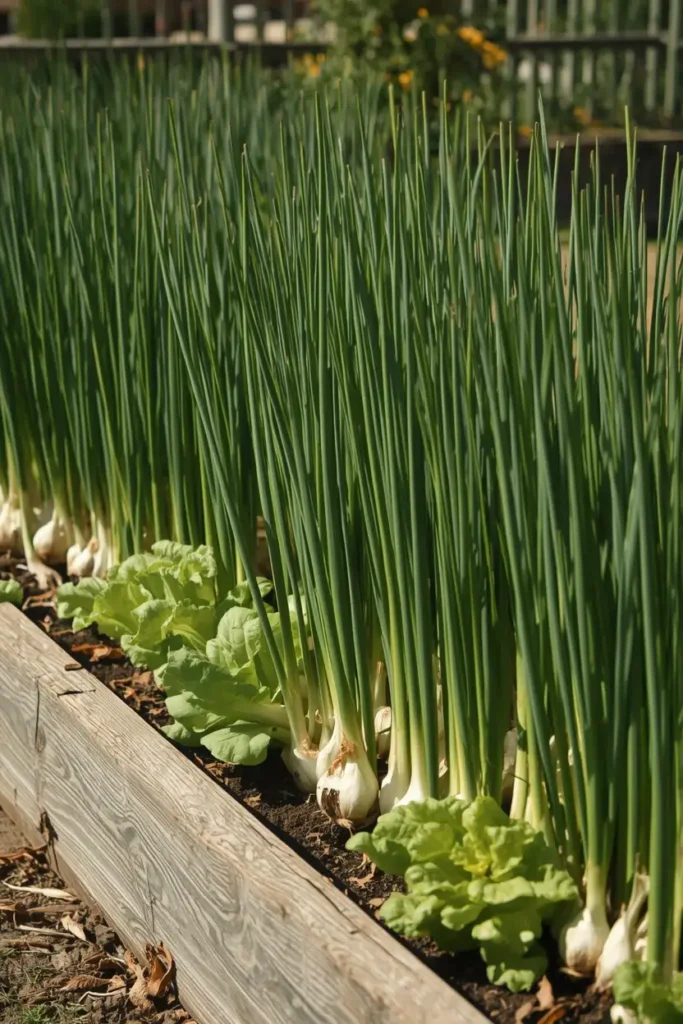
Imagine thin, upright onion and garlic greens forming a tidy perimeter around the entire raised bed, like a living fence line, while the interior of the bed grows whatever heavier crop needs the extra pest protection that season.
Design Breakdown
Alliums are one of the most versatile border plants because almost nothing dislikes being near them except beans and peas. This chart uses onions, garlic, and leeks as a protective perimeter around carrots, tomatoes, brassicas, and lettuce.
Expert Tip
Interplant garlic in fall around the base of perennial or early-spring crops. It sits dormant through winter and emerges early, giving you pest protection right when spring seedlings are most vulnerable.
Why It Works
The sulfur compounds alliums release into the soil and air disrupt the scent trails that pests like carrot rust flies, aphids, and Japanese beetles rely on to find host plants, effectively creating a chemical fence around the entire bed.
Best For
- Small spaces
- Budget makeovers
- Large spaces
- Renters
Common Mistake To Avoid
Planting alliums directly next to beans or peas. This is one of the few universally agreed-upon “bad neighbor” pairings in companion planting, and it will noticeably reduce legume yields.
Quick Wins
- Use onions or garlic as a full-perimeter border
- Plant garlic in fall for early spring pest protection
- Keep a buffer zone between alliums and any legumes
- Harvest garlic scapes mid-season for an extra bonus crop
Here’s where it gets interesting: alliums are one of the only companion plants that work almost everywhere in the bed without a specific “pairing partner” required. Most companion planting advice is about matching two crops. Alliums are more like a background utility — they raise the baseline pest resistance of the entire bed just by being present, which is why so many experienced raised-bed gardeners plant a border of them without even thinking about it anymore.
This simple change can completely transform the room — or in this case, the bed. The final two charts pull everything together into full-system layouts rather than single pairings.
Idea #9: The Cucumber and Squash Vertical-Ground Chart
What You’re Seeing
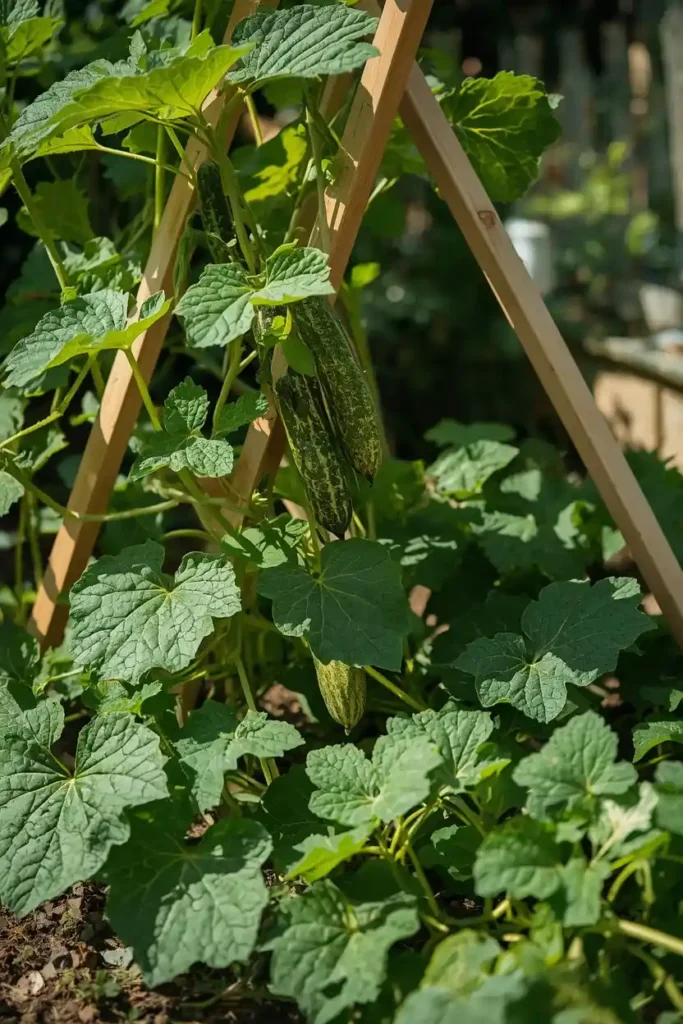
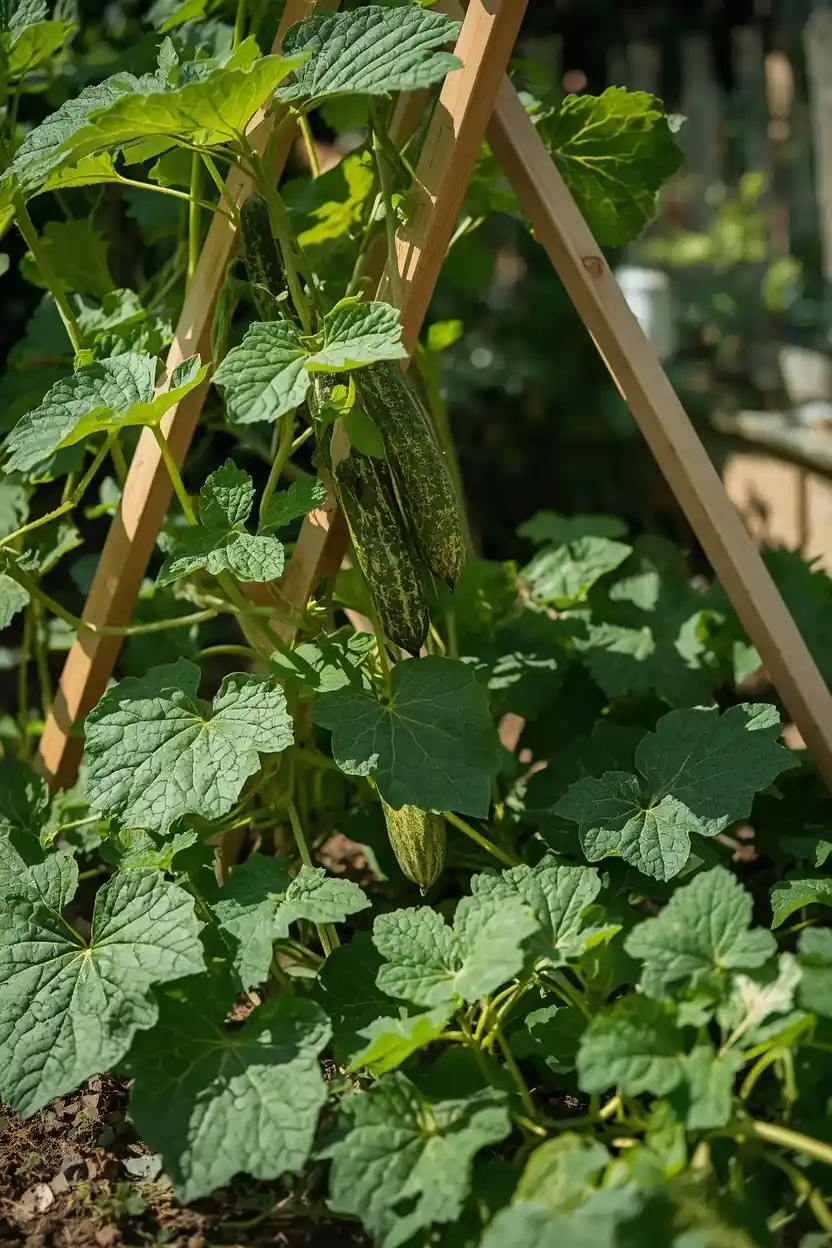
Picture cucumbers climbing a simple A-frame trellis on one side of the bed while sprawling squash vines spread along the ground beneath, their large leaves acting as a living mulch that keeps the soil shaded and moist for both crops.
Design Breakdown
Cucurbits take up a lot of ground space if left unchecked, which is exactly the problem raised beds can’t afford. This chart pairs trellised cucumbers with ground-level squash and a scattering of radishes as a fast, early-season pest deterrent for cucumber beetles.
Expert Tip
Plant radishes at the base of both cucumbers and squash. Radishes are believed to repel cucumber beetles, one of the most damaging pests for this entire plant family in raised beds.
Why It Works
Vertical trellising for cucumbers frees up nearly 60% of the ground space that a sprawling cucumber vine would otherwise consume, letting squash use that reclaimed space instead. The shared canopy also reduces water evaporation, which matters enormously in raised beds that dry out faster than ground soil.
Best For
- Small spaces
- Large spaces
- Families
Common Mistake To Avoid
Planting cucumbers and squash directly next to potatoes. Potatoes are highly susceptible to the same blight issues cucurbits can carry, and the shared moisture needs create a fungal-friendly microclimate.
Quick Wins
- Trellis cucumbers to reclaim ground space for squash
- Add radishes as a cucumber beetle deterrent
- Keep potatoes out of this section entirely
- Mulch heavily underneath to retain moisture between waterings
Idea #10: The Three Sisters Plus Flowers Chart
What You’re Seeing
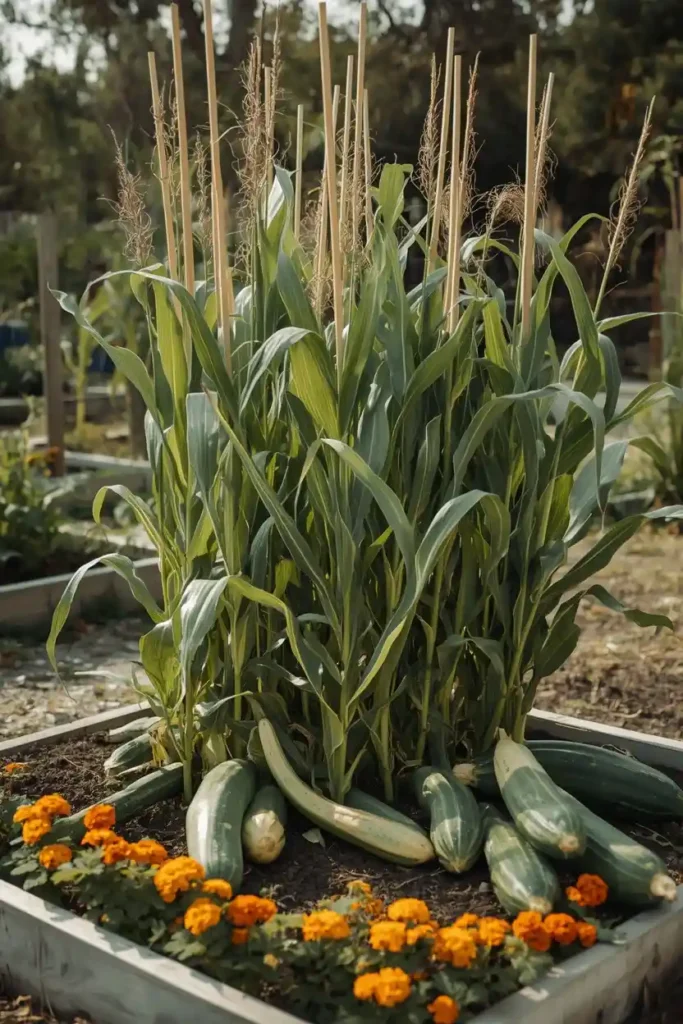
Imagine the classic Indigenous companion planting method reimagined for a raised bed — tall corn stalks anchoring the center, pole beans climbing up each stalk, sprawling squash covering the ground below, and a ring of marigolds and nasturtiums framing the entire arrangement in bursts of orange and yellow.
Design Breakdown
The Three Sisters method is centuries old for a reason — corn provides a natural trellis for beans, beans fix nitrogen for the heavy-feeding corn and squash, and squash’s broad leaves shade out weeds and retain soil moisture for everyone. This chart adds a modern flower border for extra pest control.
Expert Tip
Plant corn first and wait until it’s about knee-high before adding beans at its base. If you plant them simultaneously, the beans can overtake and topple the young corn before it’s sturdy enough to support them.
Why It Works
This is companion planting at its most complete — three plants where each one solves a structural or nutritional problem for the other two, plus a flower border handling pest deterrence on top of that. It’s the closest thing to a self-sustaining micro-ecosystem you can build in a raised bed.
Best For
- Large spaces
- Families
- Luxury homes
Common Mistake To Avoid
Attempting this in a bed smaller than 4-by-4 feet. Corn needs a minimum cluster size to pollinate properly, and cramming the Three Sisters into a tiny bed usually results in weak corn yields and tangled, unproductive vines.
Quick Wins
- Stagger planting: corn first, beans second, squash third
- Add marigolds and nasturtiums as a flowering border
- Reserve this layout for beds at least 4-by-4 feet
- Water at the base to avoid fungal issues on dense foliage
Related Vegetable Garden Ideas
Before you go plan out your own raised bed, here are a few more guides worth exploring if this topic caught your attention.
- Vegetable Garden Ideas
- DIY Elevated Garden Bed Plans
- Tomato Trellis Ideas
- DIY Garden Trellis Ideas
- Small Garden Design Ideas
- Cut Flower Garden Layout Ideas
- What Is Topsoil? Uses and Benefits for Garden
- Small Balcony Garden Ideas
Final Thoughts on Choosing the Right Companion Planting Chart
Here’s the quick recap: the tomato and pepper charts solve pest problems, the root and leafy green charts solve space problems, the bean and allium charts solve soil-health problems, and the last two charts pull everything into a full working system.
Visualize the difference one season makes when your raised bed stops fighting itself and starts working as a team. That’s really what every one of these companion planting charts is doing — reducing competition and increasing cooperation in a space that doesn’t have room for either plant to waste.
My honest advice? Don’t try to implement all 10 charts at once. Pick the one that solves your biggest current frustration — pests, cramped space, or poor yields — and commit to that layout for one season before layering in more.
Which of these would work best in your home garden this year? I’d genuinely love to know which chart you’re starting with.
If this got you thinking about your outdoor space more broadly, you might want to check out ideas for laying out the rest of your yard around that raised bed, because a garden rarely stays contained to just one bed for long — and the next thing you know, you’re looking up trellis designs at 11 p.m.
Frequently Asked Questions About Companion Planting Charts
1. What is a companion planting chart used for? A companion planting chart shows which vegetables, herbs, and flowers grow well together and which combinations should be avoided, based on pest control, nutrient sharing, and space efficiency.
2. Is companion planting actually backed by science? Some pairings, like legumes fixing nitrogen for heavy feeders, are well documented. Others are based on generations of observational gardening wisdom that hasn’t been formally studied but is widely reported by experienced growers.
3. Can I use these charts in a small raised bed? Yes. Several charts in this guide, including the herb border and root vegetable layering charts, are specifically suited to smaller raised beds where space is limited.
4. What vegetables should never be planted together? Common conflicts include beans with onions or garlic, tomatoes with corn or potatoes, and cucumbers with potatoes, mostly due to nutrient competition or shared pest and disease risk.
5. Do companion planting charts work the same in every climate? The core relationships hold up across most climates, but timing shifts. Warmer regions may need more shade-sharing pairings, while cooler regions can rely less on bolt-prevention layouts.
6. How often should I rotate companion planting layouts? Ideally every season, especially for brassicas and nightshades, to prevent soil-borne pest and disease buildup in the same raised bed section.
7. Can herbs really replace pesticides in a raised bed? Not entirely, but strong-scented herbs like rosemary, thyme, and dill significantly reduce pest pressure and can lower how often you need to intervene with sprays.
8. What’s the easiest companion planting chart for beginners? The tomato-centered chart and the herb-vegetable border chart are the most forgiving starting points because the pairings are simple and widely available at any garden center.
9. Do flowers really belong in a vegetable companion planting chart? Yes. Marigolds and nasturtiums are two of the most effective trap crops and pest deterrents you can add to a vegetable-focused raised bed.
10. How much space do I need for the Three Sisters companion method? A minimum of 4-by-4 feet is recommended, since corn needs a small cluster to pollinate properly, and cramped spacing leads to weak yields across all three crops.