10 Lush Green Kitchen Design Ideas That Will Make You Fall in Love With Cooking Again
This article was created in line with Trends Oraa’s research and content standards.
Your kitchen feels uninspired. You know it. Every morning you walk in and something just feels… off.
It doesn’t have the warmth you see all over Pinterest. It doesn’t feel like you.
Here’s the thing: the missing piece might just be color — specifically, the kind of lush, nature-inspired green that’s taking over kitchens from Brooklyn brownstones to California bungalows right now.
These lush green kitchen design ideas aren’t just a trend. They’re a lifestyle shift. Green kitchens feel alive, grounded, and — when done right — absolutely breathtaking.
You might also love our guide on Green Kitchen Ideas — it’s packed with inspiration for every style and budget.
Whether you’re planning a full renovation or just looking to refresh a tired space with minimal effort, I’ve pulled together 10 genuinely stunning ideas that will make you rethink everything you thought you knew about kitchen design. Keep scrolling — idea #6 alone is worth it.
10 Lush Green Kitchen Design Ideas to Transform Your Space
1. Deep Forest Green Shaker Cabinets with Brass Hardware
What You’re Seeing
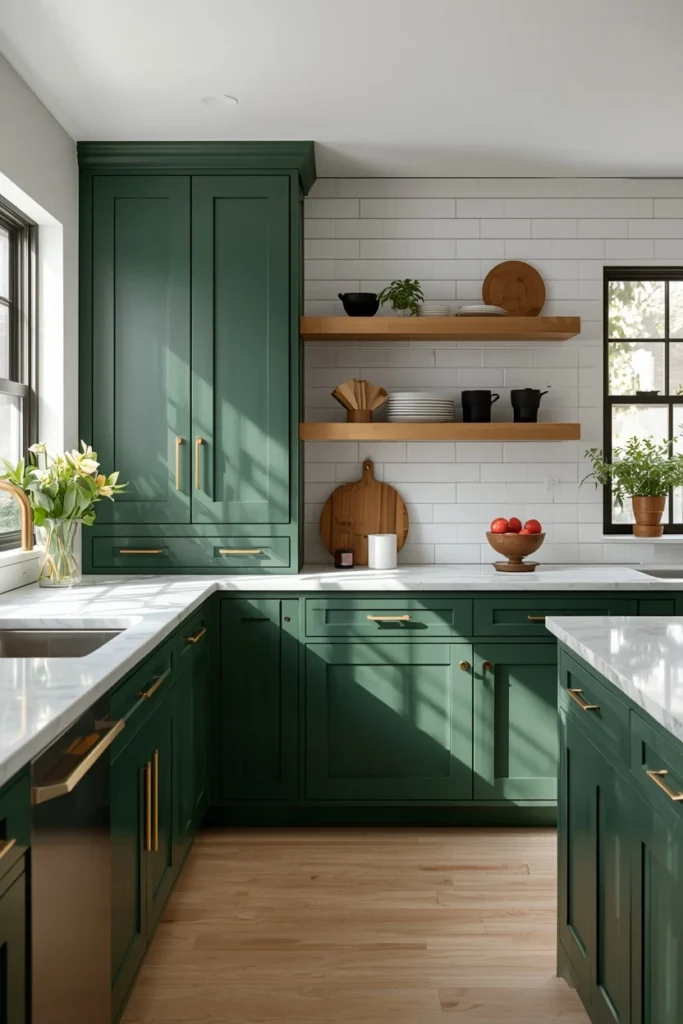
Picture a kitchen bathed in the rich, moody depth of deep forest green — the kind of green that makes you think of old-growth trees after a rainstorm. The cabinet doors are classic shaker style, clean-lined and timeless, but it’s the color that steals the show. Paired with warm antique brass pulls and knobs, the whole space feels simultaneously earthy and elegant. White subway tile stretches across the backsplash, and natural wood open shelving floats above to break up the darkness just enough.
Design Breakdown
Deep forest green shaker cabinets work in almost any kitchen footprint because shaker style is inherently versatile. The key here is contrast: the darkness of the green demands a lighter countertop (think Calacatta marble or matte white quartz) and bright hardware to keep the room from feeling cave-like. This look leans into the “moody kitchen” trend that has dominated design blogs for the past few years, but with a warmth that all-black or charcoal kitchens simply can’t achieve.
Expert Tip
When choosing your green shade, order at least three paint samples and view them at different times of day. Forest green can look almost black in low evening light and surprisingly warm in afternoon sun. Benjamin Moore’s “Hunter Green” or Farrow & Ball’s “Calke Green” are two designer favorites worth sampling.
Why It Works
Green triggers a psychological response linked to nature, calm, and renewal. Deep forest green in particular adds sophistication without coldness — it’s dramatic but never harsh.
Best For
- Large spaces
- Luxury homes
- Families who love a timeless look
Common Mistake to Avoid
Going too dark without enough light sources. Deep green cabinets absorb light, so if you’re working with a north-facing kitchen or limited windows, layer in under-cabinet lighting and pendant lights to compensate.
Quick Wins
- Paint only the lower cabinets in forest green, keep uppers white
- Swap existing hardware for aged brass immediately
- Add a white marble or quartz countertop for maximum contrast
- Layer in warm-toned lighting (2700K–3000K bulbs)
2. Sage Green Kitchen with Open Shelving and Natural Wood
What You’re Seeing
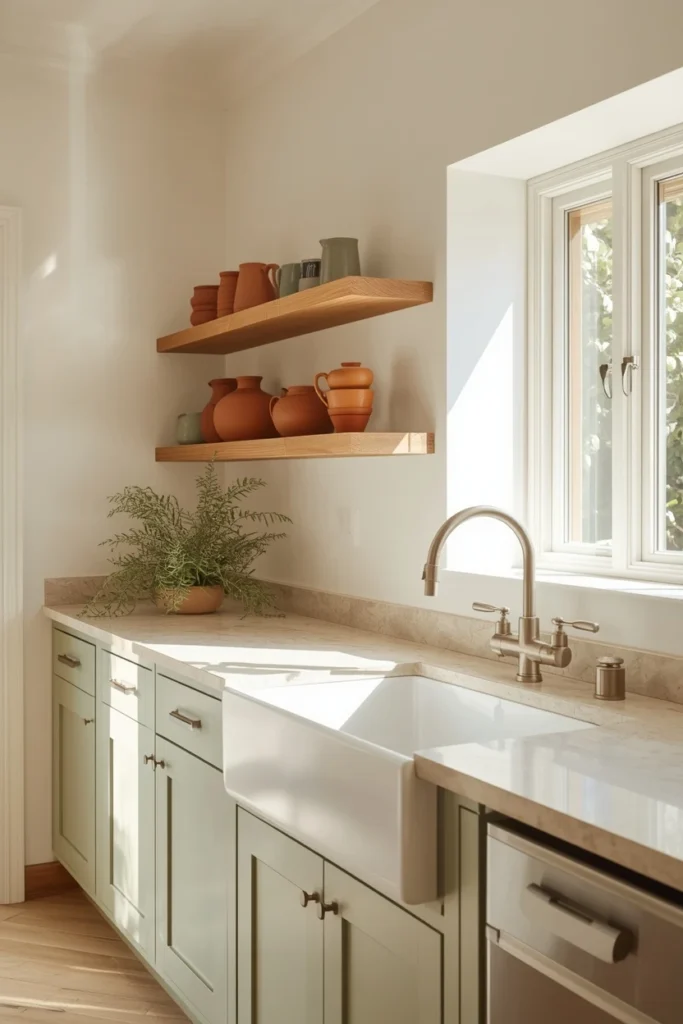
Imagine stepping into a sun-drenched kitchen where the walls are lined with the softest sage green you’ve ever seen. It’s not too gray, not too blue — just perfectly balanced. Floating natural oak shelves carry terracotta pots, linen dish towels, and a few perfectly imperfect ceramic mugs. The countertops are honed limestone. A vintage-inspired faucet in brushed nickel gleams above a farmhouse sink. Everything about this kitchen whispers “slow mornings and fresh coffee.”
Design Breakdown
Sage green is arguably the most universally flattering kitchen color available right now. It sits at the intersection of every major 2025–2026 design trend: biophilic design, earthy neutrals, and organic textures. Unlike bolder greens, sage pairs well with almost every other color — creams, whites, blush, navy, even terracotta. The open shelving element is key to this look because it prevents the color from feeling heavy or overdone.
Expert Tip
If you’re renting or on a tight budget, sage green peel-and-stick wallpaper or a sage green tile backsplash can achieve 80% of this look without touching the cabinets. Pair with natural wood cutting boards, woven baskets, and earthy ceramics to complete the vibe.
Why It Works
Sage green reads as restful and approachable. It’s sophisticated enough for adults but soft enough to feel welcoming — the perfect combination for a room where family gathers.
Best For
- Small spaces (it doesn’t close in)
- Renters (achievable through accessories)
- Budget makeovers
- Families
Common Mistake to Avoid
Overcrowding the open shelves. Sage green is a quiet color — it needs breathing room. Keep shelves curated and intentional, not stuffed.
Quick Wins
- Start with sage green cabinet paint before committing to a full reno
- Add natural wood floating shelves immediately
- Style with terracotta and cream accents
- Bring in a potted herb garden for real texture
One thing I’ve learned from spending years obsessing over kitchen design: sage green is the “little black dress” of kitchen colors. It works with everything, it never goes out of style, and it somehow makes everyone look better. If you’re overwhelmed by all the green options out there, start here. Get the tone right (not too gray, not too yellow), and the rest of the design almost styles itself. The trick most people miss is the undertone — hold your paint sample next to your flooring before committing. A sage with pink undertones can clash with warm wood floors in a way that drives you crazy every single morning.
Which of these two greens speaks to you more — the drama of forest green or the softness of sage? Drop your answer in the comments — I read every single one.
3. Emerald Green Kitchen Island as a Statement Piece
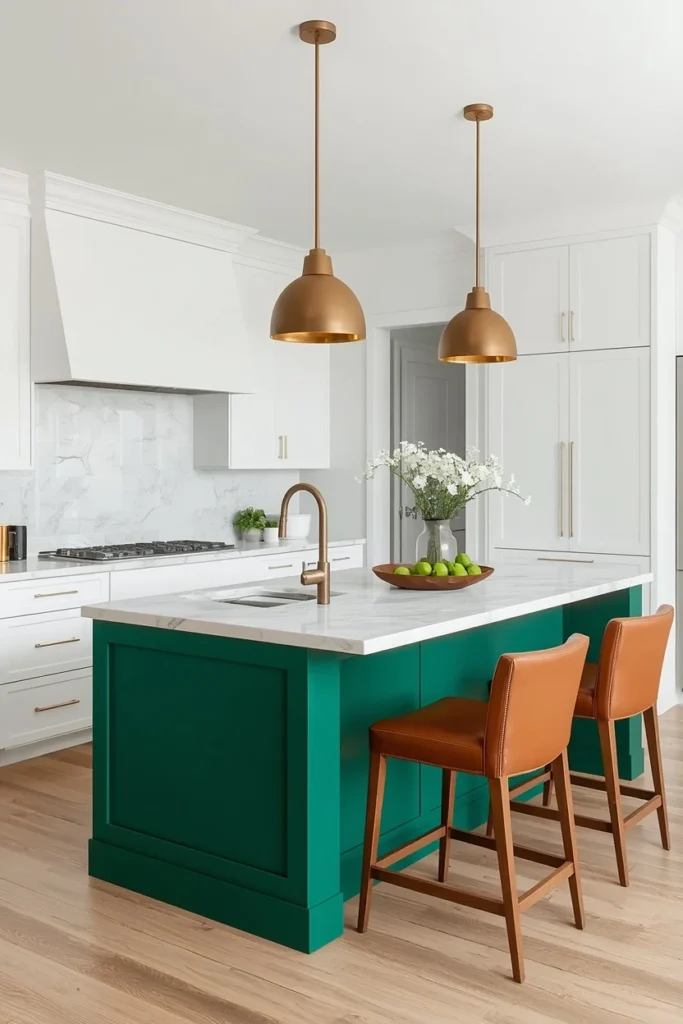
What You’re Seeing
The rest of the kitchen is calm — white cabinets, light gray countertops, pale oak floors. And then there’s the island. An enormous emerald green kitchen island that commands the entire room. It’s lacquered to a near-mirror finish, topped with waterfall Calacatta marble, and flanked by modern bar stools in cognac leather. Pendant lights in aged brass cascade overhead. The whole thing feels like jewelry in a room.
Design Breakdown
Using a bold color on only the island is one of the smartest moves in kitchen design. It gives you all the drama of a fully green kitchen with a fraction of the commitment — and you can always repaint it if your tastes evolve. Emerald green specifically works as an island color because it’s rich enough to feel luxurious without overwhelming the space when isolated.
Expert Tip
For maximum impact, choose a finish that contrasts with your surrounding cabinets. If your base cabinets are matte white, try a satin or semi-gloss finish on the island. The variation in sheen adds visual depth that photographs beautifully.
Why It Works
A statement island gives the kitchen a focal point — something every well-designed room needs. It also makes the space feel curated rather than cookie-cutter.
Best For
- Large spaces with an island
- Luxury homes
- Anyone nervous about committing fully to green
Common Mistake to Avoid
Choosing a green that clashes with your flooring. Warm-toned wood floors need a green with warm undertones; cool gray floors pair better with blue-leaning greens.
Quick Wins
- Paint only the island for an instant transformation
- Add waterfall countertop edges for luxury appeal
- Choose leather or velvet bar stools in a complementary warm tone
- Install pendant lighting above the island to frame the color
Most people waste more space than they realize — especially around the kitchen island. If you’re designing a new island, build in hidden storage on the side facing away from the living area. Pot drawers, trash pullouts, and a spice rack inside the island door can eliminate countertop clutter entirely. A clutter-free island makes that beautiful green color the star — not the mess around it.
You May Also Like:
- Kitchen Island Ideas
- Modern Kitchen Island Ideas
- Kitchen Countertop Ideas
- Kitchen Lighting Ideas
- Open Kitchen Design Ideas
4. Olive Green Kitchen with Vintage Farmhouse Character
What You’re Seeing
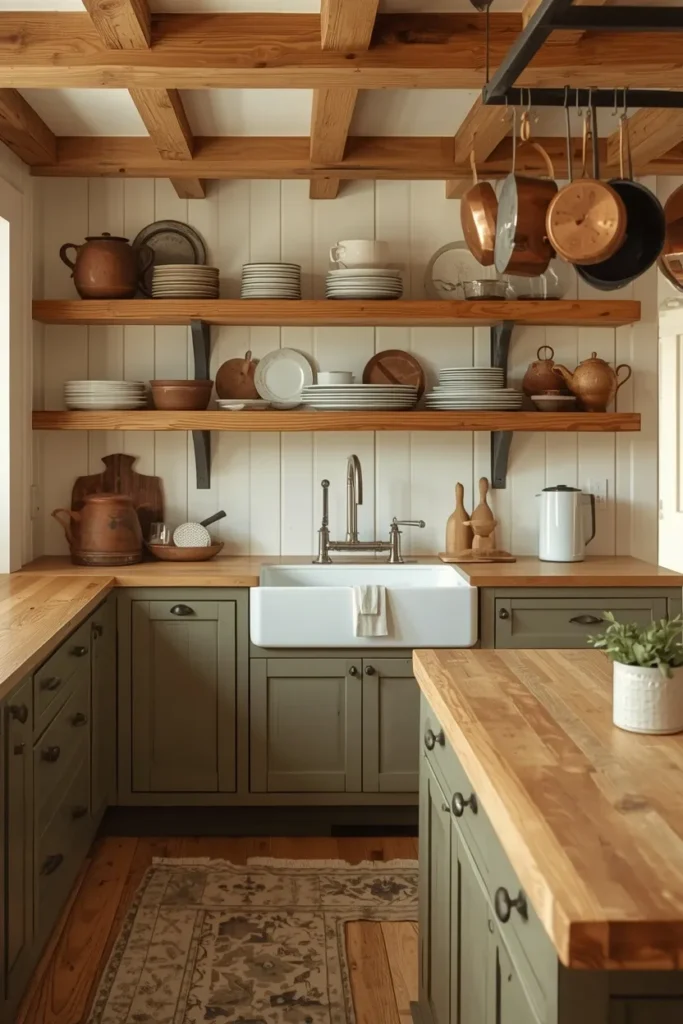
Visualize a kitchen pulled straight from a French countryside cottage — but make it modern. Olive green cabinets, muted and slightly dusty, like something that’s been loved for decades. A deep farmhouse sink. Open wooden shelves stacked with mismatched vintage dishes. A butcher block island with worn edges. Copper pots hanging from a ceiling rack. This kitchen doesn’t try to be perfect. That’s exactly what makes it perfect.
Design Breakdown
Olive green sits at the earthier end of the green spectrum. It’s complex — sometimes reading as brown, sometimes as gold, sometimes as green depending on the light. That complexity is what gives it such incredible character in a farmhouse kitchen. It pairs naturally with raw wood, aged copper, and worn leather, all of which align with the modern farmhouse aesthetic that continues to dominate American home design.
Expert Tip
To achieve a truly authentic olive green look, consider mixing your own paint by starting with a sage green and adding small amounts of raw umber and yellow ochre. Alternatively, Sherwin-Williams “Ripe Olive” and Behr “Green Tea” are both excellent ready-made options.
Why It Works
Olive green is incredibly forgiving. It doesn’t show every fingerprint, doesn’t demand perfection, and only improves with age — making it ideal for busy family kitchens.
Best For
- Families
- Budget makeovers
- Country or farmhouse homes
- Anyone who wants a “lived-in” feel
Common Mistake to Avoid
Pairing olive green with cool-toned hardware. Olive is inherently warm — it needs warm metals (copper, brass, bronze) to look cohesive. Chrome or nickel will fight the color.
Quick Wins
- Pair with butcher block countertops for an instant farmhouse feel
- Add copper or bronze cabinet pulls
- Style open shelves with vintage ceramics and natural textiles
- A farmhouse sink completes the look beautifully
5. Two-Tone Green and White Kitchen for a Timeless Look
What You’re Seeing
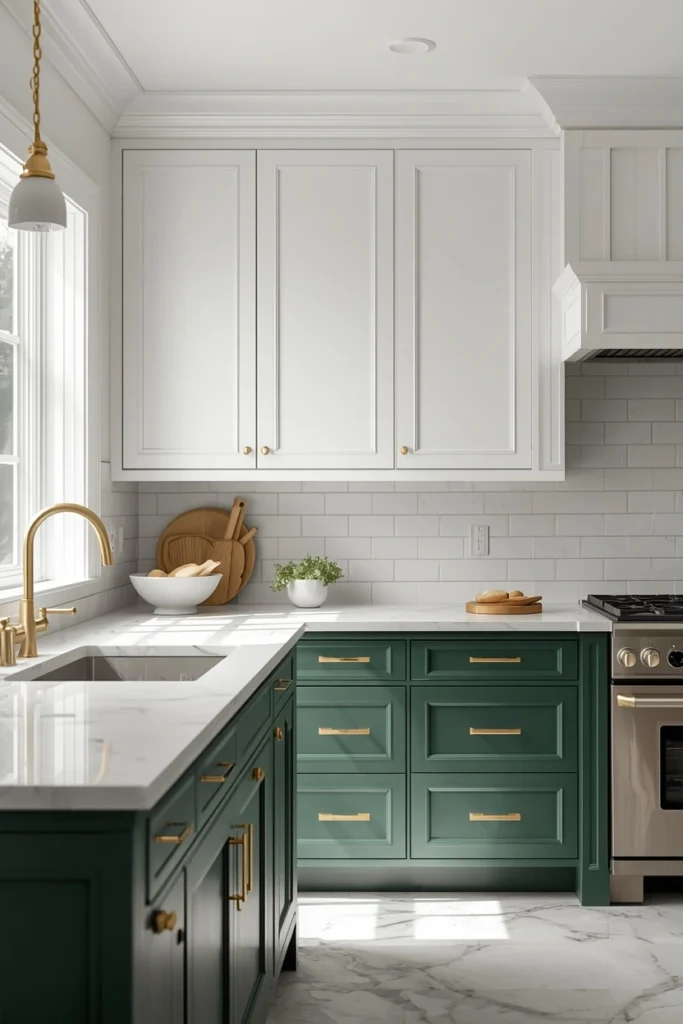
The upper cabinets are crisp white. The lower cabinets are a rich, saturated green — somewhere between hunter and forest. The contrast is clean, classic, and impossibly elegant. Marble countertops with subtle gray veining sit on top, and a white subway tile backsplash runs from countertop to upper cabinet. The whole look is polished without being uptight.
Design Breakdown
Two-tone kitchens have been having a major moment, and for good reason: they give you the drama of a bold color without the risk of visual overwhelm. Green on the lower cabinets is particularly strategic — it grounds the room and keeps the visual weight low, while white uppers reflect light and make the ceiling feel higher.
Expert Tip
The most common mistake with two-tone kitchens is choosing colors with mismatched undertones. Make sure your white has the same temperature as your green. A warm green (yellow undertones) pairs best with a warm white; a cool green (blue undertones) pairs with a bright or cool white.
Why It Works
White and green is one of the most enduring color combinations in interior design. It references nature (think stems and flowers), which our brains are hardwired to find beautiful and calming.
Best For
- Small spaces (white uppers open things up)
- First-time kitchen renovators
- Budget makeovers
- Families
Common Mistake to Avoid
Choosing whites that don’t match between cabinets and trim. Always check your paint colors against each other in natural light before purchasing.
Quick Wins
- Paint lower cabinets green first — it’s less scary than you think
- White subway tile backsplash keeps costs low and impact high
- Add gold or brass hardware for a warm finishing touch
- Consider painting the kitchen island a slightly different green for added depth
Here’s where it gets interesting: most designers will tell you two-tone kitchens work in any size space, but there’s a ratio secret they rarely share. For maximum visual balance, your green lower cabinets should occupy roughly 40-50% of the total cabinet surface area. Go much below that and the green reads as an accent. Go above that and you’ve essentially got a green kitchen (which is also beautiful, but a different look entirely). Getting this ratio right is what separates a magazine-worthy kitchen from one that just looks “off.”
What would your ideal green kitchen color be? Something moody and dark, or light and fresh? Tell me in the comments!
Choosing the Right Green for Your Kitchen
Before we get to the next five ideas, let’s talk about something crucial — because this is where most homeowners make a mistake that costs them thousands of dollars and a lot of heartbreak.
Choosing the wrong shade of green for your kitchen isn’t just an aesthetic problem. It can make your space feel smaller, clash with your flooring, fight with your countertops, or look completely different from the paint chip you fell in love with at the hardware store.
Here’s everything you need to know before you buy a single can of paint or order a cabinet sample.
Understand Green Undertones
Green is one of the most complex colors to work with because it can lean in so many different directions:
- Blue-greens (teal-adjacent): Great for coastal, Scandinavian, or modern kitchens. Pair with white, gray, or navy.
- Yellow-greens (olive, avocado, chartreuse): Best for earthy, organic, or farmhouse aesthetics. Pair with wood, copper, and cream.
- Gray-greens (sage, eucalyptus): The most versatile category. Works with almost everything — cream, wood, black, white, even pink.
- True greens (hunter, forest, emerald): Bold and saturated. Require strong contrasts to balance.
How Lighting Changes Everything
This is non-negotiable: always test paint in your actual kitchen before committing.
- North-facing kitchens get cool, blue-toned light. Warm greens (olive, sage with yellow undertones) will look their best here.
- South-facing kitchens get warm, golden light. You can go cooler or bolder — your green will be flattering regardless.
- East-facing kitchens get bright morning light that fades. Test your green at different times of the day.
- West-facing kitchens get warm afternoon and evening light. Almost any green will glow.
Cost Breakdown: Green Kitchen Makeover Options
Budget Option ($200–$800)
- DIY cabinet paint + new hardware
- Peel-and-stick tile backsplash in green
- Green kitchen accessories (canisters, dish towels, small appliances)
Mid-Range Option ($2,000–$6,000)
- Professional cabinet painting
- New hardware throughout
- Updated lighting fixtures
- Countertop replacement (laminate or butcher block)
Full Renovation ($15,000–$50,000+)
- New custom or semi-custom cabinets in your chosen green
- Stone countertops
- Full tile backsplash
- Updated appliances, sink, and fixtures
What to Consider Before You Choose
Ask yourself these questions honestly:
- Will I still love this in 5 years? Timeless greens (sage, forest, hunter, olive) hold their appeal better than trendy hues.
- Does this green work with my flooring? Lay your paint sample on the floor and look at them together in natural light.
- Am I prepared for the maintenance? Darker greens show water spots and fingerprints more than lighter shades. Factor that into your choice if you have young kids.
- Is this a rental? Removable options (wallpaper, accessories, hardware) are your best friends.
Common Mistakes That Cost Homeowners Money
- Choosing color from a screen. Phone and computer screens notoriously misrepresent greens. Always get a physical sample.
- Painting in artificial light. The color you see under fluorescent light is not the color you’ll live with every day.
- Ignoring the ceiling. If your ceiling is stark white and your cabinets are deep green, the contrast can feel jarring. Consider a warm white or very pale green tint on the ceiling.
- Forgetting the floor. Warm honey oak floors will clash with blue-toned greens. Cool gray floors will fight with yellow-toned greens. Map this out before you commit.
- Over-accessorizing. Green is bold. Let it breathe. A green kitchen doesn’t need green appliances, green rugs, AND green curtains. Pick the star — the cabinets — and let everything else support it.
6. Muted Eucalyptus Green with Black Matte Fixtures
What You’re Seeing
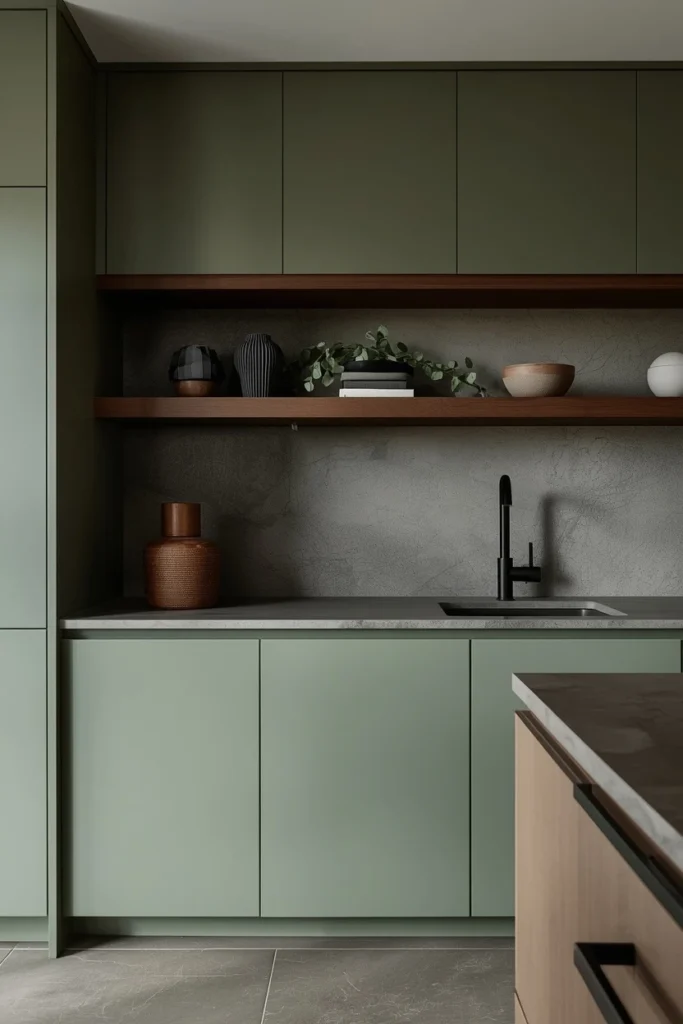
Think about a kitchen that feels like a luxury spa hotel. Soft eucalyptus green — barely-there, almost dusty — coats the cabinets in a flat matte finish. The hardware is matte black: sleek, minimal, and architectural. The countertops are a warm concrete gray. Floating shelves in dark walnut hold just a handful of carefully chosen objects — a sculptural vase, a cookbook, a single trailing plant.
Design Breakdown
The combination of muted green and matte black is one of the most sophisticated color stories in contemporary kitchen design. It works because the two are visually balanced opposites: the green is soft and organic; the black is structured and modern. Together they create tension that feels expensive and intentional.
Expert Tip
The success of this look depends almost entirely on the finish. Matte finishes on both the cabinets AND the hardware are key. The moment you introduce any shine (gloss cabinet paint, polished hardware), the look shifts into a completely different vibe.
Why It Works
Muted colors are inherently calming — they don’t compete with each other or demand attention. This kitchen feels like a exhale after a long day, which is exactly what most people want their kitchen to feel like.
Best For
- Modern or contemporary homes
- Luxury homes
- Adults without young children (matte finishes show fingerprints)
- Open-plan spaces
Common Mistake to Avoid
Going too many shades of muted green. Stick to one cohesive green throughout. Mixing eucalyptus with sage or olive in the same kitchen creates a muddy, unresolved look.
Quick Wins
- Replace existing hardware with matte black immediately — it’s a $100-$300 upgrade that looks like a full renovation
- Choose flat or matte paint finish for the freshest, most modern result
- Keep the countertops neutral — concrete, gray quartz, or warm limestone
- Add one trailing plant in a simple dark pot for organic contrast
The next idea is one designers secretly love — and almost never recommend to clients who are on a budget, because then they’d do it themselves and skip the expensive renovation entirely.
7. Green Kitchen Backsplash as the Hero Element
What You’re Seeing
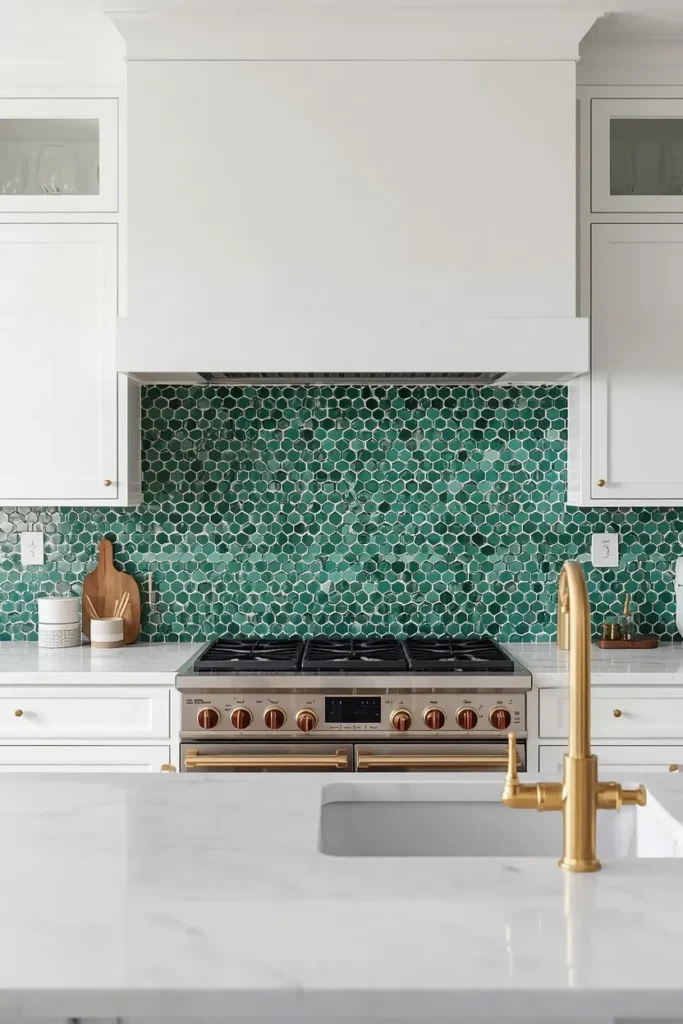
The cabinets are classic white. The countertops are Carrara marble. But the backsplash? A floor-to-ceiling installation of handmade zellige tiles in deep bottle green. Each tile is slightly different — different depths of color, different surface textures — and together they create something that looks like the inside of a greenhouse, jewel-bright and alive.
Design Breakdown
If you’re not ready to commit to full green cabinets, a statement green backsplash gives you all the visual impact with a fraction of the commitment. It’s also significantly cheaper — tile is generally less expensive than a full cabinet repaint or replacement, especially if you’re doing it yourself. Zellige tiles specifically have become the go-to for designers who want a green backsplash that feels artisanal and high-end.
Expert Tip
For maximum impact, take your backsplash all the way to the ceiling behind the stove or range. This “full-height backsplash” moment creates a focal point that reads as intentional and dramatic — not just a standard backsplash afterthought.
Why It Works
The backsplash is often the last thing homeowners think about — which means a stunning green backsplash instantly makes your kitchen look more designed and intentional than almost any other upgrade.
Best For
- Renters (removable peel-and-stick tile options exist)
- Budget makeovers
- Anyone who wants big impact without full renovation
- Small spaces
Common Mistake to Avoid
Choosing tiles that are too uniform. The beauty of a green tile backsplash is variation — look for handmade, textured, or zellige-style tiles rather than perfectly smooth, identical ones.
Quick Wins
- Take the backsplash to ceiling height behind the range for maximum drama
- Mix in one or two slightly different green tones for a natural, organic feel
- Keep everything else neutral so the tile can breathe
- Use grout that matches or complements the tile (white grout makes tiles pop; dark grout creates a moody, more unified look)
You May Also Like:
- Kitchen Wall Tile Ideas
- Kitchen Countertop Ideas
- Modern Farmhouse Kitchen Ideas
- Rustic Kitchen Ideas
- Kitchen Makeover Ideas
8. Soft Mint Green Kitchen with Retro Vibes
What You’re Seeing
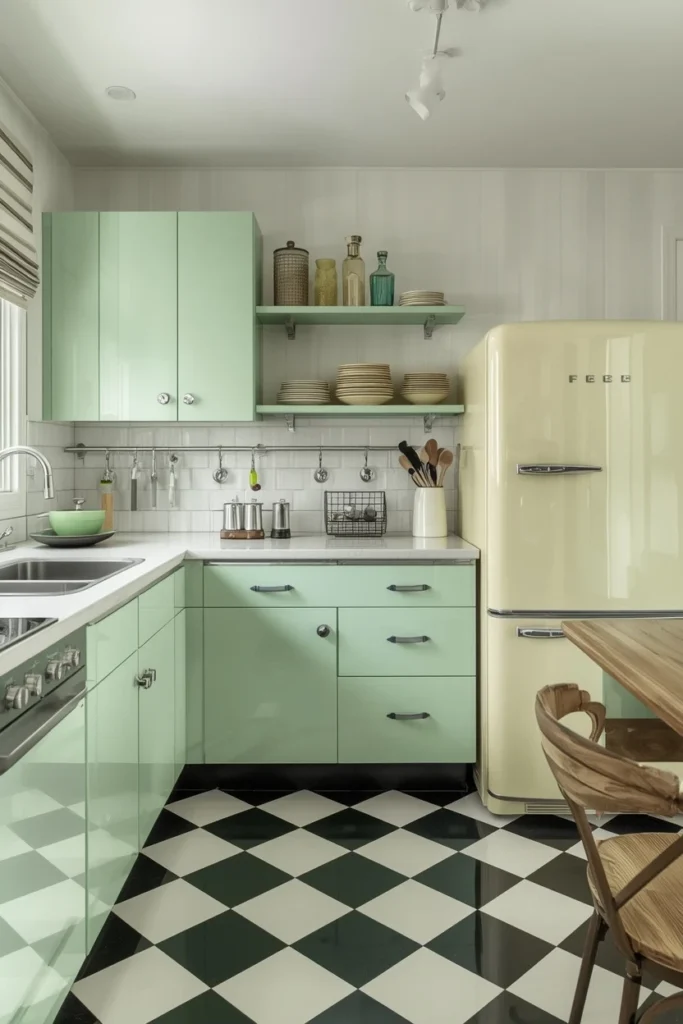
Picture a kitchen straight out of a beautifully designed 1950s diner — but updated for today. Mint green cabinets in a slightly glossy finish. Checkerboard black and white floor tiles. Rounded chrome fixtures. A retro-style fridge in cream. Pastel accessories dotted around the shelves. It’s fun, cheerful, and completely intentional. You’d smile every time you walked in.
Design Breakdown
Mint green is having a genuine moment in 2026. It sits at the cooler, brighter end of the green spectrum, making small kitchens feel larger and airier. The retro pairing works because mint green is historically associated with mid-century design — think 1950s American diners, vintage appliances, and postwar optimism. Paired with chrome and black and white, it creates a look that’s unmistakably nostalgic but fresh.
Expert Tip
If you love this look but feel intimidated by the commitment, start with mint green kitchen accessories — a stand mixer, canisters, even a small appliance or two. Layer in mint green dish towels and a small rug, and you’ll get a taste of the aesthetic before you touch the cabinets.
Why It Works
Mint green is psychologically cheerful. It’s bright without being aggressive, playful without being childish. In a room where you spend time every morning, that positive energy matters more than most people give it credit for.
Best For
- Small spaces (it reflects light beautifully)
- Renters (achievable through accessories and paint)
- Families with kids
- Anyone who wants a happy, personality-filled kitchen
Common Mistake to Avoid
Going too light. True mint green has pigment — if you go too pale, you end up with a color that reads as off-white rather than mint. Make sure your sample has real presence on the wall.
Quick Wins
- A semi-gloss finish enhances the retro feel and cleans up easily
- Black and white floor tiles seal the look completely
- Chrome fixtures over brushed nickel for authenticity
- Add a vintage-style clock or pendant light as a finishing touch
Here’s where it gets interesting: most people think retro kitchens look cheap or costume-y. The secret to making a mint green retro kitchen look genuinely sophisticated is restraint. Choose one or two retro elements — the floor tile, OR the colored appliance, OR the checkerboard pattern — not all of them at once. Layering too many vintage cues creates a theme park, not a home. Pick your hero retro element, then let the mint green and clean lines do the rest of the work.
Would you ever commit to a mint green kitchen? Or does the retro look feel too bold for your space? I’d love to know your comfort zone when it comes to color!
9. Jungle-Inspired Kitchen with Green Plants and Botanical Prints
What You’re Seeing
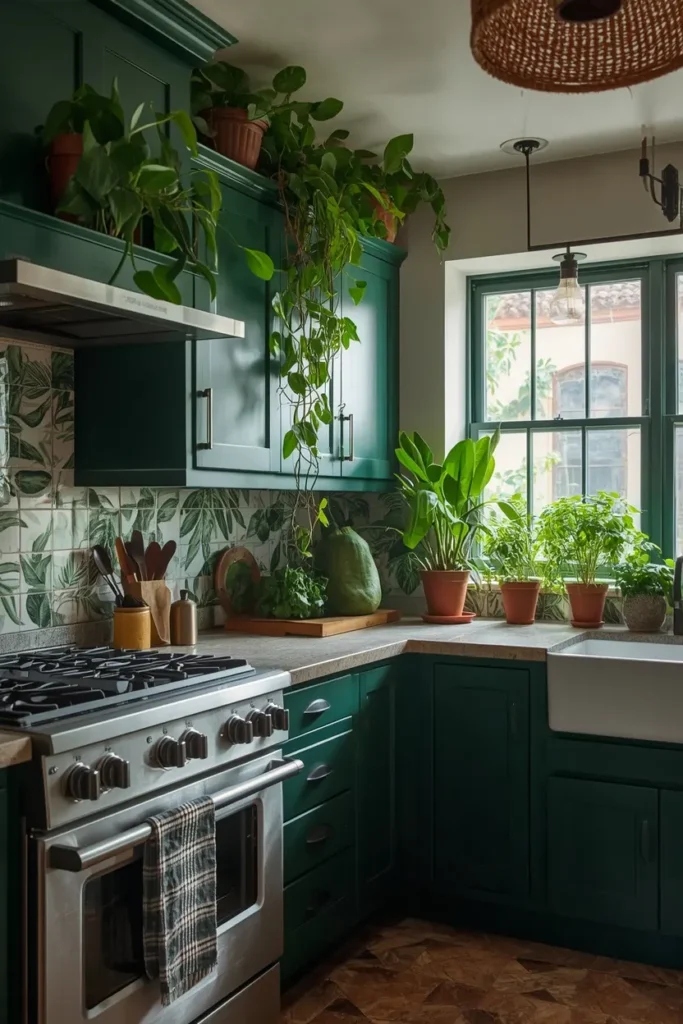
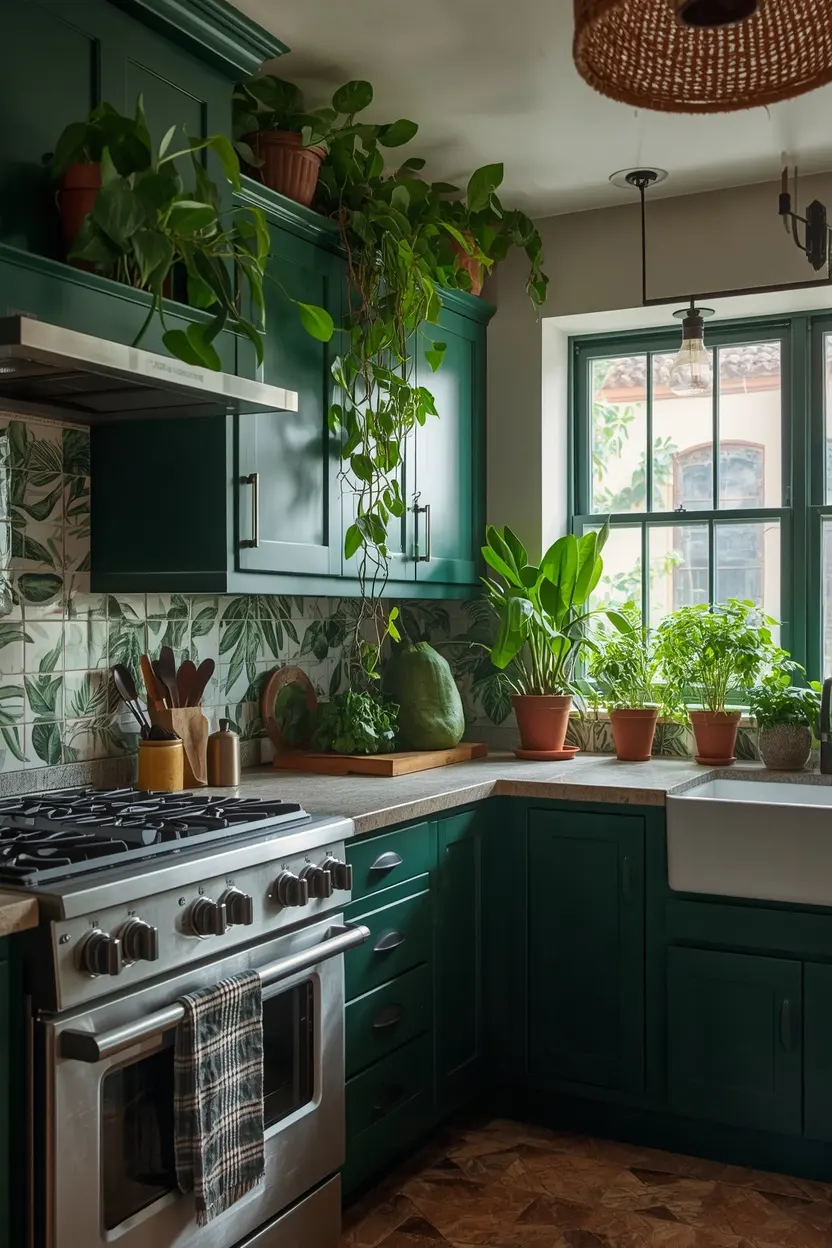
This simple change can completely transform the room — and this idea is proof. The cabinets are a deep, botanical green. But what makes this kitchen truly extraordinary isn’t the paint. It’s everything else: trailing pothos from the top of the cabinets. A monstera in the corner. Herbs growing in terracotta pots along the windowsill. Botanical print tiles behind the stove. A woven pendant light overhead. This kitchen doesn’t just have green — it IS green, in the most literal and lush sense possible.
Design Breakdown
Biophilic design — the practice of bringing nature into interiors — has moved from trend to design philosophy. The jungle-inspired kitchen takes this further than most: every element is chosen to reinforce the feeling of being surrounded by living, growing things. The green cabinets act as a backdrop to the real stars: the plants themselves.
Expert Tip
You don’t need a green thumb to maintain a kitchen plant collection. Focus on low-maintenance varieties: pothos, heartleaf philodendron, and snake plants thrive in kitchen conditions (warm, humid, with varying light). Grow herbs like basil and mint on the windowsill — they serve double duty as decor AND fresh ingredients.
Why It Works
Research consistently shows that indoor plants reduce stress, improve air quality, and increase feelings of wellbeing. In a kitchen — a room associated with nourishment and care — this effect is amplified. If you want to explore more indoor plant styling ideas, we’ve got a full guide that pairs beautifully with this look.
Best For
- Large spaces with good natural light
- Plant lovers and gardeners
- Anyone who wants a truly one-of-a-kind kitchen
Common Mistake to Avoid
Overplanting without a plan. A jungle kitchen that looks intentional has plants at varying heights — trailing from shelves, growing upward in the corners, clustered on the windowsill. Random plants scattered across every surface looks chaotic. Think in layers: low, medium, and high.
Quick Wins
- Start with one large monstera or fiddle leaf fig — it makes an immediate statement
- Train pothos to trail above the cabinets for a lush, organic border
- Use terracotta pots for warmth and texture
- Layer in a botanical print in a frame above the sink or stove
10. Transitional Green Kitchen: Where Classic Meets Contemporary
What You’re Seeing
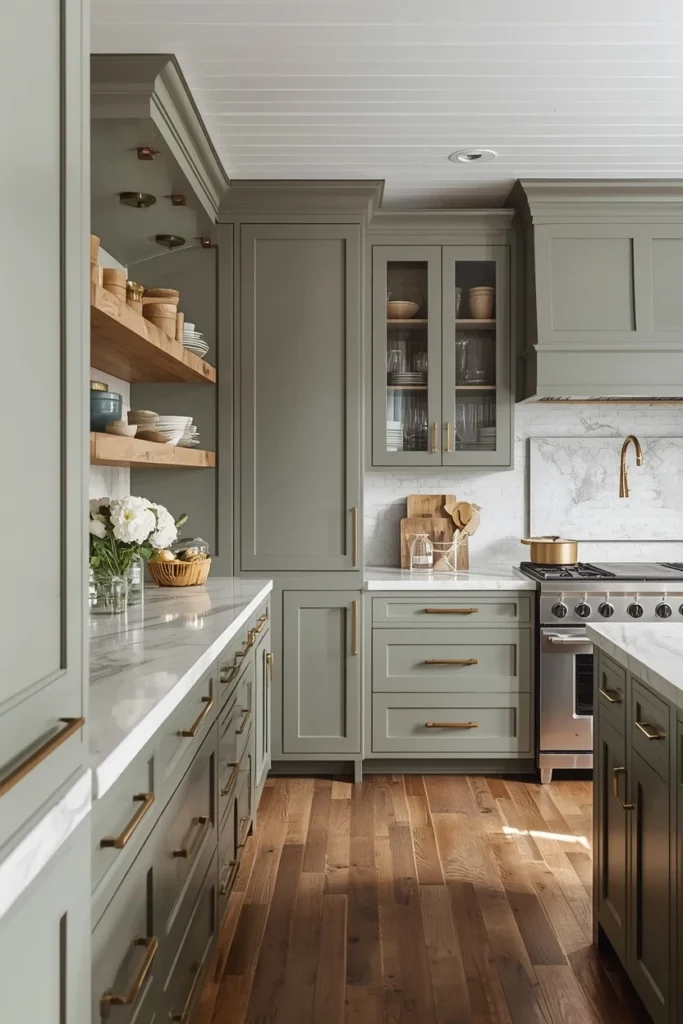
Imagine a kitchen that refuses to be put in a box. The cabinetry is a sophisticated sage-meets-green-gray — not quite sage, not quite forest, but something beautifully in between. The hardware is oversized in brushed gold. The countertops are leathered quartzite. A shiplap ceiling adds architectural detail without going full farmhouse. Stainless appliances anchor the space in the present. The whole room feels like it was designed by someone who knew exactly what they liked — and wasn’t afraid to mix it.
Design Breakdown
Transitional design sits between traditional and modern — it borrows the warmth and detail of classic styles while keeping the clean lines of contemporary interiors. A transitional green kitchen is ideal for homeowners who feel intimidated by fully committing to either direction. The green color becomes the unifying thread that ties the different influences together.
Expert Tip
If you’re going transitional, let the green be consistent while varying the other elements. Mix shaker-style doors (traditional) with minimal hardware (modern). Combine a classic subway tile with a more contemporary countertop material. The green will make it all feel cohesive.
Why It Works
Transitional kitchens have broad appeal — they look beautiful in historic homes and new construction alike. The green element adds character and warmth that prevents them from feeling generic or builder-grade.
Best For
- Families who need a timeless investment
- Homeowners who plan to sell in the next 5–10 years
- Anyone who loves variety but wants cohesion
Common Mistake to Avoid
Trying to be both too traditional AND too modern. Transitional works when you lean slightly in one direction. If your kitchen has lots of traditional detail (crown molding, raised panels, ornate feet), your green should be classic (forest, hunter, dark sage). If the bones are more modern, go with a clean matte sage or eucalyptus.
Quick Wins
- Leathered or honed countertops add texture that bridges traditional and contemporary
- Oversized hardware in gold or brass feels fresh and transitional
- Mix open shelving with closed cabinets for functional variety
- Don’t match your appliances to the cabinets — let them contrast slightly
Related Kitchen & Home Design Ideas
If you loved these lush green kitchen design ideas, you’ll want to dive into these too:
- Kitchen Countertop Ideas
- Modern Farmhouse Kitchen Ideas
- Small Kitchen Ideas
- Kitchen Lighting Ideas
- Kitchen Island Ideas
- Open Kitchen Design Ideas
- Kitchen Makeover Ideas
- Rustic Kitchen Ideas
Keep exploring — there’s a whole world of kitchen inspiration waiting for you over there.
Your Lush Green Kitchen Awaits
We covered a lot of ground in these 10 lush green kitchen design ideas — from the deep drama of forest green shaker cabinets to the playful energy of mint retro kitchens, from a jewel-toned statement backsplash to a full biophilic jungle experience.
Here’s my honest take: the most impactful ideas on this list are the ones that commit. The green backsplash. The statement island. The fully painted cabinets in sage or forest or eucalyptus. The designs that hedge — a single green accessory here, a small potted plant there — rarely achieve the transformative effect you’re actually after.
So here’s my challenge to you: pick one idea from this list and take one concrete step toward it this week. Order paint samples. Get a quote from a painter. Search for tile options. Buy a large plant and put it in your kitchen right now. Action — even small, imperfect action — is what separates the kitchens you dream about from the kitchen you actually get to cook in.
Which of these 10 lush green kitchen design ideas is calling your name? The moody forest green? The breezy sage? The tile backsplash that does all the talking? Let me know in the comments — I genuinely love hearing what resonates.
And if kitchens have you thinking about the rest of your home, you might want to check out our indoor house plants aesthetic ideas — because the green philosophy doesn’t have to stop at the kitchen door.
Speaking of which — if you’ve ever wondered what it would look like to bring that same lush, nature-inspired color palette into your living room… stay tuned. That guide is going to make this one look like the warm-up act.