10 Indoor House Plants Aesthetic Ideas That Will Transform Your Home Instantly
This article was created in line with Trends Oraa’s research and content standards.
Your home feels empty. Something is missing — and you can’t quite put your finger on it.
That missing thing? Plants. Not just any plants, but styled, thoughtfully placed greenery that turns a flat, forgettable room into something that genuinely takes your breath away. And the best part? You don’t need a designer’s budget or a green thumb to pull it off.
In this guide, I’m sharing 10 indoor house plants aesthetic ideas that are dominating Pinterest right now — each one with exactly what you need to recreate the look at home. Styling tips, plant picks, expert advice, and real talk about what works and what doesn’t. Stick with me, because idea #7 is the one most people completely overlook — and it makes the biggest difference.
You might also love our viral guide on Balcony Garden Ideas — full of fresh inspiration for turning any outdoor space into a green oasis.
Why Indoor House Plants Aesthetic Is Having Such a Major Moment
There’s a reason plant content absolutely explodes on Pinterest every single season. Plants do something no throw pillow or wall art can do — they breathe life into a space. Literally.
Studies consistently show that indoor plants improve mood, reduce stress, and make spaces feel more alive and welcoming. And from a pure design standpoint? A well-placed plant can anchor a room, add vertical interest, soften hard edges, and bring in color without a single drop of paint.
But here’s the important part — it’s not just about owning a plant. It’s about styling it intentionally. That’s what separates a beautiful, editorial-looking home from one that just has a sad pothos sitting on a windowsill.
Let’s get into the ideas.
1. The “Shelf Jungle” — Layered Greenery on Open Shelving
What the Look Is
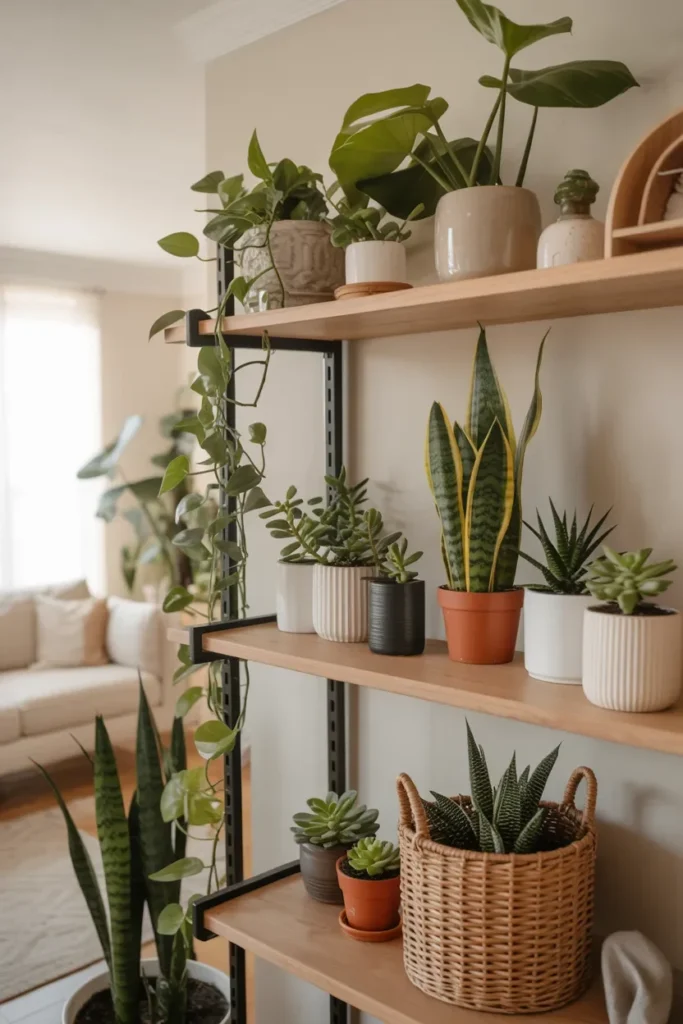
Picture a wall of open shelving — maybe wooden floating shelves or IKEA-style units — absolutely loaded with trailing vines, compact succulents, and small leafy plants in a mix of terracotta, white ceramic, and woven basket pots. The plants spill and trail over the edges, creating a layered, almost rainforest-like effect. Books and a few neutral objects are tucked between the plants, but greenery is clearly the star.
This aesthetic works especially well in living rooms and home offices. It’s bold without being loud, and it photographs beautifully — which is probably why it keeps going viral on Pinterest.
Expert Tip: Don’t line plants up like soldiers at attention. Vary the heights dramatically. Put a tall snake plant at one end, medium trailing pothos in the middle, and tiny succulents tucked into corners. Odd numbers (3, 5, 7 plants per shelf) always look more natural than even groupings.
Why It Works: Layered greenery mimics what we see in nature — plants growing at different heights and angles. Our brains are hard-wired to find that kind of organic layering beautiful and calming. The mix of textures (spiky, trailing, rounded) also keeps the eye moving and engaged, which is exactly what great styling does.
Best plants to use: Pothos, Devil’s Ivy, string of pearls, mini succulents, ZZ plant, and peace lily.
2. The Terracotta Moment — Warm Tones and Earthy Pots
What the Look Is
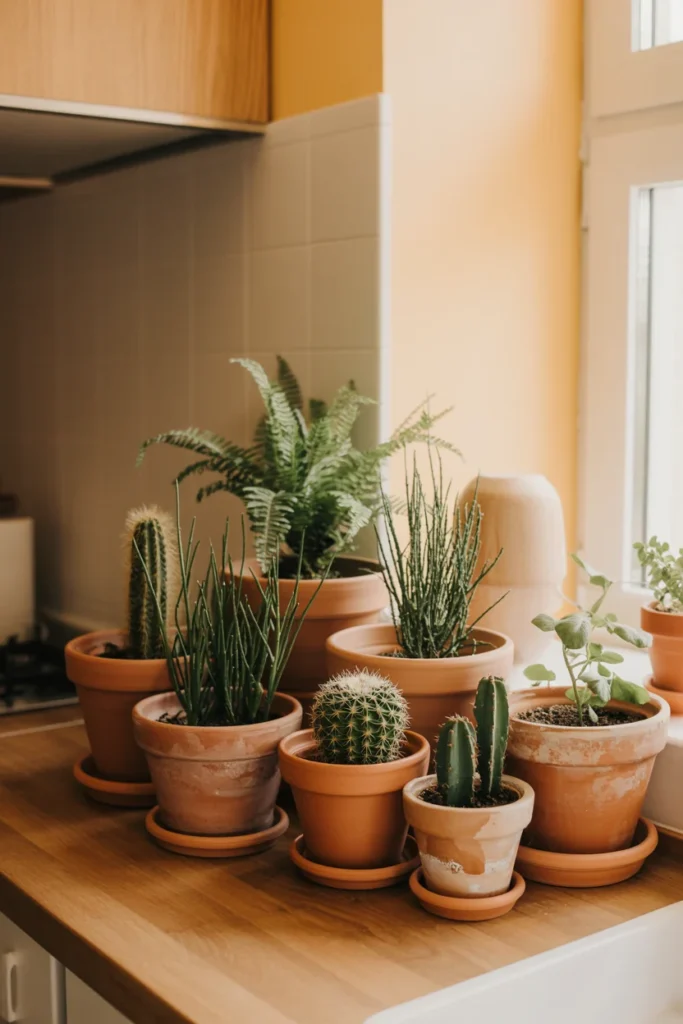
This one is everywhere right now, and honestly, I’m not surprised. Imagine warm, sun-baked terracotta pots in varying sizes — some plain, some with subtle ribbing or texture — clustered together on a kitchen counter, a bathroom shelf, or a sunny windowsill. The plants inside are lush but not overwhelming: herbs, cacti, small ferns, or a single sculptural succulent. The whole thing feels warm, artisan, and deeply cozy.
Terracotta pairs especially well with warm neutrals — cream walls, wood tones, linen, and rattan. If your space has any of those elements, this look will slot in perfectly.
Expert Tip: Terracotta pots are porous, which means they dry out faster than glazed ceramic or plastic pots. That’s actually great for plants like succulents and cacti that like to dry out between waterings, but not so great for moisture-loving plants like ferns. Match your plant to your pot, not just your aesthetic.
Why It Works: The earthy, handmade quality of terracotta adds warmth and texture to any space. It signals “real life lived here” in the best possible way — not too precious, not too perfect. That kind of visual warmth is incredibly appealing and makes a room feel genuinely inviting rather than staged.
Which of these first two looks feels more like you — the lush jungle shelf or the warm, earthy terracotta vibe? Drop your answer in the comments!
3. The Dramatic Statement Plant — One Big, Bold Focal Point
What the Look Is
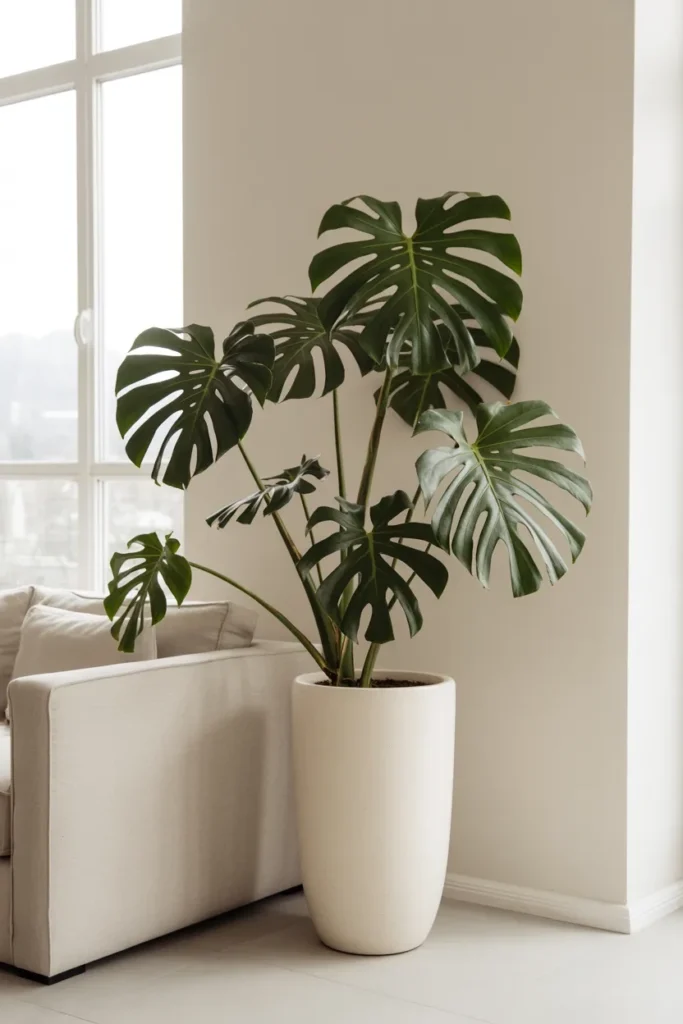
Forget the cluster approach for a minute. This idea is all about one absolutely stunning specimen plant that commands the whole room. We’re talking a massive fiddle leaf fig in a tall white planter, a sculptural monstera deliciosa with enormous split leaves, or an architectural snake plant that reaches up toward the ceiling. The plant is placed where it can’t be missed — next to a sofa, in an empty corner, beside a fireplace. Everything else in the room steps back and lets it shine.
This is one of the most popular indoor house plants aesthetic approaches in minimalist and Scandinavian-inspired interiors, and once you understand why, you’ll want to try it immediately.
Expert Tip: Scale matters enormously here. A too-small statement plant in a large pot just looks sad and lost. Go bigger than you think you need to. A plant that reaches chest-height in a corner will have ten times more visual impact than the same plant at knee-height.
Why It Works: A single dramatic plant acts like living sculpture. It draws the eye, creates a natural focal point, and gives the room a sense of intention and confidence. It also creates that effortless, designer-approved look without requiring much else — which is why interior stylists reach for this trick constantly.
4. The Bathroom Oasis — Spa-Level Plant Styling
What the Look Is
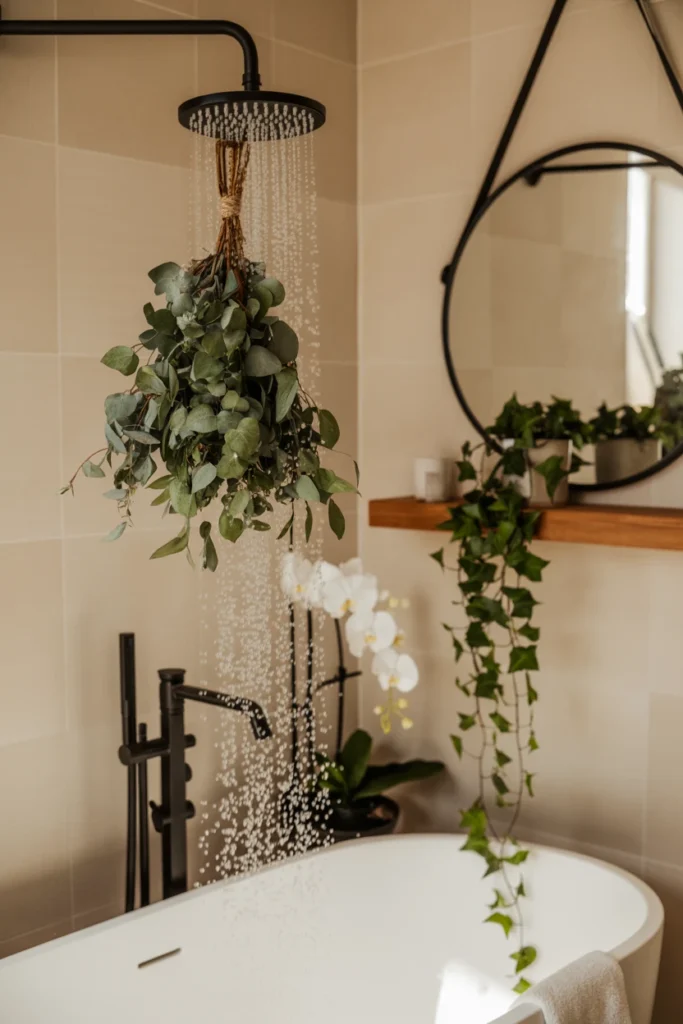
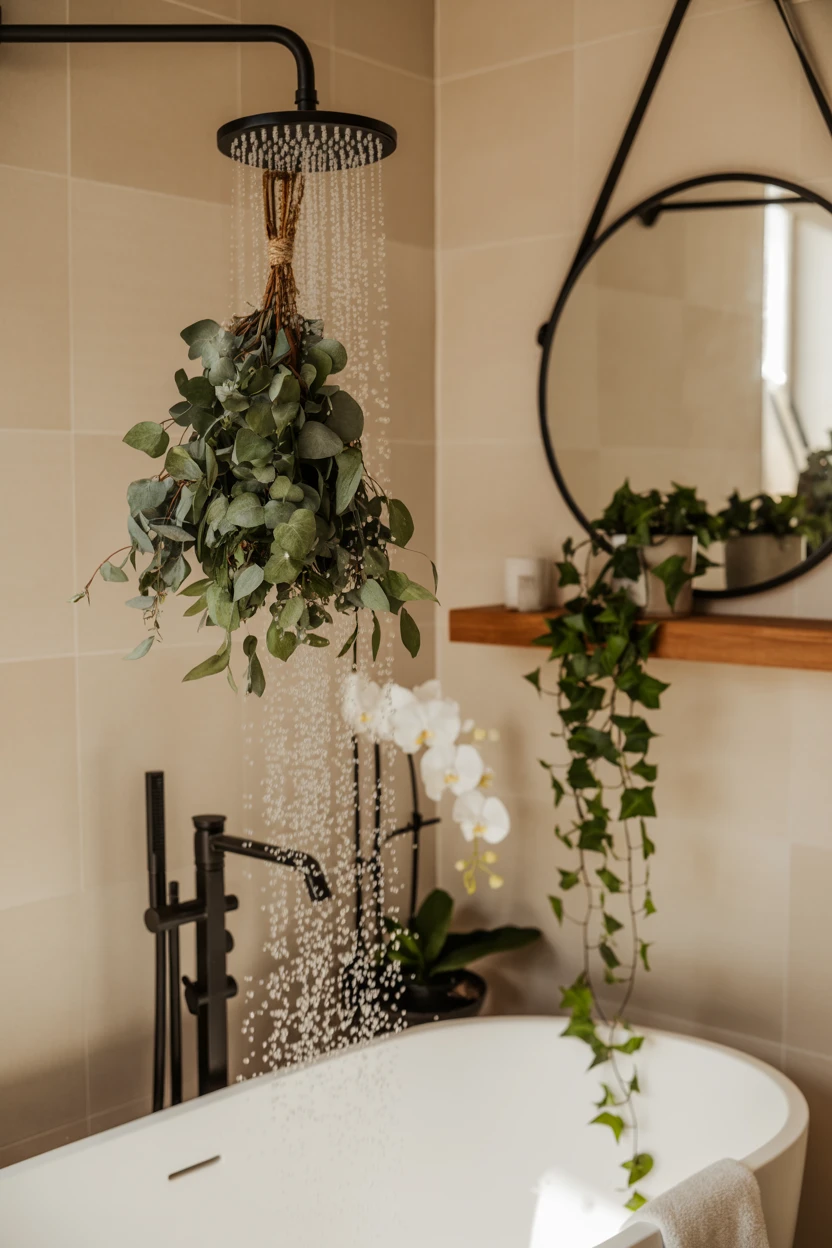
If you’re not putting plants in your bathroom yet, you’re genuinely missing out on one of the easiest indoor house plants aesthetic upgrades you can make. Picture this: eucalyptus hanging from the shower head (the steam releases the scent — it’s incredible), a trailing ivy sitting on a shelf beside your mirror, and a low pot of moss or a single orchid on the edge of your tub. The whole bathroom feels like a high-end spa.
The trick is choosing plants that genuinely love humidity. Your bathroom is already giving them exactly what they need — you just have to show up with the right plants.
Expert Tip: Eucalyptus bundles from Trader Joe’s or your local grocery store work beautifully for this and last longer than you’d think — often 2-3 weeks in a steamy shower. Tie them with a piece of twine and hang them from the showerhead facing away from the direct water stream. The results are instant and dramatic.
Why It Works: Bathrooms are functional spaces we often neglect aesthetically. Adding plants instantly transforms the experience of being in there — it feels more luxurious, more intentional, and far more relaxing. Plants that thrive in humidity (ferns, pothos, orchids, air plants) are also among the easiest to care for in this environment.
Want more bathroom inspiration? Check out our roundup of Bathroom Interior Ideas for more ways to elevate every corner of your space.
5. The Hanging Garden — Ceiling and Wall-Mounted Greenery
What the Look Is
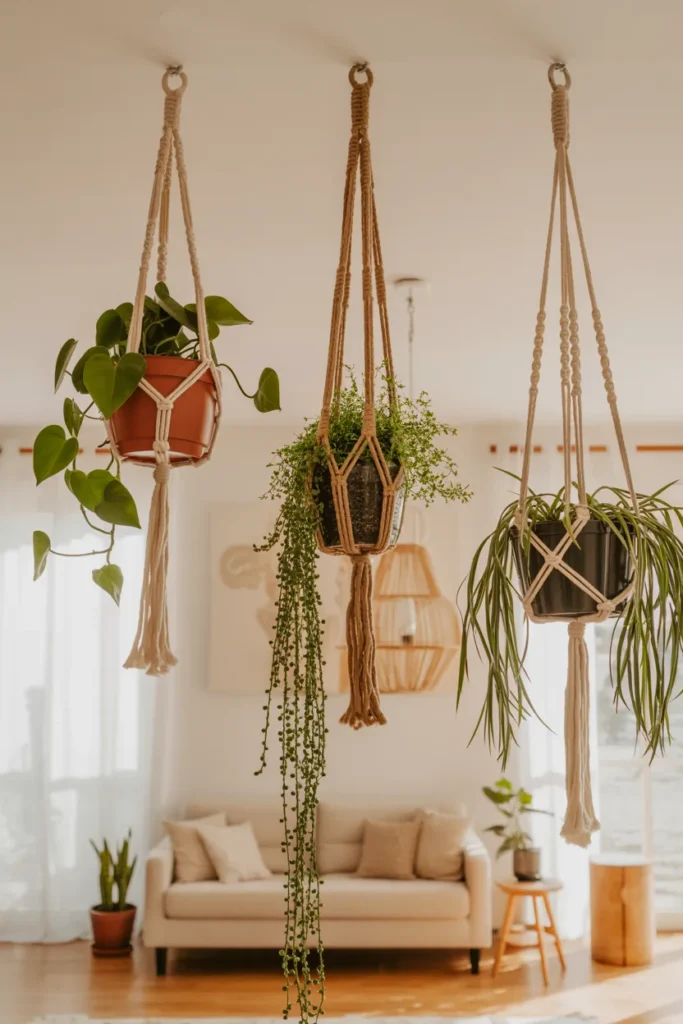
Most people think about plants at floor and counter level. But here’s where it gets interesting — some of the most stunning indoor house plants aesthetic looks use vertical space that most people ignore completely. Hanging plants in macrame hangers, ceiling-mounted hooks with trailing vines, and wall-mounted planters filled with cascading string of pearls or heartleaf philodendron create a completely different visual experience. Your eye travels up, the room feels taller, and the greenery feels lush without taking up any floor space.
This is especially brilliant for small spaces and apartments where every inch of floor space matters.
Expert Tip: Macrame hangers are gorgeous, but they can look dated quickly if you’re not careful. Choose ones with clean, simple knotwork rather than overly elaborate styles. Natural jute or cotton in cream or natural tones works with almost every interior design style — from boho to modern farmhouse to Scandi.
Why It Works: Hanging plants use the one dimension most of us forget about when decorating: height. Taking the eye upward makes ceilings feel higher and rooms feel larger. It also adds softness to what are often the hardest, blankest surfaces in a room — the walls and ceiling.
Indoor House Plants Aesthetic — Buying Guide & Budget Breakdown
Before we keep going with the ideas (and trust me, the next few are worth scrolling for), let’s talk practical. Because I know the question you’re probably asking right now is: how much is this actually going to cost me?
Great news — creating a beautiful indoor plant aesthetic doesn’t require a big budget. Here’s how to think about it:
The Budget Tier ($0–$50)
Start with one or two easy-care plants from a local grocery store or Trader Joe’s. Pothos, spider plants, and snake plants are typically $5–$15 and are nearly impossible to kill. Pick up a simple terracotta pot (often $2–$8 at Home Depot) and you’re already creating something beautiful. A single hanging macrame planter from Amazon runs about $10–$20. Total for a genuinely lovely starter look? Around $25–$40.
The Mid-Range Tier ($50–$150)
This is where things get fun. At this budget, you can grab a larger statement plant like a monstera or fiddle leaf fig ($40–$80 at Lowe’s, Home Depot, or IKEA), invest in a few coordinating pots ($10–$30 each), and add a couple of trailing plants for shelves. You’re building a cohesive, styled look here — not just random plants.
The Investment Tier ($150+)
This is for the plant lovers who want to go all-in. At this level, you’re looking at rare varieties (variegated monsteras, rare aroids, mature specimens), high-quality ceramic pots from small-batch makers on Etsy, and possibly a plant stand or two. The results are genuinely extraordinary — but you absolutely don’t need to spend this much to have a beautiful plant aesthetic.
What to Prioritize First:
- One statement plant (this is your anchor)
- 2-3 coordinating pots in the same color family
- One trailing plant for a shelf or hanging spot
- Good potting mix (don’t cheap out here — it matters more than most people realize)
Where to Shop:
- IKEA (great for basic pots and plant stands at low prices)
- Trader Joe’s and Whole Foods (surprisingly good rotating plant selection)
- Lowe’s and Home Depot (best selection of larger plants)
- Local nurseries (best quality, and the staff actually know things)
- Etsy (unique handmade pots and rare plant cuttings)
Most people don’t know this — but buying a slightly larger plant upfront saves you money long-term. A mature plant will fill your space immediately and look great from day one, whereas a tiny plant will need a year or more to grow into its space. Pay a bit more once and enjoy the results immediately.
6. The Bedroom Greenhouse Feel — Soft, Lush, and Calming
What the Look Is
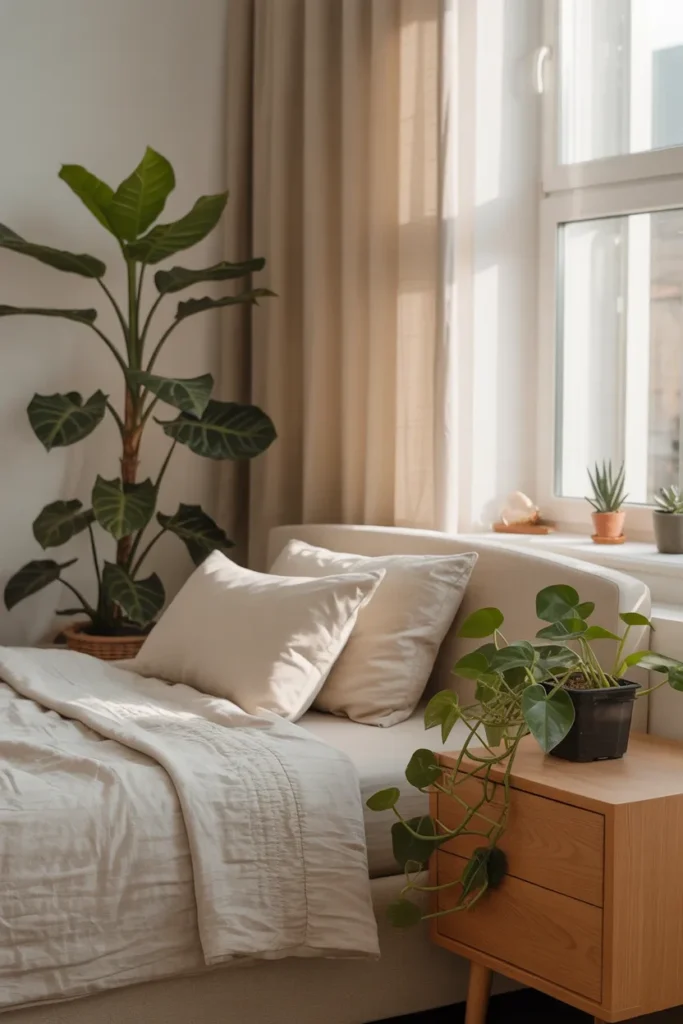
Imagine waking up surrounded by soft greenery. A tall, leafy plant in the corner. A trailing pothos on the nightstand. A small succulent arrangement on the windowsill catching morning light. The bedroom plant aesthetic is all about softness — rounded leaves, gentle trailing shapes, nothing too architectural or sharp. It feels like sleeping in a garden, which sounds dreamy because it genuinely is.
Research consistently shows that having plants in the bedroom can improve sleep quality and air quality. And from a pure design standpoint, greenery softens all the hard lines of furniture and architecture beautifully.
Expert Tip: The bedroom is one room where you want to be strategic about fragrance. Some plants (like gardenias or certain lilies) are beautifully scented but can be overwhelming in a small enclosed space overnight. Stick to unscented varieties for the bedroom — your sleep quality will thank you.
Why It Works: Plants bring an organic softness that no other decor element quite replicates. In a bedroom — a space that’s supposed to feel restorative and calming — that softness matters enormously. The visual association with nature also has genuine psychological effects, triggering feelings of calm and safety that make falling asleep easier.
For more bedroom inspiration, don’t miss our Calm Bedroom Ideas — everything you need to create the most restful room in your home.
7. The Kitchen Herb Garden — Functional Beauty at Its Best
What the Look Is
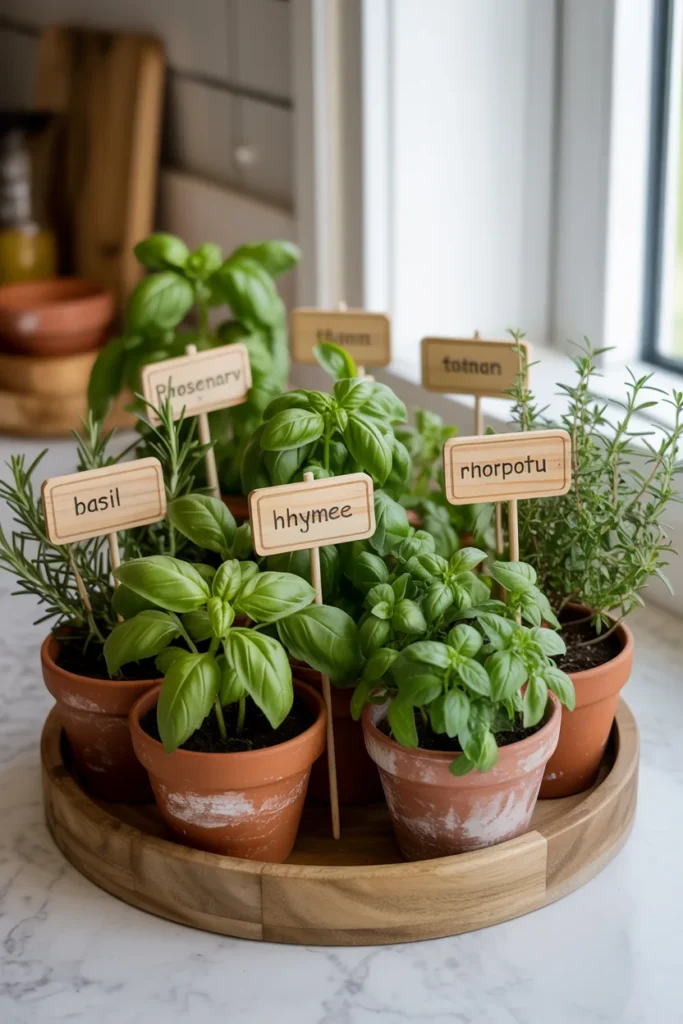
This is the one most people overlook — and it’s genuinely one of my favorites. A kitchen herb garden, when styled well, is one of the most beautiful and functional indoor plant aesthetics you can create. Think: small pots of fresh basil, rosemary, thyme, and mint lined up on a wooden tray on the counter. Or herbs growing in a wall-mounted vertical planter beside the stove. Or small terracotta pots hanging from a tension rod mounted in a window. The greenery is lush, the colors are vivid, and everything smells incredible.
Expert Tip: Label your herb pots with small wooden stakes or handwritten ceramic tags. It adds a charming, organized look and actually helps you use the herbs more because you can grab what you need without guessing. Also — herbs need more light than most people give them. A south-facing window is ideal; anything less and you’ll need a small grow light to keep them thriving.
Why It Works: Herb gardens hit every mark — they look beautiful, they’re incredibly functional, they smell amazing, and they’re actually quite easy to maintain when they’re in the right spot. There’s also something deeply satisfying about cooking with herbs you grew yourself, even if “growing” just means keeping a rosemary plant alive on your counter. It adds a layer of warmth and intention to your kitchen that’s hard to replicate any other way.
Now, avoid this mistake — don’t plant multiple herbs together in one pot just to save space. They have different water and light needs, and you’ll end up with some thriving and some dying in the same container. Keep them separate.
8. The Minimalist Single-Plant Moment — Less Is Genuinely More
What the Look Is
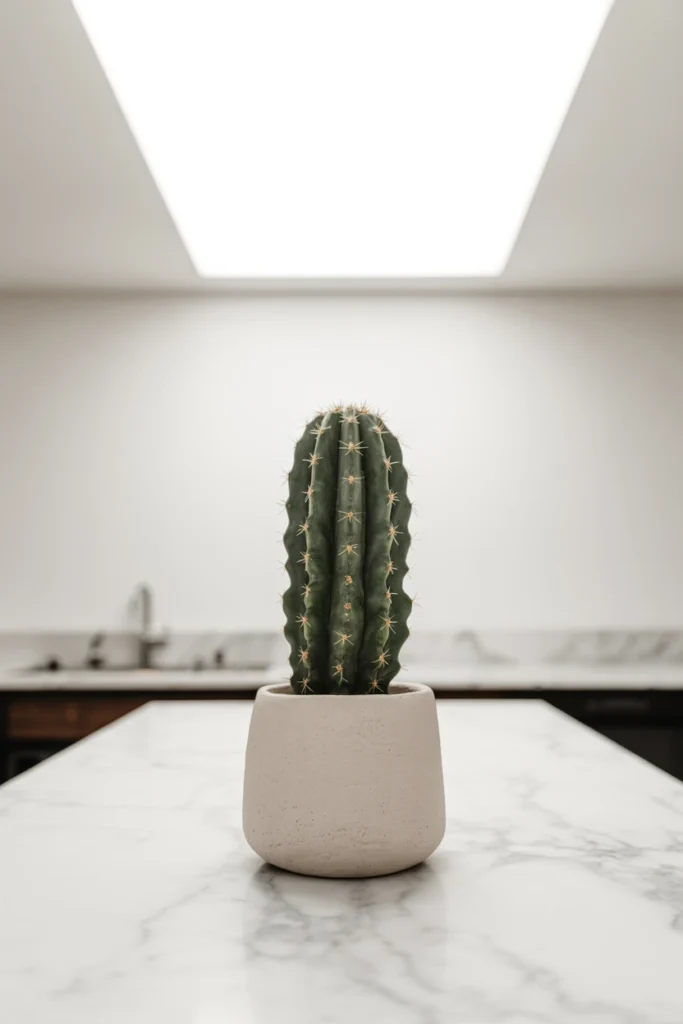
Not every space needs a jungle. Sometimes the most powerful indoor house plants aesthetic statement is a single, perfectly chosen plant in a single, perfect pot — placed with real intention. One matte white pot holding a sculptural cactus on an otherwise bare kitchen island. One small ceramic pot with a single orchid on a bathroom shelf. One glass vase with a cutting of pothos floating in water on a coffee table. The minimalism makes the plant feel like art.
Expert Tip: When you’re going this minimal, the pot becomes just as important as the plant. Invest in a truly beautiful pot — handmade ceramic, quality stone, or architectural concrete — and let it be part of the statement. A generic plastic pot defeats the whole purpose of the minimalist approach.
Why It Works: Visual restraint is incredibly powerful in interior design. When you strip everything away and focus on one single beautiful thing, it forces the viewer to slow down and actually appreciate it. A lone plant given this kind of intentional placement becomes a genuine design object — it commands attention in a way a group of plants never quite can.
What’s your current go-to plant for decorating? Let me know in the comments — I love hearing what’s working in real homes!
9. The Biophilic Living Room — Nature as Design Philosophy
What the Look Is
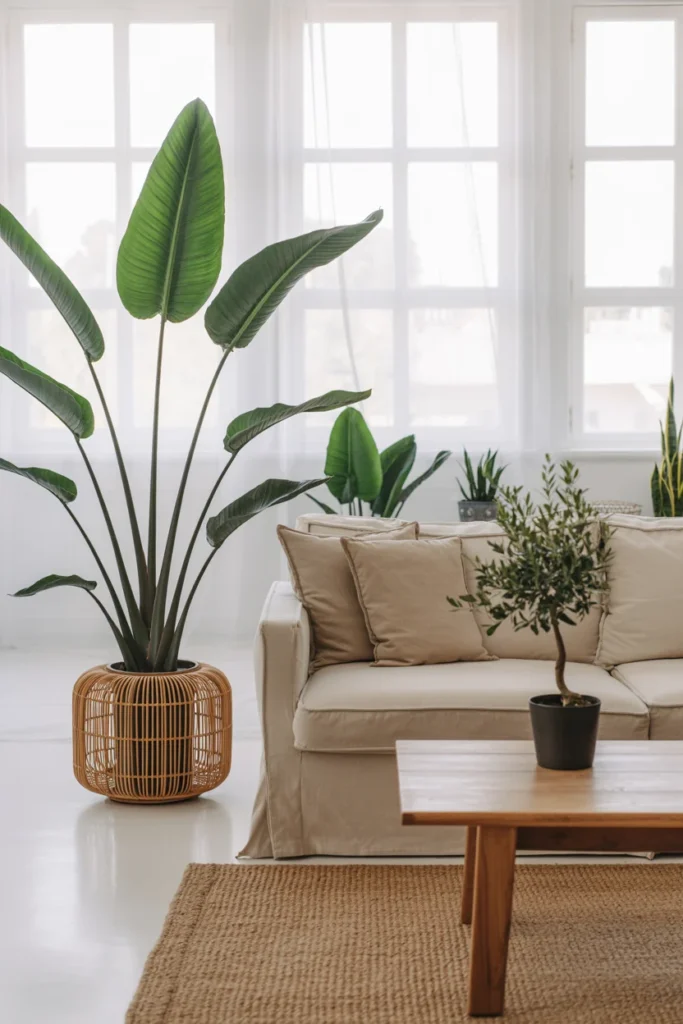
Biophilic design is the idea that bringing natural elements into interior spaces improves human wellbeing — and it’s moved from trend to genuine design philosophy. In the living room, this looks like large potted trees (olive trees, fiddle leaf figs, bird of paradise), natural textures like jute, rattan, and linen, wooden furniture and accents, and multiple plant groupings at different levels. The plants aren’t just decorative here — they’re structural elements of the design itself.
The biophilic living room feels like an extension of the outdoors. Light, airy, connected to nature, and genuinely beautiful in a way that feels effortless rather than styled.
Expert Tip: The bird of paradise plant is one of the most architecturally stunning options for a large living room statement plant. It grows tall, with enormous paddle-shaped leaves that turn and face the light. Give it a bright spot and it will reward you with dramatic, gorgeous growth. One word of caution — it can take up to 18 months to produce flowers indoors, so buy it for its foliage, not its blooms.
Why It Works: We’re biologically wired to respond positively to nature. Our nervous systems genuinely calm down in the presence of natural elements. Designing a living room around this reality — instead of fighting it — creates a space that feels good to be in at a deep, almost instinctive level. It’s not just pretty; it’s psychologically powerful.
For even more living room inspiration, our Green Living Room Ideas post is packed with fresh, nature-inspired approaches to living room design.
10. The Vintage Meets Botanical — Old Charm, Living Greenery
What the Look Is
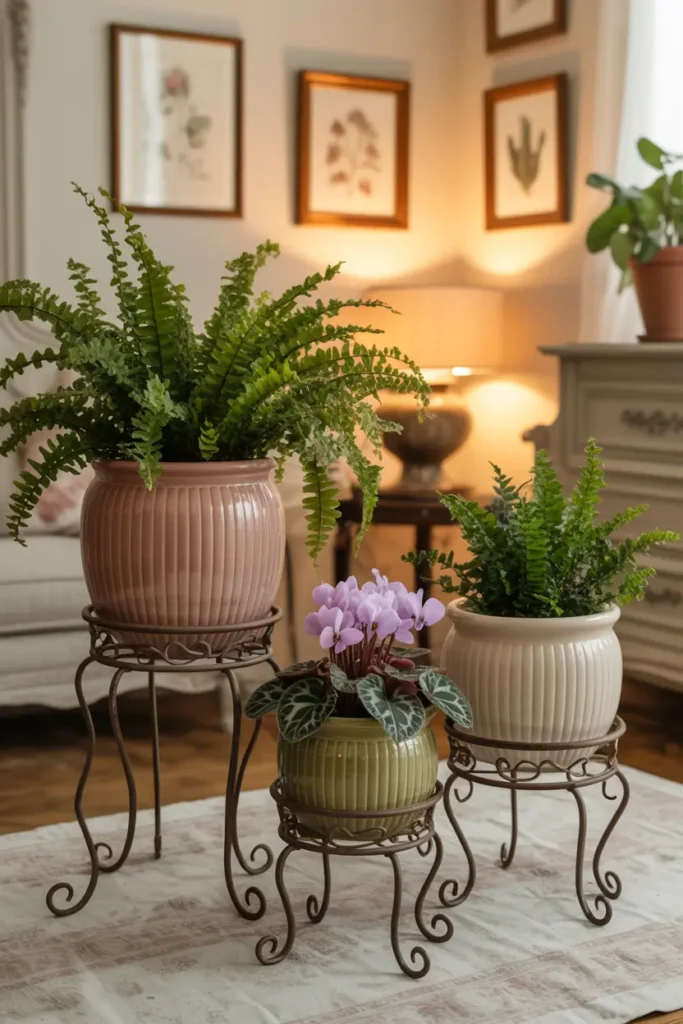
This is the aesthetic that feels like you inherited your grandmother’s beautiful old home and then filled it with plants. Vintage ceramic pots in dusty rose, sage green, and cream. Ornate plant stands with curved legs. Pressed botanical prints on the walls. Plants that feel period-appropriate — ferns, Boston ivy, cyclamen, African violets, and begonias. The whole space has a warm, nostalgic quality that is deeply cozy and endlessly charming.
This look has seen a massive resurgence over the past couple of years, particularly among people drawn to cottagecore and grandmillennial aesthetics. And honestly? It’s easy to see why.
Expert Tip: Flea markets and estate sales are absolute gold for finding the vintage pots and plant stands that make this look authentic. You’ll find original pottery, cast iron stands, and genuine ceramic planters for a fraction of what reproduction versions cost on Etsy. The hunt is part of the fun — and every piece has a story.
Why It Works: This aesthetic works because it bridges the gap between nostalgia and life. Vintage objects can feel static and a little museum-like on their own. Add living, breathing plants and suddenly everything feels animated and warm again. The contrast between the aged, historical quality of the vintage pieces and the fresh, vital energy of living plants creates a visual tension that’s incredibly appealing.
Which of these 10 indoor house plants aesthetic ideas are you most excited to try first? Tell me in the comments — and feel free to share a photo of your plant styling when you do it!
Your Green Home Awaits
Here’s the beautiful truth about all of this: you don’t need to do everything at once.
Start with one idea. One plant. One pot. One corner of your home that you want to feel more alive and beautiful. Make that one thing work, enjoy it, and then let it grow from there. That’s how every incredible plant-filled home starts — not with a massive overhaul, but with one intentional choice.
Indoor house plants aesthetic isn’t about having the most plants or the rarest varieties. It’s about understanding how to place living things in your space in a way that makes the whole room feel better. Once you see that — really see it — you won’t be able to stop.
And if you’re hungry for more home decor inspiration, don’t stop here. Our Apartment Organization Ideas guide is packed with smart, beautiful ways to bring order and style to every room in your home — plants and all.
Happy styling. Your green home is waiting.