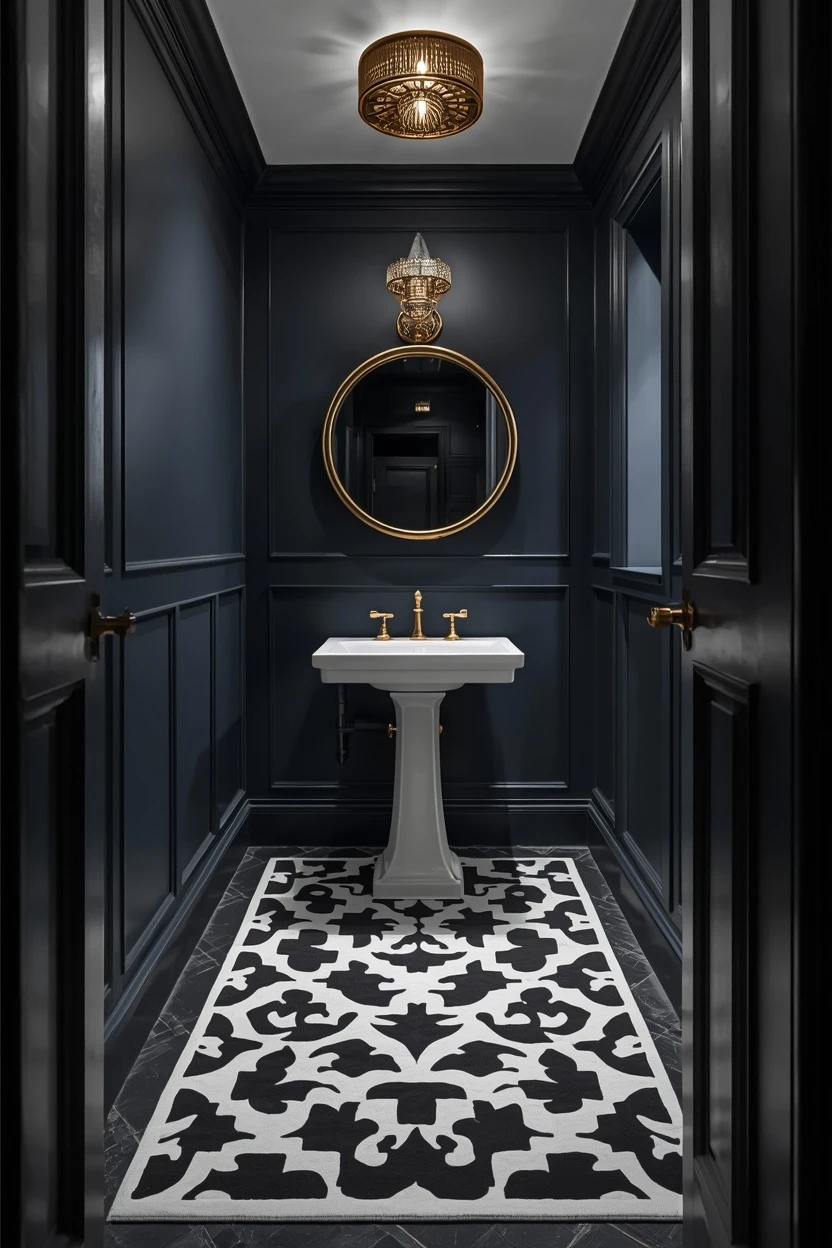
10 Bathroom Rug Ideas Using Shapes and Sizes That Fit Any Layout, From Narrow to Wide
This article was created in line with Trends Oraa’s research and content standards.
Your bathroom rug is making your space look smaller — and you don’t even realize it. The wrong shape, the wrong size, and suddenly your whole bathroom feels off, cramped, or just… blah.
But here’s the good news: one simple swap can change everything.
Whether your bathroom is a tight galley-style narrow space or a sprawling master bath with room to breathe, the right bathroom rug ideas will pull the whole room together, add warmth underfoot, and make you feel like you finally got the design right.
In this guide, you’ll get 10 specific rug ideas organized by shape and size — with real tips on why each one works, where to place it, and exactly what to look for when you shop. By the end, you’ll know which rug is right for YOUR layout. No more guessing.
👉 You might also love our viral guide on Apartment Bathroom Decor Ideas — packed with budget-friendly makeover tips!
Keep scrolling — idea #4 is a complete game-changer for narrow bathrooms.
Why Shape and Size Matter More Than You Think
Most people choose a bathroom rug based on color or pattern. That’s fine, but it’s putting the cart before the horse.
Shape and size come first. Always.
A rug that’s too small floats awkwardly in the middle of the floor. Too large, and it bunches under the door or disappears under the vanity. The wrong shape in a narrow bathroom can actually make the space look shorter, not longer.
Here’s the rule of thumb most designers use:
- Narrow bathrooms (under 5 feet wide): Go with a long runner or a small rectangular rug placed lengthwise
- Square bathrooms: Round or square rugs centered between fixtures work beautifully
- Wide or large bathrooms: Layered rugs, large rectangles, or two coordinating mats give you that designer look
Now that you have the framework, let’s get into the actual ideas. And trust me — some of these are going to surprise you.
1. The Classic Rectangle in a Narrow Bath
What you’re looking at
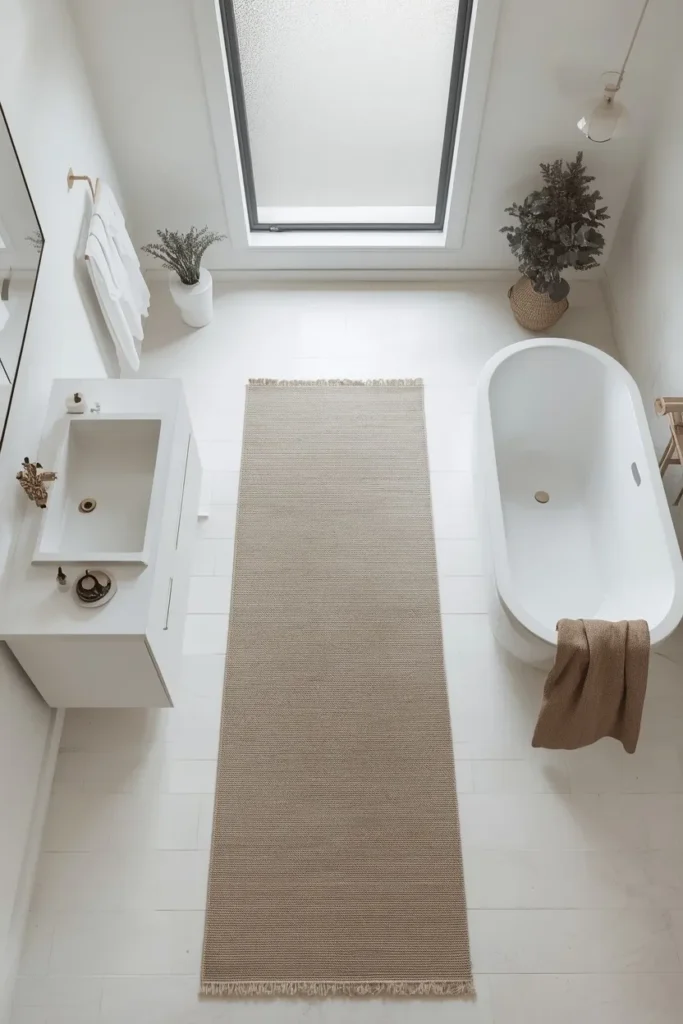
Imagine a long, sleek rectangular rug in a soft oatmeal or sage green, laid lengthwise between the vanity and the bathtub in a narrow bathroom. The rug takes up most of the floor length, leaving just a few inches of tile visible on either side.
It’s clean. It’s cohesive. And it instantly makes the bathroom look more intentional.
Expert Tip: In a narrow bathroom, a 2′ x 4′ or 2′ x 5′ rectangle placed lengthwise creates an illusion of depth. It draws the eye toward the far wall, making the room feel longer than it actually is. Choose a rug with a subtle horizontal stripe pattern to amplify this effect even more.
Why it works: Rectangles are the most versatile rug shape, period. In narrow spaces, they naturally align with the architecture of the room and don’t fight the angles. A low-pile or flat-woven rectangle also keeps the floor visually open — especially important when you don’t have much square footage to play with. Go for neutral tones if your tiles are bold, or add personality with a patterned rug if your walls and floor are plain.
Which of these rug styles feels most like your bathroom vibe — cozy and textured, or sleek and minimal? Drop your answer in the comments!
2. The Long Runner for Galley-Style Bathrooms
What you’re looking at
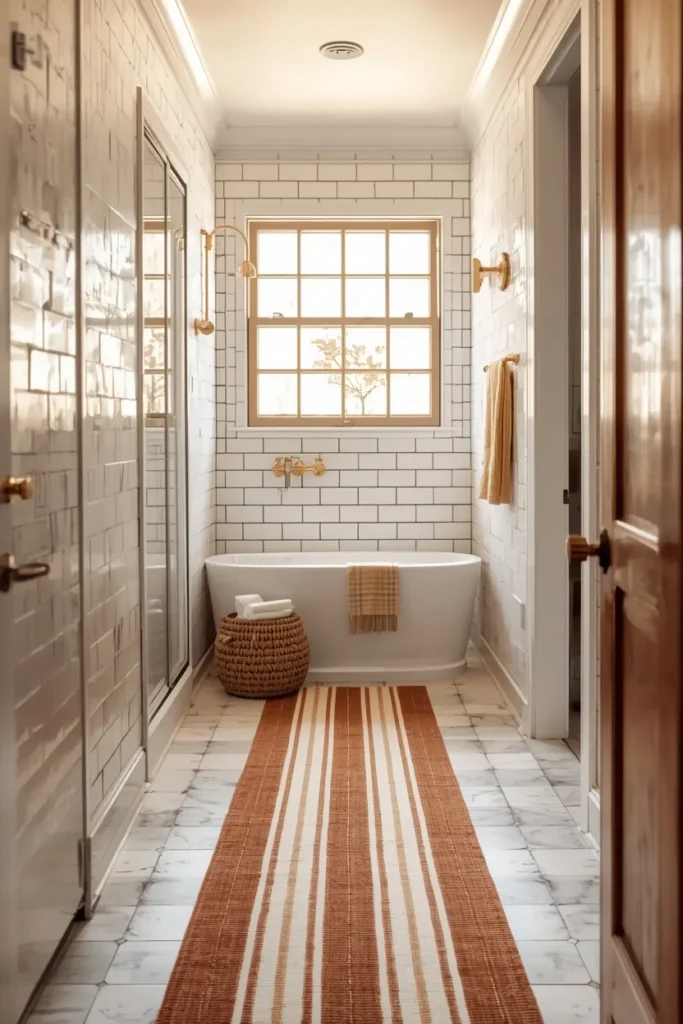
Picture a slim, elongated runner — maybe 2′ x 6′ — in a deep charcoal or warm terracotta, stretching the full length of a galley bathroom with fixtures lining both walls. The runner sits centered between them, a soft visual “path” through the space.
It looks like something out of a high-end hotel.
Expert Tip: Look for a runner with a non-slip backing if your tile floor is smooth. Bathroom runners have a tendency to slide, especially on large-format tiles. A rubber-backed option will keep things safe and looking tidy. If you want extra cushion underfoot, layer a thin rug pad underneath.
Why it works: Galley bathrooms — the kind where everything is lined up on two parallel walls — can feel like a hallway with plumbing. A long runner solves this by anchoring the space and giving it a sense of intentional design. It warms up what would otherwise feel like a cold, utilitarian corridor. The key is keeping it narrow (no wider than ⅔ of the floor width) so you can still see the floor on each side.
3. The Round Rug in Front of the Vanity
What you’re looking at
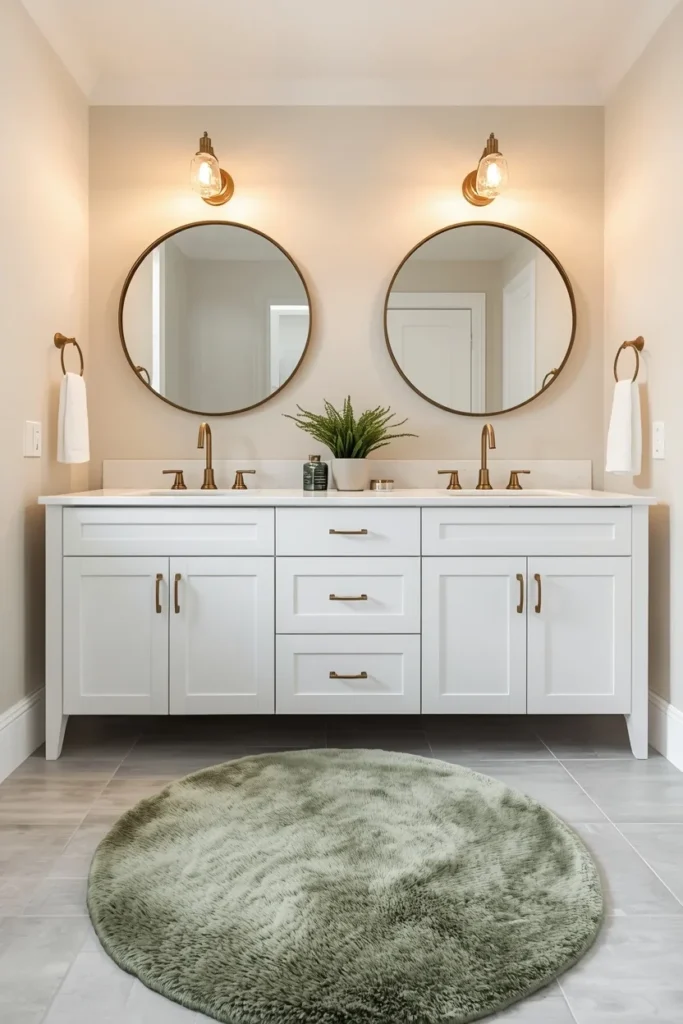
A plush round rug — about 3′ in diameter — sits directly in front of the vanity in a medium-sized bathroom with square floor tiles. The circular shape echoes the round mirrors above the sink, tying the design together with a subtle visual rhyme.
It’s one of those small details that makes guests say, “This bathroom is so cute.”
Expert Tip: A round rug works best in bathrooms where the floor tiles are square or rectangular. The curved shape creates contrast and visual interest. If your tiles are already hexagonal or have a curved pattern, go with a rectangle instead — too many curves and the floor will feel busy.
Why it works: Round rugs soften the geometry of a bathroom, especially one with hard angles and straight lines everywhere. They also feel cozy in a way that rectangles sometimes don’t. In front of the vanity is the perfect placement — it’s where you stand the longest, so a plush round option feels like a little luxury every single morning. Sizes around 2’6″ to 3′ hit the sweet spot for most standard vanities.
But here’s the important part…
Most people stop at one rug per bathroom. But layering? That’s where the real magic happens — especially in larger bathrooms. Keep reading, because I’m getting to that.
4. The Layered Look for Large Master Baths
What you’re looking at
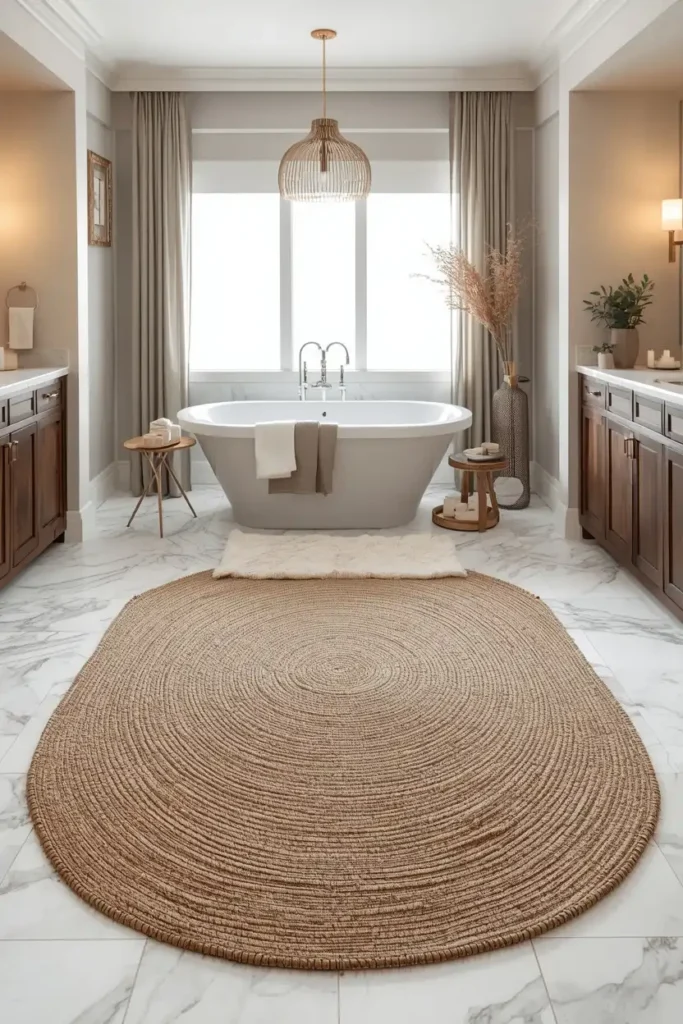
In a spacious master bathroom, a large jute or sisal base rug (maybe 5′ x 8′) covers most of the open floor area, with a smaller, softer accent rug layered on top near the tub. The base rug grounds the room; the accent rug adds softness and color. Together they make the space feel curated, not empty.
Expert Tip: When layering, keep the top rug at least 12–18 inches smaller on all sides than the base rug. This creates a natural visual frame. Use a rug pad between the two to keep the top one from shifting. Texture contrast is key — pair something natural and flat (like jute or sisal) with something plush and soft on top.
Why it works: Large bathrooms can feel cold and echo-y without enough soft surfaces. Layering two rugs solves both problems at once. It adds warmth, absorbs sound, and immediately makes the space feel designed rather than just furnished. The layered look is a staple of spa-style and boutique hotel bathrooms — and it’s incredibly achievable at home. Bonus: it lets you swap just the top rug for a new look without replacing the whole setup.
5. Two Matching Bath Mats for Double Vanities
What you’re looking at
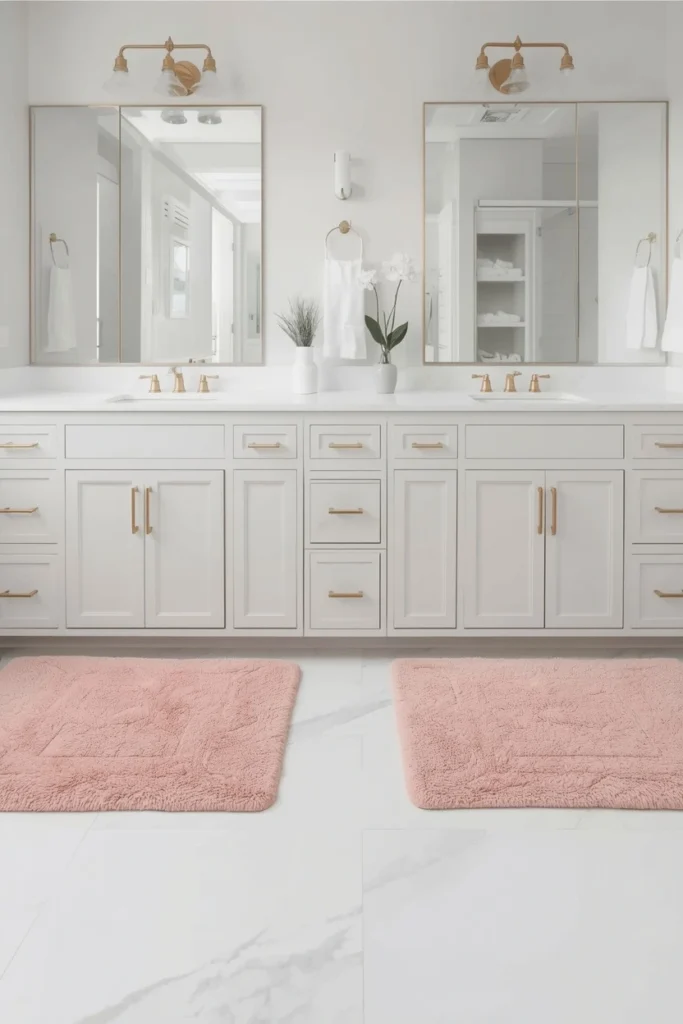
Side-by-side matching bath mats — each about 20″ x 30″ — placed in front of each sink in a double vanity bathroom. They’re in the same pattern but slightly different tones (think light and slightly darker blush pink), giving the space symmetry with just a touch of variation.
Expert Tip: Keep the mats at least 2–3 inches from the vanity base so they don’t get stuck under the cabinet doors. And make sure both mats have the same pile height so the floor doesn’t look visually uneven when you step back.
Why it works: Double vanities are a staple of master bathrooms, but when there’s just one big rug in front, it often looks like it belongs to only one person. Two coordinating mats solve this — they acknowledge the symmetry of the fixture, define each person’s space, and look intentional. This idea works especially well in his-and-hers bathrooms or any space where two people share the vanity regularly.
Most people don’t know this…
The material of your bathroom rug matters just as much as the size. Cotton washes the easiest but loses its shape over time. Chenille is incredibly soft but takes forever to dry. Memory foam is heavenly underfoot but can harbor moisture. Keep reading — the buying guide coming up covers exactly what to look for.
6. The Oversized Square Rug for a Powder Room
What you’re looking at
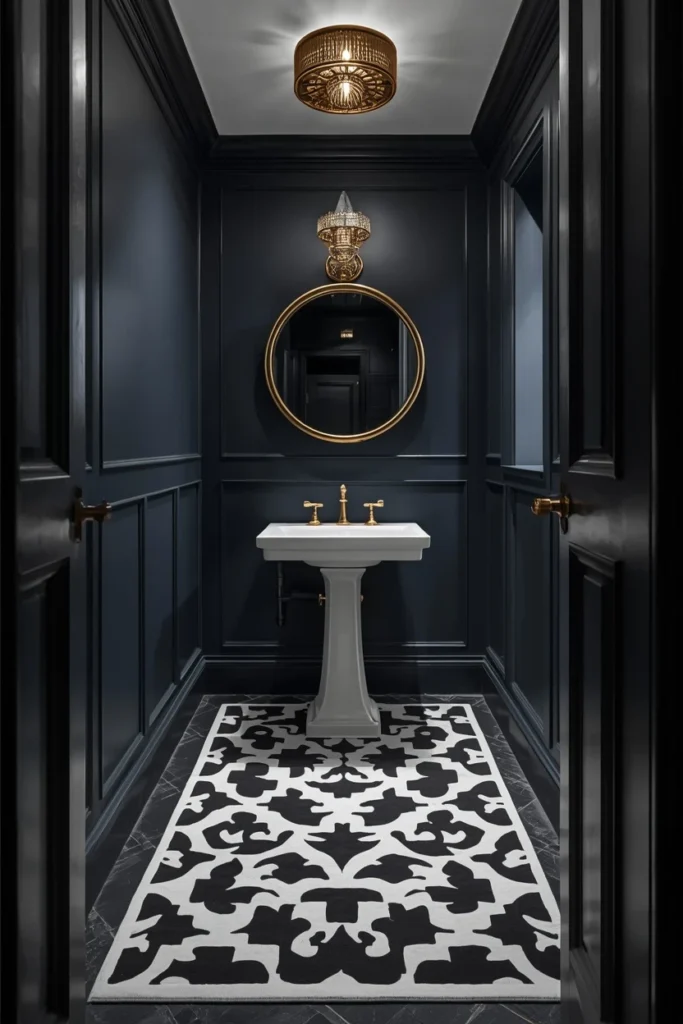
A bold, oversized square rug — think 3′ x 3′ or even 4′ x 4′ — in a graphic black-and-white pattern sits centered in a small powder room. The strong pattern is the focal point of the whole tiny space.
It’s a little unexpected. That’s exactly why it works.
Expert Tip: Powder rooms are the one place where you can go bold with a rug because there’s no tub or shower to compete with. Since the floor doesn’t get wet (usually), you can use materials that are more about style than moisture absorption — like a flat-weave cotton or even a vintage-inspired kilim.
Why it works: Small powder rooms are often neglected in terms of décor because people assume they need to keep them minimal. But a square rug with personality turns a powder room into a design moment. Guests always notice it. The square shape works because powder rooms tend to be more proportionally balanced than full bathrooms — not long and narrow, just compact. It fills the space without overwhelming it.
7. The Contour Mat Around the Toilet
What you’re looking at
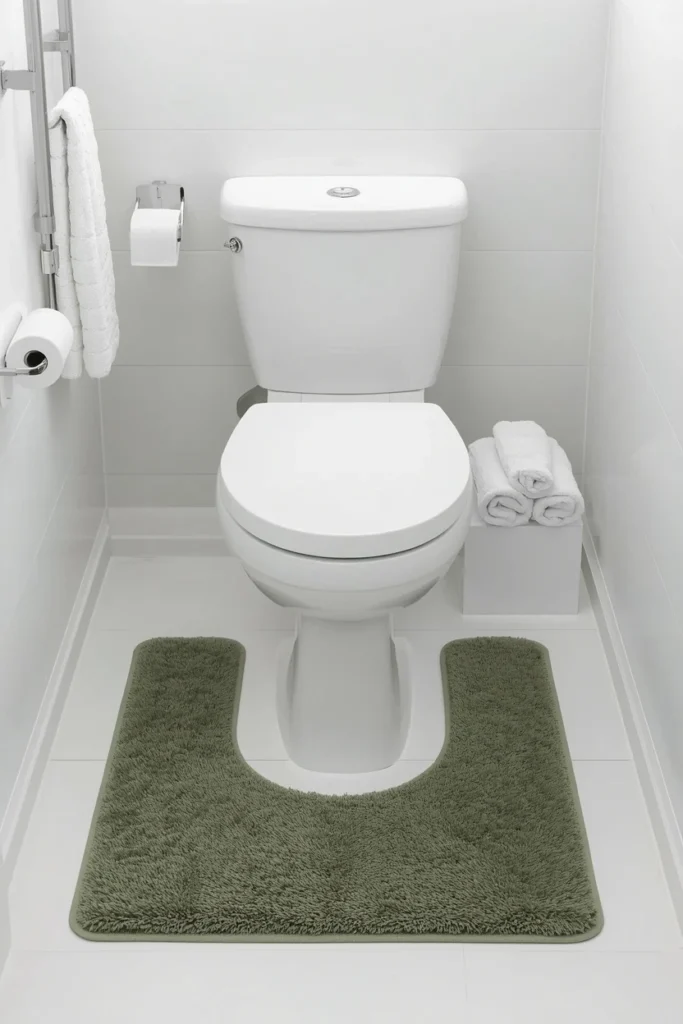
A contour rug — shaped like a U or kidney bean — wraps snugly around the base of the toilet in a small bathroom where floor space is limited. It’s in a soft sage green that matches the towels on the rack.
Yes, contour mats are having a moment again — and the updated versions look nothing like your grandmother’s shaggy set.
Expert Tip: Modern contour mats come in low-pile, memory foam, and even microfiber options that look sophisticated and minimalist. Pair one with a simple rectangle mat in front of the vanity to complete the set. Match the tones but you don’t need to match the material exactly — a little texture variation actually looks more intentional.
Why it works: When your bathroom is truly tiny — we’re talking under 40 square feet — you can’t fit a full-size rug anywhere without blocking a door or creating a trip hazard. A contour mat solves this by using the one awkward space around the toilet that would otherwise be bare tile. It adds comfort, warmth, and a pop of color right where you need it most.
The Bathroom Rug Buying Guide: What You Actually Need to Know
Let’s pause on the pretty ideas for a second and talk practical, because a rug you love on Day 1 but hate by Month 3 is a waste of money.
Material Breakdown
Cotton is the most popular material for bathroom rugs, and for good reason — it’s absorbent, machine washable, and comes in every color imaginable. The downside? Cotton rugs lose their plush texture faster than other materials, especially with frequent washing.
Microfiber is where it’s at if you want softness that lasts. It dries quickly, resists mildew, and holds its shape wash after wash. If you’re buying just one rug, make it microfiber.
Memory foam rugs feel incredible — like standing on a cloud — but they take longer to dry and can develop a mildewy smell if the bathroom doesn’t have great ventilation. Best for well-ventilated bathrooms only.
Jute and natural fibers are beautiful but not great for high-moisture areas. Use them as a base layer rug in larger bathrooms where they won’t get directly wet.
Size Guidelines by Bathroom Type
Small bathroom (under 50 sq ft): Stick to a single 20″ x 30″ mat or a small contour set. Don’t try to go bigger — it’ll overwhelm the space.
Medium bathroom (50–80 sq ft): A 24″ x 36″ or 27″ x 45″ rectangle in front of the vanity is your sweet spot. Add a small contour mat if you want.
Large bathroom (80+ sq ft): Go for a 30″ x 50″ or larger, or layer rugs as mentioned in idea #4. You have the space — use it.
Budget Breakdown
Budget under $30: Target and Amazon have great microfiber options that punch above their weight class. Look for brands like Gorilla Grip or Genteele.
Mid-range $30–$80: This is where you get the best combination of quality and design. Brands like Anthropologie, Urban Outfitters, and World Market have beautiful options in this range.
Investment $80+: Wool rugs, hand-tufted designs, and high-end bath sets from brands like Parachute or Coyuchi fall here. They last years and look better over time.
Pros and Cons at a Glance
Runner rugs: Long-lasting visual impact, works in narrow spaces — but harder to find non-slip options and can feel formal.
Round rugs: Adds softness and interest — but harder to place correctly and can look small if undersized.
Contour mats: Practical for tiny spaces — but can look dated if you choose the wrong style.
Layered rugs: High-design impact — but requires more maintenance and investment.
Oversized mats: Bold and modern — but only works in the right room proportions.
8. The Striped Runner for a Long Narrow Bathroom
What you’re looking at
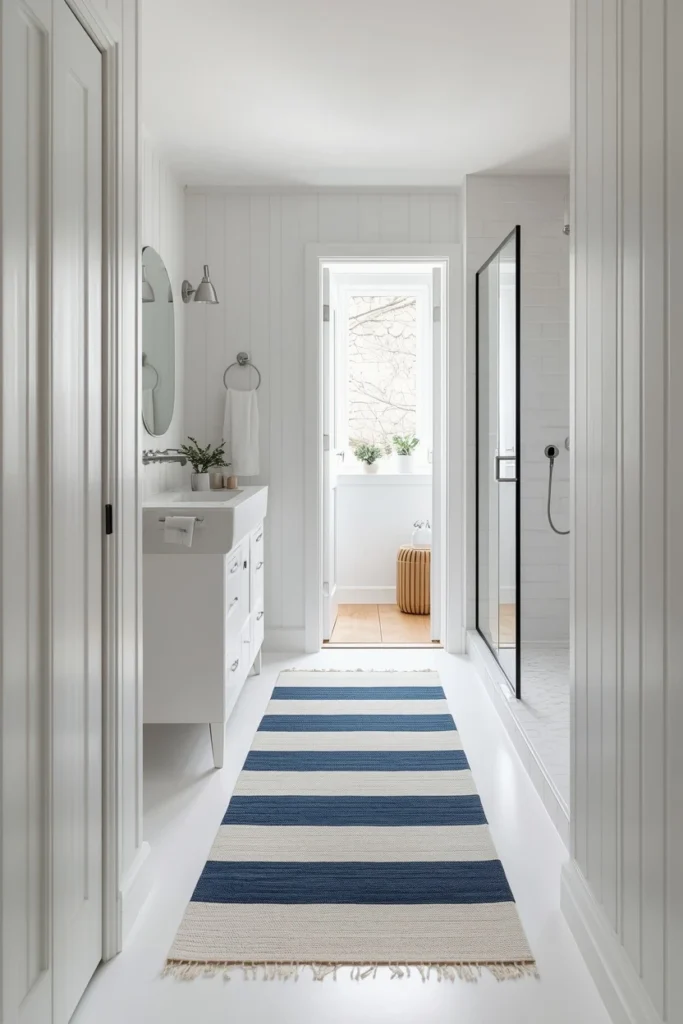
A bold horizontal-striped runner in navy and cream stretches the length of a long, narrow bathroom. The stripes run parallel to the short walls — which is actually the counterintuitive choice that makes all the difference.
Expert Tip: Horizontal stripes in a narrow bathroom make the space feel wider, not longer. It’s the same trick fashion stylists use — stripes running across the narrow dimension of the body (or the room) visually “widen” it. Don’t go vertical — that’ll just emphasize how long and tube-like the bathroom is.
Why it works: Stripes are pattern and function rolled into one. They add visual interest without requiring you to introduce additional colors or accessories. A two-tone striped runner (especially in classic navy/white or black/cream) is timeless — it’ll look just as good in five years as it does today. Plus, the pattern is forgiving on a surface that sees daily wet feet.
Now, avoid this mistake…
The most common bathroom rug mistake? Buying a rug that’s the same size as the doormat. A 17″ x 24″ rug is not a bathroom rug — it’s a doormat that ended up in the wrong room. Size up, always. Even a small bathroom deserves at least a 20″ x 30″ mat.
9. The Boho-Layered Tasseled Rug for a Wide Bathroom
What you’re looking at
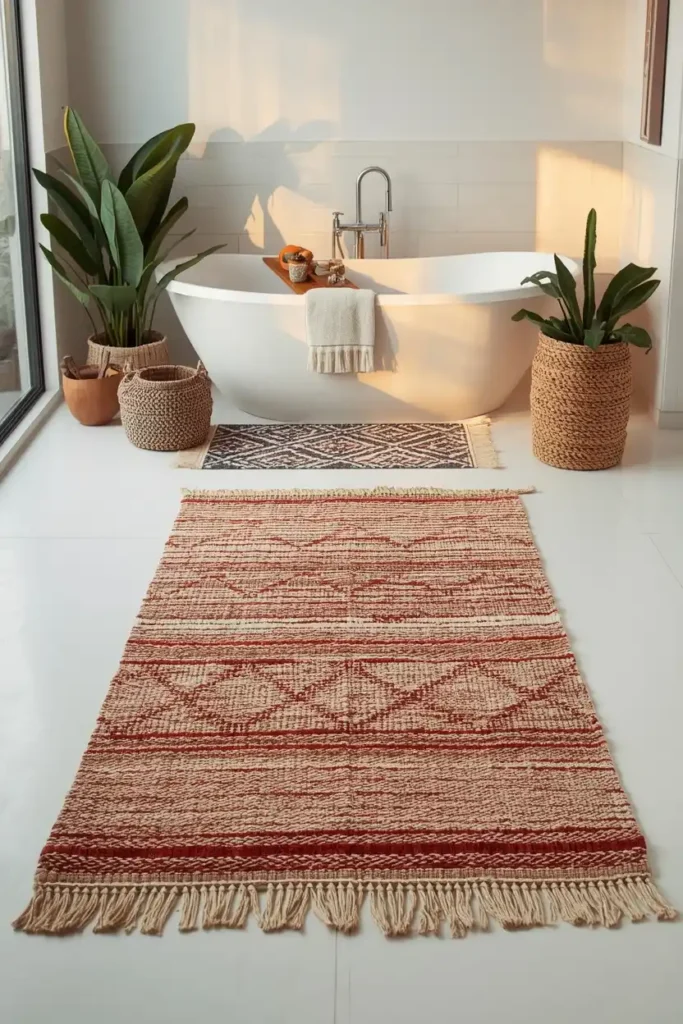
In a wide master bathroom with matte white tiles, a large woven cotton rug with tasseled edges in warm terracotta, cream, and rust sits in the center of the floor. Over it, a smaller Moroccan-style accent mat in black and white adds a graphic punch. Plants in the corner and a wooden bath tray complete the spa-at-home look.
Expert Tip: Tasseled or fringed rugs look especially beautiful in wider bathrooms where you can see the full rug without anything being hidden under a vanity or toilet. Just make sure the fringe is cotton or wool — synthetic fringe tends to mat and tangle in the wash.
Why it works: Wide bathrooms have the luxury of space, but they can sometimes feel cold or sterile without enough softness to balance out all that tile. A large boho-style rug acts like an area rug would in a living room — it defines the space, adds warmth, and gives the eye something beautiful to land on. This look leans into the spa aesthetic without requiring a full renovation.
Do you prefer a boho bathroom vibe or do you love something more clean and minimal? Tell me in the comments — I’m always curious!
10. The Matching Set for a Pulled-Together Look
What you’re looking at
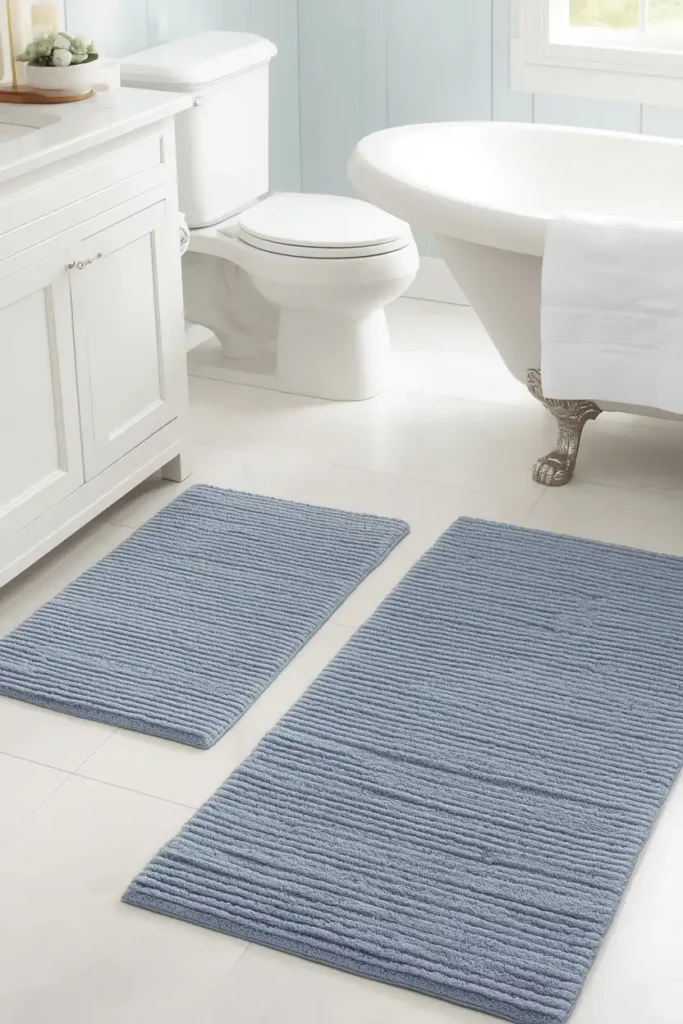
A coordinated three-piece bathroom rug set — one large rectangle in front of the vanity, one small contour mat around the toilet, and one long runner by the tub — all in the same color with subtle tonal variation in texture. The result is a bathroom that looks like it was designed in one intentional sweep.
Expert Tip: When shopping for a matching set, look for sets where the pieces are made of the same material but in different textures — a plush rectangle, a looped contour, and a flat runner, for example. The material match is what ties them together; the texture variation is what keeps it from looking flat and mass-produced.
Why it works: Matching sets get a bad rap for looking too basic, but that’s only true when all three pieces have zero visual interest. Choose a set in a sophisticated color (think dusty blue, warm stone, or deep forest green) with a subtle texture or ribbed pattern and they instantly look elevated. This is also the most practical option — you wash them together, they wear evenly, and replacing one piece is easy since they’re sold as a set.
Here’s where it gets interesting — a matching set is also the best starting point for someone who’s never really “done” bathroom design before. It removes all the guesswork and gives you an instant pulled-together look with zero styling effort.
If you had to choose just one of these 10 bathroom rug ideas for your space right now, which would it be? Share it in the comments — I’d love to know!
Quick Size Cheat Sheet
Before you hit “add to cart,” bookmark this:
- 20″ x 30″: Standard bath mat, works in front of most vanities
- 24″ x 36″: Slightly larger, better for taller or wider vanities
- 27″ x 45″: Runner-lite, great for double vanities in smaller spaces
- 2′ x 4′ or 2′ x 5′: True runner, ideal for narrow bathrooms
- 3′ round: Perfect in front of a single vanity in a medium bath
- 5′ x 8′ or larger: Only in master baths or layered setups
Final Thoughts: The Right Rug Changes Everything
You don’t need a renovation. You don’t need new tile or a new vanity. Sometimes the thing your bathroom is missing is something as simple — and as powerful — as the right rug.
A well-chosen bathroom rug softens hard floors, adds color and warmth, protects your tile, and makes every single morning a little more comfortable. It’s one of the highest-impact, lowest-cost upgrades you can make in your home.
Start with your bathroom size. Then pick the shape. Then fall in love with the color. In that order — and you won’t go wrong.
If you found this guide helpful, you’ll love what else we’ve got on the site. Check out our Small Bathroom Ideas for even more ways to make your space feel bigger, brighter, and more beautiful. And if you’re doing a full refresh, our Bathroom Interior Ideas guide has some stunning looks you won’t want to miss.
Happy decorating your bathroom deserves this.