10 Bathroom Tub Ideas Perfect for Anyone Wanting a Peaceful Bath Space Without Extra Work
This article was created in line with Trends Oraa’s research and content standards.
You’re exhausted. You just want five minutes of quiet — and your bathroom isn’t giving that to you.
If your bathtub feels like an afterthought instead of a sanctuary, you are not alone. Millions of people scroll through Pinterest dreaming of a soak-worthy space, but they have no idea where to even start. The good news? You don’t need a full renovation budget or a design degree to pull this off.
In this post, I’m sharing 10 bathroom tub ideas that are stunning, low-maintenance, and completely achievable — whether you’re renting, renovating, or just refreshing. And before you dive in, you might also love our guide on apartment bathroom decor ideas — it’s packed with easy wins for smaller spaces.
Keep scrolling. The idea at number 7 genuinely surprised me, and it might change how you think about your whole bathroom.
1. The Freestanding Oval Soaker Tub: Classic Calm in Every Bathroom
Picture a smooth white oval tub sitting in the center of a light-filled bathroom, surrounded by nothing but clean walls and a single candle on the edge. No clutter. No fuss. Just a piece that makes the whole room feel intentional.
Freestanding soaker tubs are the gold standard of bathroom tub ideas right now, and for good reason. They create an instant focal point without requiring any built-in construction. You simply set them on the floor, connect the plumbing, and that’s it.
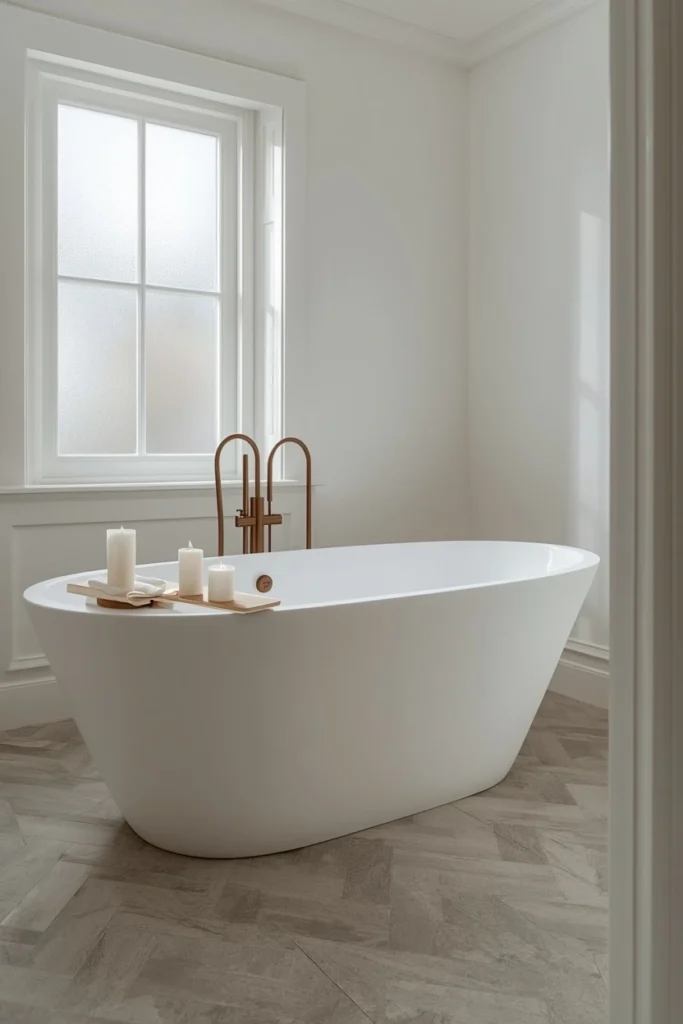
Why it works: The oval shape feels organic and soft, which immediately communicates relaxation. Unlike rectangular alcove tubs, a freestanding piece draws the eye from every angle, making your bathroom look larger and more curated than it actually is.
Expert Tip: Choose a matte white or cream finish over glossy. Matte hides water spots better, which means less cleaning time after every bath. Position the tub near a window if possible — natural light bouncing off a freestanding tub is genuinely one of the most beautiful things in home design.
- Works in medium to large bathrooms
- Easy to pair with any tile or flooring style
- Requires floor-mounted or wall-mounted faucet (plan this early)
- Most models come in acrylic or stone resin — stone resin retains heat longer
2. The Deep Japanese Soaking Tub: Small Footprint, Maximum Relaxation
Here’s where it gets interesting — this one breaks every rule you thought you knew about bathroom space.
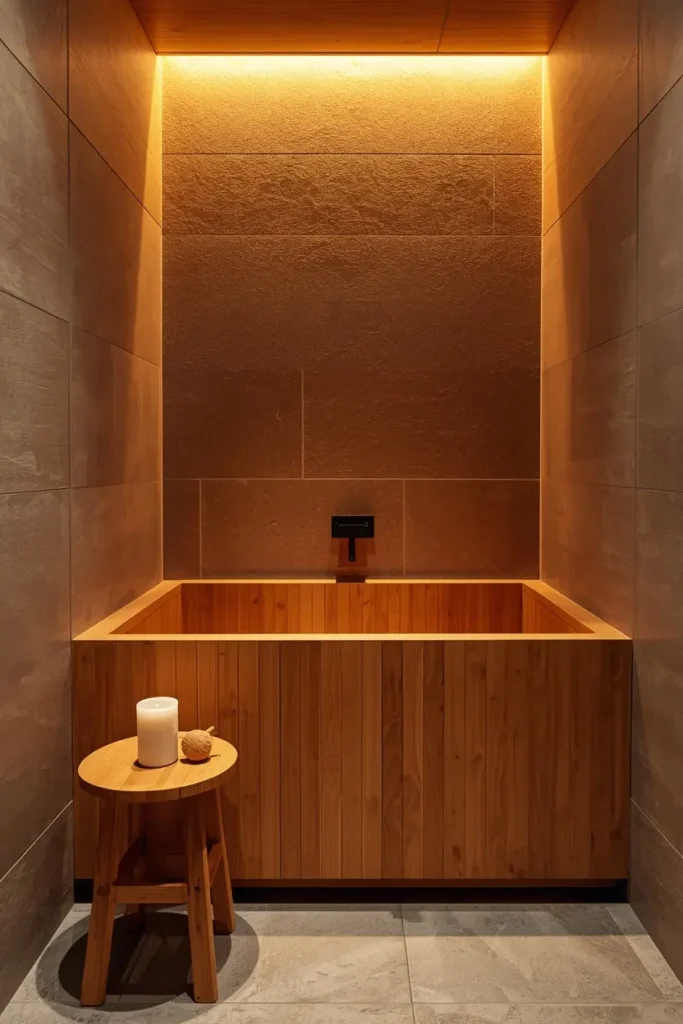
Japanese soaking tubs, also called ofuro tubs, are shorter in length but dramatically deeper than a standard Western tub. You sit upright with the water up to your shoulders, fully submerged and completely cocooned.
Why it works: The depth-over-length ratio means you get the full spa experience without needing a large bathroom. A standard alcove space works perfectly. The experience of being fully submerged — not just lying in a few inches of water — activates a completely different level of relaxation. It’s physiologically different.
Expert Tip: Install a small teak or bamboo stool on the side — it serves as both a step and a surface for candles, bath salts, or a book. The natural wood element against the deep tub creates that Japanese bathhouse aesthetic you’re chasing without a single renovation.
- Ideal for smaller bathrooms
- Heats water faster due to compact volume
- Great for apartments with limited square footage
- Available in wood, stone resin, and acrylic finishes
Which soaking style fits you better — the wide oval or the deep Japanese tub? Drop your answer in the comments below!
3. The Built-In Alcove Tub with Surround Tile: The Workhorse Done Beautifully
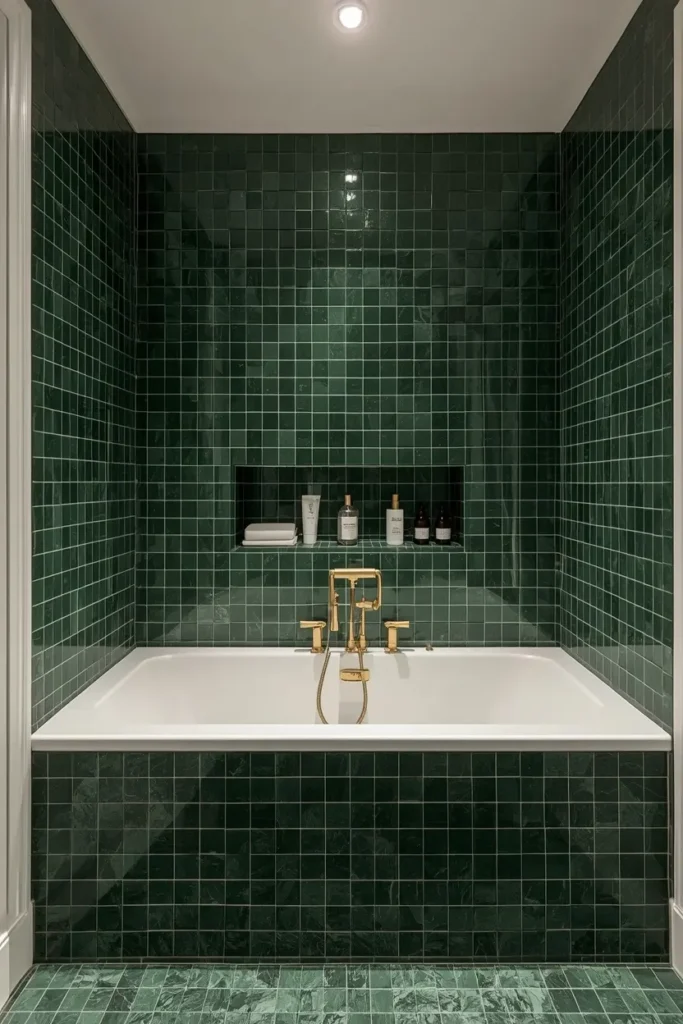
Most people don’t know this — the boring alcove tub you already have can become something magazine-worthy with just one design decision: the tile surround.
Built-in alcove tubs are the most common bathroom tub idea in American homes, and they get a bad reputation for looking generic. But when you change the surround tile to something intentional — a deep green zellige, a handmade white subway tile with irregular edges, or a warm terracotta — the tub stops looking like a builder-grade fixture and starts looking like a design choice.
Why it works: The alcove surround tile is the largest visual surface in the tub area. When it’s beautiful, the whole tub reads as beautiful. You’re not changing the tub at all — you’re changing its context.
Expert Tip: Run the tile all the way to the ceiling on the back wall of the alcove. Full-height tiling feels luxurious, makes the ceiling appear higher, and is much easier to clean than a partial tile wall with a painted section above it. Use large-format tiles (12×24 or bigger) to minimize grout lines and reduce scrubbing time.
- Most budget-friendly of all bathroom tub ideas
- No plumbing changes required for a refresh
- Tile work can often be a DIY project
- Pairs beautifully with a rainfall showerhead installed overhead
4. The Clawfoot Tub: Vintage Drama Without the Vintage Maintenance
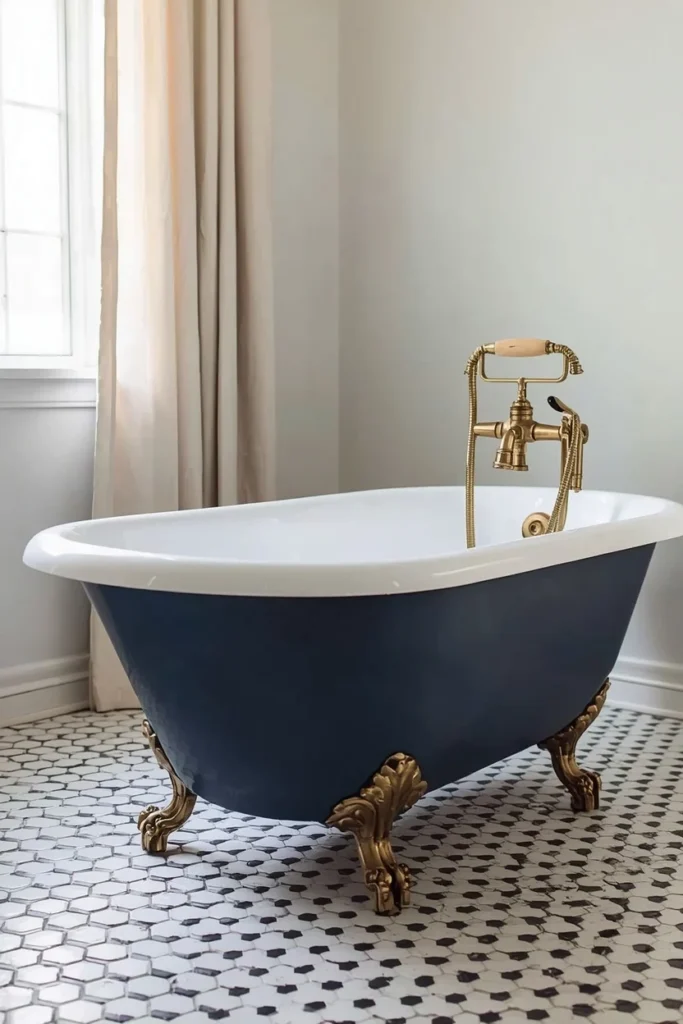
But here’s the important part about clawfoot tubs that most design blogs skip right over.
Modern clawfoot tubs look like antiques, but they are manufactured with 21st-century materials. You get all the visual drama of Victorian-era design with an acrylic or cast iron tub that’s far easier to maintain than the originals.
The classic silhouette — four ornate feet, a rolled rim, an exposed exterior — creates a sense of history and character that no other bathroom tub idea can replicate. Even in a completely modern bathroom, a clawfoot tub acts as an anchor piece that gives the room a soul.
Why it works: Contrast is one of the most powerful tools in interior design. A vintage-style clawfoot tub in a clean, minimal white bathroom creates a striking tension that feels both collected and intentional. The feet lift the tub off the floor, which also makes the room feel more open because you can see the floor beneath it.
Expert Tip: Paint the exterior of a white clawfoot tub a moody color — navy, forest green, matte black, or even a dusty terracotta. The interior stays white. This two-tone effect makes the tub look custom and gives the bathroom a personality that’s hard to achieve any other way.
- Available in cast iron (heavy, excellent heat retention) or acrylic (lighter, easier to install)
- Requires a freestanding faucet or wall-mounted supply
- Ideal for farmhouse, vintage, maximalist, and eclectic styles
- Absolutely stunning paired with penny tile or black and white hex floors
5. The Wet Room Tub: The Open, Spa-Like Layout That Changes Everything
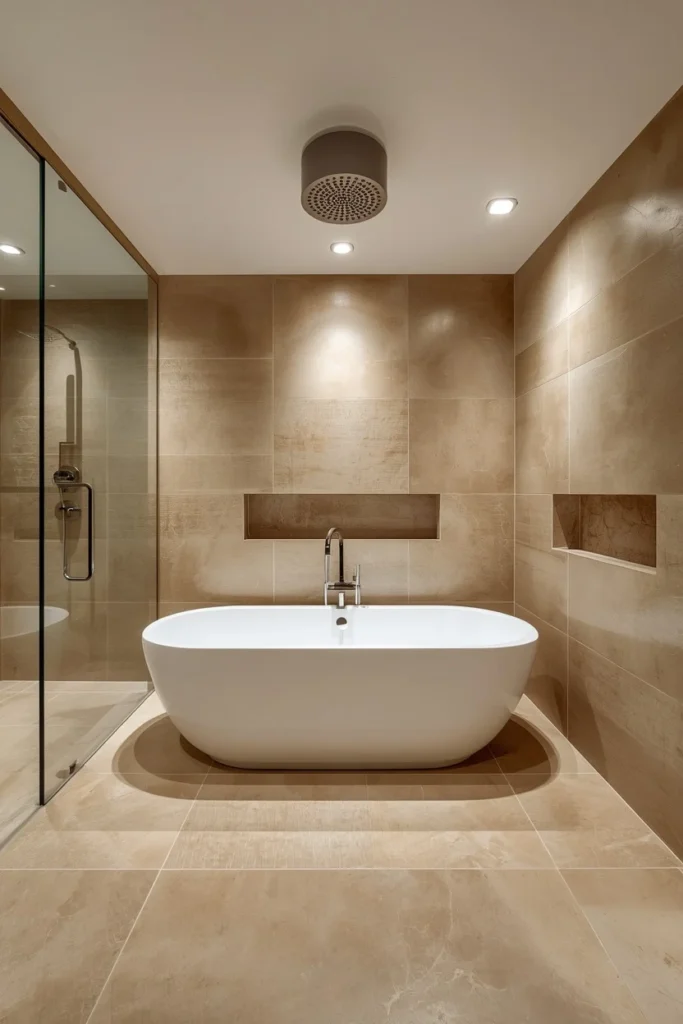
Now, avoid this mistake — assuming a wet room requires a complete bathroom gut.
A wet room is a waterproofed, fully tiled bathroom where the tub and shower exist in the same open space without barriers or shower curtains. It sounds like a major renovation, but in many cases it’s an achievable upgrade, especially in bathrooms that already have a decent footprint.
Why it works: Wet rooms eliminate visual clutter instantly. There’s no shower door frame, no curtain rod, no bath mat pile-up. The bathroom becomes a cohesive, breathing space rather than a collection of separate zones crammed together. It’s the layout choice that most dramatically increases the perceived square footage of any bathroom.
Expert Tip: Use a single large-format tile throughout the entire wet room — floor, walls, and tub surround. When the same material runs continuously without interruption, the room reads as one unified surface. This is the trick designers use to make a 60-square-foot bathroom look twice as large.
- Requires professional waterproofing (not DIY-friendly)
- Best suited for medium to large bathrooms
- Dramatically increases home resale value
- Low daily maintenance — the whole room is designed to get wet
Buying Guide: How to Choose the Right Tub for Your Space and Budget
Before you fall in love with a specific bathroom tub idea, let’s talk practicalities. Choosing the wrong tub is an expensive mistake, and it happens more often than you’d think.
Start with your floor plan. Measure your bathroom before you look at anything else. A freestanding tub needs at least 6 inches of clearance on all accessible sides. A deep Japanese soaking tub needs less floor space but may require reinforced flooring due to the weight of the water. Write down your exact dimensions before you browse.
Understand the weight. Cast iron tubs can weigh 300–500 pounds when empty. Add water (about 8.3 pounds per gallon) and a person, and you’re looking at a serious structural load. Most standard bathroom floors handle this fine, but if you’re on an upper level of an older home, get a structural assessment first. Acrylic and fiberglass tubs weigh far less and are generally safe for any floor.
Budget breakdown — what to realistically expect:
- Acrylic alcove tub: $300–$800 (material only)
- Acrylic freestanding soaker: $700–$2,000
- Acrylic clawfoot tub: $800–$2,500
- Cast iron clawfoot tub: $1,500–$4,000+
- Stone resin freestanding tub: $2,000–$6,000+
- Japanese wooden soaking tub (hinoki): $3,000–$8,000+
Installation costs range from $500–$2,000 depending on your plumber and whether you need new supply lines. If you’re swapping a like-for-like tub, it’s usually on the lower end.
Don’t forget the faucet. Freestanding and clawfoot tubs require a floor-mount or wall-mount faucet, which is a separate purchase ranging from $200 to over $1,000. This cost surprises many buyers. Budget for it early.
The material question:
Acrylic is warm to the touch, lightweight, easy to clean, and the most popular choice by far. Cast iron retains heat beautifully but is heavy and cold to sit in initially. Stone resin offers the premium feel of stone without the extreme weight, and it holds heat nearly as well as cast iron. Wood (hinoki or teak) creates an extraordinary sensory experience but requires dedicated maintenance and proper sealing.
If you want low maintenance without sacrificing aesthetics, go acrylic or stone resin. If you want the best long-term heat retention and don’t mind the weight, go cast iron.
6. The Platform Tub: Elevated in Every Sense of the Word
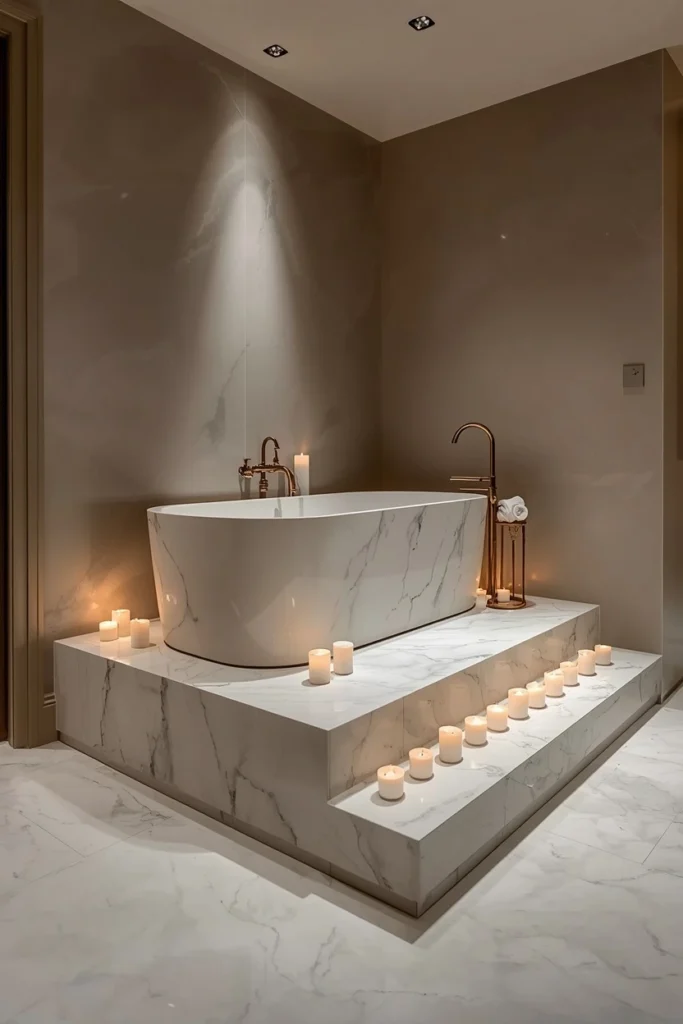
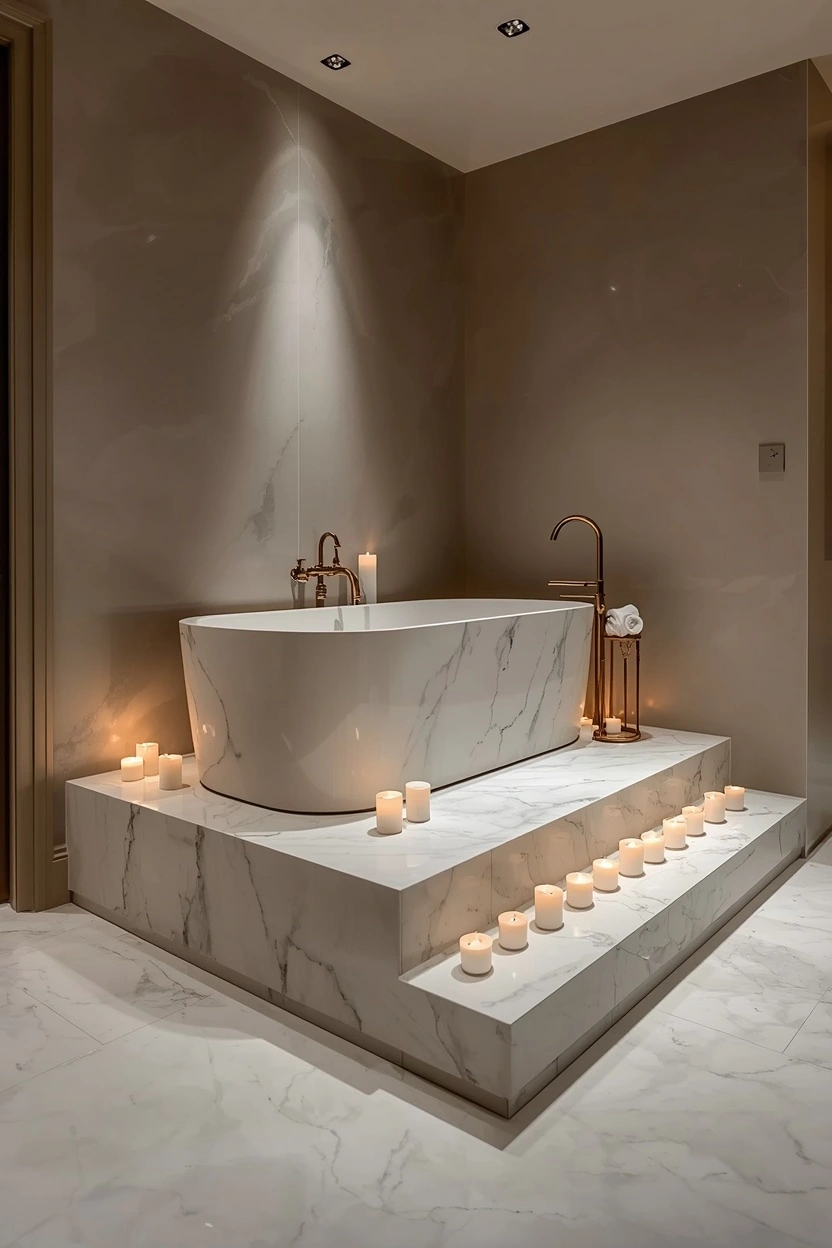
Picture a rectangular tub set into a raised platform, surrounded by marble or quartz decking that doubles as a ledge for your entire bath ritual — candles, wine glass, a small plant, your favorite bath salts lined up in a row.
Platform tubs are the most luxurious-looking bathroom tub idea on this list, and they work particularly well in master bathrooms where you have the space to create a true bathing destination.
Why it works: The platform creates a visual separation between the tub zone and the rest of the bathroom. It’s a design moment. The raised deck also provides functional surface area that a freestanding tub simply doesn’t offer — nowhere to set anything when you’re soaking is a real quality-of-life issue that people underestimate before they renovate.
Expert Tip: Build the platform with a slightly stepped design — one or two shallow steps leading up to the tub. This small architectural detail makes the tub feel like a destination rather than a fixture. Use the same stone on the steps as you use on the deck for a seamless, high-end look.
- Requires construction work (platform is built, not purchased separately)
- Best for master bathroom renovations
- Creates integrated storage opportunities beneath the platform
- The deck surface can be used for built-in lighting, which creates a magical nighttime bath atmosphere
7. The Outdoor-Adjacent Tub: The Window Wall That Brings Nature In
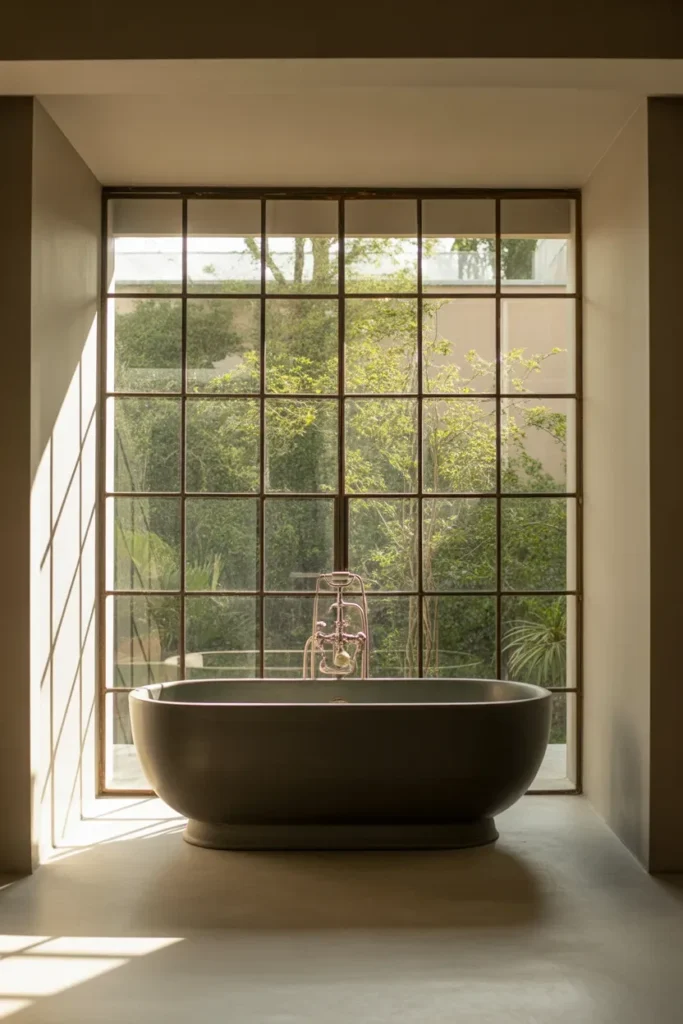
Most people don’t know this trick exists — and it’s the most transformative bathroom tub idea on this list.
You don’t need to put your tub outside. You just need to put it next to a floor-to-ceiling window, a glass wall, or a set of French doors that opens to a private garden or courtyard. The view does all the work.
Bathing while looking at trees, sky, or a private outdoor space activates a completely different level of relaxation than bathing with your eyes closed in a windowless room. It’s the closest thing to an outdoor spa experience that most of us will ever have in our own home.
Why it works: Natural views reduce cortisol levels — that’s not a design opinion, it’s a physiological fact. When your bathtub faces something living and natural, your nervous system responds differently. This setup works just as powerfully with a skylight directly above the tub as it does with a side window. Even a small, privacy-frosted window positioned at eye level while you’re soaking creates the right effect.
Expert Tip: Use a black metal-framed window for the view wall. The frame acts like a picture border, turning the outdoor view into intentional visual art. Pair with a matte black freestanding or clawfoot tub to create a cohesive design language throughout the space.
- Works best in private master bathrooms or bathrooms facing a private yard
- Frosted glass provides privacy while still letting light in
- A skylight above the tub requires no privacy modifications
- Dramatically increases perceived room size and natural light
Would you rather have a view of a garden or a forest from your bathtub? Tell me in the comments — I genuinely want to know.
8. The Minimalist Stone Tub: When the Material IS the Design
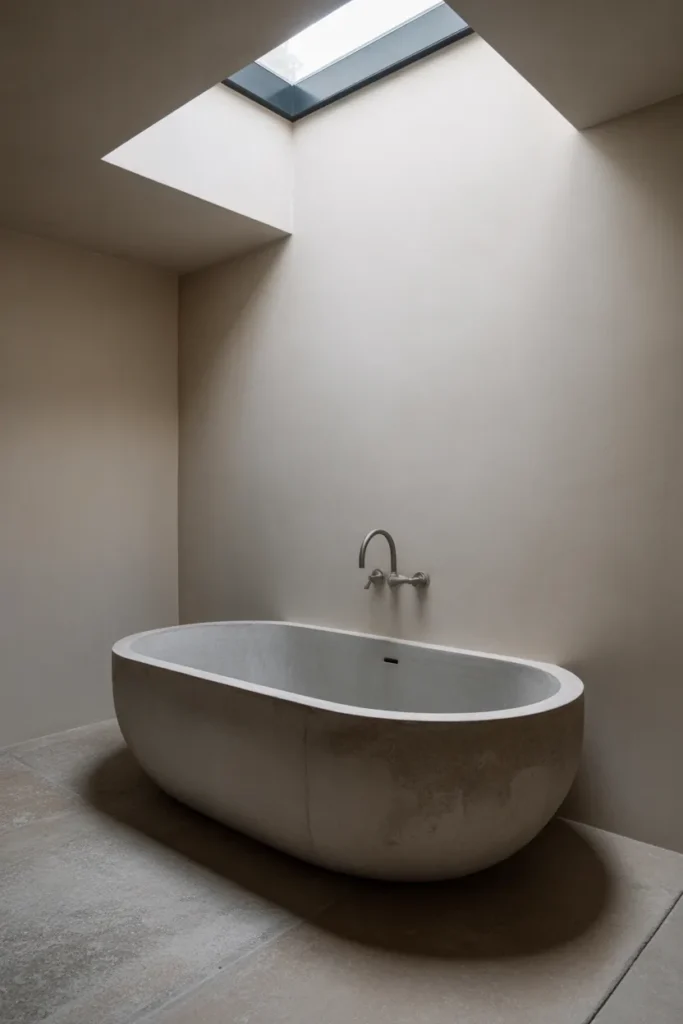
Here’s where it gets interesting — some tubs require zero styling decisions because the material itself is the statement.
Concrete, stone, and terrazzo tubs are monolithic design objects. They don’t need surround tile, carefully curated accessories, or a specific faucet finish to look extraordinary. The material carries the entire visual weight of the bathroom on its own.
Why it works: When you choose a tub with a material that has inherent texture and depth — the veining of natural stone, the aggregate speckle of terrazzo, the raw smoothness of polished concrete — you’re working with something that catches light differently throughout the day. The tub is never the same twice. It’s alive in a way that acrylic or fiberglass never will be.
Expert Tip: If a full stone or concrete tub is beyond budget, look into stone resin tubs, which are manufactured to mimic the weight and warmth of natural stone at a fraction of the cost. Pair any stone-adjacent tub with the absolute minimum of accessories. One large-format stone tile on the floor, bare walls, one architectural faucet. Let the tub breathe.
- Stone and concrete tubs are extremely heavy — structural assessment required
- Stone resin is a practical alternative at lower cost and weight
- Best for minimalist, Japandi, and contemporary design styles
- Easy to clean — no grout lines, no seams, no ledges to scrub
9. The Drop-In Tub with Statement Surround: The Hidden Upgrade
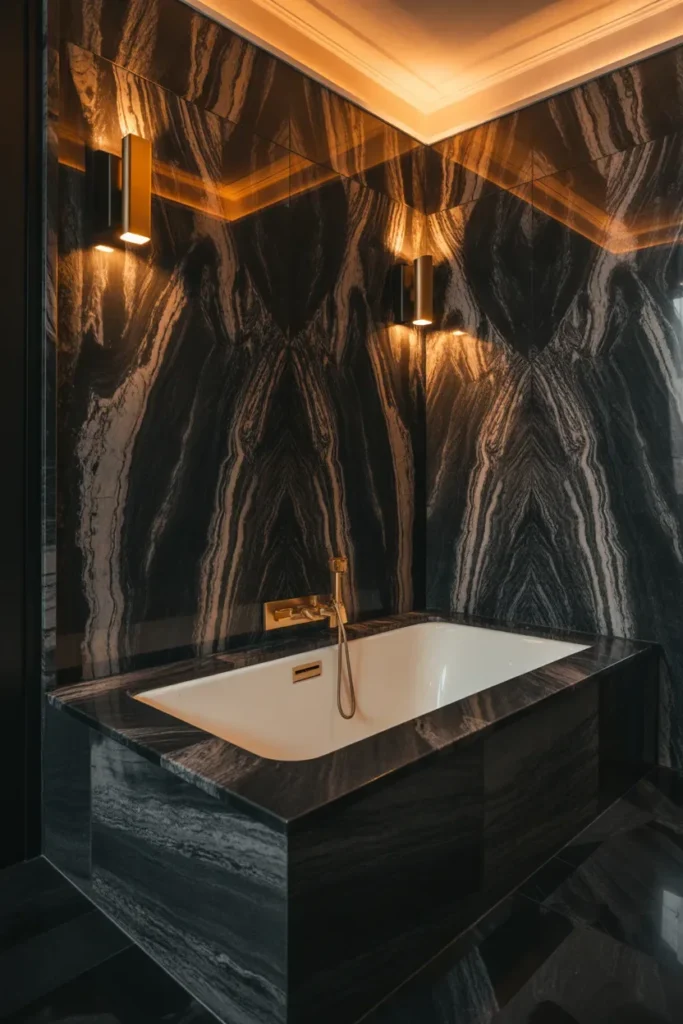
A drop-in tub sits inside a constructed surround, similar to a platform tub but typically at floor level or slightly raised. The tub itself often looks simple — it’s the surround that carries the design.
This bathroom tub idea is the secret weapon of designers who want maximum visual impact with moderate budget. You can buy a mid-range drop-in tub and then use an extraordinary material for the surround — book-matched marble slabs, richly veined quartzite, dramatic black granite — and the result looks like a hundred-thousand-dollar renovation even when it wasn’t.
Why it works: The surround is the largest visible surface. When you invest the design attention there, you change the entire reading of the space. The tub itself becomes a vessel — the surround is the art. This is the same principle as buying an affordable frame for an extraordinary painting.
Expert Tip: Extend the surround material to the walls of the tub alcove, all the way to the ceiling. Full-height matching material creates the most impactful, seamless look. If you’re using a slabbed stone, ask for book-matched slabs — mirrored veining on adjacent panels looks genuinely dramatic and is the signature move of high-end bath design.
- One of the most cost-flexible bathroom tub ideas on this list
- Tub and surround are purchased and budgeted separately
- Excellent choice for bathroom renovations with a defined tile budget
- The surround can also incorporate built-in niches for bath products
10. The Two-Person Soaker Tub: Designed for Rest, Not Romance
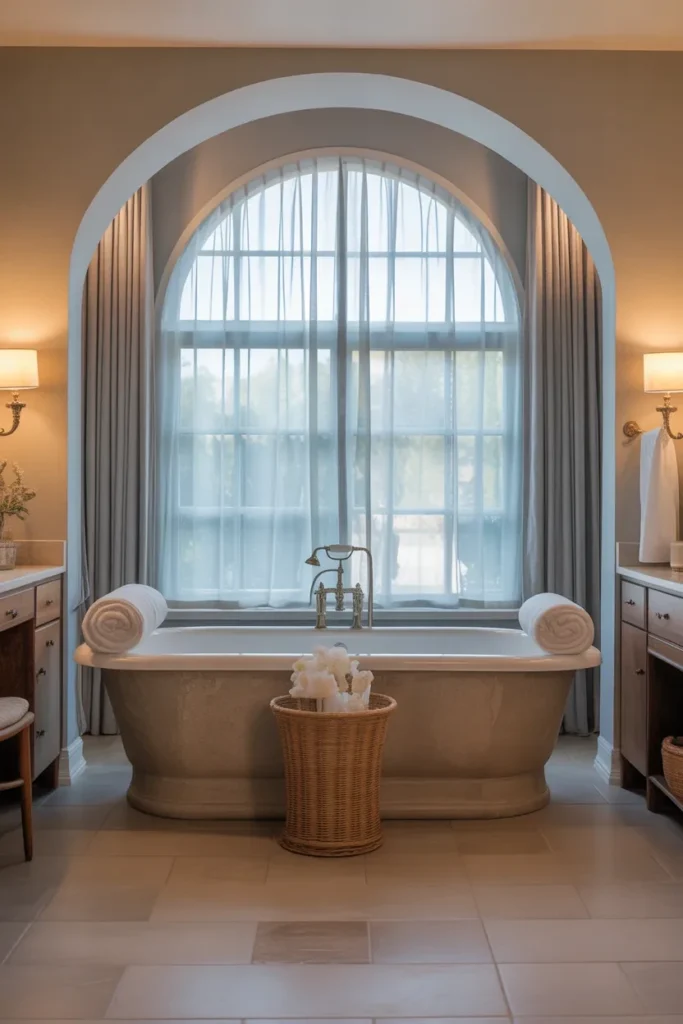
Now, avoid this mistake — dismissing the double tub as a novelty.
Two-person soaking tubs are significantly wider and longer than single tubs, and what most people don’t realize is that the extra space isn’t just for sharing. A double tub gives one person the ability to fully stretch out, submerge both shoulders, and change positions comfortably — things that are genuinely impossible in a standard 5-foot alcove tub.
Why it works: The extra volume of water in a larger tub also stays warm longer, which means a 30-minute bath stays enjoyable all the way through rather than turning cold in the last ten minutes. For anyone who takes bathing seriously as a decompression ritual, the size upgrade alone is worth every penny.
Expert Tip: Position a double tub centered under a large window or a dramatic pendant light. The symmetry of a wide tub under a centered visual anchor looks extraordinarily polished. Add matching bath pillows on each end for a spa-like finishing touch that takes about thirty seconds to arrange.
- Available in freestanding, drop-in, and alcove formats
- Requires larger water heater capacity — account for this in your planning
- The extra width makes a beautiful focal point in any master bathroom
- Look for tubs with integrated armrests and built-in lumbar support for solo use
Out of all 10 ideas on this list, which one would you put in your dream bathroom? Let me know in the comments — the results might surprise you.
Final Thoughts: Your Peaceful Bath Space Is Closer Than You Think
You don’t need to rip out your entire bathroom to create a space that actually makes you feel something when you walk in.
Start with what you have. If you have an alcove tub, change the tile surround. If you’re building from scratch, let the window placement inform where the tub goes. If budget is the constraint, a stone resin freestanding tub and a single beautiful faucet will do more for your bathroom than a dozen smaller upgrades combined.
The common thread across every bathroom tub idea on this list is intentionality. When you make one strong, deliberate choice — and then support it rather than fight it — the bathroom transforms.
You deserve a bath that actually relaxes you. These ideas exist, they’re achievable, and a few of them might cost less than you think.
And while you’re in the mood to refresh your space, check out our spa bathroom ideas for even more ways to turn your bathroom into the retreat you’ve been craving. You’ll also love our small bathroom ideas if you’re working with limited square footage — there are some genuinely clever solutions in there.
Save this post to your Pinterest boards, share it with whoever needs a bath upgrade, and come back whenever you’re ready to start planning. I’ll be here with more ideas.