10 Green Living Room Ideas That Work Even When You Don’t Trust Green
This article was created in line with Trends Oraa’s research and content standards.
Let’s be honest for a second. Green can feel a little risky in a living room. One wrong shade and suddenly your space looks like a juice bar, a jungle-themed waiting room, or somebody’s bold decision from 2009 that never recovered. If you’ve ever liked green living room ideas in theory but hesitated in real life, you are absolutely not alone.
I get it because I used to be suspicious of green too. I liked it in nature, on Pinterest boards, and in other people’s homes. But in my own space? It felt like a commitment. What if it looked too dark, too trendy, or just… off? The good news is that green is way more flexible than it gets credit for. You do not need to paint every wall olive and hope for the best.
The trick is knowing how to use green in a way that feels calm, stylish, and easy to live with. That’s exactly what we’re getting into here. These ideas are for people who want a fresh, grounded, beautiful room without making it feel overly themed or dramatic. So let’s talk through 10 green living room ideas that actually work, even if you still don’t fully trust the color.
Why Green Works Better Than You Think
Before we get into the actual ideas, let’s clear something up. Green is not just one mood. That’s where most people get stuck.
Some greens feel soft and airy. Others feel earthy and rich. Some act almost like a neutral. That means you can use green in a living room without turning it into the main event. Green can support a room instead of dominating it, and that’s a huge reason it works so well.
It also pairs beautifully with the materials most people already love. Think wood, linen, cream, black metal, tan leather, brass, stone, and warm white. See? It’s not random. It’s actually kind of a team player.
1. Start with Sage Green for a Safe First Step
Why sage is the gateway green
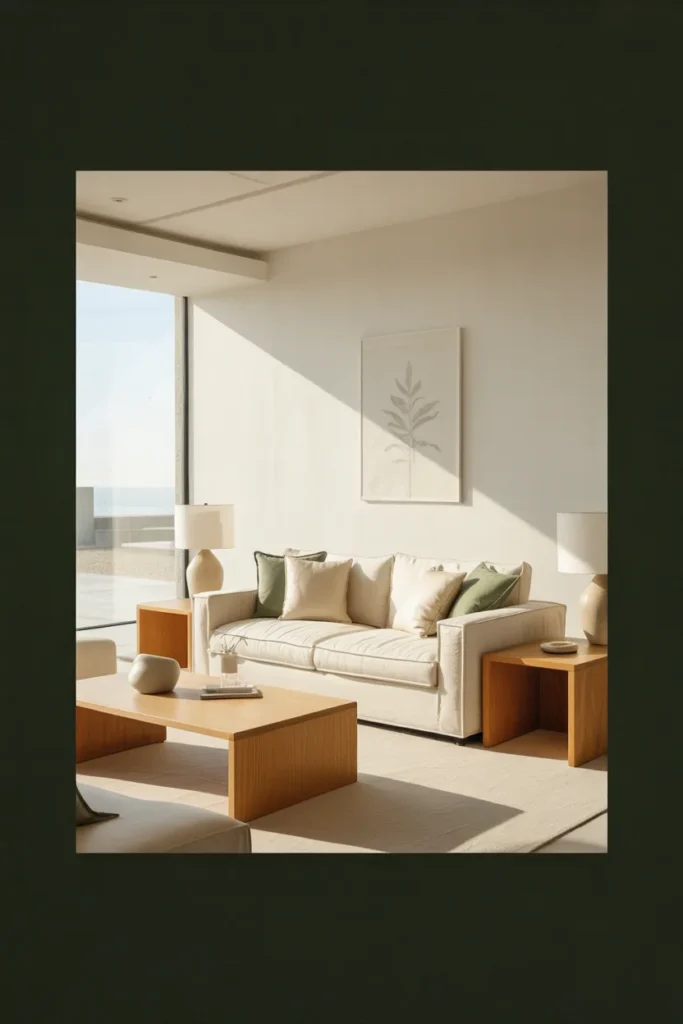
If you do not trust green yet, sage green is probably your best entry point. It has that muted, dusty softness that feels relaxed instead of loud. It reads almost like a neutral, especially in natural light.
Sage also plays nicely with beige, ivory, light wood, and soft gray. So if your current living room already leans warm and minimal, you do not need to reinvent everything. You can just add sage into the mix and let it settle in naturally.
Easy ways to use it
You do not have to commit to a full paint job right away. Try sage in smaller pieces first:
- Throw pillows
- A cozy blanket
- Curtains
- A painted side table
- Artwork with sage accents
This is one of those green living room ideas that feels low-risk but still noticeable. And honestly, that’s ideal when you’re testing the waters.
2. Use Green as an Accent, Not the Main Character
Not ready for green walls or a green sofa? Totally fair. You can still bring in the color without making it the focus of the room.
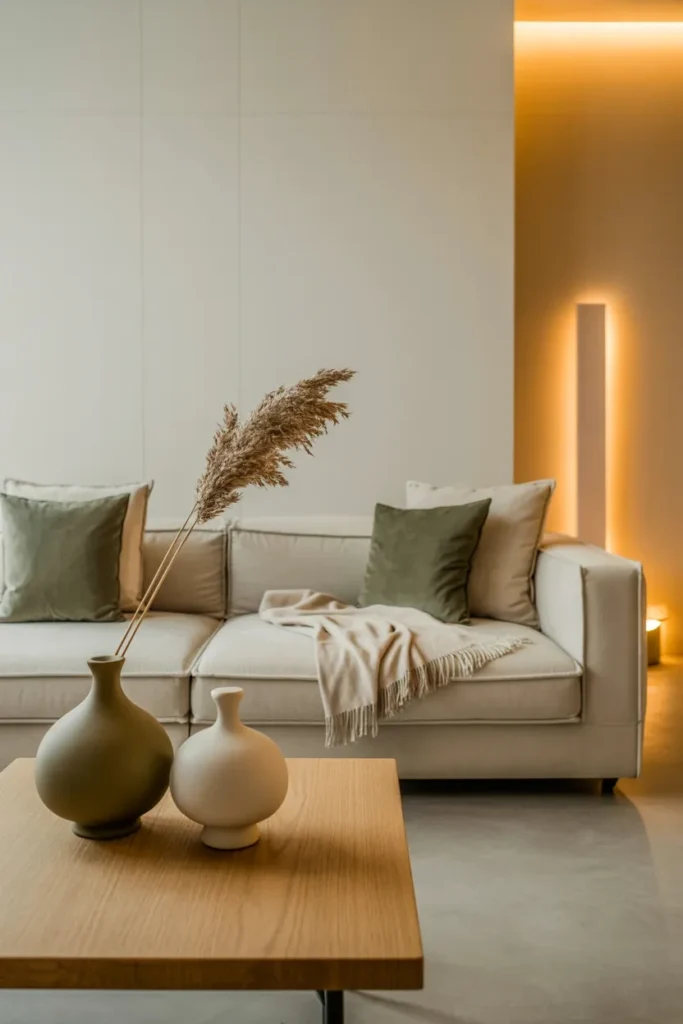
This works especially well if you already have a neutral base. A cream sofa, wood coffee table, and warm rug create a calm background. Then green can show up in just a few places and instantly make the space feel fresher.
Where green accents work best
Think of accent pieces that are easy to swap later if needed. For example:
- Cushions with subtle green patterns
- A ceramic vase in moss or olive
- A lamp base in muted green
- Framed botanical prints
- A single accent chair
The beauty of this approach is that it gives you the vibe of a green living room without a huge design commitment. IMO, this is the smartest move for cautious decorators.
3. Pair Green with Warm Neutrals
A lot of people dislike green because they’ve only seen it styled in cold, flat spaces. That’s the real issue, not the color itself. Green needs good company.
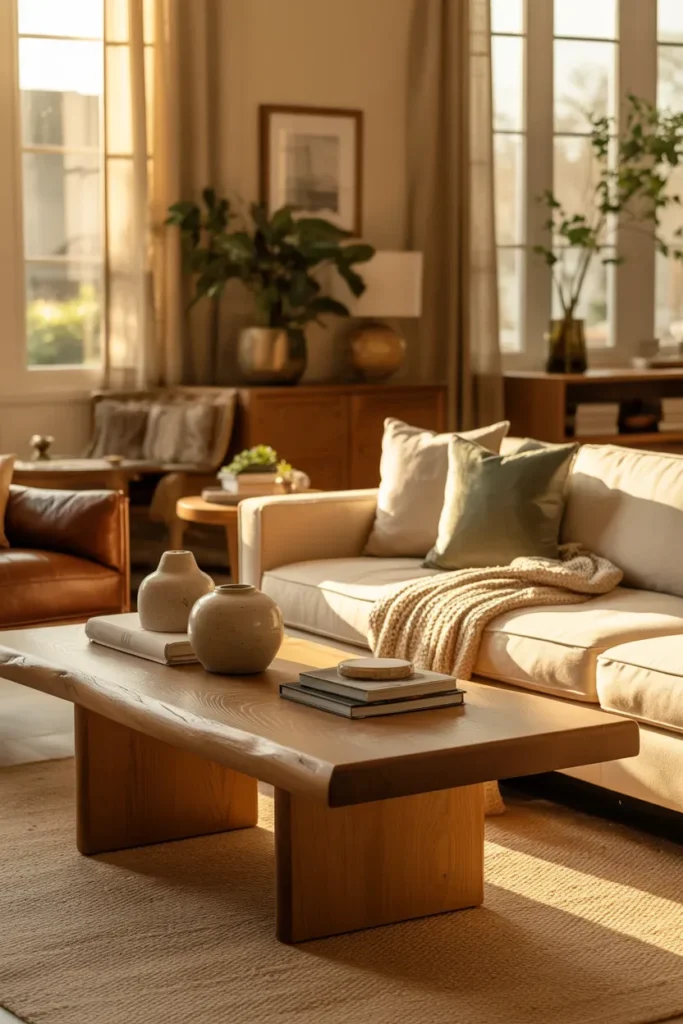
Pairing green with warm neutrals makes it feel balanced and inviting. Think oatmeal, sand, cream, camel, taupe, and natural wood. These tones soften green and make it feel livable.
The combo that rarely fails
If you want a living room palette that feels easy and polished, try this:
- Soft green
- Warm white
- Natural oak
- Beige or camel accents
- A touch of black for contrast
This mix feels timeless rather than trendy. It keeps the room grounded. And if you’re worried green might look too “decorated,” warm neutrals help pull it back.
4. Try Olive Green for a Rich, Grown-Up Look
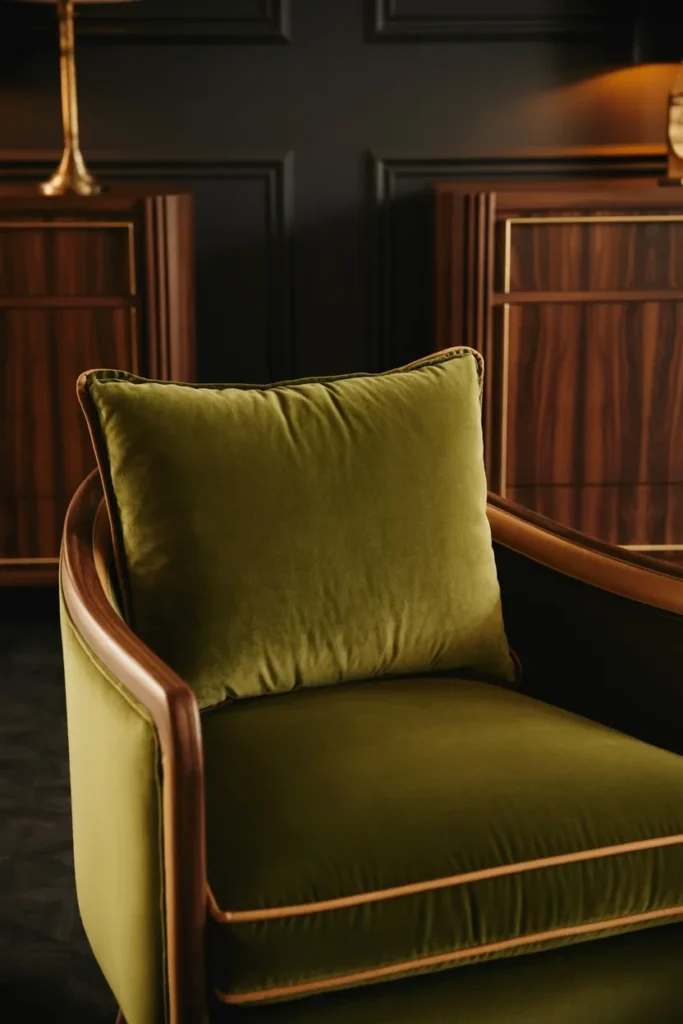
Now let’s talk about olive green, because this shade deserves more love. Olive has depth, warmth, and a slightly moody edge that can make a living room feel incredibly sophisticated.
If sage is the gentle introduction, olive is the confident older sibling. It works beautifully in homes with leather furniture, darker woods, vintage pieces, or lots of texture. It feels classic, not childish.
Best ways to use olive without overdoing it
Olive works best when you let it anchor a few elements rather than spread it everywhere. Try it in:
- A velvet armchair
- Curtains
- Built-in shelving
- A feature wall
- Decorative cushions mixed with rust or cream
This is one of the strongest green living room ideas if you want the room to feel collected and cozy. But yes, keep the lighting in mind. Olive loves warm light.
5. Bring in Plants for the Most Natural Green Possible
Okay, this one sounds obvious, but hear me out. If you don’t trust painted or upholstered green, living greenery is the easiest way to add the color without feeling forced.
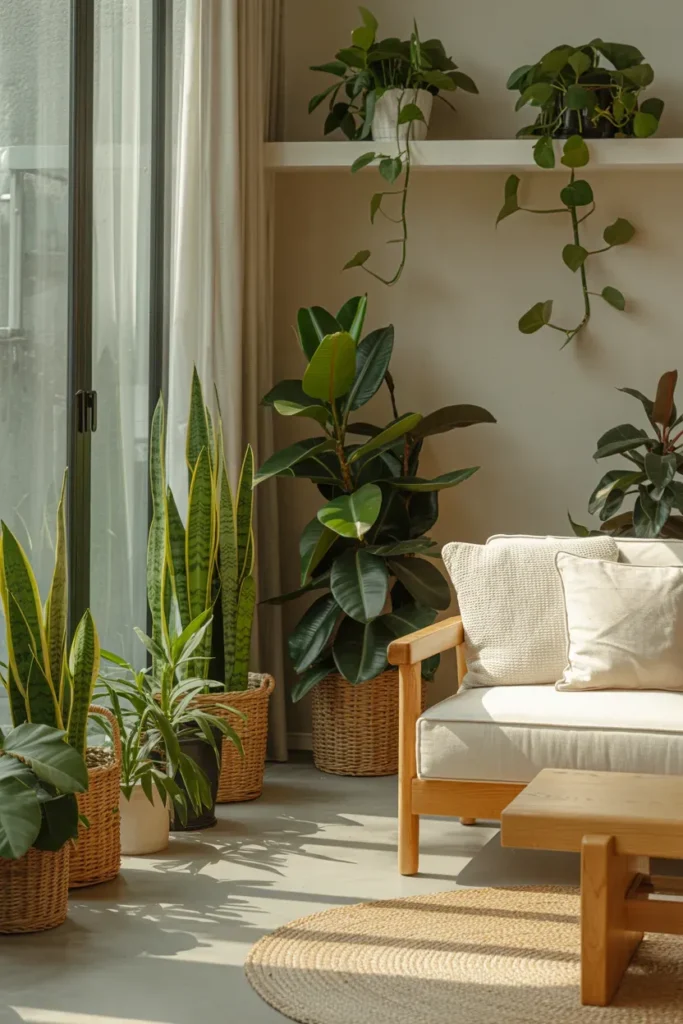
Plants make a room feel alive. They soften corners, add texture, and bring in green in the most believable way possible. And because the green is organic, it never feels too perfect or artificial.
Good plant choices for a living room
You do not need to turn your home into a greenhouse. A few well-placed plants can do a lot:
- Snake plant for structure
- Pothos for softness
- Rubber plant for a modern look
- ZZ plant for low maintenance
- Olive tree for a light, airy feel
FYI, plants also help green feel less like a design choice and more like part of the room’s atmosphere. That’s a subtle but powerful difference.
6. Add Green Through Art and Textiles
If paint feels too permanent and furniture feels too expensive, go with art and textiles. This is where green becomes playful and flexible.
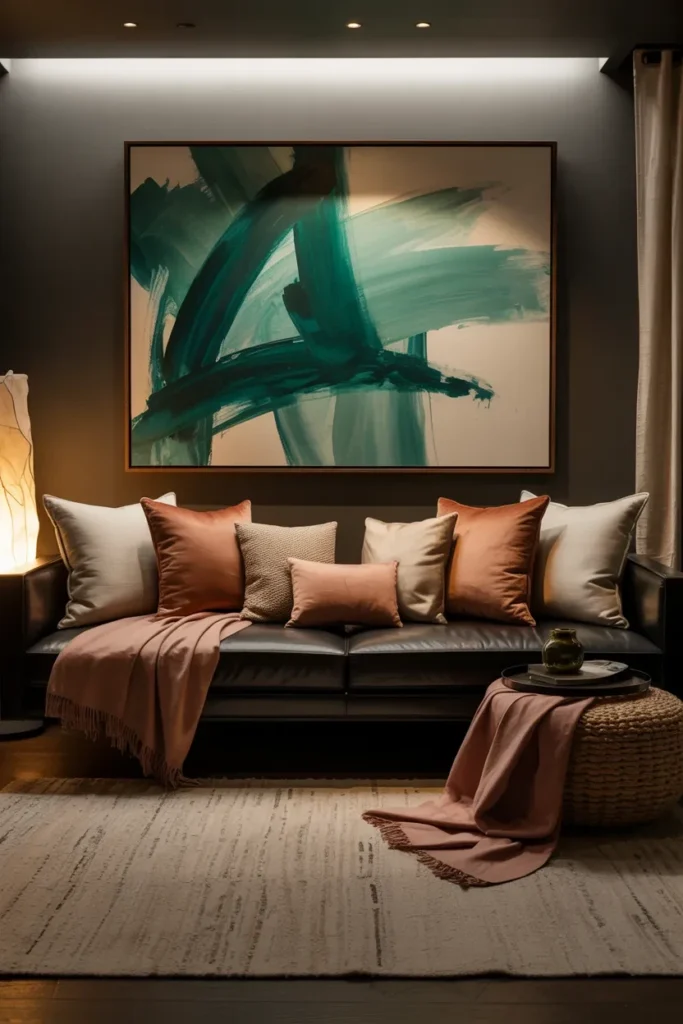
A rug with muted green woven through it can tie a whole room together. So can abstract art with olive, sage, or forest tones. Even a patterned cushion can shift the mood of a neutral room.
Why this method works so well
Textiles and art let you layer green in a softer way. Instead of one giant green object, you get little touches repeated throughout the room. That repetition creates cohesion.
Look for pieces that mix green with other colors you already use, like cream, black, terracotta, brown, or dusty blue. That way green doesn’t feel like it came out of nowhere. Smart, right?
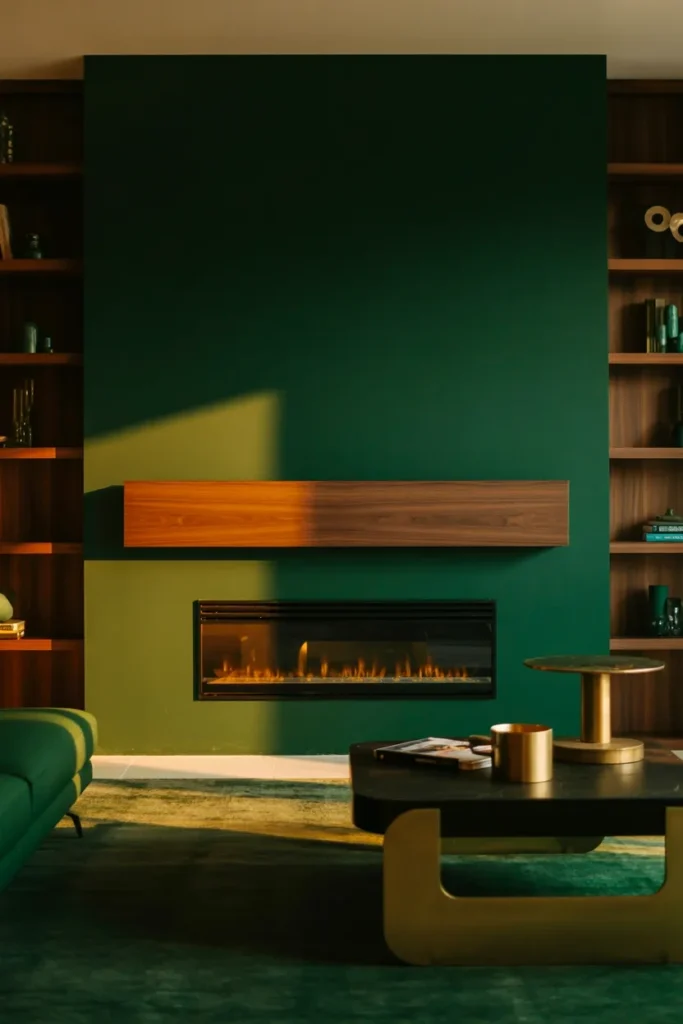
7. Go Dark Green in Small Doses for Drama
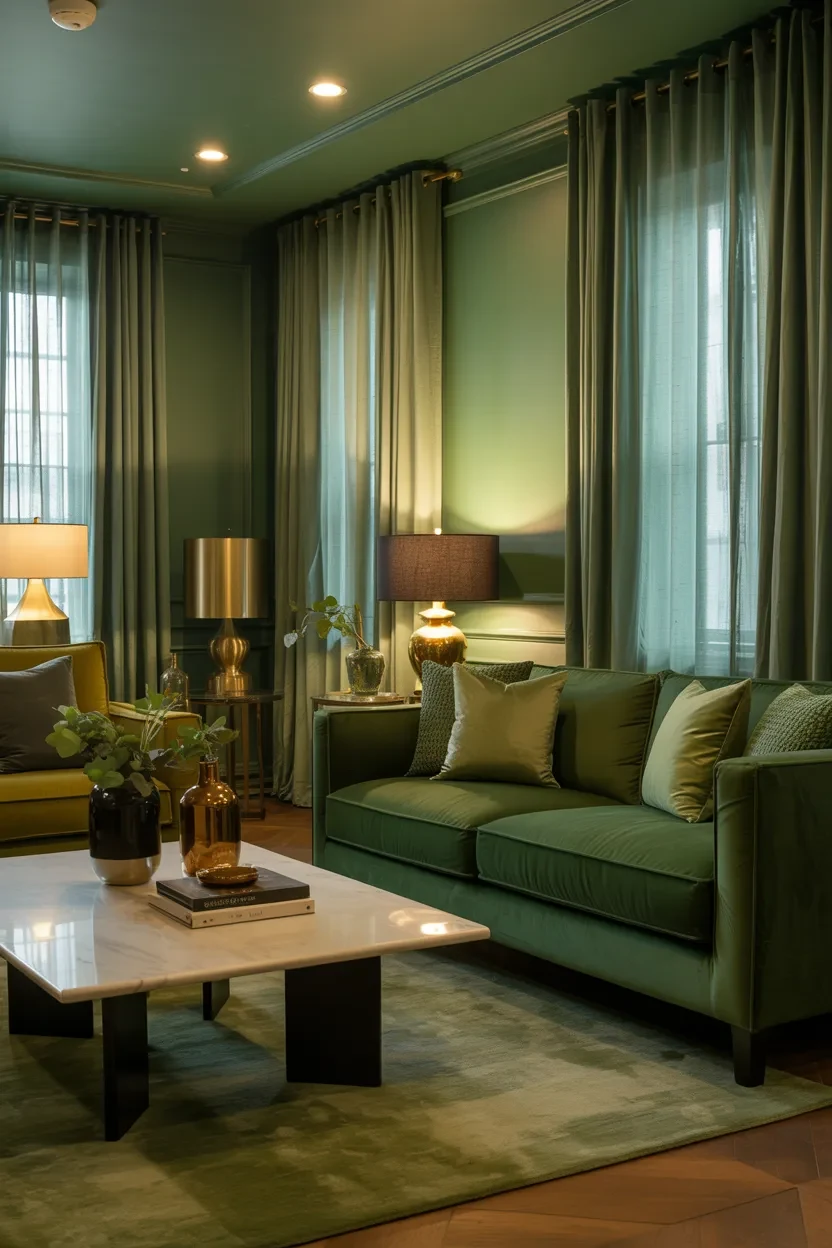
Now, if part of your distrust comes from fear of the room feeling childish or bland, dark green might surprise you. Forest green, deep moss, and smoky emerald can look incredibly elegant.
The key is using dark green strategically. Too much of it can feel heavy. But just enough? Gorgeous.
Where dark green shines
Dark green works beautifully in smaller, more defined features such as:
- A painted media unit
- Lower half wall paneling
- A fireplace surround
- Velvet cushions
- A statement armchair
This kind of green adds mood and contrast. It feels cozy and intentional. And when paired with warm wood or brass, it can look seriously expensive without trying too hard 🙂
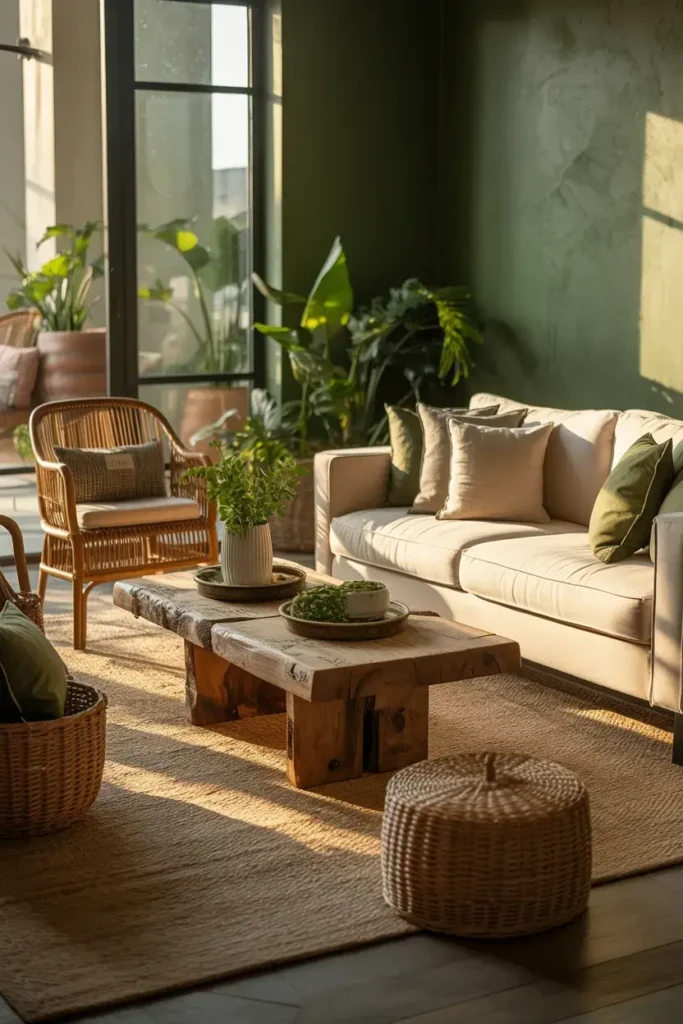
8. Mix Green with Natural Materials
This might be the easiest styling secret in the whole article. If green ever feels awkward in your room, add more natural materials around it.
Green looks better when it’s surrounded by texture. Wood, cane, jute, linen, clay, marble, and woven baskets all make green feel more at home. Suddenly it doesn’t look like a random color choice. It looks connected.
Materials that make green feel grounded
Here are some of the best texture pairings:
- Oak or walnut wood
- Linen upholstery
- Jute or wool rugs
- Rattan or cane furniture
- Ceramic decor
- Stone or marble surfaces
When you combine green with these materials, the whole room starts to feel calmer and more layered. That’s a big win if you want a cozy living room that still feels stylish.
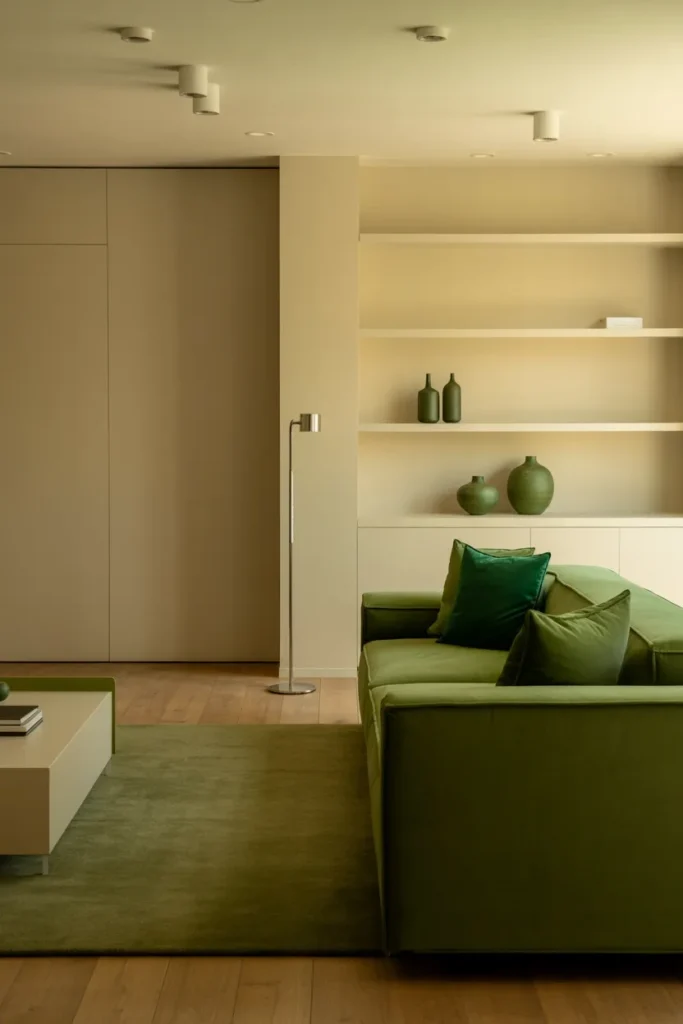
9. Choose the Right Undertone of Green
Here’s where many green living room ideas go wrong. People pick a random green without checking the undertone. Then the room feels weird, and green gets blamed for everything.
But green has undertones just like beige or gray. Some greens are yellow-based and warm. Others are blue-based and cool. Picking the wrong one for your room can make the space feel disconnected.
A simple way to choose better
Ask yourself what tones already exist in your living room.
- If you have warm woods, cream walls, tan leather, or brass, choose warm greens like sage, olive, or moss.
- If you have cooler grays, black accents, or crisp white walls, choose cooler greens like eucalyptus or muted teal-green.
This step matters more than people think. The right green will feel intentional. The wrong green will feel accidental. Big difference.
10. Let Green Support the Mood You Want
At the end of the day, green is not just a color choice. It’s a mood choice. Do you want your living room to feel calm? Cozy? Fresh? A little moody? More connected to nature?
That’s where green really shines. It can create a room that feels restful and lived-in without being boring. And unlike some trend colors, green has staying power when you use it thoughtfully.
Match the shade to the vibe
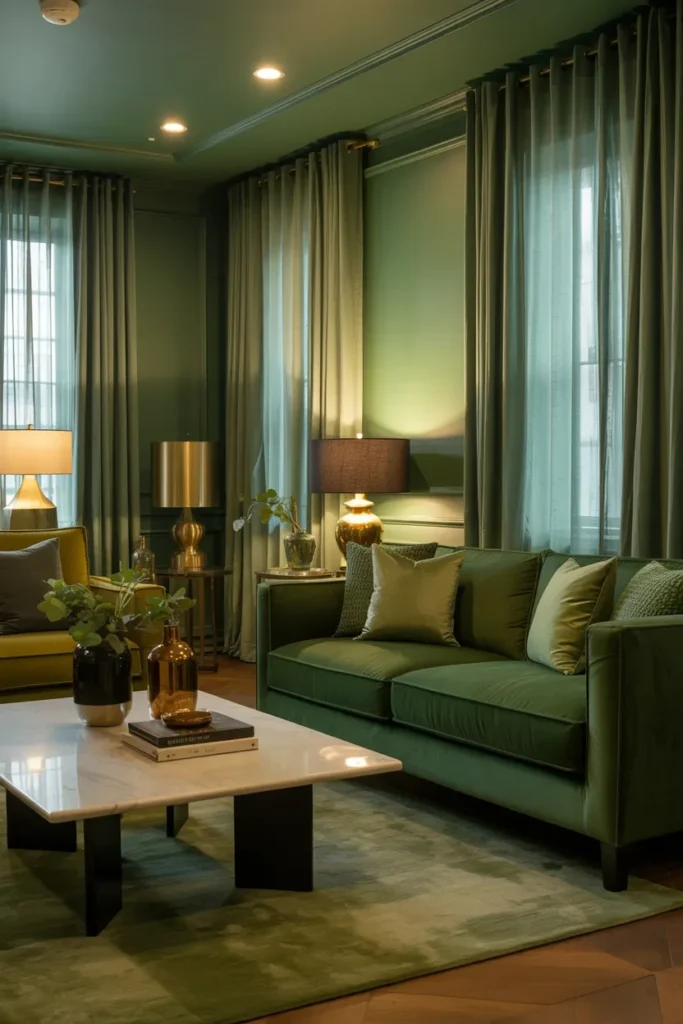
Here’s a quick cheat sheet:
For a calm and airy room
Use sage, soft eucalyptus, and pale moss.
For a cozy and grounded room
Use olive, moss green, and earthy muted tones.
For a dramatic and elegant room
Use forest green, deep moss, or smoky emerald.
For a subtle, neutral-feeling room
Use gray-green or dusty green accents only.
Once you think about green this way, it gets a lot less intimidating. You are not just picking a color. You are shaping how the room feels.
Final Thoughts on Green Living Room Ideas
So, can green work even when you don’t trust it? Absolutely. You just need to approach it in a way that feels comfortable, flexible, and true to your space.
The best green living room ideas are not about copying a perfect photo online. They’re about using the right shade, the right texture, and the right amount. Maybe that means sage cushions and a plant. Maybe it means an olive chair and warm wood. Maybe it means dark green paneling once you’ve built up the courage. No pressure.
Start small, pay attention to undertones, and let green earn your trust. You might be surprised by how quickly it becomes the color that makes your living room feel complete. And honestly, if a color can go from “absolutely not” to “wait, I kind of love this,” that’s a pretty good design story to tell.