10 Best Home Decor Ideas to Transform Every Room
This article was created in line with Trends Oraa’s research and content standards.
Most people don’t realize this.
Their home isn’t missing money. It’s missing intention.
That’s why their space never feels finished, no matter how many throw pillows they buy.
The good news? Fixing it is easier than you think.
If you’ve ever scrolled Pinterest for hours wondering why your living room doesn’t feel like the ones in your saved pins, you’re not alone. It’s rarely about a bigger budget or a bigger house. It’s about knowing which small, intentional shifts actually move the needle.
That’s exactly what this guide is for. We pulled together the 10 best home decor ideas that work in real homes, not just styled photoshoots — ideas for renters, families, small apartments, and anyone starting a full-blown makeover.
You might also love our guide on 32 Small Living Room Decor Ideas if you’re working with a tighter footprint, because a few of the tricks below build directly on those tips.
Grab your coffee. Let’s transform every room, one idea at a time.
Why Home Decor Ideas Matter More Than You Think
Here’s where it gets interesting.
The difference between a home that feels “fine” and one that feels finished usually comes down to five or six decisions. Not fifty. Not a full renovation.
- Layering texture instead of just color
- Choosing lighting that flatters the room instead of flooding it
- Giving every corner a job to do
- Mixing old and new pieces so nothing feels too matchy
Most people don’t know this, but designers rarely start with furniture shopping. They start with a plan for how the room should feel. We’re going to walk through both — the feeling and the practical steps to get there.
1. Layer Textures for an Instantly Cozy Living Room
What You’re Seeing
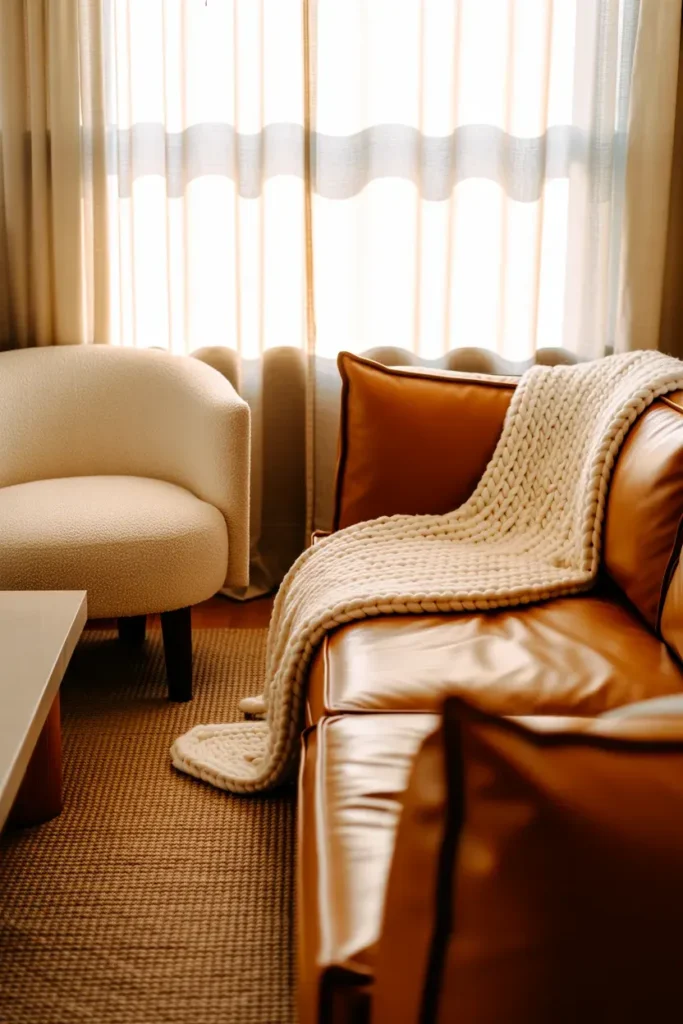
Picture a living room where a nubby boucle armchair sits next to a smooth leather ottoman, a chunky knit throw is tossed over the arm of a linen sofa, and a jute rug anchors it all underneath. Nothing matches exactly, yet the whole room feels pulled together and warm.
Design Breakdown
Texture is the secret ingredient most beginner decorators skip entirely. When every surface in a room has the same finish — smooth wood, smooth fabric, smooth walls — the space reads as flat, even if the colors are beautiful. Mixing rough with smooth, matte with shiny, and soft with structured gives a room depth the eye wants to keep exploring.
Expert Tip
Start with three textures minimum in any seating area: one woven (rattan, jute, wicker), one soft (velvet, boucle, chenille), and one hard (wood, stone, metal).
Why It Works
Our brains associate texture variety with comfort and richness. A monochrome, single-texture room can feel like a showroom rather than a home, while layered textures signal warmth and lived-in style.
Best For
- Small spaces
- Budget makeovers
- Renters
- Families
Common Mistake to Avoid
Buying an entire matching furniture set. It looks catalog-perfect on paper but flat and lifeless in person.
Quick Wins
- Add one chunky knit throw to your main sofa
- Swap a smooth accent pillow for a textured one
- Layer a woven rug under your existing rug for depth
- Introduce one rattan or wicker piece into the room
Imagine walking into your living room after just these four swaps. That’s the kind of instant transformation we’re chasing.
2. Create a Gallery Wall That Tells a Story
What You’re Seeing
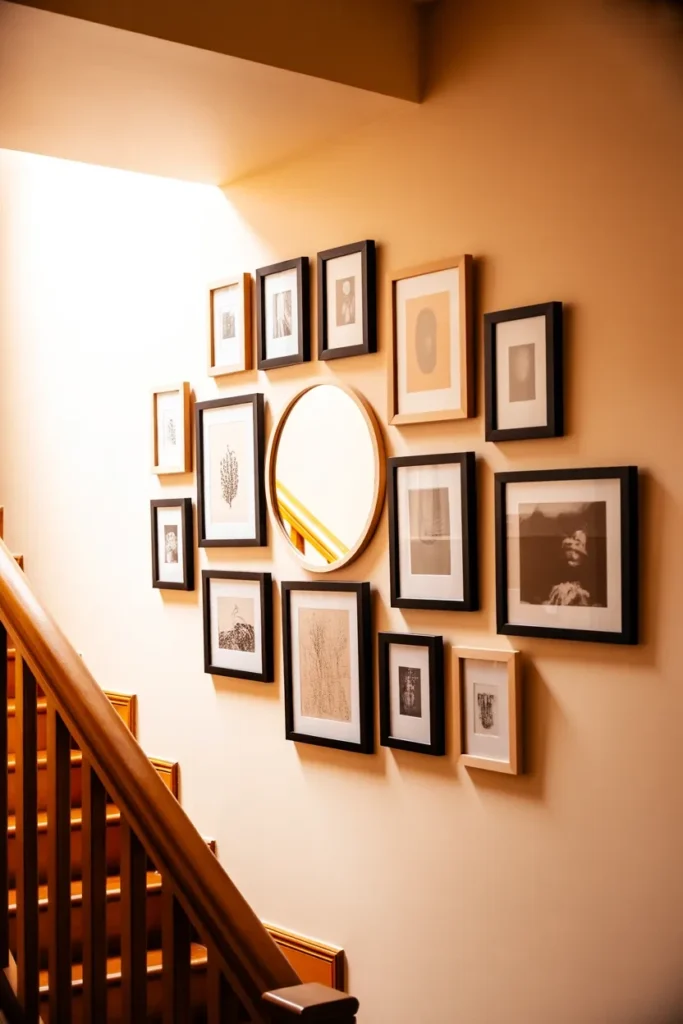
A staircase wall or hallway filled with a curated mix of framed photos, small art prints, and one or two mirrors, arranged in a loose grid with slightly varied frame colors that still feel cohesive.
Design Breakdown
A gallery wall isn’t about covering blank space — it’s about giving your eye a journey. The best ones mix scale (one large piece, several small), mix medium (photography, illustration, a mirror or two), and stick to two or three frame finishes so it doesn’t look chaotic.
Expert Tip
Lay your arrangement out on the floor first using painter’s tape to mark the wall dimensions. Move pieces around until it feels balanced before a single nail goes in.
Why It Works
Gallery walls turn empty vertical space into a personal story, which makes a home feel unmistakably yours rather than generic. Visually, they also draw the eye upward, which makes ceilings feel taller.
Best For
- Small spaces
- Renters
- Budget makeovers
Common Mistake to Avoid
Hanging everything at eye level in a perfectly even grid. It looks stiff. Uneven, organic spacing feels far more natural and collected.
Quick Wins
- Mix at least three frame sizes
- Use removable hanging strips if you’re renting
- Leave two to three inches of breathing room between frames
- Anchor the layout with one larger statement piece
But here’s the important part: this idea works even better once you’ve decided on your overall color story, which is exactly what we’re tackling next. <div class=”expert-insight-box”>
Most people don’t know this: the single biggest reason a gallery wall looks “off” isn’t the artwork — it’s the frame finishes. One thing I’ve learned from styling dozens of these walls is that mixing gold, black, and natural wood frames in the same grid almost always reads as chaotic, no matter how good the individual pieces are. Pick a maximum of two finishes and let everything else vary. It’s a five-minute decision that saves you from a wall you’ll want to redo in six months. </div>
Most people waste more space than they realize.
3. Rethink Your Entryway as the Room’s First Impression
What You’re Seeing
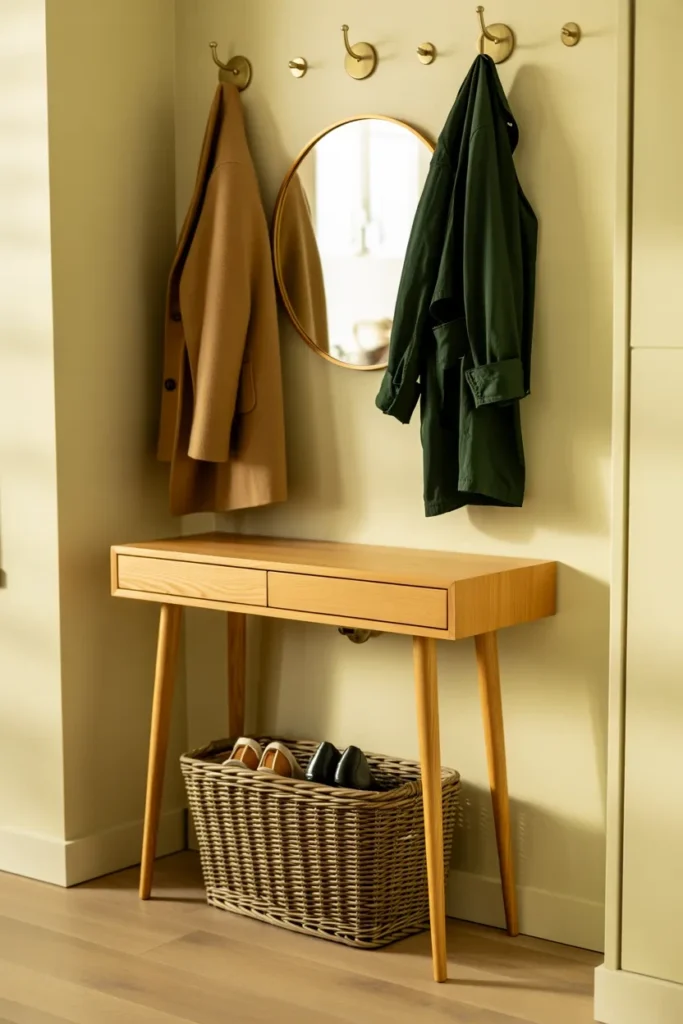
A narrow entry table with a woven basket underneath for shoes, a small mirror above it, a scented candle, and a wall hook rail holding two or three coats — simple, functional, and welcoming the second the door opens.
Design Breakdown
Your entryway sets the emotional tone for the rest of the house, yet it’s often the most neglected room. A cluttered, empty, or purely functional entry makes guests (and you) feel unsettled before they even reach the living room.
Expert Tip
Anchor the space with three layers: a surface (table or shelf), storage (basket, bench, or hooks), and one decorative touch (mirror, art, or a small plant).
Why It Works
Psychologically, entryways act as a transition zone between the outside world and home. A well-organized one lowers stress the moment you walk in, and it gives visitors an instant read on your style.
Best For
- Small spaces
- Renters
- Families
Common Mistake to Avoid
Skipping storage entirely because the entry is small. Even a narrow console with one drawer prevents the classic “shoe pile by the door” problem.
Quick Wins
- Add a mirror to visually double the space
- Use a basket for grab-and-go items like sunglasses or keys
- Install two to three wall hooks at varying heights
- Light a candle near the entry for an instant welcoming scent
If your entryway feels tight, our full Mudroom and Entryway Ideas guide has even more layout tricks for narrow spaces.
You May Also Like:
- Small Console Tables Ideas
- Entryway Ideas
- Space-Saving Furniture Ideas
- Apartment Organization Ideas
- Tiny Hallway Ideas
Which of these ideas would work best in your home so far? Keep that in mind as we move into the bedroom.
4. Build a Bedroom That Feels Like a Retreat
What You’re Seeing
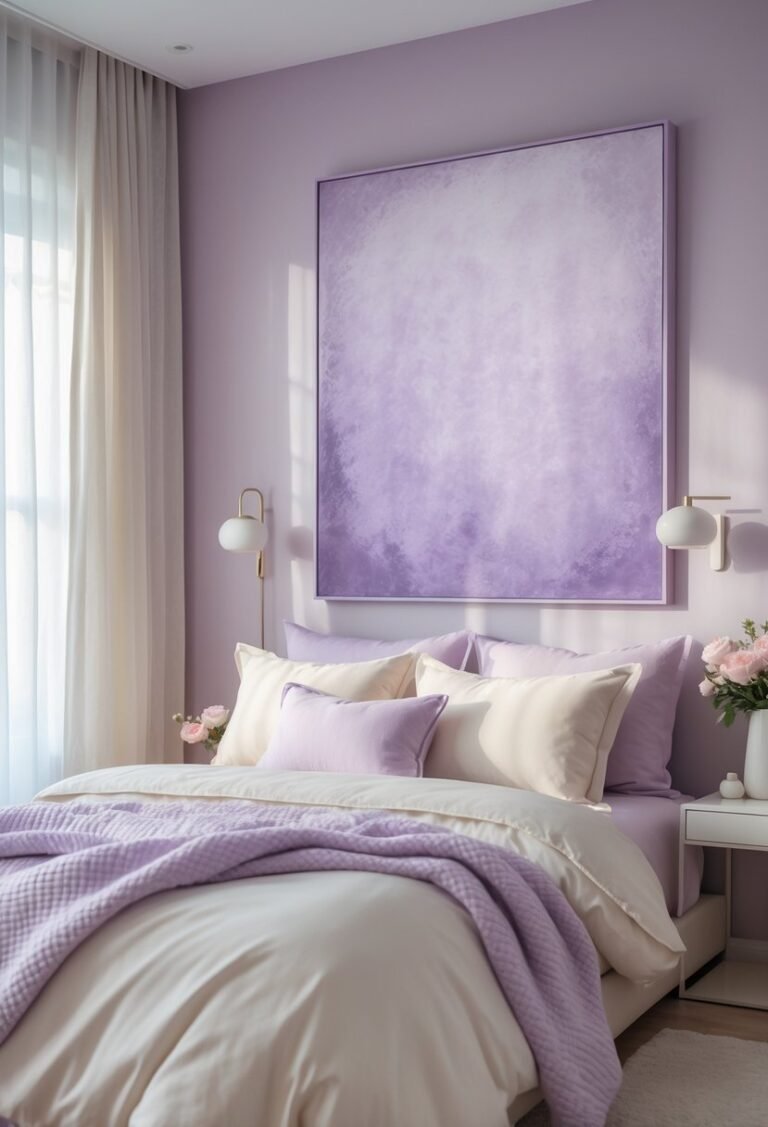
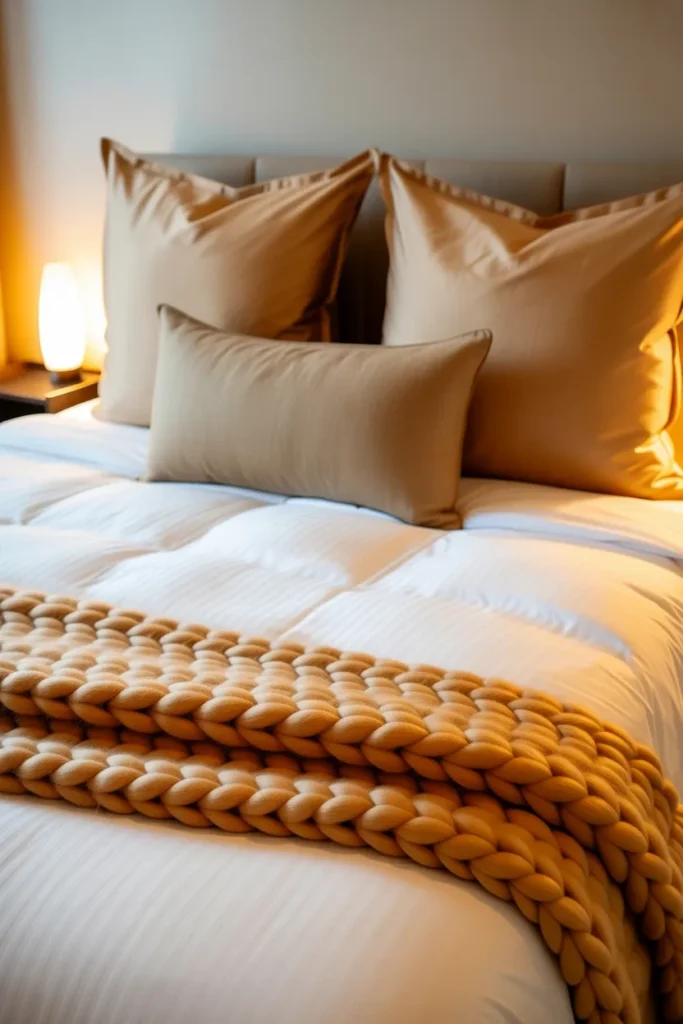
A bed layered with a fitted sheet, a duvet in a warm neutral, two Euro pillows propped against the headboard, a lumbar pillow in front, and a folded throw blanket at the foot — the kind of styling you see in boutique hotels.
Design Breakdown
Bedrooms often get the least decorating attention because no one else sees them, but they’re arguably the most important room to get right since you start and end every day there. Layered bedding, soft lighting, and a decluttered nightstand do more for your daily mood than almost any other decor decision in the house.
Expert Tip
Stick to a maximum of five pillows on a queen or king bed. More than that and making the bed daily becomes a chore you’ll skip.
Why It Works
A calm, uncluttered bedroom supports better sleep quality, and soft layered textiles trigger the same comfort response as a hotel stay — which is exactly the feeling most people are chasing when they say they want their bedroom to feel “cozy.”
Best For
- Small spaces
- Large spaces
- Luxury homes
- Budget makeovers
Common Mistake to Avoid
Overhead lighting as the only light source. Harsh overhead light kills the relaxed atmosphere a bedroom needs.
Quick Wins
- Add two bedside lamps with warm-toned bulbs
- Layer a textured throw at the foot of the bed
- Swap one flat pillow for a lumbar or bolster pillow
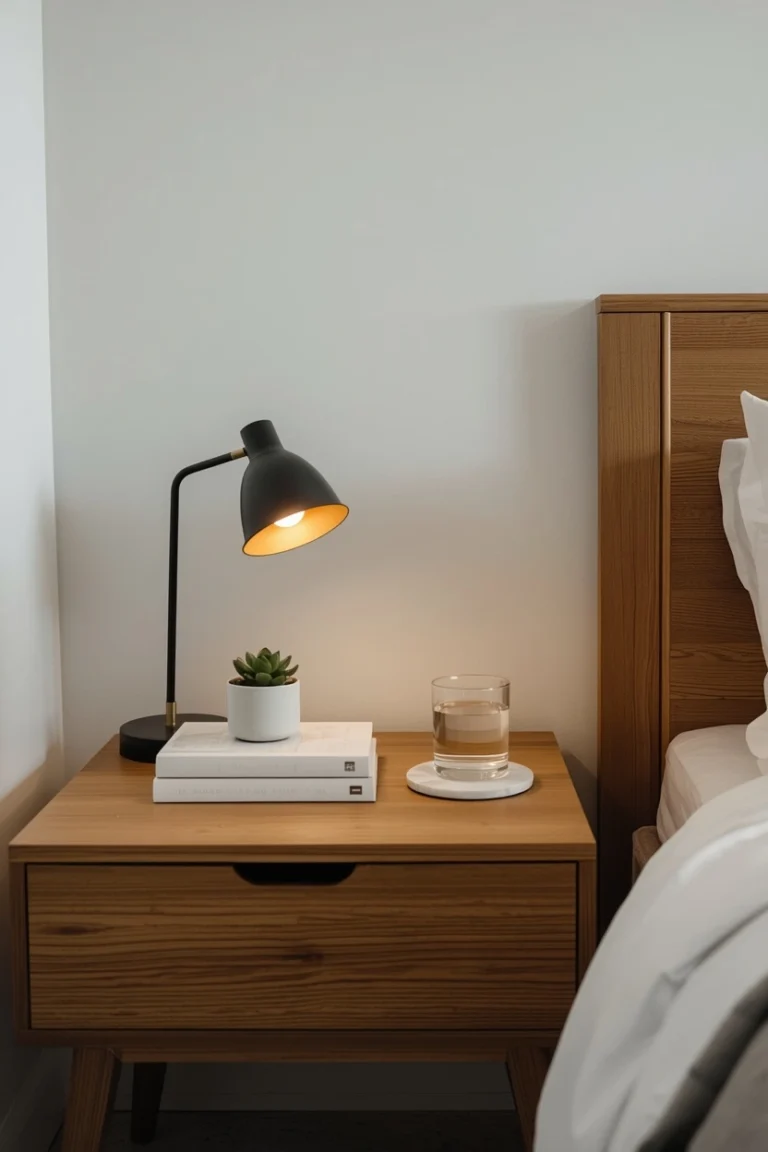
- Keep nightstands to three items maximum
Picture yourself enjoying five extra minutes in bed each morning simply because the room feels this good to be in. For more layout inspiration, check out our Cosy Bedroom Ideas guide.
Would you choose function or style for your own bedroom? With the next idea, you don’t actually have to pick.
5. Style Open Shelving in the Kitchen
What You’re Seeing
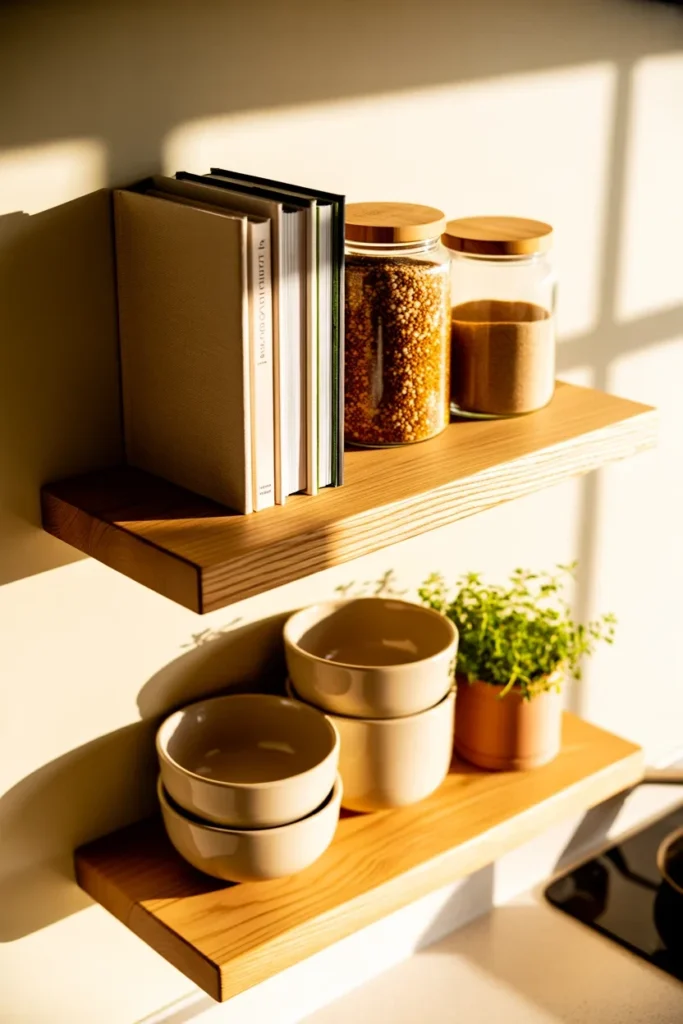
Two or three floating wood shelves above a counter, holding a mix of ceramic bowls, a small potted herb, stacked cookbooks, and a few glass jars — styled like a magazine spread but genuinely used every day.
Design Breakdown
Open shelving is one of the fastest ways to make a kitchen feel custom rather than builder-grade. It also forces a bit of intentional organization, since everything on display needs to look good and function well.
Expert Tip
Follow the rule of odd numbers — group items in threes or fives on each shelf, varying height so the eye moves naturally across the display.
Why It Works
Open shelving breaks up the visual monotony of upper cabinets, adds warmth through natural materials like wood and ceramic, and makes a kitchen feel more personal and less like a rental unit.
Best For
- Small spaces
- Budget makeovers
- Renters
Common Mistake to Avoid
Overfilling the shelves. Open storage only looks intentional when there’s breathing room between groupings.
Quick Wins
- Group items in odd numbers
- Mix in one plant or greenery sprig
- Keep everyday dishware on the lowest shelf for practicality
- Stick to a cohesive color palette across displayed items
This is where many homeowners make a mistake: they treat open shelving as pure storage instead of curated display, and the shelves end up looking cluttered within a week. For more kitchen inspiration, our Rustic Kitchen Ideas post is worth a scroll.
Here’s where it gets interesting: open shelving gets a bad reputation because people assume it means more cleaning. In practice, the opposite tends to happen. One thing I’ve learned is that when shelves are visible, you naturally keep fewer items out and use them more often, which means less dust buildup than in a packed, closed cabinet you never open. The trick is committing to a “one in, one out” rule for whatever lives on display.
What Home Decor Ideas Actually Cost
Let’s pause the room-by-room tour for a second, because this is the question almost everyone asks eventually: how much does it actually cost to pull this off?
Here’s an honest, realistic breakdown based on typical price ranges, so you can plan before you shop.
Small Refresh (Under $150 per room)
- New throw pillow covers: $10–$25 each
- A textured throw blanket: $20–$40
- Command-strip gallery frames: $8–$15 each
- A single plant and pot: $15–$35
- Scented candle for the entryway: $10–$20
This tier is perfect if you’re renting or just testing a new direction before committing further.
Mid-Range Makeover ($150–$600 per room)
- Area rug: $80–$250
- Table or floor lamp pair: $60–$150
- Open shelving installation kit: $40–$100
- Accent chair: $150–$400
- Wall art or a small gallery set: $50–$150
This is the sweet spot most homeowners land in — enough to genuinely shift the feel of a room without a full furniture overhaul.
Full Room Transformation ($600–$2,000+)
- Statement sofa or bed frame: $500–$1,500
- Custom or semi-custom window treatments: $150–$400 per window
- Lighting fixture upgrade (chandelier or pendant): $150–$500
- Professional-grade paint job: $300–$800
Decision-Making Advice
- Start with lighting and textiles before furniture — they’re cheaper and change the feel of a room fastest.
- Buy one investment piece per room (a sofa, a bed frame, a rug) and keep everything else budget-friendly.
- Secondhand and vintage marketplaces can cut furniture costs by 40–60% if you’re patient.
Common Mistakes in Budgeting
- Spending the whole budget on one large item and leaving nothing for the finishing touches (lighting, textiles, art) that actually make a room feel complete.
- Buying trendy statement pieces at full price instead of waiting for a seasonal sale.
- Underestimating how much small accessories add up — five throw pillows at $25 each is $125 before you’ve touched the furniture.
Whether you’re working with $100 or $2,000, the ideas in this guide scale up or down easily. What’s your biggest challenge right now — budget, space, or simply knowing where to start?
The next idea changes everything, especially if space is tight.
6. Make Small Rooms Feel Bigger With Multi-Functional Furniture
What You’re Seeing
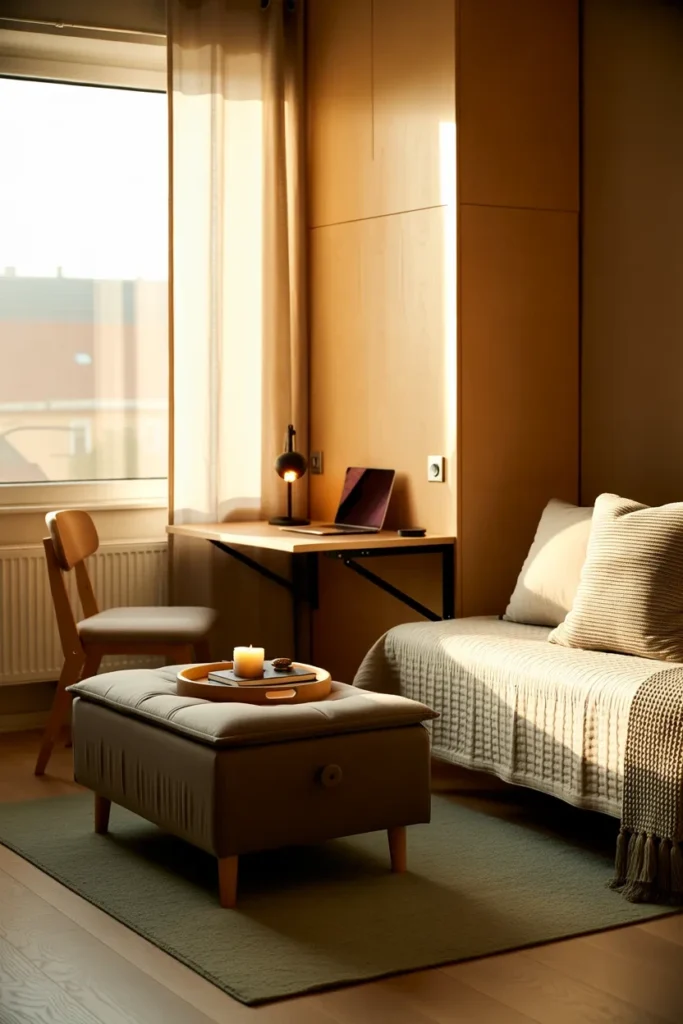
A studio apartment where an ottoman doubles as a coffee table and hidden storage, a daybed serves as both sofa and guest bed, and a wall-mounted drop-leaf table folds away when not in use.
Design Breakdown
In tight spaces, every piece of furniture should ideally do more than one job. This isn’t about sacrificing style — the best multi-functional pieces today are genuinely beautiful, not just practical.
Expert Tip
Before buying anything for a small room, ask: “Can this fold, nest, or store something?” If the answer is no, look for an alternative that can.
Why It Works
Multi-functional furniture reduces visual clutter and physical footprint simultaneously, which makes small rooms feel noticeably more open without losing any of the functionality a household actually needs.
Best For
- Small spaces
- Renters
- Budget makeovers
Common Mistake to Avoid
Buying furniture that’s technically multi-functional but visually bulky. If it doesn’t fold flat or tuck away cleanly, it defeats the purpose.
Quick Wins
- Choose a storage ottoman instead of a solid coffee table
- Add a wall-mounted folding desk for occasional work-from-home needs
- Use nesting side tables instead of one large one
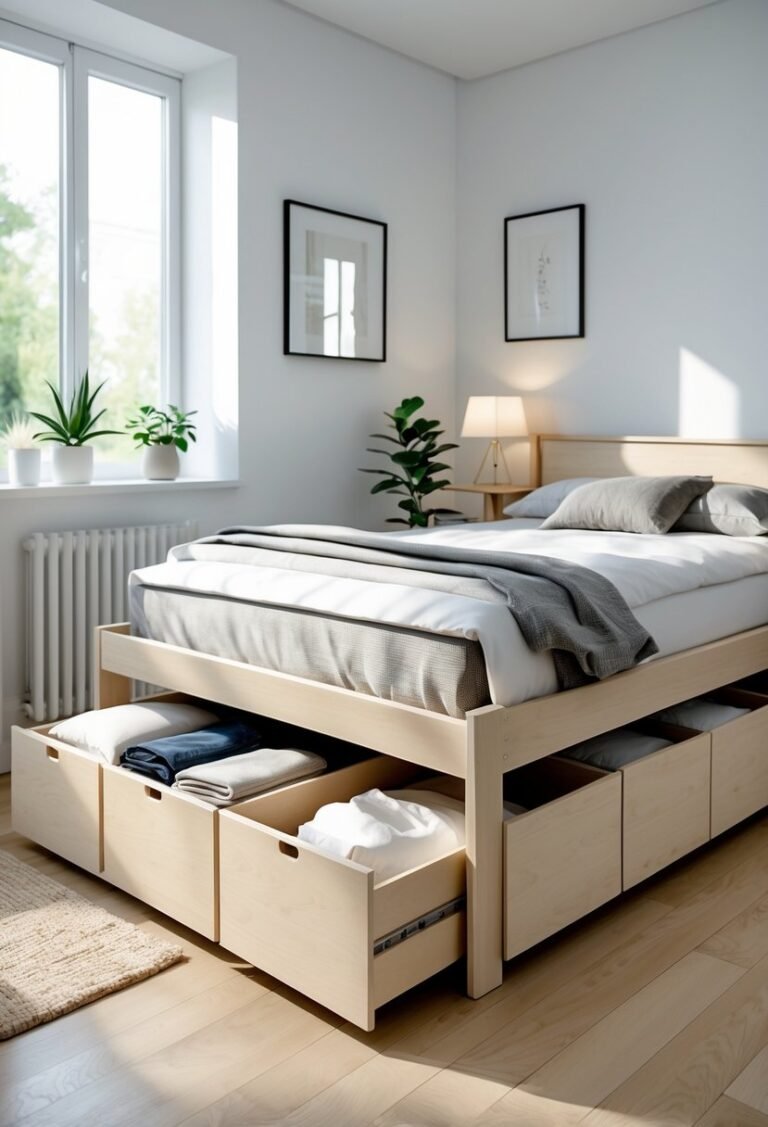
- Pick a bed frame with built-in drawer storage
The next idea is one designers secretly love, and it costs almost nothing to test.
Think about how much easier mornings feel when your small space actually works with you instead of against you. Our Space-Saving Furniture Ideas guide dives even deeper into this if you’re decorating a studio or one-bedroom.
7. Bring the Outdoors In With Statement Greenery
What You’re Seeing
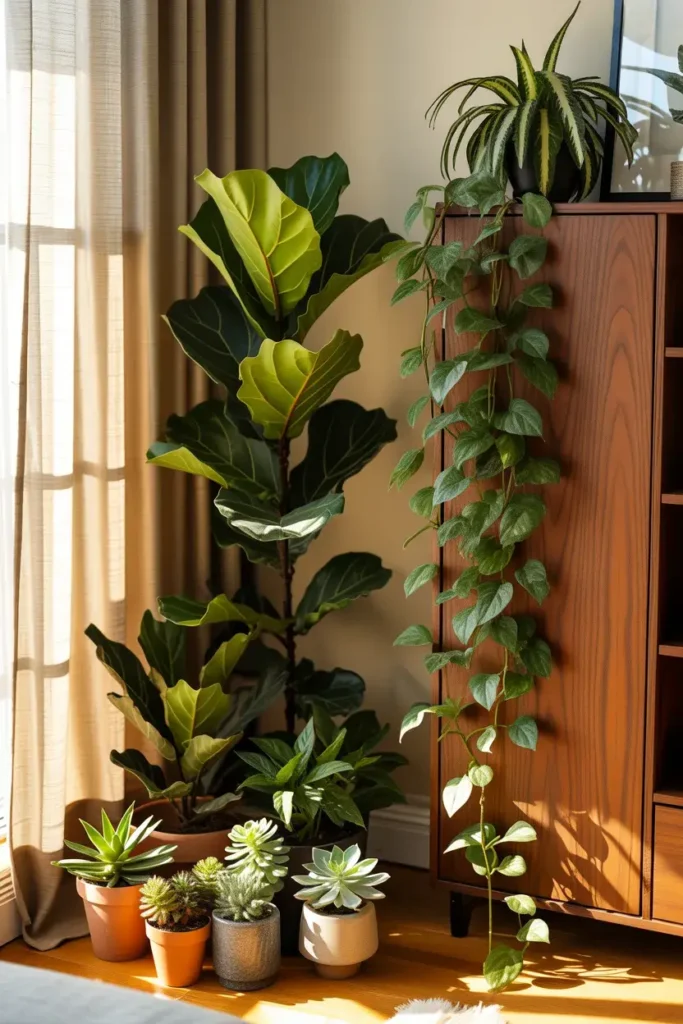
A tall fiddle leaf fig in the corner of a living room, a trailing pothos cascading from a bookshelf, and a cluster of small succulents on a windowsill — different heights and leaf shapes creating a mini indoor jungle without overwhelming the room.
Design Breakdown
Plants are one of the highest-impact, lowest-cost decor upgrades available. A single well-placed statement plant can do what an entire shopping trip’s worth of accessories can’t: add life, color, and softness instantly.
Expert Tip
Group plants in odd-numbered clusters of varying heights rather than scattering single pots evenly around a room.
Why It Works
Greenery introduces organic shapes and natural color into rooms dominated by straight lines and manufactured materials, and there’s a well-documented psychological benefit to having living plants in your daily environment — they’ve been linked to lower stress and improved mood.
Best For
- Small spaces
- Large spaces
- Renters
- Budget makeovers
- Families
Common Mistake to Avoid
Choosing high-maintenance plants for low-light rooms and then giving up on greenery altogether after they die. Start with resilient options like pothos, snake plants, or ZZ plants.
Quick Wins
- Add one large statement plant to an empty corner
- Group three smaller plants at varying heights on a shelf
- Choose low-maintenance varieties if you’re a beginner
- Use a woven or ceramic planter to elevate a plastic nursery pot
For a full breakdown of the best varieties and placement tricks, our Indoor House Plants Aesthetic Ideas guide is a great next stop.
You May Also Like:
- Empty Corner Decoration Ideas
- Indoor House Plants Aesthetic Ideas
- Window Seat Ideas
- Cozy Living Room Ideas
- Family Room Ideas
Let me know which one is your favorite so far — the layered textures, the gallery wall, or the greenery.
8. Upgrade Lighting Layers, Not Just Bulbs
What You’re Seeing
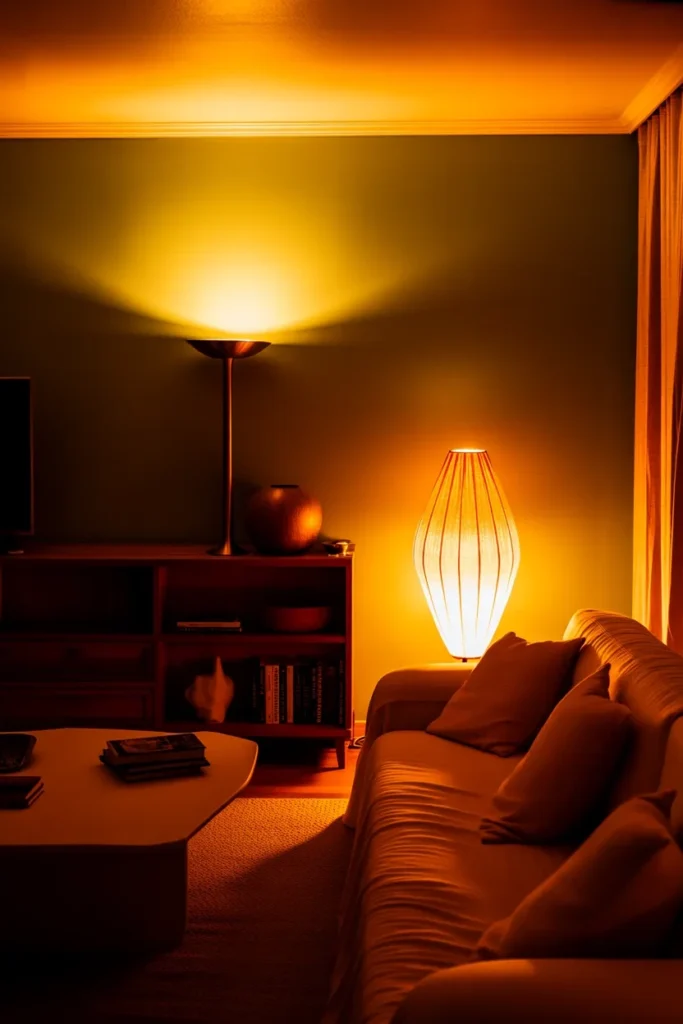
A living room lit by three separate sources at once: a floor lamp in the corner, a table lamp beside the sofa, and a dimmed overhead fixture, all working together instead of relying on one harsh ceiling light.
Design Breakdown
Lighting is consistently the most underestimated home decor idea, yet it changes a room’s mood more than almost any other single factor. Designers plan lighting in layers: ambient (overall room light), task (reading or work light), and accent (highlighting art or architecture).
Expert Tip
Aim for at least three light sources in any main living space, and choose warm-toned bulbs (around 2700K–3000K) for a cozier feel.
Why It Works
Layered lighting lets you adjust a room’s atmosphere throughout the day — bright and functional in the morning, warm and relaxed in the evening — without needing to change anything else in the space.
Best For
- Small spaces
- Large spaces
- Luxury homes
- Families
Common Mistake to Avoid
Relying solely on a single overhead fixture. It creates flat, unflattering light and makes even beautifully decorated rooms feel sterile.
Quick Wins
- Add a floor lamp to an empty corner
- Swap bright white bulbs for warm-toned ones
- Use a dimmer switch on your main overhead fixture
- Add a small accent light near art or a bookshelf
<div class=”expert-insight-box”>
One thing I’ve learned: homeowners will spend hundreds on furniture and then light it with a single cold-white bulb that undoes all that effort. Lighting temperature alone can make an expensive room look cheap or a budget room look expensive. If you upgrade nothing else in this entire guide, switch your bulbs to a warmer tone tonight — it’s a five-dollar fix with an outsized impact. </div>
Don’t skip the next tip. It’s the one that surprised me the most when I started paying attention to it.
9. Give Every Empty Corner a Purpose
What You’re Seeing
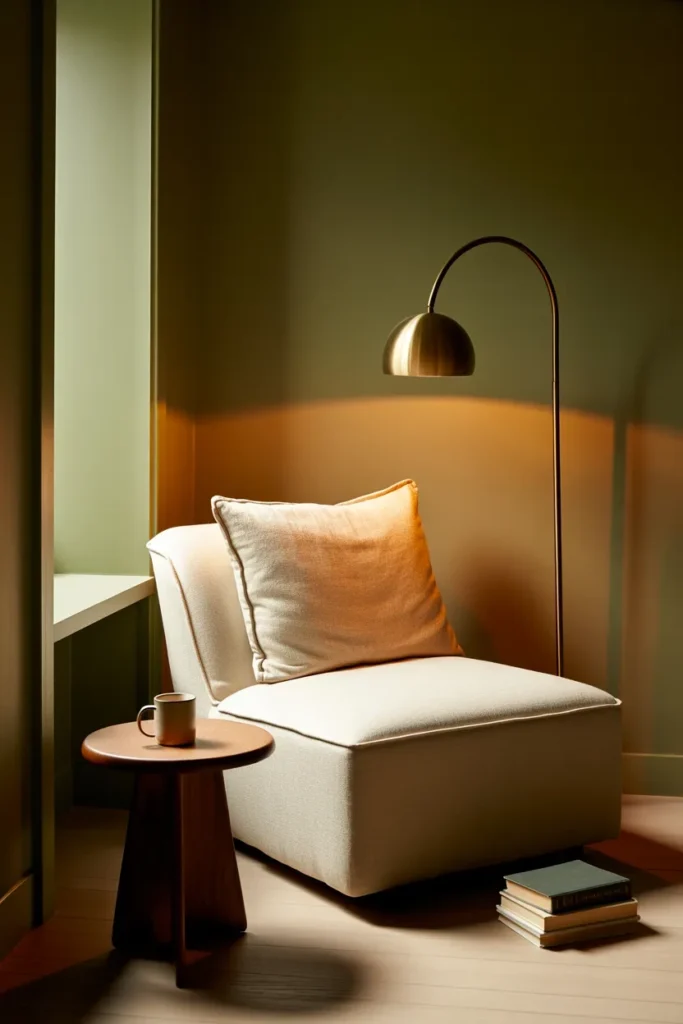
A previously wasted corner transformed into a cozy reading nook with a single armchair, a small side table, a floor lamp, and a stack of books — turning dead space into the most-used spot in the house.
Design Breakdown
Empty corners are one of the biggest missed opportunities in home decor. They often get ignored entirely or filled with random clutter because no one has a plan for them.
Expert Tip
Ask what your household actually needs more of — reading space, plant display, extra seating, or storage — and design the corner around that specific need rather than decorating it generically.
Why It Works
A purposeful corner eliminates the “dead space” feeling that makes rooms seem unfinished, and it adds functional square footage without any construction.
Best For
- Small spaces
- Large spaces
- Families
- Budget makeovers
Common Mistake to Avoid
Cramming a corner with decorative-only items like an oversized vase with nothing else around it. Corners work best when they combine function and style together.
Quick Wins
- Add a single chair plus a small table for an instant reading nook
- Use a tall plant to soften an awkward angle
- Install a corner shelf for books or display items
- Add a floor lamp to make the corner usable after dark
This simple change can completely transform the room, and it’s one of the easiest ideas on this entire list to execute this weekend. Our Empty Corner Decoration Ideas guide has even more layout options if you want to go deeper.
10. Create a Calm, Spa-Inspired Bathroom
What You’re Seeing
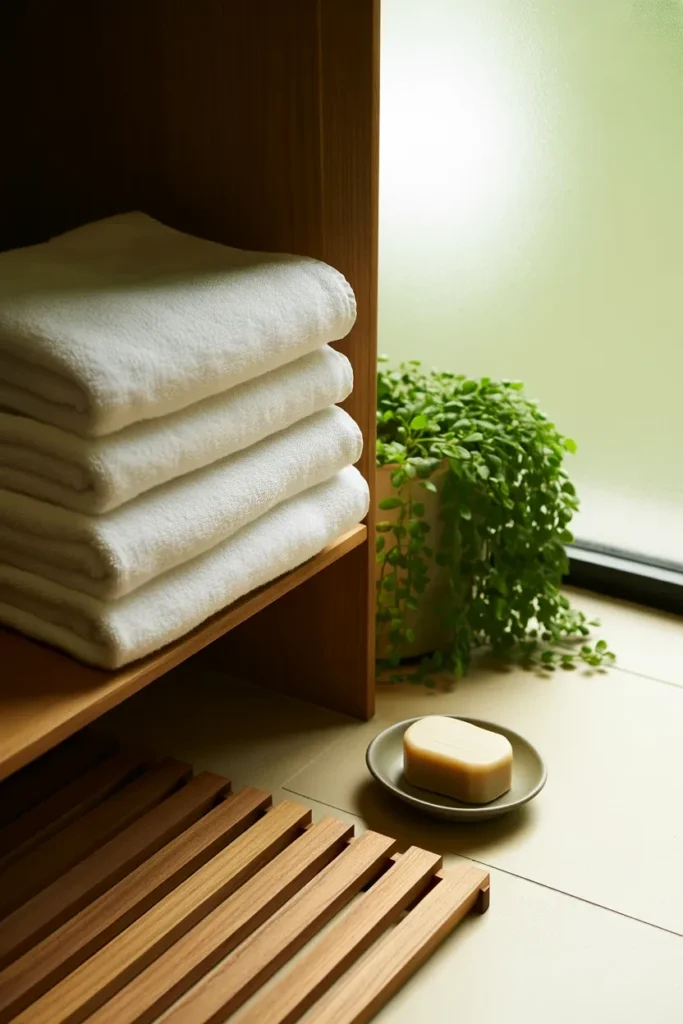
A bathroom with a folded stack of thick white towels on an open shelf, a wood bath mat, a small dish of natural soap, one trailing plant near the window, and soft, warm lighting instead of a harsh vanity bulb.
Design Breakdown
Bathrooms are often the last room to get decor attention, yet they’re where you start and end your day. A few intentional swaps can turn a purely functional space into one that feels genuinely restorative.
Expert Tip
Stick to a tight, neutral color palette (white, natural wood, soft green) so the space feels like a spa rather than a cluttered medicine cabinet.
Why It Works
A calm, decluttered bathroom reduces morning stress and creates a small daily ritual of self-care, which is exactly the feeling most spa-inspired decor is trying to recreate.
Best For
- Small spaces
- Renters
- Luxury homes
- Families
Common Mistake to Avoid
Leaving toiletries and products visible on every surface. Clutter is the number one thing standing between a “fine” bathroom and a spa-like one.
Quick Wins
- Swap mismatched towels for a matching neutral set
- Add one plant that tolerates humidity, like a pothos or fern
- Use closed baskets to hide daily-use products
- Replace harsh overhead lighting with a warmer bulb
Visualize the difference the very first morning you walk into a bathroom that finally feels calm instead of chaotic. For more ideas, check out our Spa Bathroom Ideas guide.
Related Home Decor Ideas
Still hungry for more inspiration? Here are eight more guides worth exploring next, each one going deeper into a specific room or style.
- Small Living Room Decor Ideas
- Home Office Ideas
- Country Farmhouse Decor Ideas
- Scandinavian Living Room Ideas
- Dining Room Ideas
- Bedroom Ceiling Ideas
- Marble Decoration Ideas
- Coffee Bar Ideas
Final Thoughts on These Home Decor Ideas
So, where does this leave you?
The most impactful home decor ideas from this list aren’t the expensive ones. They’re the intentional ones: layering texture, fixing your lighting temperature, giving corners a purpose, and bringing in greenery.
Here’s the challenge — pick just one idea from this guide and implement it this week. Not all ten. Just one. Momentum builds from small wins, not overwhelming to-do lists.
Which idea are you starting with — the lighting swap, the gallery wall, or finally tackling that empty corner? I’d genuinely love to know.
If you enjoyed this roundup, our Cozy Living Room Ideas guide is a natural next stop, especially if your living room is the space you’re most excited to transform.
And if you thought this list was full of surprises, wait until you see what a $200 kitchen upgrade can actually look like — that’s a whole different rabbit hole worth falling into next.
Frequently Asked Questions About Home Decor Ideas
1. What are the easiest home decor ideas for beginners? Start with textiles and lighting — new pillow covers, a throw blanket, and warm-toned bulbs make an immediate difference without any major purchases or commitment.
2. How can I decorate my home on a tight budget? Focus on high-impact, low-cost swaps like textured throws, gallery walls with removable hanging strips, and a single statement plant rather than replacing furniture.
3. What home decor ideas work best for small spaces? Multi-functional furniture, mirrors to visually expand the room, and vertical storage like open shelving all help small spaces feel larger and more organized.
4. How many colors should I use when decorating a room? Most designers recommend a 60-30-10 rule: one dominant color at 60%, a secondary color at 30%, and an accent color at 10% for visual balance.
5. What’s the biggest home decor mistake people make? Relying on a single overhead light source. Layered lighting with warm-toned bulbs changes the feel of a room more than almost any other decor decision.
6. How do I choose the right rug size for a room? As a general rule, front furniture legs (or all four legs, in larger rooms) should rest on the rug so the space feels grounded rather than floating.
7. Are open shelves in the kitchen a good idea for renters? Yes, especially with removable, damage-free shelving brackets. They add personality and storage without requiring permanent changes to the space.
8. What plants are easiest for home decor beginners? Pothos, snake plants, and ZZ plants tolerate low light and inconsistent watering, making them ideal starter plants for statement greenery.
9. How often should I refresh my home decor? Small refreshes — pillows, throws, candles — work well seasonally, while larger pieces like sofas or rugs typically last five to ten years before needing an update.
10. What’s the fastest way to make a room feel more expensive? Swap cold-white bulbs for warm-toned lighting and add one textured, high-quality throw or rug. Both changes cost under fifty dollars combined but transform the entire mood of the room.