15 Beautiful Small Tropical Garden Design Ideas
This article was created in line with Trends Oraa’s research and content standards.
Your backyard doesn’t have to be big to feel like paradise. A few bold plants can completely transform a dull, unused corner. Scroll down — your dream tropical escape is closer than you think.
You’ve been staring at that sad little patch of outdoor space for months. Maybe it’s a narrow side yard, a cramped apartment patio, or just a corner of the backyard that’s always looked… underwhelming. You’ve scrolled through Pinterest and seen those lush, vacation-resort gardens and thought, “That’s beautiful, but my space is too small for that.”
Here’s the truth: small spaces are perfect for tropical garden design. In fact, the intimacy of a compact space makes tropical foliage feel even more dramatic and immersive. You’re not trying to fill acres — you’re creating a moment, a mood, a little corner of Bali right outside your door.
You might also love our complete guide on Balcony Garden Ideas balcony-garden-ideas packed with gorgeous small-space transformations that pair beautifully with a tropical theme!
In this post, I’m sharing 15 absolutely gorgeous small tropical garden design ideas — each one carefully chosen to work in tight spaces, on a realistic budget, and with plants that actually thrive in US growing zones. Whether you have a 6-foot patio or a 10×12 side yard, there’s something here for you. Let’s dig in!
🌿 The Budget Breakdown: What Does a Small Tropical Garden Actually Cost?
Before we get to the pretty pictures, let’s talk money — because I know that’s the first question everyone has. The good news? A lush tropical garden look is surprisingly achievable on a modest budget. Here’s a realistic breakdown:
DIY Small Tropical Garden Budget Guide
| Budget Tier | Approximate Cost | What You Get |
|---|---|---|
| Starter (Weekend Project) | $75–$150 | 3–4 tropical plants (bird of paradise, elephant ear, canna lily), a bag of dark mulch, and 1–2 decorative pots |
| Mid-Range (Serious Refresh) | $250–$500 | 8–10 plants of varying heights, quality potting mix, decorative stones or bamboo edging, string lights or a solar lantern |
| Full Transformation | $600–$1,200 | Complete design overhaul with layered planting, hardscape edging, a small water feature, outdoor seating, ambient lighting |
Plants to buy first (best bang for your buck):
- Elephant Ear (Colocasia) — $8–$15 per plant, grows huge and dramatic fast
- Canna Lily — $6–$12, tropical blooms all summer long
- Bird of Paradise (Strelitzia) — $25–$45, iconic tropical statement plant
- Banana Plant (Dwarf Cavendish) — $20–$35, incredible texture and height
- Cordyline (Ti Plant) — $10–$20, bold burgundy or green foliage
Pro tip: Shop at the end of summer when garden centers markdown tropical plants heavily. You can overwinter most of them indoors and replant next spring — essentially getting a $40 plant for $10.
Pros of a Small Tropical Garden: ✔ Lower cost than large-scale landscaping ✔ Easier to maintain and water ✔ Creates a dramatic, Instagram-worthy look in a tight footprint ✔ Many tropical plants thrive in containers (perfect for renters!) ✔ Can be updated seasonally without full redesign
Cons to be aware of: ✘ Some tropical plants need winter protection in colder zones (below Zone 9) ✘ Large-leaved plants can overwhelm a very small space if overplanted ✘ Requires regular watering — tropicals are thirsty! ✘ Some dramatic plants (like banana trees) can grow faster than expected
15 Beautiful Small Tropical Garden Design Ideas
1. The Layered Jungle Corner
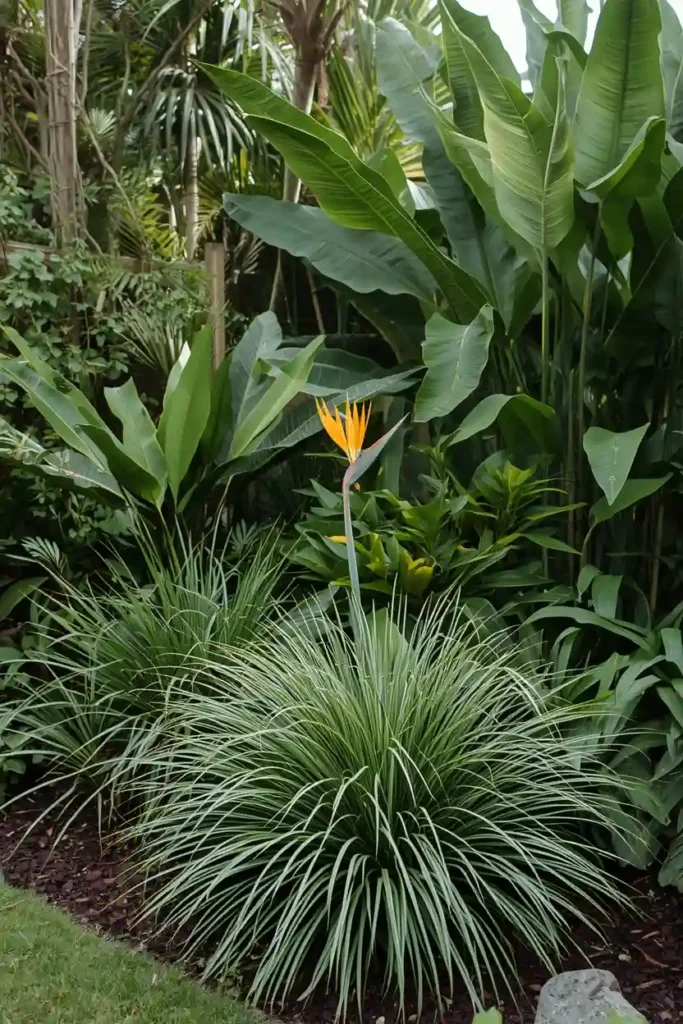
What you’re seeing: A tight corner of a small yard transformed into a lush, three-tiered tropical vignette. Tall bird of paradise plants anchor the back, medium-height cordylines create the middle layer, and low-growing mondo grass and mossy ground cover fill the base. A single terracotta pot with a compact palm adds a focal point.
Why it works: The trick to making a small space feel abundant rather than crowded is vertical layering. When you stack plants at different heights — tall, medium, low — the eye travels upward rather than feeling boxed in. This corner design uses less than 4 square feet of actual ground space, yet it photographs like a resort garden.
Expert Tip: Always start your design at the back wall or fence. Place your tallest plant first, then work outward and downward. Leave at least 12–18 inches between the largest plants so air can circulate (this also prevents disease in dense tropical plantings). Add a thin layer of dark cocoa mulch at the base — it photographs beautifully and retains moisture.
💬 Which style speaks to you more — a full jungle-corner look, or something more structured and modern? Drop your answer in the comments!
2. The Container Tropical Oasis (Perfect for Patios and Renters!)
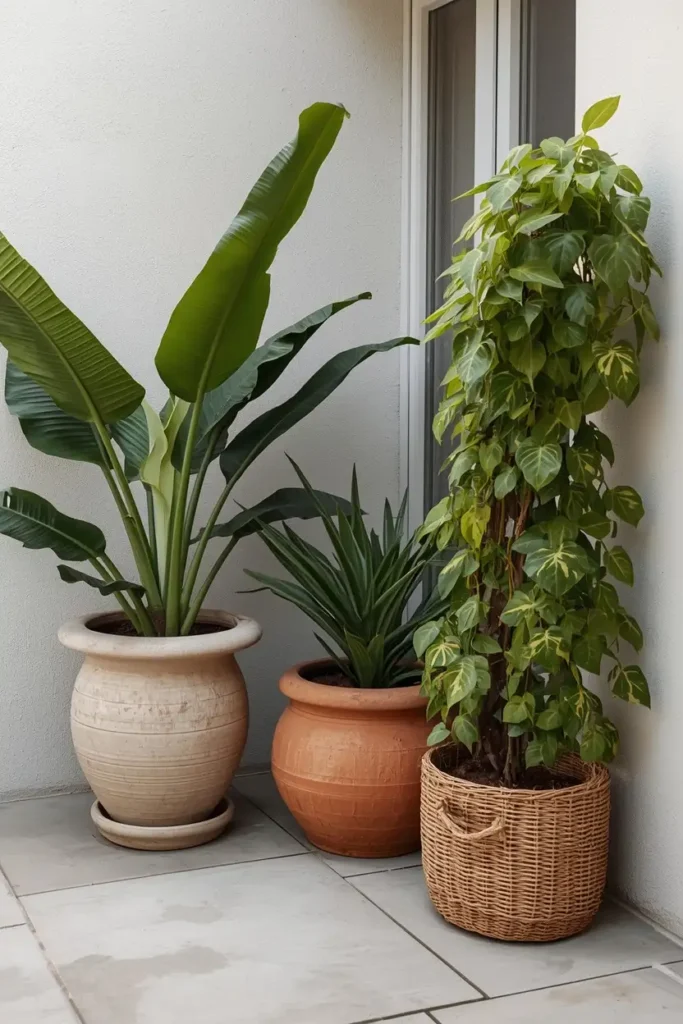
What you’re seeing: A small concrete patio completely transformed using nothing but containers. An oversized ceramic pot holds a dwarf banana plant that towers overhead. Medium terracotta planters host elephant ears and colorful bromeliads. A wicker basket-style planter overflows with trailing golden pothos.
Why it works: This is the most versatile approach to small tropical garden design because you own nothing permanent — you can rearrange, take your plants when you move, and adapt the layout to any season. The key is varying your container sizes dramatically. One oversized pot (18–24 inches) acts as your anchor plant, while medium and small pots fill in around it. Never line up same-size containers in a row — it reads as boring.
Expert Tip: Group containers in odd numbers (3, 5, 7) and vary their heights by placing smaller pots on overturned terracotta pots or decorative plant stands. This creates the illusion of a planted-in-ground garden without breaking ground at all. Choose dark-colored or aged-looking containers — they complement tropical foliage far better than bright white ones.
3. The Bamboo Privacy Screen Garden
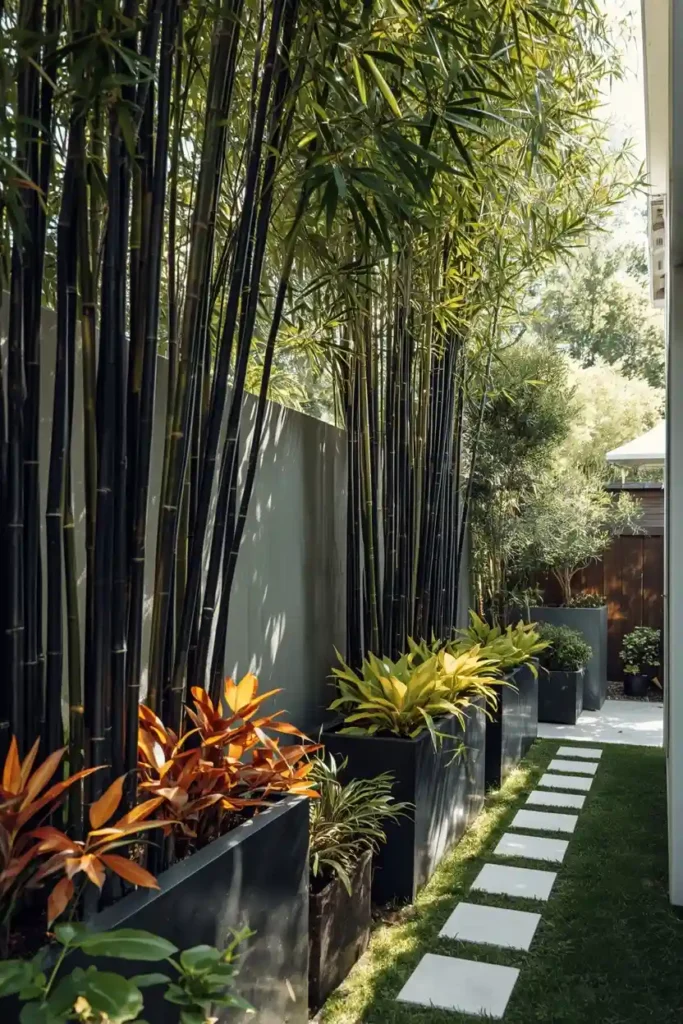
What you’re seeing: A narrow side yard (barely 4 feet wide) flanked by a row of clumping black bamboo in tall planters. At the base of each bamboo planter, vibrant croton plants spill their boldly colored leaves in orange, red, and gold. The overall effect is a dramatic, private corridor.
Why it works: Clumping bamboo (as opposed to running bamboo — never plant running bamboo in a small space!) grows in contained upright clumps that are perfect for creating vertical privacy walls. It grows fast, stays architectural, and the dark stems are genuinely beautiful against a light-colored fence or wall. Combined with colorful crotons at the base, this design packs maximum visual drama into a space where most people give up entirely.
Expert Tip: Always choose clumping bamboo varieties like Fargesia or Bambusa — they won’t invade your neighbor’s yard. Keep them in large, deep planters (at least 15 gallons) to limit spread and make them movable if needed. Water generously — bamboo in containers dries out faster than in-ground plantings.
4. Tropical Raised Bed with Bold Foliage
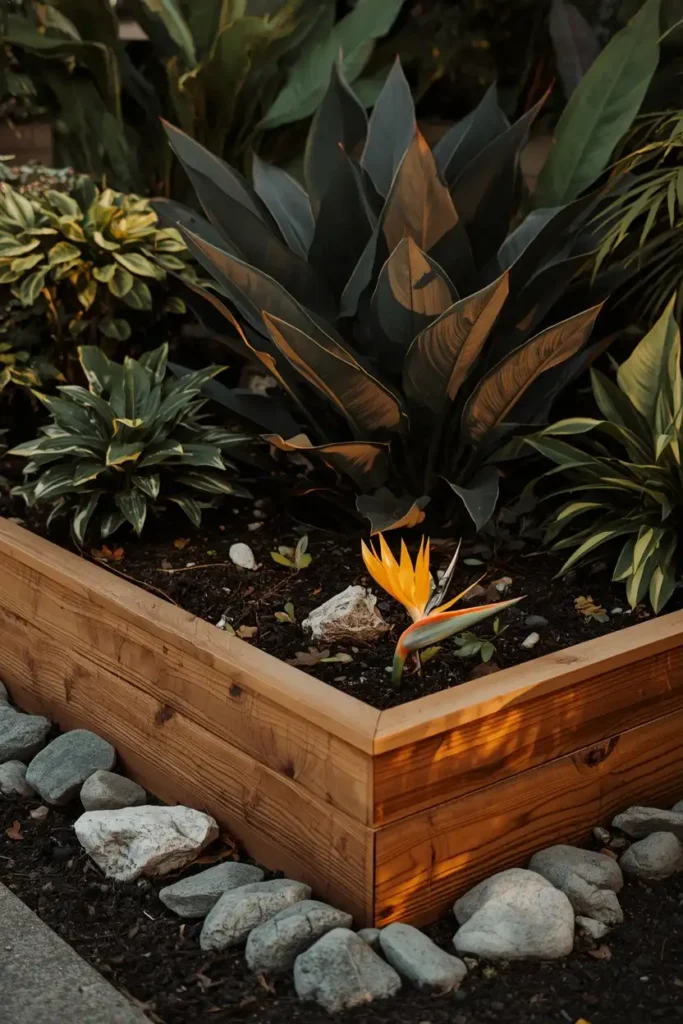
What you’re seeing: A single cedar raised bed (roughly 4×6 feet) filled with a dramatic mix of oversized-leaf tropicals. Black elephant ears take center stage, flanked by variegated shell ginger and a compact bird of paradise on the corner. The bed is edged with polished river rocks.
Why it works: Raised beds give you complete control over your soil quality — a huge advantage with tropical plants that crave rich, well-draining growing media. By containing the plants in a defined shape, the design looks intentional and polished even when the plants grow large. The bold foliage contrast (dark vs. light, large vs. medium leaf size) keeps your eye moving across the composition.
Expert Tip: Fill your raised tropical bed with a mix of 60% high-quality potting mix, 30% compost, and 10% perlite for drainage. Tropicals are heavy feeders — use a slow-release fertilizer granule at planting time, then liquid feed monthly during the growing season. If you love raised bed gardening, check out our popular DIY Elevated Garden Bed Plans
5. The Mini Water Feature Tropical Garden
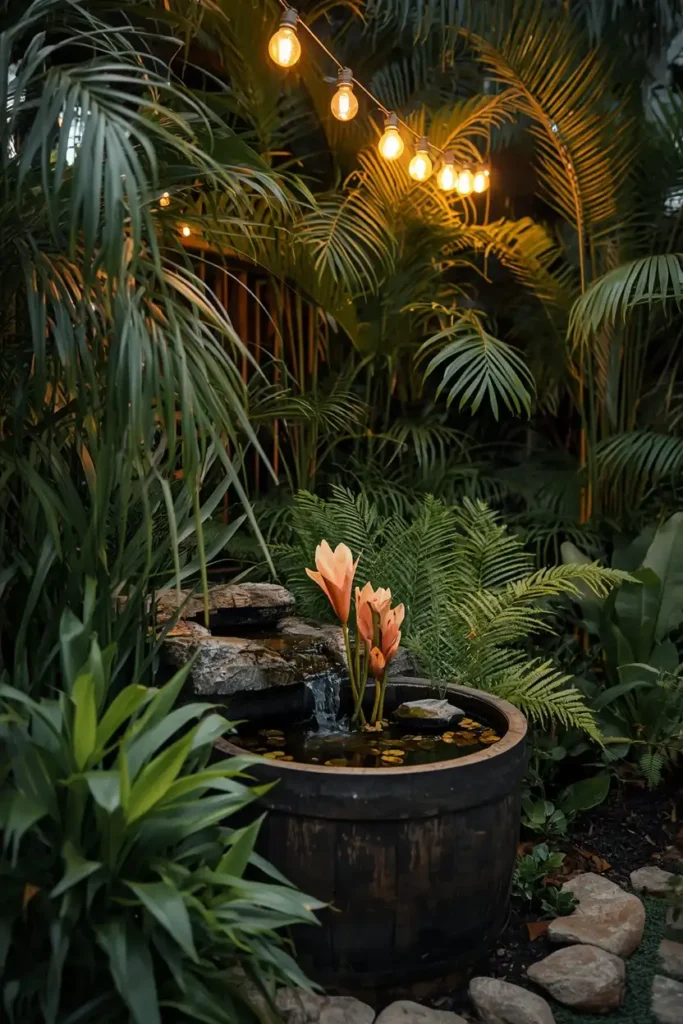
What you’re seeing: A compact 6×6 patio corner anchored by a small pre-formed pond or barrel water feature. Around it, papyrus grass, water-loving canna lilies, and lush ferns create an authentic tropical waterside atmosphere. String lights overhead add an evening glow.
Why it works: Water is the secret ingredient that makes a tropical garden feel alive. Even the gentlest trickle of moving water introduces ambient sound that completely blocks out street noise, making your tiny garden feel secluded and serene. Pre-formed ponds and self-contained fountain features cost as little as $60–$150 and require no plumbing — just a standard outdoor outlet.
Expert Tip: Place your water feature slightly off-center in your design, never dead-center. This creates a more natural composition. Surround it with moisture-loving plants that genuinely benefit from the humidity a water feature generates — ferns, papyrus, taro, and canna lilies all adore this environment.
6. The Shaded Tropical Retreat
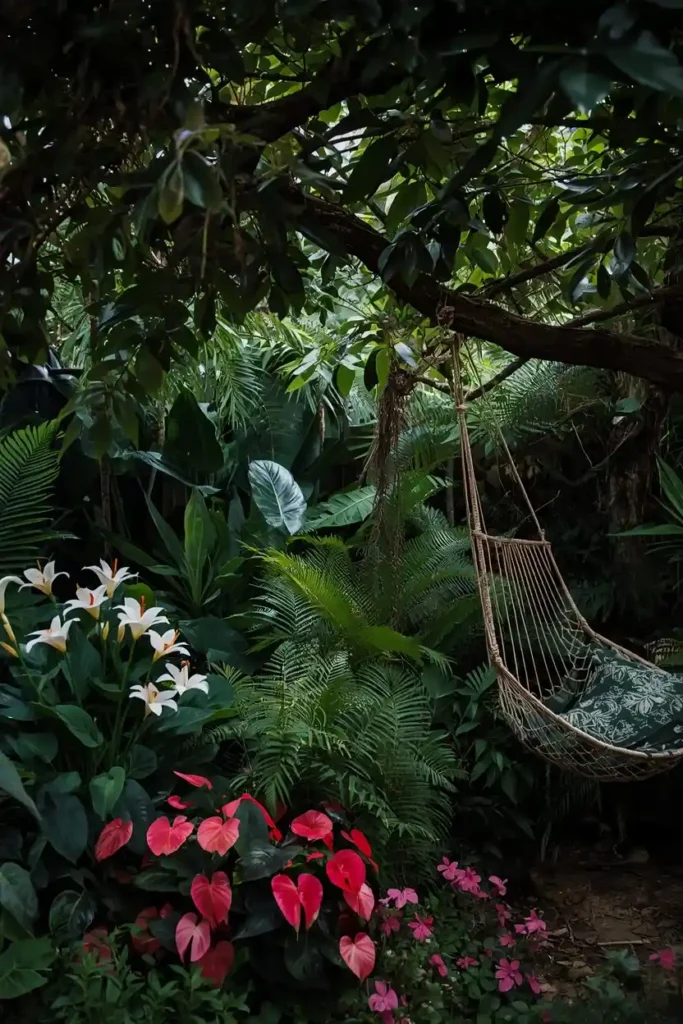
What you’re seeing: A small garden area beneath a large tree or on a north-facing patio that’s been transformed into a cool, mossy tropical haven. Peace lilies and cast iron plants anchor shady spots, while colorful caladiums provide pops of pink, red, and white. A hammock chair hangs from a pergola overhead.
Why it works: Most people assume tropical gardens need full sun. Wrong! Many of the most beautiful tropical plants — caladiums, philodendrons, peace lilies, gingers — actually prefer dappled shade or indirect light. This design idea is specifically tailored for those frustrating shady spots where nothing seems to grow. Embrace the shade. It’s your opportunity to create a lush, cool green canopy that feels like a rainforest floor.
Expert Tip: In shaded tropical designs, maximize contrast with leaf color rather than flower color. Mix solid dark green (cast iron plant) with boldly variegated leaves (caladium, dieffenbachia) and airy fern textures. The variety of textures and patterns compensates for the reduced light.
💬 Do you have a sunny patio or a shady garden corner? I’d love to know which scenario you’re working with — it’ll help me point you to the right plants!
7. Tropical Garden Path with Stone Stepping Stones
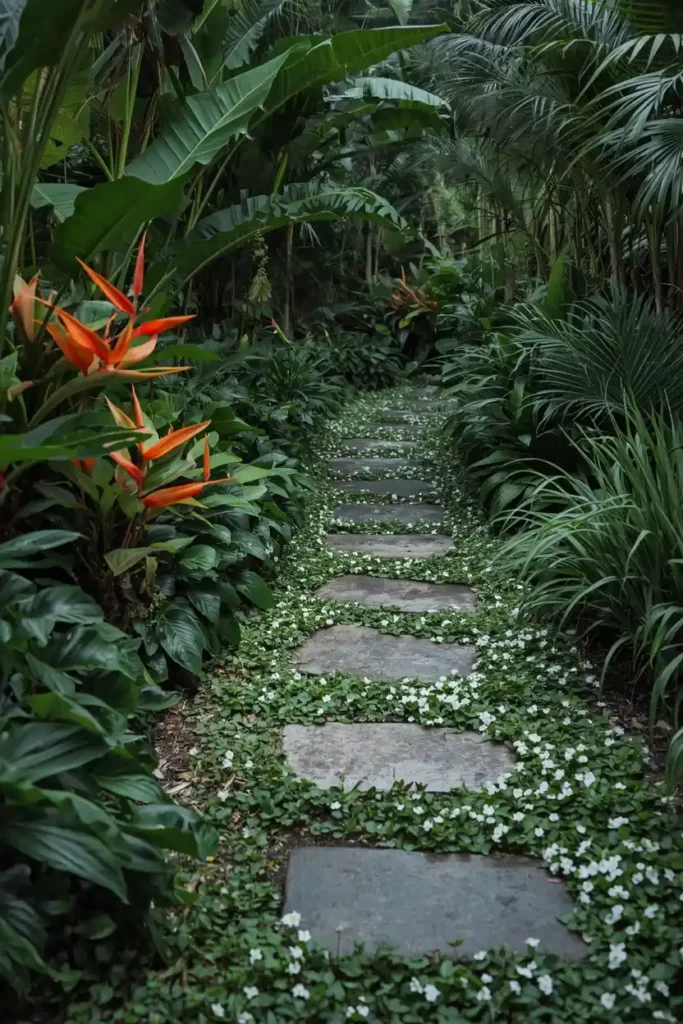
What you’re seeing: A narrow garden path lined with lush tropical plantings on both sides. Large flat stepping stones snake through the garden, with low-growing artillery fern and baby tears softening the edges. On each side, gingers, heliconias, and ornamental grasses create an enveloping tunnel effect.
Why it works: A path makes even the smallest garden feel explorable and dimensional. It gives the eye a direction to follow and creates the experience of moving through a garden, rather than just looking at it. This is a psychology trick that garden designers use constantly — people feel more connected to a garden they can walk into.
Expert Tip: Lay stepping stones at a casual, slightly meandering angle rather than straight lines. Leave 1–2 inch gaps between stones and allow moss or creeping thyme to fill in naturally — it adds authenticity and eliminates the need for weeding between stones. Use stones that are at least 18 inches across so they feel stable underfoot.
8. Balcony Tropical Garden with Vertical Planters
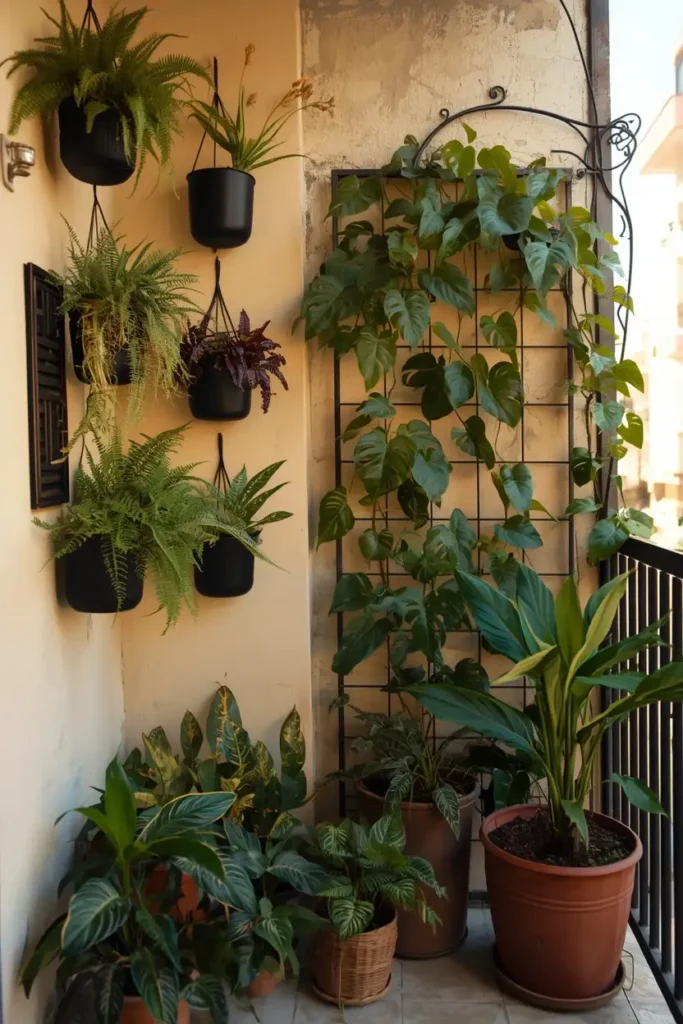
What you’re seeing: A small apartment balcony (roughly 4×8 feet) transformed with a combination of vertical wall planters and floor containers. A trellis holds trailing passion vine, while wall-mounted pockets hold ferns, bromeliads, and trailing philodendrons. Two large floor containers hold a dwarf palm and a bird of paradise.
Why it works: On a balcony or small patio, floor space is precious. Going vertical is the only way to maximize a tropical design without crowding the space. Wall-mounted planters and trellises take the planting up the wall, making the entire surface area — not just the floor — part of your garden canvas. This design achieves what feels like 50+ plants in under 40 square feet of floor space.
Expert Tip: Ensure your balcony railing and wall structure can handle the weight of full planters before installing wall-mounted systems. Use lightweight potting mix and plastic or fiberglass containers rather than heavy terracotta on elevated surfaces. Self-watering wall planter systems are worth the investment — they reduce daily watering dramatically.
9. Tropical Courtyard with Mosaic Tile Accents
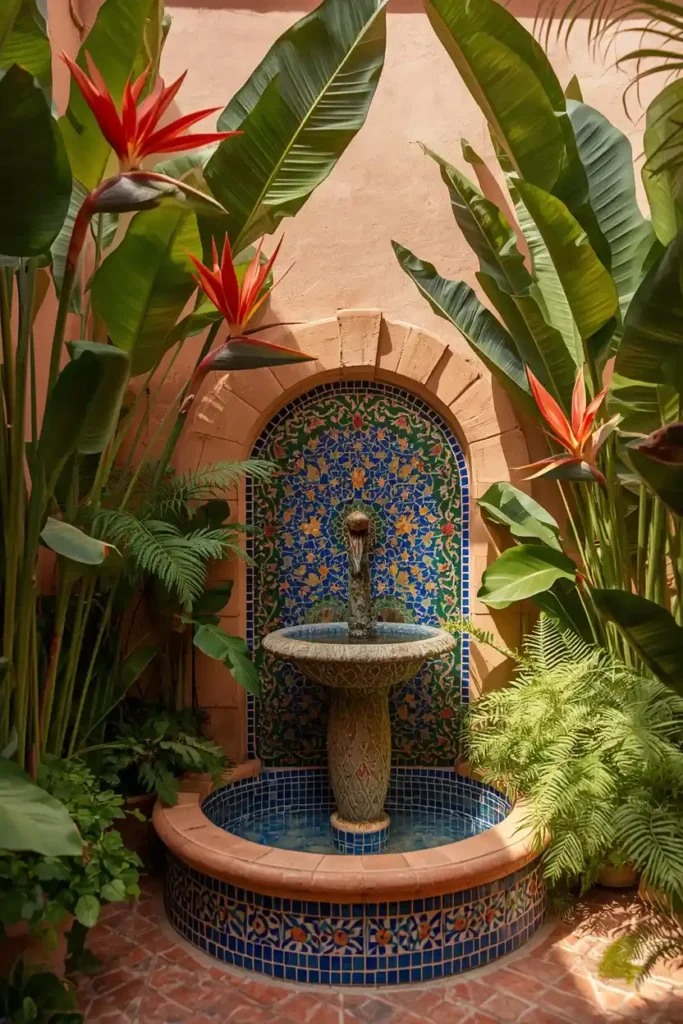
What you’re seeing: A small enclosed courtyard featuring tropical plants surrounding a central mosaic tile focal point — either a small fountain, a tile table, or a decorative inset in the ground. Bold heliconias, lush ferns, and towering bird of paradise plants frame the space.
Why it works: Adding a hardscape element like mosaic tile grounds a tropical garden in an artistic, intentional aesthetic. The tropical “bohemian” vibe pairs naturally with Moroccan or Mediterranean tile patterns in turquoise, cobalt, and terracotta tones. It transforms the garden from “I just planted some tropical plants” to “I designed a destination.”
Expert Tip: You don’t need to do custom tilework — affordable mosaic tile stepping stones (available at major garden centers for $15–$40 each) can create the same effect scattered throughout a planting bed. Choose colors that echo your pot colors or flowering plants for a cohesive look.
10. The Tropical Poolside Micro-Garden
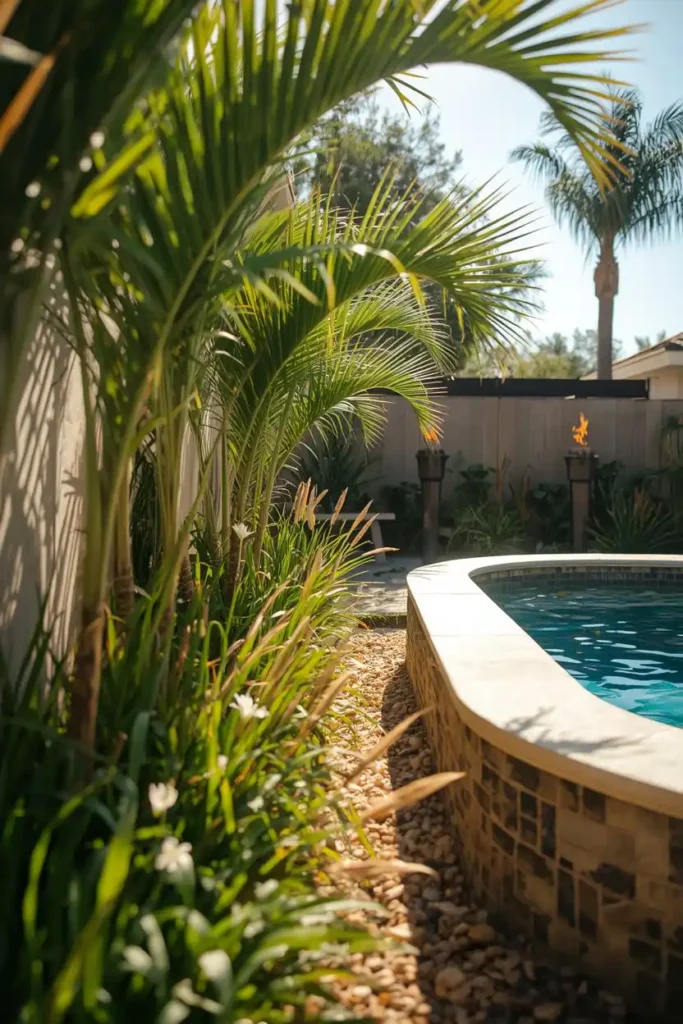
What you’re seeing: A narrow planting strip alongside a small above-ground pool or even a large garden tub. Sago palms, ornamental grasses, and canna lilies create a “resort pool” atmosphere in just 2–3 feet of planting space. Solar-powered tiki torches add evening ambiance.
Why it works: Even a small above-ground pool feels like a luxury resort when the surround planting is tropical and lush. This design requires very little space — a planting strip as narrow as 18 inches can create a convincing tropical resort border. The key is planting in a wave: alternating heights of tall, medium, and low plants that mirror each other on both sides of the pool.
Expert Tip: Choose plants with sturdy foliage that won’t drop flowers or debris into pool water. Ornamental grasses, sago palms, and cordylines are all excellent pool-side choices — beautiful, architectural, and clean-growing. Avoid flowering plants directly adjacent to pool water.
11. Tropical Night Garden with Ambient Lighting
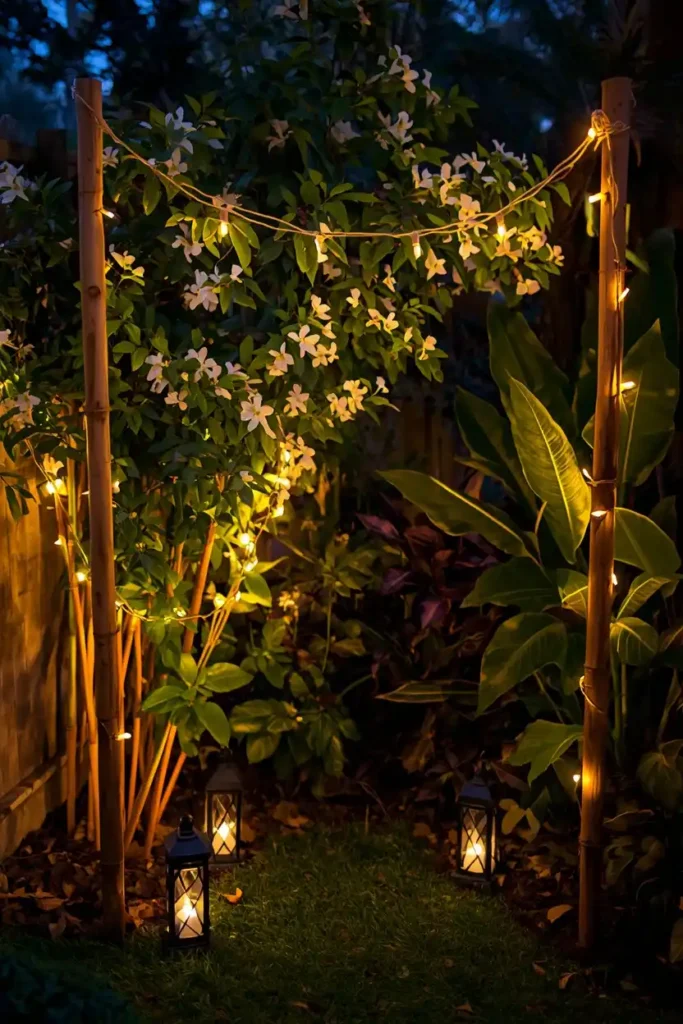
What you’re seeing: A small garden completely redesigned for evening enjoyment. White-flowering tropical plants (jasmine, white canna, gardenia) glow under warm string lights strung between bamboo poles. Solar lanterns tucked into the foliage create golden pools of light. Dark-leaved elephant ears and deep purple cordylines add dramatic contrast.
Why it works: Most garden design thinking focuses on daytime. But your tropical garden can be just as magical — arguably more magical — at night with the right lighting strategy. White flowers naturally reflect and amplify warm light, while dark foliage creates depth and mystery. The combination is genuinely stunning and takes a small space from “just a garden” to “a place I actually want to sit every evening.”
Expert Tip: Use warm-white (2700K) string lights rather than cool-white or blue-white — they’re far more flattering on both plants and people. Solar path lights embedded in the mulch at plant bases create a dramatic uplighting effect on large-leaved tropicals. This costs virtually nothing to run after the initial investment.
💬 Do you use your outdoor space more during the day or in the evenings? Your answer might totally change which of these designs is right for you!
12. Tropical Garden with Reclaimed Wood Accents
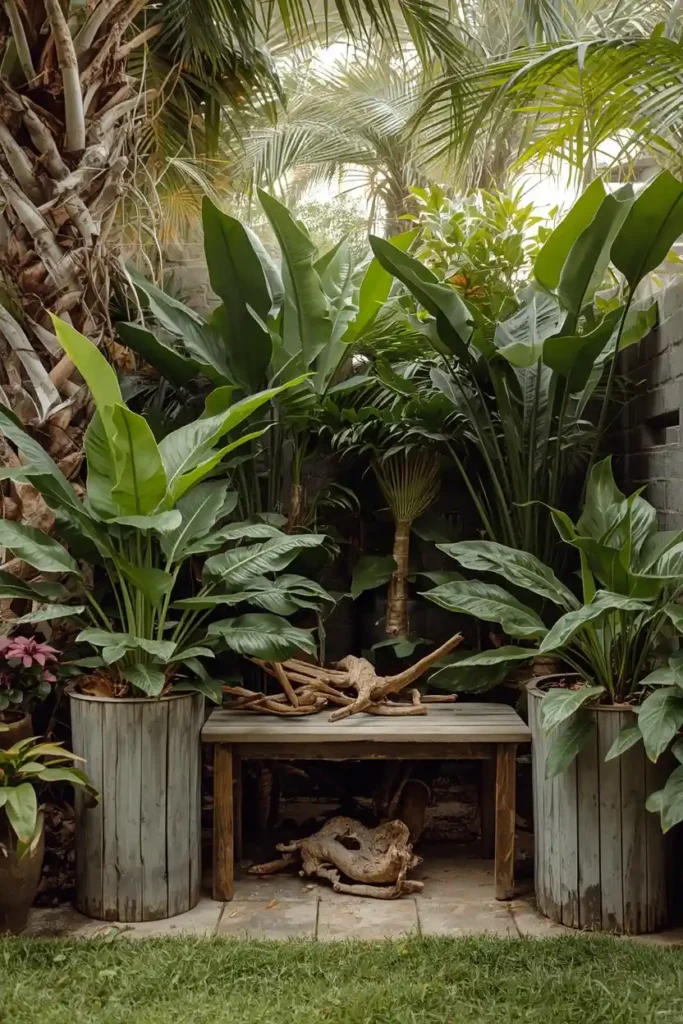
What you’re seeing: A small backyard corner featuring beautiful tropical plants arranged alongside reclaimed wood elements — a weathered wood planter box, a simple wooden bench, and driftwood accents peeking through the foliage. The overall effect is organic, earthy, and deeply relaxing.
Why it works: Natural wood textures complement tropical foliage in a way that painted or synthetic materials simply can’t match. The weathered, imperfect character of reclaimed wood suggests that this garden has been growing and evolving naturally for years — even if you just planted it last weekend. It adds warmth and authenticity that elevates the entire design.
Expert Tip: Seal any reclaimed wood used in direct soil contact with an outdoor wood preservative — even “weathered” wood will rot quickly when buried or in constant contact with moist soil. Elevate wood planters slightly on small feet or casters to improve airflow underneath and dramatically extend their lifespan.
13. Tropical Fence Line Garden
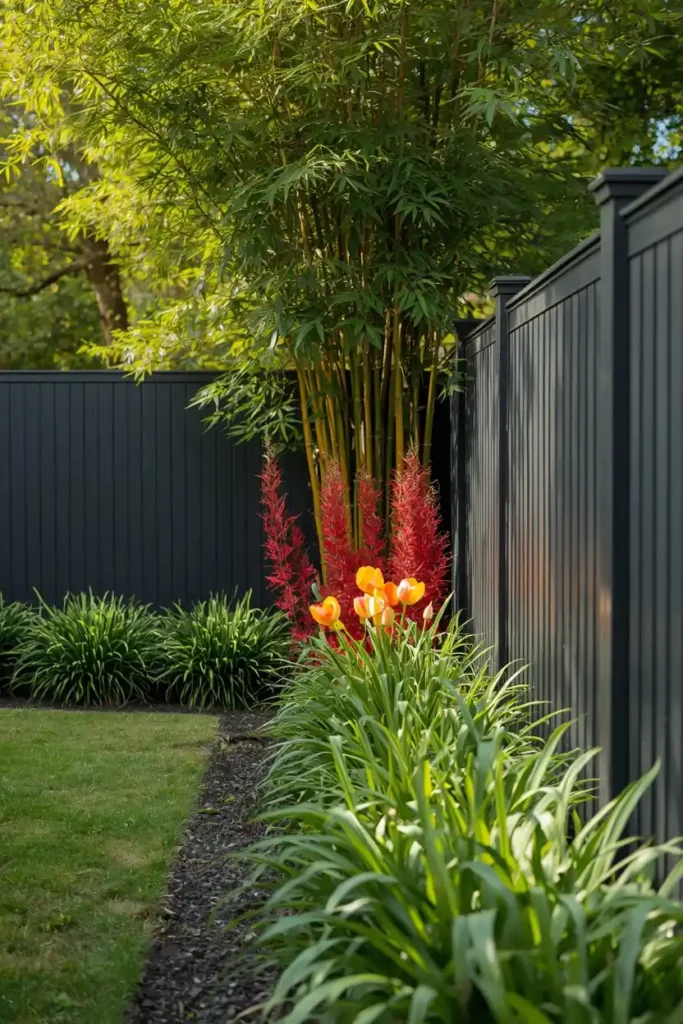
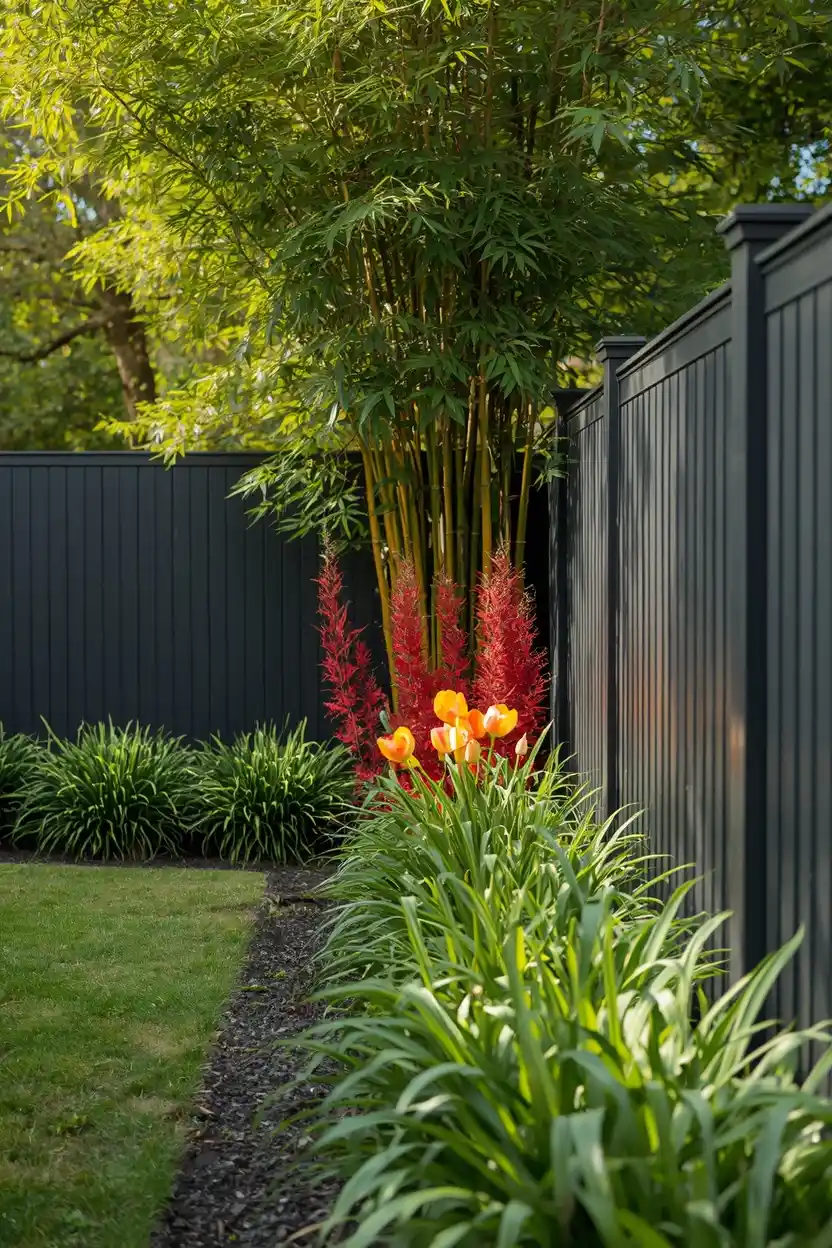
What you’re seeing: A long, narrow strip of planting along a backyard fence line — the type of space most people fill with foundation shrubs and call it a day. Instead, a layered tropical design featuring clumping bamboo at the fence, tall gingers in front, medium crotons in the middle layer, and liriope as a neat edge creates a lush, resort-quality border.
Why it works: Fence lines are almost always underutilized in small garden design. A strip as narrow as 18–24 inches can hold an incredible amount of tropical planting if you think vertically. The fence itself provides a beautiful backdrop that makes foliage colors pop, and you’re essentially “borrowing” the vertical height of the fence as part of your design.
Expert Tip: Paint the fence section behind your tropical planting in a deep color — charcoal gray, deep green, or even matte black — before planting. This creates a striking backdrop that makes every leaf and bloom stand out dramatically. Many homeowners report this single change makes their garden look like it was professionally designed.
14. Tropical Garden in a Gravel Courtyard
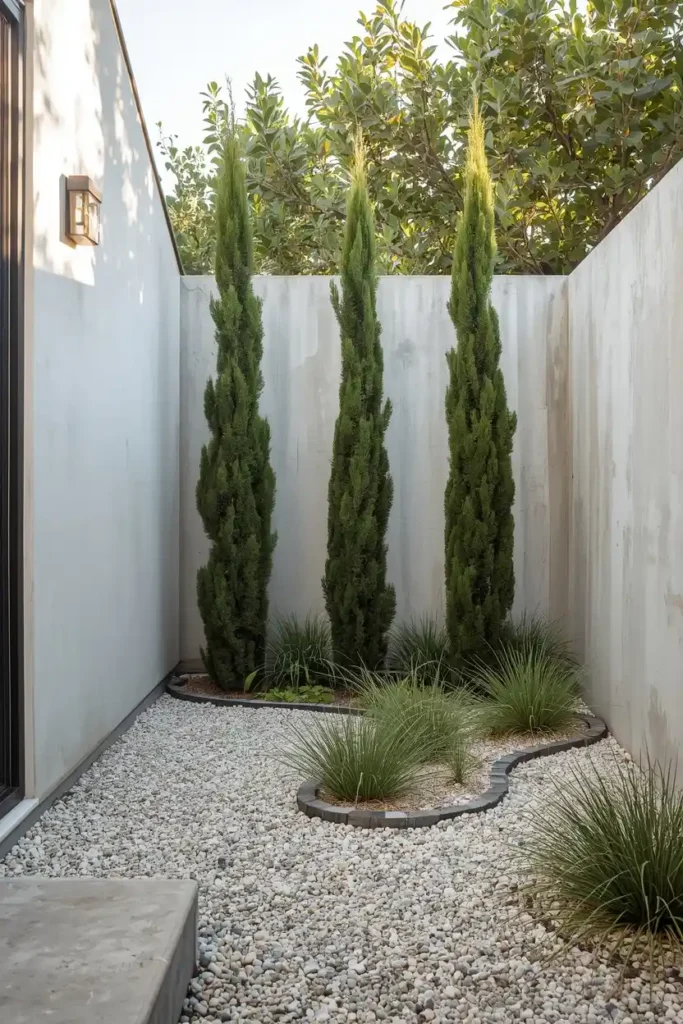
What you’re seeing: A small gravel courtyard (the type often found in Mediterranean or modern homes) punctuated by bold tropical plants growing through the gravel in carefully placed clusters. Three large cordylines create an irregular triangle of height, while low-growing sedum and ornamental grasses soften the gravel at ground level.
Why it works: Gravel is a low-maintenance, beautiful base for tropical plants because it provides excellent drainage — exactly what many tropicals need to avoid root rot. The textural contrast between the fine, uniform gravel and the bold, dramatic tropical foliage is visually powerful. This design works beautifully in warm, dry climates (zones 9–11) where water conservation is a priority.
Expert Tip: Use a permeable landscape fabric under your gravel to suppress weeds without blocking water. Cut X-shaped openings in the fabric wherever you want to plant, and place your plant through the opening before adding gravel around the base. This dramatically reduces weeding maintenance.
15. The Tropical Entryway Garden
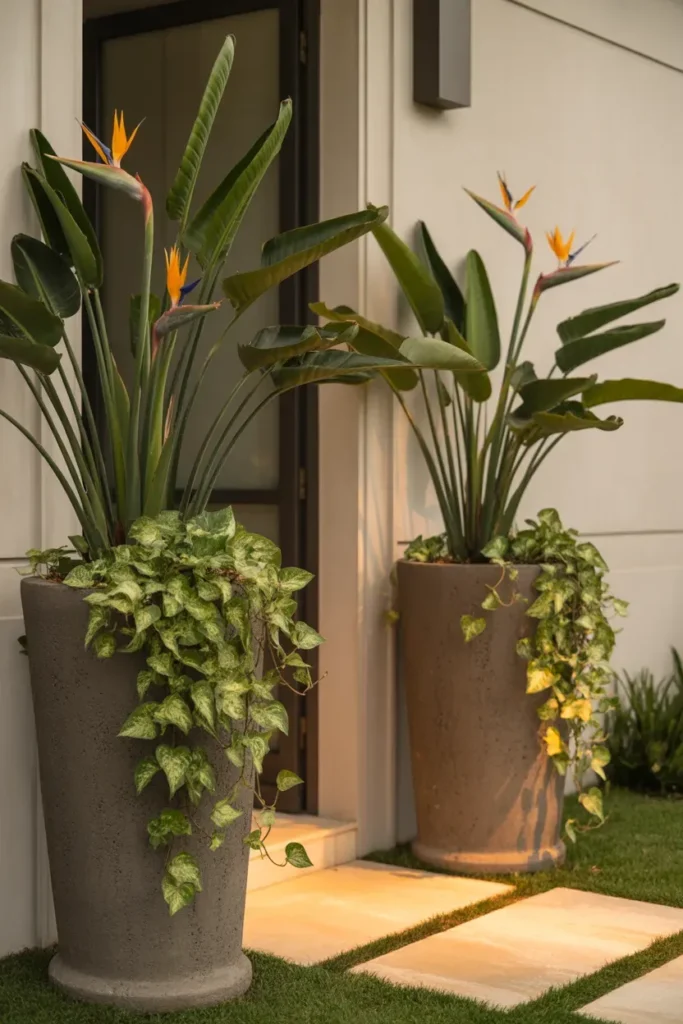
What you’re seeing: A front door entryway flanked by matching statement tropical planters — oversized urns or sleek concrete pots holding dramatic bird of paradise or tall, architectural sago palms. Cascading foliage at the base from trailing pothos or heart-leaf philodendron softens the stone or concrete entryway.
Why it works: Your entryway is the first impression of your home — and two bold tropical statement plants create an impact that no foundation hedge ever could. This is the highest ROI tropical garden project you can do for your home: two containers, two plants, and you’ve completely transformed the curb appeal. It’s also the easiest — no digging, no landscaping, no irrigation system required.
Expert Tip: Choose containers that are at least 1/3 the height of the plants they’ll hold — this ensures visual proportion. For a classic entryway look, keep both sides symmetrical with identical pots and plants. For a more modern, editorial vibe, mix slightly different heights on each side — same plant species, same pot style, but staged at slightly different heights using plant stands.
🌴 Your Tropical Garden Awaits
I hope these 15 small tropical garden design ideas have shown you that a lush, resort-worthy garden is absolutely within reach — no matter how small your outdoor space is. The secret isn’t size. It’s layering, texture contrast, bold planting choices, and a willingness to think vertically.
Start small: pick one corner, choose 3–4 bold plants at different heights, add mulch and a statement container, and watch what happens. Once you see how quickly a small tropical planting can transform a space, you’ll be hooked.
Ready to keep exploring? If you’re working with a small outdoor space in a warm climate, you’ll love our post on Patio Ideas for Florida Homes it’s full of practical inspiration for warm-weather outdoor living. And if you want to take your small-space outdoor design even further, our Small Front Yard Landscaping Ideas guide has some of our most-saved projects on Pinterest!
Save this post for your next garden planning session, share it with someone who’s been debating what to do with that neglected corner — and most importantly, get outside and start planting. Your tropical paradise is waiting. 🌿
Did you try one of these ideas? I’d genuinely love to see it! Tag us on Pinterest or drop a comment below with your before and after — there’s nothing that makes my day more than seeing a reader’s transformation.