10 Boho Bedroom Ideas That Will Make You Never Want to Leave Your Bed
This article was created in line with Trends Oraa’s research and content standards.
Your bedroom doesn’t feel like you.
You’ve tried adding a throw pillow or two. Maybe a plant. But something still feels off — like you’re sleeping in a showroom instead of a sanctuary.
Here’s the truth: most boho bedroom ideas you see online look gorgeous in photos but feel impossible to actually pull off. The good news? It’s not about having a big budget or design experience. It’s about knowing the right layering techniques, textures, and pieces that create that effortless, lived-in magic.
I’ve rounded up 10 boho bedroom ideas that are equal parts dreamy and doable — whether you’re starting from scratch or just want to refresh what you already have.
You might also love our guide on Romantic Bedroom Ideas that feel just as warm and personal as boho style.
Let’s get into it.
What Makes a Bedroom Truly “Boho”?
Before we dive into the ideas, let’s get clear on what boho actually means.
Bohemian style is rooted in freedom — freedom from matching sets, rigid color rules, and “perfect” everything. It draws from global influences: Moroccan textiles, Indian block prints, Southwestern patterns, vintage European finds. It’s warm, layered, and deeply personal.
The best boho bedrooms feel collected, not decorated. Like every piece has a story.
Which of these ideas do you think would feel most “you”? Keep that question in mind as you scroll.
10 Boho Bedroom Ideas to Transform Your Space
1. The Macramé Headboard Moment
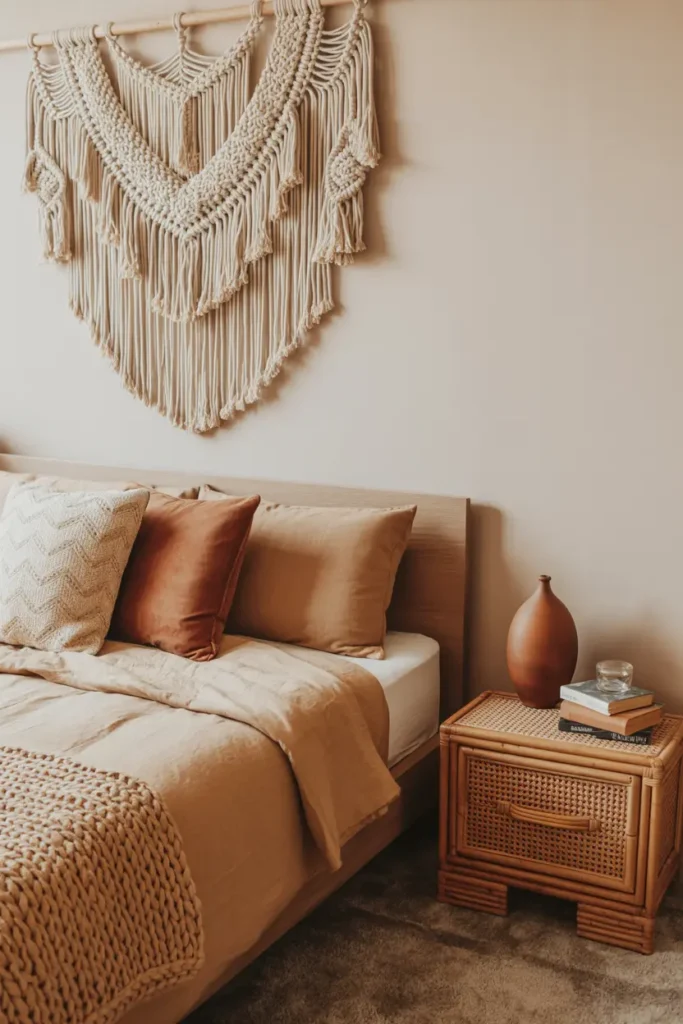
What You’re Seeing
Picture a bed pushed against a warm white wall, no traditional headboard in sight. Instead, a massive hand-knotted macramé piece hangs behind the pillows — creamy ivory threads cascading down in intricate knots and fringe. A linen duvet in warm oat tones sits below, layered with rust-colored throw pillows and a chunky knit blanket draped at the foot of the bed. A rattan nightstand sits beside it, holding a terracotta vase and a stack of vintage books.
Design Breakdown
The macramé headboard is probably the most iconic of all boho bedroom ideas — and for good reason. It adds massive visual impact without requiring you to commit to a permanent furniture piece. These wall hangings come in dozens of sizes, from modest bedroom accents to floor-grazing statement pieces. You can DIY one for under $30 in supplies, or find ready-made options at craft fairs, Etsy shops, or even big-box stores.
The key to making this work is scale. Go bigger than you think you need to. A small macramé piece above a queen bed will look lost. You want something that spans at least two-thirds of the bed’s width.
Expert Tip
Hang the macramé about 6–8 inches above your pillow line for the most balanced look. If your ceilings are high, let it trail down lower to fill the vertical space.
Why It Works
Macramé adds texture without color — which means it works with virtually any palette. It softens the wall, draws the eye upward (making rooms feel taller), and immediately communicates that relaxed, artisan-crafted aesthetic that boho is all about.
Best For
- Renters (no nails needed with the right hooks)
- Budget makeovers
- Small and large spaces alike
Common Mistake to Avoid
Don’t hang it too high. When macramé floats near the ceiling with a visible gap above the bed, it looks disconnected rather than intentional.
Quick Wins
- Choose natural cotton rope over synthetic for a warmer, more authentic look
- Pair ivory macramé with warm-toned bedding (rust, terracotta, sand) rather than cool whites
- Add a small potted trailing plant nearby to complement the organic vibe
- Layer a woven blanket at the foot of the bed to carry the texture throughout
2. Layered Textiles Heaven
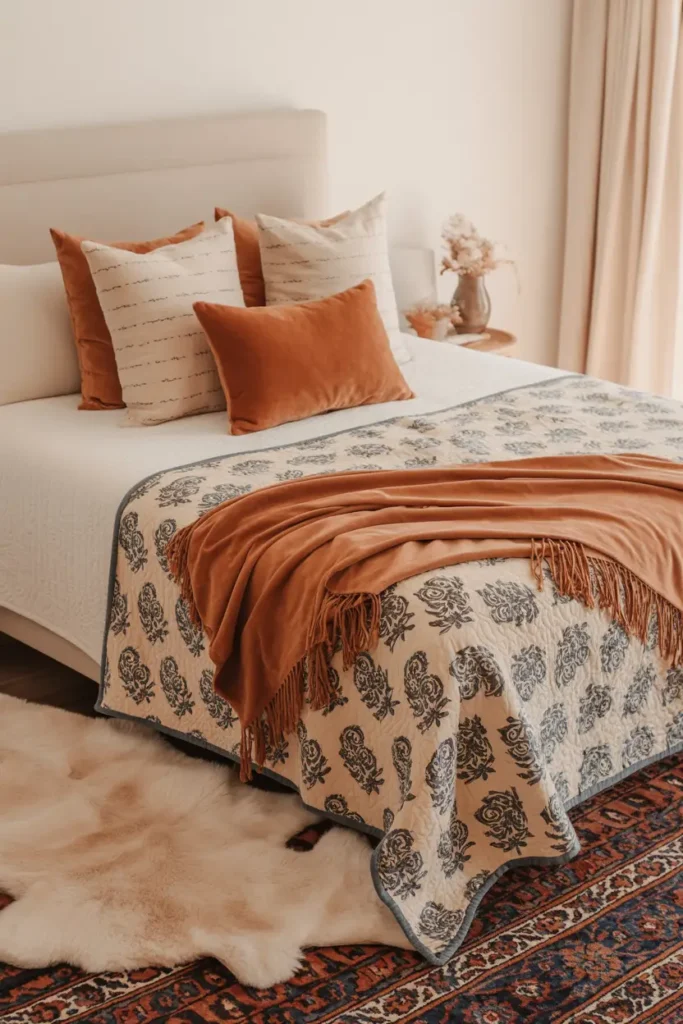
What You’re Seeing
A bed so beautifully layered it almost hurts. A linen base sheet in warm white. On top, a patterned quilt in muted indigo and cream — think vintage block print, not bold geometric. Then a velvet pillow in deep terracotta. A lumbar pillow in a mudcloth pattern. A fringed throw casually tossed across the lower third of the bed. A sheepskin rug peeking out from beneath the bed frame. Every piece is a different texture, but the palette holds it all together.
Design Breakdown
In boho design, more is more — but only when there’s a unifying thread (literally and figuratively). The secret to layering textiles without looking chaotic is working within a constrained color palette of 3–4 tones. Pick a base neutral (cream, white, natural linen), add a warm mid-tone (terracotta, sage, dusty rose), and then one deeper anchor (rust, deep navy, chocolate brown). Every fabric you add should come from that palette.
Mix patterns freely — stripes with florals, geometric with organic — but keep the colors consistent and you’ll be fine.
Expert Tip
Shop vintage and thrift stores for textiles. Old quilts, embroidered pillow covers, and ethnic-printed blankets are almost always better quality than new mass-produced options — and they add that “collected over time” feeling that’s central to true boho style.
Why It Works
Layering creates a sense of warmth, abundance, and comfort. Psychologically, a well-layered bed signals luxury and rest — which is exactly what a bedroom should do. Texturally, it adds dimension that flat, matched sets simply can’t replicate.
Best For
- All budgets (thrifting makes this very affordable)
- Families
- Anyone who gets cold easily
Common Mistake to Avoid
Don’t try to make everything match. Identical pillows and a matching throw look intentional in a minimalist room, but in a boho space, it reads as stiff and uninspired. Embrace the mix.
Quick Wins
- Buy pillowcases and shams separately for more flexibility
- A fringed blanket instantly adds boho texture
- Layer rugs, not just textiles on the bed
- Refresh the look seasonally just by swapping the top throw
Most people don’t know this… The ratio of smooth to textured surfaces in your bedroom dramatically affects how cozy it feels. Boho spaces work so well because they tip the balance heavily toward texture — woven, knitted, embroidered, and fringed surfaces absorb both light and sound, which makes the room feel noticeably quieter and more restful. If your bedroom feels cold or echoey, add more fabric layers before you change anything else.
Which bedroom vibe feels most like you right now — maximalist and layered, or calm and minimal? Drop a comment below — I’d love to know!
Most people waste more space than they realize.
3. The Canopy Bed Without the Canopy Bed
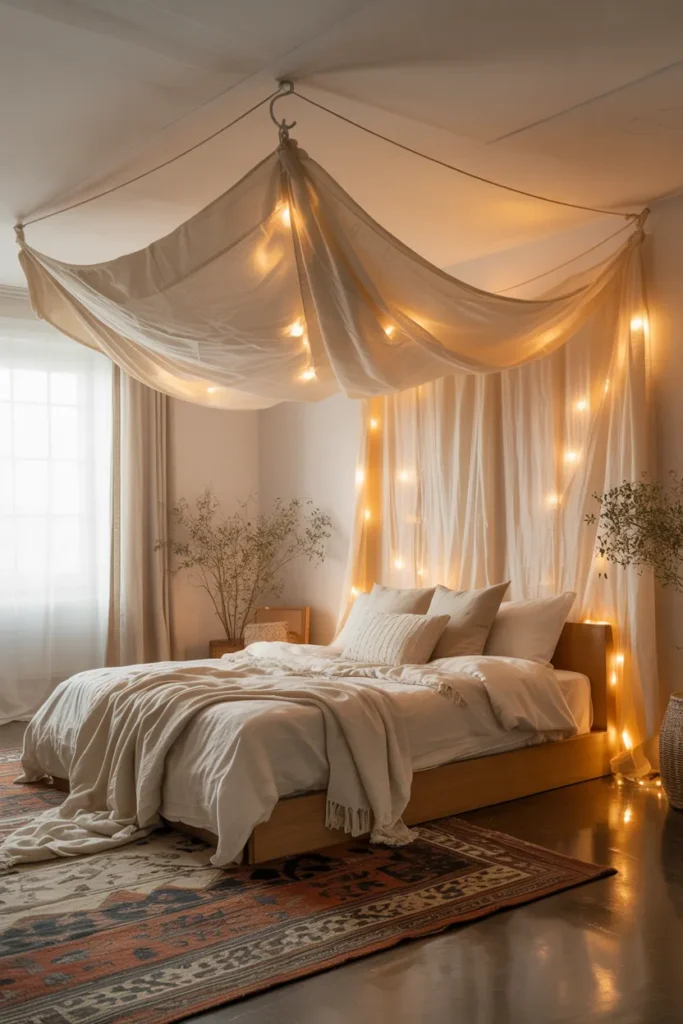
What You’re Seeing
A standard platform bed frame — nothing fancy — transformed by a simple length of sheer linen or gauzy fabric draped from a ceiling hook directly above the headboard. The fabric falls loosely on both sides of the pillows, pooling slightly on the floor. Fairy lights are woven into the canopy fabric, casting a warm, almost golden glow. Below, the bed is dressed in layers of white and cream with a faded Turkish kilim beneath.
Design Breakdown
A full four-poster canopy bed is the dream, but it’s expensive, heavy, and often impossible for renters. This floating canopy technique gives you 90% of the effect for a fraction of the cost.
You need: a ceiling hook (a simple toggle bolt works in most ceilings), a length of fabric (sheer linen, muslin, or gauze — about 5–6 yards), and optional fairy lights.
Fold the fabric in half widthwise, drape it over a wooden ring or curtain rod attached to the hook, and let it fall on both sides. Adjust the height so the sides skim the level of the top of your headboard or pillows.
Expert Tip
Use a single color for the canopy — white, ivory, or very light blush — to keep it airy. Dark fabrics can feel heavy and make the ceiling appear lower.
Why It Works
Canopies create a sense of enclosure around the sleeping area, which humans naturally find soothing. It signals to your nervous system that this is a protected, intimate space — ideal for rest. Beyond the psychological benefit, it adds vertical interest and makes the bed feel like a destination.
Best For
- Renters
- Small and medium bedrooms
- Budget makeovers (under $40 total)
- Romantic bedroom aesthetics
Common Mistake to Avoid
Don’t use fabric that’s too stiff. Heavy cotton or canvas won’t drape beautifully — it’ll look more like a tent than a canopy. Go for lightweight, fluid fabrics that fall naturally.
Quick Wins
- String fairy lights through the canopy for evening ambiance
- Tie the sides loosely back during the day for a different look
- Use a vintage scarf or sari fabric for extra pattern
- A wooden ring hanger looks more intentional than a plain hook
You May Also Like:
- Bedroom Curtain Ideas
- Bedroom Lighting Ideas
- Cosy Bedroom Ideas
- Romantic Bedroom Ideas
- Feminine Bedroom Ideas
4. The Vintage Gallery Wall
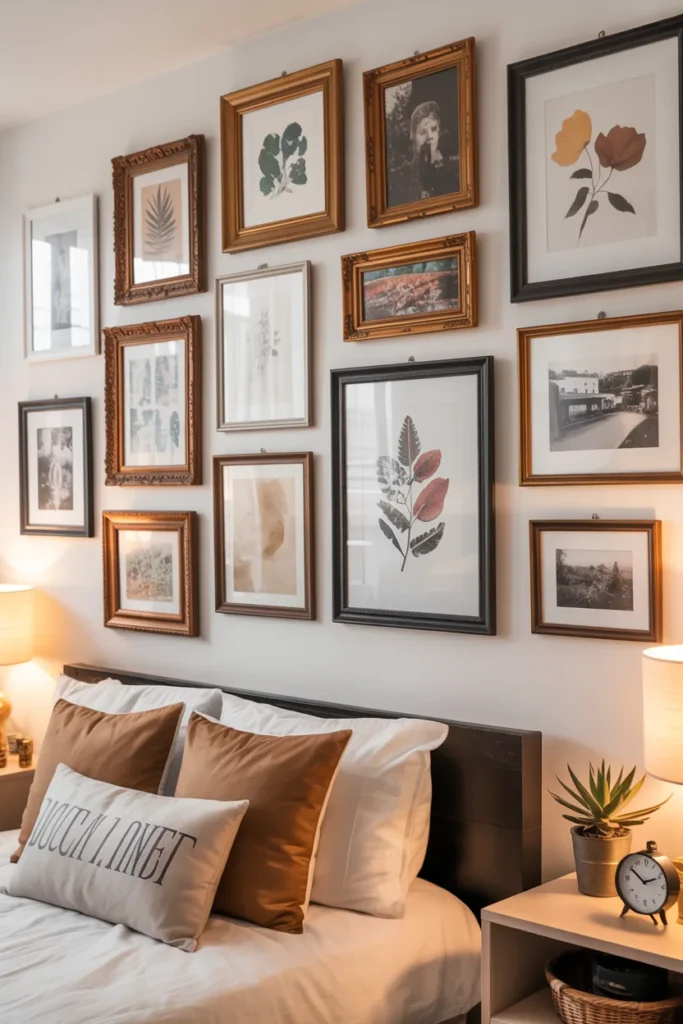
What You’re Seeing
An entire wall filled with a mismatched collection of frames — wooden, gilded, black, frameless. Inside them: a vintage botanical print, a hand-drawn face illustration, a small abstract watercolor, a piece of Arabic calligraphy, a faded travel photograph, a pressed flower under glass. No two frames are the same size or finish. A macramé mini-hanging tucks in at one corner. A small shelf juts out from the lower section holding a tiny succulent and a vintage clock.
Design Breakdown
A boho gallery wall is a story told in objects. The key difference between a boho gallery wall and a generic one is intentionality in variety. You’re not picking pieces from the same collection — you’re hunting for things that genuinely move you.
Start by collecting anything that speaks to you: postcards, pages torn from calendars or art books (with permission), photos printed at home, small original artworks from markets or Etsy, vintage finds from thrift stores. Then lay them all on the floor before you pick up a single nail.
Arrange on the floor first. Take a photo. Step back and evaluate. Shift pieces around until the mix of sizes, shapes, and colors feels balanced without being symmetrical.
Expert Tip
Vary the distance between pieces — some clustered close, others with more breathing room. This keeps it feeling organic rather than rigidly planned. Aim for negative space around the outer edges so the wall doesn’t feel suffocating.
Why It Works
A gallery wall personalizes a bedroom in a way that no single large artwork can. It tells the story of who lives there. In boho interiors, this sense of personal narrative is everything. It also draws the eye across the wall, making the space feel larger and more dynamic.
Best For
- All budgets (thrift frames, print free art)
- Renters (use picture-hanging strips)
- Large empty walls
- Those who love collecting and curating
Common Mistake to Avoid
Starting with frames first and then hunting for art to fill them. The art should drive the frame choices, not the other way around. Find pieces you love, then find frames that complement them.
Quick Wins
- Mix frames in warm-toned finishes (wood, gold, brass) to keep variety cohesive
- Include at least one three-dimensional element (a small shelf, a hanging object)
- Download free printable botanical or abstract art to reduce cost
- Don’t forget to mix portrait and landscape orientations
5. Earthy Color Palette Done Right
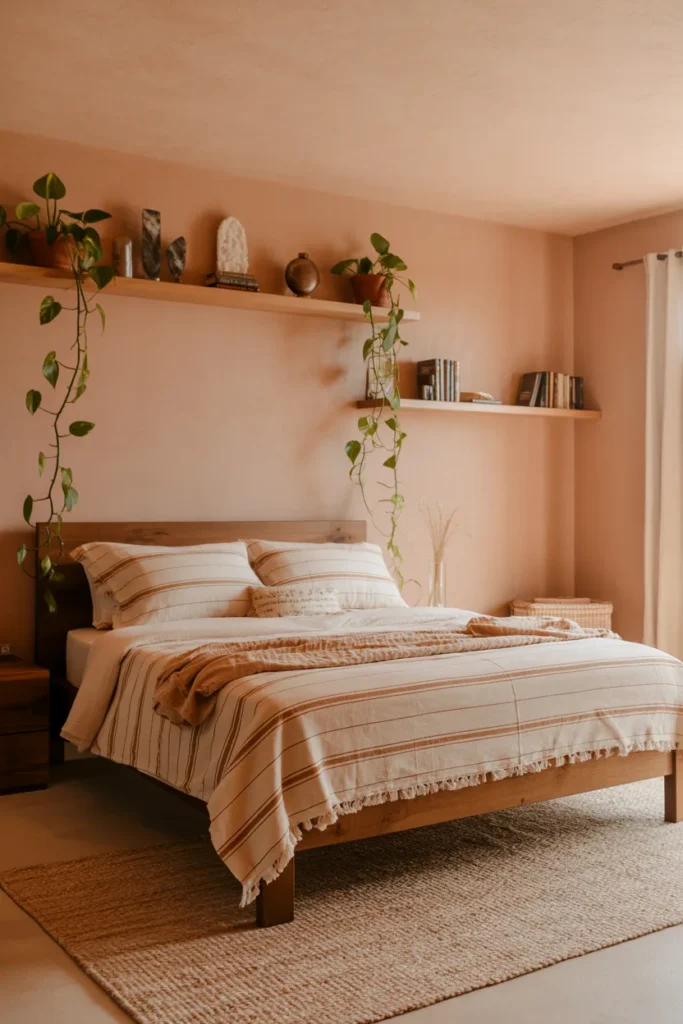
What You’re Seeing
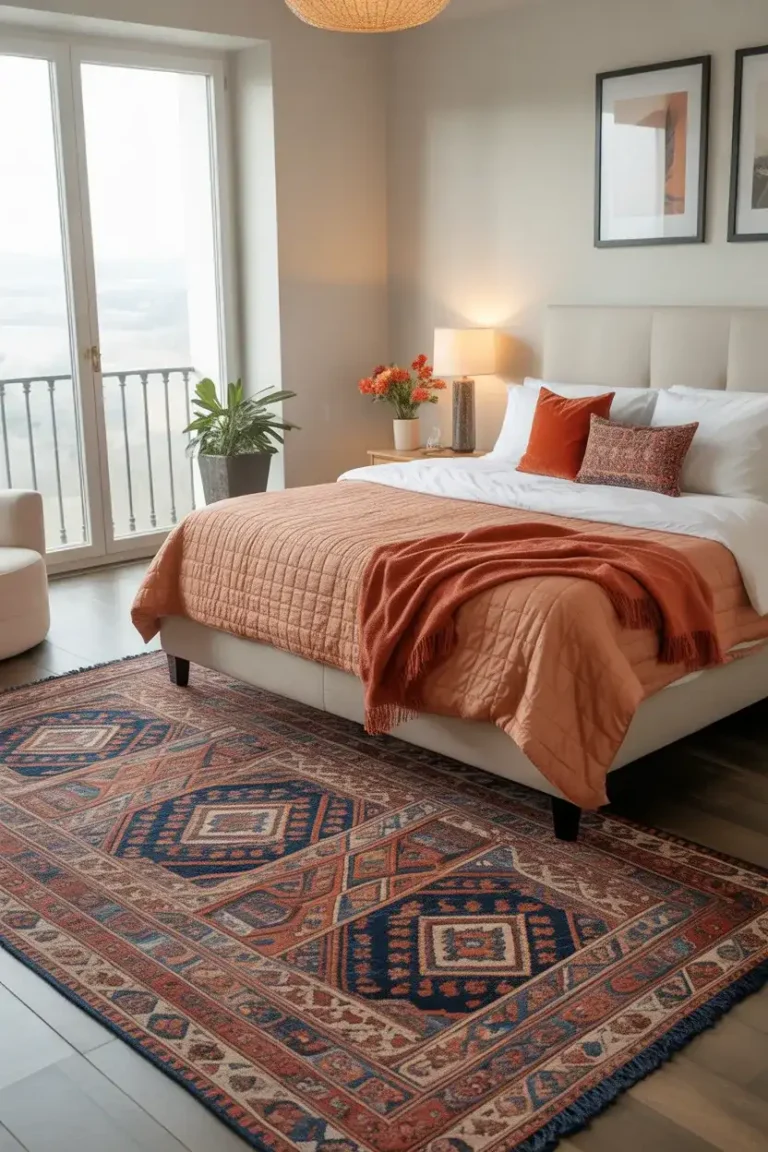
Walls in a warm terracotta — not orange, not red, but that perfect dusty adobe tone. Against it, a low bed frame in raw mango wood sits dressed in cream and cinnamon-striped linen. A thick jute area rug covers most of the floor. On one wall, floating wooden shelves hold trailing pothos, a collection of raw crystals, and a few well-worn novels. The ceiling is painted a shade lighter than the walls — barely-there blush — giving the room a cocoon-like feel.
Design Breakdown
Color is the foundation of every boho bedroom idea, and the earthy palette is the most timelessly on-trend. We’re talking terracotta, warm sand, olive green, burnt sienna, mustard, deep rust, and cream. These colors draw from the natural world, and our brains are wired to find them calming.
If painting a whole room feels like too much commitment, start with a single accent wall — or even just bedding and accessories in these tones against a white or cream backdrop. The earthy palette works because it allows every element to feel harmonious without being matchy.
Expert Tip
Add a small amount of an unexpected color for personality. A single deep teal pillow in an otherwise terracotta room creates sophistication. Dusty sage against rust reads as incredibly elevated. One unexpected note keeps the palette from feeling flat.
Why It Works
Earthy tones are psychologically soothing because they mimic natural environments — the tones of warm soil, desert rock, forest floor. These environments signal safety to our nervous systems. A room in these tones will almost always feel more restful than one in cool or highly saturated shades.
Best For
- All spaces
- Luxury homes (high-end earthy palettes photograph beautifully)
- Those wanting a timeless rather than trend-driven look
Common Mistake to Avoid
Going too dark too fast. Deep terracotta or chocolate brown walls are stunning, but they need to be balanced with plenty of light — natural or artificial. Underestimate the light in your room and a dream palette becomes a cave.
Quick Wins
- Paint a single accent wall to test before committing to the whole room
- Swap cool-toned gray or white accessories for warm cream and natural wood
- Layer multiple earthy tones rather than sticking to one
- Add metallic brass or copper accents to warm the palette further
One thing I’ve learned from decorating with boho elements… The biggest mistake people make with earthy palettes is treating them as “safe” and then not committing fully. They add one terracotta pillow to a gray room and wonder why it doesn’t feel cohesive. The earthy palette needs to saturate at least 60–70% of your surfaces — walls, floor, bedding — to fully work its magic. Go all in, or it’ll just look like a stray throw pillow bought on a whim.
Here’s where it gets interesting…
How to Layer Like a Designer
This is where most people go wrong — and where the difference between a room that looks boho and a room that feels boho lives.
Boho style is not about buying specific items. It’s about understanding a layering language. Once you learn it, you can apply it to any space, any budget.
The Three-Layer Method
Every great boho bedroom is built in three layers:
Layer 1: The Foundation This includes your largest surfaces — walls, floors, and the bed frame itself. Keep these relatively neutral. Raw wood, whitewashed plaster, cream linen, jute rugs. The foundation sets the tone without competing with what goes on top of it.
Cost range: This is often where the biggest investment goes — a quality bed frame ($200–$800), a good area rug ($100–$400), and paint or wallpaper if you’re updating walls ($50–$300).
Layer 2: The Story This is where your personality comes in. Textiles, art, plants, books, and collections. This layer does the heavy storytelling. A vintage Moroccan rug layered over the jute. A gallery wall of things you’ve collected over the years. A shelf of plants you’ve kept alive (or tried to). Pottery you made at a studio class.
Cost range: Highly variable. This is the layer where thrifting and DIY save you the most money. Vintage textiles can be found for $5–$30 at thrift stores. Free printable art costs nothing but ink.
Layer 3: The Soul The smallest details — and often the ones people skip. The candles, the crystals, the string of beads hung from a drawer pull, the single dried flower in a tiny bud vase, the incense holder, the worn leather bookmark. These finishing touches are what make a room feel lived-in and loved.
Cost range: Intentionally small investments — $5 here, $15 there. But they have outsized impact.
Common Planning Mistakes
- Buying a “boho starter kit”: Matching sets from home decor stores look curated in a bad way — too coordinated, too new, too obvious. Boho is supposed to look like it evolved over time.
- Ignoring the floor: A bare floor under a beautiful bed kills the vibe immediately. The rug layer is non-negotiable.
- Over-buying art: Start with a few meaningful pieces and add slowly. A gallery wall assembled over six months will always look better than one assembled in an afternoon at a big-box store.
- Forgetting lighting: Overhead lighting is the enemy of boho bedrooms. You need warm, low-level light — lamps, fairy lights, candles. Check out Bedroom Lighting Ideas for specific guidance.
- Neglecting scent: The best boho bedrooms engage all the senses. A diffuser with essential oils, a beeswax candle, or a stick of incense completes the atmosphere in a way that photographs can’t capture but visitors always notice.
Decision-Making Guide: What to Buy First
If you’re starting from scratch with a limited budget, here’s the order I’d recommend:
- Bedding first — You see it every day. Linen in neutral tones is the highest-impact, most cost-effective starting point.
- Area rug second — Nothing transforms a floor faster. A vintage or vintage-inspired rug changes the entire energy of the room.
- Lighting third — Swap any overhead harsh lighting for warm-toned lamps or string lights.
- Textiles fourth — Layer in throws, pillows, and wall hangings as budget allows.
- Art and plants last — These are the finishing touches that evolve over time anyway.
6. The Plant-Filled Boho Jungle Bedroom
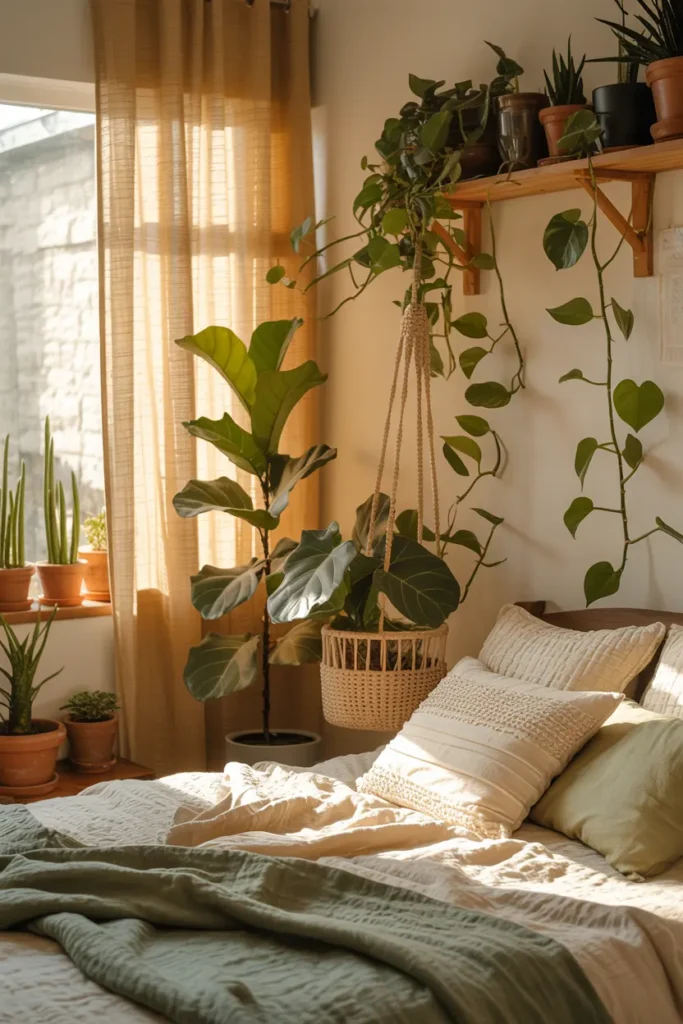
What You’re Seeing
Imagine walking into this room — every surface holds something green and living. A tall fiddle-leaf fig in the corner. Trailing pothos cascading from a shelf above the bed. A cluster of terracotta pots on the windowsill holding succulents, aloe, and a small trailing string of pearls. A hanging planter in macramé holds a large philodendron near the window. The bed sits in the center of all this green life, dressed in cream and sage.
Design Breakdown
Plants are perhaps the most powerful tool in any boho bedroom’s arsenal. They add color, texture, movement, and actual air quality improvement — not just the impression of it.
The secret to making a plant-filled bedroom look intentional rather than overwhelming is to vary plant height. Tall floor plants anchor corners. Medium shelf plants create mid-level interest. Trailing and hanging plants bring life downward and upward simultaneously. Small windowsill plants frame natural light.
You don’t need dozens of plants to achieve this effect. Five strategically placed plants of varying heights will do more than twenty small pots clustered on one surface.
Expert Tip
Stick to a consistent pot material for visual cohesion — all terracotta, or all rattan-wrapped, or all white ceramic. Varied plant species in matching pots feels curated rather than chaotic.
Why It Works
Plants in bedrooms increase oxygen levels, reduce anxiety, and create a sense of being connected to nature — a core boho value. Biophilic design research consistently shows that humans in plant-filled spaces report feeling calmer, more creative, and more rested.
For more plant inspiration, check out Indoor House Plants Aesthetic Ideas.
Best For
- Those with good natural light
- Plant lovers (obviously)
- Anyone wanting to add life without adding clutter
Common Mistake to Avoid
Overcommitting to plant varieties you can’t keep alive. Start with low-maintenance plants (pothos, snake plants, ZZ plants) and build from there. Dead plants are the opposite of boho.
Quick Wins
- Cluster plants in odd numbers (3, 5, 7) for a more natural look
- Vary pot heights with small plant stands and risers
- Let trailing plants actually trail — don’t tuck them in
- Replace dead or struggling plants immediately; brown leaves break the spell
7. The Low-to-the-Ground Zen Setup
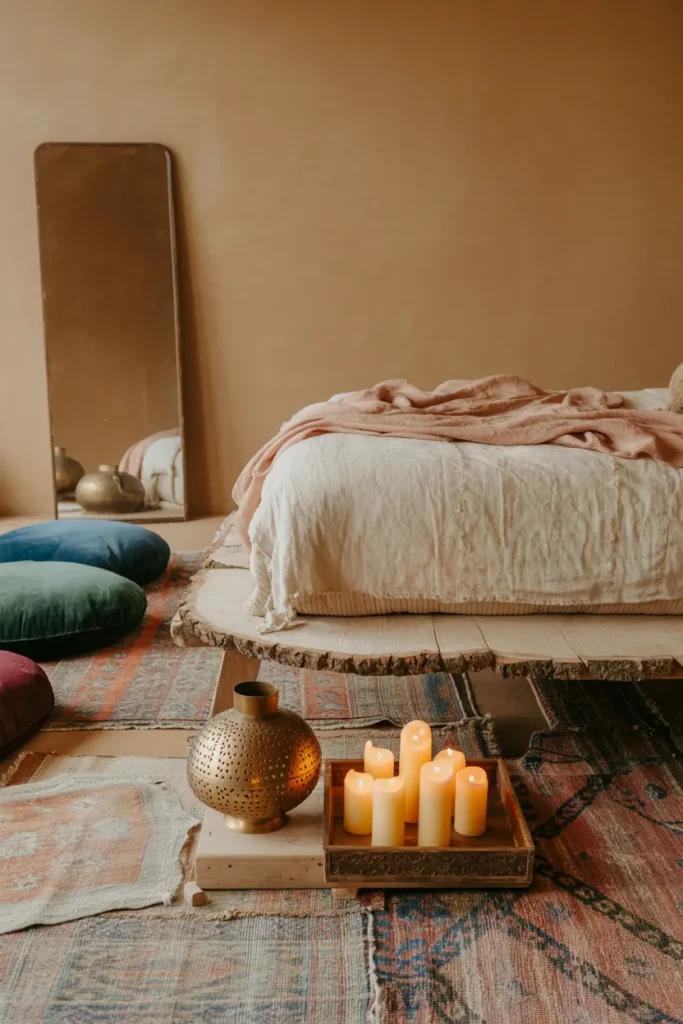
What You’re Seeing
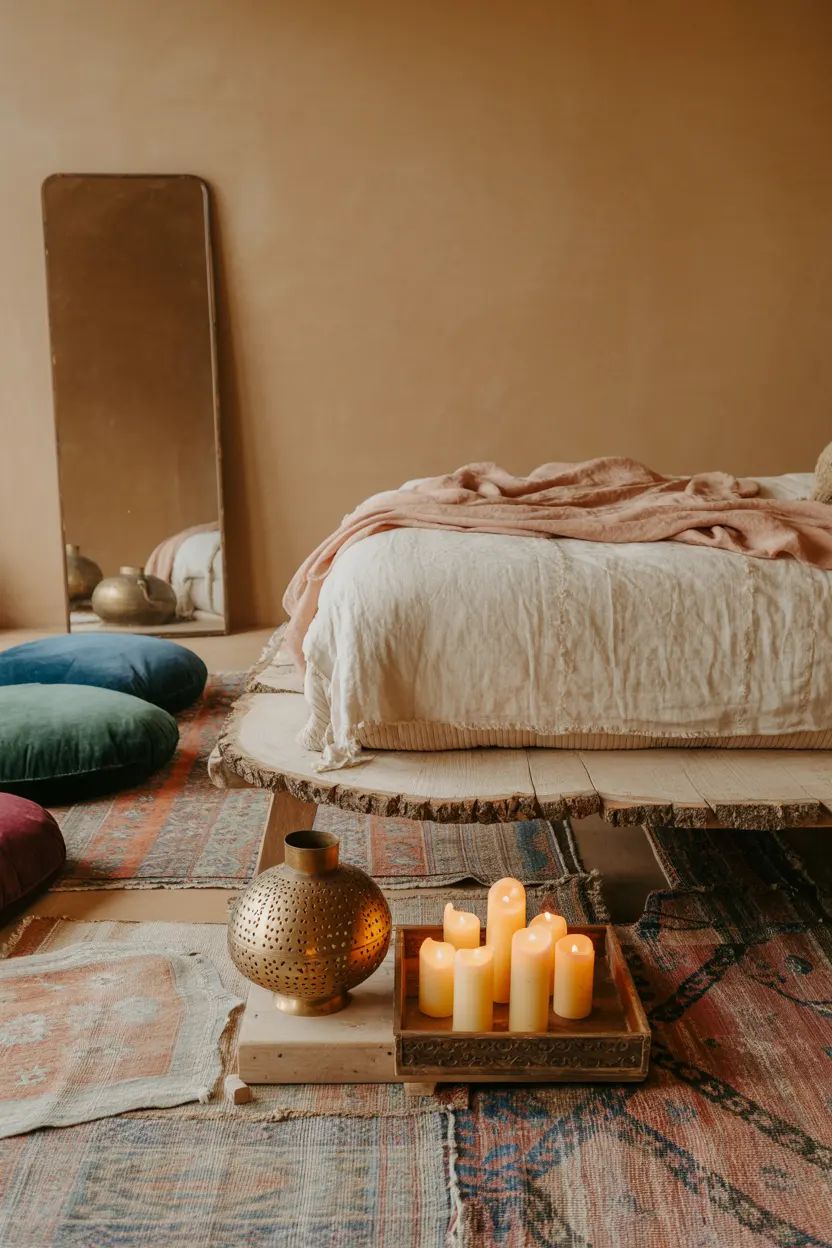
A mattress directly on a low platform — maybe 6 inches off the ground — or set directly on a beautiful area rug. The lack of a traditional bed frame immediately changes the energy of the room. Surrounded by floor cushions in jewel tones, a Moroccan lantern on a low side table, and a floor-length mirror leaning against the wall, this room feels like a retreat from another world. A cluster of low candles on a tray sits near the foot of the mattress.
Design Breakdown
Low-profile sleeping setups are central to many of the global aesthetics that influence boho design — Japanese, Moroccan, Indian. Dropping the sleeping surface low to the ground creates an instantly more relaxed, meditative feeling.
You don’t need to go entirely floor-level. A low platform bed frame (under 14 inches of total height) achieves the same visual effect while keeping you off the ground entirely.
The key to making a low bed look intentional rather than “I couldn’t afford a frame” is everything around it. Layered rugs, floor cushions, low side tables — the entire room should read at a lower level.
Expert Tip
Use a large area rug that extends significantly beyond the edges of the mattress — at least 18–24 inches on each side. This defines the sleeping zone and keeps the mattress from floating.
Why It Works
Low furniture creates a sense of openness and space because it reveals more of the walls and ceiling. For small bedrooms especially, this can make the room feel significantly larger. It also creates a more informal, relaxed energy — perfect for a boho sanctuary.
Best For
- Small bedrooms
- Minimalist boho aesthetics
- Those wanting a meditative, zen-inspired space
- Budget setups (no frame required)
Common Mistake to Avoid
Forgetting about getting in and out of bed. A mattress directly on the floor works beautifully aesthetically but can be difficult for those with mobility limitations. A low platform is the practical middle ground.
Quick Wins
- Layer two rugs beneath the mattress for softness and visual richness
- Add floor cushions around the bed for extra seating
- Keep lighting very low — floor lamps and candles only
- A large Moroccan lantern is the perfect low-profile accent light
You May Also Like:
- Rug Ideas for Bedroom
- Moroccan Bedroom Decor Ideas
- Bedroom Decor Design Ideas
- Neutral Bedroom Decor
- 20 Earthy Cottage Bedroom Ideas
This simple change can completely transform the room.
8. The Statement Wallpaper Wall
What You’re Seeing
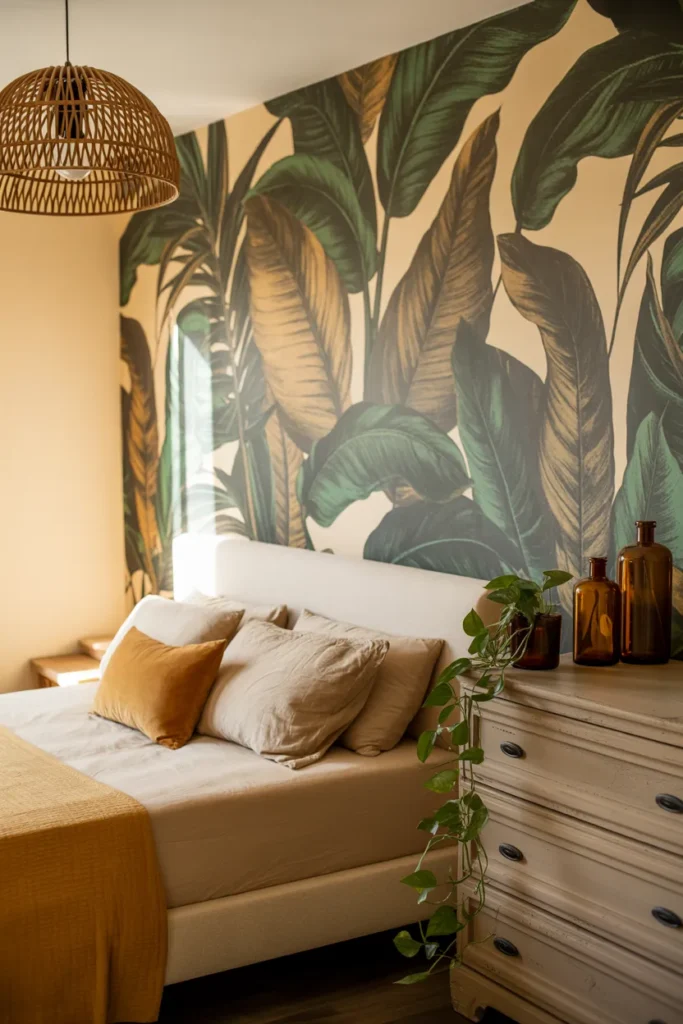
One wall — just one — covered in a lush botanical print wallpaper. Large palm leaves in deep emerald and gold on a cream background. Against this, a simple white bed sits dressed in warm neutrals. The wallpaper wall needs no additional art; it is the art. A single rattan pendant light hangs above, and a weathered wooden dresser sits nearby with a collection of amber glass bottles and a cascading pothos.
Design Breakdown
A wallpaper accent wall is a powerful boho bedroom idea that works in almost any size space. The trick is choosing the right pattern. Boho-appropriate wallpapers include tropical botanicals, vintage-inspired florals, block-print patterns, abstract watercolor designs, and Moroccan tile prints.
Peel-and-stick wallpaper has made this idea genuinely renter-friendly — the quality has improved dramatically in recent years, and it can be removed cleanly from most walls.
For a full boho effect, choose a print that feels globally influenced — something with hand-drawn quality rather than perfectly digital precision.
Expert Tip
Wallpaper the wall that your bed sits against — the “headboard wall.” This is the focal wall that draws the eye when you enter the room. It has the most visual impact with the least amount of paper, saving you money and effort.
Why It Works
Pattern and botanicals are core boho identifiers. A botanical wallpaper wall instantly transforms a generic bedroom into something that feels specifically curated and visually interesting. It also does the work of both color and art simultaneously, simplifying the overall decorating process.
Best For
- Renters (peel-and-stick)
- Those who love bold visual impact
- Smaller bedrooms where full wallpaper would overwhelm
Common Mistake to Avoid
Choosing a wallpaper with a very small, busy repeat pattern. From a distance, these can look like visual noise rather than beautiful pattern. For bedrooms, go larger-scale — leaves bigger than your hand, florals you can see from across the room.
Quick Wins
- Test peel-and-stick options before committing — some brands adhere better than others
- Pair patterned walls with solid bedding in tones pulled from the wallpaper
- Add a floor lamp with a rattan or linen shade to maintain the boho material palette
- Keep accessories minimal when the wall does the work
Here’s where it gets interesting… Accent walls have a reputation for being “safe” or “dated” — and that’s true when they’re painted a random navy or burgundy with no reason. But a botanical or pattern wallpaper accent wall is a completely different animal. It doesn’t just add color; it adds narrative. And in boho design, narrative is everything. The wall becomes a window into a different world, and the rest of the room plays supporting character.
9. Boho Bedroom with Vintage and Thrifted Finds
What You’re Seeing
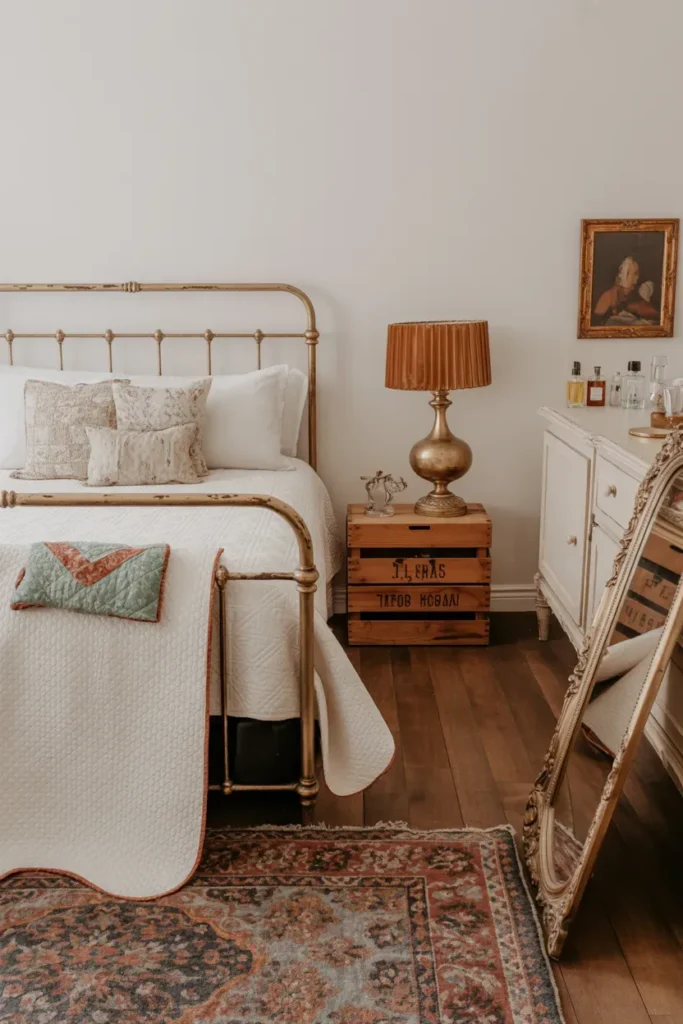
A brass bed frame — clearly vintage, with slightly tarnished feet — dressed in white with a single vintage quilt folded at the foot. On one wall, a large worn mirror in an ornate gilded frame leans against the baseboard rather than hanging. A wooden crate repurposed as a nightstand holds a vintage lamp with a yellowed shade. On the dresser: a collection of mismatched vintage perfume bottles, a rotary-style alarm clock, and a small painting that looks like it came from an estate sale.
Design Breakdown
Thrift store and vintage shopping is central to authentic boho design — not just because it saves money (though it does), but because secondhand pieces carry history and character that new items simply can’t replicate.
Building a boho bedroom with vintage finds requires patience and a collector’s mindset. You’re not furnishing a room in a weekend — you’re building it over months and years. But the result is a room that looks completely unlike anything you’d find in a catalog.
Start at estate sales, thrift stores, Facebook Marketplace, and antique fairs. Look for pieces in natural materials — wood, brass, wrought iron, rattan, wicker. Avoid chrome, glass, and synthetic materials that lean contemporary.
Expert Tip
Don’t overthink the condition of vintage pieces. A slightly worn dresser, a mirror with some foxing, a lamp with a dented shade — these imperfections are not flaws in boho design. They’re features.
Why It Works
Authenticity is the highest currency in boho design. A room full of mass-produced “boho” items from a big-box store will always look like a costume. A room built with genuine vintage finds looks like a life. It also happens to be significantly more sustainable.
Best For
- Budget makeovers (vintage can be incredibly affordable)
- Those who enjoy the hunt
- Anyone building their space slowly over time
- Sustainability-minded decorators
Common Mistake to Avoid
Buying vintage pieces that don’t fit spatially because they “seemed cool.” Measure your space before you shop, and know your size limits for major pieces like dressers and bed frames.
Quick Wins
- Follow local Facebook Marketplace, Craigslist, and estate sale apps for daily finds
- Focus on vintage textiles first — they’re usually the cheapest and highest-impact finds
- Don’t clean vintage brass — the patina is the point
- Mix vintage with a few well-chosen new pieces so the room doesn’t feel museum-like
10. The Boho Reading Corner Bedroom
What You’re Seeing
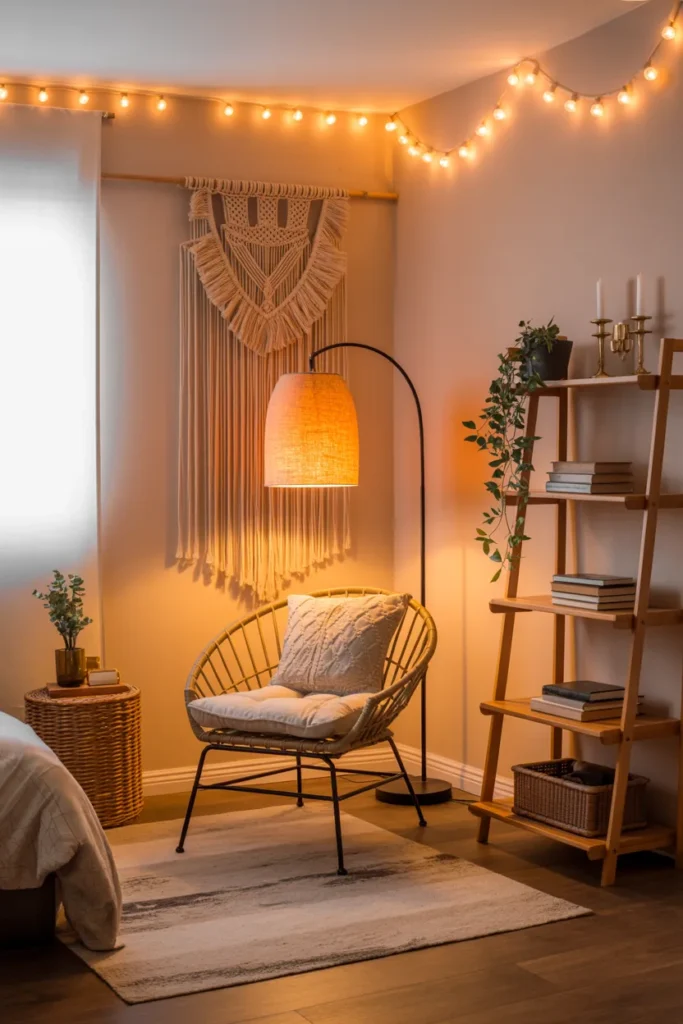
In the corner of the bedroom — often an otherwise wasted space — a total reading sanctuary has emerged. A rattan chair with an oversized cushion sits beneath a large macramé wall hanging. A floor lamp with a warm amber bulb arches over the chair. Beside it, a small wooden ladder shelf holds stacked books, a trailing plant, and a small brass candle holder. A layered rug defines the zone. String lights drape across the corner ceiling, giving it the feeling of a forest canopy.
Design Breakdown
A reading nook within a bedroom is one of the most functional and beautiful things you can add to a boho space. It transforms a generic sleeping room into a complete retreat — a place where you want to be even when you’re not sleeping.
The key is creating visual separation within the bedroom. A rug defines the zone. The chair faces away from the bed slightly, creating its own orientation. Lighting is specific to the corner — not just the overhead light shared with the rest of the room.
Rattan accent chairs are practically synonymous with boho style, and they’re also one of the most accessible boho pieces price-wise — you can find solid options from $150–$300 new, or considerably less secondhand.
For hanging chair inspiration, which takes this corner concept to a whole new level, check out Hanging Chair Design Ideas.
Expert Tip
Position the reading corner near a window if at all possible. Natural light makes reading more comfortable and the connection to outdoor light and view is deeply aligned with boho’s love of nature.
Why It Works
Having a dedicated non-sleep zone within the bedroom creates psychological separation between activities — which is actually better for sleep quality. When your brain associates the bed only with sleep, you fall asleep more easily. The chair becomes the place for scrolling, reading, and unwinding before you actually move to sleep.
Best For
- Medium and large bedrooms
- Book lovers
- Anyone who brings their phone or laptop to bed (this gives you an alternative)
- Families (gives adults a personal corner)
Common Mistake to Avoid
Choosing a chair that looks great but isn’t actually comfortable to sit in for more than ten minutes. This corner only works if you use it. Sit in any chair before you buy it.
Quick Wins
- A floor lamp with a warm bulb is non-negotiable for this corner
- Keep a small basket beside the chair for books, a blanket, and your reading glasses
- The ladder shelf is one of the best small-space book storage solutions for boho rooms
- Add a small tray on the floor or low table for tea or coffee — make it a full ritual space
Related Bedroom Ideas You’ll Love
If these boho bedroom ideas have you inspired to keep exploring, here are some of our most-loved bedroom content pieces that complement the boho aesthetic perfectly:
- Cosy Bedroom Ideas
- Romantic Bedroom Ideas
- Bedroom Lighting Ideas
- Bedroom Curtain Ideas
- Rug Ideas for Bedroom
- Moroccan Bedroom Decor Ideas
- 20 Earthy Cottage Bedroom Ideas
- Feminine Bedroom Ideas
Final Thoughts on Boho Bedroom Ideas
Here’s what I want you to walk away with.
Out of everything we covered — the macramé headboards, the layered textiles, the floating canopies, the plant jungles, the reading corners — the single most important thing to remember is this: boho is not a look you buy. It’s a look you build.
The rooms that truly nail this aesthetic are the ones built slowly, intentionally, with pieces that carry meaning. A throw bought at a market. A plant you’ve kept alive for two years. A photo from a road trip framed and hung on the wall. Those things can’t be duplicated by a shopping cart.
So here’s your challenge: pick just one idea from this list and implement it this week. Not all ten. One. Maybe it’s swapping out your bedding for a warm linen duvet in an earthy tone. Maybe it’s finding a piece of macramé at a local market. Maybe it’s carving out a reading corner with a lamp and a stack of your favorite books.
One change. This week.
Which idea are you starting with? Tell me in the comments — I genuinely want to know what resonates with you most.
And if you loved this deep dive into boho bedroom ideas, you might also want to explore our guide on 10 Boho Living Room Ideas — where the same layering and texture principles apply to your shared spaces in the most gorgeous ways.
There’s also a topic I’m covering next that I think will surprise you: how to create a bedroom that doesn’t just look beautiful but is specifically designed to help you sleep better. The science behind it is genuinely fascinating — and several of the principles overlap directly with what makes boho spaces feel so naturally restful. Stay tuned.