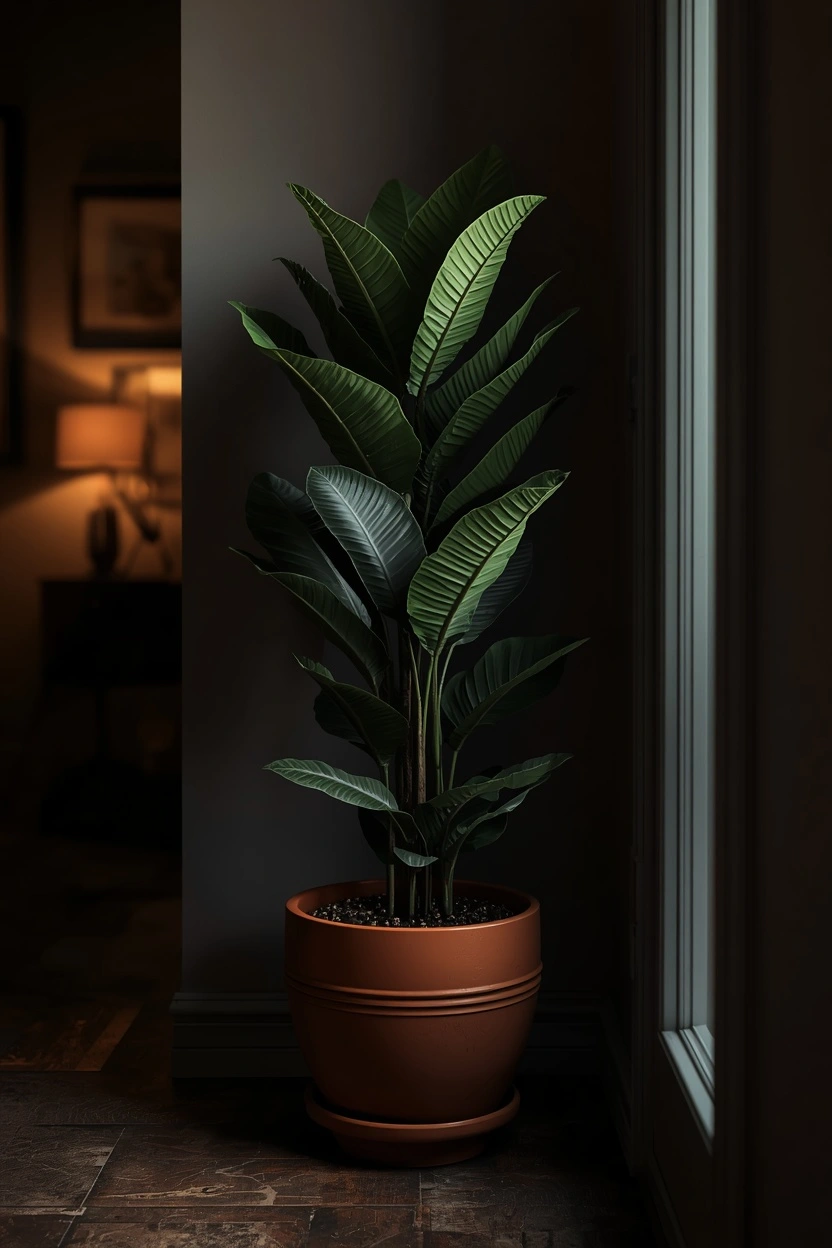
10 Low-Light Indoor Plants Ideas That Will Thrive Even In Your Darkest Room
This article was created in line with Trends Oraa’s research and content standards.
Most people don’t realize this.
Your darkest corner isn’t a lost cause.
It’s just been given the wrong plant.
That gloomy hallway, the north-facing bedroom, the office with one tiny window — they’ve all been quietly labeled “plant graveyards.” But that’s not actually true, and it’s costing you a more beautiful home.
Plenty of stunning houseplants don’t just tolerate low light. They genuinely prefer it. You just haven’t met them yet.
In this post, I’m walking through 10 low-light indoor plants ideas that look just as gorgeous in a shadowy living room as they do on a sunny windowsill. Each one comes with real styling tips and the kind of care details that actually keep plants alive past month two.
You might also love our guide on Indoor House Plants Aesthetic Ideas if you want even more greenery inspiration for every room in your home.
Stick around — idea #6 is the one designers quietly keep to themselves, and #9 might change how you see your darkest room for good.
Why “Low Light” Doesn’t Mean “No Hope”
Here’s where it gets interesting.
Most plant fails aren’t actually about light at all. They’re about overwatering a plant that didn’t need much water in the first place.
So before we get into the list, let’s clear something up: low-light indoor plants ideas aren’t about settling for something dull. Some of the most striking, sculptural, editorial-looking houseplants on Pinterest are also the toughest, shade-loving ones on this list.
Picture yourself walking past that dead corner every day for months, telling yourself you’ll “deal with it eventually.” Now picture that same corner holding a plant so dramatic it becomes the first thing guests notice.
That’s the shift we’re going for.
Which of these spots in your home has been begging for a plant for way too long? Keep that corner in mind as you read — I think you’ll know exactly which idea fits it by the end.
10 Low-Light Indoor Plants Ideas That Actually Thrive
1. The Trailing Pothos in a Macrame Hanger
What You’re Seeing
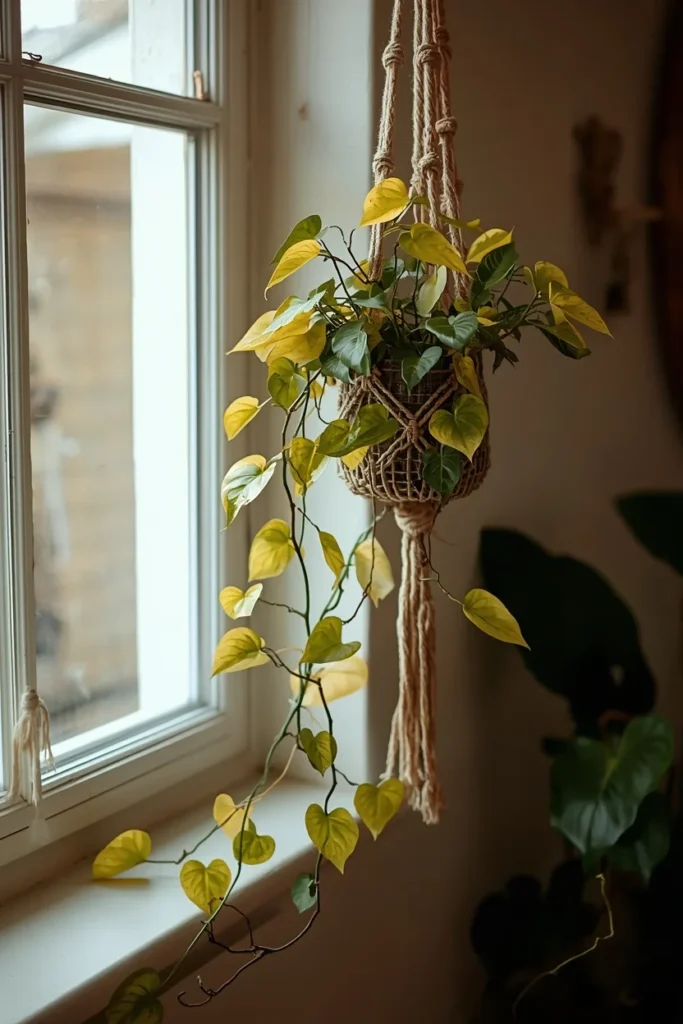
A cascade of heart-shaped, golden-green leaves spilling out of a woven macrame hanger near a shaded window. The vines trail almost to the floor, catching whatever soft light filters through the curtain.
Design Breakdown
Pothos is the plant I recommend to literally everyone, including people who claim they “kill everything.” It tolerates low light beautifully, and the trailing growth habit means it adds movement and softness to a room without needing floor space.
Expert Tip
Rotate the hanger a quarter turn every couple of weeks. Pothos grows toward whatever light it gets, and rotating keeps the trail looking full instead of lopsided.
Why It Works
Vertical greenery draws the eye upward, which makes a room — even a small or dim one — feel taller and more intentional. It’s an easy psychological trick that interior stylists rely on constantly.
Best For
- Small spaces
- Renters
- Budget makeovers
Common Mistake To Avoid
Watering on a fixed schedule instead of checking the soil. Low light means slower growth, which means the soil stays damp longer. Overwatering is the #1 pothos killer, not darkness.
Quick Wins
- Use a hanging planter to free up surface space
- Trim leggy vines to encourage fuller growth
- Wipe leaves monthly so they can absorb available light efficiently
- Pair with a neutral cream or terracotta pot for a softer look
2. A Statement Snake Plant in the Forgotten Corner
What You’re Seeing
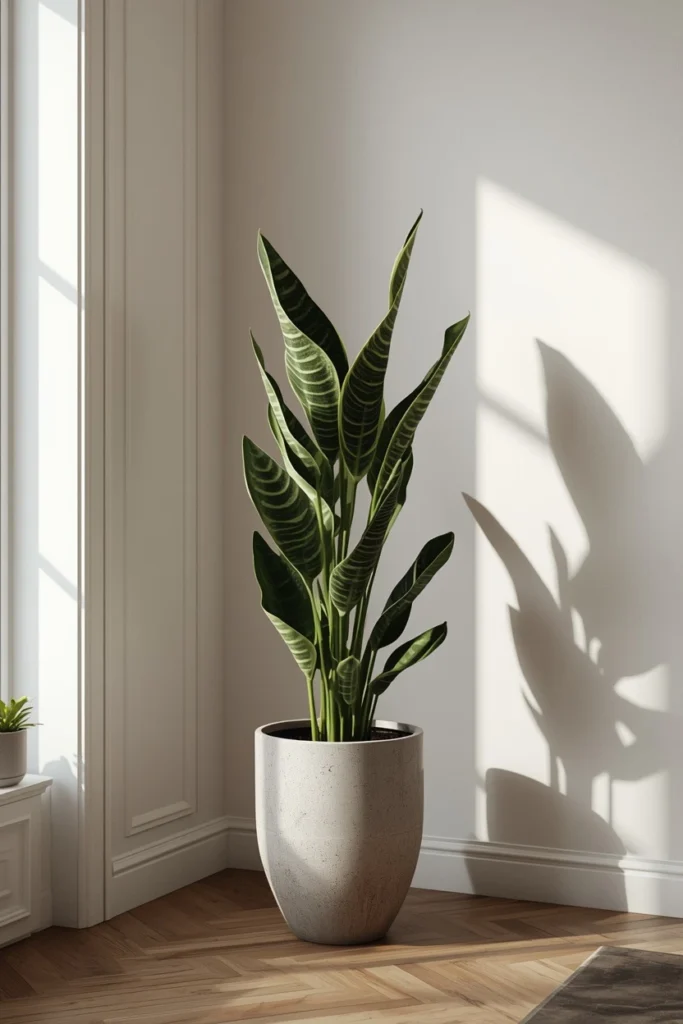
A tall, architectural snake plant with stiff, upright leaves standing in an empty living room corner, styled in a tall ceramic planter that almost reaches knee height.
Design Breakdown
Snake plants are practically made for low-light indoor plants ideas. Their sculptural, upright shape gives a room visual height without competing with furniture, and they genuinely thrive in corners that get almost no direct sun.
Expert Tip
Choose a planter with drainage holes, even though snake plants are drought-tolerant. Standing water in a dim, low-airflow corner is the fastest way to invite root rot.
Why It Works
Empty corners read as “unfinished” to our brains. Filling that negative space with a tall, striking plant instantly makes a room feel styled rather than just furnished.
Best For
- Large spaces
- Luxury homes
- Families
Common Mistake To Avoid
Placing it directly against a cold exterior wall in winter. Snake plants handle low light fine, but they don’t love sudden temperature drops near drafty walls or windows.
Quick Wins
- Use height to balance an otherwise empty corner
- Choose a planter that complements your existing decor metals
- Water only every 2–3 weeks in low light
- Group with a smaller plant at the base for layered interest
But here’s the important part — the next plant on this list solves a completely different problem, and it might be the most underrated one here.
One thing I’ve learned after years of styling low-light spaces: the biggest mistake isn’t choosing the wrong plant — it’s choosing the wrong pot size. A plant in too large a pot, especially in low light, sits in damp soil far longer than it should, which invites rot before the roots even get established. Always size up gradually, not dramatically. Going from a 6-inch to an 8-inch pot is plenty; jumping straight to a 12-inch pot in a dim room is asking for trouble. This one adjustment alone has saved more of my plants than any fertilizer ever has.
Most people waste more space than they realize.
3. The ZZ Plant on a Floating Shelf
What You’re Seeing
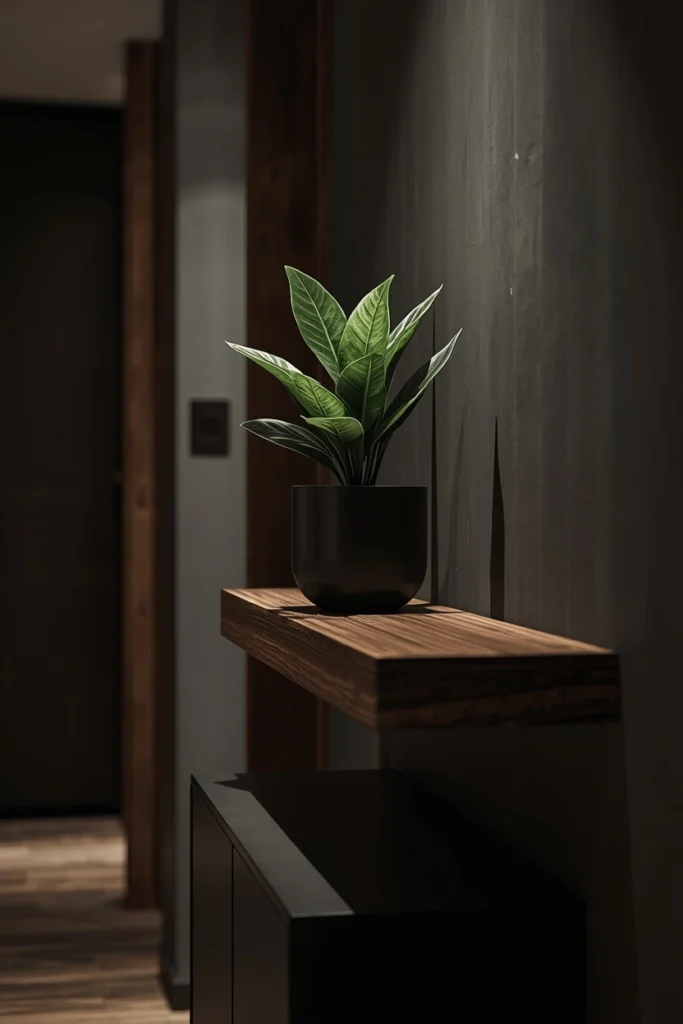
A compact ZZ plant with glossy, dark green leaves sitting on a floating shelf above a console table, positioned in a room with no direct sunlight at all.
Design Breakdown
ZZ plants might be the single toughest plant on this entire list. They tolerate fluorescent office lighting, windowless bathrooms, and weeks of neglect, all while keeping that glossy, almost-plastic-looking sheen that photographs beautifully.
Expert Tip
Resist the urge to mist a ZZ plant for “humidity.” It actually prefers things on the drier side, and excess moisture on the leaves can encourage fungal spots.
Why It Works
Glossy foliage reflects whatever ambient light is available, which makes the entire shelf — and the wall behind it — feel brighter than it actually is. It’s a clever way to visually lighten a dim room without adding a single lamp.
Best For
- Small spaces
- Renters
- Budget makeovers
- Families
Common Mistake To Avoid
Choosing a planter without checking the weight balance on a floating shelf. ZZ plants get top-heavy as they mature, so a wide, low-set pot is far safer than a tall, narrow one.
Quick Wins
- Use reflective foliage to visually brighten a dark wall
- Pair with a matte black or white pot for contrast
- Feed lightly only twice a year — overfeeding causes leggy growth
- Group three small ZZ plants instead of one large one for a fuller shelf look
You May Also Like:
- Houseplant Pot Ideas
- Empty Corner Decoration Ideas
- Small Console Tables Ideas
- Window Seat Ideas
- Indoor Hydroponic Gardening Ideas
4. A Cascading Peace Lily Near a North-Facing Window
What You’re Seeing
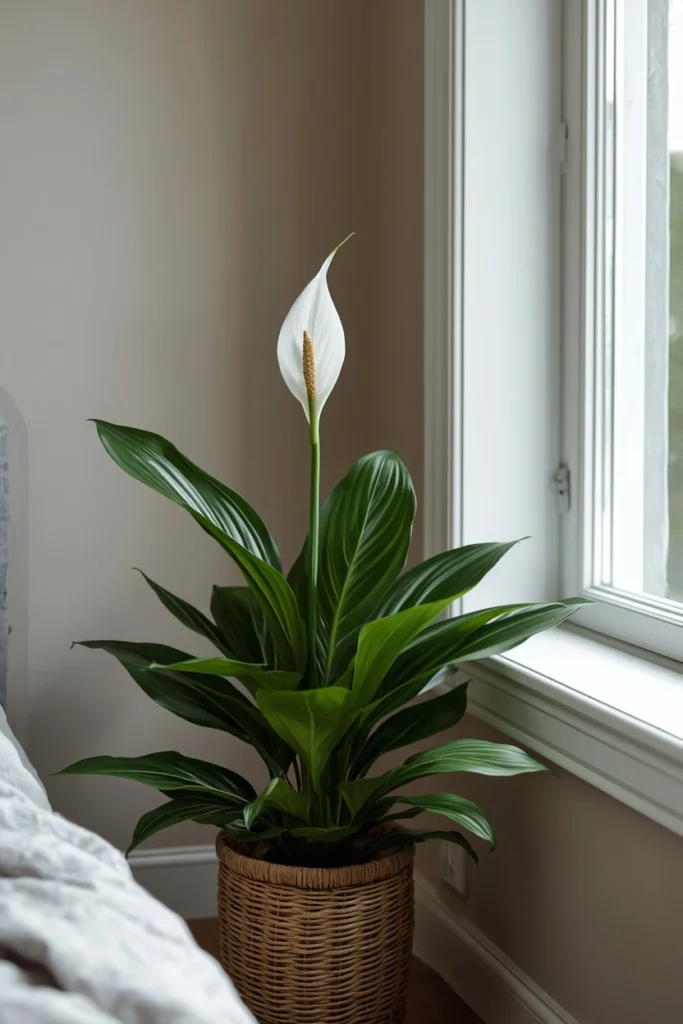
Broad, glossy green leaves with the occasional white bloom, sitting in a simple woven basket beside a window that only catches indirect, filtered light most of the day.
Design Breakdown
Peace lilies are one of the rare low-light plants that still flower, which makes them a favorite for anyone who wants softness and life without relying on bright sun. The blooms aren’t constant, but when they appear, they feel like a small reward.
Expert Tip
Watch the leaves, not the calendar. A drooping peace lily is asking for water immediately — and it perks back up within hours of a good drink, which makes it one of the most forgiving plants to “read.”
Why It Works
Imagine walking into a room and immediately noticing a soft white bloom against deep green leaves — it adds a sense of calm and care to a space, which is exactly the feeling most people want from a living room or bedroom corner.
Best For
- Large spaces
- Families
- Renters
Common Mistake To Avoid
Placing it in direct sun “for extra blooms.” Direct light actually scorches peace lily leaves and causes brown, crispy edges — the opposite of the goal.
Quick Wins
- Use drooping leaves as a built-in watering reminder
- Keep blooms longer by removing spent flowers promptly
- Choose a basket planter to soften the look of plastic nursery pots
- Mist occasionally to mimic its native humid environment
Would you choose a flowering low-light plant or a foliage-only one for your space? There’s no wrong answer — it really comes down to how much you want a “reward” element built into your plant care routine.
5. Chinese Evergreen for a Pop of Color in the Shade
What You’re Seeing
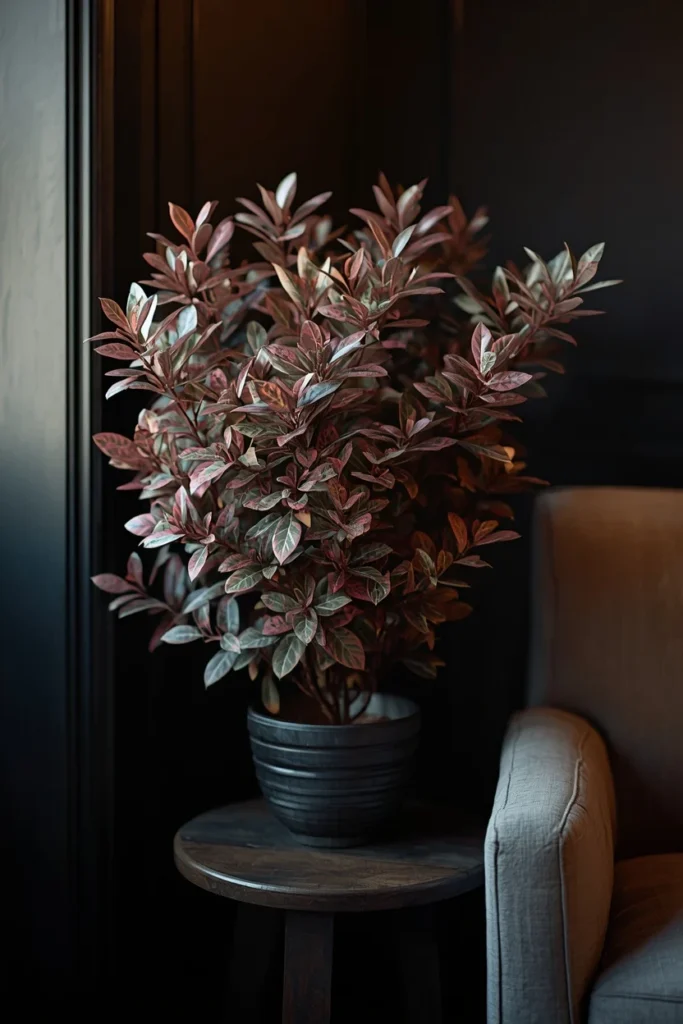
A bushy plant with leaves splashed in pink, silver, and deep green patterns, placed on a side table in a dim reading nook beside a soft armchair.
Design Breakdown
If you assume low-light plants have to be plain green, Chinese evergreen (Aglaonema) will change your mind fast. The patterned foliage brings color into rooms that would otherwise rely entirely on textiles and paint for visual interest.
Expert Tip
Brighter-patterned varieties (more pink or silver, less green) actually need a touch more light than the deep green types. Match the variety to how dim your space truly is.
Why It Works
Color in a dim room does a lot of psychological heavy lifting. It signals warmth and life in a space that might otherwise feel flat or forgotten, without requiring you to repaint a single wall.
Best For
- Small spaces
- Budget makeovers
- Renters
Common Mistake To Avoid
Assuming all patterned varieties have identical light needs. Buying a high-color variety and sticking it in your darkest corner often leads to fading patterns over time.
Quick Wins
- Match leaf color intensity to your room’s actual light level
- Use as a low-cost way to add color without new decor
- Keep away from cold drafts near doors and windows
- Repot every 2 years to refresh nutrient-depleted soil
Here’s where it gets interesting.
Most people don’t know this, but Chinese evergreen is mildly toxic to pets if chewed, which matters more than people think when picking low-light indoor plants ideas for a home with curious cats or dogs. Before falling for any patterned beauty, I always check pet safety first, then circle back to aesthetics. A quick search of the plant’s name plus “pet safe” takes thirty seconds and can save you a stressful vet visit later. It’s a small step that a lot of plant guides skip entirely, and honestly, it should be step one — not an afterthought.
The Low-Light Plant Buying Guide Nobody Gives You
This is where many homeowners make a mistake — they buy the prettiest plant at the store without checking if it actually matches their light situation. Here’s how to avoid that.
Step 1: Figure Out Your Actual Light Level First
Don’t guess. Hold your hand about a foot above a piece of paper in the spot you’re considering, in the middle of the day.
- A crisp, well-defined shadow = medium light (most “low-light” plants will be fine, but so will many medium-light ones)
- A soft, fuzzy shadow = true low light (stick strictly to this list)
- Barely any shadow at all = very low light (snake plant, ZZ plant, and cast iron plant only)
Step 2: Set a Realistic Budget
- Small pothos or ZZ starter plant: $8–$18
- Medium snake plant or peace lily: $20–$45
- Large statement specimen (4 feet+): $60–$150
- Decorative planter to match your space: $10–$60 depending on material
You don’t need to buy the biggest plant available right away. Picture yourself building a collection gradually instead of dropping $200 in one trip and overwhelming both your space and your watering schedule.
Step 3: Decide Between Soil-Grown and Self-Watering Pots
- Soil-grown in a classic pot: cheaper upfront, requires more attention, ideal if you enjoy the hands-on care
- Self-watering planter: higher upfront cost ($20–$50 extra), far more forgiving for renters and busy households
Step 4: Watch for These Common Buying Mistakes
- Buying a plant labeled “low light” without checking if it’s truly low light or just “tolerates lower light occasionally” — there’s a real difference
- Skipping the pot size check and repotting too aggressively right away
- Ignoring humidity needs entirely (peace lilies and calatheas want more than a snake plant does)
- Choosing based only on looks in the store, without picturing it in your actual room’s lighting
Step 5: Think About Long-Term Placement, Not Just Day One
A plant that looks great on a sunny store shelf may struggle the moment it’s placed in your actual living room. Visualize the difference between how a plant looks under bright nursery lights versus your dim hallway before committing.
What’s your biggest challenge right now — finding a plant that survives, or finding one that actually looks intentional in your space? Honestly, this buying guide solves both, but it helps to know which one you’re prioritizing as you shop.
The next idea is one designers secretly love.
6. Cast Iron Plant for the Spot Nothing Else Survives
What You’re Seeing
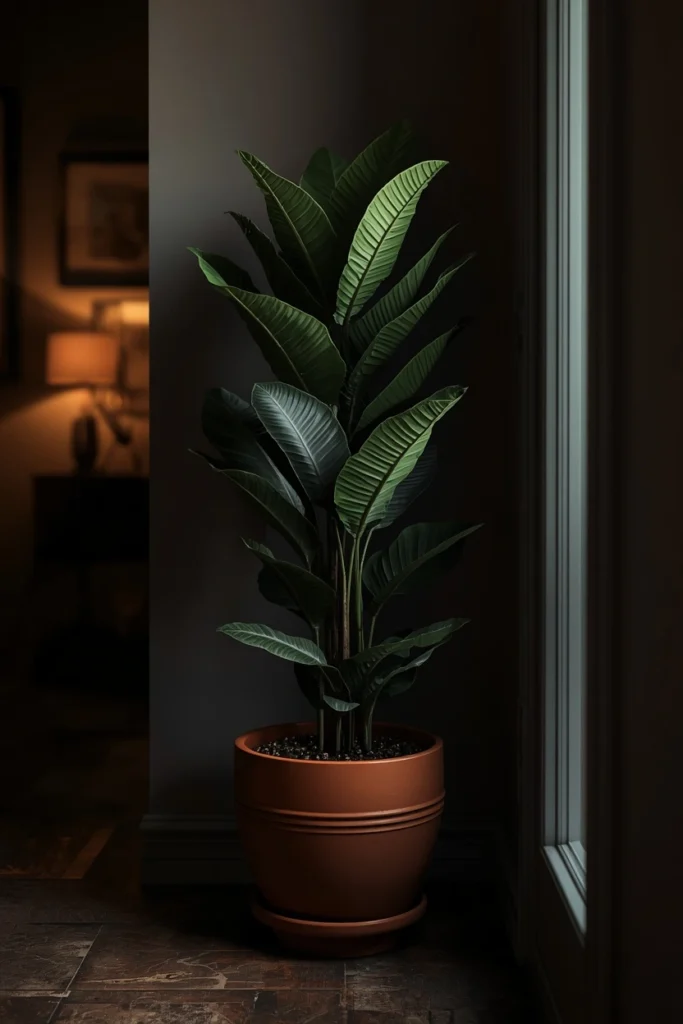
Tall, deep green, slightly ridged leaves standing upright in a simple terracotta pot, tucked into a dim stairwell landing or windowless hallway corner.
Design Breakdown
Cast iron plant earns its name honestly. It survives in conditions that would kill most houseplants within weeks — heavy shade, fluctuating temperatures, irregular watering — and somehow still looks polished doing it.
Expert Tip
Dust the leaves regularly. Because this plant relies on whatever minimal light it gets, a layer of dust can meaningfully reduce how much it actually absorbs.
Why It Works
Designers love it because it fills genuinely “impossible” spots — the ones with zero natural light — that most people leave completely bare. A green, living plant in a hallway nobody expects one in feels unexpectedly luxurious.
Best For
- Large spaces
- Renters
- Luxury homes
Common Mistake To Avoid
Overwatering out of guilt because the spot feels “too dark” for a healthy plant. Cast iron plant actually prefers to dry out fully between waterings, even in deep shade.
Quick Wins
- Reserve for the absolute darkest corner in your home
- Dust leaves monthly for better light absorption
- Water sparingly — once every 2–3 weeks is usually enough
- Use a textured pot to add interest since the leaves stay solid green
7. Heartleaf Philodendron Woven Through a Bookshelf
What You’re Seeing
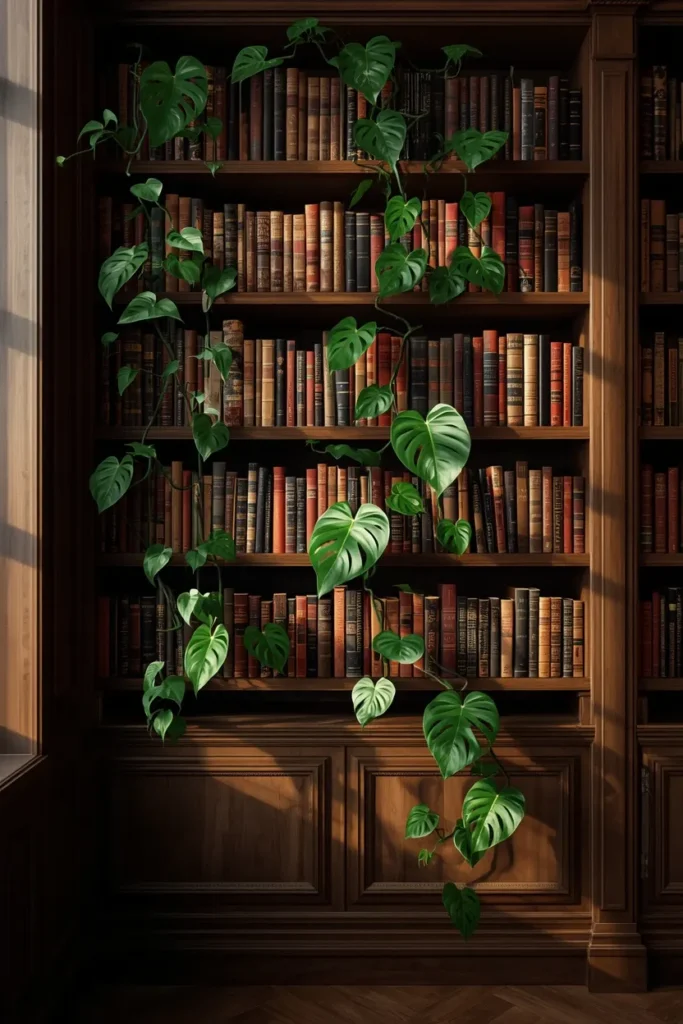
Long, trailing vines threading naturally between books and decorative objects on a tall bookshelf in a study or library nook with minimal window light.
Design Breakdown
This is one of my favorite low-light indoor plants ideas for anyone who already has a shelf full of books and wants to soften it without removing a single title. The vines weave organically, almost like the plant is “exploring” the shelf.
Expert Tip
Let the vines guide themselves rather than forcing them into a strict pattern. Heartleaf philodendron looks best when it appears to have grown naturally into the space, not styled too perfectly.
Why It Works
The next idea changes everything for anyone who thought houseplants only belong on windowsills. Weaving greenery through furniture you already own makes a room feel layered and collected over time, rather than newly decorated.
Best For
- Small spaces
- Budget makeovers
- Renters
Common Mistake To Avoid
Letting vines grow unchecked for years without occasional trimming. It can get leggy and sparse near the base if it’s never cut back to encourage fuller new growth.
Quick Wins
- Use existing shelving instead of buying new plant stands
- Trim and propagate cuttings to fill in bare spots for free
- Wipe dust off leaves to keep them glossy in low light
- Position near (not directly in) any available window light source
You May Also Like:
- Bedroom Bookshelf Ideas
- Reading Corner Ideas
- Cozy Living Room Ideas
- Wall Shelves Bedroom Ideas
- Minimalist Bedroom Ideas
8. Spider Plant in a Hanging Basket Above Eye Level
What You’re Seeing
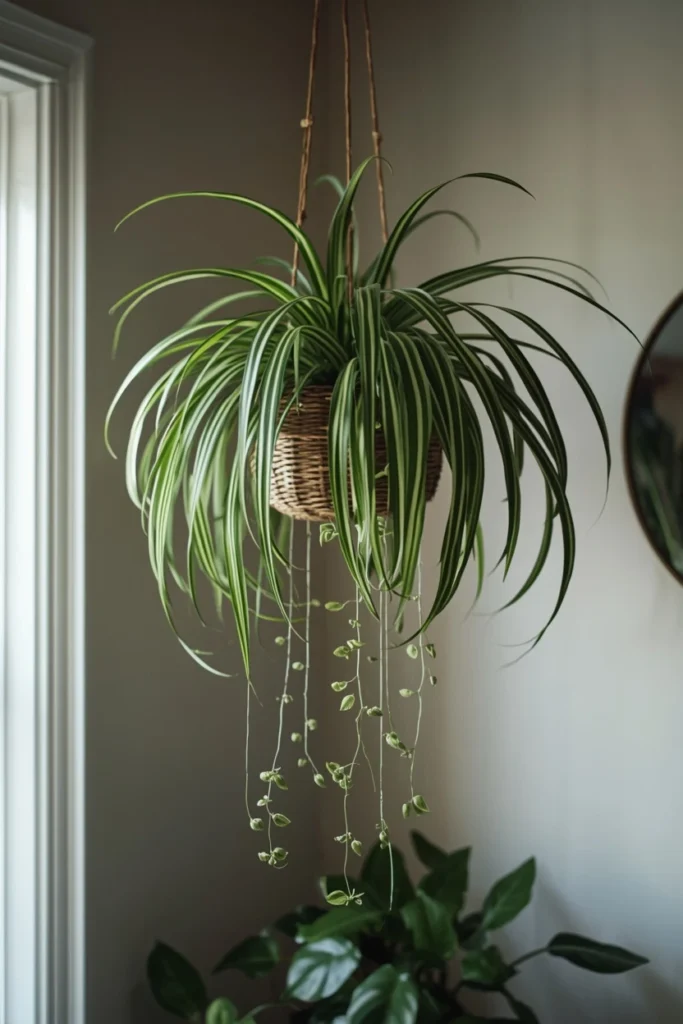
A full, arching spider plant with thin, striped leaves and small dangling “babies,” hung in a basket near the ceiling in a dim corner of a kid-friendly family room.
Design Breakdown
Spider plants are nearly indestructible, tolerate inconsistent low light, and are non-toxic — making them one of the rare entries on this list that’s genuinely family- and pet-friendly without caveats.
Expert Tip
Those little dangling “babies” can be snipped and rooted in water to create new plants for free. Within a few weeks, you’ll have an entirely new spider plant to gift or replant.
Why It Works
Think about how much easier mornings feel walking past a thriving, lively plant instead of an empty hook where one used to hang. Spider plants reward minimal effort with maximum visible growth, which keeps motivation high for plant beginners.
Best For
- Families
- Budget makeovers
- Renters
Common Mistake To Avoid
Hanging it too close to a heating or AC vent. Spider plants tolerate low light fine, but sudden temperature swings cause brown leaf tips fast.
Quick Wins
- Propagate babies for free new plants
- Hang above eye level to keep curious pets and kids away
- Trim brown tips with clean scissors for a tidier look
- Water when the top inch of soil feels dry, not on a strict schedule
The following idea surprised me the most.
Here’s where it gets interesting: the single biggest reason people give up on low-light houseplants isn’t the light at all — it’s inconsistency. They water heavily for two weeks, get busy, forget for a month, then panic-water again. Plants in low light actually prefer that slower, steady rhythm; what kills them is the whiplash. If you can commit to checking soil moisture on the same day every week — even just a quick finger test — you’ll outperform almost every other plant-care habit on this list combined.
This simple change can completely transform the room.
9. Calathea for Bold, Patterned Drama in Shade
What You’re Seeing
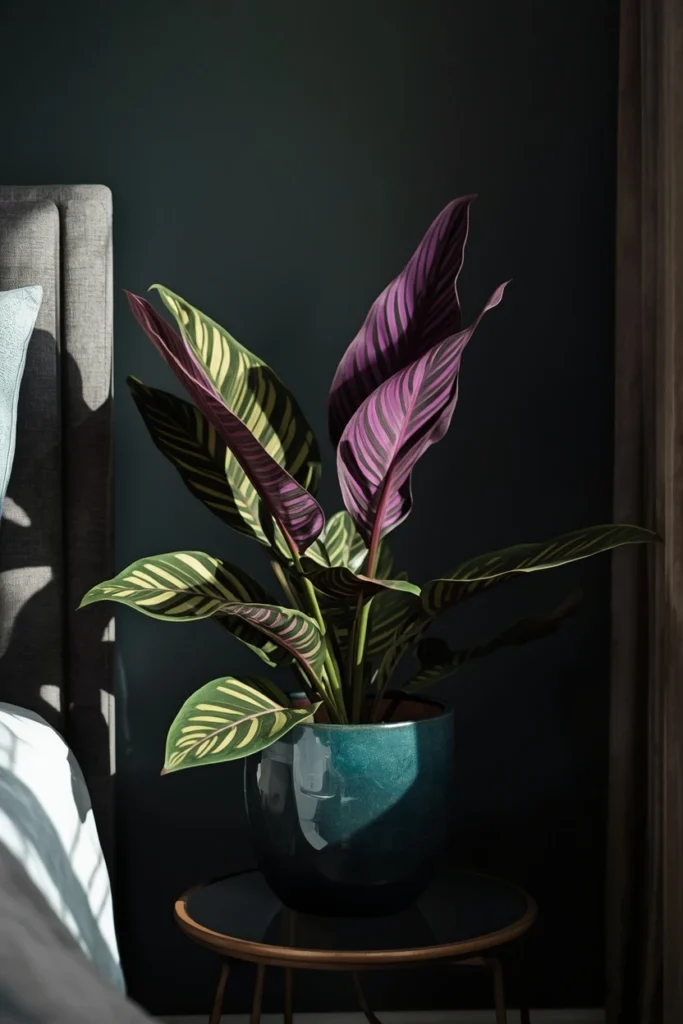
Striking, almost painted-looking leaves with deep stripes and purple undersides, displayed in a glossy ceramic pot on a low side table in a shaded bedroom corner.
Design Breakdown
Calathea is proof that “low light” and “boring” are not the same thing. The leaf patterns look almost too perfect to be real, and many varieties even fold their leaves up slightly at night — a small detail that delights anyone who notices it.
Expert Tip
Calathea wants consistent humidity more than it wants bright light. A small humidifier nearby or a pebble tray underneath makes a bigger difference than moving it closer to a window ever will.
Why It Works
Visualize the difference between a plain side table and one anchored by a plant this visually bold — it instantly becomes the focal point of the entire corner, no extra decor needed.
Best For
- Luxury homes
- Small spaces
- Budget makeovers
Common Mistake To Avoid
Using tap water with high mineral content, which often causes the signature leaf-edge browning calathea is known for. Filtered or rested water makes a noticeable difference.
Quick Wins
- Add a pebble tray to boost nearby humidity
- Use filtered water to prevent leaf-edge browning
- Place where you’ll actually see the dramatic leaf patterns daily
- Avoid cold drafts, which calathea dislikes even more than low light
Which of these ideas would work best in your home so far? If you’ve been drawn to the bolder, more patterned options, you’re going to love the last idea just as much.
10. English Ivy Layered on a Tiered Plant Stand
What You’re Seeing
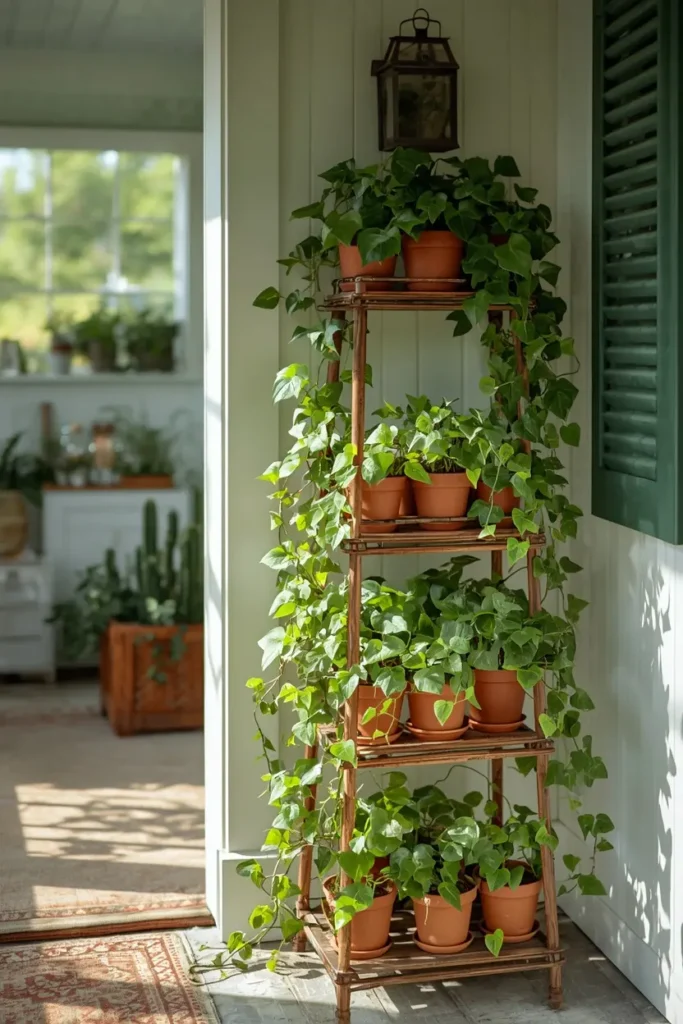
Multiple small pots of trailing English ivy arranged at different heights on a tiered wooden plant stand near a shaded entryway, creating a layered, cottage-like green display.
Design Breakdown
English ivy tolerates low light well and grows densely, making it perfect for filling out a tiered stand quickly without needing several different plant species to create that “full” layered look.
Expert Tip
Trim ivy regularly to keep it from getting straggly. Frequent light trims actually encourage denser, fuller growth rather than a few long, sparse vines.
Why It Works
A tiered display creates depth and movement in an entryway or corner that might otherwise feel like an afterthought, turning a purely functional spot into one of the most photographed corners in the house.
Best For
- Renters
- Budget makeovers
- Small spaces
Common Mistake To Avoid
Letting ivy climb onto walls or wood furniture unchecked indoors. While charming outdoors, indoor ivy left to climb freely can damage paint and wood finishes over time.
Quick Wins
- Use varying pot heights for instant visual depth
- Trim regularly for fuller, denser growth
- Keep vines off wood furniture and painted walls
- Mist occasionally — ivy enjoys a bit more humidity than most plants on this list
Let me know which one is your favorite — drop it in your mind right now, because we’re about to tie everything together.
Related Indoor Plant & Home Styling Ideas
Don’t skip the next tip — these guides pair perfectly with everything we just covered, especially if you’re planning a full room refresh around your new greenery.
- Scandinavian Living Room Ideas
- Hanging Chair Design Ideas
- Studio Apartment Ideas
- Apartment Organization Ideas
- Small Balcony Decor Ideas
- Balcony Garden Ideas
- Tiny Garden Ideas
- 10 Creative Ways to Grow Pothos
Final Thoughts on Choosing Low-Light Indoor Plants Ideas
So here’s the recap, but the short version: you don’t need a single south-facing window to fill your home with greenery. From the nearly indestructible ZZ plant and cast iron plant to the show-stopping color of calathea and Chinese evergreen, there’s a low-light option for literally every corner you’ve been ignoring.
The ideas that made the biggest difference for me personally were the snake plant in the empty corner and the trailing pothos near the entryway — both transformed spaces I’d written off years ago.
Don’t try to do all 10 at once. Pick one — just one — and commit to placing it in your home this week. Notice how that single dark corner changes once it’s no longer empty.
So, which one are you starting with this week?
If you loved adding life to your shadiest rooms, you’ll probably love going even further with our guide on Indoor House Plants Aesthetic Ideas for more styling inspiration across every room in the house.
And if you think a plant that survives in near-total darkness is impressive, wait until you see what’s possible with no soil at all — our Indoor Hydroponic Gardening Ideas guide might just be your next favorite Pinterest rabbit hole.