10 Climbing Plants for Vertical Gardens Ideas That Will Transform Any Space
This article was created in line with Trends Oraa’s research and content standards.
Your outdoor wall is completely bare. Your fence looks like it belongs to an abandoned lot. Your tiny balcony feels like a concrete cage.
You’re not alone — and the fix is simpler than you’d expect.
The secret? Climbing plants for vertical gardens ideas that use up instead of out. Whether you have a postage-stamp patio, a sprawling backyard wall, or a narrow fence line, the right climbing plant can turn blank vertical space into something breathtaking.
You might also love our guide on Indoor House Plants Aesthetic Ideas — perfect for when you want to bring that same lush green energy inside.
In this post, I’m sharing the 10 best climbing plants for vertical gardens, exactly how to use each one, and the mistakes most people make when they try this for the first time. By the end, you’ll have a clear plan for transforming your space — fast.
Let’s get into it.
Why Vertical Gardens Are Having a Major Moment
Space is at a premium right now. Whether you’re renting a city apartment with a fire escape balcony, or you own a home with a privacy-fence problem, the appeal of going vertical is real.
Climbing plants solve three things at once:
- Privacy — create a living green screen in one season
- Aesthetic — add texture, color, and life to dead walls
- Function — some varieties even produce flowers, fruit, or fragrance
And the best part? Most of these plants are incredibly low-maintenance once established.
Which challenge feels most relevant to you right now — privacy, aesthetics, or something else entirely?
The 10 Best Climbing Plants for Vertical Gardens Ideas
1. Clematis — The Queen of Climbing Flowers
What You’re Seeing
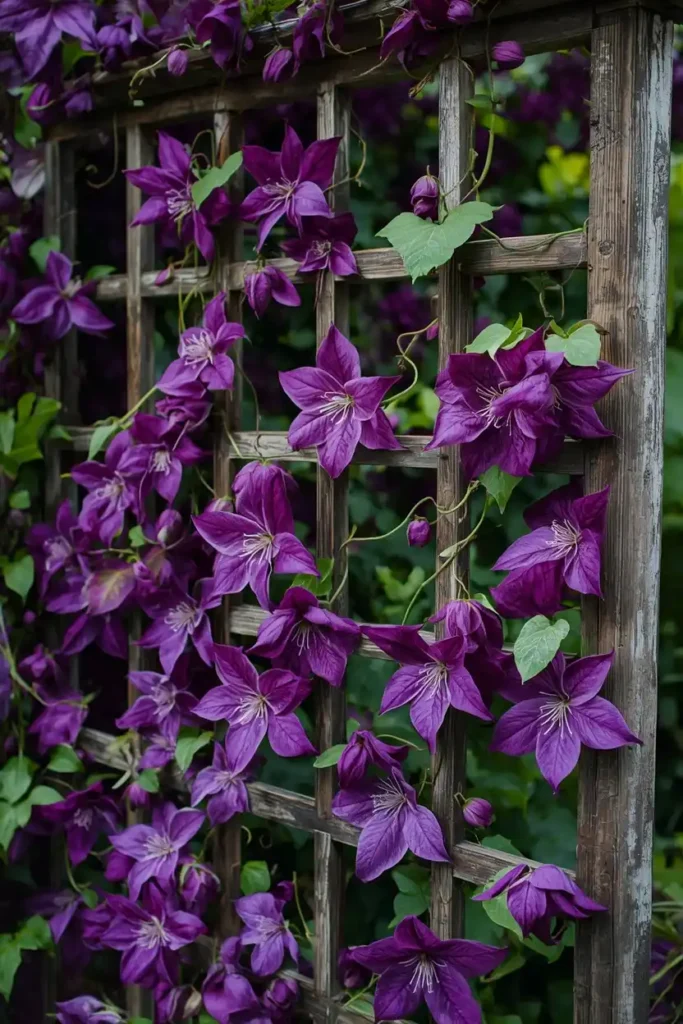
Picture a weathered wooden trellis completely smothered in deep purple blooms. Soft petals layered over each other like a tapestry, with delicate green tendrils curling around every slat. The effect is both romantic and wild at the same time — like a cottage from the English countryside dropped right into your backyard.
Design Breakdown
Clematis is arguably the most dramatic flowering climber you can grow. It comes in dozens of varieties — from the classic large-flowered hybrids in purple, pink, and white, to smaller-flowered species that bloom in soft creamy yellows. Most varieties bloom from late spring through fall, meaning you get months of color on your vertical structure.
It attaches via leaf-stem tendrils, so it needs something to grab — a trellis, wire mesh, or latticework works perfectly. Give it a structure and it will fill it within a season or two.
Expert Tip
Clematis loves “feet in the shade, head in the sun.” Plant it where the roots stay cool (mulch helps) but the vines can climb into full sun. This one trick prevents wilting and keeps blooms coming all season.
Why It Works
The layered blooms create incredible visual depth. Unlike flat painted walls or plain fences, clematis gives your eye somewhere to travel. It also signals “intentional garden design” immediately — even one well-placed plant elevates your whole yard.
Best For
- Cottage-style gardens
- Fence and trellis coverage
- Homeowners wanting seasonal color
- Small urban gardens needing vertical interest
Common Mistake to Avoid
Pruning at the wrong time. Different clematis groups have different pruning schedules. Always identify your group (Group 1, 2, or 3) before cutting, or you’ll accidentally remove next season’s flower buds.
Quick Wins
- Choose a variety that blooms in your preferred season
- Plant in groups of three for a fuller effect faster
- Use a dark-colored trellis to contrast with light-colored blooms
- Mulch the roots heavily every spring
2. Climbing Hydrangea — The Showstopper That Does It All
What You’re Seeing
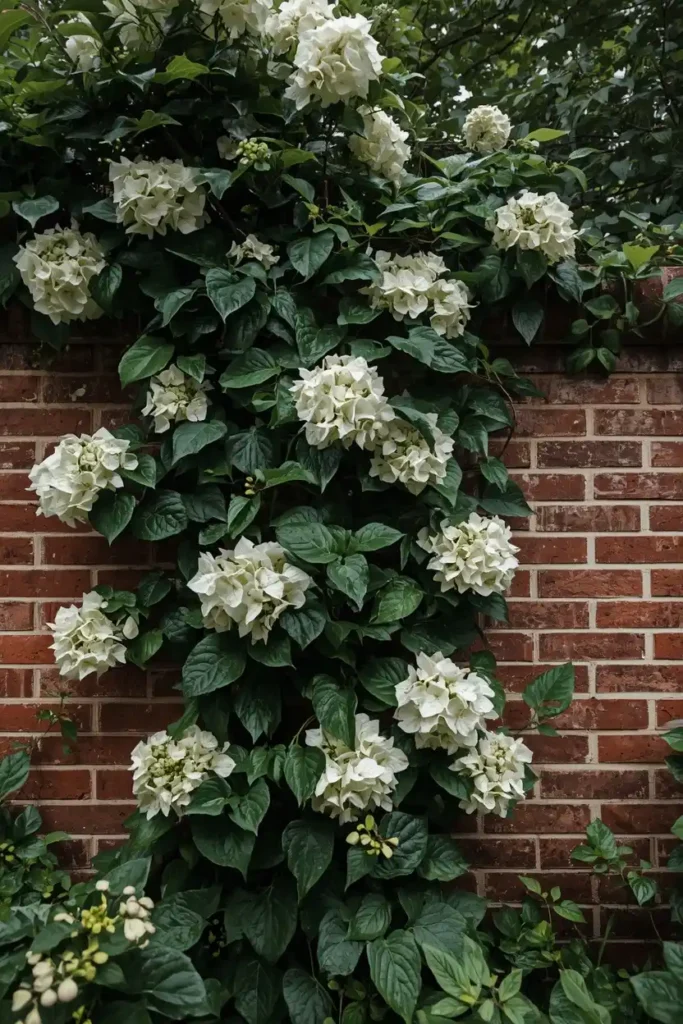
Imagine a tall brick wall, completely covered in lush green leaves with massive white lace-cap flower clusters dotting the surface like clouds. The texture of glossy foliage against rough brick creates this incredible contrast. In fall, the leaves turn golden before dropping to reveal the striking exfoliating bark beneath — four seasons of visual interest from a single plant.
Design Breakdown
Climbing hydrangea (Hydrangea anomala petiolaris) is one of the few climbers that actually clings to walls using aerial rootlets — no trellis required. It works on stone, brick, and wood, making it incredibly versatile. It’s also shade-tolerant, which is rare among flowering climbers.
Patience is required: it can take 3-5 years to establish and bloom heavily. But once it does, it’s absolutely spectacular.
Expert Tip
Give it a north or east-facing wall if you have shade issues. Most flowering climbers sulk in low light — climbing hydrangea thrives in it.
Why It Works
The combination of seasonal interest (flowers, foliage, and winter structure) means you’re never looking at a dead wall. It’s one of the most structurally interesting plants in a four-season garden.
Best For
- Shaded walls and north-facing fences
- Luxury homes where multi-season interest matters
- Homeowners with patience for a long-term investment
- Large wall coverage projects
Common Mistake to Avoid
Planting it in full, hot sun and then wondering why it doesn’t bloom. This is a shade-lover at heart — honor that.
Quick Wins
- No trellis needed — it self-clings
- Works as a ground cover before it finds something to climb
- Low maintenance once established
- Gorgeous winter silhouette
Most people don’t know this: Climbing hydrangeas actually improve with age. The older the plant, the more spectacular the flower display. A 10-year-old climbing hydrangea is worth far more than a brand-new one. If you’re buying a home with an established one on the wall, that’s a hidden gem. Don’t cut it down. Don’t move it. Feed it and let it be.
3. Wisteria — Dramatic, Dreamy, and Slightly Wild
What You’re Seeing
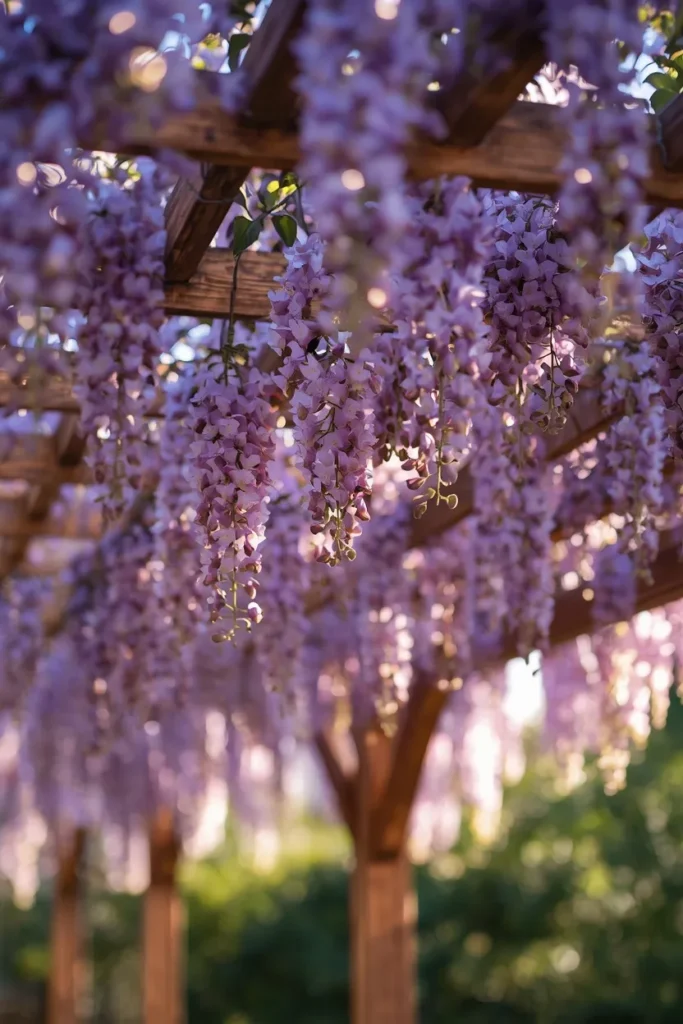
Long cascading clusters of lilac-blue flowers draping down from a wooden pergola like natural chandeliers. The scent is almost overwhelmingly sweet. Bees drift lazily in the fragrant cloud beneath it. When wisteria blooms in late spring, it’s one of the most photographed moments in any garden.
Most people waste more space than they realize — a bare pergola or arbor is just wasted vertical real estate until you put wisteria on it.
Design Breakdown
Wisteria is powerful, fast, and needs strong support — a lightweight trellis won’t cut it. Use a pergola, a sturdy arbor, or thick wire fixed to masonry. Japanese wisteria (Wisteria floribunda) and Chinese wisteria (Wisteria sinensis) are the most popular, with the longest, most dramatic flower clusters.
One important note: it can be aggressive. In warm climates, it spreads vigorously and requires regular pruning (twice a year) to stay in bounds.
Expert Tip
For faster flowering on young plants, try root-pruning in late winter. Using a sharp spade, cut around the root zone about 18 inches from the trunk. It sounds counterintuitive, but stressing the roots slightly encourages the plant to flower rather than just grow leaves.
Why It Works
The sheer scale of the bloom event is unmatched. For two to three weeks in late spring, wisteria puts on a show that stops strangers in the street. It creates a “destination moment” in your garden that guests remember.
Best For
- Pergolas, arbors, and large metal structures
- Properties with ample space
- Homeowners who enjoy annual pruning
- Luxury and formal garden styles
Common Mistake to Avoid
Planting too close to your house. Those roots and twining stems are powerful enough to damage gutters, siding, and foundations over time.
Quick Wins
- Prune in summer and late winter — don’t skip either
- Give it full sun for best flowering
- Buy a grafted plant for earlier blooms (named varieties bloom in 2-3 years vs 7-10 for seed-grown)
- Add underlighting at night for a magical nighttime effect
You May Also Like:
- Small Balcony Garden Ideas
- Garden Ideas
- Vegetable Garden Ideas
- DIY Garden Trellis Ideas
- Tiny Garden Ideas
4. English Ivy — The Classic Problem-Solver
What You’re Seeing
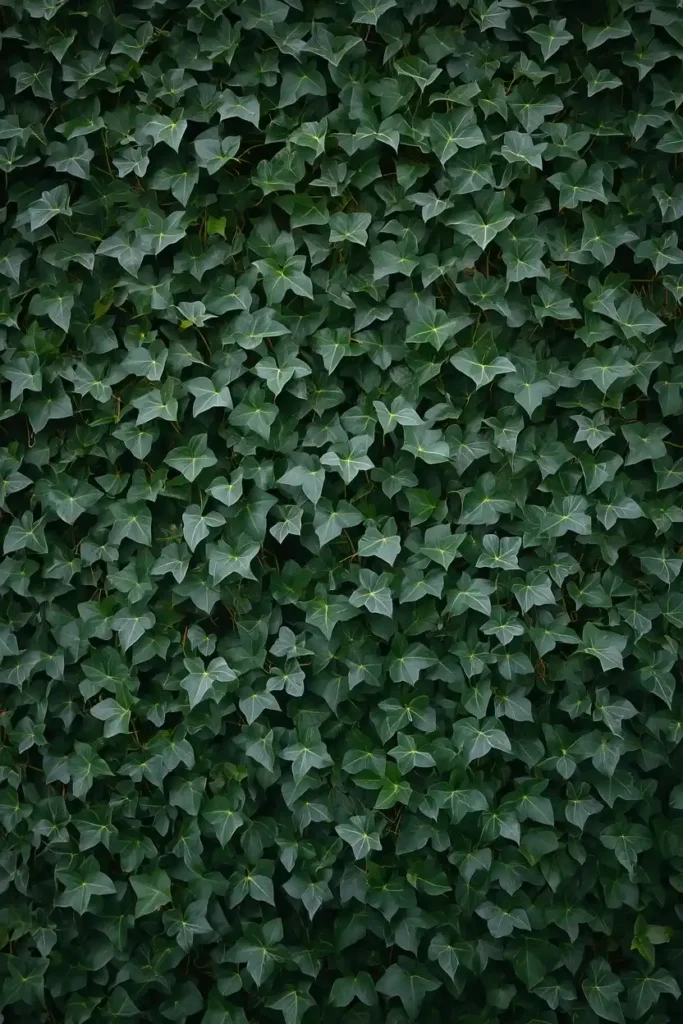
A plain concrete block wall, completely transformed by a thick carpet of deep green, five-pointed leaves. The ivy moves in gentle waves, filling every crack and crevice. It’s dense enough to muffle sound, block wind, and create a year-round living wall effect that feels both timeless and effortless.
Design Breakdown
English ivy (Hedera helix) is the workhorse of climbing plants for vertical gardens. It’s evergreen, incredibly adaptable, and will cover almost any vertical surface — walls, fences, trellises, and even slopes. It uses aerial rootlets to self-cling, requiring no wire or trellis support on textured surfaces.
It’s also one of the best options for renters, because you can grow it in a planter box and train it up a freestanding trellis — no damage to walls required.
Expert Tip
For a more polished look, choose a variegated variety like ‘Glacier’ (green with silvery-white margins) or ‘Goldchild’ (green and yellow). They grow slightly slower than plain green varieties, making them easier to manage.
Why It Works
Ivy provides instant “established garden” vibes that take other plants years to achieve. It also adds insulation, reduces wall moisture, and provides shelter for small birds — real functional benefits beyond aesthetics.
Best For
- Renters using freestanding structures
- Budget makeovers (ivy is inexpensive and fast-spreading)
- Shaded or part-shaded walls
- Year-round coverage needs
Common Mistake to Avoid
Letting it reach your roof. English ivy can damage gutters, lift roof tiles, and create nesting spots for pests if it grows unchecked above the eave line.
Quick Wins
- Buy small plug plants — they establish faster than you’d expect
- Pin stems to a wall initially; once they grip, they’re self-sufficient
- Use as a ground cover beneath taller climbers for layered texture
- Trim twice a year to keep it dense and tidy
5. Passion Flower — Exotic Drama on Any Fence
What You’re Seeing
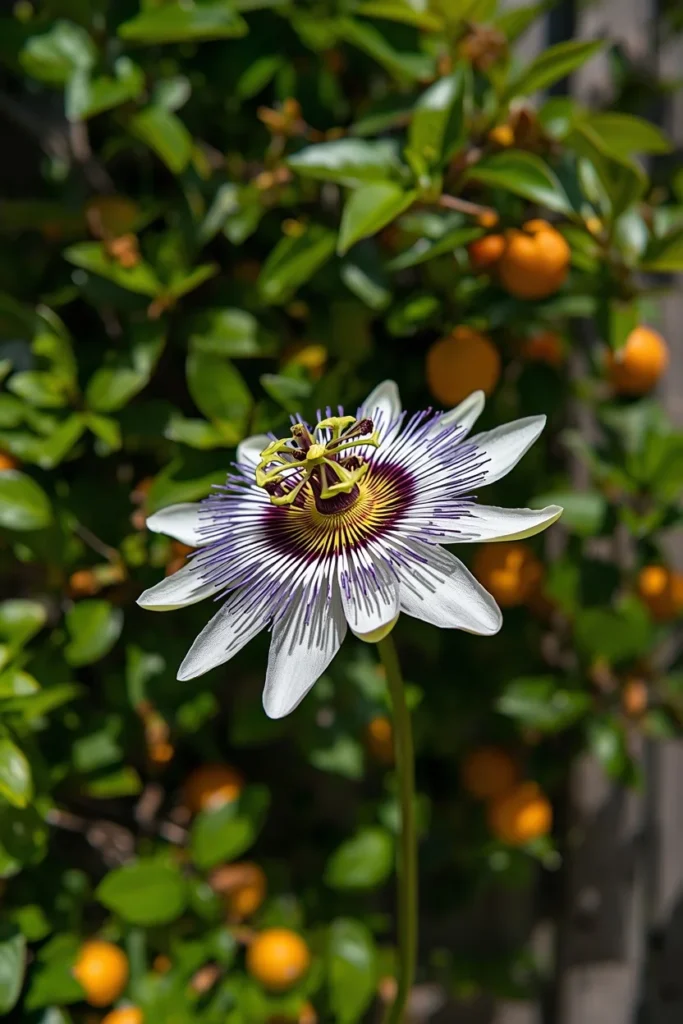
Picture this: a plain wooden privacy fence, and growing across it, the most extraordinary flowers you’ve ever seen in a garden. Each bloom is a geometric masterpiece — rings of purple and white filaments surrounding a raised corona, with bold petals framing the whole thing. The flowers look handmade, almost unreal. And then you notice the small orange fruits developing nearby.
Here’s where it gets interesting — passionflower (Passiflora caerulea) is far hardier than most people realize.
Design Breakdown
Blue passionflower is one of the most exotic-looking climbing plants for vertical gardens that you can actually grow in most of the US. It’s hardy to Zone 6 (and sometimes Zone 5 with protection), grows vigorously via tendrils, and produces both stunning flowers and edible fruits.
It works beautifully on fences, trellises, chain-link (which it covers completely within a season), and pergolas. In frost-free climates, it’s nearly evergreen.
Expert Tip
Cut it back hard in early spring — to about 12 inches from the ground if needed. This sounds brutal, but passionflower blooms on new growth, so hard pruning produces the most flowers.
Why It Works
The wow-factor is immediate. One mature passionflower plant on a fence becomes a complete conversation piece — guests will photograph it, neighbors will ask what it is, and it elevates your entire garden’s perceived value.
Best For
- Fence coverage with tropical flair
- Families with kids (the edible fruits are a fun bonus)
- Budget gardeners (affordable, fast-growing)
- Zones 6-10
Common Mistake to Avoid
Growing it in shade. This plant needs full sun to flower well. A passionflower in part shade will have plenty of leaves and almost no flowers.
Quick Wins
- Provide a wire mesh or trellis with small gaps — those tendrils need something thin to grip
- Expect flowers from year two onward
- Leave some old stems in place over winter in colder zones for frost protection
- Great for covering ugly chain-link fences completely
One thing I’ve learned: When combining climbing plants on the same structure, always pair plants with similar vigor. Wisteria and clematis don’t play well together — the wisteria will eventually bulldoze the clematis. A better pairing? Clematis with climbing roses, or passionflower with sweet peas. Think about compatibility the way you’d think about roommates — similar energy, different enough to be interesting.
The next idea is one designers secretly love — and almost nobody thinks to try it.
6. Climbing Roses — Timeless Romance, Modern Execution
What You’re Seeing
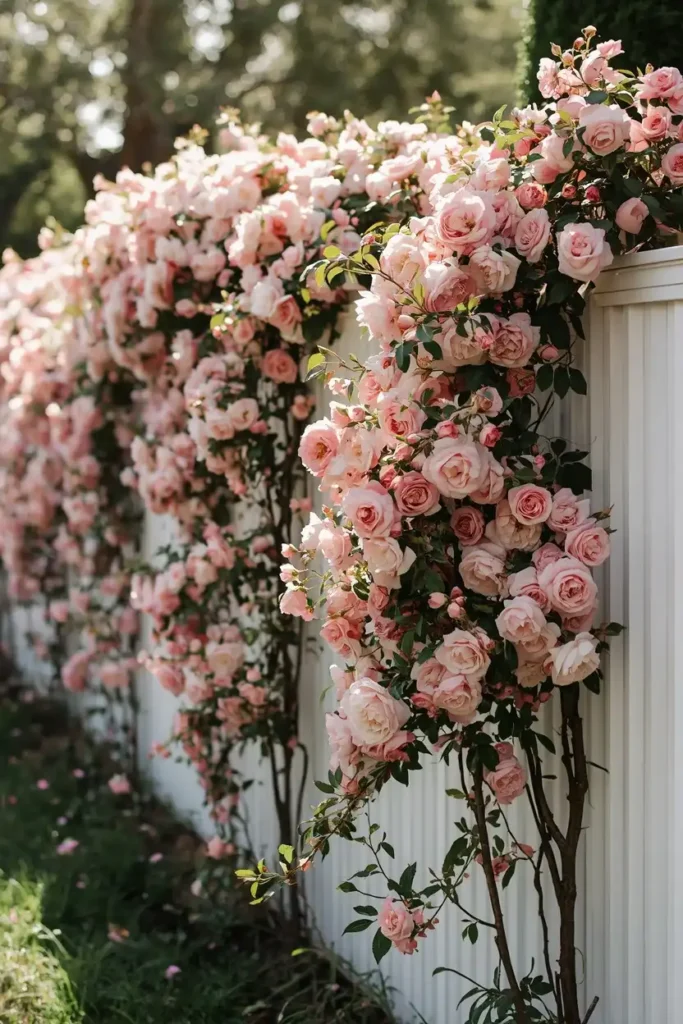
A sleek white modern fence, and growing across its entire face, a cascade of soft blush-pink roses. Not the stiff, formal hedge-style — but loose, arching canes with blooms appearing in clusters at every node. The combination of contemporary fence lines and romantic florals creates this perfect tension that interior designers call “contrast styling.” It’s breathtaking.
Design Breakdown
Climbing roses aren’t true climbers — they don’t have tendrils or rootlets. They’re large shrubs with long, pliable canes that you train horizontally across a structure. This horizontal training is the key trick: when canes grow horizontally rather than straight up, the plant produces more lateral flowering shoots, dramatically increasing bloom production.
Modern varieties like ‘Climbing Iceberg’, ‘Eden’, and ‘New Dawn’ are disease-resistant and repeat-flowering, making them far easier to grow than old varieties.
Expert Tip
Train canes as horizontally as possible along your fence or trellis. This encourages the production of vertical flowering shoots along the entire length of the cane — instead of all the flowers appearing at the tip. It’s the single most impactful technique for maximizing climbing rose blooms.
Why It Works
Climbing roses deliver that coveted “cottage meets contemporary” aesthetic that consistently tops Pinterest boards. They’re also incredibly fragrant, turning your vertical garden into a sensory experience as well as a visual one.
Best For
- Homeowners and luxury gardens
- Modern or farmhouse aesthetics
- Fence coverage with four-season interest
- Anyone who wants fragrance in their vertical garden
Common Mistake to Avoid
Tying canes too tightly. Use soft garden twine in a figure-eight loop — tight ties cut into growing canes and restrict water flow.
Quick Wins
- Buy bare-root roses in late winter for the best prices
- Fan canes outward from the base rather than sending them straight up
- Deadhead spent blooms to encourage reblooming
- Apply a rose-specific fertilizer monthly through the growing season
7. Sweet Peas — Annual Charm for Renters and Beginners
What You’re Seeing
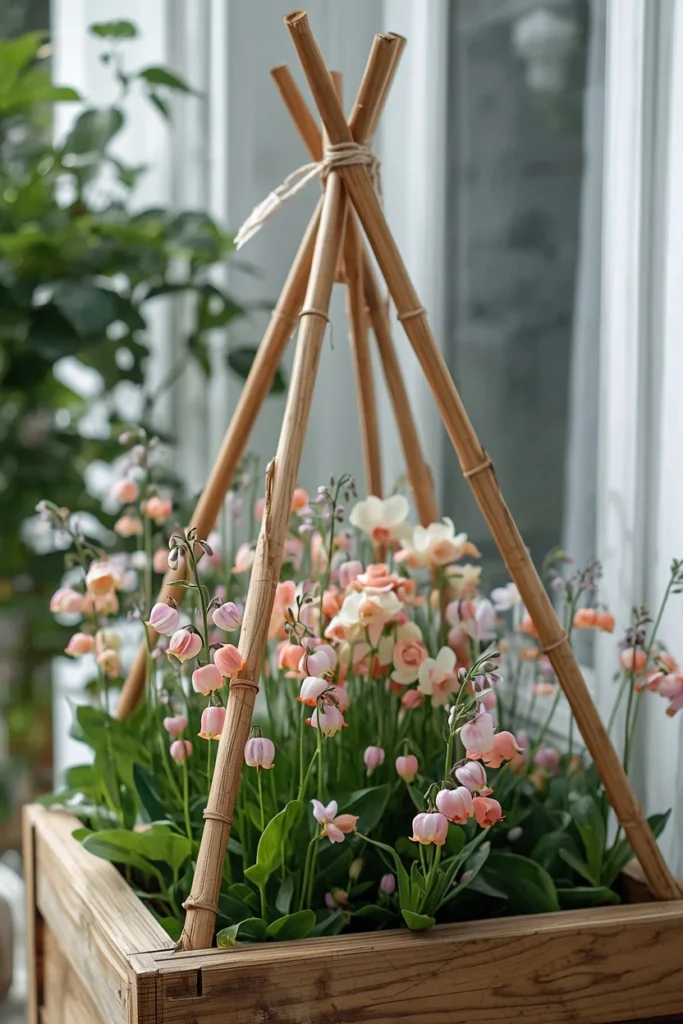
A simple bamboo teepee trellis in a raised planter, completely smothered in soft lavender, coral, and white sweet pea flowers. The stems are delicate and airy, the flowers ruffled like tiny bonnets. And every time the breeze moves, you catch waves of that incomparable sweet, honeyed fragrance that absolutely nobody can walk past without stopping.
Design Breakdown
Sweet peas (Lathyrus odoratus) are annual climbers — they grow, flower, and die within a single season. But that “limitation” is actually a massive opportunity, especially for renters, apartment dwellers, or anyone who wants to change their vertical garden look year to year.
They grow via tendrils and need support: twiggy branches, wire mesh, netting, or bamboo frames. They’re perfect for containers on a balcony or patio.
Expert Tip
Sow sweet peas in fall (in mild climates) or very early spring (zones 4-8) for the best results. Cool-weather plants, they struggle and fail in summer heat. Get them in early, and they’ll bloom prolifically until the heat arrives.
Why It Works
Sweet peas deliver fragrance that no other climbing plant matches. In a vertical garden context, fragrance adds a dimension that makes the space feel genuinely immersive — like walking into a living room rather than just seeing one from the outside.
Best For
- Renters (no permanent structures needed)
- Small balconies and container gardens
- Beginners who want fast results
- Anyone who wants fragrance as a priority
Common Mistake to Avoid
Letting pods form. Sweet peas flower to produce seeds — once they’ve seeded, they stop flowering. Keep harvesting flowers (even into the house!) to extend the bloom period dramatically.
Quick Wins
- Nick or soak seeds overnight before planting for faster germination
- Pick every flower, even if you don’t use them — it extends blooming
- Mix colors for a wildflower-meadow effect
- Grow alongside nasturtiums for a full cottage-balcony look
You May Also Like:
- Small Balcony Decor Ideas
- Balcony Garden Ideas
- DIY Elevated Garden Bed Plans
- Tiny Patio Ideas
- Outdoor Patio Ideas
8. Bougainvillea — Color That Stops Traffic
What You’re Seeing
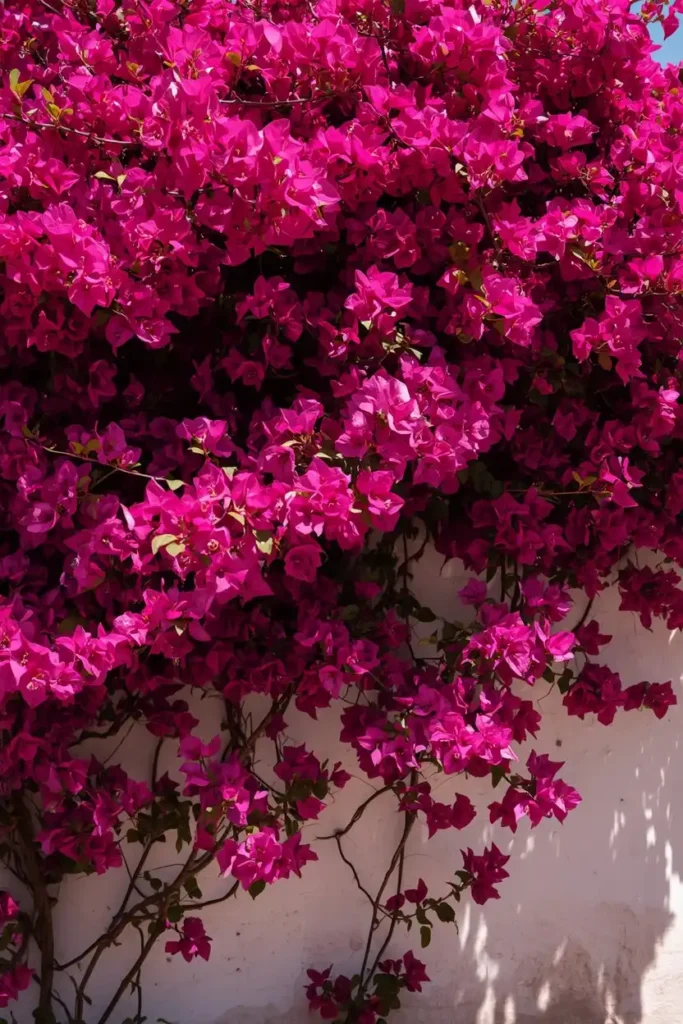
A white stucco wall, absolutely blazing with magenta. Not pink — magenta. The kind of color that makes you reach for your phone before you even think about it. Dense clusters of papery bracts in shades from hot pink to deep orange to pure white, smothering the vine so completely you can barely see the leaves beneath.
Visualize the difference between a plain white wall and that same wall after one season of bougainvillea. It’s almost unbelievable.
Design Breakdown
Bougainvillea is a tropical and subtropical climber (Zones 9-11 outdoors year-round; Zones 6-8 as a container plant brought in for winter) that produces the most vivid color display of any vertical garden plant. The “flowers” are actually papery bracts surrounding tiny white true flowers — and they last for months.
It climbs via thorns and needs to be tied to support. It’s drought-tolerant once established and actually blooms better when stressed (slightly dry, full sun).
Expert Tip
Stress it. Reduce watering in late summer to trigger a spectacular bloom flush in fall. Sounds cruel — but this is exactly how commercial growers force bougainvillea into its most dramatic displays.
Why It Works
Nothing creates curb appeal faster than bougainvillea. In the right climate, it’s the fastest way to transform a bland exterior into something that looks like it belongs in a Southwestern luxury hotel.
Best For
- Zones 9-11 gardens
- Luxury and Mediterranean-style homes
- Sun-baked walls and fences
- Anyone who wants maximum color impact
Common Mistake to Avoid
Overwatering. Bougainvillea in perpetually moist soil produces lots of leaves and almost no flowers. Let the soil dry out between waterings.
Quick Wins
- Full sun is non-negotiable — minimum 6 hours
- Wear thick gloves when working with it; those thorns are vicious
- Fertilize with a low-nitrogen, high-phosphorus fertilizer to promote blooms
- In marginal zones, grow it in a large pot and overwinter indoors
Here’s where it gets interesting: In container culture, bougainvillea in a slightly root-bound pot actually blooms more abundantly than one in a large container. The plant focuses energy on reproduction (flowers) rather than root expansion when roots are gently crowded. So if you’re growing it in a pot on a sunny balcony, resist the urge to repot every year — let it settle in.
This simple change can completely transform the look of your vertical garden.
9. Virginia Creeper — The Fall Color Nobody Talks About
What You’re Seeing
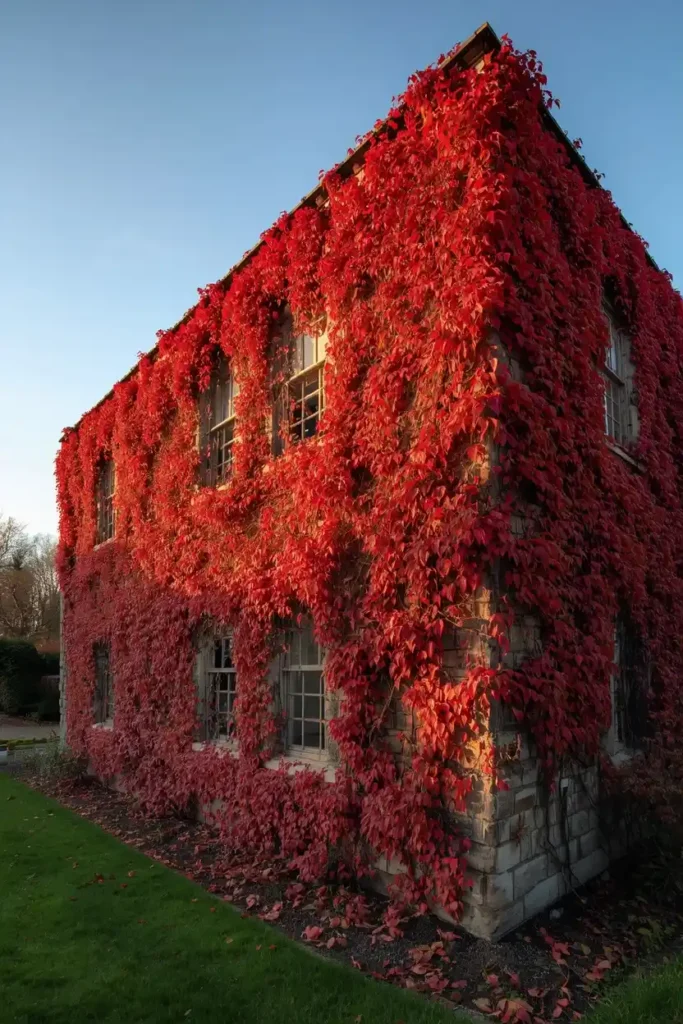
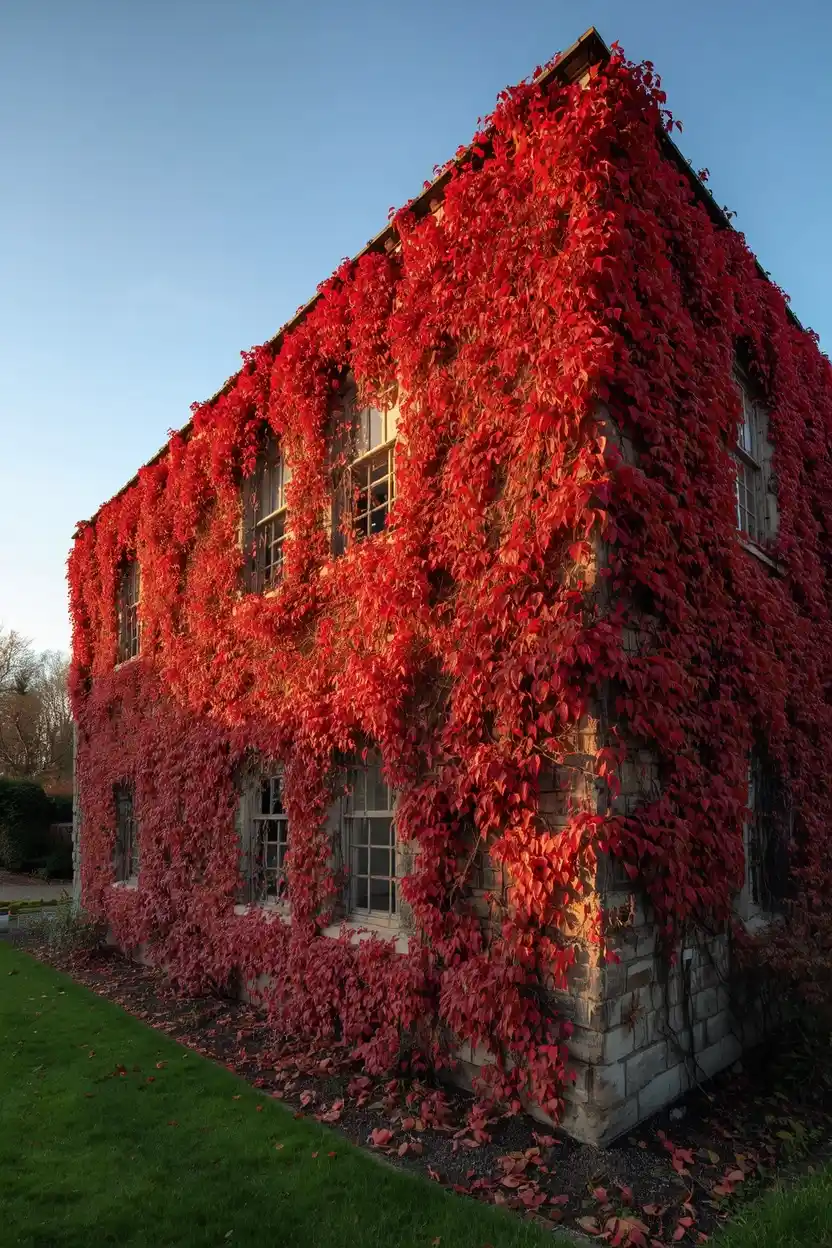
Summer: a building wall in a blanket of deep, lustrous green — five-leafed palmate leaves dense enough to look painted on. Then fall arrives. Over about two weeks, the entire surface transforms into a wall of pure crimson and scarlet that glows in the afternoon light like stained glass. It is genuinely one of nature’s most dramatic seasonal shows, and it happens right on your house.
Design Breakdown
Virginia creeper (Parthenocissus quinquefolia) is a North American native climber that clings to virtually any surface using adhesive pads — no trellis, no wire, no help from you. It’s incredibly vigorous, covering large surfaces in a few seasons, and is hardy from Zones 3-10, making it one of the most widely adaptable climbers on this list.
It’s also excellent for wildlife: the small berries feed over 35 species of birds, and the dense foliage provides perfect nesting cover.
Expert Tip
Plant it where you can actually see it in fall — ideally facing south or west, where the afternoon sun backlights those crimson leaves and turns them into something almost supernatural.
Why It Works
Virginia creeper’s fall performance is a genuine seasonal event. Neighbors slow down when they drive past. It creates an anchor moment in your garden that no other plant delivers with such drama.
Best For
- Large walls, brick, and stone surfaces
- Four-season interest seekers
- Wildlife gardeners
- Budget makeovers (very inexpensive, very fast)
Common Mistake to Avoid
Confusing it with poison ivy. Virginia creeper has FIVE leaflets per leaf; poison ivy has three. Always count before touching an unfamiliar vine.
Quick Wins
- Requires zero support on rough masonry surfaces
- Extremely drought and cold tolerant once established
- Pairs beautifully with evergreen climbers for year-round coverage
- Self-colors in fall with no action needed on your part
10. Jasmine — Fragrance-Forward Vertical Gardening
What You’re Seeing
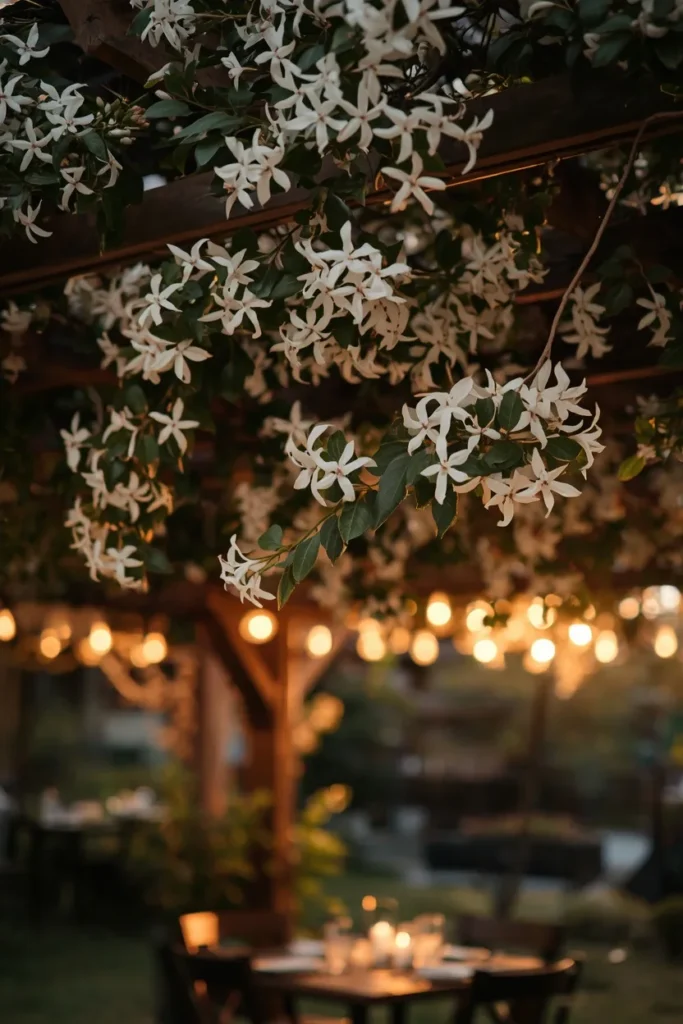
A pergola at golden hour. The sun is low, the light is warm, and across every beam, the delicate white star-shaped flowers of jasmine are catching the light. The air around the pergola is thick with fragrance — sweet, warm, floral, and somehow both relaxing and energizing at the same time. You can smell it from twenty feet away.
Design Breakdown
Common jasmine (Jasminum officinale) and star jasmine (Trachelospermum jasminoides) are the top two choices for vertical gardens. Common jasmine is fully hardy in Zones 7-10 and produces those iconic white flowers all summer. Star jasmine is slightly less hardy (Zones 8-11) but is nearly evergreen and arguably more vigorous.
Both climb via twining stems and need some form of support — wire, trellis, or mesh. Once established, minimal care is needed beyond annual pruning to keep shape.
Which would you choose for your outdoor space — fragrance-first or visuals-first?
Expert Tip
Position jasmine near outdoor seating, windows, or entry doors where you’ll actually experience the fragrance regularly. A jasmine growing on a back fence you never visit is a missed opportunity — it belongs where you live.
Why It Works
Scent is the most memory-triggering of all the senses. A garden with jasmine creates a sensory experience guests remember long after they leave. It transforms a vertical garden from something you see into something you feel.
Best For
- Outdoor dining and seating areas
- Entry gates and front garden walls
- Pergolas and arbors
- Anyone prioritizing fragrance as a design element
Common Mistake to Avoid
Planting star jasmine in Zone 7 without winter protection. It looks fine going into fall and then cold-snaps in January. Know your hardiness zone before you commit.
Quick Wins
- Train stems in a fan pattern for maximum coverage
- Star jasmine makes a stunning evergreen ground cover too
- Prune immediately after flowering to encourage new growth
- Combine with wisteria for a double-fragrance pergola effect
The Complete Climbing Plants for Vertical Gardens Planning Guide
If you’ve made it this far, you already know which plants speak to you. But choosing the right one — and making sure it actually works in your specific situation — requires a bit more planning. Here’s where I’m going to save you from the most common and expensive mistakes.
Step 1: Know Your Zone and Sun Exposure
Before you buy a single plant, you need two pieces of information:
- Your USDA Hardiness Zone (look it up at planthardiness.ars.usda.gov)
- How many hours of direct sun your vertical surface gets
This single step eliminates wrong-plant choices immediately.
| Plant | Min. Zone | Sun Requirement |
|---|---|---|
| Clematis | 4 | Full sun to part shade |
| Climbing Hydrangea | 4 | Shade to part shade |
| Wisteria | 5 | Full sun |
| English Ivy | 5 | Shade to full sun |
| Passionflower | 6 | Full sun |
| Climbing Roses | 4-5 | Full sun |
| Sweet Peas | Annual | Full sun to part shade |
| Bougainvillea | 9 | Full sun |
| Virginia Creeper | 3 | Full sun to part shade |
| Jasmine | 7-8 | Full sun to part shade |
Step 2: Assess Your Structure
Different climbers need different support. Getting this wrong means either the plant fails to attach, or the structure fails under the plant’s weight.
- Self-clinging (no support needed): Climbing hydrangea, Virginia creeper, English ivy
- Needs thin supports (wire/trellis): Clematis, passionflower, sweet peas, jasmine
- Needs strong, robust support: Wisteria, climbing roses, bougainvillea
Wisteria alone can exert enough force to collapse a weak pergola over 10+ years. Build for the mature plant, not the young one.
Step 3: Consider Your Maintenance Budget
Be honest with yourself here — not every climber suits every lifestyle.
Low maintenance after establishment:
- Virginia creeper (nearly no care)
- English ivy (trim twice a year)
- Climbing hydrangea (annual light pruning)
Moderate maintenance:
- Clematis (annual pruning by group)
- Passionflower (hard prune in spring)
- Jasmine (post-bloom trim)
Higher maintenance:
- Wisteria (must prune twice a year)
- Climbing roses (deadheading, feeding, training)
- Bougainvillea (managing vigorous growth, occasional hard cut)
Step 4: Budget Estimates
Here’s a rough guide for a typical 6-foot fence panel project:
| Approach | Cost Range |
|---|---|
| 1 large established climber | $25–$60 per plant |
| 3 smaller climbers for faster fill | $45–$120 total |
| Trellis panel (wood) | $15–$40 each |
| Wire and tensioners (for masonry) | $30–$80 total |
| Planter box for renters | $20–$80 |
| Professional installation | $150–$400 per section |
Budget tip: Buy smaller plants and wait one season. A $12 clematis in a 4″ pot will outperform a $55 one in a gallon pot within 18 months, because young plants adapt to their permanent home far better than rootbound nursery plants.
Step 5: Avoid the Top 5 Planning Mistakes
- Planting too close to walls. Leave 12-18 inches of clearance from masonry — roots need room, and the “rain shadow” zone against a wall can be bone dry.
- Buying without checking zone hardiness. A beautiful bougainvillea in Zone 6 is just a plant you’ll kill every winter.
- Under-building the support. Wisteria in particular will destroy weak structures.
- Planting only for flowers. Consider foliage, fragrance, wildlife value, and winter structure in a complete design.
- Ignoring water needs at establishment. The first summer is critical. Water deeply and regularly until the plant’s root system expands — even drought-tolerant plants need help getting started.
Think about how much easier your plant selection becomes when you’ve answered these five questions before you arrive at the garden center.
Related Garden & Outdoor Ideas
Love the idea of transforming your outdoor space? Keep exploring:
- Small Garden Design Ideas
- DIY Garden Trellis Ideas
- Balcony Garden Ideas
- Vegetable Garden Ideas
- Tiny Patio Ideas
- Outdoor Patio Ideas
- Small Balcony Garden Ideas
- Modern Garden Shed Ideas
Final Thoughts: Your Vertical Garden Starts This Weekend
Here’s a quick recap of the most impactful climbing plants for vertical gardens ideas on this list:
- Clematis for maximum flower drama on a trellis
- Wisteria for a once-a-year bloom event that stops strangers in their tracks
- Virginia creeper for the most spectacular fall color of any garden plant
- Jasmine for turning your outdoor space into a fully sensory experience
- Sweet peas for renters and beginners who want results this season
The best time to plant a climbing plant was last spring. The second best time? This weekend.
Here’s my challenge: pick just one plant from this list — the one that made you think “I need that” — and make one action happen this week. Even if it’s just buying the trellis, or looking up your hardiness zone, or ordering the plant online. One step turns this from inspiration into a real garden.
Which climbing plant are you most excited to try? Let me know in the comments — I read every single one.
And if you’re thinking about taking your outdoor space even further, you won’t want to miss our guide on Balcony Garden Ideas — because once you have climbers on the walls, the next question is always what to do with the floor space.
Spoiler: the answer involves some of the most creative container planting ideas you’ve ever seen. Stay tuned.