10 Shelf Decor Ideas That Turn Empty Wood Into Wow
This article was created in line with Trends Oraa’s research and content standards.
Most people don’t realize this.
That empty shelf sitting in your living room is quietly making the whole space feel unfinished.
The good news? Fixing it takes less time and money than you’d think.
Shelves are one of those design details we install and then forget about. We fill them with whatever’s closest — random books, a stray candle, maybe a plant that’s slowly dying — and call it done. But styled shelves do something powerful: they add visual rhythm, tell a story about who lives there, and instantly make a room feel curated instead of just furnished.
You might also love our guide on book nook ideas if you’re looking to turn a reading corner into something just as intentional as your shelving.
In this post, I’m sharing 10 shelf decor ideas that work whether you’ve got built-ins, floating shelves, or a basic bookcase from a big-box store. Some are budget-friendly, some lean more luxe, but all of them are things I’ve actually tried or seen work beautifully in real homes — not just staged photos.
Let’s get your shelves working as hard as the rest of your room.
Why Shelf Decor Ideas Matter More Than You’d Think
Before we jump into the list, let’s talk about why shelves deserve more attention than they usually get.
A well-styled shelf does three things at once:
- Adds texture and visual interest to a flat wall
- Creates a natural focal point without needing new furniture
- Shows off the objects and books that actually mean something to you
But here’s the important part — most people style shelves like a straight line of matching objects, when the real magic happens with intentional asymmetry. Once you see it done right, you can’t unsee it.
Let’s dig into the ideas.
1. The Rule of Three Styling Method
What You’re Seeing
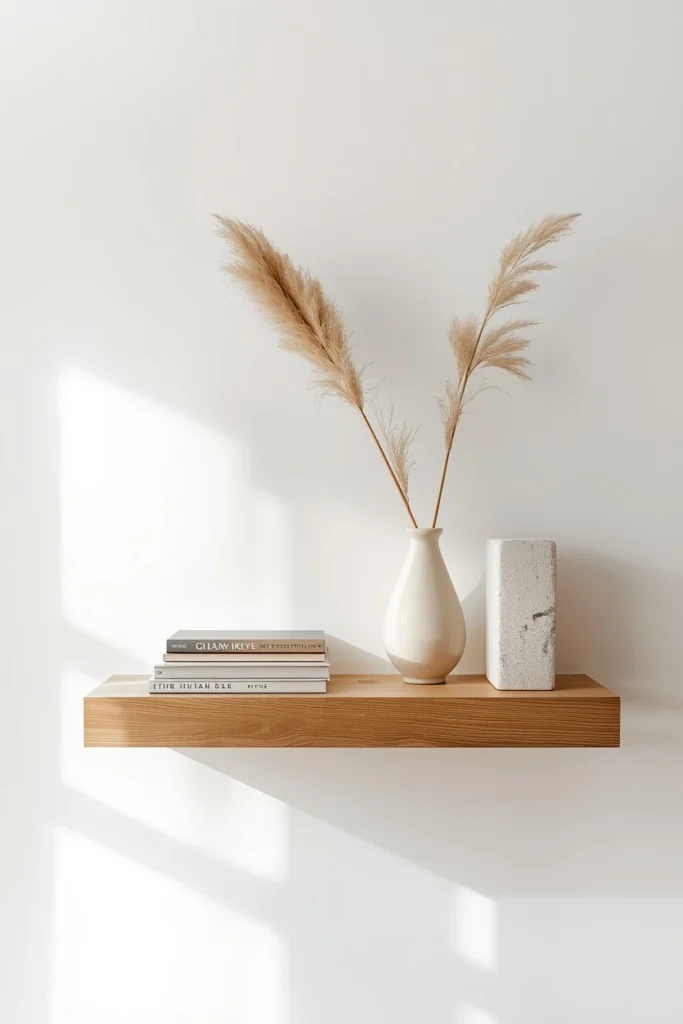
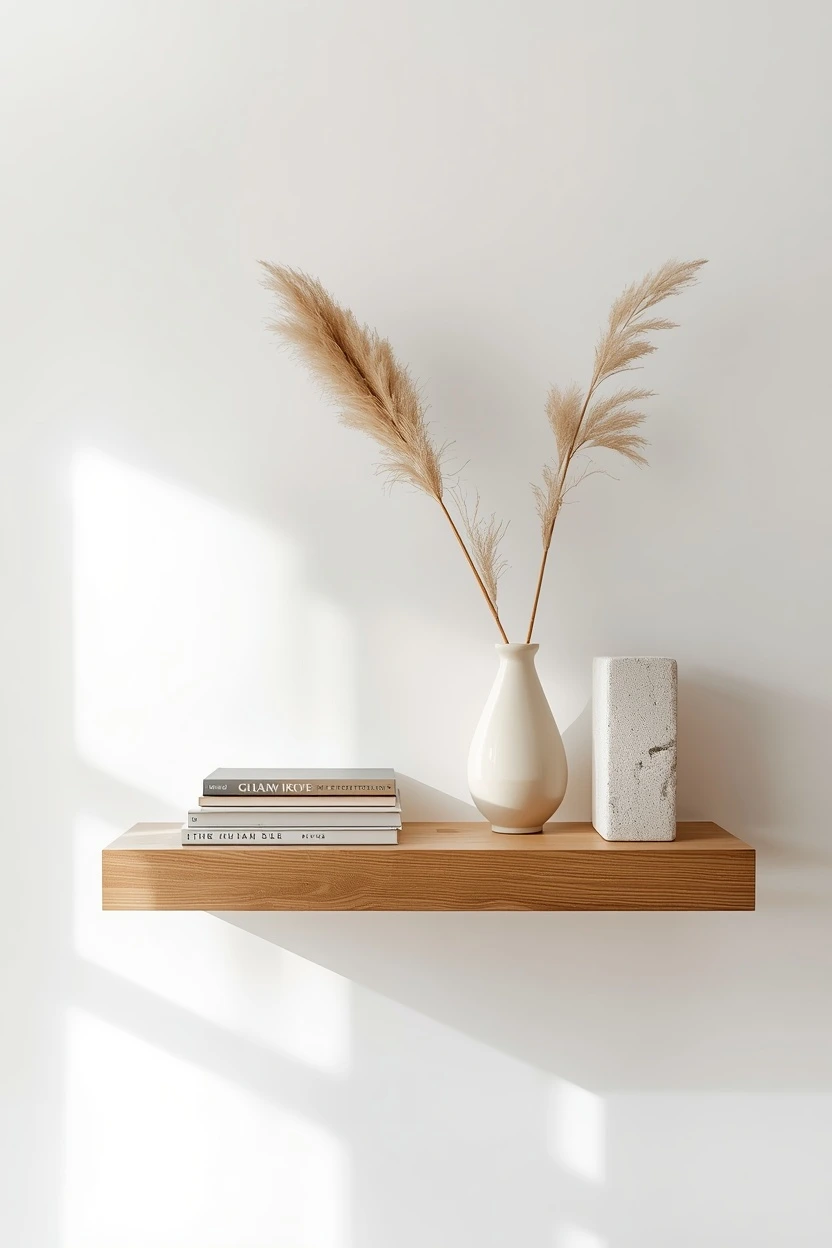
Picture a floating oak shelf with three grouped objects: a stack of two hardcover books lying flat, a small ceramic vase with a single dried stem, and a textured stone bookend standing just behind them. Nothing is centered — it all leans slightly left, creating a relaxed, intentional cluster.
Design Breakdown
The rule of three is a classic styling trick borrowed from professional stagers. Objects grouped in odd numbers — specifically three — read as more visually interesting than pairs or symmetrical rows. Your eye naturally moves between the pieces instead of scanning past a flat, even line.
Expert Tip
Vary the height of your three objects. If everything sits at the same level, the grouping falls flat. Stack a book to lift the vase, or prop a small frame against the wall to add depth.
Why It Works
Our brains are wired to find asymmetry more engaging than perfect symmetry. Grouping in threes also mimics how nature arranges things — imperfectly — which feels more authentic and less “staged” to the eye.
Best For
- Small spaces where every shelf needs to earn its visual weight
- Renters who want a low-commitment styling refresh
- Budget makeovers using items you already own
Common Mistake To Avoid
Overcrowding the grouping with five or six items defeats the purpose. If you’re unsure, remove pieces until only three feel intentional.
Quick Wins
- Group objects in odd numbers only — 3, 5, or 7
- Vary height using books as risers
- Leave breathing room around each cluster
- Rotate one seasonal item every few months to keep it fresh
Which of these ideas would work best in your home? Keep that question in mind as we go — I’ll ask a few more along the way.
2. Color-Blocked Book Spines
What You’re Seeing
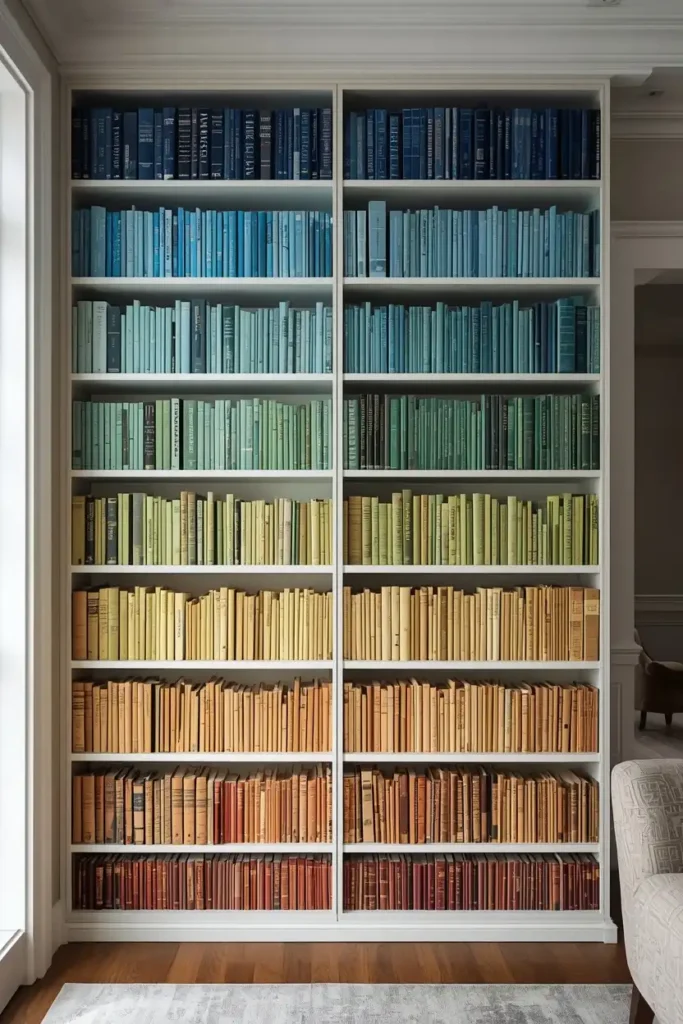
Imagine walking into a living room where an entire bookcase is organized by color — deep blues fading into greens, then warm neutrals, then a pop of red near the bottom. The spines create a gradient effect, almost like abstract art built entirely out of books.
Design Breakdown
Color-blocking books turns a shelf into a rainbow-adjacent art piece. Instead of organizing by author or genre, you’re organizing purely by visual tone, which creates a graphic, editorial look that photographs beautifully.
Expert Tip
Start with your dominant wall color and choose a book gradient that either matches or contrasts intentionally — matching creates calm cohesion, contrasting creates a bold statement.
Why It Works
Color gradients are inherently satisfying to the eye because they follow a predictable, soothing pattern. It also transforms books — often a “messy” category of clutter — into a deliberate design feature.
Best For
- Large spaces with multiple shelving units
- Families with big book collections looking for a way to display them attractively
- Luxury homes wanting a gallery-style statement piece
Common Mistake To Avoid
Don’t sacrifice function for looks if you actually use your books often. If you read frequently, keep a separate “working” shelf and reserve color-blocking for a display-only bookcase.
Quick Wins
- Sort books loosely by color family first, then fine-tune
- Turn a few books spine-in to reveal the page edges for texture variation
- Add one non-book object every few feet to break up the pattern
- Photograph it in natural light for the best color rendering
For more ways to make a bookshelf feel intentional rather than cluttered, check out our full guide on bookshelf styling with lots of books.
Most people don’t know this — color-blocked shelves are actually one of the easiest styling methods to do wrong on the first try because true color sorting takes longer than expected. My advice? Pull every book off the shelf first, sort them into color piles on the floor, and then rebuild from scratch. Trying to reorganize book-by-book while they’re still on the shelf almost always leads to a messier result than when you started.
3. Layered Leaning Art Display
Most people waste more space than they realize.
What You’re Seeing
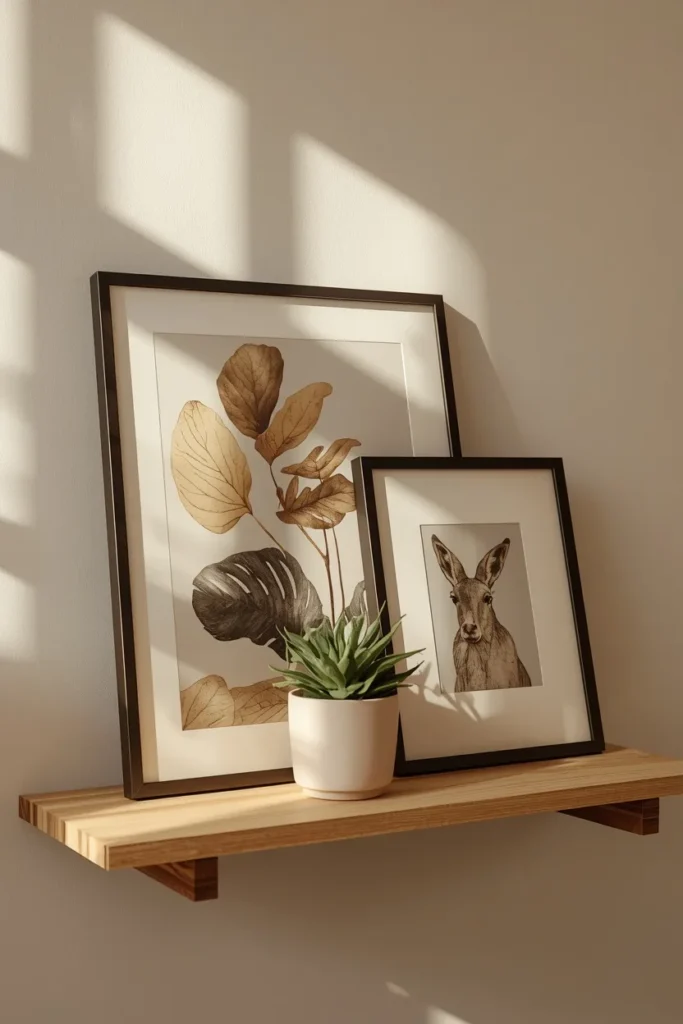
Think about how much easier your shelf looks when art doesn’t hang flat on the wall. Picture a shelf with two or three framed prints leaning at a slight angle against the wall, overlapping slightly, with a small potted plant tucked in front of the tallest frame.
Design Breakdown
Leaning art is a designer-favorite trick because it feels effortless while still being carefully composed. Unlike hung artwork, leaning pieces can be swapped, resized, or rearranged in seconds without a single nail hole.
Expert Tip
Layer your frames from largest to smallest, back to front, and keep at least one edge of each frame visible so the layering reads clearly instead of looking like a jumbled pile.
Why It Works
Leaning art creates depth and dimension that flat-hung pieces can’t achieve. It also lowers the visual “commitment” of the display, which psychologically makes a room feel more relaxed and lived-in rather than overly formal.
Best For
- Renters who can’t drill extra holes in walls
- Small spaces where flexibility matters more than a fixed gallery wall
- Budget makeovers using art you already own
Common Mistake To Avoid
Leaning too many frames at once creates visual chaos. Cap it at three frames per shelf section for the cleanest look.
Quick Wins
- Use frames in varying sizes, never identical ones
- Keep a plant or object in front of the tallest frame to anchor the layers
- Swap seasonal art in and out without any wall damage
- Angle frames slightly instead of leaning them perfectly flat
You May Also Like:
- Empty Corner Decoration Ideas
- Small Console Tables Ideas
- Tall Wall Decor Ideas
- Library Room Ideas
- Indoor House Plants Aesthetic Ideas
4. Trailing Greenery for Softness
What You’re Seeing
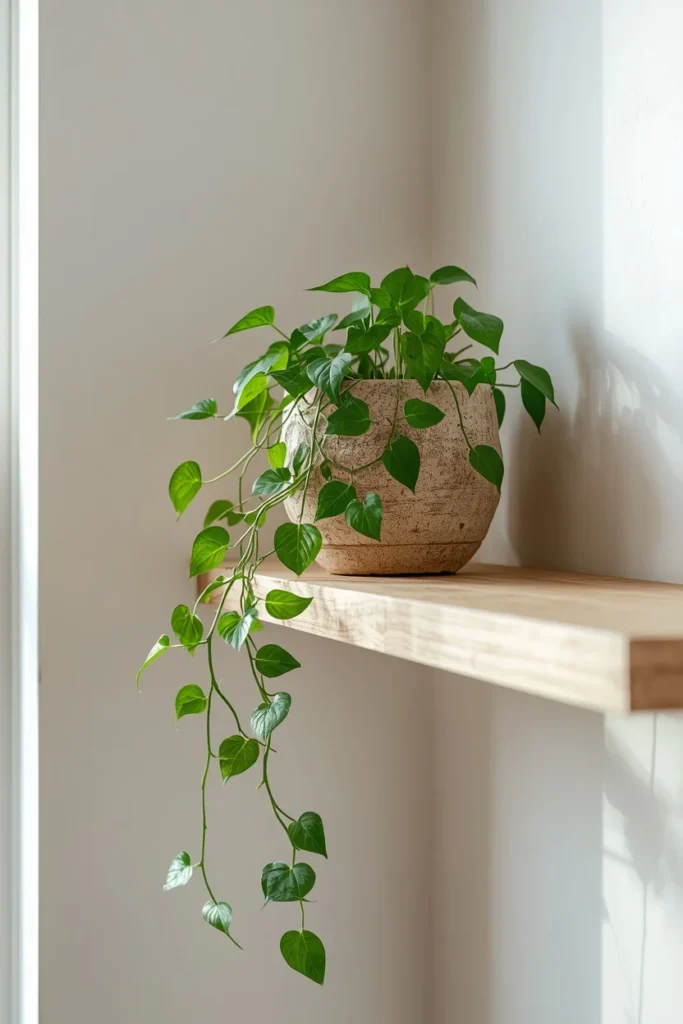
Picture yourself enjoying a shelf where a trailing pothos or ivy spills over the edge, its vines cascading down toward the shelf below. The greenery softens every hard line on the shelf, from the frame edges to the book spines.
Design Breakdown
Trailing plants introduce organic movement to what’s otherwise a rigid, geometric space. The vine doesn’t just sit on the shelf — it becomes part of the vertical composition, drawing the eye downward and connecting multiple shelf levels visually.
Expert Tip
Place your trailing plant on a higher shelf so the vines have room to grow and drape without dragging on the floor or tangling with lower-shelf objects.
Why It Works
Greenery has a well-documented calming effect, and trailing plants specifically break up the “boxiness” of shelving units. It’s one of the fastest ways to make a space feel alive rather than static.
Best For
- Small spaces needing a low-footprint way to add life
- Families wanting low-maintenance greenery (pothos is famously hard to kill)
- Renters looking for décor that isn’t permanent
Common Mistake To Avoid
Choosing a plant that needs more light than your shelf location provides. Check your shelf’s light exposure before committing to a trailing variety.
Quick Wins
- Pothos, string of pearls, and ivy are all beginner-friendly trailing options
- Use a textured ceramic pot to add another layer of visual interest
- Trim vines occasionally to keep the drape looking intentional, not overgrown
- Mix faux greenery in for shelves with low natural light
Would you choose function or style when it comes to your shelves? Trailing greenery is a rare case where you genuinely get both.
5. Curated Collection Displays
What You’re Seeing
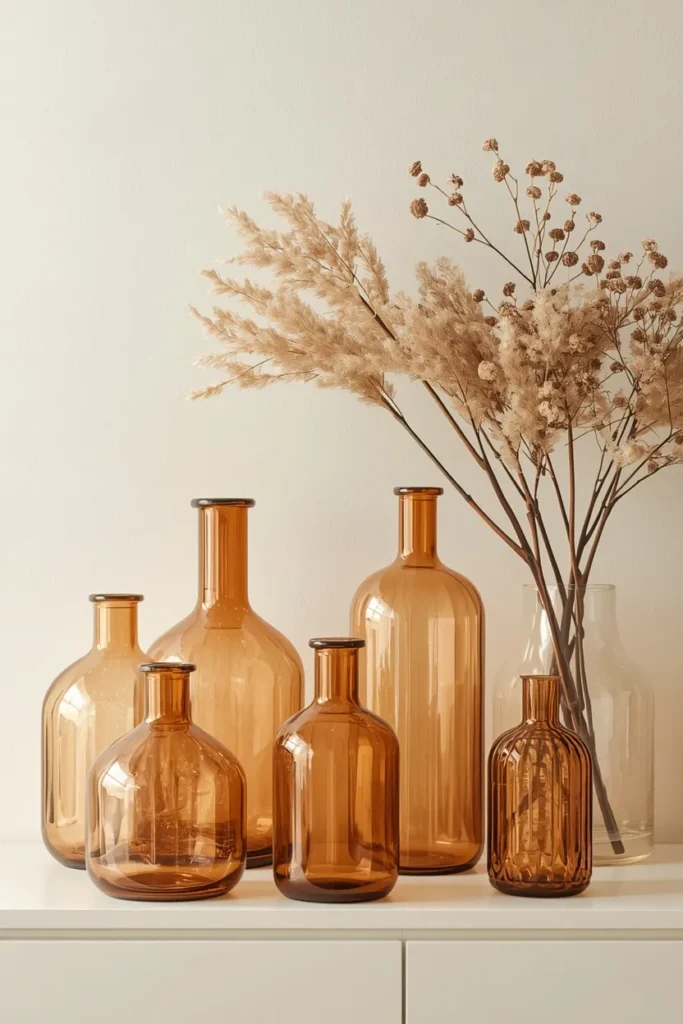
Visualize the difference between a random assortment of trinkets and a shelf dedicated entirely to one curated collection — vintage cameras, hand-thrown ceramics, or a set of matching glass vessels in varying heights, all grouped with intention.
Design Breakdown
Curated collections work because repetition creates rhythm. Instead of one-off decorative objects scattered across a shelf, a themed collection reads as purposeful and tells a clear visual story about your taste.
Expert Tip
Limit your collection display to one shelf or section rather than spreading it across your entire unit — concentration creates impact, while spreading it thin dilutes the effect.
Why It Works
Collections signal personality and passion, which makes a space feel more like a home and less like a showroom. Grouped similar objects also create an easy focal point that doesn’t require constant restyling.
Best For
- Luxury homes wanting a museum-style display moment
- Families with heirloom or travel-collected objects worth showcasing
- Large spaces with multiple shelving units to dedicate
Common Mistake To Avoid
Displaying an incomplete or mismatched “collection” of only two or three unrelated items usually looks accidental rather than curated. Wait until you have at least five to seven cohesive pieces.
Quick Wins
- Group by color, material, or era for the most cohesive look
- Add a small placard or label for sentimental collections
- Use risers or small stands to vary height within the group
- Rotate pieces seasonally if you have more than fits on one shelf
One thing I’ve learned styling shelves for clients — the objects that get the most compliments are almost never the expensive ones. A collection of thrifted glass bottles arranged by height gets more attention than a single pricey decor piece sitting alone. If you’re on a budget, lean into collecting over buying one statement item. It’s more affordable and, honestly, more interesting to look at.
6. Mixed-Material Texture Layering
The next idea is one designers secretly love.
What You’re Seeing
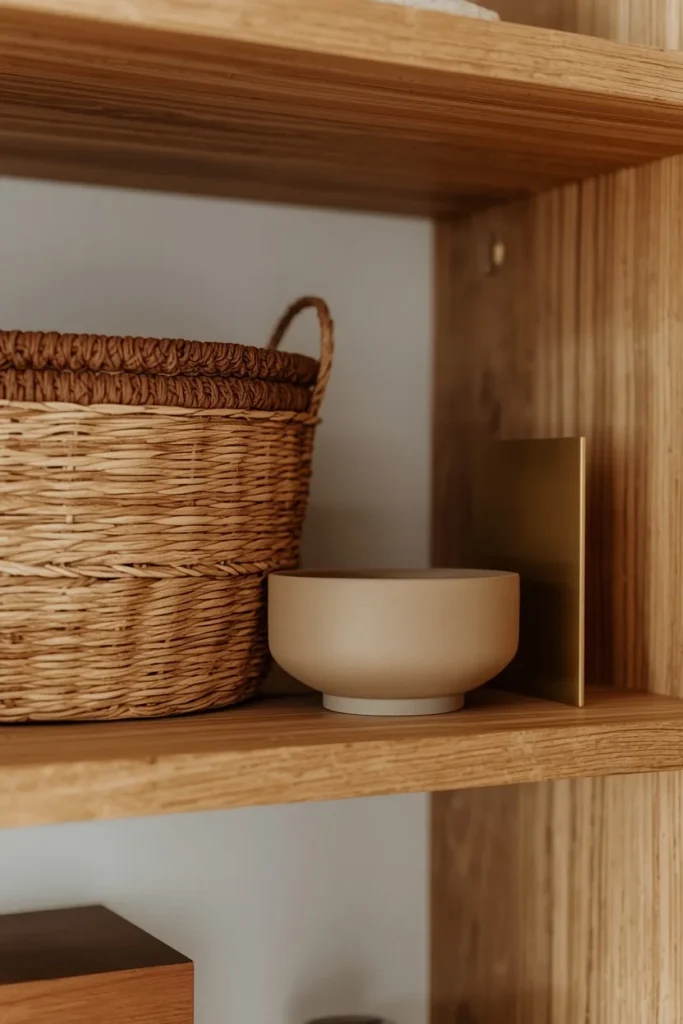
Imagine a shelf that combines wood, ceramic, woven rattan, and a touch of brushed metal all in one composition — a rattan basket holding small items, a matte ceramic bowl, and a slim brass bookend, all sitting against the natural wood grain of the shelf itself.
Design Breakdown
Mixed-material styling avoids the flat, one-note look that happens when every object shares the same finish. By combining textures — matte, glossy, woven, metallic — the shelf gains depth even without adding more color or pattern.
Expert Tip
Aim for at least three different textures per shelf section: one soft or woven element, one hard glossy element, and one matte element for balance.
Why It Works
Texture variation keeps the eye engaged longer than a uniform material palette. It’s the same principle designers use in full-room styling, just scaled down to a single shelf.
Best For
- Luxury homes wanting an elevated, designer-showroom feel
- Large spaces with multiple shelves to build texture across
- Budget makeovers mixing thrifted and new pieces together
Common Mistake To Avoid
Using too many glossy or metallic finishes at once can feel cold and showroom-like rather than warm and lived-in. Balance shine with at least one matte or woven texture.
Quick Wins
- Combine wood, ceramic, and woven textures in every grouping
- Use a rattan basket to add warmth and hide small clutter
- Add one metallic accent, but don’t overdo it
- Let the natural shelf material (wood grain, painted finish) count as one of your textures
7. The Negative Space Minimalist Shelf
What You’re Seeing
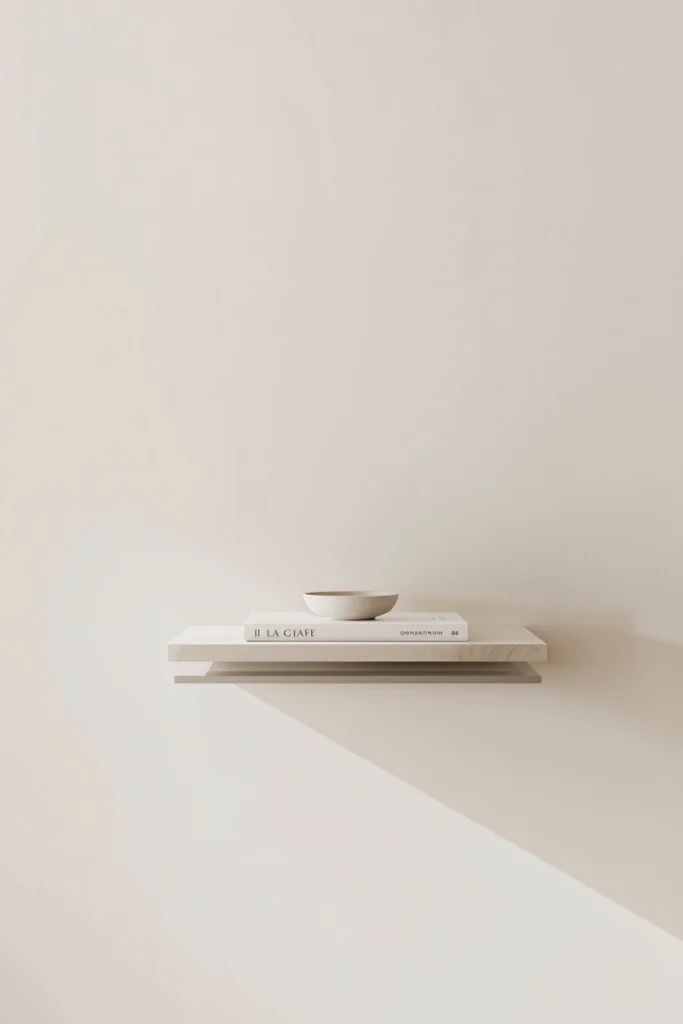
Picture a single floating shelf holding just two objects — a small ceramic vessel and one hardcover book laid flat beneath it — with the rest of the shelf left completely empty. The emptiness itself becomes part of the design.
Design Breakdown
Minimalist shelf styling leans on negative space as a design element, not a missed opportunity. Instead of filling every inch, you’re choosing restraint, which creates a calm, gallery-like feeling in the room.
Expert Tip
If your instinct is to add “just one more thing,” resist it. Live with the sparse arrangement for a full week before deciding it needs more.
Why It Works
Cluttered surfaces increase visual and cognitive load, which subtly raises stress even if you don’t consciously notice it. Minimalist shelves give your eyes — and your mind — a place to rest.
Best For
- Small spaces where visual clutter makes the room feel smaller
- Renters wanting an easy, low-effort styling approach
- Budget makeovers since minimalism requires very few purchased items
Common Mistake To Avoid
Confusing “minimalist” with “empty and forgotten.” A minimalist shelf still needs intentional object choice and placement — it’s not the same as leaving a shelf completely bare.
Quick Wins
- Choose one to three objects maximum per shelf
- Prioritize one item with genuine visual interest over several small trinkets
- Use negative space to frame your chosen objects, not just to fill time
- Reassess every season rather than styling once and forgetting it
You May Also Like:
- Wall Shelves Bedroom Ideas
- Minimalist Bedroom Ideas
- Small Console Tables Ideas
- Space Saving Furniture Ideas
- Marble Decoration Ideas
Shelf Decor Buying Guide: What’s Actually Worth Your Money
Let’s pause the list for a moment, because this is where a lot of people overspend on the wrong things.
Knowing what to actually invest in versus what to thrift or DIY can completely change how your shelves come together — and how much you spend getting there.
Here’s a breakdown of where your budget should go:
- Bookends — Worth investing in if you display books often. A heavy, well-made pair (stone, marble, or solid brass) does double duty as both function and decor. Cheap lightweight bookends tend to slide and ruin the styled look.
- Vases and vessels — This is a great category to thrift. Ceramic and glass vessels show up constantly at secondhand shops, and mismatched-but-coordinated vases often look more curated than a matching boxed set.
- Frames — Worth a moderate investment if you’re doing the leaning art display method, since cheap plastic frames can look flimsy up close. Wood or metal frames photograph and age better.
- Baskets and woven storage — Budget-friendly almost everywhere, and genuinely useful for hiding clutter behind a styled front.
- Statement objects — This is the one category worth splurging on. A single beautiful object (a hand-thrown bowl, a sculptural candle holder) does more visual work than five cheap trinkets combined.
A simple decision-making framework:
- If you’re decorating on a tight budget, thrift vessels and frames first, then splurge on one statement piece.
- If you’re short on time, the rule of three method (Idea #1) takes the least effort for the biggest visual payoff.
- If you want a long-term investment, prioritize quality bookends and one or two statement objects that won’t need replacing.
Common shelf-styling budget mistakes:
- Buying a full matching decor set instead of mixing pieces — matching sets often look staged rather than personal.
- Overspending on small trinkets that add clutter instead of one meaningful piece.
- Skipping measurements — buying oversized objects that don’t actually fit your shelf depth.
- Forgetting to factor in lighting; a beautifully styled shelf in a dark corner won’t get noticed without at least a small lamp or LED strip.
Realistic cost tiers to keep in mind:
- Thrifted and DIY styling can cost very little if you’re resourceful with what you already own.
- A mid-range refresh using a mix of thrifted and new pieces sits comfortably in the moderate range.
- A fully new, designer-curated shelf display costs significantly more, especially if sourcing higher-end ceramics or original art.
What’s your biggest challenge right now — figuring out what to buy, or figuring out how to arrange what you already have? Either way, the ideas ahead should help.
8. Vertical Ladder Bookshelf Styling
This is where many homeowners make a mistake — they only style the top shelf and leave the rest looking like storage.
What You’re Seeing
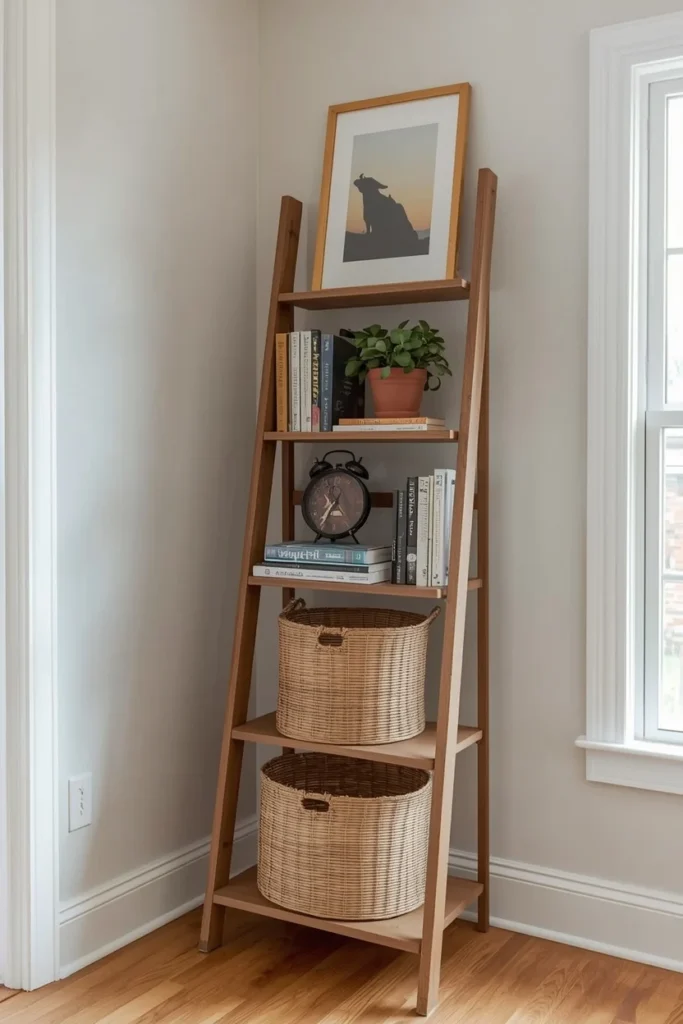
Picture a tall, ladder-style bookshelf where every single tier gets equal styling attention — books on one level, a small plant on the next, a stack of woven baskets on the bottom for hidden storage, and a framed print leaning on the top.
Design Breakdown
Vertical ladder shelves fail most often because people treat the top shelf as the “decor” level and everything below as pure storage. Styling every tier — even just slightly — creates a cohesive look from top to bottom instead of a lopsided one.
Expert Tip
Use the bottom shelf for closed storage (baskets, boxes) and let the top two-thirds carry the visual styling. This keeps function accessible while still looking intentional.
Why It Works
A fully styled vertical shelf draws the eye upward, which makes ceilings feel taller and rooms feel more spacious — a major win for smaller apartments or rooms with limited square footage.
Best For
- Small spaces needing to maximize vertical storage
- Renters using a freestanding ladder shelf instead of built-ins
- Families needing a mix of storage and display in one piece
Common Mistake To Avoid
Leaving the bottom two shelves completely unstyled or overstuffed with clutter undercuts all the effort put into the top shelves. Balance is key.
Quick Wins
- Style every tier, even minimally, for a cohesive top-to-bottom look
- Use closed baskets on lower shelves to hide everyday clutter
- Vary the objects tier to tier so it doesn’t feel repetitive
- Keep sightlines clear near eye level for the most impactful styling
Here’s where it gets interesting — ladder shelves are one of the few furniture pieces that genuinely change how tall a room feels. I’ve styled the exact same shelf in two different homes, and in the one where I carried decor all the way up to the top tier, guests consistently commented on how “open” the room felt, even though nothing about the square footage had changed. Vertical styling is an underrated trick for making a small room feel bigger.
9. Seasonal Rotation Styling System
This simple change can completely transform the room.
What You’re Seeing
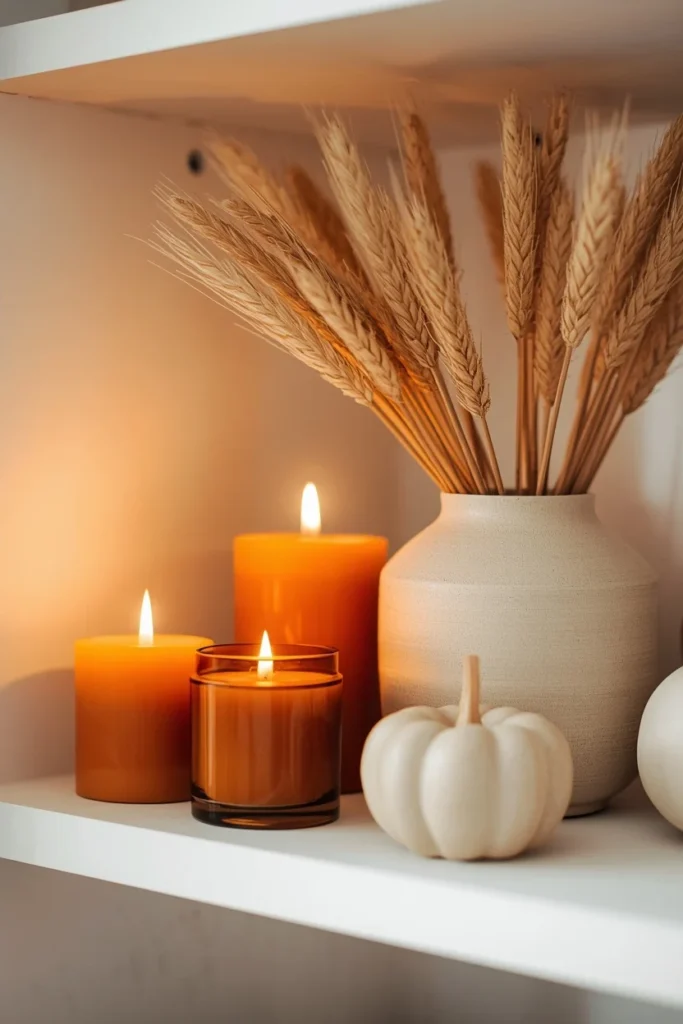
Think about how much easier your shelf feels when it shifts subtly with the seasons — warm amber candles and dried wheat stems in fall, fresh greenery and citrus-toned ceramics in spring, without ever needing a full restyle.
Design Breakdown
Seasonal rotation isn’t about buying new décor every few months. It’s about building a “base” shelf styling that stays constant, then swapping just one or two accent pieces to reflect the season.
Expert Tip
Keep a small bin of seasonal accent pieces stored out of sight so rotating your shelf takes five minutes instead of becoming a full project.
Why It Works
Subtle seasonal changes keep a space feeling fresh and cared for, which is consistently linked to higher day-to-day satisfaction with your surroundings. It also gives you a low-pressure styling refresh without redecorating the whole room.
Best For
- Families who enjoy seasonal traditions and decor
- Budget makeovers since only one or two pieces change at a time
- Renters wanting variety without a full redesign
Common Mistake To Avoid
Swapping out too many pieces each season turns this into a bigger, more expensive project than it needs to be. Stick to one or two accent changes max.
Quick Wins
- Build a neutral “base” styling that works year-round
- Store 2-3 seasonal accent pieces per season in a labeled bin
- Rotate only the accents, not the entire shelf composition
- Use candles, stems, and small ceramics as your easiest swap items
Don’t skip the next tip — this last idea is one of my personal favorites because it solves a problem almost everyone has.
10. The Functional-Meets-Decorative Hybrid Shelf
What You’re Seeing
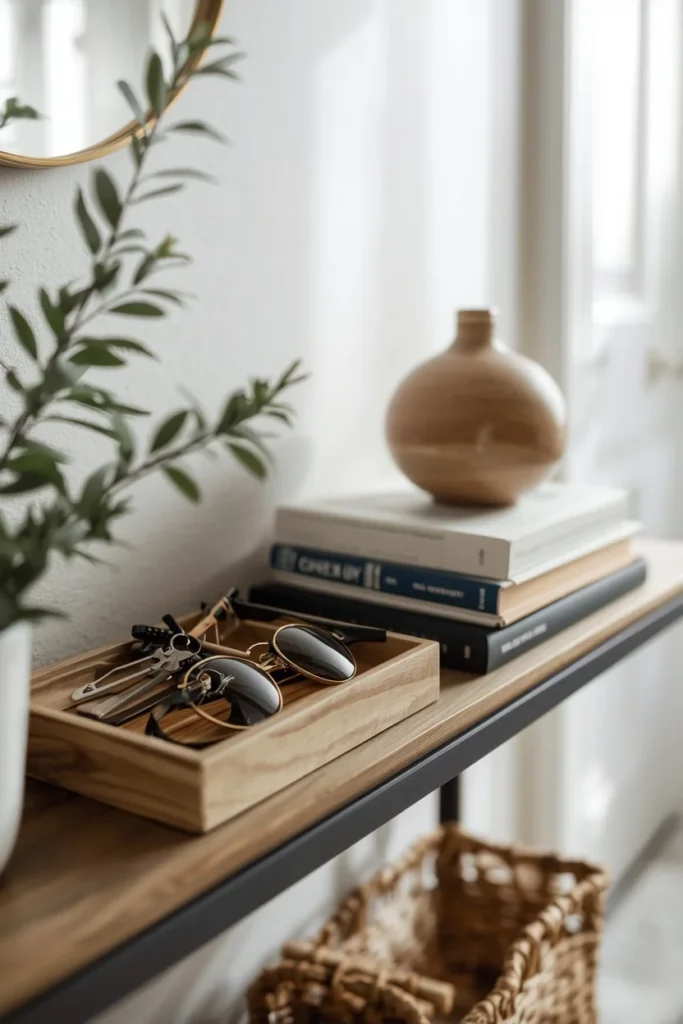
Imagine a shelf that looks styled but is actually doing real work — a small tray holding daily-use items like keys or sunglasses, a stack of current reads instead of decorative-only books, and one purely decorative object to tie it together.
Design Breakdown
Hybrid shelves solve the problem of decor that looks nice but serves no purpose. By blending genuinely useful items with intentional styling, the shelf earns its place in a busy household instead of becoming another surface to avoid touching.
Expert Tip
Choose one “beautiful but useful” object — a ceramic catchall tray, a sculptural bookend — that does double duty so nothing on the shelf feels purely decorative or purely functional.
Why It Works
Function-forward styling reduces the mental friction of “don’t touch the pretty shelf,” making the space feel more livable. It’s especially valuable in households where a purely decorative shelf just becomes another clutter magnet.
Best For
- Families needing shelves that survive daily life
- Small spaces where every surface needs to multitask
- Budget makeovers using items you already have on hand
Common Mistake To Avoid
Letting “functional” slide into “messy.” A catchall tray should still be tidied regularly, or the hybrid approach stops looking intentional.
Quick Wins
- Choose one tray or dish to corral small daily items
- Rotate current reads instead of using purely decorative books
- Add one purely aesthetic object to balance the practical ones
- Tidy the functional zone weekly to keep the styled look intact
Let me know which one is your favorite from this list so far — I’m always curious which style resonates most with different homes.
Related Shelf Decor Ideas
If you’re ready to keep exploring, these related guides will help you carry this styled, curated feeling into every corner of your home.
- Bedroom Bookshelf Ideas
- The Ultimate Guide to Styling a Coffee Table Like a Pro
- Book Nook Ideas
- Empty Corner Decoration Ideas
- Library Room Ideas
- Small Console Tables Ideas
- Sideboard Decor Ideas
- Indoor House Plants Aesthetic Ideas
Final Thoughts on Shelf Decor Ideas
Let’s recap the ideas that had the biggest impact: the rule of three for effortless grouping, mixed-material texture layering for depth, and the functional-meets-decorative hybrid shelf for households that actually live in their space.
Here’s my honest advice — don’t try to apply all 10 of these shelf decor ideas at once. Pick the one shelf in your home that bothers you most every time you walk past it, and give it a real refresh this week.
So tell me — which of these shelf decor ideas matches the vibe you’re going for right now?
Once your shelves feel styled, it’s worth turning your attention to the empty corners and console tables nearby, since those tend to be the next spots that quietly get overlooked.
And if you loved the idea of leaning art and layered textures, keep an eye out — I’m working on a full deep-dive into gallery wall styling next, and it might be exactly the guide that ties your whole living room together.
Frequently Asked Questions About Shelf Decor Ideas
1. How do I style a shelf if I don’t have a lot of decor items?
Start small with the rule of three method, using just a book, a small object, and one plant or vase. You don’t need a large collection to make a shelf feel intentional.
2. What’s the best way to arrange books on a shelf for decor purposes?
Mix vertical stacks with horizontal stacks, and consider grouping by color for a more visual, gallery-like effect rather than strict alphabetical order.
3. How much empty space should I leave on a styled shelf?
A good general guideline is to leave roughly a third of the shelf empty so the styled objects have room to breathe instead of looking crowded.
4. Are floating shelves or bookcases better for decor styling?
Both work well depending on your space. Floating shelves are great for small, minimal displays, while bookcases offer more room for layered, tiered styling.
5. How often should I restyle my shelves?
A light seasonal refresh every few months keeps things feeling current without requiring a full redesign each time.
6. What plants work best on shelves with low light?
Pothos and ZZ plants are both known for tolerating lower light conditions, making them reliable choices for shelves away from windows.
7. How do I keep styled shelves from looking cluttered?
Stick to odd-numbered groupings, vary height and texture, and resist the urge to fill every inch of open space.
8. What’s a budget-friendly way to add height variation to shelf objects?
Use stacked books as risers under smaller objects like vases or candles instead of buying separate stands.
9. Should shelf decor match the rest of my room’s color palette?
It doesn’t need to match exactly, but coordinating with your room’s existing tones creates a more cohesive, put-together look overall.
10. Can I use shelf decor ideas in a rental without damaging walls?
Yes, floating shelves that use removable mounting strips, along with leaning art and freestanding bookcases, are all rental-friendly options that avoid permanent wall damage.