10 Bedroom Cupboard Designs That Will Completely Change How You Store Clothes
This article was created in line with Trends Oraa’s research and content standards.
Most people don’t realize this.
Their bedroom feels cramped, not because of the room’s size, but because of the cupboard.
The good news? Fixing it is easier than you think.
If you’ve ever stood in front of a bulky, outdated cupboard wondering why your clothes never seem to have enough room, you’re not alone. Most bedrooms are working against you with cupboard layouts that were never designed for how much stuff we actually own today. The right bedroom cupboard designs can quietly transform a cramped, cluttered room into one that finally feels organized and calm.
You might also love our guide on 10 stylish wardrobe design ideas if you’re rethinking your entire storage setup and not just the cupboard itself.
In this guide, I’m sharing 10 bedroom cupboard designs that go beyond the standard sliding-door box most of us grew up with. Some are built for tiny bedrooms. Others are made for families who need serious storage. All of them are designed to actually solve the daily frustration of where does this go.
Keep scrolling, because idea number six is one that most designers quietly recommend but rarely talk about publicly.
Why Bedroom Cupboard Designs Matter More Than You Think
Before we get into the list, let’s talk about why this decision carries so much weight.
Your cupboard isn’t just storage. It shapes how your entire bedroom feels every single morning.
- It’s the first thing you interact with when getting dressed.
- It’s often the largest piece of furniture in the room.
- It directly affects how spacious or cramped the room feels.
- It sets the tone for the room’s overall style.
Here’s where it gets interesting. A poorly designed cupboard doesn’t just fail to store your clothes, it visually shrinks the room, even if the cupboard itself isn’t that large. The right design does the opposite. It makes a small bedroom feel bigger and a large bedroom feel intentional.
What’s your biggest challenge right now, not enough space, or a cupboard that just doesn’t work for how you actually live?
1. The Built-In Wall-to-Wall Cupboard
What You’re Seeing
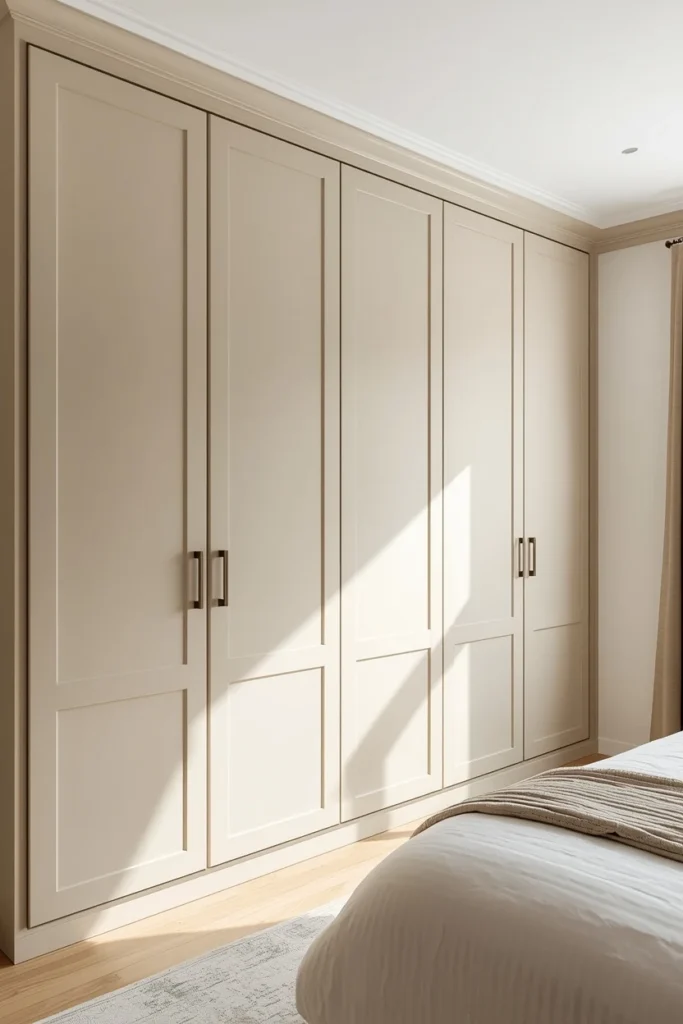
Picture an entire wall transformed into a seamless run of floor-to-ceiling cupboards, flush doors with barely visible handles, painted to match the wall so it almost disappears into the room.
Design Breakdown
This design uses the full width of one wall, built directly into the architecture of the room rather than sitting as a standalone piece. The doors are typically flat-panel or slightly recessed, and the whole unit is painted the same color as the surrounding walls to minimize visual bulk.
Expert Tip
Use push-to-open hardware instead of visible handles. It keeps the wall looking uninterrupted and adds to that built-in, custom feel.
Why It Works
Because the cupboard blends into the wall rather than standing apart from it, the room reads as more spacious, even though you’re gaining significant storage capacity.
Best For
- Small spaces
- Luxury homes
- Large spaces
Common Mistake To Avoid
Choosing a glossy finish that highlights every fingerprint and smudge. A matte or satin finish hides daily wear far better.
Quick Wins
- Maximizes storage without eating into floor space
- Creates a custom, high-end look
- Works in almost any bedroom size
- Low-maintenance flush design
2. The Open-Shelf Cupboard With Woven Basket Storage
What You’re Seeing
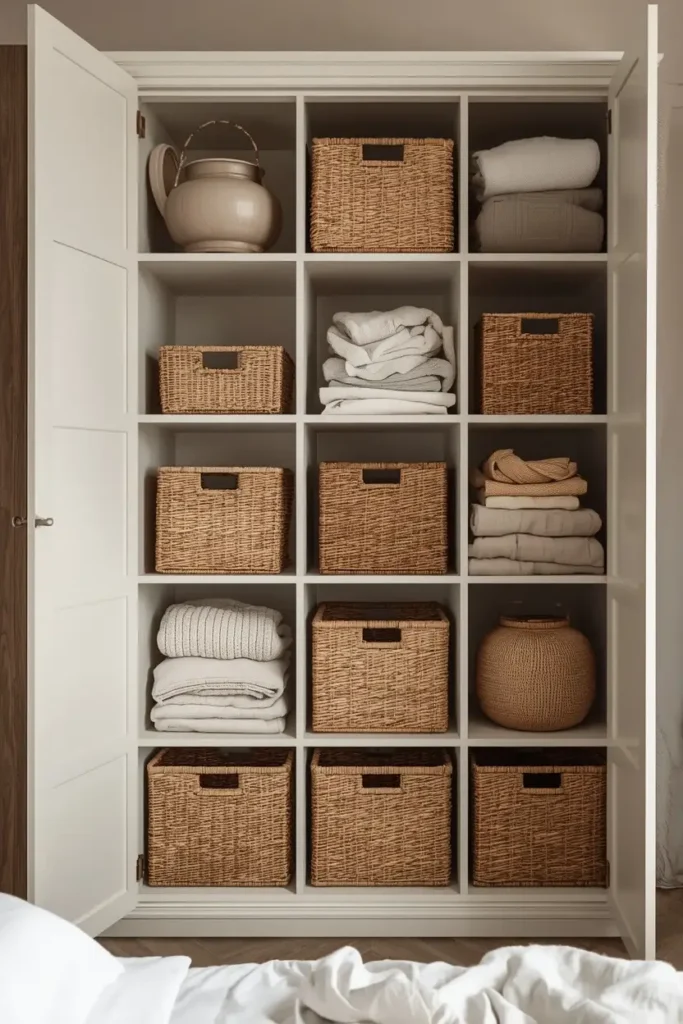
Imagine walking into a bedroom where part of the cupboard has open shelving lined with woven baskets, folded sweaters and accessories tucked neatly inside, adding warmth and texture to the space.
Design Breakdown
This hybrid design combines a few closed cupboard doors with open shelving sections filled with baskets instead of drawers. It’s a popular choice for those who want the organization of a cupboard with the visual softness of open storage.
Expert Tip
Reserve open shelving for items that fold neatly, like sweaters and linens. Save the closed sections for anything you don’t want on display.
Why It Works
Open shelving with baskets adds natural texture to a room that can otherwise feel cold or overly boxy, while still keeping items contained and tidy.
Best For
- Budget makeovers
- Families
- Renters
Common Mistake To Avoid
Overloading open shelves with too many items. It quickly starts to look cluttered instead of styled.
Quick Wins
- Adds warmth and texture to a plain bedroom
- Easy to access frequently used items
- Budget-friendly compared to full custom cabinetry
- Great for renters who can’t install built-ins
Most people don’t know this: the number one reason open shelving looks messy isn’t the shelving itself, it’s inconsistent baskets. One thing I’ve learned styling these setups is that mismatched basket sizes and materials are what make a shelf look chaotic. Stick to one material, like a woven rattan or a neutral canvas, across every basket on display. It’s a small detail, but it’s the difference between a shelf that looks intentional and one that looks like it happened by accident.
Most people waste more space than they realize.
3. The Sliding Door Mirrored Cupboard
What You’re Seeing
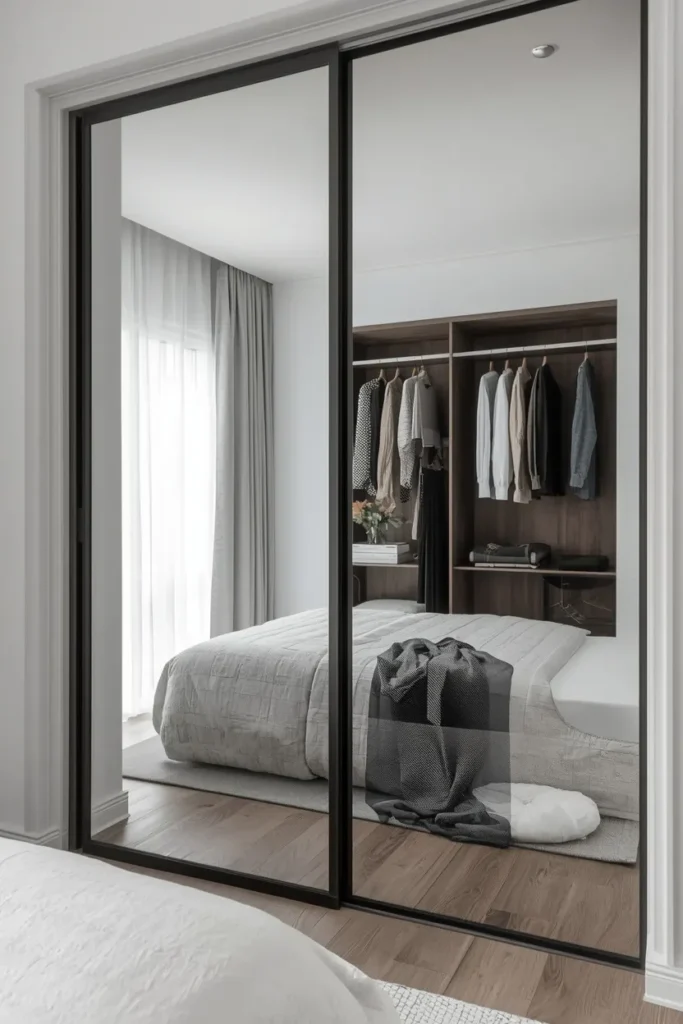
Think about how much easier your morning routine becomes with a full-length mirrored sliding door that doubles as your outfit check and hides your entire wardrobe behind it.
Design Breakdown
This classic design uses one or more sliding mirrored panels instead of hinged doors, which is especially useful in bedrooms where door swing space is limited. The mirror also serves a dual purpose as a functional dressing mirror.
Expert Tip
If your bedroom is on the smaller side, choose a cupboard with two or three sliding panels rather than one large panel, since narrower panels require less clearance to slide open fully.
Why It Works
Mirrored surfaces bounce light around the room and visually double its perceived size, all while eliminating the need for a separate full-length mirror.
Best For
- Small spaces
- Renters
- Budget makeovers
Common Mistake To Avoid
Installing sliding doors without checking the track quality first. Cheap tracks stick and become noisy within a year of daily use.
Quick Wins
- Doubles as a full-length mirror
- Saves floor space with no door swing needed
- Instantly brightens a dim bedroom
- Widely available in ready-to-install kits
You May Also Like:
- Walk-In Closet Ideas
- Clothes Storage Ideas
- Small Bedroom Storage Ideas
- Master Bedroom Ideas Wardrobe Design
- Minimalist Bedroom Ideas
4. The Corner Cupboard for Awkward Layouts
What You’re Seeing
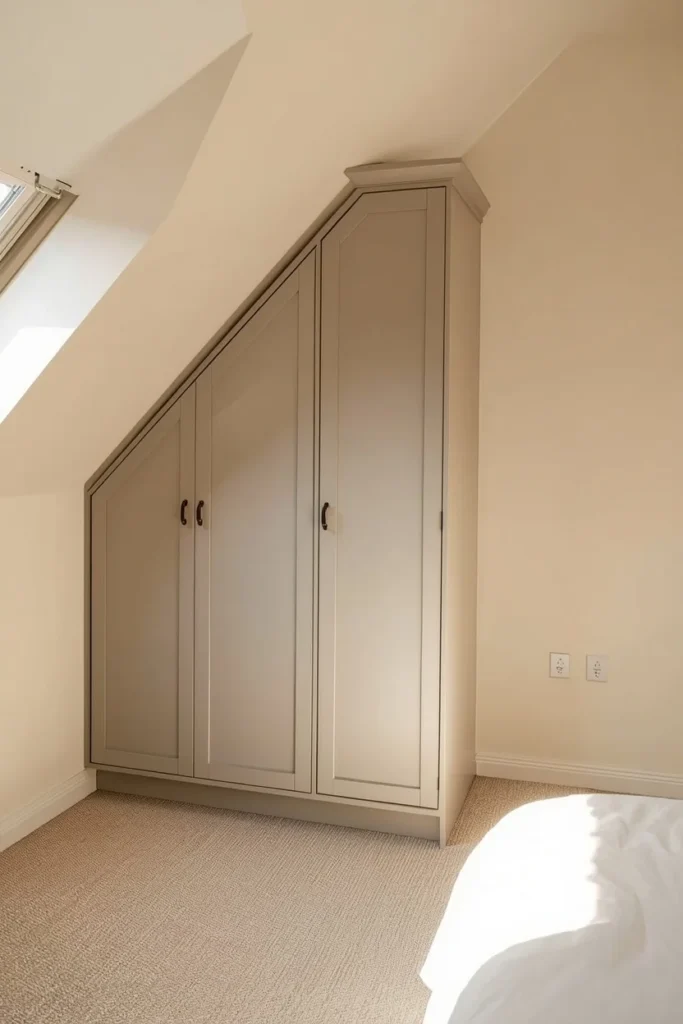
Picture yourself enjoying a formerly wasted corner of your bedroom now filled with a custom-fit angled cupboard, making use of space most furniture simply can’t reach.
Design Breakdown
Corner cupboards are built at an angle to tuck neatly into a room’s unused corner, often with diagonal or L-shaped interiors that maximize every inch. They’re especially useful in bedrooms with awkward architectural features like sloped ceilings or odd wall angles.
Expert Tip
Ask for pull-out interior shelving rather than fixed shelves. Corner spaces are notoriously hard to reach into, and pull-out mechanisms solve that instantly.
Why It Works
This design captures storage space that would otherwise sit empty, without requiring you to give up usable floor area elsewhere in the room.
Best For
- Small spaces
- Large spaces
- Renters
Common Mistake To Avoid
Choosing a corner cupboard that’s too deep for the space, which makes the interior nearly impossible to access without pulling everything out first.
Quick Wins
- Uses space most furniture can’t
- Great solution for oddly shaped rooms
- Keeps walkways clear elsewhere in the bedroom
- Works well in attic or sloped-ceiling bedrooms
Would you choose function or style for your next cupboard upgrade?
5. The Two-Tone Cupboard With Contrasting Panels
What You’re Seeing
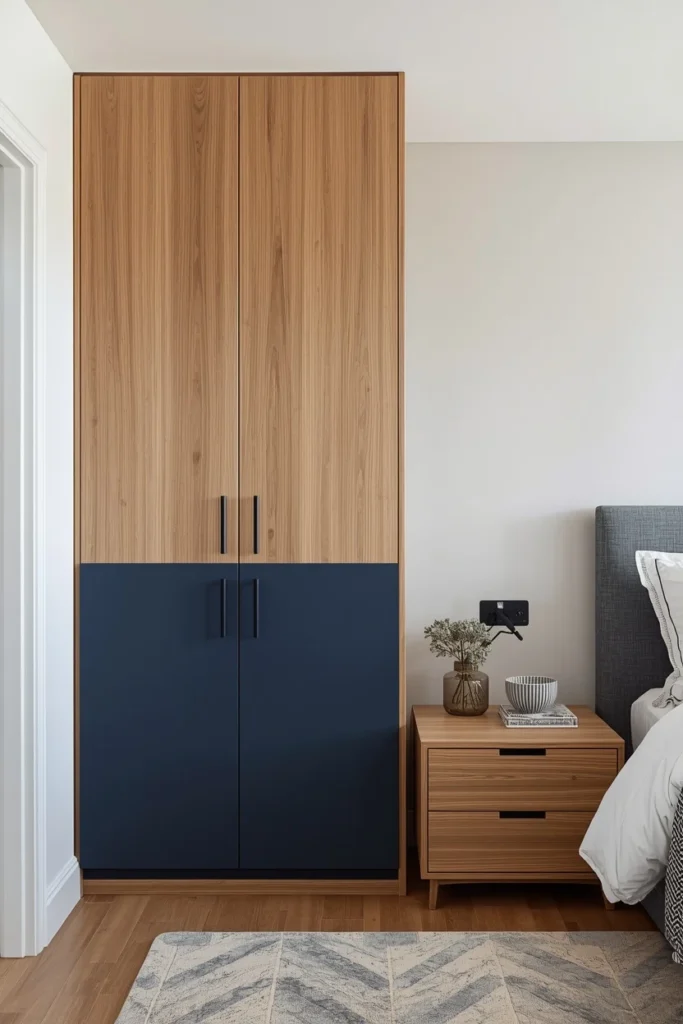
Visualize a cupboard with a two-tone finish, deep navy or charcoal panels paired with natural wood-toned doors, instantly making the piece feel like a designed statement rather than basic storage.
Design Breakdown
This design uses two complementary finishes across the cupboard’s panels and doors, often pairing a bold color with a natural wood tone or a soft neutral. It’s a simple way to make a large storage piece feel intentional instead of purely functional.
Expert Tip
Keep the bolder color on the lower half of the cupboard and the lighter tone up top. It grounds the piece visually and keeps the room from feeling top-heavy.
Why It Works
A two-tone finish turns a purely practical piece of furniture into a design feature, which matters most in bedrooms where the cupboard is the largest visual element in the room.
Best For
- Luxury homes
- Large spaces
- Budget makeovers
Common Mistake To Avoid
Choosing two colors that are too close in tone. The contrast needs to be clear enough to read intentionally rather than looking like a mismatched finish.
Quick Wins
- Turns storage into a design statement
- Works with both modern and traditional bedrooms
- Easy to achieve with paint on an existing cupboard
- Pairs well with matching nightstands or headboards
Here’s where it gets interesting: a two-tone cupboard is one of the easiest ways to upgrade a bedroom without touching a single wall. But here’s the important part, the color pairing matters more than the technique. I always tell people to pull their two tones directly from something else already in the room, like the flooring or the bedding. It keeps the whole space feeling connected instead of like the cupboard was styled in isolation from everything around it.
Which of these ideas would work best in your home?
The next idea is one designers secretly love.
6. The Modular Cupboard System With Adjustable Interiors
What You’re Seeing
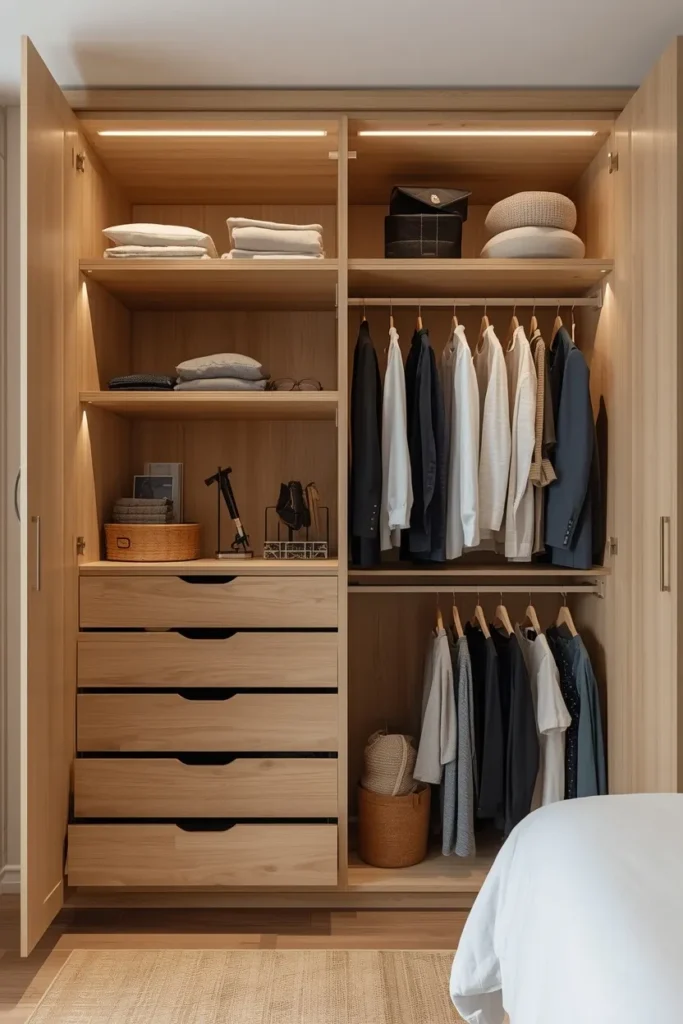
Imagine a cupboard where every shelf, drawer, and hanging rod can be rearranged to match exactly what you need, whether that’s more hanging space this year or more folded storage the next.
Design Breakdown
Modular systems use adjustable tracks or pegs inside the cupboard frame, allowing shelves, drawers, and rods to move up, down, or out entirely. Instead of a fixed layout, you’re building a system that evolves with your wardrobe over time.
Expert Tip
Plan your modular layout around your current wardrobe first, then leave at least one section flexible for future changes like a growing shoe collection or seasonal storage needs.
Why It Works
This is where it gets interesting, most cupboard frustration comes from a fixed layout that no longer matches how you actually dress. A modular system removes that mismatch entirely.
Best For
- Families
- Luxury homes
- Large spaces
Common Mistake To Avoid
Overcomplicating the initial layout. Start simple, then adjust as you learn what you actually need more or less of.
Quick Wins
- Adapts as your wardrobe and needs change
- Reduces wasted or awkward storage space
- Ideal for growing families or shared closets
- Higher upfront cost but long-term flexibility
Don’t skip the next tip, the mid-article guide below breaks down exactly what these builds actually cost.
The Real Planning Guide for Choosing Bedroom Cupboard Designs
This is the section most guides skip, and it’s the one that actually determines whether your cupboard upgrade succeeds or falls flat.
But here’s the important part. Choosing between these bedroom cupboard designs isn’t really about style first. It’s about matching the design to your room’s shape, your budget, and how you actually get dressed every day. Let’s break it down properly.
Start With Your Room’s Layout
- Narrow bedrooms benefit most from sliding doors, since hinged doors need swing clearance you may not have.
- Awkward corners or sloped ceilings are prime candidates for a corner cupboard rather than a standard rectangular unit.
- Wide, flat walls are ideal for built-in wall-to-wall designs that maximize every inch without crowding the floor.
Typical Cost Ranges by Design Type
- Freestanding sliding door cupboard, $250 to $700
- Built-in wall-to-wall custom cupboard, $1,200 to $4,000 or more
- Corner cupboard, custom-fit, $400 to $1,000
- Modular adjustable system, $500 to $1,500 depending on components
- Painted two-tone upgrade on an existing cupboard, $40 to $120 in paint and hardware
Questions to Ask Before You Commit
- How much hanging space do you actually use versus folded storage?
- Do you need the cupboard to double as a dressing mirror?
- Is this a long-term home, or should the design be moveable if you rent?
- Will this cupboard need to adapt to a growing family over the next several years?
Where It’s Worth Spending More
- Quality door tracks and hinges, since cheap hardware fails first and is the most common repair
- Interior lighting if the cupboard sits in a dim corner of the room
- Adjustable shelving systems if your storage needs are likely to change
Where You Can Save Without Sacrificing Quality
- Painting an existing cupboard instead of replacing it entirely
- Choosing ready-to-assemble units over fully custom builds for budget bedrooms
- Adding baskets and organizers instead of paying for built-in drawer inserts
Common Mistakes That Derail a Cupboard Upgrade
- Measuring the cupboard footprint but forgetting to measure door swing or slide clearance
- Choosing a design based purely on trend photos without considering the room’s actual shape
- Underestimating how much hanging space is needed for longer items like dresses and coats
A realistic mid-range budget for most bedroom cupboard upgrades lands between $400 and $1,500, depending on whether you’re refreshing an existing piece or installing something new. Built-in custom designs run significantly higher but also add the most long-term value to the room.
The following idea surprised me the most, because it costs almost nothing compared to a full cupboard replacement.
7. The Repainted Vintage Armoire Cupboard
What You’re Seeing
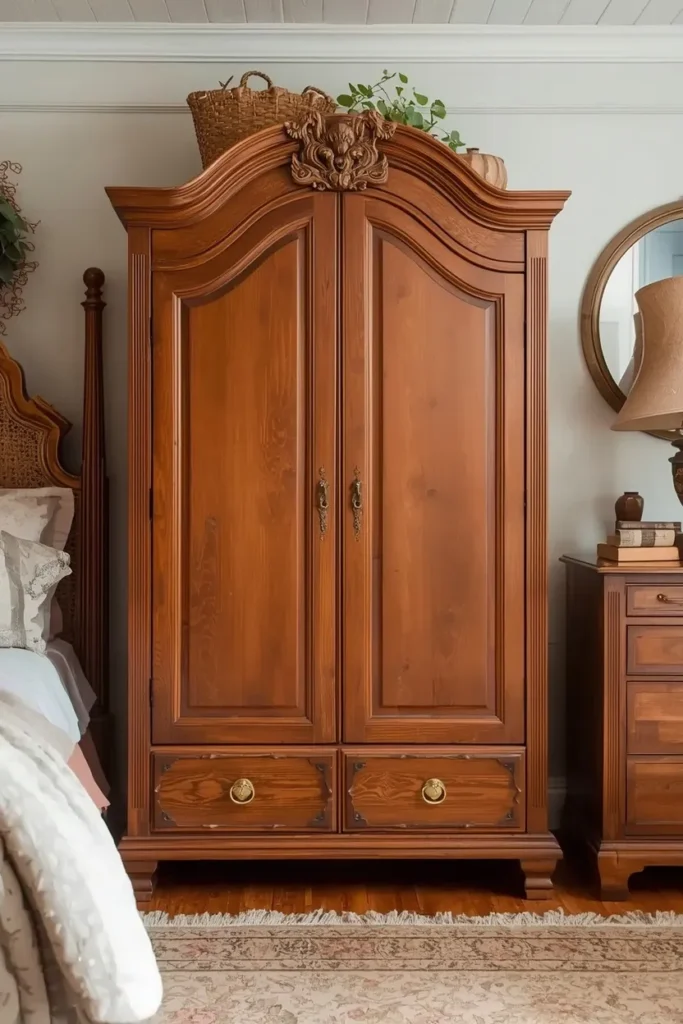
Picture a weathered vintage armoire, given new life with a fresh coat of paint and updated brass hardware, standing as a statement piece rather than a leftover hand-me-down.
Design Breakdown
Instead of replacing an outdated cupboard entirely, this approach reworks what you already have, or a thrifted piece, with sanding, fresh paint, and new hardware. It’s less about building and more about transforming.
Expert Tip
Prime before you paint, especially on older wood pieces. Skipping primer is the number one reason painted furniture chips within months.
Why It Works
This is where many homeowners make a mistake, they assume an outdated cupboard needs to be replaced entirely. A repaint and hardware swap can achieve the same visual transformation for a fraction of the cost.
Best For
- Budget makeovers
- Renters
- Small spaces
Common Mistake To Avoid
Rushing the sanding step. A smooth painted finish depends almost entirely on the prep work done before any paint goes on.
Quick Wins
- Dramatically cheaper than buying new
- Adds vintage character you can’t easily replicate
- Great weekend project with visible results
- Fully reversible for renters who move often
You May Also Like:
- 20 Brilliant DIY IKEA Dresser Hacks
- Cabinet Makeover Ideas
- DIY Furniture Makeover Ideas
- Small Bedroom Storage Ideas
- Bedroom Decor Design Ideas
Which design would you try first, a full build, or a repainted piece like this one?
8. The Compact Cupboard for Small Bedrooms
What You’re Seeing
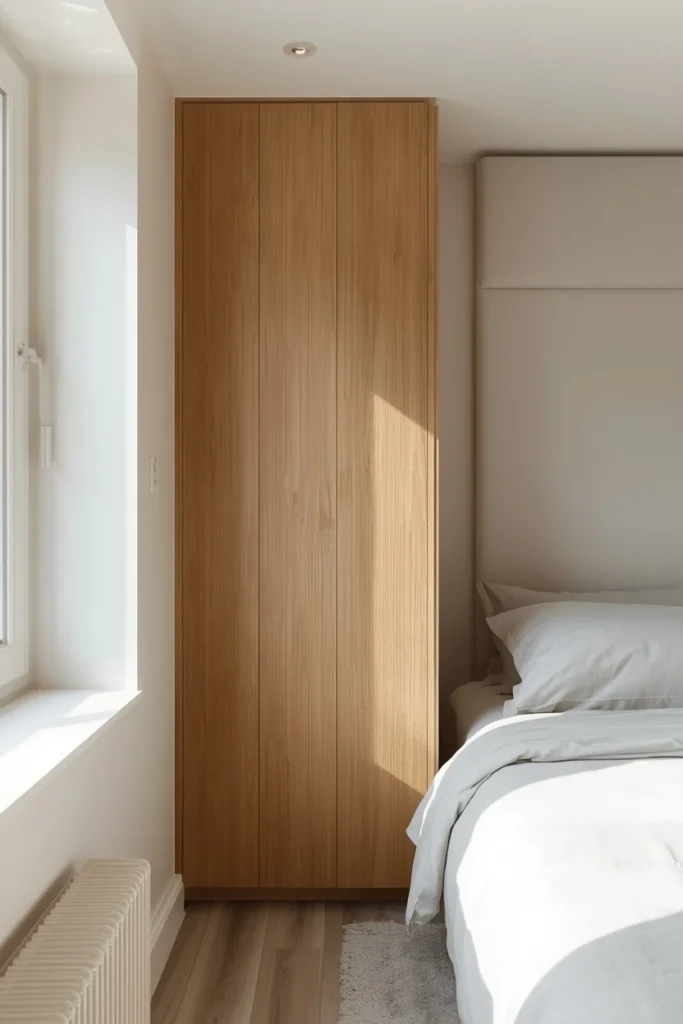
Think about how much easier a tight bedroom feels with a slim, floor-to-ceiling cupboard tucked against one wall, taking up minimal floor space while still holding a full wardrobe.
Design Breakdown
This design prioritizes height over width, using a narrow but tall footprint to maximize storage without eating into limited floor space. Interior layouts typically mix short hanging space with stacked shelving to make the most of every inch.
Expert Tip
Add a slim pull-out drawer or basket at the base. It captures otherwise wasted low space that’s awkward to access with folded shelving alone.
Why It Works
In small bedrooms, floor space is the most valuable resource you have. A tall, narrow cupboard delivers serious storage capacity while leaving the rest of the room open and easy to move through.
Best For
- Small spaces
- Renters
- Budget makeovers
Common Mistake To Avoid
Choosing a cupboard so tall it requires a step stool for daily use. Reserve the very top shelf for rarely used seasonal items only.
Quick Wins
- Maximizes storage in tight bedrooms
- Keeps floor space open and uncluttered
- Fits well in studio apartments and dorm-style rooms
- Available in many ready-to-assemble sizes
One thing I’ve learned working with small bedrooms: height is your best friend. Most people instinctively look for a wider cupboard when space feels tight, but going taller almost always solves the problem better. A narrow, tall unit keeps your walking path clear, which makes the whole room feel bigger, even though you technically have less floor space to work with than a wide cupboard would need.
Let me know which one is your favorite so far.
This simple change can completely transform the room.
9. The Cupboard With Built-In Dressing Station
What You’re Seeing
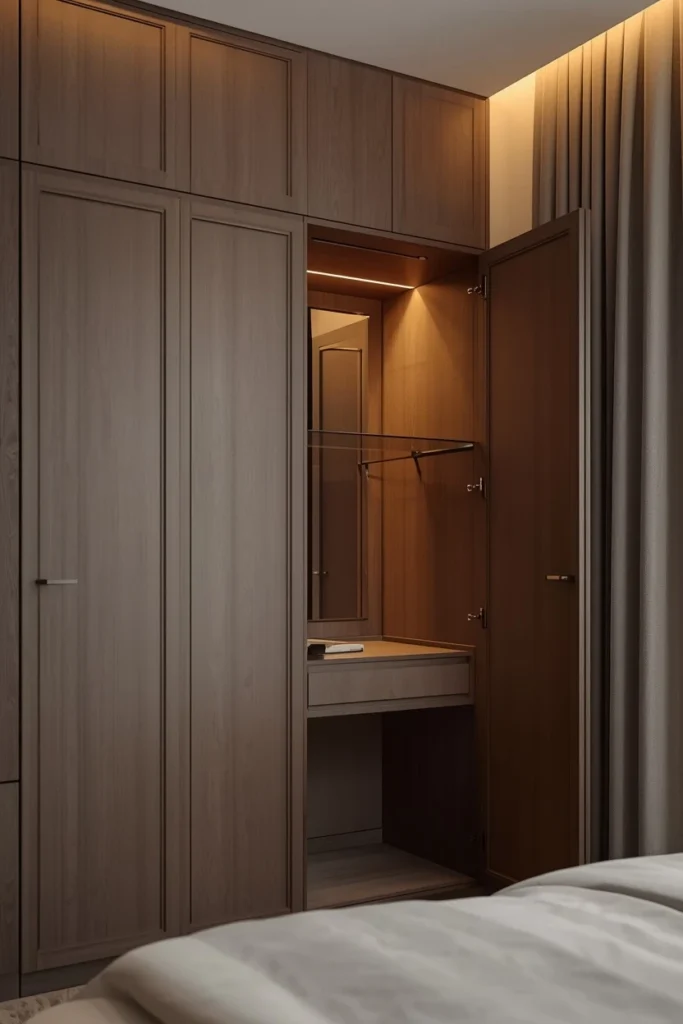
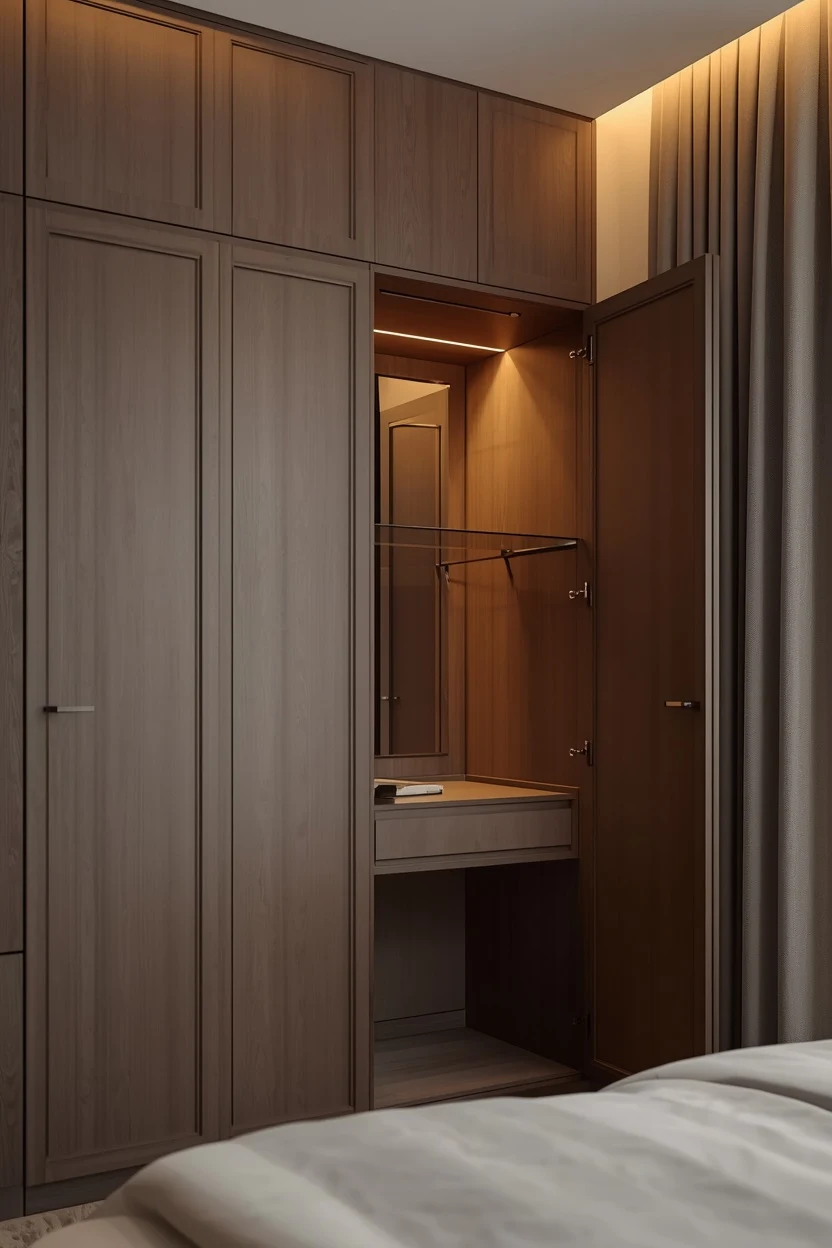
Visualize opening your cupboard to find a small fold-out shelf or built-in vanity nook tucked into one section, complete with a mirror and a spot to set down jewelry or accessories while you get ready.
Design Breakdown
This hybrid design carves out one section of the cupboard for a compact dressing station, often with a small mirror, a narrow shelf, and sometimes a fold-down surface. It’s ideal for bedrooms too small for a separate vanity table.
Expert Tip
Add a small strip of battery-powered LED lighting above the mirror section. It makes a huge difference for makeup and grooming tasks without requiring an electrician.
Why It Works
Combining two functions into one piece of furniture saves significant floor space while still giving you a dedicated spot to get ready each morning.
Best For
- Small spaces
- Renters
- Families
Common Mistake To Avoid
Making the dressing nook too shallow to actually use. Test the depth with your actual routine items before finalizing the design.
Quick Wins
- Eliminates the need for a separate vanity table
- Saves significant floor space
- Adds built-in lighting for daily routines
- Works well in shared or multi-purpose bedrooms
10. The Floor-to-Ceiling Glass Panel Cupboard
What You’re Seeing
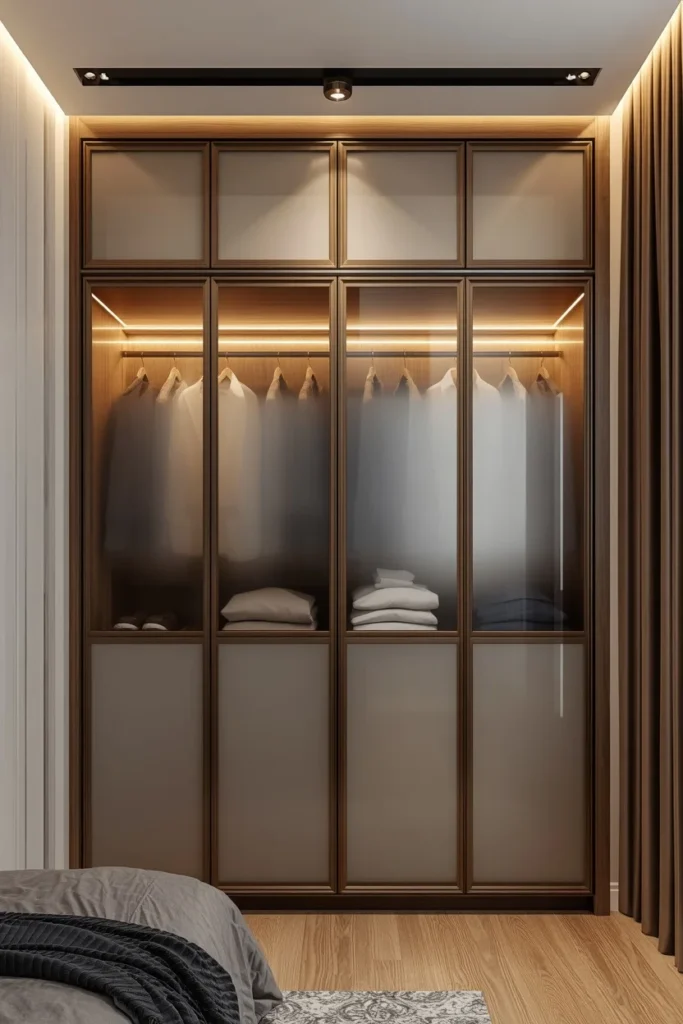
Imagine walking into a bedroom where the cupboard’s glass-front panels showcase neatly folded clothes and accessories like a curated display, turning storage into part of the room’s decor.
Design Breakdown
This design swaps solid doors for frosted or clear glass panels, often paired with interior lighting to highlight what’s stored inside. It works best when paired with genuinely tidy, color-coordinated storage since everything is at least partially visible.
Expert Tip
Choose frosted or reeded glass over fully clear panels if you don’t want to commit to constant tidiness. It hints at what’s inside without fully exposing it.
Why It Works
Glass panels add a light, high-end feel to a bedroom while making the cupboard itself feel less like a heavy block of furniture and more like a design feature.
Best For
- Luxury homes
- Large spaces
- Budget makeovers
Common Mistake To Avoid
Skipping interior organization. Glass fronts make disorganization far more visible than solid doors ever would.
Quick Wins
- Adds a light, high-end visual feel
- Turns organized storage into a decor feature
- Works beautifully with interior LED lighting
- Frosted glass options offer a softer, more private look
Related Bedroom Storage Ideas
If you’re loving these bedroom cupboard designs, don’t stop here. There’s a lot more inspiration waiting for you.
- Small Bedroom Storage Ideas
- 17 Innovative Small Bedroom Storage Ideas That Will Change Everything
- Walk-In Closet Ideas
- Master Bedroom Ideas Wardrobe Design
- Clothes Storage Ideas
- 10 Genius IKEA DIY Storage Hacks for Small Bedrooms
- Bedroom Bookshelf Ideas
- Wall Shelves Bedroom Ideas
Final Thoughts on Bedroom Cupboard Designs
If there’s one thing to take away from this list, it’s this. The best bedroom cupboard designs aren’t about picking the trendiest option you can find. They’re about matching the design to your room’s shape, your budget, and how you actually get dressed every day.
If your bedroom is tight on space, the compact tall cupboard or sliding mirrored door design will make the biggest difference. If you’re working with an awkward layout, the corner cupboard solves a problem most furniture can’t touch. And if you just want an easy, budget-friendly win, repainting an existing piece might be your fastest path to a completely different-feeling room.
Here’s my honest advice, don’t try to plan the perfect cupboard all at once. Pick one design from this list, and commit to researching or starting it this week. Small, focused decisions beat big, overwhelming ones every time.
So, which of these bedroom cupboard designs would work best in your home?
If you’re also thinking about the bigger picture of your bedroom’s storage, our small bedroom storage ideas guide is a natural next stop.
And if you’re curious what’s coming next, keep an eye out for our upcoming guide on walk-in closet layouts for small homes, it might completely change how you think about the space you already have.
Frequently Asked Questions About Bedroom Cupboard Designs
1. What is the most space-saving bedroom cupboard design?
A tall, narrow cupboard or a sliding mirrored door design tends to save the most floor space since both minimize the footprint needed for daily use.
2. How much does a built-in bedroom cupboard typically cost?
Built-in wall-to-wall cupboards generally range from $1,200 to $4,000 or more, depending on size, materials, and interior features.
3. What is the best cupboard design for a small bedroom?
A compact, floor-to-ceiling cupboard or a corner cupboard usually works best, since both maximize storage without taking up excess floor space.
4. Can I update an old cupboard instead of replacing it?
Yes, repainting an existing cupboard and updating the hardware is one of the most affordable ways to transform its look without a full replacement.
5. Are sliding doors better than hinged doors for bedroom cupboards?
Sliding doors are generally better for smaller or narrower bedrooms since they don’t require the extra clearance that hinged doors need to open fully.
6. What is a modular cupboard system?
It’s a cupboard design with adjustable shelves, drawers, and rods that can be rearranged as your storage needs change over time.
7. How do I make a cupboard look less bulky in a small bedroom?
Choose a design painted to match the walls, or opt for mirrored sliding doors, both of which visually minimize the cupboard’s presence in the room.
8. What should I look for in cupboard hardware and hinges?
Prioritize quality tracks, soft-close hinges, and sturdy handles, since hardware is typically the first thing to wear out with daily use.
9. Is a corner cupboard a good option for awkward bedroom layouts?
Yes, corner cupboards are specifically designed to make use of angled or awkward spaces that standard rectangular units can’t fill efficiently.
10. How do I decide between an open-shelf and closed-door cupboard design?
Consider how tidy you want your storage to look daily. Open shelving suits neatly folded items, while closed doors work better for hiding everyday clutter.